Abstract
The present study was conducted in Ganjam district, Odisha, India, from April to October 2017 to evaluate the effect of OMFED concentrate feed supplementation on milk yield and composition of crossbreed cows (Bos taurus) maintained under organized and unorganized dairy production systems. Balanced nutrition plays a crucial role in enhancing dairy productivity, particularly in Crossbreed cattle with higher genetic potential for milk production. The investigation aimed to assess whether scientifically formulated concentrate feeding improves milk output and quality parameters under field conditions. Primary data were collected from 50 Crossbreed cows selected from Govindnagar, Lochapoda, Panchama, Suramani, and TATA Colony villages under the blocks of Rangeilunda, Kukudakhandi, Chatrapur, and Soroda in Ganjam district. The animals were divided into two similar groups according to body weight (300–350 kg) and age (3–6 years). 25 cows were kept in the control group and given the usual feed. The other 25 cows from Alakash Dairy Farm were placed in the treatment group and were given OMFED concentrate feed as an extra supplement. The results showed that cows in the treatment group produced more milk than those in the control group. There were also improvements in milk quality, including higher fat and SNF levels. The analysis confirmed that these increases were significant (p < 0.05). The better performance may be due to improved nutrition, more efficient use of feed and proper management, which agrees with earlier studies on concentrate feeding in dairy cows. The results show that OMFED feed can improve both milk yield and quality in crossbred cows under farm conditions. Using balanced concentrate feeding can help farmers increase income and support steady milk production in Odisha.
Keywords
Crossbreed Cattle, Milk Production, OMFED Feed, Supplementation, Dairy Nutrition
1. Introduction
Modern domestic cattle trace their origin to a lost wild animal called the aurochs (Bos primigenius). This large animal once lived across North Africa, Asia and Europe. It is considered the ancestor of both indicine (Bos indicus) and taurine (Bos taurus) cattle
| [1] | Achenbach J. The return of the aurochs. Natl Geogr. 1994; 185(3): 2-39. |
| [2] | FAO. In vivo conservation of animal genetic resources. Rome; 2013. |
[1, 2]
. Historical records suggest that the last aurochs died in Poland in 1627, marking its lost. Evidence from fossils and archaeological studies shows that cattle were first domesticated during the Neolithic period around 6400 BC, making them one of the earliest animals kept by humans for milk and other uses
| [2] | FAO. In vivo conservation of animal genetic resources. Rome; 2013. |
[2]
.
Crossbreeding uses a natural advantage called hybrid vigor, where the offspring perform better than their parents on average
| [3] | NABRC. Status of cattle genetic resources in India. Karnal; 2017. |
[3]
. This happens when animals from different breeds are mated, leading to better growth, reproduction, adaptability and higher milk yield. In dairy farming, crossbreeding is commonly used to increase milk production, especially in tropical and subtropical areas. Local breeds can tolerate harsh climates but usually produce less milk
| [4] | Ranjhan SK. Animal Nutrition and Feeding Practices in India. New Delhi: Vikas Publishing House; 1998. |
| [5] | Banerjee GC. A Textbook of Animal Husbandry. 8th ed. New Delhi: Oxford & IBH; 2010. |
[4, 5]
. By mixing them with high-yielding foreign breeds, farmers have been able to improve milk production and overall dairy farming systems in many developing countries
| [2] | FAO. In vivo conservation of animal genetic resources. Rome; 2013. |
[2]
.
In India, planned crossbreeding programs started in the 1950s to boost milk production across the country. Mainly Indigenous cattle were crossed with foreign breeds like Holstein Friesian and Jersey to improve their milk yield
| [6] | Dhara KC, Ray N, Ghosh A. Genetic improvement of dairy cattle in India through crossbreeding. Indian J Anim Sci. 2006; 76(9): 703-712. |
| [7] | Wakchaure R, Ganguly S, Praveen PK. Crossbreeding in dairy cattle: strategies and impact in India. Int J Livest Res. 2015; 5(1): 1-6. |
[6, 7]
. As a result, several well-known crossbred varieties such as Frieswal, Karan Fries, Jersind, Phule-Triveni, Sunandini, and Vrindavani, were developed. These crossbreds showed better milk production compared to many native breeds
| [7] | Wakchaure R, Ganguly S, Praveen PK. Crossbreeding in dairy cattle: strategies and impact in India. Int J Livest Res. 2015; 5(1): 1-6. |
[7]
. Crossbreeding is useful because it brings together the good qualities of both types—local cattle contribute better tolerance to climate and resistance to diseases, while foreign breeds add higher capacity of milk production
| [8] | Dobson H, Smith RF, Royal MD, et al. The high-producing dairy cow and its reproductive performance. Reprod Domest Anim. 2007; 42(S2): 17-23. |
| [9] | FAO & IDF. Guide to Good Dairy Farming Practice. Rome; 2011. |
[8, 9]
. Because of these advantages, crossbreeding continues to play an important role in improving dairy farming and supporting the livelihoods of rural farmers in developing countries
| [10] | Bintliff E. Dairy cattle crossbreeding and productivity enhancement in developing countries. J Dairy Dev. 2014; 6(2): 45-52. |
[10]
.
India has the largest dairy herd in the world and is the top producer of milk. As per the Basic Animal Husbandry Statistics report of the Department of Animal Husbandry and Dairying, milk production increased regularly from 146.3 million tonnes in 2014–15 to 187.7 million tonnes in 2018–19
| [11] | DAHD & F. Basic Animal Husbandry Statistics 2019. Government of India; 2019. |
[11]
. During the same period, the average availability of milk per person also rose from 322 grams per day to 394 grams per day
| [11] | DAHD & F. Basic Animal Husbandry Statistics 2019. Government of India; 2019. |
[11]
. In 2019, India had about 302.79 million bovines, including 192.49 million cattle and 145.12 million dairy cows. Among these, indigenous cattle numbered 142.11 million, while crossbred and exotic cattle were about 50.42 million
| [11] | DAHD & F. Basic Animal Husbandry Statistics 2019. Government of India; 2019. |
[11]
. These numbers show that crossbred cattle are becoming increasingly important in improving milk production in the country.
Odisha has about 4.6% of India’s total livestock population
| [11] | DAHD & F. Basic Animal Husbandry Statistics 2019. Government of India; 2019. |
[11]
. However, the number of dairy cattle in the state decreased from 11.6 million in 2012 to 9.9 million in 2019, showing a drop of around 15%. Even with fewer cattle, milk production in Odisha has steadily increased, rising from 1,903 thousand tonnes in 2014–15 to 2,311 thousand tonnes in 2018–19
| [11] | DAHD & F. Basic Animal Husbandry Statistics 2019. Government of India; 2019. |
[11]
. This growth may be due to the use of better breeds, improved feeding methods, and proper dairy management practices. Dairy farming in Odisha mainly depends on cattle, and districts like Ganjam play an important role in supporting milk production and providing income to rural households.
Table 1. Basic Animal Husbandry Statistics Per capita availability (gm/day).
Year | Milk Production (MT) | Per capita availability (gm/day) |
2014-15 | 146.3 | 322 |
2015-16 | 155.5 | 337 |
2016-17 | 165.4 | 355 |
2017-18 | 176.3 | 375 |
2018-19 | 187.7 | 394 |
Source: BAHS. DAHD & F, GoI. (2019)
Table 2. Basic Animal Husbandry Statistics Milk production (‘000 Tones) in Odisha.
Milk production (‘000 Tones) in Odisha |
Year | Milk production (‘000 Tonnes) |
2014-15 | 1903 |
2015-16 | 1903 |
2016-17 | 2003 |
2017-18 | 2088 |
2018-19 | 2311 |
Source: DAHD & F, Ministry of agriculture and farmers welfare, GoI, (2019)
1.1. Organized Dairy Farm
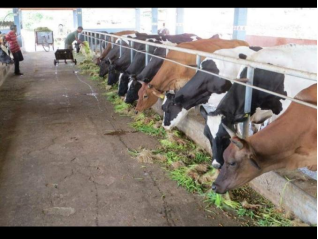
In India, dairy farming is generally divided into organized and unorganized systems. Organized dairy farms follow proper methods for housing, feeding, breeding, and health care of animals
| [9] | FAO & IDF. Guide to Good Dairy Farming Practice. Rome; 2011. |
[9]
. Good sheds with proper ventilation, cleanliness, and regular removal of waste help keep animals healthy and productive. Milking is done in a clean manner, often using machines, to maintain hygiene. Farmers also follow preventive measures like vaccination and artificial insemination. Animals are given balanced feed, including green fodder, dry fodder, silage, and concentrate, along with clean drinking water. In such farms, proper feeding, good breeding practices, and strong disease control are the main factors that help improve milk production and overall performance of dairy cattle
| [5] | Banerjee GC. A Textbook of Animal Husbandry. 8th ed. New Delhi: Oxford & IBH; 2010. |
[5]
.
Figure 1. Organized dairy farm.
1.2. Unorganized Dairy Farm
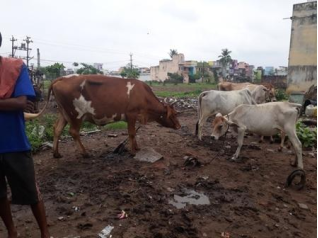
On the other hand, unorganized dairy farms are mostly small-scale and have limited facilities and management. Animals are often kept in poor housing conditions and are fed unbalanced diets, mainly made up of crop by-products like broken rice, rice bran, pulse chuni, rice polish, and paddy straw. Milking is usually done by hand and not always under clean conditions. Veterinary care is not regular and is often taken only when needed. Milk is usually sold through local vendors who collect it from villages and supply it to households or sweet shops. Due to poor feeding, lack of proper health care, and weak management practices, milk production and overall productivity remain low in such systems
| [12] | Prusty AK, Tripathy R, Mishra S. Comparative economics of organized and unorganized dairy farming in Odisha. Indian J Agric Econ. 2018; 73(3): 412-420. |
[12]
.
With the growing demand for milk and milk product its need to increase farmers’ income, better feeding practices have become more important. Providing concentrate feed helps meet the nutritional needs of animals, especially for the crossbred cows that produce more milk
| [13] | National Research Council (NRC). Nutrient Requirements of Dairy Cattle. 7th rev ed. Washington DC: National Academy Press; 2001. |
[13]
. Therefore, it is necessary to carefully compare organized and unorganized dairy farms, particularly in terms of feeding methods and overall management practices, to understand how productivity can be improved.
Ganjam district of Odisha is an area where many rural families depend on dairy farming for their livelihood. To improve milk production, it is important to study how better feeding methods, especially the use of concentrate feed, affect crossbred cows under different farming systems. This study was carried out to understand how feed supplementation and management practices influence milk yield and quality in crossbred cattle raised in both organized and unorganized dairy farms in Ganjam district.
Figure 2. Unorganized dairy farm.
2. Materials and Methods
This study was conducted in four blocks of Ganjam district—Rangeilunda, Kukudakhandi, Chatrapur, and Soroda—from December 2016 to March 2017. Its purpose was to examine how OMFED concentrate feed influences milk yield and quality in Jersey crossbred cows of both organized and unorganized dairy farming systems.
For this study, data were collected from 100 Jersey crossbred cows from different villages of Ganjam district, including Govindnagar, Panchama, Lochapoda, Tata Colony, and Suramani. Out of these, 50 cows were chosen for detailed study, keeping their body weight (350–400 kg) and age (3–6 years) similar. These cows were then divided into two groups: 25 cows from organized dairy farms as the experimental group and 25 cows from unorganized farms as the control group.
Both groups were kept under their usual management conditions and given a basic diet of chopped paddy straw, green grass and mineral mixture. Along with this, OMFED concentrate feed was provided for three months. The amount of feed was adjusted based on each animal’s body weight and milk production to keep the feeding uniform.
Milk yield was recorded daily, and samples were collected carefully under clean and hygienic conditions. Before milking, udders were thoroughly cleaned and dried. The first few streams of milk from each quarter were discarded to avoid contamination, and approximately 100 mL of milk was collected directly into sterilized bottles, which were immediately sealed and labelled for analysis. After completion of the three-month feeding trial, milk samples were collected for seven consecutive days for detailed compositional analysis. Milk yield was measured using a calibrated measuring cylinder.
Proximate parameters including fat percentage, solids-not-fat (SNF), and lactometer reading were determined using a standard lactometer and milk testing apparatus. All analytical procedures were conducted following standard dairy laboratory practices. The collected data were compiled and statistically analysed using Student’s t-test to determine the significance of differences between the organized and unorganized dairy farm groups. Differences were considered significant at the 5% probability level (p < 0.05).
3. Results
The present investigation carried out in Ganjam district assessed milk yield and quality parameters of Jersey crossbred cows reared under organized and unorganized dairy farming systems. Clear and marginal differences were seen between the two groups of cows.
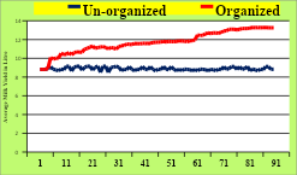
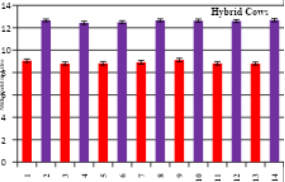
Cows in unorganized dairy farms produced an average of 8.90 liters of milk per day. In comparison, cows in organized farms produce a higher average of 12.59 liters per day (p < 0.05). This clear difference shows that better feeding, housing, and proper management in organized farms help increase milk production.
Differences were also seen in milk quality. Milk from unorganized farms had an average fat content of 4.01 g/100 ml, while organized farms showed a higher value of 5.16 g/100 ml. In the same way, SNF content was 8.26 g/100 ml in unorganized farms and 9.82 g/100 ml in organized farms.
Figure 3. Milk yield of cross breed cows in unorganized and organized dairy farm for 90 days. Average milk yield is in litre/day.
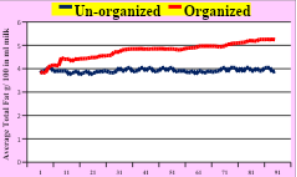
Figure 4. FAT content of milk in unorganized and organized dairy farm for 90 days. Average total fat is in g/ 100 ml milk.
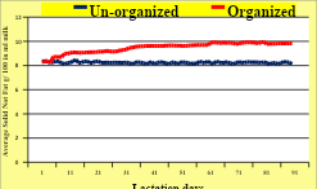
Figure 5. Solid not fat content of milk in unorganized and organized dairy farm for 90 days. Average solid not fat is in g/ 100 ml milk.
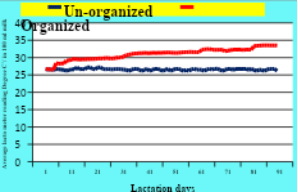
Figure 6. Lactometer reading of milk in unorganized and organized dairy farm for 90 days. Average lactometer reading is in ˚C / 100 ml milk.
Lactometer readings, showing milk density and quality, varied clearly between the organised and unorganised dairy farms. The average LMR was 26.63 in unorganized farms compared to 31.87 in organized farms. Overall, the findings demonstrate superior milk yield and improved compositional quality in organized dairy farms compared to unorganized dairy production systems.
Figure 7. Milk yield of unorganized and organized cross breed cows for 7 days. Milk Yield is in Litre / day. Columns represent the mean values and vertical bars SEM.
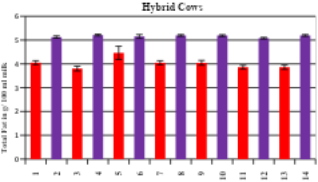
Table 3. Milk yield of unorganised and organised cross breed cows (Day 1 to day 7). Average milk yield is litre/day (Mean ± SEM). Numbers in parentheses indicate sample size.
Category | Day 1 | Day 2 | Day 3 | Day 4 | Day 5 | Day 6 | Day 7 |
Unorganised | 9.06 ± 0.14 | 8.8 ± 0.15 | 8.82 ± 0.15 | 8.92 ± 0.15 | 9.12 ± 0.15 | 8.82 ± 0.15 | 8.8 ± 0.13 |
(25) | (25) | (25) | (25) | (25) | (25) | (25) |
P | < 0.001 | < 0.001 | < 0.001 | < 0.001 | < 0.001 | < 0.001 | < 0.001 |
Organised | 12.66 ± 0.11 | 12.44 ± 0.14 | 12.5 ± 0.12 | 12.66 ± 0.13 | 12.64 ± 0.12 | 12.6 ± 0.12 | 12.68 ± 0.13 |
(25) | (25) | (25) | (25) | (25) | (25) | (25) |
Table 4. FAT content of unorganized and organized cross breed cows (Day 1 to day 7). Average total fat in g/ 100 ml milk (Mean ± SEM). Numbers in parentheses indicate sample size.
Category | Day 1 | Day 2 | Day 3 | Day 4 | Day 5 | Day 6 | Day 7 |
Unorganised | 4.05 ± 0.08 | 3.80 ± 0.09 | 4.46 ± 0.27 | 4.04 ± 0.08 | 4.04 ± 0.10 | 3.86 ± 0.08 | 3.86 ± 0.09 |
(25) | (25) | (25) | (25) | (25) | (25) | (25) |
P | < 0.001 | < 0.001 | < 0.001 | < 0.001 | < 0.001 | < 0.001 | < 0.001 |
Organised | 5.12 ± 0.04 | 5.21 ± 0.03 | 5.15 ± 0.08 | 5.19 ± 0.03 | 5.18 ± 0.03 | 5.08 ± 0.03 | 5.19 ± 0.03 |
(25) | (25) | (25) | (25) | (25) | (25) | (25) |
Figure 8. Fat content of unorganized and organized cross breed Cows for 7 days. Average total fat is in g/ 100 ml milk. Columns represent the mean values and vertical bars SEM.
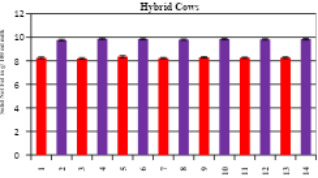
Figure 9. SNF content of unorganized and organized cross breed Cows for 7 days. Solid not fat is in g/ 100 ml milk. Columns represent the mean values and vertical bars SEM.
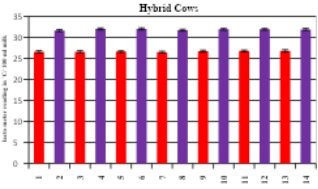
Table 5. Solid not fat content of unorganized and organized cross breed cows (Day 1 to day 7). Average solid not fat in g/ 100 ml milk. (Mean ± SEM), Numbers in parentheses indicate sample size.
Category | Day 1 | Day 2 | Day 3 | Day 4 | Day 5 | Day 6 | Day 7 |
Unorganised | 8.25 ± 0.07 | 8.19 ± 0.07 | 8.35 ± 0.08 | 8.22 ± 0.05 | 8.28 ± 0.05 | 8.25 ± 0.05 | 8.26 ± 0.06 |
(25) | (25) | (25) | (25) | (25) | (25) | (25) |
P | < 0.001 | < 0.001 | < 0.001 | < 0.001 | < 0.001 | < 0.001 | < 0.001 |
Organised | 9.75 ± 0.06 | 9.87± 0.05 | 9.85 ± 0.06 | 9.79 ± 0.05 | 9.84 ± 0.05 | 9.81 ± 0.05 | 9.83 ± 0.06 |
(25) | (25) | (25) | (25) | (25) | (25) | (25) |
Table 6. Lactometer reading of unorganized and organized cross breed cows (Day 1 to day 7). Average lacto meter reading in ˚C / 100 ml milk (Mean ± SEM). Numbers in parentheses indicate sample size.
Category | Day 1 | Day 2 | Day 3 | Day 4 | Day 5 | Day 6 | Day 7 |
Unorganised | 26.56 ± 0.27 | 26.56 ± 0.27 | 26.6 ± 0.21 | 26.46 ± 0.24 | 26.72 ± 0.23 | 26.76 ± 0.22 | 26.8 ± 0.27 |
(25) | (25) | (25) | (25) | (25) | (25) | (25) |
P | < 0.001 | < 0.001 | < 0.001 | < 0.001 | < 0.001 | < 0.001 | < 0.001 |
Organised | 31.62 ± 0.25 | 32.02 ± 0.22 | 32.02 ± 0.24 | 31.72 ± 0.21 | 31.92 ± 0.20 | 31.92 ± 0.20 | 31.9 ± 0.24 |
(25) | (25) | (25) | (25) | (25) | (25) | (25) |
Figure 10. Lactometer reading of unorganized and organized cross breed cows for 7 days. Average lacto meter reading is in ˚C / 100 ml milk. Columns represent the mean values and vertical bars SEM.

4. Discussions
Milk is recognized globally as a rich source of essential nutrients, providing approximately 8.4 g protein, 8.4 g fat, and 155 kcal of energy per capita per day during 2009–2011
| [14] | FAOSTAT. Food and Agriculture Data. FAO; 2012. |
[14]
. The higher milk production in organized farms (12.59 L/day) compared to unorganized farms (8.90 L/day) may be due to better feeding, good breeding care, proper housing, and regular veterinary support. Studies have also shown that according to Dobson
| [8] | Dobson H, Smith RF, Royal MD, et al. The high-producing dairy cow and its reproductive performance. Reprod Domest Anim. 2007; 42(S2): 17-23. |
[8]
, improved nutrition and proper management help increase milk production. Providing balanced feed and following scientific feeding practices play an important role in improving dairy performance
| [4] | Ranjhan SK. Animal Nutrition and Feeding Practices in India. New Delhi: Vikas Publishing House; 1998. |
| [13] | National Research Council (NRC). Nutrient Requirements of Dairy Cattle. 7th rev ed. Washington DC: National Academy Press; 2001. |
[4, 13]
.
The higher fat content (5.16 g/100 mL) seen in organized farms is similar to Verma and Singh
| [15] | Verma D, Singh R. Comparative study on milk quality parameters in organized and unorganized dairy farms. Int J Livest Res. 2018; 8(4): 120-125. |
[15]
, which also found more fat in milk from well-managed farms than in unorganized ones (3.29%). Other research has shown that better feeding practices help increase milk fat levels as documented by Prasad
| [16] | Prasad RMV. Influence of feeding management on milk composition of dairy cattle. Indian J Anim Nutr. 2009; 26(3): 221-224. |
[16]
. Similar fat values have been reported for crossbred cows in different studies.
| [17] | Guetouache M, Guessas B, Medjekal S. Composition and nutritional value of raw milk. Issues Biol Sci Pharm Res. 2014; 2(10): 115-122. |
[17]
. Milk fat mainly depends on the breed of the animal, stage of lactation, and the quality of feed given.
| [5] | Banerjee GC. A Textbook of Animal Husbandry. 8th ed. New Delhi: Oxford & IBH; 2010. |
[5]
.
Lactometer readings were higher in organized farms (31.87) than unorganized farms (26.63), showing better milk quality, as higher readings are linked with more solids in milk
| [17] | Guetouache M, Guessas B, Medjekal S. Composition and nutritional value of raw milk. Issues Biol Sci Pharm Res. 2014; 2(10): 115-122. |
[17]
.
The SNF content in this study was higher in organized farms (9.82 g/100 ml) than in unorganized farms (8.26 g/100 ml), showing better milk quality. Similar findings (Verma and Singh)
| [15] | Verma D, Singh R. Comparative study on milk quality parameters in organized and unorganized dairy farms. Int J Livest Res. 2018; 8(4): 120-125. |
[15]
, have been reported in other studies. SNF includes important nutrients like lactose, proteins, and minerals, and its level depends on the animal’s diet and breed
| [18] | Walstra P, Wouters JTM, Geurts TJ. Dairy Science and Technology. CRC Press; 2006. |
[18]
.
The breed of an animal strongly affects how much milk it gives and its composition. Kennedy
| [19] | Kennedy BW, Sethar MS, Moxley JE. Genetic and environmental factors affecting milk production traits. J Dairy Sci. 2003; 86(6): 1988-1995. |
[19]
. Better breeds produce more milk with higher protein, lactose, and fat. In India, crossbreeding has helped improve milk production by combining the hardiness of local cattle with the high-yield ability of foreign breeds
| [10] | Bintliff E. Dairy cattle crossbreeding and productivity enhancement in developing countries. J Dairy Dev. 2014; 6(2): 45-52. |
[10]
.
Milk and milk products are easy to digest and provide important nutrients like amino acids, vitamins, and minerals needed for growth
| [15] | Verma D, Singh R. Comparative study on milk quality parameters in organized and unorganized dairy farms. Int J Livest Res. 2018; 8(4): 120-125. |
| [20] | Pathak NN. Milk and Milk Products Technology. Kalyani Publishers; 2003. |
[15, 20]
. This study shows that organized dairy farms, with proper feeding and good management practices, are more effective in producing higher quantity and better-quality milk.
Ganjam district has good climate conditions and growing demand for milk, offering strong scope for dairy development. By improving awareness, promoting commercial farming, and involving youth with government support, milk production and rural income can be increased further.
5. Conclusion
The study shows that organized dairy farming improves both milk quantity and quality in Jersey crossbred cows in Ganjam district compared to unorganized farming. Using OMFED feed along with better housing, feeding, and health care led to higher milk yield (12.59 L/day), more fat (5.16 g/100 mL), higher SNF (9.82 g/100 mL), content, and better lactometer readings.
The results highlight that proper feeding, better breeds, and good management are important for steady dairy production. To earn more and improve milk quality, small farmers should use balanced feed, keep animals clean, and follow better management practices. Expanding organized dairy farming can help improve income and ensure better nutrition in the region.
Abbreviations
OMFED | Odisha State Cooperative Milk Producers Federation |
SNF | Solids-not-Fat |
LMR | Lactometer Reading |
GOI | Government of India |
vs. | Versus |
Acknowledgments
sincerely thank my advisor, Prof. Gitanjali Mishra, for her guidance, patience, and constant support throughout my research, which helped me complete this work.
sincerely thank Prof. Ramesh Chandra Chaudhury, Prof. U. R. Acharya, Prof. Prasann Kumar Dixit, Prof. Subhasini Pattanayak, Dr. Sandeep Kumar Dash, Prof. Tapan Kumar Barik, Mr. L. K. Murmu, Dr. K. C. Pa ttanayak, Mr. J. K. Seth, Surya Bhai, Raja Bhai, and Polai Bhai for their helpful suggestions and valuable discussions that improved my research. I am also thankful to the Department of Zoology, Berhampur University, for giving me the opportunity and facilities to carry out this study.
give special thanks to Mr. Rakesh Ranjan Sahu for his continuous support and guidance. I also thank the Veterinary Department staff, Jharanai Dairy Farm authorities, OMFED laboratory team, and all other institutions for their help and cooperation. Lastly, I am deeply grateful to my family for their love, sacrifices, and constant encouragement throughout this work.
Author Contributions
Puspanjali Maharana: Conceptualization, Data curation, Formal Analysis, Funding acquisition, Methodology, Software, Validation
Gitanjali Mishra: Conceptualization, Data curation, Formal Analysis, Methodology, Software, Validation
Funding
This work is not supported by any external funding.
Data Availability Statement
The data supporting the outcome of this research work has been reported in this manuscript.
Conflicts of Interest
The authors declare no conflicts of interest.
Appendix
This appendix provides the structured schedule and recording formats used during field investigation in Ganjam district for comparative evaluation of organized and unorganized dairy farms. The proforma was designed to ensure uniformity in primary data collection.
1) General Information
a) Name of Dairy Farm / Owner: Dr. Puspanjali Maharana
b) Village / Block (Rangeilunda / Kukudakhandi / Chatrapur / Soroda)
c) Type of Farm: Organized / Unorganized
d) Breed Type: Jersey Crossbred (Bos taurus)
e) Age (years): 6-7 years
f) Body Weight (300-400 kg)
g) Stage of Lactation (Mid)
2) Feeding Management Details
a) Type of Green Fodder: Green Grass (2 kg/day)
b) Dry Fodder (Paddy Straw) (1 kg/day)
c) Mineral Mixture (200g/day)
d) OMFED Concentrate Feed (5 kg/day)
e) Frequency of Feeding (2 times/day)
f) Access to Clean Drinking Water (Yes)
3) Housing and Management Parameters
a) Type of Housing (Semi-pucca and Kutcha)
b) Ventilation Status (Adequate and Inadequate)
c) Sanitation Practice (Daily)
d) Manure Disposal System (Daily)
e) Vaccination Record (Available)
f) Artificial Insemination Practice (Yes)
References
| [1] |
Achenbach J. The return of the aurochs. Natl Geogr. 1994; 185(3): 2-39.
|
| [2] |
FAO. In vivo conservation of animal genetic resources. Rome; 2013.
|
| [3] |
NABRC. Status of cattle genetic resources in India. Karnal; 2017.
|
| [4] |
Ranjhan SK. Animal Nutrition and Feeding Practices in India. New Delhi: Vikas Publishing House; 1998.
|
| [5] |
Banerjee GC. A Textbook of Animal Husbandry. 8th ed. New Delhi: Oxford & IBH; 2010.
|
| [6] |
Dhara KC, Ray N, Ghosh A. Genetic improvement of dairy cattle in India through crossbreeding. Indian J Anim Sci. 2006; 76(9): 703-712.
|
| [7] |
Wakchaure R, Ganguly S, Praveen PK. Crossbreeding in dairy cattle: strategies and impact in India. Int J Livest Res. 2015; 5(1): 1-6.
|
| [8] |
Dobson H, Smith RF, Royal MD, et al. The high-producing dairy cow and its reproductive performance. Reprod Domest Anim. 2007; 42(S2): 17-23.
|
| [9] |
FAO & IDF. Guide to Good Dairy Farming Practice. Rome; 2011.
|
| [10] |
Bintliff E. Dairy cattle crossbreeding and productivity enhancement in developing countries. J Dairy Dev. 2014; 6(2): 45-52.
|
| [11] |
DAHD & F. Basic Animal Husbandry Statistics 2019. Government of India; 2019.
|
| [12] |
Prusty AK, Tripathy R, Mishra S. Comparative economics of organized and unorganized dairy farming in Odisha. Indian J Agric Econ. 2018; 73(3): 412-420.
|
| [13] |
National Research Council (NRC). Nutrient Requirements of Dairy Cattle. 7th rev ed. Washington DC: National Academy Press; 2001.
|
| [14] |
FAOSTAT. Food and Agriculture Data. FAO; 2012.
|
| [15] |
Verma D, Singh R. Comparative study on milk quality parameters in organized and unorganized dairy farms. Int J Livest Res. 2018; 8(4): 120-125.
|
| [16] |
Prasad RMV. Influence of feeding management on milk composition of dairy cattle. Indian J Anim Nutr. 2009; 26(3): 221-224.
|
| [17] |
Guetouache M, Guessas B, Medjekal S. Composition and nutritional value of raw milk. Issues Biol Sci Pharm Res. 2014; 2(10): 115-122.
|
| [18] |
Walstra P, Wouters JTM, Geurts TJ. Dairy Science and Technology. CRC Press; 2006.
|
| [19] |
Kennedy BW, Sethar MS, Moxley JE. Genetic and environmental factors affecting milk production traits. J Dairy Sci. 2003; 86(6): 1988-1995.
|
| [20] |
Pathak NN. Milk and Milk Products Technology. Kalyani Publishers; 2003.
|
Cite This Article
-
APA Style
Maharana, P., Mishra, G. (2026). A Comparative Analysis on Milk Yielding of Crossbreed Cows Between Organised and Unorganised Dairy Farm of Ganjam District. American Journal of Science, Engineering and Technology, 11(4), 367-374. https://doi.org/10.11648/j.ajset.20261104.25
Copy
|
Download
ACS Style
Maharana, P.; Mishra, G. A Comparative Analysis on Milk Yielding of Crossbreed Cows Between Organised and Unorganised Dairy Farm of Ganjam District. Am. J. Sci. Eng. Technol. 2026, 11(4), 367-374. doi: 10.11648/j.ajset.20261104.25
Copy
|
Download
AMA Style
Maharana P, Mishra G. A Comparative Analysis on Milk Yielding of Crossbreed Cows Between Organised and Unorganised Dairy Farm of Ganjam District. Am J Sci Eng Technol. 2026;11(4):367-374. doi: 10.11648/j.ajset.20261104.25
Copy
|
Download
-
@article{10.11648/j.ajset.20261104.25,
author = {Puspanjali Maharana and Gitanjali Mishra},
title = {A Comparative Analysis on Milk Yielding of Crossbreed Cows Between Organised and Unorganised Dairy Farm of Ganjam District},
journal = {American Journal of Science, Engineering and Technology},
volume = {11},
number = {4},
pages = {367-374},
doi = {10.11648/j.ajset.20261104.25},
url = {https://doi.org/10.11648/j.ajset.20261104.25},
eprint = {https://article.sciencepublishinggroup.com/pdf/10.11648.j.ajset.20261104.25},
abstract = {The present study was conducted in Ganjam district, Odisha, India, from April to October 2017 to evaluate the effect of OMFED concentrate feed supplementation on milk yield and composition of crossbreed cows (Bos taurus) maintained under organized and unorganized dairy production systems. Balanced nutrition plays a crucial role in enhancing dairy productivity, particularly in Crossbreed cattle with higher genetic potential for milk production. The investigation aimed to assess whether scientifically formulated concentrate feeding improves milk output and quality parameters under field conditions. Primary data were collected from 50 Crossbreed cows selected from Govindnagar, Lochapoda, Panchama, Suramani, and TATA Colony villages under the blocks of Rangeilunda, Kukudakhandi, Chatrapur, and Soroda in Ganjam district. The animals were divided into two similar groups according to body weight (300–350 kg) and age (3–6 years). 25 cows were kept in the control group and given the usual feed. The other 25 cows from Alakash Dairy Farm were placed in the treatment group and were given OMFED concentrate feed as an extra supplement. The results showed that cows in the treatment group produced more milk than those in the control group. There were also improvements in milk quality, including higher fat and SNF levels. The analysis confirmed that these increases were significant (p < 0.05). The better performance may be due to improved nutrition, more efficient use of feed and proper management, which agrees with earlier studies on concentrate feeding in dairy cows. The results show that OMFED feed can improve both milk yield and quality in crossbred cows under farm conditions. Using balanced concentrate feeding can help farmers increase income and support steady milk production in Odisha.},
year = {2026}
}
Copy
|
Download
-
TY - JOUR
T1 - A Comparative Analysis on Milk Yielding of Crossbreed Cows Between Organised and Unorganised Dairy Farm of Ganjam District
AU - Puspanjali Maharana
AU - Gitanjali Mishra
Y1 - 2026/10/17
PY - 2026
N1 - https://doi.org/10.11648/j.ajset.20261104.25
DO - 10.11648/j.ajset.20261104.25
T2 - American Journal of Science, Engineering and Technology
JF - American Journal of Science, Engineering and Technology
JO - American Journal of Science, Engineering and Technology
SP - 367
EP - 374
PB - Science Publishing Group
SN - 2578-8353
UR - https://doi.org/10.11648/j.ajset.20261104.25
AB - The present study was conducted in Ganjam district, Odisha, India, from April to October 2017 to evaluate the effect of OMFED concentrate feed supplementation on milk yield and composition of crossbreed cows (Bos taurus) maintained under organized and unorganized dairy production systems. Balanced nutrition plays a crucial role in enhancing dairy productivity, particularly in Crossbreed cattle with higher genetic potential for milk production. The investigation aimed to assess whether scientifically formulated concentrate feeding improves milk output and quality parameters under field conditions. Primary data were collected from 50 Crossbreed cows selected from Govindnagar, Lochapoda, Panchama, Suramani, and TATA Colony villages under the blocks of Rangeilunda, Kukudakhandi, Chatrapur, and Soroda in Ganjam district. The animals were divided into two similar groups according to body weight (300–350 kg) and age (3–6 years). 25 cows were kept in the control group and given the usual feed. The other 25 cows from Alakash Dairy Farm were placed in the treatment group and were given OMFED concentrate feed as an extra supplement. The results showed that cows in the treatment group produced more milk than those in the control group. There were also improvements in milk quality, including higher fat and SNF levels. The analysis confirmed that these increases were significant (p < 0.05). The better performance may be due to improved nutrition, more efficient use of feed and proper management, which agrees with earlier studies on concentrate feeding in dairy cows. The results show that OMFED feed can improve both milk yield and quality in crossbred cows under farm conditions. Using balanced concentrate feeding can help farmers increase income and support steady milk production in Odisha.
VL - 11
IS - 4
ER -
Copy
|
Download