Abstract
Enzalutamide, an anti-androgen agent for prostate cancer, has recently been associated with the occurrence of nitrosamine impurities, which are potential carcinogens of regulatory concern. Among these, N-Nitroso EZD3A [4-((2-cyanopropan-2-yl) (2-nitroso) amino)-2-fluoro-N-methylbenzamide] has been detected in certain batches of Enzalutamide, highlighting the need for highly sensitive methods for monitoring its presence at trace levels. Current work reports the development and validation of a robust LC-MS/MS method employing a valve-switching approach for selective quantification of N-Nitroso EZD3A in Enzalutamide. The method minimized matrix interference by preventing co-elution of the parent drug into the mass spectrometer, thereby enhancing sensitivity and specificity. Validation of the method showed linearity between 0.5 and 9.4 ppm (r2 = 0.999), precision with an RSD of 15% or less at the specification level, and recovery between 70% and 130% across LOQ to 150% levels. There was no interference from Enzalutamide or Blank, which shows that the test is specific and reliable under different analytical conditions. The method acquired quantification limitations that were much lower than the regulatory threshold. On commercial batches of Enzalutamide, the method showed that the quantities of impurities varied, with some samples going over the acceptable limit of 6.25ppm. This shows that routine monitoring is needed. The developed LC-MS/MS method provides a reliable analytical tool for trace-level quantification of N-Nitroso EZD3A in Enzalutamide.
Keywords
Enzalutamide, N-Nitroso EZD3A, LC-MS/MS, Valve-switching, Nitrosamine Impurities, ICH Q2 (R2),
Pharmaceutical Quality Control
1. Introduction
The discovery of trace amounts of N-nitrosamine impurities in a variety of drugs since the first reports in 2018 has led both the industry and regulators to review how impurities are tested for and maintained under control. The problem came to light when N-nitrosodimethylamine (NDMA) and other nitrosamines were found in several "sartan" antihypertensive drugs. Further research quickly showed that other types of drugs were also at risk. The results showed that nitrosamines can form when certain amine groups are present in conditions that allow nitrosation, whether during synthesis, storage, or normal handling. In response, regulatory bodies in the US and Europe provided increasingly detailed guidelines on how to assess risk, do confirmatory analytical tests, and control things over the long term. Because nitrosamines are known to be very strong mutagenic carcinogens, the guidelines stress the importance of keeping their levels very low, often below ppm
.
From a mechanistic perspective, nitrosamines can form via various pathways, predominantly when nitrosating agents—such as nitrite in acidic or oxidative environments, react with secondary or tertiary amines found in the active ingredient, its intermediates, process reagents, or specific packaging materials. Recent evaluations have indicated that numerous marketed small-molecule APIs, along with certain impurities, possess functional groups that may plausibly engage in reactions during synthesis or storage. This has made it even more important to find possible risks early on instead of just relying on what you know about past impurities. As more case studies are done on both drug substances and finished products, people are paying less and less attention to the well-known "small nitrosamines" and more and more attention to the larger group of nitrosamine drug-substance-related impurities (NDSRIs). These are often unique to a specific API and are very hard to analyze
| [4] | Nudelman R, Kocks G, Mouton B, Ponting DJ, Schlingemann J, Simon S, Werner AL. The nitrosamine “saga”: lessons learned from five years of scrutiny. Organic Process Research & Development. 2023, 27(10), 1719–1735. |
| [5] | Manchuri KM, Shaik MA, Gopireddy VSR, Sultana N, Gogineni S. Analytical methodologies to detect N-nitrosamine impurities in active pharmaceutical ingredients, drug products and other matrices. Chemical Research in Toxicology. 2024, 37(9), 1456–1483. |
[4, 5]
.
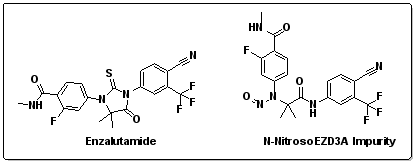
In this context, monitoring nitrosamine impurities associated with oncology drugs like enzalutamide has emerged as a crucial element of quality assurance and patient safety. Enzalutamide (
Figure 1), an androgen-receptor inhibitor utilized in prostate cancer treatment, comprises amine groups capable of engaging in nitrosation reactions under appropriate conditions. Several reference-standard suppliers now offer N-nitroso derivatives, such as N-Nitroso EZD3A (
Figure 1), as defined materials in their catalogs. The fact that these species are available suggests that they could be useful by-products, which shows how important it is to do regular analytical monitoring. While published data on nitrosamines specifically derived from enzalutamide is limited, the overall experience with nitrosamine formation in small-molecule APIs, along with existing impurity-risk frameworks, adequately supports the development of methods to detect API-related nitrosamines at trace concentrations
| [6] | Uzun BO, Kaygu P, Keskin E, Bostancıoğlu G, Can OS, Miser MC, Özkan SA. Impurity profiling and stability analysis of enzalutamide: Identification, genotoxicity assessment, and development of UHPLC methods for critical impurities. Journal of Pharmaceutical and Biomedical Analysis. 2025, 248, 116926. |
[6]
.
Figure 1. Structures of Enzalutamide and N-Nitroso EZD3A impurity.
From an analytical perspective, quantifying API-derived nitrosamines at trace levels is challenging due to significant matrix effects, interference from the predominant parent API, and inadequate separation of isomers or closely eluting impurities in conventional one-dimensional LC–MS/MS. Recent assessments indicate that meticulously optimized LC–MS methodologies may exhibit intolerable variability unless measures are implemented to mitigate these influences, including targeted purification, alternative chromatographic selectivity, or instrument-level modifications. For QC application, any method must therefore deliver adequate sensitivity and selectivity while remaining robust, efficient, and straightforward in its sample-handling requirements
| [7] | Cortese M, Gigliobianco MR, Magnoni F, Censi R, Di Martino P. Compensate for or minimize matrix effects? Strategies for overcoming matrix effects in liquid chromatography-mass spectrometry technique: a tutorial review. Molecules. 2020, 25(13), 3047. |
| [8] | Li Q, Xu Q, Lo N, Leeks AT Jr, Han M, Nefliu M, Belsky JL. Mitigating matrix effects for LC-MS/MS quantification of nitrosamine impurities in rifampin and rifapentine. Journal of Pharmaceutical and Biomedical Analysis Open. 2024, 3, 100027. |
[7, 8]
.
Integrated valve-switching setups, like Valco-based setups in LC/UPLC systems, are now useful for separating the bulk API and matrix from the target nitrosamine before MS detection. These systems improve selectivity and lower the chemical background at the ion source by moving a set time window from the first dimension to a second, usually orthogonal, separation. Reports from both simple and complex matrices show that this method greatly reduces matrix interference, raises quantification limits, and gives more reliable trace-level measurements. All of this is possible with just standard LC hardware and a switching valve. These strategies work especially well for NDSRIs, which need to be measured at ppb–ppm levels while APIs are present at milligram-per-milliliter levels
| [9] | Papatheocharidou C, Samanidou V. Two-dimensional high-performance liquid chromatography as a powerful tool for bioanalysis: the paradigm of antibiotics. Molecules. 2023, 28(13), 5056. |
| [10] | Lin Z, Wang Q, Zhou Y, Shackman JG. Trapping mode two-dimensional liquid chromatography for quantitative low-level impurity enrichment in pharmaceutical development. Journal of Chromatography A. 2023, 1700, 464043. |
| [11] | Vanhoenacker G, Sandra P, Sandra K. Minimizing the risk of missing critical sample information by using two-dimensional liquid chromatography. LCGC North America. 2022, 40(9), 420–424. |
[9-11]
.
The objective of this study was to develop and validate a highly sensitive LC–MS/MS method for quantifying the N-Nitroso EZD3A impurity in enzalutamide drug substance. A ten-port valve-switching setup was used to send only the nitrosamine fraction to the mass spectrometer. This made the test more sensitive and selective by limiting interference from the parent API. The method was validated in accordance with ICH Q2 (R2) and was developed to align with current FDA standards for nitrosamine regulation. All of the important parameters linearity, precision, accuracy, specificity, robustness, and low-level quantification—were successfully shown, which means they can be used in routine quality control. The workflow is a useful template for keeping an eye on other API-specific NDSRIs in addition to enzalutamide. This improves overall impurity oversight and patient safety.
2. Materials and Methods
2.1. Chemicals and Reagents
Enzalutamide active pharmaceutical ingredient (API) was obtained from in-house development batches. The reference standard of N-Nitroso EZD3A [4-((2-cyanopropan-2-yl) (2-nitroso) amino)-2-fluoro-N-methylbenzamide] was procured from a certified supplier. LC-MS grade methanol, acetonitrile, and water were used throughout the analysis (Merck, Germany). Analytical grade Ammonium formate was used for mobile phase preparation.
2.2. Instrumentation and Chromatographic Conditions
Chromatographic separation was performed on a high-performance liquid chromatography system (Shimadzu UPLC, Japan) coupled to a triple quadrupole mass spectrometer (AB Sciex 5500+ TRPLE QUARD) equipped with electros pray ionization (ESI) source. Agilent Zorbax Eclipse plus C18 4.6x50 mm, 3 µm; Agilent make, USA) was employed for separation. The mobile phase-A consisted of 0.01Molar Ammonium formate in water and mobile phase-B Acetonitrile, Diluent: water: Acetonitrile (1:1). A gradient program was optimized to achieve adequate retention of N-Nitroso EZD3A while minimizing enzalutamide interference. The flow rate was maintained at 0.5 mL/min, the injection volume was 20μL, and the column temperature was controlled at 40°C. An integrated switching valve configuration was integrated into the system. The switching program was designed to divert valve the eluting enzalutamide peak to waste while selectively directing the N-Nitroso EZD3A fraction into the mass spectrometer, thereby reducing matrix load on the curtain plate and orifice and enhancing sensitivity.
2.3. Mass Spectrometry Parameters
The mass spectrometer was operated in positive electro spray ionization (ESI+) mode. The following multiple reaction monitoring (MRM) transitions were optimized for N-Nitroso EZD3A: m/z [precursor ion] → [product ion] (specific transitions from method development). Nitrogen was used as the nebulizing and collision gas. Source parameters were optimised as follows: GS1 nebulizer gas flow 50 L/min, ion source voltage 5500 V, GS2 heater gas 55, Entrance potential:10, Decluster potential: 85, CAD:6, Collision energy: 11, Cell entrance potential: 13, Temperature 5500°C, Curtain gas flow 40 L/min and divert valve programme: 0.1 min into Mass and 8.5 minutes into a waste.
2.4. Preparation of Standard Solutions
Standard solutions for validating the quantification of N-Nitroso EZD3A were prepared through a stepwise dilution scheme. A 1:1 mixture of water and acetonitrile served as the diluent and was degassed by brief sonication. For the primary stock, 5.130 mg of the reference standard was dissolved in methanol and brought to 100 mL, giving a solution of roughly 51.3 µg/mL. A secondary stock was then prepared by transferring 0.31 mL of this solution into 25 mL of diluent, followed by dilution to 50 mL after thorough mixing. The working standard was generated by diluting 0.4 mL of the secondary stock to 10 mL with diluent, producing a final concentration of approximately 6.25 ppm, based on a nominal sample strength of 2 mg/mL.
2.5. Sample Preparation
To analyse API batches, about 20 mg of Enzalutamide drug substance was weighed out and put into a 15 mL polypropylene tube. To get the precise test concentration, the sample was dissolved and diluted to 10mL with Diluent. The solution was vortexed and sonicated for five minutes.
2.6. Method Validation
The developed method was validated as per the ICH Q2 (R2) guidelines
. Linearity was established within the range of 0.5–9.4 ppm using least-squares regression of peak area against concentration. Detection and quantification thresholds were established based on signal-to-noise ratios of 3:1 and 10:1. Accuracy was assessed using recovery studies at the limit of quantification (LOQ), 100%, and 150% of the specified amount utilizing spiked active pharmaceutical ingredient (API) samples. Precision was examined via six replicate injections at the specification level for repeatability, whereas intermediate precision was analyzed on different days by several analysts. Specificity was validated through the analysis of placebo and active pharmaceutical ingredient matrices to eliminate co-eluting interferences with N-Nitroso EZD3A. The robustness was evaluated by altering the flow rate, column temperature, and mobile-phase composition within restricted ranges. System compatibility was confirmed by assessing retention time, peak shape, and %RSD of replicate injections to guarantee consistent instrument performance.
3. Results
3.1. Method Development
The goal of method development was to find selective and reliable chromatographic conditions that could find N-Nitroso EZD3A even in the presence of high concentrations of enzalutamide. During the Initial solvent screening, due to well-defined peaks and reduced background noise, acetonitrile was detected over methanol as a mobile phase component. Formic acid, ammonium acetate, and ammonium formate were tested for ionization efficiency and chromatographic stability in the aqueous phase. Ammonium formate showed a superior peak response for N-Nitroso EZD3A and a more stable retention behaviour, hence it was chosen as the final mobile phase composition.
The ACQUITY BEH C18 (4.6x50 mm, 3 µm), Luna C18 (4.6x50 mm, 3 µm), and Agilent Zorbax Eclipse Plus C18 (4.6x50 mm, 3 µm) phases all showed clear differences in performance when screened. All three columns could elute the target impurity, but only the Agilent Zorbax Eclipse plus C18 (4.6x50 mm, 3 µm) column could separate N-Nitroso EZD3A from the very common enzalutamide peak well enough under gradient conditions. The shorter 50 mm column and 3-µm particle size allowed for quick elution while still maintaining the retention, which was important for keeping the run time short without losing selectivity. The gradient program was improved so that N-Nitroso EZD3A would come out in an area with little matrix interference. The early gradients caused overlaps with the enzalutamide peak, but changing the initial amount of water made the impurity's retention window stable. The best peak shape and reproducibility were found at a flow rate of 0.5 mL/min and a column temperature of 40°C.
A ten-port switching valve was an important part of the final method development. During method optimization, it became evident that enzalutamide, which was present at milligram-per-millilitre levels, caused ion-source contamination in a substantial manner and contributed to the ion suppression when were sent into the mass spectrometer. Setting up the valve to send the enzalutamide elution window to waste and only send the N-Nitroso EZD3A fraction to the MS significantly reduced the load on the curtain plate and orifice.
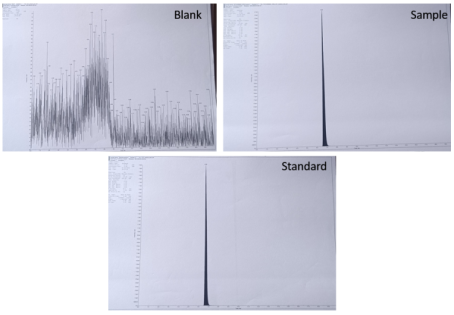
Figure 2. Blank, standard and sample solutions spiked at 100% level.
This made the instrument more sensitive, stable, and clean over time, which was a measurable improvement. The valve-switching method also made quantitative accuracy better by reducing the differences that come from matrix-dependent ion suppression.
Figure 2 shows the MS chromatograms of Blank, standard, and sample solutions that were spiked at 100%.
The method for trace-level quantification of N-Nitroso EZD3A in enzalutamide drug substance was very strong and very selective because the solvent selection, buffer choice, stationary phase, gradient conditions, and timed valve diversion all worked together. The final setup consistently separated the impurity from the API and gave a consistent MS response that was good for regular quality control.
3.2. Method Validation
The developed method showed good overall performance across all validation parameters (
Table 1), which confirmed that it could be used to measure trace levels of N-Nitroso EZD3A in enzalutamide drug substance. The completed discussion of the method validation is provided below.
3.2.1. System Suitability
System suitability results in
Table 1 show a %RSD of 1.65 for six replicate injections of the standard. This value is well within the acceptance limit of not more than 15%, confirming that the chromatographic system operated consistently throughout the analysis. The low variability demonstrates adequate instrument performance, stable detector response, and no significant drift during replicate injections. Overall, the system met the suitability requirements without any anomalies.
3.2.2. Specificity
Specificity evaluation (
Table 1) demonstrated that the analyte peak consistently appeared at a retention time of 6.69 minutes in both the standard and spiked sample. No peak corresponding to the analyte was detected in the test sample, confirming the absence of interference from the matrix. The matched retention times and the lack of extraneous peaks indicate that the MRM transition selectively detects the target impurity. Thus, the method is specific, with no co-eluting or interfering components observed.
Table 1. Consolidated Method Validation Summary Report.
Parameter | Observation | Results |
System Suitability | % RSD | 1.65 |
Method Precision | % RSD | 1.69 |
Intermediate Precision | % RSD | 1.20 |
Cumulative % RSD (Precision & Inter. Precision) | 4.14 |
Specificity | Standard RT | 6.69 |
Test sample RT | Not Detected |
Spiked sample RT | 6.69 |
Accuracy | % Mean Recovery at LOQ Level | 100.47 |
% Mean Recovery at 50% Level | 101.09 |
% Mean Recovery at 100% Level | 100.94 |
% Mean Recovery at 150% Level | 100.28 |
Precision at Various Levels | % RSD at LOQ Level | 2.09 |
% RSD at 100% Level | 1.69 |
% RSD at 150% Level | 1.49 |
Linearity | Correlation Coefficient (r²) | 0.999 |
Range | Content at LOQ Level (ppm) | 0.5036 |
Content at 100% Level (ppm) | 6.4101 |
Content at 150% Level (ppm) | 9.5645 |
LOQ & LOD | LOQ Concentration (ppm) | 0.5028 |
LOQ S/N Ratio | 127.5 |
LOD Concentration (ppm) | 0.1659 |
Solution Stability | Spiked Test Solution Stability | Stable up to 28 hours at 5°C |
| Standard Solution Stability | Stable up to 33 hours at 5°C |
Robustness (Flow Variation) | % RSD (Condition-1) | 1.47 |
| % RSD (Condition-2) | 0.90 |
3.2.3. Linearity and Calibration Curve
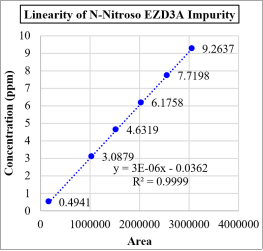
The developed LC-MS/MS method demonstrated excellent linearity (Table 1.1) for N-Nitroso EZD3A across the range of 0.5–9.4ppm. The regression coefficient (r2 = 0.999) exceeded the ICH Q2 (R2) acceptance threshold, confirming the suitability of the method for quantitative analysis. Linearity is a critical performance parameter for impurity profiling, as it ensures reliable extrapolation within the validated range. Previous studies on nitrosamine quantification in APIs have reported similar linear performance, but often at narrower ranges or without matrix-selective strategies (Manchuri et al., 2024). By applying a valve-switching approach, this study reduced enzalutamide matrix load into the MS, thereby enhancing linear response consistency.
3.2.4. LOD and LOQ
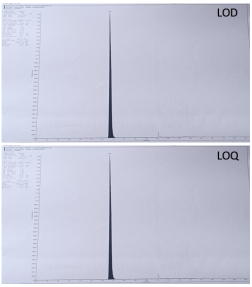
The method demonstrated a detection limit below 0.2 ppm and a quantification limit of 0.5 ppm, both comfortably lower than the 6.25-ppm regulatory limit for nitrosamines. At these levels, the chromatograms (
Figure 4) showed well-defined peaks with signal-to-noise ratios exceeding 3 (for LOD) and 10 (for LOQ), confirming reliable quantification at the lowest validated concentration. In contrast to conventional LC–MS/MS systems, which frequently encounter noise and matrix-related interference at trace levels, the valve-switching configuration produced a cleaner baseline and reduced background signals. As a result, the method provides a highly sensitive platform for monitoring nitrosamine impurities in APIs where such contaminants may occur at very low concentrations.
3.2.5. Method Precision
The %RSD obtained for the spiked test solutions was 1.69, which is substantially lower than the allowable limit of 15% (
Table 1). This confirms that the method produces repeatable results under the same analytical conditions. The finding indicates minimal intra-day variability and reliable quantification of the impurity across replicate preparations. Precision at LOQ, 100%, and 150% levels resulted in %RSD values of 2.09%, 1.69%, and 1.49%, respectively (
Table 1), all significantly below the 15% limit. These results indicate that quantification remains precise even at the lowest validated level. The method consistently produces low variability across the full working range.
Table 2. Linearity level and peak area for N-Nitroso EZD3A Impurity.
S. No | Level | Area | Content (mg/L) |
1 | LOQ% | 171086 | 0.4941 |
2 | 50% | 1040224 | 3.0879 |
3 | 75% | 1534990 | 4.6319 |
4 | 100% | 2036488 | 6.1758 |
5 | 125% | 2564088 | 7.7198 |
6 | 150% | 3062339 | 9.2637 |
Regression coefficient (r²) | 0.999 |
3.2.6. Intermediate Precision
Figure 3. Linearity plot of N-Nitroso EZD3A impurity.
The intermediate precision study yielded a %RSD of 1.20, which is well below the acceptance threshold of 20% (
Table 1). This assessment, carried out under varied conditions such as different analysts or instruments, shows that the method maintains its performance independent of minor operational changes. The cumulative %RSD combining method precision and intermediate precision was 4.14, far below the limit of 25%.
3.2.7. Accuracy
Results of accuracy studies given in
Table 1 displayed mean recoveries of 100.47% (LOQ), 101.09% (50%), 100.94% (100%), and 100.28% (150%). Accuracy at all the tested levels was well within the limits, in the range of 70–130%. The Closeness of recovery results to the 100% disclose that the method measures the true impurity content without systematic error. The results show that the accuracy is excellent at all tested concentration levels.
3.2.8. Solution Stability
Table 1 shows that the normal solution remained stable for 33 hours, and the spiked test solution was stable for 28 hours when stored at 5°C. There was no noticeable change in response or degradation during these time periods. This guarantees that prepared solutions can be used reliably throughout long analytical runs.
Figure 4. MS/MS chromatograms of LOD and LOQ for N-Nitroso EZD3A impurity.
3.2.9. Robustness
Under altered flow rate conditions, the method produced %RSD values of 1.47% (0.45 ml/min) and 0.90% (0.55 ml/min) (
Table 1). The low variability under these deliberate modifications indicates that the method is robust and not significantly affected by small changes in flow rate. The findings confirm that the method maintains precision under minor operational variations.
3.2.10. Batch Analysis of Enzalutamide API
Application of the method to enzalutamide batches revealed variability in N-Nitroso EZD3A levels. While most batches were compliant with the regulatory limit of 6.25 ppm, certain outliers exceeded this threshold. This observation is consistent with recent findings that nitrosamine formation may vary depending on manufacturing conditions, raw material quality, and storage environments (ICH M7 (R2), 2023; Zhao et al., 2022). The detection of non-compliant batches reinforces the necessity of routine monitoring to ensure patient safety and regulatory compliance. Furthermore, the data demonstrate the method’s ability not only to quantify impurities but also to serve as a surveillance tool for identifying at-risk manufacturing processes.
4. Discussion
To address the challenges associated with the trace level determination of impurities in the API matrixes, a sensitive and selective LC–MS/MS method was developed for the quantification of N-Nitroso EZD3A in enzalutamide drug substance. Acetonitrile and ammonium formate were selected as organic and Aqueous modifiers of the mobile phase as Acetonitrile improved the peak shape along with reduced background noise and ammonium formate provided optimum ionization and excellent retention. Among the evaluated stationary phases, the Agilent Zorbax Eclipse Plus C18 column displayed operative resolution of the impurity from enzalutamide under optimized gradient conditions. Fine-tuning of the aqueous composition ensured elution of the impurity in a region with minimal matrix interference, with optimal performance achieved at 0.5 mL/min and 40°C.
Selective diversion of enzalutamide matrix to waste while retaining the impurity to mass spectrometer employing a ten-port valve-switching system is major advancement in the development of the method. This approach significantly mitigates ion suppression and source contamination, resulting in enhanced signal stability and improved sensitivity. The integration of chromatographic optimization with matrix diversion provides a robust solution for trace-level nitrosamine analysis.
The method demonstrated excellent validation performance in accordance with ICH Q2 (R2) guidelines. System suitability (%RSD = 1.65) confirmed consistent instrument performance, while specificity was established by the absence of interfering peaks and consistent analyte retention at 6.69 min. The method exhibited outstanding linearity over 0.5–9.4 ppm (r² ≈ 1.000), supporting accurate quantification across regulatory-relevant levels. Sensitivity was high, with LOD (~0.16 ppm) and LOQ (~0.5 ppm) well below the 6.25 ppm regulatory threshold, attributable to reduced matrix effects.
Excellent repeatability was shown by %RSD values below 2.1% across all levels, while intermediate precision demonstrated method ruggedness under diverse conditions. Around 100% recoveries showed accuracy, showing negligible systematic error. Application to commercial API batches revealed variability in impurity levels, with certain samples exceeding the regulatory limit, underscoring the need for routine monitoring. The developed method provides a highly sensitive, selective, and quality control–ready platform for nitrosamine surveillance. The valve-switching strategy offers a scalable and broadly applicable solution for the analysis of nitrosamine drug-substance-related impurities in complex pharmaceutical matrices.
5. Conclusion
The current study successfully developed a sensitive and selective LC–MS/MS method to quantify the N-Nitroso EZD3A impurity in enzalutamide drug substance. Using a valve-switching method, let the mass spectrometer move the bulk enzalutamide matrix away from the nitrosamine, which made it easier to detect nitrosamine at very low levels. Validation conducted in accordance with ICH Q2 (R2) demonstrated that the method fulfilled all critical performance criteria, including acceptable linearity, precision, accuracy, specificity, robustness, and quantification levels that remained significantly below regulatory thresholds. The method showed that impurity levels varied in commercial samples, with some batches going over the allowed limit of 6.25 ppm. These results show that N-Nitroso EZD3A needs to be checked on a regular basis during quality control and manufacturing. In addition to its direct use with enzalutamide, the work lays out an analytical framework that can be used to look at other nitrosamine drug-substance-related impurities. This helps with both patient safety and compliance with regulations.
Abbreviations
API | Active Pharmaceutical Ingredient |
LC–MS | Liquid Chromatography–Mass Spectrometry |
UPLC | Ultra Performance Liquid Chromatography |
ESI | Electrospray Ionization |
ESI+ | Positive Electrospray Ionization Mode |
MRM | Multiple Reaction Monitoring |
LOD | Limit of Detection |
LOQ | Limit of Quantification |
%RSD | Percentage Relative Standard Deviation |
RT | Retention Time |
S/N | Signal-to-Noise Ratio |
NDSRIs | Nitrosamine Drug Substance-Related Impurities |
NDMA | N-Nitroso dimethylamine |
ICH | International Council for Harmonisation |
ICH Q2 (R2) | Validation of Analytical Procedures Guideline |
FDA | Food and Drug Administration |
EMA | European Medicines Agency |
Acknowledgments
The authors acknowledge the Department of Chemistry, GIET University, and the Department of Biotechnology, Department of Engineering Chemistry, SRKR Engineering College, Bhimavaram, for laboratory facilities.
Author Contributions
Prasad Pasumarthi: Conceptualisation, Resources, Writing – original draft, Methodology
Santosh Bindhani: Data curation, Formal Analysis, Validation
Bodroth Rabi Prasad: Writing – review & editing, Visualization
Bhagavathula Subrahmanya Diwakar: Investigation, Supervision, Software
Funding
This work is not supported by any external funding.
Conflicts of Interest
The authors declare no conflicts of interest.
References
| [1] |
U.S. Food and Drug Administration. Control of Nitrosamine Impurities in Human Drugs. 2021.
https://www.fda.gov/regulatory-information/search-fda-guidance-documents/control-nitrosamine-impurities-human-drugs
|
| [2] |
European Medicines Agency. Nitrosamine impurities. 2024.
https://www.ema.europa.eu/en/human-regulatory-overview/post-authorisation/referral-procedures-human-medicines/nitrosamine-impurities
|
| [3] |
U.S. Food and Drug Administration. Identification, Assessment, and Control of Nitrosamine Drug Substance-Related Impurities in Human Drug Products. Federal Register. 2023, 88(87), 28783–28790.
|
| [4] |
Nudelman R, Kocks G, Mouton B, Ponting DJ, Schlingemann J, Simon S, Werner AL. The nitrosamine “saga”: lessons learned from five years of scrutiny. Organic Process Research & Development. 2023, 27(10), 1719–1735.
|
| [5] |
Manchuri KM, Shaik MA, Gopireddy VSR, Sultana N, Gogineni S. Analytical methodologies to detect N-nitrosamine impurities in active pharmaceutical ingredients, drug products and other matrices. Chemical Research in Toxicology. 2024, 37(9), 1456–1483.
|
| [6] |
Uzun BO, Kaygu P, Keskin E, Bostancıoğlu G, Can OS, Miser MC, Özkan SA. Impurity profiling and stability analysis of enzalutamide: Identification, genotoxicity assessment, and development of UHPLC methods for critical impurities. Journal of Pharmaceutical and Biomedical Analysis. 2025, 248, 116926.
|
| [7] |
Cortese M, Gigliobianco MR, Magnoni F, Censi R, Di Martino P. Compensate for or minimize matrix effects? Strategies for overcoming matrix effects in liquid chromatography-mass spectrometry technique: a tutorial review. Molecules. 2020, 25(13), 3047.
|
| [8] |
Li Q, Xu Q, Lo N, Leeks AT Jr, Han M, Nefliu M, Belsky JL. Mitigating matrix effects for LC-MS/MS quantification of nitrosamine impurities in rifampin and rifapentine. Journal of Pharmaceutical and Biomedical Analysis Open. 2024, 3, 100027.
|
| [9] |
Papatheocharidou C, Samanidou V. Two-dimensional high-performance liquid chromatography as a powerful tool for bioanalysis: the paradigm of antibiotics. Molecules. 2023, 28(13), 5056.
|
| [10] |
Lin Z, Wang Q, Zhou Y, Shackman JG. Trapping mode two-dimensional liquid chromatography for quantitative low-level impurity enrichment in pharmaceutical development. Journal of Chromatography A. 2023, 1700, 464043.
|
| [11] |
Vanhoenacker G, Sandra P, Sandra K. Minimizing the risk of missing critical sample information by using two-dimensional liquid chromatography. LCGC North America. 2022, 40(9), 420–424.
|
| [12] |
International Council for Harmonisation. ICH Q2 (R2) guideline: Validation of analytical procedures. 2022.
https://www.ema.europa.eu/en/documents/scientific-guideline/ich-guideline-q2r2-validation-analytical-procedures-step-2b_en.pdf
|
Cite This Article
-
APA Style
Pasumarthi, P., Bindhani, S., Prasad, B. R., Diwakar, B. S. (2026). Determination of Sensitive Method for Quantification of
N-Nitroso EZD3A Impurity in Enzalutamide by LC-MS/MS Method: Applications for Routine Laboratory Testing. American Journal of Science, Engineering and Technology, 11(4), 347-355. https://doi.org/10.11648/j.ajset.20261104.23
 Copy
|
Copy
|
 Download
ACS Style
Pasumarthi, P.; Bindhani, S.; Prasad, B. R.; Diwakar, B. S. Determination of Sensitive Method for Quantification of
N-Nitroso EZD3A Impurity in Enzalutamide by LC-MS/MS Method: Applications for Routine Laboratory Testing. Am. J. Sci. Eng. Technol. 2026, 11(4), 347-355. doi: 10.11648/j.ajset.20261104.23
Copy
|
Download
AMA Style
Pasumarthi P, Bindhani S, Prasad BR, Diwakar BS. Determination of Sensitive Method for Quantification of
N-Nitroso EZD3A Impurity in Enzalutamide by LC-MS/MS Method: Applications for Routine Laboratory Testing. Am J Sci Eng Technol. 2026;11(4):347-355. doi: 10.11648/j.ajset.20261104.23
Copy
|
Download
-
@article{10.11648/j.ajset.20261104.23,
  author = {Prasad Pasumarthi and Santosh Bindhani and Bodroth Rabi Prasad and Bhagavathula Subrahmanya Diwakar},
  title = {Determination of Sensitive Method for Quantification of
N-Nitroso EZD3A Impurity in Enzalutamide by LC-MS/MS Method: Applications for Routine Laboratory Testing},
  journal = {American Journal of Science, Engineering and Technology},
  volume = {11},
  number = {4},
  pages = {347-355},
  doi = {10.11648/j.ajset.20261104.23},
  url = {https://doi.org/10.11648/j.ajset.20261104.23},
  eprint = {https://article.sciencepublishinggroup.com/pdf/10.11648.j.ajset.20261104.23},
  abstract = {Enzalutamide, an anti-androgen agent for prostate cancer, has recently been associated with the occurrence of nitrosamine impurities, which are potential carcinogens of regulatory concern. Among these, N-Nitroso EZD3A [4-((2-cyanopropan-2-yl) (2-nitroso) amino)-2-fluoro-N-methylbenzamide] has been detected in certain batches of Enzalutamide, highlighting the need for highly sensitive methods for monitoring its presence at trace levels. Current work reports the development and validation of a robust LC-MS/MS method employing a valve-switching approach for selective quantification of N-Nitroso EZD3A in Enzalutamide. The method minimized matrix interference by preventing co-elution of the parent drug into the mass spectrometer, thereby enhancing sensitivity and specificity. Validation of the method showed linearity between 0.5 and 9.4 ppm (r2 = 0.999), precision with an RSD of 15% or less at the specification level, and recovery between 70% and 130% across LOQ to 150% levels. There was no interference from Enzalutamide or Blank, which shows that the test is specific and reliable under different analytical conditions. The method acquired quantification limitations that were much lower than the regulatory threshold. On commercial batches of Enzalutamide, the method showed that the quantities of impurities varied, with some samples going over the acceptable limit of 6.25ppm. This shows that routine monitoring is needed. The developed LC-MS/MS method provides a reliable analytical tool for trace-level quantification of N-Nitroso EZD3A in Enzalutamide.},
 year = {2026}
}
Copy
|
Download
-
TY  - JOUR
T1  - Determination of Sensitive Method for Quantification of
N-Nitroso EZD3A Impurity in Enzalutamide by LC-MS/MS Method: Applications for Routine Laboratory Testing
AU  - Prasad Pasumarthi
AU  - Santosh Bindhani
AU  - Bodroth Rabi Prasad
AU  - Bhagavathula Subrahmanya Diwakar
Y1  - 2026/10/17
PY  - 2026
N1  - https://doi.org/10.11648/j.ajset.20261104.23
DO  - 10.11648/j.ajset.20261104.23
T2  - American Journal of Science, Engineering and Technology
JF  - American Journal of Science, Engineering and Technology
JO  - American Journal of Science, Engineering and Technology
SP  - 347
EP  - 355
PB  - Science Publishing Group
SN  - 2578-8353
UR  - https://doi.org/10.11648/j.ajset.20261104.23
AB  - Enzalutamide, an anti-androgen agent for prostate cancer, has recently been associated with the occurrence of nitrosamine impurities, which are potential carcinogens of regulatory concern. Among these, N-Nitroso EZD3A [4-((2-cyanopropan-2-yl) (2-nitroso) amino)-2-fluoro-N-methylbenzamide] has been detected in certain batches of Enzalutamide, highlighting the need for highly sensitive methods for monitoring its presence at trace levels. Current work reports the development and validation of a robust LC-MS/MS method employing a valve-switching approach for selective quantification of N-Nitroso EZD3A in Enzalutamide. The method minimized matrix interference by preventing co-elution of the parent drug into the mass spectrometer, thereby enhancing sensitivity and specificity. Validation of the method showed linearity between 0.5 and 9.4 ppm (r2 = 0.999), precision with an RSD of 15% or less at the specification level, and recovery between 70% and 130% across LOQ to 150% levels. There was no interference from Enzalutamide or Blank, which shows that the test is specific and reliable under different analytical conditions. The method acquired quantification limitations that were much lower than the regulatory threshold. On commercial batches of Enzalutamide, the method showed that the quantities of impurities varied, with some samples going over the acceptable limit of 6.25ppm. This shows that routine monitoring is needed. The developed LC-MS/MS method provides a reliable analytical tool for trace-level quantification of N-Nitroso EZD3A in Enzalutamide.
VL  - 11
IS  - 4
ER  -
Copy
|
Download









 Share This Article
 Twitter
 Linked In
 Facebook