
Bacteria are essential components of aquatic ecosystems, performing critical ecological functions and influencing the health of their hosts. With aquaculture recognized as the fastest-growing food production sector, ensuring the bacteriological safety of freshwater fish is vital for ecological sustainability and human health. This study aimed to isolate, characterize, and identify the bacterial diversity associated with the skin, fins, gills, and gastrointestinal tracts of eight freshwater fish species, including Catla catla, Labeo rohita, and selected catfishes, collected from various water bodies of the Ganjam district, Odisha. Bacteriological profiling was conducted for isolation, morphological characterization, selective media, and biochemical identification, using standard microbiological methods. 72 bacterial isolates were recovered and subjected to antibiotic susceptibility testing using the Kirby–Bauer disc diffusion method against ten antibiotics from different classes, including carbapenems, beta-lactams and polymyxins. Quantitative analysis demonstrated that the highest bacterial load in the gut of Anabas testudineus (2.8 × 10⁷ CFU/ml), followed by Labeo species. Gram-positive bacteria were found to be more prevalent than Gram-negative bacteria species. The identified genera included Gram positive bacteria, such as Bacillus, Lactobacillus, Staphylococcus, Streptococcus, and Micrococcus as well as Gram negative bacteria, such as Aeromonas, Pseudomonas, and Proteus, while Escherichia coli and Vibrio species were not detected. The antibiogram revealed significant resistance to ampicillin, penicillin-G, and colistin, whereas chloramphenicol remained effective against most isolates. These findings indicate the occurrence of antimicrobial-resistant bacteria in commercially important freshwater fishes and highlight the importance of rational use of antibiotics, improved aquaculture management, and stringent food safety measures to mitigate potential public health risks.
| Published in |
American Journal of Science, Engineering and Technology (Volume 11, Issue 4)
This article belongs to the Special Issue Advances in Translational Research, Biotechnology, and Sustainable Bio-Innovations |
| DOI | 10.11648/j.ajset.20261104.22 |
| Page(s) | 339-346 |
| Creative Commons |
This is an Open Access article, distributed under the terms of the Creative Commons Attribution 4.0 International License (http://creativecommons.org/licenses/by/4.0/), which permits unrestricted use, distribution and reproduction in any medium or format, provided the original work is properly cited. |
| Copyright |
Copyright © The Author(s), 2026. Published by Science Publishing Group |
Aquaculture, Ganjam, Antimicrobial Resistance, Bacteriological Profiling, Food Safety, Anabas testudineus
Sampling Site | Name of fish | Common name | Length (cm) |
|---|---|---|---|
Chhatrapur Pata, Chhatrapur | Anabas testudineus | Kau | 12 |
Mugil cephalus | Meji | 19 | |
Randha Bandha, Randha | Labeo rohita | Rohi | 43 |
Baghua Nadi | Notopterus notopterus | Fali | 14 |
Ganjam Pata, Ganjam | Channa punctata | Gadisha | 17 |
Channa striata | Seula | 28 | |
Rushikulya River, Ganjam | Labeo rohita | Rohu | 30 |
Notopterus notopterus | Fali | 18 | |
Rangeilunda Pond, Rangeilunda | Clarias batrachus | Magur | 15 |
Lanjipali Bandha, Berhampur | Catla catla | Bhakur | 30 |
Channa striata | Seula | 40 | |
Ghodahada Dam | Anabas testudineus | Kau | 14 |
Surada Pond, Surada | Labeo rohita | Rohu | 35 |
Bada Bandha, Digapahandi | Catla catla | Bhakura | 36 |
Sl. No. | Name of fish | Tissue sample | Bacterial load (cfu/ml) |
|---|---|---|---|
01 | Anabas testudineus | Gill | 2.1×10⁵ |
Gut | 2.8×10⁷ | ||
Fin | 2.2×10⁵ | ||
Skin | 2.2×10⁶ | ||
02 | Clarias batrachus | Gill | 2.4×10⁶ |
Gut | 1.7×10⁵ | ||
Fin | 2.3×10⁴ | ||
Skin | 3.1×10⁵ | ||
03 | Labeo rohita | Gill | 1.9×10⁶ |
Gut | 1.8×10⁷ | ||
Skin | 4.1×10⁵ | ||
Fin | 3.2×10⁴ | ||
04 | Notopterus notopterus | Gill | 1.9×10⁶ |
Gut | 3.1×10⁶ | ||
Skin | 1.8×10⁶ | ||
Fin | 2.5×10⁵ | ||
05 | Catla catla | Gill | 1.5×10⁵ |
Gut | 5.3×10⁶ | ||
Skin | 1.5×10⁵ | ||
Fin | 4.1×10⁴ | ||
06 | Channa punctata | Gill | 3.6×10⁵ |
Gut | 1.5×10⁵ | ||
Skin | 2.2×10⁵ | ||
Fin | 3.1×10⁵ | ||
07 | Mugil cephalus | Gill | 1.2×10⁶ |
Gut | 2.5×10⁶ | ||
Skin | 1.2×10⁶ | ||
Fin | 2.2×10⁴ | ||
08 | Channa striata | Gill | 2.1×10⁶ |
Gut | 1.9×10⁶ | ||
Skin | 1.6×10⁵ | ||
Fin | 3.1×10⁵ |
CFU | Colony Forming Unit |
SPSDS | Single Plate Serial Dilution Spotting |
CLSI | Clinical and Laboratory Standards Institute |
AMR | Antimicrobial Resistance |
MDR | Multidrug Resistance |
| [1] | Vijayan, J., Nathan, V. K., Ammini, P., et al. Bacterial diversity in the aquatic system in India based on metagenome analysis-a critical review, Env Sci and Pol Research. 2023, 30: 28283-28406. |
| [2] | Schar, D., Zhao, C., Wang, Y., et al. Twenty-year trends in antimicrobial resistance from aquaculture and fisheries in Asia, Nat Commun. 2021, 12: 5384. |
| [3] | Ajayi, A. O., Odeyemi, A. T., Akinjogunla, O. J., et al. Review of antibiotic-resistant bacteria and antibiotic resistance genes within the one health framework, Infect Ecol Epidemiol. 2024, 14: 2312953. |
| [4] | Mohammed EAH, Kovács B, Kuunya R, et al. Antibiotic Resistance in Aquaculture: Challenges, Trends Analysis, and Alternative Approaches, Antibiotics. 2025, 14: 598. |
| [5] | Barde, R. D. Bacterial Diversity Associated with Labeo rohita Isolated from Cultured and Natural Water Bodies, Euro J of Mol & Cli Med. 2020, 7(11). |
| [6] | Watts, J. E., Schreier, H. J., Lanska, L., Hale, M. S. The rising tide of antimicrobial resistance in aquaculture: sources, sinks and solutions. Mar Drugs. 2017, 15(6): 158. |
| [7] | Pridgeon, J. W., Klesius, P. H. Molecular identification and virulence of three Aeromonas hydrophila isolates cultured from infected channel catfish during a disease outbreak in west Alabama (USA) IN 2009. Dis Aquat Org. 2011, 94(3): 249-53. |
| [8] | Adah, D. A., Saidu, L., Oniye, S. J., et al. Molecular characterization and antibiotics resistance of Aeromonas species isolated from farmed African catfish Clarias gariepinus Burchell, 1822. BMC Vet Research. 2024, 20: 16. |
| [9] | Bardhan, A., Murthy, S. H. Emerging Concerns: Prevalence of Antimicrobial Resistance in Aeromonas and Escherichia coli in Retail Fish from Ganges Delta’s Diamond Harbour Region. J Aquac. 2024, 54–68. |
| [10] | Thomas, P., Sekhar, A. C., Upreti, R., et al. (2015) Optimization of single plate-serial dilution spotting (SP-SDS) with sample anchoring as an assured method for bacterial and yeast cfu enumeration and single colony isolation from diverse samples. Biotechnol Rep. 2015, 8: 45–55. |
| [11] | Krieg, N. R., Holt, J. G., Bergy, S Manual of Systematic Bacteriology. Vol-1, Williams and Wilkins. 1984. |
| [12] | Collins, C. H., Lyne, P. M., Grange, G. M. Microbiological Methods. 6th Edn, 1989 Butterwoths, London: 56-66. |
| [13] | Cheesburg, M. District Laboratory Practice in Tropical Countries. (Part II) Troppical Health Technology Publishers. 2002, Great Britain: 40-56. |
| [14] | Chandravansh, i P., Udgata, S. K., Kumari, J., et al. Isolation and Characterization of Multiple Antibiotic-Resistant A. hydrophila causing Mortality of Indian Major Carps in Ganjam District, Odisha. Int J Curr Microbiol Appl Sci. 2020, 9: 562–574. |
| [15] | CLSI. Performance Standards for Antimicrobial Susceptibility Testing. In: Wayne PA (ed) CLSI supplement M100, 30th edn. Clinical and Laboratory Standards Institute. 2020. |
| [16] | Austin, B., Austin, D. B. Bacterial fish pathogen Disease in farmed and wild fish. 2nd edn. 1993, Ellis Horwood, Chichester. |
| [17] | Ibrahim, B. U., Baba, J., Sheshi, M. S. Isolation and Identification of Bacteria Associated withFresh and Smoked Fish (Clarias gariepinus) In Minna Metropolis, Niger State. Nigeria. J of Appl & Env Microbio. 2014, 2(3): 81-85. |
| [18] | Kyule, D. N., Maingi, J. M., Njeru, E. M., et al. Molecular Characterization and Diversity of Bacteria Isolated from Fish and Fish Products Retailed in Kenyan Markets. International Journal of Food Science. 2022, 2022: 2379323. |
| [19] | Dayie, N. T. K. D., Nathan-Mensah, F. N. N., Kotey F. C. N., et al. Multidrug-Resistant Bacteria in Aquaculture Systems in Accra, Ghana. Environ Health Insights. 2024, 18: 11786302241299369. |
| [20] | Rana, Md. L., Ullah. Md. A., Hoque, M. N., et al. Preliminary survey of biofilm forming, antibiotic resistant Escherichia coli in fishes from land-based aquaculture systems and open water bodies in Bangladesh. Sci Rep. 2025, 15: 7811. |
| [21] | Rab, A., Afzal, N., Sarker, M., et al. Incidence of epizootic ulcerative syndrome of (EUS) in freshwater fishes in the endemic area of Punjab, Bangladesh J Fish Res. 2001, 5(1): 45-52. |
| [22] | Leung, T. L. F., Bates, A. E., Dulvy, N. More rapid and severe disease outbreaks for aquaculture at the tropics: implications for food security. J of App Ecology. 2013, 50(1): 215-222. |
| [23] | Khatun, H., Hossain, M. D., Jahan, S. N., Khanom, D. A. Bacterial Infetation in Different Fish at Rajsahi. J Sci Foundation. 2011, 9(1&2): 77-84. |
| [24] | Surendraraj, A., Sabeena, F. K. H., Yathvamoorthi, R., Thampuran, N. Enteric bacteria associated with farmed freshwater fish and its culture environment in Kerala, India. Research J of Microbio. 2009, 4(9): 334-344. |
| [25] | Rawash, R., Saad, S. M., Hassanin, et al. Incidence of Enterobacteriaceae in some freshwater fishes. Benha Vet Med Journal. 2019, 37: 64-68. |
| [26] | Moshood, A. Y., TengkuHaziyamin, A. A. Isolation and Identification of Bacteria in RetailedSmoked Fish within Bauchi Metropolis. Journal OF Pharm and Bio Sciences. 2012, 3(1): 1-5. |
| [27] | Xie, F., Zhu, T., Zhang, F., et al. Using Bacillus amyloliquefaciens for remediation of aquaculture water, Springerplus. 2013, 2: 1. |
| [28] | Majumdar, B., Sarker, M. G. A., Khan, M. H., Choudhury, M. B. Incidence ofulcer type of disease in wild fishes of Banbladesh. Bangladesh J Fish Res. 2001, 5(2): 163-168. |
| [29] | Das, N., Dash, S., Khuntia, B. K. Assessment of Antimicrobial Resistance (AMR) in Aeromonas hydrophila Isolated from Freshwater Rohu (Labeo rohita) in Ganjam District, Odisha, Biological Forum. 2022, 14(1): 1847-1851. |
| [30] | Mengistu, T. S., Garcias, B., Castellanos, G., et al. Occurrence of multidrug resistant Gram-negative bacteria and resistance genes in semi-aquatic wildlife - Trachemys scripta, Neovison vison and Lutra lutra - as sentinels of environmental health, Sci Total Environ. 2022, 830: 154814. |
APA Style
Nayak, P., Dwibedy, S. K., Rathore, S. K., Panigrahy, N. (2026). Bacterial Diversity and Antimicrobial Resistance Profiles of Freshwater Fishes in Ganjam, Odisha. American Journal of Science, Engineering and Technology, 11(4), 339-346. https://doi.org/10.11648/j.ajset.20261104.22
ACS Style
Nayak, P.; Dwibedy, S. K.; Rathore, S. K.; Panigrahy, N. Bacterial Diversity and Antimicrobial Resistance Profiles of Freshwater Fishes in Ganjam, Odisha. Am. J. Sci. Eng. Technol. 2026, 11(4), 339-346. doi: 10.11648/j.ajset.20261104.22
@article{10.11648/j.ajset.20261104.22,
  author = {Padmabati Nayak and Sambit Kumar Dwibedy and Sushil K. Rathore and Namita Panigrahy},
  title = {Bacterial Diversity and Antimicrobial Resistance Profiles of Freshwater Fishes in Ganjam, Odisha},
  journal = {American Journal of Science, Engineering and Technology},
  volume = {11},
  number = {4},
  pages = {339-346},
  doi = {10.11648/j.ajset.20261104.22},
  url = {https://doi.org/10.11648/j.ajset.20261104.22},
  eprint = {https://article.sciencepublishinggroup.com/pdf/10.11648.j.ajset.20261104.22},
  abstract = {Bacteria are essential components of aquatic ecosystems, performing critical ecological functions and influencing the health of their hosts. With aquaculture recognized as the fastest-growing food production sector, ensuring the bacteriological safety of freshwater fish is vital for ecological sustainability and human health. This study aimed to isolate, characterize, and identify the bacterial diversity associated with the skin, fins, gills, and gastrointestinal tracts of eight freshwater fish species, including Catla catla, Labeo rohita, and selected catfishes, collected from various water bodies of the Ganjam district, Odisha. Bacteriological profiling was conducted for isolation, morphological characterization, selective media, and biochemical identification, using standard microbiological methods. 72 bacterial isolates were recovered and subjected to antibiotic susceptibility testing using the Kirby–Bauer disc diffusion method against ten antibiotics from different classes, including carbapenems, beta-lactams and polymyxins. Quantitative analysis demonstrated that the highest bacterial load in the gut of Anabas testudineus (2.8 × 10⁷ CFU/ml), followed by Labeo species. Gram-positive bacteria were found to be more prevalent than Gram-negative bacteria species. The identified genera included Gram positive bacteria, such as Bacillus, Lactobacillus, Staphylococcus, Streptococcus, and Micrococcus as well as Gram negative bacteria, such as Aeromonas, Pseudomonas, and Proteus, while Escherichia coli and Vibrio species were not detected. The antibiogram revealed significant resistance to ampicillin, penicillin-G, and colistin, whereas chloramphenicol remained effective against most isolates. These findings indicate the occurrence of antimicrobial-resistant bacteria in commercially important freshwater fishes and highlight the importance of rational use of antibiotics, improved aquaculture management, and stringent food safety measures to mitigate potential public health risks.},
 year = {2026}
}
TY  - JOUR
T1  - Bacterial Diversity and Antimicrobial Resistance Profiles of Freshwater Fishes in Ganjam, Odisha
AU  - Padmabati Nayak
AU  - Sambit Kumar Dwibedy
AU  - Sushil K. Rathore
AU  - Namita Panigrahy
Y1  - 2026/10/17
PY  - 2026
N1  - https://doi.org/10.11648/j.ajset.20261104.22
DO  - 10.11648/j.ajset.20261104.22
T2  - American Journal of Science, Engineering and Technology
JF  - American Journal of Science, Engineering and Technology
JO  - American Journal of Science, Engineering and Technology
SP  - 339
EP  - 346
PB  - Science Publishing Group
SN  - 2578-8353
UR  - https://doi.org/10.11648/j.ajset.20261104.22
AB  - Bacteria are essential components of aquatic ecosystems, performing critical ecological functions and influencing the health of their hosts. With aquaculture recognized as the fastest-growing food production sector, ensuring the bacteriological safety of freshwater fish is vital for ecological sustainability and human health. This study aimed to isolate, characterize, and identify the bacterial diversity associated with the skin, fins, gills, and gastrointestinal tracts of eight freshwater fish species, including Catla catla, Labeo rohita, and selected catfishes, collected from various water bodies of the Ganjam district, Odisha. Bacteriological profiling was conducted for isolation, morphological characterization, selective media, and biochemical identification, using standard microbiological methods. 72 bacterial isolates were recovered and subjected to antibiotic susceptibility testing using the Kirby–Bauer disc diffusion method against ten antibiotics from different classes, including carbapenems, beta-lactams and polymyxins. Quantitative analysis demonstrated that the highest bacterial load in the gut of Anabas testudineus (2.8 × 10⁷ CFU/ml), followed by Labeo species. Gram-positive bacteria were found to be more prevalent than Gram-negative bacteria species. The identified genera included Gram positive bacteria, such as Bacillus, Lactobacillus, Staphylococcus, Streptococcus, and Micrococcus as well as Gram negative bacteria, such as Aeromonas, Pseudomonas, and Proteus, while Escherichia coli and Vibrio species were not detected. The antibiogram revealed significant resistance to ampicillin, penicillin-G, and colistin, whereas chloramphenicol remained effective against most isolates. These findings indicate the occurrence of antimicrobial-resistant bacteria in commercially important freshwater fishes and highlight the importance of rational use of antibiotics, improved aquaculture management, and stringent food safety measures to mitigate potential public health risks.
VL  - 11
IS  - 4
ER  -
Department of Zoology, School of Sciences, Gandhi Institute of Engineering and Technology University, Gunupur, India;Department of Zoology, Sashi Bhusan Rath Government Women’s College,Berhampur, India
Biography: Padmabati Nayak is a lecturer in the P.G. Department of Zoology, SBR Govt. Women’s College, Berhampur, Odisha and PhD scholar in Zoology, GIET University, Gunupur, Odisha, India. She obtained her M.Sc. degree in Zoology from Utkal University, Bhubaneswar. Her research focuses on Aquaculture, Microbiology and Molecular biology. She has presented and participated in various state, national, and international conferences, seminars, and workshops. She is dedicated towards teaching and research work in related fields.
Research Fields: Aquaculture, Fish pathology, Environmental Microbiology.

Department of Zoology, Sashi Bhusan Rath Government Women’s College,Berhampur, India
Biography: Sambit Kumar Dwibedy is currently working in SBR Govt. Women’s College, Berhampur, Odisha, India. He obtained his Ph.D. in Biotechnology from Berhampur University, Berhampur. His research focuses on Biodiversity, Wildlife Conservation and Molecular Microbiology. He has published numerous research papers and scientific articles in reputed jouranals. He has presented and participated in numerous state, national, and international conferences, seminars, workshops, and symposiums. She also holds a published Indian patent on algae-based nutritionally enriched fish feed. With extensive experience in molecular microbiology and analytical techniques such as HPLC, PCR, FT-IR, and UV-Visible spectroscopy, he is dedicated with extensive research work in related studies.
Research Fields: Biodiversity, Wildlife conservation, Molecular Microbiology


Department of Zoology, School of Sciences, Gandhi Institute of Engineering and Technology University, Gunupur, India
Biography: Namita Panigrahy is an Assistant Professor in the Department of Life Sciences, GIET University, Gunupur, Odisha, India. She obtained her Ph.D. in Environmental Science from Siksha ‘O’ Anusandhan Deemed to be University, Bhubaneswar. Her research focuses on microbial bioremediation, Environmental Biotechnology and Industrial Microbiology for the treatment of industrial wastewater. She has authored over fifteen scientific articles and two book chapters from international publishers. She has presented and participated in numerous state, national, and international conferences, seminars, workshops, and symposiums. She also holds a published Indian patent on algae-based nutritionally enriched fish feed. With extensive experience in environmental biotechnology and analytical techniques such as HPLC, GC–MS, FT-IR, and UV-Visible spectroscopy, she is dedicated to advancing environmental sustainability and mentoring students in life sciences research.
Research Fields: Environmental Biotechnology, Industrial Microbiology, Microbial Remediation.

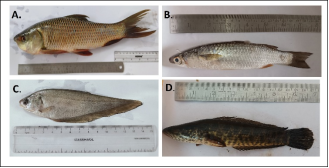
Figure 1. Fresh water fishes (A) Labeo rohita, (B) Mugil cephalus, (C) Notopterus notopterus, and (D) Chana punctatus.
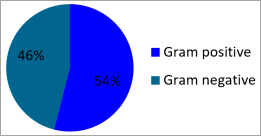
Figure 2. Percentage of Gram-positive and Gram-negative bacteria isolates.
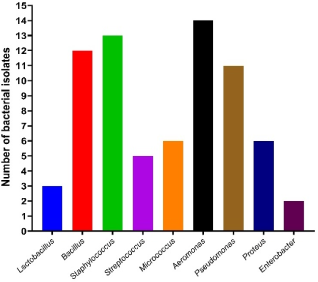
Figure 3. Occurrence of Bacterial Isolates from Freshwater Fishes.
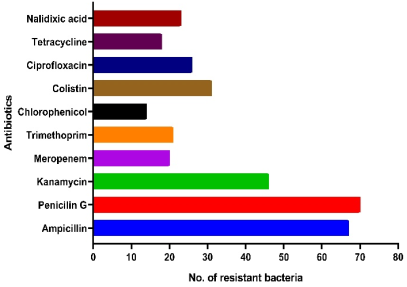
Figure 4. Antibiotic Resistance Pattern of Bacterial isolates.

Information



 Share This Article
 Twitter
 Linked In
 Facebook
 Copy
Copy Download