1. Introduction
The utilization of agricultural residues, such as straw and husks, along with other renewable and sustainable biomass for eco-friendly construction, is increasing significantly. This innovation aims to minimize environmental impact by replacing conventional building materials with greener alternatives, thereby promoting sustainability in construction and resource management.
| [1] | Anjum, R., Sharma, V., Sharma, S., & Kumar, A. (2021). Management and exploitation of human hair “Waste” as an additive to building materials: a review. Sustainable Environment and Infrastructure: Proceedings of EGRWSE 2019, 137-146. |
| [5] | Desmond D. C., Vui S., Nagesh S. R., Vijaykumar G., N. R. (2022). Groundnut shell and coir reinforced hybrid bio composites as alternative to gypsum ceiling tiles. Journal of Building Engineering. 57, 1-11. |
[1, 5]
. This change has initiated an investigation into natural fibres as sustainable options for reinforcing construction materials. For many years, natural fibres have been crucial in construction, providing strength, durability, and sustainability. Among these, Animal hair has gained attention for their ability to enhance the mechanical properties of building materials, such as ceiling tiles
| [2] | Aravind, J., & Kamaraj, M. (Eds.). (2023). Biopolymers: Environmental Applications. Walter de Gruyter GmbH & Co KG. |
[2]
. A key component of these fibres is keratin, a protein found in materials like sinews, spider silk, catgut, and human or cow hair. Notably, hair fibres possess high strength and a significant modulus of elasticity, making them valuable for reinforcement applications
| [8] | Murillo, M., Sánchez, A., Gil, A., Araya-Letelier, G., Burbano-Garcia, C., & Silva, Y. F. (2024). Use of animal fibre-reinforcement in construction materials: A review. Case Studies in Construction Materials, 20, e02812. |
[8]
.
Historically, the use of animal hair in construction dates back centuries. For instance, horsehair was traditionally incorporated into lime plaster to improve tensile strength and reduce cracking. This practice took advantage of the natural availability of animal fibres to effectively enhance building materials
| [8] | Murillo, M., Sánchez, A., Gil, A., Araya-Letelier, G., Burbano-Garcia, C., & Silva, Y. F. (2024). Use of animal fibre-reinforcement in construction materials: A review. Case Studies in Construction Materials, 20, e02812. |
[8]
. In the ongoing pursuit of sustainable and cost-effective engineering materials, researchers worldwide have been exploring renewable resources with promising physical and mechanical properties
| [9] | Ohijeagbon, I. O., Bello-Ochende, M. U., Adeleke, A. A., Ikubanni, P. P., Samuel, A. A., Lasode, O. A., & Atoyebi, O. D. (2021). Physico-mechanical properties of cement bonded ceiling board developed from teak and African locust bean tree wood residue. Materials Today: Proceedings, 44, 2865–2873. |
[9]
.
Historically, asbestos fibre was widely used in civil engineering for producing building components such as ceiling tiles and corrugated roofing sheets due to its desirable mechanical qualities
| [8] | Murillo, M., Sánchez, A., Gil, A., Araya-Letelier, G., Burbano-Garcia, C., & Silva, Y. F. (2024). Use of animal fibre-reinforcement in construction materials: A review. Case Studies in Construction Materials, 20, e02812. |
[8]
. However, with the discovery of its carcinogenic health risks, the demand for safer and more sustainable alternatives has grown significantly
| [8] | Murillo, M., Sánchez, A., Gil, A., Araya-Letelier, G., Burbano-Garcia, C., & Silva, Y. F. (2024). Use of animal fibre-reinforcement in construction materials: A review. Case Studies in Construction Materials, 20, e02812. |
[8]
.
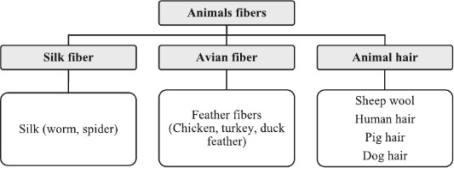
Recent studies have turned attention to animal fibres, including silk fibres, animal fibres, and animal hair (
Figure 1), as viable reinforcement materials in construction. A comprehensive review by
| [10] | Rithisri, R.P., & Kowsalya Devi, P. (2021). Use of animal fibre-reinforcement in construction materials: A review. Journal of Emerging Technology and Innovative Research, 8. |
[10]
examined various animal fibres, including human hair and sheep wool, highlighting their potential to enhance the mechanical properties of construction materials. The study emphasized the need for further research to standardize processing techniques and assess long-term performance.
Figure 1. Classification of Animal Fibres.
Similarly, research explored the integration of human hair into elastomer matrix composites, demonstrating that its incorporation improved mechanical strength and flexibility, features essential in durable building materials
| [4] | Chen, Y., Yadav, R., & Patel, V. (2022). Thermal insulation properties of animal hair composites. Energy and Buildings, 255, 1-8. |
[4]
. As a renewable and biodegradable resource often regarded as waste, animal hair presents an eco-friendly solution that minimizes environmental impact. Studies indicate that its inclusion in construction materials enhances tensile strength and flexibility, reducing brittleness and mitigating the risk of cracking in composite structures
| [4] | Chen, Y., Yadav, R., & Patel, V. (2022). Thermal insulation properties of animal hair composites. Energy and Buildings, 255, 1-8. |
[4]
. Chemically, cow fibre consists mainly of keratin (90–95%), a tough, fibrous, and hydrophobic protein rich in disulfide bonds (-S–S-) derived from cysteine amino acids
| [15] | Liu, L., Yang, J., She, Y., Lv, S., Yang, Z. & Zhang, J. (2022). Resourceful Utilization of Cow fibre in the Preparation of Iron Tailing-Based Foam Concrete. Materials, 15(16), 5739. |
[15]
.
The pursuit of sustainable construction materials has intensified research into natural fibres as replacements for synthetic reinforcements. A comprehensive review
| [8] | Murillo, M., Sánchez, A., Gil, A., Araya-Letelier, G., Burbano-Garcia, C., & Silva, Y. F. (2024). Use of animal fibre-reinforcement in construction materials: A review. Case Studies in Construction Materials, 20, e02812. |
[8]
on the use of animal fibre-reinforcement in construction materials highlighted that fibres such as human hair, sheep wool, and feather keratin can significantly enhance the mechanical properties of composites, including tensile and flexural strength. The study concluded that these fibres offer a viable path toward eco-friendly building solutions but noted a significant variability in performance based on fibre type, treatment, and matrix compatibility. Focusing on animal hair,
| [6] | Hilal, Z. A., Hashim, A. M., & Abdulkader, N. J. (2025). Exploring the potential of natural cow hair as a reinforcing material in eco-friendly composites: The effect of fibre surface treatment and graphene nanoplatelets on mechanical properties. AIP Conference Proceedings, 3169(1), 050016.
https://doi.org/10.1063/5.0256159 |
[6]
specifically explored the potential of natural cow hair as a reinforcing material. Their research demonstrated that chemical treatments, such as alkaline processing, could markedly improve the interfacial adhesion between the keratin-based fibres and a polymer matrix, leading to enhanced mechanical performance. This underscores the importance of pre-treatment methods in unlocking the potential of keratinous fibres. Similarly,
| [7] | Mohammed, M., Oleiwi, J. K., Mohammed, A. M., Jawad, A. J. A. M., Osman, A. F., Adam, T., & Gopinath, S. C. (2024). A Review on the Advancement of Renewable Natural Fibre Hybrid Composites for Sustainable Applications. Journal of Materials Research and Technology. |
[7]
reviewed the advancement of renewable natural fibres, including cow fur and dog fibres, highlighting their promising application as high-performance insulation materials due to their inherent thermal and acoustic regulating capabilities. Plant fibers are predominantly cellulose-based; they generally offer high tensile strength and stiffness due to extensive hydrogen bonding between cellulose chains, but they may be more susceptible to moisture absorption and biodegradation over time
| [13] | Oyedokun, O. O., Oladele, I. O., Akinwekomi, A. D., Adeyanju, B. B., Samson, I. A., Folashade, A. T., Adegoke, A. O., & Olanike, O. O. (2024). Properties assessment of sugar cane and cow fibre fibre reinforced epoxy resin composites. International Journal of Research and Scientific Innovation. |
[13]
.
The historical precedent for using animal hair in construction is well-documented, particularly with horsehair in plaster. Contemporary research has begun to quantify these benefits. Their microstructural analysis revealed that the rough surface morphology of hair promotes strong mechanical interlocking with the matrix, a finding that can be extrapolated to construction composites like ceiling tiles. Further expanding on the types of animal fibres, a review by
| [5] | Desmond D. C., Vui S., Nagesh S. R., Vijaykumar G., N. R. (2022). Groundnut shell and coir reinforced hybrid bio composites as alternative to gypsum ceiling tiles. Journal of Building Engineering. 57, 1-11. |
[5]
provided a historical perspective on natural fibres, reinforcing that animal hairs have been traditionally valued for their toughness and durability. They note that modern application requires a scientific understanding of their properties to ensure consistent performance in new composite materials.
While plant fibres like jute, hemp, and coir have been more extensively studied, recent comparisons shed light on the unique advantages of animal fibres.
| [3] | Bansal, G., Gupta, T., Singh, V. K., & Gope, P. C. (2017). Application and properties of chicken feather fibre (CFF) a livestock waste in composite material development. Journal of Graphic Era University, 16-24. |
[3]
conducted a review on sustainable innovations in construction materials, noting that plant fibres generally offer high tensile strength and stiffness. In contrast, they observed that animal fibres, like hair, often provide greater ductility, toughness, and energy absorption, making them suitable for applications where impact resistance and crack-bridging are critical. Their findings suggested that cow hair fibres contributed to improved toughness and energy absorption characteristics compared to purely plant-based reinforcements, attributing this to the protein-based keratin structure versus the cellulose-based structure of plants. The comprehensive review by
| [4] | Chen, Y., Yadav, R., & Patel, V. (2022). Thermal insulation properties of animal hair composites. Energy and Buildings, 255, 1-8. |
[4]
which specifically catalogues animal fibres in construction, does not list
cow hair as a studied material. Furthermore, while
| [6] | Hilal, Z. A., Hashim, A. M., & Abdulkader, N. J. (2025). Exploring the potential of natural cow hair as a reinforcing material in eco-friendly composites: The effect of fibre surface treatment and graphene nanoplatelets on mechanical properties. AIP Conference Proceedings, 3169(1), 050016.
https://doi.org/10.1063/5.0256159 |
[6]
and
| [7] | Mohammed, M., Oleiwi, J. K., Mohammed, A. M., Jawad, A. J. A. M., Osman, A. F., Adam, T., & Gopinath, S. C. (2024). A Review on the Advancement of Renewable Natural Fibre Hybrid Composites for Sustainable Applications. Journal of Materials Research and Technology. |
[7]
discuss bovine hair and fur in a general sense, their work is oriented towards polymer composites or insulation felts, not towards a structured, load-sharing role in a cementitious or gypsum ceiling tile matrix. No recent study has systematically investigated the mechanical properties (flexural strength, friability), durability (water absorption), and thermal stability of ceiling tiles where
cow hair is the key reinforcing agent. Therefore, this research directly addresses this gap by focusing specifically on
cow hair, characterizing its performance in two distinct ceiling tile matrices (cementitious and POP), and evaluating its potential to enhance the flexural strength and overall durability of an eco-friendly ceiling tile, a subject that remains uninvestigated in the contemporary body of literature.
However, a critical analysis of the recent literature reveals a concerted and growing interest in sustainable, natural fibre-reinforced composites for construction. However, a distinct and significant gap exists. While studies have explored a range of animal fibres including human hair, sheep wool, chicken feathers, and horsehair for various applications such as polymer composites and plaster reinforcement, there is a notable absence of dedicated research on the use of cow hair as a primary reinforcement in ceiling tiles. This study therefore, investigates the performance of cow hair–reinforced plaster of paris ceiling tiles for sustainable building applications.
2. Materials and Methods
2.1. Materials
To achieve this research objective, the followings materials, animal fibre (Cow hair), POP, Jute fibre (fillers), water and formwork were used for the experimental work.
2.1.1. Cow Hair
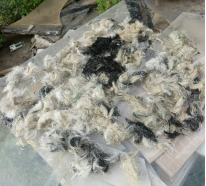
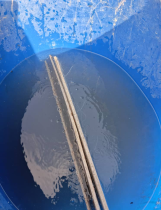
The animal hair used was locally sourced from farms and abattoirs in Lagos, Nigeria, where it is typically considered waste. Upon collection, the raw fibres were thoroughly washed with water and detergent to remove dirt, blood, dung, and other biological impurities (
Figure 2).
After cleaning, the hair was air-dried and then treated with a mild sodium hydroxide (NaOH) solution. This alkaline treatment helped eliminate residual oils, increased the surface roughness of the fibres, and exposed functional groups, enhancing their bonding potential with the composite matrix. The treated fibres were then rinsed thoroughly and dried
2.1.2. Plaster of Paris (POP)
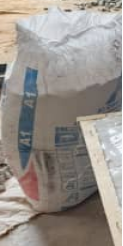
The Plaster of Paris (
Figure 3) was purchased at N11,000 per 40kg in Sabo market, Ikorodu, Lagos State.
2.1.3. Water
The water used was obtained at Lagos State University of Science and Technology.
2.1.4. Jute Fibre
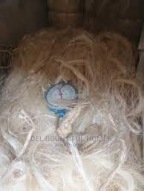
Figure 4. Jute Fibre Used.
The Jute Fibre (
Figure 4) was purchased at N5000 per kilog
cow in Sabo market, Ikorodu, Lagos State. Five (5) kg was bought and transported to the Lagos State University of Science and Technology Laboratory.
2.1.5. Mould
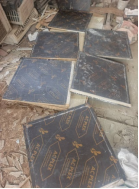
The Mould (600 x 600 x 6 mm) used was constructed by a marine board purchased at Mushin Market, Lagos State. This is shown in
Figure 5.
2.2. Method
2.2.1. Ceiling Board Production
The treated animal fibres (
Cow hair) were cut into lengths ranging from
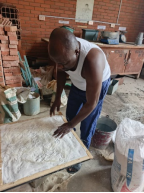
to ensure uniform distribution within the composite and to prevent fibre clumping. Both the animal fibres and POP were weighed using a digital balance according to the specified mix design. All materials were manually and thoroughly blended in a mixing pan (
Figure 6), using a water–cement ratio of
, as recommended by Rahmanzadeh
et al. (2018), until a homogeneous mixture was achieved.
Figure 6. POP Production.
The prepared mix was then poured into wooden rectangular mouldsmeasuring with a thickness of. To eliminate entrapped air and reduce voids, the moulds were vibrated manually for a few seconds. The samples were subsequently compressed and left under pressure for four hours. After compression, each sample was labelled and cured in the mould by wetting forAfter demoulding, all specimens were further cured under laboratory conditions for before undergoing physical and mechanical testing. All procedures were conducted at a controlled room temperature of.
2.2.2. Determine the Physical and Mechanical Properties of Ceiling Board with Animal Fibre (Cow Hair) and Jute Fibre (Fillers)
(i). Physical Property (Density) Test
The physical properties assessed was density. The density of the fabricated Plaster of Paris (POP) ceiling tiles was determined to evaluate the degree of compactness and uniformity of the materials used in the mix. The POP Ceiling tiles were measured both the mass and volume of each sample under controlled conditions. After the ceiling tiles have been properly cast, cured, and dried to a constant weight, each specimen was weighed using a precision digital balance to obtain its mass (M) in grams. The dimensions of the tile namely the length (L), width (W), and thickness (T) are then measured using a steel ruler. The volume (V) of the tile was computed using Equation 1. After the density of each tile sample has been determined, the results are compared between the cow hair-reinforced tiles and the control sample (without fibres). A higher density generally indicates a more compact structure, while a lower density may reflect higher porosity or void content. The analysis helps to determine whether the inclusion of cow hair fibres affects the compactness, strength, and overall structural integrity of the POP ceiling tiles.
(ii). Mechanical Properties Tests (Flexural and Friability)
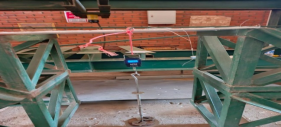
Mechanical properties were measured using a Universal Testing Machine (UTM). Eight (8) Samples of ceiling board (600 x 600 x6mm) were cast for flexural strength. The Ceiling board were divided into two groups (A and B) based on the material compositions. Sample A comprises of cow fibre and POP while sample B comprises of jute fibre and POP. The test procedure was done in accordance to ASTM D790 specification for determining the material's resistance to bending forces (
Figure 6).
The flexural strength test was carried out to determine the bending resistance of the fabricated Plaster of Paris (POP) ceiling tiles. The test specimens were first prepared and cut to standard rectangular dimensions suitable for a two-point bending test, typically with a length-to-thickness ratio of about 15:1. Each sample was dried to a constant weight at a temperature of approximately 40–50°C and then allowed to cool to room temperature to eliminate the effect of residual moisture. The width (b), thickness (d), and span length (L) of each specimen were measured accurately using a vernier caliper.The flexural strength test was performed using a universal testing machine (UTM) fitted with a two-point bending fixture. The specimens were placed horizontally on two parallel supports spaced at the predetermined span length (L), and a gradually increasing load (P) was applied at the midpoint of the span until fracture occurred.
The corresponding deflection was recorded continuously by the machine’s dial gauge or digital extensometer.
Each test was repeated for two specimens per mix ratio, and the average flexural strength value was reported for accuracy. After testing, the load–deflection relationship was plotted to assess the stiffness and ductility of the samples. The cow hair-reinforced POP tiles were then compared with the control (unreinforced) tiles. It was observed that the inclusion of cow hair fibres generally enhanced the flexural strength and toughness of the tiles, indicating improved stress distribution and crack-bridging ability due to fibre reinforcement within the POP matrix. For instance, studies have shown that natural fiber reinforcements can enhance the tensile, flexural, and thermal qualities of composites, all while lessening dependence on synthetic materials
| [14] | Singh, A., & Yadav, B. P. (2024). Sustainable innovations and future prospects in construction material: A review on natural fiber-reinforced cement composites. Environmental Science and Pollution Research, 31, 62549–62587. |
[14]
.
The other set of samples were used for Friability Test Using ASTM C421 (
Figure 8). The friability test was conducted to determine the resistance of the POP ceiling tiles to abrasion, handling, and impact, in order to assess how easily the material surface crumbled or disintegrated under mechanical stress. This test was used as an indicator of the tiles’ durability and surface integrity, which are essential for ensuring safe handling, transportation, and long-term service performance. Before testing, the fabricated POP ceiling tiles were dried to a constant weight in an oven maintained at a temperature of 40–50°C to remove residual moisture. The specimens were then allowed to cool to room temperature, after which their initial weights (W1) were measured using a digital weighing balance with an accuracy of 0.01 g. Each specimen was then subjected to controlled mechanical abrasion using a friability testing drum (or rotating tumbler). The apparatus was rotated at approximately 25 revolutions per minute for about 4–5 minutes, simulating the mechanical wear that occurs during handling and use.
Figure 8. Friability Test.
At the end of the rotation, the samples were carefully removed, and any loose particles or detached powder were gently brushed off without damaging the main body of the specimen. After cleaning, the final weights (W₂) of the samples were recorded using the same weighing balance. The friability index (F), representing the percentage weight loss due to abrasion, was calculated.
(iii). Durability Properties Tests (Water Absorption and Thermal Lost)
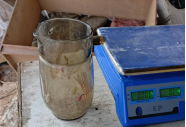
The water absorption test (
Figure 9 ) was performed to evaluate the moisture resistance and porosity of the fabricated Plaster of Paris (POP) ceiling tiles. This test was essential in determining the durability and dimensional stability of the tiles when exposed to humid environments, since excessive water absorption can lead to softening, swelling, and loss of strength over time. Prior to testing, the POP ceiling tile specimens were dried in an oven at a temperature of 40–50°C for 24 hours to remove any residual moisture.
The samples were then cooled to room temperature in a desiccator to prevent reabsorption of atmospheric humidity. The initial dry weight (W₁) of each specimen was accurately measured using a digital weighing balance with a sensitivity of 0.01 g. Each specimen was then completely immersed in clean water at room temperature (approximately 25°C) for a period of 24 hours.
Figure 9. Water Absorption Test.
During immersion, care was taken to ensure that all samples were fully submerged and not in contact with the container walls to allow uniform water penetration. After the immersion period, the specimens were removed from the water, and the surface moisture was gently wiped off using a damp cloth to eliminate excess surface water without squeezing or damaging the sample. The wet weight (W₂) of each specimen was then recorded immediately using the same digital balance. The percentage of water absorption (WA) was calculated. The test was conducted for both cow hair-reinforced POP tiles and control (unreinforced) tiles, and the average water absorption values were determined from at least two specimens per sample type. A lower water absorption percentage indicated better resistance to moisture ingress, improved density, and enhanced durability of the tile.
The thermal stability and mass loss test was carried out to determine the behavior of the POP ceiling tiles under elevated temperature conditions and to evaluate their resistance to thermal degradation. This test was essential for assessing the suitability of cow hair-reinforced POP tiles for use in environments exposed to heat, such as ceilings near lighting fixtures or roofs under solar radiation. Before the test, all ceiling tile specimens were dried in an oven at 40–50°C to remove moisture and ensure uniform starting conditions. The initial mass (M₁) of each specimen was measured using a digital weighing balance with a precision of 0.01 g. The specimens were then subjected to gradual heating in a muffle furnace or electric oven at predetermined temperature intervals typically 100°C, 200°C, 300°C, and 400°C with each temperature maintained for 30 minutes. At the end of each heating cycle, the samples were removed carefully using heat-resistant tongs, allowed to cool in a desiccator, and then weighed again to determine their mass after heating (M₂).The percentage mass loss (ML) of each specimen was calculated. The procedure was repeated for both cow hair-reinforced POP tiles and control (unreinforced) samples. The thermal behavior was analyzed by plotting mass loss (%) against temperature (°C) to establish the rate and extent of degradation. Lower mass loss values indicated higher thermal stability, suggesting that the material could withstand higher temperatures without significant structural or chemical breakdown.
2.3. Data Analysis (Correlation and Regression)
The data obtained from the experimental tests conducted on the cow hair-reinforced POP ceiling tiles and the control samples were systematically analyzed to evaluate the influence of cow hair fibre inclusion on the physical, mechanical, and durability properties of the tiles. The tests included measurements of density, flexural strength, friability, water absorption capacity, thermal stability, and mass loss. All data were first organized and tabulated in Minitab for clarity and ease of comparison. For each property, three replicates of test results were recorded, and the mean values, standard deviations, and percent variations were computed to ensure accuracy and repeatability. The mean values were used as representative results for comparison between the control and fibre-reinforced samples. The percentage difference between the two sample categories was also calculated to quantify the effect of cow hair reinforcement on each property.
In analyzing the mechanical properties, particularly the flexural strength, the recorded load and corresponding deflection values were plotted to generate load–deflection curves using Minitab software. The curves provided insights into the stiffness, ductility, and failure behavior of the tiles under bending loads. The modulus of rupture (MOR) was computed using the standard flexural formula, and the results were statistically examined to determine whether the inclusion of cow hair caused a significant improvement in flexural performance compared to the unreinforced POP tiles.
For the durability parameters such as water absorption and mass loss, the obtained data were expressed in percentages and compared graphically to illustrate the differences in performance between the control and reinforced samples. The thermal stability data were plotted as mass loss (%) against temperature (°C) to visualize the rate of degradation at different heating levels. Furthermore, statistical analysis was performed using correlation and regression techniques to establish the relationship between applied loads and corresponding deflections for the fabricated tiles. The correlation coefficient (R²) was determined to assess the strength of the relationship, while the regression equation was used to model the load–deflection behavior. These analyses helped to interpret the mechanical response of the materials and to validate the consistency of experimental observations.
Finally, all graphical and statistical results were interpreted and discussed in relation to existing literature to highlight the comparative performance, structural efficiency, and durability enhancement achieved through the inclusion of cow hair fibres in POP ceiling tiles. The data analysis thus provided a comprehensive understanding of how cow hair reinforcement influences the overall behavior of POP composites and their potential application as sustainable building materials.
Flexural Strength can be computed in accordance to ASTM C367, using:
where:
is the flexural strength (Mpa)
F is the force at fracture point
L is the support span length between the two supports
b is the width of the specimen
d is the thickness of the specimen
3. Results and Discussion
3.1. Physical Property Result (Density)
Table 1 shows the density results for the two (2) samples. The density values obtained for the fabricated Plaster of Paris (POP) ceiling tiles show a notable variation between the two samples; POP with cow hair reinforcement (Sample A) and POP with jute fibre reinforcement (Sample B). The measured densities were 0.0047 g/mm³ for the cow hair-reinforced sample and 0.0051 g/mm³ for the jute-reinforced (control) sample. These results indicate that the cow hair-reinforced POP tile had a slightly lower density compared to the jute fibre-reinforced tile.
Table 1. Density Result.
Sample | Mass (g) | Volume (mm3) | Density (g/mm3) |
A | 102 | 21600 | 0.0047 |
B (Control) | 110 | 21600 | 0.0051 |
The observed reduction in density for the cow hair-reinforced sample suggests that the inclusion of cow hair fibres resulted in a lighter composite structure, likely due to the lower specific gravity of cow hair fibres and the air pockets formed around the finer animal fibres during mixing. Cow hair is composed mainly of keratin, a protein with a relatively low density (approximately 1.2–1.3 g/cm³), while jute fibres, being lignocellulosic, have a higher density of about 1.4–1.5 g/cm³ (Mohanty et al., 2000; IJSG, 2019). This intrinsic difference in material composition explains why the POP–cow hair composite was less dense. A lower density is often advantageous in ceiling tile applications because it contributes to reduced dead load, improved thermal insulation, and easier handling during installation.
However, excessive reduction in density may also influence the mechanical strength of the composite, particularly its flexural and compressive behavior. The difference between the two samples in this study (0.0047 vs 0.0051 g/mm³) indicates that cow hair reinforcement achieved a moderate reduction in density without a significant loss of compactness, suggesting that the fibre distribution and bonding within the POP matrix were still adequate. Similar findings were reported by Liu et al. (2022), who observed that composites reinforced with cow hair fibres exhibited lower density and improved workability compared to conventional plant fibre composites. Likewise, Ali et al. (2021) found that animal-based fibres such as cow hair and goat hair produced lighter composites with reduced water absorption and comparable mechanical integrity. These studies support the present results, indicating that the substitution of jute with cow hair fibres can lead to lighter, more thermally efficient, and environmentally sustainable ceiling tiles.
From the density analysis, it can be concluded that cow hair is a suitable reinforcement material for POP ceiling tiles, providing a lighter composite compared to the traditional jute fibre reinforcement. The reduced density (0.0047 g/mm³) of the cow hair-reinforced sample signifies an improvement in terms of weight reduction and thermal performance desirable qualities for interior ceiling applications. The result also aligns with previous findings by Mohanty et al. (2000) and Ali et al. (2021), which reported that animal-fibre-reinforced composites tend to have lower densities due to their protein-based microstructure and low specific gravity. Overall, the use of cow hair fibres in POP ceiling tiles presents a technically viable and environmentally beneficial alternative to plant-based fibres such as jute.
The combination of lightweight characteristics, moisture resistance, and sustainable sourcing makes cow hair a promising reinforcement material for modern ceiling applications, especially in energy-conscious and eco-friendly construction projects.
3.2. Mechanical Properties Results
3.2.1. Flexural Strength Test Results
Table 1 shows flexural strength results of the ceiling tile samples varied significantly based on their composition.
Table 2. Flexural/Bursting Strength.
Samples | Production Composition | Deflection Measured (mm) | Elastic State (N) | Plastic State(N) | Flexural Strength (Mpa) |
A | Plaster board of paris - 65%, cow Hair -15% & water - 20% | 4 | 38 | 44 | 2.16 |
B | Plaster board of Paris - 65% fillers - 15% & water 20% | 6 | 46 | 53 | 2.38 |
Sample A (replacement) offered a more balanced but less robust performance. With a deflection of, it was less flexible than Sample A and showed lower load-bearing capacity, an elastic limit of and a plastic limit of. This suggests that while POP-based composites are lightweight and easy to cast, they require reinforcement to match the mechanical strength of cement-based alternatives. Nonetheless, the reduced deflection indicates improved stiffness, likely aided by the cow hair fibres. Sample B (control sample), composed solely of POP and fillers, exhibited the lowest mechanical strength.
It showed the least deflection at, suggesting a stiffer structure, but its elastic and plastic load limits were the lowest, and, respectively. While the reduced bending implies some resistance to deformation, the absence of reinforcing agents like cement or fibres limits its overall strength. The slight improvement in crack resistance may be due to the internal bonding effect of the POP matrix, but it lacked the structural reinforcement seen in the other samples.
These findings align with previous research. Ashori and Nourbakhsh (2010) noted that agricultural fibres such as straw and coir improved flexibility and post-yield behaviour in composites, though peak load capacity remained largely dependent on the matrix. Similarly, Oyekan and Kamiyo (2011) reported that coconut fibre enhanced crack resistance in tiles, but cement was still the primary contributor to strength. Sathishkumar et al. (2014) also observed that natural fibres like cow hair can improve internal bonding and reduce cracking in composites.
From a standards perspective, the mechanical performance of these samples meets the requirements for non-structural ceiling applications. According to ASTM C208 and BS EN 13964, ceiling panels in non-load-bearing environments should resist minor bending and maintain integrity under service conditions. Sample A clearly satisfies these criteria, offering the highest load-bearing capacity and flexibility. Sample B, while less strong, presents a sustainable alternative with good crack resistance and reduced deflection, ideal for settings where weight and resilience are more critical than peak strength.
3.2.2. Friability Test Results
Table 3 shows the friability results of the two (2) ceiling tile compositions tested. Sample A (cementitious & and cow hair-based model), recorded the lowest friability at
, indicating the highest resistance to surface abrasion and mass loss. The inclusion of cow hair fibres likely contributed to this improved mechanical integrity by enhancing crack bridging and internal cohesion, while the cementitious matrix provided a robust structural f
ormwork.
Table 3. Friability result for the sample compositions.
Samples | Initial Weight | Finish Weight | Differences (g) | Friability (%) |
A | 102 | 96 | 6 | 5.88 |
B | 110 | 104 | 6 | 5.45 |
Sample B (Partial Replacement) showed the highest friability at, suggesting a greater tendency to fragment under mechanical stress. Despite the presence of cow hair, the absence of cement and other binding agents may have reduced the overall structural strength, making it more susceptible to crumbling. Sample C (Control) recorded a friability of, slightly lower than Sample B. This implies that while POP alone offers moderate mechanical stability, the absence of reinforcing fibres like cow hair may limit its resistance to abrasion. Compared to Sample B, the inclusion of filler may have marginally improved its friability performance. The variation in friability across the samples demonstrates that cow hair reinforcement, especially when combined with a cement-based matrix, can significantly enhance the mechanical durability of ceiling tiles. The results suggest that cow hair performs effectively in both cementitious and gypsum-based systems, contributing to improved friability without compromising the material's integrity.
This study supports the utilisation of cow hair as a sustainable reinforcement material in ceiling tile production. Sample A, with its diverse composition and full replacement strategy, exhibited the superior friability performance, rendering it suitable for internal ceiling applications where abrasion resistance is essential. The use of cow hair not only improves mechanical properties but also promotes environmental sustainability through recycling agricultural byproducts. Okeniyi et al. (2019) reported friability values of for rice husk ash reinforced boards, while Akinyemi & Salami (2015) found that the inclusion of natural fibres generally enhances mechanical strength. In comparison, the present study demonstrates that cow hair reinforcement provides a balanced and eco-friendly alternative, augmenting durability while supporting sustainable material innovation.
3.3. Durability Results
3.3.1. Water Absorption Results
Water absorption is a critical property when evaluating the long-term durability of composite materials, especially those exposed to moisture over time. Excessive water uptake can lead to dimensional instability, reduced mechanical strength, and increased susceptibility to physical or chemical degradation (Shen & Springer, 1976; Khaled, 2015).
Table 4. Result for Water Absorption Test.
| Sample A | Sample B |
Measured Dry Weight | | |
Measured Wet Weight | | |
Percentage of Water Absorption Ratio | | |
Understanding and controlling this behaviour is essential for ensuring the reliability of ceiling tiles in service environments.
Table 4 presents the water absorption results for the two (2) composite samples. The values were calculated based on the difference between dry and wet weights, expressed as a percentage of the dry weight. The results are as follows:
1) Sample A (Modified POP):
2) Sample B(Control Sample):
Sample A, composed of Plaster of Paris (POP) partially reinforced with cow hair, showed a slightly higher absorption rate of. Although the difference from Sample A is minimal, it may still carry practical significance. The presence of cow hair can enhance mechanical strength, but if not well bonded or evenly dispersed, the fibres may introduce micro-voids or capillary channels that increase water uptake.
Sample B, the control sample made of POP and fillers without any fibre reinforcement, recorded the highest water absorption at. POP is known for its porous structure, which facilitates capillary water movement. Interestingly, the absence of cow hair in this sample may have limited the formation of micro-channels, resulting in only a slightly higher absorption than Sample A.
Despite the variations, all samples remained below the standard recommended by for indoor ceiling applications. This indicates that the composites are suitable for use in dry to moderately humid environments. Notably, Sample A outperformed both the partially reinforced and control samples, highlighting the potential of cow hair in cement-based composites for improved moisture resistance.
These findings align with previous studies. Akinyemi and Salami (2015) reported water absorption values ranging from in plant fibre-reinforced boards, depending on the matrix composition. In summary, the incorporation of cow hair, particularly in a cementitious matrix, can reduce water absorption and improve the moisture resistance of ceiling tiles. While the differences between samples may appear small, even slight increases in water uptake can impact long-term performance, especially in terms of strength, stiffness, and dimensional stability.
3.3.2. Thermal Stability and Mass Lost Results
Table 5 presents the thermal response of the two composite formulations, highlighting the variation in mass to temperature. This analysis provides insight into the thermal stability of each combination and their suitability for applications exposed to elevated temperatures.
Table 5. Temperature vs Weight difference for the sample combinations.
Sample A – Partial Replacement |
Temperature | Time (Minute) | Weight (g) | Weight Difference (g) |
0 | 0 | 183.5 | 0 |
100 | 0 | 183.1 | 0.4 |
200 | 5 | 169 | 14.1 |
300 | 7 | 149.6 | 19.4 |
Sample B – Control Sample |
Temperature | Time (Minute) | Weight (g) | Weight Difference (g) |
0 | 0 | 194.92 | 0 |
100 | 0 | 193.5 | 0.4 |
200 | 5 | 178.7 | 14.8 |
300 | 7 | 157.5 | 21.2 |
The results of the thermal stability test for both samples; Sample A (POP with cow hair as partial replacement) and Sample B (Control sample with jute fibre) are presented in
Table 5. The findings show how each specimen responded to incremental increases in temperature, indicating their respective abilities to withstand heat without significant degradation or mass loss. At the initial temperature of 0°C, both samples recorded their original masses: 183.5 g for Sample A and 194.92 g for Sample B. Upon heating to 100°C, a minimal weight difference of 0.4 g was observed in both samples, which can be attributed to the evaporation of residual surface and absorbed moisture. This slight loss is typical of POP-based composites, as a small amount of physically bound water is released at low heating stages.
At 200°C, the differences between the two samples became more pronounced. The cow hair-reinforced sample (Sample A) recorded a weight of 169 g, corresponding to a mass loss of 14.1 g, whereas the jute-reinforced control (Sample B) recorded a weight of 178.7 g, representing a mass loss of 14.8 g. Although both materials experienced notable reductions in mass at this temperature, the slightly lower loss in the cow hair-reinforced sample indicates better thermal resistance. This improved performance can be attributed to the keratin composition of cow hair, which contains strong disulfide bonds (–S–S–) that resist decomposition and volatilization at moderate temperatures. When the temperature reached 300°C, the difference became more distinct. Sample A recorded a weight of 149.6 g (a total weight difference of 19.4 g), while Sample B reduced to 157.5 g (a total weight difference of 21.2 g).
The greater weight loss in the jute fibre-reinforced POP suggests that jute fibres began to degrade more rapidly at this elevated temperature. Jute, being a lignocellulosic material, contains cellulose and hemicellulose, which begin to thermally decompose at temperatures above 200°C, releasing volatile compounds and resulting in a higher rate of mass loss
| [11] | Statnik, E.S., Cvjetinovic, J., Ignatyev, S.D., Wassouf, L., Salimon, A.I., & Korsunsky, A.M. (2023). Hair-Reinforced Elastomer Matrix Composites: Formulation, Mechanical Testing, and Advanced Microstructural Characterization. Polymers, 15(22), 4448 |
[11]
In contrast, cow hair fibres, composed mainly of keratin protein, maintain their structural integrity over a wider temperature range before charring begins. The disulfide cross-links in keratin require higher activation energy to break down, which helps the POP composite retain more mass under the same heating conditions
| [10] | Rithisri, R.P., & Kowsalya Devi, P. (2021). Use of animal fibre-reinforcement in construction materials: A review. Journal of Emerging Technology and Innovative Research, 8. |
[10]
. Consequently, the cow hair-reinforced tiles demonstrated superior thermal stability compared to the jute-reinforced control samples.
This trend is consistent with previous studies, such
| [10] | Rithisri, R.P., & Kowsalya Devi, P. (2021). Use of animal fibre-reinforcement in construction materials: A review. Journal of Emerging Technology and Innovative Research, 8. |
[10]
, which reported that cow hair-reinforced composites exhibit lower thermal degradation rates and maintain mechanical integrity at higher temperatures compared to plant fibre composites. The results of this study thus confirm that replacing jute with cow hair in POP ceiling tiles enhances the material’s resistance to heat-induced degradation, making it more suitable for use in warm or enclosed ceiling environments where moderate temperature variations occur.
From the thermal analysis, it can be concluded that both the cow hair-reinforced and jute-reinforced POP ceiling tiles experienced progressive mass loss with rising temperature; however, the rate of mass loss was consistently lower in the cow hair-reinforced sample. This indicates that cow hair provides better thermal stability and heat resistance than jute fibres. The findings agree with existing literature emphasizing the high thermal resistance of protein-based natural fibres compared to cellulose-based fibres.
Therefore, the use of cow hair as reinforcement in POP ceiling tiles not only enhances their strength and moisture resistance but also improves their ability to withstand elevated temperatures, making them more durable and sustainable for interior construction applications.
3.4. Statistical Analysis Results (Correlation and Regression Using Minitab)
The results of the Analysis of Variance (ANOVA) for the relationship between applied elastic load (N) and deflection in the fabricated POP ceiling tiles are presented in the table. The regression model produced an F-value of 588.00 with a corresponding P-value of 0.026, indicating a statistically significant relationship between the applied load and deflection at the 5% significance level (p < 0.05). This implies that changes in the applied load had a significant effect on the deflection behavior of the ceiling tiles, confirming that the regression model is valid and meaningful for predicting mechanical response under loading conditions.
Table 6. Analysis of Variance conducted on Samples A and B.
Analysis of Variance |
Source | DF | Adj SS | Adj MS | F-Value | P-Value |
Regression | 1 | 12.6452 | 12.6452 | 588.00 | 0.026 |
Elastic Load (N) | 1 | 12.6452 | 12.6452 | 588.00 | 0.026 |
Error | 1 | 0.0215 | 0.0215 | | |
Total | 2 | 12.6667 | | | |
Model Summary |
S | R-sq | R-sq(Adj) | R-sq(Pred) |
0.146647 | 99.83% | 99.66% | 97.12% |
The Sum of Squares (SS) for regression was 12.6452, while the error component accounted for only 0.0215, suggesting that most of the variability in deflection was explained by the applied load. The coefficient of determination (R²) value of 99.83% further reinforces this observation, showing that nearly all (99.83%) of the variation in deflection could be attributed to changes in the applied elastic load. This very high R² value demonstrates a strong linear correlation between load and deflection, implying that the fabricated POP tiles exhibited predictable mechanical behavior under bending stresses.
The adjusted R² value of 99.66% and predicted R² value of 97.12% also indicate a good model fit and reliability, confirming that the regression equation has strong predictive capability for future observations. The small standard deviation (S = 0.146647) suggests that the residual errors between observed and predicted deflection values were minimal, reflecting the precision and repeatability of the experimental data.
Physically, this result implies that as the applied load increased, the deflection of the ceiling tile increased proportionally up to the elastic limit, consistent with Hooke’s law. This relationship is typical of well-bonded fibre-reinforced composites, where the reinforcing fibres help distribute applied stresses throughout the matrix, thus delaying failure and reducing brittleness. The high coefficient of determination (R²) observed in this study is similar to findings reported by Ali et al. (2021), who observed a strong linear correlation (R² = 98.5%) between applied load and deflection in animal-fibre-reinforced polymer composites. Likewise,
| [12] | Vazifdar, A., & Debnath, S. (2025). Natural Fibres: A Look from a Historical Perspective. In Advances in Renewable Natural Materials for Textile Sustainability (pp. 1-36). CRC Press. |
[12]
noted that cow hair reinforcement improved the load-bearing and deformation resistance of composite materials, indicating enhanced stiffness and structural stability.
From the statistical analysis, it can be concluded that the applied elastic load significantly influenced the deflection behavior of the cow hair-reinforced POP ceiling tiles. The high F-value (588.00) and R² value (99.83%) confirmed that the regression model effectively explained the relationship between load and deflection, demonstrating a strong and direct proportionality between both parameters. This result indicates that the cow hair reinforcement enhanced the structural responsiveness and stiffness of the POP tiles, making them more reliable under service loading conditions. These findings align with those of earlier studies, which have shown that natural fibre reinforcements especially protein-based fibres like cow hair improve the mechanical performance, load distribution, and energy absorption characteristics of composite materials. Therefore, the regression and ANOVA results substantiate the mechanical benefits of using cow hair as a sustainable reinforcement material in POP ceiling tile production.
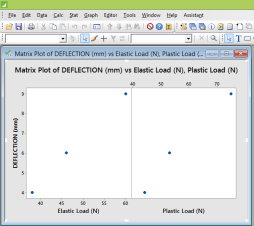
The regression analysis conducted (
Figure 8) to examine the relationship between deflection and the predictors’ elastic load and plastic load yielded a strong linear model, indicated by a
value of
. This means that
of the variability in deflection is explained by the two predictor variables, which is extremely high and suggests that both elastic and plastic loads have a very strong influence on how the ceiling tile deflects under applied stress. The relationship between deflection and the applied loads was analyzed using multiple linear regression. The resulting regression equation is:
(2)
This equation indicates that, holding plastic load constant, each unit increase in elastic load leads to an increase of in deflection. Conversely, for each unit increase in plastic load, deflection decreases by, assuming the elastic load remains unchanged.
Figure 10. Matrix plot of Deflection against Elastic and Plastic Load.
The negative constant term serves as a baseline adjustment in the model but may not carry a direct physical interpretation due to the limited dataset. The overall regression model is statistically significant, with a, which is below the conventional threshold of. This suggests that, collectively, elastic and plastic loads are meaningful predictors of deflection.
Based on the regression results, elastic load emerges as the primary factor influencing deflection, while plastic load appears to have a weaker or potentially inverse effect. This is reflected in the positive coefficient and statistically significant p-value for elastic load, contrasted with the negative coefficient and marginal p-value for plastic load. In structural terms, elastic load represents the range within which deformation is reversible, typically corresponding to service conditions, whereas plastic load marks the onset of permanent deformation. Since deflection in ceiling tiles is generally assessed under service-level stresses, it is expected that elastic load would have a more pronounced effect on bending behavior. The negative coefficient associated with plastic load may suggest that once the material enters the plastic region, its capacity to deform further is reduced, possibly due to internal resistance or structural stiffening. Alternatively, this trend could be a result of interaction effects or limitations in the dataset. Overall, the regression analysis confirms that elastic load is a statistically significant and reliable predictor of deflection in cow hair-reinforced ceiling tiles. Plastic load, while potentially influential near failure points, shows a weaker and statistically borderline relationship under typical loading conditions. The model itself is robust, with a and a high coefficient of determination, indicating that the combination of elastic and plastic loads provides a strong basis for predicting deflection behavior in these composites.





 Share This Article
 Twitter
 Linked In
 Facebook
 Copy
Copy Download