
Agriculture and forestry are the life support system for tribal. Tribal men and women have been involved in agriculture since the inception of tribal civilization. Our study included 4 revenue blocks, namely Koraput, Jeypore, Kundra, and Boipariguda, of Koraput district of Odisha. We interviewed about 120 stakeholders from farming families using PRA tools and a pre-structured questionnaires. Rice, Finger millet, and Maize were the most commonly cultivated cereals, providing food, nutrition, and livelihood support. In this agricultural system, women farmers play a vital role in preparing organic formulations, as they are the main stakeholders in the entire agricultural operation. Basically, the traditional farming practices they followed meant low-level sustainable production for year-round consumption only. However, tribal farming communities aged 20-35 were found to adopt the introduction of high-yielding and resistant varieties, contributing to enhanced production and economic benefits. Production of local and resistant, high-yielding varieties was compared with the use of both traditional and modern sustainable practices. However, poor infrastructure, economic instability, and a lack of knowledge in commercial-scale cultivation often keep production gains below desired levels. Govt. and private sector participation can improve modern technical knowledge and combine traditional agricultural practices with improved agro-economic practices to enhance sustainable cereal production for livelihoods, socio-economic development, and self-sustainability of vulnerable, resource-poor tribal communities in an era of climate change and modern agricultural systems.
| Published in |
American Journal of Science, Engineering and Technology (Volume 11, Issue 4)
This article belongs to the Special Issue Advances in Translational Research, Biotechnology, and Sustainable Bio-Innovations |
| DOI | 10.11648/j.ajset.20261104.28 |
| Page(s) | 389-398 |
| Creative Commons |
This is an Open Access article, distributed under the terms of the Creative Commons Attribution 4.0 International License (http://creativecommons.org/licenses/by/4.0/), which permits unrestricted use, distribution and reproduction in any medium or format, provided the original work is properly cited. |
| Copyright |
Copyright © The Author(s), 2026. Published by Science Publishing Group |
Women Empowerment, Sustainable Cereal Production, Tribal Dominated, Stakeholders, Koraput District
Sl.No | CROP | CROP VARIETY | Crop management | Investment(INR/acre) | Average Production (quintals /acre) | Gross value(INR/acre) | Profit (INR/acre) |
|---|---|---|---|---|---|---|---|
1 | Rice | Kalajera (Local) | ITK+Low fertilizer use +No chemical pesticide | 12,276 | 19.2 | 36,480 | 24,204 |
Swarna-sub 1 (HighYielding) | ITK + moderate fertilizer use + moderate pesticide use in emergency | 18,370 | 36.3 | 68,970 | 50,600 | ||
2 | Millet | Bada mandi(Local) | ITK+Low fertilizer use +No chemical pesticide | 8,500 | 14.6 | 40,880 | 32,380 |
Bhairabi(High yielding) | ITK+ moderate fertilizer use + moderate pesticide use in emergency | 11,500 | 25.9 | 72,520 | 61,020 | ||
3 | Maize | Decan-109 | ITK+Low fertilizer use +No chemical pesticide | 13,200 | 13.1 | 24,890 | 11,690 |
Madhuri | ITK+ moderate fertilizer use + moderate pesticide use in emergency | 16,400 | 18.4 | 34,960 | 18,560 |
Source of Variation | DF | Sum of Squares | Mean Squares | F-Calculated | Significance |
|---|---|---|---|---|---|
Replication | 1 | 142,572.000 | |||
Factor A-crop | 2 | 68,863,810.667 | 34,431,905.333 | 130.862 | 0.00005 |
Factor B-crop management | 1 | 50,380,812.000 | 50,380,812.000 | 191.478 | 0.00004 |
Interaction A X B | 2 | 5,996,024.000 | 2,998,012.000 | 11.394 | 0.01373 |
Error | 5 | 1,315,580.000 | 263,116.000 |
B1 | B2 | Mean A | |
|---|---|---|---|
A1 | 12,276.000 | 18,370.000 | 15,323.000 |
A2 | 8,500.000 | 11,500.000 | 10,000.000 |
A3 | 13,200.000 | 16,400.000 | 14,800.000 |
Mean B | 11,325.330 | 15,423.330 |
Factors | C.D. | SE(d) | SE(m) |
|---|---|---|---|
Factor(A) | 953.235 | 362.709 | 256.474 |
Factor(B) | 778.313 | 296.151 | 209.410 |
Factor(A X B) | 1,348.077 | 512.948 | 362.709 |
Source of Variation | DF | Sum of Squares | Mean Squares | F-Calculated | Significance |
|---|---|---|---|---|---|
Replication | 1 | 4.563 | |||
Factor A | 2 | 294.000 | 147.000 | 784.824 | 0.00000 |
Factor B | 1 | 378.563 | 378.563 | 2,021.125 | 0.00000 |
Interaction A X B | 2 | 69.627 | 34.813 | 185.866 | 0.00002 |
Error | 5 | 0.937 | 0.187 | ||
Total | 11 | 747.690 |
B1 | B2 | Mean A | |
|---|---|---|---|
A1 | 19.200 | 36.300 | 27.750 |
A2 | 14.600 | 25.900 | 20.250 |
A3 | 13.100 | 18.400 | 15.750 |
Mean B | 15.633 | 26.867 |
Factors | C.D. | SE(d) | SE(m) |
|---|---|---|---|
Factor(A) | 0.804 | 0.306 | 0.216 |
Factor(B) | 0.657 | 0.250 | 0.177 |
Factor(A X B) | 1.137 | 0.433 | 0.306 |
Factors | C.D. | SE(d) | SE(m) |
Source of Variation | DF | Sum of Squares | Mean Squares | F-Calculated | Significance |
|---|---|---|---|---|---|
Replication | 1 | 3,328,533.333 | |||
Factor A | 2 | 1,670,055,000.000 | 835,027,500.000 | 2,207.821 | 0.00000 |
Factor B | 1 | 1,835,213,333.333 | 1,835,213,333.333 | 4,852.323 | 0.00000 |
Interaction A X B | 2 | 322,881,266.667 | 161,440,633.333 | 426.851 | 0.00000 |
Error | 5 | 1,891,066.667 | 378,213.333 | ||
Total | 11 | 3,833,369,200.000 | Total |
B1 | B2 | Mean A | |
|---|---|---|---|
A1 | 36,480.000 | 68,970.000 | 52,725.000 |
A2 | 40,880.000 | 72,520.000 | 56,700.000 |
A3 | 24,890.000 | 34,960.000 | 29,925.000 |
Mean B | 34,083.330 | 58,816.670 |
Factors | C.D. | SE(d) | SE(m) |
|---|---|---|---|
Factor(A) | 1,142.864 | 434.864 | 307.495 |
Factor(B) | 933.145 | 355.065 | 251.069 |
Factor(A X B) | 1,616.254 | 614.991 | 434.864 |
Source of Variation | DF | Sum of Squares | Mean Squares | F-Calculated | Source of Variation |
|---|---|---|---|---|---|
Replication | 1 | 1,575,425.333 | Replication | ||
Factor A | 2 | 2,161,428,210.667 | 1,080,714,105.333 | 5,124.750 | Factor A |
Factor B | 1 | 1,236,513,612.000 | 1,236,513,612.000 | 5,863.552 | Factor B |
Interaction A X B | 2 | 271,401,704.000 | 135,700,852.000 | 643.494 | Interaction A X B |
Error | 5 | 1,054,406.667 | 210,881.333 | Error | |
Total | 11 | 3,671,973,358.667 | Total |
Factors | C.D. | SE(d) | SE(m) |
|---|---|---|---|
Factor(A) | 1,142.864 | 434.864 | 307.495 |
Factor(B) | 933.145 | 355.065 | 251.069 |
Factor(A X B) | 1,616.254 | 614.991 | 434.864 |
Factors | C.D. | SE(d) | SE(m) |
|---|---|---|---|
Factor(A) | 853.386 | 324.716 | 229.609 |
Factor(B) | 696.786 | 265.130 | 187.475 |
Factor(A X B) | 1,206.869 | 459.218 | 324.716 |
HH | House Hold |
GHG | Greenhouse Gases |
GP | Gram Panchayat |
SHG | Self-Help Group |
FPO | Farmer Producer Group |
ITK | Indigenous Technical Knowledge. |
PRA | Participatory Rural Appraisal |
ANOVA | Analysis of Variance |
SPSS | Statistical Package for the Social Sciences |
CD | Critical Difference |
WFC | Women Farming Communities |
| [1] | Ball, J. A. (2020). Women farmers in developed countries: a literature review. Agriculture and Human Values, 37(1), 147-160. |
| [2] | Dash, S. R., Mishra, P. J., Rai, A. K., Das, H and Rautray, B. K(2021) a comparative study on yield performance of finger millet varietiesunder rainfed conditions in south eastern ghat zone of odisha, International Journal of Recent Scientific Research Research Vol. 12, Issue, 05 (B), pp. 41759-41764. |
| [3] | FAO et al. (2020), The State of Food Security and Nutrition in the World 2020: Transforming food systems for affordable healthy diets, FAO, Rome, |
| [4] | FAO (2011), “Prospects for the Environment”, |
| [5] | FAO (2011), Publisher: Food and Agriculture Organization of the United Nations, FAO2019, ISBN: 978-92-5-131789-1, Report, |
| [6] | IPCC (2019), “Summary for Policymakers”, in Shukla, P. et al. (eds.), Climate Change and Land: an IPCC special report on climate change, desertification, land degradation, sustainable land management, food security, and greenhouse gas fluxes in terrestrial ecosystems. |
| [7] | Mishra, K., and Sarangi. (2018) Impact of Front-Line Demonstration on Yield and Economics of Sweetcorn Variety (Madhuri) Int. J. Curr. Microbiol. App. Sci (2018) 7(11): 2597-2604. |
| [8] | Muriithi, B. W., Menale, K., Diiro, G., & Muricho, G. (2018). Does gender matter in the adoption of push-pull pest management and other sustainable agricultural practices? Evidence from Western Kenya. Food Security, 10(2), 253-272. |
| [9] | Muriithi, M. (2014). Influence of gender in the saving culture of Sacco members in Nyan-darua County (Doctoral dissertation, University of Nairobi). |
| [10] |
Nandeesha, M. C., 2001. Help me to help myself: highlights of Phnom Penh seminar on women in fisheries in Indo-China countries, In: Shariff, M., Williams, M. J., Nandeesha, M. C. (Eds.), Report on International Symposium on Women in Asian Fisheries, Available from
https://books.google.co.in/books?isbn=9832346029 accessed on 18.04.2014. |
| [11] | OECD (2021), “The triple challenge”, in Making Better Policies for Food Systems, OECD Publishing, Paris, |
| [12] | OECD (2020). Women at the Core of the Fight Against COVID-19 Crisis, OECD Publishing, Paris, |
| [13] |
OECD (2019). Agricultural Policy Monitoring and Evaluation 2019, OECD Publishing, Paris,
https://dx.doi.org/10.1787/39bfe6f3-en Women are central to society when poverty alleviation is prioritized as a goal, even on a short-, medium-, or long-term basis (World Bank, 1986). |
| [14] | Padhee, A. K., Varaprasad, K. S., Chellapilla, T. S. et al. Mainstreaming traditional varieties and on-farm conservation of crop diversity for sustainable finger millet cultivation in Odisha, India. Sci Rep16, 14297 (2026). |
| [15] | Sah, R. P., Anilkumar, C., Dash, S. K., Chattopadhyay, K., Verma, R. L., Kar, M. K., Meher, J., Moharana, D., Singh, L. K., Chakraborty, K., Reshmi Raj, K. R, Marndi, B. C., Sarkar, S., Kumar, A., Kumar, A., Raghu, S., Pandi, G. P., Kumar, G. A. K., Samantaray, S., Baig, M. J. and Nayak, A. K. (2024). High yielding rice varieties with Swarna traits developed by ICAR-NRRI. NRRI research Bulletin No. 54, ICAR- National Rice Research Institute, Cuttack 753006, Odisha, India. pp-36. |
APA Style
Mohanty, S., Biswal, N. C., Lenka, K. C. (2026). Sustainable Cereal Production in an Era of Climate Change in the Tribal Dominated Regions of Koraput District of Odisha Through Indigenous Sustainable Farming Practices. American Journal of Science, Engineering and Technology, 11(4), 389-398. https://doi.org/10.11648/j.ajset.20261104.28
ACS Style
Mohanty, S.; Biswal, N. C.; Lenka, K. C. Sustainable Cereal Production in an Era of Climate Change in the Tribal Dominated Regions of Koraput District of Odisha Through Indigenous Sustainable Farming Practices. Am. J. Sci. Eng. Technol. 2026, 11(4), 389-398. doi: 10.11648/j.ajset.20261104.28
AMA Style
Mohanty S, Biswal NC, Lenka KC. Sustainable Cereal Production in an Era of Climate Change in the Tribal Dominated Regions of Koraput District of Odisha Through Indigenous Sustainable Farming Practices. Am J Sci Eng Technol. 2026;11(4):389-398. doi: 10.11648/j.ajset.20261104.28
@article{10.11648/j.ajset.20261104.28,
  author = {Samir Mohanty and Nirmal Chandra Biswal and Kartik Charan Lenka},
  title = {Sustainable Cereal Production in an Era of Climate Change in the Tribal Dominated Regions of Koraput District of Odisha Through Indigenous Sustainable Farming Practices},
  journal = {American Journal of Science, Engineering and Technology},
  volume = {11},
  number = {4},
  pages = {389-398},
  doi = {10.11648/j.ajset.20261104.28},
  url = {https://doi.org/10.11648/j.ajset.20261104.28},
  eprint = {https://article.sciencepublishinggroup.com/pdf/10.11648.j.ajset.20261104.28},
  abstract = {Agriculture and forestry are the life support system for tribal. Tribal men and women have been involved in agriculture since the inception of tribal civilization. Our study included 4 revenue blocks, namely Koraput, Jeypore, Kundra, and Boipariguda, of Koraput district of Odisha. We interviewed about 120 stakeholders from farming families using PRA tools and a pre-structured questionnaires. Rice, Finger millet, and Maize were the most commonly cultivated cereals, providing food, nutrition, and livelihood support. In this agricultural system, women farmers play a vital role in preparing organic formulations, as they are the main stakeholders in the entire agricultural operation. Basically, the traditional farming practices they followed meant low-level sustainable production for year-round consumption only. However, tribal farming communities aged 20-35 were found to adopt the introduction of high-yielding and resistant varieties, contributing to enhanced production and economic benefits. Production of local and resistant, high-yielding varieties was compared with the use of both traditional and modern sustainable practices. However, poor infrastructure, economic instability, and a lack of knowledge in commercial-scale cultivation often keep production gains below desired levels. Govt. and private sector participation can improve modern technical knowledge and combine traditional agricultural practices with improved agro-economic practices to enhance sustainable cereal production for livelihoods, socio-economic development, and self-sustainability of vulnerable, resource-poor tribal communities in an era of climate change and modern agricultural systems.},
 year = {2026}
}
TY  - JOUR
T1  - Sustainable Cereal Production in an Era of Climate Change in the Tribal Dominated Regions of Koraput District of Odisha Through Indigenous Sustainable Farming Practices
AU  - Samir Mohanty
AU  - Nirmal Chandra Biswal
AU  - Kartik Charan Lenka
Y1  - 2026/10/17
PY  - 2026
N1  - https://doi.org/10.11648/j.ajset.20261104.28
DO  - 10.11648/j.ajset.20261104.28
T2  - American Journal of Science, Engineering and Technology
JF  - American Journal of Science, Engineering and Technology
JO  - American Journal of Science, Engineering and Technology
SP  - 389
EP  - 398
PB  - Science Publishing Group
SN  - 2578-8353
UR  - https://doi.org/10.11648/j.ajset.20261104.28
AB  - Agriculture and forestry are the life support system for tribal. Tribal men and women have been involved in agriculture since the inception of tribal civilization. Our study included 4 revenue blocks, namely Koraput, Jeypore, Kundra, and Boipariguda, of Koraput district of Odisha. We interviewed about 120 stakeholders from farming families using PRA tools and a pre-structured questionnaires. Rice, Finger millet, and Maize were the most commonly cultivated cereals, providing food, nutrition, and livelihood support. In this agricultural system, women farmers play a vital role in preparing organic formulations, as they are the main stakeholders in the entire agricultural operation. Basically, the traditional farming practices they followed meant low-level sustainable production for year-round consumption only. However, tribal farming communities aged 20-35 were found to adopt the introduction of high-yielding and resistant varieties, contributing to enhanced production and economic benefits. Production of local and resistant, high-yielding varieties was compared with the use of both traditional and modern sustainable practices. However, poor infrastructure, economic instability, and a lack of knowledge in commercial-scale cultivation often keep production gains below desired levels. Govt. and private sector participation can improve modern technical knowledge and combine traditional agricultural practices with improved agro-economic practices to enhance sustainable cereal production for livelihoods, socio-economic development, and self-sustainability of vulnerable, resource-poor tribal communities in an era of climate change and modern agricultural systems.
VL  - 11
IS  - 4
ER  -
Department of Life Sciences, School of Sciences, Gandhi Institute of Engineering and Technology University (GlET University), Gunupur, India
Biography: Samir Mohanty working as Lecturer in Zoology in Pendrani Mahavidyalaya, Umerkote, Dist. Nabarangpur, Odisha since from the year 2005. He has completed his Master degree in Zoology from the Berhampur University in the year 2004. He is a research scholar in the field Entomology in Zoology department of GIET University, Gunpur since from 2019. He is particularly expertise in the field of Zoology.
Research Fields: Entomology, Zoology

Department of Life Sciences, School of Sciences, Gandhi Institute of Engineering and Technology University (GlET University), Gunupur, India
Biography: Nirmal Chandra Biswal currently working as Associate Professor in GIET UNIVERSITY, Gunupur in Department of Life sciences and Biotechnology. He has Completed Masters in Zoology from Berhampur University, Bhanja Vihar and completed Ph.D. in zoology from Utkal University, Vani Vihar, Bhubaneswar and qualified TOEFL and GRE conducted by ETS, USA and was selected to pursue doctoral research in University of Nebraska, Lincoln, USA. His current area of research is Fishery sciences, Environ-mental Biology, Toxicology, Conservation Biology and Biotechnology. He is a member and active participant in UN’s ONE PLANET NETWORK towards sustainable development.
Research Fields: Environ-mental Biology, Toxicology, Conservation Biology

Mankombu Sambasivan Swaminathan Research Foundation, Jeypore, India
Biography: Kartik Charan Lenka Ph.D in Botany, currently working as a scientist at M S Swaminathan Research Foundation Jeypore, Odisha. Dr Lenka is having expertise on plant taxonomy, development of genetic garden, documenting ethno-medicinal plants, preparation of Peoples’ Biodiversity Register, Bio-input production etc. last 20 years. Participated 90 national and international conferred Nuffic fellowship and 21 days study on Biodiversity in Nepal. He has around 35 national and international research articles to his credit. one national fellowship from Department of Science and Technology, Govt. of India (DST) fellowship. He won 5 national and international award in the field of biodiversity conservation.
Research Fields: Biodiversity
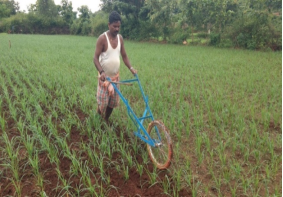
Figure 1. Traditional system of finger millet cultivation.
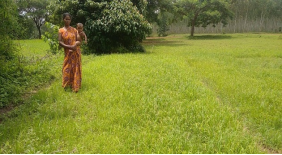
Figure 2. Traditional farming of paddy transplanting.
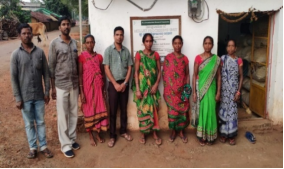
Figure 3. Modern Technology for weeding.
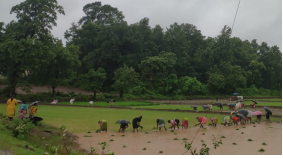
Figure 4. Modern Technology for weeding
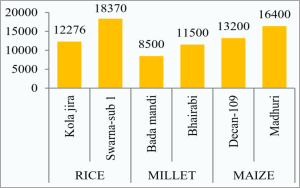
Figure 5. Investment for rice, millet and maize production
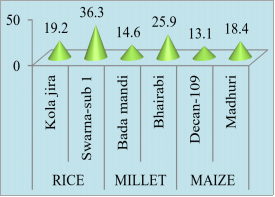
Figure 6. Modern Technology for weeding.
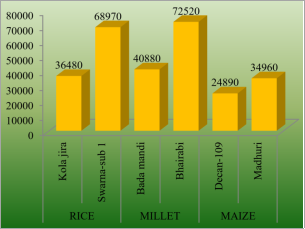
Figure 7. Gross value of rice, millet and maize
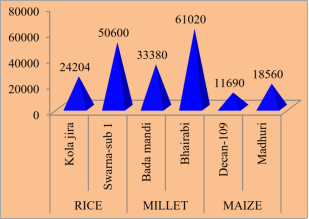
Figure 8. Profit under different cereal production.

Information



 Share This Article
 Twitter
 Linked In
 Facebook
 Copy
Copy Download