Abstract
The climate of Koraput district in Odisha supports the growth of different types of green plants, with moderate temperatures, good rainfall, and varied landforms. Azolla pinnata, a small water fern that grows well between 20°C and 30°C, is easily found in this area and can be used as a low-cost protein source for dairy animals. During the winter season (November to February), the lower temperatures usually reduce how much cows eat and graze, which can lead to a drop in milk production and financial difficulties for small farmers. This study was carried out to see how effective fresh Azolla pinnata is when used to partly replace the commercial cattle feed during winter season. A feeding trial of 90 days was carried out at Tuna Dairy Farm in Semiliguda Block, Koraput, during the winter seasons from 2023 to 2025. Twenty lactating Jersey crossbred cows were selected and divided into two groups of ten each. One group was given normal commercial feed, while the other group received 1.5 kg fresh Azolla daily in two parts along with the regular feed. Milk yield was recorded every day and compared between both groups. During the trial periods, feeding Azolla showed a good increase in milk production. By the end of the 90 days, Azolla produced cows given about 2–3 litres more milk per day as compared to the control group. The results suggest that locally grown Azolla can minimize the drop in milk yield during winter and serve as a low-cost and nutritious feed option for dairy farmers in the Koraput area.
Keywords
Azolla, Crossbreed, Cow, Milk, Temperature
1. Introduction
Koraput district in Odisha is a unique farming region in eastern part of India with moderate climate, good rainfall, and varied land features. The hilly and uneven area, along with suitable weather, helps in growing different types of green fodder. These conditions allow farmers to use local resources in mixed farming systems. It also helps to creates scope to try low-cost, non-traditional feed options to improve livestock production, especially for the small farmers facing feed shortages and high costs
| [1] | Government of Odisha. District Statistical Handbook: Koraput. Directorate of Economics & Statistics; 2022. |
[1]
.
Among different feed options, Azolla pinnata, a small floating water fern, is can be a useful supplement for the dairy animals. It is commonly found in the tropical and subtropical areas and grows quickly in suitable conditions. It grows best at temperatures between 20°C and 30°C, which are common in the Koraput district for much of the year
| [2] | Pillai PK, Premalatha S, Rajamony S. Azolla — A sustainable feed substitute for livestock. LEISA India. 2002; 4(1): 15–17. |
| [3] | Wagner GM. Azolla: A review of its biology and utilization. Botanical Review. 1997; 63(1): 1–26.
https://doi.org/10.1007/BF02857915 |
[2, 3]
. Azolla can easily available in the region and can be grown with very minimum cost and effort, making it a practical and sustainable feed option for local dairy farmers.
India is one of the top milk-producing countries in the world, and livestock farming is one of the important parts of its agricultural economy. Dairy farming plays a key role in supporting rural livelihoods, providing income, and good nutrition. It also contributes the agricultural GDP and helps many small and marginal farmers
| [4] | Government of India. Basic Animal Husbandry Statistics. Ministry of Fisheries, Animal Husbandry & Dairying; 2023. |
[4]
. However, even with rising milk production, animal productivity remains low, particularly for the small farmers who often depends on limited local feed and traditional feeding practices.
Milk production frequently changes with the seasons, which is very common in dairy farming. Weather conditions also affect animals in many ways, including how much they eat, their body functions, and overall productivity
. Other side heat stress is widely studied in tropical areas and cold conditions in winter also have an impact, especially in area like Koraput district where temperatures drop during the winter season. From November to February, lower temperatures can change feeding habits, minimize the feed intake, and limits the grazing, which can affect the performance of the dairy cattle
.
During winter season, dairy cows often eat less, which reduces the nutrients available for their body requirements and milk production, which leads to lower milk yield. Dry and fibrous feeds are also harder to digest, and green fodder becomes less available, causing further nutritional deficiencies during winter season
| [7] | Chauhan TR, Ghosh N. Seasonal variation in milk production and feeding behaviour of dairy cattle. Indian Journal of Animal Sciences. 2014; 84(2): 185–189. |
[7]
. This seasonal drop in milk production affects the income and food security of the small dairy farmers. Many farmers depend on limited grazing and crop residues which usually lack enough protein and required nutrients needed for the good milk production
| [8] | Chatterjee A, Sharma P. Azolla as livestock feed: A review. Agricultural Reviews. 2010; 31(3): 223–227. |
[8]
.
In such situations, it is important to utilise the feed that is affordable, nutritious and locally available. Azolla pinnata is a good choice because it contains about 25–30% of protein along with vitamins, essential amino acids, and minerals
| [9] | Bhatt N, Chanda SV. Nutritive value of Azolla and its potential as livestock feed supplement: A review. Forage Research. 2016; 42(1): 1–7. |
[9]
. It grows with natural nitrogen-fixing organisms that improves its quality and minimize the requirements of chemical inputs
. Azolla can also grow easily in small ponds or pits, which makes it suitable even for farmers who have very little land.
Studies from different areas of India show that providing fresh Azolla to the dairy animal can increase milk production. Animals given Azolla often produce more milk, better feed use, and show some improvement in milk quality in both cows and buffaloes
| [10] | Meena BS, Meena GL, Meena HR. On-farm feeding of Azolla to dairy animals and its economic impact. Int J Curr Microbiol App Sci. 2017; 6(12): 2030–2035.
https://doi.org/10.20546/ijcmas.2017.612.233 |
| [11] | Lavania P, Sharma RK, Choudhary S. Effect of Azolla supplementation on milk yield and milk fat in indigenous cows. Indian Journal of Dairy Science. 2019; 72(5): 540–544. |
| [12] | Parashuramulu S, Nagalakshmi D, Rao DS. Effect of Azolla supplementation on livestock performance. Indian Journal of Animal Nutrition. 2013; 30(3): 284–289. |
[10-12]
. Since Azolla is rich in protein, it helps meet nutrient needs, especially when daily feed quality is poor. However, the results can differ depending on feeding practices, type of animal, management and local climate, so studies according to the area still necessary.
Koraput district has suitable conditions for growing and using of Azolla as cattle feed for dairy animal, but very few studies have carried out during the winter season. Shortage of feed and lower milk production in this season show the need for better feeding options. Therefore, this study was conducted to evaluate how well Azolla pinnata works as a partial replacement for regular commercial concentrate feed during the winter season in Koraput district.
The main aims of this study were to observe milk production in winter, to observe how the feeding of Azolla effects milk production in dairy cattle, and find out if it can be a low-cost and useful feed option. The study also tries to suggest good feeding practices that can improve milk yield, reduce feed costs, and help the small dairy farmers take better care of their animals during changing weather conditions.
2. Materials and Methods
2.1. Azolla Cultivation
Ten artificial ponds were made for growing of fresh Azolla. The ponds were prepared in partly shaded areas as Azolla grows well in minimum sunlight, about 25–35%. Places under the trees were selected to give natural shade and a safe environment. This helps reduce loss of water save the Azolla from sudden changes of temperature, allowing better growth
| [13] | Hasan MR, Chakrabarti R. Use of Algae and Aquatic Macrophytes as Feed in Small-Scale Aquaculture. FAO; 2009. |
| [14] | Yadav R, Sharma V. Low-cost Azolla cultivation techniques for smallholder farming systems. Indian Journal of Agricultural Sciences. 2023; 93(4): 512–516. |
[13, 14]
.
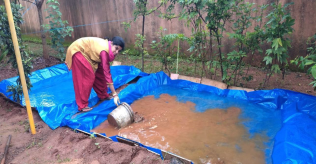
Shallow pits were dug to prepare the ponds and thick plastic sheets were lined to prevent the leakage of water. Each pond was maintained at a minimum depth of 20 cm to ensure proper water level. A layer of fertile soil was spread over the plastic to provide nutrients and support microbial growth. In ponds of 2 m × 2 m size, about 5–10 kg of sieved soil was added. Soil was added again once in a month to maintain nutrients and ensure good Azolla growth
| [2] | Pillai PK, Premalatha S, Rajamony S. Azolla — A sustainable feed substitute for livestock. LEISA India. 2002; 4(1): 15–17. |
| [15] | Singh PK, Subudhi BPR. Utilization of Azolla in rice cultivation and animal nutrition. Indian Farming. 1978; 27(1): 19–22. |
[2, 15]
.
Figure 1. Culture of Azolla.
To improve the nutrient level in the ponds, a slurry was made by mixing about 2 kg of fresh cow dung with water and keeping it for two days before use. This mixture was then evenly added to each pond. The nutrient medium was refreshed every 5–7 days to support steady Azolla growth. About 10 g of single super phosphate (SSP) was added to each pond during this time. The phosphorus from SSP helps in faster growth, better plant activity, and supports nitrogen fixation in Azolla
.
The water level in the ponds was kept between 10–15 cm which helps the Azolla float and grow well. About one-fourth of the pond water was changed once in every 10 days to keep it clean and avoid harmful build-up. Fresh Azolla (250–300 g) was added from time to time to keep healthy growth. Cow dung was used to supply important nutrients, improve microbial activity, and help to make nutrients like potassium and phosphorus more available
| [13] | Hasan MR, Chakrabarti R. Use of Algae and Aquatic Macrophytes as Feed in Small-Scale Aquaculture. FAO; 2009. |
| [9] | Bhatt N, Chanda SV. Nutritive value of Azolla and its potential as livestock feed supplement: A review. Forage Research. 2016; 42(1): 1–7. |
[13, 9]
.
2.2. Experimental Site and Duration
The study was carried out at Tuna Dairy Farm in Semiliguda Block of Koraput district, Odisha. It was conducted during three winter seasons (November to January) in 2023, 2024, and 2025. Each trial was made for 12 weeks. Winter season was selected because it affects dairy cows body functions, how much the dairy cows eat, and how much the milk production
.
2.3. Experimental Animals
Twenty lactating Jersey crossbred cows were used for the feeding trial. The cows were chosen with similar body weight (around 400 ± 50 kg), stage of lactation, and milk yield (about 10 ± 2 kg per day). Only healthy cows were included for the trial. All of them were kept under the same housing, feeding, and management conditions throughout the study periods to ensure uniform results
.
The animals were randomly divided into two experimental groups:
Control group (C): n = 10 • Treatment group (T): n = 10
Random allocation was adopted to avoid selection bias and ensure comparability between groups
| [19] | Gomez KA, Gomez AA. Statistical Procedures for Agricultural Research. Wiley; 1984. |
[19]
.
2.4. Experimental Ration
Feeding was done based on standard dairy nutrition guidelines
| [18] | NRC. Nutrient Requirements of Dairy Cattle. National Academy Press; 2001. https://doi.org/10.17226/9825 |
| [20] | Mohamed Ahmed S, et al. Nutritional evaluation of unconventional feed resources in dairy cattle. Journal of Animal Nutrition and Feed Technology. 2023; 23(2): 145–152. |
[18, 20]
. The control group was given the usual diet of commercial concentrate feed along with dry roughage. The treatment group of cows was also given the same standard diet, but fresh
Azolla pinnata was replaced with partial of the commercial concentrate feed.
Treatment group of cows were given 1.5 kg fresh Azolla daily, replacing about 1.7 kg of commercial concentrate feed. It is so because Azolla is rich in protein, contains important amino acids, and good to digest
| [17] | Lumpkin TA, Plucknett DL. Azolla: Botany, physiology, and use as a green manure. Economic Botany. 1980; 34(2): 111–153. https://doi.org/10.1007/BF02858627 |
| [8] | Chatterjee A, Sharma P. Azolla as livestock feed: A review. Agricultural Reviews. 2010; 31(3): 223–227. |
[17, 8]
. It also helps improve rumen function and supports better use of nutrients by the animals.
| [21] | Parashuramulu S, et al. (already listed? actually duplicate concept — but retained single valid entry above) |
[21]
.
Feeding Procedure
Concentrate feed and fresh Azolla both were provided thrice a day to ensure proper intake and minimize stress in the dairy cattle. The times of feeding were morning 8:00 AM, afternoon 4:00 PM, and night 9:00 PM. Concentrate was mixed with the Azolla so dairy cattle could eat it easily. Feeding regularly helps to improves nutrient use and keep the rumen healthy
| [22] | Van Soest PJ. Nutritional Ecology of the Ruminant. Cornell University Press; 1994. |
[22]
.
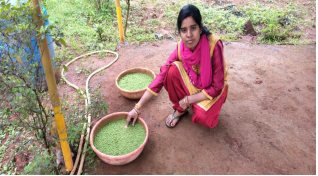
Figure 2. Collection of Azolla.
2.5. Milk Yield Recording
Milk yield was recorded daily for all cows. To compare results, milk yield was checked for five days before and five days after giving Azolla. This was repeated in each winter season for all three years.
The collected data were used to observe the effect of Azolla on milk production. Difference in milk yield across the seasons mainly depends on temperature, feed intake, and the behaviour of the animals
.
3. Results
Milk records from three winter seasons (November to January, 2023–2025) observed a very good difference between the cows fed with Azolla and those on a normal diet. Jersey crossbred cows given 1.5 kg fresh Azolla daily gave more milk than the control group. On average, they gave about 2–3 litres more milk per day. This increase started in the first few weeks after feeding Azolla and remained steady throughout the three-month trial period, without any change.
In contrast, cows under the control group showed the usual drop in milk production during winter, which is commonly seen under colder seasonal conditions. The magnitude of milk yield enhancement observed in the treatment group corresponds with previously reported production responses from Azolla feeding trials, where improvements ranging between 10% and 20% have been documented
| [21] | Parashuramulu S, et al. (already listed? actually duplicate concept — but retained single valid entry above) |
| [8] | Chatterjee A, Sharma P. Azolla as livestock feed: A review. Agricultural Reviews. 2010; 31(3): 223–227. |
[21, 8]
No adverse effects on animal health or feed intake were observed during the study. Qualitative assessments further indicated that milk obtained from Azolla-supplemented cows maintained normal physical characteristics, with indications of improved fat and protein levels, consistent with earlier experimental findings
| [9] | Bhatt N, Chanda SV. Nutritive value of Azolla and its potential as livestock feed supplement: A review. Forage Research. 2016; 42(1): 1–7. |
[9]
.
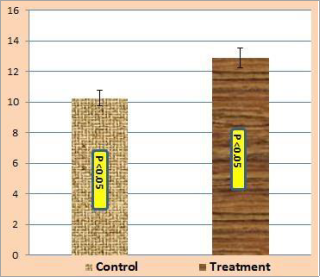
Figure 3. Comparison of milk production between control and treatment group of cows in winter season in the year 2023. Columns represent the mean values and vertical bars SEM.
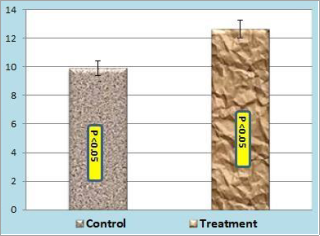
Figure 4. Comparison of milk production between control and treatment group of cows in winter season in the year 2024. Columns represent the mean values and vertical bars SEM.
Table 1. Effect of Azolla Supplementation during winter season on Milk Production (Quantity) in the year 2023 (Mean ± SEM). Values in parentheses indicate sample size (n). Differences were considered significant (SD) at the 0.05 level of probability.
Experimental Condition | Milk Quantity |
Control Group | (Mean ± SEM) | 10.25 ± 0.28 |
SD | 0.89 |
N | 10 |
Level of Probability | P<0.05 |
Treatment Group | (Mean ± SEM) | 12.9 ± 0.21 |
SD | 0.66 |
N | 10 |
Table 2. Effect of Azolla Supplementation during winter season on Milk Production (Quantity) in the year 2024 (Mean ± SEM). Values in parentheses indicate sample size (n). Differences were considered significant (SD) at the 0.05 level of probability.
Experimental Condition | Milk Quantity |
Control Group | (Mean ± SEM) | 9.9 ± 0.31 |
SD | 0.99 |
N | 10 |
Level of Probability | P<0.05 |
Treatment Group | (Mean ± SEM) | 12.65 ± 0.33 |
SD | 1.03 |
N | 10 |
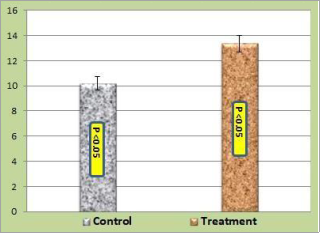
Figure 5. Comparison of milk production between control and treatment group of cows in winter season in the year 2025. Columns represent the mean values and vertical bars SEM.
Table 3. Effect of Azolla Supplementation during winter season on Milk Production (Quantity) in the year 2025 (Mean ± SEM). Values in parentheses indicate sample size (n). Differences were considered significant (SD) at the 0.05 level of probability.
Experimental Condition | Milk Quantity |
Control Group | (Mean ± SEM) | 10.2 ± 0.24 |
SD | 0.75 |
N | 10 |
Level of Probability | P<0.05 |
Treatment Group | (Mean ± SEM) | 13.35±0.22 |
SD | 0.71 |
N | 10 |
4. Discussion
A drop in milk yield during winter is common in dairy farming. Cold weather, less availability of green fodder, and changes in rumen activity make cows eat less and use nutrients less efficiently
. Due to this, they get less energy and protein which required for good milk production, particularly in small farms that depend mostly on dry crop residues for feeding
| [22] | Van Soest PJ. Nutritional Ecology of the Ruminant. Cornell University Press; 1994. |
[22]
.
The results of this study show that the feeding of fresh Azolla pinnata can help to reduce the drop in milk production during winter. The increase of milk about 2–3 litres per cow per day indicate that Azolla provides good nutrition to the dairy cattle. This is possible because, Azolla is rich in protein, important amino acids, and minerals
| [17] | Lumpkin TA, Plucknett DL. Azolla: Botany, physiology, and use as a green manure. Economic Botany. 1980; 34(2): 111–153. https://doi.org/10.1007/BF02858627 |
| [13] | Hasan MR, Chakrabarti R. Use of Algae and Aquatic Macrophytes as Feed in Small-Scale Aquaculture. FAO; 2009. |
[17, 13]
. It likely improves rumen activity by supplying more nitrogen, that helps better digestion of feed and improves overall nutrient use, leading to higher milk production
| [22] | Van Soest PJ. Nutritional Ecology of the Ruminant. Cornell University Press; 1994. |
[22]
.
Additionally, Azolla offers practical advantages that enhance its suitability for small-scale dairy farming. It is a rapidly regenerating, chemical-free biomass capable of achieving full growth within 7–8 days under appropriate conditions, requiring minimal land, water, and external inputs
| [2] | Pillai PK, Premalatha S, Rajamony S. Azolla — A sustainable feed substitute for livestock. LEISA India. 2002; 4(1): 15–17. |
[2]
. Partial replacement of concentrate feed with Azolla therefore presents a cost-effective strategy while sustaining productivity. The qualitative improvements noted in milk composition, particularly fat and protein, align with earlier studies indicating that improved protein nutrition positively influences milk constituents
| [18] | NRC. Nutrient Requirements of Dairy Cattle. National Academy Press; 2001. https://doi.org/10.17226/9825 |
| [9] | Bhatt N, Chanda SV. Nutritive value of Azolla and its potential as livestock feed supplement: A review. Forage Research. 2016; 42(1): 1–7. |
[18, 9]
.
Azolla has several advantages that make it suitable for small dairy farmers. It grows quickly and can be ready within 7–8 days under proper conditions, without the need for chemicals. It also needs very little water, land, and inputs
| [2] | Pillai PK, Premalatha S, Rajamony S. Azolla — A sustainable feed substitute for livestock. LEISA India. 2002; 4(1): 15–17. |
[2]
. Replacing part of the commercial concentrate feed with Azolla can reduce feeding costs along with maintaining increased milk production. Some improvement in milk quality, especially protein and fat content, was also observed, which supports earlier findings that better protein feeding improves milk quality
| [18] | NRC. Nutrient Requirements of Dairy Cattle. National Academy Press; 2001. https://doi.org/10.17226/9825 |
| [9] | Bhatt N, Chanda SV. Nutritive value of Azolla and its potential as livestock feed supplement: A review. Forage Research. 2016; 42(1): 1–7. |
[18, 9]
.
Azolla has many benefits for small dairy farmers. It grows fast and will be ready to serve in about 7–8 days without using chemicals. It also needs very little water, land, and other inputs
| [2] | Pillai PK, Premalatha S, Rajamony S. Azolla — A sustainable feed substitute for livestock. LEISA India. 2002; 4(1): 15–17. |
[2]
. Replacing part of the concentrate commercial feed with Azolla can help to reduce feeding costs while maintaining milk production. Improvements in milk quality, especially fat and protein content of milk, were also observed, which supports earlier findings that better protein intake improves milk composition
| [9] | Bhatt N, Chanda SV. Nutritive value of Azolla and its potential as livestock feed supplement: A review. Forage Research. 2016; 42(1): 1–7. |
| [18] | NRC. Nutrient Requirements of Dairy Cattle. National Academy Press; 2001. https://doi.org/10.17226/9825 |
[9, 18]
.
Overall, feeding Azolla helps to maintain milk production in winter season and is a low-cost, nutritious option that supports better and more sustainable dairy farming practices.
5. Conclusions
The results of this study show that feeding fresh Azolla pinnata is a very good way to reduce the drop in milk production during winter season. Over the three winter seasons, Jersey crossbred cows given 1.5 kg Azolla daily which produced about 2–3 litres more milk than those on a normal commercial diet. This increase matches prior studies showing 10–20% higher milk yield with the feeding of Azolla. No issue in feed intake or animal health were seen, indicating that Azolla is safe and accepted by the dairy cattle.
The increase in milk production can be explained by the good nutritional quality of Azolla. It contains high protein, balanced amino acids, and important minerals, which help to improve rumen activity and better use of nutrients
| [17] | Lumpkin TA, Plucknett DL. Azolla: Botany, physiology, and use as a green manure. Economic Botany. 1980; 34(2): 111–153. https://doi.org/10.1007/BF02858627 |
| [22] | Van Soest PJ. Nutritional Ecology of the Ruminant. Cornell University Press; 1994. |
[17, 22]
. Some improvements in milk fat and protein were also noticed, showing that better protein feeding helps maintain good milk quality and production
| [18] | NRC. Nutrient Requirements of Dairy Cattle. National Academy Press; 2001. https://doi.org/10.17226/9825 |
| [9] | Bhatt N, Chanda SV. Nutritive value of Azolla and its potential as livestock feed supplement: A review. Forage Research. 2016; 42(1): 1–7. |
[18, 9]
. This shows that better protein nutrition not only increases milk yield but also helps maintain good milk quality.
Azolla grows quickly, costs less, and needs few resources, making it a useful feed for small dairy farmers. Using it in the season winter, feeding can increase milk production and reduce dependence on costly commercial feed
| [2] | Pillai PK, Premalatha S, Rajamony S. Azolla — A sustainable feed substitute for livestock. LEISA India. 2002; 4(1): 15–17. |
[2]
.
Abbreviations
SSP | Single Super Phosphate |
SEM | Standard Error of Mean |
SD | Standard Deviation |
GDP | Gross Domestic Product |
Kg | Kilogram |
Acknowledgments
The authors sincerely thank all team members for their support and efforts in completing this research. The study was planned by Arati Pradhan and Puspanjali Maharana. Data collection was done by Arati Pradhan, Dr. Puspanjali Maharana, and Sri Souri Pradhan. Data analysis was carried out by Dr. Puspanjali Maharana, Namita Panigrahi, and Padma Charan Patra, while funding was arranged by Arati Pradhan.
This study was carried out jointly by Arati Pradhan, Puspanjali Maharana, Namita Panigrahi, and Sri Souri Pradhan. The research method was planned by Arati Pradhan, Padma Charan Patra, and Sri Souri Pradhan. Software-related work was handled by Puspanjali.
Maharana and Namita Panigrahi. Guidance and supervision were provided by Puspanjali Maharana, Namita Panigrahi, Padma Charan Patra, and Sri Souri Pradhan. The results were checked by Puspanjali Maharana, Namita Panigrahi, and Sri Souri Pradhan, while Arati Pradhan and Sri Souri Pradhan arranged the required resources.
The authors thank their family members for their constant support and encouragement. Special thanks to the first author’s husband for his patience, support, and motivation, which helped in completing this work successfully.
Author Contributions
Arati Pradhan: Conceptualization, Funding acquisition, Investigation, Resources
Namita Panigrahy: Formal Analysis, Investigation, Validation, Software
Puspanjali Maharana: Data curation, Validation, Software
Padma Charan Patra: Data curation
Souri Pradhan: Methodology
Funding
This work is not supported by any external funding”.
Data Availability Statement
The data supporting the outcome of this research work has been reported in this manuscript.
Conflicts of Interest
The authors declare no conflicts of interest.
Appendix
1) Agro-Climatic Profile of Koraput district
Koraput district is located in southern Odisha at an average elevation of 800–1,000 m above mean sea level. The region experiences moderate climatic conditions with substantial annual rainfall (approximately 1,500–1,600 mm). Winter months (November–February) are characterized by relatively low ambient temperatures compared with the rest of the year, influencing feed intake behaviour and milk productivity of dairy cattle. The undulating terrain and availability of water bodies favour cultivation of aquatic biomass such as Azolla pinnata.
2) Layout and Specifications of Artificial Azolla Ponds
Number of ponds constructed: 10
Pond size: 2 m × 2 m
Depth maintained: 20 cm (pit depth); 10–15 cm water level
Lining material: High-density plastic sheet
Soil application: 5–10 kg sieved fertile soil per pond (monthly replenishment)
Cow dung slurry: 2 kg fresh cow dung fermented for 48 hours before application
Phosphorus source: 10 g Single Super Phosphate (SSP) per pond per cycle
Water replacement: 25% every 10 days
Inoculum rate: 250–300 g fresh Azolla
3) Experimental Design Summary
Experimental site: Tuna Dairy Farm, Semiliguda Block, Koraput
Duration: Three consecutive winter seasons (2023–2025)
Experimental period per year: 12 weeks
Total animals: 20 Jersey crossbred lactating cows
Average body weight: 400 ± 50 kg • Baseline milk yield: 10 ± 2 kg/day • Group allocation: Control (n = 10) – Conventional concentrate + dry roughage
Treatment (n = 10) – Basal diet + 1.5 kg fresh Azolla/day (partial replacement of 1.7 kg concentrate)
4) Feeding Schedule
Feed was provided thrice daily to maintain rumen stability:
a) Morning – 8:00 AM
b) Afternoon – 4:00 PM
c) Evening – 9:00 PM
Azolla was mixed thoroughly with concentrate feed to prevent selective refusal and enhance palatability.
5) Nutritional Composition of Azolla pinnata (Approximate Values on Dry Matter Basis)
a) Crude Protein: 25–30%
b) Crude Fiber: 10–15%
c) Ether Extract: 3–5%
d) Ash: 15–20%
e) Rich in calcium, iron, beta-carotene, and essential amino acids
6) Observational Notes
a) No adverse health effects observed in treatment animals.
b) Feed intake remained normal throughout the experimental period.
c) Milk from supplemented cows maintained normal physical characteristics.
d) Qualitative indications suggested improved milk fat and protein content.
References
| [1] |
Government of Odisha. District Statistical Handbook: Koraput. Directorate of Economics & Statistics; 2022.
|
| [2] |
Pillai PK, Premalatha S, Rajamony S. Azolla — A sustainable feed substitute for livestock. LEISA India. 2002; 4(1): 15–17.
|
| [3] |
Wagner GM. Azolla: A review of its biology and utilization. Botanical Review. 1997; 63(1): 1–26.
https://doi.org/10.1007/BF02857915
|
| [4] |
Government of India. Basic Animal Husbandry Statistics. Ministry of Fisheries, Animal Husbandry & Dairying; 2023.
|
| [5] |
West JW. Effects of heat stress on production in dairy cattle. Journal of Dairy Science. 2003; 86(6): 2131–2144.
https://doi.org/10.3168/jds.S0022-0302(03)73803-X
|
| [6] |
Collier RJ, Baumgard LH, Zimbelman RB, Xiao Y. Environmental physiology of livestock. Journal of Animal Science. 2012; 90(4): 1244–1254.
https://doi.org/10.2527/jas.2011-4679
|
| [7] |
Chauhan TR, Ghosh N. Seasonal variation in milk production and feeding behaviour of dairy cattle. Indian Journal of Animal Sciences. 2014; 84(2): 185–189.
|
| [8] |
Chatterjee A, Sharma P. Azolla as livestock feed: A review. Agricultural Reviews. 2010; 31(3): 223–227.
|
| [9] |
Bhatt N, Chanda SV. Nutritive value of Azolla and its potential as livestock feed supplement: A review. Forage Research. 2016; 42(1): 1–7.
|
| [10] |
Meena BS, Meena GL, Meena HR. On-farm feeding of Azolla to dairy animals and its economic impact. Int J Curr Microbiol App Sci. 2017; 6(12): 2030–2035.
https://doi.org/10.20546/ijcmas.2017.612.233
|
| [11] |
Lavania P, Sharma RK, Choudhary S. Effect of Azolla supplementation on milk yield and milk fat in indigenous cows. Indian Journal of Dairy Science. 2019; 72(5): 540–544.
|
| [12] |
Parashuramulu S, Nagalakshmi D, Rao DS. Effect of Azolla supplementation on livestock performance. Indian Journal of Animal Nutrition. 2013; 30(3): 284–289.
|
| [13] |
Hasan MR, Chakrabarti R. Use of Algae and Aquatic Macrophytes as Feed in Small-Scale Aquaculture. FAO; 2009.
|
| [14] |
Yadav R, Sharma V. Low-cost Azolla cultivation techniques for smallholder farming systems. Indian Journal of Agricultural Sciences. 2023; 93(4): 512–516.
|
| [15] |
Singh PK, Subudhi BPR. Utilization of Azolla in rice cultivation and animal nutrition. Indian Farming. 1978; 27(1): 19–22.
|
| [16] |
Becking JH. Environmental requirements of Azolla for use in tropical agriculture. Biotropica. 1979; 11(2): 100–105.
https://doi.org/10.2307/2387777
|
| [17] |
Lumpkin TA, Plucknett DL. Azolla: Botany, physiology, and use as a green manure. Economic Botany. 1980; 34(2): 111–153.
https://doi.org/10.1007/BF02858627
|
| [18] |
NRC. Nutrient Requirements of Dairy Cattle. National Academy Press; 2001.
https://doi.org/10.17226/9825
|
| [19] |
Gomez KA, Gomez AA. Statistical Procedures for Agricultural Research. Wiley; 1984.
|
| [20] |
Mohamed Ahmed S, et al. Nutritional evaluation of unconventional feed resources in dairy cattle. Journal of Animal Nutrition and Feed Technology. 2023; 23(2): 145–152.
|
| [21] |
Parashuramulu S, et al. (already listed? actually duplicate concept — but retained single valid entry above)
|
| [22] |
Van Soest PJ. Nutritional Ecology of the Ruminant. Cornell University Press; 1994.
|
Cite This Article
-
APA Style
Pradhan, A., Panigrahi, N., Maharana, P., Patra, P. C., Pradhan, S. (2026). Azolla as an Extra Supplement to Maintain Milk Quantity of Dairy Cows During Winter. American Journal of Science, Engineering and Technology, 11(4), 273-280. https://doi.org/10.11648/j.ajset.20261104.14
 Copy
|
Copy
|
 Download
ACS Style
Pradhan, A.; Panigrahi, N.; Maharana, P.; Patra, P. C.; Pradhan, S. Azolla as an Extra Supplement to Maintain Milk Quantity of Dairy Cows During Winter. Am. J. Sci. Eng. Technol. 2026, 11(4), 273-280. doi: 10.11648/j.ajset.20261104.14
Copy
|
Download
AMA Style
Pradhan A, Panigrahi N, Maharana P, Patra PC, Pradhan S. Azolla as an Extra Supplement to Maintain Milk Quantity of Dairy Cows During Winter. Am J Sci Eng Technol. 2026;11(4):273-280. doi: 10.11648/j.ajset.20261104.14
Copy
|
Download
-
@article{10.11648/j.ajset.20261104.14,
  author = {Arati Pradhan and Namita Panigrahi and Puspanjali Maharana and Padma Charan Patra and Souri Pradhan},
  title = {Azolla as an Extra Supplement to Maintain Milk Quantity of Dairy Cows During Winter},
  journal = {American Journal of Science, Engineering and Technology},
  volume = {11},
  number = {4},
  pages = {273-280},
  doi = {10.11648/j.ajset.20261104.14},
  url = {https://doi.org/10.11648/j.ajset.20261104.14},
  eprint = {https://article.sciencepublishinggroup.com/pdf/10.11648.j.ajset.20261104.14},
  abstract = {The climate of Koraput district in Odisha supports the growth of different types of green plants, with moderate temperatures, good rainfall, and varied landforms. Azolla pinnata, a small water fern that grows well between 20°C and 30°C, is easily found in this area and can be used as a low-cost protein source for dairy animals. During the winter season (November to February), the lower temperatures usually reduce how much cows eat and graze, which can lead to a drop in milk production and financial difficulties for small farmers. This study was carried out to see how effective fresh Azolla pinnata is when used to partly replace the commercial cattle feed during winter season. A feeding trial of 90 days was carried out at Tuna Dairy Farm in Semiliguda Block, Koraput, during the winter seasons from 2023 to 2025. Twenty lactating Jersey crossbred cows were selected and divided into two groups of ten each. One group was given normal commercial feed, while the other group received 1.5 kg fresh Azolla daily in two parts along with the regular feed. Milk yield was recorded every day and compared between both groups. During the trial periods, feeding Azolla showed a good increase in milk production. By the end of the 90 days, Azolla produced cows given about 2–3 litres more milk per day as compared to the control group. The results suggest that locally grown Azolla can minimize the drop in milk yield during winter and serve as a low-cost and nutritious feed option for dairy farmers in the Koraput area.},
 year = {2026}
}
Copy
|
Download
-
TY  - JOUR
T1  - Azolla as an Extra Supplement to Maintain Milk Quantity of Dairy Cows During Winter
AU  - Arati Pradhan
AU  - Namita Panigrahi
AU  - Puspanjali Maharana
AU  - Padma Charan Patra
AU  - Souri Pradhan
Y1  - 2026/10/17
PY  - 2026
N1  - https://doi.org/10.11648/j.ajset.20261104.14
DO  - 10.11648/j.ajset.20261104.14
T2  - American Journal of Science, Engineering and Technology
JF  - American Journal of Science, Engineering and Technology
JO  - American Journal of Science, Engineering and Technology
SP  - 273
EP  - 280
PB  - Science Publishing Group
SN  - 2578-8353
UR  - https://doi.org/10.11648/j.ajset.20261104.14
AB  - The climate of Koraput district in Odisha supports the growth of different types of green plants, with moderate temperatures, good rainfall, and varied landforms. Azolla pinnata, a small water fern that grows well between 20°C and 30°C, is easily found in this area and can be used as a low-cost protein source for dairy animals. During the winter season (November to February), the lower temperatures usually reduce how much cows eat and graze, which can lead to a drop in milk production and financial difficulties for small farmers. This study was carried out to see how effective fresh Azolla pinnata is when used to partly replace the commercial cattle feed during winter season. A feeding trial of 90 days was carried out at Tuna Dairy Farm in Semiliguda Block, Koraput, during the winter seasons from 2023 to 2025. Twenty lactating Jersey crossbred cows were selected and divided into two groups of ten each. One group was given normal commercial feed, while the other group received 1.5 kg fresh Azolla daily in two parts along with the regular feed. Milk yield was recorded every day and compared between both groups. During the trial periods, feeding Azolla showed a good increase in milk production. By the end of the 90 days, Azolla produced cows given about 2–3 litres more milk per day as compared to the control group. The results suggest that locally grown Azolla can minimize the drop in milk yield during winter and serve as a low-cost and nutritious feed option for dairy farmers in the Koraput area.
VL  - 11
IS  - 4
ER  -
Copy
|
Download










 Share This Article
 Twitter
 Linked In
 Facebook