Prevalence, Regional Disparities and Associated Factors of Vitamin A-rich Food Consumption Among Children 6-24 Months in Somaliland: Evidence from a National Survey
Micronutrient deficiencies, particularly vitamin A deficiency (VAD), pose a significant public health challenge in developing nations by contributing to child morbidity and mortality; however, empirical evidence regarding dietary intake among young children in Somaliland remains limited. This study assessed the prevalence, regional disparities, and factors associated with the consumption of vitamin A-rich foods among children aged 6–24 months in Somaliland. A secondary analysis of 1,086 children was conducted using data from the 2020 Somaliland Demographic and Health Survey (SDHS), a nationally representative community-based cross-sectional survey. The outcome variable was the consumption of vitamin A-rich foods in the 24 hours preceding the interview, and multivariable logistic regression was performed to identify independent predictors using Adjusted Odds Ratios (AOR) with 95% Confidence Intervals (CI). The overall prevalence of vitamin A-rich food consumption was 56.45% (95% CI: 53.47–59.37%), with fresh milk being the predominant source (48.07%), while fruit and vegetable intake remained markedly low. Substantial regional disparities were observed, ranging from 73.24% in the Sahil region to 49.48% in the Sanaag region. Multivariable analysis revealed that children from middle (AOR = 0.59; 95% CI: 0.38–0.93) and rich (AOR = 0.50; 95% CI: 0.36–0.71) wealth quintiles were significantly less likely to consume vitamin A-rich foods compared to those from poor households. Conversely, maternal exposure to mass media was a strong positive predictor of intake (AOR = 5.04; 95% CI: 1.55–16.43). In conclusion, vitamin A-rich food consumption among young children in Somaliland is suboptimal and geographically uneven. These findings highlight a dietary paradox where higher household wealth correlates with lower intake, underscoring the vital role of maternal media exposure and nutrition education in improving child feeding practices across all socioeconomic strata.
This is an Open Access article, distributed under the terms of the Creative Commons Attribution 4.0 International License (http://creativecommons.org/licenses/by/4.0/), which permits unrestricted use, distribution and reproduction in any medium or format, provided the original work is properly cited.
Micronutrients are essential for optimal human health, playing a critical role in numerous physiological processes vital for child growth and development
[1]
Demsash AW, Chereka AA, Kassie SY, Donacho DO, Ngusie HS, Tegegne MD, et al. Spatial distribution of vitamin A rich foods intake and associated factors among children aged 6–23 months in Ethiopia: spatial and multilevel analysis of 2019 Ethiopian mini demographic and health survey. BMC Nutr. 2022; 8(1): 77.
Moroda M, Goyomsa GG, Shukure R, Nigussu S. Consumption of vitamin A rich foods and its associated factors among children aged 6–59 months in North Shoa Zone, Oromia regional state, Ethiopia. Front Nutr. 2025; 12: 1526292.
. These essential vitamins and minerals, though required in small quantities, significantly influence cellular and humoral immune responses, cellular signaling and function, and cognitive development
[1]
Demsash AW, Chereka AA, Kassie SY, Donacho DO, Ngusie HS, Tegegne MD, et al. Spatial distribution of vitamin A rich foods intake and associated factors among children aged 6–23 months in Ethiopia: spatial and multilevel analysis of 2019 Ethiopian mini demographic and health survey. BMC Nutr. 2022; 8(1): 77.
Wolde M, Tessema ZT. Determinants of good vitamin A consumption in the 12 East Africa Countries using recent Demographic and health survey. PLoS One. 2023; 18(2): e0281681.
. Adequate intake of micronutrients is foundational for children's survival and long-term well-being
[5]
Aserese AD, Atenafu A, Sisay M, Sorrie MB, Yirdaw BW, Zegeye MK. Adequate vitamin A rich food consumption and associated factors among lactating mothers visiting child immunization and post-natal clinic at health institutions in Gondar Town, Northwest Ethiopia. PLoS One. 2020; 15(9): e0239308.
Bendik I, Friedel A, Roos FF, Weber P, Eggersdorfer M. Vitamin D: a critical and essential micronutrient for human health. Front Physiol. 2014; 5: 248.
Sharma P, Dwivedi S, Singh D. Global poverty, hunger, and malnutrition: a situational analysis. In: Biofortification of food crops. Springer; 2016. p. 19–30.
. The World Health Organization (WHO) advocates for diverse complementary feeding practices, including both plant-based foods and animal products such as meat, poultry, fish, or eggs, to ensure children meet their nutrient requirements
[1]
Demsash AW, Chereka AA, Kassie SY, Donacho DO, Ngusie HS, Tegegne MD, et al. Spatial distribution of vitamin A rich foods intake and associated factors among children aged 6–23 months in Ethiopia: spatial and multilevel analysis of 2019 Ethiopian mini demographic and health survey. BMC Nutr. 2022; 8(1): 77.
Guideline WHO. vitamin A supplementation in infants and children 6–59 months of age. Geneva World Heal Organ. 2011; 269: 16.
[1, 9]
. The importance of various micronutrients, including vitamin A, vitamin D, iron, and zinc, for child health is widely recognized
[6]
Bendik I, Friedel A, Roos FF, Weber P, Eggersdorfer M. Vitamin D: a critical and essential micronutrient for human health. Front Physiol. 2014; 5: 248.
Bush LA, Hutchinson J, Hooson J, Warthon-Medina M, Hancock N, Greathead K, et al. Measuring energy, macro and micronutrient intake in UK children and adolescents: a comparison of validated dietary assessment tools. BMC Nutr. 2019; 5(1): 53.
Underwood BA, Arthur P. The contribution of vitamin A to public health. FASEB J. 1996; 10(9): 1040–8.
[6, 10, 11]
.
Deficiencies in micronutrients among children represent a pervasive global public health challenge, predisposing them to various adverse health outcomes
[1]
Demsash AW, Chereka AA, Kassie SY, Donacho DO, Ngusie HS, Tegegne MD, et al. Spatial distribution of vitamin A rich foods intake and associated factors among children aged 6–23 months in Ethiopia: spatial and multilevel analysis of 2019 Ethiopian mini demographic and health survey. BMC Nutr. 2022; 8(1): 77.
Aserese AD, Atenafu A, Sisay M, Sorrie MB, Yirdaw BW, Zegeye MK. Adequate vitamin A rich food consumption and associated factors among lactating mothers visiting child immunization and post-natal clinic at health institutions in Gondar Town, Northwest Ethiopia. PLoS One. 2020; 15(9): e0239308.
Guerrant RL, Lima AAM, Davidson F. Micronutrients and infection: interactions and implications with enteric and other infections and future priorities. J Infect Dis. 2000; 182(Supplement_1): S134–8.
. Even marginal inadequacies in dietary intake can severely impact children’s survival and development, leading to conditions such as anemia, stunting, wasting, weakened immunity, and delayed cognitive development
[3]
Beressa G. Vitamin A rich food consumption and its predictors among children aged 6 up to 23 months old in Ethiopia. Sci Rep. 2025; 15(1): 22731.
Sharma P, Dwivedi S, Singh D. Global poverty, hunger, and malnutrition: a situational analysis. In: Biofortification of food crops. Springer; 2016. p. 19–30.
. Among these, vitamin A deficiency (VAD) is particularly critical, as it significantly contributes to child mortality from common childhood illnesses like measles, diarrhea, malaria, and other infectious diseases
[1]
Demsash AW, Chereka AA, Kassie SY, Donacho DO, Ngusie HS, Tegegne MD, et al. Spatial distribution of vitamin A rich foods intake and associated factors among children aged 6–23 months in Ethiopia: spatial and multilevel analysis of 2019 Ethiopian mini demographic and health survey. BMC Nutr. 2022; 8(1): 77.
Aserese AD, Atenafu A, Sisay M, Sorrie MB, Yirdaw BW, Zegeye MK. Adequate vitamin A rich food consumption and associated factors among lactating mothers visiting child immunization and post-natal clinic at health institutions in Gondar Town, Northwest Ethiopia. PLoS One. 2020; 15(9): e0239308.
Tzioumis E, Kay MC, Bentley ME, Adair LS. Prevalence and trends in the childhood dual burden of malnutrition in low-and middle-income countries, 1990–2012. Public Health Nutr. 2016; 19(8): 1375–88.
Rice AL, West Jr KP, Black RE. Vitamin A deficiency. Comp Quantif Heal risks Glob Reg Burd Dis Attrib to Sel major risk factors. 2004; 1: 211–56.
[1, 3, 5, 13, 14]
.
Globally, VAD imposes a substantial public health burden, affecting millions of preschool-aged children and contributing to a significant number of preventable deaths
[2]
Moroda M, Goyomsa GG, Shukure R, Nigussu S. Consumption of vitamin A rich foods and its associated factors among children aged 6–59 months in North Shoa Zone, Oromia regional state, Ethiopia. Front Nutr. 2025; 12: 1526292.
Aserese AD, Atenafu A, Sisay M, Sorrie MB, Yirdaw BW, Zegeye MK. Adequate vitamin A rich food consumption and associated factors among lactating mothers visiting child immunization and post-natal clinic at health institutions in Gondar Town, Northwest Ethiopia. PLoS One. 2020; 15(9): e0239308.
Guerrant RL, Lima AAM, Davidson F. Micronutrients and infection: interactions and implications with enteric and other infections and future priorities. J Infect Dis. 2000; 182(Supplement_1): S134–8.
. It is estimated that approximately 250 million preschool children are vulnerable to VAD, with a quarter of a million children becoming blind annually, and half of these succumbing to death before 23 months of age
[1]
Demsash AW, Chereka AA, Kassie SY, Donacho DO, Ngusie HS, Tegegne MD, et al. Spatial distribution of vitamin A rich foods intake and associated factors among children aged 6–23 months in Ethiopia: spatial and multilevel analysis of 2019 Ethiopian mini demographic and health survey. BMC Nutr. 2022; 8(1): 77.
Organization WH. Global prevalence of vitamin A deficiency in populations at risk 1995-2005: WHO global database on vitamin A deficiency. In: Global prevalence of vitamin A deficiency in populations at risk 1995-2005: WHO global database on vitamin A deficiency. 2009.
[1, 15]
. The global prevalence of VAD in populations at risk was estimated to be 33.3% among preschool children
[5]
Aserese AD, Atenafu A, Sisay M, Sorrie MB, Yirdaw BW, Zegeye MK. Adequate vitamin A rich food consumption and associated factors among lactating mothers visiting child immunization and post-natal clinic at health institutions in Gondar Town, Northwest Ethiopia. PLoS One. 2020; 15(9): e0239308.
Black RE, Victora CG, Walker SP, Bhutta ZA, Christian P, De Onis M, et al. Maternal and child undernutrition and overweight in low-income and middle-income countries. Lancet. 2013; 382(9890): 427–51.
Developing regions, notably South Asia and sub-Saharan Africa, bear a disproportionately high burden of childhood malnutrition and micronutrient deficiencies
[1]
Demsash AW, Chereka AA, Kassie SY, Donacho DO, Ngusie HS, Tegegne MD, et al. Spatial distribution of vitamin A rich foods intake and associated factors among children aged 6–23 months in Ethiopia: spatial and multilevel analysis of 2019 Ethiopian mini demographic and health survey. BMC Nutr. 2022; 8(1): 77.
Aserese AD, Atenafu A, Sisay M, Sorrie MB, Yirdaw BW, Zegeye MK. Adequate vitamin A rich food consumption and associated factors among lactating mothers visiting child immunization and post-natal clinic at health institutions in Gondar Town, Northwest Ethiopia. PLoS One. 2020; 15(9): e0239308.
Black RE, Victora CG, Walker SP, Bhutta ZA, Christian P, De Onis M, et al. Maternal and child undernutrition and overweight in low-income and middle-income countries. Lancet. 2013; 382(9890): 427–51.
Donkor WES, Adu-Afarwuah S, Wegmüller R, Bentil H, Petry N, Rohner F, et al. Complementary feeding indicators in relation to micronutrient status of Ghanaian children aged 6–23 months: Results from a national survey. Life. 2021; 11(9): 969.
. These regions are home to a significant number of chronically undernourished children, with over 200 million African children suffering from malnutrition and failing to achieve their full cognitive potential
[1]
Demsash AW, Chereka AA, Kassie SY, Donacho DO, Ngusie HS, Tegegne MD, et al. Spatial distribution of vitamin A rich foods intake and associated factors among children aged 6–23 months in Ethiopia: spatial and multilevel analysis of 2019 Ethiopian mini demographic and health survey. BMC Nutr. 2022; 8(1): 77.
Imdad A, Mayo-Wilson E, Haykal MR, Regan A, Sidhu J, Smith A, et al. Vitamin A supplementation for preventing morbidity and mortality in children from six months to five years of age. Cochrane database Syst Rev. 2022;(3).
. The prevalence of VAD in Africa has been reported to range widely, from 8.5% to 79%
[1]
Demsash AW, Chereka AA, Kassie SY, Donacho DO, Ngusie HS, Tegegne MD, et al. Spatial distribution of vitamin A rich foods intake and associated factors among children aged 6–23 months in Ethiopia: spatial and multilevel analysis of 2019 Ethiopian mini demographic and health survey. BMC Nutr. 2022; 8(1): 77.
Stevens GA, Bennett JE, Hennocq Q, Lu Y, De-Regil LM, Rogers L, et al. Trends and mortality effects of vitamin A deficiency in children in 138 low-income and middle-income countries between 1991 and 2013: a pooled analysis of population-based surveys. Lancet Glob Heal. 2015; 3(9): e528–36.
. VAD is very common in the African continent, affecting more than 30 million children, most of whom are younger than five years of age
[22]
Demographic U. Health Survey 2016., Kampala, Uganda and Rockville, Maryland, USA, 2018. 2020.
[22]
.
The Somalia Micronutrient Survey 2019 showed that good nutrition is still out of reach for large numbers of Somali children under the age of five. The survey revealed that 34% of children under the age of five suffer from vitamin A deficiency, 43% of anemia and 28.6% of iron deficiency anemia; 47% of pregnant women are also anemic. The national prevalence of VAD denotes a severe public health problem in children (>30%) and a moderate public health problem in women (10%-20%) according to WHO criteria
[15]
Organization WH. Global prevalence of vitamin A deficiency in populations at risk 1995-2005: WHO global database on vitamin A deficiency. In: Global prevalence of vitamin A deficiency in populations at risk 1995-2005: WHO global database on vitamin A deficiency. 2009.
[15]
.
Given Somaliland's geographical location within the Horn of Africa and its socio-economic parallels with neighboring developing countries, it is highly probable that its child population faces a similar, if not greater, risk of VAD.
In Ethiopia, VAD continues to be a significant public health problem among children, with its prevalence varying considerably across different regions
[1]
Demsash AW, Chereka AA, Kassie SY, Donacho DO, Ngusie HS, Tegegne MD, et al. Spatial distribution of vitamin A rich foods intake and associated factors among children aged 6–23 months in Ethiopia: spatial and multilevel analysis of 2019 Ethiopian mini demographic and health survey. BMC Nutr. 2022; 8(1): 77.
. The estimated prevalence of VAD among Ethiopian children ranges from 20% to 39%
[13]
Tzioumis E, Kay MC, Bentley ME, Adair LS. Prevalence and trends in the childhood dual burden of malnutrition in low-and middle-income countries, 1990–2012. Public Health Nutr. 2016; 19(8): 1375–88.
Donkor WES, Adu-Afarwuah S, Wegmüller R, Bentil H, Petry N, Rohner F, et al. Complementary feeding indicators in relation to micronutrient status of Ghanaian children aged 6–23 months: Results from a national survey. Life. 2021; 11(9): 969.
Stevens GA, Bennett JE, Hennocq Q, Lu Y, De-Regil LM, Rogers L, et al. Trends and mortality effects of vitamin A deficiency in children in 138 low-income and middle-income countries between 1991 and 2013: a pooled analysis of population-based surveys. Lancet Glob Heal. 2015; 3(9): e528–36.
. Reports from the Ethiopian Demographic and Health Surveys (DHS) indicate that the intake of vitamin A-rich foods among children aged 6–23 months has been consistently low, with only 38% in 2016 and 39% in 2019 meeting the criteria for intake within a 24-hour period
[1]
Demsash AW, Chereka AA, Kassie SY, Donacho DO, Ngusie HS, Tegegne MD, et al. Spatial distribution of vitamin A rich foods intake and associated factors among children aged 6–23 months in Ethiopia: spatial and multilevel analysis of 2019 Ethiopian mini demographic and health survey. BMC Nutr. 2022; 8(1): 77.
Grantham-McGregor S, Cheung YB, Cueto S, Glewwe P, Richter L, Strupp B. Developmental potential in the first 5 years for children in developing countries. Lancet. 2007; 369(9555): 60–70.
Greiner T. Vitamin A: Moving the food-based approach forward. FAO WHO. 2013.
[1, 3, 23, 24]
.
While extensive research has documented the prevalence and determinants of vitamin A-rich food intake among children in East African nations
[1]
Demsash AW, Chereka AA, Kassie SY, Donacho DO, Ngusie HS, Tegegne MD, et al. Spatial distribution of vitamin A rich foods intake and associated factors among children aged 6–23 months in Ethiopia: spatial and multilevel analysis of 2019 Ethiopian mini demographic and health survey. BMC Nutr. 2022; 8(1): 77.
Wolde M, Tessema ZT. Determinants of good vitamin A consumption in the 12 East Africa Countries using recent Demographic and health survey. PLoS One. 2023; 18(2): e0281681.
, a notable gap exists in the specific context of Somaliland. Therefore, this study is justified by the critical need to understand the unique prevalence, regional disparities, and associated factors of vitamin A-rich food intake among young children aged 6–24 months in Somaliland, using robust multivariate analytical approaches to guide effective nutritional programming and policy.
2. Methods
2.1. Study Area
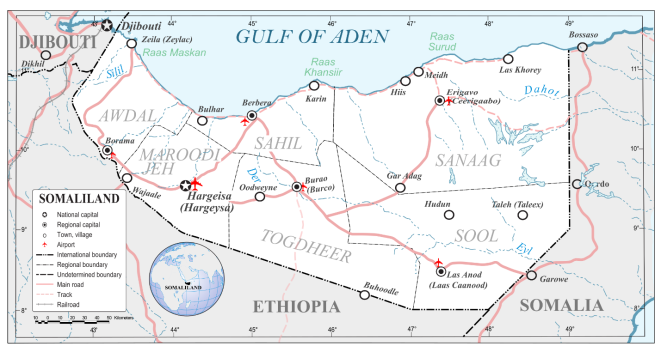
Somaliland is a self-declared autonomous region located in the Horn of Africa, geographically positioned along the southern coast of the Gulf of Aden. The region is administratively divided into six major regions: Awdal, Marodijeh, Sahil, Togdheer, Sool, and Sanaag, with Hargeisa serving as the capital and largest city. The area is characterized by a semi-arid climate and faces significant public health challenges, including food insecurity and micronutrient deficiencies, which are often exacerbated by recurrent droughts and limited healthcare infrastructure (Figure 1).
This study utilized secondary data derived from the 2020 Somaliland Demographic and Health Survey (SLDHS), which serves as a nationally representative household survey. The survey employed a community-based cross-sectional study design to generate updated health and demographic indicators for the population.
2.3. Population and Sample Size
The source population for this study included all children aged 6 to 24 months residing in the selected households across the six administrative regions of Somaliland during the survey period. The final sample size consisted of 1,086 children for whom complete data regarding dietary intake and relevant maternal and household characteristics were available in the dataset.
2.4. Inclusion Criteria
The analysis included all living children aged 6 to 24 months who were residing with their mothers or primary caregivers at the time of the interview. Children who had missing values for the dietary recall outcome variable or significant missing data for key explanatory socio-demographic variables were excluded to ensure the accuracy of the statistical modeling.
2.5. Study Variables
The outcome variable, consumption of foods rich in Vitamin A, was constructed using eight dietary recall variables that capture whether the child consumed specific vitamin-A–rich food items in the past 24 hours, namely eggs (V414G), fresh milk (V411B), cheese or other milk products (V414P), meat (V414H), pumpkin/carrot/squash (V414I), fish or shellfish (V414N), organ meats such as liver (V414M), and vitamin-A–rich fruits such as mangoes or papayas (V414K). These individual items were combined to classify children into “Good consumption” (if they consumed at least one of these vitamin-A–rich foods) and “No consumption” (if they consumed none of them).
The predictor variables selected for this analysis were identified based on previous literature regarding determinants of child nutrition, data availability and sample size representativeness within the SLDHS. These included the region, residence, household wealth quintile, mother’s age, mother’s educational level, marital status, employment status, pregnancy status, age of child (months), child sex birth order (parity), household's exposure to mass media.
2.6. Data Management and Data Analysis
All data management steps were conducted using a statistical software of STATA 16.0 to prepare the final dataset for rigorous testing. Descriptive statistics, including frequencies and percentages, were used to summarize the socio-demographic characteristics of the study participants. Bivariable logistic regression was initially performed to assess the crude association between each predictor variable and the outcome variable, with those having a p-value < 0.25 considered for further analysis. A multivariable logistic regression model was then employed to identify statistically significant predictors while controlling for confounding factors. The strength of association was measured using Adjusted Odds Ratios (AOR) with 95% Confidence Intervals (CI), and statistical significance was declared at a p-value < 0.05. Multi-collinearity among independent variables was also assessed using variance inflation factor (VIF) and a value of 10 was used as cut off.
2.7. Ethics Approvals
As this study involved a secondary analysis of the 2020 SLDHS, its publicly available secondary data. Informed consent was obtained from all participants during primary data collection. Formal permission to access and analyze this dataset was granted by the DHS Program.
3. Results
3.1. Socio-demographic and Economic Characteristics
A total of 1,086 children aged 6–24 months participated in the study. The majority of mothers (74.40%) were between the ages of 20 and 34 years. Educational attainment among mothers was notably low, with 85.17% having no formal education. In terms of economic status, the majority of households (66.21%) were classified as poor, and 99.82% of mothers reported not working. The study participants were fairly evenly distributed between rural (52.30%) and urban (47.70%) settings (Table 1).
Table 1. Descriptive Statistics of children aged 6–24 months in Somaliland, n = 1086.
Variable
Category
Frequency
Percent
Mother's Age
<20 years
84
7.73%
20-34 years
808
74.40%
35-49 years
194
17.86%
Mother's Education
No Education
925
85.17%
Primary
133
12.25%
Secondary
23
2.12%
Higher
5
0.46%
Wealth Quintile
Poor
719
66.21%
Middle
95
8.75%
Rich
272
25.05%
Work Status
Yes
2
0.18%
No
1,084
99.82%
Parity
<3 births
296
27.26%
3-4 births
344
31.68%
5+ births
446
41.07%
Marital Status
Married
1,029
94.75%
Divorced
35
3.22%
Widowed
22
2.03%
Pregnant Status
Yes
208
19.15%
No
878
80.85%
Child Age
6-8 months
193
17.77%
9-11 months
144
13.26%
12-17 months
419
38.58%
18-24 months
330
30.39%
Child Sex
Female
495
45.58%
Male
591
54.42%
Media Exposure
No exposure
1,067
98.25%
Have exposure
19
1.75%
Region
Awdal
46
4.24%
Marodijeh
48
4.42%
Sahil
71
6.54%
Togdheer
130
11.97%
Sool
403
37.11%
Sanaag
388
35.73%
Residence
Rural
568
52.30%
Urban
518
47.70%
3.2. Prevalence and Sources of Vitamin A-rich Food Consumption
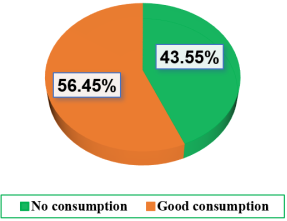
The overall prevalence of adequate Vitamin A-rich food consumption was found to be 56.45% (n = 613), while 43.55% (n = 473) of children had inadequate consumption (Figure 2).
Regarding specific food sources, fresh milk was by far the most consumed Vitamin A source, consumed by 48.07% of children. Consumption of other Vitamin A-rich foods was significantly lower. Only 7.73% consumed dairy products like cheese or yogurt, 7.09% consumed meat, and 7% consumed organs. Plant-based sources were also low, with only 6.63% consuming pumpkins/carrots and 6.17% consuming Vitamin A-rich fruits (Table 2).
Table 2. Sources of Vitamin A-rich food consumption among children aged 6–24 months in Somaliland, n = 1086.
Variable (Food Item)
Category
n
%
Eggs
Yes
40
3.68
No
1,046
96.32
Fresh milk
Yes
522
48.07
No
564
51.93
Cheese, yogurt, milk products
Yes
84
7.73
No
1,002
92.27
Meat
Yes
77
7.09
No
1,009
92.91
Pumpkin, carrots, squash
Yes
72
6.63
No
1,014
93.37
Fish or shellfish
Yes
29
2.67
No
1,057
97.33
Organs
Yes
76
7
No
1,010
93
Vitamin A fruits
Yes
67
6.17
No
1,019
93.83
3.3. Regional Distribution of Vitamin A Consumption
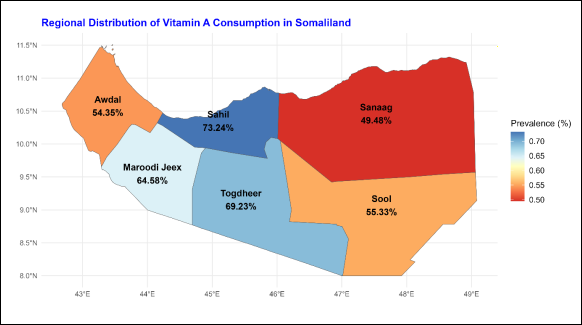
Figure 3 illustrates the spatial distribution of Vitamin A consumption prevalence across the regions of Somaliland. There is notable regional heterogeneity in dietary habits. The Sahil region exhibited the highest prevalence of Vitamin A-rich food consumption at 73.24%, followed closely by Togdheer (69.23%) and Maroodi Jeex (64.58%). Conversely, the eastern regions showed lower consumption rates, with Sanaag recording the lowest prevalence at 49.48%, followed by Sool (55.33%) and Awdal (54.35%). This geographic variation implies that factors such as regional climate, access to markets, or local pastoral practices specifically regarding milk availability may influence consumption levels.
Figure 3. Spatial distribution of Vitamin A consumption in Somaliland.
3.4. Factors Associated with Consumption of Vitamin A-rich Food
Bivariable and multivariable logistic regression analyses were performed to identify predictors of Vitamin A consumption (Table 3). In the multivariable analysis, wealth quintile and media exposure were found to be statistically significant predictors (p < 0.05). Children from households in the middle wealth quintile (AOR = 0.59; 95% CI: 0.38–0.93) and rich wealth quintile (AOR = 0.50; 95% CI: 0.36–0.71) were less likely to consume Vitamin A-rich foods compared to those in the poor wealth quintile. Media exposure showed a strong positive association. Children of mothers who had exposure to media were 5.04 times more likely (AOR = 5.04; 95% CI: 1.55–16.43) to have good Vitamin A consumption compared to those with no exposure. Other factors, including maternal age, education level, parity, and marital status, did not show statistically significant associations with Vitamin A consumption in the multivariable model (p > 0.05).
Table 4. Bivariate and multivariate Analysis of Factors Associated with Vitamin A-Rich Food Consumption among children aged 6–24 months in Somaliland, n = 1086.
Variable
Category
Vitamin A Consumption
COR (95% CI)
AOR (95% CI)
P-value
No (%)
Yes (%)
Mother's Age
<20 years
38.10%
61.90%
1
20-34 years
43.69%
56.31%
0.79 (0.49-1.29)
0.65 (0.39-1.10)
0.108
35-49 years
45.36%
54.64%
0.74 (0.44-1.25)
0.56 (0.30-1.04)
0.067
Mother's Education
No Education
42.59%
57.41%
1
Primary
48.87%
51.13%
0.78 (0.54-1.12)
0.96 (0.64-1.45)
0.843
Secondary
47.83%
52.17%
0.81 (0.35-1.85)
1.20 (0.49-2.92)
0.690
Higher
60.00%
40.00%
0.49 (0.08-3.02)
0.70 (0.11-4.53)
0.704
Wealth Quintile
Poor
37.41%
62.59%
1
Middle
53.68%
46.32%
0.52 (0.34-0.79)**
0.59 (0.38-0.93)
0.023
Rich
56.25%
43.75%
0.47 (0.35-0.62)**
0.50 (0.36-0.71)**
0.000
Work Status
Yes
100.00%
0.00%
1
No
43.45%
56.55%
-†
-†
-
Parity
<3 births
45.27%
54.73%
1
3-4 births
43.60%
56.40%
1.07 (0.78-1.46)
1.20 (0.86-1.69)
0.288
5+ births
42.38%
57.62%
1.12 (0.83-1.52)
1.37 (0.96-1.94)
0.080
Marital Status
Married
42.66%
57.34%
1
Divorced
60.00%
40.00%
0.50 (0.25-0.99)
0.64 (0.31-1.32)
0.223
Widowed
59.09%
40.91%
0.52 (0.22-1.22)
0.46 (0.19-1.12)
0.087
Pregnant Status
Yes
40.87%
59.13%
1
No
44.19%
55.81%
0.87 (0.64-1.19)
0.89 (0.64-1.24)
0.488
Child Age (months)
6-8
47.15%
52.85%
1
9-11
38.89%
61.11%
1.40 (0.91-2.17)
1.48 (0.93-2.35)
0.098
12-17
42.48%
57.52%
1.21 (0.87-1.68)
1.24 (0.86-1.79)
0.254
18-24
44.85%
55.15%
1.10 (0.76-1.58)
1.07 (0.73-1.57)
0.742
Child Sex
Female
42.83%
57.17%
1
Male
44.16%
55.84%
0.95 (0.74-1.21)
0.99 (0.77-1.28)
0.938
Media Exposure
No exposure
43.96%
56.04%
1
Exposure
21.05%
78.95%
2.94 (0.97-8.91)
5.04 (1.55-16.43)**
0.007
Region
Awdal
45.65%
54.35%
1
Marodijeh
35.42%
64.58%
1.53 (0.68-3.46)
1.42 (0.61-3.30)
0.411
Sahil
26.76%
73.24%
2.30 (1.05-5.03)
2.03 (0.92-4.49)
0.080
Togdheer
30.77%
69.23%
1.89 (0.95-3.77)
1.90 (0.94-3.84)
0.074
Sool
44.67%
55.33%
1.04 (0.56-1.93)
1.20 (0.63-2.26)
0.584
Sanaag
50.52%
49.48%
0.82 (0.43-1.58)
1.00 (0.53-1.91)
0.990
Residence
Rural
41.37%
58.63%
1
Urban
45.95%
54.05%
0.83 (0.65-1.06)
0.85 (0.66-1.09)
0.190
**Significant at p < 0.05
†Could not be estimated due to sparse data (only 2 observations in "Yes" category for work status)
4. Discussion
According to the World Health Organization (WHO), people should receive vitamin A supplements two times per year
[9]
Guideline WHO. vitamin A supplementation in infants and children 6–59 months of age. Geneva World Heal Organ. 2011; 269: 16.
[9]
.
This study confirmed that 56.45% (95% CI: 53.47 59.37) of children aged 6–24 months had vitamin A rich foods intake within, or in the last 24 h in Somaliland. This finding is higher than study done in rural Burundi (16%) and Rwanda (23%)
[25]
Custodio E, Herrador Z, Nkunzimana T, Węziak-Białowolska D, Perez-Hoyos A, Kayitakire F. Children’s dietary diversity and related factors in Rwanda and Burundi: A multilevel analysis using 2010 Demographic and Health Surveys. PLoS One. 2019; 14(10): e0223237.
Donkor WES, Adu-Afarwuah S, Wegmüller R, Bentil H, Petry N, Rohner F, et al. Complementary feeding indicators in relation to micronutrient status of Ghanaian children aged 6–23 months: Results from a national survey. Life. 2021; 11(9): 969.
Gilano G, Hailegebreal S, Seboka BT. Geographical variation and associated factors of vitamin A supplementation among 6–59-month children in Ethiopia. PLoS One. 2021; 16(12): e0261959.
. The possible reason for this variation may be due to socio-demographic variation, recent advancements in health care delivery, and accessibility of health care services. However, this finding is lower when we compared with studies done in different areas such as India (58.1%)
[27]
Semba RD, de Pee S, Sun K, Campbell AA, Bloem MW, Raju VK. Low intake of vitamin A–rich foods among children, aged 12–35 months, in India: association with malnutrition, anemia, and missed child survival interventions. Nutrition. 2010; 26(10): 958–62.
Office MNS, (Firm) ICFM. Malawi Demographic and Health Survey, 2010. National Statistical Office; 2011.
[28]
, and Uganda (66.5%)
[29]
Uganda K. Uganda Bureau of Statistics. Kampala, Uganda Calvert. 2016; 1.
[29]
. The possible justification for variation may be due to differences in socio-demographic and economic characteristics, study setting, and maternal healthcare characteristics.
In multivariable logistic regression analysis, household wealth status, and Media exposure were statistically significant factors for vitamin A rich foods intake among children aged from 6–24 months in Somaliland.
Mothers in the middle wealth category (AOR = 0.59; 95% CI: 0.38–0.93) and those in the rich wealth category (AOR = 0.50; 95% CI: 0.36–0.71) were 41% and 50% less likely, respectively, to consume adequate vitamin A–rich foods compared with mothers in the poor wealth category.
Unexpectedly, this study found that adequate vitamin A consumption was higher among women in the poor wealth category compared to those in the middle and rich categories. This finding is inconsistent with previous research
[5]
Aserese AD, Atenafu A, Sisay M, Sorrie MB, Yirdaw BW, Zegeye MK. Adequate vitamin A rich food consumption and associated factors among lactating mothers visiting child immunization and post-natal clinic at health institutions in Gondar Town, Northwest Ethiopia. PLoS One. 2020; 15(9): e0239308.
Organization WH. Global prevalence of vitamin A deficiency in populations at risk 1995-2005: WHO global database on vitamin A deficiency. In: Global prevalence of vitamin A deficiency in populations at risk 1995-2005: WHO global database on vitamin A deficiency. 2009.
[30]
Aghaji AE, Duke R, Aghaji UCW. Inequitable coverage of vitamin A supplementation in Nigeria and implications for childhood blindness. BMC Public Health. 2019; 19(1): 282.
Tiruneh SA, Fentie DT, Yigizaw ST, Abebe AA, Gelaye KA. Spatial distribution and geographical heterogeneity factors associated with poor consumption of foods rich in vitamin A among children age 6–23 months in Ethiopia: Geographical weighted regression analysis. PLoS One. 2021; 16(6): e0252639.
Kassa G, Mesfin A, Gebremedhin S. Uptake of routine vitamin A supplementation for children in Humbo district, southern Ethiopia: community-based cross-sectional study. BMC Public Health. 2020; 20(1): 1500.
. A possible explanation is that women from wealthier households, despite having economic access, may prioritize Vitamin A–rich foods less than their counterparts.
In the present study, media significantly affects the intake of vitamin A rich foods among children aged from 6 to 24 months in Somaliland. Those children whose mothers had exposure to media were 5.04 times more likely (AOR = 5.04; 95% CI: 1.55–16.43) to intake vitamin A rich foods than children whose mother had no exposure.
This finding is in line with studies done in different parts of Ethiopia
[26]
Gilano G, Hailegebreal S, Seboka BT. Geographical variation and associated factors of vitamin A supplementation among 6–59-month children in Ethiopia. PLoS One. 2021; 16(12): e0261959.
Beyene M, Worku AG, Wassie MM. Dietary diversity, meal frequency and associated factors among infant and young children in Northwest Ethiopia: a cross-sectional study. BMC Public Health. 2015; 15(1): 1007.
Haile D, Azage M, Mola T, Rainey R. Exploring spatial variations and factors associated with childhood stunting in Ethiopia: spatial and multilevel analysis. BMC Pediatr. 2016; 16(1): 49.
Aemro M, Mesele M, Birhanu Z, Atenafu A. Dietary diversity and meal frequency practices among infant and young children aged 6–23 months in Ethiopia: a secondary analysis of Ethiopian demographic and health survey 2011. J Nutr Metab. 2013; 2013(1): 782931.
Eshete T, Kumera G, Bazezew Y, Mihretie A, Marie T. Determinants of inadequate minimum dietary diversity among children aged 6–23 months in Ethiopia: secondary data analysis from Ethiopian Demographic and Health Survey 2016. Agric Food Secur. 2018; 7(1): 1–8.
Sekartaji R, Suza DE, Fauziningtyas R, Almutairi WM, Susanti IA, Astutik E, et al. Dietary diversity and associated factors among children aged 6–23 months in Indonesia. J Pediatr Nurs. 2021; 56: 30–4.
. This might be the impact of media for promoting child feeding practice and mothers’ exposure to media able to feed different foods groups to their children.
5. Strengths and Limitation
Since the study is done through using SLDHS national datasets which the finding may have good generalizability. Conducting multivariate logistic regression model and the larger sample size proved important in maintaining the internal validity of the study by helping provide precise descriptive and analytic findings are considered as the strength of this study.
As a limitation, since the data was collected retrospectively it may prone recall bias. As long as the 2020 SLDHS dataset has no observation for some variables, important variables which determine vitamin A rich foods intake among children may not be included under this study.
6. Conclusion and Recommendation
The magnitude of Vitamin A rich foods intake among children aged 6–24 months across the regions of Somaliland is insufficient at national level. Independent variables such as wealth status of mother, and Media exposure were significantly associated with vitamin A rich foods intake among children aged 6–24 months. Therefore, policymakers should give due attention to the poor wealth status, and media non-exposed mothers, to improve good consumption of foods rich in vitamin A among children aged 6–24 months in Somaliland.
Abbreviations
AOR
Adjusted Odds Ratio
CI
Confidence Interval
SLDHS
Somaliland Demographic and Health Survey
VAD
Vitamin A Deficiency
VIF
Variance Inflation Factor
WHO
World Health Organization
Acknowledgments
The authors are grateful to the Demographic and Health Surveys Program for granting them access to the dataset.
Author Contributions
Abdifatah Ibrahim Mouse: Conceptualization, Data curation, Formal Analysis, Methodology, Project administration, Resources, Supervision, Validation, Writing – original draft, Writing – review & editing
Ibrahim Omar Abdi: Conceptualization, Investigation, Methodology, Resources, Validation, Visualization, Writing – original draft, Writing – review & editing
Data Availability Statement
The data presented in this study are available upon reasonable request from the corresponding author.
Conflicts of Interest
The authors declare no conflicts of interest.
References
[1]
Demsash AW, Chereka AA, Kassie SY, Donacho DO, Ngusie HS, Tegegne MD, et al. Spatial distribution of vitamin A rich foods intake and associated factors among children aged 6–23 months in Ethiopia: spatial and multilevel analysis of 2019 Ethiopian mini demographic and health survey. BMC Nutr. 2022; 8(1): 77.
Moroda M, Goyomsa GG, Shukure R, Nigussu S. Consumption of vitamin A rich foods and its associated factors among children aged 6–59 months in North Shoa Zone, Oromia regional state, Ethiopia. Front Nutr. 2025; 12: 1526292.
Wolde M, Tessema ZT. Determinants of good vitamin A consumption in the 12 East Africa Countries using recent Demographic and health survey. PLoS One. 2023; 18(2): e0281681.
Aserese AD, Atenafu A, Sisay M, Sorrie MB, Yirdaw BW, Zegeye MK. Adequate vitamin A rich food consumption and associated factors among lactating mothers visiting child immunization and post-natal clinic at health institutions in Gondar Town, Northwest Ethiopia. PLoS One. 2020; 15(9): e0239308.
Bendik I, Friedel A, Roos FF, Weber P, Eggersdorfer M. Vitamin D: a critical and essential micronutrient for human health. Front Physiol. 2014; 5: 248.
Sharma P, Dwivedi S, Singh D. Global poverty, hunger, and malnutrition: a situational analysis. In: Biofortification of food crops. Springer; 2016. p. 19–30.
Guideline WHO. vitamin A supplementation in infants and children 6–59 months of age. Geneva World Heal Organ. 2011; 269: 16.
[10]
Bush LA, Hutchinson J, Hooson J, Warthon-Medina M, Hancock N, Greathead K, et al. Measuring energy, macro and micronutrient intake in UK children and adolescents: a comparison of validated dietary assessment tools. BMC Nutr. 2019; 5(1): 53.
Underwood BA, Arthur P. The contribution of vitamin A to public health. FASEB J. 1996; 10(9): 1040–8.
[12]
Guerrant RL, Lima AAM, Davidson F. Micronutrients and infection: interactions and implications with enteric and other infections and future priorities. J Infect Dis. 2000; 182(Supplement_1): S134–8.
Tzioumis E, Kay MC, Bentley ME, Adair LS. Prevalence and trends in the childhood dual burden of malnutrition in low-and middle-income countries, 1990–2012. Public Health Nutr. 2016; 19(8): 1375–88.
Rice AL, West Jr KP, Black RE. Vitamin A deficiency. Comp Quantif Heal risks Glob Reg Burd Dis Attrib to Sel major risk factors. 2004; 1: 211–56.
[15]
Organization WH. Global prevalence of vitamin A deficiency in populations at risk 1995-2005: WHO global database on vitamin A deficiency. In: Global prevalence of vitamin A deficiency in populations at risk 1995-2005: WHO global database on vitamin A deficiency. 2009.
Black RE, Victora CG, Walker SP, Bhutta ZA, Christian P, De Onis M, et al. Maternal and child undernutrition and overweight in low-income and middle-income countries. Lancet. 2013; 382(9890): 427–51.
Donkor WES, Adu-Afarwuah S, Wegmüller R, Bentil H, Petry N, Rohner F, et al. Complementary feeding indicators in relation to micronutrient status of Ghanaian children aged 6–23 months: Results from a national survey. Life. 2021; 11(9): 969.
Imdad A, Mayo-Wilson E, Haykal MR, Regan A, Sidhu J, Smith A, et al. Vitamin A supplementation for preventing morbidity and mortality in children from six months to five years of age. Cochrane database Syst Rev. 2022;(3).
Stevens GA, Bennett JE, Hennocq Q, Lu Y, De-Regil LM, Rogers L, et al. Trends and mortality effects of vitamin A deficiency in children in 138 low-income and middle-income countries between 1991 and 2013: a pooled analysis of population-based surveys. Lancet Glob Heal. 2015; 3(9): e528–36.
Demographic U. Health Survey 2016., Kampala, Uganda and Rockville, Maryland, USA, 2018. 2020.
[23]
Grantham-McGregor S, Cheung YB, Cueto S, Glewwe P, Richter L, Strupp B. Developmental potential in the first 5 years for children in developing countries. Lancet. 2007; 369(9555): 60–70.
Greiner T. Vitamin A: Moving the food-based approach forward. FAO WHO. 2013.
[25]
Custodio E, Herrador Z, Nkunzimana T, Węziak-Białowolska D, Perez-Hoyos A, Kayitakire F. Children’s dietary diversity and related factors in Rwanda and Burundi: A multilevel analysis using 2010 Demographic and Health Surveys. PLoS One. 2019; 14(10): e0223237.
Gilano G, Hailegebreal S, Seboka BT. Geographical variation and associated factors of vitamin A supplementation among 6–59-month children in Ethiopia. PLoS One. 2021; 16(12): e0261959.
Semba RD, de Pee S, Sun K, Campbell AA, Bloem MW, Raju VK. Low intake of vitamin A–rich foods among children, aged 12–35 months, in India: association with malnutrition, anemia, and missed child survival interventions. Nutrition. 2010; 26(10): 958–62.
Office MNS, (Firm) ICFM. Malawi Demographic and Health Survey, 2010. National Statistical Office; 2011.
[29]
Uganda K. Uganda Bureau of Statistics. Kampala, Uganda Calvert. 2016; 1.
[30]
Aghaji AE, Duke R, Aghaji UCW. Inequitable coverage of vitamin A supplementation in Nigeria and implications for childhood blindness. BMC Public Health. 2019; 19(1): 282.
Tiruneh SA, Fentie DT, Yigizaw ST, Abebe AA, Gelaye KA. Spatial distribution and geographical heterogeneity factors associated with poor consumption of foods rich in vitamin A among children age 6–23 months in Ethiopia: Geographical weighted regression analysis. PLoS One. 2021; 16(6): e0252639.
Kassa G, Mesfin A, Gebremedhin S. Uptake of routine vitamin A supplementation for children in Humbo district, southern Ethiopia: community-based cross-sectional study. BMC Public Health. 2020; 20(1): 1500.
Beyene M, Worku AG, Wassie MM. Dietary diversity, meal frequency and associated factors among infant and young children in Northwest Ethiopia: a cross-sectional study. BMC Public Health. 2015; 15(1): 1007.
Haile D, Azage M, Mola T, Rainey R. Exploring spatial variations and factors associated with childhood stunting in Ethiopia: spatial and multilevel analysis. BMC Pediatr. 2016; 16(1): 49.
Aemro M, Mesele M, Birhanu Z, Atenafu A. Dietary diversity and meal frequency practices among infant and young children aged 6–23 months in Ethiopia: a secondary analysis of Ethiopian demographic and health survey 2011. J Nutr Metab. 2013; 2013(1): 782931.
Eshete T, Kumera G, Bazezew Y, Mihretie A, Marie T. Determinants of inadequate minimum dietary diversity among children aged 6–23 months in Ethiopia: secondary data analysis from Ethiopian Demographic and Health Survey 2016. Agric Food Secur. 2018; 7(1): 1–8.
Sekartaji R, Suza DE, Fauziningtyas R, Almutairi WM, Susanti IA, Astutik E, et al. Dietary diversity and associated factors among children aged 6–23 months in Indonesia. J Pediatr Nurs. 2021; 56: 30–4.
Mouse, A. I., Ibrahim, R. A., Abdi, I. O. (2026). Prevalence, Regional Disparities and Associated Factors of Vitamin A-rich Food Consumption Among Children 6-24 Months in Somaliland: Evidence from a National Survey. Science Discovery Nutrition, 1(1), 15-24. https://doi.org/10.11648/j.sdnutr.20260101.12
Mouse, A. I.; Ibrahim, R. A.; Abdi, I. O. Prevalence, Regional Disparities and Associated Factors of Vitamin A-rich Food Consumption Among Children 6-24 Months in Somaliland: Evidence from a National Survey. Sci. Discov. Nutr.2026, 1(1), 15-24. doi: 10.11648/j.sdnutr.20260101.12
Mouse AI, Ibrahim RA, Abdi IO. Prevalence, Regional Disparities and Associated Factors of Vitamin A-rich Food Consumption Among Children 6-24 Months in Somaliland: Evidence from a National Survey. Sci Discov Nutr. 2026;1(1):15-24. doi: 10.11648/j.sdnutr.20260101.12
@article{10.11648/j.sdnutr.20260101.12,
  author = {Abdifatah Ibrahim Mouse and Ridwan Abdi Ibrahim and Ibrahim Omar Abdi},
  title = {Prevalence, Regional Disparities and Associated Factors of Vitamin A-rich Food Consumption Among Children 6-24 Months in Somaliland: Evidence from a National Survey},
  journal = {Science Discovery Nutrition},
  volume = {1},
  number = {1},
  pages = {15-24},
  doi = {10.11648/j.sdnutr.20260101.12},
  url = {https://doi.org/10.11648/j.sdnutr.20260101.12},
  eprint = {https://article.sciencepublishinggroup.com/pdf/10.11648.j.sdnutr.20260101.12},
  abstract = {Micronutrient deficiencies, particularly vitamin A deficiency (VAD), pose a significant public health challenge in developing nations by contributing to child morbidity and mortality; however, empirical evidence regarding dietary intake among young children in Somaliland remains limited. This study assessed the prevalence, regional disparities, and factors associated with the consumption of vitamin A-rich foods among children aged 6–24 months in Somaliland. A secondary analysis of 1,086 children was conducted using data from the 2020 Somaliland Demographic and Health Survey (SDHS), a nationally representative community-based cross-sectional survey. The outcome variable was the consumption of vitamin A-rich foods in the 24 hours preceding the interview, and multivariable logistic regression was performed to identify independent predictors using Adjusted Odds Ratios (AOR) with 95% Confidence Intervals (CI). The overall prevalence of vitamin A-rich food consumption was 56.45% (95% CI: 53.47–59.37%), with fresh milk being the predominant source (48.07%), while fruit and vegetable intake remained markedly low. Substantial regional disparities were observed, ranging from 73.24% in the Sahil region to 49.48% in the Sanaag region. Multivariable analysis revealed that children from middle (AOR = 0.59; 95% CI: 0.38–0.93) and rich (AOR = 0.50; 95% CI: 0.36–0.71) wealth quintiles were significantly less likely to consume vitamin A-rich foods compared to those from poor households. Conversely, maternal exposure to mass media was a strong positive predictor of intake (AOR = 5.04; 95% CI: 1.55–16.43). In conclusion, vitamin A-rich food consumption among young children in Somaliland is suboptimal and geographically uneven. These findings highlight a dietary paradox where higher household wealth correlates with lower intake, underscoring the vital role of maternal media exposure and nutrition education in improving child feeding practices across all socioeconomic strata.},
 year = {2026}
}
TY  - JOUR
T1  - Prevalence, Regional Disparities and Associated Factors of Vitamin A-rich Food Consumption Among Children 6-24 Months in Somaliland: Evidence from a National Survey
AU  - Abdifatah Ibrahim Mouse
AU  - Ridwan Abdi Ibrahim
AU  - Ibrahim Omar Abdi
Y1  - 2026/10/09
PY  - 2026
N1  - https://doi.org/10.11648/j.sdnutr.20260101.12
DO  - 10.11648/j.sdnutr.20260101.12
T2  - Science Discovery Nutrition
JF  - Science Discovery Nutrition
JO  - Science Discovery Nutrition
SP  - 15
EP  - 24
PB  - Science Publishing Group
UR  - https://doi.org/10.11648/j.sdnutr.20260101.12
AB  - Micronutrient deficiencies, particularly vitamin A deficiency (VAD), pose a significant public health challenge in developing nations by contributing to child morbidity and mortality; however, empirical evidence regarding dietary intake among young children in Somaliland remains limited. This study assessed the prevalence, regional disparities, and factors associated with the consumption of vitamin A-rich foods among children aged 6–24 months in Somaliland. A secondary analysis of 1,086 children was conducted using data from the 2020 Somaliland Demographic and Health Survey (SDHS), a nationally representative community-based cross-sectional survey. The outcome variable was the consumption of vitamin A-rich foods in the 24 hours preceding the interview, and multivariable logistic regression was performed to identify independent predictors using Adjusted Odds Ratios (AOR) with 95% Confidence Intervals (CI). The overall prevalence of vitamin A-rich food consumption was 56.45% (95% CI: 53.47–59.37%), with fresh milk being the predominant source (48.07%), while fruit and vegetable intake remained markedly low. Substantial regional disparities were observed, ranging from 73.24% in the Sahil region to 49.48% in the Sanaag region. Multivariable analysis revealed that children from middle (AOR = 0.59; 95% CI: 0.38–0.93) and rich (AOR = 0.50; 95% CI: 0.36–0.71) wealth quintiles were significantly less likely to consume vitamin A-rich foods compared to those from poor households. Conversely, maternal exposure to mass media was a strong positive predictor of intake (AOR = 5.04; 95% CI: 1.55–16.43). In conclusion, vitamin A-rich food consumption among young children in Somaliland is suboptimal and geographically uneven. These findings highlight a dietary paradox where higher household wealth correlates with lower intake, underscoring the vital role of maternal media exposure and nutrition education in improving child feeding practices across all socioeconomic strata.
VL  - 1
IS  - 1
ER  -
Mouse, A. I., Ibrahim, R. A., Abdi, I. O. (2026). Prevalence, Regional Disparities and Associated Factors of Vitamin A-rich Food Consumption Among Children 6-24 Months in Somaliland: Evidence from a National Survey. Science Discovery Nutrition, 1(1), 15-24. https://doi.org/10.11648/j.sdnutr.20260101.12
Mouse, A. I.; Ibrahim, R. A.; Abdi, I. O. Prevalence, Regional Disparities and Associated Factors of Vitamin A-rich Food Consumption Among Children 6-24 Months in Somaliland: Evidence from a National Survey. Sci. Discov. Nutr.2026, 1(1), 15-24. doi: 10.11648/j.sdnutr.20260101.12
Mouse AI, Ibrahim RA, Abdi IO. Prevalence, Regional Disparities and Associated Factors of Vitamin A-rich Food Consumption Among Children 6-24 Months in Somaliland: Evidence from a National Survey. Sci Discov Nutr. 2026;1(1):15-24. doi: 10.11648/j.sdnutr.20260101.12
@article{10.11648/j.sdnutr.20260101.12,
  author = {Abdifatah Ibrahim Mouse and Ridwan Abdi Ibrahim and Ibrahim Omar Abdi},
  title = {Prevalence, Regional Disparities and Associated Factors of Vitamin A-rich Food Consumption Among Children 6-24 Months in Somaliland: Evidence from a National Survey},
  journal = {Science Discovery Nutrition},
  volume = {1},
  number = {1},
  pages = {15-24},
  doi = {10.11648/j.sdnutr.20260101.12},
  url = {https://doi.org/10.11648/j.sdnutr.20260101.12},
  eprint = {https://article.sciencepublishinggroup.com/pdf/10.11648.j.sdnutr.20260101.12},
  abstract = {Micronutrient deficiencies, particularly vitamin A deficiency (VAD), pose a significant public health challenge in developing nations by contributing to child morbidity and mortality; however, empirical evidence regarding dietary intake among young children in Somaliland remains limited. This study assessed the prevalence, regional disparities, and factors associated with the consumption of vitamin A-rich foods among children aged 6–24 months in Somaliland. A secondary analysis of 1,086 children was conducted using data from the 2020 Somaliland Demographic and Health Survey (SDHS), a nationally representative community-based cross-sectional survey. The outcome variable was the consumption of vitamin A-rich foods in the 24 hours preceding the interview, and multivariable logistic regression was performed to identify independent predictors using Adjusted Odds Ratios (AOR) with 95% Confidence Intervals (CI). The overall prevalence of vitamin A-rich food consumption was 56.45% (95% CI: 53.47–59.37%), with fresh milk being the predominant source (48.07%), while fruit and vegetable intake remained markedly low. Substantial regional disparities were observed, ranging from 73.24% in the Sahil region to 49.48% in the Sanaag region. Multivariable analysis revealed that children from middle (AOR = 0.59; 95% CI: 0.38–0.93) and rich (AOR = 0.50; 95% CI: 0.36–0.71) wealth quintiles were significantly less likely to consume vitamin A-rich foods compared to those from poor households. Conversely, maternal exposure to mass media was a strong positive predictor of intake (AOR = 5.04; 95% CI: 1.55–16.43). In conclusion, vitamin A-rich food consumption among young children in Somaliland is suboptimal and geographically uneven. These findings highlight a dietary paradox where higher household wealth correlates with lower intake, underscoring the vital role of maternal media exposure and nutrition education in improving child feeding practices across all socioeconomic strata.},
 year = {2026}
}
TY  - JOUR
T1  - Prevalence, Regional Disparities and Associated Factors of Vitamin A-rich Food Consumption Among Children 6-24 Months in Somaliland: Evidence from a National Survey
AU  - Abdifatah Ibrahim Mouse
AU  - Ridwan Abdi Ibrahim
AU  - Ibrahim Omar Abdi
Y1  - 2026/10/09
PY  - 2026
N1  - https://doi.org/10.11648/j.sdnutr.20260101.12
DO  - 10.11648/j.sdnutr.20260101.12
T2  - Science Discovery Nutrition
JF  - Science Discovery Nutrition
JO  - Science Discovery Nutrition
SP  - 15
EP  - 24
PB  - Science Publishing Group
UR  - https://doi.org/10.11648/j.sdnutr.20260101.12
AB  - Micronutrient deficiencies, particularly vitamin A deficiency (VAD), pose a significant public health challenge in developing nations by contributing to child morbidity and mortality; however, empirical evidence regarding dietary intake among young children in Somaliland remains limited. This study assessed the prevalence, regional disparities, and factors associated with the consumption of vitamin A-rich foods among children aged 6–24 months in Somaliland. A secondary analysis of 1,086 children was conducted using data from the 2020 Somaliland Demographic and Health Survey (SDHS), a nationally representative community-based cross-sectional survey. The outcome variable was the consumption of vitamin A-rich foods in the 24 hours preceding the interview, and multivariable logistic regression was performed to identify independent predictors using Adjusted Odds Ratios (AOR) with 95% Confidence Intervals (CI). The overall prevalence of vitamin A-rich food consumption was 56.45% (95% CI: 53.47–59.37%), with fresh milk being the predominant source (48.07%), while fruit and vegetable intake remained markedly low. Substantial regional disparities were observed, ranging from 73.24% in the Sahil region to 49.48% in the Sanaag region. Multivariable analysis revealed that children from middle (AOR = 0.59; 95% CI: 0.38–0.93) and rich (AOR = 0.50; 95% CI: 0.36–0.71) wealth quintiles were significantly less likely to consume vitamin A-rich foods compared to those from poor households. Conversely, maternal exposure to mass media was a strong positive predictor of intake (AOR = 5.04; 95% CI: 1.55–16.43). In conclusion, vitamin A-rich food consumption among young children in Somaliland is suboptimal and geographically uneven. These findings highlight a dietary paradox where higher household wealth correlates with lower intake, underscoring the vital role of maternal media exposure and nutrition education in improving child feeding practices across all socioeconomic strata.
VL  - 1
IS  - 1
ER  -





 Share This Article
 Twitter
 Linked In
 Facebook
 Copy
Copy Download