Research Article | | Peer-Reviewed

Performance Evaluation of Hot-mix Asphalt, Modified with Reclaimed Asphalt Pavement (RAP) for Wearing Course: A Case Study at the Adama-Awash Road Project in Ethiopia

Received: 23 July 2026     Accepted: 6 August 2026     Published: 27 August 2026
Views:       Downloads:
Abstract

The raising cost of virgin pavement materials and the growing need for sustainable road maintenance practices have driven the adoption of reclaimed asphalt pavement (RAP) in road construction. However, in Ethiopia, the utilization of RAP remains limited due to the absence of localized performance data and mechanistic design guidelines. This study was aimed to evaluate the engineering performance and long-term structural behavior of hot-mix asphalt (HMA) integrated with varying RAP percentage increments (0%, 20%, 25%, and 30%) without chemical additives/rejuvenators. RAP materials were sampled from the milling operations of the heavily trafficked Adama-Awash heavy maintenance road project. Marshall mix design and advanced Superpave performance tests such as indirect tensile strength (ITS), Resilient modulus (MR), and Hamburg wheel-tracking (HWT) were conducted. Additionally, the KENPAVE mechanistic-empirical software was used to predict the fatigue and rutting life of the pavement structures under the actual design traffic of 205 million ESALs found by forecasting up to 2040 during the research study. Laboratory results indicated that increasing the RAP percentage up to 25% enhanced mixture stiffness, with peak MR value of 5.45 GPa and rut depth lowered to 3.9 mm. However, at 30% RAP content, the mixture experienced a sever drop in tensile strength and modulus due to the aged binder excessive stiffness and brittleness. KENPAVE analysis confirmed that while all mixtures exceeded the actual design traffic volume of 205 million ESAL requirement for structural rutting, all RAP percentages did not achieve the required fatigue life, suggesting bottom-up fatigue cracking as the governing failure mode. Ultimately, 25% RAP was identified as the optimum RAP content, providing the best balance between structural performance, rutting resistance, and an approximate 18% reduction in virgin material costs. The study recommends adopting polymer-modified binders and/or lane distribution factors to meet the project’s full fatigue life.

Published in Science Discovery Materials (Volume 1, Issue 3)
DOI 10.11648/j.sdm.20260103.12
Page(s) 96-105
Creative Commons

This is an Open Access article, distributed under the terms of the Creative Commons Attribution 4.0 International License (http://creativecommons.org/licenses/by/4.0/), which permits unrestricted use, distribution and reproduction in any medium or format, provided the original work is properly cited.

Copyright

Copyright © The Author(s), 2026. Published by Science Publishing Group

Keywords

Reclaimed Asphalt Pavement, Mechanistic-Empirical Analysis, KENPAVE, Resilient Modules, Rutting Performance, Fatigue Performance

1. Introduction
The rapid growth of transportation infrastructure is crucial for economic development in developing countries like Ethiopia. However, the continuous deterioration of asphalt pavements due to heavy traffic loading, aging, and climatic variations necessitate frequent and costly maintenance activities. In former trends, deteriorated bituminous surfaces were milled and removed, leading to the depletion of natural resources and environmental degradation. To address this issue, the incorporation of reclaimed asphalt (RAP) into new hot-mix asphalt (HMA) has emerged as a globally accepted, sustainable engineering practice. Extensive international research has demonstrated that RAP not only conserve virgin aggregates and binder but also enhances certain mechanical properties of asphalt mixtures, provided it is properly processed and blended
Despite these international advancements, the applicability of RAP in Ethiopia’s road construction industry remains impractical. Ample quantities of milled asphalt material generated during heavy maintenance projects such as Adama-Awash trunk road, are usually underutilized or disposed of along the roadside. This underutilization is primarily driven by the luck of standard locally developed mix design, luck of performance-based laboratory evidence tailored to Ethiopian materials, and uncertainties regarding the long-term behavior of RAP-modified mixtures under heavy traffic .
The aged binder inherent in RAP creates a complex variable into the mix design. While the stiffening effect of aged binder generally improves high temperature rutting resistance, excessive RAP content can make the mixture more brittle, significantly increasing its susceptibility to fatigue and thermal cracking . Historically, international practices limited RAP usage ranges from 15% to 25% for wearing courses without requiring binder grade adjustments . However, recent advancements in balanced mix design have encouraged the use of higher RAP contents. Studies have shown that integrating up to 25% RAP generally improves marshall stability and volumetric properties without compromising durability . Over 30%, the mixture becomes excessively stiff, leading to inadequate workability and high risk of thermal and fatigue cracking unless chemical rejuvenators are added .
The primary issue with high RAP contents is the reduction of cracking resistance. The brittleness caused by aged binder reduces the mixture’s ability to withstand stress, making it highly susceptible to intermediate temperature fatigue cracking . To mitigate this challenge, “H. A. Hatailah and E. Kassem clearly demonstrated the importance of implementing a balanced mix design approach to optimize the design of asphalt mixtures prepared with RAP and recycling agents ”.
To determine optimum RAP content, it requires a balanced mix design approach that evaluates both volumetric properties and advanced performance metrics. Conventional Marshall mix design methods are not enough to reflect the exact mechanistic behavior of RAP-modified mixtures under the recent, heavy traffic loads. Therefore, advanced performance tests, such as the ITS, MR, and HWT are critical for characterizing fatigue and rutting resistance. In addition, mechanistic-empirical (M-E) tools such as KENPAVE provide a better framework for predicting long-term pavement performance by calculating critical structural responses based on laboratory performed moduli .
This research aims to bridge the existing knowledge gap by providing a comprehensive performance evaluation of HMA integrating 0%, 20% 25%, and 30% RAP for Adama-Awash heavy maintenance road project in Ethiopia. The findings of this study expected to provide critical empirical data and design recommendations to promote the sustainable and structurally reliable practice of RAP in Ethiopia and the same developing regions.
2. Materials and Methods
2.1. Materials and Sampling
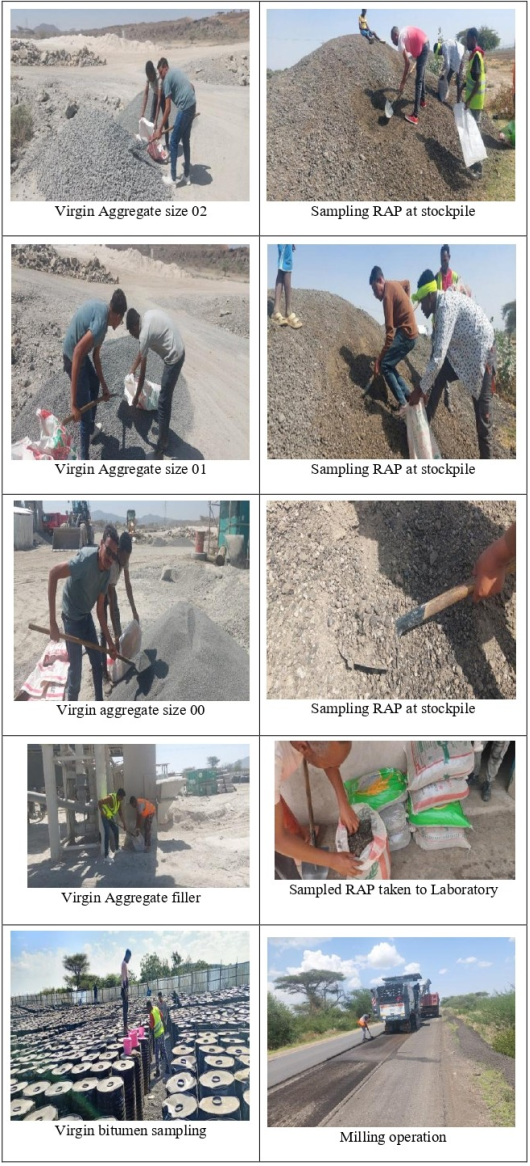
The RAP material used in this study was sourced from the Adama-Awash heavy maintenance road project, a critical trunk route in Ethiopia accommodating heavy freight traffic. To ensure a representative sample, RAP was collected from the distinct stockpiles distributed along a 60 km stretch of the project. A composite sampling technique, in accordance with AASHTO T-2, was conducted. The collected RAP was subsequently processed to a maximum aggregate size of 19 mm to ensure homogenous blending with virgin components.
Quantitative binder extraction compliant with AASHTO T-164 indicated that the RAP obtained 3.8% aged binder. Sieve analysis based on AASHTO T-30 provided a finer gradation, requiring a careful proportioning with coarser virgin aggregates. The virgin aggregates consisted of crushed basalt, and a 60/70 penetration grade bitumen was utilized as the virgin binder.
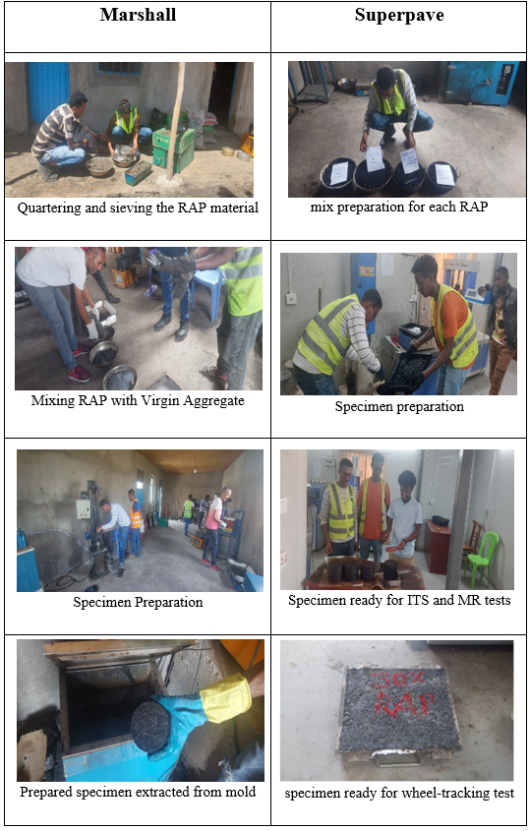
Figure 1. Specimen preparation.
Figure 2. Material sampling (virgin and recycled).
2.2. Mix Design and Specimen Preparation
A marshall mix design was conducted to determine the optimum binder content (OBC) for four distinct HMA blends of 0% RAP as a control/baseline mix and three RAP-modified mixes (20%, 25% and 30% RAP). To prevent further oxidative aging of the RAP binder, the RAP was separately heated at 130C for about two hours, while virgin aggregates were heated to 160C. the mixture were compacted using a mechanical Marshall hammer by applying 75 blows per each face, simulating the field heavy traffic conditions. The virgin binder content was adjusted for each RAP increment to maintain a constant total binder content in the modified mixture. The volumetric properties were evaluated based on the Ethiopian Roads Authority (ERA) flexible pavement design standard specification .
2.3. Performance Testing
Advanced performance testing was conducted at the site laboratory to improve empirical volumetric analysis. Cylindrical specimens were prepared using the Superpave gyratory compactor. In accordance with ASTM D7369, indirect tensile strength (ITS) and resilient modulus (MR) tests were conducted. All the prepared specimens were conditioned at 25C. The resilient modulus test subjected to a repeated haversine load pulse of peak load set 15% of the ITS value. The Hamburg Wheel-Tracking (HWT) test was performed based on EN 12697-22 to evaluate permanent deformation (rutting) in comparison to ERA maximum allowable rut depth. A square (30 cm×30 cm) specimen was prepared and submerged in water bath at 60C, and subjected to 10,000 passes of 700N steel wheel.
2.4. Mechanistic-Empirical Modeling
Using KENPAVE software, the long-term performance of different percentage RAP-modified mixtures was predicted. The study area pavement structure was modeled as 7-layer linear elastic system to accurately simulate the actual overlay design conditions.
Table 1. Pavement Layer Description.

Cycle

Thickness (mm)

CBR

RAP (%)

Modulus (MR) (MPa)

1

50

0

4141

20

5026

25

5452

30

3500

2

50

4000

3

50

3500

4

50

2000

5

200

159.3

1641

6

200

67.6

696

7

infinite

35.65

367

Layer interfaces were assumed fully bonded. A standard 80 kN single axle dual tire load was applied. The critical horizontal tensile strain at the bottom of the asphalt layers and the vertical compressive strain at the top of the sub-grade were extracted. These strains were applied to the asphalt institute transfer functions to estimate fatigue life (Nf) and rutting life (Nr), respectively as presented in equations (1) and (2) below.
Nf=0.0796×(εt)-3.291×E-0.854(1)
Nr=1.365×10⁻⁹×(εc)-4.477(2)
Where E = the resilient modulus of the asphalt layer in psi. the predicted lives were compared with the project’s actual calculated design traffic loading of 205×106 ESALs.
3. Results
3.1. Volumetric Properties
optimum binder content (OBC) was successfully established in the Marshall mix design procedure. 4.7% OBC was obtained from the control mix, achieving a stability of 10kN. For the RAP-modified mixtures, the OBC consistently established at 5.3%. At 25% RAP-modified mixture, the mix resulted a stability of 17.1kN, flow of 3.4mm, air voids of 5%, and VMA of 16.23%, all in the acceptable range. At 30% RAP, the flow value approached in the upper specification margin, indicating the mixture’s instability and. All other volumetric properties remained within the acceptable limits as shown in Table 2 below.
Table 2. Summary of Marshall volumetric properties.

RAP (%)

OBC (%)

Stability (kN)

Flow (mm)

Air void (%)

VMA (%)

VFA (%)

0

4.7

10.3

3.3

4.2

17.81

72

20

5.3

16.2

3.4

4.53

16

70

25

5.3

17.1

3.4

5

16.23

68

30

5.3

19.1

3.41

5

15.4

66

ERA spec

>=9

2-3.5

3-5

>=14

65-73

3.2. Rutting Performance
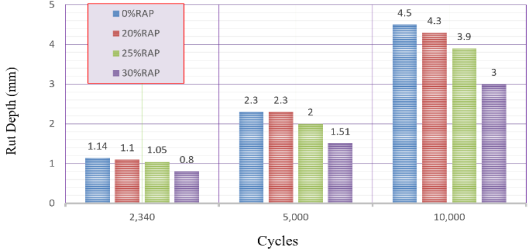
The results suggested a clear inverse relationship between RAP increment and rut depth. The control mix exhibited the highest rut depth of 4.5 mm at foll 10,000 load cycles. As RAP content raised to 25%, the rut depth progressively decreased to 3.9 mm. At 30% RAP content the rut depth lowered to 3 mm, indicating the modified mix became stiffer. The test results of each RAP increment at critical load cycles are illustrated in Table 3 below.
Figure 3. Comparison of rut depth with RAP increment.
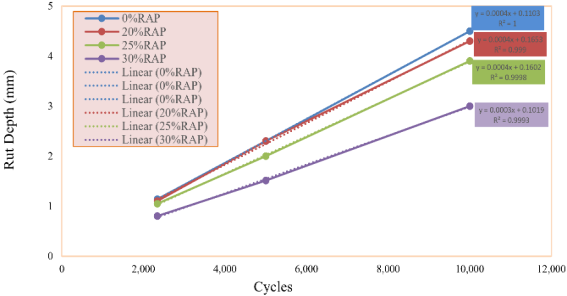
Table 3. Summary of HWT test results.

RAP (%)

Load Cycles

2,340

5,000

10,000

Rut depth (mm)

0

1.14

2.3

4.5

20

1.1

2.2

4.3

25

1.05

2

3.9

30

0.8

1.51

3

ERA specification

<= 7 mm

Figure 4. Rutting performance for different RAP content.
3.3. Fatigue Performance
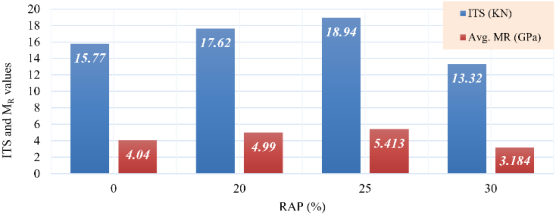
The ITS and MR test results showed that incorporation of RAP up to 25% significantly enhances both tensile strength and stiffness. The control mix recorded an ITS value of 15.77 kN and MR value of 4.04 GPa. At 25% RAP content, these values increased to peak value of 18.94 kN and 5.413 GPa respectively. However, at 30% RAP, a sever structural performance reduction was observed, indicating the RAP-modified mixture is highly brittle. The ITS and MR values of 13.32kN and 3.184 GPa, respectively. Table 4 below shows the ITS and MR test results for each RAP increment.
Figure 5. Comparison of ITS and MR values with RAP increment.
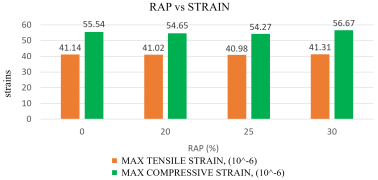
Table 4. ITS and MR test results for each RAP increment.

RAP (%)

ITS (KN)

Avg. MR (GPa)

0

15.77

4.04

20

17.62

4.99

25

18.94

5.413

30

13.32

3.184

3.4. Long-term Performance Prediction
The MR values derived from the advanced Superpave laboratory was used as an input for KENPAVE to model the 7-layer pavement structure. High rutting life predictions were obtained from the software analysis ranging from 660×106 - 804×106. All RAP-modified mixtures successfully exceed the actual projects traffic loading with the high value of 205×106 ESAL, indicating the mixture’s highest rutting performance. However, none of the evaluated mixtures achieved the required design life for fatigue. The highest predicted fatigue life only covered 14% of the project’s actual design loading requirement, indicating that the design traffic is beyond the practical traffic volume that require lane distribution. The results are summarized in table below for each RAP increment and predicted performance value.
Table 5. Summary of performance prediction using KENPAVE.

RAP (%)

Layer 1 Modulus (MPa)

Max Tensile Strain, (et×10-6)

Max Compressive STRAIN, (ec×10-6)

Predicted Fatigue Life, Nf (ESALs) (million)

Predicted Rutting Life, Nr (ESALs) (million)

0

4141

41.14

55.54

23

733

20

5026

41.02

54.65

20

782

25

5452

40.98

54.27

19

804

30

3200

41.31

56.67

28

660

Actual ESALs (million)

205

Figure 6. Tensile and Compressive Strain for Varying RAP.
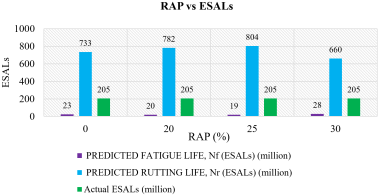
Figure 7. Predicted fatigue and rutting life.

3.5. Economic Analysis
RAP-modified mix with 25% RAP contributed 17.92% of the total required bitumen in virgin bitumen costs. Similarly, using 30% RAP provided 21.5% binder cost savings, indicating RAP percentage increment is directly proportional to virgin material cost savings. However, this economic advantage is negated by saver structural performance reductions. Due to this reason, this study selected 25% RAP as the optimal balance, providing nearly 18% cost reduction for virgin materials while simultaneously enhancing structural durability of the pavement without the contribution of any chemical rejuvenators.
4. Discussion
The laboratory results clearly demonstrate the two different properties of RAP incorporation into HMA. The rutting performance improved consistently as RAP content increased from 0% to 30%. This improvement is directly related to the aged and oxidized mixture in the RAP, making the RAP-modified mixture more stiff and highly resistant to rutting deformation. The stiffer binder property increases the overall dynamic modulus of the mixture, enhancing its resistance to plastic deformation under heavy loading . All mixtures performed well below the ERA maximum allowable rut depth, indicating that RAP is highly useful for high-temperature performance.
However, the fatigue performance (ITS and MR) revealed a critical performance at 25% RAP, indicating that aged binder and strong aggregate particles in the RAP enhanced the durability and bonding strength of the mixture. The sever reduction in ITS and MR at 30% RAP indicates that incorporating more RAP beyond 25% without chemical admixtures lead to inadequate blending between the stiff, aged RAP binder and the virgin binder. The resulting mixture becomes highly brittle and heterogeneous, exposing it to highly susceptible to cracking and premature fatigue failure . This finding aligns with international literature suggesting that high RAP contents require softer virgin binders to restore the maltene-to- asphaltene balance
When evaluated with the projects extremely high (need redistribution) cumulative design traffic of 205×106 ESALs, none of the evaluated mixtures achieved the required design life for fatigue resistance. This indicates that bottom-up fatigue cracking will certainly be the governing failure mode for this pavement section well before the end of its required design life. While the 30% RAP mixture showed a higher theoretical fatigue life in KENPPAVE due to its lower modulus. Reducing the massive project’s traffic loading by lane distribution provide a balanced laboratory and KENPAVE output.
5. Conclusions
Based on the laboratory investigations and mechanistic-empirical modeling, the following engineering conclusions are arrived.
1) RAP can be successfully integrated into HMA up to 30% ERA flexible pavement design (2013) requirements. In this study, the OBC for RAP-modified mixtures was established at 5.3%.
2) Incorporation of RAP into HMA significantly enhances rutting resistance. The rut depth reduced from 4.5 mm to 3 mm after 10,000 HWT cycles, indicating the stiffening effect of the aged RAP binder.
3) The ITS and MR values were peak at 25% RAP. While at 30% RAP, the mixture became excessively brittle, causing a sever drop in modulus and tensile strength, showing 30% RAP without rejuvenators passes the structural behavior.
4) KENPAVE analysis provided that all mixtures achieved the structural rutting requirements under the project’s heavy loading of 205×106 ESAL. However, none of the mixtures achieved the fatigue life requirements, indicating bottom-up fatigue cracking as the governing failure mode.
5) The optimum RAP content was identified as 25%, providing maximum stiffness, enhanced rutting resistance, and 18% reduction in virgin material costs. It is highly recommended to either distribute the heavy concentrated loads or utilize polymer-modified asphalt binders to address premature fatigue failure.
6) Adopting advanced software tools such as FlexPAVE can consider all material characteristics.
Abbreviations

HMA

Hot-Mix Asphalt

RAP

Reclaimed Asphalt Pavement

ITS

Indirect Tensile Strength

MR

Resilient Modulus

HWT

Hamburg Wheel Tracking

ERA

Ethiopian Roads Authority

OBC

Optimum Binder Content

VMA

Voids in Mineral Aggregates

VFA

Voids Filled with Asphalt

M-E

Mechanistic-Empirical

ESALs

Equivalent Single Axle Loads

Acknowledgments
The author would like to acknowledge the Advisor Melaku Sisay Abebe (PhD) for his close follow-up and assistance to each section of the research. In the same way, he would like to acknowledge and appreciate the support of the material engineers and laboratory technicians at the Adama-Awash heavy maintenance and express-way projects for their technical assistance during the laboratory testing time.
Author Contributions
Melaku Bitew Kifile: Conceptualization, Data curation, Formal Analysis, Investigation, Methodology, Writing – original draft, Writing – review & editing
Data Availability Statement
The data supporting the findings of this research work has been reported in this manuscript.
Conflicts of Interest
The author declares no conflicts of interest.
References
[1] H. A. Hatailah and E. Kassem, “Balanced mix design for high RAP asphalt mixtures prepared with recycling agents,” Road Materials and Pavement Design. 2025, 26(9), 2302–2328,
[2] D. V. Dao, N.-L. Nguyen, M. H. Nguyen, H.-B. Ly, and V. Q. Truong, “Evaluation of cracking resistance of warm mix asphalt incorporating high reclaimed asphalt pavement content,” Proceedings of the Institution of Mechanical Engineers, Part L: Journal of Materials: Design and Applications. 2022, 236(12), 2550–2560.
[3] M. Zaumanis, Rajib B. Mallick, and Robert Frank, “100% hot mix asphalt recycling: challenges and benefits”. Transportation Research Procedia. 2016, 14, 3493-3502.
[4] A. Milad, A. Mohd Taib, A. G. F Ahmeda, M. Solla, and N. I. Md Yusoff, “A REVIEW OF THE USE OF RECLAIMED ASPHALT PAVEMENT FOR ROAD PAVING APPLICATIONS,” Jurnal Teknologi. 2020, 82(3), 35–44.
[5] A. A. Endale, “Development of Asphalt pavement Recycling Method for Road Maintenance and Construction in Ethiopia,” University of Birmingham. 2024.
[6] F. Kaseer, A. Bajaj, A. E. Martin, E. Arámbula-Mercado, and E. Hajj, “Strategies for Producing Asphalt Mixtures with High RAP Content,” J. Mater. Civ. Eng. 2019, 31(11), 05019002.
[7] M. Sabouri, “Evaluation of performance-based mix design for asphalt mixtures containing Reclaimed Asphalt Pavement (RAP),” Construction and Building Materials, 2020, 235, 117545.
[8] J. Yu, Z. Lin, G. Zou, H. Yu, Z. Leng, and Y. Zhang, “Long-term performance of recycled asphalt mixtures containing high RAP and RAS,” Journal of Road Engineering. 2024, 4(1), 36-53.
[9] P. B. Gnanamurthy and K. K. B V. “Experimental Study on Characterization of Bituminous Mixes Containing Recycled Asphalt Pavement Materials for the Construction of Surface Course in Flexible Pavements”. IJRASET. 2022, 10(5), 3271-3276.
[10] T. Ma, H. Wang, X. Huang, Z. Laboratory performance characteristics of high modulus asphalt mixture with high-content RAP. Construction and Building Materials. 2015, 101, 975–982.
[11] H. Al Hatailah and E. Kassem. “Performance Evaluation of the Thermal Cracking Resistance of Asphalt Mixtures Prepared with High RAP Content and Rejuvenators”. J. Transp. Eng., Part B: Pavements. 2025, 151(2), 04025009.
[12] Y. H. Huang. Pavement design and analysis. 2. ed. Upper Saddle River: NJ: Pearson Prentice Hall; 2004, 10 9 8 7 6 5.
[13] L. P. Ingrassia, S. Spadoni, G. Ferrotti, A. Virgili, and F. Canestrari. Prediction of the Long-Term Performance of an Existing Warm Recycled Motorway Pavement Materials. 2023, 16(3), 1005.
[14] S. T. S. ERA flexible design mannual, “PAVEMENT DESIGN MANUAL VOLUME 1 FLEXIBLE PAVEMENTS,” 2013.
[15] A. Yousefi, A. Behnood, A. Nowruzi, and H. Haghshenas. Performance evaluation of asphalt mixtures containing warm mix asphalt (WMA) additives and reclaimed asphalt pavement (RAP). Construction and Building Materials. 2021, 268, 121200.
Cite This Article
  • APA Style

    Kifile, M. B. (2026). Performance Evaluation of Hot-mix Asphalt, Modified with Reclaimed Asphalt Pavement (RAP) for Wearing Course: A Case Study at the Adama-Awash Road Project in Ethiopia. Science Discovery Materials, 1(3), 96-105. https://doi.org/10.11648/j.sdm.20260103.12

    Copy | Download

    ACS Style

    Kifile, M. B. Performance Evaluation of Hot-mix Asphalt, Modified with Reclaimed Asphalt Pavement (RAP) for Wearing Course: A Case Study at the Adama-Awash Road Project in Ethiopia. Sci. Discov. Mater. 2026, 1(3), 96-105. doi: 10.11648/j.sdm.20260103.12

    Copy | Download

    AMA Style

    Kifile MB. Performance Evaluation of Hot-mix Asphalt, Modified with Reclaimed Asphalt Pavement (RAP) for Wearing Course: A Case Study at the Adama-Awash Road Project in Ethiopia. Sci Discov Mater. 2026;1(3):96-105. doi: 10.11648/j.sdm.20260103.12

    Copy | Download

  • @article{10.11648/j.sdm.20260103.12,
      author = {Melaku Bitew Kifile},
      title = {Performance Evaluation of Hot-mix Asphalt, Modified with Reclaimed Asphalt Pavement (RAP) for Wearing Course: 
    A Case Study at the Adama-Awash Road Project in Ethiopia},
      journal = {Science Discovery Materials},
      volume = {1},
      number = {3},
      pages = {96-105},
      doi = {10.11648/j.sdm.20260103.12},
      url = {https://doi.org/10.11648/j.sdm.20260103.12},
      eprint = {https://article.sciencepublishinggroup.com/pdf/10.11648.j.sdm.20260103.12},
      abstract = {The raising cost of virgin pavement materials and the growing need for sustainable road maintenance practices have driven the adoption of reclaimed asphalt pavement (RAP) in road construction. However, in Ethiopia, the utilization of RAP remains limited due to the absence of localized performance data and mechanistic design guidelines. This study was aimed to evaluate the engineering performance and long-term structural behavior of hot-mix asphalt (HMA) integrated with varying RAP percentage increments (0%, 20%, 25%, and 30%) without chemical additives/rejuvenators. RAP materials were sampled from the milling operations of the heavily trafficked Adama-Awash heavy maintenance road project. Marshall mix design and advanced Superpave performance tests such as indirect tensile strength (ITS), Resilient modulus (MR), and Hamburg wheel-tracking (HWT) were conducted. Additionally, the KENPAVE mechanistic-empirical software was used to predict the fatigue and rutting life of the pavement structures under the actual design traffic of 205 million ESALs found by forecasting up to 2040 during the research study. Laboratory results indicated that increasing the RAP percentage up to 25% enhanced mixture stiffness, with peak MR value of 5.45 GPa and rut depth lowered to 3.9 mm. However, at 30% RAP content, the mixture experienced a sever drop in tensile strength and modulus due to the aged binder excessive stiffness and brittleness. KENPAVE analysis confirmed that while all mixtures exceeded the actual design traffic volume of 205 million ESAL requirement for structural rutting, all RAP percentages did not achieve the required fatigue life, suggesting bottom-up fatigue cracking as the governing failure mode. Ultimately, 25% RAP was identified as the optimum RAP content, providing the best balance between structural performance, rutting resistance, and an approximate 18% reduction in virgin material costs. The study recommends adopting polymer-modified binders and/or lane distribution factors to meet the project’s full fatigue life.},
     year = {2026}
    }
    

    Copy | Download

  • TY  - JOUR
    T1  - Performance Evaluation of Hot-mix Asphalt, Modified with Reclaimed Asphalt Pavement (RAP) for Wearing Course: 
    A Case Study at the Adama-Awash Road Project in Ethiopia
    AU  - Melaku Bitew Kifile
    Y1  - 2026/08/27
    PY  - 2026
    N1  - https://doi.org/10.11648/j.sdm.20260103.12
    DO  - 10.11648/j.sdm.20260103.12
    T2  - Science Discovery Materials
    JF  - Science Discovery Materials
    JO  - Science Discovery Materials
    SP  - 96
    EP  - 105
    PB  - Science Publishing Group
    SN  - 3143-6927
    UR  - https://doi.org/10.11648/j.sdm.20260103.12
    AB  - The raising cost of virgin pavement materials and the growing need for sustainable road maintenance practices have driven the adoption of reclaimed asphalt pavement (RAP) in road construction. However, in Ethiopia, the utilization of RAP remains limited due to the absence of localized performance data and mechanistic design guidelines. This study was aimed to evaluate the engineering performance and long-term structural behavior of hot-mix asphalt (HMA) integrated with varying RAP percentage increments (0%, 20%, 25%, and 30%) without chemical additives/rejuvenators. RAP materials were sampled from the milling operations of the heavily trafficked Adama-Awash heavy maintenance road project. Marshall mix design and advanced Superpave performance tests such as indirect tensile strength (ITS), Resilient modulus (MR), and Hamburg wheel-tracking (HWT) were conducted. Additionally, the KENPAVE mechanistic-empirical software was used to predict the fatigue and rutting life of the pavement structures under the actual design traffic of 205 million ESALs found by forecasting up to 2040 during the research study. Laboratory results indicated that increasing the RAP percentage up to 25% enhanced mixture stiffness, with peak MR value of 5.45 GPa and rut depth lowered to 3.9 mm. However, at 30% RAP content, the mixture experienced a sever drop in tensile strength and modulus due to the aged binder excessive stiffness and brittleness. KENPAVE analysis confirmed that while all mixtures exceeded the actual design traffic volume of 205 million ESAL requirement for structural rutting, all RAP percentages did not achieve the required fatigue life, suggesting bottom-up fatigue cracking as the governing failure mode. Ultimately, 25% RAP was identified as the optimum RAP content, providing the best balance between structural performance, rutting resistance, and an approximate 18% reduction in virgin material costs. The study recommends adopting polymer-modified binders and/or lane distribution factors to meet the project’s full fatigue life.
    VL  - 1
    IS  - 3
    ER  - 

    Copy | Download

Author Information
  • Department of Civil Engineering & College of Engineering, Addis Ababa Science and Technology University, Addis Ababa, Ethiopia

    Biography: Melaku Bitew Kifile is a Master’s graduate in civil Engineering (Road and Transport Engineering) from Addis Ababa Science and Technology university. He completed his BSc in civil Engineering from Jimma University in 2015. His research focuses on pavement materials, sustainable road construction, and mechanistic-empirical pavement design. He recognized as a practicing material Engineer by the Ethiopian construction authority. He currently serves as a material Engineer from Beles Consulting P. L. C.

    Research Fields: Pavement Engineering, Highway Materials, Asphalt Mix Design, Mechanistic-Empirical analysis, Sustainable construction Materials, Reclaimed Asphalt Pavement