Abstract
Background: Malaria remains a significant public health concern in many regions of the world, including Mangu L. G. A of Plateau State, Nigeria, where poor waste disposal, blocked drainages, and stagnant water continue to sustain vector breeding. This study examined the relationship between environmental sanitation practices and malaria disease infection in Mangu L. G. A. Materials and Methods: A descriptive cross-sectional survey design was used. Structured questionnaires were administered to 400 residents selected through stratified and random sampling, and were complemented by ten years (2013-2022) of secondary malaria case records obtained from five hospitals in the study area. Data were analysed using descriptive statistics (frequency, charts and tables) and inferential statistics (Spearman's rank correlation and chi-square analysis). Results: Awareness of environmental sanitation was notably high (98.0%), children under the age of five and pregnant women were the most vulnerable to malaria infection (81.0%), and malaria prevalence was most common between May and August (45.0%). Most residents cleaned their surroundings weekly (45.0%), and sanitary inspectors did not conduct routine inspections in 59.0% of cases. A correlation coefficient of 0.926 (p < 0.05) indicated a strong, positive, and statistically significant association between environmental sanitation practices and malaria infection at the 5% significance level. Conclusion: Environmental sanitation practices are strongly associated with malaria infection in Mangu L. G. A. Sanitary inspectors should adopt a fixed schedule for premises inspection, residents should regularly clear their surroundings and drainages to reduce mosquito breeding grounds, and government should enforce environmental sanitation by-laws and expand health education programmes, particularly among vulnerable groups.
Keywords
Environmental Sanitation, Anopheles Mosquitoes, Malaria Control, Vector-borne Disease, Mangu
1. Introduction
Environmental sanitation is a major developmental issue that confronts many societies around the globe. Increasing waste generation rates due to population growth, changing lifestyles of people, development and consumption of products with materials that are less biodegradable have led to diverse environmental challenges in various cities of the world
| [4] | Asase, M; Yanful, E. K; Mensah, M; Stanford, J. & Amponsah, S. (2009) Comparism of municipal solid waste management systems in Canada &Ghana: A case study of cities of London, Ontario, & Kumasa, Ghana.
https://doi.org/10.1016/j.wasman.2009.06.019 |
| [10] | Ibimode, A. A., Zhattau, V. F., Ilenwabor, J. O., Maigida, G. T., Dabis, N. D., Maton, S. M., & Dibal, J. Y. (2023). Assessment of solid waste management practices in Abuja Municipal Area Council (AMAC). International Journal of Advanced Research in Science and Technology, 12(5), 974-983. |
[4, 10]
. One of the most significant cause of disease in sub-Saharan Africa and other third world countries is of course poor environmental sanitation. This factor plays a major role in disease transmission especially for endemic diseases such as malaria. Mosquito breed in dirty environment, water logged areas and drain that are not cleared; stagnant water and potholes. Such environment create habitation for the breeding of Mosquitos. According to the Federal Ministry of Environment Nigeria
| [8] | Federal Ministry of Environment Nigeria (2005). National Environmental Sanitation Policy. Abuja: Federal Ministry of Environment. |
[8]
, environmental sanitation constitutes the principles and practices of effecting healthy and hygienic conditions in the environment to promote public health and welfare, improve quality of life, and ensure a sustainable environment.
The essential components of environmental sanitation are: solid waste management, medical waste management, management of rural and urban drainage, vegetation control, hygiene education, and promotion
| [22] | World Health Orgnization (WHO). (2010). World malaria report. Geneva, Switzerland. |
[22]
. A good environmental sanitation practice in any community could help to reduce the spread of ailment like malaria. Environmental modification strategy has been adopted to create a permanent or long- lasting effect on land, water or vegetation to reduce vector habitat. The interventions have been successfully implemented in large scale in Panama, Italy, Malaysia, and Indonesia. In Zambia for example, draining wetlands by the creation of ditches or drains, the Tennessee Valley of the US and the Zambian copper belt and leveling, filling depressions or covering water tanks and stagnant water were among the approaches applied to prevent, eliminate or reduce the vector habitat
| [18] | Vanessa, L. (2010). Environmental strategies to replaced DDT and control malaria; 2ed; pestizid Aktions-Netzwevk, Hamburg, Germany. |
[18]
. Small scale modification strategy that concentrates on human-made breeding habitats have been successfully put in place in combination with other interventions, for example: in Uganda, filling puddles; in Kenya, drying out stagnant pools, in Sri Lanka, covering water containers, in India, filing pits and low -lying areas and in Zanzibar, clearing out standing pool of water
| [18] | Vanessa, L. (2010). Environmental strategies to replaced DDT and control malaria; 2ed; pestizid Aktions-Netzwevk, Hamburg, Germany. |
[18]
.
There are five species of plasmodium protozoan known to cause human malaria, they are:
plasmodium falciparum, p.vivax, p.ovale, p.malarea and p.knowlesi | [6] | Caraballo, H. (2014). Emergency department management of mosquito-borne illness: malaria, dengue, and West Nile virus. Emergency Medicine Practice, 16: 5-9. |
[6]
. Out of these, the most severe form of human malaria is caused by
p.falciparum while the others generally cause a milder form of malaria
| [6] | Caraballo, H. (2014). Emergency department management of mosquito-borne illness: malaria, dengue, and West Nile virus. Emergency Medicine Practice, 16: 5-9. |
| [23] | World Health Orgnization (WHO). (2014). World malaria report. Geneva, Switzerland. 32-42. |
[6, 23]
. In Africa,
p.falciparum is the major cause of the most severe form of malaria which account for over 60% of outpatient visit and 30% of hospital admissions in Nigeria
| [9] | Federal Ministry of Health. (2010). A road map for malaria control in Nigeria, a bridged version, Abuja. Strategic Plan. 2009-2013; Yahian Press Ltd. pp. 155. |
[9]
while
p.vivax is the dominant cause of malaria in countries outside of the sub-saharan Africa.
Malaria remains a worldwide health concern. Globally, an estimated 263 million malaria cases and 597,000 malaria deaths occurred in 2023, about 11 million more cases than in 2022, with approximately 94% of cases and 95% of deaths occurring in the WHO African Region
| [21] | World Health Organization (WHO). (2024). World Malaria Report 2024. Geneva: World Health Organization. |
[21]
. The disease is prevalent in parts of Africa, Oceania, Asia, and Central and South America, with Sub-Saharan Africa continuing to bear the overwhelming majority of the global burden
| [15] | Oshikoya, K. A. (2006). Malaria treatment in Lagos private clinics/hospitals: physicians’ compliance with the World Health Organization’s recommendations. Nigerian Medical Practices, 49(5): 102-110. |
| [21] | World Health Organization (WHO). (2024). World Malaria Report 2024. Geneva: World Health Organization. |
[15, 21]
. Children under the age of five years account for the majority of malaria deaths in the region, and four African countries; Nigeria, the Democratic Republic of Congo, Niger, and the United Republic of Tanzania, together accounted for more than half of all global malaria deaths in 2023, with Nigeria alone responsible for close to 40% of global malaria deaths among children under five
| [21] | World Health Organization (WHO). (2024). World Malaria Report 2024. Geneva: World Health Organization. |
[21]
. Nigeria retains the unenviable position of the country with the highest malaria burden in the world, accounting for approximately a quarter of global malaria cases and about 31% of global malaria deaths, a share that has remained largely unchanged in recent reporting years despite ongoing national control efforts
| [16] | Severe Malaria Observatory. (2025). Malaria in Nigeria: Statistics and Facts. Medicines for Malaria Venture. Retrieved from https://www.severemalaria.org/countries/nigeria |
| [20] | World Health Organization (WHO). (2008). World Malaria Report. WHO: Switzerland, 99-101. |
| [21] | World Health Organization (WHO). (2024). World Malaria Report 2024. Geneva: World Health Organization. |
[16, 20, 21]
. In Plateau State, like other states in Nigeria, malaria continues to be a leading cause of outpatient attendance, inpatient admission, and hospitalization of women and children, with malaria test positivity rates in the State reported at about 46% in recent facility-based surveillance
| [17] | Shekarau, E., Uzoanya, M., Ogbulafor, N., Ntadom, G., Ijezie, S. N., Seye, B., Fashanu, C., Eze, N., Nwidae, L., Mokuolu, O., Oguche, S., and Rietveld, H. (2024). Severe Malaria Intervention Status in Nigeria: Workshop Meeting Report. Malaria Journal, 23: Article 218.
https://doi.org/10.1186/s12936-024-05001-1 |
| [19] | WHO (2002): Malaria Vector Control - Decision making criteria and procedures for judicious use of insecticides. |
[17, 19]
. The persistently high burden of malaria in Plateau State, despite decades of national intervention, is largely sustained by the continuous reporting of new cases every year, underscoring the need for locally-targeted, community-level interventions such as environmental sanitation.
In order to reduce the incidence and spread malaria parasites, an integrative approach has been recommended
| [22] | World Health Orgnization (WHO). (2010). World malaria report. Geneva, Switzerland. |
[22]
. The Integrated Vector Management (I. V. M) which combines biological and chemical methods is one of such strategy. It is aimed at improving ecological soundness and sustainability for the control of vector borne diseases, improve efficacy and cost effectiveness
| [22] | World Health Orgnization (WHO). (2010). World malaria report. Geneva, Switzerland. |
[22]
. The components of I. V. M include the use of mosquito repellent, Long Lasting Insecticide Treated Nets (LLITN), chemical method and biological control measures, Outdoor Spraying Larviciding (OSL), Indoor Residual Spraying (IRS), and prompt management of malaria cases with Artemisinin-based Combination Therapy (ACTs) among others.
From a perspective which include the host, agent and environment, researchers have encouraged the source reduction, elimination and reduction of malaria breeding sites by concentrating on the environment. This is essential because, the proliferation of mosquitoes continually perpetuate the transmission of malaria. So, if the sources of mosquito breeding sites are eliminated, malaria would be drastically reduced. This implies that good environmental sanitation can help in curbing malaria transmission, promote healthiness and improve the well-being of the populace.
Mangu Local Government Area is characterized by settlements that lack modern facilities like a pit latrine with slabs, good drainage, and a waste disposal system. Areas often regarded as towns are overcrowded and poorly sanitized, resulting in high refuse generation, indiscriminately refuse dumps, open defecation, blocked gutters, which serve as breeding grounds for malaria parasites. Furthermore, because the residents of the local government are farmers, any available land space is usually converted to farmland. All these factors encourage the breeding of female anopheles mosquitoes. Against this backdrop, this study examines the relationship between environmental sanitation and the burden of malaria in Mangu Local Government Area of Plateau State.
2. Literature Review and Research Gap
A growing body of recent literature affirms that environmental sanitation and management remain central pillars of malaria vector control across sub-Saharan Africa. In Ghana, Agyemang-Badu et al.
| [2] | Agyemang-Badu, S. Y., Awuah, E., Oduro-Kwarteng, S., Dzamesi, J. Y. W., Dom, N. C., and Kanno, G. G. (2023a). Environmental Management and Sanitation as a Malaria Vector Control Strategy: A Qualitative Cross-Sectional Study among Stakeholders, Sunyani Municipality, Ghana. Environmental Health Insights, 17: 1-10.
https://doi.org/10.1177/11786302221146890 |
[2]
reported that sanitation stakeholders in Sunyani Municipality strongly favoured environmental management and sanitation as a vector control strategy, while a related household survey by Agyemang-Badu et al.
| [3] | Agyemang-Badu, S. Y., Awuah, E., Oduro-Kwarteng, S., Dzamesi, J. Y. W., and Azure, S. A. (2023b). Assessment of the Knowledge, Prevalence, and Control Strategies of Malaria among Households in Sunyani Municipality, Bono Region, Ghana. Environmental Health Insights, 17: 1-12.
https://doi.org/10.1177/11786302231176922 |
[3]
found that most residents identified enforcement of sanitation by-laws and the deployment of trained environmental health officers as critical to eliminating mosquito breeding sites. In Nigeria, Ogbuene et al.
| [13] | Ogbuene, E. B., Enemuo, A. E. S., Odom, I., Duru, M. N., and Ike, C. (2024). Investigating the Environmental Factors Influencing the Transmission of Malaria in Select Urban Slums in Enugu, Enugu State, Nigeria. Journal of Environmental Management and Safety.
https://doi.org/10.83032/jems.vol15no3.526 |
[13]
established a statistically significant association between environmental factors and malaria transmission in urban slum communities of Enugu State, while Asifat et al.
| [5] | Asifat, O. A., Adenusi, A., Adebile, T. V., Aderinto, N., Azu, E., Ivey-Waters, A., and Kersey, J. X. (2025). Relationship between Unimproved Household Sanitation Facilities and Malaria Infection among Under-Five Children in Nigeria: Insights from Malaria Indicator Survey 2021. Malaria Journal, 24(1): Article 103.
https://doi.org/10.1186/s12936-025-05340-7 |
[5]
, analysing nationally representative data from the 2021 Nigeria Malaria Indicator Survey, found that children in households with unimproved sanitation facilities faced a significantly elevated risk of malaria infection. At the policy level, Shekarau et al.
| [17] | Shekarau, E., Uzoanya, M., Ogbulafor, N., Ntadom, G., Ijezie, S. N., Seye, B., Fashanu, C., Eze, N., Nwidae, L., Mokuolu, O., Oguche, S., and Rietveld, H. (2024). Severe Malaria Intervention Status in Nigeria: Workshop Meeting Report. Malaria Journal, 23: Article 218.
https://doi.org/10.1186/s12936-024-05001-1 |
[17]
documented persistent gaps in data quality, inter-agency coordination, and grassroots enforcement of environmental and vector-control guidelines across Nigeria's 36 States, including Plateau State.
Notwithstanding this expanding evidence base, three gaps are evident in the existing literature. First, much of the sanitation-malaria literature relevant to Nigeria and West Africa is either qualitative in orientation, as in Agyemang-Badu et al.
| [2] | Agyemang-Badu, S. Y., Awuah, E., Oduro-Kwarteng, S., Dzamesi, J. Y. W., Dom, N. C., and Kanno, G. G. (2023a). Environmental Management and Sanitation as a Malaria Vector Control Strategy: A Qualitative Cross-Sectional Study among Stakeholders, Sunyani Municipality, Ghana. Environmental Health Insights, 17: 1-10.
https://doi.org/10.1177/11786302221146890 |
[2]
, or based on secondary national survey data, as in Asifat et al.
| [5] | Asifat, O. A., Adenusi, A., Adebile, T. V., Aderinto, N., Azu, E., Ivey-Waters, A., and Kersey, J. X. (2025). Relationship between Unimproved Household Sanitation Facilities and Malaria Infection among Under-Five Children in Nigeria: Insights from Malaria Indicator Survey 2021. Malaria Journal, 24(1): Article 103.
https://doi.org/10.1186/s12936-025-05340-7 |
[5]
, with comparatively few studies combining primary household-level quantitative data with formal inferential statistics, such as correlation and chi-square analysis, to directly test the strength of the sanitation-malaria relationship at the local government level. Second, studies conducted within Plateau State have tended to focus on biophysical determinants of transmission, such as altitude and seasonality
| [1] | Abba, J. O., Mwansat, S. G., Adeiyongo, C. M., Akindgh, T. M., Samson, D., Nanvyat, N., and Oguche, S. (2024). Influence of Altitudinal Gradient on Human Malaria Prevalence in Plateau State, Central Nigeria: A Longitudinal Study. UMYU Scientific, 3(3): 333-339. https://doi.org/10.56919/2433.035 |
[1]
, rather than on household and community sanitation behaviour as a modifiable risk factor. Third, none of the reviewed studies triangulate cross-sectional household survey data with multi-year, facility-based time-series malaria case records, an approach that would allow both the immediate correlates of sanitation practice and the longer-term seasonal and annual trend of malaria incidence to be examined together. Mangu Local Government Area, characterised by poor waste disposal, blocked drainages, and expanding but under-serviced settlements, has not previously been the subject of a dedicated empirical investigation of this kind.
This study addresses these gaps by integrating primary household survey data on environmental sanitation knowledge and practice with ten years (2013-2022) of secondary malaria case records from five hospitals in Mangu Local Government Area, and by subjecting the combined data to both descriptive and inferential statistical analysis. In doing so, the study provides local, quantitatively grounded evidence on the relationship between environmental sanitation and malaria in Mangu L. G. A, contributing empirical depth to a literature that has, until now, been dominated by qualitative accounts, national-level survey data, and biophysical rather than behavioral explanations of malaria transmission in Plateau State.
3. Materials and Methods
3.1. Study Area
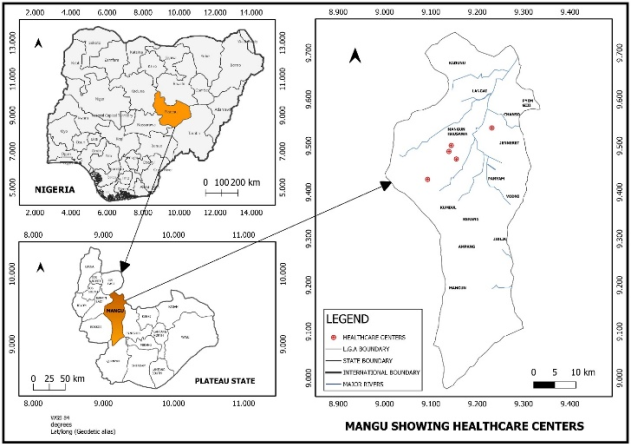
Mangu is one of the seventeen (17) Local Government Areas that was established in Plateau State, Nigeria. It's shares boundaries with Barkin - Ladi and Bokkos L. G. A to the West, Bauchi State to the North, Pankshin L. G. A to the East and Quanpan L. G. A to the South. It is located at latitude 9°31’00’’N and longitude 9°06’00’’E. It has a land area of 1653km
2 and a population of 294,931 at the 2006 census. The area is characterized by two seasons, wet and dry. Rainfall is high with the mean annual rainfall ranging from 131.75cm to 146cm with the highest rainfall usually recorded in the months of July and August. The area has mean temperature of 29°C and low temperature of 18°C, average humidity level of 49% and the average wind speed of the area is put at 11km/hr. The topography of the area is made up of highlands and lowlands with the highest point reaching 1318m at Fuvu Kerang volcanic hills. Both the highlands and Lowlands have been extensively weathered and eroded with lateritic soils covering most part of the Lowlands. The soil type in the area are laterite soil and reddish basaltic soils. The parents rock includes basaltic, biotite-granites, alluvium, unconsolidated quaternary deposits and granite-gnesis on the Plateau
| [14] | Olowolafe E. A. (2002). Soil parent material and soil properties in two separate catchments areas on the Jos Plateau, Nigeria. Geo J. 56: 201-212. |
[14]
. The area is characteristics of the savanna type vegetation. The vegetation consists mainly of dispersed short trees, grasses and the plateau type of mosaic vegetation. There are also fringing woodlands or gallery forests which can be found along some river valleys. The area has a population of 294,931 at the 2006 census
| [12] | National Population Commission (2006), Population Census, Official Gazette (FGP71/52007/2, 93. |
[12]
. The major ethnic group found in Mangu Local Government is the Mwaghavul people. They occupy the districts of Panyam, Pushit, Kerang, Ampang west, Kombun, Mangun and Mangu. Farming is the major occupation of the people of Mangu Local Government Area with crops such as; Maize, Potatoes, Tomatoes, Onions, Millet, Cocoyam, Rice, Guinea corn, Pepper, Sugar cane and Salads are grown in the area.
Figure 1. Study Area: Map of Mangu L. G. A of Plateau State.
3.2. Methods
This study adopted a descriptive survey research design. Both Primary and secondary data are employed to source information from respondents. According to
, Primary data refers to the firsthand data collected by a researcher himself while Secondary data are the data collected by a party not related to the research study but collected for some other purpose and at different time in the past. Information such as the demographic and socio-economic characteristic, knowledge about sanitation and disposal of waste, knowledge about malaria and its spread are sorted for through questionnaires and interview which is primary in nature. While secondary data on the other hand were malaria cases of patients gotten from malaria case files of five (5) hospitals in the local government for a period of 10 years. The sample techniques adopted for this study is both stratified and random sampling. The study area was stratified into 16 strata based on the 16 political wards in the local government and for the purpose of fairness, 25 copies of questionnaires were served across giving a total of 400 copies of questionnaires. A sample of 400 respondents were selected to serves as a representative of the population based on Israel
| [11] | Isreal, G. D (2013) Sampling the evidence of extension programme evaluation and organizational development, IFAS University of Florida PEOD-5. |
[11]
who stated that for the population of more than 100,000, the sample size for the study should not be less than 400 at 5% precision level. Data on monthly malaria cases for a period of 10 years (2013-2022) were collected from the files and records sections of the five different hospitals to see both annual and seasonal variations in the reported cases malaria.
The data collected for this study were subjected to both descriptive and inferential statistics. The descriptive statistics involve the use of frequencies, percentage, tables and charts in describing the responses of the respondents to the various items in the questionnaire through the use of both Microsoft excel and statistical package for social sciences (SPSS). The tools were also used to show the relationship between environmental sanitation and the spread of malaria, and test for level of significance at 0.05.
4. Results and Discussions
4.1. Demographic and Socio-Economic Descriptions of the Respondents
With respect to gender of the respondents, the result of the study reveals that 56.0% of the 400-sampled respondent selected randomly in the study area were males, while 44.0% were female. Majority, (32.0%) of respondents are ages 45years and above followed by the 24.0% of the respondents with ages between 27-35 year. Marital status showed that most (48.0%) of the respondents are married, 35.0% singles while 9.0% and 8.0% of the respondents are widowed/widower and separated respectively. Result also revealed that 61.0% of the respondents earn between ₦5000 to ₦50,000 per month, 28.0% between ₦51,000 to ₦100,000 per month, and 11.0% of the respondents earn ₦101,000 and above. Education Level refers to the highest attainment of school or the highest qualification of the respondents in term of certificate.
Table 1. Demographic characteristics distribution of respondents in Mangu L. G. A. of Plateau State.
DEMOGRAPHIC CHARACTERISTICS OF RESPONDENTS |
VARIABLES | CATEGORY | FREQUENCY | PERCENTAGE (%) | CUMULATIVE PERCENTAGE (%) |
GENDER | Male | 224 | 56.0 | 56.0 |
Female | 176 | 44.0 | 100.0 |
AGE | 18-26 | 92 | 23.0 | 23.0 |
27-35 | 96 | 24.0 | 47.0 |
36-44 | 84 | 21.0 | 68.0 |
45 and Above | 128 | 32.0 | 100.0 |
MARITAL STATUS | Single | 140 | 35.0 | 35.0 |
Married | 192 | 48.0 | 83.0 |
Separated | 32 | 8.0 | 91.0 |
Widow/widower | 36 | 9.0 | 100.0 |
INCOME LEVEL (₦) | 5000-50,000 | 244 | 61.0 | 61.0 |
51,000-100,000 | 112 | 28.0 | 89.0 |
101,000 and Above | 44 | 11.0 | 100.0 |
EDUCATIONAL STATUS | Primary | 72 | 18.0 | 18.0 |
Secondary | 136 | 34.0 | 52.0 |
Tertiary | 192 | 48.0 | 100.0 |
OCCUPATIONAL STATUS | Farming | 112 | 28.0 | 28.0 |
Trading | 56 | 14.0 | 42.0 |
Civil Servant | 100 | 25.0 | 67.0 |
Artisan | 48 | 12.0 | 79.0 |
Student | 48 | 21.0 | 100.0 |
The result of the study revealed that majority 48.0% has attained tertiary education, (34.0%) attained secondary education, while those that have attained primary school are the least occupying 18.0% of the sample size. Majority (28.0%) of the respondents were farmers, Civil servants takes 25.0%, 21.0% were students, 14% were traders and 12% were artisans.
4.2. Basic Knowledge of Residents About Environmental Sanitation
Table 2 examines the awareness of the respondents to the issue of environmental sanitation, this is very important in this research to know the basic knowledge they have on the topic before diving into the implication of not keeping to the rules of the sanitation. The result (
Table 2) of the study shows that 98.0% of the respondent have a prior knowledge of environmental sanitation while 2.0% of the respondents are not aware of environmental sanitation With respect to the frequency at which the inhabitants of the study area clean their surroundings, the result of the study gathered that majority (45.0%) of the respondents indicated to have been cleaning their surroundings weekly, 22.0% of the respondents clean their surrounding daily while 20.0% of the respondents clean their surrounding monthly.
Table 2. Responses on Environmental Sanitation Awareness and Malaria Diseases Infections.
RESPONSES ON ENVIRONMENTAL SANITATION AWARENESS |
QUESTIONS | RESPONSES | FREQUENCY | % | CUL% |
Do you know anything about Environmental Sanitation? | Yes | 392 | 98.0 | 98.0 |
No | 8 | 2.0 | 100.0 |
How often do you take care of your surrounding? | Daily | 88 | 22.0 | 22.0 |
Weekly | 180 | 45.0 | 67.0 |
Monthly | 80 | 20.0 | 87.0 |
Anytime | 52 | 13.0 | 100.0 |
Is there a drainage system around you home? | Yes | 272 | 68.0 | 68.0 |
No | 128 | 32.0 | 100.0 |
How often do you clean the drainages? | Daily | 76 | 19.0 | 19.0 |
Weekly | 148 | 37.0 | 56.0 |
Monthly | 44 | 11.0 | 67.0 |
Anytime | 132 | 33.0 | 100.0 |
What are the major waste storage and disposal in use in your area? | Burning | 176 | 44.0 | 44.0 |
Open refuse dump | 116 | 29.0 | 73.0 |
Dump in drainages | 44 | 11.0 | 84.0 |
Burying | 64 | 16.0 | 100.0 |
What is the method of household water storage in your home? | Open containers | 48 | 12.0 | 12.0 |
Open Tanks | 36 | 9.0 | 21.0 |
Covered containers | 164 | 41.0 | 62.0 |
Covered Tanks | 152 | 38.0 | 100.0 |
What type of toilet facility do you currently used? | Uncovered Pit latrine | 80 | 20.0 | 20.0 |
Covered pit latrine | 52 | 13.0 | 33.0 |
Uncovered WC | 120 | 30.0 | 63.0 |
Covered WC | 44 | 11.0 | 74.0 |
Bush | 104 | 26.0 | 100.0 |
How often do you clean your toilet? | Daily | 272 | 68.0 | 68.0 |
Weekly | 12 | 3.0 | 71.0 |
Monthly | 32 | 8.0 | 79.0 |
Anytime its dirty | 84 | 21.0 | 100.0 |
How frequent does the sanitary inspectors visit your home or surrounding? | Daily | 8 | 2.0 | 2.0 |
Weekly | 12 | 3.0 | 5.0 |
Monthly | 144 | 36.0 | 41.0 |
Not at all | 236 | 59.0 | 100.0 |
According to the survey, 2.0% of respondents were unaware of environmental sanitation, whereas 98.0% of respondents had prior knowledge. The majority of respondents (45.0%) clean their environment once a week, twice a day, and once a month. The fact that the majority (68.0%) have a drainage system suggests that one exists in the research region. 44.0 percent of waste is burned, 29.5 percent is disposed of in open waste dumps, 16.0 percent is buried, and 11.0 percent is disposed of in drainage systems. Household water is stored in covered tanks for 38.0% of the time, open tanks for 9.0%, covered tanks for 12.0%, and covered containers for the remainder (41.0%).
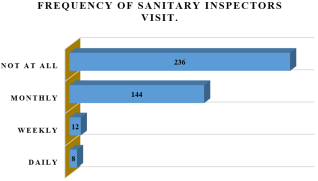
Bush toilets, covered water systems, covered pit latrines, and water closet toilets without covers are among the restroom options provided to the responders. While 21.0% clean their toilet whenever it gets dirty, the majority (68.0%) clean theirs every day. A total of 59.0% of participants reported that they do not have sanitary inspectors conducting normal environmental sanitation visits (
Figure 2). Of those, 36.0% reported monthly visits, 3.0% weekly visits, and 2.0% weekly and daily routine visits, respectively. According to the report, the study area has a drainage system.
Figure 2. Frequency of sanitary inspectors’ visit to the study area.
4.3. Basic Knowledge of Respondents on Malaria Infection in the Study Area
Table 3 showed that 97.0% of respondents had an excellent understanding of malaria, whereas just 3.0% of respondents said they had no prior awareness of the illness. In terms of the frequency of malaria infection, 1.0% of respondents said they had never had malaria disease, whereas 99.0% of respondents said they had experienced malaria infection.
Table 3 makes clear how frequently respondents received treatment for malaria. Of those who responded, 37.0% reported receiving treatment once a year, 33.0% received treatment twice a year, 19.0% received treatment monthly, and 11.0% did not receive treatment for malaria in a given year.
Regarding the months of the year when malaria is most common, 45.0% of the respondents.
Table 3. Responses on Malaria Diseases Endemicity and Awareness.
RESPONSES ON MALARIA DISEASES ENDEMISITY AND AWARENESS |
Have you ever heard of Malaria disease? | Yes | 388 | 97.0 |
No | 12 | 3.0 |
Have you ever had Malaria? | Yes | 396 | 99.0 |
No | 4 | 1.0 |
How many times annually were you treated for Malaria? | Once | 148 | 37.0 |
Twice | 132 | 33.0 |
Monthly | 76 | 19.0 |
None | 44 | 11.0 |
When is Malaria infection common in your area? | January - April | 120 | 30.0 |
May -August | 180 | 45.0 |
September- December | 100 | 25.0 |
Which set of people are mostly vulnerable? | Children under 5 and pregnant women | 324 | 81.0 |
Adult | 68 | 17.0 |
Aged | 8 | 2.0 |
What diagnostic techniques do you employ to know you have Malaria? | Self | 28 | 7.0 |
Med Lab test | 300 | 75.0 |
Herbal | 60 | 15.0 |
None | 12 | 3.0 |
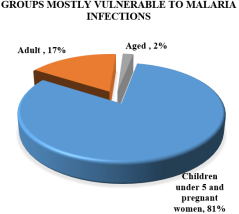
Figure 3 depicts the amount of vulnerability of certain groups of people to malaria infection; 81.0% show that children under the age of five and pregnant women are more vulnerable, whereas 17.0% and 2.0% of respondents state that adults and the elderly are more sensitive to malaria infections.
Figure 3. Level of vulnerability of some set of people to malaria infection.
4.4. Impact of Environmental Sanitation on the Spread of Malaria Disease Infection in Mangu L. G. A
Following the aim of this study, it is imperative to examine the influence or impact environmental sanitation has on the incidence and spread of malaria. The data collected from the questionnaire were subjected to normality test and results showed that the data is not normally distributed, hence, spearman ranked correlation analysis was employed to find the relationship. From
Tables 4 and 5, the correlation coefficient of 0.926 and a p-value (p<0.05) and a Likelihood Ratio value 960.188 and the Asymptotic Significance also known as p-value which is less than 0.05 clearly show that there is a strong and positive correlation between environmental sanitation and malaria disease infection which is also found to be statistically significant at 5% level of significant.
Table 4. Relationship between Environmental Sanitation and Malaria Infections in Mangu L. G. A. of Plateau State.
| ENVIRONMENTAL SANITATION | MALARIA INFECTIONS |
Spearman's rho | ENVIRONMENTAL SANITATION | Correlation Coefficient | 1.000 | .926** |
Sig. (2-tailed) | | .000 |
N | 400 | 400 |
MALARIA INFECTIONS | Correlation Coefficient | .926** | 1.000 |
Sig. (2-tailed) | .000 | |
N | 400 | 400 |
Correlation is significant at the 0.01 level (2-tailed). |
Table 5. Chi-Square Tests.
| Value | Df | Asymptotic Significance (2-sided) |
Pearson Chi-Square | 2154.248a | 165 | .000 |
Likelihood Ratio | 960.188 | 165 | .000 |
Linear-by-Linear Association | 359.254 | 1 | .000 |
N of Valid Cases | 400 | | |
a. 176 cells (91.7%) have expected count less than 5. The minimum expected count is.01. |
Further on the analysis, the effect environmental sanitation has on Malaria was examined on
Table 6 which was captured under symmetric measures. The value under Cramer’s V is 0.700 and the p-value is less than 0.05. Figure “0.700” falls under a large effect and it is statistically significant. Hence, Environmental Sanitation has a large and significant effect on Malaria disease infection in the study area.
Table 6. Effect size of the correlation analysis between Environmental sanitation and Malaria infection.
Symmetric Measures | Value | Approximate Significance |
Nominal by Nominal | Phi | 2.321 | .000 |
Cramer's V | .700 | .000 |
N of Valid Cases | 400 | |
Source: Fieldwork2023
It is important to note a statistical caveat regarding the chi-square test reported in
Table 5: 91.7% of cells had an expected count of less than five, which violates a key assumption of the chi-square test and means the associated p-value should be interpreted with caution. The Spearman correlation coefficient, which does not depend on this assumption, therefore provides the more reliable evidence of association between environmental sanitation and malaria infection in this study; future analyses of this dataset would benefit from collapsing sparse categories or applying an exact test such as Fisher's exact test to validate the chi-square result.
4.5. Time Series Analysis of Malaria Cases in Mangu L. G. A. of Plateau State
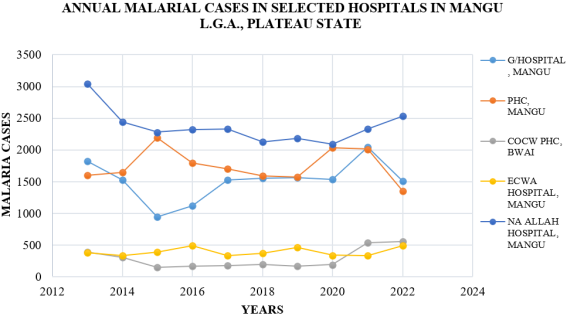
Figure 4. Annual malaria cases in selected hospitals in Mangu L. G. A, Plateau State.
Time Series Plot of Annual Malaria cases are generated from malaria case files of 2 government and 3 private hospitals in Mangu L. G. A., of Plateau State for the period of 10 years (2013-2022) is shown on
Figure 4. A slight downward trend in the cases of malaria from 2013 down to 2022 was noticed which could be as a result of many factors ranging from government intervention and the increase awareness of the implication of the disease. Several interventions by international organizations such as WHO, UNICEF, and etc. through the provision of drugs and mosquito treated nets which prevent the spread of the disease. While the hospital case records analysed in this study end in 2022, the most recent WHO World Malaria Report 2024 indicates that Nigeria's national malaria burden has remained persistently high through 2023-2024, suggesting that the downward local trend observed here has not been mirrored nationally and underscoring the continued relevance of the environmental sanitation interventions examined in this study.
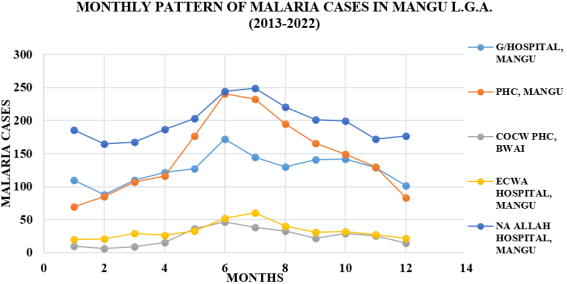
Figure 5. Monthly pattern of malaria cases in Mangu L. G. A, Plateau State.
Figure 5 presents the monthly pattern of malaria cases in Mangu L. G. A., of Plateau State. The time series demonstrated a seasonal pattern in a cyclical manner. From the figure, increase in the malaria cases starts from the month of May through the months of June, July and August with a decline in the month of September down to December.
5. Discussion
The strong, statistically significant association observed between environmental sanitation practices and malaria infection (Spearman's rho = 0.926, p < 0.05) is consistent with, and extends, a small but growing body of recent evidence linking sanitation behaviour to malaria risk across West Africa. Asifat et al.
| [5] | Asifat, O. A., Adenusi, A., Adebile, T. V., Aderinto, N., Azu, E., Ivey-Waters, A., and Kersey, J. X. (2025). Relationship between Unimproved Household Sanitation Facilities and Malaria Infection among Under-Five Children in Nigeria: Insights from Malaria Indicator Survey 2021. Malaria Journal, 24(1): Article 103.
https://doi.org/10.1186/s12936-025-05340-7 |
[5]
, analysing the 2021 Nigeria Malaria Indicator Survey, similarly found that children in households with unimproved sanitation facilities faced significantly elevated odds of malaria infection, while Ogbuene et al.
| [13] | Ogbuene, E. B., Enemuo, A. E. S., Odom, I., Duru, M. N., and Ike, C. (2024). Investigating the Environmental Factors Influencing the Transmission of Malaria in Select Urban Slums in Enugu, Enugu State, Nigeria. Journal of Environmental Management and Safety.
https://doi.org/10.83032/jems.vol15no3.526 |
[13]
reported a statistically significant relationship between environmental factors and malaria transmission in urban slum communities in Enugu State. The present findings reinforce this pattern at the local government level and, notably, do so using a combination of primary household data and multi-year facility records, precisely the methodological gap identified by Agyemang-Badu et al.
| [2] | Agyemang-Badu, S. Y., Awuah, E., Oduro-Kwarteng, S., Dzamesi, J. Y. W., Dom, N. C., and Kanno, G. G. (2023a). Environmental Management and Sanitation as a Malaria Vector Control Strategy: A Qualitative Cross-Sectional Study among Stakeholders, Sunyani Municipality, Ghana. Environmental Health Insights, 17: 1-10.
https://doi.org/10.1177/11786302221146890 |
| [3] | Agyemang-Badu, S. Y., Awuah, E., Oduro-Kwarteng, S., Dzamesi, J. Y. W., and Azure, S. A. (2023b). Assessment of the Knowledge, Prevalence, and Control Strategies of Malaria among Households in Sunyani Municipality, Bono Region, Ghana. Environmental Health Insights, 17: 1-12.
https://doi.org/10.1177/11786302231176922 |
[2, 3]
in their Ghanaian studies, which relied on qualitative stakeholder accounts rather than quantitative household-level testing. At the same time, the finding that 98.0% of respondents were aware of sanitation's role in malaria control, yet only 45.0% cleaned their surroundings weekly and 59.0% reported irregular sanitary inspection, points to a knowledge-practice gap rather than a knowledge deficit. This distinction matters: it suggests that health education campaigns alone, the intervention most commonly recommended in the literature, may be insufficient without complementary enforcement mechanisms, a concern also raised by Shekarau et al.
| [17] | Shekarau, E., Uzoanya, M., Ogbulafor, N., Ntadom, G., Ijezie, S. N., Seye, B., Fashanu, C., Eze, N., Nwidae, L., Mokuolu, O., Oguche, S., and Rietveld, H. (2024). Severe Malaria Intervention Status in Nigeria: Workshop Meeting Report. Malaria Journal, 23: Article 218.
https://doi.org/10.1186/s12936-024-05001-1 |
[17]
, who documented weak grassroots enforcement of environmental and vector-control guidelines across Nigerian states, including Plateau State.
The observed seasonal peak in malaria cases between May and August, and the disproportionate vulnerability of children under five and pregnant women (81.0%), mirror well-established patterns of rainy-season transmission and age/physiology-based susceptibility reported elsewhere in Nigeria and the wider sub-Saharan region. However, unlike studies conducted within Plateau State that have attributed malaria variation primarily to biophysical factors such as altitude and climate
| [1] | Abba, J. O., Mwansat, S. G., Adeiyongo, C. M., Akindgh, T. M., Samson, D., Nanvyat, N., and Oguche, S. (2024). Influence of Altitudinal Gradient on Human Malaria Prevalence in Plateau State, Central Nigeria: A Longitudinal Study. UMYU Scientific, 3(3): 333-339. https://doi.org/10.56919/2433.035 |
[1]
, the present findings suggest that household and community-level sanitation behaviour is an additional, modifiable determinant that has received comparatively little attention locally. This distinction is important for intervention planning: while altitude and climate cannot be modified, sanitation practices and inspection regimes can be, making this pathway a more immediately actionable target for local government intervention. Taken together, the results support the conclusion that environmental sanitation, though only one of several drivers of malaria transmission in Mangu L. G. A, is a significant and locally actionable one, and that closing the gap between residents' sanitation awareness and their actual practices, through consistent inspection, community enforcement, and targeted health education, represents a plausible complementary strategy to existing biomedical and vector-control interventions in the area.
6. Conclusion and Recommendations
This study examined the relationship between environmental sanitation and malaria disease infection in Mangu Local Government Area of Plateau State. The findings show that although awareness of environmental sanitation is high among residents, actual sanitation practices, such as the frequency of environmental and drainage cleaning and routine inspection by sanitary officers, remain inconsistent, and that environmental sanitation is strongly and significantly associated with malaria infection in the study area. Malaria prevalence peaks during the rainy season between May and August, and children under five and pregnant women remain the most vulnerable groups. Given the persistently high burden of malaria in Plateau State and the local sanitation deficits identified in Mangu L. G. A, environmental sanitation remains a relevant, low-cost complement to existing biomedical and vector-control interventions in the area.
Based on these findings, the following recommendations are made: (1) sanitary inspectors should be assigned a fixed and consistently enforced schedule for premises inspection, rather than the largely absent routine visits reported by the majority of respondents; (2) residents should be supported, through community sensitisation and, where necessary, subsidised waste-disposal infrastructure, to clean their surroundings and drainages weekly rather than on an ad hoc basis; (3) local government authorities should enforce existing environmental sanitation by-laws and strengthen collaboration with community and religious leaders to sustain compliance; (4) health education programmes on malaria prevention should specifically target children under five and pregnant women, and should be intensified ahead of the May-to-August peak transmission period; and (5) future research should combine household-level sanitation data with multivariable statistical models and longitudinal or intervention designs to more rigorously establish the causal contribution of environmental sanitation to malaria control in Mangu L. G. A and similar settings.
Abbreviations
ACTs | Artemisinin-based Combination Therapies |
Df | Degrees of Freedom |
IRS | Indoor Residual Spraying |
IVM | Integrated Vector Management (Written "I. V. M" in the Text) |
L. G. A | Local Government Area |
LLITN | Long Lasting Insecticide Treated Nets |
N | Number of Valid Cases (Sample Size) |
NPC | National Population Commission |
OSL | Outdoor Spraying Larviciding |
p | Probability Value (Significance Level) |
SPSS | Statistical Package for the Social Sciences |
UNICEF | United Nations Children's Fund |
WC | Water Closet (Toilet) |
WHO | World Health Organization |
CUL% | Cumulative Percentage |
Author Contributions
Akinwumi Augustine Ibimode: Conceptualization, Methodology, Project administration, Supervision, Writing – original draft, Writing – review & editing
Gerald Tsemwam Maigida: Data curation, Investigation, Writing – review & editing
Joseph Oshiobugie Ilenwabor: Formal Analysis, Methodology, Software, Visualization, Writing – original draft
Shedrach Nandom Magaji: Data curation, Investigation, Resources
Abigal Ogechi Ukah: Data curation, Investigation, Validation
Biyenta Elijah Daniel: Formal Analysis, Software, Visualization, Writing – review & editing
Ijeoma Beatrice Onwuasoanya: Investigation, Resources, Writing – review & editing
Hannatu Apagu: Data curation, Validation
Florence Yensen Ntung: Investigation, Resources
Samuel Mark Maton: Methodology, Supervision, Validation, Writing – review & editing
Conflicts of Interest
The authors declare no conflicts of interest regarding the publication of this article.
References
| [1] |
Abba, J. O., Mwansat, S. G., Adeiyongo, C. M., Akindgh, T. M., Samson, D., Nanvyat, N., and Oguche, S. (2024). Influence of Altitudinal Gradient on Human Malaria Prevalence in Plateau State, Central Nigeria: A Longitudinal Study. UMYU Scientific, 3(3): 333-339.
https://doi.org/10.56919/2433.035
|
| [2] |
Agyemang-Badu, S. Y., Awuah, E., Oduro-Kwarteng, S., Dzamesi, J. Y. W., Dom, N. C., and Kanno, G. G. (2023a). Environmental Management and Sanitation as a Malaria Vector Control Strategy: A Qualitative Cross-Sectional Study among Stakeholders, Sunyani Municipality, Ghana. Environmental Health Insights, 17: 1-10.
https://doi.org/10.1177/11786302221146890
|
| [3] |
Agyemang-Badu, S. Y., Awuah, E., Oduro-Kwarteng, S., Dzamesi, J. Y. W., and Azure, S. A. (2023b). Assessment of the Knowledge, Prevalence, and Control Strategies of Malaria among Households in Sunyani Municipality, Bono Region, Ghana. Environmental Health Insights, 17: 1-12.
https://doi.org/10.1177/11786302231176922
|
| [4] |
Asase, M; Yanful, E. K; Mensah, M; Stanford, J. & Amponsah, S. (2009) Comparism of municipal solid waste management systems in Canada &Ghana: A case study of cities of London, Ontario, & Kumasa, Ghana.
https://doi.org/10.1016/j.wasman.2009.06.019
|
| [5] |
Asifat, O. A., Adenusi, A., Adebile, T. V., Aderinto, N., Azu, E., Ivey-Waters, A., and Kersey, J. X. (2025). Relationship between Unimproved Household Sanitation Facilities and Malaria Infection among Under-Five Children in Nigeria: Insights from Malaria Indicator Survey 2021. Malaria Journal, 24(1): Article 103.
https://doi.org/10.1186/s12936-025-05340-7
|
| [6] |
Caraballo, H. (2014). Emergency department management of mosquito-borne illness: malaria, dengue, and West Nile virus. Emergency Medicine Practice, 16: 5-9.
|
| [7] |
Douglas, M. (2015). “Sources of data”. Retrieved on 22nd September, 2017 from
http://www.onlineetymologydictionary/data
|
| [8] |
Federal Ministry of Environment Nigeria (2005). National Environmental Sanitation Policy. Abuja: Federal Ministry of Environment.
|
| [9] |
Federal Ministry of Health. (2010). A road map for malaria control in Nigeria, a bridged version, Abuja. Strategic Plan. 2009-2013; Yahian Press Ltd. pp. 155.
|
| [10] |
Ibimode, A. A., Zhattau, V. F., Ilenwabor, J. O., Maigida, G. T., Dabis, N. D., Maton, S. M., & Dibal, J. Y. (2023). Assessment of solid waste management practices in Abuja Municipal Area Council (AMAC). International Journal of Advanced Research in Science and Technology, 12(5), 974-983.
|
| [11] |
Isreal, G. D (2013) Sampling the evidence of extension programme evaluation and organizational development, IFAS University of Florida PEOD-5.
|
| [12] |
National Population Commission (2006), Population Census, Official Gazette (FGP71/52007/2, 93.
|
| [13] |
Ogbuene, E. B., Enemuo, A. E. S., Odom, I., Duru, M. N., and Ike, C. (2024). Investigating the Environmental Factors Influencing the Transmission of Malaria in Select Urban Slums in Enugu, Enugu State, Nigeria. Journal of Environmental Management and Safety.
https://doi.org/10.83032/jems.vol15no3.526
|
| [14] |
Olowolafe E. A. (2002). Soil parent material and soil properties in two separate catchments areas on the Jos Plateau, Nigeria. Geo J. 56: 201-212.
|
| [15] |
Oshikoya, K. A. (2006). Malaria treatment in Lagos private clinics/hospitals: physicians’ compliance with the World Health Organization’s recommendations. Nigerian Medical Practices, 49(5): 102-110.
|
| [16] |
Severe Malaria Observatory. (2025). Malaria in Nigeria: Statistics and Facts. Medicines for Malaria Venture. Retrieved from
https://www.severemalaria.org/countries/nigeria
|
| [17] |
Shekarau, E., Uzoanya, M., Ogbulafor, N., Ntadom, G., Ijezie, S. N., Seye, B., Fashanu, C., Eze, N., Nwidae, L., Mokuolu, O., Oguche, S., and Rietveld, H. (2024). Severe Malaria Intervention Status in Nigeria: Workshop Meeting Report. Malaria Journal, 23: Article 218.
https://doi.org/10.1186/s12936-024-05001-1
|
| [18] |
Vanessa, L. (2010). Environmental strategies to replaced DDT and control malaria; 2ed; pestizid Aktions-Netzwevk, Hamburg, Germany.
|
| [19] |
WHO (2002): Malaria Vector Control - Decision making criteria and procedures for judicious use of insecticides.
|
| [20] |
World Health Organization (WHO). (2008). World Malaria Report. WHO: Switzerland, 99-101.
|
| [21] |
World Health Organization (WHO). (2024). World Malaria Report 2024. Geneva: World Health Organization.
|
| [22] |
World Health Orgnization (WHO). (2010). World malaria report. Geneva, Switzerland.
|
| [23] |
World Health Orgnization (WHO). (2014). World malaria report. Geneva, Switzerland. 32-42.
|
Cite This Article
-
APA Style
Ibimode, A. A., Maigida, G. T., Ilenwabor, J. O., Magaji, S. N., Ukah, A. O., et al. (2026). Environmental Sanitation Practices and Malaria Burden:
A Public Health Concern in Mangu Local Government Area, Plateau State, Nigeria. Frontiers, 6(4), 158-169. https://doi.org/10.11648/j.frontiers.20260604.14
 Copy
|
 Download
ACS Style
Ibimode, A. A.; Maigida, G. T.; Ilenwabor, J. O.; Magaji, S. N.; Ukah, A. O., et al. Environmental Sanitation Practices and Malaria Burden:
A Public Health Concern in Mangu Local Government Area, Plateau State, Nigeria. Frontiers. 2026, 6(4), 158-169. doi: 10.11648/j.frontiers.20260604.14
Copy
|
Download
AMA Style
Ibimode AA, Maigida GT, Ilenwabor JO, Magaji SN, Ukah AO, et al. Environmental Sanitation Practices and Malaria Burden:
A Public Health Concern in Mangu Local Government Area, Plateau State, Nigeria. Frontiers. 2026;6(4):158-169. doi: 10.11648/j.frontiers.20260604.14
Copy
|
Download
-
@article{10.11648/j.frontiers.20260604.14,
  author = {Akinwumi Augustine Ibimode and Gerald Tsemwam Maigida and Joseph Oshiobugie Ilenwabor and Shedrach Nandom Magaji and Abigal Ogechi Ukah and Biyenta Elijah Daniel and Ijeoma Beatrice Onwuasoanya and Hannatu Apagu and Florence Yensen Ntung and Samuel Mark Maton},
  title = {Environmental Sanitation Practices and Malaria Burden:
A Public Health Concern in Mangu Local Government Area, Plateau State, Nigeria},
  journal = {Frontiers},
  volume = {6},
  number = {4},
  pages = {158-169},
  doi = {10.11648/j.frontiers.20260604.14},
  url = {https://doi.org/10.11648/j.frontiers.20260604.14},
  eprint = {https://article.sciencepublishinggroup.com/pdf/10.11648.j.frontiers.20260604.14},
  abstract = {Background: Malaria remains a significant public health concern in many regions of the world, including Mangu L. G. A of Plateau State, Nigeria, where poor waste disposal, blocked drainages, and stagnant water continue to sustain vector breeding. This study examined the relationship between environmental sanitation practices and malaria disease infection in Mangu L. G. A. Materials and Methods: A descriptive cross-sectional survey design was used. Structured questionnaires were administered to 400 residents selected through stratified and random sampling, and were complemented by ten years (2013-2022) of secondary malaria case records obtained from five hospitals in the study area. Data were analysed using descriptive statistics (frequency, charts and tables) and inferential statistics (Spearman's rank correlation and chi-square analysis). Results: Awareness of environmental sanitation was notably high (98.0%), children under the age of five and pregnant women were the most vulnerable to malaria infection (81.0%), and malaria prevalence was most common between May and August (45.0%). Most residents cleaned their surroundings weekly (45.0%), and sanitary inspectors did not conduct routine inspections in 59.0% of cases. A correlation coefficient of 0.926 (p Conclusion: Environmental sanitation practices are strongly associated with malaria infection in Mangu L. G. A. Sanitary inspectors should adopt a fixed schedule for premises inspection, residents should regularly clear their surroundings and drainages to reduce mosquito breeding grounds, and government should enforce environmental sanitation by-laws and expand health education programmes, particularly among vulnerable groups.},
 year = {2026}
}
Copy
|
Download
-
TY  - JOUR
T1  - Environmental Sanitation Practices and Malaria Burden:
A Public Health Concern in Mangu Local Government Area, Plateau State, Nigeria
AU  - Akinwumi Augustine Ibimode
AU  - Gerald Tsemwam Maigida
AU  - Joseph Oshiobugie Ilenwabor
AU  - Shedrach Nandom Magaji
AU  - Abigal Ogechi Ukah
AU  - Biyenta Elijah Daniel
AU  - Ijeoma Beatrice Onwuasoanya
AU  - Hannatu Apagu
AU  - Florence Yensen Ntung
AU  - Samuel Mark Maton
Y1  - 2026/10/26
PY  - 2026
N1  - https://doi.org/10.11648/j.frontiers.20260604.14
DO  - 10.11648/j.frontiers.20260604.14
T2  - Frontiers
JF  - Frontiers
JO  - Frontiers
SP  - 158
EP  - 169
PB  - Science Publishing Group
SN  - 2994-7197
UR  - https://doi.org/10.11648/j.frontiers.20260604.14
AB  - Background: Malaria remains a significant public health concern in many regions of the world, including Mangu L. G. A of Plateau State, Nigeria, where poor waste disposal, blocked drainages, and stagnant water continue to sustain vector breeding. This study examined the relationship between environmental sanitation practices and malaria disease infection in Mangu L. G. A. Materials and Methods: A descriptive cross-sectional survey design was used. Structured questionnaires were administered to 400 residents selected through stratified and random sampling, and were complemented by ten years (2013-2022) of secondary malaria case records obtained from five hospitals in the study area. Data were analysed using descriptive statistics (frequency, charts and tables) and inferential statistics (Spearman's rank correlation and chi-square analysis). Results: Awareness of environmental sanitation was notably high (98.0%), children under the age of five and pregnant women were the most vulnerable to malaria infection (81.0%), and malaria prevalence was most common between May and August (45.0%). Most residents cleaned their surroundings weekly (45.0%), and sanitary inspectors did not conduct routine inspections in 59.0% of cases. A correlation coefficient of 0.926 (p Conclusion: Environmental sanitation practices are strongly associated with malaria infection in Mangu L. G. A. Sanitary inspectors should adopt a fixed schedule for premises inspection, residents should regularly clear their surroundings and drainages to reduce mosquito breeding grounds, and government should enforce environmental sanitation by-laws and expand health education programmes, particularly among vulnerable groups.
VL  - 6
IS  - 4
ER  -
Copy
|
Download





 Share This Article
 Twitter
 Linked In
 Facebook
