Research Article | | Peer-Reviewed

Assessment of Professional Dental Care Utilisation Among Rural Dwellers in Ikwerre Local Government Area, Rivers State, Nigeria

Received: 6 February 2026     Accepted: 20 February 2026     Published: 4 March 2026
Views:       Downloads:
Abstract

Background: Oral health is essential for overall health and quality of life. Yet, utilisation of professional dental services remains low in many rural communities in developing countries. This study assessed knowledge and determinants of dental care utilisation among rural residents of Ikwerre Local Government Area (LGA), Rivers State, Nigeria. Methods: A community-based, cross-sectional study was conducted among 300 adults selected using multistage sampling. The sample size was calculated using the Cochran formula. Of the 326 distributed questionnaires, 300 were completed, yielding a 92.0% response rate. Data were collected using a validated structured questionnaire (Cronbach’s alpha ≥ 0.7). Descriptive statistics summarised the variables, and Chi-square and binary logistic regression analyses identified factors associated with dental care utilisation. Statistical significance was set at p < 0.05. Results: Over half of respondents (52.6%) demonstrated good knowledge of oral health, and 89.0% were aware of dental services. However, only 15.7% had utilized professional dental care in the past year, mostly for pain or gum problems, while preventive visits were rare. Multivariate analysis showed that educational level, monthly income, and positive attitude towards dental care significantly predicted utilization (p < 0.001). Key barriers included preference for traditional remedies, fear of dental procedures, perceived lack of need, and cost. Conclusion: Despite high awareness, utilization of dental services in Ikwerre LGA remains low. Socio-economic status and attitudes, rather than knowledge alone, largely influence dental care-seeking behaviour. Interventions targeting oral health education, affordability, and attitude change are critical to improving dental service uptake in rural communities.

Published in Central African Journal of Public Health (Volume 12, Issue 2)
DOI 10.11648/j.cajph.20261202.12
Page(s) 64-75
Creative Commons

This is an Open Access article, distributed under the terms of the Creative Commons Attribution 4.0 International License (http://creativecommons.org/licenses/by/4.0/), which permits unrestricted use, distribution and reproduction in any medium or format, provided the original work is properly cited.

Copyright

Copyright © The Author(s), 2026. Published by Science Publishing Group

Keywords

Dental Care Utilisation, Determinants, Rural Population, Oral Health, Nigeria

1. Introduction
Use of professional dental care is a critical component of effective oral health care delivery and a key determinant of oral health outcomes. Routine use of professional dental services enables early detection and management of oral diseases, reduces complications, and promotes preventive oral health practices . Despite these advantages, professional dental care remains underutilized in developing nations, particularly among rural populations .
Oral health is a fundamental component of general health and overall quality of life, influencing nutrition, communication, social interaction, and psychological well-being . Oral diseases, including dental caries, periodontal diseases, tooth loss, and oral infections, are among the most prevalent non-communicable diseases globally, affecting an estimated 3.5 billion people worldwide . Although the majority of these conditions are preventable through early detection and timely professional care, they continue to impose a substantial public health burden, particularly among socially and economically disadvantaged populations .
Globally, marked disparities exist in oral health outcomes and utilisation of dental care services. These disparities are closely linked to socioeconomic status, level of education, place of residence, and accessibility of health services, with rural populations consistently experiencing poorer oral health outcomes and lower utilisation of professional dental care . The World Health Organization estimates that fewer than half of the global population accesses routine dental care, with utilisation rates exceeding 60–70% in many high-income countries but falling below 30% in most developing nations . In high-income settings, dental services are commonly integrated into routine healthcare through insurance coverage, preventive programmes, and effective referral systems, thereby promoting regular dental attendance. In contrast, in many developing countries, dental care utilisation is largely problem-driven, with individuals seeking professional care mainly for pain relief or emergency treatment rather than for preventive purposes .
In sub-Saharan Africa, utilisation of professional dental care services remains particularly low. Evidence suggests that less than 20–30% of adults have ever visited a dentist, and routine preventive dental visits are uncommon . Oral health services in the region are poorly integrated into primary healthcare systems, and dental care is often perceived as a low-priority health need compared to other medical conditions. Consequently, many rural populations rely on self-medication, traditional remedies, and informal care providers to manage oral health problems . This pattern of health-seeking behaviour contributes to delayed presentation at health facilities, with tooth extraction remaining the most common dental procedure performed, reflecting advanced stages of oral disease at the time of presentation .
In Nigeria, utilisation of professional dental care services is consistently low, particularly among rural populations. National studies indicate that only about 10–20% of Nigerians have ever utilised dental services, with significantly lower rates reported among rural dwellers compared to their urban counterparts . Dental services in the country are largely concentrated in urban centres and tertiary healthcare institutions, creating substantial inequities in access for rural communities. As a result, dental visits are often prompted by severe pain, swelling, or functional impairment rather than routine check-ups or preventive care . Several factors have been identified as determinants of low dental care utilisation in rural settings, including poor oral health knowledge, financial constraints, fear of dental procedures, cultural beliefs, long travel distances, and limited availability of dental facilities and personnel .
Within the South–South geopolitical zone of Nigeria, including Rivers State, these challenges are particularly pronounced. Studies from the region report dental care utilisation rates ranging from 8% to 25%, with rural residents significantly less likely to access professional dental care than urban populations . Rural communities in Rivers State are characterized by socioeconomic vulnerabilities, limited health infrastructure, low awareness of preventive oral health practices, and a widespread perception that dental care is only necessary in the presence of pain or obvious oral pathology. In addition, the predominance of out-of-pocket payment for dental services further restricts access, especially among low-income households .
Ikwerre Local Government Area (LGA) of Rivers State is predominantly rural and has limited dental health infrastructure. Available evidence suggests that residents frequently depend on self-medication and informal sources of care, while competing livelihood demands and economic constraints further reduce engagement with professional dental services . Consequently, dental care utilisation in the area is largely problem-driven, leading to delayed presentation, advanced oral disease, and an increased risk of preventable complications. Many residents reportedly seek dental care only when pain becomes severe or when oral conditions significantly interfere with daily activities, often necessitating invasive and costly treatments that could have been avoided through early intervention and routine dental check-ups .
Despite the documented burden of oral diseases and the recognised importance of professional dental care, there remains limited empirical evidence specific to Ikwerre LGA on the determinants of dental care utilisation among rural populations. The lack of localized data on utilisation patterns and influencing factors hampers effective planning, policy formulation, and the development of targeted oral health interventions in the area . Understanding the factors that influence professional dental care utilisation among rural dwellers in Ikwerre LGA is therefore essential for designing context-specific strategies aimed at improving access to and uptake of oral health services. This study, therefore, assessed the determinants of professional dental care utilisation among rural populations in Ikwerre Local Government Area, Rivers State, Nigeria.
2. Materials and Methods
2.1. Study Area
The research was conducted in Ikwerre Local Government Area (LGA), one of the 23 Local Government Areas in Rivers State, Nigeria. Ikwerre LGA is predominantly rural and comprises several communities engaged mainly in farming, trading, and artisanal occupations with a population of approximately 265,400 . The area has limited health infrastructure, with few public and private health facilities and minimal access to dental health services. These characteristics make Ikwerre LGA a suitable setting for examining dental care utilisation among rural dwellers.
2.2. Study Design, Population, and Data Source
A descriptive, community cross-sectional study design was employed. The study population comprised adult rural residents aged 18 years and above who had resided in the selected communities for a reasonable period before the study.
Data sources: Primary data.
2.3. Sample Size Determination
The sample size was determined using the Cochran formula for a single proportion, assuming a prevalence of dental care utilisation of 14.9% from related studies. After adjusting for non-response, a total of 326 questionnaires were distributed. However, 300 properly completed questionnaires were retrieved and used for data analysis. P= 14.9% = 0.149 (Osadolor et al., 2019).
n=Z2pq d2
Where:
n = minimum sample size
Z = standard normal deviate at 95% confidence level = 1.96
p = estimated prevalence = 14.9% = 0.149
q = 1 – p = 1 – 0.149 = 0.851
d = margin of error at 0.05
n = 216.7 ≈ 217
The calculated sample size is approximately 217 respondents
Design effect = 1.5n= 1.5 x 217=326
Therefore, the sample size = 326 respondents
2.4. Dependent and Independent Variables
The outcome variable in this study was dental care utilisation, measured by respondents’ history of dental clinic attendance, dental visits within the past year, frequency of dental visits, reasons for dental visits, and place of dental care received.
The independent variables included age, gender, marital status, educational level, occupation, income level, awareness of dental clinics, reasons for non-utilisation, and satisfaction with dental services received. These variables were examined to determine their influence on dental care utilisation among rural dwellers.
2.5. Sampling Technique
A multistage sampling technique was used to select wards/communities, households, and respondents. In the first stage, four political wards Isiokpo, Omagwa, Ozuaha, and Ubima, were randomly selected by balloting out of the 13 wards of Ikwerre Local Government Area. In the second stage, a line list of all the settlements and their respective populations in each of the wards selected was made, and three settlements from each ward were randomly selected by balloting. In the third stage, house numbering and listing were carried out to determine the number of houses in each of the selected settlements. One in every four houses was selected by a systematic sampling technique (in direct proportion to the number of houses in the respective settlements) until the required sample size was obtained. In the final stage, one eligible respondent was selected from each household using simple random sampling. This approach ensured representativeness and minimized selection bias. Thus, a total of 300 respondents (75 from each ward) were selected for the study.
2.6. Eligibility Criteria
The study population comprised adult rural residents of Ikwerre Local Government Area, Rivers State. Eligible participants were individuals who had resided in the selected communities for a reasonable period before the study, ensuring adequate familiarity with local health services and practices. Only respondents who were available during the data collection period and who willingly provided informed consent to participate in the study were included.
Individuals who declined to participate in the study were excluded. Respondents who were unavailable after repeated visits to their households were also excluded. In addition, questionnaires with incomplete or inconsistent responses were excluded from the final analysis to ensure data quality and reliability.
2.7. Data Collection Instrument and Procedure
Data were collected using a semi-structured, pretested questionnaire developed based on the objectives of the study and relevant literature. The questionnaire captured information on socio-demographic characteristics, awareness of dental services, utilisation patterns, reasons for dental visits and non-visits, perceived barriers, and satisfaction with dental services.
The questionnaire was administered through an interviewer-administered approach to accommodate varying literacy levels among respondents. Trained research assistants fluent in English and the local language assisted with data collection. Each interview session lasted approximately 15–20 minutes. A total of 326 questionnaires were administered during fieldwork. Of these, 300 questionnaires were correctly completed and analyzed, yielding a response rate of 92.0%, which is considered adequate for community-based surveys.
2.8. Validity
Content and construct validity were ensured through expert review by academic supervisors and public oral health professionals. The questionnaire items were assessed for clarity, relevance, and consistency with the study objectives. Necessary modifications were made to eliminate ambiguity and bias. A pilot study was conducted among respondents in a similar rural community outside the study area. The internal consistency of the questionnaire was tested using Cronbach’s Alpha in SPSS. A reliability coefficient of 0.7 or above was considered acceptable, indicating good internal consistency of the instrument.
2.9. Data Analysis
Data collected were coded, cleaned, and entered into SPSS version 25 for analysis. Descriptive statistics, including frequencies, percentages, and mean values, were used to summarize socio-demographic characteristics and dental care utilisation patterns. Chi-square tests and Fisher’s exact tests were employed to assess associations between dental care utilisation and categorical independent variables. Furthermore, binary logistic regression analysis was conducted to identify significant predictors of dental care utilisation while controlling for potential confounders. Statistical significance was determined at a p-value of less than 0.05.
2.10. Ethical Approval
Ethical approval for the study was obtained from the Research and Ethics Review Committee of Rivers State University. Permission was also sought from relevant community leaders before data collection. Participation in the study was voluntary, and informed consent was obtained from all respondents before questionnaire administration. Confidentiality and anonymity were strictly maintained by excluding personal identifiers from the questionnaire. Respondents were informed of their right to withdraw from the study at any stage without any consequences.
3. Results
Socio-demographic Characteristics of Respondents
The socio-demographic characteristics of the respondents are presented in Table 1, which includes a total of 300 participants in the study. These characteristics provide important background information for understanding dental care utilisation among rural dwellers in Ikwerre Local Government Area, Rivers State.
Regarding gender distribution, 178 respondents (59.3%) were female, while 122 (40.7%) were male. In terms of marital status, the majority of respondents were married, accounting for 186 respondents (62.0%), while 114 respondents (38.0%) were not currently married. The age of respondents ranged from 18 to 77 years, with a mean age of 43.17 ± 14.67 years. The largest proportion of respondents was within the 33–47 years age group, comprising 105 respondents (35.0%). This was followed by 79 respondents (26.3%) aged 48–62 years and 78 respondents (26.0%) aged 18–32 years. The smallest age group was 63–77 years, which included 38 respondents (12.7%).
Educational level among the respondents showed that 136 respondents (45.3%) had attained secondary education, making it the most common level of education. This was followed by 73 respondents (24.3%) with primary education and 59 respondents (19.4%) with no formal education. Only 32 respondents (11.0%) had a tertiary education. Concerning sources of household income, 103 respondents (34.3%) were engaged in farming, reflecting the agrarian nature of the study area. Business or trading was reported by 75 respondents (25.0%), while 56 respondents (18.7%) were artisans. Formal employment accounted for 34 respondents (11.3%), and 32 respondents (10.7%) were unemployed.
In summary, the socio-demographic profile of the respondents shows that the study population consisted largely of middle-aged, married females with secondary or lower levels of education and informal sources of income. These characteristics are important determinants of health-seeking behaviour and provide critical context for interpreting the findings on dental care utilisation among rural dwellers in Ikwerre Local Government Area, Rivers State.
Table 1. Socio-demographic Characteristics of Respondents.

Variables

Frequency (n=300)

Percentage (%)

Cumulative Percentage

Gender

Male

122

40.7

40.7

Female

178

59.3

100

Marital status

Not currently married

114

38.0

38.0

Married

186

62.0

100

Age of respondents (years)

18-32

78

26.0

26.0

33-47

105

35.0

62.0

48-62

79

26.3

88.3

63-77

38

12.7

100

Mean (SD)

43.17 (14.67)

Educational level

No formal

59

19.4

19.4

Primary

73

24.3

43.7

Secondary

136

45.3

89.0

Tertiary

32

11.0

100

Source of household income

Unemployed

32

10.7

10.7

Farmer

103

34.3

45.0

Business

75

25.0

70.0

Formal Employment

34

11.3

81.3

Artisans

56

18.7

100

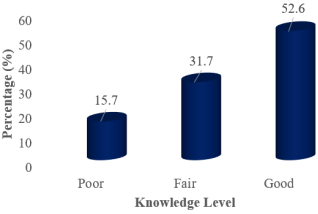
The Level of Knowledge of Oral Health among Respondents
Figure 1. Knowledge Level of Dental Health Care Services by Respondents.
The figure illustrates the distribution of respondents according to their level of knowledge of oral health. Overall, the findings indicate a relatively high level of awareness and understanding of dental care among the study population. More than half of the respondents, 158 (52.6%), demonstrated a good understanding of dental care. About one-third of the respondents (95, 31.7%) had fair knowledge of dental care. In contrast, a smaller proportion of respondents, 47 (15.7%), exhibited poor understanding of dental care.
Utilisation of Dental Health Care Services among Respondents in Ikwerre Local Government Area
Table 2 presents the level of awareness, utilisation pattern, reasons for dental visits, place of care, and satisfaction with dental health care services among the 300 respondents in Ikwerre Local Government Area.
The findings show that a large majority of respondents, 267 (89.0%), were aware of the existence of dental clinics, while only 33 (11.0%) reported no awareness. Only 47 respondents (15.7%) reported having a dental visit within the preceding year, whereas a substantial majority, 253 respondents (84.3%), had not utilised dental services during this period. Among those who had visited a dental clinic (n = 47), the frequency of dental visits further underscores a predominantly problem-oriented pattern of utilisation. Most respondents, 30 (63.8%), reported that they visited the dentist only when they had a dental problem. In contrast, preventive visits were uncommon, with only 7 respondents (14.9%) visiting once every six months and 10 respondents (21.3%) visiting once yearly. Regarding the reasons for dental visits, tooth pain (34.0%) and gum problems (27.7%) were the most common reasons for seeking care, while routine check-ups accounted for only 10.6% of visits. Tooth extraction (14.9%) and other reasons (12.8%) also contributed to service utilisation. Regarding the place of care, the majority of respondents who accessed dental services, 38 (80.9%), received care from government health facilities, while 9 (19.1%) patronised private facilities. In terms of satisfaction with dental care received, more than half of the respondents expressed positive experiences, with 18 (38.4%) reporting being satisfied and 8 (17.0%) very satisfied, giving a combined satisfaction level of 55.4%. However, a notable proportion expressed neutrality (19.1%) or dissatisfaction, with 10.6% dissatisfied and 14.9% very dissatisfied.
In summary, the table demonstrates that while awareness of dental health services in Ikwerre LGA is high, actual utilisation remains low and largely symptom-driven, with limited emphasis on preventive dental care.
Table 2. Utilisation of Dental Health Care Service among Respondents in Ikwerre Local Government Area.

Variables

Frequency (n=300)

Percentage (%)

Cumulative Percentage

Aware of Dental Clinic

Yes

267

89.0

89.0

No

33

11.0

100

Dental visit within the past 1 year

Yes

47

15.7

15.7

No

253

84.3

100

Frequency of Dental Visits

Only if I have a dental problem

30

63.8

63.8

Once every 6 months

7

14.9

78.7

Once every year

10

21.3

100

Reason for Visit

Tooth pain

16

34.0

34.0

Gum problem

13

27.7

61.7

Routine check-up

5

10.6

72.3

Tooth extraction

7

14.9

87.2

Others

6

12.8

100

Where care Received

Government facility

38

80.9

80.9

Private facility

9

19.1

100

Satisfaction

Very satisfied

8

17.0

17.0

Satisfied

18

38.4

55.4

Neutral

9

19.1

74.5

Dissatisfied

5

10.6

85.1

Very dissatisfied

7

14.9

100

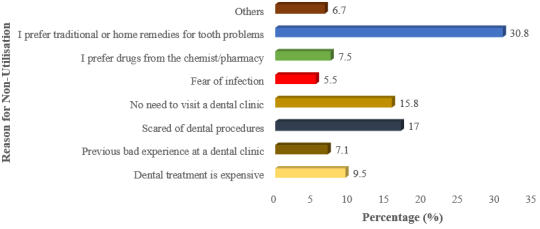
Reasons for Non-Utilisation of Dental Services among Rural Dwellers in Ikwerre L. G. A, Rivers State
The figure shows the main reasons reported by respondents for not using dental health care services in the Ikwerre Local Government Area over the past year (n = 253). Overall, the findings indicate that non-utilisation of dental services is influenced by a combination of cultural beliefs, perceived need, cost, and fear-related factors.
The most frequently reported reason for non-visit was preference for traditional or home remedies for tooth problems, cited by 78 respondents (30.8%). Fear of dental procedures was reported by 43 respondents (17.0%), while fear of infection accounted for 14 respondents (5.5%). Perceived lack of need for dental care was another important barrier, with 40 respondents (15.8%) stating that they saw no need to visit a dental clinic. Economic and service-related factors also contributed to non-utilisation. Dental treatment being expensive was reported by 24 respondents (9.5%), previous bad experiences at dental clinics were cited by 18 respondents (7.1%).
Some respondents preferred alternative sources of care, with 19 respondents (7.5%) indicating a preference for obtaining drugs from chemists or pharmacies. Other unspecified reasons accounted for 17 respondents (6.7%). In summary, the findings demonstrate that non-utilisation of dental services is largely driven by cultural practices, fear, low perceived need, and cost concerns, rather than lack of awareness alone.
Figure 2. Reasons for Non-Utilisation of Dental Services among Rural Dwellers in Ikwerre L. G. A, Rivers State.
Factors Influencing Dental Care Utilisation among Respondents
The table on factors influencing dental care utilisation among rural dwellers in the Ikwerre Local Government Area presents the unadjusted and adjusted logistic regression analyses of socio-demographic and related factors associated with dental care utilisation among respondents. Dental care utilisation was generally low across most subgroups, with variations observed by age, education, income, occupation, and knowledge level.
The age of respondents did not show a statistically significant association with dental care utilisation. Although respondents aged 33–47 years (aOR = 0.542; 95% CI: 0.162–1.812), 48–62 years (aOR = 0.346; 95% CI: 0.112–1.068), and 63–77 years (aOR = 0.587; 95% CI: 0.197–1.750) had lower odds of utilising dental care compared with those aged 18–32 years, these associations were not statistically significant (p > 0.05). Regarding sex, females constituted a higher proportion of both users (57.8%) and non-users (59.7%) of dental care services. However, sex was not significantly associated with utilisation, as females were only marginally more likely to utilise dental services compared with males after adjustment (aOR = 1.072; 95% CI: 0.512–2.244; p = 0.855). Similarly, marital status was not significantly related to dental care utilisation. Although married respondents accounted for a higher proportion of users (67.2%), being married did not significantly increase the likelihood of dental service utilisation after adjustment (aOR = 0.865; 95% CI: 0.371–2.015; p = 0.736). In contrast, the level of education showed a strong and statistically significant association with dental care utilisation. Compared with respondents with no formal education, those with primary (aOR = 0.060; 95% CI: 0.014–0.252), secondary (aOR = 0.058; 95% CI: 0.015–0.220), and tertiary education (aOR = 0.076; 95% CI: 0.024–0.239) had significantly higher odds of utilising dental care services (p < 0.001).
Occupation was not significantly associated with dental care utilisation after adjustment. Although artisans initially showed higher odds at the unadjusted level (UOR = 5.238; 95% CI: 2.057–13.340), this association disappeared after controlling for confounders (aOR = 0.929; 95% CI: 0.261–3.302; p = 0.909). This suggests that the observed crude association may be explained by other factors such as income or education. Monthly income emerged as another significant determinant of dental care utilisation. Respondents earning ₦20,000–₦49,999 (aOR = 0.048; 95% CI: 0.013–0.186) and ₦50,000–₦99,999 (aOR = 0.138; 95% CI: 0.043–0.439) were significantly more likely to utilise dental care services compared with those earning less than ₦20,000 (p ≤ 0.001). Although respondents earning ₦100,000 and above also showed increased odds of utilisation, this association did not reach statistical significance (p = 0.082).
The level of knowledge of dental care was not significantly associated with utilisation. Although respondents with good knowledge constituted the majority of dental service users (89.1%), good knowledge did not independently predict utilisation after adjustment (aOR = 0.572; 95% CI: 0.194–1.685; p = 0.572). Also, attitude towards dental care services was a strong and statistically significant predictor of utilisation. Respondents with a positive attitude were far more likely to utilise dental care services than those with a negative attitude (aOR = 0.070; 95% CI: 0.033–0.152; p < 0.001). While the majority of users (82.8%) had a positive attitude, most non-users (76.3%) exhibited a negative attitude.
In conclusion, the findings revealed that education level, monthly income, and attitude towards dental care services were the key factors influencing dental care utilisation among rural dwellers in Ikwerre L. G. A. In contrast, age, sex, marital status, occupation, and knowledge level were not significant predictors.
Table 3. Factors Influencing Dental Care Utilisation among Rural Dwellers in Ikwerre L. G. A.

Variable

Dental Care Utilisation

Unadjusted Odds Ratio (uOR)

Adjusted Odds Ratio (aOR)

p-value

Yes

No

n (%)

n (%)

Age (years)

18-32

13 (20.3)

65 (27.5)

0.321

33-47

22 (34.4)

83 (35.2)

0.491 (0.196-1.232)

0.542 (0.162-1.812)

0.320

48-62

18 (28.1)

61 (25.8)

0.651 (0.280-1.513)

0.346 (0.112-1.068)

0.065

63-77

11 (17.2)

27 (11.4)

0.724 (0.302-1.740)

0.587 (0.197-1.750)

0.339

Sex of Respondents

Male

27 (42.2)

95 (40.3)

Female

37 (57.8)

141 (59.7)

1.083 (0.619-1.896)

1.072 (0.512-2.244)

0.855

Marital Status

Not currently married

21 (32.8)

93 (39.4)

Married

43 (67.2)

143 (60.6)

0.751 (0.419-1.346)

0.865 (0.371-2.015)

0.736

Level of Education

No formal education

6 (9.4)

53 (22.5)

<0.001*

Primary

9 (14.1)

64 (27.1)

0.038 (0.012-0.121)

0.060 (0.014-0.252)

<0.001*

Secondary

25 (39.1)

111 (47.0)

0.047 (0.016-0.136)

0.058 (0.015-0.220)

<0.001*

Tertiary

24 (37.5)

8 (3.4)

0.075 (0.030-0.187)

0.076 (0.024-0.239)

<0.001*

Occupation

Unemployed

3 (4.7)

29 (12.3)

0.539

Farmer

15 (23.4)

87 (36.9)

0.379 (0.098-1.462)

0.465 (0.103-2.101)

0.320

Business

14 (21.9)

62 (26.3)

0.632 (0.273-1.466)

0.842 (0.313-2.266)

0.734

Formal employment

20 (31.3)

14 (5.9)

0.828 (0.350-1.961)

0.471 (0.163-1.356)

0.163

Artisans

12 (18.8)

44 (18.6)

5.238 (2.057-13.340)

0.929 (0.261-3.302)

0.909

Monthly Income

<₦20,000

7 (10.9)

90 (38.1)

0.000*

₦20,000–₦49,999

18 (28.1)

104 (44.1)

0.041 (0.013-0.131)

0.048 (0.013-0.186)

0.000*

₦50,000–₦99,999

24 (37.5)

34 (14.4)

0.092 (0.034-0.249)

0.138 (0.043-0.439)

0.001*

₦100,000 and above

15 (23.4)

8 (3.4)

0.376 (0.138-1.028)

0.343 (0.103-1.147)

0.082

Level of Knowledge

Good

57 (89.1)

196 (83.1)

Poor

7 (10.9)

40 (16.9)

0.602 (0.256-1.416)

0.572 (0.194-1.685)

0.572

Attitude towards dental care services

Positive

53 (82.8)

56 (23.7)

0.065 (0.032-0.132)

0.070 (0.033-0.152)

<0.001*

Negative

11 (17.2)

180 (76.3)

Statistical significant (p<0.05)
4. Discussion
This study assessed dental care utilisation among rural dwellers in Ikwerre Local Government Area, Rivers State, focusing on knowledge, utilisation prevalence, and predicting factors.
The findings revealed that the majority of respondents had good knowledge of dental health care services, as evidenced by high awareness of dental clinics, common oral health problems, and preventive practices such as tooth brushing. This suggests that basic oral health information has reached rural dwellers in Ikwerre LGA, possibly through health talks, community interactions, schools, media exposure, or prior encounters with health facilities. This finding aligns with studies conducted in other parts of Nigeria and sub-Saharan Africa. For instance, studies in rural communities in Oyo State, Rivers State, and Enugu State reported relatively good awareness of dental health services despite low utilisation rates . Similarly, a study in rural Ghana found that while most respondents had heard of dental services, their understanding was largely limited to treatment of pain rather than preventive care .
However, good knowledge did not necessarily translate into optimal utilisation in this study, indicating a knowledge-practice gap, which has been widely reported in oral health research. This suggests that although awareness exists, other barriers such as attitude, cost, accessibility, and cultural beliefs may limit the effective use of dental services .
The results revealed low utilisation of professional dental care services, with only a small proportion of respondents reporting a visit to a dental clinic within the last 12 months. This indicates poor uptake of dental services among rural dwellers in Ikwerre LGA, despite relatively good knowledge levels.
This finding aligns with previous studies in Nigeria and other developing countries, where dental care utilisation among rural populations remains low. Some studies have reported low dental service utilisation in Lagos State , while in Oyo State, similar trends were observed, where dental visits were largely symptom-driven . Studies in Kenya and India also documented low utilisation of dental services in rural settings, with most individuals seeking care only during episodes of severe pain . The low utilisation observed in this study may be attributed to several factors identified in subsequent analyses, including negative attitudes, reliance on traditional remedies, fear, perceived lack of need, and financial constraints. These findings reflect a predominantly curative-oriented health-seeking behavior rather than preventive dental care utilisation, which is common in many rural African communities , while some reported a higher prevalence of professional dental care utilisation compared with the present findings
Multivariate analysis identified level of education, monthly income, and attitude toward dental care services as significant predictors of dental care utilisation. Respondents with higher educational attainment, particularly those with tertiary education, were significantly more likely to utilize dental services compared to those with no formal or primary education. This is consistent with findings from studies in Nigeria, South Africa, Portuguese, where education has been shown to influence health literacy, risk perception, and health-seeking behavior .
Monthly income also emerged as a significant determinant of utilisation. Respondents with higher income levels were more likely to access dental services, reflecting the impact of financial barriers in the utilisation of oral health care. This finding aligns with studies that have reported cost as a major deterrent to dental service utilisation in low-resource settings .
Attitude toward dental care services was a strong independent predictor of utilisation. Respondents with a positive attitude were significantly more likely to use dental services than those with a negative attitude. This reinforces the role of psychosocial factors in health service utilisation and supports findings from similar studies in Nigeria and Norway .
However, age, sex, marital status, occupation, and level of knowledge were not statistically significant predictors after adjustment. This suggests that structural and perceptual factors may play a more critical role than mere awareness or demographic characteristics in influencing dental care utilisation among rural dwellers .
5. Conclusion and Recommendations
The findings of the study revealed that most rural dwellers in Ikwerre Local Government Area, Rivers State, had average knowledge of oral health; however, the use of dental services was generally low despite relatively high levels of awareness.
The analysis revealed that socio-economic and psychosocial factors, rather than basic demographic characteristics, were key predictors of dental care services utilisation. Specifically, level of education, monthly income, and attitude towards dental care services emerged as the strongest predictors of utilisation. Respondents with higher educational attainment and higher income were significantly more likely to utilise professional dental care services, reflecting the influence of socio-economic empowerment on access to and prioritisation of oral health care. Additionally, a positive attitude towards dental care was a powerful determinant of utilisation, underscoring the importance of perceptions, beliefs, and willingness to seek professional care.
In contrast, age, sex, marital status, occupation, and level of knowledge of dental health care services were not independently associated with dental care utilisation after adjusting for confounding factors. The lack of association between knowledge and utilisation suggests that awareness alone does not necessarily translate into health-seeking behaviour in rural settings, particularly where economic constraints, fear, and negative attitudes persist. These findings highlight the complex interplay of structural and behavioural factors influencing dental care utilisation among rural dwellers in Ikwerre LGA and reinforce the need for multifaceted interventions that go beyond information dissemination.
To improve professional dental care utilisation in Ikwerre Local Government Area, interventions should prioritise strategies that address socio-economic and attitudinal barriers. Efforts to improve access to affordable dental services through subsidized care, expansion of health insurance coverage, and integration of basic oral health services into primary healthcare facilities are essential. Community-based oral health promotion programmes should be strengthened to foster positive attitudes towards preventive dental care and dispel fears and misconceptions associated with dental procedures. Such programmes should emphasize the benefits of early and routine dental visits and be tailored to the socio-cultural context of rural communities. Furthermore, policies aimed at improving educational opportunities and economic empowerment in rural areas may have indirect but meaningful impacts on dental care utilisation. Continued research is recommended to explore in greater depth the contextual and behavioural factors influencing attitudes towards dental care, which may inform the design of more targeted and sustainable oral health interventions for rural populations.
Abbreviations

LGA

Local Government Area

UOR

Unadjusted Odds Ratio

AOR

Adjusted Odds Ratio

CI

Confidence Interval

SD

Standard Deviation

WHO

World Health Organisation

Author Contributions
Anthony Ike Wegbom: Conceptualization, Data Curation, Software, Validation, Methodology, Writing – original draft, Writing – review & editing, Supervision
Oluchi Mildred Ndudim: Conceptualization, Data Curation, Software, Formal Analysis, Methodology, Writing – original draft, Writing – review & editing
Queen Desmond Atuzie: Conceptualization, Validation, Supervision, Writing – original draft, Writing – review & editing
Salome Amarachi Ike-Wegbom: Resources, Supervision, Writing – original draft, Writing – review & editing
Nnenna Ali Emordi: Resources, Writing – original draft, Writing – review & editing
Conflicts of Interest
The authors declare no conflicts of interest.
References
[1] Abodunrin, O. R., Adebayo, E. T., Adewole, I. E., Olagunju, M. T., Ekeh, C., Samuel, I. O., Zamba, E., Gbaja-Biamila, T., Akinsolu, F. T., Eleje, G. U., Tantawi, M. E., Ezechi, O. C., Foláyan, M. O. Factors associated with the dental service utilisation by enrollees on the Lagos State health insurance scheme, Nigeria. BMC Health Services Research. 2025, 25(1), 14.
[2] Aborisade, A., Okolo, C., Aminu, R., Moghalu, H., Aminu, N., Bamgbose, B. Pattern of dental services utilisation among adolescents and adults in Kano, Northern Nigeria. Pyramid Journal of Medicine. 2024, 7(1).
[3] Adeniyi, A. A., Oyapero, A. Predisposing, enabling and need factors influencing dental service utilisation among a sample of adult Nigerians. Population Medicine. 2020, 2(December), 1-9.
[4] Akinyamoju, A. O., Dairo, D. M., Adeoye, I. A. Oral health knowledge and practices among adults in rural Nigeria. African Journal of Oral Health. 2018, 7(2), 45–53.
[5] Akinyamoju, C. A., Taiwo, J. O., Uwadia, E., Agbogidi, J. M., Ambeke, A. ORAL HEALTH KNOWLEDGE AND PRACTICE AMONG TRADERS IN IBADAN. Annals of Ibadan postgraduate medicine. 2018, 16(2), 150–156.
[6] Aroyehun, A. R., Onyenma, G. C., Abuta, C. M. A., Garshon, W. B. Effects of Coronavirus on Food Systems in Ikwerre Local Government Area of Rivers State, Nigeria. Journal of Agriculture. 2024, 7(2), 125-131.
[7] Balogun, A. O., Taiwo, J. O., Ipeaiyeda, O. J., Lawal, F. B., Ibiyemi, O. A report on oral health delivery to rural underserved communities Oyo state using the mobile dental clinic. African Journal of Oral Health. 2018, 7(2), 5-10.
[8] Chikuni, W., Amalimeh, B. E., Agholor, C. N. Utilisation of oral health services and associated factors in a sub-urban population in Western Uganda. International Journal of Medical Sciences and Pharma Research. 2023, 9(2), 1-12.
[9] Deolia, S. G., Kela, K. S., Sawhney, I. M., Sonavane, P. A., Nimbulkar, G., Reche, A. Evaluation of oral health care seeking behavior in rural population of central India. Journal of family medicine and primary care. 2020, 9(2), 886–891.
[10] Foláyan, M. O., Ishola, A. G., Bhayat, A., El Tantawi, M., Ndembi, N. Strengthening health systems to tackle oral diseases in Africa: Africa centers for Disease Control and Prevention's role. Frontiers in public health. 2025, 13, 1539805.
[11] Foláyan, M. O., Olagunju, M. T., Abodunrin, O. R., Alade, O. T. A scoping review on the use of traditional medicine and oral health in Africa. PloS one. 2024, 19(5), e0297570.
[12] Folorunsho, S., Ajayi, V., Sanmori, M., Suleiman, M., Abdullateef, R., Abdulganiyu, A. Access to and Utilisation of Dental Care Services by Older Adults in Nigeria: Barriers and Facilitators. Special care in dentistry: official publication of the American Association of Hospital Dentists, the Academy of Dentistry for the Handicapped, and the American Society for Geriatric Dentistry. 2025, 45(3), e70040.
[13] Gallione, C., Bassi, E., Cattaneo, A., Busca, E., Basso, I., & Dal Molin, A. Oral Health Care: A Systematic Review of Clinical Practice Guidelines. Nursing & Health Sciences. 2025, 27(1), e70027.
[14] Gbolahan, O. O., Fasola, A. O., Aladelusi, T. O. Attitude and Behavior to Oral Health of 456 Patients Who Presented for Tooth Extraction at 2 Health Facilities in Southwestern Nigeria. Journal of Patient Experience. 2019, 6(2), 157–163.
[15] Geda, Z. T., Asefa, K. Z., Gonfa, A. N., Assefa, M. Oral health-related knowledge, attitudes, and practices among high school students in Robe Town, Ethiopia: a cross-sectional study. BMC Public Health. 2025, 25(1), 3848.
[16] Hewlett, S. A., Blankson, P. K., Aheto, J. M. K., Anto, F., Danso-Appiah, T., Sackeyfio, J., Koram, K., Amoah, A. G. B. Assessment of oral health status in a Ghanaian population: rationale, methods, and population characteristics. BMC oral health. 2022, 22(1), 67.
[17] Jönsson, B., Holde, G. E., Baker, S. R. The role of psychosocial factors and treatment need in dental service use and oral health among adults in Norway. Community dentistry and oral epidemiology. 2020, 48(3), 215–224.
[18] Lawal, F. B., Taiwo, J. O., Oke, G. A. Factors influencing awareness and attendance of traditional oral health care practices by residents of a peri-urban community in Ibadan, Nigeria. African health sciences. 2015, 15(1), 233-239.
[19] Lawal, F. B., Taiwo, J. O., Arowojolu, M. O., Howitt, L. Factors influencing utilisation of oral health care services in Nigeria. BMC Oral Health. 2020, 20(1), 1–9.
[20] Luo, H., Wu, Q., Bell, R. A., Wright, W., Quandt, S. A., Basu, R., Moss, M. E. Rural-Urban Differences in Dental Service Utilisation and Dental Service Procedures Received Among US Adults: Results From the 2016 Medical Expenditure Panel Survey. The Journal of rural health: official journal of the American Rural Health Association and the National Rural Health Care Association. 2021, 37(3), 655–666.
[21] Maia, A. C., Marques, M. J., Goes, A. R., Gama, A., Osborne, R., Dias, S. Health literacy strengths and needs among migrant communities from Portuguese-speaking African countries in Portugal: a cross-sectional study. Frontiers in Public Health. 2024, 12, 1415588.
[22] Naavaal, S., Griffin, S. O., Jones, J. A. Impact of Making Dental Care Affordable on Quality of Life in Adults Aged 45 Years and Older. Journal of aging and health. 2020, 32(7-8), 861–870.
[23] Northridge, M. E., Kumar, A., & Kaur, R. (2020). Disparities in Access to Oral Health Care. Annual review of public health, 41, 513–535.
[24] Okeigbemen, S. A., & Nnawuihe, C. U. (2015). Oral health trends and service utilisation at a rural outreach dental clinic, Udo, Southern Nigeria. Journal of International Society of Preventive & Community Dentistry, 5(2), 123-130.
[25] Okoroafor, C. C., Okobi, O. E., Owodeha-Ashaka, M., Okobi, E., Oluseye, B., Ekpang, O. B., Aya, L. E., Owolabi, O. J., Oru-Betem, T. E., Nwafor, J. N. Dental Health Knowledge, Attitude, and Practice among University of Calabar Students. Cureus. 2023, 15(6), e40055.
[26] Olabisi, A. A., Udo, U. A., Ehimen, U. G., Bashiru, B. O., Gbenga, O. O., Adeniyi, A. O. Prevalence of dental caries and oral hygiene status of a screened population in Port Harcourt, Rivers State, Nigeria. Journal of International Society of Preventive & Community Dentistry. 2015, 5(1), 59–63.
[27] Omitola, O. G., Arigbede, A. O. Inequalities in oral health care utilisation in Nigeria. Journal of Oral Science. 2012, 54(1), 65–71.
[28] Omotoso, K. O., Adesina, J., Adewole, O. G., Gbadegesin, T. F. Factors influencing healthcare-seeking behaviour of South African adolescents. Journal of Public Health. 2022, 30(10), 2427-2439.
[29] Onuoha, O. O., Okereke, O. J., Ngwoke, G. O., Ekpechu, J. O. A. Influence of Cultural Factors on Health Seeking Behavior in Ebonyi State, South East, Nigeria. Nigerian Journal of Social Psychology. 2024, 7(2).
[30] Opoku, P., Salu, S., Azornu, C. K., Komesuor, J. Oral health knowledge, practice, and associated factors among Junior High School students of Koforidua, Ghana: a cross-sectional study. BMC oral health. 2024, 24(1), 449.
[31] Osadolor, O. O., Akaji, E. A., Otakhoigbogie, U., Amuta, H. C., Obi, D. I., Osadolor, A. J. Dental service utilisation of a rural population in Nigeria. International Journal of Dentistry Research. 2019, 4(2), 62-5.
[32] Peres, M. A., Macpherson, L. M. D., Weyant, R. J., Daly, B., Venturelli, R., Mathur, M. R., Listl, S., Celeste, R. K., Guarnizo-Herreño, C. C., Kearns, C., Benzian, H., Allison, P., Watt, R. G. Oral diseases: a global public health challenge. Lancet (London, England). 2019, 394(10194), 249–260.
[33] Petersen, P. E. The World Oral Health Report 2020: Continuous improvement of oral health in the 21st century. World Health Organization. 2020.
[34] Robinson, V., Chidinma, D. Roles of Cooperatives in Rural Development in Ikwerre and Emohua Local Government Areas, Rivers State. International Journal of Applied Educational Research (IJAER). 2025, 3(6), 371-382.
[35] Shomuyiwa, D. O., Bridge, G. Oral health of adolescents in West Africa: prioritizing its social determinants. Global health research and policy. 2023, 8(1), 28.
[36] Soroye, M. O., Aikins, E. A., Eigbobo, J. O., Umanah, A. U. Utilisation of dental services among a selected population in a rural community in South-South, Nigeria. The Nigerian Health Journal. 2021, 21(1), 20-27.
[37] Uguru, N., Onwujekwe, O., Uguru, C. C., Ogu, U. U. Achieving universal health coverage in Nigeria: the dilemma of accessing dental care in Enugu state, Nigeria, a mixed methods study. Heliyon. 2021, 7(1), e05977.
[38] Ugwuanyi, G., Omale, J., Emaimo, J., Nweze, M., Hussain, B., Oladoja, M. Knowledge, Oral Hygiene Practices, and Barriers to Compliance among Adult Residents of Adankolo Community, Lokoja, Kogi State. International Journal of Research and Innovation in Social Science. 2025, 9(4), 3436-3443.
[39] Umanah, A. U., Braimoh, O. B. Oral health-related knowledge, attitude and practices of adult residents in a rural community in Nigeria. Journal of Dentistry and Oral Hygiene. 2017, 9(6), 65–72.
[40] Umanah, A. U., Eigbobo, J. O., Soroye, M. O. Awareness and utilisation of oral health services in rural communities of Southern Nigeria. Nigerian Journal of Clinical Practice. 2020, 23(6), 789–795.
[41] Vundavalli, S., Babburi, S., Manyam, R., Indiran, M. A., Doppalapudi, R., Baig, M. N. Use of oral healthcare facilities for the screening of hyperglycaemia in dental patients with undiagnosed type-2 diabetes mellitus in Andhra Pradesh, India. Journal of Oral and Maxillofacial Pathology. 2025, 29(2), 274-280.
[42] World Health Organization. Global oral health status report: Towards universal health coverage for oral health by 2030. WHO Press. 2022.
[43] Zardak, A. N., Amini-Rarani, M., Abdollahpour, I., Eslamipour, F., Tahani, B. Utilisation of dental care among adult populations: a scoping review of applied models. BMC Oral Health. 2023, 23(1), 596.
Cite This Article
  • APA Style

    Wegbom, A. I., Ndudim, O. M., Atuzie, Q. D., Ike-Wegbom, S. A., Emordi, N. A. (2026). Assessment of Professional Dental Care Utilisation Among Rural Dwellers in Ikwerre Local Government Area, Rivers State, Nigeria. Central African Journal of Public Health, 12(2), 64-75. https://doi.org/10.11648/j.cajph.20261202.12

    Copy | Download

    ACS Style

    Wegbom, A. I.; Ndudim, O. M.; Atuzie, Q. D.; Ike-Wegbom, S. A.; Emordi, N. A. Assessment of Professional Dental Care Utilisation Among Rural Dwellers in Ikwerre Local Government Area, Rivers State, Nigeria. Cent. Afr. J. Public Health 2026, 12(2), 64-75. doi: 10.11648/j.cajph.20261202.12

    Copy | Download

    AMA Style

    Wegbom AI, Ndudim OM, Atuzie QD, Ike-Wegbom SA, Emordi NA. Assessment of Professional Dental Care Utilisation Among Rural Dwellers in Ikwerre Local Government Area, Rivers State, Nigeria. Cent Afr J Public Health. 2026;12(2):64-75. doi: 10.11648/j.cajph.20261202.12

    Copy | Download

  • @article{10.11648/j.cajph.20261202.12,
      author = {Anthony Ike Wegbom and Oluchi Mildred Ndudim and Queen Desmond Atuzie and Salome Amarachi Ike-Wegbom and Nnenna Ali Emordi},
      title = {Assessment of Professional Dental Care Utilisation Among Rural Dwellers in Ikwerre Local Government Area, Rivers State, Nigeria},
      journal = {Central African Journal of Public Health},
      volume = {12},
      number = {2},
      pages = {64-75},
      doi = {10.11648/j.cajph.20261202.12},
      url = {https://doi.org/10.11648/j.cajph.20261202.12},
      eprint = {https://article.sciencepublishinggroup.com/pdf/10.11648.j.cajph.20261202.12},
      abstract = {Background: Oral health is essential for overall health and quality of life. Yet, utilisation of professional dental services remains low in many rural communities in developing countries. This study assessed knowledge and determinants of dental care utilisation among rural residents of Ikwerre Local Government Area (LGA), Rivers State, Nigeria. Methods: A community-based, cross-sectional study was conducted among 300 adults selected using multistage sampling. The sample size was calculated using the Cochran formula. Of the 326 distributed questionnaires, 300 were completed, yielding a 92.0% response rate. Data were collected using a validated structured questionnaire (Cronbach’s alpha ≥ 0.7). Descriptive statistics summarised the variables, and Chi-square and binary logistic regression analyses identified factors associated with dental care utilisation. Statistical significance was set at p < 0.05. Results: Over half of respondents (52.6%) demonstrated good knowledge of oral health, and 89.0% were aware of dental services. However, only 15.7% had utilized professional dental care in the past year, mostly for pain or gum problems, while preventive visits were rare. Multivariate analysis showed that educational level, monthly income, and positive attitude towards dental care significantly predicted utilization (p < 0.001). Key barriers included preference for traditional remedies, fear of dental procedures, perceived lack of need, and cost. Conclusion: Despite high awareness, utilization of dental services in Ikwerre LGA remains low. Socio-economic status and attitudes, rather than knowledge alone, largely influence dental care-seeking behaviour. Interventions targeting oral health education, affordability, and attitude change are critical to improving dental service uptake in rural communities.},
     year = {2026}
    }
    

    Copy | Download

  • TY  - JOUR
    T1  - Assessment of Professional Dental Care Utilisation Among Rural Dwellers in Ikwerre Local Government Area, Rivers State, Nigeria
    AU  - Anthony Ike Wegbom
    AU  - Oluchi Mildred Ndudim
    AU  - Queen Desmond Atuzie
    AU  - Salome Amarachi Ike-Wegbom
    AU  - Nnenna Ali Emordi
    Y1  - 2026/03/04
    PY  - 2026
    N1  - https://doi.org/10.11648/j.cajph.20261202.12
    DO  - 10.11648/j.cajph.20261202.12
    T2  - Central African Journal of Public Health
    JF  - Central African Journal of Public Health
    JO  - Central African Journal of Public Health
    SP  - 64
    EP  - 75
    PB  - Science Publishing Group
    SN  - 2575-5781
    UR  - https://doi.org/10.11648/j.cajph.20261202.12
    AB  - Background: Oral health is essential for overall health and quality of life. Yet, utilisation of professional dental services remains low in many rural communities in developing countries. This study assessed knowledge and determinants of dental care utilisation among rural residents of Ikwerre Local Government Area (LGA), Rivers State, Nigeria. Methods: A community-based, cross-sectional study was conducted among 300 adults selected using multistage sampling. The sample size was calculated using the Cochran formula. Of the 326 distributed questionnaires, 300 were completed, yielding a 92.0% response rate. Data were collected using a validated structured questionnaire (Cronbach’s alpha ≥ 0.7). Descriptive statistics summarised the variables, and Chi-square and binary logistic regression analyses identified factors associated with dental care utilisation. Statistical significance was set at p < 0.05. Results: Over half of respondents (52.6%) demonstrated good knowledge of oral health, and 89.0% were aware of dental services. However, only 15.7% had utilized professional dental care in the past year, mostly for pain or gum problems, while preventive visits were rare. Multivariate analysis showed that educational level, monthly income, and positive attitude towards dental care significantly predicted utilization (p < 0.001). Key barriers included preference for traditional remedies, fear of dental procedures, perceived lack of need, and cost. Conclusion: Despite high awareness, utilization of dental services in Ikwerre LGA remains low. Socio-economic status and attitudes, rather than knowledge alone, largely influence dental care-seeking behaviour. Interventions targeting oral health education, affordability, and attitude change are critical to improving dental service uptake in rural communities.
    VL  - 12
    IS  - 2
    ER  - 

    Copy | Download

Author Information
  • Abstract
  • Keywords
  • Document Sections

    1. 1. Introduction
    2. 2. Materials and Methods
    3. 3. Results
    4. 4. Discussion
    5. 5. Conclusion and Recommendations
    Show Full Outline
  • Abbreviations
  • Author Contributions
  • Conflicts of Interest
  • References
  • Cite This Article
  • Author Information