Abstract
Background: Acute neonatal seizures are among the most common neurological emergencies during the neonatal period and are associated with increased mortality and long-term neurodevelopmental impairment. Phenobarbital has remained the conventional first-line antiseizure medication because of its rapid onset of action, intravenous availability, extensive clinical experience, and low cost. However, concerns regarding incomplete seizure control, adverse effects, and potential neurodevelopmental toxicity have raised questions regarding its position as the universal first-line therapy. Objectives: This analytical study aimed to evaluate the efficacy, safety limitations, and clinical outcomes associated with phenobarbital use in acute neonatal seizures and to compare its therapeutic profile with newer antiseizure medications, including levetiracetam, fosphenytoin, and lacosamide. Methods: A structured comparative analysis was performed using published clinical studies, randomized controlled trials, and evidence-based neonatal seizure management data. The analysis focused on seizure-control efficacy, adverse effects, pharmacological characteristics, neurodevelopmental concerns, and suitability of different antiseizure medications for individualized neonatal treatment strategies. Results: Phenobarbital demonstrated superior acute seizure-control efficacy, achieving complete seizure freedom in approximately 80% of neonates within 24 hours compared with approximately 28% with levetiracetam. However, 20–40% of neonates continued to experience seizures despite appropriate phenobarbital administration, particularly those with severe hypoxic-ischaemic encephalopathy, prematurity, structural brain injury, or refractory epilepsy. Higher cumulative phenobarbital exposure was associated with concerns regarding neuronal apoptosis, sedation, respiratory depression, hypotension, and adverse neurodevelopmental outcomes. Levetiracetam showed improved tolerability with fewer respiratory effects and less sedation but demonstrated lower immediate seizure-control efficacy. Fosphenytoin remained useful for refractory seizures but required cardiovascular monitoring, while lacosamide showed potential benefit with limited neonatal evidence. Conclusion: Phenobarbital remains an effective medication for rapid seizure termination in acute neonatal seizures; however, its limitations highlight the need for individualized treatment approaches. Future neonatal seizure management should balance rapid seizure suppression with neuroprotection and long-term developmental outcomes through integration of EEG monitoring, patient-specific characteristics, and emerging therapeutic options.
Keywords
Neonatal Seizures, Phenobarbital, Levetiracetam, Lacosamide, Fosphenytoin, Antiepileptic Drugs, Neonatal Neurology,
Seizure Control
1. Introduction
Neonatal seizures are abnormal electrical activities occurring within the first 28 days after birth and represent one of the earliest manifestations of neurological dysfunction in newborns. The incidence of neonatal seizures varies depending on gestational age, birth complications, and underlying neurological conditions. They occur more frequently among premature infants and newborns suffering from hypoxic-ischaemic encephalopathy (HIE), intracranial hemorrhage, metabolic abnormalities, infections, and congenital brain abnormalities
| [1] | Volpe JJ. Neonatal seizures. In: Neurology of the Newborn. 6th ed. Philadelphia: Elsevier; 2018. |
[1]
.
Unlike seizures in older children and adults, neonatal seizures frequently have subtle clinical manifestations and may not always present with obvious motor activity. Electrographic seizures detected through continuous electroencephalographic (EEG) monitoring are often more common than clinically visible events. Therefore, early diagnosis and effective treatment are essential to prevent prolonged seizure activity and potential neurological injury
| [2] | Sharpe C, Reiner GE, Davis SL, et al. Levetiracetam versus phenobarbital for neonatal seizures: a randomized controlled trial. Lancet Child Adolesc Health. 2020; 4(1): 31-41. |
[2]
.
For decades, phenobarbital has been considered the standard first-line medication for neonatal seizures. Its popularity is mainly due to its long history of use, familiarity among clinicians, broad availability, and relatively simple administration. Phenobarbital acts primarily by enhancing GABA-mediated chloride influx through GABA-A receptors, resulting in neuronal hyperpolarization and reduced excitability.
However, the neonatal brain differs significantly from the mature brain. During early development, GABAergic neurotransmission may have excitatory rather than inhibitory effects due to differences in chloride transporter expression. This biological difference may partly explain the reduced effectiveness of phenobarbital in newborns
| [3] | Painter MJ, Scher MS, Stein AD, et al. Phenobarbital compared with phenytoin for the treatment of neonatal seizures. N Engl J Med. 1999; 341: 485-489. |
[3]
.
Furthermore, emerging evidence has raised concerns regarding phenobarbital-related neurotoxicity and poor developmental outcomes. These limitations have resulted in increasing interest in newer antiseizure medications such as levetiracetam, lacosamide, and fosphenytoin.
2. Evaluation of the Efficacy of Phenobarbital as First-Line Therapy
2.1. Mechanism of Action
Phenobarbital is a long-acting barbiturate that produces anticonvulsant effects mainly through modulation of GABA-A receptors. It increases the duration of chloride channel opening, enhancing inhibitory neurotransmission and reducing neuronal excitability
| [4] | Pressler RM, Cilio MR, Mizrahi EM, et al. The ILAE classification of seizures and epilepsy in the neonate. Epilepsia. 2021; 62: 615-628. |
[4]
.
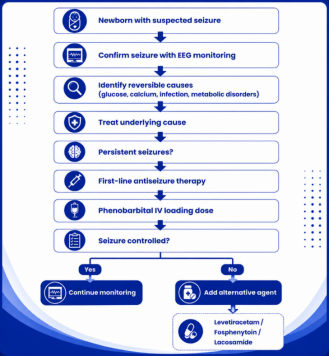
The standard neonatal loading dose is usually 20 mg/kg intravenously, with additional doses administered if seizures persist. Maintenance therapy commonly ranges between 3–5 mg/kg/day.
Because of its rapid onset of action and intravenous availability, phenobarbital has traditionally been preferred for emergency seizure control.
2.2. Clinical Effectiveness
Several studies have investigated the seizure-control efficacy of phenobarbital in neonates.
The landmark randomized controlled trial by Sharpe et al. compared phenobarbital with levetiracetam for neonatal seizure treatment. The study demonstrated that phenobarbital achieved superior short-term seizure control compared with levetiracetam.
Approximately, Phenobarbital used in Complete seizure control in around 80% of infants within 24 hours and Levetiracetam is used in Complete seizure control in approximately 28% of infants.
These findings confirmed phenobarbital's strong acute anticonvulsant activity.
However, despite effective initial seizure suppression, concerns remain regarding its long-term safety and incomplete response in many newborns.
2.3. Factors Affecting Phenobarbital Response | [5] | Maitre NL, Smolinsky C, Slaughter JC, Stark AR. Adverse neurodevelopmental outcomes after exposure to phenobarbital and levetiracetam. J Perinatol. 2013; 33: 841-846. |
[5]
The efficacy of phenobarbital varies according to several neonatal factors. Gestational age is an important consideration, as premature infants may demonstrate reduced drug response due to immature receptor development and altered pharmacokinetics.
The underlying etiology of seizures may also influence treatment response. Seizures associated with hypoxic-ischaemic encephalopathy, intracranial hemorrhage, or stroke may respond differently to phenobarbital compared with seizures caused by metabolic disturbances.
In addition,
altered neonatal neurobiology may reduce the effectiveness of GABA-enhancing drugs such as phenobarbital. The neonatal brain is characterized by increased excitatory neurotransmission, higher intracellular chloride concentration, and immature GABA receptor function
| [6] | Glass HC, Soul JS. Neonatal seizures: advances in mechanisms and management. Clin Perinatol. 2016; 43: 385-398. |
[6]
.
3. Current Role of Phenobarbital in Neonatal Seizure Management
Despite its limitations, phenobarbital continues to play an important role in neonatal seizure management because of its decades of clinical experience, rapid seizure-suppressing effect, low cost, wide availability, and suitability for intravenous administration. It also remains recommended as an initial therapy in many international guidelines.
However, modern neonatal neurology increasingly recognizes that seizure treatment should extend beyond immediate seizure termination and consider neurodevelopmental outcomes, medication toxicity, brain protection, and individual patient characteristics
| [7] | Soul JS. Acute symptomatic seizures in term neonates: management and prognosis. Semin Fetal Neonatal Med. 2015; 20: 108-115. |
[7]
. Therefore, the position of phenobarbital as a universal first-line therapy is increasingly being reconsidered.
4. Limitations of Phenobarbital as First-Line Therapy in Acute Neonatal Seizures
Although phenobarbital remains the most commonly used first-line antiseizure medication, several important limitations restrict its effectiveness and safety in neonatal seizure management.
4.1. Limited Complete Seizure Control
The major limitation of phenobarbital is that it does not provide complete seizure control in all neonates. Although studies demonstrate better short-term efficacy compared with some newer agents, approximately 20–40% of neonates continue to experience seizures despite receiving appropriate phenobarbital loading doses. Its effectiveness may be particularly limited in neonates with severe hypoxic-ischaemic encephalopathy, prematurity, structural brain injuries, or refractory neonatal epilepsy. Persistent electrographic seizures may also occur despite apparent clinical improvement, emphasizing the importance of continuous EEG monitoring
| [8] | Silverstein FS, Jensen FE. Neonatal seizures. Ann Neurol. 2007; 62: 112-120. |
[8]
.
4.2. Developmental Neurotoxicity Concerns
One of the most significant concerns regarding phenobarbital is its potential neurotoxicity. Experimental studies have demonstrated that prolonged exposure to phenobarbital may increase neuronal apoptosis, reduce synaptic development, and alter neuronal connectivity. The immature neonatal brain may be particularly vulnerable because rapid neuronal growth and synaptic formation occur during this period
| [9] | van Rooij LG, Hellström-Westas L, de Vries LS. Treatment of neonatal seizures. Semin Fetal Neonatal Med. 2010; 15: 177-183. |
[9]
. Clinical studies have also reported associations between higher cumulative phenobarbital exposure and lower cognitive scores, an increased risk of cerebral palsy, and poorer motor development. Therefore, although phenobarbital may effectively terminate seizures, excessive exposure may negatively influence long-term neurological outcomes.
4.3. Respiratory Depression and Cardiovascular Effects
Phenobarbital produces central nervous system depression, which can result in respiratory suppression, reduced alertness, and hypotension, and may increase the need for mechanical ventilation. These adverse effects are particularly concerning in critically ill neonates who may already have respiratory compromise due to prematurity or birth complications
| [10] | Painter MJ. Phenobarbital treatment of neonatal seizures. Epilepsia. 1995; 36: S18-S22. |
[10]
.
4.4. Sedation and Difficulty in Neurological Assessment
Phenobarbital can cause prolonged sedation, which may interfere with neurological examination, assessment of seizure recovery, feeding ability, and interaction with the infant. Its long half-life, approximately 80–120 hours in neonates, can result in prolonged drug exposure and sustained sedative effects.
4.5. Pharmacokinetic Variability
Neonates have immature hepatic metabolism, renal elimination, and protein-binding capacity. Consequently, phenobarbital plasma concentrations can vary considerably between patients. Subtherapeutic concentrations may result in persistent seizures, whereas excessive concentrations can increase the risk of toxicity. Therefore, therapeutic drug monitoring is often required to maintain appropriate drug exposure.
4.6. Potential Drug Resistance Due to Neonatal Brain Characteristics | [11] | Boylan GB, Pressler RM, Rennie JM. Phenobarbital and neonatal seizure control. Arch Dis Child Fetal Neonatal Ed. 2013; 98: F95-F99. |
[11]
The neonatal brain differs from adult brains in neurotransmitter function.
In mature neurons: GABA activation → Chloride influx → Neuronal inhibition
However, in immature neurons: GABA activation may produce neuronal excitation due to higher intracellular chloride concentration.
This developmental difference reduces the anticonvulsant effectiveness of phenobarbital.
Table 1.
Major Limitations of Phenobarbital Alone | [12] | Rennie JM, de Vries LS. Neonatal seizures: diagnosis and treatment. Arch Dis Child. 2018; 103: 113-119. |
Limitation | Clinical Impact |
Incomplete seizure control | Persistent electrographic seizures |
Neurotoxicity concerns | Possible cognitive and motor impairment |
Respiratory depression | Increased ventilation requirement |
Sedation | Difficulty assessing neurological status |
Long half-life | Prolonged adverse effects |
Variable metabolism | Difficulty maintaining therapeutic levels |
Reduced effectiveness in immature brain | Treatment failure in some neonates |
Possible apoptosis | Concern for long-term brain development |
5. Comparative Evaluation of Phenobarbital with Newer Antiepileptic Agents
5.1. Phenobarbital vs Levetiracetam in Mechanism of Action
Levetiracetam has emerged as one of the most extensively studied alternatives to phenobarbital for the management of neonatal seizures.
Levetiracetam acts primarily by binding to synaptic vesicle protein SV2A, thereby regulating neurotransmitter release
| [13] | Glass HC, Glidden D, Jeremy RJ, et al. Clinical neonatal seizures are independently associated with neurological outcomes. J Pediatr. 2009; 155: 318-323. |
| [14] | Maitre NL, Burton VJ, Duncan AF. Neurodevelopment after neonatal seizure treatment. J Pediatr. 2015; 166: 997-1003. |
[13, 14]
. In contrast to phenobarbital, levetiracetam does not directly enhance GABA-mediated neurotransmission.
5.2. Phenobarbital vs Levetiracetam in Advantages
Levetiracetam offers several potential advantages over phenobarbital, including a lower risk of respiratory depression, minimal drug interactions, less sedation, and an overall favorable safety profile. It is also associated with fewer concerns regarding neurotoxicity, making it an increasingly considered alternative in neonatal seizure management
| [15] | Sharpe CM, et al. Phenobarbital compared with levetiracetam for neonatal seizures. N Engl J Med. 2020. |
| [16] | Abend NS, Wusthoff CJ. Neonatal seizures and seizure monitoring. Continuum. 2012; 18: 1067-1085. |
[15, 16]
.
5.3. Phenobarbital vs Fosphenytoin in Mechanism of Action
Fosphenytoin is a prodrug that is converted into phenytoin and acts mainly through sodium channel blockade
| [18] | Schierhout G, Roberts I. Anti-epileptic drugs for neonatal seizures. Cochrane Database Syst Rev. 2007. |
[18]
. It reduces repetitive neuronal firing by inhibiting voltage-dependent sodium channels.
5.4. Phenobarbital vs Fosphenytoin in Advantages
Fosphenytoin is effective in refractory seizures and may be useful when phenobarbital fails. It is also associated with less sedation compared with phenobarbital. Unlike phenobarbital, fosphenytoin is not usually preferred as first-line therapy because of safety concerns during intravenous administration.
5.5. Phenobarbital vs Lacosamide in Mechanism of Action
Lacosamide is a newer antiseizure medication that enhances the slow inactivation of voltage-gated sodium channels.
5.6. Phenobarbital vs Lacosamide in Advantages
Lacosamide has a novel mechanism of action, minimal drug interactions, and good tolerability. It may also provide potential benefits in refractory neonatal seizures.
Table 2.
Comparison of Phenobarbital with Newer Antiepileptic Agents | [19] | Hellström-Westas L, de Vries LS. Continuous EEG monitoring in neonates. Clin Perinatol. 2006. |
Parameter | Phenobarbital | Levetiracetam | Fosphenytoin | Lacosamide |
Primary mechanism | GABA-A receptor enhancement | SV2A modulation | Sodium channel blockade | Slow sodium channel inactivation |
Acute seizure efficacy | High | Moderate | Moderate-high | Limited evidence |
First-line use | Commonly recommended | Increasing interest | Usually second-line | Mainly refractory cases |
Respiratory depression | High risk | Low risk | Moderate risk | Low risk |
Sedation | Significant | Minimal | Moderate | Minimal |
Drug interactions | Many | Few | Several | Few |
Neurotoxicity concern | Higher | Lower | Moderate | Unknown |
Clinical experience | Extensive | Increasing | Extensive | Limited |
Long-term neonatal data | Available but concerning | Limited but promising | Limited | Very limited |
6. Results
This analytical study evaluated the role of phenobarbital as first-line therapy for acute neonatal seizures and compared its efficacy and limitations with newer antiepileptic agents including levetiracetam, fosphenytoin, and lacosamide.
The analysis demonstrates that phenobarbital remains one of the most effective medications for rapid seizure termination in newborns. However, its clinical advantages are counterbalanced by concerns regarding incomplete seizure control, neurotoxicity, sedation, and adverse developmental effects.
6.1. Seizure Control Outcomes
Multiple clinical studies consistently demonstrate that phenobarbital provides superior immediate seizure suppression compared with several newer agents.
The randomized controlled trial conducted by Sharpe et al. demonstrated that phenobarbital achieved complete seizure freedom in approximately 80% of neonates within 24 hours, whereas levetiracetam achieved seizure control in approximately 28% of infants.
These findings confirm that phenobarbital remains highly effective for emergency seizure termination.
However, approximately one-fifth to one-third of neonates continue to experience seizures despite adequate phenobarbital administration. This is particularly observed among infants with Severe hypoxic-ischaemic encephalopathy, brain injury, prematurity, structural abnormalities.
Therefore, phenobarbital effectiveness varies considerably depending on underlying neurological conditions.
6.2. Safety and Adverse Outcomes
Although phenobarbital provides rapid seizure control, safety concerns remain significant.
Clinical evidence suggests that higher cumulative phenobarbital exposure is associated with reduced cognitive performance, increased risk of cerebral palsy, impaired motor development, reduced adaptive behavior scores
| [21] | Guillet R, Kwon J. Seizure management in newborn infants. Semin Fetal Neonatal Med. 2007. |
[21]
.
These observations suggest that seizure suppression alone should not be the only treatment goal. Protection of the developing brain and improvement of long-term neurological outcomes are equally important.
Compared with phenobarbital, newer agents generally demonstrate improved safety profiles.
6.2.1. Levetiracetam
Levetiracetam has gained attention because of its minimal respiratory depression, limited drug interactions, less sedation, and lower neurotoxicity concerns. However, its lower immediate anticonvulsant effectiveness remains a major limitation.
6.2.2. Fosphenytoin
Fosphenytoin remains an effective option for refractory seizures, particularly when phenobarbital fails
| [22] | Bittigau P, Sifringer M, Genz K, et al. Antiepileptic drugs and neuronal apoptosis. Ann Neurol. 2002. |
[22]
. However, concerns include cardiovascular instability, the need for continuous monitoring, and potential hypotension.
6.2.3. Lacosamide | [23] | Silverstein FS, Jensen FE. Neonatal seizures and neuroprotection. Epilepsy Res. 2008. |
[23]
Lacosamide represents a promising newer option because of its unique mechanism and favourable tolerability. However, neonatal evidence remains insufficient, and further clinical trials are required before routine first-line use.
6.3. Overall Comparative Findings
The evidence indicates that no single antiepileptic medication currently provides the ideal combination of maximum seizure control, minimal toxicity, neuroprotection, and long-term safety.
Phenobarbital remains the most effective emergency medication, while newer agents offer advantages in terms of safety and tolerability
| [24] | Pressler RM, Boylan GB. Neonatal seizures and long-term outcomes. Epileptic Disord. 2013. |
[24]
.
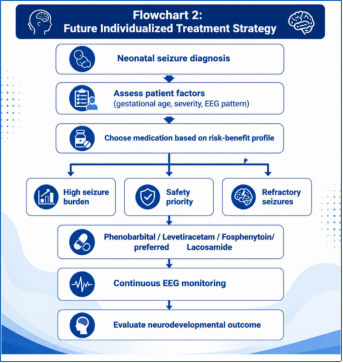
A future treatment model may involve individualized therapy based on neonatal age, seizure severity, EEG findings, underlying cause, and the risk of medication toxicity.
Table 3.
Summary of Evidence | [25] | Sankar R, Painter MJ. Neonatal seizures: mechanisms and treatment. Epilepsia. 2005. |
Study/Author | Main Finding | Clinical Implication |
Painter et al. | Phenobarbital effective but associated with neurological concerns | Need for careful exposure monitoring |
Sharpe et al. (NEOLEV2 Trial) | Phenobarbital superior to levetiracetam for seizure control | Supports phenobarbital acute efficacy |
Maitre et al. | Higher phenobarbital exposure linked with worse neurodevelopment | Limits prolonged use |
Silverstein & Jensen | Neonatal seizures require EEG monitoring and individualized therapy | Continuous assessment required |
Pressler et al. | Seizure burden influences neurological outcome | Early seizure control important |
7. Discussion
The management of neonatal seizures remains challenging because clinicians must balance rapid seizure suppression against potential medication-related harm
| [26] | Vento M, de Vries LS. Treatment of neonatal seizures. Early Hum Dev. 2010. |
[26]
.
Phenobarbital has maintained its position as first-line therapy because of its strong anticonvulsant effect and extensive clinical experience. However, its limitations have become increasingly apparent with advances in neonatal neuroscience.
The developing brain differs substantially from the adult brain. Immature neurotransmitter systems, altered receptor expression, and increased excitability contribute to reduced responsiveness to traditional GABA-enhancing medications.
Additionally, neonatal seizure management has evolved from focusing solely on seizure termination toward improving long-term neurodevelopmental outcomes.
The introduction of newer agents provides potential alternatives. Levetiracetam offers improved safety but currently lacks comparable acute efficacy. Fosphenytoin remains useful for resistant seizures but requires careful cardiovascular monitoring. Lacosamide represents a promising future therapy, although more neonatal research is necessary
| [27] | Abend NS, Gutierrez-Colina AM. Treatment approaches for neonatal epilepsy. Semin Fetal Neonatal Med. 2011. |
[27]
.
Future clinical practice may move away from a universal phenobarbital-first approach toward precision medicine strategies where treatment selection depends on individual neonatal characteristics
| [28] | Pisani F, Spagnoli C. Neonatal seizures: clinical features and treatment. J Matern Fetal Neonatal Med. 2016. |
[28]
.
8. Study Limitations
This analysis was based on previously published clinical evidence rather than a newly recruited patient cohort. Differences in study populations, treatment protocols, and outcome measurements may influence comparative interpretation. Further prospective multicenter studies are required.
9. Conclusion
Phenobarbital remains an important and effective first-line therapy for acute neonatal seizures because of its rapid action, availability, and superior short-term seizure-control ability
| [29] | Shellhaas RA, et al. Treatment of neonatal seizures: guidelines and evidence review. Neurology. 2021. |
[29]
.
However, its limitations cannot be ignored. Reduced effectiveness in some neonates, prolonged sedation, respiratory depression, pharmacokinetic variability, and potential neurodevelopmental toxicity represent important clinical challenges.
Newer antiepileptic agents such as levetiracetam, fosphenytoin, and lacosamide provide valuable alternatives with improved tolerability and different mechanisms of action. Nevertheless, current evidence does not support complete replacement of phenobarbital because newer drugs have limitations, particularly regarding acute efficacy and neonatal clinical experience.
The future management of neonatal seizures should focus on individualized treatment approaches combining effective seizure control with preservation of neurological development. Further large-scale randomized clinical trials are required to identify optimal therapeutic strategies that maximize seizure suppression while minimizing long-term harm
| [30] | Pressler RM, Mangum B. Newly emerging treatments for neonatal seizures. J Clin Neonatol. 2022. |
[30]
.
Author Contributions
Mohammed Mahfuzur Rahman: Conceptualization, Formal Analysis, Investigation, Methodology, Project administration. Supervision, Validation, Writing – original draft, Writing – review & editing
Saiful Islam: Conceptualization, Data curation, Formal Analysis, Investigation, Methodology, Visualization. Writing – original draft
Syeda Farzana Rahat: Conceptualization, Data curation, Formal Analysis, Investigation, Methodology, Project administration, Visualization
Farhana Alam: Conceptualization, Data curation, Formal Analysis, Investigation, Validation, Visualization, Writing – original draft
Conflicts of Interest
The authors declare no conflicts of interest.
References
| [1] |
Volpe JJ. Neonatal seizures. In: Neurology of the Newborn. 6th ed. Philadelphia: Elsevier; 2018.
|
| [2] |
Sharpe C, Reiner GE, Davis SL, et al. Levetiracetam versus phenobarbital for neonatal seizures: a randomized controlled trial. Lancet Child Adolesc Health. 2020; 4(1): 31-41.
|
| [3] |
Painter MJ, Scher MS, Stein AD, et al. Phenobarbital compared with phenytoin for the treatment of neonatal seizures. N Engl J Med. 1999; 341: 485-489.
|
| [4] |
Pressler RM, Cilio MR, Mizrahi EM, et al. The ILAE classification of seizures and epilepsy in the neonate. Epilepsia. 2021; 62: 615-628.
|
| [5] |
Maitre NL, Smolinsky C, Slaughter JC, Stark AR. Adverse neurodevelopmental outcomes after exposure to phenobarbital and levetiracetam. J Perinatol. 2013; 33: 841-846.
|
| [6] |
Glass HC, Soul JS. Neonatal seizures: advances in mechanisms and management. Clin Perinatol. 2016; 43: 385-398.
|
| [7] |
Soul JS. Acute symptomatic seizures in term neonates: management and prognosis. Semin Fetal Neonatal Med. 2015; 20: 108-115.
|
| [8] |
Silverstein FS, Jensen FE. Neonatal seizures. Ann Neurol. 2007; 62: 112-120.
|
| [9] |
van Rooij LG, Hellström-Westas L, de Vries LS. Treatment of neonatal seizures. Semin Fetal Neonatal Med. 2010; 15: 177-183.
|
| [10] |
Painter MJ. Phenobarbital treatment of neonatal seizures. Epilepsia. 1995; 36: S18-S22.
|
| [11] |
Boylan GB, Pressler RM, Rennie JM. Phenobarbital and neonatal seizure control. Arch Dis Child Fetal Neonatal Ed. 2013; 98: F95-F99.
|
| [12] |
Rennie JM, de Vries LS. Neonatal seizures: diagnosis and treatment. Arch Dis Child. 2018; 103: 113-119.
|
| [13] |
Glass HC, Glidden D, Jeremy RJ, et al. Clinical neonatal seizures are independently associated with neurological outcomes. J Pediatr. 2009; 155: 318-323.
|
| [14] |
Maitre NL, Burton VJ, Duncan AF. Neurodevelopment after neonatal seizure treatment. J Pediatr. 2015; 166: 997-1003.
|
| [15] |
Sharpe CM, et al. Phenobarbital compared with levetiracetam for neonatal seizures. N Engl J Med. 2020.
|
| [16] |
Abend NS, Wusthoff CJ. Neonatal seizures and seizure monitoring. Continuum. 2012; 18: 1067-1085.
|
| [17] |
Clancy RR. Summary proceedings from neonatal seizures. Pediatrics. 2006; 117: S23-S27.
|
| [18] |
Schierhout G, Roberts I. Anti-epileptic drugs for neonatal seizures. Cochrane Database Syst Rev. 2007.
|
| [19] |
Hellström-Westas L, de Vries LS. Continuous EEG monitoring in neonates. Clin Perinatol. 2006.
|
| [20] |
Painter MJ, Pippenger C. Pharmacology of neonatal anticonvulsants. Clin Perinatol. 1990.
|
| [21] |
Guillet R, Kwon J. Seizure management in newborn infants. Semin Fetal Neonatal Med. 2007.
|
| [22] |
Bittigau P, Sifringer M, Genz K, et al. Antiepileptic drugs and neuronal apoptosis. Ann Neurol. 2002.
|
| [23] |
Silverstein FS, Jensen FE. Neonatal seizures and neuroprotection. Epilepsy Res. 2008.
|
| [24] |
Pressler RM, Boylan GB. Neonatal seizures and long-term outcomes. Epileptic Disord. 2013.
|
| [25] |
Sankar R, Painter MJ. Neonatal seizures: mechanisms and treatment. Epilepsia. 2005.
|
| [26] |
Vento M, de Vries LS. Treatment of neonatal seizures. Early Hum Dev. 2010.
|
| [27] |
Abend NS, Gutierrez-Colina AM. Treatment approaches for neonatal epilepsy. Semin Fetal Neonatal Med. 2011.
|
| [28] |
Pisani F, Spagnoli C. Neonatal seizures: clinical features and treatment. J Matern Fetal Neonatal Med. 2016.
|
| [29] |
Shellhaas RA, et al. Treatment of neonatal seizures: guidelines and evidence review. Neurology. 2021.
|
| [30] |
Pressler RM, Mangum B. Newly emerging treatments for neonatal seizures. J Clin Neonatol. 2022.
|
Cite This Article
-
APA Style
Rahman, M. M., Islam, S., Rahat, S. F., Alam, F. (2026). Analytical Evaluations of Limitations of Phenobarbital as 1st-Line Therapy in Acute Neonatal Seizures: Comparison Assessment with Newer Antiepileptics. American Journal of Pediatrics, 12(4), 111-118. https://doi.org/10.11648/j.ajp.20261204.11
 Copy
|
Copy
|
 Download
ACS Style
Rahman, M. M.; Islam, S.; Rahat, S. F.; Alam, F. Analytical Evaluations of Limitations of Phenobarbital as 1st-Line Therapy in Acute Neonatal Seizures: Comparison Assessment with Newer Antiepileptics. Am. J. Pediatr. 2026, 12(4), 111-118. doi: 10.11648/j.ajp.20261204.11
Copy
|
Download
AMA Style
Rahman MM, Islam S, Rahat SF, Alam F. Analytical Evaluations of Limitations of Phenobarbital as 1st-Line Therapy in Acute Neonatal Seizures: Comparison Assessment with Newer Antiepileptics. Am J Pediatr. 2026;12(4):111-118. doi: 10.11648/j.ajp.20261204.11
Copy
|
Download
-
@article{10.11648/j.ajp.20261204.11,
  author = {Mohammed Mahfuzur Rahman and Saiful Islam and Syeda Farzana Rahat and Farhana Alam},
  title = {Analytical Evaluations of Limitations of Phenobarbital as 1st-Line Therapy in Acute Neonatal Seizures: Comparison Assessment with Newer Antiepileptics},
  journal = {American Journal of Pediatrics},
  volume = {12},
  number = {4},
  pages = {111-118},
  doi = {10.11648/j.ajp.20261204.11},
  url = {https://doi.org/10.11648/j.ajp.20261204.11},
  eprint = {https://article.sciencepublishinggroup.com/pdf/10.11648.j.ajp.20261204.11},
  abstract = {Background: Acute neonatal seizures are among the most common neurological emergencies during the neonatal period and are associated with increased mortality and long-term neurodevelopmental impairment. Phenobarbital has remained the conventional first-line antiseizure medication because of its rapid onset of action, intravenous availability, extensive clinical experience, and low cost. However, concerns regarding incomplete seizure control, adverse effects, and potential neurodevelopmental toxicity have raised questions regarding its position as the universal first-line therapy. Objectives: This analytical study aimed to evaluate the efficacy, safety limitations, and clinical outcomes associated with phenobarbital use in acute neonatal seizures and to compare its therapeutic profile with newer antiseizure medications, including levetiracetam, fosphenytoin, and lacosamide. Methods: A structured comparative analysis was performed using published clinical studies, randomized controlled trials, and evidence-based neonatal seizure management data. The analysis focused on seizure-control efficacy, adverse effects, pharmacological characteristics, neurodevelopmental concerns, and suitability of different antiseizure medications for individualized neonatal treatment strategies. Results: Phenobarbital demonstrated superior acute seizure-control efficacy, achieving complete seizure freedom in approximately 80% of neonates within 24 hours compared with approximately 28% with levetiracetam. However, 20–40% of neonates continued to experience seizures despite appropriate phenobarbital administration, particularly those with severe hypoxic-ischaemic encephalopathy, prematurity, structural brain injury, or refractory epilepsy. Higher cumulative phenobarbital exposure was associated with concerns regarding neuronal apoptosis, sedation, respiratory depression, hypotension, and adverse neurodevelopmental outcomes. Levetiracetam showed improved tolerability with fewer respiratory effects and less sedation but demonstrated lower immediate seizure-control efficacy. Fosphenytoin remained useful for refractory seizures but required cardiovascular monitoring, while lacosamide showed potential benefit with limited neonatal evidence. Conclusion: Phenobarbital remains an effective medication for rapid seizure termination in acute neonatal seizures; however, its limitations highlight the need for individualized treatment approaches. Future neonatal seizure management should balance rapid seizure suppression with neuroprotection and long-term developmental outcomes through integration of EEG monitoring, patient-specific characteristics, and emerging therapeutic options.},
 year = {2026}
}
Copy
|
Download
-
TY  - JOUR
T1  - Analytical Evaluations of Limitations of Phenobarbital as 1st-Line Therapy in Acute Neonatal Seizures: Comparison Assessment with Newer Antiepileptics
AU  - Mohammed Mahfuzur Rahman
AU  - Saiful Islam
AU  - Syeda Farzana Rahat
AU  - Farhana Alam
Y1  - 2026/10/09
PY  - 2026
N1  - https://doi.org/10.11648/j.ajp.20261204.11
DO  - 10.11648/j.ajp.20261204.11
T2  - American Journal of Pediatrics
JF  - American Journal of Pediatrics
JO  - American Journal of Pediatrics
SP  - 111
EP  - 118
PB  - Science Publishing Group
SN  - 2472-0909
UR  - https://doi.org/10.11648/j.ajp.20261204.11
AB  - Background: Acute neonatal seizures are among the most common neurological emergencies during the neonatal period and are associated with increased mortality and long-term neurodevelopmental impairment. Phenobarbital has remained the conventional first-line antiseizure medication because of its rapid onset of action, intravenous availability, extensive clinical experience, and low cost. However, concerns regarding incomplete seizure control, adverse effects, and potential neurodevelopmental toxicity have raised questions regarding its position as the universal first-line therapy. Objectives: This analytical study aimed to evaluate the efficacy, safety limitations, and clinical outcomes associated with phenobarbital use in acute neonatal seizures and to compare its therapeutic profile with newer antiseizure medications, including levetiracetam, fosphenytoin, and lacosamide. Methods: A structured comparative analysis was performed using published clinical studies, randomized controlled trials, and evidence-based neonatal seizure management data. The analysis focused on seizure-control efficacy, adverse effects, pharmacological characteristics, neurodevelopmental concerns, and suitability of different antiseizure medications for individualized neonatal treatment strategies. Results: Phenobarbital demonstrated superior acute seizure-control efficacy, achieving complete seizure freedom in approximately 80% of neonates within 24 hours compared with approximately 28% with levetiracetam. However, 20–40% of neonates continued to experience seizures despite appropriate phenobarbital administration, particularly those with severe hypoxic-ischaemic encephalopathy, prematurity, structural brain injury, or refractory epilepsy. Higher cumulative phenobarbital exposure was associated with concerns regarding neuronal apoptosis, sedation, respiratory depression, hypotension, and adverse neurodevelopmental outcomes. Levetiracetam showed improved tolerability with fewer respiratory effects and less sedation but demonstrated lower immediate seizure-control efficacy. Fosphenytoin remained useful for refractory seizures but required cardiovascular monitoring, while lacosamide showed potential benefit with limited neonatal evidence. Conclusion: Phenobarbital remains an effective medication for rapid seizure termination in acute neonatal seizures; however, its limitations highlight the need for individualized treatment approaches. Future neonatal seizure management should balance rapid seizure suppression with neuroprotection and long-term developmental outcomes through integration of EEG monitoring, patient-specific characteristics, and emerging therapeutic options.
VL  - 12
IS  - 4
ER  -
Copy
|
Download





 Share This Article
 Twitter
 Linked In
 Facebook