Abstract
Maternal and child health service utilization remains an important public health concern in Nigeria, particularly in rural communities where access to healthcare may be limited. This study assessed socioeconomic predictors of maternal and child health service utilization and rural–urban differences in Bayelsa State, Nigeria. A facility-based cross-sectional study was conducted among 411 women aged 15–49 years attending 14 public primary healthcare facilities. Data were collected using a structured questionnaire and analysed using descriptive statistics and multivariable logistic regression. Results were presented with 95% confidence intervals (CIs), with statistical significance set at p < 0.05. Attendance at eight or more antenatal care visits was higher among urban women (73.20%) than rural women (49.66%). Similarly, facility delivery was higher among urban women (97.46%) than rural women (47.66%), as was timely postnatal care (78.68% and 40.19%, respectively). Immunization coverage was 100.00% in urban areas and 98.60% in rural areas, while growth monitoring and promotion utilization was higher in rural areas (71.50%) than urban areas (59.39%). In adjusted analysis, women with higher socioeconomic status had greater odds of postnatal care utilization (AOR = 14.14, 95% CI: 3.86–51.81; p < 0.001). In rural areas, higher socioeconomic status was associated with early postnatal care (AOR = 14.25, 95% CI: 3.61–56.17; p < 0.001), while in urban areas, it was associated with antenatal care, facility delivery and postnatal care. Women aged 25–29 years (AOR = 5.42, 95% CI: 1.14–25.79; p = 0.034), 35–39 years (AOR = 7.03, 95% CI: 1.09–45.42; p = 0.040) and 40–44 years (AOR = 108.81, 95% CI: 3.01–3932.30; p = 0.010) had higher odds of growth monitoring and promotion utilization than women aged 15–19 years in rural areas. Similar significant associations were observed among urban women aged 25–29, 35–39 and 40–44 years. The findings suggest that socioeconomic inequalities and rural–urban differences affect maternal and child health service utilization, particularly facility delivery and timely postnatal care. Strengthening rural healthcare access and addressing socioeconomic barriers to maternal and child health services may improve equitable utilization in Bayelsa State.
|
Published in
|
World Journal of Public Health (Volume 11, Issue 4)
|
|
DOI
|
10.11648/j.wjph.20261104.16
|
|
Page(s)
|
464-479 |
|
Creative Commons
|

This is an Open Access article, distributed under the terms of the Creative Commons Attribution 4.0 International License (http://creativecommons.org/licenses/by/4.0/), which permits unrestricted use, distribution and reproduction in any medium or format, provided the original work is properly cited.
|
|
Copyright
|
Copyright © The Author(s), 2026. Published by Science Publishing Group
|
Keywords
Maternal Health, Child Health, Socioeconomic Status, Rural–urban Disparities, Bayelsa State, Nigeria
1. Introduction
Maternal and child health service utilization is an important component of healthcare because timely access to appropriate services can prevent complications and improve the health and survival of women and children. Essential maternal health services include antenatal care (ANC), skilled birth attendance and postnatal care (PNC), while child health services include immunization, growth monitoring and other preventive interventions. Despite progress in expanding maternal and child healthcare, utilization remains uneven across socioeconomic and geographical groups, particularly in low- and middle-income countries
| [1] | World Health Organization. Social determinants of health. Geneva: World Health Organization; 2021. Available from:
https://www.who.int/health-topics/social-determinants-of-health |
| [2] | Adedokun ST, Uthman OA, Bisiriyu LA. Determinants of partial and adequate maternal health services utilization in Nigeria: analysis of cross-sectional survey. BMC Pregnancy and Childbirth. 2023; 23: 457.
https://doi.org/10.1186/s12884-023-05712-4 |
| [3] | Kawakatsu Y, Adolph C, Mosser JF, Baffoe P, Cheshi F, Aiga H, et al. Factors consistently associated with utilisation of essential maternal and child health services in Nigeria: analysis of the five Nigerian national household surveys (2003–2018). BMJ Open. 2022; 12(9): e061747.
https://doi.org/10.1136/bmjopen-2022-061747 |
| [4] | Victora CG, Bahl R, Barros AJD, França GVA, Horton S, Krasevec J, et al. Breastfeeding in the 21st century: epidemiology, mechanisms, and lifelong effect. The Lancet. 2016; 387(10017): 475–490.
https://doi.org/10.1016/S0140-6736(15)01024-7 |
[1-4]
.
Socioeconomic status (SES), commonly assessed through household wealth, education, occupation and living conditions, influences the ability of women to obtain and use healthcare services. Women from wealthier households may be better able to meet transportation expenses and other costs associated with healthcare, while education can improve health knowledge and support informed decisions about care-seeking
| [5] | Nwosu CO, Ataguba JE. Socioeconomic inequalities in maternal health service utilisation: a case of antenatal care in Nigeria using a decomposition approach. BMC Public Health. 2019; 19: 1493. https://doi.org/10.1186/s12889-019-7840-8 |
| [6] | Wang HF, Frasco E, Takesue R, Tang K. Maternal education level and maternal healthcare utilisation in the Democratic Republic of the Congo: an analysis of the multiple indicator cluster survey 2017/18. BMC Health Services Research. 2021; 21: 850. |
| [7] | Okoli CI, Hajizadeh M, Rahman MM, Velayutham E, Khanam R. Geographical and socioeconomic inequalities in the utilization of maternal healthcare services in Nigeria: 2003–2017. BMC Health Services Research. 2020; 20: 849.
https://doi.org/10.1186/s12913-020-05700-w |
[5-7]
. Studies from Nigeria and other sub-Saharan African countries have reported socioeconomic inequalities in maternal healthcare utilization, with wealthier and more educated women generally more likely to access recommended services
| [5] | Nwosu CO, Ataguba JE. Socioeconomic inequalities in maternal health service utilisation: a case of antenatal care in Nigeria using a decomposition approach. BMC Public Health. 2019; 19: 1493. https://doi.org/10.1186/s12889-019-7840-8 |
| [8] | Adewuyi EO, Auta A, Adewuyi MI, Philip AA, Olutuase V, Zhao Y, et al. Antenatal care utilisation and receipt of its components in Nigeria: assessing disparities between rural and urban areas—a nationwide population-based study. PLOS ONE. 2024; 19(7): e0307316.
https://doi.org/10.1371/journal.pone.0307316 |
| [9] | Bain LE, Amu H, Nkoke C, Awungafac G. Socioeconomic inequalities in maternal healthcare utilisation in sub-Saharan Africa: a systematic review. BMJ Open. 2022; 12(1): e049885. https://doi.org/10.1136/bmjopen-2021-049885 |
| [10] | Egbewale BE, Oyedeji O, Bump J, Sudfeld CR. Coverage and determinants of infant postnatal care in Nigeria: a population-based cross-sectional study. Pediatric Investigation. 2024; 8(1): 27–36. https://doi.org/10.1002/ped4.12412 |
[5, 8-10]
. These inequalities may affect the timing and frequency of ANC attendance, place of delivery and use of postnatal services
| [2] | Adedokun ST, Uthman OA, Bisiriyu LA. Determinants of partial and adequate maternal health services utilization in Nigeria: analysis of cross-sectional survey. BMC Pregnancy and Childbirth. 2023; 23: 457.
https://doi.org/10.1186/s12884-023-05712-4 |
| [3] | Kawakatsu Y, Adolph C, Mosser JF, Baffoe P, Cheshi F, Aiga H, et al. Factors consistently associated with utilisation of essential maternal and child health services in Nigeria: analysis of the five Nigerian national household surveys (2003–2018). BMJ Open. 2022; 12(9): e061747.
https://doi.org/10.1136/bmjopen-2022-061747 |
| [11] | Samuel O, Adebowale SA, Amoo EO. Rural-urban disparities in maternal healthcare utilization in Nigeria: a multilevel analysis. BMC Pregnancy and Childbirth. 2021; 21: 547.
https://doi.org/10.1186/s12884-021-03999-7 |
[2, 3, 11]
.
Place of residence is another important factor in healthcare utilization. Rural and urban populations may differ in the availability of health facilities, distribution of skilled healthcare workers, transportation and access to essential services. Evidence from Nigeria has demonstrated persistent geographical inequalities in maternal healthcare utilization, including differences between rural and urban women in ANC attendance and facility-based delivery
| [8] | Adewuyi EO, Auta A, Adewuyi MI, Philip AA, Olutuase V, Zhao Y, et al. Antenatal care utilisation and receipt of its components in Nigeria: assessing disparities between rural and urban areas—a nationwide population-based study. PLOS ONE. 2024; 19(7): e0307316.
https://doi.org/10.1371/journal.pone.0307316 |
| [9] | Bain LE, Amu H, Nkoke C, Awungafac G. Socioeconomic inequalities in maternal healthcare utilisation in sub-Saharan Africa: a systematic review. BMJ Open. 2022; 12(1): e049885. https://doi.org/10.1136/bmjopen-2021-049885 |
| [12] | Tessema ZT, Yazachew L, Tesema GA, Teshale AB. Determinants of postnatal care utilization in sub-Saharan Africa: a meta and multilevel analysis of data from 36 sub-Saharan countries. Italian Journal of Pediatrics. 2020; 46: 175.
https://doi.org/10.1186/s13052-020-00944-y |
[8, 9, 12]
. Similar disparities have been reported across sub-Saharan Africa, where the utilization of maternal health services is shaped by socioeconomic disadvantage and unequal access to healthcare
| [10] | Egbewale BE, Oyedeji O, Bump J, Sudfeld CR. Coverage and determinants of infant postnatal care in Nigeria: a population-based cross-sectional study. Pediatric Investigation. 2024; 8(1): 27–36. https://doi.org/10.1002/ped4.12412 |
| [13] | Tessema ZT, Minyihun SE, Kassa GM. Determinants of maternal healthcare utilization among women in sub-Saharan Africa: a multilevel analysis. PLOS ONE. 2021; 16(8): e0255055.
https://doi.org/10.1371/journal.pone.0255055 |
| [14] | Sidze EM, Wekesah FM, Kisia L, Abajobir A. Inequalities in access and utilization of maternal, newborn and child health services in sub-Saharan Africa: a special focus on urban settings. Maternal and Child Health Journal. 2022; 26(2): 250–279. https://doi.org/10.1007/s10995-021-03250-z |
[10, 13, 14]
. Although urban residence may provide better physical access to health facilities, disadvantaged women living in urban communities may still face financial and other barriers to care
| [15] | Aregbeshola BS, Olaniyan O. Horizontal inequity in the utilization of maternal and reproductive health services: evidence from the 2018 Nigeria Demographic and Health Survey. Frontiers in Health Services. 2022; 2: 791695.
https://doi.org/10.3389/frhs.2022.791695 |
[15]
.
The influence of socioeconomic characteristics may therefore differ between rural and urban settings. Women with similar levels of education or household wealth may experience different opportunities to use healthcare services depending on the availability, accessibility and quality of services in their communities. Research on maternal healthcare inequalities has identified household wealth, women's education, employment, residence and barriers to reaching health facilities as important factors associated with service utilization
| [5] | Nwosu CO, Ataguba JE. Socioeconomic inequalities in maternal health service utilisation: a case of antenatal care in Nigeria using a decomposition approach. BMC Public Health. 2019; 19: 1493. https://doi.org/10.1186/s12889-019-7840-8 |
| [8] | Adewuyi EO, Auta A, Adewuyi MI, Philip AA, Olutuase V, Zhao Y, et al. Antenatal care utilisation and receipt of its components in Nigeria: assessing disparities between rural and urban areas—a nationwide population-based study. PLOS ONE. 2024; 19(7): e0307316.
https://doi.org/10.1371/journal.pone.0307316 |
| [9] | Bain LE, Amu H, Nkoke C, Awungafac G. Socioeconomic inequalities in maternal healthcare utilisation in sub-Saharan Africa: a systematic review. BMJ Open. 2022; 12(1): e049885. https://doi.org/10.1136/bmjopen-2021-049885 |
| [16] | Kaduru C, Eshikhena G, Abe E, et al. The impact of strengthened ward development committees on utilisation of reproductive maternal and child health services in Bayelsa State, Nigeria. BMC Public Health. 2025; 25: 1984.
https://doi.org/10.1186/s12889-025-23304-z |
[5, 8, 9, 16]
. Examining these factors separately among rural and urban women can help identify context-specific barriers and inform interventions that respond to the needs of different populations.
These issues are particularly relevant in Bayelsa State, South-South Nigeria, where many communities are rural or riverine. Transportation and geographical accessibility can create additional challenges for women who need to reach health facilities. A recent study in Bayelsa State found that strengthening ward development committees alongside support for outreach, health commodities and health workers improved the utilization of several reproductive, maternal and child health services in the intervention area
| [17] | Adedokun ST, Uthman OA, Olorunsaiye CZ. Determinants of postnatal care utilisation among women in Nigeria: evidence from a national survey. Women & Health. 2023; 63(2): 148–162. https://doi.org/10.1080/03630242.2022.2160076 |
[17]
. This evidence highlights the importance of considering local service delivery and community conditions when examining healthcare utilization. However, service availability alone may not remove the financial, educational and other barriers experienced by disadvantaged women.
Socioeconomic conditions may compound these geographical challenges. Women with limited financial resources may struggle to meet transportation and related healthcare expenses, while limited education and health information may affect decisions about seeking care. Nigerian studies have identified socioeconomic status, education and place of residence as important contributors to inequalities in maternal and reproductive health service utilization
| [5] | Nwosu CO, Ataguba JE. Socioeconomic inequalities in maternal health service utilisation: a case of antenatal care in Nigeria using a decomposition approach. BMC Public Health. 2019; 19: 1493. https://doi.org/10.1186/s12889-019-7840-8 |
| [8] | Adewuyi EO, Auta A, Adewuyi MI, Philip AA, Olutuase V, Zhao Y, et al. Antenatal care utilisation and receipt of its components in Nigeria: assessing disparities between rural and urban areas—a nationwide population-based study. PLOS ONE. 2024; 19(7): e0307316.
https://doi.org/10.1371/journal.pone.0307316 |
| [9] | Bain LE, Amu H, Nkoke C, Awungafac G. Socioeconomic inequalities in maternal healthcare utilisation in sub-Saharan Africa: a systematic review. BMJ Open. 2022; 12(1): e049885. https://doi.org/10.1136/bmjopen-2021-049885 |
| [18] | Ezeala-Adikaibe NP, Eze J, Ezeanosike OB, Ayuk A, Ezeala-Adikaibe B. Knowledge, availability and utilization of growth monitoring facilities in urban and rural health facilities in Enugu State, South East Nigeria: a survey of nursing mothers. Annals of Clinical and Biomedical Research. 2021; 2(2): 155. https://doi.org/10.4081/acbr.2021.155 |
[5, 8, 9, 18]
. Research on child health services has also emphasized the importance of understanding differences in service uptake and the availability of growth-monitoring and immunization services
| [19] | Ozigbo CJ, Tunde-Oremodu II, Duru CO, Wekere FCC. Knowledge, attitude and practice of growth monitoring among caregivers in Yenagoa Local Government Area, Bayelsa State, Nigeria. East African Scholars Journal of Medical Sciences. 2023; 6(9): 335–346.
https://doi.org/10.36349/easms.2023.v06i09.002 |
| [20] | Sibeudu FT, Uzochukwu BSC, Onwujekwe OE. Rural-urban comparison of routine immunization utilization and its determinants in communities in Anambra State, Nigeria. SAGE Open Medicine. 2019; 7.
https://doi.org/10.1177/2050312118823893 |
[19, 20]
. These findings support the need to examine maternal and child health services separately rather than assuming that the same socioeconomic factors influence every service in the same way.
Although previous studies have examined socioeconomic and geographical inequalities in maternal healthcare utilization in Nigeria, less is known about how socioeconomic predictors differ between rural and urban women in Bayelsa State, particularly when maternal and child health services are considered together. Existing national studies provide important evidence, but their findings may not fully capture the circumstances of women attending public primary healthcare facilities in rural and riverine communities
| [8] | Adewuyi EO, Auta A, Adewuyi MI, Philip AA, Olutuase V, Zhao Y, et al. Antenatal care utilisation and receipt of its components in Nigeria: assessing disparities between rural and urban areas—a nationwide population-based study. PLOS ONE. 2024; 19(7): e0307316.
https://doi.org/10.1371/journal.pone.0307316 |
| [9] | Bain LE, Amu H, Nkoke C, Awungafac G. Socioeconomic inequalities in maternal healthcare utilisation in sub-Saharan Africa: a systematic review. BMJ Open. 2022; 12(1): e049885. https://doi.org/10.1136/bmjopen-2021-049885 |
| [17] | Adedokun ST, Uthman OA, Olorunsaiye CZ. Determinants of postnatal care utilisation among women in Nigeria: evidence from a national survey. Women & Health. 2023; 63(2): 148–162. https://doi.org/10.1080/03630242.2022.2160076 |
[8, 9, 17]
. Identifying the factors associated with service utilization in each setting can provide locally relevant evidence for improving equitable access to maternal and child healthcare.
This study examined the socioeconomic predictors of maternal and child health service utilization among women attending selected public primary healthcare facilities in rural and urban areas of Bayelsa State, Nigeria. It assessed the associations between socioeconomic characteristics and the utilization of selected maternal and child health services and examined whether the predictors differed between rural and urban women.
2. Materials and Methods
2.1. Study Setting
This study was conducted in Bayelsa State, South-South Nigeria. The state is located in the Niger Delta region and consists of eight Local Government Areas (LGAs): Yenagoa, Kolokuma/Opokuma, Ogbia, Sagbama, Ekeremor, Southern Ijaw, Brass and Nembe. Yenagoa is the state capital and the main urban centre, while the other LGAs are predominantly rural and riverine. Bayelsa State has a predominantly riverine terrain with numerous waterways, wetlands and seasonal flood plains. These geographical features affect access to healthcare, particularly in remote communities where transportation may depend on boats and travel to health facilities can be time-consuming and costly. The state economy is based mainly on crude oil production, public sector employment, fishing, farming and small-scale trading, with considerable differences in socioeconomic conditions across communities.
Healthcare services are provided through primary, secondary and tertiary facilities. Primary healthcare facilities provide routine maternal and child health services, including antenatal care, skilled delivery, postnatal care, immunization, Growth Monitoring and Promotion (GMP), Vitamin A supplementation, deworming and other child welfare services. This study focused on public Primary Health Care (PHC) facilities because they provide these services to women and children in both rural and urban communities.
Fourteen public PHC facilities were included in the study. Seven facilities were selected from Yenagoa LGA, representing the urban stratum, while one facility was selected from each of the seven predominantly rural LGAs. The setting provided an opportunity to examine socioeconomic factors associated with maternal and child health service utilization across rural and urban communities.
2.2. Study Design
A facility-based cross-sectional study was used. The design allowed information on respondents' socioeconomic characteristics, demographic factors and use of maternal and child health services to be collected during the same study period. It also allowed the identification of socioeconomic factors independently associated with utilization after controlling for selected demographic characteristics.
2.3. Study Population
The study population comprised women aged 15–49 years attending selected public PHC facilities in Bayelsa State. Eligible participants were women receiving antenatal, delivery or postnatal care who had resided within the facility catchment area for at least six months. Women who were critically ill and unable to participate, non-residents within the facility catchment area, and women accessing only child health services without corresponding maternal care were excluded from the study.
2.4. Sample Size and Sampling Technique
The sample size was calculated using the formula for comparing two proportions, based on the expected difference in maternal and child health service utilization between rural and urban women. A 95% confidence level and 80% statistical power were used. After adjustment for a 20% non-response rate, the required sample size was 466 respondents.
A stratified multistage probability sampling technique was used to select the study participants. In the first stage, the study area was divided into urban and rural strata. Yenagoa LGA constituted the urban stratum, while Sagbama, Kolokuma/Opokuma, Ekeremor, Ogbia, Southern Ijaw, Brass and Nembe constituted the rural stratum.
In the second stage, seven public PHC facilities were randomly selected from Yenagoa LGA, and one public PHC facility was randomly selected from each of the seven rural LGAs, giving a total of 14 facilities. In the third stage, the sample was allocated across the selected facilities, with approximately equal representation of women from the rural and urban strata. Respondents were then selected using systematic random sampling during routine Maternal and Child Health clinic sessions. The sampling interval at each facility was determined from the estimated number of eligible women attending the clinic and the sample allocated to the facility. A random starting point was selected, after which every kth eligible woman was invited to participate until the required number was reached.
During data collection, 411 women completed the questionnaire, giving a response rate of 88.2%. The 411 completed questionnaires constituted the final dataset used for analysis.
2.5. Method of Data Collection
Data were collected using a structured interviewer-administered questionnaire. Before data collection, research assistants were trained on the objectives of the study, respondent selection, questionnaire administration, ethical procedures and confidentiality. Eligible women attending Maternal and Child Health clinics at the selected PHC facilities were approached and invited to participate. The purpose of the study was explained to each respondent, and written informed consent was obtained before the questionnaire was administered. Interviews were conducted privately within the health facilities. Where necessary, questions were explained in the respondent's preferred local language or Nigerian Pidgin English without changing their intended meaning.
Completed questionnaires were checked daily for completeness and consistency by the researcher and field supervisors. The completed questionnaires were coded and entered into Microsoft Excel for cleaning before being exported to STATA 18 for analysis.
2.6. Data Collection Instrument
Data were collected using a structured questionnaire developed from the study objectives, relevant literature and established maternal and child health indicators. The questionnaire obtained information on respondents' demographic characteristics, socioeconomic status and utilization of maternal and child health services.
The questionnaire consisted of five sections. Section A collected information on socio-demographic characteristics, including age, marital status, education, employment status, religion, ethnicity, parity, spouse's education and place of residence. Section B assessed socioeconomic status using household assets, housing characteristics, household utilities, water source, sanitation facilities and other indicators of living conditions. Section C assessed maternal health service utilization during the respondent's most recent pregnancy, including antenatal care attendance, number of antenatal visits, timing of first antenatal booking, place of delivery, early postnatal care and postnatal care within 42 days after delivery. Section D assessed child health service utilization for the respondent's youngest eligible child, including Growth Monitoring and Promotion, Vitamin A supplementation, deworming, long-lasting insecticide-treated net use and child immunization card availability. Section E assessed contextual factors that could influence healthcare utilization, including accessibility of health services, transportation and financial barriers.
A composite socioeconomic status index was constructed from household socioeconomic characteristics and respondents were classified into low, middle and high socioeconomic status groups.
2.7. Validity and Reliability of the Instrument
Face and content validity of the questionnaire were established through expert review. The instrument was reviewed by the research supervisor and experts in relevant public health fields for clarity, relevance, sequencing and adequacy in addressing the study objectives. Their recommendations were incorporated into the final questionnaire.
The instrument was pretested among women of reproductive age attending Maternal and Child Health clinics at a public PHC facility outside the selected study facilities. The internal consistency of the questionnaire was assessed using Cronbach's alpha. The overall Cronbach's alpha coefficient was 0.83, indicating good internal consistency. The coefficients for socioeconomic status, maternal health utilization and child health utilization were 0.81, 0.84 and 0.79, respectively.
2.8. Statistical Analysis
Data were coded, cleaned and analysed using STATA version 18.0. Descriptive statistics were used to summarize respondents' demographic and socioeconomic characteristics and maternal and child health service utilization.
A multivariable regression models were used to identify socioeconomic predictors of maternal and child health service utilization separately for rural and urban respondents. Binary logistic regression was used for utilization outcomes with two response categories, including antenatal care attendance, facility-based delivery, early postnatal care, postnatal care within 42 days, Growth Monitoring and Promotion, Vitamin A supplementation, deworming, long-lasting insecticide-treated net use and child immunization card availability.
The main explanatory variables were socioeconomic status, educational attainment and employment status. Other variables, including maternal age and place of residence, were included as potential confounders based on the study objectives and previous evidence.
2.9. Ethical Considerations
Ethical approval was obtained from the appropriate Health Research Ethics Committee before commencement of the study. Administrative permission was also obtained from the Bayelsa State Primary Health Care Board and the management of the selected PHC facilities. Written informed consent was obtained from all respondents before participation. Participation was voluntary, and respondents were informed of their right to decline participation or withdraw from the study without affecting their access to healthcare services. For participants below 18 years of age, the required consent and assent procedures were followed in accordance with the approved ethical protocol. No names or other direct personal identifiers were collected. Completed questionnaires were assigned identification numbers and stored securely. Electronic data were password-protected and access was restricted to the research team. All information obtained from respondents was treated as confidential and used solely for research purposes.
3. Results
Table 1 presents the socio-demographic, reproductive and household characteristics of the respondents in the study. The findings show that the largest proportion of respondents (31.63%) were aged 35-39 years, while 10.71% were aged 25-29 years and 10.22% were aged 40-44 years.
More than half of the respondents (57.91%) were married, while 42.09% were single. Similarly, 50.61% had tertiary education, while 49.39% had secondary education or below. Most of the respondents (45.99%) were employed, 34.31% were unemployed, while 19.71% were students. More also, 53.53% of respondents reported that their spouses had tertiary education, while 46.47% had secondary education or below.
The reproductive characteristics show that 41.12% of the respondents had a gravidity of 2-3, while 34.79% had been pregnant once. Respondents with four or more pregnancies accounted for 24.09%. Furthermore, most respondents (67.40%) had 1-2 previous births, while 24.57% had 3-4 births and 8.03% had five or more births. In addition, 67.40% of the respondents had one child under five years of age, while 32.60% had two or more children under five years. More than half of the respondents (52.07%) lived in rural areas, whereas 47.93% resided in urban areas.
Table 1. Socio-demographic, reproductive and household characteristics of respondents.
Characteristic | Frequency (n) | Percentage (%) |
Age group (years) | | |
15-19 | 21 | 5.11 |
20-24 | 53 | 12.90 |
25-29 | 44 | 10.71 |
30-34 | 107 | 26.03 |
35-39 | 130 | 31.63 |
40-44 | 42 | 10.22 |
45-49 | 14 | 3.41 |
Marital status | | |
Single | 173 | 42.09 |
Married | 238 | 57.91 |
Educational level | | |
≤ Secondary education | 203 | 49.39 |
Tertiary education | 208 | 50.61 |
Employment status | | |
Unemployed | 141 | 34.31 |
Student | 81 | 19.71 |
Employed | 189 | 45.99 |
Spouse's educational level | | |
≤ Secondary education | 191 | 46.47 |
Tertiary education | 220 | 53.53 |
Gravida | | |
1 | 143 | 34.79 |
2-3 | 169 | 41.12 |
≥4 | 99 | 24.09 |
Parity | | |
1-2 | 277 | 67.40 |
3-4 | 101 | 24.57 |
≥5 | 33 | 8.03 |
Number of children under 5 years | | |
1 | 277 | 67.40 |
≥2 | 134 | 32.60 |
Place of residence | | |
Rural | 214 | 52.07 |
Urban | 197 | 47.93 |
The
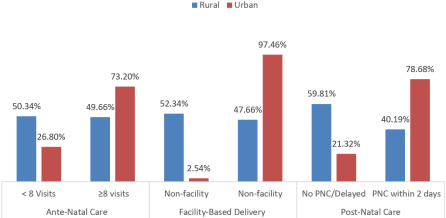
Figure 1 shows that, rural respondents, 50.34% had fewer than eight antenatal care visits, while 49.66% had eight or more visits. Among urban respondents, 26.80% had fewer than eight visits, while 73.20% had eight or more visits. More also, more than half of the rural respondents (52.34%) had non-facility deliveries, while 47.66% delivered in a health facility. In urban areas, 2.54% had non-facility deliveries, whereas 97.46% delivered in a health facility.
Additionally, 59.81% of rural respondents had no postnatal care or received care after two days, while 40.19% received postnatal care within two days of delivery. However, among urban respondents, 21.32% had no postnatal care or received care after two days, while 78.68% received postnatal care within two days.
Figure 1. Percentage distribution of maternal health utilization by place of residence.
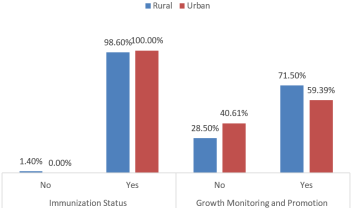
Figure 2 presents the distribution of immunization status and growth monitoring and promotion (GMP) by place of residence. Immunization coverage was high in both rural and urban areas, with 98.60% of children in rural areas and 100.00% in urban areas having received immunization. Only 1.40% of children in rural areas had not received immunization, compared with 0.00% in urban areas.
For GMP, 71.50% of children in rural areas had received growth monitoring and promotion compared with 59.39% in urban areas. Conversely, 28.50% of children in rural areas had not received GMP, compared with 40.61% in urban areas.
Figure 2. Percentage Distribution of child health utilization by place of residents.
Table 2 presents the socioeconomic predictors of maternal health service utilization within rural and urban areas. Compared with women in the lower socioeconomic group, those in the higher socioeconomic group had higher odds of PNC utilization in both the unadjusted analysis (OR = 9.86, 95% CI: 3.42-28.42, p < 0.001) and adjusted analysis (AOR = 14.14, 95% CI: 3.86-51.81, p < 0.001). The corresponding associations with ANC were not statistically significant in the unadjusted (OR = 2.18, 95% CI: 0.89-5.34, p > 0.05) and adjusted analyses (AOR = 2.52, 95% CI: 0.69-9.22, p > 0.05). Similarly, the associations with place of delivery were not statistically significant in the unadjusted (OR = 1.67, 95% CI: 0.76-3.68, p > 0.05) and adjusted analyses (AOR = 1.84, 95% CI: 0.62-5.47, p > 0.05).
Women aged 20-24 years had higher odds of place of delivery in the unadjusted analysis (OR = 1.08, 95% CI: 1.01-1.15, p < 0.05), although the association was no longer statistically significant after adjustment (AOR = 1.06, 95% CI: 0.97-1.16, p > 0.05). Among those aged 25-29 years, the odds of place of delivery were also higher in the unadjusted analysis (OR = 1.12, 95% CI: 1.04-1.21, p < 0.01), while the adjusted association was not statistically significant (AOR = 1.10, 95% CI: 1.00-1.22, p > 0.05). Those aged 30-34 years had higher odds of place of delivery in both the unadjusted (OR = 1.15, 95% CI: 1.06-1.25, p < 0.001) and adjusted analyses (AOR = 1.13, 95% CI: 1.02-1.26, p < 0.05). The same age group had higher odds of PNC in the unadjusted (OR = 1.16, 95% CI: 1.05-1.29, p < 0.01) and adjusted analyses (AOR = 1.14, 95% CI: 1.01-1.29, p < 0.05). Those aged 35-39 years also had higher odds of place of delivery in the unadjusted (OR = 1.18, 95% CI: 1.07-1.31, p < 0.01) and adjusted analyses (AOR = 1.16, 95% CI: 1.03-1.31, p < 0.05), as well as higher odds of PNC in the unadjusted (OR = 1.19, 95% CI: 1.06-1.33, p < 0.01) and adjusted analyses (AOR = 1.17, 95% CI: 1.02-1.35, p < 0.05). The remaining age categories did not show statistically significant associations after adjustment (p > 0.05).
Compared with single women, married women had higher odds of ANC utilization in the unadjusted analysis (OR = 2.61, 95% CI: 1.21-5.64, p < 0.05) and after adjustment (AOR = 3.14, 95% CI: 1.29-7.65, p < 0.01). The associations with place of delivery and PNC were not statistically significant (p > 0.05).
Women with tertiary education did not differ significantly from those with secondary or lower education in ANC, place of delivery, or PNC utilization in either the unadjusted or adjusted analyses (p > 0.05). Similarly, neither being a student nor being employed was significantly associated with any of the three maternal health service outcomes after adjustment (p > 0.05).
Women whose spouses had tertiary education did not show statistically significant differences in ANC, place of delivery, or PNC utilization compared with those whose spouses had secondary or lower education (p > 0.05).
Women with 3-4 births did not differ significantly from those with 1-2 births in ANC, place of delivery, or PNC utilization (p > 0.05). However, women with five or more births had lower odds of PNC utilization in both the unadjusted analysis (OR = 0.42, 95% CI: 0.18-0.98, p < 0.05) and adjusted analysis (AOR = 0.37, 95% CI: 0.14-0.96, p < 0.05). The associations between parity and ANC or place of delivery were not statistically significant (p > 0.05).
Having two or more children under five years was not significantly associated with ANC, place of delivery, or PNC utilization in either the unadjusted or adjusted analyses (p > 0.05). Similarly, women with 2-3 or four or more pregnancies did not show statistically significant differences in any of the three maternal health service outcomes compared with those with one pregnancy (p > 0.05).
Table 2. Socioeconomic predictors of maternal health service utilization within rural and urban areas.
Variable | ANC | Place of delivery | PNC |
Unadjusted OR (95% CI) | Adjusted OR (95% CI) | Unadjusted OR (95% CI) | Adjusted OR (95% CI) | Unadjusted OR (95% CI) | Adjusted OR (95% CI) |
Socioeconomic Status |
Lower SES (Ref) | 1.00 | 1.00 | 1.00 | 1.00 | 1.00 | 1.00 |
Higher SES | 2.18 (0.89-5.34) | 2.52 (0.69-9.22) | 1.67 (0.76-3.68) | 1.84 (0.62-5.47) | 9.86 (3.42-28.42)*** | 14.14 (3.86-51.81)*** |
Age |
15-19 (Ref.) | 0.99 (0.95-1.04) | 0.98 (0.91-1.05) | 1.02 (0.97-1.07) | 1.01 (0.96-1.07) | 1.05 (1.00-1.10)* | 1.06 (1.00-1.13) |
20-24 | 1.01 (0.96-1.07) | 1.00 (0.94-1.07) | 1.08 (1.01-1.15)* | 1.06 (0.97-1.16) | 1.09 (1.01-1.18)* | 1.08 (0.98-1.19) |
25-29 | 1.03 (0.97-1.10) | 1.02 (0.95-1.10) | 1.12 (1.04-1.21)** | 1.10 (1.00-1.22) | 1.12 (1.02-1.23)* | 1.11 (0.99-1.25) |
30-34 | 1.05 (0.98-1.13) | 1.04 (0.96-1.13) | 1.15 (1.06-1.25)*** | 1.13 (1.02-1.26)* | 1.16 (1.05-1.29)** | 1.14 (1.01-1.29)* |
35-39 | 1.07 (0.99-1.16) | 1.06 (0.96-1.17) | 1.18 (1.07-1.31)** | 1.16 (1.03-1.31)* | 1.19 (1.06-1.33)** | 1.17 (1.02-1.35)* |
40-44 | 1.02 (0.92-1.13) | 1.01 (0.89-1.15) | 1.11 (0.98-1.26) | 1.09 (0.94-1.27) | 1.13 (0.98-1.30) | 1.10 (0.92-1.32) |
Marital Status |
Single (Ref) | 1.00 | 1.00 | 1.00 | 1.00 | 1.00 | 1.00 |
Married | 2.61 (1.21-5.64)* | 3.14 (1.29-7.65)** | 0.72 (0.38-1.38) | 0.61 (0.30-1.23) | 1.08 (0.56-2.09) | 1.03 (0.48-2.19) |
Respondent's education |
≤Secondary (Ref) | 1.00 | 1.00 | 1.00 | 1.00 | 1.00 | 1.00 |
Tertiary | 0.52 (0.21-1.29) | 0.38 (0.09-1.56) | 0.67 (0.31-1.46) | 0.59 (0.19-1.81) | 1.21 (0.47-3.12) | 1.05 (0.31-3.53) |
Employment Status |
Unemployed (Ref) | 1.00 | 1.00 | 1.00 | 1.00 | 1.00 | 1.00 |
Student | 0.87 (0.47-1.60) | 0.82 (0.40-1.69) | 0.74 (0.43-1.28) | 0.69 (0.37-1.29) | 0.91 (0.49-1.70) | 0.88 (0.43-1.80) |
Employed | 0.94 (0.57-1.55) | 0.90 (0.50-1.65) | 0.81 (0.52-1.27) | 0.77 (0.47-1.27) | 1.07 (0.66-1.74) | 1.02 (0.59-1.75) |
Spouse's Education |
≤Secondary (Ref) | 1.00 | 1.00 | 1.00 | 1.00 | 1.00 | 1.00 |
Tertiary | 0.78 (0.38-1.59) | 0.72 (0.29-1.79) | 1.55 (0.82-2.93) | 1.72 (0.81-3.62) | 0.94 (0.47-1.87) | 0.89 (0.39-2.03) |
Parity |
1-2 (Ref) | 1.00 | 1.00 | 1.00 | 1.00 | 1.00 | 1.00 |
3-4 | 0.71 (0.36-1.40) | 0.68 (0.27-1.72) | 1.09 (0.57-2.08) | 1.18 (0.52-2.66) | 0.56 (0.27-1.16) | 0.50 (0.20-1.27) |
5+ | 0.58 (0.28-1.21) | 0.49 (0.19-1.25) | 0.84 (0.40-1.76) | 0.78 (0.33-1.84) | 0.42 (0.18-0.98)* | 0.37 (0.14-0.96)* |
Number of under-five children |
1 (Ref) | 1.00 | 1.00 | 1.00 | 1.00 | 1.00 | 1.00 |
2+ | 0.84 (0.40-1.76) | 0.80 (0.31-2.06) | 0.63 (0.31-1.27) | 0.55 (0.24-1.22) | 0.55 (0.28-1.09) | 0.51 (0.20-1.31) |
Gravida |
1 (Ref) | 1.00 | 1.00 | 1.00 | 1.00 | 1.00 | 1.00 |
2-3 | 0.91 (0.49-1.70) | 0.96 (0.43-2.13) | 1.32 (0.76-2.30) | 1.43 (0.77-2.66) | 0.78 (0.43-1.42) | 0.74 (0.37-1.45) |
4+ | 0.69 (0.34-1.39) | 0.61 (0.26-1.43) | 1.46 (0.78-2.73) | 1.58 (0.77-3.24) | 0.71 (0.37-1.37) | 0.65 (0.30-1.40) |
OR = odds ratio; CI = confidence interval; Ref. = reference category. *p<0.05, **p<0.01, **p<0.001.
Table 3 presents the socioeconomic predictors of child health service utilization within rural and urban areas for immunization ansd growth monitoring and promotion (GMP). The findings show that higher socioeconomic status was associated with higher odds of immunization utilization compared with lower socioeconomic status, with the odds increasing from 2.61 in the unadjusted model to 2.96 in the adjusted model. A similar pattern was observed for GMP, where higher socioeconomic status was associated with increased odds of utilization in both the unadjusted and adjusted models (OR = 2.88 and 3.35, respectively),
For age, respondents aged 20-24 years had slightly higher odds of immunization utilization than those aged 15-19 years in both the unadjusted and adjusted models (OR = 1.03 and 1.06, respectively), but the confidence intervals included 1.00. Similar non-significant associations were observed among respondents aged 25-29, 30-34, 35-39, and 40-44 years for immunization. For GMP utilization, respondents aged 25-29 years had significantly higher odds of utilization in both the unadjusted and adjusted models (OR = 1.15, 95% CI: 1.04-1.27 and OR = 1.17, 95% CI: 1.08-1.27, respectively). Respondents aged 30-34 years also had significantly higher odds of GMP utilization compared with those aged 15-19 years, with adjusted odds of 1.24 (95% CI: 1.08-1.43). The associations for respondents aged 20-24, 35-39, and 40-44 years were not statistically significant.
Marital status showed lower odds of immunization utilization among married respondents compared with single respondents in both models. The odds were 0.08 (95% CI: 0.005-1.31) in the unadjusted model and 0.05 (95% CI: 0.003-8.28) in the adjusted model. However, neither association was statistically significant. For GMP utilization, married respondents had higher odds than single respondents in both the unadjusted and adjusted models (OR = 2.01 and 2.42, respectively), but the confidence intervals were wide and included 1.00.
Respondents with tertiary education had slightly higher odds of immunization utilization compared with those with secondary or lower education in both models (OR = 1.14 and 1.09, respectively). Similarly, tertiary education was associated with lower odds of utilization in the unadjusted and adjusted models (OR = 0.67 and 0.62, respectively).
Employment status also showed no statistically significant association with either immunization or GMP utilization. Students had lower odds of immunization utilization than unemployed respondents in both models, with the adjusted OR declining to 0.15 (95% CI: 0.008-2.64). Students also had lower odds of GMP utilization in the adjusted model (OR = 0.71, 95% CI: 0.23-2.21). Employed respondents had slightly lower odds of both immunization and GMP utilization compared with unemployed respondents, although the confidence intervals included 1.00.
For spouse's education, respondents whose spouses had tertiary education had slightly higher odds of immunization utilization in the unadjusted model (OR = 1.11) and adjusted model (OR = 1.05) compared with those whose spouses had secondary or lower education. A similar pattern was observed for GMP utilization in the unadjusted model (OR = 1.09), while the adjusted model produced an OR of 1.02. None of these associations was statistically significant.
Parity was not significantly associated with either immunization or GMP utilization. Respondents with parity of 3-4 had lower odds of immunization utilization than those with parity of 1-2 in both the unadjusted and adjusted models (OR = 0.89 and 0.84, respectively). Those with parity of 5 or more also had lower odds, with the adjusted OR being 0.66 (95% CI: 0.23-1.91). For GMP, the adjusted odds were 0.86 (95% CI: 0.41-1.81) among those with parity of 3-4 and 0.51 (95% CI: 0.21-1.24) among those with parity of 5 or more.
The number of under-five children was not significantly associated with either outcome. Respondents with two or more under-five children had lower odds of immunization utilization compared with those with one child (adjusted OR = 0.84, 95% CI: 0.32-2.19). In contrast, they had slightly higher odds of GMP utilization in the adjusted model (OR = 1.23, 95% CI: 0.71-2.13).
Similarly, gravida was not significantly associated with immunization or GMP utilization. Respondents with 2-3 pregnancies had lower odds of immunization utilization than those with one pregnancy (adjusted OR = 0.82, 95% CI: 0.35-1.93), while those with four or more pregnancies had an adjusted OR of 0.64 (95% CI: 0.23-1.80). For GMP utilization, the adjusted odds were 0.87 (95% CI: 0.42-1.81) among respondents with 2-3 pregnancies and 0.69 (95% CI: 0.31-1.53) among those with four or more pregnancies.
Table 3. Socioeconomic predictors of child health service utilization within rural and urban areas.
Variable | Immunization | GMP |
Unadjusted OR (95% CI) | Adjusted OR (95% CI) | Unadjusted OR (95% CI) | Adjusted OR (95% CI) |
Socioeconomic Status |
Lower SES (Ref) | 1.00 | 1.00 | 1.00 | 1.00 |
Higher SES | 2.61 (0.76-8.96) | 2.96 (0.72-12.16) | 2.88 (0.68-12.22) | 3.35 (0.52-21.58) |
Age |
15-19 (Ref.) | 1.00 | 1.00 | 1.00 | 1.00 |
20-24 | 1.03 (0.82-1.30) | 1.06 (0.84-1.34) | 1.10 (0.94-1.28) | 1.12 (0.93-1.35) |
25-29 | 1.04 (0.81-1.34) | 1.07 (0.83-1.38) | 1.15 (1.04-1.27)*** | 1.17 (1.08-1.27)*** |
30-34 | 1.08 (0.80-1.45) | 1.10 (0.81-1.50) | 1.22 (1.07-1.39)** | 1.24 (1.08-1.43)** |
35-39 | 1.13 (0.81-1.58) | 1.16 (0.79-1.69) | 1.68 (0.79-3.58) | 1.76 (0.74-4.14) |
40-44 | 1.09 (0.72-1.65) | 1.07 (0.67-1.72) | 1.31 (0.98-1.75) | 1.28 (0.91-1.81) |
Marital Status |
Single (Ref) | 1.00 | 1.00 | 1.00 | 1.00 |
Married | 0.08 (0.005-1.31) | 0.05 (0.003-8.28) | 2.01 (0.39-10.29) | 2.42 (0.24-24.24) |
Respondent's education |
≤Secondary (Ref) | 1.00 | 1.00 | 1.00 | 1.00 |
Tertiary | 1.14 (0.38-3.42) | 1.09 (0.44-2.68) | 0.67 (0.20-2.21) | 0.62 (0.16-2.43) |
Employment Status |
Unemployed (Ref) | 1.00 | 1.00 | 1.00 | 1.00 |
Student | 0.19 (0.02-2.18) | 0.15 (0.008-2.64) | 0.76 (0.28-2.05) | 0.71 (0.23-2.21) |
Employed | 0.92 (0.45-1.89) | 0.89 (0.43-1.84) | 0.85 (0.38-1.90) | 0.81 (0.34-1.95) |
Spouse's Education |
≤Secondary (Ref) | 1.00 | 1.00 | 1.00 | 1.00 |
Tertiary | 1.11 (0.48-2.57) | 1.05 (0.39-2.84) | 1.09 (0.52-2.28) | 1.02 (0.44-2.36) |
Parity |
1-2 (Ref) | 1.00 | 1.00 | 1.00 | 1.00 |
3-4 | 0.89 (0.42-1.88) | 0.84 (0.35-2.01) | 0.91 (0.47-1.77) | 0.86 (0.41-1.81) |
5+ | 0.72 (0.28-1.85) | 0.66 (0.23-1.91) | 0.58 (0.27-1.25) | 0.51 (0.21-1.24) |
Number of under-five children |
1 (Ref) | 1.00 | 1.00 | 1.00 | 1.00 |
2+ | 0.91 (0.39-2.14) | 0.84 (0.32-2.19) | 1.18 (0.72-1.93) | 1.23 (0.71-2.13) |
Gravida |
1 (Ref) | 1.00 | 1.00 | 1.00 | 1.00 |
2-3 | 0.88 (0.42-1.85) | 0.82 (0.35-1.93) | 0.91 (0.49-1.69) | 0.87 (0.42-1.81) |
4+ | 0.71 (0.29-1.75) | 0.64 (0.23-1.80) | 0.76 (0.38-1.54) | 0.69 (0.31-1.53) |
The results in
Table 4 show that women with higher socioeconomic status in rural areas were more likely (AOR = 14.25; 95% CI = 3.61–56.17, p < 0.001) to receive early postnatal care than women with lower socioeconomic status. Similarly, married women were more likely (AOR = 3.70; 95% CI = 1.31–10.45, p = 0.013) to complete at least eight antenatal care visits than single women. Women with parity of five or more were less likely (AOR = 0.07; 95% CI = 0.006–0.90, p = 0.041) to receive early postnatal care than women with parity of one to two.
Table 4. Factors Associated with Maternal Health Service Utilisation in Rural and Urban Areas of Bayelsa State, Nigeria.
Variables | ANC | Place of Delivery | PNC |
Rural AOR (95% CI) | Urban AOR (95% CI) | Rural AOR (95% CI) | Urban AOR (95% CI) | Rural AOR (95% CI) | Urban AOR (95% CI) |
Socioeconomic status |
Lower SES (Ref.) | 1.00 | 1.00 | 1.00 | 1.00 | 1.00 | 1.00 |
Higher SES | 2.97 (0.74–11.95) | 6.63 (2.05–21.38)** | 2.31 (0.70–7.59) | 4.43 (1.42–13.82)* | 14.25 (3.61–56.17)*** | 28.45 (8.13–99.49)*** |
Age group (years) |
15–19 (Ref.) | 1.00 | 1.00 | 1.00 | 1.00 | 1.00 | 1.00 |
20–24 | 0.65 (0.18–2.31) | 0.73 (0.21–2.52) | 1.11 (0.38–3.22) | 0.99 (0.34–2.87) | 0.99 (0.32–3.13) | 0.92 (0.29–2.94) |
25–29 | 1.34 (0.21–8.60) | 2.57 (0.46–14.54) | 0.38 (0.08–1.74) | 0.27 (0.06–1.23) | 0.54 (0.10–2.78) | 0.30 (0.06–1.47) |
30–34 | 0.14 (0.01–1.35) | 0.48 (0.07–3.34) | 0.53 (0.10–2.91) | 0.35 (0.07–1.83) | 0.65 (0.11–3.91) | 0.36 (0.06–2.03) |
35–39 | 0.33 (0.03–3.40) | 0.52 (0.07–3.87) | 0.93 (0.16–5.31) | 0.48 (0.08–2.69) | 0.87 (0.14–5.47) | 0.08 (0.01–0.50)** |
40–44 | 0.64 (0.05–8.56) | 0.45 (0.05–4.10) | 0.65 (0.09–4.58) | 0.18 (0.03–1.33) | 2.48 (0.31–20.07) | 0.34 (0.04–2.59) |
45–49 | 0.18 (0.01–3.26) | 0.15 (0.01–1.76) | 0.49 (0.05–5.10) | 0.07 (0.01–0.74)* | 3.50 (0.23–53.87) | 2.29 (0.14–37.66) |
Marital status |
Single (Ref.) | 1.00 | 1.00 | 1.00 | 1.00 | 1.00 | 1.00 |
Married | 3.70 (1.31–10.45)* | 0.72 (0.36–1.42) | 0.59 (0.28–1.24) | 0.80 (0.41–1.57) | 1.27 (0.57–2.81) | 0.93 (0.49–1.76) |
Respondent’s education |
≤ Secondary (Ref.) | 1.00 | 1.00 | 1.00 | 1.00 | 1.00 | 1.00 |
Tertiary | 0.39 (0.09–1.73) | 0.68 (0.22–2.05) | 0.54 (0.17–1.70) | 0.51 (0.16–1.64) | 0.88 (0.24–3.20) | 0.30 (0.09–1.07) |
Employment status |
Unemployed (Ref.) | 1.00 | 1.00 | 1.00 | 1.00 | 1.00 | 1.00 |
Employed | 0.59 (0.13–2.67) | 0.27 (0.06–1.22) | 0.39 (0.13–1.17) | 0.30 (0.10–0.91)* | 0.40 (0.13–1.23) | 0.23 (0.07–0.77)* |
Spouse’s education |
≤ Secondary (Ref.) | 1.00 | 1.00 | 1.00 | 1.00 | 1.00 | 1.00 |
Tertiary | 0.73 (0.26–2.02) | 0.61 (0.27–1.38) | 1.53 (0.69–3.39) | 1.58 (0.72–3.48) | 0.83 (0.34–2.07) | 0.32 (0.13–0.82)* |
Parity |
1–2 (Ref.) | 1.00 | 1.00 | 1.00 | 1.00 | 1.00 | 1.00 |
3–4 | 0.71 (0.21–2.40) | 0.86 (0.43–1.74) | 1.15 (0.41–3.22) | 1.12 (0.43–2.90) | 0.28 (0.08–1.02) | 0.86 (0.37–2.01) |
5+ | 0.60 (0.07–5.08) | 0.52 (0.11–2.35) | 1.08 (0.16–7.33) | 0.77 (0.11–5.17) | 0.07 (0.006–0.90)* | 0.003 (0.0004–0.025)*** |
Number of under-five children |
1 (Ref.) | 1.00 | 1.00 | 1.00 | 1.00 | 1.00 | 1.00 |
2+ | 0.53 (0.18–1.54) | 1.15 (0.56–2.37) | 0.58 (0.25–1.37) | 0.91 (0.41–2.04) | 0.72 (0.26–1.97) | 1.49 (0.71–3.15) |
Gravidity |
1 (Ref.) | 1.00 | 1.00 | 1.00 | 1.00 | 1.00 | 1.00 |
2–3 | 1.63 (0.52–5.14) | 0.74 (0.33–1.67) | 1.72 (0.77–3.88) | 1.53 (0.72–3.23) | 0.56 (0.23–1.32) | 1.70 (0.83–3.52) |
4+ | 0.65 (0.10–4.06) | 0.50 (0.17–1.49) | 2.21 (0.55–8.90) | 2.54 (0.71–9.10) | 0.86 (0.18–4.16) | 9.41 (2.51–35.31)** |
The data as shown in
Table 5 revealed that higher socioeconomic status was not significantly associated with immunization card ownership among rural respondents (AOR = 1.78; 95% CI = 0.56–5.63, p = 0.328) or urban respondents (AOR = 0.96; 95% CI = 0.05–17.94, p = 0.981) compared with respondents of lower socioeconomic status. Similarly, married respondents were not significantly more likely to have an immunization card than unmarried respondents in rural areas (AOR = 1.19; 95% CI = 0.58–2.44, p = 0.628) or urban areas (AOR = 1.38; 95% CI = 0.28–6.74, p = 0.687).
For GMP, the data revealed that respondents aged 25–29 years were more likely to utilize GMP than those aged 15–19 years in rural areas (AOR = 5.42; 95% CI = 1.14–25.79, p = 0.034). Similarly, respondents aged 35–39 years were more likely to utilize GMP than those aged 15–19 years in rural areas (AOR = 7.03; 95% CI = 1.09–45.42, p = 0.040). Respondents aged 40–44 years were also more likely to utilize GMP than those aged 15–19 years in rural areas (AOR = 108.81; 95% CI = 3.01–3932.30, p = 0.010). In urban areas, respondents aged 25–29 years (AOR = 4.71; 95% CI = 1.07–20.64, p < 0.05), 35–39 years (AOR = 5.84; 95% CI = 1.01–33.85, p < 0.05) and 40–44 years (AOR = 36.11; 95% CI = 2.11–617.25, p < 0.05) were more likely to utilize GMP than those aged 15–19 years.
The data further revealed that gravidity was significantly associated with GMP utilization among rural respondents. Women who had been pregnant four or more times were more likely to utilize GMP than women who had been pregnant once (AOR = 11.38; 95% CI = 1.01–128.60, p = 0.049). However, gravidity was not significantly associated with GMP utilization among urban respondents (AOR = 6.31; 95% CI = 0.84–47.49, p = 0.074).
Table 5. Factors Associated with Child Health Utilization in Rural and Urban Areas of Bayelsa State, Nigeria.
Variables | Immunization | GMP |
Rural AOR (95% CI) | Urban AOR (95% CI) | Rural AOR (95% CI) | Urban AOR (95% CI) |
Socioeconomic status |
Lower SES (Ref.) | 1.00 | 1.00 | 1.00 | 1.00 |
Higher SES | 0.86 (0.23–3.16) | 11.50 (4.07–32.47)*** | 1.32 (0.29–6.01) | 5.75 (2.52–13.12)*** |
Age group (years) |
15–19 (Ref.) | 1.00 | 1.00 | 1.00 | 1.00 |
20–24 | 1.11 (0.39–3.12) | 11.35 (0.32–405.44) | 2.23 (0.69–7.19) | 2.12 (0.69–6.52) |
25–29 | 2.13 (0.51–8.84) | 0.86 (0.09–8.22) | 5.42 (1.14–25.79)* | 4.71 (1.07–20.64)* |
30–34 | 2.65 (0.52–13.59) | 1.47 (0.21–10.30) | 5.04 (0.83–30.65) | 4.39 (0.79–24.35) |
35–39 | 1.62 (0.31–8.61) | 1.02 (0.25–4.13) | 7.03 (1.09–45.42)* | 5.84 (1.01–33.85)* |
40–44 | 2.03 (0.31–13.24) | 7.33 (0.64–83.76) | 108.81 (3.01–3932.30)* | 36.11 (2.11–617.25)* |
Marital status |
Not married (Ref.) | 1.00 | 1.00 | 1.00 | 1.00 |
Married | 1.19 (0.58–2.44) | 1.38 (0.28–6.74) | 1.95 (0.87–4.37) | 1.82 (0.85–3.90) |
Education |
≤ Secondary (Ref.) | 1.00 | 1.00 | 1.00 | 1.00 |
Tertiary | 1.26 (0.40–3.90) | 0.67 (0.14–3.09) | 0.21 (0.04–1.17) | 0.30 (0.07–1.33) |
Spouse's education |
≤ Secondary (Ref.) | 1.00 | 1.00 | 1.00 | 1.00 |
Tertiary | 1.22 (0.55–2.71) | 0.76 (0.04–13.81) | 0.82 (0.32–2.12) | 0.83 (0.34–2.04) |
Parity |
1–2 (Ref.) | 1.00 | 1.00 | 1.00 | 1.00 |
3–4 | 1.45 (0.52–4.02) | 1.05 (0.26–4.25) | 0.87 (0.24–3.18) | 0.89 (0.27–2.98) |
5+ | 2.89 (0.45–18.67) | 0.91 (0.42–1.95) | 0.04 (0.00–2.37) | 0.10 (0.003–3.32) |
Number of children under five |
One child (Ref.) | 1.00 | 1.00 | 1.00 | 1.00 |
2+ | 0.77 (0.33–1.80) | 1.49 (0.38–5.81) | 0.52 (0.19–1.40) | 0.56 (0.22–1.41) |
Gravidity |
1 (Ref.) | 1.00 | 1.00 | 1.00 | 1.00 |
2–3 | 0.63 (0.28–1.40) | 0.73 (0.20–2.70) | 1.14 (0.49–2.68) | 1.15 (0.51–2.60) |
4+ | 0.27 (0.07–1.07) | 0.70 (0.11–4.69) | 11.38 (1.01–128.60)* | 6.31 (0.84–47.49) |
4. Discussion
The findings show that socioeconomic status was associated with some maternal health services but not all outcomes. Women in the higher socioeconomic group had substantially higher odds of postnatal care utilization than those in the lower socioeconomic group, and this association remained statistically significant after adjustment. In contrast, socioeconomic status was not independently associated with antenatal care or place of delivery. For child health services, higher socioeconomic status was associated with greater odds of immunization and growth monitoring and promotion, but these associations were not statistically significant after adjustment. These findings suggest that socioeconomic inequalities may be more pronounced at particular points along the maternal and child health service continuum than across all services.
The strong association between socioeconomic status and postnatal care is consistent with evidence from sub-Saharan Africa. Fetene et al.
| [20] | Sibeudu FT, Uzochukwu BSC, Onwujekwe OE. Rural-urban comparison of routine immunization utilization and its determinants in communities in Anambra State, Nigeria. SAGE Open Medicine. 2019; 7.
https://doi.org/10.1177/2050312118823893 |
[20]
reported socioeconomic inequalities in postnatal care utilization across sub-Saharan African countries with high maternal mortality, with disadvantaged women experiencing lower utilization. Similarly, analyses of maternal healthcare in sub-Saharan Africa have shown that socioeconomic and other barriers can affect continuity of care after initial contact with health services
| [21] | Balaj M, York HW, Sripada K, Besnier E, Vonen HD, Aravkin A, et al. Parental education and inequalities in child mortality: a global systematic review and meta-analysis. The Lancet. 2021; 398(10300): 608–620. |
| [3] | Kawakatsu Y, Adolph C, Mosser JF, Baffoe P, Cheshi F, Aiga H, et al. Factors consistently associated with utilisation of essential maternal and child health services in Nigeria: analysis of the five Nigerian national household surveys (2003–2018). BMJ Open. 2022; 12(9): e061747.
https://doi.org/10.1136/bmjopen-2022-061747 |
[21, 3]
. The particularly strong association observed for postnatal care in the present study may reflect the additional financial and practical demands associated with returning to a health facility after childbirth. Women with greater household resources may have fewer constraints related to transport, service costs and other indirect costs of seeking care.
The absence of a statistically significant association between socioeconomic status and antenatal care differs from evidence showing a clear socioeconomic gradient in ANC utilization in sub-Saharan Africa. Obse and Ataguba
| [6] | Wang HF, Frasco E, Takesue R, Tang K. Maternal education level and maternal healthcare utilisation in the Democratic Republic of the Congo: an analysis of the multiple indicator cluster survey 2017/18. BMC Health Services Research. 2021; 21: 850. |
[6]
reported socioeconomic disparities in antenatal care utilization across sub-Saharan African countries. Nwosu and Ataguba
| [5] | Nwosu CO, Ataguba JE. Socioeconomic inequalities in maternal health service utilisation: a case of antenatal care in Nigeria using a decomposition approach. BMC Public Health. 2019; 19: 1493. https://doi.org/10.1186/s12889-019-7840-8 |
[5]
also documented socioeconomic inequalities in ANC utilization in Nigeria, including differences associated with household wealth and place of residence. The difference may partly be explained by the characteristics of the present study population, which comprised women attending public primary healthcare facilities. Access to ANC through these facilities may reduce some financial barriers and narrow socioeconomic differences, particularly where maternal services are available within the community
| [21] | Balaj M, York HW, Sripada K, Besnier E, Vonen HD, Aravkin A, et al. Parental education and inequalities in child mortality: a global systematic review and meta-analysis. The Lancet. 2021; 398(10300): 608–620. |
[21]
.
Similarly, socioeconomic status was not independently associated with place of delivery after adjustment. This finding contrasts with evidence from Nigeria and other sub-Saharan African settings, where wealth and other socioeconomic characteristics are associated with facility-based delivery. Studies have documented geographical and socioeconomic inequalities in maternal healthcare utilization, with disadvantaged women less likely to use recommended services
| [8] | Adewuyi EO, Auta A, Adewuyi MI, Philip AA, Olutuase V, Zhao Y, et al. Antenatal care utilisation and receipt of its components in Nigeria: assessing disparities between rural and urban areas—a nationwide population-based study. PLOS ONE. 2024; 19(7): e0307316.
https://doi.org/10.1371/journal.pone.0307316 |
| [9] | Bain LE, Amu H, Nkoke C, Awungafac G. Socioeconomic inequalities in maternal healthcare utilisation in sub-Saharan Africa: a systematic review. BMJ Open. 2022; 12(1): e049885. https://doi.org/10.1136/bmjopen-2021-049885 |
[8, 9]
. The lack of an independent association in the present study may indicate that the observed relationship between socioeconomic status and place of delivery was partly explained by other characteristics, including age, marital status, education and reproductive history. The restriction of the study to women using public PHCs may also have reduced socioeconomic differences in access to delivery services.
For child health services, higher socioeconomic status was associated with greater odds of immunization and growth monitoring and promotion, although neither association reached statistical significance. The high level of immunization utilization observed in both rural and urban areas may have contributed to the absence of a clear socioeconomic gradient. When coverage is already high, differences between socioeconomic groups may become smaller, leaving limited variation for household economic position to explain. Evidence from Nigeria shows that the factors associated with maternal and child health service utilization vary across services and population groups
| [6] | Wang HF, Frasco E, Takesue R, Tang K. Maternal education level and maternal healthcare utilisation in the Democratic Republic of the Congo: an analysis of the multiple indicator cluster survey 2017/18. BMC Health Services Research. 2021; 21: 850. |
[6]
. Broader evidence from sub-Saharan Africa also shows that inequalities in access to and use of maternal, newborn and child health services differ across settings and service types
| [8] | Adewuyi EO, Auta A, Adewuyi MI, Philip AA, Olutuase V, Zhao Y, et al. Antenatal care utilisation and receipt of its components in Nigeria: assessing disparities between rural and urban areas—a nationwide population-based study. PLOS ONE. 2024; 19(7): e0307316.
https://doi.org/10.1371/journal.pone.0307316 |
[8]
.
The non-significant association between socioeconomic status and growth monitoring and promotion may also reflect factors beyond household resources. Unlike immunization, which is supported by established schedules and routine outreach activities, continued participation in growth monitoring may depend on caregivers' knowledge, perceptions of child growth, contact with health workers and the perceived value of the service. Research in Nigeria has identified gaps in the availability and utilization of growth-monitoring services, suggesting that service access and caregiver-related factors may influence participation
| [21] | Balaj M, York HW, Sripada K, Besnier E, Vonen HD, Aravkin A, et al. Parental education and inequalities in child mortality: a global systematic review and meta-analysis. The Lancet. 2021; 398(10300): 608–620. |
[21]
. Thus, economic advantage alone may not be sufficient to ensure regular use of GMP. This may explain why the higher odds observed among women with higher socioeconomic status did not remain statistically conclusive after adjustment.
The findings also show that some demographic and reproductive characteristics were associated with maternal health utilization. Women aged 30–34 and 35–39 years had higher adjusted odds of facility delivery and postnatal care than the youngest age group. Married women were also more likely to utilize ANC than single women. In contrast, women with five or more previous births had lower odds of postnatal care utilization. These findings suggest that utilization is influenced by the interaction of socioeconomic circumstances with reproductive experience and household characteristics. Older women may have greater experience with pregnancy and childbirth and may be more familiar with available health services, while women with higher parity may face greater childcare and household responsibilities that make postnatal visits more difficult.
5. Conclusion
This study assessed maternal and child health service utilization among women attending selected public primary healthcare facilities in Bayelsa State, with particular attention to rural–urban differences and socioeconomic factors. The findings show clear differences in maternal health service utilization between rural and urban areas. Urban women had higher utilization of antenatal care, facility delivery, and timely postnatal care, while child immunization coverage was high in both areas. Growth monitoring and promotion was also utilized by a substantial proportion of children, although utilization remained uneven across the study population.
The study further showed that socioeconomic status did not influence all health services in the same way. Higher socioeconomic status was strongly associated with postnatal care utilization after adjustment for other characteristics, while its associations with antenatal care and facility delivery were not statistically significant. Higher socioeconomic status was also associated with greater odds of immunization and growth monitoring and promotion, although these associations did not remain statistically significant after adjustment. Other factors, including age, marital status, and parity, were associated with selected maternal health outcomes.
The study concludes that improving maternal and child health service utilization in Bayelsa State requires attention to both geographical and socioeconomic inequalities. Particular attention is needed for rural women and women from lower socioeconomic groups, especially in improving continued use of postnatal services. Strengthening accessible and responsive primary healthcare services, reducing barriers to follow-up care, and ensuring that disadvantaged women can maintain contact with maternal and child health services may help to reduce existing inequalities.
6. Strengths and Limitations
This study provides useful evidence on maternal and child health service utilization among women attending public primary healthcare facilities in Bayelsa State. A major strength is the inclusion of both urban and rural populations, allowing differences in service utilization to be examined across geographical settings. The study also assessed several maternal and child health outcomes and considered socioeconomic, demographic, and reproductive characteristics using both bivariate and multivariable analyses. The use of probability sampling across selected primary healthcare facilities further strengthens the representativeness of the study population within the selected facilities.
However, the cross-sectional design limits the ability to establish causal relationships between socioeconomic characteristics and health service utilization. The study also relied partly on self-reported information, which may be affected by recall or social desirability bias. The restriction of the study to women attending selected public primary healthcare facilities may limit generalizability to women who do not use public facilities, those who obtain care from private facilities, and women who do not attend maternal health services. In addition, some factors that may influence utilization, such as cultural beliefs, household decision-making, partner support, perceived quality of care, transportation difficulties, and community-level influences, were not fully assessed. The findings should therefore be interpreted within the context of the study population and setting.
7. Practical Implications
The findings highlight the need to strengthen maternal and child health services in rural communities in Bayelsa State, particularly services that require continued contact with the health system after childbirth. Primary healthcare programmes should place greater emphasis on improving timely postnatal care and reducing barriers that may prevent women from returning to health facilities after delivery.
Health facilities should strengthen follow-up and health education during antenatal and delivery contacts so that women receive clear information on the importance and timing of postnatal care. Outreach and community-based follow-up may be particularly useful for women who face transportation, financial, or geographical barriers to returning to facilities. Services should also be organized to minimize indirect costs and other practical barriers that may disproportionately affect women from lower socioeconomic groups.
The high level of immunization utilization observed in both rural and urban areas should be sustained through routine immunization and community outreach activities. At the same time, growth monitoring and promotion should receive greater attention through improved caregiver education, regular monitoring, and effective communication by healthcare workers. Interventions should prioritize communities with lower service utilization while maintaining the gains already achieved in services with high coverage.
Health planners and primary healthcare managers should also consider the rural–urban and socioeconomic differences identified in this study when allocating resources and designing maternal and child health programmes. Strengthening community-based services, improving continuity of care, and ensuring equitable access to essential maternal and child health services may help reduce the observed disparities in Bayelsa State.
Abbreviations
ANC | Antenatal Care |
PNC | Postnatal Care |
PHC | Primary Health Care |
GMP | Growth Monitoring and Promotion |
SES | Socioeconomic Status |
OR | Odds Ratio |
AOR | Adjusted Odds Ratio |
CI | Confidence Interval |
LGA | Local Government Area |
MCH | Maternal and Child Health |
Author Contributions
Tebepah Ineukiye Ebi: Conceptualization, Methodology, Writing – original draft, Writing – review & editing
Queen Desmond Atuzie: Conceptualization, Methodology
Olatunde Raimi: Formal Analysis, Methodology, Visualization, Writing – review & editing
Anthony Ike Wegbom: Conceptualization, Formal Analysis, Methodology, Supervision, Visualization, Writing – review & editing
Conflicts of Interest
The authors declare no conflicts of interest.
References
| [1] |
World Health Organization. Social determinants of health. Geneva: World Health Organization; 2021. Available from:
https://www.who.int/health-topics/social-determinants-of-health
|
| [2] |
Adedokun ST, Uthman OA, Bisiriyu LA. Determinants of partial and adequate maternal health services utilization in Nigeria: analysis of cross-sectional survey. BMC Pregnancy and Childbirth. 2023; 23: 457.
https://doi.org/10.1186/s12884-023-05712-4
|
| [3] |
Kawakatsu Y, Adolph C, Mosser JF, Baffoe P, Cheshi F, Aiga H, et al. Factors consistently associated with utilisation of essential maternal and child health services in Nigeria: analysis of the five Nigerian national household surveys (2003–2018). BMJ Open. 2022; 12(9): e061747.
https://doi.org/10.1136/bmjopen-2022-061747
|
| [4] |
Victora CG, Bahl R, Barros AJD, França GVA, Horton S, Krasevec J, et al. Breastfeeding in the 21st century: epidemiology, mechanisms, and lifelong effect. The Lancet. 2016; 387(10017): 475–490.
https://doi.org/10.1016/S0140-6736(15)01024-7
|
| [5] |
Nwosu CO, Ataguba JE. Socioeconomic inequalities in maternal health service utilisation: a case of antenatal care in Nigeria using a decomposition approach. BMC Public Health. 2019; 19: 1493.
https://doi.org/10.1186/s12889-019-7840-8
|
| [6] |
Wang HF, Frasco E, Takesue R, Tang K. Maternal education level and maternal healthcare utilisation in the Democratic Republic of the Congo: an analysis of the multiple indicator cluster survey 2017/18. BMC Health Services Research. 2021; 21: 850.
|
| [7] |
Okoli CI, Hajizadeh M, Rahman MM, Velayutham E, Khanam R. Geographical and socioeconomic inequalities in the utilization of maternal healthcare services in Nigeria: 2003–2017. BMC Health Services Research. 2020; 20: 849.
https://doi.org/10.1186/s12913-020-05700-w
|
| [8] |
Adewuyi EO, Auta A, Adewuyi MI, Philip AA, Olutuase V, Zhao Y, et al. Antenatal care utilisation and receipt of its components in Nigeria: assessing disparities between rural and urban areas—a nationwide population-based study. PLOS ONE. 2024; 19(7): e0307316.
https://doi.org/10.1371/journal.pone.0307316
|
| [9] |
Bain LE, Amu H, Nkoke C, Awungafac G. Socioeconomic inequalities in maternal healthcare utilisation in sub-Saharan Africa: a systematic review. BMJ Open. 2022; 12(1): e049885.
https://doi.org/10.1136/bmjopen-2021-049885
|
| [10] |
Egbewale BE, Oyedeji O, Bump J, Sudfeld CR. Coverage and determinants of infant postnatal care in Nigeria: a population-based cross-sectional study. Pediatric Investigation. 2024; 8(1): 27–36.
https://doi.org/10.1002/ped4.12412
|
| [11] |
Samuel O, Adebowale SA, Amoo EO. Rural-urban disparities in maternal healthcare utilization in Nigeria: a multilevel analysis. BMC Pregnancy and Childbirth. 2021; 21: 547.
https://doi.org/10.1186/s12884-021-03999-7
|
| [12] |
Tessema ZT, Yazachew L, Tesema GA, Teshale AB. Determinants of postnatal care utilization in sub-Saharan Africa: a meta and multilevel analysis of data from 36 sub-Saharan countries. Italian Journal of Pediatrics. 2020; 46: 175.
https://doi.org/10.1186/s13052-020-00944-y
|
| [13] |
Tessema ZT, Minyihun SE, Kassa GM. Determinants of maternal healthcare utilization among women in sub-Saharan Africa: a multilevel analysis. PLOS ONE. 2021; 16(8): e0255055.
https://doi.org/10.1371/journal.pone.0255055
|
| [14] |
Sidze EM, Wekesah FM, Kisia L, Abajobir A. Inequalities in access and utilization of maternal, newborn and child health services in sub-Saharan Africa: a special focus on urban settings. Maternal and Child Health Journal. 2022; 26(2): 250–279.
https://doi.org/10.1007/s10995-021-03250-z
|
| [15] |
Aregbeshola BS, Olaniyan O. Horizontal inequity in the utilization of maternal and reproductive health services: evidence from the 2018 Nigeria Demographic and Health Survey. Frontiers in Health Services. 2022; 2: 791695.
https://doi.org/10.3389/frhs.2022.791695
|
| [16] |
Kaduru C, Eshikhena G, Abe E, et al. The impact of strengthened ward development committees on utilisation of reproductive maternal and child health services in Bayelsa State, Nigeria. BMC Public Health. 2025; 25: 1984.
https://doi.org/10.1186/s12889-025-23304-z
|
| [17] |
Adedokun ST, Uthman OA, Olorunsaiye CZ. Determinants of postnatal care utilisation among women in Nigeria: evidence from a national survey. Women & Health. 2023; 63(2): 148–162.
https://doi.org/10.1080/03630242.2022.2160076
|
| [18] |
Ezeala-Adikaibe NP, Eze J, Ezeanosike OB, Ayuk A, Ezeala-Adikaibe B. Knowledge, availability and utilization of growth monitoring facilities in urban and rural health facilities in Enugu State, South East Nigeria: a survey of nursing mothers. Annals of Clinical and Biomedical Research. 2021; 2(2): 155.
https://doi.org/10.4081/acbr.2021.155
|
| [19] |
Ozigbo CJ, Tunde-Oremodu II, Duru CO, Wekere FCC. Knowledge, attitude and practice of growth monitoring among caregivers in Yenagoa Local Government Area, Bayelsa State, Nigeria. East African Scholars Journal of Medical Sciences. 2023; 6(9): 335–346.
https://doi.org/10.36349/easms.2023.v06i09.002
|
| [20] |
Sibeudu FT, Uzochukwu BSC, Onwujekwe OE. Rural-urban comparison of routine immunization utilization and its determinants in communities in Anambra State, Nigeria. SAGE Open Medicine. 2019; 7.
https://doi.org/10.1177/2050312118823893
|
| [21] |
Balaj M, York HW, Sripada K, Besnier E, Vonen HD, Aravkin A, et al. Parental education and inequalities in child mortality: a global systematic review and meta-analysis. The Lancet. 2021; 398(10300): 608–620.
|
Cite This Article
-
APA Style
Ebi, T. I., Atuzie, Q. D., Raimi, O., Wegbom, A. I. (2026). Socioeconomic Predictors of Maternal and Child Health Service Utilization Within Rural and Urban Areas in Bayelsa State, Nigeria. World Journal of Public Health, 11(4), 464-479. https://doi.org/10.11648/j.wjph.20261104.16
 Copy
|
 Download
ACS Style
Ebi, T. I.; Atuzie, Q. D.; Raimi, O.; Wegbom, A. I. Socioeconomic Predictors of Maternal and Child Health Service Utilization Within Rural and Urban Areas in Bayelsa State, Nigeria. World J. Public Health 2026, 11(4), 464-479. doi: 10.11648/j.wjph.20261104.16
Copy
|
Download
AMA Style
Ebi TI, Atuzie QD, Raimi O, Wegbom AI. Socioeconomic Predictors of Maternal and Child Health Service Utilization Within Rural and Urban Areas in Bayelsa State, Nigeria. World J Public Health. 2026;11(4):464-479. doi: 10.11648/j.wjph.20261104.16
Copy
|
Download
-
@article{10.11648/j.wjph.20261104.16,
  author = {Tebepah Ineukiye Ebi and Queen Desmond Atuzie and Olatunde Raimi and Anthony Ike Wegbom},
  title = {Socioeconomic Predictors of Maternal and Child Health Service Utilization Within Rural and Urban Areas in Bayelsa State, Nigeria},
  journal = {World Journal of Public Health},
  volume = {11},
  number = {4},
  pages = {464-479},
  doi = {10.11648/j.wjph.20261104.16},
  url = {https://doi.org/10.11648/j.wjph.20261104.16},
  eprint = {https://article.sciencepublishinggroup.com/pdf/10.11648.j.wjph.20261104.16},
  abstract = {Maternal and child health service utilization remains an important public health concern in Nigeria, particularly in rural communities where access to healthcare may be limited. This study assessed socioeconomic predictors of maternal and child health service utilization and rural–urban differences in Bayelsa State, Nigeria. A facility-based cross-sectional study was conducted among 411 women aged 15–49 years attending 14 public primary healthcare facilities. Data were collected using a structured questionnaire and analysed using descriptive statistics and multivariable logistic regression. Results were presented with 95% confidence intervals (CIs), with statistical significance set at p < 0.05. Attendance at eight or more antenatal care visits was higher among urban women (73.20%) than rural women (49.66%). Similarly, facility delivery was higher among urban women (97.46%) than rural women (47.66%), as was timely postnatal care (78.68% and 40.19%, respectively). Immunization coverage was 100.00% in urban areas and 98.60% in rural areas, while growth monitoring and promotion utilization was higher in rural areas (71.50%) than urban areas (59.39%). In adjusted analysis, women with higher socioeconomic status had greater odds of postnatal care utilization (AOR = 14.14, 95% CI: 3.86–51.81; p < 0.001). In rural areas, higher socioeconomic status was associated with early postnatal care (AOR = 14.25, 95% CI: 3.61–56.17; p < 0.001), while in urban areas, it was associated with antenatal care, facility delivery and postnatal care. Women aged 25–29 years (AOR = 5.42, 95% CI: 1.14–25.79; p = 0.034), 35–39 years (AOR = 7.03, 95% CI: 1.09–45.42; p = 0.040) and 40–44 years (AOR = 108.81, 95% CI: 3.01–3932.30; p = 0.010) had higher odds of growth monitoring and promotion utilization than women aged 15–19 years in rural areas. Similar significant associations were observed among urban women aged 25–29, 35–39 and 40–44 years. The findings suggest that socioeconomic inequalities and rural–urban differences affect maternal and child health service utilization, particularly facility delivery and timely postnatal care. Strengthening rural healthcare access and addressing socioeconomic barriers to maternal and child health services may improve equitable utilization in Bayelsa State.},
 year = {2026}
}
Copy
|
Download
-
TY  - JOUR
T1  - Socioeconomic Predictors of Maternal and Child Health Service Utilization Within Rural and Urban Areas in Bayelsa State, Nigeria
AU  - Tebepah Ineukiye Ebi
AU  - Queen Desmond Atuzie
AU  - Olatunde Raimi
AU  - Anthony Ike Wegbom
Y1  - 2026/11/12
PY  - 2026
N1  - https://doi.org/10.11648/j.wjph.20261104.16
DO  - 10.11648/j.wjph.20261104.16
T2  - World Journal of Public Health
JF  - World Journal of Public Health
JO  - World Journal of Public Health
SP  - 464
EP  - 479
PB  - Science Publishing Group
SN  - 2637-6059
UR  - https://doi.org/10.11648/j.wjph.20261104.16
AB  - Maternal and child health service utilization remains an important public health concern in Nigeria, particularly in rural communities where access to healthcare may be limited. This study assessed socioeconomic predictors of maternal and child health service utilization and rural–urban differences in Bayelsa State, Nigeria. A facility-based cross-sectional study was conducted among 411 women aged 15–49 years attending 14 public primary healthcare facilities. Data were collected using a structured questionnaire and analysed using descriptive statistics and multivariable logistic regression. Results were presented with 95% confidence intervals (CIs), with statistical significance set at p < 0.05. Attendance at eight or more antenatal care visits was higher among urban women (73.20%) than rural women (49.66%). Similarly, facility delivery was higher among urban women (97.46%) than rural women (47.66%), as was timely postnatal care (78.68% and 40.19%, respectively). Immunization coverage was 100.00% in urban areas and 98.60% in rural areas, while growth monitoring and promotion utilization was higher in rural areas (71.50%) than urban areas (59.39%). In adjusted analysis, women with higher socioeconomic status had greater odds of postnatal care utilization (AOR = 14.14, 95% CI: 3.86–51.81; p < 0.001). In rural areas, higher socioeconomic status was associated with early postnatal care (AOR = 14.25, 95% CI: 3.61–56.17; p < 0.001), while in urban areas, it was associated with antenatal care, facility delivery and postnatal care. Women aged 25–29 years (AOR = 5.42, 95% CI: 1.14–25.79; p = 0.034), 35–39 years (AOR = 7.03, 95% CI: 1.09–45.42; p = 0.040) and 40–44 years (AOR = 108.81, 95% CI: 3.01–3932.30; p = 0.010) had higher odds of growth monitoring and promotion utilization than women aged 15–19 years in rural areas. Similar significant associations were observed among urban women aged 25–29, 35–39 and 40–44 years. The findings suggest that socioeconomic inequalities and rural–urban differences affect maternal and child health service utilization, particularly facility delivery and timely postnatal care. Strengthening rural healthcare access and addressing socioeconomic barriers to maternal and child health services may improve equitable utilization in Bayelsa State.
VL  - 11
IS  - 4
ER  -
Copy
|
Download





 Share This Article
 Twitter
 Linked In
 Facebook