Abstract
Indian medical tourism has evolved from being a niche export industry focused on cost to a multidimensional research field in the areas of policy, quality management, destination marketing and digital engagement with patients. This paper is a critical, narrative review of the research on medical tourism available in India for the last twenty years (2005–2025) and examines changes in medical tourism research themes over the last two decades, highlighting the gaps in the study. The review consists of three general periods of research. The first is a basic decade (2005–2012) focused on cost, infrastructure development and initial government policies. The second is the accreditation, service quality, destination image–competitiveness benchmarking stage (2013–2019), which concentrates on the consolidation of the level of accreditation, service quality, destination image and competitiveness measuring of destinations like Thailand, Singapore and Malaysia. Thirdly, the most recent decade (2020–2025) constitutes a period of digital and pandemic-driven disruption, in which the aftermath of the pandemic, digital marketing, social media trust mechanisms, and consumer behavior became the dominant subjects of research. In all three stages, four recurring gaps are found: a lack of disaggregating the domestic and international experience of patients in samples; limited combination of regulatory critique and consideration of ethics with consumers' perception of their experience; lack of depth in longitudinal or comparative research trends and the nature of patient decision-making over time; and a lack of critical investigation of the digital divide across samples of medical tourists who are not all digitally literate. The review suggests a five-point future research agenda that fills these gaps: nationality-disaggregated empirical design, integrated frameworks of ethics and marketing, longitudinal studies of digital engagement, cross-destination benchmarking of digital marketing effectiveness, and digital-equity research. The review includes structured and chronological information on the evolution of the medical tourism field that aims to provide an orientation for future empirical and policy-oriented works on medical tourism in India.
|
Published in
|
Science Journal of Business and Management (Volume 14, Issue 3)
|
|
DOI
|
10.11648/j.sjbm.20261403.13
|
|
Page(s)
|
74-82 |
|
Creative Commons
|

This is an Open Access article, distributed under the terms of the Creative Commons Attribution 4.0 International License (http://creativecommons.org/licenses/by/4.0/), which permits unrestricted use, distribution and reproduction in any medium or format, provided the original work is properly cited.
|
|
Copyright
|
Copyright © The Author(s), 2026. Published by Science Publishing Group
|
Keywords
Medical Tourism, India, Critical Review, Research Agenda, Healthcare Policy, Digital Marketing, Consumer Behavior
1. Introduction
Medical tourism has grown significantly in the last two decades, because of differences in pricing, type of treatment provided and the globalization of healthcare information
. Treatment expenses, a large and well-educated workforce in the English language and a more recent policy around healthcare exports from India are some of the main reasons why this growth has particularly benefited the subcontinent. The field of Indian medical tourism has seen a parallel in academic study and research in the discipline since the beginning of the industry, ranging from economists to tourism management researchers, health policy makers to marketers, consumer behavior experts, and others.
This research's economic implication behind the focus is significant. A cross-country analysis by Beladi et al.
| [5] | Beladi, H., Chao, C. C., Ee, M. S., Hollas, D. Does Medical Tourism Promote Economic Growth? A Cross-Country Analysis. Journal of Travel Research. 2019, 58(1), 121-135.
https://doi.org/10.1177/0047287517735909 |
[5]
has correlated the inflow of medical tourists with the measurable economic growth impact in destination economies, which is consistent with India's definition of medical tourism as a service export, from which foreign exchange has been accrued since the early 2000s. Each stage of its evolution has produced a set of questions: early research questions concerned growth and capacity; later research focused on quality and competitiveness as the means to sustain growth; and the latest research was about digital visibility as a new square in an increasingly competitive market that includes Thailand, Singapore, Malaysia and a growing number of emerging destinations.
Despite the quantity of work on the subject, an up-to-date, organized description of the development of the main themes of the research is not available. Previous reviews, including the co-word analysis of De la Hoz-Correa et al.
which analyzed recent medical tourism research up to 2017, tend to track the field over a narrower timeframe or single thematic angle or to focus on a country-specific review, either of the Indian medical tourist sector or overviews of it across the Indian context. This presents an opportunity to explore the shift from the (mid 2000s) foundational research on policy and infrastructure established in the field towards the latest research in digital marketing and consumer behavior over the past 5 years.
This paper will tackle this opportunity with two specific goals. The first is the shift in research themes around medical tourism in India over the past 25 years, from basic theories and concerns related to policies and infrastructure, to quality and competitiveness evaluations, to digital engagement and disruption during the pandemic. The latter aspect is to identify recurring gaps that could not be solved in this entire time period and to convert such gaps to a targeted future research program. Because the review does not use a systematic protocol according to the PRISMA, it is not considered a systematic review, but rather a narrative, critical synthesis of the literature in which thematic interpretation and the elaboration of a process of action space development are emphasized as actions or processes that develop through the mapped trajectory, rather than a comprehensive enumeration of each action space.
2. Review Methodology
The methodology used for this review is not based on a standardized approach (systematic, PRISMA), but is a narrative, critical review approach. This selection is important for the purpose of the review: to trace the evolution of a field over a specified 20-year period and to bring to light cross-cutting gaps in the field as defined in the purpose of the review, rather than reading a systematic review that encompasses all papers that fit the criteria was more of an interpretation task for the narrative synthesis literature review process than a systematic one that would require exhaustive, criterion-based screening. The chosen terms for the targeted search on Scopes and the Web of Science, such as medical tourism, health tourism, India, digital marketing, consumer behavior, healthcare quality and accreditation, were used together in either a parallel or serial fashion and were complemented by citation tracing from the main sources found such as Connell
, Crooks et al.
| [8] | Crooks, V. A., Turner, L., Snyder, J., Johnston, R., Kingsbury, P. Promoting Medical Tourism to India: Messages, Images, and the Marketing of International Patient Travel. Social Science & Medicine. 2011, 72(5), 726-732.
https://doi.org/10.1016/j.socscimed.2010.12.022 |
[8]
and De la Hoz-Correa et al.
.
Sources were identified for inclusion when they specifically looked at the medical tourism field in India as a primary theme or strong source in a comparative study of medical tourism in India; were published in a peer-reviewed, Scopes or Web of Science indexed journal from 2005 to 2025; and made a substantial difference in the thematic contributions to the specific field of medical tourism in the country of India and provided a unique case study, rather than being a close replication of a previously included source. Sentences pertinent to India's position in the bigger picture but not necessarily on the comparison axis focused on India were selectively incorporated from sources which offered material relating to medical tourism in other countries. The resulting ensemble of documents was sorted chronologically and grouped thematically into three periods that are summarized in Sections 3–5, depending on the research question of each study and its methodology that prevailed during that period.
The narrative approach has well-documented shortcomings when compared to a systematic review, such as more subjective reviewers' choices of sources and periods to review, and a less reliable scope of complete topic coverage. These restrictions can be overcome, but not fully, by setting the periodization to known shifts in the direction of research in the disciplines, and by using multiple methods of searching for the sources, such as citation tracing and the relevant databases, rather than a single method.
Table 1. Summary of the three research periods identified in this review.
Period | Dominant Themes | Typical Methods | Illustrative Sources |
Foundational, 2005 to 2012 | Cost advantage, infrastructure growth, government policy, early destination branding | Descriptive policy analysis, secondary statistics, qualitative interviews | -4, 8] |
Consolidation, 2013 to 2019 | Service quality, accreditation, destination image, competitiveness indices, cross-country benchmarking | SERVQUAL surveys, scale development and validation, comparative case analysis | , 9-12, 18, 19] |
Digital and Pandemic Disruption, 2020 to 2025 | COVID-19 recovery, digital marketing, social media trust, consumer behavior, platform-specific engagement | Cross-sectional surveys, mixed-method designs, regression and correlational analysis | -17, 20-22] |
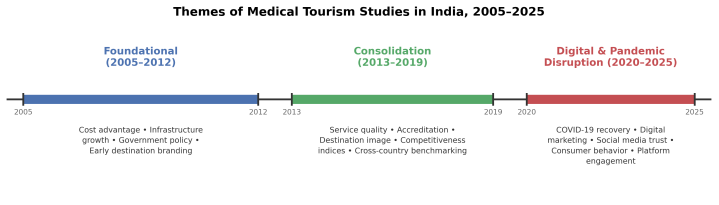
Figure 1. Themes of medical tourism studies in India from 2005 to 2025.
The timeline illustrates the three research periods suggested in this review and the proxy dates and themes that dominated during each period; exact dividing points between periods of time are not 100% accurate and rather signify a particular emphasis in the literature during that period.
3. The Foundational Period, 2005 to 2012
In the early days of research into medical tourism in India, descriptive and policy literature focused on laying the groundwork for the industry, the economic and infrastructural argument for medical tourism. Connell
was one of the earliest in-depth accounts of medical tourism as a global phenomenon, focusing on the sources countries and the destinations in terms of cost, and capacity. Inside the Ministry of Health and Family Welfare in India, Jose and Sachdeva
recorded the sector's early growth rate (from about 150,000 foreign patients in 2004 to 450,000 patients in 2007) and that it could see annual growth of 20% or more with the government's marketing.
While cost and facility are good incentives to the growth of medical tourism, Crooks et al.
| [8] | Crooks, V. A., Turner, L., Snyder, J., Johnston, R., Kingsbury, P. Promoting Medical Tourism to India: Messages, Images, and the Marketing of International Patient Travel. Social Science & Medicine. 2011, 72(5), 726-732.
https://doi.org/10.1016/j.socscimed.2010.12.022 |
[8]
diverted attention to the promotional dimension of growth, studying the ways in which Indian hospitals and facilitators created marketing messages and images to motivate foreign nationals to come to their country as tourists. Turner
| [2] | Turner, L. G. Quality in Health Care and Globalization of Health Services: Accreditation and Regulatory Oversight of Medical Tourism Companies. International Journal for Quality in Health Care. 2011, 23(1), 1-7.
https://doi.org/10.1093/intqhc/mzq078 |
[2]
followed this with a critical discussion of accreditation and regulatory review, questioning the quality assurance system to which medical tourism operators are subjected across international lines. Qadeer and Reddy
| [4] | Qadeer, I., Reddy, S. Medical Tourism in India: Perceptions of Physicians in Tertiary Care Hospitals. Philosophy, Ethics, and Humanities in Medicine. 2013, 8, 20.
https://doi.org/10.1186/1747-5341-8-20 |
[4]
offered one of the first explicitly critical accounts of the sector, drawing on interviews with senior health professionals in Indian tertiary care institutions who were critical of the policy shift toward medical tourism; they argued that this shift reflected a broader ideology of commercialization in domestic health services, articulating the ethical tension between the export-revenue function of medical tourism and India’s commitment to equitable healthcare provision.
The overall thrust of this research, over this period, created a legitimate academic field of study into medical tourism in India, although predominantly in a descriptive and policy analytical way. Apart from the few areas identified, there was not much exploration of patient-level consumer behavior, digital marketing or systematic quality measurement, establishing a theme that would characterize the next time frame.
From methodologically, secondary statistics, government reports and industry reports were heavily used for the foundational period without major primary surveys of large numbers. The former researchers, Jose and Sachdeva
used International Passenger Survey data and projections made by the Confederation of Indian Industry instead of conducting original fieldwork, whereas, the latter, Qadeer and Reddy
| [4] | Qadeer, I., Reddy, S. Medical Tourism in India: Perceptions of Physicians in Tertiary Care Hospitals. Philosophy, Ethics, and Humanities in Medicine. 2013, 8, 20.
https://doi.org/10.1186/1747-5341-8-20 |
[4]
used semi-structured interviews with senior physicians, where quantitative instruments would not have been well suited to capture institutional or ideological perspectives. This methodological profile stands in a field that is developing a basic empirical ground for medical tourism, more interested in evidence of the emergence and acceleration of medical tourism than to quantify perceptions of or behavior by patients. The conceptual underpinning of this period was also quite limited, and most of the literature appeared to remain constrained by descriptive economic and policy models such as comparative cost advantage and export diversification essentially assumptions regarding the psychology and behaviors of consumers were not emerging to shape the thinking in this area of research.
4. The Consolidation and Quality Period, 2013 to 2019
With the growth of the medical tourism section in India, the research focus shifted to measuring and benchmarking the competitiveness, quality and image of the destination, as the industry attempted to consolidate itself against other destinations like Thailand, Singapore and Malaysia. To provide a "standardized comparison and benchmarking tool" for destination competitiveness that could be applied or modified by later studies aimed at India, Fetscherin and Stephano
developed and validated a Medical Tourism Index, based on multiple dimensions such as country environment, destination appeal, cost and facility quality. Extending this focus on measuring experiences at the individual level, Ghosh and Mandal
| [11] | Ghosh, T., Mandal, S. Medical Tourism Experience: Conceptualization, Scale Development, and Validation. Journal of Travel Research. 2019, 58(8), 1288-1301.
https://doi.org/10.1177/0047287518813469 |
[11]
proposed the medical tourism experience (ME) scale, which conceptualized the tourist patient’s experience as a construct capturing not just the destination, but the entire patient journey.
During this time, there was a great amount of research activity in the area of service quality. Tripathi and Siddiqui
have used a SERVQUAL-based perspective on the Indian healthcare sector and found that “Reliability and Responsiveness” has the highest influence on patient satisfaction. Similarly, within the Malaysian medical tourism context, Aziz et al.
| [18] | Aziz, A., Yusof, R. M., Ayob, M., Bakar, N. T. A. Measuring Tourist Behavioural Intention through Quality in Malaysian Medical Tourism Industry. Procedia Economics and Finance. 2015, 31, 280-285.
https://doi.org/10.1016/S2212-5671(15)01179-X |
[18]
found that perceived service quality communicated through promotional and informational channels influenced tourist behavioral intention, echoing the influence of reliability on behavioral intention observed in the Indian context. A few years later, Mishra and Sharma
| [13] | Mishra, V., Sharma, M. G. Framework for Promotion of Medical Tourism: A Case of India. International Journal of Global Business and Competitiveness. 2021, 16(Suppl 1), 103-111. https://doi.org/10.1007/s42943-021-00027-7 |
[13]
followed this tradition and proposed, via their empirical study of a regional Indian medical tourism case, enablers that would bridge the service gaps found, which proved to be cost, quality, language, and ease of travel, alongside a policy lever such as accreditation.
Comparative, cross-country studies have also started to appear. Ebrahim and Ganguli
| [7] | Ebrahim, A. H., Ganguli, S. A Comparative Analysis of Medical Tourism Competitiveness of India, Thailand, and Singapore. Tourism: An International Interdisciplinary Journal. 2019, 67(2), 102-115. |
[7]
looked at the competitiveness of India, Thailand and Singapore, and observed that the success of coordinating collaboration / efforts among public and private stakeholders varied from country to country and impacted the way the medical tourism brand was perceived in the world. As shown in the finding of Cham et al.
| [19] | Cham, T. H., Lim, Y. M., Sia, B. C., Cheah, J. H., Ting, H. Medical Tourism Destination Image and Its Relationship with the Intention to Revisit: A Study of Chinese Medical Tourists in Malaysia. Journal of China Tourism Research. 2021, 17(2), 163-191. https://doi.org/10.1080/19388160.2020.1734514 |
[19]
on Chinese medical tourists in Malaysia and other studies, the importance of image management has been highlighted in both markets: across the Indian market, and additionally throughout Southeast Asia. But at the same time, to anticipate the digital future of the travel industry in the coming years, Moghavvemi et al.
| [12] | Moghavvemi, S., Ormond, M., Musa, G., Isa, C. R. M., Thirumoorthi, T., Mustapha, M. Z. B. Connecting with Prospective Medical Tourists Online: A Cross-Sectional Analysis of Private Hospital Websites Promoting Medical Tourism in India, Malaysia, and Thailand. Tourism Management. 2017, 58, 154-163. https://doi.org/10.1016/j.tourman.2016.10.010 |
[12]
analyzed hospital websites in India, Malaysia and Thailand, revealing actual cross-country disparities regarding interactive and information characteristics of websites, an early sign that digital channels, apart from price and quality, would also be increasingly distinguishing one place from another. On a more abstract consider in comparison, the six most common themes in a co-word analysis conducted by De la Hoz-Correa et al.
on the global literature on medical tourism over the last decade (up to 2017) match closely with the themes identified as common across the India-specific literature as discussed here.
During this period, the descriptive approach of the policy account gradually gave way to a new orientation towards measuring, comparing, and judging quality, and new evidence began to emerge of the digital / online sides to medical tourism, which was to dominate the next period.
This change in approach, towards measurement, wasn't done without a hitch internally. The SERVQUAL method, which has been used widely due to its well-designed multidimensional framework that covers the constructs of service quality, reliability, assurance, tangibles, empathy and responsiveness, has also been criticized in the larger service literature for a lack of theoretical support in economic and psychological theory of decision-making, a deficiency that holds true for its application in medical tourism research in India during this period. Likewise, in the domain of destination-index, some instruments such as the Medical Tourism Index
provided useful standardized measures for benchmarking at the country level, but did not seek to tackle the individual-level behavioral processes that were to be later addressed, including how an individual's cost and perceived risk are related. The conflict between aggregate competitiveness measurement and individual-level behavioral explanation is a precursor to the cross-cutting one, raised in Section 6, between any destination level and any patient-level research traditions, of which this is the latest.
5. The Digital and Pandemic Disruption Period, 2020 to 2025
Driven by the international pandemic of COVID-19 and the increasing influence of digital platforms on patient decision-making, the world's latest era of literature has been dominated by two concurrent themes: disruption and partial recovery of medical tourism due to the outbreak and recovery from the COVID-19 pandemic, and the enhanced influence of digital platforms in patient choices for travel and treatment. Published just before COVID-19, Suess et al.
posited a point at the community level that would be of great relevance during this time: Could the host community see the positive effects of medical tourism development as medical tourists sought to return to destination countries or were there no perceived benefits from development at all? Even in the study of quality measurement, which was written in the age of COVID, Mishra and Sharma
| [13] | Mishra, V., Sharma, M. G. Framework for Promotion of Medical Tourism: A Case of India. International Journal of Global Business and Competitiveness. 2021, 16(Suppl 1), 103-111. https://doi.org/10.1007/s42943-021-00027-7 |
[13]
explicitly framed their study to focus on recovery after COVID.
During this period, digital marketing and consumer behavior research grew significantly, building upon the findings in the previous period by Moghavvemi et al.
| [12] | Moghavvemi, S., Ormond, M., Musa, G., Isa, C. R. M., Thirumoorthi, T., Mustapha, M. Z. B. Connecting with Prospective Medical Tourists Online: A Cross-Sectional Analysis of Private Hospital Websites Promoting Medical Tourism in India, Malaysia, and Thailand. Tourism Management. 2017, 58, 154-163. https://doi.org/10.1016/j.tourman.2016.10.010 |
[12]
and utilizing the comprehensive digital marketing model that was offered by Kannan and Li
, where digital channels were found to be the focal point of marketing in the current era, in general across different industries. The research tradition was present in medical tourism, though it existed before: Xiang and Gretzel
proved that social media had an important impact on general tourists' search for traveling information years ago, which was passed on to the medical tourism context over many years. Balouchi and Aziz
| [14] | Balouchi, M., Aziz, Y. A. Examining the Antecedents of Medical Tourists' Use of Social Media from the Standpoint of Self-Efficacy. Journal of Hospitality and Tourism Insights. 2024, 7(2), 1238-1262.
https://doi.org/10.1108/JHTI-06-2022-0247 |
[14]
focused specifically on investigating the role of self-efficacy in the context of medical tourists' use of social media and discovered that digital literacy and comfort with platforms made a positive difference in the way patients look up information, allowing important implications for how the destination 'India' needs to tailor digital engagement depending on patient segment and digital fluency. Lu et al.
| [15] | Lu, Y., Shi, L., Wang, Z. Patient Mobility in the Digital Era: How Online Service Information from Internet Hospitals Shapes Patients' Cross-Regional Healthcare Choices. Healthcare. 2025, 13(5), 484.
https://doi.org/10.3390/healthcare13050484 |
[15]
further extended this digital-information emphasis towards cross-regional healthcare choice more broadly: They found that a patient's choice of provider can be influenced by information they see online, even if they have no past interaction with this provider, a result they termed the “signaling theory”. Another twist was added by Onofrei et al.
| [16] | Onofrei, G., Filieri, R., Kennedy, L. Social Media Interactions, Purchase Intention, and Behavioural Engagement: The Mediating Role of Source and Content Factors. Journal of Business Research. 2022, 142, 100-112.
https://doi.org/10.1016/j.jbusres.2021.12.031 |
[16]
who found that the content and source of social media interaction both influence purchase intention and behavioral engagement, alluding that not all content is equally persuasive, and this may be even more important as medical tourism marketing moves away from websites and toward videos and social media platforms.
Olya and Nia
| [17] | Olya, H., Nia, T. H. The Medical Tourism Index and Behavioral Responses of Medical Travelers: A Mixed-Method Study. Journal of Travel Research. 2021, 60(4), 779-798.
https://doi.org/10.1177/0047287520915278 |
[17]
transposed the destination-index tradition of the previous era to the behavioral era, using a mixed methods approach to demonstrate that the scores of medical tourists' indexes can provide meaningful predictions of travelers' behavioral outcomes, hence indicating the empirical connection between the two unique streams of research, destination-level competitiveness indicators and individual-level consumer behavior. More of the theories used by earlier consumer behavior studies
that focused on the role of trust in the evaluation of providers under conditions of limited information have been transferred to the medical tourism context, specifically in studies by Iqbal et al.
| [23] | Iqbal, A., Khan, N. A., Malik, A., Faridi, M. R. E-WOM Effect through Social Media and Shopping Websites on Purchase Intention of Smartphones in India. Innovative Marketing. 2022, 18(2), 13-25. https://doi.org/10.21511/im.18(2).2022.02 |
[23]
for Indian e-commerce and Al-kfairy et al.
| [24] | Al-kfairy, M., Shuhaiber, A., Al-khatib, A. W., Alrabaee, S., Khaddaj, S. Understanding Trust Drivers of S-Commerce. Heliyon. 2024, 10(1), e23332. https://doi.org/10.1016/j.heliyon.2023.e23332 |
[24]
for social commerce in general.
The other theme which was not widely explored as much as the traditional hospital-specific medical tourism theme, was well-ness and traditional-medicine tourism, which is promoted by the Indian government as one of the other types of tourism that is gaining some visibility during the time of the tourism promotion, albeit as a lesser explored theme than hospital-style medical tourism, and that includes Ayurveda, yoga and other related practices. The health and wellbeing concerns enumerated in this foundational period
| [8] | Crooks, V. A., Turner, L., Snyder, J., Johnston, R., Kingsbury, P. Promoting Medical Tourism to India: Messages, Images, and the Marketing of International Patient Travel. Social Science & Medicine. 2011, 72(5), 726-732.
https://doi.org/10.1016/j.socscimed.2010.12.022 |
[8]
overlap with marketers of wellness tourism using visual content and experiences, for which digital content plays a major role, but not clinical or credential signals (accreditation, for example) that are key to medically therapeutic tourism communication. While there has been quite a bit of research on curative medical and/or traditional marketing campaigns for medical tourism, few of the studies performed have been rigorous and empirical in relation to the sub-theme of preventative or 'wellness' travel and tourism, so this is an area of research worth exploring, and future studies could benefit from attention.
Combined, it indicates a field that has become more patient-focused, to address the digital decision-making process of each individual patient, and that follows the thorough analysis of institutional policies and infrastructures of the foundation period, and the patient-centered study of quality and image signs of the consolidation period.
That period of destabilization and disturbances was not only a COVID-19 pandemic, but also a disruption caused by COVID-19. As medical tourism to India dried up significantly in early 2020, it posed new questions for its industry and for the research in the tourism industry that had been absent in its establishment and development stage: What is required to be resilient or even to recover? The research done during the disruption and the research that has just been conducted during and at the end of it is not merely a steady-state growth assumption anymore, but rather the issue of trust, safety perception and recovery strategy is now the focal point of the industry and the research community. The discontinuity brought about research conducted during and immediately after it. For example, Mishra and Sharma's
| [13] | Mishra, V., Sharma, M. G. Framework for Promotion of Medical Tourism: A Case of India. International Journal of Global Business and Competitiveness. 2021, 16(Suppl 1), 103-111. https://doi.org/10.1007/s42943-021-00027-7 |
[13]
article Trust, Safety Perception and Recovery Strategy after COVID-19, which clearly addresses the issue of the recovery strategy set against the backdrop of the fear of the virus and the perception of safety. Similarly, these disruptions seem to fuel the current digital shift already reported in Moghavvemi et al.
| [12] | Moghavvemi, S., Ormond, M., Musa, G., Isa, C. R. M., Thirumoorthi, T., Mustapha, M. Z. B. Connecting with Prospective Medical Tourists Online: A Cross-Sectional Analysis of Private Hospital Websites Promoting Medical Tourism in India, Malaysia, and Thailand. Tourism Management. 2017, 58, 154-163. https://doi.org/10.1016/j.tourman.2016.10.010 |
[12]
where patients who are unable to attend hospital for in-person consultation or for facility visits tend to rely on digital information sources such as hospital websites, social media and videos to assess destinations and providers remotely, consistent with trust-building and information-seeking mechanisms reported by Balouchi and Aziz
| [14] | Balouchi, M., Aziz, Y. A. Examining the Antecedents of Medical Tourists' Use of Social Media from the Standpoint of Self-Efficacy. Journal of Hospitality and Tourism Insights. 2024, 7(2), 1238-1262.
https://doi.org/10.1108/JHTI-06-2022-0247 |
[14]
and Lu et al.
| [15] | Lu, Y., Shi, L., Wang, Z. Patient Mobility in the Digital Era: How Online Service Information from Internet Hospitals Shapes Patients' Cross-Regional Healthcare Choices. Healthcare. 2025, 13(5), 484.
https://doi.org/10.3390/healthcare13050484 |
[15]
.
6. Discussion: Cross-Cutting Gaps across the Two Decades
The four gaps appear across all three periods of research, indicating that they are more structural and reflect blind spots in the field, rather than specific to any one period of research.
First, although the field as a whole has expanded, few studies have broken down results according to the nationality of patients, nor have they compared Indian patients, either domestically or directly within the same empirical design, with international patients. Numerous studies are available solely for international patients as seen in much of the foundational and consolidation period literature and others do not include patient nationalities within their results, suggesting they may or may not apply to the rapidly diversifying patient population in India of both international patients and domestic patients who are seeking a tertiary care facility.
Second, the ethical and regulatory critique argued from the early days in the field (most notably by Qadeer and Reddy
| [4] | Qadeer, I., Reddy, S. Medical Tourism in India: Perceptions of Physicians in Tertiary Care Hospitals. Philosophy, Ethics, and Humanities in Medicine. 2013, 8, 20.
https://doi.org/10.1186/1747-5341-8-20 |
[4]
and Turner
| [2] | Turner, L. G. Quality in Health Care and Globalization of Health Services: Accreditation and Regulatory Oversight of Medical Tourism Companies. International Journal for Quality in Health Care. 2011, 23(1), 1-7.
https://doi.org/10.1093/intqhc/mzq078 |
[2]
) has been largely isolated from the more recent attention given to the critical marketing and quality research aspects involving consumers. Though both literatures share the same overarching question of how consumers are to trust unfamiliar providers in a limited information environment, few studies bring them together in a single investigation along with the rest of the outcome measures of marketing–related studies: patient level digital marketing and consumer behavior. This fragmentation also makes it difficult to endorse recommendations that have been provided in the digital marketing literature, the creation of more videos and targeting through platforms, for instance, while also measuring their impact against the specific regulatory and ethical requirements that this distinct area of marketing has raised on its own.
Third, longitudinal and comparative studies of the changes in the patients' decision-making process over time in a context of digital transformation are limited. In most studies, including those previews you read in Section 5, digital-marketing–driven study designs (which tend to capture a single point in time) leave the researchers uncertain whether the rising importance of platforms like YouTube and social media is a true change in patient behavior, or merely any studies at the right time were conducted during that period in which patients were especially ready to embrace digital health. Likewise, although a number of studies have been written that focus on Indian competitiveness in terms of competitiveness on service quality measures
| [7] | Ebrahim, A. H., Ganguli, S. A Comparative Analysis of Medical Tourism Competitiveness of India, Thailand, and Singapore. Tourism: An International Interdisciplinary Journal. 2019, 67(2), 102-115. |
| [10] | Fetscherin, M., Stephano, R. M. The Medical Tourism Index: Scale Development and Validation. Tourism Management. 2016, 52, 539-556.
https://doi.org/10.1016/j.tourman.2015.08.010 |
[7, 10]
, a comparative study on the effectiveness of digital marketing with other competing medical tourism destinations in India is still deficient.
Fourth, the dominant research in the fourth quarter of the century oriented towards the digital-marketing sector follows a re-search approach that has paid little attention to the digital divide that exists among medical tourists themselves. Since self-efficacy and digital literacy have been shown to play a significant role in information-seeking behavior by Balouchi and Aziz
| [14] | Balouchi, M., Aziz, Y. A. Examining the Antecedents of Medical Tourists' Use of Social Media from the Standpoint of Self-Efficacy. Journal of Hospitality and Tourism Insights. 2024, 7(2), 1238-1262.
https://doi.org/10.1108/JHTI-06-2022-0247 |
[14]
and digital literacy may also be related to the price sensitivity, particularly as patients are more likely to attend a low-cost station than a sophisticated digital source, it seems that increased focus on video and social platform interaction may systemically disadvantage those with lower digital literacy. It is a critique of equity, similar to that put forward early in the field by Qadeer and Reddy
| [4] | Qadeer, I., Reddy, S. Medical Tourism in India: Perceptions of Physicians in Tertiary Care Hospitals. Philosophy, Ethics, and Humanities in Medicine. 2013, 8, 20.
https://doi.org/10.1186/1747-5341-8-20 |
[4]
but focused on the digital over the institutional aspect of access and has not yet been directly investigated through empirical study in an Indian context.
7. Future Research Agenda
Given the gaps that have been identified in Section 6, the following broad and specific statement of medical tourism future research priorities is proposed, with a deliberate limit on the number of priorities to avoid a "one for every state" list of non-priority disconnected suggestions.
Empirical studies ought to, as the rule rather than the exception, employ designs that are nationality-disaggregated, comparing local (Indian) patients with clear differentiated international patient subgroups, where possible, comparing differentiated inter-national patient nationality subgroups with each other, rather than supposedly lumping together. Second, the field was not only critiqued from a regulatory and ethical perspective, there is also a marketing research aspect from a consumer perspective that has not received due attention, for instance by studying whether the regulatory status (accredited/non-accredited) moderates the effectiveness of digital trust-building content, as this investigates the connection between the two separate literatures identified in Section 6. Third, even if such a shift were found in documented behavior, the design of a study should be supplementary to having a longitudinal design even limited two-wave or panel designs as to ascertain whether the change in technology use is a behavioral movement, or a phenomenon of the time in which the study was conducted. Fourth, previous works, which benchmark digital marketing costs, destination quality, or destination attractiveness, should be expanded into one that explicitly measures the effectiveness of digital marketing efforts, as well as site quality or destination appeal, between the different countries, extending the cross-country website analysis done by Moghavvemi et al.
| [12] | Moghavvemi, S., Ormond, M., Musa, G., Isa, C. R. M., Thirumoorthi, T., Mustapha, M. Z. B. Connecting with Prospective Medical Tourists Online: A Cross-Sectional Analysis of Private Hospital Websites Promoting Medical Tourism in India, Malaysia, and Thailand. Tourism Management. 2017, 58, 154-163. https://doi.org/10.1016/j.tourman.2016.10.010 |
[12]
. Fifth, future studies should directly investigate the digital divide in the patient population by employing digital measures, testing, for example, a systematic relationship between digital literacy and platform access, and whether this relationship could unbalance less digitally equipped segments of the patient population, such as in higher income, education, or nationality groups, toward the favor of Internet-based marketing and information provision for patients.
To this end, the field should progress beyond the largely independent research streams that were reflected in the various time periods reviewed here, toward an integrated collection of research that integrates policy, quality, ethics and digital consumer behavior into a unified research program.
Table 2. Mapping cross-cutting gaps to the proposed future research agenda.
Identified Gap | Proposed Agenda Item | Methodological Approach |
Lack of domestic vs. international patient disaggregation | Nationality-disaggregated empirical designs | Stratified sampling by nationality and patient origin; subgroup comparative analysis |
Ethical and regulatory critique disconnected from marketing research | Integrated ethics-and-marketing frameworks | Studies testing accreditation status as a moderator of digital trust-building content effectiveness |
Scarcity of longitudinal digital-engagement research | Longitudinal or panel digital-engagement studies | Two-wave or multi-wave panel designs tracking platform preference over time |
Limited cross-destination digital benchmarking | Comparative research benchmarking digital marketing effectiveness | Cross-country comparative designs extending existing competitiveness indices to digital channels |
Unexamined digital divide among medical tourists | Digital literacy and access equity research | Correlational designs linking digital literacy, income, and education to information-seeking behavior |
8. Theoretical and Practical Implications
8.1. Theoretical Implications
This review also addressed the periodization as it contributes to providing a structural account of the evolution of theoretical framing in Indian medical tourism research, which are not observed in topic-based reviews like those performed by De la Hoz-Correa et al.
using co-word analysis. Relying on descriptive economic concepts, use of service-quality and competitiveness models (e.g., several and Medical Tourism Index) in the consolidation period, and the combination of behavioral and technology-acceptance theories in the latest period indicate that the subject has shifted over time from describing what occurs to explaining patient behavior. The second trend goes beyond the ongoing drive to further develop existing theory within a tradition and is toward a framework that will be able to link levels of analysis and relate destination-level competitiveness constructs to individual behavioral and trust mechanisms.
8.2. Practical Implications
A periodization that the review provides in the Indian medical tourism space indicates that advantages in the space have progressively moved from a simple cost and infrastructure advantage to digital visibility, platform-specific content and building trust in communication, with the two variables of cost and quality never losing their importance. Patient acquisition practitioners may then want to consider digital engagement as an addition, not a replacement during future patient acquisition efforts, where continued investment in accreditation and service quality is still important, as identified by the cross-cutting gaps analysis in this review, but where there is room for improvement in both practice and research. The sector's particular development, as witnessed by the ethical and regulatory critique from as early as Qadeer and Reddy
| [4] | Qadeer, I., Reddy, S. Medical Tourism in India: Perceptions of Physicians in Tertiary Care Hospitals. Philosophy, Ethics, and Humanities in Medicine. 2013, 8, 20.
https://doi.org/10.1186/1747-5341-8-20 |
[4]
and Turner
| [2] | Turner, L. G. Quality in Health Care and Globalization of Health Services: Accreditation and Regulatory Oversight of Medical Tourism Companies. International Journal for Quality in Health Care. 2011, 23(1), 1-7.
https://doi.org/10.1093/intqhc/mzq078 |
[2]
, suggests that future government endorsement of medical tourism should not be viewed as a mature sector issue of the past, but necessitates a return of rigor in accreditation processes and domestic equity issues.
8.3. Methodological Implications
The evolution of the methodological approach advanced in the three periods, starting from a descriptive/policy/analytical phase, then to standardized instruments related to quality and competitiveness and finally to survey-based assessments of cross-sectional behavioral evaluation, implies that the field is ready for more advanced designs with no need to create original instruments. Alternatively, there was no need to develop new instruments; the scales and indices developed and validated during the consolidation period may be included in the longitudinal design and designs including nationalities disaggregation required in Section 7. It has been noted here that this does not imply an agenda that must be developed entirely from scratch; indeed, it is an agenda that can be created on the basis of redirecting existing methodological capacity in order to address is-sues that are not being addressed by it.
9. Conclusions
This critical review has identified three distinguishable phases of medical tourism research between 2005 and 2025, one of policy preparation and issues related to infrastructure development and cost competitiveness; one of consolidation as measured in terms of quality and competitiveness benchmarking and destination image; one of transforming it due to digitalization and the impact of pandemics on consumer behavior, digital marketing and platform-specific patient engagement; along with the longer-term consequences. In every period there are four structural deficiencies, such as lack of disaggregation between domestic and international patient experiences, limited interaction between the ethical and regulatory critique and consumer research, ongoing lack of a comparative approach across destinations and longitudinal analysis of patient experience, and lack of examination of the digital divide among patients themselves. The framework of five future research questions outlined here is meant to orient the scientific inquiry to bridge the gaps outlined above, instead of stacking on top of already rather well-occupied research areas and streams. Medical Tourism in India, as a sector keeps evolving, along with changing information tools and patient population demographics, the ability to monitor this growth and evolution beyond mere description and description, will become increasingly useful for researchers, hospital management and policymakers.
Abbreviations
SERVQUAL | Service Quality (A Multidimensional Service Quality Measurement Framework) |
COVID-19 | Corona Virus Disease 2019 |
NABH | National Accreditation Board for Hospitals and Healthcare Providers |
Author Contributions
Sepideh Bashang: Conceptualization, Data curation, Investigation, Methodology, Visualization, Writing – original draft, Writing – review & editing
Puttanna Kalladka: Conceptualization, Supervision, Validation, Writing – review & editing
Conflicts of Interest
The authors declare no conflicts of interest.
References
| [1] |
Connell, J. Medical Tourism: Sea, Sun, Sand and Surgery. Tourism Management. 2006, 27(6), 1093-1100.
https://doi.org/10.1016/j.tourman.2005.11.005
|
| [2] |
Turner, L. G. Quality in Health Care and Globalization of Health Services: Accreditation and Regulatory Oversight of Medical Tourism Companies. International Journal for Quality in Health Care. 2011, 23(1), 1-7.
https://doi.org/10.1093/intqhc/mzq078
|
| [3] |
Jose, R., Sachdeva, S. Keeping an Eye on Future: Medical Tourism. Indian Journal of Community Medicine. 2010, 35(3), 376-379.
https://doi.org/10.4103/0970-0218.69247
|
| [4] |
Qadeer, I., Reddy, S. Medical Tourism in India: Perceptions of Physicians in Tertiary Care Hospitals. Philosophy, Ethics, and Humanities in Medicine. 2013, 8, 20.
https://doi.org/10.1186/1747-5341-8-20
|
| [5] |
Beladi, H., Chao, C. C., Ee, M. S., Hollas, D. Does Medical Tourism Promote Economic Growth? A Cross-Country Analysis. Journal of Travel Research. 2019, 58(1), 121-135.
https://doi.org/10.1177/0047287517735909
|
| [6] |
De la Hoz-Correa, A., Muñoz-Leiva, F., Bakucz, M. Past Themes and Future Trends in Medical Tourism Research: A Co-Word Analysis. Tourism Management. 2018, 65, 200-211.
https://doi.org/10.1016/j.tourman.2017.10.001
|
| [7] |
Ebrahim, A. H., Ganguli, S. A Comparative Analysis of Medical Tourism Competitiveness of India, Thailand, and Singapore. Tourism: An International Interdisciplinary Journal. 2019, 67(2), 102-115.
|
| [8] |
Crooks, V. A., Turner, L., Snyder, J., Johnston, R., Kingsbury, P. Promoting Medical Tourism to India: Messages, Images, and the Marketing of International Patient Travel. Social Science & Medicine. 2011, 72(5), 726-732.
https://doi.org/10.1016/j.socscimed.2010.12.022
|
| [9] |
Tripathi, S. N., Siddiqui, M. H. Assessing the Quality of Healthcare Services: A SERVQUAL Approach. International Journal of Healthcare Management. 2018, 13(4), 1-11.
https://doi.org/10.1080/20479700.2018.1469212
|
| [10] |
Fetscherin, M., Stephano, R. M. The Medical Tourism Index: Scale Development and Validation. Tourism Management. 2016, 52, 539-556.
https://doi.org/10.1016/j.tourman.2015.08.010
|
| [11] |
Ghosh, T., Mandal, S. Medical Tourism Experience: Conceptualization, Scale Development, and Validation. Journal of Travel Research. 2019, 58(8), 1288-1301.
https://doi.org/10.1177/0047287518813469
|
| [12] |
Moghavvemi, S., Ormond, M., Musa, G., Isa, C. R. M., Thirumoorthi, T., Mustapha, M. Z. B. Connecting with Prospective Medical Tourists Online: A Cross-Sectional Analysis of Private Hospital Websites Promoting Medical Tourism in India, Malaysia, and Thailand. Tourism Management. 2017, 58, 154-163.
https://doi.org/10.1016/j.tourman.2016.10.010
|
| [13] |
Mishra, V., Sharma, M. G. Framework for Promotion of Medical Tourism: A Case of India. International Journal of Global Business and Competitiveness. 2021, 16(Suppl 1), 103-111.
https://doi.org/10.1007/s42943-021-00027-7
|
| [14] |
Balouchi, M., Aziz, Y. A. Examining the Antecedents of Medical Tourists' Use of Social Media from the Standpoint of Self-Efficacy. Journal of Hospitality and Tourism Insights. 2024, 7(2), 1238-1262.
https://doi.org/10.1108/JHTI-06-2022-0247
|
| [15] |
Lu, Y., Shi, L., Wang, Z. Patient Mobility in the Digital Era: How Online Service Information from Internet Hospitals Shapes Patients' Cross-Regional Healthcare Choices. Healthcare. 2025, 13(5), 484.
https://doi.org/10.3390/healthcare13050484
|
| [16] |
Onofrei, G., Filieri, R., Kennedy, L. Social Media Interactions, Purchase Intention, and Behavioural Engagement: The Mediating Role of Source and Content Factors. Journal of Business Research. 2022, 142, 100-112.
https://doi.org/10.1016/j.jbusres.2021.12.031
|
| [17] |
Olya, H., Nia, T. H. The Medical Tourism Index and Behavioral Responses of Medical Travelers: A Mixed-Method Study. Journal of Travel Research. 2021, 60(4), 779-798.
https://doi.org/10.1177/0047287520915278
|
| [18] |
Aziz, A., Yusof, R. M., Ayob, M., Bakar, N. T. A. Measuring Tourist Behavioural Intention through Quality in Malaysian Medical Tourism Industry. Procedia Economics and Finance. 2015, 31, 280-285.
https://doi.org/10.1016/S2212-5671(15)01179-X
|
| [19] |
Cham, T. H., Lim, Y. M., Sia, B. C., Cheah, J. H., Ting, H. Medical Tourism Destination Image and Its Relationship with the Intention to Revisit: A Study of Chinese Medical Tourists in Malaysia. Journal of China Tourism Research. 2021, 17(2), 163-191.
https://doi.org/10.1080/19388160.2020.1734514
|
| [20] |
Suess, C., Baloglu, S., Busser, J. A. Perceived Impacts of Medical Tourism Development on Community Wellbeing. Tourism Management. 2018, 69, 232-245.
https://doi.org/10.1016/j.tourman.2018.06.006
|
| [21] |
Kannan, P. K., Li, H. A. Digital Marketing: A Framework, Review and Research Agenda. International Journal of Research in Marketing. 2017, 34(1), 22-45.
https://doi.org/10.1016/j.ijresmar.2016.11.006
|
| [22] |
Xiang, Z., Gretzel, U. Role of Social Media in Online Travel Information Search. Tourism Management. 2010, 31(2), 179-188.
https://doi.org/10.1016/j.tourman.2009.02.016
|
| [23] |
Iqbal, A., Khan, N. A., Malik, A., Faridi, M. R. E-WOM Effect through Social Media and Shopping Websites on Purchase Intention of Smartphones in India. Innovative Marketing. 2022, 18(2), 13-25.
https://doi.org/10.21511/im.18(2).2022.02
|
| [24] |
Al-kfairy, M., Shuhaiber, A., Al-khatib, A. W., Alrabaee, S., Khaddaj, S. Understanding Trust Drivers of S-Commerce. Heliyon. 2024, 10(1), e23332.
https://doi.org/10.1016/j.heliyon.2023.e23332
|
| [25] |
Woodside, A. G., Lysonski, S. A General Model of Traveler Destination Choice. Journal of Travel Research. 1989, 27(4), 8-14.
https://doi.org/10.1177/004728758902700402
|
Cite This Article
-
APA Style
Bashang, S., Kalladka, P. (2026). Two Decades of Medical Tourism Research in India 2005 to 2025: A Critical Review and Future Research Agenda. Science Journal of Business and Management, 14(3), 74-82. https://doi.org/10.11648/j.sjbm.20261403.13
 Copy
|
Copy
|
 Download
ACS Style
Bashang, S.; Kalladka, P. Two Decades of Medical Tourism Research in India 2005 to 2025: A Critical Review and Future Research Agenda. Sci. J. Bus. Manag. 2026, 14(3), 74-82. doi: 10.11648/j.sjbm.20261403.13
Copy
|
Download
AMA Style
Bashang S, Kalladka P. Two Decades of Medical Tourism Research in India 2005 to 2025: A Critical Review and Future Research Agenda. Sci J Bus Manag. 2026;14(3):74-82. doi: 10.11648/j.sjbm.20261403.13
Copy
|
Download
-
@article{10.11648/j.sjbm.20261403.13,
  author = {Sepideh Bashang and Puttanna Kalladka},
  title = {Two Decades of Medical Tourism Research in India 2005 to 2025: A Critical Review and Future Research Agenda},
  journal = {Science Journal of Business and Management},
  volume = {14},
  number = {3},
  pages = {74-82},
  doi = {10.11648/j.sjbm.20261403.13},
  url = {https://doi.org/10.11648/j.sjbm.20261403.13},
  eprint = {https://article.sciencepublishinggroup.com/pdf/10.11648.j.sjbm.20261403.13},
  abstract = {Indian medical tourism has evolved from being a niche export industry focused on cost to a multidimensional research field in the areas of policy, quality management, destination marketing and digital engagement with patients. This paper is a critical, narrative review of the research on medical tourism available in India for the last twenty years (2005–2025) and examines changes in medical tourism research themes over the last two decades, highlighting the gaps in the study. The review consists of three general periods of research. The first is a basic decade (2005–2012) focused on cost, infrastructure development and initial government policies. The second is the accreditation, service quality, destination image–competitiveness benchmarking stage (2013–2019), which concentrates on the consolidation of the level of accreditation, service quality, destination image and competitiveness measuring of destinations like Thailand, Singapore and Malaysia. Thirdly, the most recent decade (2020–2025) constitutes a period of digital and pandemic-driven disruption, in which the aftermath of the pandemic, digital marketing, social media trust mechanisms, and consumer behavior became the dominant subjects of research. In all three stages, four recurring gaps are found: a lack of disaggregating the domestic and international experience of patients in samples; limited combination of regulatory critique and consideration of ethics with consumers' perception of their experience; lack of depth in longitudinal or comparative research trends and the nature of patient decision-making over time; and a lack of critical investigation of the digital divide across samples of medical tourists who are not all digitally literate. The review suggests a five-point future research agenda that fills these gaps: nationality-disaggregated empirical design, integrated frameworks of ethics and marketing, longitudinal studies of digital engagement, cross-destination benchmarking of digital marketing effectiveness, and digital-equity research. The review includes structured and chronological information on the evolution of the medical tourism field that aims to provide an orientation for future empirical and policy-oriented works on medical tourism in India.},
 year = {2026}
}
Copy
|
Download
-
TY  - JOUR
T1  - Two Decades of Medical Tourism Research in India 2005 to 2025: A Critical Review and Future Research Agenda
AU  - Sepideh Bashang
AU  - Puttanna Kalladka
Y1  - 2026/08/27
PY  - 2026
N1  - https://doi.org/10.11648/j.sjbm.20261403.13
DO  - 10.11648/j.sjbm.20261403.13
T2  - Science Journal of Business and Management
JF  - Science Journal of Business and Management
JO  - Science Journal of Business and Management
SP  - 74
EP  - 82
PB  - Science Publishing Group
SN  - 2331-0634
UR  - https://doi.org/10.11648/j.sjbm.20261403.13
AB  - Indian medical tourism has evolved from being a niche export industry focused on cost to a multidimensional research field in the areas of policy, quality management, destination marketing and digital engagement with patients. This paper is a critical, narrative review of the research on medical tourism available in India for the last twenty years (2005–2025) and examines changes in medical tourism research themes over the last two decades, highlighting the gaps in the study. The review consists of three general periods of research. The first is a basic decade (2005–2012) focused on cost, infrastructure development and initial government policies. The second is the accreditation, service quality, destination image–competitiveness benchmarking stage (2013–2019), which concentrates on the consolidation of the level of accreditation, service quality, destination image and competitiveness measuring of destinations like Thailand, Singapore and Malaysia. Thirdly, the most recent decade (2020–2025) constitutes a period of digital and pandemic-driven disruption, in which the aftermath of the pandemic, digital marketing, social media trust mechanisms, and consumer behavior became the dominant subjects of research. In all three stages, four recurring gaps are found: a lack of disaggregating the domestic and international experience of patients in samples; limited combination of regulatory critique and consideration of ethics with consumers' perception of their experience; lack of depth in longitudinal or comparative research trends and the nature of patient decision-making over time; and a lack of critical investigation of the digital divide across samples of medical tourists who are not all digitally literate. The review suggests a five-point future research agenda that fills these gaps: nationality-disaggregated empirical design, integrated frameworks of ethics and marketing, longitudinal studies of digital engagement, cross-destination benchmarking of digital marketing effectiveness, and digital-equity research. The review includes structured and chronological information on the evolution of the medical tourism field that aims to provide an orientation for future empirical and policy-oriented works on medical tourism in India.
VL  - 14
IS  - 3
ER  -
Copy
|
Download





 Share This Article
 Twitter
 Linked In
 Facebook