
Difo Dabbo is traditional Ethiopian bread prepared mainly from wheat flour, water, yeast or a traditional fermentation starter, and salt. It is commonly associated with traditional household baking and is known for its thick, round loaf and soft, bread-like interior. Modern lifestyles and market trends have increased the demand for the development of innovative functional food products that support healthy eating habits and meet consumers’ nutritional needs. This study aimed to enhance nutrient content of wheat flour by supplementing soybean flour with wheat flour in the preparation of Ethiopian traditional bread “Difo Dabbo”. The experiment was conducted by blending soybean flour with wheat flour the 5%, 10%, 15% and 20% basis. The effect of this supplementation on the rheological properties of the resulting dough was investigated using farinograph for quality assessment of the final product. Results indicated that Water absorption was increased as the proportion of defatted soybean flour increase in comparison with wheat dough, which was expected due to the increment in total protein proportion and the high water absorption capacity of soybean flour. Dough development time (DDT) and dough stability (S) were delayed by the inclusion of soybean flours at 10% substitution. This shows that the 10% defatted soybean flour substitution has a better dough rheological characteristic than the other which can be related to the gluten strength. Softening degree (SD) was decreased by the inclusion of defatted soybean flours substitution increase. The traditional bread Difo Dabbo was made from substitution of wheat flour with defatted soybean flour and evaluated for proximate and sensory qualities of the product. Protein, ash, moisture and crude fiber contents of the Difo Dabbo increased as blend proportions increase compared with the control (no fortification with defatted soybean flour) but reduced the fat, and carbohydrate contents. The overall acceptability of Difo Dabbo decreased with increasing substitution. Overall, the findings demonstrated that defatted soybean flour can be incorporated into wheat flour at a 10% substitution level to produce Difo Dabbo with desirable physicochemical properties, improved nutritional value, and acceptable sensory characteristics.
| Published in | Science Discovery Nutrition (Volume 1, Issue 2) |
| DOI | 10.11648/j.sdnutr.20260102.15 |
| Page(s) | 116-129 |
| Creative Commons |
This is an Open Access article, distributed under the terms of the Creative Commons Attribution 4.0 International License (http://creativecommons.org/licenses/by/4.0/), which permits unrestricted use, distribution and reproduction in any medium or format, provided the original work is properly cited. |
| Copyright |
Copyright © The Author(s), 2026. Published by Science Publishing Group |
Difo Dabo, Wheat, Farinograph, Soybean, Supplementation, Sensory Analysis
Formulations of Bread | Whole wheat flour (%) | Defatted soybean flour (%) |
|---|---|---|
CB | 100 | 0.0 |
SB1 | 95 | 5.0 |
SB2 | 90 | 10 |
SB3 | 85 | 15 |
SB4 | 80 | 20 |
Treatment | Whole wheat flour (gm) | Defatted soybean flour (gm) | Yeast (gm) | Salt (gm) | Water (ml) |
|---|---|---|---|---|---|
CB | 500 | 0 | 2.5 | 5 | 264.5 |
SB1 | 475 | 25 | 2.5 | 5 | 308.0 |
SB2 | 450 | 50 | 2.5 | 5 | 315.0 |
SB3 | 425 | 75 | 2.5 | 5 | 326.5 |
SB4 | 400 | 100 | 2.5 | 5 | 341.0 |
Treatment | CB | SB1 | SB2 | SB3 | SB4 |
|---|---|---|---|---|---|
Color grade | 2.13 e ± 0.10 | 4.52 d ±0.20 | 5.95 c ±0.35 | 7.68 b ±0.10 | 9.71a ±0.00 |
Moisture (%) | 10.20 a ±0.20 | 9.92 a ±0.70 | 9.34 b ±0.10 | 9.17 b ±0.10 | 9.13 c±0.15 |
Ash (%) | 0.59 e ± 0.10 | 0.74 d ±0.20 | 0.85 c±0.20 | 0.94 b± 0.05 | 1.08 a ±0.02 |
Water activity | 0.551 a ±0.03 | 0.546 a ±0.03 | 0.548 a ±0.06 | 0.554 a±0.10 | 0.548 a±0.10 |
FallingNo (sec) | 267 a ± 3.00 | 255 a ±1.00 | 235.5 b ±5.50 | 214 c ± 3.50 | 207 c ± 4.0 |
Wet gluten (%) | 30.1 a ±0.10 | 28.05 b ±0.15 | 24.25 c ±0.55 | 22.25 d±0.55 | 18.40 e ±0.50 |
Treatment | CB | SB1 | SB2 | SB3 | SB4 |
|---|---|---|---|---|---|
Moisture (%) | 32.41d±.382 | 33.29c±.140 | 34.86 b±.233 | 34.97 b ±.056 | 35.86 a ±.339 |
Ash (%) | 0.82 c±.020 | 0.93 c±.042 | 1.18 b ±.056 | 1.28ab±.049 | 1.39 a ±.049 |
Crude fiber (%) | 0.65 c±.025 | 2.12 b ±.150 | 2.17 b±.115 | 2.32 ab ±.015 | 2.39 a ±.015 |
Fat (%) | 1.99 a±.010 | 1.93 b±.025 | 1.92 b±.010 | 1.89b ±.005 | 1.90 b ±.010 |
Protein (%) | 9.95 e±.084 | 11.12 d ±.261 | 13.27 c±.268 | 15.91b ±.155 | 16.68 a ±.120 |
Water activity | 0.90 c±.007 | 0.91 bc ±007 | 0.92bc±.007 | 0.93 ab ±.007 | 0.95 a ±.014 |
CHO (%) | 54.19 a±.260 | 49.85 b±.555 | 46.89 c ±.320 | 43.63 d ±.125 | 41.75 e ±.140 |
AOAC | Association of Official Analytical Collaboration |
ANOVA | Analysis of Variance |
CAT | Commercial and Analytical Technology |
CRD | Completely Randomized Design |
DDT | Dough Development Time |
DSF | Deffatted Soybean Flour |
DSFSA | Defatted Soybean Flour Supplemented |
ICC | International Association for Cereal Chemistry |
SD | Softening Degree |
LSD | Least Significant Differences |
WFA | Wheat Flour A |
| [1] | K. Urga and H. V Narasimha, “Traditional Sour Dough Bread (Difo Dabbo) Making: II. effects on the HCL-extractability of minerals,” Ethiop. J. Heal. Dev., vol. 12, no. 3, 1998. |
| [2] |
N. M. Meybodi, L. Mirmoghtadaie, Z. Sheidaei, and A. M. Mortazavian, “Wheat bread: Potential approach to fortify its lysine content,” Curr. Nutr. Food Sci., vol. 15, no. 7, pp. 630-637, 2019.
https://www.benthamdirect.com/content/journals/cnf/10.2174/1573401315666190228125241 |
| [3] | M. Friedman and D. L. Brandon, “Nutritional and health benefits of soy proteins,” J. Agric. Food Chem., vol. 49, no. 3, pp. 1069-1086, 2001. |
| [4] | D. Z. Alomari et al., “Wheat grains as a sustainable source of protein for health,” Nutrients, vol. 15, no. 20, p. 4398, 2023. |
| [5] | A. D. Bouras, M. Meziane, A. D. Bouras, and S. Megateli, “Fortifying wheat bread with whey proteins: impact on nutritional value and technological properties.,” South Asian J. Exp. Biol., vol. 11, no. 6, p. 700, 2021. |
| [6] | K. Sharma, W. Zhang, and S. Rawdkuen, “Dietary plant-based protein supplements: Sources, processing, nutritional value, and health benefits,” Foods, vol. 14, no. 18, p. 3259, 2025. |
| [7] |
G. Dukariya, S. Shah, G. Singh, and A. Kumar, “Soybean and its products: Nutritional and health benefits,” J. Nutr. Sci. Heal. Diet, vol. 1, no. 2, pp. 22-29, 2020.
https://www.academia.edu/download/63948910/GD-GS-AK.159478900520200717-51472-1ob4vzt.pdf |
| [8] |
P. D. Ribotta, S. A. Arnulphi, A. E. Leon, and M. C. Añón, “Effect of soybean addition on the rheological properties and breadmaking quality of wheat flour,” J. Sci. Food Agric., vol. 85, no. 11, pp. 1889-1896, 2005.
https://scijournals.onlinelibrary.wiley.com/doi/abs/10.1002/jsfa.2191 |
| [9] |
N. O. Eddy, P. G. Udofia, and D. Eyo, “Sensory evaluation of wheat/cassava composite bread and effect of label information on acceptance and preference,” African J. Biotechnol., vol. 6, no. 20, p. 2415, 2007.
https://www.ajol.info/index.php/ajb/article/download/58087/46452/0 |
| [10] |
N. E. O. Najm, A. Olabi, S. Kreyydieh, and I. Toufeili, “Determination of visual detection thresholds of selected iron fortificants and formulation of iron-fortified pocket-type flat bread,” J. Cereal Sci., vol. 51, no. 3, pp. 271-276, 2010.
https://www.sciencedirect.com/science/article/pii/S073352101000007X |
| [11] |
J. L. Sidel and H. Stone, “The role of sensory evaluation in the food industry,” Food Qual. Prefer., vol. 4, no. 1-2, pp. 65-73, 1993.
https://www.sciencedirect.com/science/article/pii/095032939390314V |
| [12] | B. Mekuria and S. A. Emire, “Effects of vital gluten enrichment on qualities of value added products.,” 2015. |
| [13] | D. Fenn, O. M. Lukow, G. Humphreys, P. G. Fields, and J. I. Boye, “Wheat-legume composite flour quality,” Int. J. Food Prop., vol. 13, no. 2, pp. 381-393, 2010. |
| [14] | G. G. Codina and A. Leahu, “The improvement of the quality of wheat flour with a lower content of α-amylase through the addition of different enzymatic products,” Sci. Pap. Agric Ser, vol. 52, pp. 629-635, 2009. |
| [15] | S. Sologuk and B. Sorenson, “Understanding wheat quality test,” North. Crop. Institute. ER06, no. 02, p. 5, 2005. |
| [16] |
S. D. Shfali Dhingra and S. J. Sudesh Jood, “Effect of flour blending on functional, baking and organoleptic characteristics of bread.,” 2004.
https://academic.oup.com/ijfst/article-abstract/39/2/213/7913233 |
| [17] | G. C. Orkwor, R. Asiedu, and I. J. Ekanayake, “Food yams,” Adv. Res., pp. 39-62, 1998. |
| [18] | A. Basman, H. Köksel, and P. K. W. Ng, “Utilization of transglutaminase to increase the level of barley and soy flour incorporation in wheat flour breads,” J. Food Sci., vol. 68, no. 8, pp. 2453-2460, 2003. |
| [19] | O. A. Kure, E. J. Bahago, and E. A. Daniel, “Studies on the proximate composition and effect of flour particle size on acceptability of biscuit produced from blends of soyabeans and plantain flours,” Namida Tech-Scope J, vol. 3, pp. 17-21, 1998. |
| [20] |
P. Misra, M. S. Usha, and S. S. Surjan Singh, “Soy-wheat flour blends: chemical, rheological and baking characteristics.,” 1991.
https://www.cabidigitallibrary.org/doi/full/10.5555/19920751458 |
| [21] |
S. Dhingra and S. Jood, “Effect of flour blending on functional, baking and organoleptic characteristics of bread,” Int. J. Food Sci. Technol., vol. 39, no. 2, pp. 213-222, 2004.
https://academic.oup.com/ijfst/article-abstract/39/2/213/7913233 |
| [22] |
M. Mashayekh, M. R. Mahmoodi, and M. H. Entezari, “Effect of fortification of defatted soy flour on sensory and rheological properties of wheat bread,” Int. J. Food Sci. Technol., vol. 43, no. 9, pp. 1693-1698, 2008.
https://academic.oup.com/ijfst/article-abstract/43/9/1693/7864786 |
| [23] | U. Ukpabi, “Production of African bread-fruit (Treculia africana) and soybean (Glycine max) seed based food formulations, 1: Effects of germination and fermentation on nutritional and organoleptic quality,” Plant Foods Hum. Nutr., vol. 54, no. 3, pp. 193-206, 1999. |
| [24] |
U. Onyeka and I. Dibia, “Malted weaning food made from maize, soybean, groundnut and cooking banana,” J. Sci. Food Agric., vol. 82, no. 5, pp. 513-516, 2002.
https://scijournals.onlinelibrary.wiley.com/doi/abs/10.1002/jsfa.1060 |
| [25] | W. A. Plahar, C. A. Nti, and N. T. Annan, “Effect of soy-fortification method on the fermentation characteristics and nutritional quality of fermented maize meal,” Plant Foods Hum. Nutr., vol. 51, no. 4, pp. 365-380, 1997. |
| [26] |
S. B. Masur, K. C. Tarachand, and U. N. Kulkarni, “Comparative evaluation of full and defatted soy flour based bakery products.,” 2009.
https://www.cabidigitallibrary.org/doi/full/10.5555/20103137072 |
| [27] | K. Farrer, To feed a nation: a history of Australian food science and technology. Csiro Publishing, 2005. |
| [28] |
O. A. Olaoye, A. A. Onilude, and O. A. Idowu, “Quality characteristics of bread produced from composite flours of wheat, plantain and soybeans,” African J. Biotechnol., vol. 5, no. 11, 2006.
https://www.ajol.info/index.php/ajb/article/download/42980/26540 |
APA Style
Jima, B. R., Demissie, Y. F. (2026). Supplementation of Defatted Soybean Flour on Wheat Flour to Improve the Protein Value of Ethiopian Traditional Bread “Difo Dabbo”. Science Discovery Nutrition, 1(2), 116-129. https://doi.org/10.11648/j.sdnutr.20260102.15
ACS Style
Jima, B. R.; Demissie, Y. F. Supplementation of Defatted Soybean Flour on Wheat Flour to Improve the Protein Value of Ethiopian Traditional Bread “Difo Dabbo”. Sci. Discov. Nutr. 2026, 1(2), 116-129. doi: 10.11648/j.sdnutr.20260102.15
AMA Style
Jima BR, Demissie YF. Supplementation of Defatted Soybean Flour on Wheat Flour to Improve the Protein Value of Ethiopian Traditional Bread “Difo Dabbo”. Sci Discov Nutr. 2026;1(2):116-129. doi: 10.11648/j.sdnutr.20260102.15
@article{10.11648/j.sdnutr.20260102.15,
  author = {Berhanu Regasa Jima and Yodit Fikadu Demissie},
  title = {Supplementation of Defatted Soybean Flour on Wheat Flour to Improve the Protein Value of Ethiopian Traditional Bread “Difo Dabbo”},
  journal = {Science Discovery Nutrition},
  volume = {1},
  number = {2},
  pages = {116-129},
  doi = {10.11648/j.sdnutr.20260102.15},
  url = {https://doi.org/10.11648/j.sdnutr.20260102.15},
  eprint = {https://article.sciencepublishinggroup.com/pdf/10.11648.j.sdnutr.20260102.15},
  abstract = {Difo Dabbo is traditional Ethiopian bread prepared mainly from wheat flour, water, yeast or a traditional fermentation starter, and salt. It is commonly associated with traditional household baking and is known for its thick, round loaf and soft, bread-like interior. Modern lifestyles and market trends have increased the demand for the development of innovative functional food products that support healthy eating habits and meet consumers’ nutritional needs. This study aimed to enhance nutrient content of wheat flour by supplementing soybean flour with wheat flour in the preparation of Ethiopian traditional bread “Difo Dabbo”. The experiment was conducted by blending soybean flour with wheat flour the 5%, 10%, 15% and 20% basis. The effect of this supplementation on the rheological properties of the resulting dough was investigated using farinograph for quality assessment of the final product. Results indicated that Water absorption was increased as the proportion of defatted soybean flour increase in comparison with wheat dough, which was expected due to the increment in total protein proportion and the high water absorption capacity of soybean flour. Dough development time (DDT) and dough stability (S) were delayed by the inclusion of soybean flours at 10% substitution. This shows that the 10% defatted soybean flour substitution has a better dough rheological characteristic than the other which can be related to the gluten strength. Softening degree (SD) was decreased by the inclusion of defatted soybean flours substitution increase. The traditional bread Difo Dabbo was made from substitution of wheat flour with defatted soybean flour and evaluated for proximate and sensory qualities of the product. Protein, ash, moisture and crude fiber contents of the Difo Dabbo increased as blend proportions increase compared with the control (no fortification with defatted soybean flour) but reduced the fat, and carbohydrate contents. The overall acceptability of Difo Dabbo decreased with increasing substitution. Overall, the findings demonstrated that defatted soybean flour can be incorporated into wheat flour at a 10% substitution level to produce Difo Dabbo with desirable physicochemical properties, improved nutritional value, and acceptable sensory characteristics.},
 year = {2026}
}
TY  - JOUR
T1  - Supplementation of Defatted Soybean Flour on Wheat Flour to Improve the Protein Value of Ethiopian Traditional Bread “Difo Dabbo”
AU  - Berhanu Regasa Jima
AU  - Yodit Fikadu Demissie
Y1  - 2026/11/23
PY  - 2026
N1  - https://doi.org/10.11648/j.sdnutr.20260102.15
DO  - 10.11648/j.sdnutr.20260102.15
T2  - Science Discovery Nutrition
JF  - Science Discovery Nutrition
JO  - Science Discovery Nutrition
SP  - 116
EP  - 129
PB  - Science Publishing Group
UR  - https://doi.org/10.11648/j.sdnutr.20260102.15
AB  - Difo Dabbo is traditional Ethiopian bread prepared mainly from wheat flour, water, yeast or a traditional fermentation starter, and salt. It is commonly associated with traditional household baking and is known for its thick, round loaf and soft, bread-like interior. Modern lifestyles and market trends have increased the demand for the development of innovative functional food products that support healthy eating habits and meet consumers’ nutritional needs. This study aimed to enhance nutrient content of wheat flour by supplementing soybean flour with wheat flour in the preparation of Ethiopian traditional bread “Difo Dabbo”. The experiment was conducted by blending soybean flour with wheat flour the 5%, 10%, 15% and 20% basis. The effect of this supplementation on the rheological properties of the resulting dough was investigated using farinograph for quality assessment of the final product. Results indicated that Water absorption was increased as the proportion of defatted soybean flour increase in comparison with wheat dough, which was expected due to the increment in total protein proportion and the high water absorption capacity of soybean flour. Dough development time (DDT) and dough stability (S) were delayed by the inclusion of soybean flours at 10% substitution. This shows that the 10% defatted soybean flour substitution has a better dough rheological characteristic than the other which can be related to the gluten strength. Softening degree (SD) was decreased by the inclusion of defatted soybean flours substitution increase. The traditional bread Difo Dabbo was made from substitution of wheat flour with defatted soybean flour and evaluated for proximate and sensory qualities of the product. Protein, ash, moisture and crude fiber contents of the Difo Dabbo increased as blend proportions increase compared with the control (no fortification with defatted soybean flour) but reduced the fat, and carbohydrate contents. The overall acceptability of Difo Dabbo decreased with increasing substitution. Overall, the findings demonstrated that defatted soybean flour can be incorporated into wheat flour at a 10% substitution level to produce Difo Dabbo with desirable physicochemical properties, improved nutritional value, and acceptable sensory characteristics.
VL  - 1
IS  - 2
ER  -
Food and Beverage Industry Research and Development Center, Manufacturing Industry Development Institute, Addis Ababa, Ethiopia
Biography: Berhanu Regasa Jima serves as a researcher and desk supervisor at the Manufacturing Industry Development Institute, specifically within the Food and Beverage Industry Research and Development Center located in Addis Ababa, Ethiopia. Mr. Berhanu earned his master's degree in food technology from the Faculty of Food and Chemical Engineering at Bahir Dar Institute of Technology in Bahir Dar, Ethiopia. He has a keen interest in developing food products, ensuring food quality and safety, beverages, and assessing the quality of ethnic and traditional foods.

Food and Beverage Industry Research and Development Center, Manufacturing Industry Development Institute, Addis Ababa, Ethiopia
Biography: Yodit Fikadu Demissie is currently employed as a researcher at the Manufacturing Industry Development Institute, specifically at the Food and Beverage Industry Research and Development Center in Addis Ababa, Ethiopia. She has earned her master's degree in Food Safety and Quality from the Faculty of Food and Chemical Engineering at the Bahir Dar Institute of Technology in Bahir Dar, Ethiopia. Miss Yodit is particularly passionate about human nutrition and the enrichment of food items.

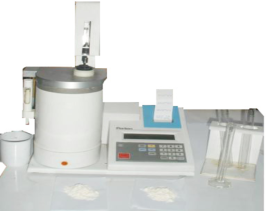
Figure 1. Falling Number measuring instrument (Perten Instruments, 2005).

Figure 2. Water activity measuring instrument, Aqua Lab Lite, (Decagon aw meter, 2004).
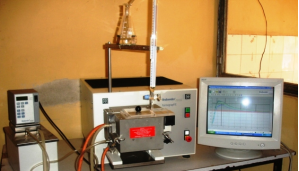
Figure 3. Farinograph measuring instrument.
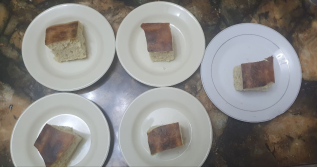
Figure 4. Formulated Difo Dabo for treatments.
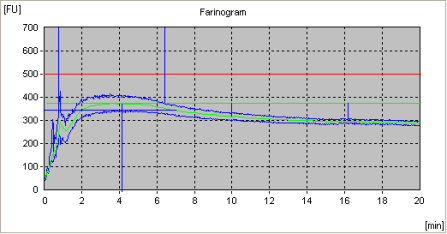
Figure 5. Farinogram of bread flour for the 0%.
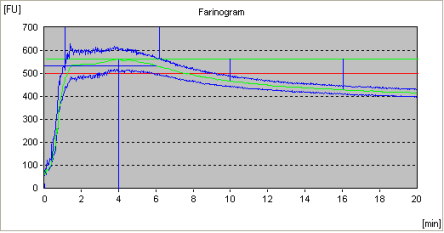
Figure 6. Farinogram of wheat/ soybean flour for the 5% sample.
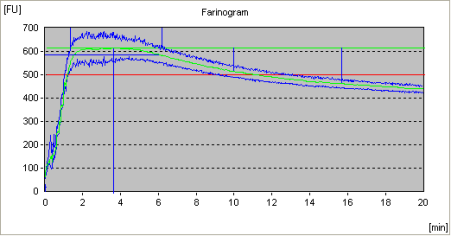
Figure 7. Farinogram of wheat/ soybean flour for the 10% sample.
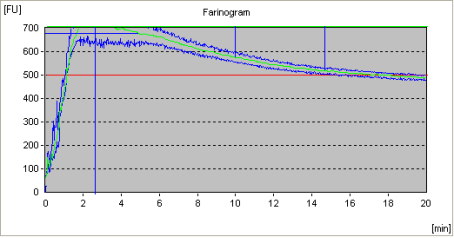
Figure 8. Farinogram of wheat/ soybean flour for the 15% sample.
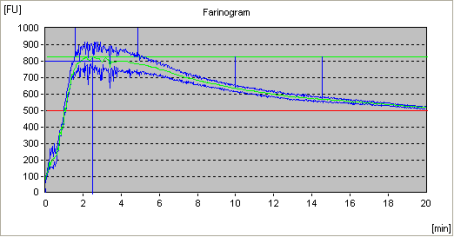
Figure 9. Farinogram of wheat/ soybean flour for the 20% sample.
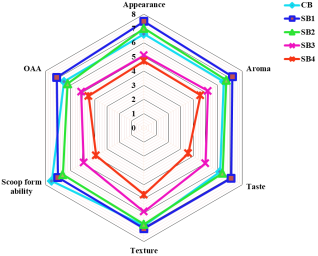
Figure 10. Mean sensory scores of Difo Dabo.

Information



 Share This Article
 Twitter
 Linked In
 Facebook

 Copy
 Download