Abstract
Conventional clinical nutrition primarily estimates energy requirements using demographic and anthropometric variables such as age, sex, body weight, and height. However, these approaches may not adequately reflect the dynamic physiological and metabolic changes associated with disease, contributing to substantial variability in individual nutritional responses. This paper introduces The Zedselkoush Theory, a novel conceptual framework proposing that the effectiveness of nutritional therapy is influenced not only by nutrient intake but also by dynamic nutrient allocation, tissue priority, and circulating blood biomarkers, which collectively reflect the body's current metabolic state. The theory suggests that blood can serve as a real-time indicator of metabolic adaptation and may contribute to a more personalized estimation of energy requirements and nutritional interventions. The proposed framework integrates these physiological components into a unified model and presents a preliminary mathematical concept to support future hypothesis generation. Potential applications include chronic kidney disease, diabetes, obesity, critical care, and other conditions characterized by altered metabolism. Rather than presenting a clinically validated model, this work establishes a theoretical foundation intended to guide future experimental and clinical research. Ultimately, The Zedselkoush Theory offers a new perspective on precision clinical nutrition by emphasizing individualized metabolic assessment beyond conventional calorie-based approaches.
Keywords
The Zedselkoush Theory, Precision Clinical Nutrition, Dynamic Nutrient Allocation, Circulating Blood Biomarkers,
Metabolic Adaptation
1. Introduction
Clinical nutrition has evolved considerably over recent decades, with nutritional assessment and energy requirement estimation becoming essential components of patient care
| [1] | Cederholm T, Barazzoni R, Austin P, Ballmer P, Biolo G, Bischoff SC, Compher C, Correia I, Higashiguchi T, Holst M, Jensen GL, Malone A, Muscaritoli M, Nyulasi I, Pirlich M, Rothenberg E, Schindler K, Schneider SM, de van der Schueren MA, Sieber C, Valentini L, Yu JC, Van Gossum A, Singer P. ESPEN guidelines on definitions and terminology of clinical nutrition. Clin Nutr. 2017 Feb; 36(1): 49-64.
https://doi.org/10.1016/j.clnu.2016.09.004 |
| [2] | Singer P, Blaser AR, Berger MM, Alhazzani W, Calder PC, Casaer MP, Hiesmayr M, Mayer K, Montejo JC, Pichard C, Preiser JC, van Zanten ARH, Oczkowski S, Szczeklik W, Bischoff SC. ESPEN guideline on clinical nutrition in the intensive care unit. Clin Nutr. 2019 Feb; 38(1): 48-79.
https://doi.org/10.1016/j.clnu.2018.08.037 |
| [3] | Weimann A, Braga M, Carli F, Higashiguchi T, Hübner M, Klek S, Laviano A, Ljungqvist O, Lobo DN, Martindale RG, Waitzberg D, Bischoff SC, Singer P. ESPEN practical guideline: Clinical nutrition in surgery. Clin Nutr. 2021 Jul; 40(7): 4745-4761. https://doi.org/10.1016/j.clnu.2021.03.031 |
| [4] | Plauth M, Bernal W, Dasarathy S, Merli M, Plank LD, Schütz T, Bischoff SC. ESPEN guideline on clinical nutrition in liver disease. Clin Nutr. 2019 Apr; 38(2): 485-521.
https://doi.org/10.1016/j.clnu.2018.12.022 |
| [5] | Van Gossum A, Cabre E, Hébuterne X, Jeppesen P, Krznaric Z, Messing B, Powell-Tuck J, Staun M, Nightingale J; ESPEN. ESPEN Guidelines on Parenteral Nutrition: gastroenterology. Clin Nutr. 2009 Aug; 28(4): 415-27.
https://doi.org/10.1016/j.clnu.2009.04.022 |
| [6] | Singer P, Berger MM, Van den Berghe G, Biolo G, Calder P, Forbes A, Griffiths R, Kreyman G, Leverve X, Pichard C, ESPEN. ESPEN Guidelines on Parenteral Nutrition: intensive care. Clin Nutr. 2009 Aug; 28(4): 387-400.
https://doi.org/10.1016/j.clnu.2009.04.024 |
| [7] | Ikizler TA, Burrowes JD, Byham-Gray LD, Campbell KL, Carrero JJ, Chan W, Fouque D, Friedman AN, Ghaddar S, Goldstein-Fuchs DJ, Kaysen GA, Kopple JD, Teta D, Yee-Moon Wang A, Cuppari L. KDOQI Clinical Practice Guideline for Nutrition in CKD: 2020 Update. Am J Kidney Dis. 2020 Sep; 76(3 Suppl 1): S1-S107.
https://doi.org/10.1053/j.ajkd.2020.05.006 |
| [8] | McClave SA, Taylor BE, Martindale RG, Warren MM, Johnson DR, Braunschweig C, McCarthy MS, Davanos E, Rice TW, Cresci GA, Gervasio JM, Sacks GS, Roberts PR, Compher C; Society of Critical Care Medicine; American Society for Parenteral and Enteral Nutrition. Guidelines for the Provision and Assessment of Nutrition Support Therapy in the Adult Critically Ill Patient: Society of Critical Care Medicine (SCCM) and American Society for Parenteral and Enteral Nutrition (A.S.P.E.N.). JPEN J Parenter Enteral Nutr. 2016 Feb; 40(2): 159-211. https://doi.org/10.1177/0148607115621863 |
[1-8]
. Current nutritional practice primarily relies on predictive equations and anthropometric parameters, including age, sex, body weight, height, and physical activity, to estimate individual energy and nutrient requirements. Although these methods provide practical guidance, they may not fully capture the complex physiological adaptations that occur during health and disease.
| [1] | Cederholm T, Barazzoni R, Austin P, Ballmer P, Biolo G, Bischoff SC, Compher C, Correia I, Higashiguchi T, Holst M, Jensen GL, Malone A, Muscaritoli M, Nyulasi I, Pirlich M, Rothenberg E, Schindler K, Schneider SM, de van der Schueren MA, Sieber C, Valentini L, Yu JC, Van Gossum A, Singer P. ESPEN guidelines on definitions and terminology of clinical nutrition. Clin Nutr. 2017 Feb; 36(1): 49-64.
https://doi.org/10.1016/j.clnu.2016.09.004 |
| [2] | Singer P, Blaser AR, Berger MM, Alhazzani W, Calder PC, Casaer MP, Hiesmayr M, Mayer K, Montejo JC, Pichard C, Preiser JC, van Zanten ARH, Oczkowski S, Szczeklik W, Bischoff SC. ESPEN guideline on clinical nutrition in the intensive care unit. Clin Nutr. 2019 Feb; 38(1): 48-79.
https://doi.org/10.1016/j.clnu.2018.08.037 |
| [3] | Weimann A, Braga M, Carli F, Higashiguchi T, Hübner M, Klek S, Laviano A, Ljungqvist O, Lobo DN, Martindale RG, Waitzberg D, Bischoff SC, Singer P. ESPEN practical guideline: Clinical nutrition in surgery. Clin Nutr. 2021 Jul; 40(7): 4745-4761. https://doi.org/10.1016/j.clnu.2021.03.031 |
| [4] | Plauth M, Bernal W, Dasarathy S, Merli M, Plank LD, Schütz T, Bischoff SC. ESPEN guideline on clinical nutrition in liver disease. Clin Nutr. 2019 Apr; 38(2): 485-521.
https://doi.org/10.1016/j.clnu.2018.12.022 |
| [5] | Van Gossum A, Cabre E, Hébuterne X, Jeppesen P, Krznaric Z, Messing B, Powell-Tuck J, Staun M, Nightingale J; ESPEN. ESPEN Guidelines on Parenteral Nutrition: gastroenterology. Clin Nutr. 2009 Aug; 28(4): 415-27.
https://doi.org/10.1016/j.clnu.2009.04.022 |
| [6] | Singer P, Berger MM, Van den Berghe G, Biolo G, Calder P, Forbes A, Griffiths R, Kreyman G, Leverve X, Pichard C, ESPEN. ESPEN Guidelines on Parenteral Nutrition: intensive care. Clin Nutr. 2009 Aug; 28(4): 387-400.
https://doi.org/10.1016/j.clnu.2009.04.024 |
| [7] | Ikizler TA, Burrowes JD, Byham-Gray LD, Campbell KL, Carrero JJ, Chan W, Fouque D, Friedman AN, Ghaddar S, Goldstein-Fuchs DJ, Kaysen GA, Kopple JD, Teta D, Yee-Moon Wang A, Cuppari L. KDOQI Clinical Practice Guideline for Nutrition in CKD: 2020 Update. Am J Kidney Dis. 2020 Sep; 76(3 Suppl 1): S1-S107.
https://doi.org/10.1053/j.ajkd.2020.05.006 |
| [8] | McClave SA, Taylor BE, Martindale RG, Warren MM, Johnson DR, Braunschweig C, McCarthy MS, Davanos E, Rice TW, Cresci GA, Gervasio JM, Sacks GS, Roberts PR, Compher C; Society of Critical Care Medicine; American Society for Parenteral and Enteral Nutrition. Guidelines for the Provision and Assessment of Nutrition Support Therapy in the Adult Critically Ill Patient: Society of Critical Care Medicine (SCCM) and American Society for Parenteral and Enteral Nutrition (A.S.P.E.N.). JPEN J Parenter Enteral Nutr. 2016 Feb; 40(2): 159-211. https://doi.org/10.1177/0148607115621863 |
[1-8]
.
Clinical observations consistently demonstrate that patients with similar demographic characteristics and calculated energy requirements often exhibit markedly different responses to identical nutritional interventions.
| [14] | de Toro-Martín J, Arsenault BJ, Després JP, Vohl MC. Precision Nutrition: A Review of Personalized Nutritional Approaches for the Prevention and Management of Metabolic Syndrome. Nutrients. 2017; 9(8): 913. Published 2017 Aug 22.
https://doi.org/10.3390/nu9080913 |
| [15] | Ordovas JM, Ferguson LR, Tai ES, Mathers JC. Personalised nutrition and health. BMJ. 2018; 361: bmj.k2173. Published 2018 Jun 13. https://doi.org/10.1136/bmj.k2173 |
| [16] | Zeevi D, Korem T, Zmora N, et al. Personalized Nutrition by Prediction of Glycemic Responses. Cell. 2015; 163(5): 1079-1094. https://doi.org/10.1016/j.cell.2015.11.001 |
| [17] | Ordovas JM, Ferguson LR, Tai ES, Mathers JC. Personalised nutrition: Translating the science of nutrigenomics into practice. Proc Nutr Soc. 2018 Aug; 77(3): 209-218.
https://doi.org/10.1017/S002966511800003X |
| [18] | Singer P, Reintam Blaser A, Berger MM. Personalized nutrition in critically ill patients. Clin Nutr. 2021 Sep; 40(9): 5246-5257. https://doi.org/10.1016/j.clnu.2021.08.009 |
| [31] | Johnson CH, Ivanisevic J, Siuzdak G. Metabolomics: beyond biomarkers and towards mechanisms. Nat Rev Mol Cell Biol. 2017 Jul; 17(7): 451-459. https://doi.org/10.1038/nrm.2016.25 |
| [32] | Hasin Y, Seldin M, Lusis A. Multi-omics approaches to disease. Genome Med. 2017 May 5; 9(1): 83.
https://doi.org/10.1186/s13073-017-0473-3 |
| [33] | Corella D, Coltell O, Macian F, Ordovas JM. Advances in understanding the molecular basis of the Mediterranean diet effect. Annu Rev Food Sci Technol. 2018 Mar 25; 9: 227-249. https://doi.org/10.1146/annurev-food-030117-012231 |
| [34] | Wishart DS. Metabolomics for investigating physiological and pathophysiological processes. Physiol Rev. 2019 Oct 1; 99(4): 1819-1875. https://doi.org/10.1152/physrev.00051.2018 |
| [35] | Brennan L, Hu FB. Metabolomics-based dietary biomarkers in nutritional epidemiology. Mol Nutr Food Res. 2019 Mar; 63(1): e1701064. https://doi.org/10.1002/mnfr.201701064 |
| [36] | Barabási AL, Gulbahce N, Loscalzo J. Network medicine: a network-based approach to human disease. Nat Rev Genet. 2011 Jan; 12(1): 56-68.
https://doi.org/10.1038/nrg2918 |
[14-18, 31-36]
Factors such as systemic inflammation, organ dysfunction, tissue perfusion, metabolic adaptation, and alterations in substrate utilization may substantially influence nutrient metabolism and clinical outcomes
| [29] | Corella D, Ordovas JM. Interactions between dietary components and genetic variations: impact on human health. Annu Rev Nutr. 2014; 34: 339-364.
https://doi.org/10.1146/annurev-nutr-071813-105343 |
| [30] | Zeisel SH. Nutrigenomics and metabolomics will change clinical nutrition and public health practice. Advances in Nutrition. 2016 Jan 15; 7(1): 165-166.
https://doi.org/10.3945/an.115.009894 |
| [31] | Johnson CH, Ivanisevic J, Siuzdak G. Metabolomics: beyond biomarkers and towards mechanisms. Nat Rev Mol Cell Biol. 2017 Jul; 17(7): 451-459. https://doi.org/10.1038/nrm.2016.25 |
| [32] | Hasin Y, Seldin M, Lusis A. Multi-omics approaches to disease. Genome Med. 2017 May 5; 9(1): 83.
https://doi.org/10.1186/s13073-017-0473-3 |
| [33] | Corella D, Coltell O, Macian F, Ordovas JM. Advances in understanding the molecular basis of the Mediterranean diet effect. Annu Rev Food Sci Technol. 2018 Mar 25; 9: 227-249. https://doi.org/10.1146/annurev-food-030117-012231 |
| [34] | Wishart DS. Metabolomics for investigating physiological and pathophysiological processes. Physiol Rev. 2019 Oct 1; 99(4): 1819-1875. https://doi.org/10.1152/physrev.00051.2018 |
| [35] | Brennan L, Hu FB. Metabolomics-based dietary biomarkers in nutritional epidemiology. Mol Nutr Food Res. 2019 Mar; 63(1): e1701064. https://doi.org/10.1002/mnfr.201701064 |
| [36] | Barabási AL, Gulbahce N, Loscalzo J. Network medicine: a network-based approach to human disease. Nat Rev Genet. 2011 Jan; 12(1): 56-68.
https://doi.org/10.1038/nrg2918 |
| [37] | Calder PC. Feeding the immune system. Proc Nutr Soc. 2013 Aug; 72(3): 299-309.
https://doi.org/10.1017/S002966511300128X |
| [38] | Calder PC. Nutrition, immunity and COVID-19. BMJ Nutr Prev Health. 2020 May 20; 3(1): 74-92.
https://doi.org/10.1136/bmjnph-2020-000085 |
| [39] | Barazzoni, R., Bischoff, S. C., Breda, J., Wickramasinghe, K., Krznaric, Z., Nitzan, D., et al. ESPEN expert statements and practical guidance for nutritional management of individuals with SARS-CoV-2 infection. Clinical Nutrition. 2020, 39(6), 1631-1638. |
| [40] | Wolfe RR. The underappreciated role of muscle in health and disease. Am J Clin Nutr. 2006 Sep; 84(3): 475-482.
https://doi.org/10.1093/ajcn/84.3.475 |
| [41] | Calder PC, Yaqoob P. Diet, Immunity and Inflammation. Cambridge: Woodhead Publishing; 2013.
https://doi.org/10.1533/9780857095749 |
[29-41]
. These observations suggest that nutritional response is governed by dynamic physiological processes extending beyond conventional calorie estimation.
Advances in precision medicine have emphasized the importance of individualized therapeutic strategies.
| [14] | de Toro-Martín J, Arsenault BJ, Després JP, Vohl MC. Precision Nutrition: A Review of Personalized Nutritional Approaches for the Prevention and Management of Metabolic Syndrome. Nutrients. 2017; 9(8): 913. Published 2017 Aug 22.
https://doi.org/10.3390/nu9080913 |
| [15] | Ordovas JM, Ferguson LR, Tai ES, Mathers JC. Personalised nutrition and health. BMJ. 2018; 361: bmj.k2173. Published 2018 Jun 13. https://doi.org/10.1136/bmj.k2173 |
| [16] | Zeevi D, Korem T, Zmora N, et al. Personalized Nutrition by Prediction of Glycemic Responses. Cell. 2015; 163(5): 1079-1094. https://doi.org/10.1016/j.cell.2015.11.001 |
| [17] | Ordovas JM, Ferguson LR, Tai ES, Mathers JC. Personalised nutrition: Translating the science of nutrigenomics into practice. Proc Nutr Soc. 2018 Aug; 77(3): 209-218.
https://doi.org/10.1017/S002966511800003X |
| [18] | Singer P, Reintam Blaser A, Berger MM. Personalized nutrition in critically ill patients. Clin Nutr. 2021 Sep; 40(9): 5246-5257. https://doi.org/10.1016/j.clnu.2021.08.009 |
| [19] | Müller M, Kersten S. Nutrigenomics: goals and strategies. Nat Rev Genet. 2003 Apr; 4(4): 315-322.
https://doi.org/10.1038/nrg1043 |
| [20] | Ordovas JM, Corella D. Nutritional genomics. Annu Rev Genomics Hum Genet. 2004; 5:71-118.
https://doi.org/10.1146/annurev.genom.5.061903.180008 |
| [21] | Kaput J, Rodriguez RL. Nutritional genomics: the next frontier in the postgenomic era. Physiol Genomics. 2004;16(2): 166-177. Published 2004 Jan 15. https://doi.org/10.1152/physiolgenomics.00107.2003 |
| [22] | Afman L, Müller M. Nutrigenomics: from molecular nutrition to prevention of disease. J Am Diet Assoc. 2006; 106(4): 569-576. https://doi.org/10.1016/j.jada.2006.01.001 |
| [23] | Ferguson, L. R. Nutrigenomics in the post-genomic era. Asia Pacific Journal of Clinical Nutrition. 2007, 16(Suppl 1), 219-223. |
| [24] | Mathers JC. The biological revolution: understanding the impact of nutrigenomics. Proc Nutr Soc. 2007 Feb; 66(1): 1-8. https://doi.org/10.1017/S002966510700523X |
| [25] | Ferguson LR. Nutrigenomics approaches to functional foods. J Am Diet Assoc. 2009 Mar; 109(3): 452-458.
https://doi.org/10.1016/j.jada.2008.11.024 |
| [26] | Afman LA, Müller M. Human nutrigenomics of gene regulation by dietary fatty acids. Prog Lipid Res. 2012 Jan; 51(1): 63-70. https://doi.org/10.1016/j.plipres.2011.12.001 |
| [27] | Hesketh J. Nutrigenomics and personalized nutrition: science and concept. Proc Nutr Soc. 2013 Feb; 72(1): 1-8.
https://doi.org/10.1017/S002966511200287X |
| [28] | Mathers JC. Nutrigenomics in the modern era. Proc Nutr Soc. 2017 Aug; 76(3): 265-275.
https://doi.org/10.1017/S002966511600083X |
[14-28]
However, precision clinical nutrition remains largely dependent on static predictive models, with limited integration of real-time physiological and metabolic information derived from circulating blood biomarkers and tissue-specific metabolic demands.
| [14] | de Toro-Martín J, Arsenault BJ, Després JP, Vohl MC. Precision Nutrition: A Review of Personalized Nutritional Approaches for the Prevention and Management of Metabolic Syndrome. Nutrients. 2017; 9(8): 913. Published 2017 Aug 22.
https://doi.org/10.3390/nu9080913 |
| [15] | Ordovas JM, Ferguson LR, Tai ES, Mathers JC. Personalised nutrition and health. BMJ. 2018; 361: bmj.k2173. Published 2018 Jun 13. https://doi.org/10.1136/bmj.k2173 |
| [16] | Zeevi D, Korem T, Zmora N, et al. Personalized Nutrition by Prediction of Glycemic Responses. Cell. 2015; 163(5): 1079-1094. https://doi.org/10.1016/j.cell.2015.11.001 |
| [17] | Ordovas JM, Ferguson LR, Tai ES, Mathers JC. Personalised nutrition: Translating the science of nutrigenomics into practice. Proc Nutr Soc. 2018 Aug; 77(3): 209-218.
https://doi.org/10.1017/S002966511800003X |
| [18] | Singer P, Reintam Blaser A, Berger MM. Personalized nutrition in critically ill patients. Clin Nutr. 2021 Sep; 40(9): 5246-5257. https://doi.org/10.1016/j.clnu.2021.08.009 |
[14-18]
.
Figure 1. Limitations of Current Clinical Nutrition Models.
Figure 2. Why Similar Patients Respond Differently.
Figure 3. Disease Changes Nutrient Prioritization.
Figure 4. Static vs Dynamic Nutrition.
To address this conceptual gap, this paper proposes **The Zedselkoush Theory**, a novel theoretical framework suggesting that nutritional effectiveness is determined by the interaction between dynamic nutrient allocation, tissue priority, metabolic adaptation, and circulating blood biomarkers. Rather than replacing established nutritional assessment methods, this theory seeks to complement existing approaches by providing an integrated physiological perspective on individualized nutritional care.
Table 1. Physiological Processes and Associated Circulating Blood Biomarkers.
Physiological Process | Possible Biomarkers |
Inflammation | CRP, IL-6 |
Kidney | Creatinine, Cystatin C |
Liver | ALT, AST |
Glucose metabolism | Glucose, Insulin |
Acid-base | HCO3-, Lactate |
Muscle | Creatinine, 3-Methylhistidine |
The objective of this paper is to present the theoretical foundations of the Ze、dselkoush Theory, describe its proposed framework, introduce a preliminary mathematical model, and discuss its potential implications for future research and the advancement of precision clinical nutrition.
2. Why Current Clinical Nutrition Models Are Incomplete
Clinical nutrition has achieved substantial progress in estimating nutritional requirements through predictive equations, indirect calorimetry, and evidence-based clinical guidelines. These approaches have significantly improved patient management and remain fundamental components of nutritional assessment
| [1] | Cederholm T, Barazzoni R, Austin P, Ballmer P, Biolo G, Bischoff SC, Compher C, Correia I, Higashiguchi T, Holst M, Jensen GL, Malone A, Muscaritoli M, Nyulasi I, Pirlich M, Rothenberg E, Schindler K, Schneider SM, de van der Schueren MA, Sieber C, Valentini L, Yu JC, Van Gossum A, Singer P. ESPEN guidelines on definitions and terminology of clinical nutrition. Clin Nutr. 2017 Feb; 36(1): 49-64.
https://doi.org/10.1016/j.clnu.2016.09.004 |
| [2] | Singer P, Blaser AR, Berger MM, Alhazzani W, Calder PC, Casaer MP, Hiesmayr M, Mayer K, Montejo JC, Pichard C, Preiser JC, van Zanten ARH, Oczkowski S, Szczeklik W, Bischoff SC. ESPEN guideline on clinical nutrition in the intensive care unit. Clin Nutr. 2019 Feb; 38(1): 48-79.
https://doi.org/10.1016/j.clnu.2018.08.037 |
| [3] | Weimann A, Braga M, Carli F, Higashiguchi T, Hübner M, Klek S, Laviano A, Ljungqvist O, Lobo DN, Martindale RG, Waitzberg D, Bischoff SC, Singer P. ESPEN practical guideline: Clinical nutrition in surgery. Clin Nutr. 2021 Jul; 40(7): 4745-4761. https://doi.org/10.1016/j.clnu.2021.03.031 |
| [4] | Plauth M, Bernal W, Dasarathy S, Merli M, Plank LD, Schütz T, Bischoff SC. ESPEN guideline on clinical nutrition in liver disease. Clin Nutr. 2019 Apr; 38(2): 485-521.
https://doi.org/10.1016/j.clnu.2018.12.022 |
| [5] | Van Gossum A, Cabre E, Hébuterne X, Jeppesen P, Krznaric Z, Messing B, Powell-Tuck J, Staun M, Nightingale J; ESPEN. ESPEN Guidelines on Parenteral Nutrition: gastroenterology. Clin Nutr. 2009 Aug; 28(4): 415-27.
https://doi.org/10.1016/j.clnu.2009.04.022 |
| [6] | Singer P, Berger MM, Van den Berghe G, Biolo G, Calder P, Forbes A, Griffiths R, Kreyman G, Leverve X, Pichard C, ESPEN. ESPEN Guidelines on Parenteral Nutrition: intensive care. Clin Nutr. 2009 Aug; 28(4): 387-400.
https://doi.org/10.1016/j.clnu.2009.04.024 |
| [7] | Ikizler TA, Burrowes JD, Byham-Gray LD, Campbell KL, Carrero JJ, Chan W, Fouque D, Friedman AN, Ghaddar S, Goldstein-Fuchs DJ, Kaysen GA, Kopple JD, Teta D, Yee-Moon Wang A, Cuppari L. KDOQI Clinical Practice Guideline for Nutrition in CKD: 2020 Update. Am J Kidney Dis. 2020 Sep; 76(3 Suppl 1): S1-S107.
https://doi.org/10.1053/j.ajkd.2020.05.006 |
| [8] | McClave SA, Taylor BE, Martindale RG, Warren MM, Johnson DR, Braunschweig C, McCarthy MS, Davanos E, Rice TW, Cresci GA, Gervasio JM, Sacks GS, Roberts PR, Compher C; Society of Critical Care Medicine; American Society for Parenteral and Enteral Nutrition. Guidelines for the Provision and Assessment of Nutrition Support Therapy in the Adult Critically Ill Patient: Society of Critical Care Medicine (SCCM) and American Society for Parenteral and Enteral Nutrition (A.S.P.E.N.). JPEN J Parenter Enteral Nutr. 2016 Feb; 40(2): 159-211. https://doi.org/10.1177/0148607115621863 |
[1-8]
. Nevertheless, they primarily estimate energy requirements based on relatively static variables and may not fully represent the continuously changing metabolic environment observed during illness
| [14] | de Toro-Martín J, Arsenault BJ, Després JP, Vohl MC. Precision Nutrition: A Review of Personalized Nutritional Approaches for the Prevention and Management of Metabolic Syndrome. Nutrients. 2017; 9(8): 913. Published 2017 Aug 22.
https://doi.org/10.3390/nu9080913 |
| [15] | Ordovas JM, Ferguson LR, Tai ES, Mathers JC. Personalised nutrition and health. BMJ. 2018; 361: bmj.k2173. Published 2018 Jun 13. https://doi.org/10.1136/bmj.k2173 |
| [16] | Zeevi D, Korem T, Zmora N, et al. Personalized Nutrition by Prediction of Glycemic Responses. Cell. 2015; 163(5): 1079-1094. https://doi.org/10.1016/j.cell.2015.11.001 |
| [17] | Ordovas JM, Ferguson LR, Tai ES, Mathers JC. Personalised nutrition: Translating the science of nutrigenomics into practice. Proc Nutr Soc. 2018 Aug; 77(3): 209-218.
https://doi.org/10.1017/S002966511800003X |
| [18] | Singer P, Reintam Blaser A, Berger MM. Personalized nutrition in critically ill patients. Clin Nutr. 2021 Sep; 40(9): 5246-5257. https://doi.org/10.1016/j.clnu.2021.08.009 |
[14-18]
.
Most predictive equations including Harris-Benedict, Mifflin-St Jeor, Schofield, and disease-specific formulas rely mainly on demographic and anthropometric variables such as age, sex, body weight, height, and, in some cases, physical activity or stress factors
| [1] | Cederholm T, Barazzoni R, Austin P, Ballmer P, Biolo G, Bischoff SC, Compher C, Correia I, Higashiguchi T, Holst M, Jensen GL, Malone A, Muscaritoli M, Nyulasi I, Pirlich M, Rothenberg E, Schindler K, Schneider SM, de van der Schueren MA, Sieber C, Valentini L, Yu JC, Van Gossum A, Singer P. ESPEN guidelines on definitions and terminology of clinical nutrition. Clin Nutr. 2017 Feb; 36(1): 49-64.
https://doi.org/10.1016/j.clnu.2016.09.004 |
| [2] | Singer P, Blaser AR, Berger MM, Alhazzani W, Calder PC, Casaer MP, Hiesmayr M, Mayer K, Montejo JC, Pichard C, Preiser JC, van Zanten ARH, Oczkowski S, Szczeklik W, Bischoff SC. ESPEN guideline on clinical nutrition in the intensive care unit. Clin Nutr. 2019 Feb; 38(1): 48-79.
https://doi.org/10.1016/j.clnu.2018.08.037 |
| [3] | Weimann A, Braga M, Carli F, Higashiguchi T, Hübner M, Klek S, Laviano A, Ljungqvist O, Lobo DN, Martindale RG, Waitzberg D, Bischoff SC, Singer P. ESPEN practical guideline: Clinical nutrition in surgery. Clin Nutr. 2021 Jul; 40(7): 4745-4761. https://doi.org/10.1016/j.clnu.2021.03.031 |
| [4] | Plauth M, Bernal W, Dasarathy S, Merli M, Plank LD, Schütz T, Bischoff SC. ESPEN guideline on clinical nutrition in liver disease. Clin Nutr. 2019 Apr; 38(2): 485-521.
https://doi.org/10.1016/j.clnu.2018.12.022 |
| [5] | Van Gossum A, Cabre E, Hébuterne X, Jeppesen P, Krznaric Z, Messing B, Powell-Tuck J, Staun M, Nightingale J; ESPEN. ESPEN Guidelines on Parenteral Nutrition: gastroenterology. Clin Nutr. 2009 Aug; 28(4): 415-27.
https://doi.org/10.1016/j.clnu.2009.04.022 |
| [6] | Singer P, Berger MM, Van den Berghe G, Biolo G, Calder P, Forbes A, Griffiths R, Kreyman G, Leverve X, Pichard C, ESPEN. ESPEN Guidelines on Parenteral Nutrition: intensive care. Clin Nutr. 2009 Aug; 28(4): 387-400.
https://doi.org/10.1016/j.clnu.2009.04.024 |
| [7] | Ikizler TA, Burrowes JD, Byham-Gray LD, Campbell KL, Carrero JJ, Chan W, Fouque D, Friedman AN, Ghaddar S, Goldstein-Fuchs DJ, Kaysen GA, Kopple JD, Teta D, Yee-Moon Wang A, Cuppari L. KDOQI Clinical Practice Guideline for Nutrition in CKD: 2020 Update. Am J Kidney Dis. 2020 Sep; 76(3 Suppl 1): S1-S107.
https://doi.org/10.1053/j.ajkd.2020.05.006 |
| [8] | McClave SA, Taylor BE, Martindale RG, Warren MM, Johnson DR, Braunschweig C, McCarthy MS, Davanos E, Rice TW, Cresci GA, Gervasio JM, Sacks GS, Roberts PR, Compher C; Society of Critical Care Medicine; American Society for Parenteral and Enteral Nutrition. Guidelines for the Provision and Assessment of Nutrition Support Therapy in the Adult Critically Ill Patient: Society of Critical Care Medicine (SCCM) and American Society for Parenteral and Enteral Nutrition (A.S.P.E.N.). JPEN J Parenter Enteral Nutr. 2016 Feb; 40(2): 159-211. https://doi.org/10.1177/0148607115621863 |
[1-8]
. Although these models perform reasonably well at the population level, considerable inter-individual variability remains, particularly among patients with chronic diseases, systemic inflammation, critical illness, endocrine disorders, and organ dysfunction
| [2] | Singer P, Blaser AR, Berger MM, Alhazzani W, Calder PC, Casaer MP, Hiesmayr M, Mayer K, Montejo JC, Pichard C, Preiser JC, van Zanten ARH, Oczkowski S, Szczeklik W, Bischoff SC. ESPEN guideline on clinical nutrition in the intensive care unit. Clin Nutr. 2019 Feb; 38(1): 48-79.
https://doi.org/10.1016/j.clnu.2018.08.037 |
| [4] | Plauth M, Bernal W, Dasarathy S, Merli M, Plank LD, Schütz T, Bischoff SC. ESPEN guideline on clinical nutrition in liver disease. Clin Nutr. 2019 Apr; 38(2): 485-521.
https://doi.org/10.1016/j.clnu.2018.12.022 |
| [7] | Ikizler TA, Burrowes JD, Byham-Gray LD, Campbell KL, Carrero JJ, Chan W, Fouque D, Friedman AN, Ghaddar S, Goldstein-Fuchs DJ, Kaysen GA, Kopple JD, Teta D, Yee-Moon Wang A, Cuppari L. KDOQI Clinical Practice Guideline for Nutrition in CKD: 2020 Update. Am J Kidney Dis. 2020 Sep; 76(3 Suppl 1): S1-S107.
https://doi.org/10.1053/j.ajkd.2020.05.006 |
| [10] | Garber AJ, Abrahamson MJ, Barzilay JI, Blonde L, Bloomgarden ZT, Bush MA, et al. Consensus statement by the American Association of Clinical Endocrinologists and American College of Endocrinology on the comprehensive management of type 2 diabetes. Endocr Pract. 2020 Jan; 26(1): 107-139. https://doi.org/10.4158/CS-2019-0472 |
| [14] | de Toro-Martín J, Arsenault BJ, Després JP, Vohl MC. Precision Nutrition: A Review of Personalized Nutritional Approaches for the Prevention and Management of Metabolic Syndrome. Nutrients. 2017; 9(8): 913. Published 2017 Aug 22.
https://doi.org/10.3390/nu9080913 |
| [15] | Ordovas JM, Ferguson LR, Tai ES, Mathers JC. Personalised nutrition and health. BMJ. 2018; 361: bmj.k2173. Published 2018 Jun 13. https://doi.org/10.1136/bmj.k2173 |
| [16] | Zeevi D, Korem T, Zmora N, et al. Personalized Nutrition by Prediction of Glycemic Responses. Cell. 2015; 163(5): 1079-1094. https://doi.org/10.1016/j.cell.2015.11.001 |
| [17] | Ordovas JM, Ferguson LR, Tai ES, Mathers JC. Personalised nutrition: Translating the science of nutrigenomics into practice. Proc Nutr Soc. 2018 Aug; 77(3): 209-218.
https://doi.org/10.1017/S002966511800003X |
| [18] | Singer P, Reintam Blaser A, Berger MM. Personalized nutrition in critically ill patients. Clin Nutr. 2021 Sep; 40(9): 5246-5257. https://doi.org/10.1016/j.clnu.2021.08.009 |
| [37] | Calder PC. Feeding the immune system. Proc Nutr Soc. 2013 Aug; 72(3): 299-309.
https://doi.org/10.1017/S002966511300128X |
| [38] | Calder PC. Nutrition, immunity and COVID-19. BMJ Nutr Prev Health. 2020 May 20; 3(1): 74-92.
https://doi.org/10.1136/bmjnph-2020-000085 |
| [39] | Barazzoni, R., Bischoff, S. C., Breda, J., Wickramasinghe, K., Krznaric, Z., Nitzan, D., et al. ESPEN expert statements and practical guidance for nutritional management of individuals with SARS-CoV-2 infection. Clinical Nutrition. 2020, 39(6), 1631-1638. |
| [40] | Wolfe RR. The underappreciated role of muscle in health and disease. Am J Clin Nutr. 2006 Sep; 84(3): 475-482.
https://doi.org/10.1093/ajcn/84.3.475 |
| [41] | Calder PC, Yaqoob P. Diet, Immunity and Inflammation. Cambridge: Woodhead Publishing; 2013.
https://doi.org/10.1533/9780857095749 |
[2, 4, 7, 10, 14-18, 37-41]
.
Figure 6. Transition Figure.
One of the principal limitations of current nutritional models is that they primarily estimate energy demand while providing limited insight into how nutrients are dynamically distributed throughout the body after ingestion. Human metabolism is not solely determined by caloric intake; it is governed by continuous physiological prioritization among tissues competing for metabolic resources
| [29] | Corella D, Ordovas JM. Interactions between dietary components and genetic variations: impact on human health. Annu Rev Nutr. 2014; 34: 339-364.
https://doi.org/10.1146/annurev-nutr-071813-105343 |
| [30] | Zeisel SH. Nutrigenomics and metabolomics will change clinical nutrition and public health practice. Advances in Nutrition. 2016 Jan 15; 7(1): 165-166.
https://doi.org/10.3945/an.115.009894 |
| [31] | Johnson CH, Ivanisevic J, Siuzdak G. Metabolomics: beyond biomarkers and towards mechanisms. Nat Rev Mol Cell Biol. 2017 Jul; 17(7): 451-459. https://doi.org/10.1038/nrm.2016.25 |
| [32] | Hasin Y, Seldin M, Lusis A. Multi-omics approaches to disease. Genome Med. 2017 May 5; 9(1): 83.
https://doi.org/10.1186/s13073-017-0473-3 |
| [33] | Corella D, Coltell O, Macian F, Ordovas JM. Advances in understanding the molecular basis of the Mediterranean diet effect. Annu Rev Food Sci Technol. 2018 Mar 25; 9: 227-249. https://doi.org/10.1146/annurev-food-030117-012231 |
| [34] | Wishart DS. Metabolomics for investigating physiological and pathophysiological processes. Physiol Rev. 2019 Oct 1; 99(4): 1819-1875. https://doi.org/10.1152/physrev.00051.2018 |
| [35] | Brennan L, Hu FB. Metabolomics-based dietary biomarkers in nutritional epidemiology. Mol Nutr Food Res. 2019 Mar; 63(1): e1701064. https://doi.org/10.1002/mnfr.201701064 |
| [36] | Barabási AL, Gulbahce N, Loscalzo J. Network medicine: a network-based approach to human disease. Nat Rev Genet. 2011 Jan; 12(1): 56-68.
https://doi.org/10.1038/nrg2918 |
[29-36]
. During disease, organs such as the immune system, liver, kidneys, skeletal muscle, adipose tissue, and the central nervous system may alter their relative metabolic demands in response to inflammation, hormonal signaling, substrate availability, and tissue repair
| [4] | Plauth M, Bernal W, Dasarathy S, Merli M, Plank LD, Schütz T, Bischoff SC. ESPEN guideline on clinical nutrition in liver disease. Clin Nutr. 2019 Apr; 38(2): 485-521.
https://doi.org/10.1016/j.clnu.2018.12.022 |
| [7] | Ikizler TA, Burrowes JD, Byham-Gray LD, Campbell KL, Carrero JJ, Chan W, Fouque D, Friedman AN, Ghaddar S, Goldstein-Fuchs DJ, Kaysen GA, Kopple JD, Teta D, Yee-Moon Wang A, Cuppari L. KDOQI Clinical Practice Guideline for Nutrition in CKD: 2020 Update. Am J Kidney Dis. 2020 Sep; 76(3 Suppl 1): S1-S107.
https://doi.org/10.1053/j.ajkd.2020.05.006 |
| [29] | Corella D, Ordovas JM. Interactions between dietary components and genetic variations: impact on human health. Annu Rev Nutr. 2014; 34: 339-364.
https://doi.org/10.1146/annurev-nutr-071813-105343 |
| [30] | Zeisel SH. Nutrigenomics and metabolomics will change clinical nutrition and public health practice. Advances in Nutrition. 2016 Jan 15; 7(1): 165-166.
https://doi.org/10.3945/an.115.009894 |
| [31] | Johnson CH, Ivanisevic J, Siuzdak G. Metabolomics: beyond biomarkers and towards mechanisms. Nat Rev Mol Cell Biol. 2017 Jul; 17(7): 451-459. https://doi.org/10.1038/nrm.2016.25 |
| [32] | Hasin Y, Seldin M, Lusis A. Multi-omics approaches to disease. Genome Med. 2017 May 5; 9(1): 83.
https://doi.org/10.1186/s13073-017-0473-3 |
| [33] | Corella D, Coltell O, Macian F, Ordovas JM. Advances in understanding the molecular basis of the Mediterranean diet effect. Annu Rev Food Sci Technol. 2018 Mar 25; 9: 227-249. https://doi.org/10.1146/annurev-food-030117-012231 |
| [34] | Wishart DS. Metabolomics for investigating physiological and pathophysiological processes. Physiol Rev. 2019 Oct 1; 99(4): 1819-1875. https://doi.org/10.1152/physrev.00051.2018 |
| [35] | Brennan L, Hu FB. Metabolomics-based dietary biomarkers in nutritional epidemiology. Mol Nutr Food Res. 2019 Mar; 63(1): e1701064. https://doi.org/10.1002/mnfr.201701064 |
| [36] | Barabási AL, Gulbahce N, Loscalzo J. Network medicine: a network-based approach to human disease. Nat Rev Genet. 2011 Jan; 12(1): 56-68.
https://doi.org/10.1038/nrg2918 |
| [37] | Calder PC. Feeding the immune system. Proc Nutr Soc. 2013 Aug; 72(3): 299-309.
https://doi.org/10.1017/S002966511300128X |
| [38] | Calder PC. Nutrition, immunity and COVID-19. BMJ Nutr Prev Health. 2020 May 20; 3(1): 74-92.
https://doi.org/10.1136/bmjnph-2020-000085 |
| [39] | Barazzoni, R., Bischoff, S. C., Breda, J., Wickramasinghe, K., Krznaric, Z., Nitzan, D., et al. ESPEN expert statements and practical guidance for nutritional management of individuals with SARS-CoV-2 infection. Clinical Nutrition. 2020, 39(6), 1631-1638. |
| [40] | Wolfe RR. The underappreciated role of muscle in health and disease. Am J Clin Nutr. 2006 Sep; 84(3): 475-482.
https://doi.org/10.1093/ajcn/84.3.475 |
| [41] | Calder PC, Yaqoob P. Diet, Immunity and Inflammation. Cambridge: Woodhead Publishing; 2013.
https://doi.org/10.1533/9780857095749 |
[4, 7, 29-41]
.
Furthermore, identical caloric prescriptions often produce markedly different clinical outcomes among patients with apparently similar characteristics. Some individuals preserve lean body mass, whereas others experience progressive muscle wasting despite receiving comparable nutritional support. Likewise, glycemic control, protein utilization, nitrogen balance, and recovery rates frequently differ despite standardized nutritional interventions
| [9] | Cederholm T, Jensen GL, Correia MITD, et al. GLIM criteria for the diagnosis of malnutrition - A consensus report from the global clinical nutrition community. Clin Nutr. 2019; 38(1): 1-9. https://doi.org/10.1016/j.clnu.2018.08.002 |
| [10] | Garber AJ, Abrahamson MJ, Barzilay JI, Blonde L, Bloomgarden ZT, Bush MA, et al. Consensus statement by the American Association of Clinical Endocrinologists and American College of Endocrinology on the comprehensive management of type 2 diabetes. Endocr Pract. 2020 Jan; 26(1): 107-139. https://doi.org/10.4158/CS-2019-0472 |
| [11] | Stratton, R. J. and Green, C. J. and Elia, M., R. J. Stratton, C. J. Green, M. Eliaeditors, 20033018371, English, Book, UK, https://doi.org/10.1079/9780851996486.0000 , 9780851996486, Wallingford, Disease-related malnutrition: an evidence-based approach to treatment, (xvi + 824 pp.), CABI Publishing, Disease-related malnutrition: an evidence-based approach to treatment., (2003). |
| [12] | Elia, M. Nutrition Screening: The MUST Report. Redditch: BAPEN; 2003. |
| [13] | Elia M, Normand C, Laviano A, Norman K. A systematic review of the cost and cost effectiveness of using standard oral nutritional supplements in community and care home settings. Clin Nutr. 2016; 35(1): 125-137.
https://doi.org/10.1016/j.clnu.2015.07.012 |
| [14] | de Toro-Martín J, Arsenault BJ, Després JP, Vohl MC. Precision Nutrition: A Review of Personalized Nutritional Approaches for the Prevention and Management of Metabolic Syndrome. Nutrients. 2017; 9(8): 913. Published 2017 Aug 22.
https://doi.org/10.3390/nu9080913 |
| [15] | Ordovas JM, Ferguson LR, Tai ES, Mathers JC. Personalised nutrition and health. BMJ. 2018; 361: bmj.k2173. Published 2018 Jun 13. https://doi.org/10.1136/bmj.k2173 |
| [16] | Zeevi D, Korem T, Zmora N, et al. Personalized Nutrition by Prediction of Glycemic Responses. Cell. 2015; 163(5): 1079-1094. https://doi.org/10.1016/j.cell.2015.11.001 |
| [17] | Ordovas JM, Ferguson LR, Tai ES, Mathers JC. Personalised nutrition: Translating the science of nutrigenomics into practice. Proc Nutr Soc. 2018 Aug; 77(3): 209-218.
https://doi.org/10.1017/S002966511800003X |
| [18] | Singer P, Reintam Blaser A, Berger MM. Personalized nutrition in critically ill patients. Clin Nutr. 2021 Sep; 40(9): 5246-5257. https://doi.org/10.1016/j.clnu.2021.08.009 |
| [37] | Calder PC. Feeding the immune system. Proc Nutr Soc. 2013 Aug; 72(3): 299-309.
https://doi.org/10.1017/S002966511300128X |
| [38] | Calder PC. Nutrition, immunity and COVID-19. BMJ Nutr Prev Health. 2020 May 20; 3(1): 74-92.
https://doi.org/10.1136/bmjnph-2020-000085 |
| [39] | Barazzoni, R., Bischoff, S. C., Breda, J., Wickramasinghe, K., Krznaric, Z., Nitzan, D., et al. ESPEN expert statements and practical guidance for nutritional management of individuals with SARS-CoV-2 infection. Clinical Nutrition. 2020, 39(6), 1631-1638. |
| [40] | Wolfe RR. The underappreciated role of muscle in health and disease. Am J Clin Nutr. 2006 Sep; 84(3): 475-482.
https://doi.org/10.1093/ajcn/84.3.475 |
| [41] | Calder PC, Yaqoob P. Diet, Immunity and Inflammation. Cambridge: Woodhead Publishing; 2013.
https://doi.org/10.1533/9780857095749 |
[9-18, 37-41]
. These observations suggest that metabolic response depends on physiological factors extending beyond predicted energy expenditure alone
| [14] | de Toro-Martín J, Arsenault BJ, Després JP, Vohl MC. Precision Nutrition: A Review of Personalized Nutritional Approaches for the Prevention and Management of Metabolic Syndrome. Nutrients. 2017; 9(8): 913. Published 2017 Aug 22.
https://doi.org/10.3390/nu9080913 |
| [15] | Ordovas JM, Ferguson LR, Tai ES, Mathers JC. Personalised nutrition and health. BMJ. 2018; 361: bmj.k2173. Published 2018 Jun 13. https://doi.org/10.1136/bmj.k2173 |
| [16] | Zeevi D, Korem T, Zmora N, et al. Personalized Nutrition by Prediction of Glycemic Responses. Cell. 2015; 163(5): 1079-1094. https://doi.org/10.1016/j.cell.2015.11.001 |
| [17] | Ordovas JM, Ferguson LR, Tai ES, Mathers JC. Personalised nutrition: Translating the science of nutrigenomics into practice. Proc Nutr Soc. 2018 Aug; 77(3): 209-218.
https://doi.org/10.1017/S002966511800003X |
| [18] | Singer P, Reintam Blaser A, Berger MM. Personalized nutrition in critically ill patients. Clin Nutr. 2021 Sep; 40(9): 5246-5257. https://doi.org/10.1016/j.clnu.2021.08.009 |
| [29] | Corella D, Ordovas JM. Interactions between dietary components and genetic variations: impact on human health. Annu Rev Nutr. 2014; 34: 339-364.
https://doi.org/10.1146/annurev-nutr-071813-105343 |
| [30] | Zeisel SH. Nutrigenomics and metabolomics will change clinical nutrition and public health practice. Advances in Nutrition. 2016 Jan 15; 7(1): 165-166.
https://doi.org/10.3945/an.115.009894 |
| [31] | Johnson CH, Ivanisevic J, Siuzdak G. Metabolomics: beyond biomarkers and towards mechanisms. Nat Rev Mol Cell Biol. 2017 Jul; 17(7): 451-459. https://doi.org/10.1038/nrm.2016.25 |
| [32] | Hasin Y, Seldin M, Lusis A. Multi-omics approaches to disease. Genome Med. 2017 May 5; 9(1): 83.
https://doi.org/10.1186/s13073-017-0473-3 |
| [33] | Corella D, Coltell O, Macian F, Ordovas JM. Advances in understanding the molecular basis of the Mediterranean diet effect. Annu Rev Food Sci Technol. 2018 Mar 25; 9: 227-249. https://doi.org/10.1146/annurev-food-030117-012231 |
| [34] | Wishart DS. Metabolomics for investigating physiological and pathophysiological processes. Physiol Rev. 2019 Oct 1; 99(4): 1819-1875. https://doi.org/10.1152/physrev.00051.2018 |
| [35] | Brennan L, Hu FB. Metabolomics-based dietary biomarkers in nutritional epidemiology. Mol Nutr Food Res. 2019 Mar; 63(1): e1701064. https://doi.org/10.1002/mnfr.201701064 |
| [36] | Barabási AL, Gulbahce N, Loscalzo J. Network medicine: a network-based approach to human disease. Nat Rev Genet. 2011 Jan; 12(1): 56-68.
https://doi.org/10.1038/nrg2918 |
[14-18, 29-36]
.
Another important limitation is the relatively limited incorporation of continuously changing biological information into nutritional decision-making. Modern clinical practice increasingly utilizes circulating biomarkers—including glucose, lactate, inflammatory markers, renal function indices, liver enzymes, acid-base parameters, and lipid profiles—to monitor disease progression
. However, these biomarkers are generally interpreted independently rather than integrated into a unified physiological model capable of estimating the body's current metabolic priorities and nutrient allocation patterns
| [14] | de Toro-Martín J, Arsenault BJ, Després JP, Vohl MC. Precision Nutrition: A Review of Personalized Nutritional Approaches for the Prevention and Management of Metabolic Syndrome. Nutrients. 2017; 9(8): 913. Published 2017 Aug 22.
https://doi.org/10.3390/nu9080913 |
| [15] | Ordovas JM, Ferguson LR, Tai ES, Mathers JC. Personalised nutrition and health. BMJ. 2018; 361: bmj.k2173. Published 2018 Jun 13. https://doi.org/10.1136/bmj.k2173 |
| [16] | Zeevi D, Korem T, Zmora N, et al. Personalized Nutrition by Prediction of Glycemic Responses. Cell. 2015; 163(5): 1079-1094. https://doi.org/10.1016/j.cell.2015.11.001 |
| [17] | Ordovas JM, Ferguson LR, Tai ES, Mathers JC. Personalised nutrition: Translating the science of nutrigenomics into practice. Proc Nutr Soc. 2018 Aug; 77(3): 209-218.
https://doi.org/10.1017/S002966511800003X |
| [18] | Singer P, Reintam Blaser A, Berger MM. Personalized nutrition in critically ill patients. Clin Nutr. 2021 Sep; 40(9): 5246-5257. https://doi.org/10.1016/j.clnu.2021.08.009 |
| [29] | Corella D, Ordovas JM. Interactions between dietary components and genetic variations: impact on human health. Annu Rev Nutr. 2014; 34: 339-364.
https://doi.org/10.1146/annurev-nutr-071813-105343 |
| [30] | Zeisel SH. Nutrigenomics and metabolomics will change clinical nutrition and public health practice. Advances in Nutrition. 2016 Jan 15; 7(1): 165-166.
https://doi.org/10.3945/an.115.009894 |
| [31] | Johnson CH, Ivanisevic J, Siuzdak G. Metabolomics: beyond biomarkers and towards mechanisms. Nat Rev Mol Cell Biol. 2017 Jul; 17(7): 451-459. https://doi.org/10.1038/nrm.2016.25 |
| [32] | Hasin Y, Seldin M, Lusis A. Multi-omics approaches to disease. Genome Med. 2017 May 5; 9(1): 83.
https://doi.org/10.1186/s13073-017-0473-3 |
| [33] | Corella D, Coltell O, Macian F, Ordovas JM. Advances in understanding the molecular basis of the Mediterranean diet effect. Annu Rev Food Sci Technol. 2018 Mar 25; 9: 227-249. https://doi.org/10.1146/annurev-food-030117-012231 |
| [34] | Wishart DS. Metabolomics for investigating physiological and pathophysiological processes. Physiol Rev. 2019 Oct 1; 99(4): 1819-1875. https://doi.org/10.1152/physrev.00051.2018 |
| [35] | Brennan L, Hu FB. Metabolomics-based dietary biomarkers in nutritional epidemiology. Mol Nutr Food Res. 2019 Mar; 63(1): e1701064. https://doi.org/10.1002/mnfr.201701064 |
| [36] | Barabási AL, Gulbahce N, Loscalzo J. Network medicine: a network-based approach to human disease. Nat Rev Genet. 2011 Jan; 12(1): 56-68.
https://doi.org/10.1038/nrg2918 |
[14-18, 29-36]
.
Disease itself profoundly alters nutrient metabolism. In chronic kidney disease, metabolic acidosis promotes skeletal muscle protein degradation and changes amino acid metabolism
| [7] | Ikizler TA, Burrowes JD, Byham-Gray LD, Campbell KL, Carrero JJ, Chan W, Fouque D, Friedman AN, Ghaddar S, Goldstein-Fuchs DJ, Kaysen GA, Kopple JD, Teta D, Yee-Moon Wang A, Cuppari L. KDOQI Clinical Practice Guideline for Nutrition in CKD: 2020 Update. Am J Kidney Dis. 2020 Sep; 76(3 Suppl 1): S1-S107.
https://doi.org/10.1053/j.ajkd.2020.05.006 |
[7]
. In diabetes mellitus, insulin resistance modifies glucose utilization and substrate partitioning
| [10] | Garber AJ, Abrahamson MJ, Barzilay JI, Blonde L, Bloomgarden ZT, Bush MA, et al. Consensus statement by the American Association of Clinical Endocrinologists and American College of Endocrinology on the comprehensive management of type 2 diabetes. Endocr Pract. 2020 Jan; 26(1): 107-139. https://doi.org/10.4158/CS-2019-0472 |
[10]
. Critical illness induces inflammatory responses that shift nutrients toward immune activation and tissue repair
| [2] | Singer P, Blaser AR, Berger MM, Alhazzani W, Calder PC, Casaer MP, Hiesmayr M, Mayer K, Montejo JC, Pichard C, Preiser JC, van Zanten ARH, Oczkowski S, Szczeklik W, Bischoff SC. ESPEN guideline on clinical nutrition in the intensive care unit. Clin Nutr. 2019 Feb; 38(1): 48-79.
https://doi.org/10.1016/j.clnu.2018.08.037 |
| [8] | McClave SA, Taylor BE, Martindale RG, Warren MM, Johnson DR, Braunschweig C, McCarthy MS, Davanos E, Rice TW, Cresci GA, Gervasio JM, Sacks GS, Roberts PR, Compher C; Society of Critical Care Medicine; American Society for Parenteral and Enteral Nutrition. Guidelines for the Provision and Assessment of Nutrition Support Therapy in the Adult Critically Ill Patient: Society of Critical Care Medicine (SCCM) and American Society for Parenteral and Enteral Nutrition (A.S.P.E.N.). JPEN J Parenter Enteral Nutr. 2016 Feb; 40(2): 159-211. https://doi.org/10.1177/0148607115621863 |
| [37] | Calder PC. Feeding the immune system. Proc Nutr Soc. 2013 Aug; 72(3): 299-309.
https://doi.org/10.1017/S002966511300128X |
| [38] | Calder PC. Nutrition, immunity and COVID-19. BMJ Nutr Prev Health. 2020 May 20; 3(1): 74-92.
https://doi.org/10.1136/bmjnph-2020-000085 |
| [39] | Barazzoni, R., Bischoff, S. C., Breda, J., Wickramasinghe, K., Krznaric, Z., Nitzan, D., et al. ESPEN expert statements and practical guidance for nutritional management of individuals with SARS-CoV-2 infection. Clinical Nutrition. 2020, 39(6), 1631-1638. |
| [40] | Wolfe RR. The underappreciated role of muscle in health and disease. Am J Clin Nutr. 2006 Sep; 84(3): 475-482.
https://doi.org/10.1093/ajcn/84.3.475 |
| [41] | Calder PC, Yaqoob P. Diet, Immunity and Inflammation. Cambridge: Woodhead Publishing; 2013.
https://doi.org/10.1533/9780857095749 |
[2, 8, 37-41]
. Similarly, obesity, heart failure, liver disease, and malignancy each produce distinct metabolic adaptations that are only partially reflected by traditional nutritional assessment methods
| [4] | Plauth M, Bernal W, Dasarathy S, Merli M, Plank LD, Schütz T, Bischoff SC. ESPEN guideline on clinical nutrition in liver disease. Clin Nutr. 2019 Apr; 38(2): 485-521.
https://doi.org/10.1016/j.clnu.2018.12.022 |
| [14] | de Toro-Martín J, Arsenault BJ, Després JP, Vohl MC. Precision Nutrition: A Review of Personalized Nutritional Approaches for the Prevention and Management of Metabolic Syndrome. Nutrients. 2017; 9(8): 913. Published 2017 Aug 22.
https://doi.org/10.3390/nu9080913 |
| [15] | Ordovas JM, Ferguson LR, Tai ES, Mathers JC. Personalised nutrition and health. BMJ. 2018; 361: bmj.k2173. Published 2018 Jun 13. https://doi.org/10.1136/bmj.k2173 |
| [16] | Zeevi D, Korem T, Zmora N, et al. Personalized Nutrition by Prediction of Glycemic Responses. Cell. 2015; 163(5): 1079-1094. https://doi.org/10.1016/j.cell.2015.11.001 |
| [17] | Ordovas JM, Ferguson LR, Tai ES, Mathers JC. Personalised nutrition: Translating the science of nutrigenomics into practice. Proc Nutr Soc. 2018 Aug; 77(3): 209-218.
https://doi.org/10.1017/S002966511800003X |
| [18] | Singer P, Reintam Blaser A, Berger MM. Personalized nutrition in critically ill patients. Clin Nutr. 2021 Sep; 40(9): 5246-5257. https://doi.org/10.1016/j.clnu.2021.08.009 |
| [29] | Corella D, Ordovas JM. Interactions between dietary components and genetic variations: impact on human health. Annu Rev Nutr. 2014; 34: 339-364.
https://doi.org/10.1146/annurev-nutr-071813-105343 |
| [30] | Zeisel SH. Nutrigenomics and metabolomics will change clinical nutrition and public health practice. Advances in Nutrition. 2016 Jan 15; 7(1): 165-166.
https://doi.org/10.3945/an.115.009894 |
| [31] | Johnson CH, Ivanisevic J, Siuzdak G. Metabolomics: beyond biomarkers and towards mechanisms. Nat Rev Mol Cell Biol. 2017 Jul; 17(7): 451-459. https://doi.org/10.1038/nrm.2016.25 |
| [32] | Hasin Y, Seldin M, Lusis A. Multi-omics approaches to disease. Genome Med. 2017 May 5; 9(1): 83.
https://doi.org/10.1186/s13073-017-0473-3 |
| [33] | Corella D, Coltell O, Macian F, Ordovas JM. Advances in understanding the molecular basis of the Mediterranean diet effect. Annu Rev Food Sci Technol. 2018 Mar 25; 9: 227-249. https://doi.org/10.1146/annurev-food-030117-012231 |
| [34] | Wishart DS. Metabolomics for investigating physiological and pathophysiological processes. Physiol Rev. 2019 Oct 1; 99(4): 1819-1875. https://doi.org/10.1152/physrev.00051.2018 |
| [35] | Brennan L, Hu FB. Metabolomics-based dietary biomarkers in nutritional epidemiology. Mol Nutr Food Res. 2019 Mar; 63(1): e1701064. https://doi.org/10.1002/mnfr.201701064 |
| [36] | Barabási AL, Gulbahce N, Loscalzo J. Network medicine: a network-based approach to human disease. Nat Rev Genet. 2011 Jan; 12(1): 56-68.
https://doi.org/10.1038/nrg2918 |
[4, 14-18, 29-36]
.
These limitations do not imply that existing nutritional models are inaccurate or obsolete. Rather, they indicate that current approaches primarily describe how much energy the body may require, while providing less information regarding how that energy and nutrients are utilized, prioritized, and redistributed under dynamic physiological conditions.
This conceptual gap forms the foundation of the Zedselkoush Theory. The proposed framework hypothesizes that nutritional effectiveness depends not only on nutrient intake or estimated energy expenditure but also on the dynamic interaction among tissue metabolic priority, nutrient allocation, metabolic adaptation, and circulating blood biomarkers, which together may provide a more individualized representation of the body's real-time nutritional state. Consequently, the theory seeks to complement existing nutritional assessment methods by introducing a physiology-driven perspective that may support future precision clinical nutrition.
3. The Zedselkoush
Theory proposes that the clinical effectiveness of nutritional therapy is influenced not only by the quantity and composition of nutrients administered but also by the dynamic allocation of those nutrients among metabolically competing tissues. Unlike conventional nutritional models, which primarily estimate overall energy and nutrient requirements
| [1] | Cederholm T, Barazzoni R, Austin P, Ballmer P, Biolo G, Bischoff SC, Compher C, Correia I, Higashiguchi T, Holst M, Jensen GL, Malone A, Muscaritoli M, Nyulasi I, Pirlich M, Rothenberg E, Schindler K, Schneider SM, de van der Schueren MA, Sieber C, Valentini L, Yu JC, Van Gossum A, Singer P. ESPEN guidelines on definitions and terminology of clinical nutrition. Clin Nutr. 2017 Feb; 36(1): 49-64.
https://doi.org/10.1016/j.clnu.2016.09.004 |
| [2] | Singer P, Blaser AR, Berger MM, Alhazzani W, Calder PC, Casaer MP, Hiesmayr M, Mayer K, Montejo JC, Pichard C, Preiser JC, van Zanten ARH, Oczkowski S, Szczeklik W, Bischoff SC. ESPEN guideline on clinical nutrition in the intensive care unit. Clin Nutr. 2019 Feb; 38(1): 48-79.
https://doi.org/10.1016/j.clnu.2018.08.037 |
| [3] | Weimann A, Braga M, Carli F, Higashiguchi T, Hübner M, Klek S, Laviano A, Ljungqvist O, Lobo DN, Martindale RG, Waitzberg D, Bischoff SC, Singer P. ESPEN practical guideline: Clinical nutrition in surgery. Clin Nutr. 2021 Jul; 40(7): 4745-4761. https://doi.org/10.1016/j.clnu.2021.03.031 |
| [4] | Plauth M, Bernal W, Dasarathy S, Merli M, Plank LD, Schütz T, Bischoff SC. ESPEN guideline on clinical nutrition in liver disease. Clin Nutr. 2019 Apr; 38(2): 485-521.
https://doi.org/10.1016/j.clnu.2018.12.022 |
| [5] | Van Gossum A, Cabre E, Hébuterne X, Jeppesen P, Krznaric Z, Messing B, Powell-Tuck J, Staun M, Nightingale J; ESPEN. ESPEN Guidelines on Parenteral Nutrition: gastroenterology. Clin Nutr. 2009 Aug; 28(4): 415-27.
https://doi.org/10.1016/j.clnu.2009.04.022 |
| [6] | Singer P, Berger MM, Van den Berghe G, Biolo G, Calder P, Forbes A, Griffiths R, Kreyman G, Leverve X, Pichard C, ESPEN. ESPEN Guidelines on Parenteral Nutrition: intensive care. Clin Nutr. 2009 Aug; 28(4): 387-400.
https://doi.org/10.1016/j.clnu.2009.04.024 |
| [7] | Ikizler TA, Burrowes JD, Byham-Gray LD, Campbell KL, Carrero JJ, Chan W, Fouque D, Friedman AN, Ghaddar S, Goldstein-Fuchs DJ, Kaysen GA, Kopple JD, Teta D, Yee-Moon Wang A, Cuppari L. KDOQI Clinical Practice Guideline for Nutrition in CKD: 2020 Update. Am J Kidney Dis. 2020 Sep; 76(3 Suppl 1): S1-S107.
https://doi.org/10.1053/j.ajkd.2020.05.006 |
| [8] | McClave SA, Taylor BE, Martindale RG, Warren MM, Johnson DR, Braunschweig C, McCarthy MS, Davanos E, Rice TW, Cresci GA, Gervasio JM, Sacks GS, Roberts PR, Compher C; Society of Critical Care Medicine; American Society for Parenteral and Enteral Nutrition. Guidelines for the Provision and Assessment of Nutrition Support Therapy in the Adult Critically Ill Patient: Society of Critical Care Medicine (SCCM) and American Society for Parenteral and Enteral Nutrition (A.S.P.E.N.). JPEN J Parenter Enteral Nutr. 2016 Feb; 40(2): 159-211. https://doi.org/10.1177/0148607115621863 |
[1-8]
, this framework hypothesizes that nutrient utilization is continuously modified by physiological adaptation occurring during health and disease.
According to the theory, metabolic tissues do not maintain fixed nutritional priorities. Instead, tissue-specific nutrient demand changes dynamically in response to inflammatory activity, endocrine regulation, organ dysfunction, immune activation, substrate availability, and other physiological processes
| [29] | Corella D, Ordovas JM. Interactions between dietary components and genetic variations: impact on human health. Annu Rev Nutr. 2014; 34: 339-364.
https://doi.org/10.1146/annurev-nutr-071813-105343 |
| [30] | Zeisel SH. Nutrigenomics and metabolomics will change clinical nutrition and public health practice. Advances in Nutrition. 2016 Jan 15; 7(1): 165-166.
https://doi.org/10.3945/an.115.009894 |
| [31] | Johnson CH, Ivanisevic J, Siuzdak G. Metabolomics: beyond biomarkers and towards mechanisms. Nat Rev Mol Cell Biol. 2017 Jul; 17(7): 451-459. https://doi.org/10.1038/nrm.2016.25 |
| [32] | Hasin Y, Seldin M, Lusis A. Multi-omics approaches to disease. Genome Med. 2017 May 5; 9(1): 83.
https://doi.org/10.1186/s13073-017-0473-3 |
| [33] | Corella D, Coltell O, Macian F, Ordovas JM. Advances in understanding the molecular basis of the Mediterranean diet effect. Annu Rev Food Sci Technol. 2018 Mar 25; 9: 227-249. https://doi.org/10.1146/annurev-food-030117-012231 |
| [34] | Wishart DS. Metabolomics for investigating physiological and pathophysiological processes. Physiol Rev. 2019 Oct 1; 99(4): 1819-1875. https://doi.org/10.1152/physrev.00051.2018 |
| [35] | Brennan L, Hu FB. Metabolomics-based dietary biomarkers in nutritional epidemiology. Mol Nutr Food Res. 2019 Mar; 63(1): e1701064. https://doi.org/10.1002/mnfr.201701064 |
| [36] | Barabási AL, Gulbahce N, Loscalzo J. Network medicine: a network-based approach to human disease. Nat Rev Genet. 2011 Jan; 12(1): 56-68.
https://doi.org/10.1038/nrg2918 |
| [37] | Calder PC. Feeding the immune system. Proc Nutr Soc. 2013 Aug; 72(3): 299-309.
https://doi.org/10.1017/S002966511300128X |
| [38] | Calder PC. Nutrition, immunity and COVID-19. BMJ Nutr Prev Health. 2020 May 20; 3(1): 74-92.
https://doi.org/10.1136/bmjnph-2020-000085 |
| [39] | Barazzoni, R., Bischoff, S. C., Breda, J., Wickramasinghe, K., Krznaric, Z., Nitzan, D., et al. ESPEN expert statements and practical guidance for nutritional management of individuals with SARS-CoV-2 infection. Clinical Nutrition. 2020, 39(6), 1631-1638. |
| [40] | Wolfe RR. The underappreciated role of muscle in health and disease. Am J Clin Nutr. 2006 Sep; 84(3): 475-482.
https://doi.org/10.1093/ajcn/84.3.475 |
| [41] | Calder PC, Yaqoob P. Diet, Immunity and Inflammation. Cambridge: Woodhead Publishing; 2013.
https://doi.org/10.1533/9780857095749 |
[29-41]
. Consequently, the same nutritional prescription may produce different clinical outcomes in individuals with similar demographic characteristics because nutrients are redistributed according to the body's current metabolic priorities rather than being utilized uniformly.
The theory further proposes that circulating blood biomarkers may provide indirect insight into these changing physiological priorities. Rather than functioning as isolated diagnostic measurements, biomarkers are hypothesized to collectively reflect the body's current metabolic state and may therefore contribute to a more individualized estimation of nutritional requirements when interpreted within an integrated physiological framework
| [14] | de Toro-Martín J, Arsenault BJ, Després JP, Vohl MC. Precision Nutrition: A Review of Personalized Nutritional Approaches for the Prevention and Management of Metabolic Syndrome. Nutrients. 2017; 9(8): 913. Published 2017 Aug 22.
https://doi.org/10.3390/nu9080913 |
| [15] | Ordovas JM, Ferguson LR, Tai ES, Mathers JC. Personalised nutrition and health. BMJ. 2018; 361: bmj.k2173. Published 2018 Jun 13. https://doi.org/10.1136/bmj.k2173 |
| [16] | Zeevi D, Korem T, Zmora N, et al. Personalized Nutrition by Prediction of Glycemic Responses. Cell. 2015; 163(5): 1079-1094. https://doi.org/10.1016/j.cell.2015.11.001 |
| [17] | Ordovas JM, Ferguson LR, Tai ES, Mathers JC. Personalised nutrition: Translating the science of nutrigenomics into practice. Proc Nutr Soc. 2018 Aug; 77(3): 209-218.
https://doi.org/10.1017/S002966511800003X |
| [18] | Singer P, Reintam Blaser A, Berger MM. Personalized nutrition in critically ill patients. Clin Nutr. 2021 Sep; 40(9): 5246-5257. https://doi.org/10.1016/j.clnu.2021.08.009 |
| [29] | Corella D, Ordovas JM. Interactions between dietary components and genetic variations: impact on human health. Annu Rev Nutr. 2014; 34: 339-364.
https://doi.org/10.1146/annurev-nutr-071813-105343 |
| [30] | Zeisel SH. Nutrigenomics and metabolomics will change clinical nutrition and public health practice. Advances in Nutrition. 2016 Jan 15; 7(1): 165-166.
https://doi.org/10.3945/an.115.009894 |
| [31] | Johnson CH, Ivanisevic J, Siuzdak G. Metabolomics: beyond biomarkers and towards mechanisms. Nat Rev Mol Cell Biol. 2017 Jul; 17(7): 451-459. https://doi.org/10.1038/nrm.2016.25 |
| [32] | Hasin Y, Seldin M, Lusis A. Multi-omics approaches to disease. Genome Med. 2017 May 5; 9(1): 83.
https://doi.org/10.1186/s13073-017-0473-3 |
| [33] | Corella D, Coltell O, Macian F, Ordovas JM. Advances in understanding the molecular basis of the Mediterranean diet effect. Annu Rev Food Sci Technol. 2018 Mar 25; 9: 227-249. https://doi.org/10.1146/annurev-food-030117-012231 |
| [34] | Wishart DS. Metabolomics for investigating physiological and pathophysiological processes. Physiol Rev. 2019 Oct 1; 99(4): 1819-1875. https://doi.org/10.1152/physrev.00051.2018 |
| [35] | Brennan L, Hu FB. Metabolomics-based dietary biomarkers in nutritional epidemiology. Mol Nutr Food Res. 2019 Mar; 63(1): e1701064. https://doi.org/10.1002/mnfr.201701064 |
[14-18, 29-35]
. Importantly, the theory does not suggest that biomarkers directly determine nutrient allocation; instead, they are considered surrogate indicators of the underlying adaptive processes that influence metabolic resource distribution.
Accordingly, the Zedselkoush Theory should be viewed as a complementary conceptual framework rather than a replacement for established nutritional assessment methods. Conventional predictive equations remain valuable for estimating baseline nutritional requirements
| [1] | Cederholm T, Barazzoni R, Austin P, Ballmer P, Biolo G, Bischoff SC, Compher C, Correia I, Higashiguchi T, Holst M, Jensen GL, Malone A, Muscaritoli M, Nyulasi I, Pirlich M, Rothenberg E, Schindler K, Schneider SM, de van der Schueren MA, Sieber C, Valentini L, Yu JC, Van Gossum A, Singer P. ESPEN guidelines on definitions and terminology of clinical nutrition. Clin Nutr. 2017 Feb; 36(1): 49-64.
https://doi.org/10.1016/j.clnu.2016.09.004 |
| [2] | Singer P, Blaser AR, Berger MM, Alhazzani W, Calder PC, Casaer MP, Hiesmayr M, Mayer K, Montejo JC, Pichard C, Preiser JC, van Zanten ARH, Oczkowski S, Szczeklik W, Bischoff SC. ESPEN guideline on clinical nutrition in the intensive care unit. Clin Nutr. 2019 Feb; 38(1): 48-79.
https://doi.org/10.1016/j.clnu.2018.08.037 |
| [3] | Weimann A, Braga M, Carli F, Higashiguchi T, Hübner M, Klek S, Laviano A, Ljungqvist O, Lobo DN, Martindale RG, Waitzberg D, Bischoff SC, Singer P. ESPEN practical guideline: Clinical nutrition in surgery. Clin Nutr. 2021 Jul; 40(7): 4745-4761. https://doi.org/10.1016/j.clnu.2021.03.031 |
| [4] | Plauth M, Bernal W, Dasarathy S, Merli M, Plank LD, Schütz T, Bischoff SC. ESPEN guideline on clinical nutrition in liver disease. Clin Nutr. 2019 Apr; 38(2): 485-521.
https://doi.org/10.1016/j.clnu.2018.12.022 |
| [5] | Van Gossum A, Cabre E, Hébuterne X, Jeppesen P, Krznaric Z, Messing B, Powell-Tuck J, Staun M, Nightingale J; ESPEN. ESPEN Guidelines on Parenteral Nutrition: gastroenterology. Clin Nutr. 2009 Aug; 28(4): 415-27.
https://doi.org/10.1016/j.clnu.2009.04.022 |
| [6] | Singer P, Berger MM, Van den Berghe G, Biolo G, Calder P, Forbes A, Griffiths R, Kreyman G, Leverve X, Pichard C, ESPEN. ESPEN Guidelines on Parenteral Nutrition: intensive care. Clin Nutr. 2009 Aug; 28(4): 387-400.
https://doi.org/10.1016/j.clnu.2009.04.024 |
| [7] | Ikizler TA, Burrowes JD, Byham-Gray LD, Campbell KL, Carrero JJ, Chan W, Fouque D, Friedman AN, Ghaddar S, Goldstein-Fuchs DJ, Kaysen GA, Kopple JD, Teta D, Yee-Moon Wang A, Cuppari L. KDOQI Clinical Practice Guideline for Nutrition in CKD: 2020 Update. Am J Kidney Dis. 2020 Sep; 76(3 Suppl 1): S1-S107.
https://doi.org/10.1053/j.ajkd.2020.05.006 |
| [8] | McClave SA, Taylor BE, Martindale RG, Warren MM, Johnson DR, Braunschweig C, McCarthy MS, Davanos E, Rice TW, Cresci GA, Gervasio JM, Sacks GS, Roberts PR, Compher C; Society of Critical Care Medicine; American Society for Parenteral and Enteral Nutrition. Guidelines for the Provision and Assessment of Nutrition Support Therapy in the Adult Critically Ill Patient: Society of Critical Care Medicine (SCCM) and American Society for Parenteral and Enteral Nutrition (A.S.P.E.N.). JPEN J Parenter Enteral Nutr. 2016 Feb; 40(2): 159-211. https://doi.org/10.1177/0148607115621863 |
[1-8]
, whereas the proposed framework seeks to enhance precision clinical nutrition by incorporating dynamic physiological adaptation into nutritional decision-making. The theory therefore extends existing nutritional paradigms from estimating how much nutrition is required toward understanding how the administered nutrients may be utilized under continuously changing physiological conditions.
4. Core Principles of the Zedselkoush Theory
The Zedselkoush Theory is founded upon five interconnected principles that collectively describe how dynamic physiological adaptation may influence the effectiveness of nutritional therapy. These principles provide the conceptual basis of the proposed framework and generate hypotheses that can be evaluated through future experimental and clinical research.
4.1. Principle 1: Dynamic Nutrient Allocation
The theory proposes that nutrient allocation is a dynamic physiological process rather than a static event. Following nutrient absorption, metabolic substrates are not distributed uniformly among tissues. Instead, their utilization is continuously influenced by the body's current physiological condition, allowing nutrient partitioning to change throughout the course of health, disease, and recovery
| [29] | Corella D, Ordovas JM. Interactions between dietary components and genetic variations: impact on human health. Annu Rev Nutr. 2014; 34: 339-364.
https://doi.org/10.1146/annurev-nutr-071813-105343 |
| [30] | Zeisel SH. Nutrigenomics and metabolomics will change clinical nutrition and public health practice. Advances in Nutrition. 2016 Jan 15; 7(1): 165-166.
https://doi.org/10.3945/an.115.009894 |
| [31] | Johnson CH, Ivanisevic J, Siuzdak G. Metabolomics: beyond biomarkers and towards mechanisms. Nat Rev Mol Cell Biol. 2017 Jul; 17(7): 451-459. https://doi.org/10.1038/nrm.2016.25 |
| [32] | Hasin Y, Seldin M, Lusis A. Multi-omics approaches to disease. Genome Med. 2017 May 5; 9(1): 83.
https://doi.org/10.1186/s13073-017-0473-3 |
| [33] | Corella D, Coltell O, Macian F, Ordovas JM. Advances in understanding the molecular basis of the Mediterranean diet effect. Annu Rev Food Sci Technol. 2018 Mar 25; 9: 227-249. https://doi.org/10.1146/annurev-food-030117-012231 |
| [34] | Wishart DS. Metabolomics for investigating physiological and pathophysiological processes. Physiol Rev. 2019 Oct 1; 99(4): 1819-1875. https://doi.org/10.1152/physrev.00051.2018 |
| [35] | Brennan L, Hu FB. Metabolomics-based dietary biomarkers in nutritional epidemiology. Mol Nutr Food Res. 2019 Mar; 63(1): e1701064. https://doi.org/10.1002/mnfr.201701064 |
| [36] | Barabási AL, Gulbahce N, Loscalzo J. Network medicine: a network-based approach to human disease. Nat Rev Genet. 2011 Jan; 12(1): 56-68.
https://doi.org/10.1038/nrg2918 |
| [37] | Calder PC. Feeding the immune system. Proc Nutr Soc. 2013 Aug; 72(3): 299-309.
https://doi.org/10.1017/S002966511300128X |
| [38] | Calder PC. Nutrition, immunity and COVID-19. BMJ Nutr Prev Health. 2020 May 20; 3(1): 74-92.
https://doi.org/10.1136/bmjnph-2020-000085 |
| [39] | Barazzoni, R., Bischoff, S. C., Breda, J., Wickramasinghe, K., Krznaric, Z., Nitzan, D., et al. ESPEN expert statements and practical guidance for nutritional management of individuals with SARS-CoV-2 infection. Clinical Nutrition. 2020, 39(6), 1631-1638. |
| [40] | Wolfe RR. The underappreciated role of muscle in health and disease. Am J Clin Nutr. 2006 Sep; 84(3): 475-482.
https://doi.org/10.1093/ajcn/84.3.475 |
| [41] | Calder PC, Yaqoob P. Diet, Immunity and Inflammation. Cambridge: Woodhead Publishing; 2013.
https://doi.org/10.1533/9780857095749 |
[29-41]
.
4.2. Principle 2: Tissue Metabolic Priority
Different tissues possess distinct metabolic priorities that vary according to physiological demands. During illness, inflammation, tissue repair, endocrine responses, or organ dysfunction, certain organs may temporarily require a greater proportion of available metabolic resources than others
| [2] | Singer P, Blaser AR, Berger MM, Alhazzani W, Calder PC, Casaer MP, Hiesmayr M, Mayer K, Montejo JC, Pichard C, Preiser JC, van Zanten ARH, Oczkowski S, Szczeklik W, Bischoff SC. ESPEN guideline on clinical nutrition in the intensive care unit. Clin Nutr. 2019 Feb; 38(1): 48-79.
https://doi.org/10.1016/j.clnu.2018.08.037 |
| [4] | Plauth M, Bernal W, Dasarathy S, Merli M, Plank LD, Schütz T, Bischoff SC. ESPEN guideline on clinical nutrition in liver disease. Clin Nutr. 2019 Apr; 38(2): 485-521.
https://doi.org/10.1016/j.clnu.2018.12.022 |
| [7] | Ikizler TA, Burrowes JD, Byham-Gray LD, Campbell KL, Carrero JJ, Chan W, Fouque D, Friedman AN, Ghaddar S, Goldstein-Fuchs DJ, Kaysen GA, Kopple JD, Teta D, Yee-Moon Wang A, Cuppari L. KDOQI Clinical Practice Guideline for Nutrition in CKD: 2020 Update. Am J Kidney Dis. 2020 Sep; 76(3 Suppl 1): S1-S107.
https://doi.org/10.1053/j.ajkd.2020.05.006 |
| [29] | Corella D, Ordovas JM. Interactions between dietary components and genetic variations: impact on human health. Annu Rev Nutr. 2014; 34: 339-364.
https://doi.org/10.1146/annurev-nutr-071813-105343 |
| [30] | Zeisel SH. Nutrigenomics and metabolomics will change clinical nutrition and public health practice. Advances in Nutrition. 2016 Jan 15; 7(1): 165-166.
https://doi.org/10.3945/an.115.009894 |
| [31] | Johnson CH, Ivanisevic J, Siuzdak G. Metabolomics: beyond biomarkers and towards mechanisms. Nat Rev Mol Cell Biol. 2017 Jul; 17(7): 451-459. https://doi.org/10.1038/nrm.2016.25 |
| [32] | Hasin Y, Seldin M, Lusis A. Multi-omics approaches to disease. Genome Med. 2017 May 5; 9(1): 83.
https://doi.org/10.1186/s13073-017-0473-3 |
| [33] | Corella D, Coltell O, Macian F, Ordovas JM. Advances in understanding the molecular basis of the Mediterranean diet effect. Annu Rev Food Sci Technol. 2018 Mar 25; 9: 227-249. https://doi.org/10.1146/annurev-food-030117-012231 |
| [34] | Wishart DS. Metabolomics for investigating physiological and pathophysiological processes. Physiol Rev. 2019 Oct 1; 99(4): 1819-1875. https://doi.org/10.1152/physrev.00051.2018 |
| [35] | Brennan L, Hu FB. Metabolomics-based dietary biomarkers in nutritional epidemiology. Mol Nutr Food Res. 2019 Mar; 63(1): e1701064. https://doi.org/10.1002/mnfr.201701064 |
| [36] | Barabási AL, Gulbahce N, Loscalzo J. Network medicine: a network-based approach to human disease. Nat Rev Genet. 2011 Jan; 12(1): 56-68.
https://doi.org/10.1038/nrg2918 |
| [37] | Calder PC. Feeding the immune system. Proc Nutr Soc. 2013 Aug; 72(3): 299-309.
https://doi.org/10.1017/S002966511300128X |
| [38] | Calder PC. Nutrition, immunity and COVID-19. BMJ Nutr Prev Health. 2020 May 20; 3(1): 74-92.
https://doi.org/10.1136/bmjnph-2020-000085 |
| [39] | Barazzoni, R., Bischoff, S. C., Breda, J., Wickramasinghe, K., Krznaric, Z., Nitzan, D., et al. ESPEN expert statements and practical guidance for nutritional management of individuals with SARS-CoV-2 infection. Clinical Nutrition. 2020, 39(6), 1631-1638. |
| [40] | Wolfe RR. The underappreciated role of muscle in health and disease. Am J Clin Nutr. 2006 Sep; 84(3): 475-482.
https://doi.org/10.1093/ajcn/84.3.475 |
| [41] | Calder PC, Yaqoob P. Diet, Immunity and Inflammation. Cambridge: Woodhead Publishing; 2013.
https://doi.org/10.1533/9780857095749 |
[2, 4, 7, 29-41]
. Consequently, nutrient utilization reflects adaptive tissue priorities rather than equal distribution throughout the body.
4.3. Principle 3: Dynamic Metabolic Adaptation
Metabolic priorities are not fixed but evolve continuously in response to changing biological conditions. Disease progression, therapeutic interventions, hormonal regulation, substrate availability, immune activation, and recovery processes may collectively modify how nutrients are utilized over time
| [14] | de Toro-Martín J, Arsenault BJ, Després JP, Vohl MC. Precision Nutrition: A Review of Personalized Nutritional Approaches for the Prevention and Management of Metabolic Syndrome. Nutrients. 2017; 9(8): 913. Published 2017 Aug 22.
https://doi.org/10.3390/nu9080913 |
| [15] | Ordovas JM, Ferguson LR, Tai ES, Mathers JC. Personalised nutrition and health. BMJ. 2018; 361: bmj.k2173. Published 2018 Jun 13. https://doi.org/10.1136/bmj.k2173 |
| [16] | Zeevi D, Korem T, Zmora N, et al. Personalized Nutrition by Prediction of Glycemic Responses. Cell. 2015; 163(5): 1079-1094. https://doi.org/10.1016/j.cell.2015.11.001 |
| [17] | Ordovas JM, Ferguson LR, Tai ES, Mathers JC. Personalised nutrition: Translating the science of nutrigenomics into practice. Proc Nutr Soc. 2018 Aug; 77(3): 209-218.
https://doi.org/10.1017/S002966511800003X |
| [18] | Singer P, Reintam Blaser A, Berger MM. Personalized nutrition in critically ill patients. Clin Nutr. 2021 Sep; 40(9): 5246-5257. https://doi.org/10.1016/j.clnu.2021.08.009 |
| [29] | Corella D, Ordovas JM. Interactions between dietary components and genetic variations: impact on human health. Annu Rev Nutr. 2014; 34: 339-364.
https://doi.org/10.1146/annurev-nutr-071813-105343 |
| [30] | Zeisel SH. Nutrigenomics and metabolomics will change clinical nutrition and public health practice. Advances in Nutrition. 2016 Jan 15; 7(1): 165-166.
https://doi.org/10.3945/an.115.009894 |
| [31] | Johnson CH, Ivanisevic J, Siuzdak G. Metabolomics: beyond biomarkers and towards mechanisms. Nat Rev Mol Cell Biol. 2017 Jul; 17(7): 451-459. https://doi.org/10.1038/nrm.2016.25 |
| [32] | Hasin Y, Seldin M, Lusis A. Multi-omics approaches to disease. Genome Med. 2017 May 5; 9(1): 83.
https://doi.org/10.1186/s13073-017-0473-3 |
| [33] | Corella D, Coltell O, Macian F, Ordovas JM. Advances in understanding the molecular basis of the Mediterranean diet effect. Annu Rev Food Sci Technol. 2018 Mar 25; 9: 227-249. https://doi.org/10.1146/annurev-food-030117-012231 |
| [34] | Wishart DS. Metabolomics for investigating physiological and pathophysiological processes. Physiol Rev. 2019 Oct 1; 99(4): 1819-1875. https://doi.org/10.1152/physrev.00051.2018 |
| [35] | Brennan L, Hu FB. Metabolomics-based dietary biomarkers in nutritional epidemiology. Mol Nutr Food Res. 2019 Mar; 63(1): e1701064. https://doi.org/10.1002/mnfr.201701064 |
| [36] | Barabási AL, Gulbahce N, Loscalzo J. Network medicine: a network-based approach to human disease. Nat Rev Genet. 2011 Jan; 12(1): 56-68.
https://doi.org/10.1038/nrg2918 |
| [37] | Calder PC. Feeding the immune system. Proc Nutr Soc. 2013 Aug; 72(3): 299-309.
https://doi.org/10.1017/S002966511300128X |
| [38] | Calder PC. Nutrition, immunity and COVID-19. BMJ Nutr Prev Health. 2020 May 20; 3(1): 74-92.
https://doi.org/10.1136/bmjnph-2020-000085 |
| [39] | Barazzoni, R., Bischoff, S. C., Breda, J., Wickramasinghe, K., Krznaric, Z., Nitzan, D., et al. ESPEN expert statements and practical guidance for nutritional management of individuals with SARS-CoV-2 infection. Clinical Nutrition. 2020, 39(6), 1631-1638. |
| [40] | Wolfe RR. The underappreciated role of muscle in health and disease. Am J Clin Nutr. 2006 Sep; 84(3): 475-482.
https://doi.org/10.1093/ajcn/84.3.475 |
| [41] | Calder PC, Yaqoob P. Diet, Immunity and Inflammation. Cambridge: Woodhead Publishing; 2013.
https://doi.org/10.1533/9780857095749 |
[14-18, 29-41]
. Therefore, nutritional requirements should be considered dynamic rather than exclusively determined by baseline demographic or anthropometric variables.
4.4. Principle 4: Biomarker-Guided Physiological Representation
The theory hypothesizes that circulating blood biomarkers may collectively provide an indirect representation of the body's current metabolic state. Rather than serving solely as diagnostic indicators, selected biomarkers may reflect ongoing physiological adaptation and therefore contribute to estimating tissue metabolic priorities and nutrient allocation patterns
. Importantly, the theory does not assume that biomarkers directly regulate nutrient distribution; instead, they are regarded as measurable indicators of the underlying physiological processes.
4.5. Principle 5: Dynamic Personalization of Nutritional Therapy
Building upon the preceding principles, the Zedselkoush Theory proposes that nutritional therapy may ultimately benefit from integrating conventional nutritional assessment with continuously changing physiological information. Traditional predictive equations remain essential for estimating baseline nutritional requirements
| [1] | Cederholm T, Barazzoni R, Austin P, Ballmer P, Biolo G, Bischoff SC, Compher C, Correia I, Higashiguchi T, Holst M, Jensen GL, Malone A, Muscaritoli M, Nyulasi I, Pirlich M, Rothenberg E, Schindler K, Schneider SM, de van der Schueren MA, Sieber C, Valentini L, Yu JC, Van Gossum A, Singer P. ESPEN guidelines on definitions and terminology of clinical nutrition. Clin Nutr. 2017 Feb; 36(1): 49-64.
https://doi.org/10.1016/j.clnu.2016.09.004 |
| [2] | Singer P, Blaser AR, Berger MM, Alhazzani W, Calder PC, Casaer MP, Hiesmayr M, Mayer K, Montejo JC, Pichard C, Preiser JC, van Zanten ARH, Oczkowski S, Szczeklik W, Bischoff SC. ESPEN guideline on clinical nutrition in the intensive care unit. Clin Nutr. 2019 Feb; 38(1): 48-79.
https://doi.org/10.1016/j.clnu.2018.08.037 |
| [3] | Weimann A, Braga M, Carli F, Higashiguchi T, Hübner M, Klek S, Laviano A, Ljungqvist O, Lobo DN, Martindale RG, Waitzberg D, Bischoff SC, Singer P. ESPEN practical guideline: Clinical nutrition in surgery. Clin Nutr. 2021 Jul; 40(7): 4745-4761. https://doi.org/10.1016/j.clnu.2021.03.031 |
| [4] | Plauth M, Bernal W, Dasarathy S, Merli M, Plank LD, Schütz T, Bischoff SC. ESPEN guideline on clinical nutrition in liver disease. Clin Nutr. 2019 Apr; 38(2): 485-521.
https://doi.org/10.1016/j.clnu.2018.12.022 |
| [5] | Van Gossum A, Cabre E, Hébuterne X, Jeppesen P, Krznaric Z, Messing B, Powell-Tuck J, Staun M, Nightingale J; ESPEN. ESPEN Guidelines on Parenteral Nutrition: gastroenterology. Clin Nutr. 2009 Aug; 28(4): 415-27.
https://doi.org/10.1016/j.clnu.2009.04.022 |
| [6] | Singer P, Berger MM, Van den Berghe G, Biolo G, Calder P, Forbes A, Griffiths R, Kreyman G, Leverve X, Pichard C, ESPEN. ESPEN Guidelines on Parenteral Nutrition: intensive care. Clin Nutr. 2009 Aug; 28(4): 387-400.
https://doi.org/10.1016/j.clnu.2009.04.024 |
| [7] | Ikizler TA, Burrowes JD, Byham-Gray LD, Campbell KL, Carrero JJ, Chan W, Fouque D, Friedman AN, Ghaddar S, Goldstein-Fuchs DJ, Kaysen GA, Kopple JD, Teta D, Yee-Moon Wang A, Cuppari L. KDOQI Clinical Practice Guideline for Nutrition in CKD: 2020 Update. Am J Kidney Dis. 2020 Sep; 76(3 Suppl 1): S1-S107.
https://doi.org/10.1053/j.ajkd.2020.05.006 |
| [8] | McClave SA, Taylor BE, Martindale RG, Warren MM, Johnson DR, Braunschweig C, McCarthy MS, Davanos E, Rice TW, Cresci GA, Gervasio JM, Sacks GS, Roberts PR, Compher C; Society of Critical Care Medicine; American Society for Parenteral and Enteral Nutrition. Guidelines for the Provision and Assessment of Nutrition Support Therapy in the Adult Critically Ill Patient: Society of Critical Care Medicine (SCCM) and American Society for Parenteral and Enteral Nutrition (A.S.P.E.N.). JPEN J Parenter Enteral Nutr. 2016 Feb; 40(2): 159-211. https://doi.org/10.1177/0148607115621863 |
[1-8]
, whereas dynamic physiological indicators may provide an additional layer of individualized assessment capable of refining nutritional decision-making during disease progression and recovery
| [14] | de Toro-Martín J, Arsenault BJ, Després JP, Vohl MC. Precision Nutrition: A Review of Personalized Nutritional Approaches for the Prevention and Management of Metabolic Syndrome. Nutrients. 2017; 9(8): 913. Published 2017 Aug 22.
https://doi.org/10.3390/nu9080913 |
| [15] | Ordovas JM, Ferguson LR, Tai ES, Mathers JC. Personalised nutrition and health. BMJ. 2018; 361: bmj.k2173. Published 2018 Jun 13. https://doi.org/10.1136/bmj.k2173 |
| [16] | Zeevi D, Korem T, Zmora N, et al. Personalized Nutrition by Prediction of Glycemic Responses. Cell. 2015; 163(5): 1079-1094. https://doi.org/10.1016/j.cell.2015.11.001 |
| [17] | Ordovas JM, Ferguson LR, Tai ES, Mathers JC. Personalised nutrition: Translating the science of nutrigenomics into practice. Proc Nutr Soc. 2018 Aug; 77(3): 209-218.
https://doi.org/10.1017/S002966511800003X |
| [18] | Singer P, Reintam Blaser A, Berger MM. Personalized nutrition in critically ill patients. Clin Nutr. 2021 Sep; 40(9): 5246-5257. https://doi.org/10.1016/j.clnu.2021.08.009 |
[14-18]
.
5. Closing Statement
Together, these five principles establish the conceptual foundation of the Zedselkoush Theory. Rather than replacing established evidence-based nutritional models, they propose an additional physiology-driven framework that seeks to explain inter-individual variability in nutritional response and to generate testable hypotheses for the future development of precision clinical nutrition.
Table 2. Core Principles of the Zedselkoush Theory.
Principle | Core Concept | Potential Clinical Implication |
Dynamic Nutrient Allocation | Nutrient distribution changes continuously | Nutritional needs may vary despite similar caloric intake |
Tissue Metabolic Priority | Organs compete for metabolic resources | Disease-specific nutrient utilization differs |
Dynamic Metabolic Adaptation | Priorities evolve during illness and recovery | Nutritional prescriptions may require ongoing adjustment |
Biomarker-Guided Representation | Biomarkers reflect metabolic state | Biomarkers may support individualized nutritional assessment |
Dynamic Personalization | Integrates physiology with conventional assessment | May enhance precision clinical nutrition |
5.1. Proposed Mechanistic Pathway
The Zedselkoush Theory proposes that the clinical response to nutritional therapy emerges from a dynamic physiological network rather than a simple linear sequence of events. Disease-related physiological stress initiates multiple adaptive mechanisms that collectively influence tissue metabolism, nutrient utilization, and the measurable biochemical profile observed in the circulation
| [29] | Corella D, Ordovas JM. Interactions between dietary components and genetic variations: impact on human health. Annu Rev Nutr. 2014; 34: 339-364.
https://doi.org/10.1146/annurev-nutr-071813-105343 |
| [30] | Zeisel SH. Nutrigenomics and metabolomics will change clinical nutrition and public health practice. Advances in Nutrition. 2016 Jan 15; 7(1): 165-166.
https://doi.org/10.3945/an.115.009894 |
| [31] | Johnson CH, Ivanisevic J, Siuzdak G. Metabolomics: beyond biomarkers and towards mechanisms. Nat Rev Mol Cell Biol. 2017 Jul; 17(7): 451-459. https://doi.org/10.1038/nrm.2016.25 |
| [32] | Hasin Y, Seldin M, Lusis A. Multi-omics approaches to disease. Genome Med. 2017 May 5; 9(1): 83.
https://doi.org/10.1186/s13073-017-0473-3 |
| [33] | Corella D, Coltell O, Macian F, Ordovas JM. Advances in understanding the molecular basis of the Mediterranean diet effect. Annu Rev Food Sci Technol. 2018 Mar 25; 9: 227-249. https://doi.org/10.1146/annurev-food-030117-012231 |
| [34] | Wishart DS. Metabolomics for investigating physiological and pathophysiological processes. Physiol Rev. 2019 Oct 1; 99(4): 1819-1875. https://doi.org/10.1152/physrev.00051.2018 |
| [35] | Brennan L, Hu FB. Metabolomics-based dietary biomarkers in nutritional epidemiology. Mol Nutr Food Res. 2019 Mar; 63(1): e1701064. https://doi.org/10.1002/mnfr.201701064 |
| [36] | Barabási AL, Gulbahce N, Loscalzo J. Network medicine: a network-based approach to human disease. Nat Rev Genet. 2011 Jan; 12(1): 56-68.
https://doi.org/10.1038/nrg2918 |
| [37] | Calder PC. Feeding the immune system. Proc Nutr Soc. 2013 Aug; 72(3): 299-309.
https://doi.org/10.1017/S002966511300128X |
| [38] | Calder PC. Nutrition, immunity and COVID-19. BMJ Nutr Prev Health. 2020 May 20; 3(1): 74-92.
https://doi.org/10.1136/bmjnph-2020-000085 |
| [39] | Barazzoni, R., Bischoff, S. C., Breda, J., Wickramasinghe, K., Krznaric, Z., Nitzan, D., et al. ESPEN expert statements and practical guidance for nutritional management of individuals with SARS-CoV-2 infection. Clinical Nutrition. 2020, 39(6), 1631-1638. |
| [40] | Wolfe RR. The underappreciated role of muscle in health and disease. Am J Clin Nutr. 2006 Sep; 84(3): 475-482.
https://doi.org/10.1093/ajcn/84.3.475 |
| [41] | Calder PC, Yaqoob P. Diet, Immunity and Inflammation. Cambridge: Woodhead Publishing; 2013.
https://doi.org/10.1533/9780857095749 |
[29-41]
.
The proposed pathway begins with a physiological challenge, including inflammation, infection, endocrine disturbances, organ dysfunction, trauma, or chronic disease. These conditions activate adaptive metabolic responses aimed at maintaining homeostasis and supporting survival
| [2] | Singer P, Blaser AR, Berger MM, Alhazzani W, Calder PC, Casaer MP, Hiesmayr M, Mayer K, Montejo JC, Pichard C, Preiser JC, van Zanten ARH, Oczkowski S, Szczeklik W, Bischoff SC. ESPEN guideline on clinical nutrition in the intensive care unit. Clin Nutr. 2019 Feb; 38(1): 48-79.
https://doi.org/10.1016/j.clnu.2018.08.037 |
| [4] | Plauth M, Bernal W, Dasarathy S, Merli M, Plank LD, Schütz T, Bischoff SC. ESPEN guideline on clinical nutrition in liver disease. Clin Nutr. 2019 Apr; 38(2): 485-521.
https://doi.org/10.1016/j.clnu.2018.12.022 |
| [7] | Ikizler TA, Burrowes JD, Byham-Gray LD, Campbell KL, Carrero JJ, Chan W, Fouque D, Friedman AN, Ghaddar S, Goldstein-Fuchs DJ, Kaysen GA, Kopple JD, Teta D, Yee-Moon Wang A, Cuppari L. KDOQI Clinical Practice Guideline for Nutrition in CKD: 2020 Update. Am J Kidney Dis. 2020 Sep; 76(3 Suppl 1): S1-S107.
https://doi.org/10.1053/j.ajkd.2020.05.006 |
| [37] | Calder PC. Feeding the immune system. Proc Nutr Soc. 2013 Aug; 72(3): 299-309.
https://doi.org/10.1017/S002966511300128X |
| [38] | Calder PC. Nutrition, immunity and COVID-19. BMJ Nutr Prev Health. 2020 May 20; 3(1): 74-92.
https://doi.org/10.1136/bmjnph-2020-000085 |
| [39] | Barazzoni, R., Bischoff, S. C., Breda, J., Wickramasinghe, K., Krznaric, Z., Nitzan, D., et al. ESPEN expert statements and practical guidance for nutritional management of individuals with SARS-CoV-2 infection. Clinical Nutrition. 2020, 39(6), 1631-1638. |
| [40] | Wolfe RR. The underappreciated role of muscle in health and disease. Am J Clin Nutr. 2006 Sep; 84(3): 475-482.
https://doi.org/10.1093/ajcn/84.3.475 |
| [41] | Calder PC, Yaqoob P. Diet, Immunity and Inflammation. Cambridge: Woodhead Publishing; 2013.
https://doi.org/10.1533/9780857095749 |
[2, 4, 7, 37-41]
. During this process, the metabolic priorities of different tissues are continuously modified according to their functional demands
| [29] | Corella D, Ordovas JM. Interactions between dietary components and genetic variations: impact on human health. Annu Rev Nutr. 2014; 34: 339-364.
https://doi.org/10.1146/annurev-nutr-071813-105343 |
| [30] | Zeisel SH. Nutrigenomics and metabolomics will change clinical nutrition and public health practice. Advances in Nutrition. 2016 Jan 15; 7(1): 165-166.
https://doi.org/10.3945/an.115.009894 |
| [31] | Johnson CH, Ivanisevic J, Siuzdak G. Metabolomics: beyond biomarkers and towards mechanisms. Nat Rev Mol Cell Biol. 2017 Jul; 17(7): 451-459. https://doi.org/10.1038/nrm.2016.25 |
| [32] | Hasin Y, Seldin M, Lusis A. Multi-omics approaches to disease. Genome Med. 2017 May 5; 9(1): 83.
https://doi.org/10.1186/s13073-017-0473-3 |
| [33] | Corella D, Coltell O, Macian F, Ordovas JM. Advances in understanding the molecular basis of the Mediterranean diet effect. Annu Rev Food Sci Technol. 2018 Mar 25; 9: 227-249. https://doi.org/10.1146/annurev-food-030117-012231 |
| [34] | Wishart DS. Metabolomics for investigating physiological and pathophysiological processes. Physiol Rev. 2019 Oct 1; 99(4): 1819-1875. https://doi.org/10.1152/physrev.00051.2018 |
| [35] | Brennan L, Hu FB. Metabolomics-based dietary biomarkers in nutritional epidemiology. Mol Nutr Food Res. 2019 Mar; 63(1): e1701064. https://doi.org/10.1002/mnfr.201701064 |
| [36] | Barabási AL, Gulbahce N, Loscalzo J. Network medicine: a network-based approach to human disease. Nat Rev Genet. 2011 Jan; 12(1): 56-68.
https://doi.org/10.1038/nrg2918 |
[29-36]
.
Within this adaptive environment, tissues compete for available metabolic substrates. The relative allocation of glucose, amino acids, fatty acids, vitamins, and other nutrients is therefore hypothesized to vary according to tissue-specific metabolic priorities, which themselves are influenced by ongoing physiological adaptation rather than remaining fixed over time.
Simultaneously, these adaptive processes are reflected by changes in circulating blood biomarkers. Inflammatory markers, glucose metabolism, renal and hepatic function indices, acid-base status, hormonal activity, and other laboratory parameters collectively provide an indirect representation of the body's current physiological condition
. In the proposed framework, biomarkers are not considered drivers of nutrient allocation but measurable indicators of the adaptive metabolic processes occurring within the organism.
Accordingly, dynamic nutrient allocation and circulating blood biomarkers should be viewed as parallel manifestations of the same underlying physiological adaptation rather than as a direct cause-and-effect relationship. Their combined interpretation may provide a more comprehensive representation of an individual's metabolic state and may ultimately support future approaches to personalized nutritional assessment
| [14] | de Toro-Martín J, Arsenault BJ, Després JP, Vohl MC. Precision Nutrition: A Review of Personalized Nutritional Approaches for the Prevention and Management of Metabolic Syndrome. Nutrients. 2017; 9(8): 913. Published 2017 Aug 22.
https://doi.org/10.3390/nu9080913 |
| [15] | Ordovas JM, Ferguson LR, Tai ES, Mathers JC. Personalised nutrition and health. BMJ. 2018; 361: bmj.k2173. Published 2018 Jun 13. https://doi.org/10.1136/bmj.k2173 |
| [16] | Zeevi D, Korem T, Zmora N, et al. Personalized Nutrition by Prediction of Glycemic Responses. Cell. 2015; 163(5): 1079-1094. https://doi.org/10.1016/j.cell.2015.11.001 |
| [17] | Ordovas JM, Ferguson LR, Tai ES, Mathers JC. Personalised nutrition: Translating the science of nutrigenomics into practice. Proc Nutr Soc. 2018 Aug; 77(3): 209-218.
https://doi.org/10.1017/S002966511800003X |
| [18] | Singer P, Reintam Blaser A, Berger MM. Personalized nutrition in critically ill patients. Clin Nutr. 2021 Sep; 40(9): 5246-5257. https://doi.org/10.1016/j.clnu.2021.08.009 |
| [29] | Corella D, Ordovas JM. Interactions between dietary components and genetic variations: impact on human health. Annu Rev Nutr. 2014; 34: 339-364.
https://doi.org/10.1146/annurev-nutr-071813-105343 |
| [30] | Zeisel SH. Nutrigenomics and metabolomics will change clinical nutrition and public health practice. Advances in Nutrition. 2016 Jan 15; 7(1): 165-166.
https://doi.org/10.3945/an.115.009894 |
| [31] | Johnson CH, Ivanisevic J, Siuzdak G. Metabolomics: beyond biomarkers and towards mechanisms. Nat Rev Mol Cell Biol. 2017 Jul; 17(7): 451-459. https://doi.org/10.1038/nrm.2016.25 |
| [32] | Hasin Y, Seldin M, Lusis A. Multi-omics approaches to disease. Genome Med. 2017 May 5; 9(1): 83.
https://doi.org/10.1186/s13073-017-0473-3 |
| [33] | Corella D, Coltell O, Macian F, Ordovas JM. Advances in understanding the molecular basis of the Mediterranean diet effect. Annu Rev Food Sci Technol. 2018 Mar 25; 9: 227-249. https://doi.org/10.1146/annurev-food-030117-012231 |
| [34] | Wishart DS. Metabolomics for investigating physiological and pathophysiological processes. Physiol Rev. 2019 Oct 1; 99(4): 1819-1875. https://doi.org/10.1152/physrev.00051.2018 |
| [35] | Brennan L, Hu FB. Metabolomics-based dietary biomarkers in nutritional epidemiology. Mol Nutr Food Res. 2019 Mar; 63(1): e1701064. https://doi.org/10.1002/mnfr.201701064 |
[14-18, 29-35]
.
The resulting interaction among physiological adaptation, tissue metabolic priority, nutrient allocation, and biomarker profiles is hypothesized to influence the effectiveness of nutritional therapy and contribute to the considerable inter-individual variability observed in clinical nutritional response.
As a theoretical framework, this mechanistic pathway is intended to generate testable hypotheses rather than establish a validated biological mechanism. Future experimental and clinical investigations will be required to determine the extent to which these proposed interactions explain variability in nutritional outcomes.
Figure 7. Integrated mechanistic network of the Zedselkoush Theory.
Figure 7 Integrated Mechanistic Network of the Zedselkoush Theory. Physiological adaptation drives dynamic nutrient allocation and shapes nutritional response. Disease-induced physiological adaptation is proposed to coordinate interactions among tissue metabolic priority, hormonal regulation, immune activity, organ function, and circulating blood biomarkers. Together, these interconnected processes are hypothesized to influence dynamic nutrient allocation, thereby contributing to individual variability in nutritional response and clinical outcomes. Proposed integrated mechanistic network of the Zedselkoush Theory. Disease-induced physiological adaptation is proposed to coordinate interactions among tissue metabolic priority, hormonal regulation, immune activity, organ function, and circulating blood biomarkers. Together, these interconnected processes are hypothesized to influence dynamic nutrient allocation, thereby contributing to individual variability in nutritional response and clinical outcomes. The figure represents a conceptual.
5.2. Testable Predictions of the Zedselkoush Theory
A fundamental characteristic of any scientific theory is its ability to generate testable and potentially falsifiable hypotheses
. Accordingly, the Zedselkoush Theory proposes several predictions that can be evaluated through experimental research, observational studies, and prospective clinical investigations. These predictions are intended to assess whether dynamic physiological adaptation contributes to inter-individual variability in nutritional response beyond that explained by conventional nutritional assessment.
5.2.1. Prediction 1: Biomarker Profiles and Nutritional Response
The theory predicts that patients with comparable demographic characteristics, anthropometric measurements, disease diagnoses, and estimated nutritional requirements may nevertheless demonstrate different clinical responses to identical nutritional interventions if their physiological adaptation differs. Such differences are hypothesized to be reflected, at least partially, by distinct circulating biomarker profiles
| [14] | de Toro-Martín J, Arsenault BJ, Després JP, Vohl MC. Precision Nutrition: A Review of Personalized Nutritional Approaches for the Prevention and Management of Metabolic Syndrome. Nutrients. 2017; 9(8): 913. Published 2017 Aug 22.
https://doi.org/10.3390/nu9080913 |
| [15] | Ordovas JM, Ferguson LR, Tai ES, Mathers JC. Personalised nutrition and health. BMJ. 2018; 361: bmj.k2173. Published 2018 Jun 13. https://doi.org/10.1136/bmj.k2173 |
| [16] | Zeevi D, Korem T, Zmora N, et al. Personalized Nutrition by Prediction of Glycemic Responses. Cell. 2015; 163(5): 1079-1094. https://doi.org/10.1016/j.cell.2015.11.001 |
| [17] | Ordovas JM, Ferguson LR, Tai ES, Mathers JC. Personalised nutrition: Translating the science of nutrigenomics into practice. Proc Nutr Soc. 2018 Aug; 77(3): 209-218.
https://doi.org/10.1017/S002966511800003X |
| [18] | Singer P, Reintam Blaser A, Berger MM. Personalized nutrition in critically ill patients. Clin Nutr. 2021 Sep; 40(9): 5246-5257. https://doi.org/10.1016/j.clnu.2021.08.009 |
| [29] | Corella D, Ordovas JM. Interactions between dietary components and genetic variations: impact on human health. Annu Rev Nutr. 2014; 34: 339-364.
https://doi.org/10.1146/annurev-nutr-071813-105343 |
| [30] | Zeisel SH. Nutrigenomics and metabolomics will change clinical nutrition and public health practice. Advances in Nutrition. 2016 Jan 15; 7(1): 165-166.
https://doi.org/10.3945/an.115.009894 |
| [31] | Johnson CH, Ivanisevic J, Siuzdak G. Metabolomics: beyond biomarkers and towards mechanisms. Nat Rev Mol Cell Biol. 2017 Jul; 17(7): 451-459. https://doi.org/10.1038/nrm.2016.25 |
| [32] | Hasin Y, Seldin M, Lusis A. Multi-omics approaches to disease. Genome Med. 2017 May 5; 9(1): 83.
https://doi.org/10.1186/s13073-017-0473-3 |
| [33] | Corella D, Coltell O, Macian F, Ordovas JM. Advances in understanding the molecular basis of the Mediterranean diet effect. Annu Rev Food Sci Technol. 2018 Mar 25; 9: 227-249. https://doi.org/10.1146/annurev-food-030117-012231 |
| [34] | Wishart DS. Metabolomics for investigating physiological and pathophysiological processes. Physiol Rev. 2019 Oct 1; 99(4): 1819-1875. https://doi.org/10.1152/physrev.00051.2018 |
| [35] | Brennan L, Hu FB. Metabolomics-based dietary biomarkers in nutritional epidemiology. Mol Nutr Food Res. 2019 Mar; 63(1): e1701064. https://doi.org/10.1002/mnfr.201701064 |
[14-18, 29-35]
.
5.2.2. Prediction 2: Dynamic Physiological Changes Require Dynamic Nutritional Adaptation
The theory further predicts that nutritional requirements are not constant throughout disease progression. As physiological adaptation changes during acute illness, recovery, or therapeutic intervention, optimal nutritional strategies may also require modification despite minimal changes in body weight or estimated energy expenditure
| [2] | Singer P, Blaser AR, Berger MM, Alhazzani W, Calder PC, Casaer MP, Hiesmayr M, Mayer K, Montejo JC, Pichard C, Preiser JC, van Zanten ARH, Oczkowski S, Szczeklik W, Bischoff SC. ESPEN guideline on clinical nutrition in the intensive care unit. Clin Nutr. 2019 Feb; 38(1): 48-79.
https://doi.org/10.1016/j.clnu.2018.08.037 |
| [4] | Plauth M, Bernal W, Dasarathy S, Merli M, Plank LD, Schütz T, Bischoff SC. ESPEN guideline on clinical nutrition in liver disease. Clin Nutr. 2019 Apr; 38(2): 485-521.
https://doi.org/10.1016/j.clnu.2018.12.022 |
| [7] | Ikizler TA, Burrowes JD, Byham-Gray LD, Campbell KL, Carrero JJ, Chan W, Fouque D, Friedman AN, Ghaddar S, Goldstein-Fuchs DJ, Kaysen GA, Kopple JD, Teta D, Yee-Moon Wang A, Cuppari L. KDOQI Clinical Practice Guideline for Nutrition in CKD: 2020 Update. Am J Kidney Dis. 2020 Sep; 76(3 Suppl 1): S1-S107.
https://doi.org/10.1053/j.ajkd.2020.05.006 |
| [37] | Calder PC. Feeding the immune system. Proc Nutr Soc. 2013 Aug; 72(3): 299-309.
https://doi.org/10.1017/S002966511300128X |
| [38] | Calder PC. Nutrition, immunity and COVID-19. BMJ Nutr Prev Health. 2020 May 20; 3(1): 74-92.
https://doi.org/10.1136/bmjnph-2020-000085 |
| [39] | Barazzoni, R., Bischoff, S. C., Breda, J., Wickramasinghe, K., Krznaric, Z., Nitzan, D., et al. ESPEN expert statements and practical guidance for nutritional management of individuals with SARS-CoV-2 infection. Clinical Nutrition. 2020, 39(6), 1631-1638. |
| [40] | Wolfe RR. The underappreciated role of muscle in health and disease. Am J Clin Nutr. 2006 Sep; 84(3): 475-482.
https://doi.org/10.1093/ajcn/84.3.475 |
| [41] | Calder PC, Yaqoob P. Diet, Immunity and Inflammation. Cambridge: Woodhead Publishing; 2013.
https://doi.org/10.1533/9780857095749 |
[2, 4, 7, 37-41]
.
5.2.3. Prediction 3: Integrated Biomarker Assessment May Improve Nutritional Personalization
Rather than relying on individual laboratory parameters in isolation, the theory predicts that integrating multiple physiological biomarkers with conventional nutritional assessment may improve the characterization of an individual's metabolic state and support more personalized nutritional decision-making
| [14] | de Toro-Martín J, Arsenault BJ, Després JP, Vohl MC. Precision Nutrition: A Review of Personalized Nutritional Approaches for the Prevention and Management of Metabolic Syndrome. Nutrients. 2017; 9(8): 913. Published 2017 Aug 22.
https://doi.org/10.3390/nu9080913 |
| [15] | Ordovas JM, Ferguson LR, Tai ES, Mathers JC. Personalised nutrition and health. BMJ. 2018; 361: bmj.k2173. Published 2018 Jun 13. https://doi.org/10.1136/bmj.k2173 |
| [16] | Zeevi D, Korem T, Zmora N, et al. Personalized Nutrition by Prediction of Glycemic Responses. Cell. 2015; 163(5): 1079-1094. https://doi.org/10.1016/j.cell.2015.11.001 |
| [17] | Ordovas JM, Ferguson LR, Tai ES, Mathers JC. Personalised nutrition: Translating the science of nutrigenomics into practice. Proc Nutr Soc. 2018 Aug; 77(3): 209-218.
https://doi.org/10.1017/S002966511800003X |
| [18] | Singer P, Reintam Blaser A, Berger MM. Personalized nutrition in critically ill patients. Clin Nutr. 2021 Sep; 40(9): 5246-5257. https://doi.org/10.1016/j.clnu.2021.08.009 |
| [29] | Corella D, Ordovas JM. Interactions between dietary components and genetic variations: impact on human health. Annu Rev Nutr. 2014; 34: 339-364.
https://doi.org/10.1146/annurev-nutr-071813-105343 |
| [30] | Zeisel SH. Nutrigenomics and metabolomics will change clinical nutrition and public health practice. Advances in Nutrition. 2016 Jan 15; 7(1): 165-166.
https://doi.org/10.3945/an.115.009894 |
| [31] | Johnson CH, Ivanisevic J, Siuzdak G. Metabolomics: beyond biomarkers and towards mechanisms. Nat Rev Mol Cell Biol. 2017 Jul; 17(7): 451-459. https://doi.org/10.1038/nrm.2016.25 |
| [32] | Hasin Y, Seldin M, Lusis A. Multi-omics approaches to disease. Genome Med. 2017 May 5; 9(1): 83.
https://doi.org/10.1186/s13073-017-0473-3 |
| [33] | Corella D, Coltell O, Macian F, Ordovas JM. Advances in understanding the molecular basis of the Mediterranean diet effect. Annu Rev Food Sci Technol. 2018 Mar 25; 9: 227-249. https://doi.org/10.1146/annurev-food-030117-012231 |
| [34] | Wishart DS. Metabolomics for investigating physiological and pathophysiological processes. Physiol Rev. 2019 Oct 1; 99(4): 1819-1875. https://doi.org/10.1152/physrev.00051.2018 |
| [35] | Brennan L, Hu FB. Metabolomics-based dietary biomarkers in nutritional epidemiology. Mol Nutr Food Res. 2019 Mar; 63(1): e1701064. https://doi.org/10.1002/mnfr.201701064 |
[14-18, 29-35]
.
5.2.4. Prediction 4. Tissue-Specific Metabolic Priorities Influence Nutrient Utilization
The theory predicts that adaptive changes in tissue metabolic priority contribute to differences in nutrient utilization among patients with similar nutritional prescriptions. Consequently, equivalent nutrient intake does not necessarily result in equivalent metabolic utilization or comparable clinical outcomes.
5.2.5. Prediction 5: Dynamic Models May Outperform Static Models
Finally, the theory predicts that future nutritional models incorporating dynamic physiological information may demonstrate greater predictive performance than static equation-based approaches for selected clinical outcomes. This hypothesis should be evaluated through appropriately designed prospective studies and randomized clinical trials before any clinical implementation is considered.
Collectively, these predictions distinguish the Zedselkoush Theory from a purely descriptive conceptual framework by providing explicit hypotheses that can be empirically examined. Confirmation or refutation of these predictions through future research will determine the scientific validity and clinical applicability of the proposed theory.
6. Future Validation Strategy
As a conceptual framework, the Zedselkoush Theory requires systematic validation through progressively designed experimental and clinical studies. The objective of future research should not be to confirm the theory by assumption, but to determine whether its predictions are supported or refuted by empirical evidence. A stepwise validation strategy is therefore proposed.
6.1. Phase I: Physiological and Observational Studies
The initial stage should focus on observational investigations aimed at exploring associations between circulating biomarker profiles, disease severity, nutritional interventions, and clinical outcomes
. These studies should include diverse patient populations and evaluate whether patients with similar conventional nutritional assessments exhibit different metabolic responses that correlate with differences in physiological biomarkers.
At this stage, the objective is to identify reproducible physiological patterns rather than establish causal relationships.
6.2. Phase II: Development of Integrated Predictive Models
If consistent associations are identified, subsequent studies may develop predictive models integrating conventional nutritional assessment with dynamic physiological variables. These models may incorporate laboratory biomarkers, organ function indices, inflammatory markers, endocrine parameters, and other clinically relevant measurements to estimate individualized metabolic states
| [14] | de Toro-Martín J, Arsenault BJ, Després JP, Vohl MC. Precision Nutrition: A Review of Personalized Nutritional Approaches for the Prevention and Management of Metabolic Syndrome. Nutrients. 2017; 9(8): 913. Published 2017 Aug 22.
https://doi.org/10.3390/nu9080913 |
| [15] | Ordovas JM, Ferguson LR, Tai ES, Mathers JC. Personalised nutrition and health. BMJ. 2018; 361: bmj.k2173. Published 2018 Jun 13. https://doi.org/10.1136/bmj.k2173 |
| [16] | Zeevi D, Korem T, Zmora N, et al. Personalized Nutrition by Prediction of Glycemic Responses. Cell. 2015; 163(5): 1079-1094. https://doi.org/10.1016/j.cell.2015.11.001 |
| [17] | Ordovas JM, Ferguson LR, Tai ES, Mathers JC. Personalised nutrition: Translating the science of nutrigenomics into practice. Proc Nutr Soc. 2018 Aug; 77(3): 209-218.
https://doi.org/10.1017/S002966511800003X |
| [18] | Singer P, Reintam Blaser A, Berger MM. Personalized nutrition in critically ill patients. Clin Nutr. 2021 Sep; 40(9): 5246-5257. https://doi.org/10.1016/j.clnu.2021.08.009 |
| [29] | Corella D, Ordovas JM. Interactions between dietary components and genetic variations: impact on human health. Annu Rev Nutr. 2014; 34: 339-364.
https://doi.org/10.1146/annurev-nutr-071813-105343 |
| [30] | Zeisel SH. Nutrigenomics and metabolomics will change clinical nutrition and public health practice. Advances in Nutrition. 2016 Jan 15; 7(1): 165-166.
https://doi.org/10.3945/an.115.009894 |
| [31] | Johnson CH, Ivanisevic J, Siuzdak G. Metabolomics: beyond biomarkers and towards mechanisms. Nat Rev Mol Cell Biol. 2017 Jul; 17(7): 451-459. https://doi.org/10.1038/nrm.2016.25 |
| [32] | Hasin Y, Seldin M, Lusis A. Multi-omics approaches to disease. Genome Med. 2017 May 5; 9(1): 83.
https://doi.org/10.1186/s13073-017-0473-3 |
| [33] | Corella D, Coltell O, Macian F, Ordovas JM. Advances in understanding the molecular basis of the Mediterranean diet effect. Annu Rev Food Sci Technol. 2018 Mar 25; 9: 227-249. https://doi.org/10.1146/annurev-food-030117-012231 |
| [34] | Wishart DS. Metabolomics for investigating physiological and pathophysiological processes. Physiol Rev. 2019 Oct 1; 99(4): 1819-1875. https://doi.org/10.1152/physrev.00051.2018 |
| [35] | Brennan L, Hu FB. Metabolomics-based dietary biomarkers in nutritional epidemiology. Mol Nutr Food Res. 2019 Mar; 63(1): e1701064. https://doi.org/10.1002/mnfr.201701064 |
[14-18, 29-35]
.
The predictive performance of these integrated models should then be compared with existing equation-based nutritional assessment methods using predefined clinical outcomes
| [1] | Cederholm T, Barazzoni R, Austin P, Ballmer P, Biolo G, Bischoff SC, Compher C, Correia I, Higashiguchi T, Holst M, Jensen GL, Malone A, Muscaritoli M, Nyulasi I, Pirlich M, Rothenberg E, Schindler K, Schneider SM, de van der Schueren MA, Sieber C, Valentini L, Yu JC, Van Gossum A, Singer P. ESPEN guidelines on definitions and terminology of clinical nutrition. Clin Nutr. 2017 Feb; 36(1): 49-64.
https://doi.org/10.1016/j.clnu.2016.09.004 |
| [2] | Singer P, Blaser AR, Berger MM, Alhazzani W, Calder PC, Casaer MP, Hiesmayr M, Mayer K, Montejo JC, Pichard C, Preiser JC, van Zanten ARH, Oczkowski S, Szczeklik W, Bischoff SC. ESPEN guideline on clinical nutrition in the intensive care unit. Clin Nutr. 2019 Feb; 38(1): 48-79.
https://doi.org/10.1016/j.clnu.2018.08.037 |
| [3] | Weimann A, Braga M, Carli F, Higashiguchi T, Hübner M, Klek S, Laviano A, Ljungqvist O, Lobo DN, Martindale RG, Waitzberg D, Bischoff SC, Singer P. ESPEN practical guideline: Clinical nutrition in surgery. Clin Nutr. 2021 Jul; 40(7): 4745-4761. https://doi.org/10.1016/j.clnu.2021.03.031 |
| [4] | Plauth M, Bernal W, Dasarathy S, Merli M, Plank LD, Schütz T, Bischoff SC. ESPEN guideline on clinical nutrition in liver disease. Clin Nutr. 2019 Apr; 38(2): 485-521.
https://doi.org/10.1016/j.clnu.2018.12.022 |
| [5] | Van Gossum A, Cabre E, Hébuterne X, Jeppesen P, Krznaric Z, Messing B, Powell-Tuck J, Staun M, Nightingale J; ESPEN. ESPEN Guidelines on Parenteral Nutrition: gastroenterology. Clin Nutr. 2009 Aug; 28(4): 415-27.
https://doi.org/10.1016/j.clnu.2009.04.022 |
| [6] | Singer P, Berger MM, Van den Berghe G, Biolo G, Calder P, Forbes A, Griffiths R, Kreyman G, Leverve X, Pichard C, ESPEN. ESPEN Guidelines on Parenteral Nutrition: intensive care. Clin Nutr. 2009 Aug; 28(4): 387-400.
https://doi.org/10.1016/j.clnu.2009.04.024 |
| [7] | Ikizler TA, Burrowes JD, Byham-Gray LD, Campbell KL, Carrero JJ, Chan W, Fouque D, Friedman AN, Ghaddar S, Goldstein-Fuchs DJ, Kaysen GA, Kopple JD, Teta D, Yee-Moon Wang A, Cuppari L. KDOQI Clinical Practice Guideline for Nutrition in CKD: 2020 Update. Am J Kidney Dis. 2020 Sep; 76(3 Suppl 1): S1-S107.
https://doi.org/10.1053/j.ajkd.2020.05.006 |
| [8] | McClave SA, Taylor BE, Martindale RG, Warren MM, Johnson DR, Braunschweig C, McCarthy MS, Davanos E, Rice TW, Cresci GA, Gervasio JM, Sacks GS, Roberts PR, Compher C; Society of Critical Care Medicine; American Society for Parenteral and Enteral Nutrition. Guidelines for the Provision and Assessment of Nutrition Support Therapy in the Adult Critically Ill Patient: Society of Critical Care Medicine (SCCM) and American Society for Parenteral and Enteral Nutrition (A.S.P.E.N.). JPEN J Parenter Enteral Nutr. 2016 Feb; 40(2): 159-211. https://doi.org/10.1177/0148607115621863 |
[1-8]
.
6.3. Phase III: Prospective Clinical Validation
Prospective cohort studies should evaluate whether longitudinal monitoring of physiological adaptation improves prediction of nutritional response throughout disease progression and recovery.
Serial assessment of biomarker profiles, nutritional intake, body composition, and clinical outcomes would allow investigators to examine whether temporal physiological changes correspond to changes in nutritional requirements, as hypothesized by the proposed framework.
6.4. Phase IV: Randomized Clinical Trials
The highest level of evidence would be obtained through randomized controlled trials comparing conventional nutritional management with individualized nutritional strategies informed by dynamic physiological assessment
| [1] | Cederholm T, Barazzoni R, Austin P, Ballmer P, Biolo G, Bischoff SC, Compher C, Correia I, Higashiguchi T, Holst M, Jensen GL, Malone A, Muscaritoli M, Nyulasi I, Pirlich M, Rothenberg E, Schindler K, Schneider SM, de van der Schueren MA, Sieber C, Valentini L, Yu JC, Van Gossum A, Singer P. ESPEN guidelines on definitions and terminology of clinical nutrition. Clin Nutr. 2017 Feb; 36(1): 49-64.
https://doi.org/10.1016/j.clnu.2016.09.004 |
| [2] | Singer P, Blaser AR, Berger MM, Alhazzani W, Calder PC, Casaer MP, Hiesmayr M, Mayer K, Montejo JC, Pichard C, Preiser JC, van Zanten ARH, Oczkowski S, Szczeklik W, Bischoff SC. ESPEN guideline on clinical nutrition in the intensive care unit. Clin Nutr. 2019 Feb; 38(1): 48-79.
https://doi.org/10.1016/j.clnu.2018.08.037 |
| [3] | Weimann A, Braga M, Carli F, Higashiguchi T, Hübner M, Klek S, Laviano A, Ljungqvist O, Lobo DN, Martindale RG, Waitzberg D, Bischoff SC, Singer P. ESPEN practical guideline: Clinical nutrition in surgery. Clin Nutr. 2021 Jul; 40(7): 4745-4761. https://doi.org/10.1016/j.clnu.2021.03.031 |
| [4] | Plauth M, Bernal W, Dasarathy S, Merli M, Plank LD, Schütz T, Bischoff SC. ESPEN guideline on clinical nutrition in liver disease. Clin Nutr. 2019 Apr; 38(2): 485-521.
https://doi.org/10.1016/j.clnu.2018.12.022 |
| [5] | Van Gossum A, Cabre E, Hébuterne X, Jeppesen P, Krznaric Z, Messing B, Powell-Tuck J, Staun M, Nightingale J; ESPEN. ESPEN Guidelines on Parenteral Nutrition: gastroenterology. Clin Nutr. 2009 Aug; 28(4): 415-27.
https://doi.org/10.1016/j.clnu.2009.04.022 |
| [6] | Singer P, Berger MM, Van den Berghe G, Biolo G, Calder P, Forbes A, Griffiths R, Kreyman G, Leverve X, Pichard C, ESPEN. ESPEN Guidelines on Parenteral Nutrition: intensive care. Clin Nutr. 2009 Aug; 28(4): 387-400.
https://doi.org/10.1016/j.clnu.2009.04.024 |
| [7] | Ikizler TA, Burrowes JD, Byham-Gray LD, Campbell KL, Carrero JJ, Chan W, Fouque D, Friedman AN, Ghaddar S, Goldstein-Fuchs DJ, Kaysen GA, Kopple JD, Teta D, Yee-Moon Wang A, Cuppari L. KDOQI Clinical Practice Guideline for Nutrition in CKD: 2020 Update. Am J Kidney Dis. 2020 Sep; 76(3 Suppl 1): S1-S107.
https://doi.org/10.1053/j.ajkd.2020.05.006 |
| [8] | McClave SA, Taylor BE, Martindale RG, Warren MM, Johnson DR, Braunschweig C, McCarthy MS, Davanos E, Rice TW, Cresci GA, Gervasio JM, Sacks GS, Roberts PR, Compher C; Society of Critical Care Medicine; American Society for Parenteral and Enteral Nutrition. Guidelines for the Provision and Assessment of Nutrition Support Therapy in the Adult Critically Ill Patient: Society of Critical Care Medicine (SCCM) and American Society for Parenteral and Enteral Nutrition (A.S.P.E.N.). JPEN J Parenter Enteral Nutr. 2016 Feb; 40(2): 159-211. https://doi.org/10.1177/0148607115621863 |
| [18] | Singer P, Reintam Blaser A, Berger MM. Personalized nutrition in critically ill patients. Clin Nutr. 2021 Sep; 40(9): 5246-5257. https://doi.org/10.1016/j.clnu.2021.08.009 |
[1-8, 18]
.
Primary outcomes may include nutritional status, functional recovery, complication rates, length of hospital stay, treatment tolerance, and mortality where appropriate. Demonstration of clinically meaningful improvements would provide direct evidence supporting the practical applicability of the proposed framework.
6.5. Computational and Systems Biology Approaches
Because physiological adaptation represents a complex network of interacting biological systems, future investigations may benefit from computational modeling, systems biology, network physiology, and machine learning techniques
| [31] | Johnson CH, Ivanisevic J, Siuzdak G. Metabolomics: beyond biomarkers and towards mechanisms. Nat Rev Mol Cell Biol. 2017 Jul; 17(7): 451-459. https://doi.org/10.1038/nrm.2016.25 |
| [32] | Hasin Y, Seldin M, Lusis A. Multi-omics approaches to disease. Genome Med. 2017 May 5; 9(1): 83.
https://doi.org/10.1186/s13073-017-0473-3 |
| [33] | Corella D, Coltell O, Macian F, Ordovas JM. Advances in understanding the molecular basis of the Mediterranean diet effect. Annu Rev Food Sci Technol. 2018 Mar 25; 9: 227-249. https://doi.org/10.1146/annurev-food-030117-012231 |
| [34] | Wishart DS. Metabolomics for investigating physiological and pathophysiological processes. Physiol Rev. 2019 Oct 1; 99(4): 1819-1875. https://doi.org/10.1152/physrev.00051.2018 |
| [35] | Brennan L, Hu FB. Metabolomics-based dietary biomarkers in nutritional epidemiology. Mol Nutr Food Res. 2019 Mar; 63(1): e1701064. https://doi.org/10.1002/mnfr.201701064 |
| [36] | Barabási AL, Gulbahce N, Loscalzo J. Network medicine: a network-based approach to human disease. Nat Rev Genet. 2011 Jan; 12(1): 56-68.
https://doi.org/10.1038/nrg2918 |
[31-36]
. These approaches could facilitate integration of multidimensional clinical and biochemical data while identifying patterns that may not be apparent using traditional statistical methods.
Importantly, computational models should complement, rather than replace, experimental validation.
6.6. Criteria for Scientific Validation
The scientific validity of the Zedselkoush Theory should ultimately depend upon its ability to generate reproducible, falsifiable, and clinically meaningful predictions
. Validation should therefore be assessed according to several criteria, including:
1) Reproducibility across independent patient populations.
2) Consistency of observed physiological associations.
3) Improvement in predictive accuracy compared with conventional nutritional models.
4) Clinical relevance of individualized nutritional recommendations.
5) External validation in diverse healthcare settings.
Figure 8. Proposed roadmap for validation of the Zedselkoush Theory.
Clinical implementation is contingent upon successful experimental validation and independent replication.
Failure to satisfy these criteria would require refinement, modification, or rejection of specific components of the proposed framework.
Figure 8. Proposed roadmap for validating the Zedselkoush Theory. The proposed framework should be evaluated through sequential stages of scientific investigation, beginning with observational research and progressing to predictive model development, prospective validation, randomized clinical trials, and, if supported by robust evidence, clinical implementation. This roadmap emphasizes that the theory is intended to generate testable hypotheses rather than represent an established clinical model.
6.7. Section Summary
The proposed validation strategy recognizes that the Zedselkoush Theory is currently a hypothesis-generating framework rather than an established physiological model. Its scientific value will ultimately depend on rigorous experimental testing, transparent evaluation, and independent replication
. Accordingly, the theory should be regarded as an invitation for future investigation rather than a definitive explanation of individualized nutritional response.
7. Potential Clinical Applications
Although the Zedselkoush Theory remains a conceptual framework requiring experimental validation, it proposes several potential applications that may contribute to the future development of precision clinical nutrition. These applications should be regarded as hypotheses for future investigation rather than established clinical recommendations.
7.1. Personalized Nutritional Assessment
Current nutritional assessment primarily relies on anthropometric measurements, dietary history, predictive equations, and clinical evaluation
| [1] | Cederholm T, Barazzoni R, Austin P, Ballmer P, Biolo G, Bischoff SC, Compher C, Correia I, Higashiguchi T, Holst M, Jensen GL, Malone A, Muscaritoli M, Nyulasi I, Pirlich M, Rothenberg E, Schindler K, Schneider SM, de van der Schueren MA, Sieber C, Valentini L, Yu JC, Van Gossum A, Singer P. ESPEN guidelines on definitions and terminology of clinical nutrition. Clin Nutr. 2017 Feb; 36(1): 49-64.
https://doi.org/10.1016/j.clnu.2016.09.004 |
| [2] | Singer P, Blaser AR, Berger MM, Alhazzani W, Calder PC, Casaer MP, Hiesmayr M, Mayer K, Montejo JC, Pichard C, Preiser JC, van Zanten ARH, Oczkowski S, Szczeklik W, Bischoff SC. ESPEN guideline on clinical nutrition in the intensive care unit. Clin Nutr. 2019 Feb; 38(1): 48-79.
https://doi.org/10.1016/j.clnu.2018.08.037 |
| [3] | Weimann A, Braga M, Carli F, Higashiguchi T, Hübner M, Klek S, Laviano A, Ljungqvist O, Lobo DN, Martindale RG, Waitzberg D, Bischoff SC, Singer P. ESPEN practical guideline: Clinical nutrition in surgery. Clin Nutr. 2021 Jul; 40(7): 4745-4761. https://doi.org/10.1016/j.clnu.2021.03.031 |
| [4] | Plauth M, Bernal W, Dasarathy S, Merli M, Plank LD, Schütz T, Bischoff SC. ESPEN guideline on clinical nutrition in liver disease. Clin Nutr. 2019 Apr; 38(2): 485-521.
https://doi.org/10.1016/j.clnu.2018.12.022 |
| [5] | Van Gossum A, Cabre E, Hébuterne X, Jeppesen P, Krznaric Z, Messing B, Powell-Tuck J, Staun M, Nightingale J; ESPEN. ESPEN Guidelines on Parenteral Nutrition: gastroenterology. Clin Nutr. 2009 Aug; 28(4): 415-27.
https://doi.org/10.1016/j.clnu.2009.04.022 |
| [6] | Singer P, Berger MM, Van den Berghe G, Biolo G, Calder P, Forbes A, Griffiths R, Kreyman G, Leverve X, Pichard C, ESPEN. ESPEN Guidelines on Parenteral Nutrition: intensive care. Clin Nutr. 2009 Aug; 28(4): 387-400.
https://doi.org/10.1016/j.clnu.2009.04.024 |
| [7] | Ikizler TA, Burrowes JD, Byham-Gray LD, Campbell KL, Carrero JJ, Chan W, Fouque D, Friedman AN, Ghaddar S, Goldstein-Fuchs DJ, Kaysen GA, Kopple JD, Teta D, Yee-Moon Wang A, Cuppari L. KDOQI Clinical Practice Guideline for Nutrition in CKD: 2020 Update. Am J Kidney Dis. 2020 Sep; 76(3 Suppl 1): S1-S107.
https://doi.org/10.1053/j.ajkd.2020.05.006 |
| [8] | McClave SA, Taylor BE, Martindale RG, Warren MM, Johnson DR, Braunschweig C, McCarthy MS, Davanos E, Rice TW, Cresci GA, Gervasio JM, Sacks GS, Roberts PR, Compher C; Society of Critical Care Medicine; American Society for Parenteral and Enteral Nutrition. Guidelines for the Provision and Assessment of Nutrition Support Therapy in the Adult Critically Ill Patient: Society of Critical Care Medicine (SCCM) and American Society for Parenteral and Enteral Nutrition (A.S.P.E.N.). JPEN J Parenter Enteral Nutr. 2016 Feb; 40(2): 159-211. https://doi.org/10.1177/0148607115621863 |
| [9] | Cederholm T, Jensen GL, Correia MITD, et al. GLIM criteria for the diagnosis of malnutrition - A consensus report from the global clinical nutrition community. Clin Nutr. 2019; 38(1): 1-9. https://doi.org/10.1016/j.clnu.2018.08.002 |
| [10] | Garber AJ, Abrahamson MJ, Barzilay JI, Blonde L, Bloomgarden ZT, Bush MA, et al. Consensus statement by the American Association of Clinical Endocrinologists and American College of Endocrinology on the comprehensive management of type 2 diabetes. Endocr Pract. 2020 Jan; 26(1): 107-139. https://doi.org/10.4158/CS-2019-0472 |
| [11] | Stratton, R. J. and Green, C. J. and Elia, M., R. J. Stratton, C. J. Green, M. Eliaeditors, 20033018371, English, Book, UK, https://doi.org/10.1079/9780851996486.0000 , 9780851996486, Wallingford, Disease-related malnutrition: an evidence-based approach to treatment, (xvi + 824 pp.), CABI Publishing, Disease-related malnutrition: an evidence-based approach to treatment., (2003). |
| [12] | Elia, M. Nutrition Screening: The MUST Report. Redditch: BAPEN; 2003. |
| [13] | Elia M, Normand C, Laviano A, Norman K. A systematic review of the cost and cost effectiveness of using standard oral nutritional supplements in community and care home settings. Clin Nutr. 2016; 35(1): 125-137.
https://doi.org/10.1016/j.clnu.2015.07.012 |
[1-13]
. The proposed framework suggests that integrating conventional assessment with dynamic physiological information may improve the characterization of an individual's metabolic state. Such an approach could eventually support more individualized nutritional planning by accounting for ongoing physiological adaptation in addition to baseline nutritional requirements.
7.2. Clinical Decision Support
The theory proposes that nutritional decision-making may ultimately benefit from incorporating dynamic physiological indicators into routine clinical assessment. Rather than replacing existing evidence-based guidelines, physiological information could provide an additional layer of clinical interpretation that assists healthcare professionals in adapting nutritional strategies as patients progress through different stages of illness and recovery.
7.3. Critical Care Nutrition
Patients receiving intensive care frequently experience rapidly changing metabolic conditions characterized by inflammation, endocrine alterations, organ dysfunction, and variable energy expenditure
| [2] | Singer P, Blaser AR, Berger MM, Alhazzani W, Calder PC, Casaer MP, Hiesmayr M, Mayer K, Montejo JC, Pichard C, Preiser JC, van Zanten ARH, Oczkowski S, Szczeklik W, Bischoff SC. ESPEN guideline on clinical nutrition in the intensive care unit. Clin Nutr. 2019 Feb; 38(1): 48-79.
https://doi.org/10.1016/j.clnu.2018.08.037 |
| [6] | Singer P, Berger MM, Van den Berghe G, Biolo G, Calder P, Forbes A, Griffiths R, Kreyman G, Leverve X, Pichard C, ESPEN. ESPEN Guidelines on Parenteral Nutrition: intensive care. Clin Nutr. 2009 Aug; 28(4): 387-400.
https://doi.org/10.1016/j.clnu.2009.04.024 |
| [8] | McClave SA, Taylor BE, Martindale RG, Warren MM, Johnson DR, Braunschweig C, McCarthy MS, Davanos E, Rice TW, Cresci GA, Gervasio JM, Sacks GS, Roberts PR, Compher C; Society of Critical Care Medicine; American Society for Parenteral and Enteral Nutrition. Guidelines for the Provision and Assessment of Nutrition Support Therapy in the Adult Critically Ill Patient: Society of Critical Care Medicine (SCCM) and American Society for Parenteral and Enteral Nutrition (A.S.P.E.N.). JPEN J Parenter Enteral Nutr. 2016 Feb; 40(2): 159-211. https://doi.org/10.1177/0148607115621863 |
| [18] | Singer P, Reintam Blaser A, Berger MM. Personalized nutrition in critically ill patients. Clin Nutr. 2021 Sep; 40(9): 5246-5257. https://doi.org/10.1016/j.clnu.2021.08.009 |
| [39] | Barazzoni, R., Bischoff, S. C., Breda, J., Wickramasinghe, K., Krznaric, Z., Nitzan, D., et al. ESPEN expert statements and practical guidance for nutritional management of individuals with SARS-CoV-2 infection. Clinical Nutrition. 2020, 39(6), 1631-1638. |
[2, 6, 8, 18, 39]
. The proposed framework may provide a conceptual basis for investigating whether dynamic physiological monitoring could improve the personalization of nutritional support in critically ill patients.
7.4. Chronic Disease Management
Chronic diseases such as chronic kidney disease, liver disease, diabetes mellitus, cardiovascular disease, and cancer are associated with continuous physiological adaptation throughout disease progression
| [4] | Plauth M, Bernal W, Dasarathy S, Merli M, Plank LD, Schütz T, Bischoff SC. ESPEN guideline on clinical nutrition in liver disease. Clin Nutr. 2019 Apr; 38(2): 485-521.
https://doi.org/10.1016/j.clnu.2018.12.022 |
| [7] | Ikizler TA, Burrowes JD, Byham-Gray LD, Campbell KL, Carrero JJ, Chan W, Fouque D, Friedman AN, Ghaddar S, Goldstein-Fuchs DJ, Kaysen GA, Kopple JD, Teta D, Yee-Moon Wang A, Cuppari L. KDOQI Clinical Practice Guideline for Nutrition in CKD: 2020 Update. Am J Kidney Dis. 2020 Sep; 76(3 Suppl 1): S1-S107.
https://doi.org/10.1053/j.ajkd.2020.05.006 |
| [10] | Garber AJ, Abrahamson MJ, Barzilay JI, Blonde L, Bloomgarden ZT, Bush MA, et al. Consensus statement by the American Association of Clinical Endocrinologists and American College of Endocrinology on the comprehensive management of type 2 diabetes. Endocr Pract. 2020 Jan; 26(1): 107-139. https://doi.org/10.4158/CS-2019-0472 |
[4, 7, 10]
. The theory hypothesizes that integrating physiological information with conventional nutritional assessment may improve the ability to individualize nutritional interventions across different stages of chronic illness.
7.5. Integration with Precision Nutrition
The Zedselkoush Theory is intended to complement emerging precision nutrition approaches rather than replace them. While nutrigenomics and nutrigenetics focus primarily on inherited biological variability and nutrient-gene interactions
| [14] | de Toro-Martín J, Arsenault BJ, Després JP, Vohl MC. Precision Nutrition: A Review of Personalized Nutritional Approaches for the Prevention and Management of Metabolic Syndrome. Nutrients. 2017; 9(8): 913. Published 2017 Aug 22.
https://doi.org/10.3390/nu9080913 |
| [15] | Ordovas JM, Ferguson LR, Tai ES, Mathers JC. Personalised nutrition and health. BMJ. 2018; 361: bmj.k2173. Published 2018 Jun 13. https://doi.org/10.1136/bmj.k2173 |
| [16] | Zeevi D, Korem T, Zmora N, et al. Personalized Nutrition by Prediction of Glycemic Responses. Cell. 2015; 163(5): 1079-1094. https://doi.org/10.1016/j.cell.2015.11.001 |
| [17] | Ordovas JM, Ferguson LR, Tai ES, Mathers JC. Personalised nutrition: Translating the science of nutrigenomics into practice. Proc Nutr Soc. 2018 Aug; 77(3): 209-218.
https://doi.org/10.1017/S002966511800003X |
| [18] | Singer P, Reintam Blaser A, Berger MM. Personalized nutrition in critically ill patients. Clin Nutr. 2021 Sep; 40(9): 5246-5257. https://doi.org/10.1016/j.clnu.2021.08.009 |
| [19] | Müller M, Kersten S. Nutrigenomics: goals and strategies. Nat Rev Genet. 2003 Apr; 4(4): 315-322.
https://doi.org/10.1038/nrg1043 |
| [20] | Ordovas JM, Corella D. Nutritional genomics. Annu Rev Genomics Hum Genet. 2004; 5:71-118.
https://doi.org/10.1146/annurev.genom.5.061903.180008 |
| [21] | Kaput J, Rodriguez RL. Nutritional genomics: the next frontier in the postgenomic era. Physiol Genomics. 2004;16(2): 166-177. Published 2004 Jan 15. https://doi.org/10.1152/physiolgenomics.00107.2003 |
| [22] | Afman L, Müller M. Nutrigenomics: from molecular nutrition to prevention of disease. J Am Diet Assoc. 2006; 106(4): 569-576. https://doi.org/10.1016/j.jada.2006.01.001 |
| [23] | Ferguson, L. R. Nutrigenomics in the post-genomic era. Asia Pacific Journal of Clinical Nutrition. 2007, 16(Suppl 1), 219-223. |
| [24] | Mathers JC. The biological revolution: understanding the impact of nutrigenomics. Proc Nutr Soc. 2007 Feb; 66(1): 1-8. https://doi.org/10.1017/S002966510700523X |
| [25] | Ferguson LR. Nutrigenomics approaches to functional foods. J Am Diet Assoc. 2009 Mar; 109(3): 452-458.
https://doi.org/10.1016/j.jada.2008.11.024 |
| [26] | Afman LA, Müller M. Human nutrigenomics of gene regulation by dietary fatty acids. Prog Lipid Res. 2012 Jan; 51(1): 63-70. https://doi.org/10.1016/j.plipres.2011.12.001 |
| [27] | Hesketh J. Nutrigenomics and personalized nutrition: science and concept. Proc Nutr Soc. 2013 Feb; 72(1): 1-8.
https://doi.org/10.1017/S002966511200287X |
| [28] | Mathers JC. Nutrigenomics in the modern era. Proc Nutr Soc. 2017 Aug; 76(3): 265-275.
https://doi.org/10.1017/S002966511600083X |
[14-28]
, the proposed framework emphasizes real-time physiological adaptation occurring throughout disease progression. Future integration of genetic, molecular, physiological, and clinical information may contribute to increasingly personalized nutritional care.
7.6. Artificial Intelligence and Predictive Analytics
Future advances in artificial intelligence and machine learning may facilitate the integration of multidimensional physiological, biochemical, and clinical datasets into predictive nutritional models
| [31] | Johnson CH, Ivanisevic J, Siuzdak G. Metabolomics: beyond biomarkers and towards mechanisms. Nat Rev Mol Cell Biol. 2017 Jul; 17(7): 451-459. https://doi.org/10.1038/nrm.2016.25 |
| [32] | Hasin Y, Seldin M, Lusis A. Multi-omics approaches to disease. Genome Med. 2017 May 5; 9(1): 83.
https://doi.org/10.1186/s13073-017-0473-3 |
| [33] | Corella D, Coltell O, Macian F, Ordovas JM. Advances in understanding the molecular basis of the Mediterranean diet effect. Annu Rev Food Sci Technol. 2018 Mar 25; 9: 227-249. https://doi.org/10.1146/annurev-food-030117-012231 |
| [34] | Wishart DS. Metabolomics for investigating physiological and pathophysiological processes. Physiol Rev. 2019 Oct 1; 99(4): 1819-1875. https://doi.org/10.1152/physrev.00051.2018 |
| [35] | Brennan L, Hu FB. Metabolomics-based dietary biomarkers in nutritional epidemiology. Mol Nutr Food Res. 2019 Mar; 63(1): e1701064. https://doi.org/10.1002/mnfr.201701064 |
| [36] | Barabási AL, Gulbahce N, Loscalzo J. Network medicine: a network-based approach to human disease. Nat Rev Genet. 2011 Jan; 12(1): 56-68.
https://doi.org/10.1038/nrg2918 |
[31-36]
. Within this context, the Zedselkoush Theory provides a conceptual framework that may guide the selection of biologically relevant variables for future computational modeling. Nevertheless, algorithmic predictions should always undergo rigorous clinical validation before implementation in patient care.
7.7. Section Summary
The clinical applications proposed in this section are hypothetical and should not be interpreted as immediate recommendations for clinical practice. Instead, they illustrate how the conceptual principles of the Zedselkoush Theory may inform future research aimed at advancing precision clinical nutrition. The practical value of these applications will ultimately depend upon the successful experimental validation of the proposed framework.
8. Comparison with Existing Frameworks
The Zedselkoush Theory is intended to complement, rather than replace, existing approaches in clinical nutrition and precision medicine. Several established frameworks have substantially advanced individualized nutritional care by incorporating clinical characteristics, genetic information, metabolomic profiles, and systems biology concepts. Nevertheless, each framework emphasizes a different dimension of human metabolism.
Conventional clinical nutrition primarily estimates nutritional requirements using demographic characteristics, anthropometric measurements, disease severity, and evidence-based clinical guidelines. These approaches provide reliable baseline nutritional recommendations but generally rely on relatively static assessments that may not fully capture rapidly changing physiological adaptation during illness
| [1] | Cederholm T, Barazzoni R, Austin P, Ballmer P, Biolo G, Bischoff SC, Compher C, Correia I, Higashiguchi T, Holst M, Jensen GL, Malone A, Muscaritoli M, Nyulasi I, Pirlich M, Rothenberg E, Schindler K, Schneider SM, de van der Schueren MA, Sieber C, Valentini L, Yu JC, Van Gossum A, Singer P. ESPEN guidelines on definitions and terminology of clinical nutrition. Clin Nutr. 2017 Feb; 36(1): 49-64.
https://doi.org/10.1016/j.clnu.2016.09.004 |
| [2] | Singer P, Blaser AR, Berger MM, Alhazzani W, Calder PC, Casaer MP, Hiesmayr M, Mayer K, Montejo JC, Pichard C, Preiser JC, van Zanten ARH, Oczkowski S, Szczeklik W, Bischoff SC. ESPEN guideline on clinical nutrition in the intensive care unit. Clin Nutr. 2019 Feb; 38(1): 48-79.
https://doi.org/10.1016/j.clnu.2018.08.037 |
| [3] | Weimann A, Braga M, Carli F, Higashiguchi T, Hübner M, Klek S, Laviano A, Ljungqvist O, Lobo DN, Martindale RG, Waitzberg D, Bischoff SC, Singer P. ESPEN practical guideline: Clinical nutrition in surgery. Clin Nutr. 2021 Jul; 40(7): 4745-4761. https://doi.org/10.1016/j.clnu.2021.03.031 |
| [4] | Plauth M, Bernal W, Dasarathy S, Merli M, Plank LD, Schütz T, Bischoff SC. ESPEN guideline on clinical nutrition in liver disease. Clin Nutr. 2019 Apr; 38(2): 485-521.
https://doi.org/10.1016/j.clnu.2018.12.022 |
| [5] | Van Gossum A, Cabre E, Hébuterne X, Jeppesen P, Krznaric Z, Messing B, Powell-Tuck J, Staun M, Nightingale J; ESPEN. ESPEN Guidelines on Parenteral Nutrition: gastroenterology. Clin Nutr. 2009 Aug; 28(4): 415-27.
https://doi.org/10.1016/j.clnu.2009.04.022 |
| [6] | Singer P, Berger MM, Van den Berghe G, Biolo G, Calder P, Forbes A, Griffiths R, Kreyman G, Leverve X, Pichard C, ESPEN. ESPEN Guidelines on Parenteral Nutrition: intensive care. Clin Nutr. 2009 Aug; 28(4): 387-400.
https://doi.org/10.1016/j.clnu.2009.04.024 |
| [7] | Ikizler TA, Burrowes JD, Byham-Gray LD, Campbell KL, Carrero JJ, Chan W, Fouque D, Friedman AN, Ghaddar S, Goldstein-Fuchs DJ, Kaysen GA, Kopple JD, Teta D, Yee-Moon Wang A, Cuppari L. KDOQI Clinical Practice Guideline for Nutrition in CKD: 2020 Update. Am J Kidney Dis. 2020 Sep; 76(3 Suppl 1): S1-S107.
https://doi.org/10.1053/j.ajkd.2020.05.006 |
| [8] | McClave SA, Taylor BE, Martindale RG, Warren MM, Johnson DR, Braunschweig C, McCarthy MS, Davanos E, Rice TW, Cresci GA, Gervasio JM, Sacks GS, Roberts PR, Compher C; Society of Critical Care Medicine; American Society for Parenteral and Enteral Nutrition. Guidelines for the Provision and Assessment of Nutrition Support Therapy in the Adult Critically Ill Patient: Society of Critical Care Medicine (SCCM) and American Society for Parenteral and Enteral Nutrition (A.S.P.E.N.). JPEN J Parenter Enteral Nutr. 2016 Feb; 40(2): 159-211. https://doi.org/10.1177/0148607115621863 |
| [9] | Cederholm T, Jensen GL, Correia MITD, et al. GLIM criteria for the diagnosis of malnutrition - A consensus report from the global clinical nutrition community. Clin Nutr. 2019; 38(1): 1-9. https://doi.org/10.1016/j.clnu.2018.08.002 |
| [10] | Garber AJ, Abrahamson MJ, Barzilay JI, Blonde L, Bloomgarden ZT, Bush MA, et al. Consensus statement by the American Association of Clinical Endocrinologists and American College of Endocrinology on the comprehensive management of type 2 diabetes. Endocr Pract. 2020 Jan; 26(1): 107-139. https://doi.org/10.4158/CS-2019-0472 |
| [11] | Stratton, R. J. and Green, C. J. and Elia, M., R. J. Stratton, C. J. Green, M. Eliaeditors, 20033018371, English, Book, UK, https://doi.org/10.1079/9780851996486.0000 , 9780851996486, Wallingford, Disease-related malnutrition: an evidence-based approach to treatment, (xvi + 824 pp.), CABI Publishing, Disease-related malnutrition: an evidence-based approach to treatment., (2003). |
| [12] | Elia, M. Nutrition Screening: The MUST Report. Redditch: BAPEN; 2003. |
| [13] | Elia M, Normand C, Laviano A, Norman K. A systematic review of the cost and cost effectiveness of using standard oral nutritional supplements in community and care home settings. Clin Nutr. 2016; 35(1): 125-137.
https://doi.org/10.1016/j.clnu.2015.07.012 |
[1-13]
.
Precision nutrition extends conventional nutritional assessment by considering individual variability in metabolic responses, lifestyle, environmental exposures, and selected biological characteristics
| [14] | de Toro-Martín J, Arsenault BJ, Després JP, Vohl MC. Precision Nutrition: A Review of Personalized Nutritional Approaches for the Prevention and Management of Metabolic Syndrome. Nutrients. 2017; 9(8): 913. Published 2017 Aug 22.
https://doi.org/10.3390/nu9080913 |
| [15] | Ordovas JM, Ferguson LR, Tai ES, Mathers JC. Personalised nutrition and health. BMJ. 2018; 361: bmj.k2173. Published 2018 Jun 13. https://doi.org/10.1136/bmj.k2173 |
| [16] | Zeevi D, Korem T, Zmora N, et al. Personalized Nutrition by Prediction of Glycemic Responses. Cell. 2015; 163(5): 1079-1094. https://doi.org/10.1016/j.cell.2015.11.001 |
| [17] | Ordovas JM, Ferguson LR, Tai ES, Mathers JC. Personalised nutrition: Translating the science of nutrigenomics into practice. Proc Nutr Soc. 2018 Aug; 77(3): 209-218.
https://doi.org/10.1017/S002966511800003X |
| [18] | Singer P, Reintam Blaser A, Berger MM. Personalized nutrition in critically ill patients. Clin Nutr. 2021 Sep; 40(9): 5246-5257. https://doi.org/10.1016/j.clnu.2021.08.009 |
[14-18]
. Similarly, nutrigenomics and nutrigenetics investigate interactions between nutrients and the genome, seeking to understand how inherited genetic variation influences nutritional requirements and disease susceptibility
.
Systems biology, metabolomics, and network medicine further expand this perspective by examining complex biological interactions across multiple molecular pathways and physiological networks
| [29] | Corella D, Ordovas JM. Interactions between dietary components and genetic variations: impact on human health. Annu Rev Nutr. 2014; 34: 339-364.
https://doi.org/10.1146/annurev-nutr-071813-105343 |
| [30] | Zeisel SH. Nutrigenomics and metabolomics will change clinical nutrition and public health practice. Advances in Nutrition. 2016 Jan 15; 7(1): 165-166.
https://doi.org/10.3945/an.115.009894 |
| [31] | Johnson CH, Ivanisevic J, Siuzdak G. Metabolomics: beyond biomarkers and towards mechanisms. Nat Rev Mol Cell Biol. 2017 Jul; 17(7): 451-459. https://doi.org/10.1038/nrm.2016.25 |
| [32] | Hasin Y, Seldin M, Lusis A. Multi-omics approaches to disease. Genome Med. 2017 May 5; 9(1): 83.
https://doi.org/10.1186/s13073-017-0473-3 |
| [33] | Corella D, Coltell O, Macian F, Ordovas JM. Advances in understanding the molecular basis of the Mediterranean diet effect. Annu Rev Food Sci Technol. 2018 Mar 25; 9: 227-249. https://doi.org/10.1146/annurev-food-030117-012231 |
| [34] | Wishart DS. Metabolomics for investigating physiological and pathophysiological processes. Physiol Rev. 2019 Oct 1; 99(4): 1819-1875. https://doi.org/10.1152/physrev.00051.2018 |
| [35] | Brennan L, Hu FB. Metabolomics-based dietary biomarkers in nutritional epidemiology. Mol Nutr Food Res. 2019 Mar; 63(1): e1701064. https://doi.org/10.1002/mnfr.201701064 |
| [36] | Barabási AL, Gulbahce N, Loscalzo J. Network medicine: a network-based approach to human disease. Nat Rev Genet. 2011 Jan; 12(1): 56-68.
https://doi.org/10.1038/nrg2918 |
[29-36]
. These disciplines provide increasingly comprehensive descriptions of biological complexity but do not specifically propose a conceptual model describing how dynamic physiological adaptation may influence tissue-specific nutrient allocation during routine clinical nutritional care.
The Zedselkoush Theory differs conceptually by focusing on the continuously changing physiological state of the patient as a determinant of nutritional response. Rather than emphasizing genetic predisposition or isolated biomarker interpretation, the proposed framework hypothesizes that dynamic physiological adaptation influences tissue metabolic priorities, which subsequently affect nutrient allocation and ultimately contribute to inter-individual variability in nutritional outcomes.
Importantly, the proposed framework should not be interpreted as competing with existing models. Instead, it seeks to integrate conventional nutritional assessment with dynamic physiological information, thereby providing an additional conceptual layer that may contribute to future precision clinical nutrition if supported by experimental evidence.
Table 3. Comparison of The Zedselkoush Theory with Existing Nutritional Frameworks.
Framework | Primary Focus | Uses Genetic Information | Uses Biomarkers | Real-Time Physiological Adaptation | Tissue Metabolic Priority | Dynamic Nutrient Allocation |
Conventional Clinical Nutrition | Energy and nutrient requirement estimation | No | Limited | No | No | No |
Precision Nutrition | Individual variability in nutritional response | Sometimes | Yes | Limited | Limited | No |
Nutrigenomics | Nutrient-gene interactions | Yes | Limited | No | No | No |
Systems Biology / Network Medicine | Biological network interactions | Yes | Yes | Partial | Indirect | Indirect |
Zedselkoush Theory | Dynamic physiological adaptation during nutritional therapy | Optional | Yes | Yes | Yes | Yes (Hypothesized) |
Section Summary
The Zedselkoush Theory does not seek to replace established nutritional frameworks but rather to extend them by introducing the concept of dynamic physiological adaptation as an additional determinant of individualized nutritional response. While existing models emphasize nutritional requirements, genetics, or molecular biology, the proposed framework focuses on how continuously changing physiological conditions may influence tissue metabolic priorities and nutrient allocation. Future experimental research will determine whether this conceptual addition provides clinically meaningful improvements in precision clinical nutrition.
9. Limitations of the Zedselkoush Theory
As a conceptual framework, the Zedselkoush Theory has several important limitations that should be acknowledged. These limitations do not necessarily reduce its scientific value but rather define the scope within which the theory should be interpreted and evaluated.
9.1. Lack of Direct Experimental Evidence
The proposed theory has not yet been validated through experimental or clinical studies specifically designed to evaluate its central hypotheses. Consequently, its proposed mechanisms should be regarded as theoretical constructs requiring empirical investigation rather than established physiological facts.
9.2. Complexity of Human Metabolism
Human metabolism is regulated by numerous interacting physiological, biochemical, genetic, hormonal, and environmental factors
| [29] | Corella D, Ordovas JM. Interactions between dietary components and genetic variations: impact on human health. Annu Rev Nutr. 2014; 34: 339-364.
https://doi.org/10.1146/annurev-nutr-071813-105343 |
| [30] | Zeisel SH. Nutrigenomics and metabolomics will change clinical nutrition and public health practice. Advances in Nutrition. 2016 Jan 15; 7(1): 165-166.
https://doi.org/10.3945/an.115.009894 |
| [31] | Johnson CH, Ivanisevic J, Siuzdak G. Metabolomics: beyond biomarkers and towards mechanisms. Nat Rev Mol Cell Biol. 2017 Jul; 17(7): 451-459. https://doi.org/10.1038/nrm.2016.25 |
| [32] | Hasin Y, Seldin M, Lusis A. Multi-omics approaches to disease. Genome Med. 2017 May 5; 9(1): 83.
https://doi.org/10.1186/s13073-017-0473-3 |
| [33] | Corella D, Coltell O, Macian F, Ordovas JM. Advances in understanding the molecular basis of the Mediterranean diet effect. Annu Rev Food Sci Technol. 2018 Mar 25; 9: 227-249. https://doi.org/10.1146/annurev-food-030117-012231 |
| [34] | Wishart DS. Metabolomics for investigating physiological and pathophysiological processes. Physiol Rev. 2019 Oct 1; 99(4): 1819-1875. https://doi.org/10.1152/physrev.00051.2018 |
| [35] | Brennan L, Hu FB. Metabolomics-based dietary biomarkers in nutritional epidemiology. Mol Nutr Food Res. 2019 Mar; 63(1): e1701064. https://doi.org/10.1002/mnfr.201701064 |
| [36] | Barabási AL, Gulbahce N, Loscalzo J. Network medicine: a network-based approach to human disease. Nat Rev Genet. 2011 Jan; 12(1): 56-68.
https://doi.org/10.1038/nrg2918 |
[29-36]
. The present framework does not attempt to describe every component of this complex system but instead focuses on the potential contribution of dynamic physiological adaptation to nutritional response. Future refinements may therefore be necessary as additional evidence becomes available.
9.3. Biomarkers as Indirect Indicators
The theory assumes that circulating blood biomarkers may provide indirect information regarding physiological adaptation and tissue metabolic priorities. However, biomarkers are influenced by multiple biological processes and should not be interpreted as direct measures of nutrient allocation
. Their clinical utility within the proposed framework remains to be established through rigorous validation.
9.4. Challenges in Clinical Implementation
Even if the proposed concepts are supported by future research, translating dynamic physiological assessment into routine clinical practice may present practical challenges. These include biomarker selection, standardization of measurement protocols, data integration, interpretation of multidimensional physiological information, and clinical feasibility across different healthcare settings
| [14] | de Toro-Martín J, Arsenault BJ, Després JP, Vohl MC. Precision Nutrition: A Review of Personalized Nutritional Approaches for the Prevention and Management of Metabolic Syndrome. Nutrients. 2017; 9(8): 913. Published 2017 Aug 22.
https://doi.org/10.3390/nu9080913 |
| [15] | Ordovas JM, Ferguson LR, Tai ES, Mathers JC. Personalised nutrition and health. BMJ. 2018; 361: bmj.k2173. Published 2018 Jun 13. https://doi.org/10.1136/bmj.k2173 |
| [16] | Zeevi D, Korem T, Zmora N, et al. Personalized Nutrition by Prediction of Glycemic Responses. Cell. 2015; 163(5): 1079-1094. https://doi.org/10.1016/j.cell.2015.11.001 |
| [17] | Ordovas JM, Ferguson LR, Tai ES, Mathers JC. Personalised nutrition: Translating the science of nutrigenomics into practice. Proc Nutr Soc. 2018 Aug; 77(3): 209-218.
https://doi.org/10.1017/S002966511800003X |
| [18] | Singer P, Reintam Blaser A, Berger MM. Personalized nutrition in critically ill patients. Clin Nutr. 2021 Sep; 40(9): 5246-5257. https://doi.org/10.1016/j.clnu.2021.08.009 |
| [31] | Johnson CH, Ivanisevic J, Siuzdak G. Metabolomics: beyond biomarkers and towards mechanisms. Nat Rev Mol Cell Biol. 2017 Jul; 17(7): 451-459. https://doi.org/10.1038/nrm.2016.25 |
| [32] | Hasin Y, Seldin M, Lusis A. Multi-omics approaches to disease. Genome Med. 2017 May 5; 9(1): 83.
https://doi.org/10.1186/s13073-017-0473-3 |
| [33] | Corella D, Coltell O, Macian F, Ordovas JM. Advances in understanding the molecular basis of the Mediterranean diet effect. Annu Rev Food Sci Technol. 2018 Mar 25; 9: 227-249. https://doi.org/10.1146/annurev-food-030117-012231 |
| [34] | Wishart DS. Metabolomics for investigating physiological and pathophysiological processes. Physiol Rev. 2019 Oct 1; 99(4): 1819-1875. https://doi.org/10.1152/physrev.00051.2018 |
| [35] | Brennan L, Hu FB. Metabolomics-based dietary biomarkers in nutritional epidemiology. Mol Nutr Food Res. 2019 Mar; 63(1): e1701064. https://doi.org/10.1002/mnfr.201701064 |
| [36] | Barabási AL, Gulbahce N, Loscalzo J. Network medicine: a network-based approach to human disease. Nat Rev Genet. 2011 Jan; 12(1): 56-68.
https://doi.org/10.1038/nrg2918 |
[14-18, 31-36]
.
9.5. Generalizability
The proposed framework has not yet been evaluated across diverse patient populations, disease conditions, age groups, or healthcare systems. Therefore, its applicability beyond specific clinical contexts remains unknown until external validation has been performed.
Figure 9. Key Messages of the Zedselkoush Theory.
9.6. Theoretical Nature of the Framework
The Zedselkoush Theory is intended to generate scientifically testable hypotheses rather than provide immediate clinical recommendations. It should therefore be interpreted as a conceptual model designed to stimulate further investigation into the role of dynamic physiological adaptation in personalized clinical nutrition
.
9.7. Section Summary
Recognition of these limitations is essential for the responsible interpretation of the proposed framework. The scientific contribution of the Zedselkoush Theory will ultimately depend not on its conceptual appeal, but on its ability to withstand rigorous experimental testing, independent validation, and critical scientific evaluation. As additional evidence emerges, individual components of the theory may be refined, expanded, or rejected in accordance with the principles of evidence-based science
.
The Zedselkoush Theory proposes that personalized nutritional therapy should consider not only estimated nutrient requirements but also the individual's continuously changing physiological state. By integrating dynamic physiological adaptation with conventional nutritional assessment, the framework aims to explain inter-individual variability in nutritional response and generate testable hypotheses for the future advancement of precision clinical nutrition. Importantly, the theory is intended as a complementary, hypothesis-generating framework that requires rigorous experimental validation before clinical application.
10. Conclusion
The Zedselkoush Theory introduces a conceptual framework that extends current approaches to personalized clinical nutrition by proposing that nutritional response is influenced not only by the quantity and composition of nutrients administered but also by dynamic physiological adaptation and tissue-specific metabolic priorities. Within this framework, circulating blood biomarkers are considered potential indicators of the body's evolving metabolic state and may contribute to a more comprehensive understanding of individual variability in nutritional response.
Rather than replacing established evidence-based nutritional assessment methods, the proposed theory seeks to complement existing clinical practice by integrating real-time physiological information with conventional nutritional evaluation. In doing so, it provides a theoretical basis for exploring how dynamic nutrient allocation may influence nutritional therapy across different stages of health and disease.
Importantly, the Zedselkoush Theory should be regarded as a hypothesis-generating framework rather than a validated physiological model. Its scientific merit will depend on rigorous experimental investigation, independent replication, and transparent critical evaluation. Future observational studies, predictive modeling, prospective cohort studies, and randomized clinical trials will be essential to determine whether the proposed concepts improve the understanding and personalization of nutritional care.
Table 4. Feature Comparison Between Existing Nutritional Frameworks and the Proposed Zedselkoush Theory.
Framework / Model | Uses Anthropometric Variables (Age, Weight, BMI) | Uses Blood Biomarkers | Accounts for Dynamic Physiological Changes | Considers Tissue Metabolic Priority | Primary Focus |
Conventional Predictive Equations (Harris-Benedict, Mifflin-St Jeor) | ✓ | Limited | ✗ | ✗ | Estimation of energy requirements |
ESPEN / ASPEN Clinical Nutrition Guidelines | ✓ | ✓ (clinical monitoring) | Partial | ✗ | Evidence-based nutritional management |
Precision Nutrition | ✓ | Partial | Partial | ✗ | Individualized nutrition using personal characteristics |
Nutrigenomics | Partial | Limited | ✗ | ✗ | Gene-nutrient interactions |
Metabolomics-Based Nutrition | Partial | ✓ | Partial | ✗ | Metabolic profiling and biomarker discovery |
The Zedselkoush Theory (Proposed Framework) | ✓ | ✓ | ✓ | ✓ | Dynamic physiological adaptation and nutrient allocation for personalized clinical nutrition |
Comparison between existing nutritional frameworks and the proposed Zedselkoush Theory. The table illustrates the primary conceptual emphasis of widely used nutritional approaches. Unlike existing frameworks, the Zedselkoush Theory proposes integrating conventional nutritional assessment with dynamic physiological adaptation, circulating blood biomarkers, and tissue metabolic priority within a unified conceptual model. The table reflects conceptual scope rather than comparative clinical effectiveness, which remains to be established through future experimental validation. |
If supported by empirical evidence, the proposed framework may contribute to the continuing evolution of precision clinical nutrition by encouraging the integration of physiological adaptation, biomarker interpretation, and individualized nutritional decision-making. Regardless of the outcome of future investigations, the theory aims to stimulate scientific discussion and inspire new avenues of research into the complex mechanisms underlying human nutritional response.
Abbreviations
BMI | Body Mass Index |
CRP | C-Reactive Protein |
IL-6 | Interleukin 6 |
ALT | Alanine Aminotransferase |
AST | Aspartate Aminotransferase |
HCO3- | Bicarbonate |
Author Contributions
Mohamed Samir Tawfiq Elkoush: Conceptualization, Data curation, Formal Analysis, Investigation, Methodology, Project Administration, Software, Validation, Visualization, Resources, Writing – original draft, Writing – review & editing
Conflicts of Interest
The authors declare no conflicts of interest.
References
| [1] |
Cederholm T, Barazzoni R, Austin P, Ballmer P, Biolo G, Bischoff SC, Compher C, Correia I, Higashiguchi T, Holst M, Jensen GL, Malone A, Muscaritoli M, Nyulasi I, Pirlich M, Rothenberg E, Schindler K, Schneider SM, de van der Schueren MA, Sieber C, Valentini L, Yu JC, Van Gossum A, Singer P. ESPEN guidelines on definitions and terminology of clinical nutrition. Clin Nutr. 2017 Feb; 36(1): 49-64.
https://doi.org/10.1016/j.clnu.2016.09.004
|
| [2] |
Singer P, Blaser AR, Berger MM, Alhazzani W, Calder PC, Casaer MP, Hiesmayr M, Mayer K, Montejo JC, Pichard C, Preiser JC, van Zanten ARH, Oczkowski S, Szczeklik W, Bischoff SC. ESPEN guideline on clinical nutrition in the intensive care unit. Clin Nutr. 2019 Feb; 38(1): 48-79.
https://doi.org/10.1016/j.clnu.2018.08.037
|
| [3] |
Weimann A, Braga M, Carli F, Higashiguchi T, Hübner M, Klek S, Laviano A, Ljungqvist O, Lobo DN, Martindale RG, Waitzberg D, Bischoff SC, Singer P. ESPEN practical guideline: Clinical nutrition in surgery. Clin Nutr. 2021 Jul; 40(7): 4745-4761.
https://doi.org/10.1016/j.clnu.2021.03.031
|
| [4] |
Plauth M, Bernal W, Dasarathy S, Merli M, Plank LD, Schütz T, Bischoff SC. ESPEN guideline on clinical nutrition in liver disease. Clin Nutr. 2019 Apr; 38(2): 485-521.
https://doi.org/10.1016/j.clnu.2018.12.022
|
| [5] |
Van Gossum A, Cabre E, Hébuterne X, Jeppesen P, Krznaric Z, Messing B, Powell-Tuck J, Staun M, Nightingale J; ESPEN. ESPEN Guidelines on Parenteral Nutrition: gastroenterology. Clin Nutr. 2009 Aug; 28(4): 415-27.
https://doi.org/10.1016/j.clnu.2009.04.022
|
| [6] |
Singer P, Berger MM, Van den Berghe G, Biolo G, Calder P, Forbes A, Griffiths R, Kreyman G, Leverve X, Pichard C, ESPEN. ESPEN Guidelines on Parenteral Nutrition: intensive care. Clin Nutr. 2009 Aug; 28(4): 387-400.
https://doi.org/10.1016/j.clnu.2009.04.024
|
| [7] |
Ikizler TA, Burrowes JD, Byham-Gray LD, Campbell KL, Carrero JJ, Chan W, Fouque D, Friedman AN, Ghaddar S, Goldstein-Fuchs DJ, Kaysen GA, Kopple JD, Teta D, Yee-Moon Wang A, Cuppari L. KDOQI Clinical Practice Guideline for Nutrition in CKD: 2020 Update. Am J Kidney Dis. 2020 Sep; 76(3 Suppl 1): S1-S107.
https://doi.org/10.1053/j.ajkd.2020.05.006
|
| [8] |
McClave SA, Taylor BE, Martindale RG, Warren MM, Johnson DR, Braunschweig C, McCarthy MS, Davanos E, Rice TW, Cresci GA, Gervasio JM, Sacks GS, Roberts PR, Compher C; Society of Critical Care Medicine; American Society for Parenteral and Enteral Nutrition. Guidelines for the Provision and Assessment of Nutrition Support Therapy in the Adult Critically Ill Patient: Society of Critical Care Medicine (SCCM) and American Society for Parenteral and Enteral Nutrition (A.S.P.E.N.). JPEN J Parenter Enteral Nutr. 2016 Feb; 40(2): 159-211.
https://doi.org/10.1177/0148607115621863
|
| [9] |
Cederholm T, Jensen GL, Correia MITD, et al. GLIM criteria for the diagnosis of malnutrition - A consensus report from the global clinical nutrition community. Clin Nutr. 2019; 38(1): 1-9.
https://doi.org/10.1016/j.clnu.2018.08.002
|
| [10] |
Garber AJ, Abrahamson MJ, Barzilay JI, Blonde L, Bloomgarden ZT, Bush MA, et al. Consensus statement by the American Association of Clinical Endocrinologists and American College of Endocrinology on the comprehensive management of type 2 diabetes. Endocr Pract. 2020 Jan; 26(1): 107-139.
https://doi.org/10.4158/CS-2019-0472
|
| [11] |
Stratton, R. J. and Green, C. J. and Elia, M., R. J. Stratton, C. J. Green, M. Eliaeditors, 20033018371, English, Book, UK,
https://doi.org/10.1079/9780851996486.0000
, 9780851996486, Wallingford, Disease-related malnutrition: an evidence-based approach to treatment, (xvi + 824 pp.), CABI Publishing, Disease-related malnutrition: an evidence-based approach to treatment., (2003).
|
| [12] |
Elia, M. Nutrition Screening: The MUST Report. Redditch: BAPEN; 2003.
|
| [13] |
Elia M, Normand C, Laviano A, Norman K. A systematic review of the cost and cost effectiveness of using standard oral nutritional supplements in community and care home settings. Clin Nutr. 2016; 35(1): 125-137.
https://doi.org/10.1016/j.clnu.2015.07.012
|
| [14] |
de Toro-Martín J, Arsenault BJ, Després JP, Vohl MC. Precision Nutrition: A Review of Personalized Nutritional Approaches for the Prevention and Management of Metabolic Syndrome. Nutrients. 2017; 9(8): 913. Published 2017 Aug 22.
https://doi.org/10.3390/nu9080913
|
| [15] |
Ordovas JM, Ferguson LR, Tai ES, Mathers JC. Personalised nutrition and health. BMJ. 2018; 361: bmj.k2173. Published 2018 Jun 13.
https://doi.org/10.1136/bmj.k2173
|
| [16] |
Zeevi D, Korem T, Zmora N, et al. Personalized Nutrition by Prediction of Glycemic Responses. Cell. 2015; 163(5): 1079-1094.
https://doi.org/10.1016/j.cell.2015.11.001
|
| [17] |
Ordovas JM, Ferguson LR, Tai ES, Mathers JC. Personalised nutrition: Translating the science of nutrigenomics into practice. Proc Nutr Soc. 2018 Aug; 77(3): 209-218.
https://doi.org/10.1017/S002966511800003X
|
| [18] |
Singer P, Reintam Blaser A, Berger MM. Personalized nutrition in critically ill patients. Clin Nutr. 2021 Sep; 40(9): 5246-5257.
https://doi.org/10.1016/j.clnu.2021.08.009
|
| [19] |
Müller M, Kersten S. Nutrigenomics: goals and strategies. Nat Rev Genet. 2003 Apr; 4(4): 315-322.
https://doi.org/10.1038/nrg1043
|
| [20] |
Ordovas JM, Corella D. Nutritional genomics. Annu Rev Genomics Hum Genet. 2004; 5:71-118.
https://doi.org/10.1146/annurev.genom.5.061903.180008
|
| [21] |
Kaput J, Rodriguez RL. Nutritional genomics: the next frontier in the postgenomic era. Physiol Genomics. 2004;16(2): 166-177. Published 2004 Jan 15.
https://doi.org/10.1152/physiolgenomics.00107.2003
|
| [22] |
Afman L, Müller M. Nutrigenomics: from molecular nutrition to prevention of disease. J Am Diet Assoc. 2006; 106(4): 569-576.
https://doi.org/10.1016/j.jada.2006.01.001
|
| [23] |
Ferguson, L. R. Nutrigenomics in the post-genomic era. Asia Pacific Journal of Clinical Nutrition. 2007, 16(Suppl 1), 219-223.
|
| [24] |
Mathers JC. The biological revolution: understanding the impact of nutrigenomics. Proc Nutr Soc. 2007 Feb; 66(1): 1-8.
https://doi.org/10.1017/S002966510700523X
|
| [25] |
Ferguson LR. Nutrigenomics approaches to functional foods. J Am Diet Assoc. 2009 Mar; 109(3): 452-458.
https://doi.org/10.1016/j.jada.2008.11.024
|
| [26] |
Afman LA, Müller M. Human nutrigenomics of gene regulation by dietary fatty acids. Prog Lipid Res. 2012 Jan; 51(1): 63-70.
https://doi.org/10.1016/j.plipres.2011.12.001
|
| [27] |
Hesketh J. Nutrigenomics and personalized nutrition: science and concept. Proc Nutr Soc. 2013 Feb; 72(1): 1-8.
https://doi.org/10.1017/S002966511200287X
|
| [28] |
Mathers JC. Nutrigenomics in the modern era. Proc Nutr Soc. 2017 Aug; 76(3): 265-275.
https://doi.org/10.1017/S002966511600083X
|
| [29] |
Corella D, Ordovas JM. Interactions between dietary components and genetic variations: impact on human health. Annu Rev Nutr. 2014; 34: 339-364.
https://doi.org/10.1146/annurev-nutr-071813-105343
|
| [30] |
Zeisel SH. Nutrigenomics and metabolomics will change clinical nutrition and public health practice. Advances in Nutrition. 2016 Jan 15; 7(1): 165-166.
https://doi.org/10.3945/an.115.009894
|
| [31] |
Johnson CH, Ivanisevic J, Siuzdak G. Metabolomics: beyond biomarkers and towards mechanisms. Nat Rev Mol Cell Biol. 2017 Jul; 17(7): 451-459.
https://doi.org/10.1038/nrm.2016.25
|
| [32] |
Hasin Y, Seldin M, Lusis A. Multi-omics approaches to disease. Genome Med. 2017 May 5; 9(1): 83.
https://doi.org/10.1186/s13073-017-0473-3
|
| [33] |
Corella D, Coltell O, Macian F, Ordovas JM. Advances in understanding the molecular basis of the Mediterranean diet effect. Annu Rev Food Sci Technol. 2018 Mar 25; 9: 227-249.
https://doi.org/10.1146/annurev-food-030117-012231
|
| [34] |
Wishart DS. Metabolomics for investigating physiological and pathophysiological processes. Physiol Rev. 2019 Oct 1; 99(4): 1819-1875.
https://doi.org/10.1152/physrev.00051.2018
|
| [35] |
Brennan L, Hu FB. Metabolomics-based dietary biomarkers in nutritional epidemiology. Mol Nutr Food Res. 2019 Mar; 63(1): e1701064.
https://doi.org/10.1002/mnfr.201701064
|
| [36] |
Barabási AL, Gulbahce N, Loscalzo J. Network medicine: a network-based approach to human disease. Nat Rev Genet. 2011 Jan; 12(1): 56-68.
https://doi.org/10.1038/nrg2918
|
| [37] |
Calder PC. Feeding the immune system. Proc Nutr Soc. 2013 Aug; 72(3): 299-309.
https://doi.org/10.1017/S002966511300128X
|
| [38] |
Calder PC. Nutrition, immunity and COVID-19. BMJ Nutr Prev Health. 2020 May 20; 3(1): 74-92.
https://doi.org/10.1136/bmjnph-2020-000085
|
| [39] |
Barazzoni, R., Bischoff, S. C., Breda, J., Wickramasinghe, K., Krznaric, Z., Nitzan, D., et al. ESPEN expert statements and practical guidance for nutritional management of individuals with SARS-CoV-2 infection. Clinical Nutrition. 2020, 39(6), 1631-1638.
|
| [40] |
Wolfe RR. The underappreciated role of muscle in health and disease. Am J Clin Nutr. 2006 Sep; 84(3): 475-482.
https://doi.org/10.1093/ajcn/84.3.475
|
| [41] |
Calder PC, Yaqoob P. Diet, Immunity and Inflammation. Cambridge: Woodhead Publishing; 2013.
https://doi.org/10.1533/9780857095749
|
Cite This Article
-
ACS Style
Elkoush, M. S. T. The Zedselkoush Theory a New Paradigm for Personalized Clinical Nutrition Through Dynamic Nutrient Allocation and Circulating Blood Biomarkers. Sci. Discov. Nutr. 2026, 1(1), 36-50. doi: 10.11648/j.sdnutr.20260101.14
 Copy
|
Copy
|
 Download
AMA Style
Elkoush MST. The Zedselkoush Theory a New Paradigm for Personalized Clinical Nutrition Through Dynamic Nutrient Allocation and Circulating Blood Biomarkers. Sci Discov Nutr. 2026;1(1):36-50. doi: 10.11648/j.sdnutr.20260101.14
Copy
|
Download
-
@article{10.11648/j.sdnutr.20260101.14,
  author = {Mohamed Samir Tawfiq Elkoush},
  title = {The Zedselkoush Theory a New Paradigm for Personalized Clinical Nutrition Through Dynamic Nutrient Allocation and Circulating Blood Biomarkers},
  journal = {Science Discovery Nutrition},
  volume = {1},
  number = {1},
  pages = {36-50},
  doi = {10.11648/j.sdnutr.20260101.14},
  url = {https://doi.org/10.11648/j.sdnutr.20260101.14},
  eprint = {https://article.sciencepublishinggroup.com/pdf/10.11648.j.sdnutr.20260101.14},
  abstract = {Conventional clinical nutrition primarily estimates energy requirements using demographic and anthropometric variables such as age, sex, body weight, and height. However, these approaches may not adequately reflect the dynamic physiological and metabolic changes associated with disease, contributing to substantial variability in individual nutritional responses. This paper introduces The Zedselkoush Theory, a novel conceptual framework proposing that the effectiveness of nutritional therapy is influenced not only by nutrient intake but also by dynamic nutrient allocation, tissue priority, and circulating blood biomarkers, which collectively reflect the body's current metabolic state. The theory suggests that blood can serve as a real-time indicator of metabolic adaptation and may contribute to a more personalized estimation of energy requirements and nutritional interventions. The proposed framework integrates these physiological components into a unified model and presents a preliminary mathematical concept to support future hypothesis generation. Potential applications include chronic kidney disease, diabetes, obesity, critical care, and other conditions characterized by altered metabolism. Rather than presenting a clinically validated model, this work establishes a theoretical foundation intended to guide future experimental and clinical research. Ultimately, The Zedselkoush Theory offers a new perspective on precision clinical nutrition by emphasizing individualized metabolic assessment beyond conventional calorie-based approaches.},
 year = {2026}
}
Copy
|
Download
-
TY  - JOUR
T1  - The Zedselkoush Theory a New Paradigm for Personalized Clinical Nutrition Through Dynamic Nutrient Allocation and Circulating Blood Biomarkers
AU  - Mohamed Samir Tawfiq Elkoush
Y1  - 2026/10/09
PY  - 2026
N1  - https://doi.org/10.11648/j.sdnutr.20260101.14
DO  - 10.11648/j.sdnutr.20260101.14
T2  - Science Discovery Nutrition
JF  - Science Discovery Nutrition
JO  - Science Discovery Nutrition
SP  - 36
EP  - 50
PB  - Science Publishing Group
UR  - https://doi.org/10.11648/j.sdnutr.20260101.14
AB  - Conventional clinical nutrition primarily estimates energy requirements using demographic and anthropometric variables such as age, sex, body weight, and height. However, these approaches may not adequately reflect the dynamic physiological and metabolic changes associated with disease, contributing to substantial variability in individual nutritional responses. This paper introduces The Zedselkoush Theory, a novel conceptual framework proposing that the effectiveness of nutritional therapy is influenced not only by nutrient intake but also by dynamic nutrient allocation, tissue priority, and circulating blood biomarkers, which collectively reflect the body's current metabolic state. The theory suggests that blood can serve as a real-time indicator of metabolic adaptation and may contribute to a more personalized estimation of energy requirements and nutritional interventions. The proposed framework integrates these physiological components into a unified model and presents a preliminary mathematical concept to support future hypothesis generation. Potential applications include chronic kidney disease, diabetes, obesity, critical care, and other conditions characterized by altered metabolism. Rather than presenting a clinically validated model, this work establishes a theoretical foundation intended to guide future experimental and clinical research. Ultimately, The Zedselkoush Theory offers a new perspective on precision clinical nutrition by emphasizing individualized metabolic assessment beyond conventional calorie-based approaches.
VL  - 1
IS  - 1
ER  -
Copy
|
Download

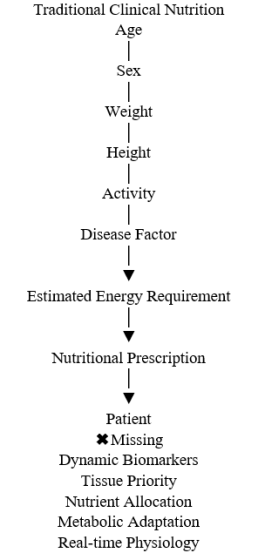
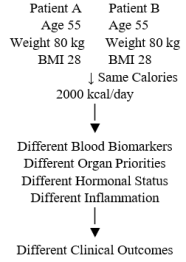
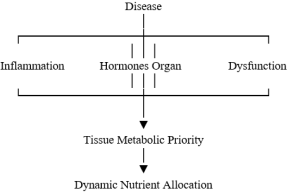
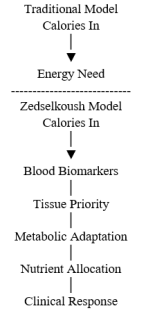
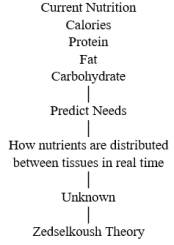
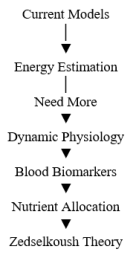
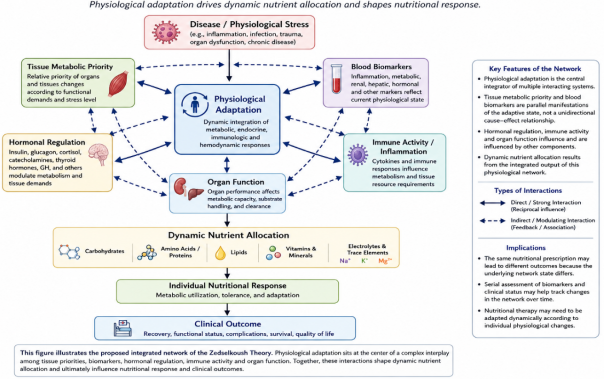
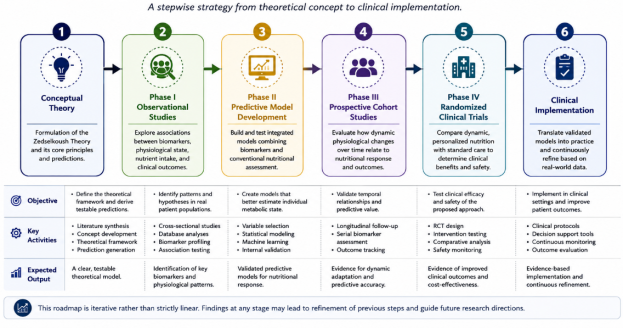
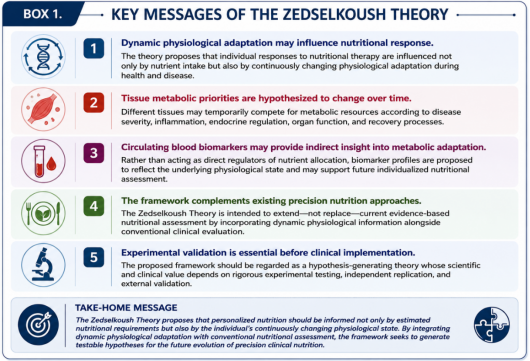




 Share This Article
 Twitter
 Linked In
 Facebook