Abstract
This paper presents the design and development of an Online Electricity Bill Management System (OEBMS) for an energy supplier company in Somalia, with the objective of improving the efficiency, accuracy, and reliability of electricity billing operations. The system is developed using the Waterfall model within the Software Development Life Cycle (SDLC), providing a structured framework for analysis, design, implementation, and testing. The proposed OEBMS replaces traditional manual and paper-based billing systems with a web-based application that enables customers to access billing services anytime and from anywhere. It offers key functionalities such as customer account management, electricity consumption monitoring, automated invoice generation, and secure online payment processing. A major contribution of this paper is the integration of machine learning techniques, including regression models and random forest algorithms, to analyze historical electricity consumption data and predict future usage patterns. This predictive capability supports energy providers in demand forecasting and resource planning while also enabling customers to better understand and manage their electricity usage. In addition, the system generates analytical reports that identify consumption trends, potential demand increases, and customer segments with varying usage behaviors. The system utilizes a MySQL database for efficient data storage and management and an Apache web server to support the application interface. By automating billing processes and reducing human intervention, the OEBMS minimizes errors, improves data accuracy, and reduces operational costs. Furthermore, it promotes environmental sustainability by eliminating paper-based processes. Overall, this paper demonstrates how the integration of web technologies and machine learning can modernize electricity billing systems and enhance service delivery in the energy sector.
Keywords
Electricity Bill Management System, Machine Learning, Web Application
1. Introduction
In the past, managing electricity bills has evolved significantly from the days when consumers had to visit utility offices or make mail payments, a method that was inconvenient for both customers and energy providers. The advent of web applications has revolutionized this process by providing online platforms for bill management
These platforms offer consumers the convenience of 24/7 access to services, allowing them to view consumption data,
receive electronic invoices, and make secure online payments The integration of these platforms with financial tools analyze historical data and predict trends, offering potential in electricity usage forecasting
. This paper proposes an Online Electricity Bill Management System (OEBMS) that integrates ML to forecast consumption patterns, allowing for proactive resource allocation and optimized demand management
. The web-based application enables users to access their accounts, view usage statistics, and make payments securely. Utility databases ensure accurate billing, while ML algorithms analyze previous consumption to predict future usage
.
Accenture's research suggests that such solutions could reduce operational costs by 20% and improve customer satisfaction by 15%. The system also distinguishes between administrators and users, enhancing security and efficiency
| [5] | Matheus, C. J., et al. (2020). Secure user management in web-based systems. |
[5]
. This thesis adopts a Software Development Life Cycle (SDLC) approach to develop the OEBMS, emphasizing digitized operations, automated bill calculations, and a user-friendly interface that benefits both consumers and utility providers. like Mint reflects a broader acceptance of online financial management. Several factors, such as the growing number of internet users, increased mobile device usage, and enhanced security measures, have fueled the popularity of online bill payment solutions
| [6] | Ramayanti, D., et al. (2024). Trends in online bill payment adoption. |
[6]
. A 2023 Pew Research Center survey highlighted that 82% of U.S. bank account holders use online bill payment services, underscoring the demand for efficient online bill management. Furthermore, machine learning (ML) techniques, such as random forest and regression models, have gained traction for their ability to vulnerabilities were common, leading to significant frustration among both energy providers and their customers (Kseb, 2019). The adoption of KSEB's OEBMS addresses these issues by automating key processes, thereby enhancing operational efficiency and reducing the potential for human error. This shift is consistent with findings from a comprehensive literature review on power management systems, which underscores the benefits of automation in improving efficiency, cutting costs, and increasing customer satisfaction
| [10] | Elmi, M., et al. (2024). Energy Supply and Development in Somalia: The Role of BECO. |
[10]
. These improvements align closely with the potential benefits that KSEB's OEBMS offers, positioning it as a model for other utility companies seeking to modernize their operations. An example of the broader trend toward automation in the energy sector is the "GSM Based Automatic Electricity Billing System," which uses mobile network technology for meter reading and bill delivery. Although KSEB’s OEBMS does not specifically utilize GSM technology, it follows a similar trajectory by digital solutions to streamline bill management. This trend reflects a growing emphasis on using technology to deliver faster, more accurate, and more convenient billing processes.
2. Literature Review
The Kerala State Electricity Board (KSEB) has embraced technological advancements through the implementation of an Online Electricity Bill Management System (OEBMS), which exemplifies the broader digital transformation occurring within the energy sector. Historically, electricity firms like KSEB relied on manual processes for tasks such as meter reading, bill calculation, and record management
| [8] | Gottfried, J. (2024). Trends in online bill payment: A 2023 survey. Pew Research Center. |
[8]
. These paper-based systems were not only labor-intensive but also prone to errors and inefficiencies. Issues such as data redundancy, instability, and security vulnerabilities were common, leading to significant frustration among both energy providers and their customers
| [7] | Kseb. (2019). Manual processes in electricity billing and their drawbacks. |
[7]
. The adoption of KSEB's OEBMS addresses these issues by automating key processes, thereby enhancing operational efficiency and reducing the potential for human error. This shift is consistent with findings from a comprehensive literature review on power management systems, which underscores the benefits of automation in improving efficiency, cutting costs, and increasing customer satisfaction
| [10] | Elmi, M., et al. (2024). Energy Supply and Development in Somalia: The Role of BECO. |
[10]
. These improvements align closely with the potential benefits that KSEB's OEBMS offers, positioning it as a model for other utility companies seeking to modernize their operations. An example of the broader trend toward automation in the energy sector is the "GSM Based Automatic Electricity Billing System," which uses mobile network technology for meter reading and bill delivery. Although KSEB’s OEBMS does not specifically utilize GSM technology, it follows a similar trajectory by leveraging digital solutions to streamline bill management. This trend reflects a growing emphasis on using technology to deliver faster, more accurate, and more convenient billing processes. The economic and customer service benefits of such systems are well-documented. A white paper published by Accenture in 2024 explores these advantages, noting that utility companies adopting online bill management technologies can achieve up to a 20% reduction in operational costs and a 15% increase in customer satisfaction. These findings are particularly relevant to KSEB’s OEBMS, which is expected to provide similar economic and service improvements. The alignment between these projected benefits and the actual outcomes reported by Accenture suggests that KSEB's initiative is well-positioned to succeed. Moreover, the increasing adoption of online bill payment services is a global trend. A 2023 Pew Research Center survey revealed that 82% of American households with a bank account now use online bill payment services, highlighting the growing demand for reliable and efficient digital bill management solutions
| [9] | Elhajjar, M., et al. (2023). Automation in power management of the predictive algorithms for energy management |
[9]
. KSEB’s OEBMS meets this demand by offering a user-friendly platform that facilitates online transactions, enabling consumers to manage their electricity bills with greater ease and security. The deployment of KSEB's OEBMS also reflects a broader shift in the energy sector towards automation and digitization, as utilities worldwide seek to enhance their service delivery and operational efficiency. By integrating technology into its billing process, KSEB has the potential to significantly improve the accuracy of its billing, reduce operational costs, and elevate the overall customer experience. This approach aligns with the growing consumer preference for online bill management tools and the demonstrated benefits of such systems in improving economic performance and customer satisfaction. In summary, KSEB’s adoption of an OEBMS is a clear indication of the ongoing digital transformation in the energy sector. By leveraging automation and digital technologies, KSEB is not only improving its operational efficiency and billing accuracy but also enhancing customer satisfaction by providing a streamlined and accessible method for managing electricity bills. This initiative is in line with global trends and is supported by research that highlights the significant economic and service-related benefits of such systems
.
2.1. Smart Systems Vs Manual Systems
The energy industry is increasingly shifting from manual systems to smart, digital solutions, such as Online Electricity Bill Management Systems (OEBMS). Traditional methods, including manual meter reading and invoicing, are becoming obsolete due to their inefficiency and higher operational costs
| [12] | El-Rifaie, A. M., Nejdawi, I., & Al Barakeh, Z. (2019). Automatic billing system for classical electrical energy meters. International Journal of Engineering and Technical Research, 9(8), 6–10. https://doi.org/10.31873/IJETR.9.8.87 |
[12]
. Automation enhances productivity, reduces labor costs, and improves customer satisfaction through prompt and efficient services. Research demonstrates a growing preference for digital bill management, with 78% of U.S. households using online payment services monthly. OEBMS not only offers convenience but also promotes environmental sustainability by reducing paper usage and enhancing security through secure online payment gateways. A comparative analysis between OEBMS and manual systems highlights these advancements and supports the transition towards more efficient and user-friendly solutions
| [13] | Leurent, H., & Abbosh, O. (2018). Economic and customer service benefits of online bill management systems. Accenture. |
[13]
.
Table 1. Comparison of Key Features of OEBMS and Manual System.
Feature | OEBMS | Manual System |
Convenience | Customers can access their billing information and make payments remotely 24/7 from anywhere with an internet connection. | Requires physical visits to designated payment centers during operating hours, leading to time and effort inefficiencies. |
Accessibility | Accessible from any device (computer, smartphone, tablet) with internet access. | Limited by location and operating hours of payment centers. |
Efficiency | Automates processes like meter reading, bill calculation, and record-keeping, reducing manual data entry and associated errors. | Relies on manual processes, prone to errors due to human calculations and data entry. |
Accuracy | Minimizes errors through automation and data validation functionalities. | More susceptible to human error in meter reading, calculations, and data entry. |
Time Savings | Saves time by eliminating the need for physical visits and waiting in queues at payment centers. | Time-consuming due to travel time and potential waiting lines at payment centers. |
Paper Reduction | Reduces paper usage for bills and records, promoting a More environmentally friendly approach. | Relies on paper-based bills and records, contributing to environmental impact. |
Security | Offers secure online payment gateways with encryption protocols, minimizing the risk of fraud. | Increased risk of fraud or loss of paper bills. |
Customer Features | Provides additional functionalities like automated payment reminders, payment schedules, and historical bill data access. | Limited features and functionalities, offering basic bill viewing and payment options. |
2.2. Role of Information System OEBMS
The rise of Online Electricity Bill Management Systems (OEBMS) is driven by the need for efficient, user-friendly billing solutions, heavily reliant on robust Information Systems (IS). These systems streamline billing procedures by automating data collection, processing, and analysis. Smart energy management systems
. leverage IS for data transmission and management, enhancing communication and system efficiency. highlight the broad application of IT in electric power systems, covering not only billing but also grid management. emphasize the role of Database Management Systems (DBMS) in smart metering, offering user-friendly access to invoices and payments. An effective OEBMS integrates hardware, software, and procedures to boost efficiency, organization, and security. Advanced technologies, such as blockchain and machine learning, are expected to further enhance these systems
| [15] | Waluyo, W., Hadiatna, F., Widura, A., & Maulana, R. (2019). Design of IoT Based Monitoring System for Miniature Smart Grid. 2019 2nd International Conference on High Voltage Engineering and Power Systems (ICHVEPS), 1–4. https://doi.org/10.1109/ICHVEPS47643.2019.9011100 |
[15]
.
2.3. Web Applications in OEBMS
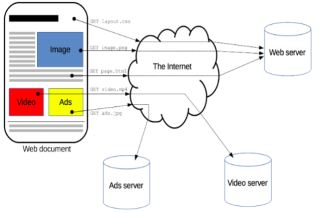
Figure 1. Process of Retrieving a Static Webpage.
Web applications play a crucial role in enhancing Online Electricity Bill Management Systems (OEBMS). emphasize that user interface design is vital for improving user engagement, which is essential for OEBMS to encourage effective energy cost management. Testing, as discussed by Li et al. (2014), ensures that web applications are reliable and user-friendly, which is critical for tasks such as invoice reading and payment. McGlinn et al. (2017) highlight the importance of a user-friendly interface in web-based systems, relevant to OEBMS for accessibility and consumer acceptance. Additionally, Komninos et al. (2014) and Dileep (2020) underscore the role of web apps in smart grids for monitoring and managing real-time data. Rind et al. (2023) suggest that web apps can engage customers in energy conservation and demand management, further demonstrating their importance in OEBMS.
The static web represents an early version of the World Wide Web, where web pages are served exactly as stored on the server, without any modifications based on user interactions. The process starts when a user enters a URL in their browser, specifying the protocol, domain, and path to the desired resource. The browser sends an HTTP request to the web server, including details like the type of request (e.g., GET) and any necessary headers. Upon receiving the request, the web server retrieves the static file and sends it back to the browser, along with any additional resources such as images or stylesheets. The browser then renders the HTML into a display for the user. Although static web pages are still used for basic sites, modern websites predominantly use dynamic web pages created by server-side programming languages like PHP, allowing for personalized content and interactive features
.
2.4. BECO Company
The Benadir Energy Company (BECO) is vital in supplying electricity to southern Mogadishu, Somalia, addressing significant challenges in the country's electrical sector, such as rebuilding infrastructure post-conflict and limited financial resources. Established in 2014, BECO emerged to tackle issues highlighted in the Somalia Report of 2014, aiming to enhance service delivery and provide a more reliable energy supply Despite the advantages of its private status, BECO faces ongoing obstacles. Studies suggest that incorporating renewable energy sources like solar and wind power could foster a more sustainable and eco-friendly electricity future for Somalia Investments in infrastructure and renewable energy programs could offer a less environmentally damaging solution and further BECO’s role in the country's energy development
| [17] | Elmi, Y. K., Şenol, M., & Kuşaf, M. (2024). Optimizing separate and combined grids for cost-effective hybrid renewable energy electrification in Mogadishu, Somalia. AIP Advances, 14(1), 015331. https://doi.org/10.1063/5.0179074 |
[17]
.
2.5. Machine Learning Approach in OEBM
The Online Electricity Bill Management System (OEBMS) has emerged as a critical tool in response to the growing emphasis on energy conservation. These systems extend beyond simple computerized invoicing by incorporating predictive analytics, enabling clients to gain deeper insights into their energy usage and exercise greater control over it. Among the predictive analysis algorithms employed in OEBMS, Random Forest and K-Nearest Neighbours (KNN) are particularly prominent. Random Forest is a machine learning ensemble technique that excels in estimating energy usage, especially due to its ability to manage complex and non-linear relationships between variables. This algorithm works by creating multiple decision trees, each trained on different samples of data and randomly selected attributes. The ensemble method generates a prediction by averaging the forecasts from all individual trees, a process that often leads to enhanced performance by reducing variability and improving prediction accuracy. Random Forest's strength lies in its capacity to model intricate energy consumption patterns, which might be challenging for simpler models to capture. Furthermore, the algorithm can assess the relative importance of various attributes in predicting energy consumption, providing valuable insights into the key factors influencing usage under specific customer conditions (Hapfelmeier & Ulm, 2013). This makes Random Forest an effective tool for analyzing energy consumption data affected by multiple variables, such as meteorological conditions, temperature, occupancy levels, and appliance usage patterns. K-Nearest Neighbours (KNN), though not originally designed for linear regression, can be adapted for energy consumption analysis in OEBMS. KNN is particularly effective in detecting anomalies by comparing the similarity between a new data point (current consumption) and its closest neighbors (similar past consumption patterns). Significant deviations in energy consumption, as detected by KNN, may indicate equipment failures or unusual events leading to increased energy use. The algorithm's simplicity and ease of understanding make it accessible and interpretable, yielding clear outcomes by focusing on the nearest neighbors. However, KNN's effectiveness depends on the quality and quantity of available data. The accuracy of anomaly detection can be compromised when data is scarce or of low quality. Additionally, the "curse of dimensionality" can hinder KNN's performance as the number of variables increases, necessitating feature selection processes to maintain efficiency. In conclusion, both Random Forest and KNN offer valuable insights and benefits in the context of OEBMS. Random Forest's ability to handle complex, non-linear interactions and assess variable importance makes it suitable for modeling intricate energy consumption patterns, while KNN's simplicity and effectiveness in anomaly detection provide a straightforward method for identifying irregularities in consumption
.
Table 2. Comparision of predictive Analycs Approaches for OEBMS.
Feature | Random Forest | K-Nearest Neighbors (KNN) | Existing System |
Primary Function | Predicts future energy consumption | Detects anomalies in energy consumption | Generates bills based on historical data or meter readings |
Algorithm Type | Machine Learning (Ensemble Method) | Machine Learning | N/A (Process-based) |
Data Handling | Handles complex and non-linear relationships between variables | Focuses on similarity to historical data points | Relies on historical usage data or meter readings |
Strengths | High accuracy, robust to noise, identifies key drivers of consumption | Simple, interpretable results, adaptable to different data types | Efficient, well-established processes |
Weaknesses | Requires a large amount of training data, can be computationally expensive | Accuracy depends on data quality and quantity, susceptible to the "curse of dimensionality" | Limited insights into future consumption, the potential for errors in manual processes |
Benefits for OEBMS | Enables cost estimation, budgeting, personalized recommendations | Identifies potential equipment malfunctions or unusual events | Streamlines billing processes to reduce errors |
3. Methodology
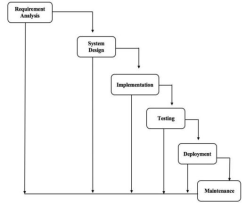
The methodology chapter of the Online Electricity Bill Management System (OEBMS) focuses on the systematic techniques employed to create and execute a system for monitoring energy billing procedures within a web-based environment. This section delves into the methods, techniques, algorithms, and analyses used to manage the different components of the billing system effectively. The system itself is built around gathering, analyzing, forecasting, and generating invoices, ensuring that billing procedures are both precise and efficient. The scientific method applied in the development of the OEBMS serves as the foundation for determining the system’s functionalities. This approach combines electronic infrastructure with exploratory research methods to identify the need for the system and establish a suitable framework. The system utilizes object-oriented analysis and user-centric programming, with PHP serving as the primary language for interface design. The development process for the OEBMS is guided by the Waterfall model, a linear and sequential approach to software development. The Waterfall model consists of distinct phases, each of which builds upon the previous one. The Waterfall model, while offering a structured and systematic approach, can present challenges in dynamic environments due to its inflexibility. Despite this, it provides a clear roadmap for the development of the OEBMS, ensuring that each phase is thoroughly completed before moving on to the next. The model's linear nature makes it ideal for projects with well-defined requirements and a clear understanding of the desired outcome.
Figure 2. SDLC Waterfall Model.
phase must be completed before moving on to the next, and revisiting previous stages is challenging without restarting the entire process. This structured flow ensures that progress is measured and that each stage is dependent on the completion of the previous one. These phases include requirements gathering, system design, implementation, testing, deployment, and maintenance. In this model, each in the requirements phase, all possible conditions of the system to be developed are recorded and proved in specifications.
1) System Design: In this phase, the conditions specification from the first phase is reviewed and the system design is prepared. This system design specifies the tackle and system conditions and helps define the overall system armature.
2) Implementation: With input from system design, the system is first developed in small programs, so-called units, which are integrated in the coming phase. Each unit is developed and tested for functionality called unit testing.
3) Testing: All units developed during the perpetration phase are integrated into the system after each unit is tested. After integration, the entire system is tested for crimes and failures.
4) Deployment: Once functional testing is complete; the product is stationed in the client's terrain or retailed.
5) Maintenance: There are some issues we're passing on in our customer terrain. some better performances will be released to ameliorate the product. conservation will be performed to emplacement these changes in the client surroundings.
3.1. Methods to Use Machine Learning Algorithms
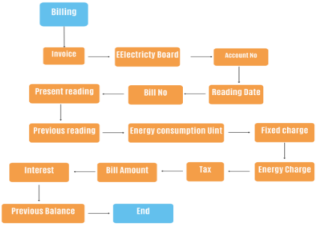
The OEBMS utilizes machine learning techniques such as Random Forest and Linear Regression to forecast energy use and optimize billing procedures. The system intends to enhance accuracy, efficiency, and customer satisfaction in handling online electricity billing operations by using these algorithms together with effective data gathering and processing methodologies. The data collection procedure.
Figure 3. Flowchart of Data Collection.
To forecast energy consumption for the next year using machine learning, we collect historical energy usage data and relevant factors like weather conditions and time of day. After per-processing the data to address missing values and outliers, it's divided into training and testing sets. We then train both Random Forest and Linear Regression models. The Random Forest model builds decision trees from data subsets, while Linear Regression establishes a linear relationship between features and energy use. Performance is assessed using Mean Absolute Error (MAE) and Root Mean Squared Error (RMSE) on the testing set. The better-performing model is used to forecast energy usage for the upcoming year. This approach helps identify patterns in energy demand, informing decisions on energy management and resource distribution. Continuous refinement of the models enhances prediction accuracy and system efficiency.
3.2. Mathematical Formulation
3.2.1. Random Forest Regression
Random Forest Regression is an ensemble learning method that builds Multiple decision trees and aggregates their predictions to make a final prediction. The formula
(1)
represents this aggregation, where is the predicted paid amount by the Random Forest model, is the number of trees, and represents the decision tree's prediction for a given customer ID and bill amount. Random Forest Regression is robust and effective for handling complex nonlinear relationships in data.
3.2.2. Linear Regression
Linear Regression models the relationship between a dependent variable (outcome) and one or more independent variables (predictors) by fitting a linear equation. The formula
(2)
represents this linear relationship, where is the predicted value, is the intercept term, and are the coefficients for each feature , respectively. Linear regression is widely used for making predictions and understanding the relationship between variables in fields such as economics, finance, and social sciences.
4. Testing Set-Up and Output Results
In this paper, the factual development begins, and the programming is erected. The perpetuation of design begins concerning writing law. inventors have to follow the rendering guidelines described by their operation and programming tools like compilers, practitioners, debuggers, etc. are used to develop and apply the law.
4.1. Main Screen Implementation
The implementation of all screens is defined in this section.
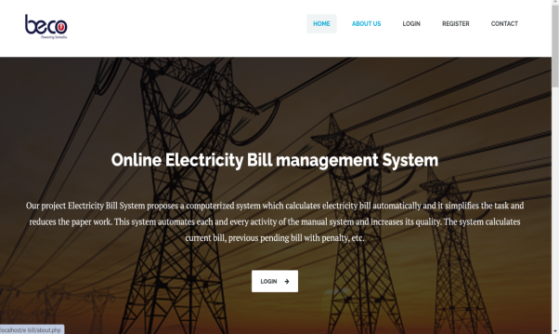
Figure 5 shows all the information that describes the login button for customers, creating a new account, and login for admin or staff.
Figure 4. Main Screen Implementation.
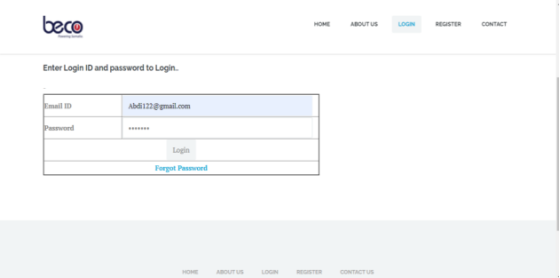
4.2. Login Screen Implementation
Presents an entry for the customer user name and password login screen implementation.
Figure 5. Login Screen Implementation.
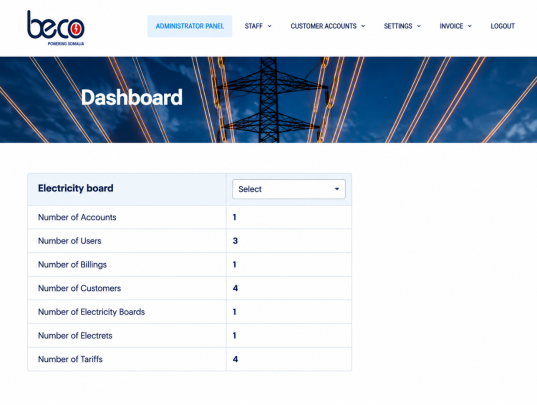
4.3. Admin Main Screen Implementation
Description of adding new staff, view staff, changing password, customer account, view account, settings, adding electricity broad, view electricity broad, adding tariff, view tariff, invoice, adding invoice, view invoice, view billing reports, and out.
Figure 6. Admin Main Screen Implementation.
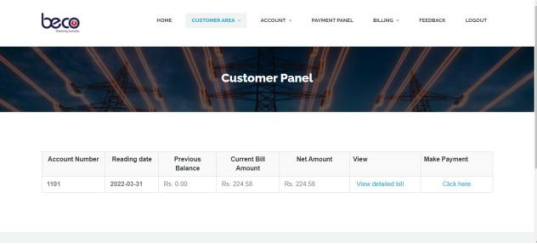
4.4. Customer Main Screen Implementation
presents all the information about the customer adding a new account, viewing the account, viewing the profile, payment panel, viewing an invoice, viewing billing, printing invoice, feedback, and logout.
Figure 7. Customer Main Screen Implementation.
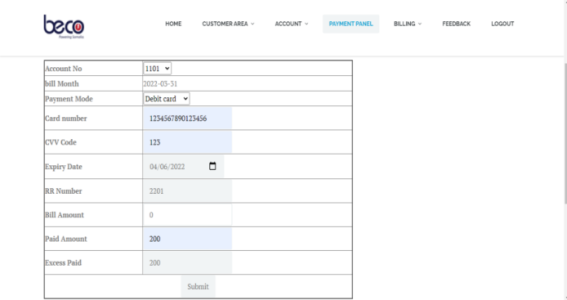
4.5. Bill Payment Screen Implementation
Figure 8. Bill Payment Screen Implementation.
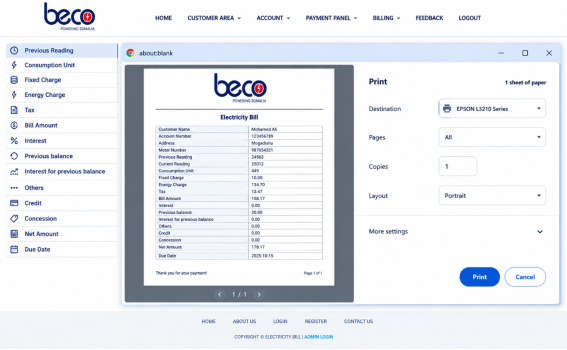
4.6. Print Invoice Screen Implementation
Figure 9. Print Invoice Screen Implementation.
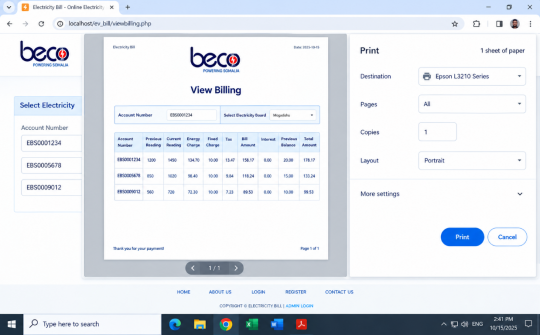
4.7. Report Implementation
The figure provides a detailed view of the billing report generated by the Online Electricity Bill Management System (OEBMS). The report, closely resembling a computer-generated invoice, is accessed through a web interface, as indicated by the URL "localhost/e-bill/viewbilling. php" at the top left corner. This highlights the system's functionality, allowing users to view their bills online. The central section of the report contains essential billing information. This includes the account number ("EBS0000"), the billing period dates ("2023-10-19" and "12:23"), and a "Select El" section, likely detailing electricity usage charges. The "Consumption Charges" section prominently displays a total amount of "120.00," which appears to be the total bill for the period. Additional elements in the interface include abbreviations like "bec" and "beco" in the upper right corner, and options to "Print" or "Cancel" the printing process. The lower part of the interface resembles a typical print dialog, with options for selecting the number of copies, layout orientation (portrait or landscape), and a search bar. Overall, the report demonstrates the OEBMS's capability to generate and present detailed, printable invoices, fulfilling its primary goal of providing clear and comprehensive billing information to customers.
Figure 10. Report Sample Output of the Proposed System.
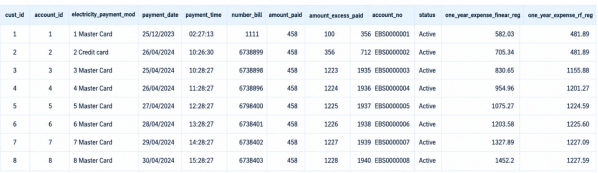
4.8. Output of the Report After Implementation of Regression Model
Figure 10 illustrates a client billing report that plays a crucial role in the The historical data serves as the foundation for the models, enabling accurate consumption forecasting by analyzing past trends and relevant factors. The report also offers consumer categorization, segmenting clients based on consumption habits or payment patterns, which further enhances prediction accuracy. For instance, a random forest model is better suited for customers with unpredictable usage, while linear regression excels with stable consumption patterns. Integrating these models into the OEBMS allows the utility company to provide personalized bill estimates and optimize resource allocation.
Figure 11. Output of the Report After Implementation of the Regression Model.
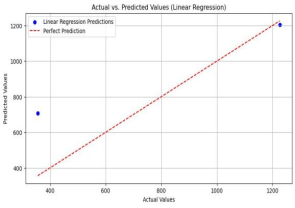
4.9. Comparison of Actual Vs Predictive Values in Regression Models
Figure 11 illustrates the difference between the actual values of the target variable and the values predicted by the Linear Regression model. Each point in the test set has a corresponding data point. In some scenarios, the observed values coincide with the forecasted values, indicating the precision of the forecasts. The diagonal red dashed line represents these instances. The scatter plot allows for a visual assessment of the model's accuracy in capturing the real values. In the scatter plot, points that are in closer proximity to the diagonal line indicate improved performance of the model.
Figure 12. Actual vs Predicted values of Linear Regression.
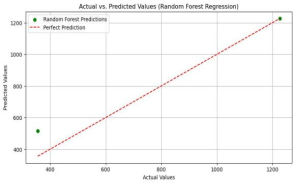
Figure 13 is the comparative analysis of observed and forecasted values using Random Forest Regression: The graph in like the previous one, presents a comparison of the real values and the forecasts given by the Random Forest Regression model. Each data point from the test set is shown as a point on the graph, and the diagonal line on the graph reflects completely accurate predictions. By examining the scatter plot, we may ascertain the level of accuracy shown by the Random Forest model about the real data.
Figure 13. Actual vs. Predicted Values for Random Forest Regression.
5. Conclusion
In this paper online system for handling electricity bills uses machine learning models, including random forest and regression models, to ensure precise data input and achieve a high degree of accuracy The accuracy rate has been validated based on the findings of comprehensive testing.
By using this technology, the electrical department can substantially decrease the occurrence of mistakes caused by human involvement, leading to a streamlined billing procedure. The system can both decrease anomalies and predict future energy use for individual consumers or groups, owing to the incorporation of machine learning algorithms. With the use of this feature, users may effectively manage their consumption and budget for future expenses by customizing precise bill estimates. In addition, the electricity department may get advantages from enhanced resource management capabilities by using forecasts on future power demand. Moreover, the system exhibits a high level of adaptability due to its modular architecture. The capacity for adaptation, thoroughly examined throughout the development phase, allows for future modifications to satisfy unanticipated user requirements or departmental expansion. This capacity was thoroughly evaluated during the whole procedure. Consequently, the system can expand and develop to the requirements for electricity bill management. We like to convey our profound appreciation to all those who, in whatever capacity, contributed to the successful conclusion of this thesis, whether it was via direct or indirect means. We have high confidence that our online bill management system will effectively and consistently accomplish its intended purpose for an extended duration, hence providing a seamless and precise billing procedure for all involved parties.
Abbreviations
OEBMS | Online Electricity Bill Management System |
ML | Machine Learning |
AI | Artificial Intelligence |
SDLC | Software Development Life Cycle |
IS | Information System |
DBMS | Database Management System |
KSEB | Kerala State Electricity Board |
BECO | Benadir Energy Company |
GSM | Global System for Mobile Communications |
KNN | K-Nearest Neighbors |
RF | Random Forest |
LRM | Linear Regression Model |
MAE | Mean Absolute Error |
RMSE | Root Mean Squared Error |
PHP | Hypertext Preprocessor |
HTML | HyperText Markup Language |
CSS | Cascading Style Sheets |
URL | Uniform Resource Locator |
HTTP | HyperText Transfer Protocol |
SQL | Structured Query Language |
MySQL | My Structured Query Language |
API | Application Programming Interface |
IoT | Internet of Things |
ICT | Information and Communication Technology |
U. I | User Interface |
UX | User Experience |
EBS | Electricity Billing System |
Author Contributions
Mohamed Maawiye Hilowle: Conceptualization, Data curation, Formal Analysis, Investigation, Methodology, Project administration
Conflicts of Interest
The author declares no conflicts of interest.
References
| [1] |
Doyle, P., & Lopes, A. (2008). The role of web applications in modern billing systems.
https://doi.org/10.48550/arXiv.0801.2618
|
| [2] |
Chen, Z., Li, Z., & Meng, X. (2023). Machine learning for electricity consumption forecasting: Models and applications.
https://doi.org/10.1155/2023/8846554
|
| [3] |
González-Briones, A., et al. (2019). Predictive analytics for resource management in the electricity sector.
https://doi.org/10.1109/CAIS.2019.8769508
|
| [4] |
Karnouskos, S., et al. (2013). The future of energy management: A web-based approach.
https://doi.org/10.1109/INDIN.2013.6622919
|
| [5] |
Matheus, C. J., et al. (2020). Secure user management in web-based systems.
|
| [6] |
Ramayanti, D., et al. (2024). Trends in online bill payment adoption.
|
| [7] |
Kseb. (2019). Manual processes in electricity billing and their drawbacks.
|
| [8] |
Gottfried, J. (2024). Trends in online bill payment: A 2023 survey. Pew Research Center.
|
| [9] |
Elhajjar, M., et al. (2023). Automation in power management of the predictive algorithms for energy management
|
| [10] |
Elmi, M., et al. (2024). Energy Supply and Development in Somalia: The Role of BECO.
|
| [11] |
Chahboun, N., & Maaroufi, M. (2022). Comparative Analyst.
https://doi.org/10.54966/jreen.v1i1.1040
|
| [12] |
El-Rifaie, A. M., Nejdawi, I., & Al Barakeh, Z. (2019). Automatic billing system for classical electrical energy meters. International Journal of Engineering and Technical Research, 9(8), 6–10.
https://doi.org/10.31873/IJETR.9.8.87
|
| [13] |
Leurent, H., & Abbosh, O. (2018). Economic and customer service benefits of online bill management systems. Accenture.
|
| [14] |
A comprehensive review of machine learning and IoT solutions for demand side energy management, conservation, and resilient operation. (2023). Energy, 281, 128256.
https://doi.org/10.1016/j.energy.2023.128256
|
| [15] |
Waluyo, W., Hadiatna, F., Widura, A., & Maulana, R. (2019). Design of IoT Based Monitoring System for Miniature Smart Grid. 2019 2nd International Conference on High Voltage Engineering and Power Systems (ICHVEPS), 1–4.
https://doi.org/10.1109/ICHVEPS47643.2019.9011100
|
| [16] |
Loganathan, N., Mayurappriyan, P. S., & Lakshmi, K. (2018). Smart energy management systems: A literature review. MATEC Web of Conferences, 225, 01016.
https://doi.org/10.1051/matecconf/201822501016
|
| [17] |
Elmi, Y. K., Şenol, M., & Kuşaf, M. (2024). Optimizing separate and combined grids for cost-effective hybrid renewable energy electrification in Mogadishu, Somalia. AIP Advances, 14(1), 015331.
https://doi.org/10.1063/5.0179074
|
| [18] |
Hapfelmeier, A., & Ulm, K. (2013). A new variable selection approach using Random Forests. Computational Statistics & Data Analysis, 60, 50–69.
https://doi.org/10.1016/j.csda.2012.09.020
|
Cite This Article
-
ACS Style
Hilowle, M. M. Online Electricity Bill Management System: A Web Application for an Energy Supplier Company in Somalia Using Machine Learning. Sci. Discov. Comput. 2026, 1(1), 57-68. doi: 10.11648/j.sdcomput.20260101.17
 Copy
|
Copy
|
 Download
-
@article{10.11648/j.sdcomput.20260101.17,
  author = {Mohamed Maawiye Hilowle},
  title = {Online Electricity Bill Management System: A Web Application for an Energy Supplier Company in Somalia Using Machine Learning},
  journal = {Science Discovery Computers},
  volume = {1},
  number = {1},
  pages = {57-68},
  doi = {10.11648/j.sdcomput.20260101.17},
  url = {https://doi.org/10.11648/j.sdcomput.20260101.17},
  eprint = {https://article.sciencepublishinggroup.com/pdf/10.11648.j.sdcomput.20260101.17},
  abstract = {This paper presents the design and development of an Online Electricity Bill Management System (OEBMS) for an energy supplier company in Somalia, with the objective of improving the efficiency, accuracy, and reliability of electricity billing operations. The system is developed using the Waterfall model within the Software Development Life Cycle (SDLC), providing a structured framework for analysis, design, implementation, and testing. The proposed OEBMS replaces traditional manual and paper-based billing systems with a web-based application that enables customers to access billing services anytime and from anywhere. It offers key functionalities such as customer account management, electricity consumption monitoring, automated invoice generation, and secure online payment processing. A major contribution of this paper is the integration of machine learning techniques, including regression models and random forest algorithms, to analyze historical electricity consumption data and predict future usage patterns. This predictive capability supports energy providers in demand forecasting and resource planning while also enabling customers to better understand and manage their electricity usage. In addition, the system generates analytical reports that identify consumption trends, potential demand increases, and customer segments with varying usage behaviors. The system utilizes a MySQL database for efficient data storage and management and an Apache web server to support the application interface. By automating billing processes and reducing human intervention, the OEBMS minimizes errors, improves data accuracy, and reduces operational costs. Furthermore, it promotes environmental sustainability by eliminating paper-based processes. Overall, this paper demonstrates how the integration of web technologies and machine learning can modernize electricity billing systems and enhance service delivery in the energy sector.},
 year = {2026}
}
Copy
|
Download
-
TY  - JOUR
T1  - Online Electricity Bill Management System: A Web Application for an Energy Supplier Company in Somalia Using Machine Learning
AU  - Mohamed Maawiye Hilowle
Y1  - 2026/10/09
PY  - 2026
N1  - https://doi.org/10.11648/j.sdcomput.20260101.17
DO  - 10.11648/j.sdcomput.20260101.17
T2  - Science Discovery Computers
JF  - Science Discovery Computers
JO  - Science Discovery Computers
SP  - 57
EP  - 68
PB  - Science Publishing Group
UR  - https://doi.org/10.11648/j.sdcomput.20260101.17
AB  - This paper presents the design and development of an Online Electricity Bill Management System (OEBMS) for an energy supplier company in Somalia, with the objective of improving the efficiency, accuracy, and reliability of electricity billing operations. The system is developed using the Waterfall model within the Software Development Life Cycle (SDLC), providing a structured framework for analysis, design, implementation, and testing. The proposed OEBMS replaces traditional manual and paper-based billing systems with a web-based application that enables customers to access billing services anytime and from anywhere. It offers key functionalities such as customer account management, electricity consumption monitoring, automated invoice generation, and secure online payment processing. A major contribution of this paper is the integration of machine learning techniques, including regression models and random forest algorithms, to analyze historical electricity consumption data and predict future usage patterns. This predictive capability supports energy providers in demand forecasting and resource planning while also enabling customers to better understand and manage their electricity usage. In addition, the system generates analytical reports that identify consumption trends, potential demand increases, and customer segments with varying usage behaviors. The system utilizes a MySQL database for efficient data storage and management and an Apache web server to support the application interface. By automating billing processes and reducing human intervention, the OEBMS minimizes errors, improves data accuracy, and reduces operational costs. Furthermore, it promotes environmental sustainability by eliminating paper-based processes. Overall, this paper demonstrates how the integration of web technologies and machine learning can modernize electricity billing systems and enhance service delivery in the energy sector.
VL  - 1
IS  - 1
ER  -
Copy
|
Download






 Share This Article
 Twitter
 Linked In
 Facebook