1. Introduction
In 1815, Sri Lanka became a colony of the British when the Up country came under British rule. In the year 1815, in order to suppress the first freedom fighting movement in the vicinity of Uva Wellassa, the British had to face many difficulties. That is because they did not have easy access to those areas. As a result of the Industrial Revolution in Britain 18th and 19th centuries, the colonies were affected. In the beginning, the British gave priority to military activities, but later they gave priority to economic activities, and with the plantation industry in the various areas, many Civil Engineering and Mechanical Technical heritages were built.
At the end of the 2nd rebellion in 1848, it was decided by the then Sir Henry Ward to build a railway to connect the British fortresses in the Up country with Colombo, which was the main control center. The railway system was built throughout the Up-country areas as well as the rest of Sri Lanka to transport plantation crops to the port of Colombo. Accordingly, the first railway was built from Colombo to Ambepussa, and other roads were built connecting those railways. Many bridges, culverts and rail structures were established along these railways. In addition to this, several unique monuments were also built near the railways. Even the machinery that were imported from Britain for the railway development work at that time remained till to date.
Many Industrial heritages were established in connection with the railway transport works built during the British rule. Plantation industries, which are considered as the basis of industrial heritage in Sri Lanka, were established in various areas of Sri Lanka. There is several prior research conducted on Sri Lankan railway built during the British Colonial period. R. Ritcheie (1846), W. Henry (1910), A.M. Ferguson (1918), G.F. Perera (1925), J.V. Mendis (1968), I. Munasinghe (1991), L. Alwis (1992), W. Chandramali (1999), K. Kodithuwakku (2000), I Sooriyabandara (2004), S. Rajapaksha (2005), K. Sugathadasa (2010), I. Wanninayake (2013), P. Indunil (2014), T. Pathirana (2014), De Silva (2016), S.B.Manatunga (2016), A. Buddhikasiri (2016), K. Nandasena (2017), A. Bandaranayake (2018) and V. Jayasinghe (2022) conducted research on Sri Lankan Railways. At present, the industrial heritage is rapidly being destroyed due to the development activities and the securing of this heritage and the identification of the industrial heritage built by the British in different parts of Sri Lanka is studied in this research.
3. Results and Discussion
With the development of the plantation industry, the construction of a railway line from Colombo to Kandy was started on the 3
rd of August 1858, during the reign of Governor Henry Ward, in order to easily transport the crops to the port of Colombo
| [11] | Perera, G. F., The Ceylon Railway, Colombo: The Ceylon Observer, 1925, pp. 267-268. |
[11]
. But despite various obstacles to the construction of the railway line, the railway line from Colombo to Ambepussa was built by 1864 under Mr. Pedrick Peville and S. G. Molswarth at that time, the “Ceylon Government Railway Company” had been established after taking over the construction of railways to the Sri Lankan government. Accordingly, the first railway trip was made on 27
th December 1864. In 1867 it was possible to extend this line up to Kandy making the entire distance 119.5 Km. The railway line extended to Kandy was extended to Gampola in 1873 and to Nawalapitiya in 1874. By 1888, the railway line was extended from Nawalapitiya to Thalawakele. In 1885, Up - Country railway was extended to Nanu Oya, in 1893 to Haputale, in 1895 to Bandarawela. In 1921 to Demodara and in 1924 to Badulla. An extended of the Up - country railway was built in 1880 from Kandy to Matale during the administration of Governor James R Lowden. The construction of the Matale railway was entrusted to David Reed and Company
| [13] | The Ceylon Government Railway 1864-1964, The Ceylon Government Railway, Colombo, 1964, pp. 25-26. |
[13]
.
A railway was built in 1902 to Avissawella and in 1903 to Yatiyanthota to transport the crops cultivated in the Kelani River Valley. The Sabaragamu Railway was built in 1912 to Ratnapura and Opanayake, and the Udupusellawa narrowgauge railway to Ragala in 1906. The coastal railway was built along with the coconut plantation and in 1877 the railway was built to Kalutara South, in 1894 to Galle, in 1895 to Matara and a railway line was built from Ragama to Puttalam in Negombo in 1890. The first step in constructing the northern line was the extension of the Colombo-Kandy line from Polgahawela up to Kurunegala in 1894. This line was extended up to Anuradhapura in 1904 and at Medawachchi. The northern branch line reached the Jaffna in 1905 and the Talai-mannar in 1919. The Batticaloa - Trincomalee railway line was under construction and the line up to Trincomalee was opened in 1927 and Batticaloa in 1928
| [10] | Mendis, J. V., 75 noy out in Maturing Ceylon: An excursion into the near Past. Colombo: Caxton Printing Works Ltd, 1968, 267-268. |
[10]
.
3.1. Railway Stations
3.1.1. Earliest Railway Stations on the First Railway Line
(i). Old Railway Terminus, Colombo
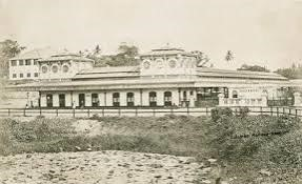
The building which is the first passenger and goods terminus of the Sri Lanka railway has been inaugurated in 1858 - 1865 period by a contractor named William Frederick Faviell (1822 -1902) following the architecture of the Manchester Railway Station in England
| [8] | Manatunga, S. B., Udupussallewa Patu Dumriya Margaya, Samanthi Publications, Ja – ela, 2016, pp. 61-62, 85. |
[8]
. In 1908 this was closed for passenger transport and was replaced by the Fort Railway Station
| [1] | Alwis, L., British Period Architecture in Sri Lanka, Aitken Spence Printing Ltd, Colombo, 1992, pp. 41-42. |
[1]
. Initially, the railway station consists of an office, a train platform, two store rooms and a quarter for officials
| [12] | Rajapaksha, S., History of Railway in Sri Lanka, Author Publications, Star Printers, Colombo 10, 2005/ 2018, pp. 24-25, 37-38. |
[12]
. This building which has been erected according to Victorian architecture is 51.80m in length, which has later been extended to 108.60m (
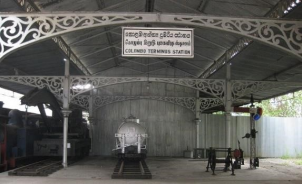
Figure 1). The old portion of the building can be clearly identified by structural evidence. The platform is 11.30m. Wide and 1m high. The old terminus is not used as a storehouse. This railway station octagonal pillars made of cast iron and brackets with decorations from England (
Figure 2). Colombo terminus station was closed and replaced by the new Maradana Station. In May 2009, the station became the site of the National Railway Museum. This was ceremonially opened by G. P. Green who was the General Manager at Ceylon Government Railway.
Figure 1. Old Railway Terminus, Colombo.
Figure 2. Cast iron brackets, Terminus Station.
(ii). Old Railway Station, Henarathgoda
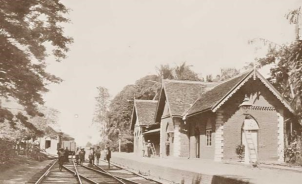
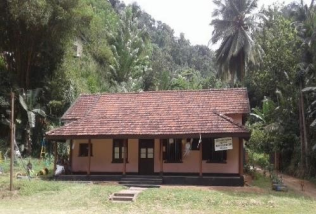
Henarathgoda railway station constructed in 1864, located 26km from Colombo, Sri Lanka (
Figure 3). it is 10 m long and 6.5 m wide. This had consisted of three small rooms and veranda with cast iron pillars. The veranda which is circular in shape has pillars each 2m in circumference and 2m in height. There are five such pillars. The walls are built with bricks and covered with a thin coat of plaster. The roof is of hip roof shape, covered with round tiles
| [6] | Kodithuwakku, K., A Brief History of Sri Lanka Railway, Gaveshana, Vol I, Department of Archaeology, Colombo, 2000, 01 (1) 41-42, 45-48. |
[6]
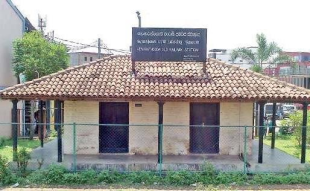
. The building has been designated as an archaeological monument. The station is currently the Gampaha Railway Station, Sri Lanka. Today, this station is used as a storehouse (
Figure 4).
Figure 3. Old Railway Station, Henarathgoda.
Figure 4. Old Railway Station, Henarathgoda.
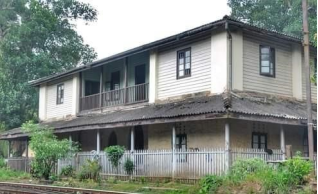
(iii). Old Railway Station, Ambepussa
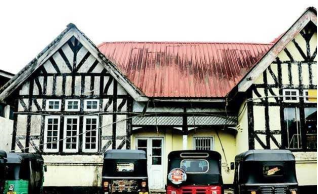
Old Railway Station at Ambepussa, constructed in 1864, located 78km from Colombo, Sri Lanka (
Figure 5). It has a two - storied vestibule and Gothic - decorated doors and windows
| [6] | Kodithuwakku, K., A Brief History of Sri Lanka Railway, Gaveshana, Vol I, Department of Archaeology, Colombo, 2000, 01 (1) 41-42, 45-48. |
[6]
. The building is 21.80m long and 13.29m wide. The ground floor consisting of seven rooms and a surrounding veranda with timber pillars has been used as an office and the upper floor consisting of four rooms and a veranda has been used as the official quarters of the Station Master. The walls of the ground floor are built with bricks, but those of the upper floor are of timber.
Figure 5. Old Railway Station, Ambepussa.
3.1.2. Old Railway Stations on the Other Railway Line
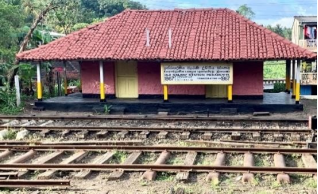
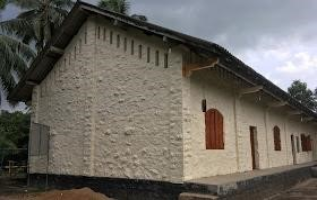
Old Peradeniya Railway Station building has been constructed in 1867. This building facing the Colombo - Kandy Railway line (
Figure 6). It is 11.5 m long and 6.9 m wide. The walls are built of stone and lime applied on them without plastering
| [4] | Jayasinghe, Vishwa Sri., Railway Monuments built during the Colonial Period, Cultural Department, Central Province, 2024, Sarathi 20, 250 -251, 252-261. |
[4]
. Each wall is 42cm wide. Two rooms with a surrounding veranda with timber pillars. this station is used as a storehouse now. (
Figure 7). The roof is of hip roof shape, covered with round tiles.
Figure 6. Old Railway Station, Peradeniya.
Figure 7. Old Railway Station, Peradeniya.
The earliest station to be called Fort was a small station, built in 1877 when the Coast Line was built. The present Fort Station was opened in 1917., as a new central station for Colombo. This has been constructed similar to Manchester Victoria station. The station was built on land reclaimed from the Beira Lake. This project was part of a scheme started in 1906 to reorganize the railway within Colombo. Old Railway Station at Kandy constructed in 1867, located 122km from Colombo, Sri Lanka. This railway station octagonal pillars made of cast iron and brackets with decorations. The stations on the Up - country railway line (Peradeniya - Badulla) has granite gable walls, arched doors and windows, octagonal pillars, cast iron decoration brackets and Corinthian columns dating from the late 19th century and early 20th century.
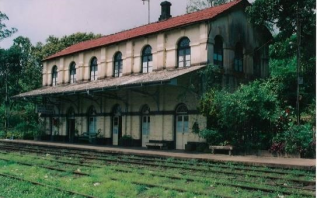
Watawala Railway Station was built in the year 1883 and is a two storied granite building with a chimney (
Figure 8)
| [4] | Jayasinghe, Vishwa Sri., Railway Monuments built during the Colonial Period, Cultural Department, Central Province, 2024, Sarathi 20, 250 -251, 252-261. |
[4]
. Railway stations which were used along the narrow-gauge line like Kelani Valley, Sabaragamu and Udupussellawa are also ancient. The railway station on the Sabaragamu railway line were built using granite and it is seen that wood was used to build the railway stations on the Udupussellawa line. Rathnapura and Kahawaththa old railway stations are being used as bus stops, while Karawanella old railway station is used for the Magammana Junior School. The old railway station in Dehiowita is currently using the Medical Officer’s Office. Old Opanayake Railway Station is used as Opanayake Police Station. Old Railway Station, Nuwaraeliya constructed in 1903 (
Figure 9). This railway station octagonal pillars made of cast iron and brackets. The building is 40m long
| [4] | Jayasinghe, Vishwa Sri., Railway Monuments built during the Colonial Period, Cultural Department, Central Province, 2024, Sarathi 20, 250 -251, 252-261. |
[4]
. Metal towers at Maradana, Colombo Fort and Kalutara South stations have been manufactured by E. C & J. Keay Company of Birmingham.
Figure 8. Old Railway Station, Watawala.
Figure 9. Old Railway Station, Nuwaraeliya.
3.2. Warehouses
Warehouse buildings were built near the railway stations to store plantation harvest as well as fertilizer, equipment and consumer goods. Warehouses have granite gable walls, arched doors and windows, octagonal pillars, cast iron brackets and Corinthian columns dating from the late 19
th century and early 20
th century. Some Warehouses are of two storied buildings. Warehouse buildings can be seen in the vicinity of most railway stations and the warehouse owned by Yatiyanthota railway station on Kelani Valley railway is currently owned by Garagoda Muslim College (
Figure 10).
Figure 10. Warehouse, Yatiyanthota Station
3.3. Running Sheds
Running Sheds had been used for four main purposes. Such as maintenance and repair of Steam Locomotives, Supply of coals for Steam Locomotives, storing steam for the use of Steam Locomotives and Storing of sand. The Running Shed where Kadugannawa Railway Station was built by granite in 1890. The building is 68.60 meters long and 13.30 meters wide. Reports say that it was possible to park four Locomotive engines at the same time. It is said that there were eight locomotives engine drivers and one Forman. This was closed down and later used as a fertilizer warehouse
| [3] | Jayasinghe, Vishwa Sri., A Study of Companies That Produced Civil Engineering and Mechanical Technology Heritage in Sri Lanka During the British Period, Center of Heritage, University of Kelaniya, Kelaniya, 2022, 1(1), 69-70. |
[3]
. Even today, a heated coal stone stove used is the Kandy Running Shed
| [3] | Jayasinghe, Vishwa Sri., A Study of Companies That Produced Civil Engineering and Mechanical Technology Heritage in Sri Lanka During the British Period, Center of Heritage, University of Kelaniya, Kelaniya, 2022, 1(1), 69-70. |
[3]
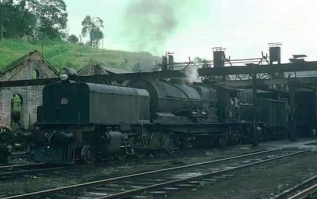
. Steam Running Shed, Nawalapitiya has constructed on a highland in the later of the 19
th century, this had been the main running shed in the Upcountry. The building is now in ruins. This building complex built according to British architecture consists of a yard, a workshop and a coal site. The length of the building now remaining is about 100m. The yard is 30m wide and consists of six tracks and five platforms. The platforms have been covered with setts. The walls of the building have been built with bricks. The windows are arch - shaped with metal frames
| [5] | Kodithuwakku, K., Road Bridge in Sri Lanka (1800 - 1950), (Unpublished) M. A. Thesis, Postgraduate Institute of Archaeology, Colombo, 1997, 57-58. |
[5]
. Over the windows circular openings could be seen in the center of the gable. The roof is made of “I” beams and trusses and thatched Yertle a kind of asbestos sheets. The roof top is semicircular. The building and its premises are now being used as a warehouse (
Figure 11).
Hatton Running Shed constructed in the latter half of the 19
th century. This building is 18.75m in length and 12.10m in width
| [6] | Kodithuwakku, K., A Brief History of Sri Lanka Railway, Gaveshana, Vol I, Department of Archaeology, Colombo, 2000, 01 (1) 41-42, 45-48. |
[6]
. The building is of two parts fronted with two segmentary arches. Over each arch is a circular window. Walls have been built with dressed stone and the width of each is 45cm. One section of the building is now used as a warehouse.
Figure 11. Old Running Shed, Nawalapitiya.
3.4. Other Buildings
Quarters were built to accommodate officials around the British rule near the railway stations. These quarters were single or two - storied and consisted of long porch (Colonial Veranda) with front circular pillars (Corinthian). These are the Rose windows of these buildings, which were used by the granite, bricks and timber. A stove is a quarter in the Old Nuwaraeliya Railway station. It is 2.79m in length and 1.55m in width. The roof of the quarters in Udupussellawa narrow railway line, the Bals Mission Tile Work Pvt Ltd manufactured tiles have been used in 1865
| [4] | Jayasinghe, Vishwa Sri., Railway Monuments built during the Colonial Period, Cultural Department, Central Province, 2024, Sarathi 20, 250 -251, 252-261. |
[4]
. Bungalows and Social Institution buildings were constructed near the allrailway stations, for the British to spend leisurely. There were facilities to play Billiards and even get alcohol in the Kadugannawa Social Institute (
Figure 12). Bungalows have granite gable walls, arched doors and windows and octagonal pillars dating from the late 19
th century and early 20
th century
| [2] | Jayasinghe, Vishwa Sri., Industrial Heritage in Kandy, Sri Lanka, The Journal of Archaeology and Heritage Studies, Department of Archaeology and Heritage Management, Rajarata University of Sri Lanka, 2021, 8(1), 34-35. |
[2]
.
Figure 12. Kadugannawa Social Institute.
Gun powder warehouses have been built in granite to store gun powder near Peradeniya, Ohiya and Avissawella railway stations. Peradeniya gun powder magazine constructed in the later part of the 19
th century of the first part of 20
th century. The building is 4.55m long and 3.30m wide and 3.05 tall. The roof is semicircular in shape
| [6] | Kodithuwakku, K., A Brief History of Sri Lanka Railway, Gaveshana, Vol I, Department of Archaeology, Colombo, 2000, 01 (1) 41-42, 45-48. |
[6]
.
3.5. Water Supply (Water Columns & Water Pipes)
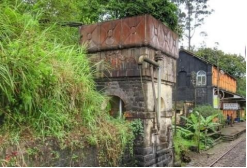
Water Columns and water pipes have been installed at railway stations to supply water needed for steam engine. In 1901, the water columns manufactured by the Cowans smart Co Ltd in England have been installed at Kadugannawa, Kandy and Kandapola railway stations.
There is a well system near Wattegama and Kadugannawa railway station that provides water for steam engine. These wells are made of bricks
| [2] | Jayasinghe, Vishwa Sri., Industrial Heritage in Kandy, Sri Lanka, The Journal of Archaeology and Heritage Studies, Department of Archaeology and Heritage Management, Rajarata University of Sri Lanka, 2021, 8(1), 34-35. |
[2]
. Kadapola railway station had a 3 feet high cast iron water pipe
| [8] | Manatunga, S. B., Udupussallewa Patu Dumriya Margaya, Samanthi Publications, Ja – ela, 2016, pp. 61-62, 85. |
[8]
. T. Edington & Sons, Foundry Engineers and WM Wini Abell Ltd. (
Figure 13).
3.6. Other Equipment
In addition to this, many railways’ heritage and related constructions and equipment have been left today. Among them, railway gates, turning tables, cranes, old scales, old telephones, tablet machines, pint and levers and ceramic water filters are unique. It can be identified that all these industrial heritages were manufactured in different companies in Britain and brought to Sri Lanka.
Cranes manufactured by Ransomes & Rapier (1937), Cowans Sheldon Co Ltd, Thomas smith & sons and Steam & Electric Crane works
| [4] | Jayasinghe, Vishwa Sri., Railway Monuments built during the Colonial Period, Cultural Department, Central Province, 2024, Sarathi 20, 250 -251, 252-261. |
[4]
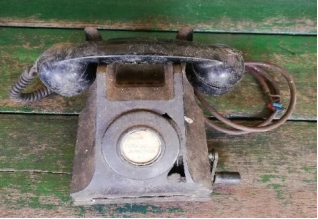
. Old Scales manufactured by H. Pooley & Co Ltd (1901), W & T Avery Makers and Hudson & stead Markers (1891). Railway gates manufactured by WB & Co (1911). Turning Tables manufactured by Cowans Sheldon Co Ltd. Old telephones manufactured by Western Electric (1881) and GCE Phone (
Figure 14). Tablet machines and Paint livers and signal devices manufactured by Tyer’s Patent Train Tablet Apparatus, Wb & SS and Railway Signal Co Ltd and The Westinghouse Brake & Saxby Signal Co Ltd. Water filters manufactured by British Berkteld Filter Ltd
| [4] | Jayasinghe, Vishwa Sri., Railway Monuments built during the Colonial Period, Cultural Department, Central Province, 2024, Sarathi 20, 250 -251, 252-261. |
[4]
.
Figure 13. Watawala Water Tank.
Figure 14. Old Telephone (Katugasthota).
Also associated with the railway stations are old water basins, clocks, lamps, wooden chairs, old passenger flyovers, Sampo Signal Towers, Money safes manufactured by The Chatwood Safe & Engineer, break weights iron balls manufactured by Walkers & Sons and tickets issuing machines. And the Y class Hunslet engine used for Shunting of railway carriages, Steam engines and Wagons in connection with these stations. A machine of the Genaral Electric Company of England, manufactured in 1949, is on display at the Bandarawela railway station
| [7] | Kodithuwakku, K., The Industrial Heritage of Uva, Department of Archaeology, Colombo 10, 2022, Boopathi (1), 88-89. |
[7]
.
3.7. Bridges, Culverts and Tunnels
An 800 feet long railway bridge was built across the Kelani River in the year 1865, with 25 feet spans supported on pillars. An iron grader bridge was constructed at Gampaha across Uruwal Oya and a bridge manufactured by P & W Maclellan Limited Clutha Works of Glasgow was in the year 1960 across Attanagalu Oya in Daraluwa area. A bridge with a length of 352 ½ feet was constructed across Ma Oya in the section between Ambepussa and Polgahawela. An iron grader bridge was also constructed in Tunthota area across Rambukkan Oya, a tributary of Ma Oya near Rambukkana
| [12] | Rajapaksha, S., History of Railway in Sri Lanka, Author Publications, Star Printers, Colombo 10, 2005/ 2018, pp. 24-25, 37-38. |
[12]
. Short bridges and culverts were also created on the Meengalla Gorge route, and a bridge manufactured by the Patant Shaft & Axllenee Company of Wesenburg, England was installed by the British in Tabahitiyawa across Nanu Oya
| [5] | Kodithuwakku, K., Road Bridge in Sri Lanka (1800 - 1950), (Unpublished) M. A. Thesis, Postgraduate Institute of Archaeology, Colombo, 1997, 57-58. |
[5]
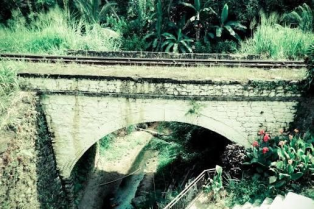
. At Kiribathkumbura, a brick arch bridge was constructed across Nanu Oya which is 30 feet and 05 inches deep. The brick arch with masonry of four brick lines (Brick Barrel) are applied under the stones which are bound from the head wall. The brick arch supported the top of the bridge and also made a good outer shape. The bridge in its length of 30 feet and 15 inches’ width when that height is 15 feet about the water level
| [9] | Manathunga, S. B., Brick made arched bridges, culverts, tunnels along the Railways in 19th Centuary Sri Lanka (Unpublished), University of Kelaniya, 2017, 1(1), 111-114. |
[9]
(
Figure 15).
Figure 15. Nanu Oya Arch bridge.
In the year 1866, during the construction of the railway from Peradeniya to Kandy, an iron bridge was built across the Mahaweli River. The bridge is 347 feet high and rests on three strong pillars made of single granite. The bridge is completed with eight over beams and petri truss and it is said that the cost of constructing this bridge was about 12000 pounds
| [12] | Rajapaksha, S., History of Railway in Sri Lanka, Author Publications, Star Printers, Colombo 10, 2005/ 2018, pp. 24-25, 37-38. |
[12]
. An iron bridge manufactured by P & W Maclellan Limited Clutha Works was used over the Dangolla road
| [3] | Jayasinghe, Vishwa Sri., A Study of Companies That Produced Civil Engineering and Mechanical Technology Heritage in Sri Lanka During the British Period, Center of Heritage, University of Kelaniya, Kelaniya, 2022, 1(1), 69-70. |
[3]
.
In the year 1914, a horse shoe - shaped brick culvert was constructed across a canal in the Mahaiyawa area of the Matale Railway. The main road A9 has another tunnel passing under the Kandy - Matale railway line which is more famous, became it has been continued from the opening as the Northern cart road in 1820s. During 1878 - 1880, the Matale railway laid with making an over crossing, the cart road and then the saying accommodated by an archway at Mahaiyawa. The embankments are in both sides, but had to be made for the required height and width. They were of 16 feet height and 20 feet wide semicircular arch established, but was always changed by tarring. In the Nittawela road, there is another, but smaller than previous width and height which is also in a good condition since 1878 - 1880. It was a neatly fixed barrel shaped towards the interior of the nave giving a smooth finish to the whole way A9
| [9] | Manathunga, S. B., Brick made arched bridges, culverts, tunnels along the Railways in 19th Centuary Sri Lanka (Unpublished), University of Kelaniya, 2017, 1(1), 111-114. |
[9]
.
Majority of culverts are stone arched at present, but rarely they are visible in the bushy surroundings and are difficult to be identified. Mahaiyawa culvert (Kandy - Matale railway line) until 1914, but was unfortunately demolished due to the widening of the main road A9. At present, there is a long, fully concrete box typed culvert crossing under the railway to the end of adjoining motor road A9
| [9] | Manathunga, S. B., Brick made arched bridges, culverts, tunnels along the Railways in 19th Centuary Sri Lanka (Unpublished), University of Kelaniya, 2017, 1(1), 111-114. |
[9]
. This culvert was damaged by a landslide in 2011.
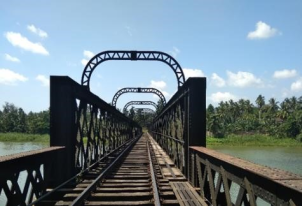
Several railway bridges manufactured by a company called ‘Westwood Baillie & Co. Engineers & Constructors’ are still remaining. The bridges built by the company can be seen in Katugastota, Yatirawana, Battulu Oya and Hunuwala areas. In addition, there are two passenger girder bridges built by a company called ‘Joseph Westwood & Co. Engineers & Constructor’. The bridges built under this company can be seen at the Galle Railway Station and a tea estate in the Nanu Oya area. Also, there were more companies named ‘The Horsley Co. LTD Engineers’, ‘E. C. J. Keay. LD’, that manufactured bridges in all over the Sri Lanka
| [3] | Jayasinghe, Vishwa Sri., A Study of Companies That Produced Civil Engineering and Mechanical Technology Heritage in Sri Lanka During the British Period, Center of Heritage, University of Kelaniya, Kelaniya, 2022, 1(1), 69-70. |
[3]
. Blackpool, Nuwaraeliya and Kandapola area of the Udupussellawa narrow gauge railway bridges have been manufactured by Horsley Company
| [4] | Jayasinghe, Vishwa Sri., Railway Monuments built during the Colonial Period, Cultural Department, Central Province, 2024, Sarathi 20, 250 -251, 252-261. |
[4]
.
Figure 16. Katugastota Railway Bridge.
The arch bridge at Demodara, which has been built during 1918 - 1921. It is 118.7m in length and 6.20m in width and consists of 9 arches, each 9.28m
| [6] | Kodithuwakku, K., A Brief History of Sri Lanka Railway, Gaveshana, Vol I, Department of Archaeology, Colombo, 2000, 01 (1) 41-42, 45-48. |
[6]
. The Manampitiya bridge built in 1922 across Mahaweli river. It is 290m long and 4.70m wide. In addition, in the year 1925, an over beams bridge was built across Deduru Oya in Chilaw. Gampola Kirinda bridge, Kiripani Oya bridge, Ulapane bridge and Nawalapitiya selam bridge on Up - country Railway line were iron grader bridges and all the bridges till Badulla were built as deck bridges. All the culverts in the Dehiowita and Watapotha areas of the Kelani Valley and Sabaragamu narrow gauge railway were constructed of granite and bricks. There are 43 tunnels on the Up - country railway line, one tunnel each on the Matale line, the coastal line. Singimalai tunnel is No. 14 on the Up -country line, it is built across the Singimalai hill and is 555m
| [6] | Kodithuwakku, K., A Brief History of Sri Lanka Railway, Gaveshana, Vol I, Department of Archaeology, Colombo, 2000, 01 (1) 41-42, 45-48. |
[6]
.






 Share This Article
 Twitter
 Linked In
 Facebook
 Copy
Copy Download