
Introduction: Anemia is a public health problem mainly affecting young children aged less than 5 years old globally. The aim of the present study was to assess the pooled prevalence of anemia and its determinants in “children aged 6-23 months” in Ethiopia. Methods: “EMBASE”, “Web of Science”, “Medline”, “Scopus”, “PubMed”, and “Google Scholar” electronic databases were utilized to search published articles on this topic. Results: The estimated pooled prevalence of anemia in “children aged 6-23 months” was 58.78% (95%CI: 52.13, 65.43). Subgroup analysis showed that the pooled prevalence of anemia was 54.63% (95%CI: 47.41,61.86) among regional-based studies, 68.15% (95%CI: 61.57, 74.73) among national-based studies, 58.25% (95%CI: 51.40,65.10) for articles published 2015-2019, 59.33% (95%CI: 48.71, 69.94) for articles published 2020-2021, 62.93% (95%CI: 54.00,71.86) for sample size >600, and 54.43% (95%CI: 48.03, 60.82) for sample size <600. Poor dietary diversity (AOR=2.81, 95%CI: 2.51, 3.11), having history of diarrhea over the last two weeks (AOR=3.97, 95%CI: 2.39, 5.56) and household food insecurity (AOR=2.72, 95%CI: 2.34, 3.10) were determinants of anemia. Conclusion: The pooled prevalence of anemia in “children aged 6-23 months” was high. Dietary diversity status, history of diarrhea over the last two weeks, and household food insecurity were determinants of anemia. Health education program should be provided.
| Published in | Rehabilitation Science (Volume 11, Issue 1) |
| DOI | 10.11648/j.rs.20261101.11 |
| Page(s) | 1-12 |
| Creative Commons |
This is an Open Access article, distributed under the terms of the Creative Commons Attribution 4.0 International License (http://creativecommons.org/licenses/by/4.0/), which permits unrestricted use, distribution and reproduction in any medium or format, provided the original work is properly cited. |
| Copyright |
Copyright © The Author(s), 2026. Published by Science Publishing Group |
6-23 Months Children, Anemia, Associated Factors, Ethiopia, Determinants
Author | Publication year | Region | Data collection method | Data collection period | Study design | Sampling technique | Response rate | Sample size | Prevalence of Anemia | Quality score |
|---|---|---|---|---|---|---|---|---|---|---|
Alemayehu et al. [ 13] | 2019 | SNNPR | Interviewer administered questionnaire | May -June 2016 | community-based cross-sectional study | Multi-stage sampling | 99.7% | 990 | 65.7% | 8 |
Gebrehaweria and Lemma [ 41] | 2020 | National | Extracted from the EDHS 2016 | January to June 2016 | population-based cross-sectional survey | stratified two-stage cluster sampling | - | 2554 | 72.3% | 8 |
Malako et al. [ 15] | 2019 | SNNPR | Interviewer administered questionnaire | In April 2017 | Community Cross-sectional survey | A multistage sampling | 95.78% | 477 | 52% | 8 |
Sorsa et al. [ 42] | 2021 | Oromia | Interviewer administered questionnaire | January 1–July 31, 2019 | A community-based cross-sectional study | Multistage, random, and systematic sampling | - | 917 | 44.4% | 7 |
Woldie et al. [ 43] | 2015 | Amhara | Interviewer administered questionnaire | March to May, 2014 | Institution based cross-sectional study | Systematic random sampling | 97% | 347 | 66.6% | 9 |
Molla et al. [ 44] | 2020 | Amhara | Interviewer administered questionnaire | February 1 to March 2, 2018 | A community-based cross-sectional study | Cluster sampling | 92.0% | 531 | 47.5% | 9 |
Heinrichs et al. [ 45] | 2021 | National | Extracted from the EDHS 2005 | - | population-based cross-sectional survey | a stratified, two-stage cluster sampling design | 93% | 1,290 | 71% | 9 |
Malako et al. [ 46] | 2018 | SNNPR | Interviewer administered questionnaire | March to April 2017 | A community-based cross-sectional study | Multistage sampling | 92.91% | 485 | 52.6% | 9 |
Roba et al. [ 47] | 2016 | Oromia & Tigray | Interviewer administered questionnaire | January to February 2014 and July to August 2014 | A community-based cross-sectional study | Simple random | 98.2% | 216 | 53.7% | 9 |
Heinrichs et al. [ 45] | 2021 | National | Extracted from the EDHS 2005 | - | population-based cross-sectional survey | a stratified, two-stag cluster sampling design | 93% | 1,290 | 61% | 9 |
AOR | Adjusted Odds Ratio |
CI | Confidence Interval |
EDHS | Ethiopian Demographic and Health Survey |
NOS | Newcastle-Ottawa Scale |
PRISMA | Preferred Reporting Items for Systematic Reviews and Meta-Analyses |
SNNPR | Southern Nations, Nationalities and Peoples |
SSA | Sub-Saharan Africa |
UNICEF | United Nations International Children's Emergency Fund |
WHO | World Health Organization |
| [1] |
WHO (2008), Anaemia.
https://www.who.int/data/nutrition/nlis/info/anaemia Accessed 2 Nov 2022. |
| [2] |
Iron-Deficiency Anemia in Children.
https://www.nationwidechildrens.org/conditions/health-library/iron-deficiency-anemia-in-children Accessed 7 Nov 2022. |
| [3] |
Anemia in Children | Boston Children’s Hospital.
https://www.childrenshospital.org/conditions/anemia Accessed 7 Nov 2022. |
| [4] |
Articles. Cedars-Sinai.
https://www.cedars-sinai.org/health-library/diseases-and-conditions---pediatrics/a/anemia-in-children.html Accessed 7 Nov 2022. |
| [5] | Endris BS, Dinant G-J, Gebreyesus SH, Spigt M. Risk factors of anemia among preschool children in Ethiopia: a Bayesian geo-statistical model. BMC Nutrition. 2022; 8: 2. |
| [6] |
WHO (2022), Anaemia.
https://www.who.int/health-topics/anaemia Accessed 1 Nov 2022. |
| [7] |
WHO Global Anaemia estimates, 2021 Edition.
https://www.who.int/data/gho/data/themes/topics/anaemia_in_women_and_children Accessed 31 Oct 2022. |
| [8] | Huang Z, Jiang F, Li J, Jiang D, Xiao T, Zeng J. Prevalence and risk factors of anemia among children aged 6–23 months in Huaihua, Hunan Province. BMC Public Health. 2018; 18: 1267. |
| [9] | Iglesias Vázquez L, Valera E, Villalobos M, Tous M, Arija V. Prevalence of Anemia in Children from Latin America and the Caribbean and Effectiveness of Nutritional Interventions: Systematic Review and Meta–Analysis. Nutrients. 2019; 11: 183. |
| [10] | Yang F, Liu X, Zha P. Trends in Socioeconomic Inequalities and Prevalence of Anemia Among Children and Nonpregnant Women in Low- and Middle-Income Countries. JAMA Network Open. 2018; 1: e182899. |
| [11] | Li Q, Liang F, Liang W, Shi W, Han Y. Prevalence of Anemia and Its Associated Risk Factors Among 6-Months-Old Infants in Beijing. Frontiers in Pediatrics. 2019; 7. |
| [12] | Ewusie JE, Ahiadeke C, Beyene J, Hamid JS. Prevalence of anemia among under-5 children in the Ghanaian population: estimates from the Ghana demographic and health survey. BMC Public Health. 2014; 14: 626. |
| [13] | Alemayehu M, Meskele M, Alemayehu B, Yakob B. Prevalence and correlates of anemia among children aged 6-23 months in Wolaita Zone, Southern Ethiopia. PLOS ONE. 2019; 14: e0206268. |
| [14] | Gebreweld A, Ali N, Ali R, Fisha T. Prevalence of anemia and its associated factors among children under five years of age attending at Guguftu health center, South Wollo, Northeast Ethiopia. PLOS ONE. 2019; 14: e0218961. |
| [15] | Malako BG, Asamoah BO, Tadesse M, Hussen R, Gebre MT. Stunting and anemia among children 6–23 months old in Damot Sore district, Southern Ethiopia. BMC Nutrition. 2019; 5: 3. |
| [16] | Gebereselassie Y, BirhanSelassie M, Menjetta T, Alemu J, Tsegaye A. Magnitude, Severity, and Associated Factors of Anemia among Under-Five Children Attending Hawassa University Teaching and Referral Hospital, Hawassa, Southern Ethiopia, 2016. Anemia. 2020; 2020: e7580104. |
| [17] | Kassebaum NJ, Jasrasaria R, Naghavi M, Wulf SK, Johns N, Lozano R, et al. A systematic analysis of global anemia burden from 1990 to 2010. Blood. 2014; 123: 615–24. |
| [18] | Plessow R, Arora NK, Brunner B, Tzogiou C, Eichler K, Brügger U, et al. Social Costs of Iron Deficiency Anemia in 6–59-Month-Old Children in India. PLOS ONE. 2015; 10: e0136581. |
| [19] | Seeler RA. Deaths in Children with Sickle Cell Anemia: A Clinical Analysis of 19 Fatal instances in Chicago. Clin Pediatr (Phila). 1972; 11: 634–7. |
| [20] | Lobo CL de C, Nascimento EM do, Jesus LJC de, Freitas TG de, Lugon JR, Ballas SK. Mortality in children, adolescents and adults with sickle cell anemia in Rio de Janeiro, Brazil. Hematol, Transfus Cell Ther. 2018; 40: 37–42. |
| [21] | Tolentino K, Friedman JF. An update on anemia in less developed countries. Am J Trop Med Hyg. 2007; 77: 44–51. |
| [22] | Muoneke VU, Ibekwe RC, Nebe-Agumadu HU, Ibe BC. Factors associated with mortality in under-five children with severe anemia in Ebonyi, Nigeria. Indian Pediatr. 2012; 49: 119–23. |
| [23] | Tesema GA, Worku MG, Tessema ZT, Teshale AB, Alem AZ, Yeshaw Y, et al. Prevalence and determinants of severity levels of anemia among children aged 6–59 months in sub-Saharan Africa: A multilevel ordinal logistic regression analysis. PLoS ONE. 2021; 16. |
| [24] | Seifu BL, Tesema GA. Individual-and community-level factors associated with anemia among children aged 6–23 months in sub-Saharan Africa: evidence from 32 sub-Saharan African countries. Archives of Public Health. 2022; 80: 183. |
| [25] | Commey JO, Dekyem P. Childhood deaths from anaemia in Accra, Ghana. West Afr J Med. 1995; 14: 101–4. |
| [26] | Makani J, Cox SE, Soka D, Komba AN, Oruo J, Mwamtemi H, et al. Mortality in Sickle Cell Anemia in Africa: A Prospective Cohort Study in Tanzania. PLOS ONE. 2011; 6: e14699. |
| [27] | Feleke BE, Derbie A, Zenebe Y, Mekonnen D, Hailu T, Tulu B, et al. Burden and determinant factors of anemia among elementary school children in northwest Ethiopia: a comparative cross sectional study. African Journal of Infectious Diseases. 2018; 12: 1–6. |
| [28] | Locks LM, Reerink I, Tucker Brown A, Gnegne S, Ramalanjaona N, Nanama S, et al. The Impact of Integrated Infant and Young Child Feeding and Micronutrient Powder Intervention on Feeding Practices and Anemia in Children Aged 6–23 Months in Madagascar. Nutrients. 2017; 9: 581. |
| [29] | Wilunda C, Tanaka S, Esamai F, Kawakami K. Prenatal anemia control and anemia in children aged 6-23 months in sub-Saharan Africa: Maternal & Child Nutrition. 2017; 13: e12375. |
| [30] | Huo J, Sun J, Fang Z, Chang S, Zhao L, Fu P, et al. Effect of Home-Based Complementary Food Fortification on Prevalence of Anemia Among Infants and Young Children Aged 6 to 23 Months in Poor Rural Regions of China. Food Nutr Bull. 2015; 36: 405–14. |
| [31] | Wikipedia. Ethiopia. Wikipedia. 2021. |
| [32] | WHO (World Health Organization), Hemoglobin Concentrations for the Diagnosis of Anemia and Assessment of Severity: Vitamin and Mineral Nutrition Information System WHO, WHO, Geneva, Switzerland, 2011, |
| [33] |
Iron deficiency anemia assessment, prevention, and control: A guide for program managers. UNICEF, UNU, WHO, 2001 (WHO/NHD/01.2). Available at
http://www.who.int/reproductive-health/docs/anaemia.pdf accessed by Feb 2016. |
| [34] | Modesti PA, Reboldi G, Cappuccio FP, Agyemang C, Remuzzi G, Rapi S, et al. Panethnic Differences in Blood Pressure in Europe: A Systematic Review and Meta-Analysis. PLoS ONE. 2016; 11: e0147601. |
| [35] |
GA Wells, B Shea, D O’Connell, J Peterson, V Welch, M Losos, et al. The Newcastle-Ottawa Scale (NOS) for Assessing the Quality of Nonrandomized Studies in Meta-Analyses, Ottawa Hospital Research Institute, Ottawa, Canada.
http://www.ohri.ca/programs/clinical_epidemiology/oxford.asp Accessed 21 May 2021. |
| [36] | Yazew KG, Walle TA, Azagew AW. Prevalence of anti-diabetic medication adherence and determinant factors in Ethiopia: A systemic review and meta-analysis, 2019. International Journal of Africa Nursing Sciences. 2019; 11: 100167. |
| [37] | Huedo-Medina TB, Sánchez-Meca J, Marín-Martínez F, Botella J. Assessing heterogeneity in meta-analysis: Q statistic or I2 index? Psychological Methods. 2006; 11: 193–206. |
| [38] | Higgins JP, Green S. Cochrane Handbook for Systematic Reviews of Interventions : Cochrane Book Series. 2008.: 187–241. |
| [39] | Egger M, Davey-Smith G, Altman D., Systematic reviews in health care: meta-analysis in context. 2. ed., [Nachdr.]. London: BMJ Books; 2009. |
| [40] | Page MJ, McKenzie JE, Bossuyt PM, Boutron I, Hoffmann TC, Mulrow CD, et al. The PRISMA 2020 statement: an updated guideline for reporting systematic reviews. BMJ. 2021; n71. |
| [41] | Gebrehaweria Gebremeskel M, Lemma Tirore L. Factors Associated with Anemia Among Children 6-23 Months of Age in Ethiopia: A Multilevel Analysis of Data from the 2016 Ethiopia Demographic and Health Survey. Pediatric Health Med Ther. 2020; 11: 347–57. |
| [42] | Sorsa A, Habtamu A, Kaso M. Prevalence and Predictors of Anemia Among Children Aged 6-23 Months in Dodota District, Southeast Ethiopia: A Community-Based Cross-Sectional Study. Pediatric Health Med Ther. 2021; 12: 177–87. |
| [43] | Woldie H, Kebede Y, Tariku A. Factors Associated with Anemia among Children Aged 6–23 Months Attending Growth Monitoring at Tsitsika Health Center, Wag-Himra Zone, Northeast Ethiopia. Journal of Nutrition and Metabolism. 2015; 2015: e928632. |
| [44] | Molla A, Egata G, Mesfin F, Arega M, Getacher L. Prevalence of Anemia and Associated Factors among Infants and Young Children Aged 6–23 Months in Debre Berhan Town, North Shewa, Ethiopia. Journal of Nutrition and Metabolism. 2020; 2020: e2956129. |
| [45] | Heinrichs H, Endris BS, Dejene T, Dinant G-J, Spigt M. Anaemia and its determinants among young children aged 6-23 months in Ethiopia (2005-2016). Matern Child Nutr. 2021; 17: e13082. |
| [46] | Malako BG, Teshome MS, Belachew T. Anemia and associated factors among children aged 6–23 months in Damot Sore District, Wolaita Zone, South Ethiopia. BMC Hematology. 2018; 18: 14. |
| [47] | Roba KT, O’Connor TP, Belachew T, O’Brien NM. Anemia and undernutrition among children aged 6–23 months in two agroecological zones of rural Ethiopia. Pediatric Health Med Ther. 2016; 7: 131–40. |
| [48] | Yu C, Ban W, Xie L. Prevalence and influence factors of iron deficiency anemia among 6 – 23 months old children in Qiannan area of Guizhou province. zgggws. 2018; 34: 1–1. |
| [49] | Muslihah N, Wilujeng CS, Kusuma TS. Household Food Insecurity, Inappropriate Complementary Feeding, and Associated with High Stunting and Anemia Among Children Aged 6–23 Months, in Madura Rural, Indonesia. Current Developments in Nutrition. 2022; 6 Supplement_1: 933. |
| [50] | Liu J, Huo J, Liu Z, Sun J, Huang J. Prevalence and Temporal Trend (2016–2018) of Anaemia among 6–23-Month-Old Infants and Young Children in China. International Journal of Environmental Research and Public Health. 2021; 18: 2041. |
| [51] | Hu S, Tan H, Peng A, Jiang H, Wu J, Guo S, et al. Disparity of anemia prevalence and associated factors among rural to urban migrant and the local children under two years old: a population based cross-sectional study in Pinghu, China. BMC Public Health. 2014; 14: 601. |
| [52] | Adriyani FHN, Hikmanti A. Correlations of Anemia, Stunting, and Sociodemographic Characteristics and Energy Among Children Aged 6–23 Months at Karangklesem Village, South Purwokerto. Atlantis Press; 2020. p. 196–203. |
| [53] | Huang Y, Wang L, Huo J, Wu Q, Wang W, Chang S, et al. Prevalence and causes of anaemia in children aged 6–23 months in rural Qinghai, China: findings from a cross-sectional study. BMJ Open. 2019; 9: e031021. |
APA Style
Gebreyohannes, L. T., Wake, A. D. (2026). Determinants of Anemia Among Children Aged 6-23 Months in Ethiopia: A Systematic Review and Meta-analysis. Rehabilitation Science, 11(1), 1-12. https://doi.org/10.11648/j.rs.20261101.11
ACS Style
Gebreyohannes, L. T.; Wake, A. D. Determinants of Anemia Among Children Aged 6-23 Months in Ethiopia: A Systematic Review and Meta-analysis. Rehabil. Sci. 2026, 11(1), 1-12. doi: 10.11648/j.rs.20261101.11
@article{10.11648/j.rs.20261101.11,
  author = {Lidiya Tekle Gebreyohannes and Addisu Dabi Wake},
  title = {Determinants of Anemia Among Children Aged 6-23 Months in Ethiopia: A Systematic Review and
Meta-analysis},
  journal = {Rehabilitation Science},
  volume = {11},
  number = {1},
  pages = {1-12},
  doi = {10.11648/j.rs.20261101.11},
  url = {https://doi.org/10.11648/j.rs.20261101.11},
  eprint = {https://article.sciencepublishinggroup.com/pdf/10.11648.j.rs.20261101.11},
  abstract = {Introduction: Anemia is a public health problem mainly affecting young children aged less than 5 years old globally. The aim of the present study was to assess the pooled prevalence of anemia and its determinants in “children aged 6-23 months” in Ethiopia. Methods: “EMBASE”, “Web of Science”, “Medline”, “Scopus”, “PubMed”, and “Google Scholar” electronic databases were utilized to search published articles on this topic. Results: The estimated pooled prevalence of anemia in “children aged 6-23 months” was 58.78% (95%CI: 52.13, 65.43). Subgroup analysis showed that the pooled prevalence of anemia was 54.63% (95%CI: 47.41,61.86) among regional-based studies, 68.15% (95%CI: 61.57, 74.73) among national-based studies, 58.25% (95%CI: 51.40,65.10) for articles published 2015-2019, 59.33% (95%CI: 48.71, 69.94) for articles published 2020-2021, 62.93% (95%CI: 54.00,71.86) for sample size >600, and 54.43% (95%CI: 48.03, 60.82) for sample size <600. Poor dietary diversity (AOR=2.81, 95%CI: 2.51, 3.11), having history of diarrhea over the last two weeks (AOR=3.97, 95%CI: 2.39, 5.56) and household food insecurity (AOR=2.72, 95%CI: 2.34, 3.10) were determinants of anemia. Conclusion: The pooled prevalence of anemia in “children aged 6-23 months” was high. Dietary diversity status, history of diarrhea over the last two weeks, and household food insecurity were determinants of anemia. Health education program should be provided.},
 year = {2026}
}
TY  - JOUR
T1  - Determinants of Anemia Among Children Aged 6-23 Months in Ethiopia: A Systematic Review and
Meta-analysis
AU  - Lidiya Tekle Gebreyohannes
AU  - Addisu Dabi Wake
Y1  - 2026/04/23
PY  - 2026
N1  - https://doi.org/10.11648/j.rs.20261101.11
DO  - 10.11648/j.rs.20261101.11
T2  - Rehabilitation Science
JF  - Rehabilitation Science
JO  - Rehabilitation Science
SP  - 1
EP  - 12
PB  - Science Publishing Group
SN  - 2637-594X
UR  - https://doi.org/10.11648/j.rs.20261101.11
AB  - Introduction: Anemia is a public health problem mainly affecting young children aged less than 5 years old globally. The aim of the present study was to assess the pooled prevalence of anemia and its determinants in “children aged 6-23 months” in Ethiopia. Methods: “EMBASE”, “Web of Science”, “Medline”, “Scopus”, “PubMed”, and “Google Scholar” electronic databases were utilized to search published articles on this topic. Results: The estimated pooled prevalence of anemia in “children aged 6-23 months” was 58.78% (95%CI: 52.13, 65.43). Subgroup analysis showed that the pooled prevalence of anemia was 54.63% (95%CI: 47.41,61.86) among regional-based studies, 68.15% (95%CI: 61.57, 74.73) among national-based studies, 58.25% (95%CI: 51.40,65.10) for articles published 2015-2019, 59.33% (95%CI: 48.71, 69.94) for articles published 2020-2021, 62.93% (95%CI: 54.00,71.86) for sample size >600, and 54.43% (95%CI: 48.03, 60.82) for sample size <600. Poor dietary diversity (AOR=2.81, 95%CI: 2.51, 3.11), having history of diarrhea over the last two weeks (AOR=3.97, 95%CI: 2.39, 5.56) and household food insecurity (AOR=2.72, 95%CI: 2.34, 3.10) were determinants of anemia. Conclusion: The pooled prevalence of anemia in “children aged 6-23 months” was high. Dietary diversity status, history of diarrhea over the last two weeks, and household food insecurity were determinants of anemia. Health education program should be provided.
VL  - 11
IS  - 1
ER  -
Nursing Department, Arsi University, Asella, Ethiopia
Nursing Department, Arsi University, Asella, Ethiopia
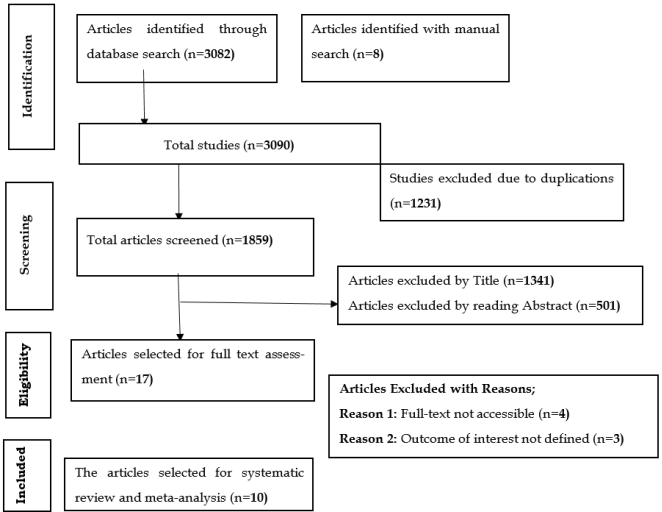
Figure 1. PRISMA flowchart diagram of the study selection for systematic review on prevalence of anemia and its determinants. Note: (Figure 1) was Adapted from “Page MJ, McKenzie JE, Bossuyt PM, Boutron I, Hoffmann TC, Mulrow CD, et al. The PRISMA 2020 statement: an updated guideline for reporting systematic reviews. BMJ. 2021; 372: n71. https://doi.org/10.1136/bmj.n71.” [40].
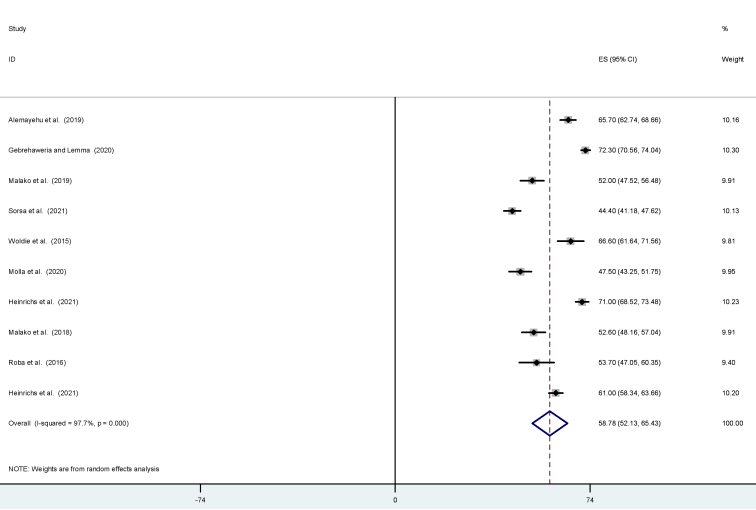
Figure 2. Forest plot of the pooled prevalence of anemia.
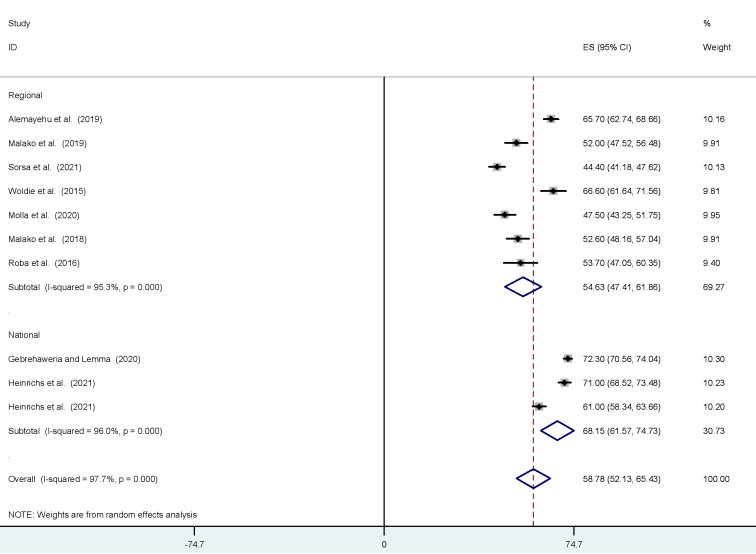
Figure 3. Subgroup analysis by region on the pooled prevalence of anemia.
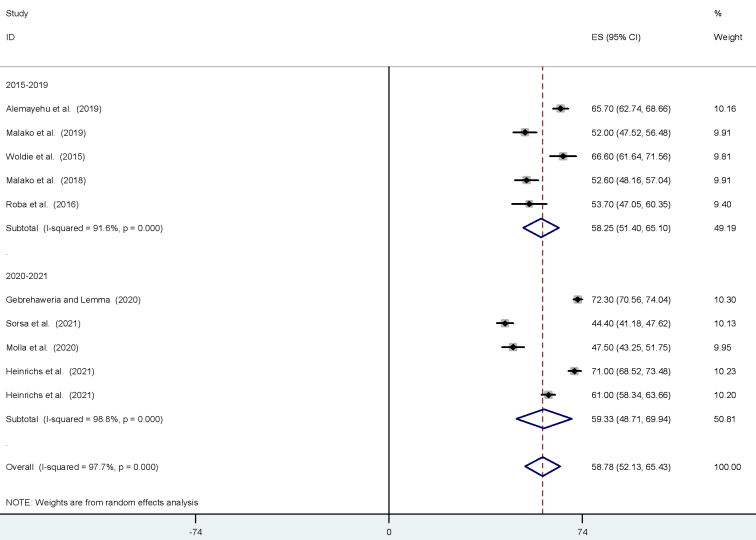
Figure 4. Subgroup analysis by articles publication year on the pooled prevalence of anemia.
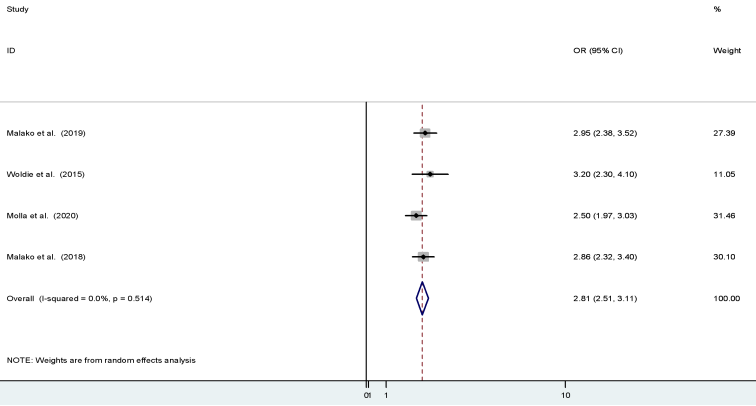
Figure 5. The pooled effect of dietary diversity on anemia among children aged 6-23 months in Ethiopia.
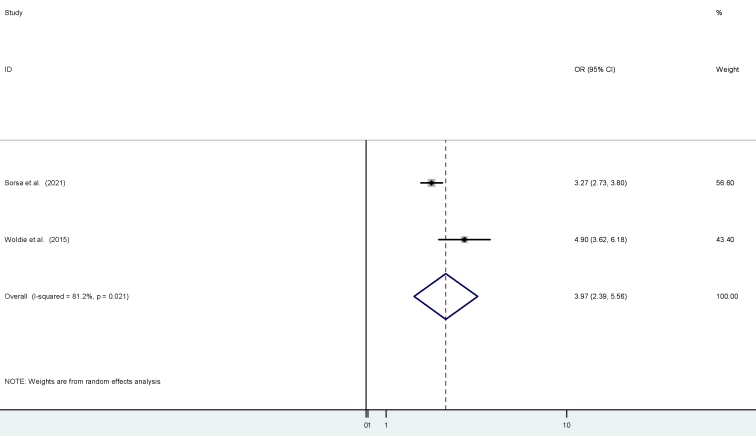
Figure 6. The pooled effect of history of diarrhea over the last two weeks on anemia.
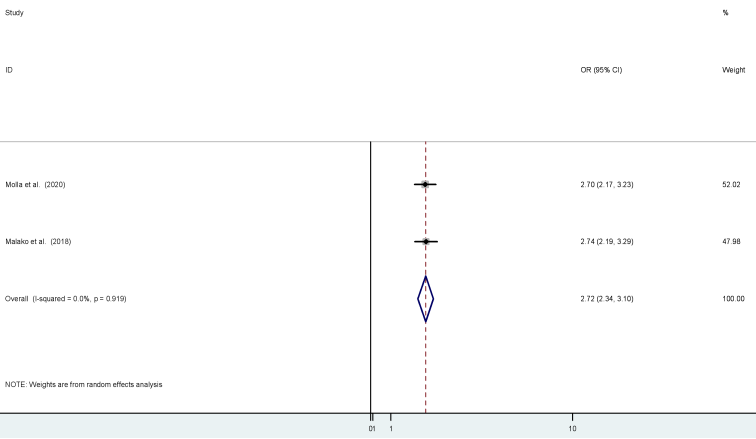
Figure 7. The pooled effect of household food insecurity on anemia.

Information



 Share This Article
 Twitter
 Linked In
 Facebook
 Copy
Copy Download