Research Article | | Peer-Reviewed

Extraction Yield and Physicochemical Quality of Artisanal Palm Oil Produced in Koba–Totema, Guinea

Received: 23 February 2026     Accepted: 9 March 2026     Published: 26 March 2026
Views:       Downloads:
Abstract

This study investigated the production performance and physicochemical characteristics of palm oil obtained through artisanal processing in Koba–Totema, Boffa (Republic of Guinea). Eight independent processing batches involving 80 mature oil palm fruit bunches were carried out under traditional extraction conditions. Extraction efficiency was estimated as the percentage ratio between the mass of oil obtained and the mass of processed fruits. The physicochemical quality of the oil was evaluated using standard analytical methods. Moisture content and insoluble impurities were determined by gravimetric techniques, while peroxide value was measured by iodometric titration and expressed in meq O2/kg of oil. Acid value was determined by titration with potassium hydroxide (KOH) and expressed in mg KOH/g of oil according to standard calculation procedures. The average extraction yield was 16%, reflecting a moderate but relatively stable extraction performance. Mean values recorded for moisture content, peroxide value, acid value, and insoluble impurities were 0.43 ± 0.26%, 13.05 ± 1.92 meq O2/kg, 12.47 ± 9.94 mg KOH/g, and 2.74 ± 2.14%, respectively. While extraction yields remained fairly consistent across batches, notable variations were observed in chemical quality parameters. These differences appear to be mainly related to variations in clarification, dehydration, and filtration practices during artisanal processing. Overall, the results highlight the importance of improving post-extraction handling and processing practices to enhance the chemical stability and quality of artisanal palm oil.

Published in Journal of Food and Nutrition Sciences (Volume 14, Issue 2)
DOI 10.11648/j.jfns.20261402.12
Page(s) 117-126
Creative Commons

This is an Open Access article, distributed under the terms of the Creative Commons Attribution 4.0 International License (http://creativecommons.org/licenses/by/4.0/), which permits unrestricted use, distribution and reproduction in any medium or format, provided the original work is properly cited.

Copyright

Copyright © The Author(s), 2026. Published by Science Publishing Group

Keywords

Artisanal Oil Processing, Physicochemical Properties, Oil Quality Assessment, Traditional Palm Oil Production, Guinea

1. Introduction
Artisanal palm oil production plays a major role in food security and rural livelihoods in West Africa. Palm oil, extracted from the mesocarp of the oil palm fruit (Elaeis guineensis), constitutes one of the main sources of vegetable lipids consumed in the region. It is widely used in human diets due to its availability, high energy value, and its capacity to serve as a carrier of fat-soluble vitamins . At the global level, the African oil palm is recognized as the most productive oil-bearing crop, contributing significantly to the worldwide supply of vegetable oils .
Oil palm fruits are grouped in bunches containing several hundred to several thousand fruits, whose fibrous and oil-rich mesocarp represents the principal raw material for crude palm oil production . The physicochemical quality of palm oil is strongly influenced by several factors, including harvesting conditions, processing techniques, and storage practices . In general, the quality of edible vegetable oils is evaluated using physicochemical parameters such as moisture content, acid value, peroxide value, and insoluble impurities. These indicators provide essential information regarding oxidative stability, sanitary quality, and the suitability of oils for human consumption . Elevated levels of moisture, acidity, or peroxide value are often associated with inadequate processing conditions and may accelerate oil deterioration, thereby affecting its overall quality .
In the Republic of Guinea, national palm oil production is estimated at approximately 60,000 tons per year, which remains insufficient to satisfy the increasing demand for edible oils and agro-industrial raw materials. Furthermore, nearly 80% of this production originates from artisanal processing systems . In several regions of the country, particularly in Boffa (Lower Guinea), palm oil is produced mainly through traditional artisanal methods and is largely consumed locally. This production system reflects the important socio-economic role of oil palm within regional agroforestry systems . However, despite its importance, limited scientific information is available regarding the physicochemical quality of artisanal palm oil produced in these areas.
The present study was therefore conducted to assess the performance and quality of artisanal palm oil production in Koba–Totema (Boffa, Guinea). Specifically, the study aimed to:
1) Determine the extraction yield obtained from traditional processing of oil palm fruits;
2) Evaluate key physicochemical parameters of the produced oil, including moisture content, peroxide value, acid value, and insoluble impurity content.
2. Materials and Methods
2.1. Study Area
The study was conducted in the locality of Totema, located in Boffa Prefecture, Boké Region (Republic of Guinea), an area recognized for its artisanal palm oil production. Samples were collected from local producers during the study period.
2.2. Raw Material
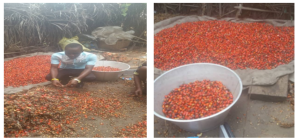
Mature oil palm fruit bunches were harvested at the optimal maturity stage in June 2025 in Totema. Optimal maturity was defined as bunches showing natural fruit detachment with several loose fruits at the base of the bunch and a characteristic orange-red coloration of the mesocarp, indicating full physiological ripeness. The fruits were then manually separated from the bunches prior to processing Figure 1.
Figure 1. Fruits at optimal maturity.
2.3. Artisanal Palm Oil Production Process
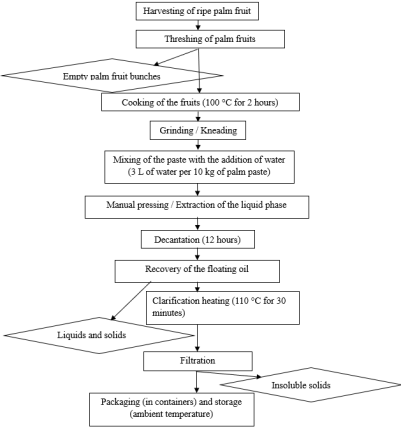
The artisanal palm oil production process used in this study was illustrated in Figure 2.
Description of the artisanal palm oil production process
Harvesting of mature fruit bunches. Oil palm fruit bunches at physiological maturity were harvested manually. Maturity was assessed based on the characteristic red–orange coloration of the fruits and the natural detachment of some fruits, indicating optimal oil content .
Threshing (fruit detachment). The fruits were detached from the bunches by manual threshing using a machete. The individual fruits obtained were then processed in the subsequent steps .
Cooking of the fruits. The detached fruits were boiled in water at approximately 100°C for 2h. This step softened the mesocarp, inactivated lipolytic enzymes, and limited the increase in oil acidity .
Grinding / Pounding. After cooking, the fruits were mechanically ground. This step ruptured the mesocarp cell walls, releasing the oil contained in the vacuoles and contributing to increased extraction yield .
Kneading with water addition. The resulting paste was kneaded with the gradual addition of water Figure 3, which promoted the separation of oil from the solid phase, mainly composed of fibers and kernels .
Figure 2. Flow diagram of the artisanal palm oil production process.
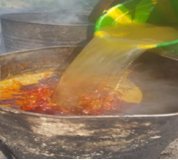
Figure 3. Progressive addition of water during mixing.
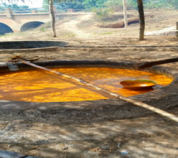
Figure 4. Oil decantation.
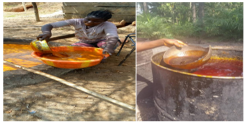
Manual pressing. The mixture was manually pressed, resulting in the extraction of a crude liquid composed of oil, water, and suspended solids. This method produced solvent-free oil and was characterized by low energy consumption and the use of non-specialized labor .
Decantation. The extracted liquid was left to undergo gravitational decantation for approximately 12h Figure 4, allowing natural phase separation. The oil floated to the surface, while the aqueous phase and solid residues settled at the bottom of the container .
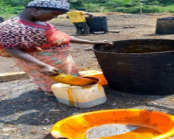
Recovery of the floating oil. After decantation, the floating oil was carefully recovered from the surface using a calabash without disturbing the underlying layers Figure 5. This step ensured effective physical separation of the oil from the aqueous phase and insoluble solids.
Figure 5. Supernatant oil recovery.
Clarification heating. Following extraction, the recovered oil was heated at 110°C for 30 min for clarification. This step removed residual moisture and improved oil stability.
Filtration. After clarification, the oil was filtered while still hot using a clean mosquito net to remove residual insoluble impurities.
Packaging and storage. After clarification, the oil was packaged in clean 20 L containers Figure 6. The samples were stored at ambient temperature and protected from light.
Figure 6. Oil packaging in drums after clarification.
Determination of extraction yield. The oil extraction yield was determined by relating the mass of oil obtained to the initial mass of processed fruits .
The extraction yield was calculated using the following expression:
Extraction yield (%)=Mass of oil obtained (kg)Mass of precessed fruits kgx100
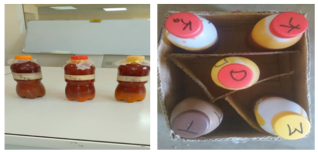
Sampling. Eight artisanal palm oil samples, coded E1 to E8, were collected after the filtration and packaging Figure 7. The samples were protected from light and then transported to the National Office for Food Quality Control in Matoto–Conakry for physicochemical analyses.
Figure 7. Oil samples collected for analysis.
2.4. Physicochemical Analyses
The physicochemical parameters selected in this study were chosen because they are widely recognized indicators used to evaluate the quality, stability, and technological characteristics of edible vegetable oils. Moisture content, peroxide value, acid value, and insoluble impurity content are among the main parameters recommended by international standards for assessing the quality of crude palm oil. These indicators make it possible to evaluate key aspects of oil quality, including the presence of water that may promote microbial growth and hydrolysis, the degree of lipid oxidation, the level of free fatty acids resulting from hydrolytic degradation, and the presence of solid impurities derived from processing operations. The selection of these analyses was therefore based on their relevance for assessing the physicochemical quality of artisanal palm oil and for comparing the results with established quality standards.
2.4.1. Determination of Moisture Content
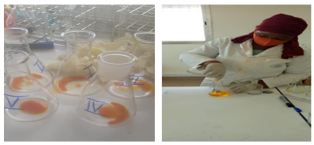
The moisture content of palm oil was determined by oven drying to constant weight, in accordance with ISO 662: 2016 and the official AOAC procedures for vegetable oils Figure 8 .
2.4.2. Determination of Peroxide Value
The peroxide value, expressed in milliequivalents of active oxygen per kilogram of oil (meq O2/kg), was determined by iodometric titration in accordance with the standardized methods described by ISO 3960 and AOAC. This method was used to evaluate the primary oxidation level of the oil Figure 8 [19, 20].
2.4.3. Determination of Acid Value
The acid value, expressed in mg KOH/g of oil and representing the free fatty acid content, was determined by titration with an alcoholic KOH solution, in accordance with the standardized methods described by ISO 660 and AOAC. This method is commonly used to assess the degree of hydrolysis of vegetable oils and their technological quality Figure 8 .
2.4.4. Determination of Insoluble Impurity Content
The insoluble impurity content of palm oil was determined by a gravimetric method based on the separation and quantification of insoluble materials, in accordance with ISO 663 Figure 8 .
Figure 8. Laboratory analyses.
2.5. Statistical Analysis
The data obtained were processed using STATA software (version 15.1). Statistical analysis was based on descriptive statistics, including means, standard deviations, and minimum and maximum values. The results were compared with recommended quality standards for edible palm oils in order to assess the compliance of the analyzed samples.
3. Results
3.1. Extraction Yields
The results of the artisanal palm oil extraction are presented in Table 1. A total of 80 mature oil palm fruit bunches were processed, divided into eight independent batches of ten bunches each. The parameters analyzed included fruit mass, extracted oil mass and volume, and extraction yield.
Table 1. Artisanal palm oil production yields (n = 8 batches).

Batch

Number of mature fruit bunches

Fruits obtained (kg)

Oil obtained (kg)

Extraction yield (%)

Lot 1

10

120

19.32

16.10

Lot 2

10

130

20.93

16.10

Lot 3

10

130

20.93

16.10

Lot 4

10

95

15.29

16.09

Lot 5

10

100

16.10

16.10

Lot 6

10

110

17.71

16.10

Lot 7

10

140

22.54

16.10

Lot 8

10

135

21.73

16.09

Mean

80

120 ± 16.70

18.67 ± 2.78

16.10 ± 0.01

3.2. Physicochemical Properties of Palm Oil
Chemical quality parameters of artisanal palm oil. Table 2 presents the moisture content, peroxide value, and acid value measured in the eight artisanal palm oil batches analyzed. These parameters are key indicators of oil quality and stability. Moisture content reflects the efficiency of dehydration and clarification processes, peroxide value indicates the level of primary lipid oxidation, and acid value assesses the extent of triglyceride hydrolysis. The individual results for each batch, along with the corresponding mean and standard deviation, allow evaluation of variability among samples and provide insight into the effectiveness of processing and post-extraction operations implemented under artisanal production conditions.
Table 2. Summary of extraction batches and associated chemical quality parameters of artisanal palm oil.

Batch

Moisture content (%)

Peroxide value (meq O2/kg)

Acid value (mg KOH/g)

Lot 1

0.47

15.56

25.03

Lot 2

0.32

12.90

15.20

Lot 3

0.17

10.14

8.91

Lot 4

0.67

15.88

29.40

Lot 5

0.14

11.40

9.17

Lot 6

0.70

13.13

4.74

Lot 7

0.80

12.76

4.15

Lot 8

0.20

12.65

3.15

Mean ± SD

0.43 ± 0.26

13.05 ± 1.92

12.47 ± 9.94

The results presented in Table 2 show noticeable variability in the chemical quality of the analyzed artisanal palm oil samples. Descriptive statistics were calculated for all parameters, and differences between processing batches were evaluated using analysis of variance (ANOVA) at a significance level of p < 0.05.
The mean moisture content was 0.43 ± 0.26%, with values ranging from 0.14% (L5) to 0.80% (L7). Statistical comparison between batches revealed differences in moisture levels, reflecting variability in dehydration and clarification practices during artisanal processing. Higher moisture values observed in batches L6 and L7 suggest less efficient dehydration processes, which may promote hydrolytic reactions and reduce storage stability. Conversely, lower moisture levels recorded in L3 and L5 indicate more effective water removal and improved post-extraction handling.
The peroxide value averaged 13.05 ± 1.92 meq O2/kg, with values ranging from 10.14 to 15.88 meq O2/kg. Statistical analysis indicated variability between batches, suggesting differences in exposure to oxygen and heat during processing and storage. Samples L1 and L4 exhibited the highest peroxide values, indicating greater susceptibility to primary oxidation, whereas batch L3 presented the lowest value, suggesting relatively better oxidative stability.
The acid value showed the highest dispersion (12.47 ± 9.94 mg KOH/g), with values ranging from 3.15 to 29.40 mg KOH/g. Statistical comparisons highlighted substantial differences between batches. Elevated acid values in L1 and L4 indicate pronounced triglyceride hydrolysis and accumulation of free fatty acids, likely resulting from delayed processing, higher residual moisture, or insufficient thermal control. In contrast, lower acid values observed in batches L6, L7, and L8 suggest more effective control of hydrolytic deterioration.
Overall, although extraction yield remained relatively consistent across batches, the statistical variability observed in moisture content and acid value indicates that oil quality is strongly influenced by post-extraction handling practices. Batches combining low moisture, moderate peroxide values, and low acid values (e.g., L6–L8) exhibited significantly better chemical stability, whereas batches L1 and L4 showed signs of both hydrolytic and oxidative deterioration.
These results emphasize the importance of improving clarification, dehydration, heating, and storage conditions in artisanal palm oil production in order to enhance the physicochemical quality and shelf life of the oil.
4. Discussion
The mass of fruits obtained per batch ranged from 95 to 140 kg, with a mean value of 120.0 ± 16.7 kg. This variability reflects natural differences in bunch size and fruit load under artisanal production conditions. The mass of crude palm oil extracted ranged from 15.29 to 22.54 kg, with a mean value of 18.67 ± 2.78 kg per batch. Batches with higher fruit mass generally produced greater quantities of oil, indicating a direct relationship between raw material availability and oil output. The mean extraction yield was 16.10 ± 0.01%. Despite variations in fruit mass and extracted oil quantity, the yield remained relatively stable across batches, suggesting consistent processing performance.
Processing steps play a decisive role in determining yield. Fruit maturity influences oil content, while cooking efficiency facilitates cell rupture and oil release. Pressing efficiency directly affects oil recovery, and inadequate clarification can result in oil losses through fibers and residual wastewater. In artisanal systems, manual pressing and limited control of cooking temperature often reduce extraction efficiency. According to , traditional small-scale processing units generally achieve yields between 15 and 22%, depending on fruit maturity, cooking method, and pressing performance. Under optimal industrial conditions, yields may reach 23–25% due to strict control of thermal treatment, mechanical pressing, and clarification operations . The yield observed in the present study therefore aligns with the expected performance of artisanal production systems.
Higher yields have been reported under controlled experimental conditions. For example, obtained a yield of 52.7% using low-temperature aqueous extraction of virgin palm oil, a laboratory-based method designed to maximize oil recovery. However, such techniques are difficult to implement in rural artisanal settings. Similarly, reported yields ranging from 39.64 ± 2.14% to 52.26 ± 1.16% for palm kernel oil extracted from traditional varieties in western Côte d’Ivoire. These higher values are associated with a different raw material and extraction process, making direct comparison with artisanal crude palm oil production limited.
The moisture content of the palm oil samples ranged from 0.14 to 0.80%, with a mean value of 0.43 ± 0.26%. This moderate variability reflects differences in processing and post-extraction handling conditions. Low moisture levels observed in some samples indicate effective clarification and dehydration, whereas higher values suggest the presence of residual water due to insufficient heating, incomplete decantation, or inadequate storage practices. These processing steps directly influence water removal efficiency and, consequently, oil stability.
The researchers reported moisture contents ranging from 1.51 to 2.46% in crude palm oil produced in the South-West and South-South regions of Nigeria , values that are considerably higher than those observed in the present study.
Similarly, highlighted variable moisture contents, all exceeding the recommended maximum limit of 0.2%, which they attributed mainly to insufficient clarification and improper storage conditions.
In a study conducted by on palm oils sold in markets in the South-East of Nigeria, moisture contents ranged from 0.14% to 0.29%, values comparable to those observed in the present study. The results thus appear to be consistent with those reported by these authors.
Although the mean moisture content remained within generally acceptable limits for crude palm oil, values approaching 0.80% may accelerate hydrolytic reactions during storage. Elevated moisture promotes triglyceride hydrolysis and increases free fatty acid formation, thereby reducing shelf life. These findings highlight the importance of improved control of clarification, drying, and storage conditions to ensure more uniform oil quality. Comparable results were reported by , who found moisture contents of 0.22 ± 0.12% and 0.19 ± 0.15% in crude palm oil from different regions of Indonesia. Overall, while the higher values observed in this study remain characteristic of artisanal production, the lowest values demonstrate that effective clarification can be achieved under improved processing conditions.
The peroxide values of the eight palm oil samples ranged from 10.14 to 15.88 meq O2/kg, with a mean value of 13.05 ± 1.92 meq O2/kg. This moderate variability indicates differences in the degree of primary lipid oxidation among batches.
Higher peroxide values observed in samples E1 and E4 suggest early oxidative deterioration, whereas lower values in E3 and E5 reflect better oxidative stability. Variations in heating intensity, cooking duration, exposure to air during clarification, and storage conditions likely contributed to these differences. In artisanal processing, insufficient temperature control and prolonged exposure to oxygen can accelerate the formation of hydroperoxides, which are the primary oxidation products measured by this parameter.
Overall, the mean peroxide value remained close to generally accepted limits for crude palm oil, indicating globally acceptable oxidative quality. However, values approaching 16 meq O2/kg may predispose the oil to accelerated secondary oxidation during storage, potentially affecting flavor and shelf life.
Comparatively, reported a wider range of peroxide values (4.80–43.20 meq O2/kg) in palm oil marketed in Nigeria, reflecting substantial variability in processing and storage conditions. Lower values (1.20 ± 0.20 meq O2/kg) were observed by under more controlled conditions. The results of the present study are closer to those reported by , who found values ranging from 7.05 ± 0.102 to 15.09 ± 1.61 meq O2/kg in edible vegetable oils. Similarly, although some values reported by in their study on the physicochemical parameters of edible oils sold in three cities in Burkina Faso reached very high levels (up to 39.99 meq O2/kg), the minimum values observed in the present study (3.24 meq O2/kg) remain lower than those reported by these authors. Furthermore, the peroxide values obtained in the present study are higher than those reported by , who assessed quality indices related to the thermal processing of edible vegetable oils, with an average value of 6.98 meq O2/kg at temperatures ranging from 200 to 220°C. The results obtained in the present study show higher values than those reported by , who evaluated the effect of repeated heating on palm oil and its fractions, as well as the oil's stability and the refrigerated storage quality of fried 'Akara'. In that reference study, peroxide values ranged from 6.42 to 13.78 meq O2/kg, indicating oxidation levels lower than those observed in the present study. These comparisons suggest that the oxidative status observed here is characteristic of artisanal production systems with limited control of thermal and post-extraction operations.
According to Codex Alimentarius recommendations, elevated peroxide values constitute an early indicator of oxidative deterioration in vegetable oils. Therefore, improving temperature control during heating, minimizing exposure to air during clarification, and adopting appropriate storage practices would likely reduce primary oxidation and enhance oil stability.
The acid values of the eight palm oil samples ranged from 3.15 mg KOH/g (E8) to 29.40 mg KOH/g (E4), with a mean value of 12.47 ± 9.94 mg KOH/g. The high standard deviation indicates considerable variability in the hydrolytic quality of the oils.
Elevated acid values observed in samples E1 (25.03 mg KOH/g) and E4 (29.40 mg KOH/g) reflect advanced triglyceride hydrolysis and significant accumulation of free fatty acids. Such increases are commonly associated with high residual moisture, prolonged delays between harvesting and processing, mechanical fruit damage, or inadequate control of heating and clarification steps. In artisanal systems, insufficient temperature regulation and slow processing can accelerate lipase activity and hydrolytic reactions.
Conversely, the low acid values recorded for samples E6, E7, and E8 (≤ 4.74 mg KOH/g) suggest better control of processing conditions, particularly rapid fruit handling, effective moisture reduction, and appropriate thermal treatment. These conditions limit hydrolysis and contribute to improved physicochemical quality and storage stability.
Compared with previous studies, the values obtained here are higher than those reported by (1.11–17.14 mg KOH/g). The values obtained are generally higher than those reported by , who assessed the nutritional quality of red palm oils and refined oils marketed in Yamoussoukro (Côte d’Ivoire), with values ranging from 1.11 to 17.14 mg KOH/g.
In palm oils marketed in Côte d’Ivoire and by , who found values ranging from 3.77 ± 1.91 to 7.90 ± 2.08 mg KOH/g under controlled processing and storage conditions. However, the present results remain lower than the very high initial acidity (34.5 mg KOH/g) reported by in crude palm oil with elevated free fatty acid content prior to esterification treatment. The acid value obtained in the present study is higher than that reported by for transesterified palm kernel oil, which was 23.4 mg KOH/g.
Overall, these findings indicate that hydrolytic deterioration remains a major quality constraint in artisanal palm oil production. Improved control of harvesting time, reduced delays before processing, optimized heating, and effective clarification would significantly reduce free fatty acid formation and enhance oil stability.
The insoluble impurity contents of the eight palm oil samples ranged from 0.75% (E5) to 5.95% (E2), with a mean value of 2.74 ± 2.14%. The high standard deviation indicates considerable variability in the cleanliness of the oil produced under artisanal conditions.
Elevated impurity levels observed in samples E1, E2, and E4 (> 4%) reveal a substantial presence of solid residues such as fibers, pulp particles, or shell fragments. These high values likely result from insufficient filtration, incomplete decantation, or excessive agitation before packaging. Inadequate clarification practices allow suspended solids to remain in the oil, thereby reducing visual quality and potentially affecting chemical stability. Solid residues may also retain moisture, creating favorable conditions for hydrolytic and oxidative reactions during storage.
Conversely, the low impurity contents recorded for samples E5, E7, and E8 (≤ 1.39%) suggest more effective clarification and filtration procedures. Proper settling time, careful decantation, and improved filtration techniques contribute to cleaner oil and enhanced storage stability.
Compared with previous studies, the impurity levels observed here are generally higher than those reported by (0.06–0.09%) and (0.54–0.67%) under more controlled production conditions. However, they remain within the broad range reported by (0.145 ± 0.06% to 15.618 ± 4.39%) for unrefined palm oil marketed in Nigeria, reflecting the variability typically associated with small-scale artisanal processing.
Overall, these findings emphasize the importance of improving clarification, decantation, and filtration steps in order to reduce solid residues and enhance the physicochemical quality of artisanal palm oil.
5. Conclusions
This study assessed the extraction yield and physicochemical quality of artisanal palm oil produced in Boffa–Totema, Republic of Guinea. The mean extraction yield (approximately 16%) was relatively stable and consistent with typical artisanal processing performance. However, significant variability was observed in key physicochemical parameters. While average moisture and impurity levels remained moderate, elevated values in some samples indicated inconsistent control of clarification, dehydration, and filtration steps. The wide dispersion of acid values reflected varying degrees of lipid hydrolysis, and peroxide values suggested the onset of primary oxidation in certain batches, potentially affecting storage stability. Overall, oil quality appeared to depend more on the management of post-extraction operations than on extraction yield itself. Strengthening control of fruit handling, heating, clarification, and storage practices would substantially reduce quality heterogeneity and improve oil stability. From a practical perspective, training artisanal producers in improved clarification, moisture reduction, and hygienic handling techniques could enhance product quality, extend shelf life, and increase the commercial value of locally produced palm oil. This study therefore provides a scientific basis for promoting good processing practices aimed at sustainably improving artisanal palm oil production.
Abbreviations

L

Batch

E

Sample

KOH

Potassium Hydroxide

Kg

Kilogram

meq

Milliequivalent

mg

Milligram

g

Gram

Acknowledgments
The authors express their sincere gratitude to the local producers in the Boffa–Totema area for their valuable collaboration and availability during the production process and sample collection. They also thank all individuals who provided technical and logistical support for the analyses. Finally, the authors acknowledge the support of the Institute of Higher Sciences and Veterinary Medicine of Dalaba, whose assistance contributed to the successful completion of this study.
Author Contributions
Sekou Kouyate: Conceptualization, Project administration, Resources, Supervision, Writing – original draft
Lahat Niang: Data curation, Validation, Writing – review & editing
Modou Dieng: Formal Analysis, Validation, Writing – review & editing
Mohamed Sylla: Funding acquisition, Methodology, Investigation, Resources, Visualization
Leontine Gueko Simmy: Funding acquisition, Methodology, Investigation, Resources, Visualization
Funding
This work is not supported by any external funding. The authors benefited only from institutional and technical support.
Data Availability Statement
The data is available from the corresponding author upon reasonable request.
Conflicts of Interest
The authors declare no conflicts of interest.
References
[1] Corley RHV, Tinker PB The Oil Palm, 2003. 1st ed. Wiley.
[2] Murphy DJ, Goggin K, Paterson RRM Oil palm in the 2020s and beyond: challenges and solutions. 2021. CABI Agric Biosci 2: 39.
[3] Barcelos E, Rios SDA, Cunha RNV, et al., Oil palm natural diversity and the potential for yield improvement. 2015. Front Plant Sci 6.
[4] Nanda D, Kansci G, Rafflegeau S, et al., Impact of post-harvest storage and freezing of palm fruits on the extraction yield and quality of African crude palm oil extracted in the laboratory. 2020. OCL 27: 52.
[5] Enyi Chukwunwike U., Ojimelukwe Philippa. Processing methods and storage period affect the qualityof palm oil. 2021. CRPJFST 192–210.
[6] Codex alimentarius Codex Standard for Named Vegetable Oils (CODEX-STAN 210-1999). 2001
[7] Gunstone FD. Transformation à petite échelle de l’huile de palme en Afrique. In: Vegetable Oils in Food Technology, 1st ed. Wiley. 2011.
[8] Rossell JB, Pritchard JLR. Analysis of oilseeds, fats, and fatty foods. 1991. Elsevier Applied Science, London.
[9] Pierre Ferrand, Jacques Koundouno, Floriane Thouillot et Kerfalla Camara. The challenges of the palm oil sector in the Republic of Guinea. 2012.
[10] Alphonse Yombouno. Oil palm production in West and Central Africa: The case of oil palm cultivation in Lower Guinea and Forested Guinea. 2014.
[11] Poku K. Small-scale palm oil processing in Africa. Food and Agriculture Organization of the United Nations, Rome. 2002.
[12] Polari JJ, Wang SC. Comparative Effect of Hammer Mill Screen Size and Cell Wall-Degrading Enzymes During Olive Oil Extraction. 2020. ACS Omega 5: 6074–6081.
[13] Sambanthamurthi R Chemistry and biochemistry of palm oil. Progress in Lipid Research. 2000. 39: 507–558.
[14] Çakaloğlu B, Özyurt VH, Ötleş S. Cold press in oil extraction. 2018. A review. Ukr 7: 640–654.
[15] Dadazadeh A, Azadmard-Damirchi S, Piravi-Vanak Z, et al. Extraction of Oil from Alliumiranicum Seed and Evaluation of Its Composition and Quality Characteristics. 2025. Foods 14: 1483.
[16] Ofori H, Bart-Plange A, Addo A, Dzisi KA. Impact of Different Oil Extraction Techniques on the Physicochemical Properties of Adansonia digitata Seed. 2023. International Journal of Food Science 2023: 1–9.
[17] International Organization for Standardization (ISO 662: 2016). Graisses et huiles animales et végétales — Détermination de l’humidité et de la teneur en matière volatile. Animal and vegetable fats and oils — Determination of moisture and volatile matter content.
[18] George W. Latimer, Jr. Official Methods of Analysis of AOAC International. 2023. Publisher: Oxford University.
[19] Zhang N, Li Y, Wen S, et al. Analytical methods for determining the peroxide value of edible oils: A mini-review. 2021. Food Chemistry 358: 129834.
[20] Santos Francisca, Morais Stephanie, Ramalhosa, Maria João, Delerue-Matos, Cristina, Domingues Valentina F. and Soares Cristina. Peroxide Value Determination in Vegetable Oils – Comparative Analysis of Titrimetric and Spectrophotometric Methods. 2023. MOL2 NET Conference Proceedings.
[21] Abd Rashid SNA, Ab. Malik S, Embi K, et al. Carotenoids and antioxidant activity in virgin palm oil (VPO) produced from palm mesocarp with low heat aqueous-enzyme extraction techniques. 2021. Materials Today: Proceedings 42: 148–152.
[22] Léonce NG, Coulibaly A, Ibrahim F, et al. Physicochemical Analysis of Palm Kernel Oil Extracts from Traditional Varieties in the West Region of Côte d’Ivoire. 2021. IJBcRR 24–31.
[23] Rafiu OR, Azibaola KI, Jackson G, Kola KA. Assessment of proximate and physicochemical properties of crude palm oil from south-west and South-south Nigeria. 2022. Afr J Pure Appl Chem 16: 40–56.
[24] Georges Ngando AA Ewane Marcelle Astride. Some quality parameters of crude palm oil from major markets of Douala, Cameroon. 2013. Afr J Food Sci 7: 473–478.
[25] Nwosu-Obieogu Kenechi, Aguele Felix, Chiemenem Linus, Adekunle Kayode. Analysis on the Physicochemical Properties of Palm Oil Within Isialangwa Local Government Area of Abia State, Nigeria. 2017. 2: 159.
[26] Sitanggang A, Isharyadi F, Faridah D, Andarwulan N. Physicochemical characterization of crude palm oil. 2019. In Proceedings of the and SEAFAST International Seminar 43–48.
[27] Chinemerem Henry Ugo, Paul Eze Eme, Perpetua Ngozi Eze, et al. Chemical assessment of the quality of palm oil produced and sold in major markets in Orlu zone in Imo state, Nigeria. 2024. World J Adv Res Rev 21: 1025–1033.
[28] Kouakou NDV, Kouassi KA, Angbo-Kouakou CEM, et al. Indication Géographique De L’huile De Palme De “Man’’ (District Des Montagnes-Côte d’Ivoire): Une Analyse Comparative Des Propriétés PhysicoChimiques Et Profils En Acides Gras De Quelques Huiles De Palme Rouge Artisanales Ivoiriennes. 2017. ESJ 13: 373.
[29] Negash YA, Amare DE, Bitew BD, Dagne H Assessment of quality of edible vegetable oils accessed in Gondar City, Northwest Ethiopia. 2019. BMC Res Notes 12: 793.
[30] Kaboré K, Konaté K, Sama H, et al. Evaluation of the physicochemical parameters of edible oils sold in the three cities of Burkina Faso. 2022. Food Science & Nutrition 10: 2029–2035.
[31] Vekataralu Bhavadharani P, Parameswaran G, Sakkaravarthy A. Studies on the Quality Indices of Processing of Edible Vegetable Oils. IJNFS. 2023.
[32] Akinoso R, Lawal AI, Ayegbusi FD, Obadeyi FO. Effect of repeated heating on palm oil and its fractions, oil stability and the cold storage quality of deep-fried “‘akara.’”. 2025. Food and Humanity 4: 100591.
[33] Yoboue BA, Diallo K, Diomande I, et al. Evaluation of the Nutritional Quality of Red and Refined Palm Oils Marketed in Yamoussoukro (Côte d’Ivoire). 2022. FNS 13: 97–107.
[34] Salimon J (2016) Free fatty acids separation from Malaysian high free fatty acid crude palm oil using molecular distillation. 2016. MJAS 20: 1042–1051.
[35] Nwakodo CS, Chukwu M, Iwuagwu MO, Odom TC. Effect of Processing Methods and Storage Time on Chemical Properties of Palm Oil. 2019. SSRN Journal.
[36] Thawornprasert J, Pongraktham K, Theppaya T, Somnuk K. Optimization of the Acid Value Reduction in High Free Fatty Acid Crude Palm Oil via Esterification with Different Grades of Ethanol for Batch and Circulation Processes. 2026. Catalysts 16: 50.
[37] G. Mengata Mengounou, A. Moukengue Imano, J. C. Vardamides. Analysis of the physicochemical properties of transesterified palm kernel oil. Sciences, Technologies and Development. 2016. Vol (17), 210–214.
[38] Enyoh Emmanuel Chinedu, Enyoh Christian Ebere, and Amaobi Collins Emeka. Quality assessment of palm oil from different local factories in Imo State, Nigeria. 2019. World Scientific News, 88(2), 152–167.
[39] Mohamed Anderson Y, Pierre Martial Thierry A, Amoin Georgette K. Evaluation of the quality of crude palm oil from small producers in the ALEPE department, in the Southeast of Côte d’Ivoire. 2022. IJAR 10: 06–11.
Cite This Article
  • APA Style

    Kouyate, S., Niang, L., Dieng, M., Sylla, M., Simmy, L. G. (2026). Extraction Yield and Physicochemical Quality of Artisanal Palm Oil Produced in Koba–Totema, Guinea. Journal of Food and Nutrition Sciences, 14(2), 117-126. https://doi.org/10.11648/j.jfns.20261402.12

    Copy | Download

    ACS Style

    Kouyate, S.; Niang, L.; Dieng, M.; Sylla, M.; Simmy, L. G. Extraction Yield and Physicochemical Quality of Artisanal Palm Oil Produced in Koba–Totema, Guinea. J. Food Nutr. Sci. 2026, 14(2), 117-126. doi: 10.11648/j.jfns.20261402.12

    Copy | Download

    AMA Style

    Kouyate S, Niang L, Dieng M, Sylla M, Simmy LG. Extraction Yield and Physicochemical Quality of Artisanal Palm Oil Produced in Koba–Totema, Guinea. J Food Nutr Sci. 2026;14(2):117-126. doi: 10.11648/j.jfns.20261402.12

    Copy | Download

  • @article{10.11648/j.jfns.20261402.12,
      author = {Sekou Kouyate and Lahat Niang and Modou Dieng and Mohamed Sylla and Leontine Gueko Simmy},
      title = {Extraction Yield and Physicochemical Quality of Artisanal Palm Oil Produced in Koba–Totema, Guinea},
      journal = {Journal of Food and Nutrition Sciences},
      volume = {14},
      number = {2},
      pages = {117-126},
      doi = {10.11648/j.jfns.20261402.12},
      url = {https://doi.org/10.11648/j.jfns.20261402.12},
      eprint = {https://article.sciencepublishinggroup.com/pdf/10.11648.j.jfns.20261402.12},
      abstract = {This study investigated the production performance and physicochemical characteristics of palm oil obtained through artisanal processing in Koba–Totema, Boffa (Republic of Guinea). Eight independent processing batches involving 80 mature oil palm fruit bunches were carried out under traditional extraction conditions. Extraction efficiency was estimated as the percentage ratio between the mass of oil obtained and the mass of processed fruits. The physicochemical quality of the oil was evaluated using standard analytical methods. Moisture content and insoluble impurities were determined by gravimetric techniques, while peroxide value was measured by iodometric titration and expressed in meq O2/kg of oil. Acid value was determined by titration with potassium hydroxide (KOH) and expressed in mg KOH/g of oil according to standard calculation procedures. The average extraction yield was 16%, reflecting a moderate but relatively stable extraction performance. Mean values recorded for moisture content, peroxide value, acid value, and insoluble impurities were 0.43 ± 0.26%, 13.05 ± 1.92 meq O2/kg, 12.47 ± 9.94 mg KOH/g, and 2.74 ± 2.14%, respectively. While extraction yields remained fairly consistent across batches, notable variations were observed in chemical quality parameters. These differences appear to be mainly related to variations in clarification, dehydration, and filtration practices during artisanal processing. Overall, the results highlight the importance of improving post-extraction handling and processing practices to enhance the chemical stability and quality of artisanal palm oil.},
     year = {2026}
    }
    

    Copy | Download

  • TY  - JOUR
    T1  - Extraction Yield and Physicochemical Quality of Artisanal Palm Oil Produced in Koba–Totema, Guinea
    AU  - Sekou Kouyate
    AU  - Lahat Niang
    AU  - Modou Dieng
    AU  - Mohamed Sylla
    AU  - Leontine Gueko Simmy
    Y1  - 2026/03/26
    PY  - 2026
    N1  - https://doi.org/10.11648/j.jfns.20261402.12
    DO  - 10.11648/j.jfns.20261402.12
    T2  - Journal of Food and Nutrition Sciences
    JF  - Journal of Food and Nutrition Sciences
    JO  - Journal of Food and Nutrition Sciences
    SP  - 117
    EP  - 126
    PB  - Science Publishing Group
    SN  - 2330-7293
    UR  - https://doi.org/10.11648/j.jfns.20261402.12
    AB  - This study investigated the production performance and physicochemical characteristics of palm oil obtained through artisanal processing in Koba–Totema, Boffa (Republic of Guinea). Eight independent processing batches involving 80 mature oil palm fruit bunches were carried out under traditional extraction conditions. Extraction efficiency was estimated as the percentage ratio between the mass of oil obtained and the mass of processed fruits. The physicochemical quality of the oil was evaluated using standard analytical methods. Moisture content and insoluble impurities were determined by gravimetric techniques, while peroxide value was measured by iodometric titration and expressed in meq O2/kg of oil. Acid value was determined by titration with potassium hydroxide (KOH) and expressed in mg KOH/g of oil according to standard calculation procedures. The average extraction yield was 16%, reflecting a moderate but relatively stable extraction performance. Mean values recorded for moisture content, peroxide value, acid value, and insoluble impurities were 0.43 ± 0.26%, 13.05 ± 1.92 meq O2/kg, 12.47 ± 9.94 mg KOH/g, and 2.74 ± 2.14%, respectively. While extraction yields remained fairly consistent across batches, notable variations were observed in chemical quality parameters. These differences appear to be mainly related to variations in clarification, dehydration, and filtration practices during artisanal processing. Overall, the results highlight the importance of improving post-extraction handling and processing practices to enhance the chemical stability and quality of artisanal palm oil.
    VL  - 14
    IS  - 2
    ER  - 

    Copy | Download

Author Information