Research Article | | Peer-Reviewed

The Impact of Adopting Mobile Money Transactions on SME Growth in Ghana

Received: 10 February 2026     Accepted: 25 February 2026     Published: 27 July 2026
Views:       Downloads:
Abstract

This study aimed to examine the effects of adopting mobile money transactions on SME growth in Ghana. A quantitative survey was conducted among 150 SMEs in the Offinso North District to determine awareness of mobile money services, identify preferred services, assess service quality, and analyze impacts on revenue, profitability, and prompt payment of credit sales. Descriptive statistics revealed high awareness and usage of mobile money services among SMEs, with a preference for MTN mobile money. Efficiency, convenience, affordability, and accessibility of services were all rated favorably. Differences in sales figures before and after adoption were statistically significant, with revenues increasing over 6 times post-adoption. The study established a positive impact of mobile money payments on timely payment for credit sales. Correlation analysis indicated very strong positive associations between adopting mobile transactions and business profitability, sales, and prompt credit payments among SMEs in Ghana. Regression analysis showed prompt payments had the largest beta coefficient, indicating it made the greatest contribution in explaining mobile money adoption among dependent variables. The research concluded that the adoption of mobile money transactions has a substantial and positive influence on various aspects of SME activities in Ghana. The findings provide clear empirical evidence that embracing mobile platforms markedly expands SME revenues. Enhancing digital infrastructure and financial inclusion can thus generate commerce by serving underbanked groups. The data signals profound promise for socio-economic advancement in developing economies.

Published in Journal of Finance and Accounting (Volume 14, Issue 3)
DOI 10.11648/j.jfa.20261403.12
Page(s) 151-166
Creative Commons

This is an Open Access article, distributed under the terms of the Creative Commons Attribution 4.0 International License (http://creativecommons.org/licenses/by/4.0/), which permits unrestricted use, distribution and reproduction in any medium or format, provided the original work is properly cited.

Copyright

Copyright © The Author(s), 2026. Published by Science Publishing Group

Keywords

Small and Medium Enterprise, Mobile Money, Ghana, Profitability

1. Introduction
For several years now, there has been a significant rise in the utilization of mobile phones, particularly in developing markets. However, a considerable portion of the population residing in developing nations still faces difficulties in obtaining commercial assistance . Mobile money services have emerged as a vital solution for addressing the financial needs of unbanked populations. According to , mobile network operators have developed these services to promote financial inclusion. Approximately 67% of the global population now uses the internet, and financial technology is crucial for economic development by accelerating economic progress . With the proliferation of mobile phone usage, mobile money acts as a bridge between banking and telecommunications , providing users with digital bank accounts accessible via mobile devices.
Despite initial slow adoption rates, the potential of mobile money is recognized by operators as a significant opportunity for growth . As highlighted by various studies, over 2 billion adults worldwide remain unbanked, with a large percentage residing in emerging economies. Yet, many of these individuals own mobile phones, indicating that mobile money could serve as a critical tool for financial inclusion. However, almost 2.5 billion individuals in these nations are mobile phones owners. This indicates many mobile phone users are excluded from financial services and could potentially benefit from Mobile Money . In Sub-Saharan Africa, the widespread adoption of mobile phones has enabled the delivery of financial services through these devices. In a separate and contemporaneous development, Kenya's Safaricom was inspired by a student software project to launch M-Pesa in 2007 - a mobile phone-based payment and money transfer service . According to the author, by 2012, about 17 million M-Pesa accounts had been registered in Kenya, demonstrating the concept's success and leading telecoms in other African countries to follow suit. In 2008, MTN introduced mobile money in Uganda followed by Ghana in 2009 .
According to , registered mobile money accounts globally grew 31% in 2015, nearing the 33% growth rate seen in 2014, resulting in 411 million total registered accounts. Importantly, 85% of new accounts were in South Asia and Sub-Saharan Africa. The authors highlighted that growth was occurring mostly outside East Africa's mature mobile money markets, with West, Middle and Southern Africa responsible for 63% of new Sub-Saharan African accounts in 2015 . West Africa saw major expansion in 2015, with countries like Burkina Faso, Mali, Ghana, and Côte d’Ivoire contributing to a 60.1% increase in active agents, double the ratio of any other zone . In December 2015, the World Bank’s Consultative Group to Assist the Poor (CGAP) reported expectations for exponential mobile money growth in Ghana. Regarding Ghana's mobile money usage, they indicated only 17% of Ghanaians initially owned mobile money wallets but this figure had since expanded.
Small and medium-sized enterprises (SMEs) are critical to Ghana's economy, contributing about 70% of the GDP and providing 85% of manufacturing jobs . However, SMEs face challenges such as limited access to financial resources and inefficient payment systems. The reliance on cash transactions is cumbersome and hinders growth. Mobile money services address these challenges by offering quick, safe, and low-cost digital transfers. Platforms like MTN Mobile Money and Vodafone Cash facilitate prompt payments, improving cash flow and working capital for SMEs. This increased liquidity allows businesses to invest in inventory and expansion, ultimately driving growth. Despite the promise of mobile money in addressing key bottlenecks, rigorous research on its impact on SME growth in Ghana has been limited . The research confirmed a very strong positive correlation between the adoption of mobile money transactions and the profitability of SMEs in Ghana. The adoption of mobile money transactions also demonstrated strong positive associations with increased sales for SMEs. The regression analysis showed that prompt payment of credit sales is the most significant beneficiary of mobile money transaction adoption, followed by increased sales. Profitability, while positively impacted, was not as significant as the other two factors. Most studies on mobile money adoption have focused on Kenya's M-Pesa system, while analyses in the Ghanaian context remain sparse, especially with respect to SME performance outcomes. Based on the above premise, this study investigates the influence of adopting mobile money on SME growth in Ghana, specifically in the Offinso North District.
2. Literature Review and Theoretical Framework
2.1. Theoretical Review
2.1.1. Technology Acceptance Model (TAM)
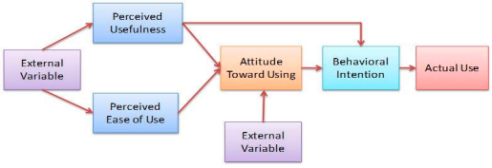
Numerous studies focused on adopting mobile services are grounded on the Technology Acceptance Model (TAM), an extensively validated framework used to predict future user behaviour. It is a leading model for researching information system acceptance through factors like usefulness and ease of use that shape attitudes around adoption . Users' mindsets and approval of a new intelligence system greatly impact its successful implementation . Hence, if users are reluctant to adopt the system, the organization loses full benefits . The more open users are to an information system, the more probable they adjust practices and invest in using it .
The Theory of Reasoned Action (TRA) established the basis for formulating the Technology Acceptance Model (TAM). As per TRA, attitudes about a behavior and social pressures guide behavioral goals. Attitude denotes personal views of a behavior's positive or negative worth including outcomes. However, subjective norm involves an individual's positive or negative judgment of a behavior based on whether key references accept and motivate that behavior . Influencing behaviour and biased pattern to promote specific behaviors can transform intentions . One's potential behavior may be predicted by considering prior intent and beliefs . Consumers should feel that sellers’ capacity and incentive to regularly offer goods and services of the anticipated condition for trust to flourish .
Source:

Download: Download full-size image

Figure 1. Technology Acceptance Model.
Figure 1 depicts the 6 ideas of TAM . The sections are derived from the literature on TAM by , the theory of planned behaviour, and the diffusion of innovation. While some researchers have not extensively considered cost in explaining M-commerce acceptance, it has been incorporated in this study as how an individual perceives M-commerce to be expensive .
2.1.2. Mobile Money System
According to , business ecosystem is coined with inspiration from the idea of a biological system defining the interaction between organization and individuals forming an economic community. This concept emphasizes the interconnected network of participants, including customers, suppliers, government agencies, competitors, and distributors, all of whom rely on each other for survival within the framework of the business ecosystem. That’s the well-being and routine of an individual company are closely tied to the overall health and operation of the entire business group, as businesses cannot thrive in seclusion. Although mobile money is frequently discussed primarily as a means of transferring funds, it should be recognized that when it expands significantly, it serves as an infrastructural grid facilitating the transfer of both physical and digital currency among diverse economic stakeholders, such as clients, businesses, government entities, and financial service providers . The mobile money landscape has evolved into a complex business ecosystem , featuring several key participants, including Mobile Network Operators (MNOs), banks, distribution channels (agents and merchants), consumers, competitors, and regulatory bodies, as argued by . Nevertheless, while other stakeholders like civil society groups, international financial institutions, donors, and micro-finance institutions could potentially contribute to this ecosystem, their role is not pivotal. view mobile payments as non-technology-driven revolutions, however, as solutions to needs not achieved. They highlight that users can initiate, authorize, and finalize financial transactions involving electronic money transferred via mobile networks through mobile devices. As aptly points out, while the three cardinal principles of traditional retail are centered on location, mobile money's success hinges on partnership, partnership, and more partnership. The author emphasized the importance of forging a web of partnerships spanning various relational networks.
2.2. Empirical Review and Hypothesis
A study by found that SMEs in Ghana have become increasingly aware of mobile money services and prefer certain mobile networks for transactions, which can positively impact their financial activities . The findings of which indicated that while some SMEs in Ghana are open to mobile money transactions, others remain skeptical or unwilling to adopt this payment method. Research conducted by , who highlighted that mobile payment services in Ghana have gained a reputation for their efficiency and reliability, facilitating exact and timely money transfers.
Again, the evidence of a statistically significant difference before and after the adoption of mobile money payments by the findings of , which demonstrated that mobile money adoption has a considerable impact on business transactions. , found that mobile money transactions encourage timely payments in SMEs, improving their cash flow and financial stability. The impact on prompt credit sales payment reinforces conclusions that mobile money facilitates faster business transactions . Prior research by, revealed that SMEs in Ghana that embraced mobile money transactions experienced improved profitability due to reduced transaction costs and increased efficiency . study reported positive associations between mobile money transaction adoption and increased sales. The authors observed that mobile money usage enhances sales and business growth for SMEs in Ghana. Study by, found that the use of mobile money positively influences prompt payment of credit sales by enhancing financial accessibility and convenience . study also conclusion that mobile money enables faster transactions.
The regression analysis findings of, emphasized that prompt payment of credit sales is a significant benefit of mobile money transaction adoption among SMEs . Their study also highlighted the positive impact on sales and, to a somewhat lesser extent, on profitability.
Studies on determinants of payment method adoption have examined the role of demographics like income, education, and employment status. According to, the selection of a payment method by an individual is influenced by various factors, including their financial status, level of education, employment status, personal preferences, specific transaction requirements, and marketing efforts . Research conducted by found that, an individual's wealth plays an important role in their policy making regarding payment methods . The authors emphasized that the amount of wealth a consumer possesses can impact their choice of payment method and the range of payment options available to them. However, contemporary research highlights the growing popularity of mobile money across user segments in developing countries. found mobile payments appeal to both educated and uneducated groups in Ghana due to simplicity and marketing efforts. established that mobile money users are influenced by the amount they need to pay to avoid expensive payment methods, and those who experience temporary financial difficulties may not find digital bill payments to be a favourable choice.
A study conducted in Kigali, Rwanda, observed that the use of mobile phones by micro-entrepreneurs enhances their company connections and strengthens existing social relationships . Furthermore, synthesized several research studies related to MSEs and concluded that the mere utilization of mobile phones, especially in areas like sales, marketing, and procurement, leads to increased productivity for many MSEs .
Despite the limited existing papers about mobile money, initial empirical investigations have shown favorable outcomes for individuals holding accounts via mobile money. A study conducted by in Niger revealed that mobile money not only lowered the overall transaction costs associated with receipts but also provided greater flexibility, convenience, and privacy compared to traditional methods when used for cash transfers . Also, the implementation of Kenya’s M-Pesa, as outlined by, resulted in substantial reductions in the prices charged by competitors in the money transfer market . In Mozambique, the availability of mobile money, as observed by, was found to amplify the marginal willingness to remit . The body of research already in existence points how mobile money services affect the expansion of businesses in developing nations. However, few studies have quantitatively assessed mobile money's effect on revenue, profits, and other financial indicators for SMEs. An exception is, who found mobile money increased micro enterprise sales in Ghana, though the analysis approach had limitations . Overall, past literature reveals a need for more robust research on how mobile money adoption influences SME growth and performance outcomes in developing countries like Ghana. While informative, the cross-country studies have limited generalizability to Ghana’s context. For instance, Ghana has faced greater barriers to mobile money adoption compared to Kenya, likely due to sociocultural differences . Based on the above prior studies, we propose the following hypothesis:
H1: The adoption of mobile money transactions significantly affects the profitability of SMEs in Ghana.
H2: There is a variation between profitability, sales, and prompt payment of sale before and after the commencement of mobile money transaction.
2.3. Conceptual Framework
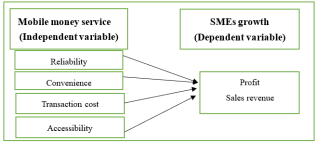
World Bank in 2010 reports that improving the effectiveness of mobile money services boosts their utilization by both small and medium enterprises (SMEs) and customers . This leads to SMEs embracing and employing mobile money for conducting business, resulting in advantages like heightened sales revenue and increased profitability. Therefore, this perspective argues that the increased speed of transactions facilitated using mobile money services will augment SMEs' business operations, ultimately driving the growth of SMEs. The original purpose of mobile money was to help microfinance institutions improve efficiency, streamline their business processes, and foster the expansion of the microfinance industry . The conceptual framework in Figure 2 of this research delineates how mobile money services influence small and medium-sized enterprise (SME) growth. This Mobile Money impact Model Framework, adapted from Nyaga's 2013 work, defines the independent variable as mobile money adoption. It outlines four intermediary factors: (1) reliability of services, (2) convenience, (3) transaction fees, and (4) financial access.
On the other hand, the dependent variable in this framework is the growth of SMEs, which is influenced by two dominant variables: (1) increase in SMEs sales (2) an enhancement in the profitability of SMEs. According to this model, it is suggested that the use of mobile money services by SMEs has the potential to significantly improve both the growth and financial operations of these enterprises.
Figure 2. Research Framework.
3. Research Methods
3.1. Research Design
We used both descriptive and explanatory research designs. The former aligns with the goal of determining the level of mobile money services awareness and to assessing service quality among SMEs. Meanwhile, explanatory design using regression analysis was employed. Consequently, the study used the quantitative research approach. This approach identified mobile money services through surveys and SMEs growth data analysis. Additionally, statistical analysis such as regression analysis was used to determined the significant relationships and differences between specific mobile money services and SME growth. The sample size was determined based on recommendation that for a sample to be representative, it should ideally exceed 100 . Following this approach, 150 SMEs were selected on the basis of location, size, and willingness to contribute to the study. This ensured that the respondents included a variety of businesses and were not limited to only a few formal ones. However, this research’s focus was placed squarely on the informal sector. Therefore, the target population for this study consists of individuals who own or manage SMEs operating within the informal sector, with the primary analytical unit being SMEs located in Offinso north.
3.2. Model Specification
To illustrate the relationships between the collected data variables, a correlational analysis was employed. Also, a regression analysis model was used to evaluate the effect of mobile money adoption on the growth of SMEs in the Offinso North District. The research model was produced from the general regression model presented below.
Yit= β0+ β1Xit+ εit
Where: - Yit denotes the dependent variable, β0 denotes the constant term, β1 denotes the coefficients of the independent variables, and Xit denotes the independent variables.
The dependent variables are the sales revenue (MPS), profitability of business (MPB), and prompt payment of credit sales (MPC). The independent variable is the adoption of mobile money services (AMT). With these variables, the developed regression models are as below:
MPS=β0+β1AMT+ε(1)
MPB=β0+β1AMT+ε(2)
MPC=β0+β1AMT+ε(3)
Where β0 denotes an intercept, β1 denotes the coefficients of the independent variable, MPS denotes sales revenue (dependent variable), MPM denotes profitability of business (dependent variable), MPC denotes prompt payment of credit sales (dependent variable), ATM denotes adoption of mobile money services (independent variable), and ε denotes the error term.
4. Results and Discussion
4.1. Bio-Data Characteristics of Respondents
In every survey encompassing human subjects, it is worthwhile to bring together information on the demographics of the respondents. Similarly, one of the objectives in scheming sample survey is to get hold of sample information in a form of responses that is a significant representation of the population so that detailed inference can be made . The indulgent profile of the sample respondents employed in the study was seen indispensable for the overall discussion of detailed research activities. The summary of the socio-economic attributes of the SMEs is shown in Table 1 below.
Table 1. Bio-Data Characteristics of Respondents.

Attribute

Class

Frequency

Percent (%)

Years in Operation

Less than 2 yrs.

3

2.00%

2 – 5 yrs.

45

30.00%

6 – 9 yrs.

41

27.33%

10 yrs. and above

61

40.67%

Form of Ownership

Sole Proprietorship

83

55.33%

Partnership

52

34.67%

Limited Liability Company

6

4.00%

Joint Venture

9

6.00%

Size of Customer Base

Less than 50

2

1.33%

50 – 100

23

15.33%

101 – 150

55

36.67%

151 – 200

39

26.00%

Above 200

31

20.67%

Daily Sales (GHS)

Less than 500

-

-

500 – 1000

3

2.00%

1001 – 1500

30

20.00%

1501 – 2000

46

30.67%

Above 2000

71

47.33%

Source: Field Data Analysis, (2023).
Table 1 directs that majority of the respondents (40.67%) have been in operations for 10 years and above, followed by 30.00% who have been existed between 2 and 5 years, 27.33% between 6 – 9 years, and only 2.00% who have worked for less than 2 years. This was considered appropriate for the survey because a well-thought-out mobile money service experiences requires much of long-standing SMEs. While 55.33% representing the majority, were sole proprietors, 34.67% were partnership, 6.00% were joint ventures, and 4.00% were limited liability companies. The study identified that the nature of respondents’ business includes agriculture, education, fashion, manufacturing, consulting, mining, transportation, financial service, and merchandising. The number of employees ranges from 15 to 220. The study established that 9.33% of the SMEs do business outside Ghana whiles 90.67% do not.
Additionally, it has been shown that, out of the total respondents, 36.67% have a customer base between 101 and 150, followed by 26.00% with 151 – 200 customers, 20.67% have above 200 clients, 15.33% have 50 – 100 customers, and 1.33% have less than 50 customers. This explains that majority of the respondents have enough knowledge and are familiar with mobile money services used in transacting business with their customers. It was further established that, majority of the respondents, 47.33% earn above GHC 2,000 daily, followed by 30.67% who earn between GHC 1,500 - GHC 2,000, 20.00% earn between GHC 1,000 - GHC 1,500, and only 2.00% earn between GHC 500 - GHC 1,000 daily on average.
4.2. Determining the Level of Awareness on Mobile Money Services Among SMEs
The analysis in this section as regarding the first objective examines the degree of mobile money adoption and awareness among SMEs for payment transactions. It inquired about respondents' knowledge of mobile money services.
Table 2. SMEs Awareness on Mobile Money.

Do you have any idea on mobile money service?

Rate

Percentage

Yes

150

100.0

No

0

0.0

Total

100

100

Source: Field Data Analysis, (2023).
Depicted in Table 2, all 150 SMEs reported awareness of mobile money services.
4.3. Identify the Preferred Mobile Money Service of SMEs
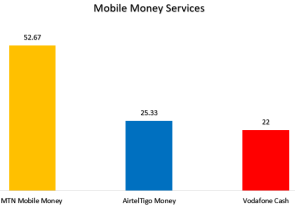
In response to the second objective Figure 3 summarizes the results of the survey, which also asked the respondents about the specific mobile payment systems they use in their enterprises.
Source: Field Data Analysis, (2023).

Download: Download full-size image

Figure 3. The Type of Mobile Money Service Personally Used by Respondent.
From the figure 52.67% of the respondents used MTN Mobile Money services, 25.33% used AirtelTigo Cash Services, and 22.00% used Vodafone Cash Services. Moreover, Table 3 presents the analysis of the study, which determines the degree of acceptability of mobile money payment methods for sales transactions.
Table 3. Acceptability of Mobile Money Payment Methods for Sales Transactions.

Response

Rate

Percentage

Yes

39

26.0

Not frequently

27

18.0

Occasionally

48

32.0

No

36

24.0

Total

150

100.0

Source: Field Data Analysis, (2023).
The data in Table 3 shows that out of the 150 SMEs surveyed, 39 (26%) always accept mobile money payments for sales, 27 (18%) do not accept mobile money payments frequently, 48 (32%) sometimes accept mobile money payments, and 36 (24%) never accept mobile money payments during sales. This indicates that the acceptance of mobile money for sales transactions varies among the SMEs, with around a quarter always accepting it, a third sometimes using it, close to a quarter never using it, and less than a fifth not accepting mobile payments.
Following up on their statement that they did not take mobile payments for sales transactions, SMEs were asked if they intended to use mobile payment services for their company.
Table 4. Willingness to Adopt Mobile Payment.

Response

Frequency

Percent

Yes

16

44.44

No

7

19.44

No response

13

36.12

Total

36

100.00

Source: Field Data Analysis, (2023).
According to the survey results, 16 SMEs, or 44.44% of the total SMEs polled, said they would be willing to use mobility payment for sales transactions, while 7 SMEs, or 19.44% of the total SMEs surveyed said they were not ready. 13 SMEs, or 36.12% of the total SMEs polled, chose not to answer.
4.4. Assessment of Mobile Payment Service Quality on SMEs
Regarding the third objective, four (4) dimensions; reliability, convenience, affordability, and accessibility are used to critically evaluate the quality of mobile money services in the Offinso North district.
Table 5. Effectiveness and Dependability of Mobile Payment Services.

Statement

Mean

Std. Deviation

Meaning

Precise in payment and receipt amounts

4.43

1.16

Agree

Appropriate records of all transaction are kept

4.21

0.95

Agree

Its benefits outweigh the drawbacks

4.18

0.87

Agree

Not difficult to make withdrawals

3.49

1.10

Agree

Weighted Average

4.08

0.78

Agree

Source: Field Data Analysis, (2023).
The data in Table 5 demonstrates that SMEs agree mobile payment services in the district are efficient, with a weighted average score of 4.08 (SD=0.78). Across all items used to determine the service quality dimension of "mobile payment efficiency," SMEs agree that Offinso North district mobile payments are efficient in: allowing SMEs to receive exact money sent to them, with a 4.43 mean (SD=1.16); maintaining proper transaction records with providers and customers, with a 4.21 mean (SD=0.95); providing more advantages over check transactions, with a 4.18 mean (SD=0.87); and offering reasonably straightforward mobile money withdrawal, with a 3.49 mean (SD=1.10).
Table 6 presents SMEs' perceptions on the degree of "convenience" associated with mobile payment services. The weighted average score of 3.55 (SD=0.81) showed that small and medium-sized enterprises (SMEs) "agree" that using mobile payment services was "convenient."
Table 6. Mobile Payment Conveniency.

Statement

Mean

Std. Deviation

Meaning

Easy to understand and use

3.57

1.14

Agree

Friendly interface for all users

3.09

1.51

Neutral

Time Saving

3.73

1.20

Agree

Eases the threat of holding cash

3.78

1.26

Agree

Weighted Average

3.55

0.81

Agree

Source: Field Data Analysis, (2023).
Regarding the service quality dimension of "mobile payment convenience," SMEs agree that Offinso North district mobile payments conveniently: reduce cash holding risks, with a 3.78 mean (SD=1.26); save time, with a 3.73 mean (SD=1.20); and are easy to utilize, with a 3.57 mean (SD=1.14). However, SMEs neither agreed nor disagreed that the mobile money interface is user friendly, with a 3.09 mean (1.51). As shown in Table 7, the weighted mean of 3.28 (SD=1.39) indicates SMEs find the transaction costs of mobile payments to be moderately inexpensive.
Table 7. Cost of Transaction on Mobile Money.

Statement

Mean

Std. Deviation

Meaning

Inexpensive to transact business

3.16

1.19

Neutral

Free registration

3.93

1.31

Agree

Transaction cost is appropriate related to options

3.54

1.23

Agree

Mobile money helps me save time compared to processing cheques payment

2.94

1.35

Neutral

Weighted Average

3.28

1.39

Neutral

Source: Field Data Analysis, (2023).
Across the items utilized to evaluate the service quality dimension of “transaction cost,” the results showcase that mobile money services are not perceived as expensive. Specifically, a mean score of 3.16 (SD=1.19) was observed around overall pricing, while registration being free of charge had a mean of 3.93 (SD=4.31). Additionally, compared to alternative payment mechanisms, mobile money transaction fees were rated as acceptable, with a mean score of 3.54 (SD=1.23). Compared to paper cheque payments, mobile money was also seen to save time according to respondents, reflected by a mean score of 2.94 (SD=1.35) for this dimension.
Table 8. Access to Mobile Money Services.

Statement

Mean

Std. Deviation

Meaning

Always convenient

2.57

1.36

Neutral

Network is always available to access for transaction payment

3.29

1.14

Neutral

Money remains exact in the mobile wallet when my phone is missing

3.76

1.20

Agree

Low risk level of other people interfering with my personal information during the transaction

3.52

1.10

Agree

Weighted Average

3.29

0.97

Neutral

Source: Field Data Analysis, (2023).
The results in Table 8 demonstrate SMEs’ perceptions of the “accessibility” of mobile payment services. A weighted mean score of 3.29 (SD=0.97) indicates SMEs view the accessibility of mobile services in the district as “moderate” overall. Examining the individual items determining this service quality dimension, mobile payments were seen as open during convenient times, reflected by a mean of 2.57 (SD=1.36). Regarding consistent accessibility, with a mean of 3.29 (SD=1.14) respondents agreed mobile money networks are available to enable transactions. However, SMEs expressed some concerns around potential money loss risks if mobile phones are misplaced, with a mean of 3.52 (SD=1.10). Nonetheless, they agreed mobile money provides security around unauthorized tampering during transactions, as shown by the mean score of 3.52 (SD=1.10).
4.5. Effect of Mobile Money Adoption on the Growth of SMEs
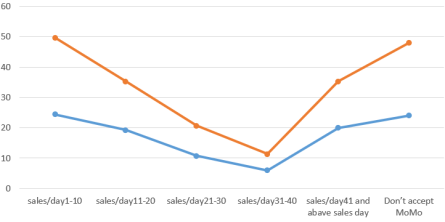
To meet the fourth objective, the study contrasted the client base of SMEs before and after they embraced mobile money transaction services to gain a better understanding of the potential effects of these services for the expansion of small and medium-sized enterprises.
Figure 4. SMEs′ customer base growth since the adoption of mobile money.
The data in Figure 4 shows that 25.3% of the total SMEs had 1-10 sales per day before adopting mobile money payments, while 24% had 1-10 sales per day after adoption. Additionally, 19.3% of SMEs saw 11-20 daily sales pre-adoption, decreasing to 16% post-adoption. 10% of SMEs experienced 21-30 sales per day both before and after adopting the mobile payments. The percentage with 31-40 sales increased from 5% pre-adoption to 6% post-adoption. However, while 15.3% indicated they had 21-30 sales per day before adopting mobile payments, 20% reported 21-30 sales per day after adoption - signalling an increase. At the same time, 24% of SMEs do not utilize mobile money payments currently and hence could not specify any before vs. after adoption sales differences.
Table 9. Paired Samples Statistics.

Mean

N

Std. Deviation

Std. Error Mean

Pair 1

BEFORE

2.55

114

1.518

.143

AFTER

16.6863

114

1.597

.150

Source: Field Data Analysis, (2023).
Table 9 presents descriptive statistics comparing sales figures before and after adoption of mobile payments by a sample of 114 entities. The mean sales before mobile payment adoption were low at 2.55. This increased substantially by about 6.5 times to 16.69 post adoption. This indicates mobile payments had a profoundly positive impact on revenues. The standard deviation, measuring dispersion around the mean, was high at 1.518 before adoption. This changed slightly to 1.597 after integration of mobile transactions. This signals sales figures became marginally more consistent across the sample after embracing mobile payments.
Table 10. Paired Samples Test comparing times before and after the implementation of MTN mobile service.

Paired Differences

T

Df

Sig. (2-tailed)

Mean

Std. Deviation

Std. Error Mean

95% Confidence Interval of the Difference

Lower

Upper

Pair 1

BEFORE – AFTER

-195

.497

.047

-.287

-102

4.160

150

.000

Source: Field Data Analysis, (2023).
Table 10 displays the results of a paired samples t-test comparing average sales before and after the implementation of mobile payments to examine the effects of this payment method on sales. The mean difference between pre- and post-adoption sales is -195, indicating revenues increased by 195 currency units after integrating mobile transactions. This improvement is statistically significant at 1% level. The t-value of 4.160 is high. This signals a pronounced and systematic difference between sales figures in the two sub-periods. The negative lower bound of the 95% confidence interval for the sales contrast affirms higher revenues are realized post mobile payment adoption. The minute p-value under 0.001 strongly rejects the null hypothesis of equality between before-after sales. These statistical tests provide clear empirical evidence that revenues expand remarkably after financial transactions migrate to mobile platforms. Enhancing digital infrastructure and financial inclusion can thus generate commerce by tapping underserved groups. Hence, the data signals profound promise for socio-economic development.
The impacts of mobile payment adoption on SMEs' profitability were also investigated to learn more about the influence of mobile payments on sales. The findings are shown in Table 11.
Table 11. Impact of Mobile Money Adoption on SMEs Profitability.

Effect on sales revenue

Rate

Percentage

Raise income (a)

29

19.3

Reduce profit ratio (b)

6

4.0

Neither (a) nor (b)

53

35.3

Uncertain

14

9.3

Non-user of mobile money for sales transactions

36

24.0

Unanswered

12

8

Total

150

100.0

Source: Field Data Analysis, (2023).
As shown in Table 11, 53 SMEs representing 19.3% of the total indicated increased revenue and profit margins after adopting mobile payments. However, 6 SMEs constituting 4% saw decreased revenue and profits post-adoption. Additionally, 29 SMEs making up 35.3% experienced no discernible change in revenue or profits. Meanwhile, 14 SMEs (9.3%) were uncertain whether mobile payment adoption had impacted their sales. As 24% of SMEs do not currently use mobile payments, they could not specify any profitability effects. 8% of SMEs provided no response regarding impacts on profitability. Subsequently, the analysis investigated mobile payment adoption effects on sales turnover, with the results presented in Table 12.
Table 12. Impact of Mobile Money Adoption on Sales Revenue.

Impact on sales turnover

Frequency

Percent

Uncertain

33

22.0

Neutral

28

18.7

Moderately impacted

22

14.7

Large impact

18

12.0

Unanswered

49

32.7

Total

150

100.0

Source: Field Data Analysis, (2023).
As depicted in Table 12, 33 SMEs constituting 22% of the total were uncertain whether adopting mobile payments had impacted sales turnover. About 18.7% did not report any discernible increase or decrease in turnover post-adoption. However, 22 SMEs representing 14.7% experienced a very large, positive effect on turnover from utilizing mobile payments. Meanwhile, 19 SMEs (12.7%) remained unsure of the impact on sales turnover. As 32.7% of SMEs do not currently accept mobile payments, they could not indicate an effect. 8% did not provide a response on turnover impacts. Finally, analysis investigated the influence of adopting mobile payments on prompt payment for credit sales, with the findings presented in Table 13.
Table 13. Impact of Mobile Money Adoption on Prompt Payment.

Response

Frequency

Percent

Uncertain

30

20.0

Neutral

19

12.7

Moderately impacted

26

17.3

Large impact

22

14.7

Non-user of mobile money for payment

36

24.0

Unanswered

17

11.3

Total

150

100.0

Source: Field Data Analysis, (2023).
Table 13 shows that 22 SMEs, representing 14.7%, reported a very large, positive impact of adopting mobile payments on prompt credit sale payments. Additionally, 26 SMEs (17.3%) saw a moderate effect on prompt payments after adoption. However, 19 SMEs (12.7%) observed neither an increase nor decrease in prompt payment resulting from mobile payment usage. Notably, 30 SMEs constituting 20% could not quantify any impact on prompt payments after beginning to use mobile money. Since 24% of SMEs do not currently accept mobile payments, they were unable specify influences on credit payment timing. 11.3% of SMEs provided no response regarding effects on promptness of payments.
4.6. Correlational Analysis
The major issue about this study is how the use or adoption of mobile money transaction impact on profitability of business, sales, and the prompt payment of credit sales. The Pearson moment of correlation co-efficient method was used for the analysis as follows.
Table 14. The correlation matrix of the major study variables.

Variables

1

2

3

4

AMT

1

MPB

.912**

1

MPS

.942**

.947**

1

MPC

.943**

.956**

.964**

1

AMT adoption of mobile money transaction
MPB effect of mobile money adoption on SMEs profitability
MPS effect of mobile money adoption on sales revenue
MPC effect of mobile money adoption on prompt payment of credit sales
The correlation matrix indicates a very strong positive association among the variables as follows: the adoption or use of mobile money transaction has a very strong positive correlation with the profitability of business (.912**), as well the adoption of mobile money transaction has very strong positive associations with sales (.942**) and finally adoption of mobile money transaction has a very strong positive correlation with prompt payment of credit sales.
Among the three dependent variables, profitability of business has very strong positive associations with prompt payment of credit sales (.947**) and it as well has very strong positive associations with sales (.956**). Lastly, effect of mobile money payment adoption on prompt payment of credit sales with very strong positive associations with sales revenue (.964**).
Table 15. Correlational table explaining the interrelationship among the major study variables.

AMT

MPB

MPS

MPC

AMT

Pearson Correlation

1

.912**

.942**

.943**

Sig. (2-tailed)

.000

.000

.000

N

150

150

150

150

MPB

Pearson Correlation

.912**

1

.947**

.956**

Sig. (2-tailed)

.000

.000

.000

N

150

150

150

150

MPS

Pearson Correlation

.942**

.947**

1

.964**

Sig. (2-tailed)

.000

.000

.000

N

150

150

150

150

MPC

Pearson Correlation

.943**

.956**

.964**

1

Sig. (2-tailed)

.000

.000

.000

N

150

150

150

150

**. **. **Correlation is significant at the 0.01 level (2-tailed).
Source: Field Data Analysis, (2023).
Table 16. Mean and standard Deviation table explaining the relationships among the study variables.

Variables

Mean

Std. Deviation

n

r

Sig/P

AMT

2.5400

1.12106

150

MPB

3.3867

1.56637

150

.912**

.000

MPS

3.1467

1.57747

150

.942**

.000

MPC

3.4400

1.69674

150

.943**

.000

Source: Field Data Analysis, (2023).
From Table 16, adoption of mobile money transactions on profitability of business is r=.912**, Sig/P<..001, adoption of mobile money transactions on sales is r=.942**, Sig/p<.001 and acceptance of mobile money for prompt payment of credit sales is r=.943**, Sig/p<.001.
The adoption or use of mobile money transaction has a very strong positive correlation with the profitability of business. Thus, the adoption score M= (2.5400, SD=1.12106) was significantly different from profitability score M= (3.3867, SD= 1.56637) n (150) r. (.912**) p<.05. which is within the accepted range of correlation. This implies that those who obtained higher on adoption score also obtained higher on profitability score whilst those who obtained lower score on adoption also score lower on profitability score. The finding rejects the null hypothesis and supports the alternative hypothesis that: “The adoption of mobile money transactions has a positive significance on the profitability of SMEs in Ghana”. The effect of the correlation between adoption and profitability is very strong according to Evans’ range/magnitude of correlation.
Table 16 also suggests the adoption or use of mobile money transaction has a very strong positive correlation with sales. Thus, the adoption score M= (2.5400, SD=1.12106) was significantly different from sales score M= (3.1467, SD= 1.57747) n (150) r. (.942**) p<.05. which is within the accepted range of correlation. This implies that those who obtained higher on adoption score also obtained higher score on sales score whilst those who obtained lower score on adoption also score lower on sales score. The finding rejects the null hypothesis and supports the alternative hypothesis that: “The adoption of mobile money transactions has a positive significance on the sales of SMEs in Ghana”. The effect of the correlation between adoption and sales is very strong according to Evans’ range/magnitude of correlation.
Furthermore, the adoption or use of mobile money transaction has a very strong positive correlation with the prompt payment of credit sales as shown in Table 16. Thus, the adoption score M= (2.5400, SD=1.12106) was significantly different from profitability score M= (3.4400, SD= 1.69674) n (150) r. (.943**) p<.05. which is within the accepted range of correlation. Hence, this implies that those who obtained higher on adoption score also obtained higher on prompt payment of credit sales score whilst those who obtained lower score on adoption also score lower on prompt payment of credit sales score. The finding rejects the null hypothesis and supports the alternative hypothesis that: “The adoption of mobile money transactions has a positive significance on the prompt payment of credit sales of SMEs in Ghana”.
4.7. Regression Analysis
The study also aimed at finding the effect of profitability of business, sales and prompt payment of credit sales as stated in hypothesis which is sub-titled a, b, and c. The Standard Multiple Regression was performed to analyse the research questions. Table 17 shows the summary of the model of the regression that was performed.
Table 17. Model Summary Showing the Variance of the Model.

Model

R

R Square

Adjusted R Square

Std. Error of the Estimate

F

Sig.

1

.951a

.905

.903

.34949

462.362

.000

a. Dependent Variables: MPB, MPS, MPC
b. Predictor (Constant), AMT
Source: Field Data Analysis, (2023).
Table 17 indicates how much of the variance in the independent variable (adoption of mobile money transaction) is explained by the model which included profitability of business, sales revenue, and prompt payment of credit sales. The value of 0.951 expressed as a percentage means the predicting variable explains 95.1% of the variation in the benefits derived from mobile money transactions. The F (3,146) = 462.362, p =.005 also shows the significance effect of the model, that is, the effect of the predictor (model) on the dependent variable (Adoption of mobile money for transaction). This means that the 95.1% variance of the model was significant enough to affect the participants’ score on adoption of mobile money transaction.
The results of the regression analysis as presented in Table 18 shows the outcome of the independent variable on each of the dependent variables. Table 18 explains the effect of adoption of mobile money transaction (independent variable) on the following dependent variables; prompt payment of credit sales, sales revenue, and profitability of business in terms of which one is the biggest beneficiary.
Table 18. Results of the Regression Analysis of the Study Variables.

Model

Unstandardized Coefficients

Standardized Coefficients

T

Sig.

B

Std. Error

Beta

1

AMT Constant

.378

.068

5.533

.000

MPB

-.009

.066

-.013

-.144

.886

MPS

.328

.072

.461

4.563

.000

MPC

.338

.073

.511

4.613

.000

a. Dependent Variables: MPB, MPS, MPC

Source: Field Data Analysis, (2023).
As indicated above, Table 18 shows the contribution of the independent variable to predict the behaviour of each of the dependent variables included in the model. This is indicated in the Beta under Standardized Coefficients. From the table, the largest beta coefficient designated by t is (4.613/p=.001), which is for prompt payment of credit sales. This means that prompt payment of credit sales makes the largest contribution to explaining the dependent variable (adoption of mobile transaction). With the beta coefficient t-value of (4.563/p=.001), sales revenue makes the second largest contribution to explaining the adoption of mobile transaction, followed lastly by profitability of business with a beta t-value of (-.144/p=.886).
From the presentation above, the most important factor considered as the most benefit of the adoption of the mobile transaction is the prompt payment of credit sales, followed by the sales and the least recipient of the benefit from adoption of the mobile transaction is the profitability of business.
5. Conclusions
The study found that awareness of mobile money services for transactional purposes among SMEs in Ghana is widespread, with all respondents affirming their awareness. Additionally, the most preferred mobile network for mobile transactions is MTN. While most respondents indicated varying degrees of acceptance of mobile money transactions, there is a substantial number of SMEs that remain reluctant to embrace this payment method. The survey respondents largely concurred that mobile payment services in the Offinso North District are “efficient,” allowing them to reliably receive correct amounts when transferred. The analysis uncovered a statistically significant contrast between the situation before and after SMEs took up mobile money payments for sales transactions, signaling that mobile money has had a major positive effect since its introduction. Through the analysis, the adoption of mobile payments was found to notably enable prompt payment for credit-based sales by SMEs in Ghana.
The research confirmed a very strong positive correlation between the adoption of mobile money transactions and the profitability of SMEs in Ghana. The adoption of mobile money transactions also demonstrated strong positive associations with increased sales for SMEs. The study provided support for the alternative hypothesis, indicating that the adoption of mobile money transactions has a positive significance on the prompt payment of credit sales for SMEs. The regression analysis showed that prompt payment of credit sales is the most significant beneficiary of mobile money transaction adoption, followed by increased sales. Profitability, while positively impacted, was not as significant as the other two factors.
Based on the above findings, the research concluded that the adoption of mobile money transactions has a substantial and positive influence on various aspects of SME activities in Ghana. SMEs benefit from increased awareness, efficiency, and positive effects on sales, profitability, and the prompt payment of credit sales.
There is high optimism for a wider coverage and usage of mobile money in Ghana. Policy makers can fast-track the adoption by intensifying education on the operation and benefit of mobile money, which can translate to Ghana becoming a cashless economy in the near future. Also, it is recommended for government to ensure a reduced cost of operation of the telecommunication networks who are the main providers of mobile money services in order to reduce the cost of adoption by individuals and SMEs.
This study is limited in its generalizability as data used is from only one district in Ghana out of 216 due to limited resources. There is varying differences in the level of literacy and development of each district and region which might affect their resonance to mobile money adoption. Therefore, the result may not be easily generalizable to reflect the whole of Ghana. Further study based on data encompassing a wider coverage or the whole of Ghana is recommended. The study used data solely from the informal sector which makes the results not robust, therefore further study could be conducted on the same topic by using data from both the formal and informal sector of the entire country (Ghana).
Abbreviations

AMT

Adopting Mobile Money Transaction

MTN

Mobile Telecommunication Network

SME

Small and Medium Enterprise

TAM

Technology Acceptance Model

TRA

Theory Reasoned Action

Author Contributions
Pious Opoku: Conceptualization, Formal Analysis, Writing – review & editing
Benson Alhassan: Conceptualization, Data curation, Methodology, Writing – original draft
Patience Akosua Dzigbordi Korsorku: Resources, Writing – review & editing
Ebenezer Amonoo: Supervision, Writing – review & editing
Data Availability Statement
Data will be available upon request.
Conflicts of Interest
The authors declare no conflicts of interest.
References
[1] Adjabeng, F. N., & Osei, F. (2022). The development of small medium enterprises and their impact on the Ghanaian Economy. Open Journal of Business and Management, 10(6), 2939-2958.
[2] Adjei, J., Agyei, S. K., & Mintah, E. (2021). Adoption of IFRS-based accounting practices among small and medium scale enterprises in Ghana. Journal of Accounting in Emerging Economies.
[3] Agyapong, F. O., Agyapong, A., & Poku, K. (2019). Nexus between social capital and performance of micro and small firms in an emerging economy: The mediating role of innovation. Cogent Business & Management, 6(1).
[4] Ahmad, A. H., Green, C., & Jiang, F. (2020). Mobile money, financial inclusion, and development: A review with reference to African experience. Journal of economic surveys, 34(4), 753-792.
[5] Aker, C., Boumnijel, R., McClelland, A., & Tierney, N. (2010). Zap it to me: The short-term impacts of a mobile cash transfer program. Woodstock, CT: Tufts University.
[6] Amponsah, C. T., Brafu-Insaidoo, W. G., & Ahiagbah, C. A. (2018). The effect of electricity supply on the profitability of micro and small-scale industries: A case study of selected firms in the Cape Coast Metropolis of Ghana. Cogent Business and Management, 5(1).
[7] Ansah, S. K., & Owusu, N. A. (2016). The adoption and implementation of international financial reporting standards in a developing country: A case study of Ghana. JAMAR, 14(2), 89-106.
[8] Appiah, F., & Agyapong, G. K. Q. (2017). Microfinance institutions in Ghana: Development, regulation and performance. Cogent Economics & Finance, 5(1).
[9] Asante, W. A., & Osei, J. Y. (2018). SME financing dilemma in Ghana: A lesson from the minority-owned SME perspective. Journal of Global Entrepreneurship Research, 8(1).
[10] Ashraf, A. R., Thongpapanl, N., & Auh, S. (2014). The application of the technology acceptance model under different cultural contexts: The case of online shopping adoption. Journal of International Marketing, 22(3), 68-93.
[11] Batista, C., & Vicente, C. (2013). Introducing mobile money in rural Mozambique: Evidence from a field experiment. NOVAFRICA Working Paper Series, 1301, 1-5.
[12] Boateng, R., Heeks, R., Molla, A., & Hinson, R. (2016). E-commerce in LDCs: Summary evidence and implications. Journal of African Business, 9(2), 257-285.
[13] Chege, S. M., & Wang, D. (2020). Information technology innovation and its impact on job creation by SMEs in developing countries: an analysis of the literature review. Technology Analysis & Strategic Management, 32(3), 256-271.
[14] Danladi, S., Prasad, M. S. V., Modibbo, U. M., Ahmadi, S. A., & Ghasemi, P. (2023). Attaining Sustainable Development Goals through Financial Inclusion: Exploring Collaborative Approaches to Fintech Adoption in Developing Economies. Sustainability, 15(17), 13039.
[15] Darko, E., Agyapong, G. K. Q., & Agyapong, A. (2020). Effect of microfinance interest rates on small business performance in an emerging economy. Trust in Contemporary Society, 275-287.
[16] Donner, J. (2007). The use of mobile phones be micro-entrepreneurs in Kigali. Information Technologies and International Development, 3(2), 3–19.
[17] Donner, J. (2010). Micro and small enterprises in developing countries. Journal of International Development, 22, 641-658. Retrieved from
[18] Galib, M. H., Hammou, K. A., & Steiger, J. (2018). Predicting consumer behavior: An extension of technology acceptance model. International Journal of Marketing Studies, 10(3), 73-90.
[19] Groupe Speciale Mobile Association [GSMA] (2015). State of the industry of mobile financial services for the unbanked. Retrieved from
[20] Hair, F., & Lukas, B. (2014). Marketing research. McGraw-Hill Education, Australia.
[21] Jenkins, B. (2008). Developing mobile ecosystems Washington, DC: IFC and the Harvard Kennedy School. Retrieved from
[22] Kahneman, D., & Tversky, A. (2013). Prospect theory: An analysis of decision under risk. In Handbook of the fundamentals of financial decision making: Part I (pp. 99-127).
[23] Kendall, J., Maurer, B., Machoka, P. & Veniard, C. (2011). An emerging platform: from money transfer system to mobile money ecosystem, Legal Studies Research Paper Series, No. 2011-14. Retrieved from
[24] Kim, K. (2022). Assessing the impact of mobile money on improving the financial inclusion of Nairobi women. Journal of Gender Studies, 31(3), 306-322.
[25] Madan, N. (2020). A review of access to finance by micro, small and medium enterprises and digital financial services in selected Asia-Pacific least developed countries.
[26] Mantel, B. (2000). Why do consumers pay bills electronically? An empirical analysis. Retrieved from
[27] Mbiti, I., & Weil, D. N. (2011). Mobile banking: the impact of M-Pesa in Kenya (No.w17129). National Bureau of Economic Research.
[28] Mertler, C. A. (2021). Action research: Improving schools and empowering educators (6th ed.). SAGE Publications.
[29] Momanyi, S. O. (2020). Cross-Network Mobile Money Transfer Adoption Determinants and Performance of Small and Medium Enterprises in Murang’a Municipality (Doctoral dissertation).
[30] Mulili, B. M. (2022). Digital Financial Inclusion: M-PESA in Kenya. In Digital Business in Africa: Social Media and Related Technologies (pp. 171-191). Cham: Springer International Publishing.
[31] Narteh, B. (2018). Facilitators and barriers of mobile wallet adoption in Ghana. Journal of African Business, 19(3), 361-384.
[32] Ofori, E. (2021). Factors Influencing the Increase in Mobile Money Transactions in Ghana.
[33] Omwansa, T. (2009). M-PESA Progress and Prospects. Innovations case discussion. Retrieved from
[34] Osei-Assibey, E. (2015). What drives behavioral intention of mobile money adoption? The case of ancient susu saving operations in Ghana. International Journal of Social Economics, 42(11), 962-979.
[35] Owusu, E. L., & Agyapong, D. (2019). Determinants of dividend payout policy of listed financial institutions in Ghana. Cogent Economics & Finance, 7(1).
[36] PytlikZillig, L. M., & Kimbrough, C. D. (2016). Consensus on conceptualizations and definitions of trust: Are we there yet? (pp. 17-47). Springer International Publishing.
[37] Sedzro, A. (2013). Mobile money: Ghana’s experience. Retrieved from
[38] Senyo, P. K., Liu, K., & Effah, J. (2019). Digital business ecosystem: Literature review and a framework for future research. International journal of information management, 47, 52-64.
[39] Slade, E., Williams, M. & Dwivedi, Y. (2013). Mobile payment adoption: classification and review of the extant literature, The Marketing Review, 13(2), 167-190.
[40] Tobbin, P. (2011) Adoption of mobile money transfer technology: structural equation modeling approach. European Journal of Business and Management. Retrieved from
[41] Venkatesh, V., Thong, J. Y., & Xu, X. (2012). Consumer acceptance and use of information technology: extending the unified theory of acceptance and use of technology. MIS quarterly, 157-178.
[42] Yadav, R., Sharma, S. K., & Tarhini, A. (2016). A multi-analytical approach to understand and predict the mobile commerce adoption. Journal of enterprise information management, 29(2), 222-237.
[43] Yakubu, A. W. (2012). The adoption and use of electronic payment systems in Ghana, a case of E-zwich in Sunyani municipality. Unpublished master’s thesis, Kwame Nkrumah University of Science and Technology, Ghana.
[44] Zaineldeen, S., Hongbo, L., Koffi, A. L., & Hassan, B. M. A. (2020). Technology acceptance model’concepts, contribution, limitation, and adoption in education. Universal Journal of Educational Research, 8(11), 5061-5071.
Cite This Article
  • APA Style

    Opoku, P., Alhassan, B., Korsorku, P. A. D., Amonoo, E. (2026). The Impact of Adopting Mobile Money Transactions on SME Growth in Ghana. Journal of Finance and Accounting, 14(3), 151-166. https://doi.org/10.11648/j.jfa.20261403.12

    Copy | Download

    ACS Style

    Opoku, P.; Alhassan, B.; Korsorku, P. A. D.; Amonoo, E. The Impact of Adopting Mobile Money Transactions on SME Growth in Ghana. J. Finance Account. 2026, 14(3), 151-166. doi: 10.11648/j.jfa.20261403.12

    Copy | Download

    AMA Style

    Opoku P, Alhassan B, Korsorku PAD, Amonoo E. The Impact of Adopting Mobile Money Transactions on SME Growth in Ghana. J Finance Account. 2026;14(3):151-166. doi: 10.11648/j.jfa.20261403.12

    Copy | Download

  • @article{10.11648/j.jfa.20261403.12,
      author = {Pious Opoku and Benson Alhassan and Patience Akosua Dzigbordi Korsorku and Ebenezer Amonoo},
      title = {The Impact of Adopting Mobile Money Transactions on SME Growth in Ghana},
      journal = {Journal of Finance and Accounting},
      volume = {14},
      number = {3},
      pages = {151-166},
      doi = {10.11648/j.jfa.20261403.12},
      url = {https://doi.org/10.11648/j.jfa.20261403.12},
      eprint = {https://article.sciencepublishinggroup.com/pdf/10.11648.j.jfa.20261403.12},
      abstract = {This study aimed to examine the effects of adopting mobile money transactions on SME growth in Ghana. A quantitative survey was conducted among 150 SMEs in the Offinso North District to determine awareness of mobile money services, identify preferred services, assess service quality, and analyze impacts on revenue, profitability, and prompt payment of credit sales. Descriptive statistics revealed high awareness and usage of mobile money services among SMEs, with a preference for MTN mobile money. Efficiency, convenience, affordability, and accessibility of services were all rated favorably. Differences in sales figures before and after adoption were statistically significant, with revenues increasing over 6 times post-adoption. The study established a positive impact of mobile money payments on timely payment for credit sales. Correlation analysis indicated very strong positive associations between adopting mobile transactions and business profitability, sales, and prompt credit payments among SMEs in Ghana. Regression analysis showed prompt payments had the largest beta coefficient, indicating it made the greatest contribution in explaining mobile money adoption among dependent variables. The research concluded that the adoption of mobile money transactions has a substantial and positive influence on various aspects of SME activities in Ghana. The findings provide clear empirical evidence that embracing mobile platforms markedly expands SME revenues. Enhancing digital infrastructure and financial inclusion can thus generate commerce by serving underbanked groups. The data signals profound promise for socio-economic advancement in developing economies.},
     year = {2026}
    }
    

    Copy | Download

  • TY  - JOUR
    T1  - The Impact of Adopting Mobile Money Transactions on SME Growth in Ghana
    AU  - Pious Opoku
    AU  - Benson Alhassan
    AU  - Patience Akosua Dzigbordi Korsorku
    AU  - Ebenezer Amonoo
    Y1  - 2026/07/27
    PY  - 2026
    N1  - https://doi.org/10.11648/j.jfa.20261403.12
    DO  - 10.11648/j.jfa.20261403.12
    T2  - Journal of Finance and Accounting
    JF  - Journal of Finance and Accounting
    JO  - Journal of Finance and Accounting
    SP  - 151
    EP  - 166
    PB  - Science Publishing Group
    SN  - 2330-7323
    UR  - https://doi.org/10.11648/j.jfa.20261403.12
    AB  - This study aimed to examine the effects of adopting mobile money transactions on SME growth in Ghana. A quantitative survey was conducted among 150 SMEs in the Offinso North District to determine awareness of mobile money services, identify preferred services, assess service quality, and analyze impacts on revenue, profitability, and prompt payment of credit sales. Descriptive statistics revealed high awareness and usage of mobile money services among SMEs, with a preference for MTN mobile money. Efficiency, convenience, affordability, and accessibility of services were all rated favorably. Differences in sales figures before and after adoption were statistically significant, with revenues increasing over 6 times post-adoption. The study established a positive impact of mobile money payments on timely payment for credit sales. Correlation analysis indicated very strong positive associations between adopting mobile transactions and business profitability, sales, and prompt credit payments among SMEs in Ghana. Regression analysis showed prompt payments had the largest beta coefficient, indicating it made the greatest contribution in explaining mobile money adoption among dependent variables. The research concluded that the adoption of mobile money transactions has a substantial and positive influence on various aspects of SME activities in Ghana. The findings provide clear empirical evidence that embracing mobile platforms markedly expands SME revenues. Enhancing digital infrastructure and financial inclusion can thus generate commerce by serving underbanked groups. The data signals profound promise for socio-economic advancement in developing economies.
    VL  - 14
    IS  - 3
    ER  - 

    Copy | Download

Author Information
  • Abstract
  • Keywords
  • Document Sections

    1. 1. Introduction
    2. 2. Literature Review and Theoretical Framework
    3. 3. Research Methods
    4. 4. Results and Discussion
    5. 5. Conclusions
    Show Full Outline
  • Abbreviations
  • Author Contributions
  • Data Availability Statement
  • Conflicts of Interest
  • References
  • Cite This Article
  • Author Information