Research Article | | Peer-Reviewed

Predicting Accounting Employees Productivity Using Job Satisfaction and Organizational Culture Variables in Commercial Banking Sector

Received: 17 January 2026     Accepted: 26 January 2026     Published: 26 February 2026
Views:       Downloads:
Abstract

Accounting employee productivity remains a critical determinant of organizational success especially in commercial banking sectors. This study explores the predictive relationship between accounting employee’s productivity, job satisfaction, and organizational culture. This study adopted a correlational and predictive research design. The target population comprised accounting employees working in commercial banks within the North-Central region of Nigeria. A population of 425 respondents was used for the study without determining the sample size because the population was of a manageable size for the study. A purposive sampling technique was employed for the selection of the commercial banking sectors. While random sampling technique was used for individual respondents’ selection to respond to the questionnaire. The questionnaire was administered both physically and electronically through Google Forms to ensure broad coverage and improve response rate. The questionnaire underwent expert validation by three specialists in business education and psychology. The method of data analysis employed for the study were Multiple Regression (MR) and Structural Equation Modelling (SEM) to determine the extent to which job satisfaction and organizational culture predict employee productivity through the use of Statistical Package for Social Science (SPSS) version 26. The findings reveal that job satisfaction and organizational structure have positive relationship and significantly predict accounting employees’ productivity. Among the two predictors, organizational culture emerged as the stronger predictor and determinant of accounting employee’s productivity in commercial banking sector in Nigeria. The study concludes that productivity among accounting employees in commercial banking sector is largely shaped by both individual-level and organizational structure factors.

Published in Journal of Finance and Accounting (Volume 14, Issue 1)
DOI 10.11648/j.jfa.20261401.15
Page(s) 62-73
Creative Commons

This is an Open Access article, distributed under the terms of the Creative Commons Attribution 4.0 International License (http://creativecommons.org/licenses/by/4.0/), which permits unrestricted use, distribution and reproduction in any medium or format, provided the original work is properly cited.

Copyright

Copyright © The Author(s), 2026. Published by Science Publishing Group

Keywords

Accounting Employees Productivity, Job Satisfaction, Organizational Culture and Banking Sector

1. Introduction
In the contemporary business environment is characterized by globalization, technological disruption, and increasing competition, employee productivity has emerged as a vital determinant of organizational success and sustainability. For accounting professionals who are central to financial reporting, compliance, internal controls, and strategic decision-making the demand for productivity is not only high but non-negotiable. Employees productivity in this domain is not purely a matter of technical skill or academic qualifications, but can increasingly be influenced by factors such as job satisfaction and organizational culture . These psychological and social variables form the backbone of human capital effectiveness and have garnered substantial scholarly and managerial interest in recent years. The accounting profession is inherently complex, governed by stringent regulations, tight deadlines, and a high demand for accuracy and integrity. Accounting employees operate in high-stakes environments where errors can have severe financial and legal implications. Consequently, ensuring their productivity is imperative for both operational efficiency and strategic performance. However, employee productivity in the accounting sector is currently under pressure from factors such as talent shortages, evolving regulatory requirements, remote work dynamics, and rising employee expectations . These challenges necessitate a comprehensive understanding of the underlying psychological and organizational factors that contribute to enhanced productivity even in the banking sector.
The banking industry is a highly service-oriented sector that depends on effective coordination among departments to deliver customer value. The banking profession is inherently dynamic, marked by constant challenges, demanding workloads, and a strong emphasis on prestige and institutional reputation. Over time, the nature of banking has continued to evolve in response to economic, technological, and regulatory changes. In the contemporary banking environment, both existing employees and prospective job seekers place increasing importance on working in institutions that provide a supportive atmosphere, professional fulfillment, and a sense of pride. Banking sector refers to the segment of the financial system made up of institutions that are licensed to accept deposits, provide credit, facilitate payments, and offer other financial intermediation services to individuals, businesses, and governments . The banking sector plays a central role in mobilizing savings from surplus units and channeling them to deficit units for productive investment, thereby supporting economic growth and financial stability . In addition, the banking sector serves as a key transmission channel for monetary policy, as banks influence money supply, interest rates, and credit availability within an economy. Through functions such as risk management, liquidity provision, and financial inclusion, banks contribute significantly to the efficiency and resilience of the financial system . Consequently, banks are now expected to foster positive workplace cultures that enhance employee comfort, commitment, and long-term career satisfaction.
Job satisfaction and organizational culture have emerged as two critical constructs in organizational behavior and human resource management literature that strongly predict employee outcomes including motivation, commitment, turnover intention, and productivity . As such, understanding their influence on accounting employees' productivity offers valuable insights for human capital development and strategic workforce planning in accounting firms, finance departments, and public accounting institutions. Job satisfaction encompasses an employee’s affective orientation towards their job role and work environment. It includes multiple dimensions such as satisfaction with pay, promotion opportunities, supervision, coworkers, and the work itself . For accounting employees, job satisfaction is not only about monetary compensation but also recognition, workload manageability, career advancement opportunities, and ethical climate. Recent studies underscore the strong correlation between job satisfaction and employee performance in the financial sector. found that accountants who reported higher levels of job satisfaction demonstrated greater task efficiency and lower turnover intention. Similarly, a study by in the UAE concluded that satisfied accounting professionals exhibited higher levels of organizational commitment and productivity, particularly in firms with strong leadership and ethical policies. Moreover, job satisfaction mitigates job-related stress and burnout, which are prevalent among accounting professionals due to the repetitive and meticulous nature of their work . Stress reduction, in turn, enhances concentration, accuracy, and creativity key components of productivity in accounting roles. Therefore, fostering job satisfaction is not just a matter of employee welfare but a strategic factor for boosting organizational performance.
Organizational culture refers to the set of shared values, norms, and practices that shape how work is done within an organization. It affects everything from communication styles to decision-making processes and reward systems . In accounting firms and finance departments, culture is a potent force that can either empower or inhibit employee productivity. A performance-oriented culture that emphasizes quality, integrity, and continuous improvement can positively influence accounting employees by aligning their personal values with organizational goals. Organizational cultures that balance flexibility and control of employees tend to produce the most effective outcomes . Also, organizational culture has been described as a system of shared values that influences how organizational members perceive, think about, and react to organizational dynamics in diverse environments . A recent study by revealed that organizations with a clan or adhocracy culture are characterized by teamwork and innovation with reported higher employee satisfaction and productivity levels. Furthermore, organizational culture affects employee engagement and psychological safety, both of which are linked to productivity. Psychological safety where employees feel safe to take risks, voice concerns, and admit mistakes is particularly critical in accounting, where errors can have severe consequences. A study by indicated that when employees perceived their organizational culture as supportive and ethical, they become more engaged and productive. The importance of organizational culture was also highlighted during the COVID-19 pandemic, which forced a rapid transition to remote and hybrid work models. Accounting firms that already had a strong culture of trust, autonomy, and digital agility adapted more successfully and maintained higher levels of productivity . demonstrated that a strong organizational culture positively influences employee job satisfaction, highlighting the role of shared values and norms in enhancing employees’ workplace attitudes and experiences. Thus, organizational culture not only shapes the daily experience of accounting employees but also determines their capacity to adapt and thrive amid change.
While job satisfaction and organizational culture independently influence employee productivity, their interaction produces a synergistic effect. Employees are most productive when they are satisfied with their roles and simultaneously operate within a culture that supports and aligns with their values. For instance, a satisfied employee in a toxic work culture may eventually become disengaged, while a positive culture without job satisfaction may fail to fully motivate employees. Empirical evidence supports this interdependency. A study by using structural equation modeling demonstrated that organizational culture moderates the relationship between job satisfaction and performance among employee in multinational firms. Specifically, the impact of job satisfaction on productivity was stronger in cultures characterized by transparency, participation, and recognition. This implies that culture acts as a catalyst that amplifies or diminishes the productivity gains derived from job satisfaction. Moreover, organizational interventions aimed at enhancing productivity must take this dual influence into account. Training programs, performance management systems, and employee engagement initiatives are more effective when they are embedded in a coherent cultural framework and designed to enhance both satisfaction and alignment. Organizations that neglect either of these factors risk undermining their human capital potential.
Despite the growing body of literature on job satisfaction and organizational culture, few studies have focused specifically on their combined predictive power in the context of accounting employees. Most research in this area has either treated these variables in isolation or examined them in broader organizational settings such as healthcare, education, or manufacturing . As a result, there is a paucity of empirical data that accurately captures the unique pressures, expectations, and motivational drivers within the accounting profession. Furthermore, with the increasing adoption of artificial intelligence, automation, and data analytics in accounting practices, there is an urgent need to identify the human factors that can complement technological efficiency. Productivity is no longer a function of technical ability alone; it increasingly depends on how well accounting professionals adapt to change, collaborate with others, and align with organizational values. Therefore, a study that investigates the predictive relationship of job satisfaction and organizational culture on productivity is both timely and essential. Therefore, the productivity of accounting employees is a critical but complex outcome influenced by an array of organizational and psychological factors. Among these, job satisfaction and organizational culture have emerged as particularly salient predictors, affecting not only how much employees produce but also how well they align with organizational goals. As accounting continues to evolve in response to digital disruption and global pressures, understanding and leveraging these human-centric variables is essential for sustaining high levels of performance and innovation. This study, therefore, seeks to fill this gap by examining the predictive relationships between job satisfaction, organizational culture, and accounting employee productivity in the banking sector.
1.1. Statement of the Problem
In today’s dynamic and competitive business environment, the productivity of accounting employees plays a pivotal role in the overall success and sustainability of organizations. However, many financial organizations continue to experience suboptimal performance from their accounting workforce, often resulting in financial inaccuracies, compliance issues, and operational inefficiencies. Despite the strategic importance of accounting functions, insufficient attention has been given to the internal factors that influence employees’ productivity, particularly job satisfaction and organizational culture. Yet, in many accounting departments, Job satisfaction organizational culture not effectively measured or leveraged to predict and improve employee productivity. Moreover, existing literature tends to examine these factors in isolation, often neglecting the complex interplay between job satisfaction and organizational culture in influencing productivity outcomes. There is also a limited number of empirical studies focusing specifically on the accounting profession, despite its unique demands and regulatory responsibilities. This gap has led to a lack of data-driven strategies that managers and policymakers can employ to enhance productivity within accounting teams. Therefore, there is a pressing need to investigate the predictive relationship between employee productivity, job satisfaction, and organizational culture. Understanding this relationship is crucial for developing targeted interventions that foster a motivated, efficient, and high-performing accounting workforce. This study seeks to address this gap by exploring how these two organizational variables can serve as predictors of productivity among accounting employees in the banking sector.
1.2. Objectives of the Study
The primary objective of this study is to investigate the extent to which job satisfaction and organizational culture predict productivity among accounting employees. Specifically, the study aims to examine:
1) The predictive impact of job satisfaction on accounting employee’s productivity.
2) The predictive impact of organizational culture on accounting employee’s productivity.
3) The moderating effect of organizational culture on the relationship of job satisfaction and accounting employee’s productivity.
1.3. Hypotheses
H01: There is no significant predictive relationship between job satisfaction and accounting employee’s productivity.
H02: There is no significant predictive relationship between organizational culture and accounting employee’s productivity.
H03: There is no significant moderating effect of organizational culture on the relationship of job satisfaction and accounting employee’s productivity.
2. Methodology
This study adopted a correlational and predictive research design using Multiple Regression and Structural Equation Modelling (SEM) technique to examine the predictive influence of job satisfaction and organizational culture on accounting employees’ productivity within the commercial banking sector in Nigeria. The predictive correlational and predictive research design was considered appropriate because the study sought not only to determine relationships but also to model and forecast productivity outcomes based on established organizational behaviour variables. SEM was employed due to its capability to assess both the measurement model (validity and reliability of constructs) and the structural model (causal and predictive relationships among latent variables) simultaneously. The target population comprised accounting employees working in commercial banks within the North-Central region of Nigeria. This group includes accountants, internal auditors, financial analysts, and related accounting staff whose job functions are directly linked to financial reporting and performance management. A population of 425 respondents was used for the study such that the sample size was not determined because the population was of a management size for the study. A purposive sampling technique was employed for the selection of the commercial banking sectors. Fifteen (15) commercial banks were purposively selected due to their broad regional coverage and organizational structure. While the individual respondents were randomly selected to respond to the questionnaire. The study relied primarily on primary data obtained through a structured questionnaire designed in five-point Likert format ranging from Strongly Disagree (1) to Strongly Agree (5). The instrument was divided into four sections: Section A: Demographic characteristics (gender, age, job position, years of experience) Section B: Items measuring Job Satisfaction adapted from the Minnesota Satisfaction Questionnaire (MSQ). Section C: Items measuring Organizational Culture was adapted from Denison’s Organizational Culture Scale . Section D: Items assessing Accounting Employees’ Productivity derived and modified from the Employee Productivity Scale by . The questionnaire was administered both physically and electronically through Google Forms to ensure broad coverage and improve response rate. The questionnaire underwent expert validation by three specialists in business education, organizational behaviour, and psychometrics. Their input ensured that the items were clear, relevant, and consistent with the constructs under investigation.
2.1. Validity and Reliability
A pilot test was conducted using 30 accounting staff from a commercial bank not included in the main study to evaluate item clarity and response consistency. Construct validity was assessed using Confirmatory Factor Analysis (CFA) in AMOS. Indicators with factor loadings below 0.50 were not eliminated which does not affect the scale integrity. Average Variance Extracted (AVE) and Composite Reliability (CR) were computed to assess convergent validity and reliability. AVE values above 0.50 and CR values exceeding 0.70 indicated high and satisfactory construct validity and reliability. The internal consistency of each construct was tested using Cronbach’s alpha. Thresholds of 0.70 and above were accepted as indicators of reliable scales (Nunnally & Bernstein, 1994). The pilot test yielded Cronbach’s alpha coefficients as follows: Job Satisfaction (0.83), Organizational Culture (0.82), and Accounting Employees’ Productivity (0.88), confirming high internal reliability.
2.2. Method of Data Analysis
The collected data were coded and analyzed using SPSS version 23 and AMOS version 23. Data analysis proceeded in three major phases. Descriptive Analysis: Frequencies were computed to summarize demographic characteristics and item-level responses. Measurement Model Assessment: Confirmatory Factor Analysis (CFA) was conducted to evaluate the reliability and validity of the latent constructs. Model fit was determined using indices such as χ²/df (<3.0), Comparative Fit Index (CFI > 0.90), Tucker-Lewis Index (TLI > 0.90), Root Mean Square Error of Approximation (RMSEA < 0.08), and Standardized Root Mean Square Residual (SRMR < 0.08). Structural Model Analysis: Structural Equation Modelling (SEM) was employed to test the hypothesized relationships and predictive effects of Job Satisfaction and Organizational Culture on Accounting Employees’ Productivity. The strength and significance of the path coefficients were evaluated to determine predictive relationships. The coefficient of determination (R²) was used to assess the proportion of variance in productivity explained by the predictor variables.
3. Results and Interpretation
This section presents the results of the Structural Equation Modeling (SEM) analysis conducted using AMOS software. The model examined the predictive influence of Job Satisfaction (JS) and Organizational Culture (OC) on Accounting Employees’ Productivity (AEP). Confirmatory Factor Analysis (CFA) was first conducted to assess the measurement model, followed by the structural model evaluation.
3.1. Measurement Model (Confirmatory Factor Analysis)
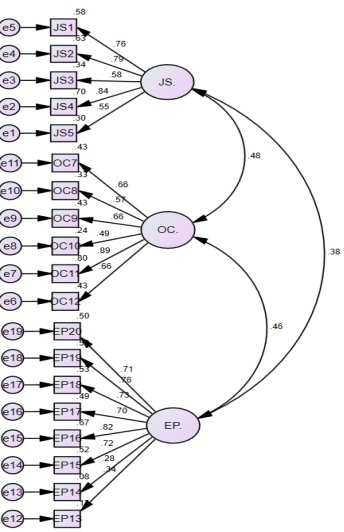
Figure 1. Confirmatory Factor Analysis (CFA) of the Model.
The CFA was performed to validate the constructs’ reliability and validity. Each construct (Job Satisfaction, Organizational Culture, and Accounting Employees’ Productivity) was measured by multiple indicators. The standardized factor loadings, composite reliability (CR), and average variance extracted (AVE) were computed.
Table 1. Standardized Factor Loadings, Composite Reliability (CR), and Average Variance Extracted (AVE).

Variable Construct

Indicators

Cumulative Factor Loadings

CR

AVE

Job Satisfaction

5

3.52

0.83

0.51

Organizational Culture

6

3.93

0.82

0.44

Accounting Employees’ Productivity

8

5.76

0.88

0.44

The table presents the results of factor loadings, Composite Reliability (CR), and Average Variance Extracted (AVE) for three constructs: Job Satisfaction, Organizational Culture, and Accounting Employees’ Productivity. The factor loadings for the indicators of job satisfaction are all above the minimum acceptable value of 0.50, indicating that each item contributes meaningfully to the variable construct. The Composite Reliability (CR = 0.83) exceeds the 0.70 benchmark, suggesting good internal consistency among the items. The Average Variance Extracted (AVE = 0.51) is slightly above 0.50, showing that over half of the variance in the indicators is explained by the latent construct. Thus, Job Satisfaction demonstrates acceptable convergent validity and reliability. Furthermore, the factor loadings for five (5) indicators of organizational Culture are above the minimum acceptable value of 0.50, which indicates decent item reliability. However, one item with the value of 0.49 moderately contributed meaningfully to the variable construct. The Composite Reliability (CR = 0.82) also exceeds the threshold of 0.70, confirming high internal consistency. The AVE value (0.44) is slightly below 0.50, implying that the construct explains a moderate portion of variance in its indicators. Therefore, Organizational Culture exhibits moderate convergent validity and strong reliability. For Accounting Employees’ Productivity, six (6) indicators have high factor loadings, indicating strong representation of the construct. However, two indicators have low factor loadings for the Dependent Variable (DV) construct. The Composite Reliability (CR = 0.88) shows a very good reliability, far exceeding the 0.70 criterion. The AVE (0.44) indicates that 44% of the variance in the items is captured by the construct, demonstrating moderate convergent validity. Hence, Accounting Employees’ Productivity has good reliability and moderately accepted validity.
3.2. Structural Model and SEM Path Diagram
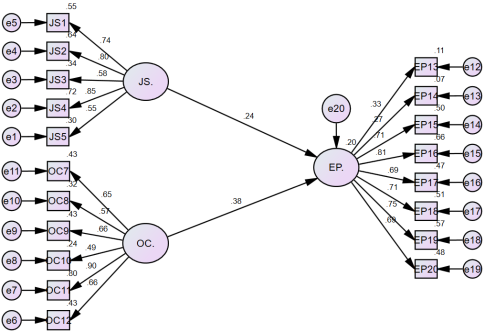
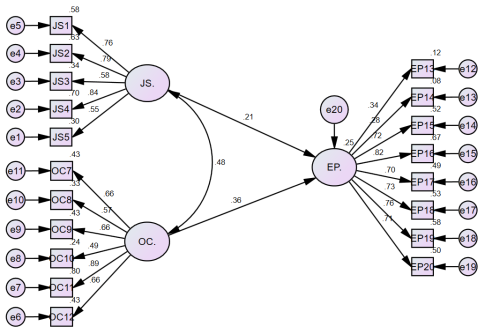
The structural model was evaluated to test the hypothesized relationships among the constructs. The standardized path coefficients, standard errors, critical ratios, and p-values are shown below. Figures 2 and 3 below presents the AMOS-generated path diagram for the hypothesis 1, 2 and 3, illustrating the standardized regression weights and the direction of relationships among constructs.
Figure 2. Structural equation model of job satisfaction, organizational culture and employee’s productivity.
Figure 3. Structural equation model of combined variables of job satisfaction, organizational culture and employee’s productivity.
Table 2. Multiple Regression Analysis of Predictive Influence of Job Satisfaction (JS) and Organizational Culture (OC) on Employees' Productivity.

Model

Unstandardized Coefficients

Standardized Coefficients

t

Sig.

Collinearity Statistics

B

Std. Error

Beta

Tolerance

VIF

(Constant)

1.263

.135

9.364

.000

JS

.166

.039

.188

4.260

.000

.833

1.200

OC

.420

.041

.455

10.285

.000

.833

1.200

Note. p <.001, JS – job satisfaction, OC – organizational culture and AEP – Accounting Employees’ productivity.
The model summary presented in the table indicates that both independent variables significantly contribute to predicting employee productivity. The Regression Coefficients indicated that constant (β₀ = 1.263, p <.001) which represents the estimated level of employee productivity when both JS and OC are held at zero. Its significance indicates that the model has a meaningful intercept. Job Satisfaction (JS) shows a positive and statistically significant effect on employee productivity (B = 0.166, t = 4.260, p <.001). This implies that a one-unit increase in job satisfaction leads to a 0.166-unit increase in employee productivity, holding organizational culture constant. The standardized coefficient (Beta = 0.188) suggests that JS has a moderate relative contribution to explaining productivity compared to OC. Organizational Culture (OC) also has a strong and statistically significant effect on employee productivity (B = 0.420, t = 10.285, p <.001). This means that a one-unit increase in organizational culture leads to a 0.420-unit increase in productivity when job satisfaction is controlled. Its standardized coefficient (Beta = 0.455) indicates that OC has a stronger predictive impact on employee productivity than job satisfaction within the model. Tolerance = 0.833 and VIF = 1.200 for both variables indicate no multicollinearity issues. Such that VIF values below 10 (and ideally below 2) show that the predictors are independent and do not distort the regression estimates. The regression results clearly show that both Job Satisfaction and Organizational Culture significantly and positively predict employees' productivity. Organizational Culture is the stronger predictor, contributing more substantially to variations in productivity than job satisfaction. The model is statistically sound, with no multicollinearity concerns.
Table 3. Structural Path Coefficients.

Path

Estimate

S. E.

C. R.

P

Job Satisfaction → Employees Productivity

0.21

0.04

3.09

0.002*

Organizational Culture → Employees Productivity

0.36

0.04

4.50

0.000*

The results of the structural path analysis, as presented in Table 3, indicate that both Job Satisfaction and Organizational Culture significantly predict Employees’ Productivity. The path coefficient (β) between Job Satisfaction and Employees’ Productivity was estimated at 0.21, with a standard error (S. E.) of 0.04, a critical ratio (C. R.) of 3.09, and a p-value of 0.002. Since the critical ratio exceeds ±1.96 and the p-value is less than 0.05, this relationship is statistically significant. Hence, the null hypothesis (H1) which states that there is no significant predictive relationship between job satisfaction and accounting employee’s productivity is rejected since the p-value is below 0.05. This finding implies that higher levels of job satisfaction among employees are associated with improved productivity. In other words, when employees feel fulfilled and content with their work, their performance and output tend to increase accordingly.
Similarly, the relationship between Organizational Culture and Employees’ Productivity showed a path coefficient (β) of 0.36, a standard error (S. E.) of 0.04, a critical ratio (C. R.) of 4.50, and a p-value of 0.000. This result is also statistically significant, indicating that a strong and positive organizational culture contributes meaningfully to enhanced employee productivity. Hence, the hypothesis (H2) which states that there is no significant predictive relationship between organizational culture and accounting employee’s productivity is rejected since the p-value is below 0.05. The magnitude of the coefficient (β = 0.36) suggests that Organizational Culture exerts a stronger influence on productivity than Job Satisfaction (β = 0.21). This means that employees who work in an environment characterized by shared values, supportive leadership, teamwork, and open communication are more likely to demonstrate higher productivity levels. Therefore, these findings reveal that both Job Satisfaction and Organizational Culture are significant predictors of Employees’ Productivity, with Organizational Culture having a relatively greater predictive power.
Table 4. Structural Path Coefficients.

Path

Estimate

S. E.

C. R.

P

OC.

<-->

JS.

.397

.063

6.285

0.000*

The result of the structural path analysis revealed a significant positive association between Organizational Culture (OC) and Job Satisfaction (JS), as shown in Table 4. The estimated path coefficient between OC and JS was 0.397, with a standard error (S. E.) of 0.063, a critical ratio (C. R.) of 6.285, and a p-value of 0.000. Since the critical ratio exceeds the threshold value of ±1.96 and the p-value is less than 0.05, the result indicates that the relationship is statistically significant. The positive estimate (β = 0.397) suggests that an improvement in Organizational Culture is associated with an increase in employees’ Job Satisfaction. This implies that employees who perceive their organization as supportive, participative, and well-structured are more likely to derive satisfaction from their work. The magnitude of the coefficient further indicates a moderately strong correlation between the two constructs, signifying that Organizational Culture plays an essential role in shaping employees’ satisfaction levels.
Table 5. Result of the Structural Model (Hypotheses Testing).

Hypothesis

Relationship

Sample Mean (M)

Std Dev.

t- Values

Sig.

Decision

F2

R2

H01

JS → EP

2.97

1.08

4.260

.000

Opposed

68.916

0.140

H02

OC → EP

2.99

1.03

10.285

.000

Opposed

95.881

0.312

H03

OC x JS →EP

3.01

0.95

0.396

.692

Supported

63.846

0.313

The structural model was evaluated using path significance (Sig. values), effect sizes (f²), and coefficients of determination (R²). Hypotheses were assessed at a 0.05 level of significance, with statistically significant paths identified where p <.05.
H01: There is no significant predictive relationship between job satisfaction and accounting employee’s productivity.
The structural path from job satisfaction to employee productivity was found to be statistically significant (t = 4.260, Sig. =.000, p <.05). This indicates that job satisfaction exerts a significant positive influence on employee productivity within the model. Consequently, the hypothesized relationship was supported, and the null hypothesis was rejected. The effect size (f² = 68.916) suggests a substantial contribution of job satisfaction to employee productivity, indicating that job satisfaction meaningfully enhances the predictive power of the model. Furthermore, the R² value of 0.140 implies that job satisfaction explains 14.0% of the variance in employee productivity, which represents a moderate level of explanatory power in behavioral research.
H02: There is no significant predictive relationship between organizational culture and accounting employee’s productivity.
The path linking organizational culture to employee productivity was also statistically significant (t = 10.285, Sig. =.000, p <.05), confirming that organizational culture is a strong predictor of employee productivity. As such, the null hypothesis was rejected, and the hypothesized direct relationship was empirically supported. The effect size (f² = 95.881) indicates a very large effect, demonstrating that organizational culture makes a dominant contribution to explaining employee productivity. Additionally, the R² value of 0.312 shows that organizational culture accounts for 31.2% of the variance in employee productivity, reflecting a substantial explanatory capacity of the structural model.
H03: There is no significant moderating effect of organizational culture on the relationship of job satisfaction and accounting employee’s productivity.
The interaction effect between job satisfaction and organizational culture on employee productivity was found to be statistically not significant (t = 0.396, Sig. =.692, p >.05). This result indicates that organizational culture does not significantly moderate the relationship between job satisfaction and employee productivity. Therefore, the null hypothesis was not rejected, and the moderating hypothesis was not supported. Despite the interaction model yielding an R² value of 0.313, indicating a marginal increase in explained variance, the absence of statistical significance suggests that the observed increase does not translate into a meaningful moderating effect. Thus, organizational culture influences employee productivity primarily through its direct effect rather than through interaction with job satisfaction. Therefore, the structural model demonstrates that job satisfaction and organizational culture have significant and substantial direct effects on employee productivity, with organizational culture exhibiting the stronger predictive influence. However, the hypothesized moderating role of organizational culture is not supported, indicating that the effect of job satisfaction on employee productivity remains consistent regardless of variations in organizational culture.
4. Discussion of Findings
The findings indicate that both Job Satisfaction and Organizational Culture are strong predictors of Accounting Employees’ Productivity. Employees who experience satisfaction in their job roles are likely to demonstrate higher levels of efficiency and commitment. Moreover, a supportive organizational culture enhances teamwork, communication, and motivation, which collectively improve overall productivity. These findings align with previous studies emphasizing the role of internal motivation and cultural alignment in boosting employee performance. The relationship between employee productivity and job satisfaction has been a focal point of recent research, emphasizing various factors that influence this dynamic. highlight that employee well-being and work-life balance significantly impact job satisfaction, particularly within healthcare settings, with organizational citizenship behavior serving as a moderating factor. This suggests that fostering a supportive work environment can enhance employee satisfaction, which in turn may boost productivity. Similarly, explores how workaholism and work engagement influence employee stress and satisfaction levels. Their findings indicate that while workaholism is associated with negative outcomes such as increased stress and reduced satisfaction, higher work engagement correlates positively with job and life satisfaction. This underscores the importance of promoting engagement over excessive work tendencies to improve overall productivity. The advent of digital tools during the COVID-19 pandemic has also been examined for its impact on job satisfaction and productivity. found that the use of collaborative digital platforms during lockdown periods affected teleworkers' subjective well-being and productivity. The study identified different profiles of teleworkers based on their usage patterns, suggesting that effective digital tool utilization can enhance job satisfaction and productivity even in remote work contexts.
Psychological factors such as psychological contract fulfillment have been shown to influence job outcomes. A study by demonstrated that fulfillment of psychological contracts in academic environments positively affects job satisfaction, which can subsequently influence employee performance. This indicates that perceived fairness and fulfillment of expectations are crucial for maintaining high productivity levels. Furthermore, motivation and teamwork are critical determinants of organizational productivity. Also, concluded that employee motivation, particularly through teamwork, significantly enhances performance. Similarly, identified job satisfaction as a key factor influencing employee performance within the construction industry, emphasizing the importance of job-related factors in driving productivity. Job insecurity has also been linked to decreased job satisfaction and organizational commitment. A study by found that job insecurity negatively impacts job satisfaction, which mediates its effect on organizational commitment, thereby potentially reducing productivity. This highlights the need for job stability to foster satisfaction and enhance performance. The role of work facilities, compensation, and leadership styles in shaping job satisfaction has been explored as well. reported that work facilities and compensation positively influence job satisfaction, with leadership style acting as a moderating factor . Similarly, emphasized that family supportive supervisor behaviors can mitigate work-family conflict, thereby improving work-life balance and job satisfaction, which are essential for maintaining high productivity. Finally, psychological well-being factors such as meaning in life and psychological flexibility have been identified as mediators in the relationship between occupational stress and job satisfaction. demonstrated that these psychological resources can buffer the negative effects of stress, leading to higher job satisfaction and better performance.
Furthermore, the reviewed literature consistently indicates that multiple interconnected factors including well-being, work engagement, digital tool usage, psychological contract fulfillment, motivation, job security, supportive leadership, and psychological resilience play vital roles in enhancing employee job satisfaction, which in turn positively influences productivity. Addressing these factors holistically can lead to improved organizational performance and employee outcomes. The relationship between organizational culture and employee productivity has garnered significant attention in recent research, emphasizing its pivotal role in shaping workplace outcomes. A study by highlights that social media utilization within public sector hospitals enhances employee engagement and productivity by facilitating knowledge sharing and fostering a collaborative culture. This suggests that a culture supportive of open communication and technological integration can positively influence employee performance. Similarly, investigates how organizational culture, alongside job stress and promotion opportunities, impacts employee productivity in a corporate setting. The findings indicate that a conducive organizational culture can mitigate stress and promote motivation, thereby improving productivity. further support this by demonstrating that organizational culture, combined with leadership style and work discipline, significantly affects employee performance, underscoring the importance of a strong cultural framework. In the same vein, emphasizes that effective organizational management, which encompasses cultural elements, has a noticeable positive effect on employee efficiency. The study suggests that management practices aligned with a supportive organizational culture can enhance productivity levels. Additionally, identifies digital literacy and facilitating conditions components of organizational culture as critical factors that significantly influence employee productivity, indicating that cultural adaptation to technological advancements is vital. This finding aligns with studies of which established that favorable organizational cultures which is characterized by effective communication, shared values, and supportive leadership that enhance employees’ sense of belonging and satisfaction at work. The result also aligns with recent studies , which emphasize that cultivating a supportive organizational culture and enhancing job satisfaction are vital strategies for improving employee performance and organizational success.
Therefore, the result emphasizes the need for management to promote a positive and adaptive culture to sustain high levels of job satisfaction and improve overall organizational outcomes. The mediating role of organizational culture is also evident in , who explore how culture influences the effectiveness of induction and on-the-job training on employee performance. Their findings suggest that a positive organizational culture enhances training outcomes and, consequently, productivity. Furthermore, proposes a multilevel model for organizational productivity management, emphasizing that cultivating an appropriate organizational culture is essential for improving profitability, customer satisfaction, and employee morale. Overall, these studies collectively underscore that organizational culture is a fundamental determinant of employee productivity. A culture that promotes open communication, technological adaptation, effective management practices, and supportive training environments can significantly enhance employee performance and organizational success.
5. Conclusion
The research paper investigates how job satisfaction and organizational culture predict the productivity of accounting employees in the banking sector. The study is driven by the increasing need for banks to enhance employee output and maintain competitive advantage in a rapidly changing financial environment. Accounting personnel play a critical role in financial reporting, internal control, compliance, and decision-making support; hence, understanding the factors that influence their productivity is essential. The study adopts a quantitative research design, collecting data from accounting employees across selected banks. Structured questionnaires measuring job satisfaction (e.g., pay, promotion, supervision, work environment), organizational culture (e.g., values, norms, teamwork, communication), and employees’ productivity (e.g., quality of work, timeliness, accuracy, organizational contribution) were administered. Statistical tools such as regression analysis/structural equation modelling were used to assess the predictive relationships among the variables. The study concludes that both job satisfaction and organizational culture are crucial to predicting accounting employees’ productivity. It recommends that bank management should invest in strategies that enhance employee satisfaction such as fair remuneration, employee development, and improved working conditions as well as strengthen organizational culture through effective leadership, transparent communication, and teamwork-oriented practices. Generally, the research provides valuable insights for policymakers, bank managers, and human resource (HR) professionals aiming to boost productivity among accounting employees by prioritizing both individual and organizational-level factors.
Abbreviations

SEM

Structural Equation Modelling

SPSS

Statistical Package for Social Science

JS

Job Satisfaction

OC

Organizational Culture

AEP

Accounting Employees’ Productivity

CFA

Confirmatory Factor Analysis

AVE

Average Variance Extracted

CR

Composite Reliability

HR

Human Resource

Conflicts of Interest
The authors declare no conflicts of interest.
References
[1] Abbasi, A., Shirazi, B., & Mohamadi, S. (2024). A multilevel model for organizational productivity management: an interpretive structural modeling approach. International Journal of Productivity and Performance Management, 73(10), 3363-3387.
[2] Adnan, M., Bakhtawar, A., & Zahra, R. T. (2021). Employee well-being and work life balance as a function of job satisfaction: the moderating role of organisational citizenship behaviour. Sustainable Business and Society in Emerging Economies, 3(3), 217-229.
[3] Afrizal, H., Alfansi, L., Salim, M., & Fachruzzaman, F. (2024). The Effect of Digital Literacy and Facilitating Conditions on Increasing Employee Productivity. Journal of Economics, Finance and Management Studies, 7(01), 213-219.
[4] Agbodjah, I. N. (2025). The Moderating Effect of Organizational Culture on the Relationships Between Job Satisfaction, Employee Engagement, and Employee Turnover Intentions (Doctoral dissertation, Southeastern University).
[5] AlShehhi, N., AlZaabi, F., Alnahhal, M., Sakhrieh, A., & Tabash, M. I. (2021). The effect of organizational culture on the performance of UAE organizations. Cogent Business & Management, 8(1).
[6] Ampofo, E. T. (2020). Mediation effects of job satisfaction and work engagement on the relationship between organisational embeddedness and affective commitment among frontline employees of star–rated hotels in Accra. Journal of Hospitality and Tourism Management, 44, 253– 262.
[7] Bakhshandeh, B., Zaballero, A., & Rothwell, W. J. (2025). The Organized and Engaged Supervisor: Optimizing Resources and Managing Employee Experiences. Productivity Press.
[8] De Clercq, D., Haq, I. U., & Azeem, M. U. (2018). Self-efficacy to spur job performance: Roles of job-related anxiety and perceived workplace incivility. Management Decision, 56(4), 891-907.
[9] Denison, D. R., & Mishra, A. K. (1995). Toward a theory of organizational culture and effectiveness. Organization science, 6(2), 204-223.
[10] Endaryanto, M., & Astuti, P. (2024). Employee’s Well Being and Job Satisfaction: Tinjauan Peran Family Supportive Supervisor Behaviors dan Work-Family Conflict. Journal of Management and Bussines (JOMB), 6(2), 400-410.
[11] Eskola, E. (2025). Effects of organizational culture on project management: How does organizational culture support the success of projects and project management?
[12] Gudep, V. K. (2019). An empirical study of the relationships between the flexible work systems (FWS), Organizational commitment (OC), work life balance (WLB) and job satisfaction (JS) for the teaching staff in the United Arab Emirates (UAE). International Journal of Management, 10(5).
[13] Hammouri, Q., Altaher, A. M., Al-Gasawneh, J. A., Rabaa'i, A. A., Aloqool, A., & Khataybeh, H. (2022). Understanding the determinants of digital shopping features: The role of promo code on customer behavioral intention. International Journal of Data & Network Science, 6(3).
[14] Hidayat, C., Hermawan, A., & Berliyanti, D. O. (2024). The influence of organizational culture, transformational leadership on organizational citizenship behaviors, and organizational commitment through employee engagement. Indonesian Journal of Education and Social Sciences, 3(2), 100-120.
[15] Iddrisu, I., & Adam, A. (2025). Nexuses between induction training and on the-job-training on employee job performance: the mediating role of organizational culture. International Journal of Organizational Analysis, 33(4), 879-895.
[16] Imron, A (2021) The Effect of Emotional Intelligence Leadership Style Organizational culture and Job Satisfaction on Turnover Intention In Banking. Academy of Accounting and Financial Studies Journal, 26(1).
[17] Judge, T. A., Weiss, H. M., Kammeyer-Mueller, J. D., & Hulin, C. L. (2017). Job attitudes, job satisfaction, and job affect: A century of continuity and of change. Journal of Applied Psychology, 102(3), 356–374.
[18] Khalaf, R. K.; Hmoud H. Y. & Obeidat, B. (2019); Reviewing the Mediating Role of Job Satisfaction on the Effect of Employee Engagement on Organizational Performance; Journal of Social Sciences (COES&RJ-JSS), 8(1), 7-23.
[19] Khan, S., Khan, M. I., Rais, M., & Aziz, T. (2023). Organizational Productivity: A Critical Analysis of the Impact of Employee Motivation. Reviews of Management Sciences, 5(1), 13–37.
[20] Kinicki, A., & Kreitner, R. (2018). Management: A practical Introduction. Irwin: McGraw-Hill.
[21] Koopmans, L., Bernaards, C. M., Hildebrandt, V. H., De Vet, H. C., & Van Der Beek, A. J. (2014). Construct validity of the individual work performance questionnaire. Journal of occupational and environmental medicine, 56(3), 331-337.
[22] Martin, L., Hauret, L., & Fuhrer, C. (2022). Digitally transformed home office impacts on job satisfaction, job stress and job productivity. COVID-19 findings. Plos one, 17(3), e0265131.
[23] Md Sayed, U., Md Atikur, R., & Wasib Bin, L. (2023). Determining dimensions of job satisfaction among employees: Evidence from commercial bank industries in Bangladesh. The Journal of Asian Finance, Economics and Business, 10(2), 195-201.
[24] Memon, A. H., Khahro, S. H., Memon, N. A., Memon, Z. A., & Mustafa, A. (2023). Relationship between job satisfaction and employee performance in the construction industry of Pakistan. Sustainability, 15(11), 8699.
[25] Mohapatra, N. D. (2020) Basic approach on special functions about banks and its applications. Banking, 8.
[26] Naeem, M., & Ozuem, W. (2021). Exploring the use of social media sites for health professionals' engagement and productivity in public sector hospitals. Employee Relations: The International Journal, 43(5), 1029-1051.
[27] Nair, S., Lekshmi, S., & Sommerville, S. (2017). Impact of Organizational Culture on the Indian IT Workforce’s Job Satisfaction and Stress: Qualitative Report from SMEs operating in Trivandruam.
[28] Nguyen, T. T., Nguyen, Q. V. H., Nguyen, D. T., Yang, S., Eklund, P. W., Huynh-The, T.,... & Hsu, E. B. (2020). Artificial intelligence in the battle against coronavirus (COVID-19): a survey and future research directions. arXiv preprint arXiv: 2008.07343.
[29] Orebiyi, P., Effiong, U., Udofia, M., & Ukpe, U. (2025). The impact of financial depth and efficiency on savings mobilization in Nigeria. Studies in Economics and Business Relations, 6(1), 1-20.
[30] Park, J., & Kim, T. (2021). Linking organizational culture, job satisfaction, and employee performance: Evidence from South Korean firms. Journal of Organizational Effectiveness: People and Performance, 8(4), 452–470.
[31] PwC. (2022). The Future of Accounting: New Skills and Productivity in the Digital Era. PwC Global Report.
[32] Ranjith, P. V., Madan, S., Jian, D. A. W., Teoh, K. B., Singh, A. S., Ganatra, V., & Singh, P. (2021). Harnessing the power of artificial intelligence in the accounting industry: A case study of KPMG. International Journal of Accounting & Finance in Asia Pasific, 4(2), 93-106.
[33] Robbins, S. P., & Judge, T. A. (2021). Organizational Behavior (18th ed.). Pearson.
[34] Sarfaraz, M., Sarfaraz, S., Maqsood, A., Ahmed, N., Vohra, F., Abduljabbar, T., & Abduljabbar, A. S. (2022). Assessing the impact of workaholism and work engagement on medical university employee stress and satisfaction levels. PeerJ, 10, e12565.
[35] Schein, E. H., & Schein, P. A. (2017). Organizational Culture and Leadership (5th ed.). Wiley.
[36] Sharma, K., Joshi, C. K., Boopathy, M. C., Kazmi, S., Arumgam, S., & Attri, R. K. (2025). The Impact of Organizational Culture on Employee Performance: A Study of Leadership Styles and Workplace Productivity. Metallurgical and Mater als Engineering, 205-215.
[37] Sulaeman, S., Mappatompo, M., & Anggoro KR, B. M. Y. A. R. (2025). The Influence of Organizational Culture, Work Spirit and Job Satisfaction on Employee Work Productivity at the Ministry of Religion Office. Journal La Sociale, 6(1), 34-48.
[38] Wahyuni, D., & Purba, C. B. (2021). The Influence of Organizational Culture, Leadership Style, and Work Discipline on Employee Performance. European Journal of Business and Management Research, 6(4), 209-214.
[39] Wardani, A. K., Hidayat, N., & Patras, Y. E. (2023). Increasing Professional Commitment through Strengthening Transformational Leadership and Personal Value with Job Satisfaction as Intervening Variable. Aptisi Transactions on Technopreneurship (ATT), 5(2), 169–175.
[40] Yildirim, M., Dilekçi, Ü., & Manap, A. (2024). Mediating roles of meaning in life and psychological flexibility in the relationships between occupational stress and job satisfaction, job performance, and psychological distress in teachers. Frontiers in Psychology, 15, 1349726.
[41] Zeynullagil, U. (2022). The Effect of Organizational Management on Employee Work Efficiency. International Journal Papier Public Review, 3(4), 35-40.
[42] Zotorvie, J. S. T., Kudo, M. B., & Adade, T. C. (2017). A survey of factors that influence the level of job satisfaction and turnover intention of professional accountants in Ghana. International Journal of Academic Research in Business and Social Sciences, 7(10), 41-56.
Cite This Article
  • APA Style

    Salasi, J. S., Akpan, E. E., Gladys, A. N., Sunday, Y. J., Dania, I. S. (2026). Predicting Accounting Employees Productivity Using Job Satisfaction and Organizational Culture Variables in Commercial Banking Sector. Journal of Finance and Accounting, 14(1), 62-73. https://doi.org/10.11648/j.jfa.20261401.15

    Copy | Download

    ACS Style

    Salasi, J. S.; Akpan, E. E.; Gladys, A. N.; Sunday, Y. J.; Dania, I. S. Predicting Accounting Employees Productivity Using Job Satisfaction and Organizational Culture Variables in Commercial Banking Sector. J. Finance Account. 2026, 14(1), 62-73. doi: 10.11648/j.jfa.20261401.15

    Copy | Download

    AMA Style

    Salasi JS, Akpan EE, Gladys AN, Sunday YJ, Dania IS. Predicting Accounting Employees Productivity Using Job Satisfaction and Organizational Culture Variables in Commercial Banking Sector. J Finance Account. 2026;14(1):62-73. doi: 10.11648/j.jfa.20261401.15

    Copy | Download

  • @article{10.11648/j.jfa.20261401.15,
      author = {Joshua Samson Salasi and Ekanem Ediongsenyene Akpan and Akubue Nwanneka Gladys and Yunusa James Sunday and Isah Sule Dania},
      title = {Predicting Accounting Employees Productivity Using Job Satisfaction and Organizational Culture Variables in Commercial Banking Sector},
      journal = {Journal of Finance and Accounting},
      volume = {14},
      number = {1},
      pages = {62-73},
      doi = {10.11648/j.jfa.20261401.15},
      url = {https://doi.org/10.11648/j.jfa.20261401.15},
      eprint = {https://article.sciencepublishinggroup.com/pdf/10.11648.j.jfa.20261401.15},
      abstract = {Accounting employee productivity remains a critical determinant of organizational success especially in commercial banking sectors. This study explores the predictive relationship between accounting employee’s productivity, job satisfaction, and organizational culture. This study adopted a correlational and predictive research design. The target population comprised accounting employees working in commercial banks within the North-Central region of Nigeria. A population of 425 respondents was used for the study without determining the sample size because the population was of a manageable size for the study. A purposive sampling technique was employed for the selection of the commercial banking sectors. While random sampling technique was used for individual respondents’ selection to respond to the questionnaire. The questionnaire was administered both physically and electronically through Google Forms to ensure broad coverage and improve response rate. The questionnaire underwent expert validation by three specialists in business education and psychology. The method of data analysis employed for the study were Multiple Regression (MR) and Structural Equation Modelling (SEM) to determine the extent to which job satisfaction and organizational culture predict employee productivity through the use of Statistical Package for Social Science (SPSS) version 26. The findings reveal that job satisfaction and organizational structure have positive relationship and significantly predict accounting employees’ productivity. Among the two predictors, organizational culture emerged as the stronger predictor and determinant of accounting employee’s productivity in commercial banking sector in Nigeria. The study concludes that productivity among accounting employees in commercial banking sector is largely shaped by both individual-level and organizational structure factors.},
     year = {2026}
    }
    

    Copy | Download

  • TY  - JOUR
    T1  - Predicting Accounting Employees Productivity Using Job Satisfaction and Organizational Culture Variables in Commercial Banking Sector
    AU  - Joshua Samson Salasi
    AU  - Ekanem Ediongsenyene Akpan
    AU  - Akubue Nwanneka Gladys
    AU  - Yunusa James Sunday
    AU  - Isah Sule Dania
    Y1  - 2026/02/26
    PY  - 2026
    N1  - https://doi.org/10.11648/j.jfa.20261401.15
    DO  - 10.11648/j.jfa.20261401.15
    T2  - Journal of Finance and Accounting
    JF  - Journal of Finance and Accounting
    JO  - Journal of Finance and Accounting
    SP  - 62
    EP  - 73
    PB  - Science Publishing Group
    SN  - 2330-7323
    UR  - https://doi.org/10.11648/j.jfa.20261401.15
    AB  - Accounting employee productivity remains a critical determinant of organizational success especially in commercial banking sectors. This study explores the predictive relationship between accounting employee’s productivity, job satisfaction, and organizational culture. This study adopted a correlational and predictive research design. The target population comprised accounting employees working in commercial banks within the North-Central region of Nigeria. A population of 425 respondents was used for the study without determining the sample size because the population was of a manageable size for the study. A purposive sampling technique was employed for the selection of the commercial banking sectors. While random sampling technique was used for individual respondents’ selection to respond to the questionnaire. The questionnaire was administered both physically and electronically through Google Forms to ensure broad coverage and improve response rate. The questionnaire underwent expert validation by three specialists in business education and psychology. The method of data analysis employed for the study were Multiple Regression (MR) and Structural Equation Modelling (SEM) to determine the extent to which job satisfaction and organizational culture predict employee productivity through the use of Statistical Package for Social Science (SPSS) version 26. The findings reveal that job satisfaction and organizational structure have positive relationship and significantly predict accounting employees’ productivity. Among the two predictors, organizational culture emerged as the stronger predictor and determinant of accounting employee’s productivity in commercial banking sector in Nigeria. The study concludes that productivity among accounting employees in commercial banking sector is largely shaped by both individual-level and organizational structure factors.
    VL  - 14
    IS  - 1
    ER  - 

    Copy | Download

Author Information
  • Abstract
  • Keywords
  • Document Sections

    1. 1. Introduction
    2. 2. Methodology
    3. 3. Results and Interpretation
    4. 4. Discussion of Findings
    5. 5. Conclusion
    Show Full Outline
  • Abbreviations
  • Conflicts of Interest
  • References
  • Cite This Article
  • Author Information