Abstract
When buildings are damaged or destroyed by earthquakes, tsunamis, floods, or armed conflict, asbestos-containing materials embedded in the built environment may be fragmented and mixed with concrete, bricks, soil, and other disaster or conflict-related debris, which is potential health and environmental risks. During emergencies, lifesaving operations, road clearance, and infrastructure restoration take priority; consequently, pre-demolition surveys, selective removal, containment, and monitoring procedures normally required under peacetime conditions may not be fully implemented. This paper compares experiences from major earthquakes in Japan with conflict-related debris management in Ukraine and the Gaza Strip and examines the technical, institutional, public-health, and social challenges of asbestos management in light of recent literature. The findings indicate that asbestos control should not be limited to immediate dust suppression. It should be established as a comprehensive life-cycle management system integrating building-stock information, field screening, Asbestos Management Plans, procurement and contractual control, segregation, interim storage, transport, treatment, final disposal, recycled-material quality assurance, exposure registries, health surveillance, compensation, and support for affected families. Importance should be given to establishing a hazardous-material gate before recycling, ensuring traceability from the point of generation to final disposal, strengthening preparedness through a National Asbestos Profile, and developing capacities at the individual, organizational, institutional, and societal levels.
Keywords
Asbestos, Disaster Waste, Conflict-related Debris, Emergency Response, Life-cycle Management, Capacity Development
1. Introduction
Asbestos was widely used throughout the twentieth century in roofing, exterior cladding, asbestos-cement boards, sprayed fireproofing materials, thermal insulation, pipes, gaskets, and friction products because of its heat resistance, chemical resistance, insulation properties, and tensile strength. However, all forms of asbestos, including chrysotile, are carcinogenic to humans, and inhalation exposure can cause asbestosis, lung cancer, malignant mesothelioma, and other asbestos-related diseases. The World Health Organization estimates that occupational exposure to asbestos causes more than 200,000 deaths annually worldwide
. Asbestos-related diseases therefore remain a worldwide public-health problem long after the initial exposure
. A substantial proportion of workers engaged in construction and demolition activities may be occupationally exposed to asbestos. Schlünssen et al. reported a pooled asbestos-exposure prevalence of 77% among manual workers represented in construction studies; however, the evidence was rated as low quality and was likely influenced by the selection of highly exposed worker groups
| [3] | Schlünssen, V., Mandrioli, D., Pega, F., Momen, N. C., Ádám, B., Chen, W., Cohen, R. A., Godderis, L., Göen, T., Hadkhale, K., Kunpuek, W., Lou, J., Mandic-Rajcevic, S., Masci, F., Nemery, B., Popa, M., Rajatanavin, N., Sgargi, D., Siriruttanapruk, S., Sun, X., Suphanchaimat, R., Thammawijaya, P., Ujita, Y., van der Mierden, S., Vangelova, K., Ye, M., Zungu, M., Scheepers, P. T. J. The prevalences and levels of occupational exposure to dusts and/or fibres (silica, asbestos and coal): A systematic review and meta-analysis from the WHO/ILO Joint Estimates of the Work-related Burden of Disease and Injury. Environment International. 2023, 178, 107980.
https://doi.org/10.1016/j.envint.2023.107980 |
[3]
. Even in countries where the new use of asbestos has been prohibited, large quantities of asbestos-containing materials (ACMs) remain in the existing building stock. The central policy challenge has therefore shifted from regulating new use to managing the legacy stock already present in buildings and infrastructure
| [4] | Thives, L. P., Ghisi, E., Thives Júnior, J. J., Vieira, A. S. Is asbestos still a problem in the world? A current review. Journal of Environmental Management. 2022, 319, 115716.
https://doi.org/10.1016/j.jenvman.2022.115716 |
| [5] | Stevenson, S. P., Barron, O., Pakenham, A., Hashinaka, M. Understanding and Ending the Lethal Asbestos Legacy. Sustainability. 2023, 15(3), 2507.
https://doi.org/10.3390/su15032507 |
| [6] | Brown, B., Hollins, I., Pickin, J., Donovan, S. Asbestos Stocks and Flows Legacy in Australia. Sustainability. 2023, 15(3), 2282. https://doi.org/10.3390/su15032282 |
[4-6]
.
The asbestos problem consists of several interrelated forms of accumulated risk. First, there is the material stock remaining in buildings and infrastructure. Second, asbestos fibers retained in the human body constitute a biological stock that can cause chronic inflammation over several decades. Third, unresolved health damage, compensation liabilities, removal costs, and disposal responsibilities constitute a social and institutional stock that may be transferred to future generations. Asbestos should therefore be understood as a “complex stock-type disaster” that produces harm throughout production, distribution, use, renovation, demolition, and disposal
| [5] | Stevenson, S. P., Barron, O., Pakenham, A., Hashinaka, M. Understanding and Ending the Lethal Asbestos Legacy. Sustainability. 2023, 15(3), 2507.
https://doi.org/10.3390/su15032507 |
| [7] | Mori, H. Asbestos disaster and political economy. In K. Miyamoto, H. Mori, & K. Morinaga (Eds.), Asbestos Disaster: Lessons from Japan's Experience, Chapter 1 (pp. 1–18). 2011, Springer. https://doi.org/01007/978-4-431-53915-5_1 |
| [8] | Kato, M. The Great Earthquakes and Asbestos: The Structure of Damage Hidden in the “Reconstruction Processes” [in Japanese]. The Annual Reports of the Tohoku Sociological Society. 2015, 44, 25–38. https://doi.org/10.11271/tss.44.25 |
[5, 7, 8]
.
Natural disasters and armed conflicts can transform ACMs that were previously bound within construction materials into large quantities of hazardous debris within a short period. Once earthquakes, tsunamis, bombardment, explosions, and fires destroy the original structures and locations of building materials, conventional pre-demolition surveys and selective removal become difficult. At the same time, lifesaving operations, recovery of human remains, Unexploded ordnance (UXO) clearance, road opening, and restoration of essential services must take priority. Consequently, unidentified debris may be moved, crushed, or reused before an adequate hazardous-material control system has been established.
The purpose of this paper is to compare disaster experiences from Japan, Ukraine, and the Gaza Strip and to propose an integrated life-cycle management framework of asbestos-containing disaster and conflict-related waste extending from emergency exposure prevention to medium- and long-term environmental, health, social, and institutional management.
2. Materials and Methods
This study first reviewed peer-reviewed articles, publications, government manuals, and reports issued by international organizations concerning asbestos toxicity, asbestos-related diseases, fiber dispersion during disasters, construction and demolition waste, field detection methods, treatment and disposal, exposure records, compensation systems, and international cooperation. The materials reviewed included Japan's earthquake experience and government guidelines on preventing asbestos dispersion during disasters, field surveys and pilot activities on conflict-related waste in Ukraine, post-conflict waste management in the Gaza Strip, asbestos waste treatment, field detection, waterborne fiber movement studies, the National Asbestos Profile (NAP) and the National Asbestos-Related Diseases Eradication Program (NPEAD), and literature on health damage awareness, compensation, family support, and social costs. For literature searches, Google Scholar (English-language literature) and J-Stage (Japanese-language literature) were used. These reviewed materials were analyzed based on the following 12 aspects. (i) Sources and structures, (ii) Toxicity and exposure, (iii) Identification and analysis, (iv) Isolation and interim storage, (v) Transportation, (vi) Treatment and disposal, (vii) Recycling and resource circulation, (viii) Environmental monitoring, (ix) Exposure records, (x) Health and compensation, (xi) Institutional and organizational capacity, (xii) Cost and liability allocation. Based on the analysis results, the cases of Japan, Ukraine, and Gaza were compared, and the main challenges in future disaster and war waste management were examined.
3. Scientific and Social Foundations of Asbestos Risks
This Section outlines the risks associated with asbestos and presents basic considerations for the proper treatment and disposal of ACM in disaster and conflict-related waste.
3.1. Toxicological Basis of Long-Latency Risks
One of the most important characteristics of asbestos-related health effects is the long latency period between exposure and the development of diseases such as malignant mesothelioma. This long latency is not merely an epidemiological observation. It is closely related to the ability of inhaled asbestos fibers to persist in the lungs for prolonged periods and to induce sustained inflammatory responses and progressive cellular and genetic alterations
| [9] | Kumagai-Takei, N., Yamamoto, S., Lee, S., Maeda, M., Masuzzaki, H., Sada, N., Yu, M., Yoshitome, K., Nishimura, Y., Otsuki, T. Inflammatory Alteration of Human T Cells Exposed Continuously to Asbestos. International Journal of Molecular Sciences. 2018, 19(2), 504. https://doi.org/10.3390/ijms19020504 |
| [10] | Kuroda, A. Recent progress and perspectives on the mechanisms underlying asbestos toxicity. Genes and Environment. 2021, 43, 46.
https://doi.org/10.1186/s41021-021-00215-0 |
| [11] | Zolondick, A. A., Gaudino, G., Xue, J., Pass, H. I., Carbone, M., Yang, H. Asbestos-induced chronic inflammation in malignant pleural mesothelioma and related therapeutic approaches—a narrative review. Precision Cancer Medicine. 2021, 4, 27. https://doi.org/10.21037/pcm-21-12 |
[9-11]
.
The toxicity of asbestos is determined not only by its mineralogical or chemical composition. Fiber length, diameter, morphology, surface reactivity, crystallinity, the presence of transition metals such as iron, and particularly biopersistence, i.e., the ability of fibers to remain in the lungs without being dissolved or efficiently removed, are important determinants of toxicity. Long fibers that reach the alveolar region of the lung are especially difficult for the body to eliminate and may therefore remain in lung tissue for extended periods
| [10] | Kuroda, A. Recent progress and perspectives on the mechanisms underlying asbestos toxicity. Genes and Environment. 2021, 43, 46.
https://doi.org/10.1186/s41021-021-00215-0 |
| [11] | Zolondick, A. A., Gaudino, G., Xue, J., Pass, H. I., Carbone, M., Yang, H. Asbestos-induced chronic inflammation in malignant pleural mesothelioma and related therapeutic approaches—a narrative review. Precision Cancer Medicine. 2021, 4, 27. https://doi.org/10.21037/pcm-21-12 |
[10, 11]
.
Under normal conditions, particles and microorganisms reaching the alveoli are engulfed and removed by immune cells known as alveolar macrophages. Relatively short particles can usually be completely enclosed within the macrophage and subsequently processed. Long asbestos fibers, however, may be too large for a macrophage to engulf completely. This phenomenon is referred to as frustrated phagocytosis. When long fibers persist in this condition, macrophages continuously release inflammatory mediators, resulting in prolonged local inflammation
.
Mesothelioma can be understood not as the immediate consequence of a single genetic alteration but as the outcome of progressive DNA damage and accumulation of multiple genetic abnormalities under conditions of long-lasting asbestos-induced inflammation
| [10] | Kuroda, A. Recent progress and perspectives on the mechanisms underlying asbestos toxicity. Genes and Environment. 2021, 43, 46.
https://doi.org/10.1186/s41021-021-00215-0 |
| [11] | Zolondick, A. A., Gaudino, G., Xue, J., Pass, H. I., Carbone, M., Yang, H. Asbestos-induced chronic inflammation in malignant pleural mesothelioma and related therapeutic approaches—a narrative review. Precision Cancer Medicine. 2021, 4, 27. https://doi.org/10.21037/pcm-21-12 |
[10, 11]
. Some aspects of this mechanism remain incompletely understood. In particular, the processes by which inhaled asbestos fibers migrate from the alveoli to the pleura and the specific cellular receptors involved in recognizing and internalizing asbestos have not yet been fully elucidated
.
This toxicological mechanism has important implications for the management of asbestos-containing disaster and conflict-related debris. Emergency clearance and reconstruction work may last only several days, weeks, or months, yet fibers inhaled during such operations may contribute to diseases that become clinically apparent 30–50 years later. Consequently, a low airborne asbestos concentration measured at the completion of debris-removal site does not mean that long-term health-risk management is complete. Exposure prevention, individual exposure documentation, preservation of work histories, registration of exposed persons, and long-term health surveillance should therefore be treated as parts of one continuous management system
| [5] | Stevenson, S. P., Barron, O., Pakenham, A., Hashinaka, M. Understanding and Ending the Lethal Asbestos Legacy. Sustainability. 2023, 15(3), 2507.
https://doi.org/10.3390/su15032507 |
[5]
.
This long biological latency provides one of the principal medical and toxicological justifications for managing asbestos-containing disaster and conflict-related debris within a medium- and long-term life-cycle management framework, rather than treating asbestos solely as an immediate occupational dust-control issue.
3.2. Transformation of Non-Friable Materials
In intact asbestos-cement products, asbestos fibers are bound within a cement matrix, which is non-friable. However, earthquakes, explosions, fire, degradation such as weathering, and crushing can damage the binder and transform originally non-friable materials into sources of airborne fibers. In conflict-related debris, corrugated roofing sheets and exterior boards may become small fragments or powder and may be unevenly mixed with concrete, bricks, and soil. While the term "stock" usually evokes the image of a static accumulation, asbestos legacy stock is more accurately described as a dynamic stock, where the risk changes over time. Conceptually, the risk associated with asbestos legacy stock can be understood as a function of stock quantity, material degradation, human contact and inhalation potential, disturbance potential, and disaster risk.
The unit of management must therefore shift from identifiable building materials under peacetime conditions to broader site- and material-flow units, including debris piles, fine fractions, soils at interim storage sites, drainage water, and recycled-material lots.
3.3. Multimedia Transport and Exposure
Asbestos management has traditionally focused on airborne fiber concentrations. At interim-storage and disposal sites, however, asbestos fibers may also migrate through rainfall, snowmelt, surface runoff, and leachate. Bloise et al. demonstrated the importance of considering not only fiber concentrations in surface water and groundwater but also fiber flux in relation to water discharge. Deposited fibers may later become airborne again after contaminated water or sediments dry
| [12] | Bloise, A., Fuoco, I., Vespasiano, G., Pacella, A., Villella, S., Piersante, C., Malvasi, G., Campopiano, A., Ballirano, P., Bruno, M. R., Bruni, B. M., Sinopoli, F., Di Carlo, M. C., Croce, A., Apollaro, C. Characterisation of waterborne asbestos fibres to assess the impact on groundwater quality and their role in the risk of secondary migration in the air: The Mount Reventino area in Southern Italy as pilot site. Journal of Hazardous Materials Advances. 2026, 23, 101254.
https://doi.org/10.1016/j.hazadv.2026.101254 |
[12]
.
Conflict-related debris may also contain crystalline silica, limestone, heavy metals, petroleum products, polychlorinated biphenyls (PCB), combustion products, explosive residues, depleted uranium, and unexploded ordnance (UXO). Asbestos must therefore be managed within a multi-hazard framework that considers combined contamination and multiple exposure pathways.
3.4. Social Costs and Legacy Stock
Asbestos damage includes the direct costs of disease, death, income loss, and family caregiving, as well as the secondary costs of surveys, removal, personal protective equipment, laboratory analysis, interim storage, disposal facilities, monitoring, medical examinations, compensation, and record management
| [7] | Mori, H. Asbestos disaster and political economy. In K. Miyamoto, H. Mori, & K. Morinaga (Eds.), Asbestos Disaster: Lessons from Japan's Experience, Chapter 1 (pp. 1–18). 2011, Springer. https://doi.org/01007/978-4-431-53915-5_1 |
[7]
.
Reducing expenditure on preventive measures does not eliminate these costs. It merely transfers them to future healthcare and social-security systems, affected workers and residents, or the long-term management of disposal sites. Disaster recovery becomes an environmental-justice issue when risks are disproportionately borne by temporary workers, subcontractors, volunteers, residents conducting their own debris removal, informal waste workers, and communities surrounding interim-storage or treatment sites.
Simply banning the use of asbestos will not end the asbestos problem. Unless we understand the amount of ACM that has been used in buildings in the past and remove it systematically and safely according to the risks, the "legacy" will continue to remain. ACM is a material accumulation of social capital such as buildings and infrastructure resulting from past asbestos use. It remains for a long period even after its use is prohibited, and can generate future exposure, environmental pollution, and hazardous waste due to the passage of time, maintenance, demolition, accidents, conflicts, or disasters
| [5] | Stevenson, S. P., Barron, O., Pakenham, A., Hashinaka, M. Understanding and Ending the Lethal Asbestos Legacy. Sustainability. 2023, 15(3), 2507.
https://doi.org/10.3390/su15032507 |
[5]
. "Legacy" is not just old building material; it is a problem that links material stock with future health and social costs. Therefore, legacy stock management is not simply "building management." It is also a waste management plan that predicts future hazardous waste generation. The costs incurred by not removing legacy stock during peacetime may arise in the event of a disaster as much greater emergency response costs.
4. Integrated Life-Cycle Management
The framework of proper life-cycle management of disaster and conflict-related waste, containing ACMs, throughout its lifecycle can be summarized as follows:
4.1. Preparedness Based on the National Asbestos Profile (NAP)
The National Asbestos Profile (NAP) compiles eighteen categories of national information, including asbestos use, exposed populations, high-risk industries, disease burden, legal frameworks, occupational exposure limits, enforcement systems, compensation, and economic losses. In a review of 195 countries and territories, Arachi et al. found that only fourteen countries, 7% of the total, had prepared a
bona fide NAP in accordance with the WHO/ILO format 2021
| [13] | Arachi, D., Furuya, S., David, A., Mangwiro, A., Chimed-Ochir, O., Lee, K., Tighe, P., Takala, J., Driscoll, T., Takahashi, K. Development of the “National Asbestos Profile” to Eliminate Asbestos-Related Diseases in 195 Countries. International Journal of Environmental Research and Public Health. 2021, 18(4), 1804.
https://doi.org/10.3390/ijerph18041804 |
[13]
. Disaster-oriented management programs based on pre-disaster identification of asbestos-containing buildings have also been proposed as a means of improving preparedness and post-disaster waste management
| [14] | Kim, Y.-C., Hong, W.-H. Optimal management program for asbestos containing building materials to be available in the event of a disaster. Waste Management. 2017, 64, 272–285. https://doi.org/10.1016/j.wasman.2017.03.042 |
[14]
.
The existence of an NAP was not explained simply by national income or whether asbestos had been prohibited. Many countries possessed relevant public data but had not integrated them into a formal national profile. The problem is therefore not only the absence of information but also insufficient institutional capacity to connect available data with coordinated national policy. For disaster and conflict preparedness, the existing NAP framework should be expanded to include: GIS-based information on buildings and districts likely to contain ACMs; Lists of surveyors, laboratories, and removal contractors that can be mobilized during emergencies; Stocks of PPE and monitoring equipment; Interim storage and final disposal capacity; Exposure-registration and health-surveillance systems; and Procedures for interministerial coordination and requests for international assistance.
The NAP should thus function not only as a national statistical profile but also as an important foundation for environmental-health resilience during disasters and armed conflicts.
4.2. Stage-Based Response
Japan’s disaster asbestos manual divides management into preparedness, initial response, emergency measures, recovery and reconstruction, monitoring, and inspection. It also identifies the respective roles of building owners, local authorities, demolition contractors, and waste management operators
.
During the immediate emergency phase after the disaster, lifesaving operations, UXO clearance, and structural-safety assessment must be prioritized, while access control, warnings, PPE (personal protective equipment), wetting of debris, and isolation of suspected ACMs should be introduced as early as possible. During emergency debris removal, materials should be recovered with minimal disturbance wherever feasible and placed in dedicated areas at interim storage sites. During recovery and reconstruction, pre-work surveys, work plans, administrative notifications, communication with nearby residents, segregation, transport, treatment, and final disposal should be systematically implemented.
4.3. Field Screening and Confirmatory Analysis
Visual inspection alone cannot fully determine whether a material contains asbestos. At the same time, analyzing every debris fragment by electron microscopy is impractical. A tiered approach is therefore required, combining building-history information, visual indicators, staining techniques, portable spectroscopy, or hyperspectral imaging with confirmatory analysis using phase-contrast microscopy (PM), polarized light microscopy (PLM), scanning electron microscopy (SEM), transmission electron microscopy (TEM), X-ray diffraction (XRD), dispersion staining, and other recognized methods.
Table 1. Required analytical capacities of ACMs at three levels.
Level | Activities | Equipment |
Field screening | Obtain information regarding the feasibility of rubble treatment and disposal. | Field observation using a magnifying glass. Field manual on identification of ACMs, and Dispersion staining kit. |
Routine analysis (mainly onsite) | Asbestos fibres onsite monitoring during demolition, transport, sorting, and separating, treatment, and disposal. | Laboratory or mobile-laboratory; Air samplers, Phase- contrast microscopy (PM), Polarized light microscopy (PLM), non-destructive device utilizing near-infrared (NIR) spectroscopy, and Dispersion staining kit. |
Detailed lab analysis | Confirmatory and low-concentration analysis in a well-equipped analytical laboratory | Laboratory; Scanning electron microscopy (SEM), Transmission electron microscopy (TEM), and X-ray diffraction (XRD) analysis, |
The staining methods developed by Tabata et al. may support rapid field identification of asbestos
| [16] | Tabata, M., Fukuyama, M., Yada, M., Toshimitsu, F. On-site detection of asbestos at the surface of building materials wasted at disaster sites by staining. Waste Management. 2022, 138, 180–188. https://doi.org/10.1016/j.wasman.2021.11.039 |
| [17] | Tabata, M., Haraguchi, R., Yada, M., Umehara, T., Furukawa, M. Clear and simple detection of asbestos stained with two dyes for building materials collected from disaster and demolition sites using a stereomicroscope. Waste Management. 2023, 171, 653–661.
https://doi.org/10.1016/j.wasman.2023.09.020 |
[16, 17]
. Bonifazi et al. demonstrated the potential of short-wave infrared hyperspectral imaging combined with machine learning for non-contact detection
| [18] | Bonifazi, G., Capobianco, G., Serranti, S., Trotta, O., Bellagamba, S., Malinconico, S., Paglietti, F. Asbestos detection in construction and demolition waste by different classification methods applied to short-wave infrared hyperspectral images. Spectrochimica Acta Part A: Molecular and Biomolecular Spectroscopy. 2024, 307, 123672.
https://doi.org/10.1016/j.saa.2023.123672 |
[18]
. However, calibration and quality assurance are essential when applying such methods to actual conflict debris contaminated by mud, soot, paint, moisture, and mixed materials.
Analytical capacity should be developed at three levels, Field screening level, Routine analysis (mainly on-site) level, and Detailed lab analysis level, as shown in
Table 1.
4.4. Asbestos Management Plan
Where ACMs are suspected or confirmed, an Asbestos Management Plan (AMP) should be prepared for each facility, site, or project. The AMP covers the following items:
1) The type, location, and estimated quantity of ACMs;
2) Work zones and access control;
3) Removal methods and PPE;
4) Worker education and training;
5) Monitoring plan (location, staff, equipment);
6) Monitoring and work-suspension criteria;
7) Packaging, transport, interim storage, and disposal of ACMs;
8) Communication with nearby residents;
9) Emergency procedures; and
10) Responsible parties and reporting arrangements.
The Ukraine White Paper
| [19] | Helbl, A., Gruyaert, B., Chorna, J., Malcherek, A., Buisman, F., Bergthaler, D., Deboffe, C., Maas, R. White Paper on a Methodology for Handling of Asbestos Containing Materials in Line with the New Legislation in Ukraine. Revision 01. Technical Report; 18 January 2024.
https://doi.org/10.13140/RG.2.2.11632.42241 |
[19]
recommends that the AMP be incorporated into the Waste Management Plan or Environmental and Social Management Plan and prepared during the design and tendering stage or, at the latest, before asbestos-removal work begins.
The AMP should be treated not merely as a technical document but as a site-level governance instrument connecting the client, contractor, supervisor, transporter, disposal operator, local community, and regulatory authority.
4.5. Procurement and Contractual Governance
Even where legislation exists, implementation may fail unless costs, schedules, qualifications, and supervision requirements are incorporated into procurement and contractual documents. Asbestos surveys should be completed before final design and tendering wherever possible. ACMs removal should be listed as a separate cost item, and contracts should require submission of the AMP, evidence of training and qualifications, independent supervision, monitoring and clearance verification, waste-transfer documentation, and work-suspension procedures.
The Ukraine White Paper proposes specialized training of approximately forty hours, independent supervision for longer operations, prior notification to municipal authorities, and continuous handover certificates connecting the owner, removal contractor, transporter, and disposal operator.
In internationally financed reconstruction, donor environmental and social requirements should be incorporated into contracts, and expenditure on asbestos control should not be treated as an optional cost-reduction item.
4.6. Hazardous-Material Gate
Recycling and resource circulation of debris from disasters and conflicts can reduce the demand for waste space and provide reconstruction materials. However, crushing unidentified debris can contaminate the air, soil, processing facilities, recycled aggregates, transport vehicles, and reconstruction sites.
Therefore, a "hazardous materials gate" must be established before processing and recycling. The term “gate” indicates a control point at which debris is screened against predefined safety criteria before it is allowed to enter processing or recycling.
For this hazardous materials gate to function properly, the following specific information is required regarding the waste being brought in the history of asbestos and hazardous materials use in construction, building condition and structural safety assessment including image reviews, potential presence of unexploded ordnance (UXO), chemical screening, airborne asbestos monitoring information at the demolition site, and representative sampling and analysis data. Once it is confirmed that the debris/site is not contaminated, crushing and reuse can be carried out. Mixed debris lacking reliable historical information should initially be treated as potentially contaminated under the precautionary principle. Unless the absence of asbestos and/or hazardous substances has been demonstrated through representative sampling and validated analysis, the material should be excluded from recycling.
4.7. Interim Storage, Transport, and Disposal
Where permanent disposal facilities, controlled landfills, are unavailable during conflict, shared interim storage facilities may be necessary. Such facilities should include double packaging, clear labelling, fencing, locking, impermeable surfaces, drainage management, periodic inspection, and registration of the source and quantity of each package.
Interim storage must not become an indefinite disposal site. It should be considered as temporary containment supported by an exit strategy specifying the institution responsible, financing arrangements, transfer deadline, and destination disposal facility.
In the post-hazardous-material gate processing (packaging and intermediate storage or final disposal), a tracking system (e-manifest system) is required to ensure that ACMs and hazardous materials are not illegally disposed of or dispersed. Transport records need to include the point of generation, quantity, number of packages, transporter, vehicle, interim-storage site, final-disposal site, and date of acceptance. Final disposal requires dedicated compartments, direct unloading, covering, access restrictions, runoff and leachate controls, groundwater protection by liner structure, GIS-based recording of locations and quantities, post-closure land-use restrictions, and regular inspection.
High-temperature treatment can destroy the fibrous structure of asbestos but generally requires temperatures exceeding 1,000°C, capital-intensive equipment, and substantial energy. Solidification and stabilization do not destroy asbestos fibers but may provide a practical means of reducing dispersibility where technical and financial capacities are limited
| [20] | Singh, R., Budarayavalasa, S. Methods for treatment of asbestos-containing wastes for their safe disposal and gainful utilization. In Solid Waste Management for Resource-Efficient Systems: Circularity in Action, Singh, R., Mohapatra, S., Jong, M.-C., Eds. Elsevier: Amsterdam, The Netherlands; 2024, pp. 367–396.
https://doi.org/10.1016/B978-0-443-23775-1.00018-7 |
[20]
.
4.8. Exposure Records, Health Surveillance, and Compensation
Exposure records serve three functions: (i) Epidemiological and health surveillance; (ii) Evidence for future occupational disease or compensation claims; and (iii) Evaluation of the effectiveness of control measures.
Fukujin and Kuribayashi showed that Japanese patients experienced substantial difficulty understanding compensation systems, reconstructing past occupational exposure, and obtaining documentation from former employers
| [21] | Fukujin, T., Kuribayashi, K. Asbestos health damage in Japan: Patients’ subjective difficulties in the application process of the Industrial Accident Compensation Insurance Act. International Journal of Lung Cancer. 2026, 1, 100030.
https://doi.org/10.1016/j.ijlcan.2026.100030 |
[21]
. Because asbestos-related diseases have long latency periods, companies may have closed, while records or witnesses may no longer exist by the time disease develops.
Exposure registration during disaster and conflict-related operations should therefore include not only formally employed workers but also subcontractors, day laborers, volunteers, residents conducting self-removal, military and emergency personnel, transport workers, and informal waste workers. Records should include name and affiliation; work location, duration, and task; type of debris handled; PPE used; monitoring results; ACMs exposure incidents; contracting status and subcontracting relationships; and medical consultations and referrals.
Long-term management should extend beyond periodic medical examinations. It should connect exposed persons with medical specialist diagnosis, compensation-application support, income and caregiving assistance, psychological support, palliative care, and assistance for families and bereaved relatives. Patients, family caregivers, and bereaved relatives should collectively be understood as comprehensive victims of asbestos damage
| [22] | Sakamoto, M. Recommendation for Establishment of Comprehensive Asbestos Health Damage Compensation System: New Compensation System Considering Victim Viewpoint [in Japanese]. Review of Environmental Economics and Policy Studies. 2015, 8(1), 1–18.
https://doi.org/10.14927/reeps.8.1_1 |
[22]
.
5. Case Studies on Disaster and Conflict-related Waste Management
This section summarizes the current situation and challenges in the processing of rubble containing ACMs, using the 1995 Great Hanshin-Awaji Earthquake and 2011 Great East Japan Earthquake, the war damage in Ukraine (2022-), and the airstrikes and war damage in Gaza Strip, Palestine (2021, with major escalation since October 2023) as case studies. In particular, the cases in Ukraine and Gaza are ongoing and represent interim results.
5.1. Earthquake Disasters in Japan
During the 1995 Great Hanshin-Awaji Earthquake, rapid demolition of damaged buildings created substantial concern regarding asbestos dispersion. Kobe City notified more than 1,400 construction companies, issued local guidance for controlling asbestos during demolition, and conducted ambient-air monitoring. However, building information, PPE provision, contractor training, enforcement, and waste segregation remained limited
| [23] | Yoshida, M. Preventing asbestos pollution—A slow time bomb, challenges of capacity development in asbestos management. In Environment and Sustainable Development, Ujikawa, K., et al., Eds. Springer Nature: Singapore; 2026, pp. 1–19.
https://doi.org/10.1007/978-981-92-3637-4_15 |
| [24] | Ueda, N. Investigation of environmental pollution caused by asbestos in areas affected by the Hanshin-Awaji earthquake and the consequent health risks [in Japanese]. Nihon Koshu Eisei Zasshi (Japanese Journal of Public Health). 2020, 67(8), 528–533.
https://doi.org/10.11236/jph.67.8_528 |
[23, 24]
.
During the 2011 Great East Japan Earthquake, pre-existing legislation and technical manuals supported the rapid formation of specialist task forces, site monitoring, wetting, containment, zoning, segregation of ACMs, and controlled disposal. Debris confirmed not to contain ACMs was reused as reconstruction material, and coordination between environmental and occupational-safety authorities was strengthened
| [15] | Ministry of the Environment, Japan. Manual for Preventing Asbestos Dispersion During Disasters. 3rd ed. [Internet]. 2023. Availa-ble from:
https://www.env.go.jp/air/asbestos/saigaiji_manual.html [Ac-cessed 20 August 2026]. |
| [23] | Yoshida, M. Preventing asbestos pollution—A slow time bomb, challenges of capacity development in asbestos management. In Environment and Sustainable Development, Ujikawa, K., et al., Eds. Springer Nature: Singapore; 2026, pp. 1–19.
https://doi.org/10.1007/978-981-92-3637-4_15 |
[15, 23]
.
The comparison demonstrates a transition from ad hoc emergency measures in 1995 to a more institutionalized preparedness system in 2011. Nevertheless, the possibility that recovery workers may develop asbestos-related diseases many years after reconstruction remains. Kato describes this as a form of “double victimization,” in which persons who had already lost homes, relatives, or livelihoods during a disaster may later suffer disease because they participated in reconstruction
| [8] | Kato, M. The Great Earthquakes and Asbestos: The Structure of Damage Hidden in the “Reconstruction Processes” [in Japanese]. The Annual Reports of the Tohoku Sociological Society. 2015, 44, 25–38. https://doi.org/10.11271/tss.44.25 |
[8]
. Exposure registration must therefore begin during the emergency response rather than after diseases emerge.
5.2. Issues on Conflict-Related Debris Management in Ukraine
Four principles are proposed for conflict-related debris management in Ukraine: combining speed and safety; minimizing environmental and public-health impacts; promoting resource circulation; and supporting local leadership and regional economic recovery
.
A field investigation conducted in Kyiv Oblast in September 2024 frequently observed fragments of corrugated roofing slates at damaged sites and interim-storage facilities. A sample collected in the Buzova area contained 6.5% chrysotile
| [27] | Yoshida, M., Soeda, S., Shibata, K. Proper management of debris generated by war damage in Ukraine. In Proceedings of the 2025 Annual Conference of the Japan Society of Material Cycles and Waste Management, 2025; B3-6-O. [in Japanese] Available from
https://www.jstage.jst.go.jp/article/jsmcwm/36/0/36_115/_pdf/-char/ja [Accessed 20 August 2026]. |
[27]
. While this single-site sample does not rep-resent the entire composition of war waste in Ukraine, it supports the idea that the destroyed waste from widely used asbestos-cement roofs is at least one source of asbestos exposure in the war debris. In Ukraine, more than 250,000 buildings have been reported to have been damaged or collapsed (as of 2025), resulting in a massive volume of debris. Disposing of all contaminants, including asbestos-containing building materials (ACM), as hazardous waste in landfills is considered impractical and economically impossible.
While Ukraine clarified its asbestos ban in 2023, significant implementation gaps remain regarding analytical methods, investigator qualifications, regulation of ACM, independent supervision, personal protective equipment (PPE), transportation, and dedicated disposal facilities. The Ukraine White Paper also points to this gap between the legal framework and implementation at the field level.
| [19] | Helbl, A., Gruyaert, B., Chorna, J., Malcherek, A., Buisman, F., Bergthaler, D., Deboffe, C., Maas, R. White Paper on a Methodology for Handling of Asbestos Containing Materials in Line with the New Legislation in Ukraine. Revision 01. Technical Report; 18 January 2024.
https://doi.org/10.13140/RG.2.2.11632.42241 |
[19]
There is a significant shortage of ACM sorting capacity, accredited survey and analysis bodies, monitoring equipment, qualified contractors, and permanent waste disposal facilities. Given the situation in Ukraine, UNEP and JICA have indicated the need for capacity-building programs through international technical cooperation
to improve the implementation capacity of Ukrainian agencies regarding debris management, including ACM. Based on the knowledge gained from these projects, standard operating procedures (SOPs)
were created and implemented in the field
.
5.3. Issues on Conflict-Related Debris Management in the Gaza Strip
Following the May 2021 conflict, approximately 370,000 tons of debris were designated for management in the Gaza Strip. The Ministry of Public Works and Housing, UNDP, UNMAS, municipalities, and other institutions conducted explosive-ordnance assessment, hazardous-material identification, segregation, crushing, and reuse. Approximately 110,000 tons were crushed and used in road rehabilitation and coastal protection works in Gaza Strip
| [32] | AbuHamed, H., Al Bursh, W., Abu Mfarreh, S., Yoshida, M. Managing post-conflict demolition wastes in Gaza Strip: A case study on May 2021 conflict. Journal of Material Cycles and Waste Management. 2023, 25, 684–693.
https://doi.org/10.1007/s10163-022-01570-y |
[32]
.
This experience demonstrated the value of debris recycling in an area with limited land and restricted access to construction materials. However, the destruction since October 2023 is of a fundamentally different scale. UNEP estimated that more than 61 million tons of debris had been generated by 2025
| [33] | UNEP. Environmental Impact of the Escalation of Conflict in the Gaza Strip: Second Assessment of Environmental Damage and Recommendations for Recovery and Reconstruction Planning. UNEP; 2025.
https://doi.org/10.59117/20.500.11822/48536 |
[33]
.
In older buildings within refugee camps, a preliminary estimate suggests that approximately 1% of around 4.93 million tons of debris - about 50,000 tons - may consist of ACMs. Because field verification remains restricted by security and access constraints, this figure should be treated as provisional rather than confirmed.
Debris in Gaza may contain ACMs, unexploded ordnance, human remains, industrial chemicals, medical waste, and heavy metals. High population density and severe land constraints make recycling indispensable, yet introducing hazardous materials into crushing systems could spread contamination into reconstruction materials.
The required sequence is therefore: humanitarian and forensic recovery, UXO clearance, hazardous-material screening, segregation and containment, quality confirmation, and resource circulation of uncontaminated materials.
6. Comparative Analysis of Japan, Ukraine, and the Gaza Strip
The comparison among earthquake disaster waste management in Japan with the challenges of conflict-related waste management in Ukraine and the Gaza Strip, Palestine is summarized in
Table 2.
Japan’s principal challenge is activating existing systems under emergency conditions. Ukraine needs to convert its evolving legal framework into a nationwide implementation chain. Gaza needs to combine safety and resource recovery under extreme humanitarian, spatial, security, and institutional constraints.
7. Capacity Development
Safe management of asbestos-containing disaster and conflict-related debris cannot be achieved solely by providing equipment, manuals, guidelines, and technical training to individual workers and specialists. First, an accurate assessment of the current state of the disaster is necessary, and an implementation plan based on that assessment is required. Furthermore, comprehensive capacity development (CD) is needed for the implementation of that plan. The capacities required for asbestos management can be understood at four interrelated levels: individual, organizational, institutional, and societal (
Table 3). Experiences and challenges from Japan, Ukraine, and the Gaza Strip, Palestine demonstrate both how deficiencies at each level constrain field implementation and how capacities developed at one level must be supported by capacities at the others.
Table 2. Comparison of asbestos management in disaster and conflict-related debris.
Analytical Dimension | Japan (earthquake) | Ukraine (war debris) | Gaza Strip, Palestine |
Main causes of destruction | Earthquakes, tsunami, and fire | Bombardment, shelling, and fire by Russian invasion | Bombardment and extensive destruction in a densely populated area by Israel |
Institutional foundation | Developed legislation, manuals, monitoring laboratories, treatment, and disposal systems | Established legal framework, but monitoring and disposal capacities remain insufficient | Previous operational experience exists, but institutions, facilities, access, and land are extremely constrained under Israeli control |
Principal ACM concerns | Sprayed asbestos, insulation, and asbestos cement boards | Roofing, insulation, pipes, and industrial uses | Older roofing and construction materials, especially in the houses of refugee camps |
Combined hazards | Structural collapse, fire, radioactive waste, and tsunami sediments | UXOs, chemicals pollution, fire, structural collapse, and severe seasonal conditions | UXOs, human remains, structural collapse, industrial and medical hazards |
Resource circulation context | Conducted after safety segregation | Standards and capacities are insufficient | Essential because of material shortages |
Priority issues | Supports for victims, updating preparedness, and maintaining exposure records | Implementation chain, AMPs, laboratories, supervision, and disposal facilities | Safe operation, and emergency recovery measures for securing lifelines (water supply, sewage, electric supply etc.) and public health |
Table 3. Four levels of capacity development (CD) required from the lessons and challenges from Japan, Ukraine, and the Gaza Strip.
Level of Capacity | Japan | Ukraine | Gaza Strip, Palestine | Priority CD Needs |
Individual Level | Qualifications, disaster manuals, and worker training have progressively developed | Shortages of trained survey, removal, supervisory, and analytical personnel | Existing debris management experience, but insufficient capacity for combined hazards | Practical training, PPE use, identification, authority to stop work, multi hazard training |
Organizational Level | Increasing coordination among municipalities, environmental and labour agencies, and laboratories | Insufficient accredited laboratories, supervisors, contractors, and disposal operators | Administrative organizations, facilities, equipment, and logistics have been severely disrupted | Interorganizational coordination, QA/QC, maintenance, emergency teams, restoration of public-service |
Institutional Level | Relatively mature legislation, manuals, qualifications, and notification systems | Gap between regulatory development and operational implementation | Need for common SOPs and systems for long-term hazardous-debris management | AMP requirements, procurement and contracting, traceability, disposal standards, compensation, financing, enforcement |
Societal Level | Higher public awareness, but maintaining long-term exposure records remains a challenge | Need to reconcile public expectations for rapid reconstruction with long-term health protection | High probability of community and informal-sector contact with debris | Transparency, participation, safety culture, exposure registration, compensation access |
7.1. Individual Level: Capacity to Translate Knowledge into Safe Action
At the individual level, workers and professionals need more than general awareness of asbestos hazards. They must be able to identify suspect materials, stop unsafe work, correctly select and use PPE, apply wet methods, segregate and package ACMs, undertake decontamination, and maintain appropriate records. Laboratory personnel require competence in sampling, sample preparation, microscopy, and quality assurance, while healthcare professionals need the ability to obtain exposure histories and recognize asbestos-related diseases.
In Japan, knowledge among demolition workers, use of PPE, and field supervision were relatively limited during the Great Hanshin-Awaji Earthquake. Subsequent development of disaster manuals, qualification systems, contractor training, and occupational-health procedures contributed to more systematic management during the Great East Japan Earthquake
| [23] | Yoshida, M. Preventing asbestos pollution—A slow time bomb, challenges of capacity development in asbestos management. In Environment and Sustainable Development, Ujikawa, K., et al., Eds. Springer Nature: Singapore; 2026, pp. 1–19.
https://doi.org/10.1007/978-981-92-3637-4_15 |
[23]
. This experience demonstrates that individual capacity should not rely on one-time training; qualifications, refresher training, and emergency exercises need to be institutionalized during normal periods.
In Ukraine, the number of people capable of reliably identifying and safely handling corrugated asbestos-cement materials and other suspect debris remains limited. The Ukraine White Paper highlights the need for specialist training of surveyors, removal workers, and supervisors and proposes stepwise development of analytical capacity from optical-microscopy screening to more advanced analysis using SEM and related techniques
| [19] | Helbl, A., Gruyaert, B., Chorna, J., Malcherek, A., Buisman, F., Bergthaler, D., Deboffe, C., Maas, R. White Paper on a Methodology for Handling of Asbestos Containing Materials in Line with the New Legislation in Ukraine. Revision 01. Technical Report; 18 January 2024.
https://doi.org/10.13140/RG.2.2.11632.42241 |
[19]
.
In the Gaza Strip, experience gained from the 2021 debris-management program created practical skills in debris removal, segregation, operation of heavy machinery, crushing, and reuse
| [32] | AbuHamed, H., Al Bursh, W., Abu Mfarreh, S., Yoshida, M. Managing post-conflict demolition wastes in Gaza Strip: A case study on May 2021 conflict. Journal of Material Cycles and Waste Management. 2023, 25, 684–693.
https://doi.org/10.1007/s10163-022-01570-y |
[32]
. However, current debris may simultaneously contain asbestos, explosive ordnance, industrial chemicals, and other hazards. Conventional debris-management skills are therefore no longer sufficient; multi-hazard training is required.
The key challenge at the individual level is not simply to increase the number of trained people. Unless trained personnel have access to appropriate PPE and monitoring equipment, specialist advice, and the authority to stop unsafe work, acquired knowledge cannot be applied to safe practice.
7.2. Organizational Level: Capacity to Convert Expertise into Continuous Services
Organizational capacity refers to the ability of municipalities, environmental and labor authorities, health institutions, laboratories, demolition contractors, and waste operators to convert individual expertise into reliable and continuous services. This requires not only personnel but also equipment, budgets, standard operating procedures, information systems, command structures, quality assurance, and inter-organizational coordination.
In Japan, cooperation among municipalities, environmental authorities, occupational-safety agencies, laboratories, and waste-management operators was progressively strengthened after the Great Hanshin-Awaji Earthquake. During the Great East Japan Earthquake, specialist task forces, monitoring, segregation, and disposal could be mobilized within a more organized framework. An important lesson is that the existence of individual specialists is not sufficient; organizations must already possess mechanisms for rapidly mobilizing those specialists during an emergency.
The organizational capacity gap is particularly evident in Ukraine. Institutions may possess analytical instruments, yet a complete accredited analytical service involving appropriate sample preparation, standardized procedures, quality assurance, and reporting remain insufficient. Similarly, organizations capable of providing the entire sequence of survey, AMP preparation, removal, independent supervision, transport, and disposal are not yet widely available. UNEP field trials also identified shortages of accredited laboratories, personal exposure-monitoring capacity, qualified contractors, and permanent disposal facilities. Organizational capacity development therefore requires more than equipment supply; it should include laboratory accreditation, QA/QC, maintenance, consumable supply, staffing arrangements, and recurrent operational budgets.
In the Gaza Strip, the 2021 response demonstrated organizational cooperation among the Ministry of Public Works and Housing, UNDP, UNMAS, municipalities, and other actors in explosive-risk assessment, debris removal, segregation, crushing, and reuse. This experience constitutes an important organizational asset. Under present conditions, however, administrative functions, facilities, heavy equipment, fuel supply, and safe access have themselves been severely disrupted. Capacity development must therefore include not only training existing organizations but also organizational recovery, namely restoration of the minimum public-service functions required for safe debris management.
7.3. Institutional Level: Capacity to Make Individual Activities Function as a Coherent System
Institutional capacity concerns the connection of laws, qualifications, allocation of responsibilities, notification requirements, procurement, contracting, supervision, monitoring, waste traceability, disposal standards, compensation, and finance.
Japan’s experience illustrates the progressive institutionalization of asbestos control. Following the Great Hanshin-Awaji Earthquake, regulatory requirements, disaster-response manuals, pre-demolition surveys, notification procedures, qualification systems, and coordination between environmental and occupational-safety authorities gradually strengthened
| [15] | Ministry of the Environment, Japan. Manual for Preventing Asbestos Dispersion During Disasters. 3rd ed. [Internet]. 2023. Availa-ble from:
https://www.env.go.jp/air/asbestos/saigaiji_manual.html [Ac-cessed 20 August 2026]. |
| [23] | Yoshida, M. Preventing asbestos pollution—A slow time bomb, challenges of capacity development in asbestos management. In Environment and Sustainable Development, Ujikawa, K., et al., Eds. Springer Nature: Singapore; 2026, pp. 1–19.
https://doi.org/10.1007/978-981-92-3637-4_15 |
| [24] | Ueda, N. Investigation of environmental pollution caused by asbestos in areas affected by the Hanshin-Awaji earthquake and the consequent health risks [in Japanese]. Nihon Koshu Eisei Zasshi (Japanese Journal of Public Health). 2020, 67(8), 528–533.
https://doi.org/10.11236/jph.67.8_528 |
[15, 23, 24]
. Japan’s current institutional challenge is therefore less the absence of formal rules than institutional readiness—the capacity to activate these rules rapidly, consistently, and at scale during a major disaster.
Ukraine illustrates a different challenge. Although the regulatory framework is advancing, legal requirements still need to be translated into contracts and operational procedures. The Ukraine White Paper proposes requiring AMPs at the design and tendering stage, establishing asbestos removal as a separate cost item, and incorporating qualifications, supervision, and waste-transfer documentation into contractual requirements. This reflects the need to close the implementation gap. Institutional capacity therefore means more than adopting legislation; it means ensuring continuity from law → budget → procurement → contract → supervision → documentation → enforcement.
In the Gaza Strip, armed conflict has weakened this institutional continuity itself. Although government agencies and international organizations were able to divide responsibilities during the 2021 debris management program, the present scale of destruction requires coherent systems for land allocation, interim hazardous waste storage, recycled-material quality assurance, final disposal, occupational safety, and long-term exposure documentation. Where multiple international agencies and donors are involved, applying different project-specific requirements could create fragmentation. Common SOPs, common data formats, minimum safety requirements, and a shared hazardous-material gate are therefore needed.
7.4. Societal Level: Capacity to Support, Sustain, and Oversee Safe Management
Societal capacity includes public risk awareness, workplace safety culture, community participation, involvement of NGOs, labor organizations and universities, information disclosure, access to compensation, and societal transition toward safer asbestos-free materials.
In Japan, public recognition of asbestos hazards increased through the experience of major earthquakes and subsequent asbestos-related health cases. The importance of environmental monitoring and public disclosure has consequently become more widely recognized. However, because asbestos-related diseases may appear several decades after exposure, public attention tends to decline once visible reconstruction has been completed. Furthermore, patients may later be required to reconstruct occupational histories and prove exposures that occurred decades earlier. Fukujin and Kuribayashi show the substantial burden on affected people
| [21] | Fukujin, T., Kuribayashi, K. Asbestos health damage in Japan: Patients’ subjective difficulties in the application process of the Industrial Accident Compensation Insurance Act. International Journal of Lung Cancer. 2026, 1, 100030.
https://doi.org/10.1016/j.ijlcan.2026.100030 |
[21]
. Exposure registration and long-term preservation of records should therefore be viewed not merely as technical data management but as part of protecting future social rights.
In Ukraine, if the success of reconstruction is primarily evaluated by the speed of rubble removal, asbestos countermeasures may be seen as an additional requirement that slows down reconstruction. Therefore, risk communication is needed to establish the understanding among local communities, municipalities, construction companies, and reconstruction agencies that proper asbestos management is not an obstacle to reconstruction, but a prerequisite for safe reconstruction. Transparent disclosure of monitoring results can also increase public trust and social acceptance of rubble management work.
In the Gaza Strip, residential areas have been destroyed over a wide area, and residents themselves may participate in rubble removal and the recovery of valuables, exposing them to considerable risks outside of formal occupational safety and health systems. Therefore, risk communication should not be directed solely at rubble removal workers, but should be broader, repeatedly reaching out to local communities, NGOs, shelters, informal waste disposal operators, and those engaged in voluntary recovery activities. Furthermore, land scarcity, poverty, lack of construction materials, or necessity for survival may lead people to approach hazardous rubble containing harmful substances. Therefore, raising awareness of risks and safety is particularly crucial.
Societal-level capacity development is consequently broader than “public awareness.” It involves building a social capacity for risk governance, including access to information, the right to safe working conditions, access to compensation, participation in decision-making, and protection of socially vulnerable groups.
These cases demonstrate that Capacity Development cannot be achieved by strengthening the four levels independently. Training workers, for example, will not improve safety if the organization lacks the budget to provide PPE or if contractual arrangements do not authorize workers to stop hazardous operations. Likewise, introducing sophisticated laboratory instruments will not create sustainable analytical capacity unless sampling procedures, QA/QC, accreditation, clearance criteria, and recurrent operating finance are also established.
Capacity Development for asbestos-containing disaster and conflict-related debris should therefore be understood not simply as “providing equipment” or “training people”, but as creating organizations in which trained people can act safely, institutions that enable those organizations to function, and a society capable of understanding, supporting, and overseeing the system. Connecting these four levels provides the governance foundation required to transform emergency measures into medium- and long-term life-cycle management.
7.5. Debris Management Flow by Comprehensive Capacity Development
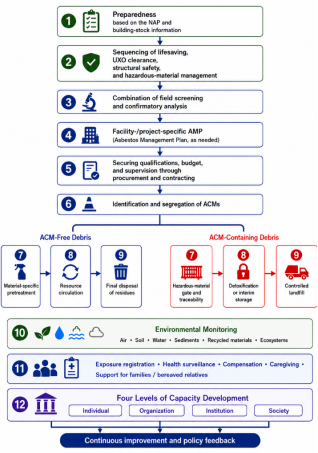
Figure 1 illustrates an overview of the management flow for ACM-containing disaster and conflict-related debris waste management that is expected to be established through the above comprehensive capacity enhancements.
Actions ① through ⑥ constitute a single management flow applicable to all debris. Actions ⑦ through ⑨, following the separation of debris via Action ⑥ (the gate for dentification and segregation of ACMs), apply to two separate management flows for ACM-free and ACM-containing debris, respectively. The ACM-free debris flow shown on the left channel ⑦ to ⑨ involves pretreatment, reuse/recycling, and disposal. The ACM-containing debris flow shown on the right channel ⑦ to ⑨ involves strict handling to pre-vent asbestos contamination, interim storage, and final controlled disposal.
Actions ⑩ through ⑫ are common to the entire process for continuous improvement and policy feedback based on the implementation status.
Figure 1. Generalized management flow of ACM containing disaster and conflict-related debris and required capacity development.
8. Lesson Learned and Discussion
(1) ACM management must move from emergency dust suppression to life-cycle management of materials, information, health, and institutional responsibility. The management system should cover not only the movement of debris but also exposure documentation, disease recognition, compensation, and family support.
(2) National strategy and site-level governance instruments should be connected hierarchically. The national policy on asbestos and NPEAD need to connect with disaster and conflict-related debris management plan and facility- or project-specific AMP, and the performance should be monitored using work, transport, disposal, and exposure records.
(3) Material recycling targets should not be established before hazardous material exclusion. Resource circulation becomes safe only after asbestos and other hazardous materials have been screened, segregated, and excluded. Crushing unidentified debris may not remove contamination but instead disperse it through recycled products and reconstruction sites.
(4) Asbestos monitoring has three distinct functions: (i) an early-warning function for controlling current fiber release; (ii) an evidentiary function supporting future disease recognition and compensation; and (iii) an accountability function for evaluating policy and operational performance. Monitoring results must be rapidly linked to work suspension, additional wetting, improved containment, or changes in PPE.
(5) Reducing expenditure on preventive management transfers rather than eliminating social costs. The immediate benefits of rapid recovery may be widely shared, whereas disease, caregiving, and compensation costs may be shifted among workers, families, residents, and future generations. Therefore, equitable intergenerational distribution of these costs is a core requirement of governance.
9. Conclusions
Based on Japan's experience in disaster waste management and the challenges currently faced in Ukraine and the Gaza Strip, disaster and conflict-related debris, including ACM, differs in nature from ordinary construction waste. It is a deposit of hazardous materials that can impact human health, the environment, reconstruction efforts, and land use for decades. While rapid debris removal is essential, unverified removal, crushing, and recycling can exacerbate contamination and create new, long-term sources of exposure.
An integrated response requires preparedness based on the National Asbestos Profile (NAP) and building-stock information; appropriate sequencing of lifesaving operations, UXO clearance, structural-safety assessment, and hazardous-material management; field screening and confirmatory analysis; project-specific Asbestos Management Plans; procurement and contractual arrangements securing qualified personnel, financing, supervision, and documentation; a hazardous-material gate before recycling; traceability from generation to final disposal; safe interim storage linked to time-bound transfer plans; environmental monitoring of air, soil, water, sediments, ecosystems, and recycled materials; exposure registration and long-term health surveillance of potentially exposed persons; compensation, caregiving, and support for affected families and bereaved relatives; and integrated capacity development at the individual, organizational, institutional, and societal levels.
The success of disaster and conflict-related debris management should not be evaluated solely by removal volume, processing speed, or recycling rate. It should be assessed according to whether exposure has been prevented, contamination has not been transferred to other locations, environmental media, or future generations, and the future health and rights of affected communities and recovery workers have been protected.
Abbreviations
ACM | Asbestos Containing Material |
AMP | Asbestos Management Plan |
CD | Capacity Development |
EU | European Union |
GIS | Geographical Information System |
ILO | International Labor Organization |
iNehc | International Network for Environmental and Humanitarian Cooperation, Nonprofit Inc. |
JICA | Japan International Cooperation Agency |
NAP | National Asbestos Profile |
NGO | Non-governmental Organization |
NIR | Near-infrared |
NPEAD | National Asbestos-Related Diseases Eradication Program |
PCB | Polychlorinated Biphenyl |
PLM | Polarized Light Microscopy |
PM | Phase-contrast Microscopy |
PPE | Personal Protective Equipment |
QA/QC | Quality Assurance/Quality Control |
SEM | Scanning Electron Microscopy |
SOP | Standard Operation Procedure |
TEM | Transmission Electron Microscopy |
UNDP | United Nations Development Programme |
UNEP | United Nations Environment Programme |
UNMAS | United Nations Mine Action Service |
UXO | Unexploded Ordnance |
WHO | World Health Organization |
XRD | X-ray Diffraction |
Acknowledgements
I would like to express my gratitude to all those involved in the Japan International Cooperation Agency (JICA) technical cooperation projects in Ukraine and Palestine for discussing disaster waste management, conflict-related waste management, and asbestos contamination on various occasions. The view expressed in this paper is the author’s own and does not necessarily reflect the official position of the organizations the author belongs to.
Author Contributions
Mitsuo Yoshida: Conceptualization, Data curation, Formal Analysis, Funding acquisition, Investigation, Methodology, Resources, Validation, Visualization, Software, Supervision, Writing – original draft, Writing – review & editing
Conflicts of Interest
The author declares no conflict of interest.
References
| [1] |
WHO. Asbestos, 2026. Available from:
https://www.who.int/news-room/fact-sheets/detail/asbestos
[Accessed 11 August 2026].
|
| [2] |
Stayner, L., Welch, L. S., Lemen, R. The worldwide pandemic of asbestos-related diseases. Annual Review of Public Health. 2013, 34, 205–216.
https://doi.org/10.1146/annurev-publhealth-031811-124704
|
| [3] |
Schlünssen, V., Mandrioli, D., Pega, F., Momen, N. C., Ádám, B., Chen, W., Cohen, R. A., Godderis, L., Göen, T., Hadkhale, K., Kunpuek, W., Lou, J., Mandic-Rajcevic, S., Masci, F., Nemery, B., Popa, M., Rajatanavin, N., Sgargi, D., Siriruttanapruk, S., Sun, X., Suphanchaimat, R., Thammawijaya, P., Ujita, Y., van der Mierden, S., Vangelova, K., Ye, M., Zungu, M., Scheepers, P. T. J. The prevalences and levels of occupational exposure to dusts and/or fibres (silica, asbestos and coal): A systematic review and meta-analysis from the WHO/ILO Joint Estimates of the Work-related Burden of Disease and Injury. Environment International. 2023, 178, 107980.
https://doi.org/10.1016/j.envint.2023.107980
|
| [4] |
Thives, L. P., Ghisi, E., Thives Júnior, J. J., Vieira, A. S. Is asbestos still a problem in the world? A current review. Journal of Environmental Management. 2022, 319, 115716.
https://doi.org/10.1016/j.jenvman.2022.115716
|
| [5] |
Stevenson, S. P., Barron, O., Pakenham, A., Hashinaka, M. Understanding and Ending the Lethal Asbestos Legacy. Sustainability. 2023, 15(3), 2507.
https://doi.org/10.3390/su15032507
|
| [6] |
Brown, B., Hollins, I., Pickin, J., Donovan, S. Asbestos Stocks and Flows Legacy in Australia. Sustainability. 2023, 15(3), 2282.
https://doi.org/10.3390/su15032282
|
| [7] |
Mori, H. Asbestos disaster and political economy. In K. Miyamoto, H. Mori, & K. Morinaga (Eds.), Asbestos Disaster: Lessons from Japan's Experience, Chapter 1 (pp. 1–18). 2011, Springer.
https://doi.org/01007/978-4-431-53915-5_1
|
| [8] |
Kato, M. The Great Earthquakes and Asbestos: The Structure of Damage Hidden in the “Reconstruction Processes” [in Japanese]. The Annual Reports of the Tohoku Sociological Society. 2015, 44, 25–38.
https://doi.org/10.11271/tss.44.25
|
| [9] |
Kumagai-Takei, N., Yamamoto, S., Lee, S., Maeda, M., Masuzzaki, H., Sada, N., Yu, M., Yoshitome, K., Nishimura, Y., Otsuki, T. Inflammatory Alteration of Human T Cells Exposed Continuously to Asbestos. International Journal of Molecular Sciences. 2018, 19(2), 504.
https://doi.org/10.3390/ijms19020504
|
| [10] |
Kuroda, A. Recent progress and perspectives on the mechanisms underlying asbestos toxicity. Genes and Environment. 2021, 43, 46.
https://doi.org/10.1186/s41021-021-00215-0
|
| [11] |
Zolondick, A. A., Gaudino, G., Xue, J., Pass, H. I., Carbone, M., Yang, H. Asbestos-induced chronic inflammation in malignant pleural mesothelioma and related therapeutic approaches—a narrative review. Precision Cancer Medicine. 2021, 4, 27.
https://doi.org/10.21037/pcm-21-12
|
| [12] |
Bloise, A., Fuoco, I., Vespasiano, G., Pacella, A., Villella, S., Piersante, C., Malvasi, G., Campopiano, A., Ballirano, P., Bruno, M. R., Bruni, B. M., Sinopoli, F., Di Carlo, M. C., Croce, A., Apollaro, C. Characterisation of waterborne asbestos fibres to assess the impact on groundwater quality and their role in the risk of secondary migration in the air: The Mount Reventino area in Southern Italy as pilot site. Journal of Hazardous Materials Advances. 2026, 23, 101254.
https://doi.org/10.1016/j.hazadv.2026.101254
|
| [13] |
Arachi, D., Furuya, S., David, A., Mangwiro, A., Chimed-Ochir, O., Lee, K., Tighe, P., Takala, J., Driscoll, T., Takahashi, K. Development of the “National Asbestos Profile” to Eliminate Asbestos-Related Diseases in 195 Countries. International Journal of Environmental Research and Public Health. 2021, 18(4), 1804.
https://doi.org/10.3390/ijerph18041804
|
| [14] |
Kim, Y.-C., Hong, W.-H. Optimal management program for asbestos containing building materials to be available in the event of a disaster. Waste Management. 2017, 64, 272–285.
https://doi.org/10.1016/j.wasman.2017.03.042
|
| [15] |
Ministry of the Environment, Japan. Manual for Preventing Asbestos Dispersion During Disasters. 3rd ed. [Internet]. 2023. Availa-ble from:
https://www.env.go.jp/air/asbestos/saigaiji_manual.html
[Ac-cessed 20 August 2026].
|
| [16] |
Tabata, M., Fukuyama, M., Yada, M., Toshimitsu, F. On-site detection of asbestos at the surface of building materials wasted at disaster sites by staining. Waste Management. 2022, 138, 180–188.
https://doi.org/10.1016/j.wasman.2021.11.039
|
| [17] |
Tabata, M., Haraguchi, R., Yada, M., Umehara, T., Furukawa, M. Clear and simple detection of asbestos stained with two dyes for building materials collected from disaster and demolition sites using a stereomicroscope. Waste Management. 2023, 171, 653–661.
https://doi.org/10.1016/j.wasman.2023.09.020
|
| [18] |
Bonifazi, G., Capobianco, G., Serranti, S., Trotta, O., Bellagamba, S., Malinconico, S., Paglietti, F. Asbestos detection in construction and demolition waste by different classification methods applied to short-wave infrared hyperspectral images. Spectrochimica Acta Part A: Molecular and Biomolecular Spectroscopy. 2024, 307, 123672.
https://doi.org/10.1016/j.saa.2023.123672
|
| [19] |
Helbl, A., Gruyaert, B., Chorna, J., Malcherek, A., Buisman, F., Bergthaler, D., Deboffe, C., Maas, R. White Paper on a Methodology for Handling of Asbestos Containing Materials in Line with the New Legislation in Ukraine. Revision 01. Technical Report; 18 January 2024.
https://doi.org/10.13140/RG.2.2.11632.42241
|
| [20] |
Singh, R., Budarayavalasa, S. Methods for treatment of asbestos-containing wastes for their safe disposal and gainful utilization. In Solid Waste Management for Resource-Efficient Systems: Circularity in Action, Singh, R., Mohapatra, S., Jong, M.-C., Eds. Elsevier: Amsterdam, The Netherlands; 2024, pp. 367–396.
https://doi.org/10.1016/B978-0-443-23775-1.00018-7
|
| [21] |
Fukujin, T., Kuribayashi, K. Asbestos health damage in Japan: Patients’ subjective difficulties in the application process of the Industrial Accident Compensation Insurance Act. International Journal of Lung Cancer. 2026, 1, 100030.
https://doi.org/10.1016/j.ijlcan.2026.100030
|
| [22] |
Sakamoto, M. Recommendation for Establishment of Comprehensive Asbestos Health Damage Compensation System: New Compensation System Considering Victim Viewpoint [in Japanese]. Review of Environmental Economics and Policy Studies. 2015, 8(1), 1–18.
https://doi.org/10.14927/reeps.8.1_1
|
| [23] |
Yoshida, M. Preventing asbestos pollution—A slow time bomb, challenges of capacity development in asbestos management. In Environment and Sustainable Development, Ujikawa, K., et al., Eds. Springer Nature: Singapore; 2026, pp. 1–19.
https://doi.org/10.1007/978-981-92-3637-4_15
|
| [24] |
Ueda, N. Investigation of environmental pollution caused by asbestos in areas affected by the Hanshin-Awaji earthquake and the consequent health risks [in Japanese]. Nihon Koshu Eisei Zasshi (Japanese Journal of Public Health). 2020, 67(8), 528–533.
https://doi.org/10.11236/jph.67.8_528
|
| [25] |
The World Bank, Government of Ukraine, European Union, United Nations. Ukraine Rapid Damage and Needs Assessment: February 2022–February 2023. Available from:
https://documents1.worldbank.org/curated/en/099184503212328877/pdf/P1801740d1177f03c0ab180057556615497.pdf
[Accessed 20 August 2026].
|
| [26] |
UNDP. Asbestos Waste Management Protocol for UNDP Contractors and Partners. Version 5.0. 2023. Available from:
https://www.undp.org/sites/g/files/zskgke326/files/2024-08/UNDP-AsbestosWasteManagementProtocol-v5NovemberEN_v01.pdf
[Accessed 20 August 2026].
|
| [27] |
Yoshida, M., Soeda, S., Shibata, K. Proper management of debris generated by war damage in Ukraine. In Proceedings of the 2025 Annual Conference of the Japan Society of Material Cycles and Waste Management, 2025; B3-6-O. [in Japanese] Available from
https://www.jstage.jst.go.jp/article/jsmcwm/36/0/36_115/_pdf/-char/ja
[Accessed 20 August 2026].
|
| [28] |
Noriko Oe, Laura Sagnori, Martin Bjerregaard, Yuliia Melnyk, Oleksandr Lymar. Recommendations Toward a Policy Note: Municipal Debris Management in Ukraine. The World Bank, [Internet] 2025. Available from
https://documents1.worldbank.org/curated/en/099053025113533353/pdf/P180174-29bcff8a-ddba-4d1c-9692-ae99e929a796.pdf
[Accessed 28 September 2026].
|
| [29] |
UNEP. Japan and UNEP unveil new funding for environmental recovery in war-affected Ukraine, 2025. Available at
https://www.unep.org/technical-highlight/japan-and-unep-unveil-new-funding-environmental-recovery-war-affected-ukraine
[Accessed 28 September 2026]
|
| [30] |
UNDP. Debris management standard operations procedures (SOP), UNDP. UNDP in Ukraine, 2026 [Internet]. Available from
https://www.undp.org/ukraine/publications/debris-management-standard-operations-procedures-sop?utm_source=chatgpt.com
[Accessed 28 September 2026]
|
| [31] |
UNDP. Implementation of the debris recycling and reuse system in Ukraine. UNDP in Ukraine, 2026. [Internet] Available from
https://www.undp.org/sites/g/files/zskgke326/files/2026-06/report_undp_introduction_of_the_debris_recycling_and_reuse_system.pdf
[Accessed 28 September 2026]
|
| [32] |
AbuHamed, H., Al Bursh, W., Abu Mfarreh, S., Yoshida, M. Managing post-conflict demolition wastes in Gaza Strip: A case study on May 2021 conflict. Journal of Material Cycles and Waste Management. 2023, 25, 684–693.
https://doi.org/10.1007/s10163-022-01570-y
|
| [33] |
UNEP. Environmental Impact of the Escalation of Conflict in the Gaza Strip: Second Assessment of Environmental Damage and Recommendations for Recovery and Reconstruction Planning. UNEP; 2025.
https://doi.org/10.59117/20.500.11822/48536
|
Cite This Article
-
APA Style
Yoshida, M. (2026). Challenges in Managing Asbestos-Containing Disaster and Conflict-Related Debris: From Emergency Response to Medium- and Long-Term Life-Cycle Management. Journal of Civil, Construction and Environmental Engineering, 11(6), 298-311. https://doi.org/10.11648/j.jccee.20261106.11
 Copy
|
 Download
ACS Style
Yoshida, M. Challenges in Managing Asbestos-Containing Disaster and Conflict-Related Debris: From Emergency Response to Medium- and Long-Term Life-Cycle Management. J. Civ. Constr. Environ. Eng. 2026, 11(6), 298-311. doi: 10.11648/j.jccee.20261106.11
Copy
|
Download
AMA Style
Yoshida M. Challenges in Managing Asbestos-Containing Disaster and Conflict-Related Debris: From Emergency Response to Medium- and Long-Term Life-Cycle Management. J Civ Constr Environ Eng. 2026;11(6):298-311. doi: 10.11648/j.jccee.20261106.11
Copy
|
Download
-
@article{10.11648/j.jccee.20261106.11,
  author = {Mitsuo Yoshida},
  title = {Challenges in Managing Asbestos-Containing Disaster and Conflict-Related Debris: From Emergency Response to Medium- and Long-Term Life-Cycle Management},
  journal = {Journal of Civil, Construction and Environmental Engineering},
  volume = {11},
  number = {6},
  pages = {298-311},
  doi = {10.11648/j.jccee.20261106.11},
  url = {https://doi.org/10.11648/j.jccee.20261106.11},
  eprint = {https://article.sciencepublishinggroup.com/pdf/10.11648.j.jccee.20261106.11},
  abstract = {When buildings are damaged or destroyed by earthquakes, tsunamis, floods, or armed conflict, asbestos-containing materials embedded in the built environment may be fragmented and mixed with concrete, bricks, soil, and other disaster or conflict-related debris, which is potential health and environmental risks. During emergencies, lifesaving operations, road clearance, and infrastructure restoration take priority; consequently, pre-demolition surveys, selective removal, containment, and monitoring procedures normally required under peacetime conditions may not be fully implemented. This paper compares experiences from major earthquakes in Japan with conflict-related debris management in Ukraine and the Gaza Strip and examines the technical, institutional, public-health, and social challenges of asbestos management in light of recent literature. The findings indicate that asbestos control should not be limited to immediate dust suppression. It should be established as a comprehensive life-cycle management system integrating building-stock information, field screening, Asbestos Management Plans, procurement and contractual control, segregation, interim storage, transport, treatment, final disposal, recycled-material quality assurance, exposure registries, health surveillance, compensation, and support for affected families. Importance should be given to establishing a hazardous-material gate before recycling, ensuring traceability from the point of generation to final disposal, strengthening preparedness through a National Asbestos Profile, and developing capacities at the individual, organizational, institutional, and societal levels.},
 year = {2026}
}
Copy
|
Download
-
TY  - JOUR
T1  - Challenges in Managing Asbestos-Containing Disaster and Conflict-Related Debris: From Emergency Response to Medium- and Long-Term Life-Cycle Management
AU  - Mitsuo Yoshida
Y1  - 2026/11/10
PY  - 2026
N1  - https://doi.org/10.11648/j.jccee.20261106.11
DO  - 10.11648/j.jccee.20261106.11
T2  - Journal of Civil, Construction and Environmental Engineering
JF  - Journal of Civil, Construction and Environmental Engineering
JO  - Journal of Civil, Construction and Environmental Engineering
SP  - 298
EP  - 311
PB  - Science Publishing Group
SN  - 2637-3890
UR  - https://doi.org/10.11648/j.jccee.20261106.11
AB  - When buildings are damaged or destroyed by earthquakes, tsunamis, floods, or armed conflict, asbestos-containing materials embedded in the built environment may be fragmented and mixed with concrete, bricks, soil, and other disaster or conflict-related debris, which is potential health and environmental risks. During emergencies, lifesaving operations, road clearance, and infrastructure restoration take priority; consequently, pre-demolition surveys, selective removal, containment, and monitoring procedures normally required under peacetime conditions may not be fully implemented. This paper compares experiences from major earthquakes in Japan with conflict-related debris management in Ukraine and the Gaza Strip and examines the technical, institutional, public-health, and social challenges of asbestos management in light of recent literature. The findings indicate that asbestos control should not be limited to immediate dust suppression. It should be established as a comprehensive life-cycle management system integrating building-stock information, field screening, Asbestos Management Plans, procurement and contractual control, segregation, interim storage, transport, treatment, final disposal, recycled-material quality assurance, exposure registries, health surveillance, compensation, and support for affected families. Importance should be given to establishing a hazardous-material gate before recycling, ensuring traceability from the point of generation to final disposal, strengthening preparedness through a National Asbestos Profile, and developing capacities at the individual, organizational, institutional, and societal levels.
VL  - 11
IS  - 6
ER  -
Copy
|
Download





 Share This Article
 Twitter
 Linked In
 Facebook