Review Article | | Peer-Reviewed

Nutritional Quality and Process Parameter of Bread Production from Wheat-Sweet Lupine and Moringa Leaf Powder

Published in Innovation (Volume 7, Issue 4)
Received: 22 October 2026     Accepted: 2 November 2026     Published: 16 November 2026
Views:       Downloads:
Abstract

Bread ranks among the most commonly consumed baked goods and is primarily made from wheat flour due to its proteins that promote gluten formation, along with favorable properties for dough and baking. Refined wheat flour has certain nutritional drawbacks, such as a lower concentration of specific essential amino acids, along with the loss of dietary fiber and micronutrients during milling processes. The integration of composite flour allows for an enhancement in the nutritional profile of wheat-based baked items by including locally sourced, nutrient-rich crops. This review highlights the potential of creating bread using a mixture of wheat flour with sweet lupine flour and Moringa Leaf Powder. Sweet lupine is a legume abundant in protein, containing around 30-40% protein content, while Moringa Leaf Powder leaves are rich in proteins, minerals, vitamins, carotenoids, and various bioactive substances. The review evaluates the nutritional content and application of wheat, sweet lupine, and Moringa Leaf Powder, alongside the impact of composite flour blends and baking conditions on the quality of bread. Emphasis is placed on the blending ratios, baking temperatures, dough management, farinographic and pasting characteristics, nutritional aspects, anti-nutritional elements, and sensory acceptability. Existing literature points out that the addition of sweet lupine and Moringa Leaf Powder to wheat flour holds promise for increasing the nutritional worth of bread and encouraging the use of locally produced agricultural inputs. However, elevating the ratio of non-wheat ingredients may affect gluten formation, dough characteristics, loaf qualities, color, taste, texture, and general acceptability. Consequently, it is crucial to optimize the blending ratios and baking conditions to find equilibrium between enhancing nutrition and attaining desired bread quality. This review sets the groundwork for further experimental research and the advancement of nutritionally enhanced composite bread utilizing wheat, sweet lupine flour, and Moringa Leaf Powder.

Published in Innovation (Volume 7, Issue 4)
DOI 10.11648/j.innov.20260704.12
Page(s) 122-134
Creative Commons

This is an Open Access article, distributed under the terms of the Creative Commons Attribution 4.0 International License (http://creativecommons.org/licenses/by/4.0/), which permits unrestricted use, distribution and reproduction in any medium or format, provided the original work is properly cited.

Copyright

Copyright © The Author(s), 2026. Published by Science Publishing Group

Keywords

Bread, Moringa Leaf Powder, Sweet Lupine, Wheat

1. Introduction
Bread is one of the most widely consumed bakery products and has long served as an important staple food in many parts of the world. Wheat (Triticum aestivum L.) is the principal cereal grain used in bread production because its flour contains gluten-forming proteins that provide the dough with the viscoelastic properties required for gas retention, dough development, and bread formation . Wheat is also an important source of carbohydrates, protein, dietary fiber, vitamins, and minerals. In Ethiopia, wheat is one of the major cereal crops cultivated and consumed, particularly in the highland areas, and wheat flour is extensively used for the production of bread and other bakery products .
Refined wheat flour has nutritional restrictions even though it is technologically suitable for baking bread. Due to their concentration in the bran and germ fractions, significant amounts of dietary fiber and micronutrients are lost during milling, and wheat protein is comparatively lacking in some key amino acids, especially lysine and tryptophan. As a result, there has been a lot of focus on improving the nutritional value of wheat-based diets by adding locally accessible, nutrient-rich crops. By partially substituting flour from other cereals, legumes, or plant materials for wheat flour, composite flour technology offers a chance to increase the nutritional value of baked goods while encouraging the use of locally accessible agricultural resources .
A promising legume for enhancing the nutritional value of wheat-based diets is sweet lupine. In addition to being a good source of dietary fiber, lipids, and other nutrients, lupine seeds have about 30–40% protein. While sulfur-containing amino acids are limited, lupine protein has comparatively high concentrations of certain important amino acids, such as lysine, leucine, and threonine. The Amhara and Benishangul-Gumuz regions of Ethiopia are the primary producers of lupine, also referred to locally as Gibto. Compared to other legumes, its use in human food items is still somewhat restricted . Therefore, adding sweet lupine flour to bread recipes may offer a way to boost protein and other nutritional elements while improving the use of a local product that is neglected.
Another plant resource with significant potential for improving food products' nutritional value is moringa leaves. Protein, minerals, vitamins, carotenoids, and other phytochemicals are known to be found in Moringa leaves. The African Moringa tree, or Moringa Leaf Powder stenopetala, is native to Ethiopia and has adapted to a variety of environmental circumstances. Moringa Leaf Powder is a possible addition for enhancing frequently consumed meals like bread because of the nutritious value and accessibility of Moringa Leaf Powder leaves in the area .
However, adding sweet lupine flour and moringa leaf powder to wheat flour can affect the bread's technological and sensory qualities in addition to its nutritional makeup. When wheat flour is substituted, the composition of the dough is altered, which may have an impact on water absorption, dough formation, rheological features, loaf qualities, texture, appearance, flavor, and general customer appeal . Therefore, research on composite flour must take into account both the quality attributes needed for good bread and nutritional enhancement. According to the literature, the percentage of alternative flour and the processing parameters can have a big impact on the characteristics of composite bread .
Because changes in nutrient composition must be complemented by appropriate color, aroma, taste, texture, and general acceptability, sensory acceptance is especially crucial for creating nutritionally enhanced bread. Since non-wheat ingredients don't have the same ability to produce gluten as wheat flour, adding more of them could change the bread's distinctive qualities. Therefore, finding the right blending ratio is crucial to achieving a balance between desired bread quality and nutritional increase .
When adding legumes and plant leaf powders to food items, phytochemical and anti-nutritional factors should be taken into account in addition to nutritional and sensory elements. Phytate, polyphenols, and quinolizidine alkaloids are among the chemicals found in lupine, though processing may alter their concentrations. Certain heat-sensitive anti-nutritional factors can be reduced by thermal processing, although other molecules might be more heat-resistant. Therefore, while creating composite bakery goods that contain lupine, processing and formulation should be taken into account .
The composite flour technology offers a viable method for enhancing the nutritional value of wheat-based bread while promoting the use of locally accessible crops. The nutritional qualities of the individual ingredients may be complemented by combining wheat flour with sweet lupine flour and Moringa Leaf Powder to create bread with a higher nutritious value. The formulation must simultaneously preserve desired sensory and technical qualities. In order to find appropriate formulations that offer better nutritional quality while preserving acceptable sensory qualities, it is crucial to design and assess bread made from blends of wheat flour, sweet lupine flour, and Moringa Leaf Powder .
2. Overview of Wheat, Lupine and Moringa Leaf Powder, Utilization in Bakery Products
2.1. Wheat
The most common cereal grain produced, consumed, and traded globally today is wheat. In all of recorded human history, bread, both leavened and unleavened, has been a staple sustenance for people . It is believed that the production of wheat began many thousand years before the birth of Christ. Wheat has the broadest range of adaptation and is grown in more than 100 different nations. It is cultivated as far south as Argentina and as far north as Finland .
The temperate zone of the northern hemisphere between the 30th and 60th latitudes, which encompasses the main grain-growing regions of North America, Europe, Asia, and North Africa, has the highest concentration . Between the 27th and the 40th latitudes in the south, there is also a little lower concentration, primarily in Australia, Argentina, Brazil, and South Africa .
The increase in the world's wheat production during the past 30 years is undoubtedly one of the most incredible achievements of the 20th century . Except for certain locations in Africa, predictions of widespread starvation issued in the 1960s and 1970s have so far been proven wrong . Worldwide wheat production has increased more quickly than population growth since 1960. The world population increased from 3 billion in 1960 to 5.3 billion in 1990, nearly doubling, although wheat output more than tripled since 1960 .
Wheat is mostly used for food, which accounts for two-thirds of total consumption on average. There are several ways to eat wheat, all of which include some sort of agricultural processing . The whole kernel is typically utilized in products like breakfast cereals, but the majority of wheat used in food is first ground into flour for things like bread, noodles, biscuits, cakes, etc. .
Wheat is a superior feed grain for poultry and is comparable to corn for many types of cattle . The price differential between wheat and other feed grains, as well as the quality of the wheat crop in any particular year, are both important factors that affect how much wheat is used as feed. This includes the production of ethyl alcohol, plastics, varnishes, soaps, rubber, cosmetics, and other products, as well as the processing of wheat into starch and gluten, which are used in a variety of food and non-food applications, including the protein enrichment of flour and as a binding or strengthening agent in some processed food products .
2.2. Lupine
Lupinus albus L. (commonly known as lupine) is a type of legume that has recently attracted more attention regarding its seeds. Its notable nutritional attributes, which include a substantial protein content, high dietary fiber, and minimal fat levels, position lupine as an excellent alternative to not only animal-based proteins but also as a healthier replacement for more processed flours that are less nutritionally balanced, which are often employed in making bread, cakes, and cookies, among other baked goods .
Moreover, the nutritional and bioactive elements present in lupine might offer various advantages for human health, particularly in the prevention and management of certain health issues. Nonetheless, there are legitimate concerns about the presence of some anti-nutritional substances and contaminants, prompting the need for efficient methods for their identification and possible elimination. This review aims to explore the capabilities of lupine (L. albus) in relation to food applications and human health while weighing both its advantages and disadvantages .
The nutritional as well as anti-nutritional factors found in L. albus seeds, along with potential contaminants associated with lupine seeds, are analyzed. Additionally, the possible health advantages of lupine seeds are evaluated, particularly in areas such as energy metabolism, heart diseases, hypertension, glucose and insulin regulation, bowel health, and anticonvulsant properties, supported by scientific data from clinical trials and studies conducted on animal models .
2.3. Botanical Description and Background of Moringa Leaf Powder
The family Moringaceae is a monogeneric family comprising a single genus, Moringa, which consists of 13 species of dicotyledonous flowering trees native to tropical and subtropical regions . Although the majority of moringa species originated in India and Africa, they are currently found in many tropical nations . Native to the Sub-Himalayan region of northern India, M. oleifera is also known as the "horseradish tree" or "drumstick tree," and study on it has received a lot of attention . Instead, M. stenopetala, also known as the African Moringa tree, is a multipurpose tree that is indigenous to Ethiopia, northern Kenya, and eastern Somalia. It has a wide range of adaption to desert to humid climates .
Moringa stenopetala is known as a cabbage tree in English, Shiferaw in Amharic, Haleko in Gamo, and Wolyeta . This tree is described botanically as having a diameter of 60 cm, a height of 6-12 meters, a smooth bark, a vigorous branching habit, occasionally having many trunks, and softwood .
The cold temperature is the limiting factor for the cultivation of this species, even if it is drought resistant like in the southern part of Ethiopia, and frequently thrives on well-drained soils at altitudes of 900–1200 m with a mean annual rainfall of 500–1400 mm .
M. oleifera is one of the most nutrient-dense food plants available. It boasts a significant amount of vital amino acids, proteins, minerals, vitamins, and polyphenols . This plant is also an abundant source of phytochemicals such as flavonoids, anthocyanins, isothiocyanates, anthraquinone, alkaloids, essential oils, tannins, saponins, steroids, terpenoids, and cardiac glycosides. Furthermore, it is employed in the treatment of severe malnutrition and has various pharmacological applications, including hepatoprotective, antihypertensive, cholesterol-lowering, anti-urolithiasis, antifertility, antidiabetic, antioxidant properties, nutraceutical benefits, and antimicrobial effects. Additionally, M. oleifera supports breastfeeding mothers by enhancing milk production after childbirth .
Its use in Ayurvedic practices is specifically noted for cancer treatment. M. oleifera leaves and buds have been applied to the temples to alleviate headaches, while its roots and bark provide anti-scorbutic effects. Eye conditions were addressed with a mixture of leaf juice and honey. Dried seeds from M. oleifera found applications in ophthalmological formulations, treating venereal diseases, providing anti-inflammatory effects, acting as a purgative, and serving as a tonic . Its role in traditional medicine has prompted researchers to investigate the chemical makeup and pharmacological capabilities of this plant. This review aims to enhance understanding of M. oleifera by offering insights into its description, phytochemical content, and pharmacological properties .
3. Utilization of Grains in Bread Making in Ethiopia
3.1. Utilization of Wheat in Bread Making in Ethiopia
The most significant cereal crop for the majority of people on earth is wheat (Triticum aestivum L.),(Elias, Okoth, and Smaling 2019) . For around two billion people (36% of the world's population), it is the most significant staple food . Nearly 55% of the carbs and 20% of the dietary calories consumed globally come from wheat.
The production of wheat is widespread. From 1986–1987 to 2016, there was an increase in global wheat production of 521 million tons . With a total area of 0.75 million acres, Ethiopia produces the most wheat in Sub-Saharan Africa . One of the important cereal crops in Ethiopia's highlands, which are located between 6 and 16 N, 35 and 42 E, and range in altitude from 1500 m to 28 m, is wheat .
Highlands of the northern, central, and south-eastern sections of Ethiopia are where it is produced in the greatest amount or quantity . In many baking procedures, wheat (Triticum aestivum L.) flour is the main raw ingredient . Because wheat protein (gluten) has good intrinsic viscoelastic qualities, it is suitable for making several confectionery goods . Additionally, it has considerable amounts of vitamins like thiamine and vitamin B, as well as 78.10% carbohydrates, 14.7 percent protein, 2.10% fat, and 2.10% minerals .
3.2. Utilization of Lupine in the Bread Making
Australia is the greatest producer of lupine in the world followed by Europe . Correspondingly, the crop is produced in different parts of Ethiopia; particularly in two regional states; Amhara and Benishangul Gumuz, the former being the largest producer . It is mostly cultivated in West Gojjam and Awi zones of Amhara. Lupine cultivation, genetic advancement, and utilization in Ethiopia continue to lag behind other pulse crops . White lupine is grown as a standalone crop or as an intercrop with other crops in Ethiopian agriculture . However, uneven trends were evident in the annual coverage, production, and yields.
Lupine locally in Ethiopia called Gibto is produced by smallholder subsistent farmers in two regional states of Ethiopia; Amhara and Benishangulgumuz, the former being the largest producer . In the main production season (Meher season, June-December) of the year 2008, a total of 17, 241 tons of lupine, with a mean productivity of 0.84 t/ha was produced in these two major lupine-producing regional states. According to the white lupine variety grown in North-western Ethiopia is a bitter variety due to its high alkaloid content.
4. Nutritional Composition of Wheat, Lupine and Moringa Leaf Powder
4.1. Wheat
The viability of using wheat in the production of these items is because of their gluten content, which is to blame for the being hydrated with water, and viscoelastic dough forms . Wheat is high in minerals (such as magnesium, calcium, and potassium), complex carbohydrates, dietary fiber, a modest amount of protein, vitamins B and E, and a lot of antioxidants, mostly carotenoids like beta-carotene . Tryptophan and lysine have been discovered to be insufficient in wheat, these required interest in studying locally obtainable flour to make composite flour from crops to enhance the nutritional of products made with wheat flour and lower the high wheat importation costs are discussed in detail .
With a protein level of roughly 13%, which is quite high compared to other main cereals, wheat is the most significant source of carbohydrates in most nations and the primary source of vegetal protein in human meals globally. A modest quantity of animal or legume protein can be added to wheat to make it more nutrient-dense . When consumed as a whole grain, wheat is also a good source of dietary fiber, micronutrients, and minerals. Diets mostly made of wheat had more fiber than diets primarily made of meat.
Protein content of Wheat: Protein content in wheat ranges from 10% to 18% on a weight basis. From wheat powder, various protein fractions such as albumins, glutenins, globulins, and gliadins can be separated . Albumin is water-soluble, while glutenins can be dissolved in weak acid or sodium hydroxide solutions, globulins can be dissolved in weak sodium chloride solutions but not in water, and gliadins can be dissolved in 70% ethyl alcohol . The seed coats, aleurone cells, and germs contain a lot of albumins and globulins. While globulins and albumins only make about 25% of the total amino acid composition, gliadins and glutenins account for 75% of them . The seed coat layers and germ lack storage proteins like gliadins and glutenins, but the mealy endosperm is rife with them .
Fiber Content of Wheat: While refined wheat contains nearly no fiber, whole wheat is abundant in it. As they are concentrated in the bran, fibers are removed during the milling process, and they are virtually missing from refined flour, whole-grain wheat has a fiber level of 12–15% of the dry weight. 70% of wheat bran is made up of the hemicellulose arabinoxylan, which is the primary fiber.
Most of the remaining material is cellulose . The majority of the fiber in wheat is insoluble, passing through your digestive system nearly undamaged and giving stools volume. Other fibers nourish the bacteria in your intestines . Additionally, wheat contains trace levels of fructans, soluble fibers that might aggravate IBS patients' digestive problems . However, wheat bran may generally be advantageous for intestinal health.
4.2. Lupine
There are hundreds of species of legumes in the genus Lupinus, but only a few have been domesticated to produce seeds, such as the Andean lupine, the narrow-leaved or Australian sweet lupine, the yellow lupine, and the white lupine (Lupinus albus) (L. mutabil) . Western Australia harvests 80% of the world’s lupine seed (from the low-alkaloid Australian sweet lupine) which is considered to be a significant nitrogen-fixing rotation crop encouraging sustainable cereal production .
Lupine significantly contributes to maintaining human health by offering proteins, fats, and carbohydrates . To improve the nutritional content, aroma, and texture of the products, its flour can be used in pasta, crisps, bread, and emulsified meats. In Ethiopia, it is referred to as "Gibto," and it is used to make roasted bean "kolo," the indigenous alcoholic beverage "katikala," as well as other foods .
The protein content of the seeds ranges from 30% to 40% of whole seeds . In recent years, it has become increasingly widely used in the bread-making industry, particularly in European countries . In a similar vein, sales account for the bulk of output. This demonstrated that household use in Ethiopia is not typical. Analyzing production and usage trends at the zonal, regional, and national levels is crucial .
Australian sweet lupine, which has a low glycemic index and may help prevent obesity and its related health issues of diabetes and heart disease, is the subject of an investigation by dieticians and medical professionals in Europe and Australia . Consuming sweet lupine may also help with improved intestinal health, a more balanced blood glucose level, and cholesterol reduction . Compared to those who ate ordinary white bread, it was discovered that eating white bread enriched with the kernel flour of Australian sweet lupine dramatically lowered blood glucose and insulin responses .
Protein Content of Lupine: The sweet lupine contains around 35% of protein content. Different processing techniques have an impact on the protein content. Based on the amino acid content and protein digestibility of food, the protein quality of that food can be predicted . It is crucial to take into account both the composition of amino acids and the total amount of protein. Low levels of sulfur amino acids are present in sweet lupine .
In contrast to cereals, which have a protein level of roughly 7%-13%, legume seeds have a protein content that ranges from 17%-20% (dry weight) in peas and beans to 38%-40% (dry weight) in soybean and lupine. This protein content is comparable to that of meats (18%-25%). A physicochemical investigation on lupine was conducted in Ethiopia by . Found that samples obtained from Debre Tabor and Dembecha, respectively, had 37% and 43% protein composition.
This protein level is equivalent to that of all legumes and soybeans, which contain about 40% protein . Leucine, threonine, and lysine are abundant in lupine bean protein, while sulfur-containing amino acids are lacking. Lupine flour has a protein content of 30%–40%, however, its utilization efficiency is a little lower than that of animal protein .
The LDL (Low-Density Lipoprotein bad cholesterol) level, as well as the level of triglycerides glucose, and blood pressure is all significantly reduced by a diet rich in lupine proteins for humans. In addition to dietary changes, lupine reduced blood glucose levels by 6.7%, homocysteine by 11.8%, and high-sensitivity C-reactive protein (Hs-CRP) by up to 18.3% . White lupine's amino acid is composed of 85% globulins and 15% albumins . Three primary proteins with different amino acid compositions are found in the globulin fraction and conglutin. About 4% of proteins are made up of the sulfur-containing amino acid conglutin, which has higher levels of methionine, cytosine, and valine. Some of them could cause allergies . Albumins and globulins are two kinds of proteins found in sweet lupine .
The primary seed storage proteins are known as globulins, which are divided into four families’ conglutin, conglutin, conglutin, and conglutin . 75% of the protein in the seed is made up of these three conglutins. Methionine, cytosine, valine, and tryptophan are the four main limiting essential amino acids in lupine seeds (Sin gla, Sharma, and Singh 2021) . The levels of the other essential amino acids, such as lysine, isoleucine, leucine, phenylalanine, and tyrosine, are comparable to those set by the Food and Agriculture Organization (FAO) for the optimum reference protein suitable for adults.
Carbohydrates Content of Lupine: White lupine grain contains a variety of carbohydrates, the most prevalent of which are non-starch carbohydrates, according to . Report on a study done in Ethiopia for two samples that had a carbohydrate content of 38.92% and 37.50%. According to a study by , the figure for raw Lupinus albus's utilizable carbohydrate was 26.80%.
Crude Fat Content of Lupine: Lupine is the third legume in terms of fat content, after soybean (Glycin max) and ground nut (Arachis hypogeae L.); . Lupines albus has characteristics with Lupines campestris in terms of its lipid composition. The average amount of crude fat in lupine albus plants raised around the world is 13%.
Crude Fiber Content of Lupine: The starch content of lupinus albus species is quite low. When compared to soybeans, they often contain less carbohydrate. Lupines albus has a higher dietary fiber content (mean value 30%), similar to soybean. Compared to other regularly consumed grains, it has the lowest Glycaemic Index .
4.3. Moringa Leaf Powder
Moringa Leaf Powder oleifera Lam. (MO) is a tiny, multipurpose tree that is grown all over the world. Its height ranges from 5 to 10 meters. Moringa leaf powder is the one of the promising plants, that, may help people consume more vitamins, minerals, and phytochemicals that are good for their health . The most well-known of the thirteen species that make up the genus moringacae is moringa oleifera. Although it originated in India, it has been planted all over the world and has naturalized in numerous places .
Recent research suggests that the leaves of this plant are extremely nutritious. They are stocked with all of the necessary amino acids as well as vitamins and minerals . For the past 20 years, Moringa oleifera has been promoted as a superior source of nutrients (such as protein, iron, calcium, vitamins, carotenoids, and other phytochemicals), .
Nutritional Composition of Moringa Leaf Powder: The Moringa tree grows swiftly and can be propagated through seed or branch cuttings. Even if they develop quickly in a short amount of time on poor soil, tree leaves are more than amazing . Additionally, the tree can survive in hot, dry areas and is drought-resistant. In many tropical and subtropical nations, the leaves, fruits, flowers, and immature pods of this tree are all edible and are included in traditional meals .
Moringa oleifera member of the family of Moringaceae is a potent treatment for malnutrition. Because it contains a wide range of vital phytochemicals in its leaves, pods, and seeds, the Moringa plant is extremely nutritious . Moringa is claimed to have 7 times more vitamin C than oranges, 9 times more protein than yoghurt, 10 times more vitamin A than carrots, 15 times more potassium than bananas 17 times more calcium than milk, and 25 times more iron than spinach .
4.4. Bioactive Compounds in Lupine and Moring Leaf Powder
Non-nutritive plant compounds known as phytochemicals have anti-inflammatory or protective properties. The have been linked to the prevention of chronic illnesses like diabetes, cancer, heart disease, and high blood pressure, as well as their treatment. Grain has a wide variety of phytochemicals, such as saponins, alkaloids, and phytosterols, which are phenolic compounds. For example, phenolic compounds are thought to have the capacity to lower the risk of developing specific malignancies due to their antioxidant activity, which may shield human cells from reactive oxygen species-induced oxidative damage . However, a number of these phytochemicals and other seed constituents are thought to be anti-nutritional elements. As a result, the goals of creating composite baked goods containing these phytochemicals or ant-nutritional components may be to either maintain them to exert possible health advantages or use the processing to destroy or inactivate them to diminish their anti-nutritional effects.
Anti-nutritional is compounds found in food or feed that decreases nutrient utilization, including intake, digestion, and absorption, are known as anti-nutritional factors . Heat labile chemicals and heat stable compounds make up the two primary categories of ant-nutritional. Saponins, lectins, and proteinase inhibitors, which are heat-labile anti-nutritional components, are eliminated or decreased during thermal processing. The phytic acid, polyphenol (primarily tannin), raffinose family oligosaccharides, and quinolizidine alkaloids are among the group of compounds that are heat stable . Comparing lupine to other legumes like cowpea, kidney bean, and soybean, it has fewer lectins and trypsin inhibitors.
5. Quality of Bread as Affected by Baking Temperature and Baking Time
5.1. Properties and Use of Composite Flours in Bread Making
Composite flour is a combination of flour, starches, and other components that is designed to completely or partially replace wheat flour in bakery and pastry items,. As the composite flours employed were either binary or ternary mixes of flours from several other crops with or without wheat flour, also agreed with that. For developing nations using composite flours offered a few benefits in terms of including a higher supply of protein for human consumption, the preservation of hard currency, the encouragement of native plant species with high yields, and a general improvement in the use of domestic agriculture output . In developing nations, composite flour is favored because it promotes the use of locally grown crops as flour and lowers the importation of wheat flour . Due to the expanding demand for confectioneries, local raw ingredients are increasingly replacing wheat flour . As a result, numerous developing nations have promoted the start of programs to assess the viability of using alternative, locally accessible flours in place of wheat flour.
5.2. Baking Temperature
The enthalpy of amylopectin recrystallization, the rate of bread firmness, and the quantity of soluble amylose all decreased at a slower heating rate. The variations in product firmness after storage may be attributed to the degree of starch granule hydration, swelling, dispersion, and association all of which are influenced by the heating rate during baking .
The influence of baking duration and temperature on various physical characteristics of bread produced from a blend of cassava and wheat flour had significant differences in loaf volume, weight, and specific volume. The moisture content, density, porosity, and softness of fresh crumb, in addition to the hardness of dried crumb, were notably influenced by both the baking time and temperature .
Temperature serves as the primary and most evident element influencing all three modes of heat transfer (convection, conduction, radiation). Additionally, it is the leading element in many physical, chemical, and biochemical transformations while baking: increases in volume, development of crust, deactivation of yeast and enzymes, coagulation of proteins, and the gelatinization process of starch within the dough .
5.3. Baking Time
Baking involves a complicated process of change, as several interconnected physical events occur within the item being made. For industrial applications, having straightforward techniques to accurately forecast the duration of the process would be beneficial. In contrast to food preservation methods, it is possible to identify two distinct process times: the critical or minimum time, which is established by the thorough transformation of the dough into crumb and guarantees that the product meets acceptable standards; and the quality time, which is linked to a specific desired value of a particular sensory characteristic (such as surface color) and is related to consumer preferences .
The process of baking is undoubtedly a crucial phase in the production of bread. The quality of bread is most significantly influenced by the temperature of the oven and the duration of baking. Bread that is baked for a longer duration at reduced temperatures exhibited the least amount of moisture. Additionally, the findings indicated that soluble starch levels raised with extended baking times and reduced baking temperatures. Bread prepared under different baking scenarios displayed notable variations in staling rates. Shorter baking times paired with elevated baking temperatures resulted in minimal rates of bread staling .
5.4. Dough Handling Properties
Predicting the quality of the finished product relies heavily on the viscoelasticity of the dough . The nature and composition of the many types of grains used to make the multigrain dough are diverse, which has an impact on how it is handled. When making bread, the right kind of dough should be made; it should be able to expand during expansion and hold onto the departing gas . The dough should also be strong enough to avoid collapsing and to stretch during dough development without rupturing . To test the handling qualities of dough, a number of techniques have been used, including rheometry, farinography, and extensography.
The general relationship between the rheological characteristics of dough and product quality attributes makes it possible to choose the best raw materials to maximize the final product . Frequency sweeps and creep recovery tests are two common rheological procedures for estimating the mechanical characteristics of dough. Oscillatory shear tests are frequently used to assess the dough's viscoelastic characteristics, such as its viscous and elastic moduli (McCann et al., 2016).
A significant portion of the nutrients and more than 70% of the daily energy needs are provided by cereal grains and legumes . The term "composite flour technology" originally referred to a method of combining wheat flour with other grains and legumes to utilize local raw materials and manufacture high-quality food products on a budget. Guar gum's functional and physiological advantages have been thoroughly investigated in a number of researches. Consuming composite flour bread with 5% guar gum and 5% wheat bran decreased postprandial blood glucose in comparison to the level of fasting blood glucose.
The effect of guar gum on reduction in postprandial glycaemia was caused by the delayed passage of guar gum-containing meal through the stomach and small intestine. It's also possible that this effect was caused by the meal’s viscous nature, which prevented the meal from being mixed and repulsed by gastrointestinal contractions, reducing the amount of glucose that reached the absorptive epithelium. This may explain why postprandial glycaemia decreased after guar gum was added to a meal, as reported in earlier investigations (Tharise, Julianti, and Nurminah 2014, Noorfarahzilah et al. 2014) . Consuming legumes appears to reduce serum cholesterol. In place of mixed legumes 1209, meals with comparable amounts of calories, fat, protein, and carbohydrates were used. Mean serum LDL cholesterol decreased considerably (126 vs. 138 mg/dl) while eating legumes . Due to their capacity to lower plasma cholesterol and help lower the risk of cardiovascular disease, some soluble polysaccharides have been investigated as potential components in the creation of "functional meals." Three distinct hydrocolloids (guar gum, xanthan gum, and pre-gelatinized corn starch) were tested in an assay on rats for their ability to lower cholesterol at a concentration of 1.6%.
Combinations of cereal and pulses have been used to produce a variety of goods. Pulses are valued for their nutritional value as well as their therapeutic and medical effects. Massive cholesterol buildup in the arteries that serve as the center of an atheromatous plaque is what causes atherosclerosis. Epidemiological investigations have identified a high plasma cholesterol level as a significant risk factor . The quest for substances that can lower blood cholesterol levels is still ongoing. There are some legumes that are known to lower cholesterol .
5.5. Farinographic Properties
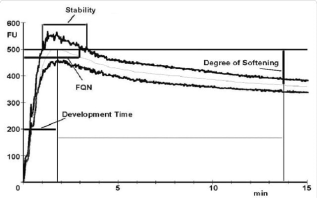
The evolution of dough is measured using a farinograph under precise kneading settings once the dough has been brought to a standard consistency of 500 F.U. The resistance of the dough to the kneader shaft serves as the foundation for Farinograph functioning. When the ingredients are mixed, flour particles are hydrated, dough is formed, and it develops, the resistance to the kneader shaft varies more and more until it reaches a maximum value that is near to the value of dough that has a normal consistency. Then, throughout the dough's stability phase, which can last for a longer or shorter period depending on the properties of the flour, the variation of the moment to the shaft and therefore the consistency of the dough remain roughly constant. The farinogram gadget is used to graphically record the current state of the dough consistency when kneading . One of the most widely used tests for the quality of flour is the farinograph. The findings are incorporated into the formulation as parameters to calculate the quantity of water needed to make the dough, analyses how components affect mixing characteristics, determine how much flour has to be blended, and assess the uniformity of flour. The outcomes are also used to forecast processing effects, such as the amount of mixing necessary for dough development, how much over-mixing is tolerated, and the consistency of the dough during manufacturing. The results of the farinograph can also be used to forecast the characteristics of the finished product's texture. The Brabender Farinograph is the most used tool for determining the features of the flour mixture. The quantity and quality of the gluten protein component determine the dough's rheological characteristics.
The farinograph is a dough mixer with a recording mechanism that gauges and logs the torque created when the mixer blades are working the dough. It is used to calculate the relative mixing time, stability to over-mixing, and rheological properties of the dough during mixing. It is also used to calculate the water absorption of flours. These curves usually start with a rise in resistance-to-extension (increase in curve height) to a distinct peak, then a descent that indicates a fall in resistance-to-extension. The curves for strong and weak flours show noticeable variances, as expected .
Source, Mekuria and Emire, 2015

Download: Download full-size image

Figure 1. Schematic diagram (curve) of farinograph.
5.6. Pasting Properties of Flour
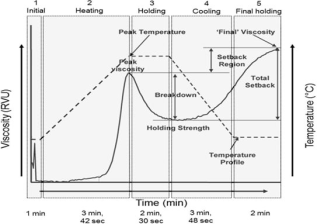
Pasting property is very important to know the flour or starch characteristics of cereal or starchy products during baking (cooking). They are useful to predict the behavior of the flour in the baking process. Pasting properties of starch are the phenomena involving granular cooking, swelling, and total disruption of granules. It has been used to quantify cold swelling of cooked components, a raw component that paste's during the test and overall viscosity that indicates the degree of starch dextrinization . The 15 pasting properties are important indices in predicting the pasting behavior during and after cooking (Richard et al. 1991). The pasting character predicts the processing qualities (cooking temperature and time, thickening ability, temperature, pressure, shear induce viscosity breakdowns, gelling, and retrogradation tendencies over the storage durations) of starch-based raw material food ingredients. The pasting character is fundamentally determined by the starch granule composition and its nature (ultra-structures) and is influenced by the non-starch flour components . To determine these characteristics, it is necessary to use a Rapid Visco Analyzer, which includes pasting temperature, peak, breakdown, trough, setback, and final .
Source: Balet et al., (2019)

Download: Download full-size image

Figure 2. Typical Rapid Visco Analyzer Pasting curve identifying characteristic feature.
6. Conclusions
The use of composite flour technology offers an encouraging means to enhance the nutritional value of bread made from wheat while also increasing the use of locally available and less common crops. Wheat continues to be a crucial ingredient in bread making due to its gluten proteins, which impart essential properties for dough formation and the retention of gases. Refined wheat flour has certain nutritional deficiencies, especially concerning dietary fiber, vitamins and minerals, along with a few vital amino acids. Sweet lupine presents a significant opportunity as a supplementary ingredient owing to its rich protein content, dietary fiber, and advantageous amino acid composition, while Moringa Leaf Powder serves as an important source of protein, vitamins, minerals, carotenoids, and phytochemicals. Mixing these components with wheat flour could potentially lead to bread that has enhanced nutritional benefits. The addition of sweet lupine and Moringa Leaf Powder may alter dough management, water retention, rheological and pasting characteristics, loaf quality, visual appearance, flavor profile, texture, and overall sensory appeal. The temperature and duration of baking are crucial processing variables since they affect moisture evaporation, volume of the loaf, crust formation, gelatinization of starch, coagulation of proteins, and various other physical and chemical transformations that occur while baking. As a result, the ratio of ingredients blended and the conditions under which baking occurs must be carefully regulated to create a nutritionally enhanced product that still maintains the expected technical and sensory attributes of traditional bread.
Abbreviations

(FAO)

Food and Agriculture Organization

MO

Moringa oleifera

(Hs-CRP)

High-sensitivity C-reactive Protein

LDL

(Low-Density Lipoprotein Bad Cholesterol) Level

Acknowledgments
We would like to express our sincere gratitude to the Food and Beverage Industry Research and Development Center for their institutional support, guidance, and valuable contributions toward the successful preparation of this review paper.
Author Contributions
Yodit Fikadu Demissie: Conceptualization, Data curation, Formal Analysis, Investigation, Methodology, Supervision, Validation, Visualization, Writing – original draft, Writing – review & editing
Berhanu Regasa Jima: Conceptualization, Data curation, Formal Analysis, Investigation, Methodology, Supervision, Validation, Visualization, Writing – original draft, Writing – review & editing
Data Availability Statement
The data is available from the corresponding author upon reasonable request.
Conflicts of Interest
The authors declare no conflicts of interest.
References
[1] T. Alemu, W. Woyraw, H. Temesgen, and S. Abate, “Effects of Blending Ratio and Processing of Lupine Bean On Nutritional Quality and Sensory Evaluation of Wheat-Lupine Bread,” 2021.
[2] J. Prusinski, “White lupin (Lupinus albus L.)–nutritional and health values in human nutrition–a review,” Czech J. Food Sci., vol. 35, no. 2, pp. 95–105, 2017.
[3] L. M. Guardianelli, B. Carbas, C. Brites, M. C. Puppo, and M. V Salinas, “White lupine (Lupinus albus L.) flours for healthy wheat breads: rheological properties of dough and the bread quality,” Foods, vol. 12, no. 8, p. 1645, 2023.
[4] A. A. Habtemariam, A. M. Woldetsadik, and A. M. Belay, “Analyze Production, Utilization and Its Future Trends of Lupin in Ethiopia,” Am. J. Plant Sci., vol. 10, no. 10, pp. 1797–1812, 2019. 10.4236/ajps.2019.1010127.
[5] Z. Nigussie, “Contribution of white lupin (Lupinus albus L.) for food security in North-Western Ethiopia: a review,” Asian J. Plant Sci., vol. 11, no. 5, p. 200, 2012.
[6] A. E. Mubarak, “Chemical, nutritional and sensory properties of bread supplemented with lupin seed (Lupinus albus) products,” Food/Nahrung, vol. 45, no. 4, pp. 241–245, 2001.
[7] A. Nudel, R. Cohen, S. Abbo, and Z. Kerem, “Developing a nutrient-rich and functional wheat bread by incorporating Moringa oleifera leaf powder and gluten,” LWT, vol. 187, p. 115343, 2023.
[8] E. Villacrés, P. Cueva, M. Díaz, and C. M. Rosell, “Replacing wheat flour with debittered and fermented lupin: effects on bread’s physical and nutritional features,” Plant Foods Hum. Nutr., vol. 75, no. 4, pp. 569–575, 2020.
[9] C. B. J. Villarino, V. Jayasena, R. Coorey, S. Chakrabarti-Bell, and S. K. Johnson, “Nutritional, health, and technological functionality of lupin flour addition to bread and other baked products: Benefits and challenges,” Crit. Rev. Food Sci. Nutr., vol. 56, no. 5, pp. 835–857, 2016.
[10] A. Weerarathna and M. A. J. Wansapala, “Compatibility of whole wheat-based composite flour in the development of functional foods,” Food Technol. Biotechnol., vol. 62, no. 4, pp. 425–448, 2024.
[11] C. Zörb, U. Ludewig, and M. J. Hawkesford, “Perspective on wheat yield and quality with reduced nitrogen supply,” Trends Plant Sci., vol. 23, no. 11, pp. 1029–1037, 2018.
[12] G. Dong et al., “A brief history of wheat utilization in China,” Front Agr. Sci. Eng, vol. 6, pp. 288–295, 2019.
[13] S. Kaur, S. Jindal, M. Kaur, and P. Chhuneja, “Utilization of wild species for wheat improvement using genomic approaches,” in Biotechnologies of Crop Improvement, Volume 3, Springer, 2018, pp. 105–150.
[14] A. de Oliveira Silva, I. A. Ciampitti, G. A. Slafer, and R. P. Lollato, “Nitrogen utilization efficiency in wheat: A global perspective,” Eur. J. Agron., vol. 114, p. 126008, 2020.
[15] H. Hanson, Wheat in the third world. Routledge, 2021.
[16] R. D. Taylor and W. W. Koo, “2012 Outlook of the US and World Wheat Industries, 2012-2021,” 2012.
[17] H. Gharib, E. Hafez, and A. El Sabagh, “Optimized potential of utilization efficiency and productivity in wheat by integrated chemical nitrogen fertilization and stimulative compounds,” Cercet. Agron. Mold, vol. 49, pp. 5–20, 2016.
[18] B. Kaur, G. S. Mavi, M. S. Gill, and D. K. Saini, “Utilization of KASP technology for wheat improvement,” Cereal Res. Commun., vol. 48, no. 4, pp. 409–421, 2020.
[19] A. A. Inamdar and S. D. Sakhare, “Wheat,” in Whole grains, CRC Press, 2019, pp. 235–255.
[20] S. Afzal, A. Shehzad, M. A. Randhawa, A. Asghar, M. Shoaib, and M. A. Jahangir, “Health benefits and importance of utilizing wheat and rye,” Pakistan J. Food Sci., vol. 23, no. 4, pp. 212–222, 2013.
[21] S. J. Meale and T. A. McAllister, “Grain for feed and energy,” in Triticale, Springer, 2015, pp. 167–187.
[22] M. Takase et al., “An expatiate review of neem, jatropha, rubber and karanja as multipurpose non-edible biodiesel resources and comparison of their fuel, engine and emission properties,” Renew. Sustain. Energy Rev., vol. 43, pp. 495–520, 2015.
[23] A. Pereira, F. Ramos, and A. Sanches Silva, “Lupin (Lupinus albus L.) seeds: balancing the good and the bad and addressing future challenges,” Molecules, vol. 27, no. 23, p. 8557, 2022.
[24] S. Srivastava et al., “Dynamic bioactive properties of nutritional superfood Moringa oleifera: A comprehensive review,” J. Agric. Food Res., vol. 14, p. 100860, 2023
[25] C. K. O. Dzuvor, S. Pan, C. Amanze, P. Amuzu, C. Asakiya, and F. Kubi, “Bioactive components from Moringa oleifera seeds: production, functionalities and applications–a critical review,” Crit. Rev. Biotechnol., vol. 42, no. 2, pp. 271–293, 2022.
[26] T. A. Gebrezihar, Z. Desta, and H. Hagos, “Assessing Factors Affecting Moringa Production at North-western Zone of Tigray, Ethiopia,” Agric. Sci., vol. 2, no. 1, pp. p17–p17, 2020.
[27] W. C. J. Sagona, P. W. Chirwa, and S. M. Sajidu, “The miracle mix of Moringa: Status of Moringa research and development in Malawi,” South African J. Bot., vol. 129, pp. 138–145, 2020.
[28] N. K. Amaglo et al., “Profiling selected phytochemicals and nutrients in different tissues of the multipurpose tree Moringa oleifera L., grown in Ghana,” Food Chem., vol. 122, no. 4, pp. 1047–1054, 2010.
[29] E. Seifu, “Actual and potential applications of Moringa stenopetala, underutilized indigenous vegetable of Southern Ethiopia: a review,” Int. J. Agric. Food Res., vol. 3, no. 4, 2015.
[30] D. B. Kumssa, E. J. M. Joy, S. D. Young, D. W. Odee, E. L. Ander, and M. R. Broadley, “Variation in the mineral element concentration of Moringa oleifera Lam. and M. stenopetala (Bak. f.) Cuf.: Role in human nutrition,” PLoS One, vol. 12, no. 4, p. e0175503, 2017.
[31] A. Dalvand et al., “Comparison of Moringa stenopetala seed extract as a clean coagulant with Alum and Moringa stenopetala-Alum hybrid coagulant to remove direct dye from Textile Wastewater,” Environ. Sci. Pollut. Res., vol. 23, no. 16, pp. 16396–16405, 2016.
[32] H. Abera, M. Abdisa, and A. P. Washe, “Spectrophotometric method to the determination of ascorbic acid in M. stenopetala leaves through catalytic titration with hexavalent chromium and its validation,” Int. J. Food Prop., vol. 23, no. 1, pp. 999–1015, 2020.
[33] A. Manilal et al., “In vitro antibacterial activity of medicinal plants against biofilm-forming methicillin-resistant Staphylococcus aureus: efficacy of Moringa stenopetala and Rosmarinus officinalis extracts,” Heliyon, vol. 6, no. 1, p. e03303, 2020.
[34] E. A. Rani and T. Arumugam, “Moringa oleifera (Lam)–a nutritional powerhouse,” J. Crop Weed, vol. 13, no. 2, pp. 238–246, 2017.
[35] A. Anzano et al., “Moringa oleifera lam.: a phytochemical and pharmacological overview,” Horticulturae, vol. 7, no. 10, p. 409, 2021.
[36] P. Kashyap et al., “Recent advances in drumstick (Moringa oleifera) leaves bioactive compounds: composition, health benefits, bioaccessibility, and dietary applications,” Antioxidants, vol. 11, no. 2, p. 402, 2022.
[37] A. B. Falowo, F. E. Mukumbo, E. M. Idamokoro, J. M. Lorenzo, A. J. Afolayan, and V. Muchenje, “Multi-functional application of Moringa oleifera Lam. in nutrition and animal food products: A review,” Food Res. Int., vol. 106, pp. 317–334, 2018.
[38] E. Elias, P. F. Okoth, and E. M. A. Smaling, “Explaining bread wheat (Triticum aestivum) yield differences by soil properties and fertilizer rates in the highlands of Ethiopia,” Geoderma, vol. 339, pp. 126–133, 2019.
[39] M. Asrat, H. Gebrekidan, M. Yli-Halla, B. Bedadi, and W. Negassa, “Effect of integrated use of lime, manure and mineral P fertilizer on bread wheat (Triticum aestivum) yield, uptake and status of residual soil P on acidic soils of Gozamin District, north-western Ethiopia,” Agric. For. Fish., vol. 3, no. 2, pp. 76–85, 2014.
[40] A. Anteneh and D. Asrat, “Wheat production and marketing in Ethiopia: Review study,” Cogent Food Agric., vol. 6, no. 1, p. 1778893, 2020.
[41] M. Nyffeler and K. Birkhofer, “An estimated 400–800 million tons of prey are annually killed by the global spider community,” Sci. Nat., vol. 104, no. 3, pp. 1–12, 2017.
[42] S. Asseng et al., “Can Egypt become self-sufficient in wheat?,” Environ. Res. Lett., vol. 13, no. 9, p. 94012, 2018.
[43] C. Allen-Sader et al., “An early warning system to predict and mitigate wheat rust diseases in Ethiopia,” Environ. Res. Lett., vol. 14, no. 11, p. 115004, 2019.
[44] T. B. Sapkota et al., “Identifying optimum rates of fertilizer nitrogen application to maximize economic return and minimize nitrous oxide emission from rice–wheat systems in the Indo-Gangetic Plains of India,” Arch. Agron. Soil Sci., vol. 66, no. 14, pp. 2039–2054, 2020.
[45] A. Ayele, T. Erchafo, A. Bashe, and S. Tesfayohannes, “Value chain analysis of wheat in Duna district, Hadiya zone, Southern Ethiopia,” Heliyon, vol. 7, no. 7, p. e07597, 2021.
[46] L. C. Okpala and P. N. Egwu, “Utilisation of broken rice and cocoyam flour blends in the production of biscuits,” Niger. Food J., vol. 33, no. 1, pp. 8–11, 2015.
[47] O. B. Ocheme, O. E. Adedeji, C. E. Chinma, C. M. Yakubu, and U. H. Ajibo, “Proximate composition, functional, and pasting properties of wheat and groundnut protein concentrate flour blends,” Food Sci. Nutr., vol. 6, no. 5, pp. 1173–1178, 2018.
[48] R. Ramanujam, A. Fiocchi, and W. Smith, “Lupin allergy: Is it really a cause for concern?,” Agro Food Ind. Hi. Tech., vol. 27, no. 1, pp. 10–14, 2016.
[49] A. Oumer, P. Yohannes, T. Kassahun, T. Abel, and B. Endashaw, “Inter simple sequence repeat (ISSR) analysis of Ethiopian white lupine (Lupinus albus L.),” African J. Biotechnol., vol. 14, no. 18, pp. 1552–1563, 2015.
[50] H. Azeze, F. Mekbib, Y. Dessalegn, Z. Tadele, and N. Megersa, “Challenges on production and utilization of white lupin (lupinus albus L.) in Ethiopia: a strategic orphan crop,” Am. J. Exp. Agric., vol. 13, no. 4, pp. 1–14, 2016.
[51] L. Yegrem, “Evaluation of nutritional composition and sensory acceptability of tef (Eragrostis Tef (Zucc.) Trotter) complemented with lupine (Lupinus Spp.) injera,” 2019, Haramaya University.
[52] A. Kårlund, C. Gómez-Gallego, J. Korhonen, O.-M. Palo-Oja, H. El-Nezami, and M. Kolehmainen, “Harnessing microbes for sustainable development: Food fermentation as a tool for improving the nutritional quality of alternative protein sources,” Nutrients, vol. 12, no. 4, p. 1020, 2020.
[53] P. Conte, C. Fadda, N. Drabinska, and U. Krupa-Kozak, “Technological and nutritional challenges, and novelty in gluten-free breadmaking: A review,” Polish J. Food Nutr. Sci., vol. 69, no. 1, 2019.
[54] G. M. Solanke, A. Lal, A. G. Samarth, A. A. Lal, and P. Tiwari, “Development and quality evaluation of value added Khakhra using different variety and proportion of flour,” J. Pharmacogn. Phytochem., vol. 7, no. 4, pp. 1778–1781, 2018.
[55] P. R. Shewry and S. J. Hey, “The contribution of wheat to human diet and health,” Food energy Secur., vol. 4, no. 3, pp. 178–202, 2015.
[56] M. H. Sarwar, M. F. Sarwar, M. Sarwar, N. A. Qadri, and S. Moghal, “The importance of cereals (Poaceae: Gramineae) nutrition in human health: A review,” J. Cereal. oilseeds, vol. 4, no. 3, pp. 32–35, 2013.
[57] D. Lafiandra, G. Riccardi, and P. R. Shewry, “Improving cereal grain carbohydrates for diet and health,” J. Cereal Sci., vol. 59, no. 3, pp. 312–326, 2014.
[58] Z. Šramková, E. Gregová, and E. Šturdík, “Chemical composition and nutritional quality of wheat grain,” Acta Chim. slovaca, vol. 2, no. 1, pp. 115–138, 2009.
[59] M. J. Iqbal, N. Shams, and K. Fatima, “Nutritional Quality of Wheat,” in Wheat, IntechOpen, 2022.
[60] N. Caporaso, M. B. Whitworth, and I. D. Fisk, “Protein content prediction in single wheat kernels using hyperspectral imaging,” Food Chem., vol. 240, pp. 32–42, 2018.
[61] L. E. O. Stevenson, F. Phillips, K. O’sullivan, and J. Walton, “Wheat bran: its composition and benefits to health, a European perspective,” Int. J. Food Sci. Nutr., vol. 63, no. 8, pp. 1001–1013, 2012.
[62] M. A. De Santis, O. Kosik, D. Passmore, Z. Flagella, P. R. Shewry, and A. Lovegrove, “Data set of enzyme fingerprinting of dietary fibre components (arabinoxylan and β-glucan) in old and modern Italian durum wheat genotypes,” Data Br., vol. 16, pp. 1062–1068, 2018.
[63] R. A. De Souza, R. J. Tempelman, M. S. Allen, J. K. Bernard, B. Weiss, and M. J. VandeHaar, “1494 Effects of animal and diet characteristics on digestibilities of dry matter, fiber, and starch in lactating cows,” J. Anim. Sci., vol. 94, no. suppl_5, p. 725, 2016.
[64] K. T. Kaczmarska, M. V Chandra-Hioe, D. Frank, and J. Arcot, “Aroma characteristics of lupin and soybean after germination and effect of fermentation on lupin aroma,” LWT, vol. 87, pp. 225–233, 2018.
[65] M. Vogelsang-O’Dwyer et al., “Techno-functional, nutritional and environmental performance of protein isolates from blue lupin and white lupin,” Foods, vol. 9, no. 2, p. 230, 2020.
[66] C. Villa, J. Costa, and I. Mafra, “Lupine allergens: Clinical relevance, molecular characterization, cross‐reactivity, and detection strategies,” Compr. Rev. Food Sci. Food Saf., vol. 19, no. 6, pp. 3886–3915, 2020.
[67] L. Yegrem, S. Abera, and M. Temesgen, “Effects of Blending ratio and lupine variety on the Functional Properties of composite flours and Sensory evaluations of tef-lupine injera,” J. Food Sci. Qual. Manag., vol. 105, pp. 9–16, 2021.
[68] B. Kefale and E. Abrha, “Sweet lupine recipe development and nutritional content of recipe at Holeta, Ethiopia,” J Food Sci Nutr, vol. 4, no. 1, pp. 9–11, 2018.
[69] F. Boukid and A. Pasqualone, “Lupine (Lupinus spp.) proteins: Characteristics, safety and food applications,” Eur. Food Res. Technol., pp. 1–12, 2021.
[70] H. Tizazu and S. A. Emire, “Chemical composition, physicochemical and functional properties of lupin (Lupinus albus) seeds grown in Ethiopia,” African J. Food, Agric. Nutr. Dev., vol. 10, no. 8, 2010.
[71] O. Laaksonen et al., “Impact of lactic acid fermentation on sensory and chemical quality of dairy analogues prepared from lupine (Lupinus angustifolius L.) seeds,” Food Chem., vol. 346, p. 128852, 2021.
[72] U. Nowicka et al., “DNA-damage-inducible 1 protein (Ddi1) contains an uncharacteristic ubiquitin-like domain that binds ubiquitin,” Structure, vol. 23, no. 3, pp. 542–557, 2015.
[73] P. Gulewicz, C. Martínez-Villaluenga, J. Frias, D. Ciesiołka, K. Gulewicz, and C. Vidal-Valverde, “Effect of germination on the protein fraction composition of different lupin seeds,” Food Chem., vol. 107, no. 2, pp. 830–844, 2008.
[74] E. Guillamon et al., “Characterization of lupin major allergens (Lupinus albus L.),” Mol. Nutr. Food Res., vol. 54, no. 11, pp. 1668–1676, 2010.
[75] M. Duranti, A. Consonni, C. Magni, F. Sessa, and A. Scarafoni, “The major proteins of lupin seed: characterisation and molecular properties for use as functional and nutraceutical ingredients,” Trends Food Sci. Technol., vol. 19, no. 12, pp. 624–633, 2008.
[76] P. Singla, S. Sharma, and A. Singh, “Lupine: A Versatile Legume with Enhanced Nutritional Value,” in Handbook of Cereals, Pulses, Roots, and Tubers, CRC Press, 2021, pp. 427–448.
[77] M. K. Khan, W. Karnpanit, S. M. Nasar‐Abbas, Z. Huma, and V. Jayasena, “Development of a fermented product with higher phenolic compounds and lower anti‐nutritional factors from germinated lupin (Lupinus angustifolius L.),” J. Food Process. Preserv., vol. 42, no. 12, p. e13843, 2018.
[78] C. Jiménez‐Martínez, H. Hernández‐Sánchez, G. Alvarez‐Manilla, N. Robledo‐Quintos, J. Martínez‐Herrera, and G. Dávila‐Ortiz, “Effect of aqueous and alkaline thermal treatments on chemical composition and oligosaccharide, alkaloid and tannin contents of Lupinus campestris seeds,” J. Sci. Food Agric., vol. 81, no. 4, pp. 421–428, 2001.
[79] Z. Kohajdova, J. KaroVičoVá, and Š. Schmidt, “Lupin composition and possible use in bakery-a review,” Czech J. Food Sci., vol. 29, no. 3, pp. 203–211, 2011.
[80] C. A. Vipin et al., “Construction of integrated linkage map of a recombinant inbred line population of white lupin (Lupinus albus L.),” Breed. Sci., vol. 63, no. 3, pp. 292–300, 2013.
[81] M. E. Olson, R. P. Sankaran, J. W. Fahey, M. A. Grusak, D. Odee, and W. Nouman, “Leaf protein and mineral concentrations across the ‘Miracle Tree’ genus Moringa,” PLoS One, vol. 11, no. 7, p. e0159782, 2016.
[82] T. Wandersleben et al., “Enhancement of functional and nutritional properties of bread using a mix of natural ingredients from novel varieties of flaxseed and lupine,” LWT, vol. 91, pp. 48–54, 2018. 10.1016/j.lwt.2018.01.029
[83] H. Natsir et al., “Phytochemical and antioxidant analysis of methanol extract of moringa and celery leaves,” in Journal of Physics: conference series, IOP Publishing, 2019, p. 32023.
[84] M. Y. Elgendy et al., “Investigations on the influence of Moringa oleifera on the growth, haematology, immunity and disease resistance in Oreochromis niloticus with special reference to the analysis of antioxidant activities by PAGE electrophoresis,” Aquac. Res., vol. 52, no. 10, pp. 4983–4995, 2021.
[85] A. T. Oyeyinka and S. A. Oyeyinka, “Moringa oleifera as a food fortificant: Recent trends and prospects,” J. Saudi Soc. Agric. Sci., vol. 17, no. 2, pp. 127–136, 2018.
[86] J. L. Rockwood, B. G. Anderson, and D. A. Casamatta, “Potential uses of Moringa oleifera and an examination of antibiotic efficacy conferred by M. oleifera seed and leaf extracts using crude extraction techniques available to underserved indigenous populations,” Int. J. Phyther. Res., vol. 3, no. 2, pp. 61–71, 2013.
[87] J. Singh and P. S. Basu, “Non-nutritive bioactive compounds in pulses and their impact on human health: an overview,” 2012.
[88] I. I. Udousoro, R. U. Ekop, and E. J. Udo, “Effect of thermal processing on antinutrients in common edible green leafy vegetables grown in Ikot Abasi, Nigeria,” Pakistan J. Nutr., vol. 12, no. 2, p. 162, 2013.
[89] B. Kefale, S. W. Fanta, and N. Satheesh, “REVIEW ON NUTRITIONAL, ANTI NUTRITIONAL CONTENT AND EFFECT OF PROCESSING ON ANTI NUTRITIONAL CONTENT OF LUPINE IN ETHIOPIA,” Eur. J. Agric. For. Res., vol. 10, no. 1, pp. 56–81, 2022.
[90] R. Setia, Z. Dai, M. T. Nickerson, E. Sopiwnyk, L. Malcolmson, and Y. Ai, “Impacts of short-term germination on the chemical compositions, technological characteristics and nutritional quality of yellow pea and faba bean flours,” Food Res. Int., vol. 122, pp. 263–272, 2019.
[91] M. Noorfarahzilah, J. S. Lee, M. S. Sharifudin, A. B. Mohd Fadzelly, and M. Hasmadi, “Applications of composite flour in development of food products.,” Int. Food Res. J., vol. 21, no. 6, 2014.
[92] M. L. Wells et al., “Algae as nutritional and functional food sources: revisiting our understanding,” J. Appl. Phycol., vol. 29, no. 2, pp. 949–982, 2017.
[93] B. K. Patel, R. D. Waniska, and K. Seetharaman, “Impact of different baking processes on bread firmness and starch properties in breadcrumb,” J. Cereal Sci., vol. 42, no. 2, pp. 173–184, 2005.
[94] T. A. Shittu, A. O. Raji, and L. O. Sanni, “Bread from composite cassava-wheat flour: I. Effect of baking time and temperature on some physical properties of bread loaf,” Food Res. Int., vol. 40, no. 2, pp. 280–290, 2007.
[95] A. Le-Bail, T. Dessev, J. Keramat, V. Jury, and C. Prost, “Influence of baking conditions on bread characteristics and acrylamide concentration,” J. food Sci. Nutr. Res., 2020.
[96] E. Purlis, “Simple methods to predict the minimum baking time of bread,” Food Control, vol. 104, pp. 217–223, 2019.
[97] M. GHANBARI and M. Shahedi, “The effect of baking time and temperature on taftoon bread staling,” 2008.
[98] S. A. Mir, M. A. Shah, H. R. Naik, and I. A. Zargar, “Influence of hydrocolloids on dough handling and technological properties of gluten-free breads,” Trends Food Sci. Technol., vol. 51, pp. 49–57, 2016.
[99] B. Aaliya, M. Navaf, and K. V. Sunooj, “Dough handling properties of gluten-free breads,” Gluten-free bread Technol., pp. 49–70, 2021.
[100] L. Tebben, Y. Shen, and Y. Li, “Improvers and functional ingredients in whole wheat bread: A review of their effects on dough properties and bread quality,” Trends Food Sci. Technol., vol. 81, pp. 10–24, 2018.
[101] S. A. Mir et al., “Recent advancements in the development of multigrain bread,” Cereal Chem., vol. 100, no. 1, pp. 72–82, 2023.
[102] S. Habtamu, “Addis Ababa Institute of Technology (AAiT) School of Graduate Studies Department of Chemical Engineering,” 2012.
[103] N. Tharise, E. Julianti, and M. Nurminah, “Evaluation of physico-chemical and functional properties of composite flour from cassava, rice, potato, soybean and xanthan gum as alternative of wheat flour.,” Int. Food Res. J., vol. 21, no. 4, 2014.
[104] O. A. Olaoye and B. I. O. Ade-Omowaye, “Composite flours and breads: potential of local crops in developing countries,” in Flour and breads and their fortification in health and disease prevention, Elsevier, 2011, pp. 183–192.
[105] C. J. Rebello, F. L. Greenway, and J. W. Finley, “Whole grains and pulses: A comparison of the nutritional and health benefits,” J. Agric. Food Chem., vol. 62, no. 29, pp. 7029–7049, 2014.
[106] J. Bouchard, M. Malalgoda, J. Storsley, L. Malunga, T. Netticadan, and S. J. Thandapilly, “Health benefits of cereal grain-and pulse-derived proteins,” Molecules, vol. 27, no. 12, p. 3746, 2022.
[107] M. Munteanu, G. Voicu, E. M. Ștefan, G. A. Constantin, L. Popa, and N. Mihailov, “Farinograph characteristics of wheat flour dough and rye flour dough.,” in International Symposium of ISB-INMA TEH. Agricultural and Mechanical Engineering, Bucharest, Romania, 29-31 October 2015, INMA Bucharest, 2015, pp. 645–650.
[108] Y. Wang, D. Compaoré-Sérémé, H. Sawadogo-Lingani, R. Coda, K. Katina, and N. H. Maina, “Influence of dextran synthesized in situ on the rheological, technological and nutritional properties of whole grain pearl millet bread,” Food Chem., vol. 285, pp. 221–230, 2019.
[109] S. Sahlström, A. Bævre, and E. Bråthen, “Impact of starch properties on hearth bread characteristics. II. Purified A-and B-granule fractions,” J. Cereal Sci., vol. 37, no. 3, pp. 285–293, 2003.
[110] Y. Zi et al., “Comparison of starch physicochemical properties of wheat cultivars differing in bread-and noodle-making quality,” Food Hydrocoll., vol. 93, pp. 78–86, 2019.
[111] M. Zhou, K. Robards, M. Glennie-Holmes, and S. Helliwell, “Structure and Pasting Properties of Oat Starch,” Cereal Chem., vol. 75, May 1998,
Cite This Article
  • APA Style

    Demissie, Y. F., Jima, B. R. (2026). Nutritional Quality and Process Parameter of Bread Production from Wheat-Sweet Lupine and Moringa Leaf Powder. Innovation, 7(4), 122-134. https://doi.org/10.11648/j.innov.20260704.12

    Copy | Download

    ACS Style

    Demissie, Y. F.; Jima, B. R. Nutritional Quality and Process Parameter of Bread Production from Wheat-Sweet Lupine and Moringa Leaf Powder. Innovation. 2026, 7(4), 122-134. doi: 10.11648/j.innov.20260704.12

    Copy | Download

    AMA Style

    Demissie YF, Jima BR. Nutritional Quality and Process Parameter of Bread Production from Wheat-Sweet Lupine and Moringa Leaf Powder. Innovation. 2026;7(4):122-134. doi: 10.11648/j.innov.20260704.12

    Copy | Download

  • @article{10.11648/j.innov.20260704.12,
      author = {Yodit Fikadu Demissie and Berhanu Regasa Jima},
      title = {Nutritional Quality and Process Parameter of Bread Production from Wheat-Sweet Lupine and Moringa Leaf Powder},
      journal = {Innovation},
      volume = {7},
      number = {4},
      pages = {122-134},
      doi = {10.11648/j.innov.20260704.12},
      url = {https://doi.org/10.11648/j.innov.20260704.12},
      eprint = {https://article.sciencepublishinggroup.com/pdf/10.11648.j.innov.20260704.12},
      abstract = {Bread ranks among the most commonly consumed baked goods and is primarily made from wheat flour due to its proteins that promote gluten formation, along with favorable properties for dough and baking. Refined wheat flour has certain nutritional drawbacks, such as a lower concentration of specific essential amino acids, along with the loss of dietary fiber and micronutrients during milling processes. The integration of composite flour allows for an enhancement in the nutritional profile of wheat-based baked items by including locally sourced, nutrient-rich crops. This review highlights the potential of creating bread using a mixture of wheat flour with sweet lupine flour and Moringa Leaf Powder. Sweet lupine is a legume abundant in protein, containing around 30-40% protein content, while Moringa Leaf Powder leaves are rich in proteins, minerals, vitamins, carotenoids, and various bioactive substances. The review evaluates the nutritional content and application of wheat, sweet lupine, and Moringa Leaf Powder, alongside the impact of composite flour blends and baking conditions on the quality of bread. Emphasis is placed on the blending ratios, baking temperatures, dough management, farinographic and pasting characteristics, nutritional aspects, anti-nutritional elements, and sensory acceptability. Existing literature points out that the addition of sweet lupine and Moringa Leaf Powder to wheat flour holds promise for increasing the nutritional worth of bread and encouraging the use of locally produced agricultural inputs. However, elevating the ratio of non-wheat ingredients may affect gluten formation, dough characteristics, loaf qualities, color, taste, texture, and general acceptability. Consequently, it is crucial to optimize the blending ratios and baking conditions to find equilibrium between enhancing nutrition and attaining desired bread quality. This review sets the groundwork for further experimental research and the advancement of nutritionally enhanced composite bread utilizing wheat, sweet lupine flour, and Moringa Leaf Powder.},
     year = {2026}
    }
    

    Copy | Download

  • TY  - JOUR
    T1  - Nutritional Quality and Process Parameter of Bread Production from Wheat-Sweet Lupine and Moringa Leaf Powder
    AU  - Yodit Fikadu Demissie
    AU  - Berhanu Regasa Jima
    Y1  - 2026/11/16
    PY  - 2026
    N1  - https://doi.org/10.11648/j.innov.20260704.12
    DO  - 10.11648/j.innov.20260704.12
    T2  - Innovation
    JF  - Innovation
    JO  - Innovation
    SP  - 122
    EP  - 134
    PB  - Science Publishing Group
    SN  - 2994-7138
    UR  - https://doi.org/10.11648/j.innov.20260704.12
    AB  - Bread ranks among the most commonly consumed baked goods and is primarily made from wheat flour due to its proteins that promote gluten formation, along with favorable properties for dough and baking. Refined wheat flour has certain nutritional drawbacks, such as a lower concentration of specific essential amino acids, along with the loss of dietary fiber and micronutrients during milling processes. The integration of composite flour allows for an enhancement in the nutritional profile of wheat-based baked items by including locally sourced, nutrient-rich crops. This review highlights the potential of creating bread using a mixture of wheat flour with sweet lupine flour and Moringa Leaf Powder. Sweet lupine is a legume abundant in protein, containing around 30-40% protein content, while Moringa Leaf Powder leaves are rich in proteins, minerals, vitamins, carotenoids, and various bioactive substances. The review evaluates the nutritional content and application of wheat, sweet lupine, and Moringa Leaf Powder, alongside the impact of composite flour blends and baking conditions on the quality of bread. Emphasis is placed on the blending ratios, baking temperatures, dough management, farinographic and pasting characteristics, nutritional aspects, anti-nutritional elements, and sensory acceptability. Existing literature points out that the addition of sweet lupine and Moringa Leaf Powder to wheat flour holds promise for increasing the nutritional worth of bread and encouraging the use of locally produced agricultural inputs. However, elevating the ratio of non-wheat ingredients may affect gluten formation, dough characteristics, loaf qualities, color, taste, texture, and general acceptability. Consequently, it is crucial to optimize the blending ratios and baking conditions to find equilibrium between enhancing nutrition and attaining desired bread quality. This review sets the groundwork for further experimental research and the advancement of nutritionally enhanced composite bread utilizing wheat, sweet lupine flour, and Moringa Leaf Powder.
    VL  - 7
    IS  - 4
    ER  - 

    Copy | Download

Author Information
  • Food and Beverage Industry Research and Development Center, Manufacturing Industry Development Institute, Addis Ababa, Ethiopia

    Biography: Yodit Fikadu Demissie is currently employed as a r searcher at the Manufacturing Industry Development Institute, specifically at the Food and Beverage Industry Research and Development Center in Addis Ababa, Ethiopia. She has earned her master's degree in Food Safety and Quality from the Faculty of Food and Chemical Engineering at the Bahir Dar Institute of Technology in Bahir Dar, Ethiopia. Miss Yodit is particularly passionate about human nutrition and the enrichment of food items.

  • Food and Beverage Industry Research and Development Center, Manufacturing Industry Development Institute, Addis Ababa, Ethiopia

    Biography: Berhanu Regasa Jima serves as a researcher and desk supervisor at the Manufacturing Industry Development Institute, specifically within the Food and Beverage Industry Research and Development Center located in Addis Ababa, Ethiopia. Mr. Berhanu earned his master's degree in food technology from the Faculty of Food and Chemical Engineering at Bahir Dar Institute of Technology in Bahir Dar, Ethiopia. He has a keen interest in developing food products, ensuring food quality and safety, beverages, and assessing the quality of ethnic and traditional foods.