Research Article | | Peer-Reviewed

Impact of the ALSD II Project on Youth Access to Alternative Learning and Skills Development Centres in Zanzibar

Received: 19 May 2026     Accepted: 1 June 2026     Published: 17 July 2026
Views:       Downloads:
Abstract

This study aimed to evaluate the ALSD II project's contribution to improving the accessibility of alternative learning and skills-development training for the targeted youth in Zanzibar. The study was anchored in the CIPPI evaluation model and employed a mixed method approach under the convergent design. The target population comprised 3,432 participants, including 11 ALSD II institutions, 3,237 youth graduates, 180 trainers, 11 institutional coordinators, and 3 staff members from Civil Society Organizations serving as community representatives. The study used total population sampling for the institutions, stratified proportionate sampling for 324 youth graduates and 54 trainers, and total population sampling for three (3) Civil Society Organisation staff to select the sample. Data collection involved questionnaires for quantitative data and interview guides, document analysis, and observation guides for qualitative data. Instrument validity was ensured through expert review by the Department of Psychology and Curriculum Studies at Mwenge Catholic University. A pilot study was conducted with a sample size of 10% of the target population. The reliability of the questionnaires with Likert-type items was confirmed using Cronbach’s Alpha, yielding coefficients of 0.906 for youth and 0.769 for trainers. The trustworthiness of the qualitative data was ensured through triangulation and member checking. Quantitative data were analysed using descriptive statistics, and qualitative data were analysed using thematic analysis. Ethically, clearance letters, research permits, informed consent, confidentiality, anonymity, and proper referencing were strictly observed. Findings show that the ALSD II Project improved access to training centres through increased community awareness, improved infrastructure, strategic placement of centres, flexible entry requirements, and community sensitisation. These factors contributed to increased enrolment and completion rates. However, persistent barriers were identified, including dropout cases, limited disability inclusion, and inadequate financial support, which affected equitable access among vulnerable youth groups. In conclusion, the ALSD II project has enhanced access to Alternative Learning and Skills Development Centres among targeted youth in Zanzibar, with challenges like infrastructure, financial issues, and persistent dropout recorded in every centre. The study recommends that ALSD centres establish robust mechanisms to prevent youth dropout, while the MoEVT should strengthen disability-inclusive infrastructure to improve the equitable distribution and standardisation of access strategies for all targeted youth.

Published in International Journal of Vocational Education and Training Research (Volume 12, Issue 2)
DOI 10.11648/j.ijvetr.20261202.12
Page(s) 40-51
Creative Commons

This is an Open Access article, distributed under the terms of the Creative Commons Attribution 4.0 International License (http://creativecommons.org/licenses/by/4.0/), which permits unrestricted use, distribution and reproduction in any medium or format, provided the original work is properly cited.

Copyright

Copyright © The Author(s), 2026. Published by Science Publishing Group

Keywords

Accessibility, Alternative Learning, Skills Development Centres, Targeted Youth, Youth Empowerment

1. Introduction
Improving access to alternative learning and skills development centres has emerged as a critical priority in addressing youth exclusion from education and training systems. Globally, a substantial proportion of young people remain unable to participate in formal education due to poverty, early school leaving, pregnancy, disability, and other forms of social marginalization, necessitating the expansion of alternative learning pathways Accessibility, in this context, extends beyond the mere physical presence of institutions to include the affordability of programs, flexibility in entry requirements, inclusiveness of marginalised groups, and awareness among targeted populations Limited access to such centers perpetuates educational inequality and constrains youth participation in lifelong learning and skills acquisition Consequently, alternative learning initiatives have increasingly prioritised accessibility through decentralised delivery models and reduced institutional barriers . Organisations such as UNESCO and the International Labour Organisation advocate for non-formal education approaches that emphasise community-based delivery, flexible scheduling, and inclusive admission criteria to enhance accessibility .
Besides, rapid population growth and high levels of youth unemployment have intensified demand for alternative learning opportunities, while existing facilities remain insufficient to meet this demand . The African Union recognises that many young people are excluded from education and training due to rigid program structures and limited physical access to learning centres . In response, continental frameworks, such as the Continental Education Strategy for Africa (CESA 16–25), emphasise the expansion of decentralised and inclusive learning systems to improve accessibility . These regional commitments underscore the importance of evaluating interventions designed to expand access to alternative learning opportunities. Consequently, governments in the region have adopted non-formal education initiatives to reduce barriers to entry and expand training opportunities for marginalised communities . Beside, the commitments made through the 2022 Transforming Education Summit and complementary African educational initiatives highlight the need to improve equitable access to Alternative Learning and Skills Development (ALSD) centres, enabling disadvantaged youth to develop the knowledge, practical skills, and digital competencies required to succeed in an increasingly dynamic and post-pandemic environment
In Tanzania, national education and development policies recognise the expansion of access to alternative learning and skills development centres as a key strategy for promoting inclusive education. Policy frameworks such as the Tanzania Development Vision 2025 and the National Strategy for Growth and Reduction of Poverty emphasise alternative pathways to reach youth excluded from formal schooling systems . Initiatives, including the Integrated Post-Primary Education (IPPE), the Integrated Program for Out-of-School Adolescents (IPOSA), and the Complementary Basic Education (COBET), were introduced to expand access for marginalised youth . However, existing evidence indicates that these programs continue to face challenges, including inadequate infrastructure, limited availability of centres, and low participation rates, particularly in rural and disadvantaged communities . These limitations suggest that improving accessibility remains an unresolved policy concern within the Tanzanian context.
In Zanzibar, access to Alternative Learning and Skills Development (ALSD) centres has historically been limited due to socio-economic constraints, high school dropout rates, and insufficient training facilities. The Revolutionary Government of Zanzibar acknowledged that the distribution and capacity of learning centers were inadequate to meet the needs of out-of-school and unemployed youth . In response, the Alternative Learning and Skills Development Project Phase I (ALSD I) was implemented in 2009 to expand access to non-formal education and vocational training. However, the project achieved limited coverage, reaching only a small proportion of the intended beneficiaries due to infrastructural and resource constraints . This outcome demonstrated the need for a more comprehensive intervention with a stronger focus on accessibility.
Despite these efforts, empirical studies reveal that limited center coverage, inadequate infrastructure, and weak community outreach continue to restrict youth participation . Furthermore, low levels of awareness regarding available programs remain a significant barrier to access among targeted populations . These challenges highlight the need for interventions that explicitly prioritize accessibility as a central program objective. Thus, the Alternative Learning and Skills Development Project Phase II (ALSD II), implemented from 2011 to 2020, was designed to address the accessibility limitations identified in the first phase. The project focused on establishing and rehabilitating training centres, equipping institutions with relevant learning materials, and expanding programme coverage across Zanzibar . In addition, ALSD II prioritized inclusiveness by targeting marginalized youth groups, including school dropouts, unemployed youth, and young mothers, through flexible admission policies and community-based outreach strategies . By decentralizing service delivery and strengthening institutional capacity, the project aimed to reduce physical, financial, and social barriers to access . These interventions positioned accessibility as a central pillar of the ALSD II framework.
Despite these efforts, evidence regarding the effectiveness of ALSD II in improving accessibility remains limited. While project reports documented increased enrolment and the expansion of training centres during implementation, there is insufficient empirical evidence on the extent to which these improvements translated into sustained access for targeted youth following the project's completion in 2020. The absence of rigorous impact evaluation focusing specifically on accessibility outcomes creates a critical knowledge gap in understanding the project’s contribution to expanding learning opportunities. Against this background, the present study evaluates the contribution of the Alternative Learning and Skills Development Project Phase II (ALSD II) to improving accessibility to alternative learning and skills development centres among targeted youth in Zanzibar. By examining changes in access in terms of centre availability, inclusiveness, and participation, the study provides empirical insights into the effectiveness of accessibility-oriented interventions in non-formal education systems.
2. Purpose of Evaluation
This evaluation assessed how the Alternative Learning and Skills Development Project Phase II (ALSD II) has enhanced the improvement to the access to Alternative Learning and Skills Development Centres among targeted youth in Zanzibar. This evaluation was necessitated by persistent disparities in access to non-formal education and skills training opportunities, particularly among marginalised groups such as school dropouts, young mothers, and unemployed youth, despite the implementation of ALSD II between 2011 and 2020 . In addition, evidence from Zanzibar indicates inconsistencies between project outputs and post-project accessibility outcomes, whereby enrolment in ALSD centres increased to 1,591 youths in 2020 during the final phase of implementation but declined to 1,365 in 2021, representing a 14.2 per cent reduction one year after project completion . This trend contrasts with ALSD II progress reports, which documented improvements in centre expansion, infrastructure development, and programme coverage to enhance access . Similarly, the project completion report noted gains in institutional capacity and training provision but provided limited evidence on sustained accessibility in terms of participation, inclusiveness, and continued engagement of targeted youth . Therefore, these gaps underscore the need for a current impact evaluation to generate empirical evidence on how ALSD II has enhanced access to ALSD learning centres in Zanzibar.
3. Evaluation Question
How has the ALSD II project enhanced to the improvement of accessibility to Alternative Learning and Skills Development Centres among the targeted youth in Zanzibar?
4. Significance of the Evaluation
The study provided the Revolutionary Government of Zanzibar, through the Ministry of Education and Vocational Training, with evidence that the ALSD II has improved access to alternative learning and Skills Development centres. Using the CIPPI (Context, Input, Process, Product, and Impact) evaluation model, the study shows how accessibility-focused interventions translate into measurable improvements in participation, inclusiveness, and reduced barriers to learning. The findings also align with key national policy frameworks, including the Education and Training Policy (ETP) of 2014 revised in 2023, the National Strategy for Growth and Reduction of Poverty (NSGRP), Zanzibar Strategy for Growth and Reduction of Poverty (ZSGRP III), and Zanzibar Vision 2050, all of which emphasise equitable access to education, skills development, and youth empowerment .
5. Literature Review
The reviewed empirical studies focused on accessibility to alternative learning and skills development programmes globally, in Africa, and in Tanzania, highlighting issues of access, inclusiveness, programme design, and knowledge gaps. in Taiwan evaluated alternative education programmes for school dropouts and revealed diverse learner needs, yet focused mainly on programme administrators, limiting understanding of actual youth access experiences. Gutierrez and Ting (2025) in the Philippines demonstrated that vocational training and family support improved access for young adults with disabilities, but their focus on disability groups restricted broader applicability to general youth populations. in Zambia reported that alternative learning programmes improved access and equity through flexible delivery and relevant curricula, although sustainability challenges such as funding and policy gaps limited long-term accessibility outcomes. According to who conducted a quantitative study in the Sultan Kudarat Division, Philippines, found that the Alternative Learning System (ALS) programme was effectively implemented, with strong attainment of life and literacy skills, well-evidenced implementation processes, and successful learner outcomes reflected in high A&E pass rates, while recommending strengthened curriculum review, funding, resources, teacher training, and infrastructure to further improve delivery. in Tanzania showed that stakeholder support improved access for adolescent mothers returning to alternative education, yet the study focused narrowly on a single vulnerable group, excluding other categories of out-of-school and unemployed youth. The literature revealed the impact of alternative learning and skills development programs and projects on enhancing youth access to the centres, while also highlighting challenges. Methodologically, they mostly relied on a single-method approach, with a contextual gap addressed in Zanzibar. Besides, since its completion in 2020, no study has been conducted to confirm the project’s impact on enhancing youth in Zanzibar's access to alternative learning opportunities.
6. Methodology
The study employed a convergent mixed-methods design, in which quantitative and qualitative datasets were collected concurrently, analysed separately, and then integrated to confirm the findings, as explained by . The target population comprised 3,432 participants, including 11 ALSD II institutions, 3,237 youth graduates, 180 trainers, 11 institutional coordinators, and 3 Civil Society Organisations staff serving as community representatives. The study used total population sampling for the institutions, stratified proportionate sampling for 324 youth graduates and 54 trainers, and total population sampling for three (3) Civil Society Organisation staff to select the sample. Data were collected through questionnaires administered to youth and trainers, interviews with institutional coordinators and Civil Society Organisation staff, and document analysis and observation. All instruments were validated by experts from the Faculty of Education at MWECAU to ensure relevance, clarity, and alignment with the study's objective, with a focus on accessibility. A pilot study was conducted with 10% of the target population to refine the instruments. The reliability of the questionnaires was estimated using Cronbach’s Alpha, yielding values of 0.906 for youth and 0.769 for trainers, indicating acceptable reliability . Trustworthiness of qualitative data was ensured through triangulation, member checking, and intercoder agreement. Quantitative data were analysed using descriptive statistics with SPSS version 27, including frequencies, percentages, and means, while qualitative data from interviews, document analysis, and observations were analysed thematically through familiarisation, coding, theme generation, theme review, theme definition and naming, and final interpretation . Ethical considerations were observed through research clearance, informed consent, confidentiality, anonymity, and proper acknowledgement of data sources.
7. Findings of the Study
This section presents an evaluation of youth access to ALSD II training in Zanzibar, which aims to expand access to skills-training infrastructure, promote inclusive and gender-responsive participation, and serve as the basis for the accessibility assessment. The evaluation focused on indicators such as the construction and rehabilitation of Skills Development Centres (SDCs) and Alternative Learning Centres (ALCs), community sensitisation, and increased youth participation. To operationalize these indicators, data were collected on awareness of training opportunities; the location and adequacy of training centers; entry and age requirements; financial support; training schedules; admission processes; and community participation, capturing both structural and practical factors affecting access.
To quantify the project enhancement, accessibility indicators were measured using a five-point Likert scale, where respondents expressed their level of agreement with statements about training availability and participation: 1 = Strongly Disagree (SD), 2 = Disagree (D), 3 = Undecided (U), 4 = Agree (A), and 5 = Strongly Agree (SA). The scale was interpreted by Ongoro and Mwangoka (2019), where a mean score of 1.00–1.69 indicates very limited improvement, 1.70–2.49 limited improvement, 2.50–3.29 moderate improvement, 3.30–4.19 high improvement, and 4.20–5.00 very great improvement. To complement this, percentage-based responses were analysed to reflect the share of youth who reported different levels of access to training opportunities. Adapted classification of classification, ≤19% represents an extreme minority of youth accessing training, 20–39% a minority, 40–59% a moderate share, 60–79% a majority, 80–100% a very high majority. A summary of the data on accessibility is in Table 1.
Table 1. Trainer and Youth Responses on the improvement of the accessibility to alternative learning and skills development training among targeted youth in Zanzibar (Trainers (T) n=51, Youth (Y) n=217).

Item

SD

DA

UD

A

SA

Mean

F

%

F

%

F

%

F

%

F

%

i. The ALSD II project raised youth awareness of available alternative learning and training opportunities.

T

1

2

0

0

6

11.8

29

56.9

15

29.3

4.12

Y

0

0

4

1.8

4

1.8

82

37.7

127

58.5

4.53

ii. The location of ALSD II centres made it easier for youth to access training.

T

0

0

2

3.9

5

9.8

27

52.9

17

33.3

4.16

Y

0

0

1

0.5

6

2.8

114

52.5

96

44.2

4.41

iii. Infrastructure constructed or rehabilitated through ALSD II improved youth access to training.

T

2

4

1

2

6

12

29

56.8

13

26

3.98

Y

1

0.5

1

0.5

2

0.9

120

55.3

93

42.9

4.40

iv. Financial support provided under ALSD II enabled youth to participate in training.

T

1

2

2

3.9

11

21.6

24

47.1

13

25.5

3.90

Y

3

1.4

3

1.4

14

6.5

106

48.8

91

41.9

4.29

v. Entry qualification requirements under ALSD II widen an opportunity for youth to enrol.

T

1

2

1

2

8

15.7

15

29.4

26

51

4.25

Y

1

0.5

2

0.9

3

1.4

107

49.3

104

47.9

4.43

vi. Age eligibility conditions under ALSD II helped youth access training centres.

T

1

2

0

0

7

14

18

36

25

48

4.28

Y

5

2.3

2

0.9

7

3.2

102

47

101

46.5

4.35

vii. Accessibility improvements for youth with disabilities under ALSD II enhanced their participation.

T

14

27.5

5

9.8

8

15.7

16

31.4

8

15.7

2.98

Y

38

17.5

19

8.8

9

4.1

81

37.3

70

32.3

3.58

viii. The training schedule designed under ALSD II raised youth participation.

T

3

5.9

0

0

5

9.8

21

41.2

22

43.1

4.16

Y

0

0

2

0.9

16

7.4

105

48.3

94

43.5

4.34

ix. The admission process under ALSD II motivated youth to join training programmes.

T

0

0

3

5.9

7

13.7

16

31.4

25

49

4.24

Y

0

0

4

1.8

8

3.7

96

44.2

109

50.2

4.43

x. Community participation promoted through ALSD II improved youth access to training centres.

T

0

0

0

0

5

10

18

36

28

54.9

4.44

Y

0

0

0

0

11

5.1

81

37.3

125

57.6

4.53

Grand Mean

T

4.05

Y

4.32

Source: Field Data (2025)
Data in Table 1 shows that a very high majority of trainers (86.2%) and youth (96.3%) agreed or strongly agreed that the ALSD II project effectively raised awareness among targeted youth regarding available training opportunities. In contrast, an extremely minority of trainers (2.0%) and youth (1.9%) disagreed, while an extremely minority (11.8%) of trainers and (1.9%) of youth remained undecided. The mean scores of 4.12 for trainers and 4.53 for youth indicate great and very high improvement, respectively. This suggests that the project was largely successful in raising awareness within the community and ensuring that youth are well-informed about training opportunities, a crucial first step toward participation in skills development programs. The relatively higher mean score among youth indicates that the awareness strategies reached the intended beneficiaries more effectively than trainers perceived. The minority who disagreed or were undecided reflect localised communication barriers, such as limited outreach in specific communities or information not reaching all potential trainees. During a face-to-face interview with the Institutional Coordinator, IC3 explained:
The ALSD II project has played a big role in reaching out to youth who were previously unaware of training opportunities. Many young people in my area learned about courses through community meetings and posters, and some even joined after hearing directly from project staff. (IC3 Interview, 14 April 2025).
Institutional Coordinator 5 argued:
I agree that the project raised awareness to a good extent, especially in towns and areas near the training centres. Youth there could easily access details about what was being offered and how to apply. Still, the challenge is consistency. (IC5 Interview, 15 April 2025).
The responses from the institutional coordinators indicate that the ALSD II project successfully raised awareness among many of the targeted youth, especially in areas near training centres. IC1 emphasised that although the awareness strategies used in ALSD II raised awareness more than it was before the project, remote communities often remained disadvantaged. Together, their views suggest that the project’s awareness campaigns were valuable but uneven, with effectiveness varying by location and communication channels. The findings align with , who reported that the ALS Informal Education Project successfully raised awareness among its target population, enabling teachers and learners to access training and transfer life skills. Furthermore, the findings are consistent with the CIPPI evaluation model, particularly at the input level, as the awareness created about training opportunities reflects the project’s responsiveness to learners’ needs and the external environment where barriers to access often originate. This implies that ALSD II has enhanced awareness among the unemployed and out-of-school youth and thereby enhancing to the fulfilment of ALSD II project objective one: expanding access to alternative learning and skills development opportunities.
Data in Table 1 reveal that a very high majority of trainers (86.2%) and youth (96.7%) agreed or strongly agreed that the location of the ALSD II centers facilitated youth access to training. In contrast, only a very small minority of trainers (3.9%) and youth (0.5%) disagreed, while a very small minority of trainers (9.8%) and youth (2.8%) remained undecided. The mean scores of 4.16 for trainers and 4.41 for youth indicate the remarkable impact of the ALSD II location on the accessibility to training opportunities. These results suggest that the geographical positioning of ALSD II centres effectively reduced location-related barriers, making it easier for youth to attend training programs. The slightly higher mean score among youth than among trainers indicates that beneficiaries themselves perceived the centres as more accessible than trainers did. The low proportion of respondents who disagreed or were undecided indicates challenges in specific areas, such as transport limitations or distance for some communities. When asked about the location of the ALSD II centres, the CSOS 1 shared this perspective:
In our community, many young people found it easier to attend training because the centres were established close to where they live. Parents appreciated that their children did not have to travel long distances, which reduced safety concerns, especially for girls. The accessibility of the centres encouraged families to allow their children to enrol. (CSOS1, Interview, 14 May 2025).
CSOS 3 expanded on this point by saying:
“From my experience in community mobilisation, the placement of the ALSD II centres was very strategic and contributed to increased youth participation. The centres were established within or close to the communities, which made it easier for many young people, including those who would have otherwise been excluded, to access training opportunities” (CSOS3, Interview, 13 May 2025).
The responses from the CSOSs reinforce the view that the strategic placement of ALSD II centers enhanced access to training opportunities for youth across Zanzibar. CSOS1 emphasized that locating centers within communities reduced travel distances and improved safety, encouraging parental support for enrolment, especially for girls. CSOS3 further highlighted that the proximity of centers enabled wider participation, including youth who would otherwise have been excluded due to distance and accessibility barriers. Hence, the proximity analysis suggests that most ALSD II training centers in Zanzibar are located within 0.4-1.0 km of public transport routes, indicating relatively good accessibility for youth who rely on public transport. Centers such as Mwanakwerekwe, Mkokotoni, and Rahaleo are particularly close to transport hubs, which may facilitate higher participation and attendance. In contrast, Karume Institute of Science and Technology (1.5 km) and Vitongoji Vocational Training Centre (1.2 km) are comparatively farther from main transport points, which may require learners to walk longer distances or rely on secondary transport options. The findings further fill the gap reported by Bahati and Pallangyo (2024), who highlighted that the geographical proximity of training centres strongly influenced participation, with youth in closer proximity reporting easier access than those in distant areas. In Zanzibar, the location of these centres facilitated easy access for out-of-school and unemployed youth.
Data in Table 1 indicate that a very high majority of trainers (82.0%) and youth (98.2%) agreed or strongly agreed that infrastructure developed or upgraded under the ALSD II project improved youth access to training. In contrast, a very small minority of trainers (6.0%) and youth (1.0%) disagreed, while a very small minority of trainers (12.0%) and youth (0.9%) remained undecided. The mean scores of 3.98 for trainers and 4.40 for youth demonstrate high and very high levels of improvement, respectively. The notably higher rating from youth compared to trainers suggests that beneficiaries experienced the benefits of these improvements more directly, particularly in terms of usability and convenience. The minority of respondents who disagreed or were undecided reflects cases in which infrastructure gaps persisted, or facility quality varied across centres. In an interview held with the Institutional Coordinator, IC4 remarked:
The infrastructure upgrades introduced through the ALSD II project significantly boosted youth enrolment in training programs. Renovated classrooms and well-equipped workshops created a learning environment that was both attractive and functional. Many young people who were initially reluctant to participate felt motivated when they saw modern facilities (IC4 Interview, 23 April 2025).
On the other hand, Institutional Coordinator 11 commented that;
These centers have expended and opportunity to enroll more students compared to the ALSD I which was more concerned in only one center. However, number of youth in need of the training has increased and thus we arrange morning and evening shift. (IC11, Interview, 11th June 2025).
The responses from institutional coordinators highlight that the ALSD II project’s infrastructure upgrades created more conducive learning environments and encouraged youth participation in training programs. Together, their reflections suggest that infrastructure development under the project facilitated youth access but did not fully resolve barriers for all learners. The findings resonate with those by , who emphasised that outdated and inadequate training facilities, such as poorly equipped workshops and limited teaching tools, constrained students’ skill acquisition, while improved infrastructure and modernised equipment significantly enhanced both access and the quality of training provided. Thus, confirm the relevance of the ALSD II Impact level to the CIPPI evaluation model.
Data in Table 1 show that the majority of trainers (47.1%) and a majority of youth (69.6%) agreed or strongly agreed that the accessibility improvements made by the ALSD II project enhanced the ability of youth with disabilities to access ALSD centres and acquire training more than before the project. An extremely small minority of trainers (15.9%) and youth (4.1%) remained undecided, while a minority (37.3%) of trainers and (26.3%) of youth disagreed or strongly disagreed that the ALSD II improved the access of youth with disabilities to training. The mean scores of 2.98 for trainers and 3.58 for youth reflect moderate and great improvement by the ALSD institution in helping youth with disabilities access training. This indicates that the ALSD II project has not fully improved accessibility to training among youth with disabilities. Engaging youth with disabilities by providing ramps, braille, and interpreters was crucial to expanding their access to opportunities. However, a lower mean score among trainers and a moderate mean score among youth suggest that not all centres were sufficiently improved to enable such youth to access the training. During a face-to-face interview with a Civil Society Organisation staff member 1, they had this to say:
Efforts were made to support youth with disabilities by providing ramps, interpretation services, and adapted seating in several training centres. These changes gave confidence to both learners and their families, showing that their needs were considered. However, the arrangements were not always consistent. In some venues, the ramps were not available or interpreters were missing, and this discouraged attendanc (CSOS1 Interview, 14 May 2025).
Similarly, CSOS3 noted:
Based on what we observed during community mobilisation, some centres were improved to support youth with physical disabilities, such as having ramps and even lifts to access upper floors. These facilities made the environment more inclusive. However, other forms of disability were not fully considered in many centres, which shows that accessibility improvements were not comprehensive across the ALSD II project (CSOS3, Interview, 13 May 2026).
This is however contrary to the comment made by Institutional Coordinator 11 who said that;
There is no friend environment for disable youth to attend lesson in the second floor because as you see the center has no elevator no ramp. So it is very difficult for them when they come we advise to look for other centers where they can be easiliy accommodated (IC11 Interview, 11th June, 2025).
To confirm with this the IC10 also make a highlight that,
in our center youth with the disability have not fully accommodated because we don’t have trainers with knowledge or at least experiences to deal with such children. So sometime is a problem but we don’t chase them away when they come, they struggle and some finished. (IC10, 12th June 2025).
The responses from Civil Society Organisation staff highlight a noticeable improvement in access to training for youth with disabilities under the ALSD II project. However, the findings also reveal that these improvements remain uneven across centres, as noted by IC10 and IC11. This inconsistency reduces the intervention's overall effectiveness in fully ensuring inclusive participation. As a result, barriers to participation still exist, which continue to affect the development of employability skills among youth with disabilities. The findings align with Gutierrez and Ting (2025), who emphasise that vocational training combined with adequate support systems enhances access for persons with disabilities. Similarly, argues that inclusive skills development contributes to equitable participation when marginalised groups are fully integrated into training systems. These findings confirm the Impact component of the CIPPI model, showing that ALSD II contributed to improved accessibility for youth with disabilities, but not in a fully consistent or equitable manner across all centres. Overall, the evidence indicates that while ALSD II made meaningful contributions to improving accessibility for youth with disabilities, inconsistencies in infrastructure, training capacity, and support services limited full and equitable access. This suggests that although the project enhanced positively to accessibility outcomes, sustained and standardised inclusive measures are required to ensure universal participation across all ALSD II centres.
Data in Table 1 reveal that a very high majority of trainers (80.4%) and an extremely high majority of youth (97.2%) agreed or strongly agreed that the entry requirements set under the ALSD II project facilitated youth enrolment in training programs. In contrast, only an extremely small minority of trainers (4.0%) and youth (1.4%) disagreed, while 15.7% of trainers and 1.4% of youth were undecided. The mean scores of 4.25 for trainers and 4.43 for youth indicate high and very high levels of accessibility, respectively. This suggests that the admission criteria adopted by ALSD II were flexible and inclusive enough to enable a large number of youths to participate in the program. The stronger agreement among youth compared to trainers indicates that beneficiaries directly experienced the positive effects of simplified or supportive entry qualifications. The minority of respondents who disagreed or remained undecided reflects isolated cases in which entry conditions still posed challenges for certain groups, such as those with lower educational attainment. Overall, the evidence emphasises that appropriate entry qualifications are a critical factor in broadening access to skills training opportunities for marginalised youth. During a discussion with the Civil Society Organisation Staffs, it was explained:
The entry requirements of the ALSD II project were generally fair for many of our youth. They allowed those who had dropped out of school but still wanted to learn practical skills. Because the program focused more on ability and interest rather than high academic qualifications, several young people in our area were encouraged to enrol. (CSOS 1 Interview, 14 May 2025).
In a follow-up interview with Institution Coordinator 6, he reflected:
From my observation, the reduced entry requirements indeed boosted enrolment at our centre. Many young people joined because they realised they did not need advanced certificates to take part in training. This inclusiveness was a strong motivation. At the same time, we also noticed that some entrants came with very limited educational backgrounds. (IC6, Interview 07 May, 2025).
The responses from the Civil Society Organisation and Institutional Coordinators highlight that the simplified entry requirements under ALSD II broadened access and encouraged many marginalised youths to join training programs. Taken together, their reflections suggest that while the project’s entry requirements lowered traditional barriers and increased participation, the approach was not sufficient to address the diverse learning needs of all enrollees. The findings are consistent with those of , who found that learners with higher prior academic qualifications tended to perform better in vocational training courses and were more likely to progress to higher levels of study. The findings confirm the Input level of the CIPPI evaluation model, specifically in identifying potential youth to join these training centres, thereby contributing to the achievement of the expected outcomes of enhancing youth with the required skills to secure employment. This means that the ALSD II project successfully lowered traditional barriers to entry, broadening access for marginalised youth and enhancing participation. However, further interventions are needed to ensure that all enrolees, regardless of prior education, can fully benefit from the training opportunities.
The overall grand mean scores (T = 4.05; Y = 4.32) indicate a high-to-very high level of improvement in accessibility to Alternative Learning and Skills Development Centres among targeted youth in Zanzibar, resulting from the ALSD II project. This suggests that the project substantially contributed to improving access through enhanced awareness of training opportunities, strategic location of centres, improved infrastructure, flexible entry requirements, supportive admission processes, community participation, and financial support mechanisms. The slightly higher mean score among youth than among trainers suggests that beneficiaries experienced accessibility improvements more strongly than implementers perceived them. However, despite the generally positive assessment, some indicators, particularly those related to disability inclusion and financial support, record comparatively lower mean values, indicating that certain accessibility barriers persisted in specific areas and groups.
Moreover, analysis of admission record books from seven ALSD institutions shows that the project’s influence on access to Alternative Learning and Skills Development (ALSD) training was examined by comparing the implementation period (2014/15–2019/20) with the post-project period (2020/21–2023/24). This comparison focused on assessing how ALSD II interventions affected youth access to training, including enrolment, participation, gender inclusiveness, graduation, and dropout trends (see Table 2).
Table 2. Trends of ALSD II Project Enrolment, Graduation, and Dropout During the Project Life-Cycle.

Year

Total Enrolled

Total Graduated

Total Dropout

Graduation Rate (%)

2013/2014

470

429

41

91.28

2014/2015

500

448

52

89.60

2015/2016

502

451

51

89.84

2016/2017

452

422

30

93.36

2017/2018

400

344

56

86.00

2018/2019

560

460

100

82.14

2019/2020

813

616

197

75.77

Grand Total

3,697

3,170

527

85.75

Source: Field Data, 2025
The findings from Table 2 provide strong evidence that the Alternative Learning and Skills Development (ALSD II) Project positively contributed to enhancing youth access to, retention in, and completion of training programmes in Zanzibar. The increase in enrolment from 470 learners in 2013/2014 to 813 learners in 2019/2020 indicates improved accessibility to alternative learning and skills development centres, enabling more previously excluded youth to participate in training opportunities. Similarly, the relatively high graduation rates recorded in most years, particularly the peak of 93.36% in 2016/2017, demonstrate the project’s effectiveness in supporting learner retention and successful programme completion through interventions such as awareness creation, institutional support, and expanded training opportunities. Although graduation rates declined in later years, alongside increased dropout rates, the overall findings suggest that the project achieved substantial progress in widening educational participation and improving training outcomes. Furthermore, the total number of 3,697 sensitised beneficiaries exceeded the project target of 2,500 by the end of implementation , which, from the CIPPI model Product component perspective, reflects measurable achievement of intended outputs and confirms that the ALSD II project enhanced youth access to training opportunities in Zanzibar, thereby fulfilling objectives one and four of the project.
Supported by the Tracer Study report of 2025, data show that, over a four-year period since the ALSD II project was completed, there has been a significant improvement in access to alternative learning and skills development opportunities, as indicated in Table 3.
Table 3. Tracer Study Enrolment And Graduates Youth After The ALSD II Project Has Been Completed.

Year

Enrolment

Graduation

Drop out No.

Graduate %

Male

Female

Total

Male

Female

Total

2020/2021

210

382

592

194

331

525

67

88.6

2021/2022

268

365

633

217

275

492

141

77.7

2022/2023

337

450

787

300

413

713

74

90.5

2023/2024

309

518

827

285

435

720

107

87.0

Total

1124

1715

2839

996

1454

2450

389

86.2

Source: RoGZ (2025) Graduate Tracer Study, Final Report, Zanzibar
Table 3 shows a consistent improvement in enrolment and graduation rates for youth in Alternative Learning and Skills Development institutions after the completion of the ALSD II project. Enrolment increased steadily from 592 in 2020/2021 to 827 in 2023/2024, while the number of graduates also rose from 525 to 720 over the same period, showing sustained access to training opportunities. Overall, 2,839 youth were enrolled, 2,450 graduated, for a 86.2% completion rate, while only 389 dropped out. The high proportion of graduates over the four years confirms improved access to and retention of youth in alternative learning and skills development programmes in Zanzibar following the ALSD II project.
The evidence from the students' admission books available at the ALSD Institutions provided insight into the enrolment of youth before and after the completion of the project, as indicated in Table 4.
Table 4. The Comparison of Accessibility Trend during and after the ALSD II Project.

Indicator

During Project (2013/14–2019/20)

After Project (2020/21–2023/24)

Impact on Accessibility

Total Enrolment

3,697

2,839

Improved access; enrolment remained strong post-project

Average Annual Enrolment

528

710

Increased annual participation levels

Female Enrolment (%)

41.8%

38.6%

Slight gender shift; still strong female participation

Male Enrolment (%)

58.2%

61.4%

Increased male engagement

Total Graduates

3,327

2,450

Post-project completion remains high

Completion Rate

90.0%

86.3%

High consistency in successful training completion

Total Dropouts

370

389

Dropout remained relatively low and stable

Enrolment Trend

Fluctuating

Increasing

Stronger upward trend after the project

Gender Impact

Balanced participation

Sustained inclusiveness

Continued access improvements

Source (Field data, 2025)
Table 4 shows that accessibility to ALSD II training opportunities improved and remained strong even after the project ended. The average annual enrolment increased from 528 to 710, indicating expanded yearly access to training opportunities. The enrolment trend shifted from fluctuation during the project period to an upward trend after project completion, confirming strengthened, more stable accessibility. Female participation slightly decreased from 41.8% to 38.6%, while male participation increased from 58.2% to 61.4%; however, gender participation remained relatively balanced, reflecting sustained inclusiveness. In addition, the completion rate remained high after the project (86.3%) compared to during the project period (90.0%), and dropout levels remained low and stable (370 during the project and 389 after the project). Overall, the findings demonstrate continued improvement and sustainability of access to Alternative Learning and Skills Development training opportunities following the ALSD II project. Thus, according to , effective skills development interventions improve equitable access and reduce structural barriers to participation when institutional capacity and infrastructure are strengthened.
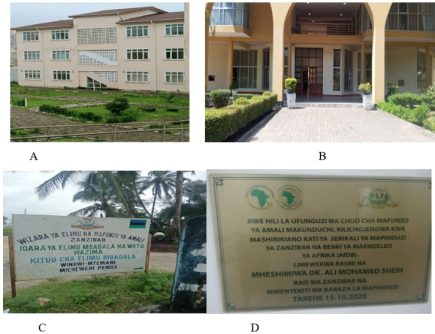
The observation further revealed the presence and location of the centre and to justify the project's output on the accessibility of training for unemployed and out-of-school youth. Thus, the data revealed the existence of all ALSD Centres targeted by the ALSD II project, some of which were constructed and others renovated. Figure 1 shows the current Alternative Learning and Skills Development Centre, which has implemented the ALSD II project, thereby enhancing access to training for youth in Zanzibar. Figure 1: Provide evidence of the existence of ALSD Institutions where unemployed and out-of-school youth were enrolled.
Figure 1. ALSD II Institutions.
Specifically, Figure 1A, 1B, 1C, and 1D provided evidence of the existence of the Alternative Learning and Skills Development Centres, where unemployed and out-of-school youth were enrolled under the ALSD II project. Thus, according to effective skills development interventions improve equitable access and reduce structural barriers to participation when institutional capacity and infrastructure are strengthened. These centres are still operating, indicating the project's sustainable impact. Therefore, the existence and operational functionality of ALSD centres demonstrate a tangible structural output that supports sustained growth in enrolment. The findings indicate that the ALSD II project’s training schedule and supportive measures, such as expanded training opportunities, accessible locations, affordability, and community sensitisation, substantially enhanced youth participation in training, although incorporating greater flexibility in scheduling could further improve inclusivity for youth facing domestic, economic, or seasonal responsibilities.
Generally, the ALSD II project demonstrated a high overall level of accessibility for youth in Zanzibar, with a grand mean of 4.32 for youth and 4.05 for trainers across all measured indicators. In all forms of quantitative and qualitative data revealed that the ALSD II project brought a remarkable impact in improving accessibility to training among the target youth in Zanzibar, with more than 100% as opposed to ALSD I, which is reported to reach out to only 10% of the targeted youth , Thus, impact becomes sustainable through the achievement of all strategies established by the project, including the construction and renovation of ALSD Centres, community awareness campaign, financial support, flexible entry requirements, and engaging youth with disabilities and accessibility, which is outlined to be possible through the availability of a training program, an easily accessible location, affordable finance and entry qualifications. It is also confirmed that there are existing, operational ALSD Centres, including newly constructed and renovated facilities, some of which are equipped to accommodate youth with disabilities, thereby further broadening access. The project led to a substantial increase in enrolment, with 911 additional learners (a 47% rise), while female participation grew from 34.8% to 39.6%, showing progress in gender inclusivity. Graduation and completion rates also improved: total graduates nearly doubled, and completion rates rose from 65.6% to 86.3%, while the number of dropouts decreased by 274 learners, reflecting improved learner retention.
8. Conclusion
The ALSD II project greatly enhanced access to Alternative Learning and Skills Development Centres among targeted youth in Zanzibar by increasing awareness, expanding and rehabilitating training centres, and easing entry requirements. It also strengthened participation through community sensitisation, improved infrastructure, financial support, and inclusion efforts for youth with disabilities. However, there are discrepancies that limit its full impact: some youth dropped out of the centres, others were excluded due to rigid age eligibility criteria, and youth with disabilities experienced uneven access to essential support services such as ramps and interpreters across different centres. In addition, inconsistencies in the delivery of financial assistance and community sensitisation meant that not all intended beneficiaries received equal benefit from the programme. These limitations indicate that although ALSD II strengthened overall access pathways and participation, it still produced unintended exclusionary effects, highlighting the need for more flexible and consistently inclusive approaches to ensure equitable access for all youth.
9. Recommendation
It is recommended that the Ministry of Education and Vocational Training (MoEVT), the Vocational Training Authority (VTA), and ALSD centre managers establish regular follow-up and counselling programmes to reduce trainee dropout, revise age eligibility requirements to accommodate vulnerable out-of-school youth who fall outside the current age limits, and ensure that all centres are equipped with essential disability-support facilities such as ramps and sign language interpretation services.
In addition, the Ministry of Education should continue to provide financial support to eligible trainees in a timely and transparent manner and conduct regular community awareness campaigns through local leaders and media channels to increase enrolment and ensure that all eligible youth can access and benefit from ALSD training opportunities.
Abbreviations

ALSD II

Alternative Learning and Skills Development Phase II

AfDB

African Development Bank

ALCs

Alternative Learning Centers

COBET

Complementary Basic Education

CSOS1

Civil Society Organisation Staff 1

CSOS2

Civil Society Organisation Staff 2

CSOS3

Civil Society Organisation Staff 3

ETP

Education and Training Policy

IC1

Institutional Coordinator 1

IC3

Institutional Coordinator 3

IPPE

Integrated Post-Primary Education

IPOSA

Integrated Program for Out-of-School Adolescents

MoEVT

Minsitry of Education and Vocational Training

MWECAU

Mwenge Catholic University

RoGZ

Revolutionary Government of Zanzibar

UNESCO

United Nation Education Science and Cultural Organisation

Author Contributions
Iddi Ali Iddi: Conceptualisation, Methodology
Victorini Salema: Formal Analysis
Fortunatus Mbua: Project Administration
Conflicts of Interest
The authors declare no conflicts of interest.
References
[1] African Development Bank. (2011). Tanzania: Alternative Learning and Skills Development Project (Phase II) appraisal report (ALSD II). African Development Bank.
[2] African Development Bank. (2019). Alternative Learning and Skills Development Project Phase II progress report. African Development Bank.
[3] African Development Bank. (2021). Alternative Learning and Skills Development Project Phase II completion report. African Development Bank.
[4] Caingcoy, M., Pacursa, J., & Adajar, M. I. (2021). Effectiveness of the alternative learning system informal education project and the transfer of life skills among ALS teachers: A case study.
[5] Chandrasiri, N. (2025). Inclusive skills development and equitable participation of persons with disabilities in vocational education. International Journal of Inclusive Education, 29(3), 215–231.
[6] Chen, M. L., Eng, P. M. H., & Lee, L. (2023). The needs of youth in transition after alternative education programs in Taiwan. Social Sciences, 12(6), 362.
[7] Clemence, R. (2024). Effectiveness of Complementary Basic Education in Tanzania in Mainstreaming Out-of-School Children into Formal Education in Biharamulo District, Tanzania (Master's thesis, University of Dodoma (Tanzania).
[8] Cole, L. (2023). Leadership, education, and training for youth in contemporary African Union programs. Afrika Tanulmányok/Hungarian Journal of African Studies, 17(1), 69–102.
[9] Creswell, J. W., & Creswell, J. D. (2018). Research design: Qualitative, quantitative, and mixed methods approaches (5th ed.). SAGE Publications.
[10] Creswell, J. W., & Creswell, J. D. (2023). Research design: Qualitative, quantitative, and mixed methods approaches (6th ed.). SAGE Publications.
[11] Fute, A., & Wan, M. (2021). Accessibility and inclusiveness in alternative learning programmes in East Africa. East African Education Review, 9(2), 88–104.
[12] Guiamalon, T. S., Sandigan, D. A., & Dilna, S. G. (2022). The impact of the Alternative Learning System in Cotabato Division: A case study. International Journal of Scientific Research and Management, 10(4), EL-2022-2223–2228.
[13] Hatibu, Semboja Haji, and Hafidh Ali Hafidh. 2021. “Entrepreneurship Factors Contributing to Youth Employment in the EAC Countries Data and Policy Analysis”. Asian Journal of Economics, Business and Accounting 21 (5): 66-83.
[14] International Labour Organization. (2022a). Global employment trends for youth 2022: Investing in transforming futures for young people. International Labour Office.
[15] International Labour Organization. (2022b). Non-formal education and skills development for inclusive labour markets. International Labour Office.
[16] Kileo, J. (2021). Alternative education pathways and youth inclusion in Tanzania. Tanzania Educational Review, 5(1), 34–49.
[17] Mgaya, S., Itika, J. S., & Ndikumana, E. D. (2022). The influence of entry qualifications on the learning process and academic achievement: Insights from selected vocational education and training institutions in Tanzania. International Journal of Teaching and Learning, 2(1), 29–48.
[18] Miller, D. (2023). Community mobilisation and awareness creation in alternative learning systems. Journal of Lifelong Learning and Development, 18(2), 120–136.
[19] Nkunya, A., & Mwila, R. (2024). Training infrastructure and accessibility to vocational education in East Africa. Journal of Skills Development and Training, 15(2), 101–118.
[20] Okendo, E., Mwangi, P., & Karanja, D. (2020). Reliability estimation using Cronbach’s alpha in educational research. African Journal of Research Methodology, 4(2), 44–58.
[21] Richard, L., Msuya, K., & Peter, J. (2023). Stakeholder support and access to alternative education among adolescent mothers in Tanzania. Journal of Educational Inclusion, 11(3), 92–108.
[22] Revolutionary Government of Zanzibar. (2020). Alternative Learning and Skills Development Project Phase II completion report. Ministry of Education and Vocational Training.
[23] Revolutionary Government of Zanzibar. (2022). Education statistical abstract 2022. Ministry of Education and Vocational Training.
[24] Salendab, F. A., & Cogo, D. A. (2022). Implementation of alternative learning system: basis for policy review and recommendation. Journal of Positive School Psychology, 6(4), 5457-5467.
[25] Shi, Y., & Bangpan, M. (2022). Technical and vocational education and training (TVET) interventions to improve education and employment outcomes in low- and middle-income countries: A systematic review. Campbell Systematic Reviews, 18(4), e1272.
[26] Taherdoost, H. (2022). Designing and interpreting percentage-based classifications in survey research. International Journal of Academic Research in Management, 11(1), 12–25.
[27] Thelma, B., Chanda, R., & Phiri, M. (2025). Alternative learning programmes and equitable access in Zambia. Zambian Journal of Education and Development, 16(1), 73–89.
[28] Tikly, L. (2022). Skills development, institutional capacity and equitable access in African education systems. Compare: A Journal of Comparative and International Education, 52(6), 945–962.
[29] United Nations Educational, Scientific and Cultural Organization. (2021). Reimagining our futures together: A new social contract for education. UNESCO.
[30] United Republic of Tanzania (URT). (2021). Tanzania Development Vision 2025 implementation report. Government Printer.
Cite This Article
  • APA Style

    Iddi, I. A., Salema, V., Mbua, F. (2026). Impact of the ALSD II Project on Youth Access to Alternative Learning and Skills Development Centres in Zanzibar. International Journal of Vocational Education and Training Research, 12(2), 40-51. https://doi.org/10.11648/j.ijvetr.20261202.12

    Copy | Download

    ACS Style

    Iddi, I. A.; Salema, V.; Mbua, F. Impact of the ALSD II Project on Youth Access to Alternative Learning and Skills Development Centres in Zanzibar. Int. J. Vocat. Educ. Train. Res. 2026, 12(2), 40-51. doi: 10.11648/j.ijvetr.20261202.12

    Copy | Download

    AMA Style

    Iddi IA, Salema V, Mbua F. Impact of the ALSD II Project on Youth Access to Alternative Learning and Skills Development Centres in Zanzibar. Int J Vocat Educ Train Res. 2026;12(2):40-51. doi: 10.11648/j.ijvetr.20261202.12

    Copy | Download

  • @article{10.11648/j.ijvetr.20261202.12,
      author = {Iddi Ali Iddi and Victorini Salema and Fortunatus Mbua},
      title = {Impact of the ALSD II Project on Youth Access to Alternative Learning and Skills Development Centres in Zanzibar},
      journal = {International Journal of Vocational Education and Training Research},
      volume = {12},
      number = {2},
      pages = {40-51},
      doi = {10.11648/j.ijvetr.20261202.12},
      url = {https://doi.org/10.11648/j.ijvetr.20261202.12},
      eprint = {https://article.sciencepublishinggroup.com/pdf/10.11648.j.ijvetr.20261202.12},
      abstract = {This study aimed to evaluate the ALSD II project's contribution to improving the accessibility of alternative learning and skills-development training for the targeted youth in Zanzibar. The study was anchored in the CIPPI evaluation model and employed a mixed method approach under the convergent design. The target population comprised 3,432 participants, including 11 ALSD II institutions, 3,237 youth graduates, 180 trainers, 11 institutional coordinators, and 3 staff members from Civil Society Organizations serving as community representatives. The study used total population sampling for the institutions, stratified proportionate sampling for 324 youth graduates and 54 trainers, and total population sampling for three (3) Civil Society Organisation staff to select the sample. Data collection involved questionnaires for quantitative data and interview guides, document analysis, and observation guides for qualitative data. Instrument validity was ensured through expert review by the Department of Psychology and Curriculum Studies at Mwenge Catholic University. A pilot study was conducted with a sample size of 10% of the target population. The reliability of the questionnaires with Likert-type items was confirmed using Cronbach’s Alpha, yielding coefficients of 0.906 for youth and 0.769 for trainers. The trustworthiness of the qualitative data was ensured through triangulation and member checking. Quantitative data were analysed using descriptive statistics, and qualitative data were analysed using thematic analysis. Ethically, clearance letters, research permits, informed consent, confidentiality, anonymity, and proper referencing were strictly observed. Findings show that the ALSD II Project improved access to training centres through increased community awareness, improved infrastructure, strategic placement of centres, flexible entry requirements, and community sensitisation. These factors contributed to increased enrolment and completion rates. However, persistent barriers were identified, including dropout cases, limited disability inclusion, and inadequate financial support, which affected equitable access among vulnerable youth groups. In conclusion, the ALSD II project has enhanced access to Alternative Learning and Skills Development Centres among targeted youth in Zanzibar, with challenges like infrastructure, financial issues, and persistent dropout recorded in every centre. The study recommends that ALSD centres establish robust mechanisms to prevent youth dropout, while the MoEVT should strengthen disability-inclusive infrastructure to improve the equitable distribution and standardisation of access strategies for all targeted youth.},
     year = {2026}
    }
    

    Copy | Download

  • TY  - JOUR
    T1  - Impact of the ALSD II Project on Youth Access to Alternative Learning and Skills Development Centres in Zanzibar
    AU  - Iddi Ali Iddi
    AU  - Victorini Salema
    AU  - Fortunatus Mbua
    Y1  - 2026/07/17
    PY  - 2026
    N1  - https://doi.org/10.11648/j.ijvetr.20261202.12
    DO  - 10.11648/j.ijvetr.20261202.12
    T2  - International Journal of Vocational Education and Training Research
    JF  - International Journal of Vocational Education and Training Research
    JO  - International Journal of Vocational Education and Training Research
    SP  - 40
    EP  - 51
    PB  - Science Publishing Group
    SN  - 2469-8199
    UR  - https://doi.org/10.11648/j.ijvetr.20261202.12
    AB  - This study aimed to evaluate the ALSD II project's contribution to improving the accessibility of alternative learning and skills-development training for the targeted youth in Zanzibar. The study was anchored in the CIPPI evaluation model and employed a mixed method approach under the convergent design. The target population comprised 3,432 participants, including 11 ALSD II institutions, 3,237 youth graduates, 180 trainers, 11 institutional coordinators, and 3 staff members from Civil Society Organizations serving as community representatives. The study used total population sampling for the institutions, stratified proportionate sampling for 324 youth graduates and 54 trainers, and total population sampling for three (3) Civil Society Organisation staff to select the sample. Data collection involved questionnaires for quantitative data and interview guides, document analysis, and observation guides for qualitative data. Instrument validity was ensured through expert review by the Department of Psychology and Curriculum Studies at Mwenge Catholic University. A pilot study was conducted with a sample size of 10% of the target population. The reliability of the questionnaires with Likert-type items was confirmed using Cronbach’s Alpha, yielding coefficients of 0.906 for youth and 0.769 for trainers. The trustworthiness of the qualitative data was ensured through triangulation and member checking. Quantitative data were analysed using descriptive statistics, and qualitative data were analysed using thematic analysis. Ethically, clearance letters, research permits, informed consent, confidentiality, anonymity, and proper referencing were strictly observed. Findings show that the ALSD II Project improved access to training centres through increased community awareness, improved infrastructure, strategic placement of centres, flexible entry requirements, and community sensitisation. These factors contributed to increased enrolment and completion rates. However, persistent barriers were identified, including dropout cases, limited disability inclusion, and inadequate financial support, which affected equitable access among vulnerable youth groups. In conclusion, the ALSD II project has enhanced access to Alternative Learning and Skills Development Centres among targeted youth in Zanzibar, with challenges like infrastructure, financial issues, and persistent dropout recorded in every centre. The study recommends that ALSD centres establish robust mechanisms to prevent youth dropout, while the MoEVT should strengthen disability-inclusive infrastructure to improve the equitable distribution and standardisation of access strategies for all targeted youth.
    VL  - 12
    IS  - 2
    ER  - 

    Copy | Download

Author Information