Abstract
Learning strategies are defined as the behaviors and thoughts that learners engage in during the process of learning, receiving, or producing language. However, the extent to which these strategies are naturalized in the meaning-making procedure has not been thoroughly scrutinized in an English as a Foreign Language context. Moreover, the complex interplay of self-regulated learning strategies significantly shapes learners' pragmatic competence. It is worth noting that there is an individual difference in establishing, developing, and maintaining pragmatic competence, akin to the specific strategies language users implement. The present study aims to explore learning strategies for developing and enhancing pragmatic competence through structural equation modeling, investigating the relationships among cognitive, metacognitive, sociocultural, and affective strategies and their impact on learners' ability to produce appropriate requests and apologies. Data from 150 university-level EFL learners revealed a dynamic network of strategic interactions. The study's findings revealed that while cognitive strategies directly support pragmatic competence, their relationship with metacognitive strategies is notably inverse. Furthermore, the management of learning (metacognitive strategies) strongly fosters social strategies, and the awareness of one's emotions (meta-affective strategies) is closely linked to navigating sociocultural contexts. The results underscore that pragmatic development is not a linear process but is mediated by a balanced and self-aware approach to strategy use. This highlights the pedagogical importance of moving beyond isolated strategy instruction to foster learners' overall self-regulation, particularly in managing the affective and social dimensions of communication.
Keywords
Learning Strategies, Pragmatic Competence, Structural Equation Modeling, EFL Learners
1. Introduction
It is believed that there is a differential success rate among language learners in language learning generally and the development of pragmatic competence specifically
| [41] | Taguchi, N. (2008). Pragmatic competence in Japanese as a second language: An introduction. In J. Mori & A. S. Ohta (Eds.), Pragmatics and language learning (Vol. 12, pp. 41-60). National Foreign Language Resource Center. |
[41]
. A part of this contradiction can be attributed to the varying strategies learners implement in those processes
. Learners are believed to consciously or subconsciously influence their learning by exerting cognitive processes
. Rubin (1975)
explored these strategies; a few years later, Wenden and Rubin classified them into two main categories: cognitive and metacognitive. Cognitive learning strategies are steps or operations applied in problem-solving tasks that require the analysis, transformation, or synthesis of materials. According to Rubin (1987)
| [36] | Rubin, J. (1987). Learner strategies: Theoretical assumptions, research history, and typology. In A. Wenden & J. Rubin (Eds.), Learner strategies in language learning (pp. 15-30). Prentice Hall. |
[36]
, these strategies are of six types: clarification, guessing, deductive reasoning, practice, memorization, and monitoring. Metacognitive strategies are strategies used to monitor and regulate self-directed learning. Language learning strategies are categorized into two subcategories, based on the development of communicative competence, as elaborated by Oxford in the 1990s:
| [28] | Oxford, R. L. (1990). Language learning strategies: What every teacher should know. Heinle & Heinle. |
| [29] | Oxford, R. L. (1999). Relationships between second language learning strategies and language proficiency in the context of learner autonomy and self-regulation. Revista Canaria de Estudios Ingleses, 38, 109-129. |
[28, 29]
direct and indirect. These are subdivided into six groups, as depicted in
Figure 1. Direct strategies of memory, cognitive, and compensation, and indirect strategies of metacognitive, affective, and social.
Figure 1. A visual representation of Rebecca Oxford's (1990) framework for language learning strategies. The diagram organizes the six core strategy types (Memory, Cognitive, Compensation, Metacognitive, Affective, Social) under two overarching metacategories, illustrating their role in facilitating language acquisition.
In Oxford's classification, metacognitive strategies assist learners in regulating their learning processes, while affective strategies focus on learners' emotional needs, such as building confidence. Moreover, social strategies lead to increased interaction with the target language. Cognitive strategies are the mental strategies language users implement to boost their learning. Memory strategies are those used for the storage of information, and, finally, compensation strategies assist language users in overcoming knowledge gaps and pursuing the flow of communication
| [29] | Oxford, R. L. (1999). Relationships between second language learning strategies and language proficiency in the context of learner autonomy and self-regulation. Revista Canaria de Estudios Ingleses, 38, 109-129. |
[29]
.
There is continued evidence supporting and extending these classifications across several areas, especially in the context of self-regulated learning (SRL) research. Oxford (2011)
| [30] | Oxford, R. L. (2011). Teaching and researching language learning strategies. Pearson Education. |
[30]
revises the previous model to add self-regulation learning strategies, enabling students to control and organize their learning. This change aligns with contemporary educational psychology’s conceptualization of SRL as an active process in which learners establish goals, monitor progress, and respond to feedback
| [47] | Zheng, C., Liang, J., Li, M., & Tsai, C. (2022). The relationship between English language learners’ motivation and online self-regulation: A structural equation modeling approach. System, 106, Article 102769.
https://doi.org/10.1016/j.system.2022.102769 |
[47]
. In this model, meta-strategies direct the general learning action by determining learners' needs and selecting or adapting other strategies to meet those needs. It is interesting to note that metacognitive strategies are often seen as indicators of cognitive strategies. Cognitive strategies enable students to develop and access knowledge of the target language. Meta-affective techniques make foreign language learners conscious of their emotions, feelings, and attitudes in the Foreign Language Learning process. They are introspective and emotive steps that greatly influence the learning process. Recent research highlights the importance of affective factors, with emotion regulation and a growth mindset among the most important predictors of L2 achievement
| [45] | Teimouri, Y., Plonsky, L., & Tabandeh, F. (2022). L2 grit: Passion and perseverance for second-language learning. Language Teaching Research, 26(5), 893-918.
https://doi.org/10.1177/1362168820921895 |
[45]
. Such meta-affective factors, including positive emotions, attitudes, and motivation, further reveal the importance of using affective strategies. Lastly, Meta-sociocultural interactive strategies allow learners to synchronize contextual, cultural, and communicative feedback in regulating sociocultural strategies. The significance of these strategies has been even further highlighted in digital environments, where computer-mediated intercultural interactions require a high level of pragmatic and sociolinguistic sensitivity
| [40] | Taber de la Cruz, Y. O., Menacho Vargas, I., Chávez Espinoza, P. E., Asto Luna, E. L., & Raez Martínez, H. T. (2022). Metacognitive reading strategies in learning the communication area in secondary school. Horizontes Journal of Research in Educational Sciences, 6(25), 1637–1648.
https://doi.org/10.33996/revistahorizontes.v6i25.425 |
[40]
.
Pragmatics is illustrated as the study of language from users' viewpoint, akin to the choice and options users have, the obstacles they encounter in exerting language in social interaction, and the influence on other participants in the act of communication”
| [7] | Crystal, D. (1997). The Cambridge encyclopedia of language (2nd ed.). Cambridge University Press. |
[7]
. According to Taguchi (2018)
| [42] | Taguchi, N. (2018). Pragmatic competence in foreign language education: Cultivating learner autonomy and strategic learning of pragmatics. In T. Taguchi & Y. N. Le (Eds.), New perspectives on the development of communicative and related competence in foreign language education (pp. 53-69). De Gruyter Mouton. |
[42]
, strategic learning of pragmatics is based on learners' attendance to the multi-variable mapping of linguistic forms, meaning, force, and context; in this procedure, language users must notice how to say what they want to say relating to the levels of formality, politeness, and directness appropriate in a situation, or sometimes not to speak at all by stating their intention only through the non-verbal channel. Taguchi presents self-regulated learning strategies as classroom tools in the evolution of learners' pragmatic competence, since it is claimed that by directly guiding language users to pay appropriate attention to the pragmatic norms, monitoring, regulating, and judging their process of learning, teachers can hopefully make them capable of fashioning and developing pragmatic awareness and knowledge by themselves. Empirical evidence for this relationship is increasingly available; for example, Plonsky et al. (2022)
| [45] | Teimouri, Y., Plonsky, L., & Tabandeh, F. (2022). L2 grit: Passion and perseverance for second-language learning. Language Teaching Research, 26(5), 893-918.
https://doi.org/10.1177/1362168820921895 |
[45]
recently reported a very strong relationship between the use of the metacognitive strategy and pragmatic comprehension gain, underscoring the concrete advantage also conferred by the process of self-regulation.
Respecting the aforementioned issues, learners face difficulties in making appropriate decisions among the numerous linguistic, social, and culturally based options available in the target language's text management, both in oral and written exchanges of meaning. Although numerous improvements have been made in understanding the cognitive aspects of learning, second- or foreign-language learning remains a complex picture due to various influential factors that may be involved in the process
| [11] | Dörnyei, Z. (2005). The psychology of the language learner: Individual differences in second language acquisition. Lawrence Erlbaum Associates. |
[11]
.
Notwithstanding the research on learning strategies and their influence on learning in general and on the transfer of meaning intention in particular, we still know very little about what happens when learners learn. A literature review indicates that learning strategies are usually addressed in an isolated or a global way. The correlation between these strategies has seldom been investigated and has received little attention. As Taguchi (2021)
points out, we now have an increasingly long list of strategies at our disposal, but, as yet, a limited understanding of how they interact dynamically in L2 learning. As a result, the study's primary aim is to examine the relationship between self-regulated learning strategies and learners' pragmatic competence. To this end, a model is proposed to illuminate the regression load of students' self-regulated learning strategies on their pragmatic competence, based on Structural Equation Modeling (SEM).
This research is of considerable importance because it addresses a significant deficiency in English as a Foreign Language (EFL) scholarship by investigating the extent to which learning strategies facilitate the acquisition of pragmatic competence, a fundamental element of effective language use. Pragmatic competence, encompassing the ability to employ language suitably across diverse social and cultural contexts, presents considerable challenges for EFL learners, who may lack consistent exposure to authentic English communicative interactions. By focusing on cognitive, metacognitive, sociocultural, and affective strategies, this investigation sheds light on how these approaches impact learners' proficiency in executing speech acts, such as requests and apologies. Gaining insight into these relationships is crucial for developing curricula and pedagogical methodologies that enhance learners' ability to engage in nuanced, contextually relevant communication. Moreover, the research is imperative because it acknowledges individual differences in learners' strategic implementation, which can yield more tailored and effective language instruction. Using structural equation modeling, the research provides a comprehensive quantitative analysis of how various strategies interact to influence pragmatic competence. These revelations are beneficial not only for educators but also for curriculum designers, enabling them to integrate focused, strategy-based training that fosters learners' pragmatic abilities. In conclusion, this research contributes to both theoretical understanding and practical applications in EFL education, thereby enhancing students' preparedness for real-world language engagement.
Differences among individuals in pragmatic performance (i.e., use and knowledge of appropriate language) despite similar exposure to a target language are increasingly linked to disparate success levels in the utilization of self-regulated learning (SRL) strategies by second- or foreign-language learners. Although the issue of classification is useful for some purposes (eg, Oxford's 1990
| [28] | Oxford, R. L. (1990). Language learning strategies: What every teacher should know. Heinle & Heinle. |
[28]
classification of direct and indirect), there has been a move in recent years to view strategic learning as vital for autonomous self-regulation. This model emphasizes learners' active self-regulation of cognitive, metacognitive, affective, and sociocultural processes in guiding their learning
| [30] | Oxford, R. L. (2011). Teaching and researching language learning strategies. Pearson Education. |
| [47] | Zheng, C., Liang, J., Li, M., & Tsai, C. (2022). The relationship between English language learners’ motivation and online self-regulation: A structural equation modeling approach. System, 106, Article 102769.
https://doi.org/10.1016/j.system.2022.102769 |
[30, 47]
.
As pragmatic competence is one of the factors that lead language learners to handle considerable sociolinguistic complexity, it is a challenging yet under-researched area in many EFL contexts. Indeed, there is some recent empirical evidence that self-regulation matters here. Research has linked metacognitive attention to pragmatic development
| [45] | Teimouri, Y., Plonsky, L., & Tabandeh, F. (2022). L2 grit: Passion and perseverance for second-language learning. Language Teaching Research, 26(5), 893-918.
https://doi.org/10.1177/1362168820921895 |
[45]
, highlighted the role of meta-affective strategies in managing emotions and L2 learning outcomes
| [45] | Teimouri, Y., Plonsky, L., & Tabandeh, F. (2022). L2 grit: Passion and perseverance for second-language learning. Language Teaching Research, 26(5), 893-918.
https://doi.org/10.1177/1362168820921895 |
[45]
, and shown how digital contexts call for a new kind of sociocultural strategic awareness
| [40] | Taber de la Cruz, Y. O., Menacho Vargas, I., Chávez Espinoza, P. E., Asto Luna, E. L., & Raez Martínez, H. T. (2022). Metacognitive reading strategies in learning the communication area in secondary school. Horizontes Journal of Research in Educational Sciences, 6(25), 1637–1648.
https://doi.org/10.33996/revistahorizontes.v6i25.425 |
[40]
. However, a significant gap persists. According to Taguchi (2021)
| [25] | Li, S., Taguchi, N., & Xiao, F. (2021). The effects of cognitive strategies on the interpretation of implied meaning: An eye-tracking study. Studies in Second Language Acquisition, 43(5), 1007-1033. https://doi.org/10.1017/S0272263121000322 |
[25]
, although the research landscape is witnessing growing interest in discrete strategies, we have not yet developed a descriptive account of how simple and compound strategies will interact and coalesce within the learner's strategic repertoire. So far, most studies have isolated aspects of these strategies and have not examined their interrelationships or joint effects on pragmatic competence acquisition.
The current research employs SEM to investigate the relationships among a comprehensive set of self-regulated learning strategies (functional and dysfunctional) and cognitive, metacognitive, affective, and sociocultural regulation with EFL learners' pragmatic competence, a gap in the literature. This study moves beyond an accretive approach by proposing and testing a holistic model that captures the full mechanism by which strategic pressure leads to the logical competencies necessary for real-life communication. To this end, the current study tries to answer the following:
RQ1: Is there any relationship between language learning strategies and pragmatic competence?
RQ2: Is there any relationship between learning strategies?
2. Literature Review
2.1. Pragmatic Competence and Speech Acts
Aliakbari and Gheitasi (2014)
| [2] | Aliakbari, M., & Gheitasi, M. (2014). An investigation into EFL learners' awareness of appropriate request strategies about formality, politeness, and indirectness. Journal of Language and Social Psychology, 33(4), 398-414.
https://doi.org/10.1177/0261927X13506906 |
[2]
investigated pragmatics by examining Iranian EFL learners to determine the extent to which they are aware of using appropriate request speech acts in speaking contexts, particularly in terms of level of formality, politeness, and indirectness. It is asserted that a high level of grammar in a second language does not necessarily support the production of pragmatically appropriate and accurate utterances. However, further investigations are needed to determine precisely how L2 pragmatic competence develops over time. In instances where L2 learners lack adequate comprehension of the sociocultural conventions associated with various L2 speech acts, they may resort to applying L1 sociocultural norms (pragmatic transfer), which can lead to intercultural misunderstandings and ineffective communication. Alemi (2016)
| [1] | Alemi, M., & Khanlarzadeh, N. (2016). Pragmatic assessment of request speech acts of Iranian EFL learners by non-native English-speaking teachers. Iranian Journal of Language Teaching Research, 4(2), 19–34.
https://doi.org/10.30466/ijltr.2016.20363 |
[1]
explored the pragmatic assessment of the request speech act in the Iranian EFL context. The purpose is claimed to be the analysis of raters' comments on the pragmatic assessment of L2 learners and the predominance of raters' criteria and patterns through analysis of the interlanguage pragmatic assessment process of the Iranian nonnative English-speaking raters (NNESRs) regarding the request speech act while considering prominent factors such as raters' sex and teaching experience background. The content analysis of rater comments identified nine criteria, including pragmalinguistic and sociopragmatic components of language, which were noted differently by raters across all situations. Furthermore, the results confirmed the necessity of teaching L2 pragmatics in language classes and teacher training courses.
New empirical evidence adds to our understanding of these challenges. This means a dynamic, usage-based linguistic pragmatics, in which competence arises from the repetitive use of language through interaction, rather than from knowledge of rules
| [42] | Taguchi, N. (2018). Pragmatic competence in foreign language education: Cultivating learner autonomy and strategic learning of pragmatics. In T. Taguchi & Y. N. Le (Eds.), New perspectives on the development of communicative and related competence in foreign language education (pp. 53-69). De Gruyter Mouton. |
[42]
. In addition, more emphasis has also been placed on digital contexts. As in the Sánchez-Hernández and Alcón-Soler (2022)
| [39] | Sánchez-Hernández, A., & Alcón-Soler, E. (2022). Pragmatic development in study abroad settings: The role of technology-mediated tasks. Language Learning & Technology, 26(2), 1-15.
http://hdl.handle.net/10125/73481 |
[39]
examples, the authors found that technology-mediated tasks, such as telecollaboration projects, can provide considerable support for developing pragmatic awareness through opportunities for authentic, interactive practice with native speakers.
2.2. Cognitive Learning Strategies
Cheng and Mei Yan (2017)
| [6] | Cheng, K. W., Wang, Y., & Yan, H. M. (2017). Study of the relation between EFL students' cognitive style and pragmatic competence. Journal of Electronic Science and Technology, 15(1), 41-47. |
[6]
conducted a study on the relationship between EFL learners' cognitive styles and their realistic capability. Noticing the individual differences in the EFL environment. The paper's findings revealed that the subjects' realistic capability was significantly lower than anticipated. In addition, a significant and positive correlation was found between field-dependent cognitive style and inter-language realistic capability, while no significant correlation was observed with field-independent cognitive style.
Contemporary research has expanded on this idea by studying individual cognitive processes. But, for instance, the role of noticing stays the same. Instruction directing learners to notice pragmatic features has been shown to be moderately effective in a recent meta-analysis
| [45] | Teimouri, Y., Plonsky, L., & Tabandeh, F. (2022). L2 grit: Passion and perseverance for second-language learning. Language Teaching Research, 26(5), 893-918.
https://doi.org/10.1177/1362168820921895 |
[45]
. In a more recent study, Li et al (2021)
| [42] | Taguchi, N. (2018). Pragmatic competence in foreign language education: Cultivating learner autonomy and strategic learning of pragmatics. In T. Taguchi & Y. N. Le (Eds.), New perspectives on the development of communicative and related competence in foreign language education (pp. 53-69). De Gruyter Mouton. |
[42]
used eye-tracking data to provide empirical evidence that when more abstract cognitive strategies, such as analytic, deliberate processes of conversational implicature, are used, the resulting gains in pragmatic interpretation tasks are greater, thereby strengthening the connection between analytic cognitive strategies and pragmatic acquisition.
2.3. Meta-cognitive, Affective, and Learning Strategies
Deita and Posecion (2019)
| [8] | Deita, J. D. G. L., & Posecion, O. T. (2019). Adjudicating the utilization of metacognitive, affective, and social language learning strategies by preservice learners of teacher education institutions in Western Visayas, Philippines. Journal of Education and Practice, 10(35), 21–32.
https://doi.org/10.7176/JEP/10-35-04 |
[8]
investigate the use of metacognitive, affective, and social language-learning strategies by preservice teachers at teacher education institutions in the Philippines. The results revealed that participants used metacognitive strategies more frequently than other strategy types. Moreover, a significant correlation was confirmed both within and between the use of metacognitive, affective, and social language-learning strategies. Zarobe and Smala (2020)
| [37] | Ruiz de Zarobe, Y., & Smala, S. (2020). Metacognitive awareness in language learning strategies and strategy instruction in CLIL settings. Journal for the Psychology of Language Learning, 2(2), 20-35. |
[37]
explored metacognitive awareness in language learning Strategies and Strategy Instruction in Content and Language Integrated Learning (CLIL) Settings in a two-phase study. In this paper, metacognitive mindfulness was approached from two aspects first, as a conception that depicts tone-regulated literacy in learners and as one of the most predominant fields of language learning strategies (metacognitive strategies), and second, as a prominent conception when describing the opinions preceptors make in their pedagogical planning and perpetration, including when deciding on which language literacy strategies to single out for instruction, and how to instruct these It is pedagogically proposed that the focus must be on Content and Language Integrated (CLI) preceptors’ reflective cycles noticing scholars’ previous knowledge (e.g., cognates, language literacy strategies learned in mainstream language classes, understanding of subject-specific generalities in native language), to construct a record and schematic model of language literacy strategies and strategy instruction that help the procedure when integrating language and content literacy.
The importance of affective factors has gained much attention recently. Based on the meta-affective strategies model posited by Oxford (2011)
| [30] | Oxford, R. L. (2011). Teaching and researching language learning strategies. Pearson Education. |
[30]
, Teimouri et al
| [45] | Teimouri, Y., Plonsky, L., & Tabandeh, F. (2022). L2 grit: Passion and perseverance for second-language learning. Language Teaching Research, 26(5), 893-918.
https://doi.org/10.1177/1362168820921895 |
[45]
. The passion and perseverance for long-term goals, also known as L2 Grit
| [45] | Teimouri, Y., Plonsky, L., & Tabandeh, F. (2022). L2 grit: Passion and perseverance for second-language learning. Language Teaching Research, 26(5), 893-918.
https://doi.org/10.1177/1362168820921895 |
[45]
, have been demonstrated to be strong predictors of language achievement, together with the sustained effort required for pragmatic development. In addition, Gkonou and Oxford (2020)
| [13] | Gkonou, C., & Oxford, R. L. (2020). Managing your emotions: A workbook for the course "Understanding language learner emotions." Multilingual Matters. |
[13]
identify emotion regulation strategies (a Ukrainian affective strategy) as directly related to less language anxiety and more willingness to communicate, making them crucial for practicing and developing pragmatic skills in face-threatening social contexts.
2.4. Sociocultural Learning Strategies
Donato and McCormick (1994)
addressed the development of language-learning strategies within the sociocultural perspective. Grounded in this proposition, social commerce and artistic institutions take responsibility for fostering individual cognitive growth and development. The case study aimed to demonstrate how reconfiguring the culture of the language classroom can contribute to the growth and development of strategic literacy through the portfolio assessment procedure, which served as the data-collection instrument for a complete French class. The results of the study revealed that the success of learners in relating, refining, and developing their strategies was a direct result of a terrain that intermediated language literacy in reflective and methodical ways through the use of the pupil portfolio rather than simply training scholars to use reprised strategies while the classroom culture was itself strategic.
Reid (1764/1997)
| [33] | Reid, T. (1764/1997). An inquiry into the human mind, on the principles of common sense. Cambridge University Press. (Original work published 1764) |
[33]
introduces social operations or, in his words, social acts" as opposed to solitary acts," similar to judging, intending, deliberating, and asking, for their performance does not presume any intelligent being in the macrocosm, in addition to the being who performs them. Based on this categorization, it can be stated that all internal acts are either the donation of an object or can be built upon such a donation. Still, objectifying acts must be distinguished from emotional acts based on supplementary objectifying acts that furnish them with their objects. Building on Husserl's intellectual contributions and Marty's insights (1900), along with Daubert's (1904) discourse, which falls outside the scope of this manuscript, Reinach (1912)
| [34] | Reinach, A. (1912). The a priori foundations of the civil law. Jahrbuch für Philosophie und Phänomenologische Forschung, 1(2), 685–847. |
[34]
introduces the concept of Social Acts as an amalgamation of semantic, ontological, and psychological dimensions.
Recent work in digital and globalized learning has significantly reinforced this view. According to González-Lloret (2020)
, technology-mediated tasks are ideal contexts for sociocultural learning, where participants co-construct pragmatic norms. In 2023, Li and Chen
conducted a study with Chinese EFL learners, finding that pragmatic appropriateness in requests significantly increased following structured online interactions with international partners in a virtual exchange program. This illustrates how contemporary sociocultural theory principles capitalize on the global network's economic ubiquity to meet the real-world needs of practical growth.
2.5. Interconnectedness of Learning Strategies
Kasper and Schmidt (1996)
highlight that pragmatic development is influenced by various learning mechanisms, including cognitive and social-psychological factors, suggesting that interconnected learning strategies are essential for acquiring pragmatic competence, particularly in diverse contexts of second language learning and use investigating interlanguage pragmatics (ILP) as a significant domain within the research of second language acquisition (SLA), with an emphasis on the processes through which learners develop pragmatic competence. The authors contend that the majority of ILP investigations have historically emphasized language use over developmental aspects, thereby overlooking the cultivation of pragmatic abilities, such as the formulation of requests, refusals, and apologies. Kasper and Schmidt propose a developmental research framework to enhance understanding and facilitate the intricate progression of ILP, positing that specific instructional strategies may be indispensable for learners to attain both linguistic proficiency and sociocultural competence in a second language. This article highlights the crucial role of pragmatics-oriented instruction within SLA pedagogy in promoting more effective intercultural communication. Tajeddin and Malmir (2015)
| [44] | Tajeddin, Z., & Malmir, A. (2015). The construct of interlanguage pragmatic learning strategies: Investigating preferences of high vs. low pragmatic performers. Journal of Teaching Language Skills, 34(2), 83-112.
https://doi.org/10.22099/jtls.2015.3016 |
[44]
examine interlanguage pragmatic learning strategies (IPLS) and their influence on the pragmatic competence of learners of English as a Foreign Language (EFL), with a specific focus on the comprehension of speech acts. The investigation was conducted in two distinct phases. Initially, it identified high and low achievers in interlanguage pragmatics through a multiple-choice discourse completion assessment. This was followed by qualitative interviews with top and bottom performers to elucidate critical learning strategies. Tajeddin and Malmir (2015)
| [44] | Tajeddin, Z., & Malmir, A. (2015). The construct of interlanguage pragmatic learning strategies: Investigating preferences of high vs. low pragmatic performers. Journal of Teaching Language Skills, 34(2), 83-112.
https://doi.org/10.22099/jtls.2015.3016 |
[44]
utilized the frameworks established by Cohen (2005, 2010) and Oxford (1990)
| [28] | Oxford, R. L. (1990). Language learning strategies: What every teacher should know. Heinle & Heinle. |
[28]
regarding language learning strategies; IPLS were categorized into six distinct types: memory-oriented, cognitive, social, affective, metacognitive, and compensatory strategies. The results indicate that higher achievers in interlanguage pragmatics employed a more diverse array of strategies within these classifications, implying a correlation between the breadth of strategic application and pragmatic competence.
This line of inquiry is currently a hot topic in contemporary SLA. From the Complex, Dynamic Systems (CDST) perspective, it is explicitly stated that learning strategies do not function in isolation but are interconnected and adaptive to one another
| [27] | Mubarak, Z. (2023). The relationship between the extent of Iraqi EFL learners’ pragmatic knowledge of apology and request-speech acts and their ability to comprehend and produce them. International Journal of Research in Social Sciences & Humanities, 13(2), 2454-4671. |
[27]
. More recently, studies utilizing structural equation modeling have provided empirical support. For example, Zheng et al.
| [47] | Zheng, C., Liang, J., Li, M., & Tsai, C. (2022). The relationship between English language learners’ motivation and online self-regulation: A structural equation modeling approach. System, 106, Article 102769.
https://doi.org/10.1016/j.system.2022.102769 |
[47]
found that cognitive, metacognitive, and behavioral dimensions were determinants of learning success, but only when combined in higher-order factors of online self-regulation
| [47] | Zheng, C., Liang, J., Li, M., & Tsai, C. (2022). The relationship between English language learners’ motivation and online self-regulation: A structural equation modeling approach. System, 106, Article 102769.
https://doi.org/10.1016/j.system.2022.102769 |
[47]
. This aligns with the current study objective: to represent self-regulated learning strategies as holistic constructs in modeling their interrelated effects on pragmatic competence rather than treating them as separate variables.
2.6. Research Gap
The literature review has revealed several significant gaps in the current state of knowledge regarding the relationship between learning strategies and pragmatic competence, particularly in EFL settings. While numerous studies have investigated individual learning strategies and their contributions to language development, few have explored the interaction and interactive effects of multiple strategies on the development of pragmatic competence. This has led to a fragmented approach that has limited our understanding of how multiple strategies work together to enhance learners' pragmatic abilities. Moreover, most studies in this area have relied mainly on qualitative methodologies or simple correlational analyses. This major methodological limitation prevented the development of more sophisticated models that could clarify the complex relationships among the numerous variables involved in the development of pragmatic competence. More sophisticated models capable of explaining complex relationships among multiple variables involved in the development of pragmatic competence are lacking because quantitative analyses are limited, leaving a gap in our ability to faithfully model and project pragmatic competence based on the use of pragmatic learning strategies. Another significant gap relates to the contextual focus of the available research. While considerable research has been conducted in ESL settings, there remains a scarcity of research on the relationship between pragmatic competence and learning strategies in EFL contexts, such as Iran. This contextual gap narrows our understanding of how such relationships would be manifested in environments with limited exposure to the target language. Moreover, Oxford's model of self-regulated learning strategies remains underexplored in terms of its application to the development of pragmatic competence. While the model has been the focus of numerous studies on general language acquisition, it has been seldom explored in the context of pragmatic ability; thus, it leaves a gap in our understanding of how self-regulation influences pragmatic development.
2.7. Novelty and Objectives of the Study
To address these research gaps, the present study employs innovative approaches, including a holistic examination of learning strategies via structural equation modeling. This advanced quantitative approach enables the concomitant analysis of multiple learning strategies, shedding light on how these strategies interrelate and interact to influence pragmatic competence. The application of SEM, therefore, represents one of the major methodological advances in this field, enabling the examination of direct and indirect relationships among variables. This study focused on the Iranian English as a Foreign Language (EFL) context and provided further insight into learning strategies and pragmatic competence in contexts where the target language is not widely used. Emphasis has also been placed on EFL settings, which respond to the limited literature on this context and provide relevant information in related contexts. Furthermore, this research has integrated Oxford's model of self-regulated learning strategy and extended its adaptation to pragmatic competence development. The approach will thus shed new light on how self-regulation influences pragmatic ability, a linkage that bridges the gap between general language acquisition theories and the development of pragmatic competence. The present inquiry purports to support the theoretical assumptions regarding the relationships between learning strategies and pragmatic competence with valid empirical evidence. It also provides a partial conceptual underpinning for an emerging field of study, while concurrently offering solid empirical suggestions for teaching interventions that assist learners in developing their pragmatic proficiency in EFL settings.
3. Method
3.1. Design of the Study
The current study benefits from the application of structural equation modeling, utilizing a quantitative design and AMOS software. Structural equation modeling (SEM) is a powerful and trustworthy statistical modeling technique that can combine complex path models with latent (unobservable) Variables. The university's ethics committee approved the study.
3.2. Structural Equation Modeling
The methodology employed in this investigation, particularly the application of structural equation modeling (SEM), elucidates novel insights into the complex interrelations among learning strategies that enhance pragmatic competence, an aspect that has not been thoroughly examined in previous scholarly work. Conventional inquiries in interlanguage pragmatics (ILP) have frequently scrutinized learning strategies in ways that isolate them or treat them as limited interactions between distinct categories. In contrast, SEM facilitates the analysis of intricate interdependencies, enabling researchers to understand not only the direct impacts of individual strategies (cognitive, metacognitive, sociocultural, and affective) on pragmatic competence but also their interactions and cumulative effects. This analytical framework reveals how specific strategies may amplify or complement one another, thereby presenting a more refined model for understanding how English as a Foreign Language (EFL) learners develop the pragmatic competencies necessary for effective and socially appropriate language use. Moreover, SEM quantitatively assesses the strength and significance of each pathway, providing empirical evidence regarding which combinations of strategies yield the most substantial effects.
3.3. Participants of the Study
The present investigation was carried out among the student population of the University who enrolled in English Language courses. The cohort consists of males and females aged 18 to 39, including 46 males and 104 females, undergraduates who have elected to pursue English language studies, and will be recruited through a convenience sampling approach. According to established practices in structural equation modeling, it is recommended that at least 10 subjects be included for each observed variable. Given that the current inquiry involves seven such parameters, a cohort of approximately 150 participants will be required to achieve an adequate sample size.
3.4. Data Collection Procedure
Language learning strategies are measured using a Self-Regulated Foreign Language Learning Strategy Questionnaire, which includes eight questions on metacognitive strategies, six on cognitive strategies, eight on meta-affective strategies, seven on meta-sociocultural strategies, and four on sociocultural strategies, all assessed via a 5-item Likert scale. The survey has been validated by Habok and Magyar (2018)
| [16] | Habók, A., & Magyar, A. (2018). The effect of language learning strategies on proficiency, attitudes, and school achievement. Frontiers in Psychology, 9, Article 2358.
https://doi.org/10.3389/fpsyg.2018.02358 |
[16]
using multidimensional modeling, and the reliability estimate for the learning strategies instrument in the current study is 0.883. Birjandi and Rezaei (2010)
| [4] | Birjandi, P., & Rezaei, S. (2010). The assessment of pragmatic competence: Politeness strategies in the speech act of requests. Journal of Language Teaching and Research, 1(6), 1-10.
https://doi.org/10.4304/jltr.1.6.1-10 |
[4]
developed a multiple-choice discourse completion test, which will be implemented in this paper to investigate the participants' illocutionary knowledge of apology and request speech acts. This DCT instrument comprises 20 situations in which subjects must react by selecting the appropriate option. The instrument has been validated through piloting by five native speakers at Arizona University. Due to the nature of the discourse completion tests, the intra-rater reliability is indicated by the estimated value of 0.921.
3.5. Data Analysis Procedure
The collected data is managed and analyzed on SPSS for basic analysis. In the next step, it is noted that Amos is used for Structural Equation Modeling. The researcher first proposes a model based on theories and factual issues, then determines how to measure the constructs, collects the data, and finally inputs the data into the SEM application. The application fits the data to the specified model and produces results, including overall model fit statistics and parameter estimates. After establishing the initial model, the possible relationships among pragmatics, affective factors, and linguistic knowledge will be examined. Finally, the proposed model will be modified to draw conclusions.
Once the models are deemed acceptable, it is necessary to assess their fit using fit indices to determine how well they align with the data. Technically, model fit estimates the variance between observed and model-implied data via correlation and covariation matrices. The first index is the chi-square (CMIN), which is used to test whether the observed variables and expected results are statistically significant, in other words, whether the data and the hypothetical model fit the analysis appropriately. However, if the CMIN is substantial, the model is considered unsatisfactory. The Goodness-of-Fit index estimates the minimum discrepancy function for a perfect fit under maximum likelihood conditions
| [19] | Jöreskog, K. G., & Sörbom, D. (1984). LISREL VI: Analysis of linear structural relationships by maximum likelihood, instrumental variables, and least squares methods. Scientific Software. |
[19]
. GFI is typically reported with RMR, the root-mean-square of the residuals (errors). GFI takes values less than or equal to 1, where 1 indicates a perfect fit. RMR, or root-mean-square of residuals, as another index reported in the Goodness of fit table, should be close to zero for the model to be perfectly fitted. While the AGFI (adjusted goodness-of-fit index), which indicates the degree of freedom (df) for model testing, takes the value of 1 for a perfect fit, unlike GFI, AGFI never reaches 0.
4. Findings
This study examined the relationship between LLS and the pragmatic competence of EFL learners, using a structural model (
Figure 2). While developing this model, theoretical and empirical insights have been used to relate various dimensions of language-learning strategies to pragmatic performance. Wrapped within this is the higher-order construct of "Learning Strategies," which mediates between pragmatic competence and the specific sub-strategies. Cognitive, metacognitive, and sociocultural strategies are direct causes of the latent variable "Learning Strategies"; metacognitive and metasociocultural aspects relate to pragmatic development. Meta-affective factors also play a role, though less in this model's central predictive pathway. In the model, pragmatic competence is further operationalized by two observable variables: requests and apologies. Such speech acts are observable and measurable indicators of learners' pragmatic abilities, reflecting their proficiency in employing appropriate language functions in various social contexts.
The proposed revised model showed significant relationships among the different dimensions of language learning strategies and pragmatic competence (
Figure 3). Specifically, the cognitive learning strategies and speech acts of request and apology had a standardized path coefficient of 0.14. This means that cognitive strategies involving processes for memory, attention, and problem-solving have a significant and moderate effect on the pragmatic functions of requests and apologies elicited from learners. This relationship highlights the contribution of engaged cognition to the development of pragmatic abilities: learners who use cognitive strategies more effectively are better able to handle speech acts in social contexts.
Moreover, it was found that the use of cognitive strategy is inversely related to the use of metacognitive strategies, with a path value of -0.35. It has been assumed that this negative relationship may indicate a trade-off between the use of cognitive and metacognitive strategies; that is, learners who are deeply engaged in cognitive activities might engage in less metacognitive regulation, specifically in planning, monitoring, and evaluating their learning processes. Metacognitive strategies were also positively related to sociocultural strategies with a path coefficient of 0.25. In other words, both learners who possess sociocultural strategies, those learner strategies that involve interaction with peers and cultural awareness, are likely to use metacognitive strategies in regulating their learning experiences.
Figure 2. Proposed model: Path diagram representing the conceptual model of the relationship between pragmatic competence and language learning strategies. Pragmatics is modeled as a latent construct influenced by two observed indicators: RGST and APLOG. In turn, pragmatics predicts the use of learning strategies, conceptualized as a higher-order construct comprising metacognitive, cognitive, metasociocultural, and sociocultural strategies. Each of these dimensions is measured by corresponding observed variables (e1-e5). The diagram illustrates a theoretically grounded structure in which learners’ pragmatic competence informs their strategic engagement in language learning, highlighting the interplay between cognition, metacognition, and sociocultural awareness. Standardized loadings are fixed at 1 for clarity of interpretation.
This model also suggests a relationship between meta-sociocultural and sociocultural strategies, with a correlation coefficient of 0.16, indicating that learners who reflect on and regulate their sociocultural interactions are more likely to incorporate sociocultural aspects directly into their learning. Additionally, there is a significant relationship between meta-affective strategies and meta-sociocultural strategies, with a correlation coefficient of 0.39. This relationship also underlines the differences among learners who are sensitive to and monitor their emotions, those who use meta-affective strategies—engaging them in more reflective sociocultural learning and further informing them that affective regulation enhances the sociocultural learning process.
Figure 3. Modified model.
Structural equation model illustrating the relationships among pragmatic competence, language learning strategies, and their constituent components. Pragmatic competence is conceptualized as a latent construct, measured by APLG and RGST (with corresponding error terms e6 and e7), and significantly influences language learning strategies (LEST). LEST, modeled as a second-order factor, comprises five dimensions: metacognitive, cognitive, meta-affective, metasociocultural, and sociocultural strategies. Each dimension is assessed through observed indicators (e1-e5), and all paths are labeled with standardized estimates. Notably, the model includes a bidirectional path between pragmatics and LEST, suggesting a reciprocal relationship. This representation underscores the dynamic interaction between learners’ pragmatic awareness and their strategic approaches to language learning within a humanistic and multidimensional framework.
The findings from the structural equation modeling highlight essential connections between language acquisition strategies and pragmatic competence among English as a Foreign Language (EFL) learners (
Table 1). To begin with, it is established that learning strategies show a positive and statistically significant link with both meta-affective and meta-sociocultural strategies, with respective estimates of 5.845 (p = 0.020) and 4.364 (p = 0.058). Notably, while the association with meta-affective strategies attains statistical significance, the correlation with meta-sociocultural strategies approaches but falls short of the conventional criteria for significance (p = 0.058). Furthermore, meta-affective strategies exert a positive influence on meta-sociocultural strategies (estimate = 0.392), although this relationship is not statistically significant (p = 0.086). These findings suggest a discernible trend: overarching learning strategies may enhance learners’ competencies in emotional regulation and cultural adaptability, though further investigation is needed to substantiate these effects.
Regarding pragmatic competence, the data suggest that sociocultural strategies exhibit a robust, significant relationship with meta-sociocultural strategies (estimate = 0.165, p < 0.001), indicating that increased application of sociocultural strategies correlates with greater cultural awareness. It is noteworthy that cognitive and metacognitive strategies show a negative relationship, albeit not statistically significant (estimate = -0.345, p = 0.254), suggesting a compromise in learners' preferences between the two strategic categories. The analysis of pragmatic competence was further conducted through the lens of speech acts, specifically requests and apologies, with apologies serving as the benchmark. Although the relationship between pragmatic competence and requests was positive (estimate = 0.168), it did not reach statistical significance (p = 0.508), suggesting that extraneous factors may modulate learners’ proficiency in using requests effectively. Collectively, the model yields significant insights into the intricate relationships between language-learning strategies and pragmatic competence, with substantial implications for pedagogical approaches in English as a Foreign Language (EFL) instruction.
Table 1. Regression Weight.
| | | Estimate | S. E. | C. R. | P | Label |
Meta-Affective | <--- | Learning strategies | 5/845 | 2/516 | 2/323 | /020 | |
Meta-Sociocultural | <--- | Learning strategies | 4/364 | 2/304 | 1/895 | /058 | |
Meta-sociocultural | <--- | Meta-affective | /392 | /228 | 1/715 | /086 | |
APLG | <--- | Pragmatic competence | 1/000 | | | | |
RQST | <--- | Pragmatic competence | /168 | /254 | /662 | /508 | |
Sociocultural | <--- | Learning strategies | 1/000 | | | | |
Cognitive | <--- | Learning strategies | 4/928 | 2/225 | 2/215 | /027 | |
Sociocultural | <--- | Meta-sociocultural | /165 | /034 | 4/791 | *** | |
Cognitive | <--- | RQST | /138 | /146 | /947 | /344 | |
Cognitive | <--- | APLG | /137 | /127 | 1/076 | /282 | |
Metacognitive | <--- | Learning strategies | 7/389 | 3/799 | 1/945 | /052 | |
Metacognitive | <--- | Cognitive | -/345 | /303 | -1/140 | /254 | |
Metacognitive | <--- | Sociocultural | /251 | /154 | | | |
Model Fit
One of the major statistical tests assessing the goodness-of-fit of the structural model through observed variables relative to expected ones is the chi-square value, also known as CMIN. In this case, where the chi-square is statistically significant, it typically indicates a poor fit between the model and the data, suggesting that some adjustments are needed to improve the model's explanatory power. Conversely, when the chi-square statistic is not statistically significant, it usually indicates that the model fits the data well and may be acceptable for further interpretations. In the given study, the chi-square value in the default model was 4.779, and according to
Table 2, it yields a probability value of P = 0.687. This P-value indicates that this chi-square result is not statistically significant; thus, the observed and expected data are reasonably consistent. The CMIN/DF chi-square divided by degrees of freedom for the default model is 0.683, further confirming that the model fits the data adequately. Generally, if the CMIN/DF ratio is less than 3, it is considered indicative of a good model fit, and the value obtained here falls within this range.
Table 2. CMIN.
Model | NPAR | CMIN | DF | P | CMIN/DF |
Default model | 21 | 4/779 | 7 | /687 | /683 |
Saturated model | 28 | /000 | 0 | | |
Independence model | 7 | 359/306 | 21 | /000 | 17/110 |
The Goodness-of-Fit Index (GFI) is one of the most important indicators in structural equation modeling, used to estimate the correspondence between the observed data and the proposed model. According to
Table 3, GFI is the discrepancy function, which is minimal and should be reported when the fit is perfect, as determined by maximum likelihood estimation. For the default model in this study, the GFI was 0.991, which, when interpreted against the standard for this index, suggests that the model fits the data extremely well (Kline, 2005)
| [22] | Kline, R. B. (2005). Principles and practice of structural equation modeling (2nd ed.). Guilford Press. |
[22]
.
Apart from the GFI, the AGFI further supports the model fit by adjusting for degrees of freedom. The AGFI is 0.964 at this point; therefore, the model fits well, considering its complexity. The model’s Root Mean Square Residual (RMR) value is also presented in
Table 3, with the default model having an RMR of 0.257. RMR is the mean of the variances between the observed and predicted covariance; the smaller the value, the better the fit. Thus, even though the RMR indicates some degree of residual variance, this in no way detracts from the overall strength of the model fit (Kline, 2015)
| [23] | Kline, R. B. (2015). Principles and practice of structural equation modeling (4th ed.). Guilford Press. |
[23]
.
Table 3. RMR, GFI.
Model | RMR | GFI | AGFI | PGFI |
Default model | /257 | /991 | /964 | /248 |
Saturated model | /000 | 1/000 | | |
Independence model | 5/397 | /518 | /357 | /389 |
Baseline comparison fit indices compare the performance of the default model against two independence models (assuming no relationships among the variables) and the saturated model (assuming perfect relationships among the variables), as depicted in
Table 4. One of the most useful measures in this regard is the Normed Fit Index-Delta1. For the default model, NFI is 0.987, indicating that it is nearly perfect and superior to the independence model. Another piece of supporting evidence for the model's strength is the value of the Relative Fit Index, rho1, which is 0.960, as shown in
Table 4. Like the NFI, the RFI considers the relative fit of the model but adjusts the fit for its degrees of freedom. Hence, it has been considered a more conservative criterion. Lastly, the CFI for the default model stands at a full 1.000, indicating a nearly as good a fit as the saturated model.
Table 4. Baseline Comparisons.
Model | NFI | RFI | IFI | TLI | CFI |
Delta1 | rho1 | Delta2 | rho2 |
Default model | /987 | /960 | 1/006 | 1/020 | 1/000 |
Saturated model | 1/000 | | 1/000 | | 1/000 |
Independence model | /000 | /000 | /000 | /000 | /000 |
5. Discussion
The study aims to examine the complex relationship between language learning strategies and pragmatic competence in EFL learners, specifically understanding how learners employ multiple methods to acquire and use a language correctly and appropriately in various situations. To test this association, the present research utilized "Structural Equation Modeling" to test the model proposed, which related specific language learning strategies to pragmatic competence, as concretized in selected speech acts of request and apology. The plan addressed by this model includes cognitive, metacognitive, sociocultural, meta-sociocultural, and meta-affective strategies. The data was collected in a semester, approximately 3 months.
Thus, the choice of a validated Self-Regulated Foreign Language Learning Strategy Questionnaire proved to be a reliable starting point for assessing investment in strategy use. The high reliability coefficient of the tool in the current research suggests that it measured the metacognitive, cognitive, meta-affective, meta-sociocultural, and sociocultural domains within our sample. Therefore, its internal consistency supported the high reliability of self-reported measures of learners' strategic patterns. Additionally, the original study, validated through a reflective multi-trait multi-method model, confirmed clear differences among the five types of strategy, thereby enabling discernment of how interests correlate with pragmatic competence.
Similarly, the structured and reliable assessment of illocutionary knowledge was facilitated by Birjandi and Rezaei’s DCT. A high intra-rater reliability coefficient (r = 0.921) enabled the objective assessment of participants’ answers to multiple-choice questions, thereby precluding bias. Therefore, this study’s construct validity is additionally supported by the fact that the respective instrument had been previously attempted by NTBs. As a result, the test situations and the answers provided to participants were shown to reflect culturally and situationally appropriate ways of making apologies and requests.
At the same time, the very nature of these instruments also implies certain constraints on the interpretation of our results. The most significant limitation is due to the DCT format. Although it proved highly reliable and convenient for quantitative analysis, it used a multiple-choice format. It means that the DCT measures recognition and selection of appropriate speech acts, rather than their spontaneous production. In other words, the participants do not have to come up with their own offers; they just need to choose from those that have already been formulated. In this sense, it can be argued that DCT actually measures metalinguistic knowledge of pragmatics rather than actual pragmatic action in real-time interaction. In other words, in the test, learners are simply given a specific context and have to recognize the correct strategy applicable to it. At the same time, in a spoken conversation not organized in the form of a test, language learners can recognize what strategy is correct, but still use it in this particular context in an affluently or timely manner.
However, one limitation of this method can be compensated for by another method, as the two instruments are complementary. The questionnaire assessed a meta-sociocultural strategy, thought to capture aspects of the learner’s awareness and intentions, and the DCT quantified controlled knowledge of pragmatic conventions. Moreover, the two kinds of knowledge must be found to be correlated. For example, a strong positive correlation between high meta-sociocultural strategy scores and high DCT performance would imply that social and cultural awareness is needed to apply knowledge of appropriate speech acts in a test, even in a context-independent situation.
In conclusion, the data collection procedure was highly effective in achieving the study’s aim of quantifying the extent to which learning strategies can influence pragmatic knowledge within a well-controlled environment. The surrounding reliability statistics from the measures show that the data was not only sensitive but also honest. Future research should, however, seek to improve these findings by including more qualitative and production-based methodology. The addition of methods such as role-plays, recordings of dialogue in naturalistic settings, and stimulated recall interviews adds the dynamic quality of pragmatics' emergence, thereby giving a fuller and more precise picture of how learning strategies lead to actual communicative performance. In summary, this study has provided a firm quantitative basis, but it opens the door to more substantial and mixed-method inquiries into the relationship between strategy use and pragmatic ability.
According to the study's results, cognitive, metacognitive, sociocultural, meta-sociocultural, and meta-affective learning strategies are related to the speech acts of request and apology as transvalued components of pragmatic competence, due to the acceptability of the default model. According to Salahshour et al. (2013)
| [38] | Salahshour, F., Sharifi, M., & Salahshour, N. (2013). The relationship between language learning strategy use, language proficiency level, and learner gender. *Procedia - Social and Behavioral Sciences, 70*, 634-643.
https://doi.org/10.1016/j.sbspro.2013.01.103 |
[38]
, metacognitive learning strategies are the most frequently used by learners to enhance learning, while cognitive learning strategies are the least frequently used. The results of the current study agree with highly frequent metacognitive strategies; the lowest position on the scale is related to meta-sociocultural strategies. Derakhshan et al. (2021)
| [9] | Derakhshan, A., Malmir, A., & Greenier, V. T. (2021). Interlanguage pragmatic learning strategies (IPLS) as predictors of L2 speech act knowledge: A case of Iranian EFL learners. The Journal of Asia TEFL, 18(2), 436-453.
https://doi.org/10.18823/asiatefl.2021.18.1.14.235 |
[9]
define Interlanguage pragmatic learning strategies as memory, cognitive, metacognitive, social, and affective variables, as well as compensatory techniques and procedures specifically responsible for gaining, retaining, managing, organizing, and seeking pragmatic knowledge in the target language. Moreover, they argue that interlanguage pragmatic learning strategies can significantly predict learners' pragmatic knowledge of speech acts, findings that align with the current paper's findings. The results are also in line with Sabria (2018)
| [5] | Bouziane, S. O. (2018). The use of language learning strategies to improve students’ pragmatic competence: A case study of EFL learners at the intensive language teaching center. International Journal of Advanced Education and Research, 3(2), 19-21. |
[5]
, who claims that "direct strategies could help them achieve communicative competence and hence become pragmatically competent learners.
The findings revealed a significant positive relationship between cognitive learning strategies and pragmatic competence in the speech acts of performance request and apology. Value = 0.14. Hence, this study suggests that when EFL learners employ more cognitive strategies, they can also appropriately use speech acts of request and apology. A study has shown that metapragmatic knowledge correlates highly with learners' performance in producing requests and apologies, suggesting that, if taught correctly, cognitive strategies can enhance both understanding and transfer of these speech acts across contexts
| [42] | Taguchi, N. (2018). Pragmatic competence in foreign language education: Cultivating learner autonomy and strategic learning of pragmatics. In T. Taguchi & Y. N. Le (Eds.), New perspectives on the development of communicative and related competence in foreign language education (pp. 53-69). De Gruyter Mouton. |
[42]
. Therefore, cognitive learning strategies are crucial to one's ability to learn the pragmatic use of requests and apologies across cultures
| [27] | Mubarak, Z. (2023). The relationship between the extent of Iraqi EFL learners’ pragmatic knowledge of apology and request-speech acts and their ability to comprehend and produce them. International Journal of Research in Social Sciences & Humanities, 13(2), 2454-4671. |
[27]
.
The analysis found a strong negative correlation between cognitive and metacognitive learning strategies (-0.35). These findings suggest that when individuals employ cognitive strategies, they are more likely to adopt fewer metacognitive strategies, and vice versa. As negative as it may seem, this correlation must serve as a crucial reevaluation of the nature of language learning strategies. This is achieved by the priority that learners assign to one or another of the different kinds of strategies, taking into consideration their learning styles and preferences. Learners who have a preference for a direct approach to meaningful language learning may develop a fondness for cognitive strategies that are hands-on and focus on actively manipulating and processing input. On the other hand, more reflective, self-aware learners develop a liking for metacognitive strategies, initially imposing stress on planning, then monitoring and evaluating the learning process. Whereas resilience was positively associated with adaptive cognitive emotion regulation strategies, it was negatively associated with maladaptive strategies and metacognitions, indicating that ineffective metacognitive strategies may limit resilience and adaptive cognitive processes
| [21] | Kaya, İ., Türk, F., & Hamamcı, Z. (2023). Investigating the relationship between university students’ resilience, cognitive emotion regulation strategies, and metacognitions. Global Journal of Guidance and Counseling in Schools: Current Perspectives, 13(1), 36-45.
https://doi.org/10.18844/gjgc.v13i1.8565 |
[21]
. Another study also found that high levels of metacognitive strategies did not improve reading comprehension, and poor comprehension skills diluted their effectiveness
| [18] | Hurriyah, I. R., & Nirmala, N. (2020). The relationship between metacognitive strategy and reading comprehension at the tenth grade of Sman 3 Kabupaten Tangerang in the academic year 2019/2020. Foremost Journal, 1(1), 27-35. |
[18]
. Additionally, a study found that a single metacognitive strategy was inversely related to learning performance in digital learning environments, indicating that not all metacognitive strategies are beneficial for learning (Anthonysamy et al., 2020)
| [3] | Anthonysamy, L., Koo, A. C., & Hin, H. S. (2020). Impact of cognitive and metacognitive strategies on learning performance in digital learning. Journal of Physics: Conference Series, 1529(5), Article 052019.
https://doi.org/10.1088/1742-6596/1529/5/052019 |
[3]
. These findings suggest that, even though active learners are better able to learn, ineffective metacognitive strategies can undermine the benefits of cognitive strategies; hence, in some instances, a negative relationship between the two was observed in the mentioned studies
.
The positive interdependence of sociocultural and metacognitive strategy inferences is that learners who actively engage in social interaction and collaboration for language learning tend to be better able to plan, monitor, and evaluate their learning process. As shown across the studies, this relationship between interlinked positive sociocultural and metacognitive strategies indicates that each strengthens the other to achieve the desired outcome. For instance, in the study by Fang and Rahman (2024)
| [12] | Fang, M., & Rahman, M. M. (2024). The correlation between metacognitive strategies and IELTS reading achievement among Chinese students. Open Journal of Modern Linguistics, 14(3), 315-343. https://doi.org/10.4236/ojml.2024.143018 |
[12]
, a positive, high correlation was established between metacognitive strategies and reading achievement among Chinese students, primarily indicating the importance of problem-solving strategies for academic success. Similarly, Pokrovskaia et al. (2021)
| [32] | Pokrovskaia, N. N., Spivak, V. A., Snisarenko, S. O., & Petrov, M. A. (2021). Metacognitive strategies of social intelligence and creativity through digital communication tools. In S. B. Kudryavtsev (Ed.), Professional culture of the specialist of the future (pp. 573-588). Springer.
https://doi.org/10.1007/978-3-030-68377-4_43 |
[32]
also argued that metacognitive strategies enhance social intelligence and creativity within a collaborative framework and are therefore validated in sociocultural environments. Furthermore, Taber De la Cruz et al. (2022)
| [40] | Taber de la Cruz, Y. O., Menacho Vargas, I., Chávez Espinoza, P. E., Asto Luna, E. L., & Raez Martínez, H. T. (2022). Metacognitive reading strategies in learning the communication area in secondary school. Horizontes Journal of Research in Educational Sciences, 6(25), 1637–1648.
https://doi.org/10.33996/revistahorizontes.v6i25.425 |
[40]
also reported a highly positive relationship between metacognitive reading strategies and academic performance, thus once again proving the general proposition that effective metacognitive methodologies or practices are a necessary precondition for success in education.
The strong positive correlation between meta-affective and meta-sociocultural strategies may indicate that learners who more efficiently manage their emotions and motivation in social learning contexts tend to also be better at strategically utilizing social and cultural resources in language learning. This relationship underscores the critical role of emotional regulation and motivation in successful social interaction and language acquisition.
Findings suggest that the multifaceted nature of pragmatic competence in language learning is evident. Various studies have noted that pragmatic competence is complex and necessitates specific instructional strategies to develop in language learning. Pragmatic competence is the foundation of successful communication; yet it is often lacking even among grammatically proficient learners
| [42] | Taguchi, N. (2018). Pragmatic competence in foreign language education: Cultivating learner autonomy and strategic learning of pragmatics. In T. Taguchi & Y. N. Le (Eds.), New perspectives on the development of communicative and related competence in foreign language education (pp. 53-69). De Gruyter Mouton. |
[42]
. The explicit teaching of pragmatic norms reportedly increases learners' communicative competence significantly.
| [31] | Pirogova, N. G., & Rozhkov, G. A. (2024). Features of pragmatic competence development while teaching a foreign language to university students. Vestnik of Samara State Technical University. Series: Psychological and Pedagogical Sciences, 21(2), 49-64. |
[31]
. Evidence from critical reviews suggests that experience and explicit teaching play a necessary but insufficient role in achieving higher pragmatic competence, indicating that both factors interact in complex ways
| [17] | Hammouri, D. M., & Al-Khanji, R. R. (2023). Pragmatic competence in learner English: The case of Jordanian EFL learners. Theory and Practice in Language Studies, 13(4), 1076-1086.
https://doi.org/10.17507/tpls.1304.30 |
[17]
.
To foster pragmatic competence in authentic educational environments, educators can initiate this process through explicit pedagogical approaches that enhance students' awareness of pragmatic conventions, including the variability of politeness, tone, and formality across contexts. By exemplifying particular speech acts, such as requests and apologies, in culturally relevant situations, educators facilitate learners' comprehension of these acts and elucidate the rationale behind the appropriateness of certain forms in specific circumstances. A study by Vandergrift and Goh (2012)
| [46] | Vandergrift, L., & Goh, C. C. M. (2012). Teaching and learning second language listening: Metacognition in action. Routledge. |
[46]
also found that students primarily employed metacognitive strategies, which were positively related to their attitudes toward language and school achievement.
Implications of the Study
From a practical perspective, these findings offer considerable insight into EFL teaching. The strong association revealed between cognitive learning strategies and pragmatic competence suggests that educators should emphasize developing students' cognitive abilities in relation to language use. It could be a case of explicitly teaching analytical thinking, reasoning, and mental modeling to the extent that they apply to the comprehension and production of appropriate speech acts. Another finding that emerges from our results is a holistic approach to strategy instruction, given the interconnectedness of the different learning strategies at play in the study.
Integration of these findings into curriculum design could revolutionize EFL programs. Module writing, for example, should be developed with the clear objective of matching pragmatic skills with cognitive strategy development. This would involve integrating speech act lessons with analytical activities, as students deconstruct successful communicative acts to explain their effectiveness. Another way in which interconnectedness in strategy use can be reflected in the curriculum involves activities that foster the concurrent use of multiple strategy types. Assessment practices must also be revisited in light of this new insight. For instance, language proficiency tests should also measure, side by side, pragmatic competence and the strategies candidates use to provide a comprehensive picture of a learner's abilities. This is a performance-based assessment in which students will be asked to demonstrate both their language abilities and apply appropriate strategies in various communicative contexts.
6. Conclusion
This research conducted an extensive analysis of the correlation between language learning strategies and pragmatic competence among EFL learners, providing innovative perspectives on how cognitive, metacognitive, sociocultural, meta-sociocultural, and meta-affective frameworks enhance learners' capacity to use language effectively in social situations. Using Structural Equation Modeling (SEM), the research elucidated the interrelations among these strategies, highlighting the predictive power of each strategy type for specific speech acts, such as requests and apologies. For instance, cognitive strategies have been shown to correlate positively with pragmatic competence in the execution of speech acts, suggesting that learners who employ analytical, reasoning-based methodologies for language acquisition demonstrate greater proficiency in navigating complex social interactions. Furthermore, metacognitive strategies, identified as the most prevalent among learners, substantiated this finding by demonstrating that planning, monitoring, and reflective thinking are fundamental to cultivating awareness and proficiency in language use. The results also highlight the interdependence of socio-cultural and metacognitive strategies, showing that learners who engage in social interactions and cultural learning tend to exhibit heightened metacognitive awareness and strategic self-regulation. This interdependence implies that sociocultural involvement not only enriches learners' comprehension of cultural norms but also promotes reflection, planning, and assessment in language acquisition, a synergistic relationship that ultimately augments pragmatic competence. Additionally, the positive association between meta-affective and meta-sociocultural strategies highlights how learners who effectively manage their emotions and motivations within social learning environments are better equipped to derive benefits from sociocultural interactions, thereby fostering a conducive atmosphere for language acquisition. Educators might employ role-playing, cultural dialogues, and reflective exercises to afford learners opportunities to engage with multiple strategies simultaneously, thereby fostering a more enriched and cohesive learning experience. This methodology not only facilitates the attainment of pragmatic competence but also equips learners to confront real-world communicative challenges with enhanced cultural sensitivity and self-regulation.
6.1. Limitations of the Study
Notwithstanding its contributions, this investigation presents several limitations that merit acknowledgment. The predominant emphasis on two specific speech acts, requests and apologies, might hinder the broader applicability of its results to alternative speech acts or communicative functions, such as compliments, refusals, or expressions of gratitude, which could involve distinct strategies or necessitate diverse levels of pragmatic competence. Subsequent research could expand the scope of speech acts analyzed to better understand how diverse language-learning strategies affect a broader range of pragmatic functions. Additionally, the individuals selected for this examination may inadvertently limit the implications of the findings to other demographics in the English as a Foreign Language (EFL) sphere. Given that the cultural backgrounds and prior linguistic exposure of language learners significantly influence the efficacy of different strategies, results may vary across learners from heterogeneous cultural and linguistic contexts. Although self-reports yield valuable insights into learners' perceptions of their strategic approaches, they may not accurately reflect the actual implementation of those strategies, as learners may be unaware of some strategies they use or overestimate their engagement with others.
6.2. Suggestions for Further Research
Future investigations could encompass a broader array of speech acts to examine how various language-learning strategies affect different dimensions of pragmatic competence. Incorporating functions such as delivering compliments, addressing criticism, and articulating disagreement may yield deeper insights into the full range of learners’ pragmatic development. Comparative analyses across varied EFL environments may uncover discrepancies in strategy preference and efficacy, thereby enhancing the formulation of culturally responsive pedagogical practices in language instruction. To effectively capture the evolving character of strategy use, longitudinal studies might examine the development of learners’ strategic preferences over time and in relation to distinct language learning experiences. Such investigations could yield critical insights into the maturation of strategy application alongside increasing linguistic proficiency and exposure to authentic communicative scenarios. Given the increasing relevance of digital technologies and online educational platforms in language instruction, it is essential to examine how technology influences learners' engagement with cognitive, metacognitive, sociocultural, and meta-affective strategies.
Abbreviations
AGFI | Adjusted Goodness-of-Fit Index |
CDST | Complex Dynamic Systems Theory |
CFI | Comparative Fit Index |
CLI | Content and Language Integrated |
CLIL | Content and Language Integrated Learning |
CMIN | Chi-Square Value |
DCT | Discourse Completion Test |
EFL | English as a Foreign Language |
ESL | English as a Second Language |
GFI | Goodness-of-Fit Index |
IFI | Incremental Fit Index |
ILP | Interlanguage Pragmatics |
IPLS | Interlanguage Pragmatic Learning Strategies |
L2 | Second Language |
LEST | Learning Strategies |
LLS | Language Learning Strategies |
NFI | Normed Fit Index |
NNESRs | Nonnative English-Speaking Raters |
PGFI | Parsimony Goodness-of-Fit Index |
RFI | Relative Fit Index |
RMR | Root Mean Square Residual |
SEM | Structural Equation Modeling |
SLA | Second Language Acquisition |
SRL | Self-Regulated Learning |
TLI | Tucker-Lewis Index |
Author Contributions
Mohammad Ali Enshaei Behsaraei: Conceptualization, Data curation, Formal Analysis, Funding acquisition, Investigation, Methodology, Project administration, Resources, Software, Validation, Visualization, Writing – original draft, Writing – review & editing
Ehsan Hadipour Fard: Supervision
Data Availability Statement
The study complies with international data protection regulations, including the General Data Protection Regulation (GDPR), as well as institutional ethical guidelines. All collected data were anonymized to protect participants’ identities. Personal identifiers were removed, and data were stored securely on password-protected servers accessible only to the research team. The data will be retained for 5 years after publication, after which it will be permanently deleted. No individual data will be disclosed in any form that could compromise participant confidentiality. The data would be available upon reasonable request.
Conflicts of Interest
The authors have no conflicts of interest to declare.
References
| [1] |
Alemi, M., & Khanlarzadeh, N. (2016). Pragmatic assessment of request speech acts of Iranian EFL learners by non-native English-speaking teachers. Iranian Journal of Language Teaching Research, 4(2), 19–34.
https://doi.org/10.30466/ijltr.2016.20363
|
| [2] |
Aliakbari, M., & Gheitasi, M. (2014). An investigation into EFL learners' awareness of appropriate request strategies about formality, politeness, and indirectness. Journal of Language and Social Psychology, 33(4), 398-414.
https://doi.org/10.1177/0261927X13506906
|
| [3] |
Anthonysamy, L., Koo, A. C., & Hin, H. S. (2020). Impact of cognitive and metacognitive strategies on learning performance in digital learning. Journal of Physics: Conference Series, 1529(5), Article 052019.
https://doi.org/10.1088/1742-6596/1529/5/052019
|
| [4] |
Birjandi, P., & Rezaei, S. (2010). The assessment of pragmatic competence: Politeness strategies in the speech act of requests. Journal of Language Teaching and Research, 1(6), 1-10.
https://doi.org/10.4304/jltr.1.6.1-10
|
| [5] |
Bouziane, S. O. (2018). The use of language learning strategies to improve students’ pragmatic competence: A case study of EFL learners at the intensive language teaching center. International Journal of Advanced Education and Research, 3(2), 19-21.
|
| [6] |
Cheng, K. W., Wang, Y., & Yan, H. M. (2017). Study of the relation between EFL students' cognitive style and pragmatic competence. Journal of Electronic Science and Technology, 15(1), 41-47.
|
| [7] |
Crystal, D. (1997). The Cambridge encyclopedia of language (2nd ed.). Cambridge University Press.
|
| [8] |
Deita, J. D. G. L., & Posecion, O. T. (2019). Adjudicating the utilization of metacognitive, affective, and social language learning strategies by preservice learners of teacher education institutions in Western Visayas, Philippines. Journal of Education and Practice, 10(35), 21–32.
https://doi.org/10.7176/JEP/10-35-04
|
| [9] |
Derakhshan, A., Malmir, A., & Greenier, V. T. (2021). Interlanguage pragmatic learning strategies (IPLS) as predictors of L2 speech act knowledge: A case of Iranian EFL learners. The Journal of Asia TEFL, 18(2), 436-453.
https://doi.org/10.18823/asiatefl.2021.18.1.14.235
|
| [10] |
Donato, R., & MacCormick, D. (1994). A sociocultural perspective on language learning strategies: The role of mediation. The Modern Language Journal, 78(4), 453-464.
https://doi.org/10.1111/j.1540-4781.1994.tb02063.x
|
| [11] |
Dörnyei, Z. (2005). The psychology of the language learner: Individual differences in second language acquisition. Lawrence Erlbaum Associates.
|
| [12] |
Fang, M., & Rahman, M. M. (2024). The correlation between metacognitive strategies and IELTS reading achievement among Chinese students. Open Journal of Modern Linguistics, 14(3), 315-343.
https://doi.org/10.4236/ojml.2024.143018
|
| [13] |
Gkonou, C., & Oxford, R. L. (2020). Managing your emotions: A workbook for the course "Understanding language learner emotions." Multilingual Matters.
|
| [14] |
González-Lloret, M. (2020). Pragmatic development in L2: From study abroad to digital sojourns. System, 93, Article 102305.
https://doi.org/10.1016/j.system.2020.102305
|
| [15] |
Griffiths, C., & Parr, J. M. (2001). Language-learning strategies: Theory and perception. ELT Journal, 55(3), 247-254.
https://doi.org/10.1093/elt/55.3.247
|
| [16] |
Habók, A., & Magyar, A. (2018). The effect of language learning strategies on proficiency, attitudes, and school achievement. Frontiers in Psychology, 9, Article 2358.
https://doi.org/10.3389/fpsyg.2018.02358
|
| [17] |
Hammouri, D. M., & Al-Khanji, R. R. (2023). Pragmatic competence in learner English: The case of Jordanian EFL learners. Theory and Practice in Language Studies, 13(4), 1076-1086.
https://doi.org/10.17507/tpls.1304.30
|
| [18] |
Hurriyah, I. R., & Nirmala, N. (2020). The relationship between metacognitive strategy and reading comprehension at the tenth grade of Sman 3 Kabupaten Tangerang in the academic year 2019/2020. Foremost Journal, 1(1), 27-35.
|
| [19] |
Jöreskog, K. G., & Sörbom, D. (1984). LISREL VI: Analysis of linear structural relationships by maximum likelihood, instrumental variables, and least squares methods. Scientific Software.
|
| [20] |
Kasper, G., & Schmidt, R. (1996). Developmental issues in interlanguage pragmatics. Studies in Second Language Acquisition, 18(2), 149-169.
https://doi.org/10.1017/S0272263100014868
|
| [21] |
Kaya, İ., Türk, F., & Hamamcı, Z. (2023). Investigating the relationship between university students’ resilience, cognitive emotion regulation strategies, and metacognitions. Global Journal of Guidance and Counseling in Schools: Current Perspectives, 13(1), 36-45.
https://doi.org/10.18844/gjgc.v13i1.8565
|
| [22] |
Kline, R. B. (2005). Principles and practice of structural equation modeling (2nd ed.). Guilford Press.
|
| [23] |
Kline, R. B. (2015). Principles and practice of structural equation modeling (4th ed.). Guilford Press.
|
| [24] |
Li, C., & Chen, Z. (2023). Developing pragmatic competence through virtual exchange: A study of Chinese EFL learners. ReCALL, 35(2), 156-171.
https://doi.org/10.1017/S0958344022000201
|
| [25] |
Li, S., Taguchi, N., & Xiao, F. (2021). The effects of cognitive strategies on the interpretation of implied meaning: An eye-tracking study. Studies in Second Language Acquisition, 43(5), 1007-1033.
https://doi.org/10.1017/S0272263121000322
|
| [26] |
McLaughlin, B. (1978). Theories of second-language learning. Applied Psycholinguistics, 1(3), 101-108.
https://doi.org/10.1017/S0142716400000747
|
| [27] |
Mubarak, Z. (2023). The relationship between the extent of Iraqi EFL learners’ pragmatic knowledge of apology and request-speech acts and their ability to comprehend and produce them. International Journal of Research in Social Sciences & Humanities, 13(2), 2454-4671.
|
| [28] |
Oxford, R. L. (1990). Language learning strategies: What every teacher should know. Heinle & Heinle.
|
| [29] |
Oxford, R. L. (1999). Relationships between second language learning strategies and language proficiency in the context of learner autonomy and self-regulation. Revista Canaria de Estudios Ingleses, 38, 109-129.
|
| [30] |
Oxford, R. L. (2011). Teaching and researching language learning strategies. Pearson Education.
|
| [31] |
Pirogova, N. G., & Rozhkov, G. A. (2024). Features of pragmatic competence development while teaching a foreign language to university students. Vestnik of Samara State Technical University. Series: Psychological and Pedagogical Sciences, 21(2), 49-64.
|
| [32] |
Pokrovskaia, N. N., Spivak, V. A., Snisarenko, S. O., & Petrov, M. A. (2021). Metacognitive strategies of social intelligence and creativity through digital communication tools. In S. B. Kudryavtsev (Ed.), Professional culture of the specialist of the future (pp. 573-588). Springer.
https://doi.org/10.1007/978-3-030-68377-4_43
|
| [33] |
Reid, T. (1764/1997). An inquiry into the human mind, on the principles of common sense. Cambridge University Press. (Original work published 1764)
|
| [34] |
Reinach, A. (1912). The a priori foundations of the civil law. Jahrbuch für Philosophie und Phänomenologische Forschung, 1(2), 685–847.
|
| [35] |
Rubin, J. (1975). What the "good language learner" can teach us. TESOL Quarterly, 9(1), 41-51.
https://doi.org/10.2307/3586011
|
| [36] |
Rubin, J. (1987). Learner strategies: Theoretical assumptions, research history, and typology. In A. Wenden & J. Rubin (Eds.), Learner strategies in language learning (pp. 15-30). Prentice Hall.
|
| [37] |
Ruiz de Zarobe, Y., & Smala, S. (2020). Metacognitive awareness in language learning strategies and strategy instruction in CLIL settings. Journal for the Psychology of Language Learning, 2(2), 20-35.
|
| [38] |
Salahshour, F., Sharifi, M., & Salahshour, N. (2013). The relationship between language learning strategy use, language proficiency level, and learner gender. *Procedia - Social and Behavioral Sciences, 70*, 634-643.
https://doi.org/10.1016/j.sbspro.2013.01.103
|
| [39] |
Sánchez-Hernández, A., & Alcón-Soler, E. (2022). Pragmatic development in study abroad settings: The role of technology-mediated tasks. Language Learning & Technology, 26(2), 1-15.
http://hdl.handle.net/10125/73481
|
| [40] |
Taber de la Cruz, Y. O., Menacho Vargas, I., Chávez Espinoza, P. E., Asto Luna, E. L., & Raez Martínez, H. T. (2022). Metacognitive reading strategies in learning the communication area in secondary school. Horizontes Journal of Research in Educational Sciences, 6(25), 1637–1648.
https://doi.org/10.33996/revistahorizontes.v6i25.425
|
| [41] |
Taguchi, N. (2008). Pragmatic competence in Japanese as a second language: An introduction. In J. Mori & A. S. Ohta (Eds.), Pragmatics and language learning (Vol. 12, pp. 41-60). National Foreign Language Resource Center.
|
| [42] |
Taguchi, N. (2018). Pragmatic competence in foreign language education: Cultivating learner autonomy and strategic learning of pragmatics. In T. Taguchi & Y. N. Le (Eds.), New perspectives on the development of communicative and related competence in foreign language education (pp. 53-69). De Gruyter Mouton.
|
| [43] |
Taguchi, N. (2021). Pragmatic learning in the second language: An update. Language Teaching, 54(4), 481-497.
https://doi.org/10.1017/S0261444820000357
|
| [44] |
Tajeddin, Z., & Malmir, A. (2015). The construct of interlanguage pragmatic learning strategies: Investigating preferences of high vs. low pragmatic performers. Journal of Teaching Language Skills, 34(2), 83-112.
https://doi.org/10.22099/jtls.2015.3016
|
| [45] |
Teimouri, Y., Plonsky, L., & Tabandeh, F. (2022). L2 grit: Passion and perseverance for second-language learning. Language Teaching Research, 26(5), 893-918.
https://doi.org/10.1177/1362168820921895
|
| [46] |
Vandergrift, L., & Goh, C. C. M. (2012). Teaching and learning second language listening: Metacognition in action. Routledge.
|
| [47] |
Zheng, C., Liang, J., Li, M., & Tsai, C. (2022). The relationship between English language learners’ motivation and online self-regulation: A structural equation modeling approach. System, 106, Article 102769.
https://doi.org/10.1016/j.system.2022.102769
|
Cite This Article
-
APA Style
Behsaraei, M. A. E., Fard, E. H., Bavali, M. (2026). Mapping Learning Strategies to Pragmatic Competence in EFL Learners: A Structural Equation Modeling Approach. International Journal of Science, Technology and Society, 14(4), 149-164. https://doi.org/10.11648/j.ijsts.20261404.13
 Copy
|
Copy
|
 Download
ACS Style
Behsaraei, M. A. E.; Fard, E. H.; Bavali, M. Mapping Learning Strategies to Pragmatic Competence in EFL Learners: A Structural Equation Modeling Approach. Int. J. Sci. Technol. Soc. 2026, 14(4), 149-164. doi: 10.11648/j.ijsts.20261404.13
Copy
|
Download
AMA Style
Behsaraei MAE, Fard EH, Bavali M. Mapping Learning Strategies to Pragmatic Competence in EFL Learners: A Structural Equation Modeling Approach. Int J Sci Technol Soc. 2026;14(4):149-164. doi: 10.11648/j.ijsts.20261404.13
Copy
|
Download
-
@article{10.11648/j.ijsts.20261404.13,
  author = {Mohammad Ali Enshaei Behsaraei and Ehsan Hadipour Fard and Mohammad Bavali},
  title = {Mapping Learning Strategies to Pragmatic Competence in EFL Learners: A Structural Equation Modeling Approach},
  journal = {International Journal of Science, Technology and Society},
  volume = {14},
  number = {4},
  pages = {149-164},
  doi = {10.11648/j.ijsts.20261404.13},
  url = {https://doi.org/10.11648/j.ijsts.20261404.13},
  eprint = {https://article.sciencepublishinggroup.com/pdf/10.11648.j.ijsts.20261404.13},
  abstract = {Learning strategies are defined as the behaviors and thoughts that learners engage in during the process of learning, receiving, or producing language. However, the extent to which these strategies are naturalized in the meaning-making procedure has not been thoroughly scrutinized in an English as a Foreign Language context. Moreover, the complex interplay of self-regulated learning strategies significantly shapes learners' pragmatic competence. It is worth noting that there is an individual difference in establishing, developing, and maintaining pragmatic competence, akin to the specific strategies language users implement. The present study aims to explore learning strategies for developing and enhancing pragmatic competence through structural equation modeling, investigating the relationships among cognitive, metacognitive, sociocultural, and affective strategies and their impact on learners' ability to produce appropriate requests and apologies. Data from 150 university-level EFL learners revealed a dynamic network of strategic interactions. The study's findings revealed that while cognitive strategies directly support pragmatic competence, their relationship with metacognitive strategies is notably inverse. Furthermore, the management of learning (metacognitive strategies) strongly fosters social strategies, and the awareness of one's emotions (meta-affective strategies) is closely linked to navigating sociocultural contexts. The results underscore that pragmatic development is not a linear process but is mediated by a balanced and self-aware approach to strategy use. This highlights the pedagogical importance of moving beyond isolated strategy instruction to foster learners' overall self-regulation, particularly in managing the affective and social dimensions of communication.},
 year = {2026}
}
Copy
|
Download
-
TY  - JOUR
T1  - Mapping Learning Strategies to Pragmatic Competence in EFL Learners: A Structural Equation Modeling Approach
AU  - Mohammad Ali Enshaei Behsaraei
AU  - Ehsan Hadipour Fard
AU  - Mohammad Bavali
Y1  - 2026/07/28
PY  - 2026
N1  - https://doi.org/10.11648/j.ijsts.20261404.13
DO  - 10.11648/j.ijsts.20261404.13
T2  - International Journal of Science, Technology and Society
JF  - International Journal of Science, Technology and Society
JO  - International Journal of Science, Technology and Society
SP  - 149
EP  - 164
PB  - Science Publishing Group
SN  - 2330-7420
UR  - https://doi.org/10.11648/j.ijsts.20261404.13
AB  - Learning strategies are defined as the behaviors and thoughts that learners engage in during the process of learning, receiving, or producing language. However, the extent to which these strategies are naturalized in the meaning-making procedure has not been thoroughly scrutinized in an English as a Foreign Language context. Moreover, the complex interplay of self-regulated learning strategies significantly shapes learners' pragmatic competence. It is worth noting that there is an individual difference in establishing, developing, and maintaining pragmatic competence, akin to the specific strategies language users implement. The present study aims to explore learning strategies for developing and enhancing pragmatic competence through structural equation modeling, investigating the relationships among cognitive, metacognitive, sociocultural, and affective strategies and their impact on learners' ability to produce appropriate requests and apologies. Data from 150 university-level EFL learners revealed a dynamic network of strategic interactions. The study's findings revealed that while cognitive strategies directly support pragmatic competence, their relationship with metacognitive strategies is notably inverse. Furthermore, the management of learning (metacognitive strategies) strongly fosters social strategies, and the awareness of one's emotions (meta-affective strategies) is closely linked to navigating sociocultural contexts. The results underscore that pragmatic development is not a linear process but is mediated by a balanced and self-aware approach to strategy use. This highlights the pedagogical importance of moving beyond isolated strategy instruction to foster learners' overall self-regulation, particularly in managing the affective and social dimensions of communication.
VL  - 14
IS  - 4
ER  -
Copy
|
Download

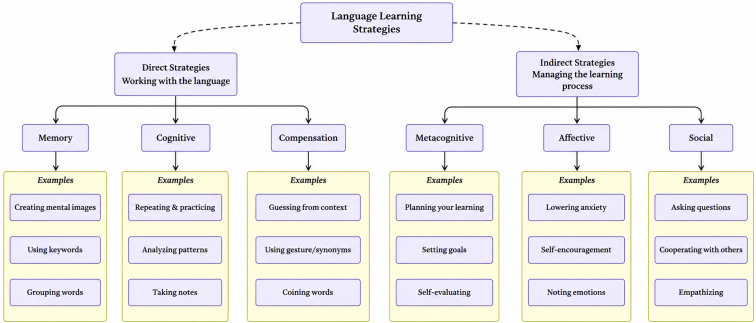
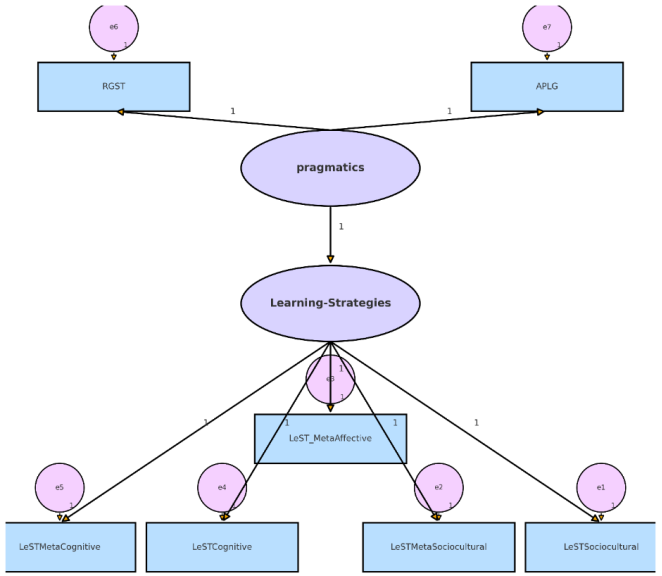
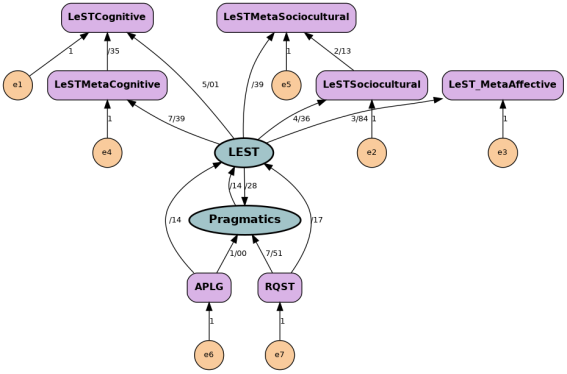




 Share This Article
 Twitter
 Linked In
 Facebook