Research Article | | Peer-Reviewed

Age, Socioeconomic Status and BMI Are Poor Predictors of Nutrient Adequacy Among Tribal Adolescent Girls of Central India

Received: 20 April 2026     Accepted: 3 May 2026     Published: 14 May 2026
Views:       Downloads:
Abstract

Nutritional deficiencies among tribal adolescent girls remain a significant public health concern in India. This study assessed the anthropometric status and dietary nutrient adequacy of 383 tribal adolescent girls aged 13–18 years, purposively selected from four Ashram Shalas in Nagpur District, Maharashtra. Demographic profile was recorded using a structured questionnaire. Anthropometric measurements (height and weight) were recorded using standard procedures, and BMI was computed. Dietary intake was assessed by the 24-hour recall method, and nutrient adequacy ratios (NAR) were calculated and compared with ICMR-NIN Estimated Average Requirements (EAR) 2024 references. Results showed that the majority belonged to the Upper Lower class (73.8%) and the overall mean BMI of 18.39 kg/m2 indicated borderline nutritional vulnerability. The mean NAR showed that energy adequacy was critically low (35.11%), with calcium (17.55%), riboflavin (16.78%), and Vitamin D (4.37%) being the most deficient. Vitamin C (34.20%), Vitamin A (34.36%), and iron (45.84%) also showed substantial inadequacy. Thiamine (55.62%) and zinc (43.74%) were moderately deficient. The adequacy of protein (88.82%), magnesium (88.71%), and folate (85.85%) were adequate. Energy intake was critically low in 97.91% of participants, while protein adequacy was relatively better (76.24%). All subjects had low intakes of Vitamins A, D, riboflavin, and calcium across all age groups. Linear regression revealed that age, socioeconomic status, and BMI were collectively poor predictors of nutrient adequacy (R2<0.01), suggesting unmeasured factors such as dietary diversity and food security are more influential determinants. These findings highlight an urgent need for targeted nutritional interventions for tribal adolescent girls in this region.

Published in International Journal of Nutrition and Food Sciences (Volume 15, Issue 3)
DOI 10.11648/j.ijnfs.20261503.12
Page(s) 104-111
Creative Commons

This is an Open Access article, distributed under the terms of the Creative Commons Attribution 4.0 International License (http://creativecommons.org/licenses/by/4.0/), which permits unrestricted use, distribution and reproduction in any medium or format, provided the original work is properly cited.

Copyright

Copyright © The Author(s), 2026. Published by Science Publishing Group

Keywords

Tribal Adolescent Girls, Nutrient Adequacy Ratio, BMI, Socioeconomic Status, Linear Regression

1. Introduction
Adolescent girls constituted 1.2 billion globally and it is nearly 21% of India’s population (243 million). WHO identified that leading health risks for 10- 14-year-old girls are mostly related to water, hygiene and sanitation; while 15-19-year age group girls are vulnerable for unsafe sex, abortion and pregnancy related complexity. Adolescent girl’s health is more pathetic among tribal communities as they are shy in nature, face precise barriers in accessing health care services, and also the unavailability of those services . Tribes in India accounted 104 million, which is 8.6% of its total population. Constitutionally, these communities are known as ‘Schedule Tribe’ (Article 342); presently, the number of such communities is 635 out of which 75 tribal communities are designated as ‘Primitive Vulnerable Tribal Group’ (PVTG) based on their degree of use of pre-agricultural technology, low literacy, decreased population and relative isolation. Tribes in India mainly reside in five geographical zone primarily in remote hill and forest areas of the country. Nonetheless, they are mostly marginalized and vulnerable section of the society as report suggested tribes are considerably behind the non-tribal population in terms of health and livelihood issues. Health deprivation was observed through different studies conducted by researchers on various dimensions of health vulnerability among tribes. Disease burdens are relatively high in tribes compared to non-tribes .
Though, women and preschool children are known to be the most vulnerable groups for undernutrition, adolescent girls are also being recognized as a potential group, attracting the attention of both the nutritionists and public health professionals. The period of adolescence is significant in view of rapid growth and maturation, during which the nutrient requirements are relatively high. Undernutrition during adolescence, confounded by childhood marriages, leads to higher mortality and morbidity among women and young children, thus perpetuating the vicious cycle of undernutrition. Studies carried out by the National Nutrition Monitoring Bureau (NNMB) in the rural population revealed that the prevalence of undernutrition, as assessed by weight for age is about 40-50% and that of iron deficiency anaemia is about 70% .
There was a paucity of information on the predictability of age, socioeconomic status and BMI on the nutrient adequacy ratio of tribal adolescent girls of Vidarbha region in Maharashtra, hence the present study was carried out.
2. Materials and Methods
2.1. Selection of Sample
About 383 tribal adolescent girls (13 to 18 years old) were purposively selected from four Ashram Shalas of tribals located at Higna, Ramtek, Deolapar and Navegaon taluka places of Nagpur District. Institutional permission was obtained from all four Ashram Shalas prior to data collection. Informed consent was obtained from all participating tribal adolescent girls, and for minors, assent was obtained with the awareness of hostel/school authorities acting in loco parentis. Participation was entirely voluntary, and confidentiality of all data was strictly maintained throughout the study.
2.2. Data Collection and Analysis
The demographic profile of the adolescent girls was collected through a structured questionnaire. The socioeconomic status was computed using Modified Kuppuswamy Socioeconomic Scale 2024 . The anthropometric measurements viz., height and weight, were recorded using standard procedures and Body Mass Index (BMI) was computed. The diet intake was assessed using the 24-hour recall method. The nutrient intake was computed according to the Indian Food Composition Tables and compared with the Estimated Average Requirements (EAR) 2024 . The Nutrient Adequacy Ratio (NAR) was calculated for macro-nutrients (energy and protein) and micronutrients (thiamine, riboflavin, niacin, vitamin C, folate, calcium, iron, zinc, copper, and magnesium), using reference data for Indian children and adolescents (ICMR-NIN) as follows: NAR (%) = (nutrient intake divided by EAR) x 100. Furthermore, NAR was categorized as low intake (NAR<50%), moderate intake (NAR=50% - 75%), and adequate intake (NAR>75%) . The predictability of NAR was assessed with age, socioeconomic status and BMI using linear regression analysis. Data was analysed using SPSS. The Confidence Interval was set at 95%.
3. Results
3.1. Demographic Profile and Anthropometric Characteristics
Table 1. Demographic Profile and Anthropometric Characteristics of Tribal Adolescent Girls.

SN

Demographic and Anthropometric Characteristics

N (Percent)

Age in Years

1

13

71 (18.53)

14

107 (28.93)

15

100 (26.10)

16

67 (17.49)

17

32 (8.35)

18

6 (1.56)

2

Socioeconomic Status

Upper Lower

283 (73.89)

Lower Middle

96 (25.06)

Upper Middle

4 (1.04)

3

Anthropometric measurements

Mean + SD

Height (cm)

151.45 + 7.84

Weight (kg)

42.14 + 5.99

BMI (kg/m2)

18.39 + 2.41

(Numbers in parentheses indicate the number of cases)
The data presented in Table 1 shows that the sample comprised adolescent girls aged 13–18 years with a mean age of 14.74 +1.26 years. The largest age groups were 14-year-olds (28.9%) and 15-year-olds (26.1%), together representing over half the sample (54.0%), while 17 and 18-year-olds were least represented (8.3% and 1.56%, respectively). Regarding socioeconomic status, the majority belonged to the Upper Lower class (73.8%), followed by the Lower Middle Class (25.2%). Overall, the sample was predominantly composed of early adolescents from economically disadvantaged backgrounds. The tribal adolescent girls had a mean height of 151.45 ± 7.84 cm, weight of 42.14 ± 5.99 kg, and BMI of 18.39 ± 2.41 kg/m2. The detailed age- wise height, weight and BMI of adolescent girls are provided in Supplementary Table S1.
3.2. Mean Nutrient Adequacy Ratio
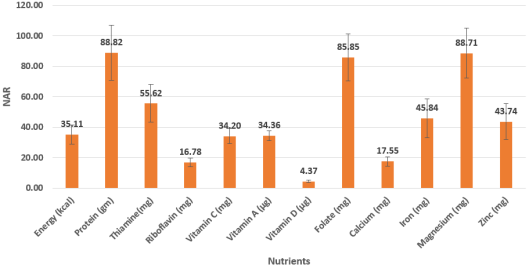
Figure 1. Mean Nutrient Adequacy Ratio of Tribal Adolescent Girls.
The mean nutrient intake of tribal adolescent girls revealed widespread deficiencies across almost all nutrients. Energy (852.47 kcal), protein (31.57 g), thiamine (0.75 mg), riboflavin (0.32 mg), Vitamin C (18.99 mg), Vitamin A (142.36 µg), folate (179.43 mg), calcium (150.42 mg), iron (8.98 mg), and zinc (5.33 mg) were all substantially below ICMR-NIN EAR. Only Vitamin D (17.46 µg) and magnesium (258.25 mg) approached adequate levels.
The mean NAR reveals that no nutrient reached 100% of the EAR. Magnesium (88.71%) and protein (88.82%) were the best-met nutrients, while Vitamin D (4.37%), calcium (17.55%), and riboflavin (16.78%) showed the most critical deficiencies. Energy adequacy at merely 35.11% is particularly alarming, as chronic energy deficiency underlies and compounds all other nutritional deficiencies (Figure 1).
3.3. Nutrient Adequacy Ratio Wise Classification
Table 2. NAR-wise Distribution of Tribal Adolescent Girls.

Nutrients

Low intake (NAR<50%)

Moderate intake (NAR 50-75%)

Adequate intake (NAR>75%)

2 *

P value

Energy (kcal)

375 (97.91)

8 (2.08)

0 (0.0)

3.264

0.659

Protein (gm)

3 (0.78)

88 (22.97)

292 (76.24)

12.907

0.229

Thiamine (mg)

115 (30.03)

246 (64.23)

0 (0.0)

11.307

0.334

Riboflavin (mg)

383 (100.0)

0 (0.0)

0 (0.0)

NA

NA

Vitamin C (mg)

374 (97.65)

9 (2.34)

0 (0.0)

5.958

0.31

Vitamin A (µg)

383 (100.0)

0 (0.0)

0 (0.0)

NA

NA

Vitamin D (µg)

383 (100.0)

0 (0.0)

0 (0.0)

NA

NA

Folate (mg)

2 (0.52)

93 (24.28)

288 (75.19)

15.150

0.127

Calcium (mg)

383 (100.0)

0 (0.0)

0 (0.0)

NA

NA

Iron (mg)

177 (46.21)

204 (53.26)

2 (0.52)

7.361

0.691

Magnesium (mg)

2 (0.52)

78 (20.36)

303 (79.11)

13.212

0.212

Zinc (mg)

233 (60.83)

150 (39.16)

0 (0.0)

1.891

0.864

*Chi-square test was performed for age and NAR-wise distribution of adolescent girls. (For details, please see Supplementary Tables S2, S3 and S4)
NA- Chi-square test could not be performed due to inadequate cell frequency.
The data presented in Table 2 reveal notable differences in energy and protein intake among adolescents. Energy intake was alarmingly poor, with 97.91% participants falling under low intake, and only 2.08% showing moderate consumption, mostly among younger adolescents aged 13–16. Despite this, no significant age-related variation was found (χ2=3.264, p=0.659), suggesting low energy intake persists uniformly throughout adolescence. Protein intake, however, indicated more encouraging results, with 76.24% adolescents achieving adequate levels, followed by moderate (22.97%) and very few with low intake (0.78%). Similarly, no significant age association was observed (χ2=12.907, p=0.229), indicating protein adequacy remains relatively consistent across all adolescent age groups (Supplementary Table S2).
The data presented in Table 2 reveal vitamin intake patterns among adolescents aged 13–18 years. Vitamins A, D, and riboflavin were universally deficient, with all adolescents falling under low intake, regardless of age. Vitamin C intake was similarly poor, with only 2.34% adolescents achieving moderate intake. Thiamine intake was mostly moderate (64.23%), though adequate intake remained rare and declined with age. Encouragingly, folate intake was relatively better, with 75.19% adolescents achieving adequate levels. Across all nutrients except folate, inadequacy was widespread. Importantly, none of these patterns showed statistically significant variation with age, suggesting these deficiencies persist consistently throughout adolescence (Supplementary Table S3).
Table 2 further reveals mixed mineral intake patterns among adolescents aged 13–18 years. Calcium intake was alarmingly deficient, with all adolescents falling under low intake. Iron intake was mostly moderate (53.26%), though adequate intake was nearly absent (0.52%), with only 2 adolescents meeting requirements. Magnesium stood out positively, with 79.11% adolescents achieving adequate intake consistently across all age groups. Zinc intake, however, was largely insufficient, with 60.83% adolescents showing low intake. Notably, none of these mineral intake patterns showed statistically significant (p<0.05) variation with age, suggesting these deficiencies and adequacies remain persistent throughout adolescence (Supplementary Table S4).
3.4. Linear Regression Analysis of Nutrient Adequacy Ratio with Demographic and Anthropometric Variables
Table 3. Linear Regression of NAR with Age, SES and BMI (Kg/m2).

SN

Nutrients

R Square

Adjusted R Square

F

P Value

Intercept

P value

Age

SES

BMI (Kg/m2)

β

P value

β

P Value

β

P Value

1

Energy

0.009

0.001

1.135

0.335

18.83

0.101

-0.277

0.684

-0.682

0.705

0.635

0.07

2

Protein

0.009

0.001

1.159

0.325

48.24

0.104

-0.793

0.65

-1.572

0.735

1.661

0.066

3

Vitamin A

0.01

0.002

1.231

0.298

21.22

0.048

-0.406

0.521

-1.089

0.518

0.594

0.069

4

Vitamin D

0.003

-0.005

0.395

0.756

4.881

0.001

0.058

0.483

0.156

0.481

-0.031

0.468

5

Vitamin C

0.008

0.000

1.032

0.379

31.08

0.000

0.021

0.918

-0.273

0.617

0.171

0.106

6

Thiamine

0.032

0.001

0.130

0.942

55.36

0.000

-0.109

0.838

0.739

0.520

0.043

0.876

7

Riboflavin

0.006

-0.002

0.779

0.506

14.792

0.000

0.028

0.813

0.331

0.290

0.063

0.298

8

Folic Acid

0.01

0.002

1.247

0.293

51.608

0.066

-1.006

0.543

-1.736

0.693

1.616

0.059

9

Calcium

0.009

0.001

1.165

0.323

10.961

0.068

-0.195

0.583

-0.443

0.638

0.332

0.069

10

Iron

0.009

0.001

1.18

0.317

29.281

0.084

-0.485

0.628

-1.11

0.677

0.951

0.066

11

Magnesium

0.009

0.001

1.162

0.324

49.373

0.102

-0.844

0.636

-1.793

0.705

1.686

0.067

12

Zinc

0.009

0.001

1.180

0.317

25.972

0.102

-0.382

0.683

-0.841

0.736

0.899

0.063

The linear regression analysis assessed the relationship between the NAR of twelve nutrients with age, Kuppuswamy socioeconomic status (SES) score, and BMI (Table 3). The models for all 12 nutrients perform very poorly. R2 values range from just 0.003 (Vitamin D) to 0.032 (Thiamine), meaning the three predictors together explain less than 1–3% of the variance in Nutrient Adequacy Ratios. Adjusted R2 values are near zero or even negative (Vitamin D: −0.005; Riboflavin: −0.002), indicating the models have essentially no practical explanatory power. All F-test p-values exceed 0.05 (range: 0.298–0.942), confirming that none of the overall models is statistically significant.
Age showed predominantly negative but statistically non-significant associations with NAR across all 12 nutrients. Beta coefficients ranged from −0.109 (Thiamine) to −1.006 (Folic Acid), with p-values ranging from 0.521 to 0.918, suggesting a marginal tendency for nutrient adequacy to decline with advancing age. However, given that all p-values exceeded 0.05, this trend cannot be considered statistically meaningful.
Socioeconomic status demonstrated negative coefficients for most nutrients, indicating that individuals belonging to lower SES groups tended to have reduced nutrient adequacy ratios for Energy (β = −0.682), Protein (β = −1.572), Vitamin A (β = −1.089), Vitamin C (β = −0.273), Folic Acid (β = −1.736), Calcium (β = −0.443), Iron (β = −1.110), and Magnesium (β = −1.793). P-values ranged from 0.290 to 0.735 across all nutrients. Despite this nutritionally plausible and consistent directional trend, none of the associations achieved statistical significance, likely reflecting insufficient statistical power rather than a true absence of effect.
BMI emerged as the most noteworthy predictor, displaying positive associations with NAR for the majority of nutrients, suggesting that individuals with higher BMI tend to report greater nutrient adequacy, possibly attributable to higher overall food consumption. Notable positive coefficients were observed for Magnesium (β = 1.686), Protein (β = 1.661), Folic Acid (β = 1.616), Iron (β = 0.951), and Zinc (β = 0.899). Several nutrients recorded borderline p-values, including Folic Acid (p = 0.059), Protein (p = 0.066), Iron (p = 0.066), Calcium (p = 0.069), Vitamin A (p = 0.069), Energy (p = 0.070), Magnesium (p = 0.067), and Zinc (p = 0.063). Vitamin D was the sole exception, showing a negligible negative coefficient (β = −0.031, p = 0.468). Although no association formally crossed the p < 0.05 threshold, the consistent borderline trend across multiple nutrients suggests BMI may warrant further investigation in a larger sample.
4. Discussion
The present study showed that the borderline low BMI suggests prevalent undernutrition, reflecting poor nutritional status consistent with their disadvantaged socioeconomic background, warranting targeted nutritional interventions (Table 1). A similar study has also reported that the mean weight, height and BMI significantly (P <.001) increased with the advancement of age. Further, it has been reported that girls in the late adolescence years had plausible better nutritional status (as the average BMI 18.54) compared to girls in the early adolescent years (average BMI 16.38). The overall prevalence of underweight among the adolescents were 82% and 54%, respectively, when both stages of adolescence were considered together. The prevalence of overall overweight-obesity was very low (about 2%) . The percentage prevalence of underweight was higher in early adolescent girls than the late adolescents and the same possible due to socio-cultural-economic and environmental factors which influence food intake and health-seeking behaviors .
The present study further revealed severely inadequate dietary intake, reflecting poor dietary diversity and quantity among this nutritionally vulnerable tribal adolescent population, necessitating urgent targeted nutritional interventions. The per cent adequacy of nutrient intake among tribal adolescent girls revealed severe deficiencies across most nutrients. No nutrient met 100% of the RDA (Figure 1), confirming widespread multi-nutrient dietary inadequacy among this nutritionally vulnerable tribal adolescent population, necessitating urgent comprehensive nutritional interventions.
The energy intake of 97.40% participants fell under low intake, but 75.84% adolescents had adequate levels of protein (Table 2). Several researchers have also reported the lower intake of calories and proteins among tribal adolescent girls . A study also reported much lower consumption of energy and protein among Kamar children than the RDA throughout the ages . The calorie intake of adolescent girls of Gond Madia community of Gadchiroli was 1301.6 kcal /d, significantly lower than the RDA . The nutritional status of Jenukuruba tribal children in Mysore district showed that 53.4% children (0-15 years) were having varying degrees of protein-energy malnutrition . The present investigation did not show a significant association between the age of adolescent girls and energy intake (Table 2); however, a study showed that energy deficiency was found among the 18.35% girls, the deficiency was observed to be higher among girls studying in class 6th as compared to class 8th of underprivileged communities residing in Kasturba Gandhi Balika Vidyalaya in Rajasthan . A study reported that the energy intake from “fair” (>90% of RDA) to an excess level of RDA, and protein intake ranged between “low” (80-93% of RDA) to “fair” level) for all girls across all ages of Assamese adolescent girls from Jorhat district, Assam . Another study also revealed a high incidence of under-nutrition and an inadequate energy/micronutrient intake among the beneficiaries of Adolescent Girls .
In the present study, it was observed that vitamins A, D, and riboflavin were deficient, with all adolescents falling under low intake, regardless of age. Vitamin C intake was similarly poor, with only 2.34% adolescents achieving moderate intake (Table 2). A study among women of the Sahariya tribal community of Madhya Pradesh also found that Vitamin A, riboflavin, vitamin C and folic acid intakes were lower than the recommended dietary allowance . In the present study, it was observed that the folate intake was relatively better, with most adolescents (75.19%) achieving adequate levels. A greater proportion of tribal Indian adolescent girls in the age group of 13–15 years (78.5% vs 38.6%, p <0.001) and 16–17 years (100.0% vs 76.9%, p = 0.04) had folic intakes below their recommended dietary allowance (RDA) .
The present study showed that 100%, 46.21%, 2% and 60.83% adolescent girls had low intakes of calcium, iron, magnesium and zinc, respectively (Table 2). Several other researchers have also reported the dietary inadequacies of calcium and all micronutrients (iron, beta-carotene, folic acid) except vitamin C . A study conducted in urban schools across ten cities in India revealed that more than half of the adolescent population had deficiencies in calcium and iron, while zinc and selenium deficiencies were present in approximately 10% of the sample .
Linear regression analysis examined the influence of age, socioeconomic status (SES), and BMI on Nutrient Adequacy Ratios (NAR) for 12 nutrients (Table 3). The models demonstrated extremely poor fit across all nutrients, with R2 values ranging from 0.003 to 0.032, indicating that the three predictors collectively explained less than 3% of the variance in NAR. None of the overall models reached statistical significance (all p > 0.05). Individually, neither age nor SES emerged as a significant predictor for any nutrient. Although SES coefficients were predominantly negative — suggesting lower SES may be associated with reduced nutrient adequacy — these trends lacked statistical significance, possibly due to inadequate sample size. BMI showed consistently borderline positive associations with multiple nutrients including Energy, Protein, Folic Acid, Iron, and Zinc (p ≈ 0.059–0.07), hinting that higher BMI may reflect greater overall food intake, though significance was not achieved. These findings suggest that age, SES, and BMI alone are insufficient predictors of nutrient adequacy. Other determinants such as dietary patterns, food security, and supplementation practices likely play a more substantial role. A study reported that a higher level of education of household head played a significant role in the reduction of malnutrition, especially stunting as well as underweight of tribal adolescent girls (the coefficients were significantly negative in both the cases). Covariates such as availability of toilet to the households and education level of adolescent girls itself have a significant role in reducing malnutrition of adolescent girls in the tribal community .
5. Conclusion
The study concludes that tribal adolescent girls in Nagpur District are nutritionally vulnerable, characterized by borderline low BMI and pervasive dietary deficiencies. Energy, calcium, vitamins A, D, and riboflavin intakes were critically inadequate across all age groups, while protein, folate, and magnesium showed relatively better adequacy. Regression analysis revealed that age, socioeconomic status, and BMI were poor predictors of nutrient adequacy, indicating that deeper structural and behavioural determinants govern dietary patterns in this population. These findings underscore the urgent need for targeted, community-based nutritional interventions, dietary diversification programmes, and strengthened supplementation schemes within Ashram Shalas to address the persistent nutritional deficiencies among tribal adolescent girls.
6. Recommendations
Based on the study findings, it is recommended that dietary diversification programmes promoting locally available nutrient-dense foods be implemented within Ashram Shalas. Existing government supplementation schemes such as Weekly iron and Folic Acid Supplementation Programme (WIFS) and Vitamin A and D supplementation should be strengthened and regularly monitored. Nutritional quality of Ashram Shala meals should be improved to meet recommended dietary allowances. Nutrition education should be integrated into school curricula, and community-based interventions addressing structural and behavioural determinants of poor dietary intake should be prioritised. Regular anthropometric monitoring and policy-level advocacy under POSHAN Abhiyaan and Rashtriya Kishor Swasthya Karyakram (RKSK) are essential for sustained improvement in nutritional status of tribal adolescent girls.
Abbreviations

BMI

Body Mass Index

NAR

Nutrient Adequacy Ratio

SES

Socioeconomic Status/Scale

IFCT

Indian Food Composition Tables

ICMR-NIN

Indian Council of Medical Research-National Institute of Nutrition

Acknowledgments
The authors are thankful to Dr Vandana Dhawad, Head, Post Graduate Teaching Department of Home Science, Rashtrasant Tukadoji Maharaj Nagpur University, Nagpur, for extending her support to carry out the work.
Author Contributions
Meenakshi Surpande: Data curation, Investigation, Methodology, Resources, Writing – original draft
Rekha Sharma: Conceptualization, Formal Analysis, Project administration, Software, Supervision, Supervision, Validation, Visualization, Writing – review & editing
Conflicts of Interest
The authors declare no conflicts of interest.
Supplementary Material

Below is the link to the supplementary material:

Supplementary Material 1

References
[1] Ahirwar, A. K., Gautam, R. K. Nutritional status among school-going boys and girls (5–17 years) of Bharia Tribe (PVTG) of Patalkot, District Chhindwara (M. P.), India. Human Biology Review. 2017, 6(4), 346–358.
[2] Kumar, D., Kumar, V., Tirkey, A. Assessment of health aspects of tribal adolescent girls in India's most populous tribal state: A two-decadal review. International Journal of Health Sciences and Research. 2023, 13, 150–158.
[3] Rao, K. M., Balakrishna, N. N., Laxmaiah, A. A., Venkaiah, K. K., Brahmam, G. N. V. Diet and nutritional status of adolescent tribal population in nine states of India. Asia Pacific Journal of Clinical Nutrition. 2006, 15(1), 64–71.
[4] Mandal, I., Hossain, S. R. Update of modified Kuppuswamy scale for the year 2024. International Journal of Community Medicine and Public Health. 2024, 11(7), 2945–2946.
[5] Longvah, T., Ananthan, R., Bhaskarachary, K., Venkaiah, K. Indian Food Composition Tables. National Institute of Nutrition, Indian Council of Medical Research: Hyderabad, India, 2017.
[6] National Institute of Nutrition, ICMR. Nutrient Requirements and Recommended Dietary Allowances for Indians. Report of Expert Group, Indian Council of Medical Research: Hyderabad, India, 2024, 1–334.
[7] Vispute, S., Mandlik, R., Sanwalka, N., Gondhalekar, K., Khadilkar, A. Dietary diversity and food variety scores and their association with nutrition and health status of Indian children and adolescents: A multicenter study. Nutrition. 2023, 111, 112039.
[8] Ravula, P., Pramanik, S., Kasala, K., Selvaraj, A. Nutritional Dynamics of Adolescent Girls in Selected Tribal Regions of Telangana, India. Research Report; International Crops Research Institute for the Semi-Arid Tropics (ICRISAT): Patancheru, India, n.d.
[9] Kumar, V., Basu, D., Reddy, B. M. Genetic heterogeneity in northeastern India: Reflection of tribe–caste continuum in the genetic structure. American Journal of Human Biology. 2004, 16(3), 334–345.
[10] Ghosh-Jerath, S., Singh, A., Bhattacharya, A., Ray, S., Yunus, S., Zodpey, S. Dimensions of nutritional vulnerability: Assessment of women and children in Sahariya tribal community of Madhya Pradesh in India. Indian Journal of Public Health. 2013, 57(4), 260–267.
[11] Mitra, M., Kumar, P., Chakrabarty, S., Bharati, P. Nutritional status of Kamar tribal children in Chhattisgarh. The Indian Journal of Pediatrics. 2007, 74(4), 381–384.
[12] Sanap, S., Jadhav, V. A study on the body mass index of adolescent girls of Gond Madia community of Gadchiroli district. International Journal of Home Science. 2017, 3(1), 164–166.
[13] Narayanappa, D., Rajani, H. S., Kumar, K. N., Manjunath, V. G. Nutritional and health status of Jenukuruba tribal children in Mysore district. Pediatric Review: International Journal of Pediatric Research. 2015, 2(4), 113–119.
[14] Agrawal, M., Nagar, P., Jain, D. Health and nutritional profile of adolescent girls from underprivileged communities residing in Kasturba Gandhi Balika Vidyalaya in Rajasthan. Asian Journal of Dairy and Food Research. 2018, 37(3), 237–241.
[15] Neog, N., Baroova, B. Nutritional status of adolescent girls irrespective of socio-economic and ethnic background of Jorhat district, Assam. Food Science Research Journal. 2010, 1(2), 130–133.
[16] Malhotra, A., Passi, S. J. Diet quality and nutritional status of rural adolescent girl beneficiaries of ICDS in North India. Asia Pacific Journal of Clinical Nutrition. 2007, 16(Suppl 1), 8.
[17] Jani, R., Salian, N., Udipi, S., Ghugre, P., Lohia, N., Haas, J., Boy, E. Folate status and intake of tribal Indian adolescents aged 10 to 17 years. Food and Nutrition Bulletin. 2015, 36(1), 14–23.
[18] Joshi, D., Raghav, P. K. Food intake of tribes in Rajasthan: A review. The Pharma Innovation Journal. 2019, 8(6), 753–756.
[19] Kaur, T., Kaur, M. Anaemia: A health burden among rural adolescent girls in District Karnal—Prevalence and correlates. International Research Journal of Biological Sciences. 2015, 4(7), 34–41.
[20] Cashman, K., Kehoe, L., Kearney, J., McNulty, B., Walton, J., Flynn, A. Adequacy of calcium and vitamin D nutritional status in a nationally representative sample of Irish teenagers aged 13–18 years. European Journal of Nutrition. 2022, 61, 3625–3636.
[21] Jan, S. Impact of dietary intervention program on nutritional knowledge of adolescent girls in Srinagar city of Jammu and Kashmir. South India Journal of Social Sciences. 2024, 22(1), 105.
Cite This Article
  • APA Style

    Surpande, M., Sharma, R. (2026). Age, Socioeconomic Status and BMI Are Poor Predictors of Nutrient Adequacy Among Tribal Adolescent Girls of Central India. International Journal of Nutrition and Food Sciences, 15(3), 104-111. https://doi.org/10.11648/j.ijnfs.20261503.12

    Copy | Download

    ACS Style

    Surpande, M.; Sharma, R. Age, Socioeconomic Status and BMI Are Poor Predictors of Nutrient Adequacy Among Tribal Adolescent Girls of Central India. Int. J. Nutr. Food Sci. 2026, 15(3), 104-111. doi: 10.11648/j.ijnfs.20261503.12

    Copy | Download

    AMA Style

    Surpande M, Sharma R. Age, Socioeconomic Status and BMI Are Poor Predictors of Nutrient Adequacy Among Tribal Adolescent Girls of Central India. Int J Nutr Food Sci. 2026;15(3):104-111. doi: 10.11648/j.ijnfs.20261503.12

    Copy | Download

  • @article{10.11648/j.ijnfs.20261503.12,
      author = {Meenakshi Surpande and Rekha Sharma},
      title = {Age, Socioeconomic Status and BMI Are Poor Predictors of Nutrient Adequacy Among Tribal Adolescent Girls of Central India},
      journal = {International Journal of Nutrition and Food Sciences},
      volume = {15},
      number = {3},
      pages = {104-111},
      doi = {10.11648/j.ijnfs.20261503.12},
      url = {https://doi.org/10.11648/j.ijnfs.20261503.12},
      eprint = {https://article.sciencepublishinggroup.com/pdf/10.11648.j.ijnfs.20261503.12},
      abstract = {Nutritional deficiencies among tribal adolescent girls remain a significant public health concern in India. This study assessed the anthropometric status and dietary nutrient adequacy of 383 tribal adolescent girls aged 13–18 years, purposively selected from four Ashram Shalas in Nagpur District, Maharashtra. Demographic profile was recorded using a structured questionnaire. Anthropometric measurements (height and weight) were recorded using standard procedures, and BMI was computed. Dietary intake was assessed by the 24-hour recall method, and nutrient adequacy ratios (NAR) were calculated and compared with ICMR-NIN Estimated Average Requirements (EAR) 2024 references. Results showed that the majority belonged to the Upper Lower class (73.8%) and the overall mean BMI of 18.39 kg/m2 indicated borderline nutritional vulnerability. The mean NAR showed that energy adequacy was critically low (35.11%), with calcium (17.55%), riboflavin (16.78%), and Vitamin D (4.37%) being the most deficient. Vitamin C (34.20%), Vitamin A (34.36%), and iron (45.84%) also showed substantial inadequacy. Thiamine (55.62%) and zinc (43.74%) were moderately deficient. The adequacy of protein (88.82%), magnesium (88.71%), and folate (85.85%) were adequate. Energy intake was critically low in 97.91% of participants, while protein adequacy was relatively better (76.24%). All subjects had low intakes of Vitamins A, D, riboflavin, and calcium across all age groups. Linear regression revealed that age, socioeconomic status, and BMI were collectively poor predictors of nutrient adequacy (R2<0.01), suggesting unmeasured factors such as dietary diversity and food security are more influential determinants. These findings highlight an urgent need for targeted nutritional interventions for tribal adolescent girls in this region.},
     year = {2026}
    }
    

    Copy | Download

  • TY  - JOUR
    T1  - Age, Socioeconomic Status and BMI Are Poor Predictors of Nutrient Adequacy Among Tribal Adolescent Girls of Central India
    AU  - Meenakshi Surpande
    AU  - Rekha Sharma
    Y1  - 2026/05/14
    PY  - 2026
    N1  - https://doi.org/10.11648/j.ijnfs.20261503.12
    DO  - 10.11648/j.ijnfs.20261503.12
    T2  - International Journal of Nutrition and Food Sciences
    JF  - International Journal of Nutrition and Food Sciences
    JO  - International Journal of Nutrition and Food Sciences
    SP  - 104
    EP  - 111
    PB  - Science Publishing Group
    SN  - 2327-2716
    UR  - https://doi.org/10.11648/j.ijnfs.20261503.12
    AB  - Nutritional deficiencies among tribal adolescent girls remain a significant public health concern in India. This study assessed the anthropometric status and dietary nutrient adequacy of 383 tribal adolescent girls aged 13–18 years, purposively selected from four Ashram Shalas in Nagpur District, Maharashtra. Demographic profile was recorded using a structured questionnaire. Anthropometric measurements (height and weight) were recorded using standard procedures, and BMI was computed. Dietary intake was assessed by the 24-hour recall method, and nutrient adequacy ratios (NAR) were calculated and compared with ICMR-NIN Estimated Average Requirements (EAR) 2024 references. Results showed that the majority belonged to the Upper Lower class (73.8%) and the overall mean BMI of 18.39 kg/m2 indicated borderline nutritional vulnerability. The mean NAR showed that energy adequacy was critically low (35.11%), with calcium (17.55%), riboflavin (16.78%), and Vitamin D (4.37%) being the most deficient. Vitamin C (34.20%), Vitamin A (34.36%), and iron (45.84%) also showed substantial inadequacy. Thiamine (55.62%) and zinc (43.74%) were moderately deficient. The adequacy of protein (88.82%), magnesium (88.71%), and folate (85.85%) were adequate. Energy intake was critically low in 97.91% of participants, while protein adequacy was relatively better (76.24%). All subjects had low intakes of Vitamins A, D, riboflavin, and calcium across all age groups. Linear regression revealed that age, socioeconomic status, and BMI were collectively poor predictors of nutrient adequacy (R2<0.01), suggesting unmeasured factors such as dietary diversity and food security are more influential determinants. These findings highlight an urgent need for targeted nutritional interventions for tribal adolescent girls in this region.
    VL  - 15
    IS  - 3
    ER  - 

    Copy | Download

Author Information
  • Post Graduate Teaching Department of Home Science, Rashtrasant Tukadoji Maharaj Nagpur University, Nagpur, India

    Biography: Meenakshi Surpande is Assistant Professor in Food Science and Nutrition in Department of Home Science Rashtrasant Tukadoji Maharaj Nagpur University, Nagpur Maharashtra. She has teaching experience of 13 years at Post Graduate level in Advanced Food Science in Food Science and Nutrition. She has experience of research in nutrition and product development. She has guided students for their dissertation and research projects. She has published and presented papers in National and International journals. She has attended and participated in many national and international conferences, seminars, webinars and workshops. She is life member of Nutrition society of India Nagpur Chapter.

    Research Fields: Product development, Nutritional Status Studies.

  • UGC- Malviya Mission Teaching Centre, Rashtrasant Tukadoji Maharaj Nagpur University, Nagpur, India

    Biography: Rekha Sharma is a Former Professor at the UGC-Malviya Mission Teacher Training Centre, Rashtrasant Tukadoji Maharaj Nagpur University, with a PhD in Foods and Nutrition. She has published 72 research papers in national and international journals, presented 16 papers at conferences (four of which received best research paper awards), and authored three acclaimed books on “Wheat Germ; Functional Foods and Nutraceuticals; and Millets-Sustainable Grain for a Healthy Future’. Nine of her students have earned PhDs, and she launched an online course on Functional Foods and Nutraceuticals through the SWAYAM portal of the Government of India, which was opted for by about 18000+ learners across the world.

    Research Fields: Nutrition education, maternal and child nutrition, functional foods and nutraceuticals, geriatric nutrition, adolescent nutrition, traditional nutritional knowledge, product development.