Research Article | | Peer-Reviewed

Effect of Drying Methods on the Properties of Dried Carrot Slices and Drinks Produced from the Dried Carrots

Received: 26 February 2026     Accepted: 16 March 2026     Published: 27 March 2026
Views:       Downloads:
Abstract

This study investigated the effect of different drying methods on the rehydration profile and ratio of dried carrot slices and the physico-chemical, proximate and sensory properties of carrot drinks produced from rehydrated dried carrot slices. The carrots (Daucus carota L.) were sorted, washed, sliced (5 mm) and pre-treated with sodium metabisulfite, and dried using three different methods - solar, oven and dehydrator driers, alongside fresh carrot as control. The dried carrot slices were analyzed for their rehydration profile and ratio while the processed carrot drinks from the rehydrated carrot were analyzed for their physico-chemical, proximate and sensory properties. Data obtained were subjected to ANOVA at 5% significance (p<0.05). Rehydration profile of the properties increased with time, with moisture uptake ranging from 18.13–36.14% while the rehydration ratio ranged from 1.60 (10mins) – 6.10 (60mins) with the dehydrator-dried sample showing superior rehydration properties. Physico-chemical parameters of the drinks produced from the rehydrated dried carrot slices showed that β-carotene ranged from 0.56 –1.39%, pH - 5.14 – 6.30, total titratable acidity - 0.002–0.004%; total soluble solids - 1.95 – 2.95 while viscosity was constant at 0.14 Pa·s (p>0.05). Proximate composition showed moisture (95.29 – 97.30%), ash (0.15 – 0.24%), fat (0.10 – 0.30%), crude protein (0.33 – 0.87%) and carbohydrate (2.10 – 3.55%) for the drinks. Sensory scores of the drinks produced from the rehydrated samples varied significantly (p<0.05) with appearance ranging from 4.80 – 8.35, color (4.75 – 8.60), taste (5.05 – 7.95), aroma (5.45 –7.75), mouth feel (5.40 – 8.15) and overall acceptability (5.09–8.16) with dehydrator and fresh samples (no significant difference) being the most preferred. The findings reveal that drying significantly affects physico-chemical, proximate and sensory qualities of the carrot drink samples, with dehydrator-dried samples producing drinks comparable to fresh carrot sample drink in some of the measured qualities.

Published in International Journal of Nutrition and Food Sciences (Volume 15, Issue 2)
DOI 10.11648/j.ijnfs.20261502.13
Page(s) 41-49
Creative Commons

This is an Open Access article, distributed under the terms of the Creative Commons Attribution 4.0 International License (http://creativecommons.org/licenses/by/4.0/), which permits unrestricted use, distribution and reproduction in any medium or format, provided the original work is properly cited.

Copyright

Copyright © The Author(s), 2026. Published by Science Publishing Group

Keywords

Drying Methods, Dried Carrot, Rehydration Profile and Ratio, Carrot Drink, Physico-chemical Properties and Sensory Analysis

1. Introduction
Carrots (Daucus carota L.) are significant root vegetable, widely cultivated and consumed for their nutritional value and culinary versatility. In Nigeria they are increasingly incorporated into local diets . Carrot production globally has seen consistent growth, with major producing countries like China, the United States, and several European nations contributing substantial volumes to the global market. Statistics indicate that carrots are among the most produced vegetables, with millions of tons harvested annually .
In Nigeria, carrot cultivation has gained traction, particularly in regions with suitable climates, contributing to local food security and providing essential source of vitamins and minerals. They are a vital source of pro-vitamin A - carotenoids, dietary fiber, and various bioactive compounds, contributing significantly to human nutrition and health . The growing awareness of their health benefits, coupled with the increasing demand for diverse food products, has led to a rise in carrot consumption in Nigeria . However, their high moisture content and perishable nature pose substantial challenges for long-term storage, distribution and utilization.
Drying is a widely employed preservation technique that reduces water activity, thereby inhibiting microbial growth and enzymatic reactions . The application of heat and other drying mechanisms can lead to varying degrees of nutrient degradation, particularly in heat-sensitive bioactive compounds inducing structural alterations that affects products nutrient bio-availability, functional and sensory properties .
The transformation of fresh carrots into dried forms would inevitably induces significantly alterations in their physico-chemical and sensory attributes . Consequently, the choice of drying method is critical for preserving the desired nutritional and functional attributes of the final product, including moisture content, water activity, antioxidant capacity, and the retention of key nutrients.
Similarly, rehydration also influence the release and stability of some bioactive and nutritive compounds in the final drink making the process crucial, as it impacts the reconstitution of dried carrot tissues, influencing the final product's color, nutrient profile among others . Hence, understanding rehydration profile would be essential in ensuring the production of high-quality carrot drinks as it influences the drink's nutrient retention and some physico-chemical properties of the carrot drinks .
Evaluating the sensory properties of carrot drinks produced from different dried and rehydrated carrots is crucial for ensuring consumer satisfaction which ultimately determine the marketability of drink . Hence, the objective of this study is to investigate the effect of drying methods on the physicochemical and sensory properties of carrot drink produced from dried and rehydrated carrots.
2. Materials and Methods
2.1. Materials
Carrot roots (Daucus carota) were purchased from Fruit Garden, Port Harcourt Local Government Area, Rivers State. The chemicals and reagents used were sourced from the Department of Food Science and Technology Laboratory, Rivers State University, Port Harcourt, Rivers State.
2.2. Methods
2.2.1. Sample Preparation
The dried carrot slices were produced using the modified method of Ignaczak et al., . The carrots samples were properly sorted to have a consistent and uniform size, shape and devoid of any signs of mechanical damage, insect infestation or pathogenic infection. Thereafter, the carrots were washed, peeled, cut into slices with a slicer to achieve a thickness of about 5 mm (using Digital Vernier Caliper - Model No. Z22855, Molimex, Ltd UK). The sliced carrots were then soaked in Sodium metabisulfite (2g/100g) for 10 minutes and then blanched in hot water at 95°C for 3 mins. After blanching, the carrots were quickly cooled by immersing them in cold water, excess water on the carrot samples were dried using filter paper before drying.
2.2.2. Drying of Pre-Treated Carrot Samples
The pre-treated samples were divided into three portions and dried separately in three different dryers - parabolic solar dryer (Nigerian Stored Product Research Institute (NSPRI) Model), an air oven (Model DHG – 914A, China) and dehydrator (Model UCK LT-83, China). Prior to loading the blanched carrot slices, the dryers were allowed to reach the equilibrium condition at each of the specific drying temperature of 55°C (day time) and 60°C for solar dryer and both oven and dehydrator respectively. Upon drying, the samples were packed separately in Ziploc bags prior to usage and analysis.
2.2.3. Rehydration of Dried Carrot Samples
The dried carrot slice samples were weighed and then soaked in hot water. The rehydration was carried out at 95°C in water bath filled with distilled water. Samples were removed from the water bath at 10 mins interval, blotted with tissue paper and weighed. The final moisture content of carrot slices after rehydration at a given time interval.
2.2.4. Production of Carrot Drink
The modified method of Salwa et al., was used for the production of the carrot juice. The rehydrated dried carrot slices were blended into pulp using a blender (Silver Crest Multifunctional Blender Robots, Model – SC8500W). The pulp obtained was sieved with muslin cloth using a pulp to water ratio of 1:3 to extract carrot juice. The obtained juice were then filled into bottles (that has been previously washed with hot water), crown-corked and pasteurized at 70°C for 15min using a water bath and allowed to cool to room temperature.
2.3. Analyses
2.3.1. Rehydration Profile
The dried carrot slice samples were weighed and then soaked in hot water. The rehydration was carried out at 95°C in water bath filled with distilled water. Samples were removed from the water bath at 10 mins intervals till 70 mins, blotted with tissue paper and the final moisture content of carrot slices after rehydration at a given time interval was determined according to AOAC, to obtain the rehydration profile of the dried carrot slices.
2.3.2. Rehydration Ratio
Approximately 5.0 grams of the dried carrot sample was placed in a 250 ml beaker, and 150 ml of distilled water was added. The beaker was covered and the carrots allowed to stand for a period of time (10, 30 and 60 mins), then drained and the weight noted. This was done using Chen et al., modified method. The rehydration ratio was computed by using the equation
Rehydration ratio=Weight of rehydrated materialWeight of dehydrated material
2.3.3. Physicochemical Properties of Carrot Drink
Determination of Total Titratable Acidity: About 10ml of the carrot drink samples were measured and transferred into a conical flask. 2 drops of phenolphthalein were added to the sample in the conical flask. The mixture was then titrated against 0.1N Sodium Hydroxide (NaOH) solution.
     % TTA=Titre value x normality of base X equivalent ml of a predominant acid (lactic acid) × 100Sample weight
Equivalent value of malic acid=671000=0.067
Determination of Total Soluble Solid (oBrix): Total soluble solids content was determined using a hand refractometer. The prism of the refractometer was cleaned and a drop of the drink sample was placed on the prism and closed. The sugar content percentage (soluble sugar) was read from the scale of the refractometer when held close to the eye .
Determination of pH: This was determined using a standard pH metre (PHS-3C, Germany). About 20ml of each carrot drink sample was measured into already washed and dried beakers. The pH metre electrode was then dipped into the beaker containing the sample and was held still until steady readings were achieved for the sample.
Determination of Viscosity: Approximately 20ml of each carrot drink sample werey measured into a beaker. The viscosity was determined using a rotary digital viscometer (NDJ-8S) using spindle number 1 at 0.3rpm. The beaker was brought onto the rotating spindle and the viscosity values was be displayed on the LCD screen in Pas-1.
Determination of β-Carotene Content: Beta-carotene content was determined by using AOAC method. One gram of sample was weighed into a conical flask and 95% of ethanol was added. The flask with the content was placed into a shaking water bath, set to 70-80°C for 20 minutes. After 20 minutes, it was allowed to cool and the supernatant was decanted into a measuring cylinder and recorded the volume as initial volume, V1. The ethanol concentration of the mixture was brought to 85% by adding 1.5ml of distilled water and allowed to cool in ice for 5 minutes using a bucket of ice or cooled to room temperature. The cooled extract was transferred into a separating funnel. 2.5ml of petroleum ether was added into it and the separating funnel was gently swirled/shaken to obtain a homogeneous mixture. It was allowed to stand to separate out into two layers. The bottom layer was collected in a beaker (for re-extraction) and the top ether extract layer was kept. The bottom layer collected was transferred in a beaker back into the separating funnel and re-extracted with 1 ml petroleum ether for about 5 times of continuously until the extract became fairly yellow. All the petroleum ether extract collected was transferred back into the emptied separating funnel and re extracted with 5ml of 80% ethanol. The volume of the final extract was taken and recorded as V2. It was stored for spectrophotometric determination in the dark. The absorbance of the extract was read using a UV visible spectrophotometer at 436 nm. Petroleum ether was used as blank
Beta-carotene mgkg=Abs×VtEC×1×W
2.3.4. Proximate Composition of Rehydrated Carrot Drink
The methods described by AOAC was used to determine the moisture, crude protein, ash, crude fat and carbohydrate contents of the carrot drink samples. Determination of moisture was carried out by oven method, while ash content was determined by the sample ashing method in a muffle furnace. The protein (total nitrogen) content was determined by Kjeldahl method while the fat content was evaluated by extraction through Soxhlet apparatus using petrol ether as solvent. Crude fiber was determined from the residue of defatted sample by using a muffle furnace at temperature of 900°C for 6 h after extraction of insoluble matter following AOAC methods. The carbohydrate content was determined by simple differences (dry extract - ash+ lipids + proteins) following Ellong et al., .
2.3.5. Sensory Analysis
The sensory evaluation was done using the method of Iwe . A 20-man panel was used to evaluate appearance, colour, mouthfeel, taste, aroma and overall acceptability of the carrot drink using a 9-point hedonic scale (9 = liked extremely, 8 = liked very much, 7 = liked, 6 = liked mildly, 5 = neither liked nor disliked, 4 = disliked mildly, 3 = disliked, 2 = disliked very much and 1 = disliked extremely).
2.3.6. Statistical Analysis
All experiments and analysis were carried out in duplicates and the means calculated were subjected to analysis of variance (ANOVA) using Statistical Package for Social Science (SPSS) version 20.0 software. Significance was accepted at a 5% (p<0.05) level of probability.
3. Results and Discussion
3.1. Rehydration Profile of Dehydrated Carrot Slices
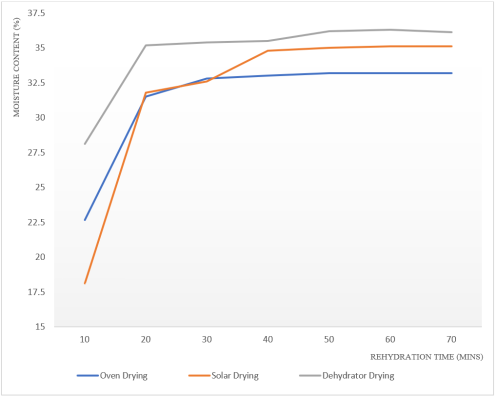
Figure 1 presents the rehydration kinetics of the dehydrated carrot slices. The moisture uptake of the oven, solar and dehydrator dried carrot samples ranged from 22.68 to 33.19%, 18.13 to 35.11% and 28.12 to 36.14% respectively at 10 mins and 70 mins. The rehydration profile indicated that at the beginning of the process, water absorption was very fast, but with the increasing rehydration time, the rate of water absorption was substantially reduced, because the amount of water absorbed by the inner structure of material approached the saturation level . Similar rehydration profile has been observed for amaranth leaves , red pepper , apples and tomatoes .
Figure 1. Rehydration Profile of Dehydrated Carrot Slices.
Dehydrator-dried carrot slices (DDC) consistently exhibited higher faster moisture uptake compared with oven-dried (ODC) and solar-dried (SDC) samples. This pattern revealed that the dehydration method significantly influenced the microstructure and porosity of the carrot matrix, thereby affecting water ingress during rehydration, mechanically or electrically controlled drying (including tray/oven/dehydrator systems) tends to produce more uniform drying, less cell-wall collapse, and a more open porous structure that favours liquid imbibition during rehydration; several experimental studies report similar findings for carrots and other vegetables .
3.2. Rehydration Ratio of Dehydrated Carrot Slices
Table 1. Rehydration Ratio of Dehydrated Carrot Slices.

Samples

10mins

30mins

60mins

ODC

1.85b ± 0.03

3.80b ± 0.05

5.55b ± 0.03

SDC

1.60c ± 0.05

3.15c ± 0.02

5.05c ± 0.05

DDC

2.10a ± 0.04

4.25a ± 0.02

6.10a ± 0.03

Values are means of triplicate determinations; ± = Standard deviations of determinations. Means with different superscript on the same column are significantly different (P < 0.05).
Where: Oven Dried Carrot – ODC; Solar Dried Carrot – SDC; Dehydrator Dried Carrot - DDC
Table 1 depicts the rehydration ratio of the dehydrated carrot slices, At 10 minutes, the dehydrator-dried sample (DC) exhibited the highest rehydration ratio (2.10), followed by the oven-dried (ODC, 1.85), while the solar-dried (SDC, 1.60) showed the lowest uptake. By 30 minutes, DC maintained superiority (4.25) compared to ODC (3.80) and SDC (3.15), and by 60 minutes, DC reached a peak value of 6.10, significantly higher than ODC (5.55) and SDC (5.05).
Rehydration ratio is usually used as one of the quality characteristics of the dried product . The values obtained in this research work revealed a significant difference with the drying methods. Generally, mechanical dehydration preserved tissue porosity and integrity, allowing for higher water uptake, while solar drying led to reduced moisture absorption due to harsher conditions. Hence, the variation in rehydration ratio may be due to difference in temperature of dehydration as high temperature may decline the tissue integrity and structure .
Emelike and Akusu, , in a comparative study on vegetables, oven and cabinet dried samples of fluted pumpkin, bitter leaf and waterleaf retained better rehydration ratios than sun-dried samples, further demonstrating that controlled drying methods promote superior rehydration.
3.3. Physico-chemical Properties of Drink Produced from Dehydrated Carrot Slices
From Table 2, the β-carotene content of the samples ranged from 0.56% to 1.39%, with DDC juice sample recording significantly the lowest value and FC juice sample (control) having the highest value. The pH ranged from 5.14 to 6.30, with ODC recording the lowest and FC the highest value Total titratable acidity (TTA) varied between 0.002% and 0.004%, with ODC and DC having the lowest and SDC the highest value. Total soluble solids ranged from 1.95% to 2.95%, with ODC and SDC recording the lowest and FC the highest value. Viscosity remained constant at 0.14Pa.s across all samples with no significant difference.
There were significant differences (p<0.05) in the physico-chemical properties of the samples except viscosity. FC sample has the highest value for all parameter from all the treatments except total titratable activities (SDC). The significant (p < 0.05) differences in the β-carotene retention of the samples might be connected to the fact that heat treatment decreases β-carotene retention in foods. Similar results were reported by Odogwu, et al. , who observed that heat treatment reduced β-carotene retention in soy-carrot beverages. Likewise, Ajenu et al. noted that processing methods significantly influenced carotenoid stability in carrot-containing food blends.
Table 2. Physicochemical Properties of Drink Produced from Dehydrated Carrot Slices.

Samples

β-Carotene (%)

pH

TTA (%)

TSS (%)

Viscosity (Pa.s)

FC

1.39a ± 0.01

6.30a ± 0.01

0.003a ± 0.0001

2.95a ± 0.03

0.14a ± 0.00

ODC

1.27b ± 0.02

5.14c ± 0.02

0.002b ± 0.0001

1.95c ± 0.04

0.14a ±0.00

SDC

0.61c ± 0.02

5.27c ± 0.02

0.004c ± 0.0001

1.95c ± 0.03

0.14a ±0.00

DDC

0.56d ± 0.01

5.67b ± 0.03

0.002b ± 0.0001

2.05b ± 0.05

0.14a ± 0.00

Values are means of duplicate determinations; ± = Standard deviations of determinations. Means with different superscript on the same column are significantly different (P < 0.05).
Where: Fresh Carrot – FC; Oven Dried Carrot – ODC; Solar Dried Carrot – SDC;
Dehydrator Dried Carrot – DDC; TTA - Total Titratable Acidity; TTS - Total Soluble Solids
The observed significant (p<0.05) differences in pH of the samples indicated that drying method influenced pH levels, probable as a result of organic acid concentration due to the removal of water during drying as slow drying process might leads to the degradation of organic acids . The lower pH could be an indication of shelf stability against microbial contamination .
Total titratable acidity (TTA) values indicated a significant (p<0.05) differences in the samples. These values indicate that solar drying may have increased acid concentration through stronger dehydration. A related study by Kayode et al. reported that solar-dried pawpaw products also exhibited higher acidity than oven-dried samples, suggesting that drying conditions influence organic acid retention.
The significant differences (p<0.05) observed in the Total Soluble Solids (TSS) value highlight that drying reduced sugar solubility, which directly influences taste perception. Similar reductions were reported by Obinna-Echem et al. , who noted lower TSS values in soy-carrot drinks subjected to heat treatment compared to freshly prepared samples.
The viscosity values were constant across all samples with no significant differences (p>0.05) suggesting that drying methods did not alter the flow properties of the carrot as compositional changes rather than drying conditions may drive viscosity variation .
3.4. Proximate Composition of Drink Produced from Dehydrated Carrot Slices
Table 3 shows the proximate composition of carrot drink produced from dried and rehydrated carrots. Moisture content of the samples ranged from 95.29 to 97.30%, with sample FC recording significantly the lowest and DDC the highest value. Ash content ranged from 0.15 to 0.24%, with sample DDC having the lowest and FC the highest value. Fat content varied between 0.10 and 0.30%, with DDC recording the lowest and FC the highest value. Crude protein ranged from 0.33 to 0.87%, with DDC having the lowest and FC the highest value. Carbohydrate content ranged from 2.10 to 3.55%, with ODC recording significantly the lowest and SDC the highest value.
There are significant (p<0.05) differences in the proximate composition result of the carrot drink samples. The significant differences in the moisture content of the drinks might probably due to the difference in moisture content during drying and rehydration of the carrot samples. Similar results were reported by Ajenu et al. , who found that carrot-based formulations retained high moisture content, reflecting the vegetable’s naturally high water activity.
Table 3. Proximate Composition (%) of Drink Produced from Dehydrated Carrot Slices.

Samples

Moisture

Ash

Fat

Crude Protein

Carbohydrate

FC

95.29b ± 0.13

0.24a ± 0.05

0.30a ± 0.001

0.87 a ± 0.01

3.30b±0.05

ODC

97.15a ± 0.11

0.21a ± 0.01

0.20b ± 0.002

0.34c ± 0.02

2.10d±0.02

SDC

95.37b ± 0.25

0.20a ± 0.00

0.20b ± 0.001

0.68b ± 0.02

3.55a±0.00

DDC

97.30a ± 0.14

0.15a ± 0.07

0.10c ± 0.001

0.33c ± 0.01

2.12c±0.00

Values are means of duplicate determinations; ± = Standard deviations of determinations. Means with different superscript on the same column are significantly different (P < 0.05).
Where: Fresh Carrot – FC (Control); Oven Dried Carrot – ODC; Solar Dried Carrot – SDC; Dehydrator Dried Carrot – DDC
There were also significant (p<0.05) differences in the ash content values of the samples when compared fresh sample. This reduction in ash content of dried samples probably indicates mineral loss during dehydration and rehydration processes.
Fat content of the samples showed a significant (p<0.05) differences in their values. The observed decrease in the fat content of the fresh sample to the dried samples is consistent with the findings of Kayode et al. , who reported fat losses in solar- and oven-dried pawpaw chips due to oxidative degradation during heat exposure.
The protein content of the sample also differs significantly (p<0.05) with fresh sample having the highest value. The decrease in protein content after drying suggests heat-induced denaturation. This aligns with the findings of Obinna-Echem et al. , who reported reductions in protein content of soy-carrot beverages subjected to processing treatments.
Also, a significantly (p<0.05) difference was observed in the carbohydrate content of the samples. The higher carbohydrate level in solar-dried samples may be attributed to concentration effects caused by greater moisture reduction.
3.5. Sensory Properties of Drink Produced from Rehydrated Carrot Slices
Table 4 revealed that the appearance scores ranged from 4.80 to 8.35, with sample SDC recording significantly the lowest and DC the highest value, color scores varied between 4.75 and 8.60 with SDC recording the lowest and DC the highest value. Taste scores ranged from 5.05 to 7.95, with SDC having the lowest and DC the highest value. Aroma scores ranged from 5.45 to 7.75, with SDC recording the lowest and DC the highest value. Mouthfeel scores ranged from 5.40 to 8.15 with SDC having the lowest and DC the highest value. Overall acceptability ranged from 5.09 to 8.16, with SDC having the lowest and DC the highest value.
Table 4. Sensory Properties of Drink Produced from Dehydrated Carrot Slices.

Samples

Appearance

Color

Taste

Aroma

Mouthfeel

Overall Acceptability

FC

7.20a ± 0.26

7.25ab ± 0.61

6.40b ± 0.25

6.40b ± 0.28

6.75b ± 0.71

6.80ab ± 0.45

ODC

6.95b ± 0.14

7.15b ± 0.42

6.20b ± 0.16

6.10b c± 0.16

6.45b ± 0.99

6.55b ± 0.36

SDC

4.80c ± 0.32

4.75c ± 0.43

5.05c ± 0.40

5.45c ± 0.30

5.40c ± 0.23

5.09c ± 0.48

DDC

8.35a ± 0.48

8.60a ± 0.20

7.95a ± 0.23

7.75a ± 0.36

8.15a ± 0.58

7.46a ± 0.42

Values are means of duplicate determinations; ± = Standard deviations of determinations. Means with different superscript on the same column are significantly different (P < 0.05).
Where: Fresh Carrot – FC (Control); Oven Dried Carrot – ODC; Solar Dried Carrot – SDC; Dehydrator Dried Carrot - DDC
The sensory results revealed a significant (p<0.05) difference in all the measured sensory properties of the carrot drinks samples with dehydrator dried sample ranking highest (though not significantly (p>0.05) difference from fresh sample in sensory attributes of appearance and color) for sensory properties.
For appearance and color, sensory rating for dehydrator dried carrot drink sample ranked highest, followed by fresh carrot then oven-dried sample with solar-dried sample coming last. Similar results were reported by Kayode et al. , who observed that solar drying negatively affected appearance scores in pawpaw products compared to oven or dehydrator drying.
However, Obinna-Echem et al. observed that carrot-based beverages prepared with fresh juice retained attractive color quality, while heat exposure during processing reduced visual appeal.
The sensory rating of taste and aroma also revealed a significant (p<0.05) difference; however, fresh and oven-dried sample do not show any significant difference with solar dried sample having the least rating. The result suggest that solar drying reduced volatile compounds, leading to lower taste and aroma scores . The mouthfeel and overall acceptability showed a significant (p<0.05) difference in the sensory ratings of the samples. Generally, the result revealed that control drying methods can produce drinks with consumer acceptability comparable to fresh carrot drink .
4. Conclusion
This study showed that drying methods significantly influenced the rehydration, physico-chemical, proximate and sensory properties of carrot drinks produced from rehydrated carrot slices. While fresh carrot drinks retained superior β-carotene content, oven dried method could still be considered as it provides a better β-carotene content retention and moderate sensory qualities acceptability. Overall, the study establishes that value addition through drying provides a sustainable means of extending carrot utilization, enhancing food security, and supporting the development of nutritious carrot-based beverages suitable for both local consumption and industrial application.
Abbreviations

FC

Fresh Carrot

ODC

Oven Dried Carrot

SDC

Solar Dried Carrot

DDC

Dehydrator Dried Carrot

Author Contributions
Owuno Friday: Conceptualization, Data curation, Formal Analysis, Investigation, Methodology, Writing – original draft, Writing – review & editing
Orunaboka Wilson Tamunotonye: Conceptualization, Investigation, Methodology, Validation, Writing – original draft, Writing – review & editing
Kosoko Sulaimon Babatunde: Methodology, Data curation, Investigation, Formal Analysis, Validation, Writing – original draft, Writing – review & editing
Udoh Wisdom Linus: Data curation, Formal Analysis, Investigation, Methodology, Validation, Writing – original draft, Writing – review & editing
Conflicts of Interest
The authors declare no conflicts of interest.
References
[1] Eze, F. O., Mukosha, C. E., Anozie, C., Moudry, J., Ali, S., Ghorbani, M. and Baiyeri, K. P. (2024). Response of Carrots (Daucus carota) on the Growth, Yield, and Nutritional Composition to Varying Poultry Manure Rates. Agricultural Research, 13(4), 841-850.
[2] Deekermue, P., Olajide, O. M., Yaradua, A. S. and Tye, A. H. (2024). Growth and Yield Performance of Carrot (Daucus carota L.) as Influenced by Organic Manure under Open Field Conditions. Journal of Agriculture Sustainability and Environment ISSN, 2997-271X.
[3] Balali, G. I., Yar, D. D., Afua Dela, V. G. and Adjei-Kusi, P. (2020). Microbial contamination, an increasing threat to the consumption of fresh fruits and vegetables in today’s world. International journal of microbiology, 2020(1), 3029295.
[4] Paparella, A., Kongala, P. R., Serio, A., Rossi, C., Shaltiel-Harpaza, L., Husaini, A. M. and Ibdah, M. (2024). Challenges and opportunities in the sustainable improvement of carrot production. Plants, 13(15), 2092.
[5] Ahmad, T., Cawood, M., Iqbal, Q., Arino, A., Batool, A., Tariq, R. M. S. and Akhtar, S. (2019). Phytochemicals in Daucus carota and their health benefits. Foods, 8(9), 424.
[6] Osunu, P. T., Moyegbone, J. E., Ofili, C. C. and Nwose, E. U. (2024). Consumption and factors associating the provision of fruits and vegetables to children in Bayelsa state of Nigeria. International journal of research in medical sciences, 12(2), 397.
[7] Tapia, M. S., Alzamora, S. M. and Chirife, J. (2020). Effects of water activity (aw) on microbial stability as a hurdle in food preservation. Water activity in foods: Fundamentals and applications, 323-355.
[8] Alp, A. and Bulantekin, O. (2021). The microbiological quality of various foods dried by applying different drying methods: a review. Eur Food Res Technol 247, 1333–1343
[9] Jayaraman, K. S. and Gupta, D. D. (2020). Drying of fruits and vegetables. In Handbook of industrial drying (pp. 643-690). CRC Press.
[10] Aravindakshan, S., Nguyen, T. H. A., Kyomugasho, C., Buve, C., Dewettinck, K., Van Loey, A. and Hendrickx, M. E. (2021). The impact of drying and rehydration on the structural properties and quality attributes of pre-cooked dried beans. Foods, 10(7), 1665.
[11] ElGamal, R., Song, C., Rayan, A. M., Liu, C., Al-Rejaie, S. and ElMasry, G. (2023). Thermal degradation of bioactive compounds during drying process of horticultural and agronomic products: A comprehensive overview. Agronomy, 13(6), 1580.
[12] Motegaonkar, S., Shankar, A., Tazeen, H., Gunjal, M. and Payyanad, S. (2024). A comprehensive review on carrot (Daucus carota L.): the effect of different drying methods on nutritional properties and its processing as value-added foods. Sustainable Food Technology, 2(3), 667-688.
[13] Akter, J., Hassan, J., Rahman, M. M., Biswas, M. S., Khan, H. I., Rajib, M. M. R. and Hasan, M. F. A. (2024). Colour, nutritional composition and antioxidant properties of dehydrated carrot (Daucus carota var. sativus) using solar drying techniques and pretreatments. Heliyon, 10(2).
[14] Pateiro, M., Vargas-Ramella, M., Franco, D., da Cruz, A. G., Zengin, G., Kumar, M. and Lorenzo, J. M. (2022). The role of emerging technologies in the dehydration of berries: Quality, bioactive compounds, and shelf life. Food Chemistry: X, 16, 100465.
[15] Anetoh, J. C., Okolo, V. O., Mmamel, Z., Obikeze, C. and Oranusi, I. (2020). Assessing multisensory attributes of malt drinks and consumer purchase decisions in South-Eastern Nigeria. Innovative Marketing, 16(2), 126.
[16] Ignaczak, A., Salamon, A., Kowalska, J., Marzec, A. and Kowalska, H. (2023). Influence of Pre-Treatment and Drying Methods on the Quality of Dried Carrot Properties as Snacks. Molecules, 28, 6407.
[17] Salwa, A. A., Galal, E. A. and Neimat, A. E. (2004). Carrot yoghurt: Sensory, chemical and microbiological properties and consumer acceptance. Pakistan Journal of Nutrition, 3(6), 322-330.
[18] AOAC (2000). Official Methods of Analysis. 17th ed. Assoc. Official Anal. Chem. Washington, DC.
[19] Chen, Z. G. Guo, X. Y and Wu, T (2016). A novel dehydration technique for carrot slices implementing ultrasound and vacuum drying methods. Ultrasonics Sonochemistry, Vol. 30, Pp 28-34.
[20] Ellong, E. N., Billard, C. and Adenet, S. (2014). Comparison of Physicochemical, Organoleptic and Nutritional Abilities of Eight Sweet Potato (Ipomoea batatas) Varieties. Food Nutr. Sci. 5(2):196.
[21] Iwe, M. O. (2002). Handbook of Sensory Methods and Analysis. Rojoint Communication Services Ltd, Enugu: 24-76.
[22] McMinn, W. A. M. and Magee, T. R. A. (1997). Physical Characteristics of Dehydrated Potatoes—Part II. J. Food Eng., 33, 49–55.
[23] Mujaffar, S. and Lee Loy, A. (2017). The Rehydration Behavior of Microwave-dried Amaranth (Amaranthus dubius) Leaves. Food Sci. Nutr. 5, 399–406.
[24] Demiray, E. and Tulek, Y. (2017). Degradation kinetics of β-carotene in carrot slices during convective drying. International Journal of Food Properties, 20(1), 151-156.
[25] Tepe, T. K. and Tepe, B. (2020). The Comparison of Drying and Rehydration Characteristics of Intermittent-Microwave and Hot-Air Dried Apple Slices. Heat Mass Transf., 56, 3047–3057.
[26] Lopez-Quiroga, E.; Prosapio, V.; Fryer, P. J.; Norton, I. T. and Bakalis, S. (2020). Model Discrimination for Drying and Rehydration Kinetics of Freeze-dried Tomatoes. J. Food Process Eng. 2020, 43, e13192.
[27] Dadmohammadi, Y. and Datta, A. K. (2022). Food as porous media: a review of the dynamics of porous properties during processing. Food Reviews International, 38(5), 953-985.
[28] Doymaz, İ. (2017). Drying kinetics, rehydration and colour characteristics of convective hot-air drying of carrot slices. Heat and Mass Transfer, 53(1), 25-35.
[29] Ozkan K. A., CalıSkan K. G., Adal, S., Sufer, O., Tonay, A. N., Delikanlı K. B., Yasemin C. I. and Inan‐Cınkır, N. (2025). A review of emerging technologies on the rehydration behavior of foodstuffs. Journal of Food Process Engineering, 48(2), e70031.
[30] Khatoniar, S., Barooah, M. S. and Das, M. (2019). Effect of different drying methods on micronutrient content of selected green leafy vegetables. International Journal of Current Microbiology and Applied Sciences, 8(7), 1317-1325.
[31] Odogwu, D. A., Olubusoye, B. S., Olaleye, B. V., Adekoya, S. B. and Adegoke, A. S. O. (2022). Effects of Storage Time on the Physico-Chemical Propertiesof Watermelon (Citrullus lanatus) and Carrot (Daucus carota) Juice. International Journal of Innovative Science and Research Technology, 7, 971-985.
[32] Ajenu, C. O., Imoisi, C., Emomighahwe, O. F. and Irede, L. E. (2021). Comparative evaluation of the proximate and micro-nutritional benefits of pawpaw, carrot, turmeric, and coconut. Journal of Chemical Society of Nigeria, 46(5), 870–878.
[33] Dereje, B. and Abera, S. (2020). Effect of pretreatments and drying methods on the quality of dried mango (Mangifera Indica L.) slices, Cogent Food & Agriculture, 6:1, 1747961,
[34] Kayode, B., Abayomi, O. and Ogunlakin, G. O. (2021). Impact of solar and oven drying on the quality attributes of pawpaw and carrot products. Nigerian Food Journal, 39(1), 72–80.
[35] Abe-Inge, V., Agbenorhevi, J. K., Kpodo, F. M. and Adzinyo, O. A. (2018). Effect of different drying techniques on quality characteristics of African palmyra palm (Borassus aethiopum) fruit flour. Food Research, 2(4), 331–339.
[36] Arukwe, D. C., Arukwe, R. C., Obeta, A. O. and Agwo, O. E. (2022). Quality evaluation and sensory properties of gari enriched with pigeon pea flour. Nigeria Agricultural Journal, 53(2), 150-155.
[37] Gallali, Y. M., Abujnah, Y. S. and Bannani, F. K. (2000). Preservation of fruits and vegetables using solar drier: a comparative study of natural and solar drying, III; chemical analysis and sensory evaluation data of the dried samples (grapes, figs, tomatoes and onions). Renewable Energy, 19(1-2), 203-212.
[38] Mohammadi, X., Deng, Y., Matinfar, G., Singh, A., Mandal, R. and Pratap-Singh, A. (2020). Impact of three different dehydration methods on nutritional values and sensory quality of dried broccoli, oranges, and carrots. Foods, 9(10), 1464.
Cite This Article
  • APA Style

    Friday, O., Tamunotonye, O. W., Babatunde, K. S., Linus, U. W. (2026). Effect of Drying Methods on the Properties of Dried Carrot Slices and Drinks Produced from the Dried Carrots. International Journal of Nutrition and Food Sciences, 15(2), 41-49. https://doi.org/10.11648/j.ijnfs.20261502.13

    Copy | Download

    ACS Style

    Friday, O.; Tamunotonye, O. W.; Babatunde, K. S.; Linus, U. W. Effect of Drying Methods on the Properties of Dried Carrot Slices and Drinks Produced from the Dried Carrots. Int. J. Nutr. Food Sci. 2026, 15(2), 41-49. doi: 10.11648/j.ijnfs.20261502.13

    Copy | Download

    AMA Style

    Friday O, Tamunotonye OW, Babatunde KS, Linus UW. Effect of Drying Methods on the Properties of Dried Carrot Slices and Drinks Produced from the Dried Carrots. Int J Nutr Food Sci. 2026;15(2):41-49. doi: 10.11648/j.ijnfs.20261502.13

    Copy | Download

  • @article{10.11648/j.ijnfs.20261502.13,
      author = {Owuno Friday and Orunaboka Wilson Tamunotonye and Kosoko Sulaimon Babatunde and Udoh Wisdom Linus},
      title = {Effect of Drying Methods on the Properties of Dried Carrot Slices and Drinks Produced from the Dried Carrots},
      journal = {International Journal of Nutrition and Food Sciences},
      volume = {15},
      number = {2},
      pages = {41-49},
      doi = {10.11648/j.ijnfs.20261502.13},
      url = {https://doi.org/10.11648/j.ijnfs.20261502.13},
      eprint = {https://article.sciencepublishinggroup.com/pdf/10.11648.j.ijnfs.20261502.13},
      abstract = {This study investigated the effect of different drying methods on the rehydration profile and ratio of dried carrot slices and the physico-chemical, proximate and sensory properties of carrot drinks produced from rehydrated dried carrot slices. The carrots (Daucus carota L.) were sorted, washed, sliced (5 mm) and pre-treated with sodium metabisulfite, and dried using three different methods - solar, oven and dehydrator driers, alongside fresh carrot as control. The dried carrot slices were analyzed for their rehydration profile and ratio while the processed carrot drinks from the rehydrated carrot were analyzed for their physico-chemical, proximate and sensory properties. Data obtained were subjected to ANOVA at 5% significance (p0.05). Proximate composition showed moisture (95.29 – 97.30%), ash (0.15 – 0.24%), fat (0.10 – 0.30%), crude protein (0.33 – 0.87%) and carbohydrate (2.10 – 3.55%) for the drinks. Sensory scores of the drinks produced from the rehydrated samples varied significantly (p<0.05) with appearance ranging from 4.80 – 8.35, color (4.75 – 8.60), taste (5.05 – 7.95), aroma (5.45 –7.75), mouth feel (5.40 – 8.15) and overall acceptability (5.09–8.16) with dehydrator and fresh samples (no significant difference) being the most preferred. The findings reveal that drying significantly affects physico-chemical, proximate and sensory qualities of the carrot drink samples, with dehydrator-dried samples producing drinks comparable to fresh carrot sample drink in some of the measured qualities.},
     year = {2026}
    }
    

    Copy | Download

  • TY  - JOUR
    T1  - Effect of Drying Methods on the Properties of Dried Carrot Slices and Drinks Produced from the Dried Carrots
    AU  - Owuno Friday
    AU  - Orunaboka Wilson Tamunotonye
    AU  - Kosoko Sulaimon Babatunde
    AU  - Udoh Wisdom Linus
    Y1  - 2026/03/27
    PY  - 2026
    N1  - https://doi.org/10.11648/j.ijnfs.20261502.13
    DO  - 10.11648/j.ijnfs.20261502.13
    T2  - International Journal of Nutrition and Food Sciences
    JF  - International Journal of Nutrition and Food Sciences
    JO  - International Journal of Nutrition and Food Sciences
    SP  - 41
    EP  - 49
    PB  - Science Publishing Group
    SN  - 2327-2716
    UR  - https://doi.org/10.11648/j.ijnfs.20261502.13
    AB  - This study investigated the effect of different drying methods on the rehydration profile and ratio of dried carrot slices and the physico-chemical, proximate and sensory properties of carrot drinks produced from rehydrated dried carrot slices. The carrots (Daucus carota L.) were sorted, washed, sliced (5 mm) and pre-treated with sodium metabisulfite, and dried using three different methods - solar, oven and dehydrator driers, alongside fresh carrot as control. The dried carrot slices were analyzed for their rehydration profile and ratio while the processed carrot drinks from the rehydrated carrot were analyzed for their physico-chemical, proximate and sensory properties. Data obtained were subjected to ANOVA at 5% significance (p0.05). Proximate composition showed moisture (95.29 – 97.30%), ash (0.15 – 0.24%), fat (0.10 – 0.30%), crude protein (0.33 – 0.87%) and carbohydrate (2.10 – 3.55%) for the drinks. Sensory scores of the drinks produced from the rehydrated samples varied significantly (p<0.05) with appearance ranging from 4.80 – 8.35, color (4.75 – 8.60), taste (5.05 – 7.95), aroma (5.45 –7.75), mouth feel (5.40 – 8.15) and overall acceptability (5.09–8.16) with dehydrator and fresh samples (no significant difference) being the most preferred. The findings reveal that drying significantly affects physico-chemical, proximate and sensory qualities of the carrot drink samples, with dehydrator-dried samples producing drinks comparable to fresh carrot sample drink in some of the measured qualities.
    VL  - 15
    IS  - 2
    ER  - 

    Copy | Download

Author Information
  • Abstract
  • Keywords
  • Document Sections

    1. 1. Introduction
    2. 2. Materials and Methods
    3. 3. Results and Discussion
    4. 4. Conclusion
    Show Full Outline
  • Abbreviations
  • Author Contributions
  • Conflicts of Interest
  • References
  • Cite This Article
  • Author Information