Research Article | | Peer-Reviewed

Artificial Intelligence in Mechanical Engineering Education: Analysis and Implications

Received: 3 June 2026     Accepted: 13 June 2026     Published: 30 June 2026
Views:       Downloads:
Abstract

Artificial Intelligence (AI) is currently transforming education and the student experience. Students are frequently using AI as an assistive aid in completing homework and writing assignments. Within engineering, students are using AI both as an analysis tool and to generate design concepts. This paper demonstrates how well three common AI algorithms solve both fundamental and advanced engineering problems. The selected engineering problems represent a range of topics commonly encountered in undergraduate curricula. The results show that AI can solve most fundamental engineering problems, but it has significant limitations with professional engineering work. This work demonstrates several cases where AI can generate incorrect solutions and explains the rationale behind such errors. At the time of this paper, AI still has significant limitations that make complete reliance on generated solutions both unwise and unethical. The value added of an engineer comes from areas where AI tools are too often incorrect or incomplete, such as modeling real physical systems, designing and interpreting experiments, and designing and building physical systems to achieve multiple objectives. This paper urges engineering educators to be knowledgeable about AI and encourage students to use it in assistive means and not as a replacement for fundamental knowledge. Future work will continue to refine AI’s role in education as well as test its ability to solve advanced problems.

Published in International Journal of Mechanical Engineering and Applications (Volume 14, Issue 2)
DOI 10.11648/j.ijmea.20261402.12
Page(s) 36-42
Creative Commons

This is an Open Access article, distributed under the terms of the Creative Commons Attribution 4.0 International License (http://creativecommons.org/licenses/by/4.0/), which permits unrestricted use, distribution and reproduction in any medium or format, provided the original work is properly cited.

Copyright

Copyright © The Author(s), 2026. Published by Science Publishing Group

Keywords

Artificial Intelligence, Large Language Models, Engineering Education

1. Introduction
In the past few years, artificial intelligence (AI) and large language models have emerged as a powerful tool with the potential to be transformative in all areas of society. Students taking engineering courses have begun using AI tools to help review and understand material as well as to generate solutions to homework and online assessments . While AI can be helpful, many educators are also concerned that using AI will circumvent learning . Like other emerging technologies (Computes, Internet, etc.), students are often ahead of the instructors in AI adoption.
While AI has taken significant steps forward in the past few years, the concept of AI is not new . AI began with the invention of the computer and the implementation of neural networks. Neural networks led to machine learning algorithms which led to deep learning, which uses neural networks to train and improve algorithms. Deep learning algorithms and large language models became more generally accessible to the public in the early 2020s. Today, student usage of AI tools is commonplace .
2. Performance of AI Tools in Engineering
While some articles discuss the practical and ethical implications of artificial intelligence in engineering education , few get into the details of what types of problems AI can solve and what are the limitations of AI. And there are good reasons to hesitate to write about actual results. AI is constantly changing it is acknowledged that the results given here must be contextualized into the time frame (mid-year 2026) of this work. Some of the results presented here are subject to change. This paper presents results of several AI tools because the findings are relevant to the goal of the paper which is to provide guidance in how to teach engineering in the AI era.
2.1. Solving Fundamental of Engineering Exam Problems
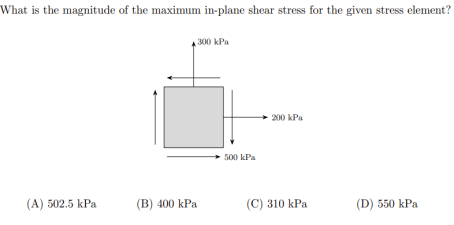
To understand how effectively AI tools are in solving engineering problems the author input sample Fundamental of Engineering (FE) problems into three different AI platforms. These sample problems are similar to problems that are on the FE exam. Some of the problems may have been previously posted online but others are altered slightly from previous problems. The problems come from a wide range of standard Mechanical Engineering topics. An example problem is shown in Figure 1. The three platforms were chosen based on University of West Florida engineering student input. ChatGPT is perhaps this most well known of the AI platforms. Released in 2022, ChatGPT was developed by OpenAI. Students use both the free and the paid versions of the website. The results for Tables 1 and 2 were generated using the free version while all other ChatGPT results came from the paid version. In testing between the versions, this author could not find any differences. The other two platforms were Google Gemini and Microsoft’s Copilot. The reason these two platforms were chosen is that most college students use either a Google or Microsoft email on their campus. Therefore, it is likely that either Gemini or Copilot are both readily available and promoted to them. It is acknowledged that other platforms such as Claude or Perplexity are popular with engineering students. While they are not considered in this paper, it is expected that their performance is somewhat similar.
Ten different Mechanical Engineering problems were entered into each of the three AI platforms. In the first case, the multiple choices were given to the AI just like students taking the FE exam would experience. Table 1 shows the results of how each platform did in solving these problems. The problems were selected from problems used in the University of West Florida’s FE Mechanical Exam review course. This course is designed to help prepare students to successfully complete the FE Mechanical Exam. As shown, Gemini was able to solve all ten problems correctly while ChatGPT and Copilot correctly solved nine out of ten problems. The only problem missed was relatively simple. It involved calculating the magnitude of a moment in a 2D rigid rod. The AI results misinterpreted the figure (see Figure 2) and thought the beam to be perpendicular to the force. The results show that AI does a good, but not perfect job, with standard engineering problems. It is expected that these tools will continue to improve and will likely soon be able to solve all ten problems. Engineering educators need to be aware of how powerful these tools are and how effective they are in solving fundamental engineering problems. Students need to not only be mindful of potential mistakes but also realize that the importance of their education is to have the ability to identify the errors.
Table 1. Results when asking each AI platform standard FE Mechanical exam questions with multiple choices. X indicates an incorrect answer.

Question Type

ChatGPT

Gemini

Copilot

Math

O

O

O

Statistics

O

O

O

Statics

O

O

O

Statics

X

O

X

Mechanics - Stress

O

O

O

Mechanics - displacement

O

O

O

Thermodynamics

O

O

O

Fluids

O

O

O

Controls

O

O

O

Mechanical Design

O

O

O

Figure 1. Typical FE Mechanical Exam Question (First Mechanics problem used in Tables 1 and 2).
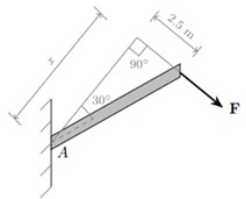
Figure 2. Figure of problem ChatGPT and Copilot got incorrect.
2.1.1. Solving Without Multiple Choices
The next experiment was to solve 10 similar problems but this time not provide any multiple choices. The theory was that perhaps the multiple choices were a “crutch” to the AI allowing it to just pick an answer that was close to the solution. The results were run again with all three AI platforms and are shown in Table 2. The problems were not the same as the problems of the previous attempt but were from the same subjects. Both ChatGPT and Gemini were a perfect ten of ten in solving these FE type problems, while Copilot was correct on eight of ten problems. The results of Tables 1 and 2 demonstrate the AI can solve most standard “academic” engineering problems. These academic problems have both a clear problem statement and generally provide a standard figure which guides both the student and, in this case, the AI platform to find a solution.
Table 2. Results when asking each AI platform standard FE Mechanical exam questions without multiple choices. X indicates an incorrect answer.

Question Type

ChatGPT

Gemini

Copilot

Math

O

O

O

Statistics

O

O

O

Statics

O

O

O

Statics

O

O

O

Mechanics - Stress

O

O

X

Mechanics - displacement

O

O

O

Thermodynamics

O

O

O

Fluids

O

O

O

Controls

O

O

O

Mechanical Design

O

O

X

2.1.2. Solving Problems with Problem Statement Editing
Another theory that was examined was if the problem statement (effectively, the AI prompt) could be changed in such a way as to alter the success of the solver. In this experiment we did not attempt to deceive or leave out critical information, but simply try and reword the problem statement. The theory was that the AI platform might simply be pattern matching online problems. By varying the language (see Table 3 for examples), we can test to see if AI was susceptible to mild prompt variations. If there were any trends that could be observed, this might help educators reword problems in such a way as to make it harder for students to use AI. This author has used this technique in the past to foil students who try and look up problems in search engines to find similar (or the same) problems solved in online sites such as Chegg. All ten problems from Table 2 were reworded and entered into each AI platform. The results were the same as Table 2, none of the edits caused the AI to change any answers. This makes sense since the heart of AI is a language model. The models were able to properly interpret the modified language. This demonstrates that simple rewording is likely not to thwart students who use AI to solve problems.
Table 3. Example edits of questions designed to test AI platforms.

Question

Reworded Question

A pulley is driven by a belt as shown in the figure. Neglecting centrifugal effects, the minimum coefficient of friction that will prevent slipping between the belt and the pulley is most nearly:

A belt partially wraps around a 300-mm circular driver. The two vertical belt tensions are 3000 N on one side and 450 N on the other, with slip just avoided and centrifugal effects ignored. Estimate the required minimum friction coefficient at the belt–pulley contact.

A 0.25-m steel rod with a cross-sectional area of 1,250 mm2 and a modulus of elasticity E of 200 GPa is subjected to a 5,000-N force as shown. The elongation of the rod (µm) is most nearly:

A steel member, 0.25 m long, carries an axial tensile load of 5000 N. Its cross-sectional area is 1250 mm^2, and its elastic modulus is 200 GPa. Estimate the resulting axial stretch of the member in micrometers.

2.2. Solving More Advanced Professional Engineering Exam Problems
The problems considered previously were FE type problems that are similar to many engineering problems that are solved online. But Professional Engineering (PE) problems are not as commonly found online and are typically more difficult. As a test of AI, a PE Mechanical HVACR exam was entered into AI. This exam was from a proprietary site, and the solutions were behind a paywall. The paid version of ChatGPT was able to solve 18 of the 21 problems correctly. In each case, the prompt did not give any multiple choices but the closest answer to the AI output was selected. This trial demonstrates that while the current ChatGPT is powerful, there are still errors when applied to more advanced problems.
2.3. Some Limitations of AI in Solving Engineering Problems
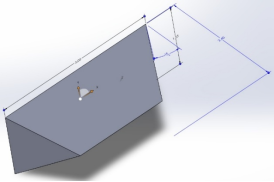
AI tools are very effective in solving most closed-form engineering problems. In the process of going through a wide range of problems, we did discover a few patterns in the set of problems that were not correctly solved. The first pattern could be called incorrect geometry assumptions. Examples of incorrect assumptions related to geometry include assuming a right angle when the actual angle is close to, but not exactly, 90 degrees. This error was observed on several problems related to engineering mechanics topics. Another error was an oversimplification of a more complex shape. A simple example of this is given in Figure 3. In this example, ChatGPT was prompted to give the surface area of the shape given some basic dimensions and an isometric view. The actual surface area was about 11.03 inches squared but ChatGPT’s assumptions led it to conclude a value more than double the true value. More complex shapes also yielded errors in area and volume properties. Clearly, the AI engine cannot replace solid modeling software or competent spatial thinking.
Figure 3. A “complex” shape that was incorrectly modeled by ChatGPT.
Another type of error from AI generated solutions could be described as incomplete analysis. Advanced engineering problems often become complex not just in the analytical solution of one case, but in the general solution of many cases. For example, consider a complete analysis of a slider crank mechanism. An AI prompt might look like this: “A slider crank has a connecting rod that is 8 inches long and a crank that is 2 inches long. The slider moves vertically. There is no offset on the slider. The center of gravity of the connecting rod is 2 inches from the point where the connecting rod is attached to the crank. If the crank spins at 4000 rpms, what crank angle gives the maximum acceleration of the center of gravity of the connecting rod?” The solution of this problem involves a complete analysis of slider-crank at every position. When this problem was entered into ChatGPT, the result was incorrect. ChatGPT assumed one position of the slider-crank and solved for the acceleration only at that position. Often more advanced engineering problems require analysis at multiple states. The problems include thermodynamic cycles, mechanisms, machine design, and control systems. While it is possible that AI will do better with these problems in the future, often these problems require a more open-ended solution process.
3. How Mechanical Engineering Programs Should Respond to AI
Usage of AI Tools such as ChatGPT have become commonplace among engineering students. Engineering programs must accept that students can and will use AI. Some programs acknowledge that students use AI but insist that students pass exams without it . While this is a good approach in some cases, such as occasionally in lower-level fundamental courses, the approach of ignoring AI limits the growth and development of engineering students. Instead, AI should be accepted as part of the new learning landscape and students should learn how it can help them. Engineering programs should realize that the value added of an engineer is not in solving closed-form fundamental engineering problems. The value of an engineer is modeling, design, and realization of physical systems and fundamental knowledge of engineering principles.
3.1. Modeling Physical Systems
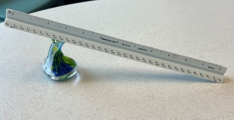
Engineers add value through the modeling of physical systems. While AI is improving in this task, it is still far away from replacing a degreed engineer. A simple example can be found in Figure 4. In the picture there is a ruler resting on a table as well as a small glass sculpture. The prompt asked ChatGPT to estimate the friction between the ruler and the table assuming friction at both contact points. ChatGPT failed to mention that the question results in a statically indeterminate problem. The result also made a 30 percent error in the angle measurement and an incorrect assumption that a better angle measurement would make the problem more determinable. While ChatGPT did state assumptions, there was no indication on why the assumptions were made or the implications of those assumptions. This very simple system is very easy to model and understand from an engineering perspective. Now imagine how an engineer models a much more complex system of multiple domains (mechanical, electrical, etc.) and it is clear that the added value of an experienced engineer is still much greater than a complete reliance on AI.
Figure 4. Real Statics problem involving multiple coefficients of friction.
This very simple example highlights what is important in engineering education. AI is quite good at solving systems that are already modeled but it can struggle with generating models for more realistic systems. Engineering programs need to focus on getting students to model more realistic and complex systems. Students need to understand their value as an engineer is not in solving the canned problems but in modeling complex systems.
3.2. Generating and Interpreting Experimental Results
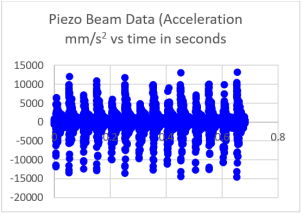
Figure 5. Acceleration (mm/s2) of a beam as measured by a piezoelectric sensor versus time in seconds. The frequency of the beam is easily observed by counting the cycles.

It is obvious that AI cannot directly build an experiment but it can also fail to accurately model experimental data. Piezometric data was entered into ChatGPT from a vibration experiment on a cantilever beam. A plot of the acceleration verses time reveals a dominant frequency of around 20 Hz. When fed the raw data, ChatGPT incorrectly interpreted the dominant frequency to be 110 Hz. See Figure 5 for the sampled data.
3.3. Multivariable Design
Engineers need to be able to design components or systems with a variety of factors and variables considered. ABET is the accreditor of engineering programs and has as an outcome for students to have “an ability to apply engineering design to produce solutions that meet specified needs with consideration of public health, safety, and welfare, as well as global, cultural, social, environmental, and economic factors.” There is no prompt that can cause this to happen with current AI models. The value of an engineer is to be able to design while considering and wide variety of factors without a formulaic method of weighting them. While AI can assist with this task, there is not a way for AI to completely meet this outcome.
3.4. The AI Assisted Engineer
AI tools will continue to be available to engineering students and professionals. Engineering programs will need to design curriculum and instruction through AI cooperation and not AI denial. Instead of worrying about AI being a crutch or worse, a replacement, programs should embrace AI to extend engineering knowledge and application. Programs must focus their curriculum on the types of things that add value to an engineer: design within realistic constraints, realization of physical systems, generating and interpreting experiments, and modeling realistic physical systems. Programs must emphasize that fundamental engineering knowledge is still needed to at least verify AI calculations. Part of the Code of Ethics established by the National Society of Professional Engineers states that engineers should only perform services within their areas of competence. The usage of AI in design, especially designs with any public safety implications, should be rigorously verified since there is no way to verify the true competence of the AI tool.
4. Conclusions
AI is a powerful tool for engineering work but there are still areas where it can make mistakes. Responsible use of AI is as an assistive technology and not a replacement for engineering work. Rather than ignoring AI, engineering educators should encourage students to use it responsibly. Responsible use recognizes that students should check the results for accuracy and not rely on it for any design that has safety concerns. Students and educators should work on developing value-added skills such as system modeling and multifactor design. These skills will continue to be important for engineers regardless of the progress of AI tools. It is important that educators continue to be informed about the progress of AI and be willing to adopt and change curriculum and instruction as tools change. Future researchers need to continue to test AI for accuracy. The methods presented here can be repeated for further analysis. The role of AI in the future of engineering education is still unknown but will certainly be impactful.
Abbreviations

AI

Artificial Intelligence

FE

Fundamentals of Engineering (Exam)

PE

Professional Engineering (Exam)

Acknowledgments
The author would like to thank University of West Florida student Daniel de Souza Lima as well as other Mechanical Engineering students who gave input on the AI tools they use.
Author Contributions
Michael Reynolds: Conceptualization, Data curation, Investigation, Methodology, Writing – original draft, Writing – review & editing
Data Availability Statement
The data is available from the corresponding author upon reasonable request.
Conflicts of Interest
The author declares no conflicts of interest.
References
[1] Wilkerson, S. A., & Kiefer, S. F., & Teixeira Gomes de Melo, Y., Reflections on Artificial Intelligence use in Engineering Courses Paper presented at 2025 ASEE Annual Conference & Exposition, Montreal, Quebec, Canada.
[2] Rajki, Z., Dringó-Horváth, I., & Nagy, J. T., Artificial Intelligence in higher education: Students’ Artificial Intelligence use and its influencing factors. Journal of University Teaching and Learning Practice, 22(2), 2025, 1–21.
[3] Sheikh, H., Prins, C., Schrijvers, E. Artificial Intelligence: Definition and Background. In: Mission AI. Research for Policy. Springer, Cham, 2023.
[4] Swindell, A., Greeley, L., Farag, A., & Verdone, B. Against Artificial Education: Towards an Ethical Framework for Generative Artificial Intelligence (AI) Use in Education. Online Learning (Newburyport, Mass.), 28(2), 2024.
[5] Loble, L., & Stephens, K. Taming the AI tools – education first, technology second: Artificial Intelligence and education Special issue of Theory into Practice. Theory Into Practice, 64(4), 369–373, 2025.
[6] Chapter: 5 Artificial Intelligence and Education, Artificial Intelligence and the Future of Work. Washington, DC: The National Academies Press. Pp. 133-188.
[7] Naganuma, S., Minematsu, T., Shibukawa, S., Ohno, A., & Wakihama, Y. Exploring Students’ Generative AI Usage Patterns and Knowledge Creation in Collaborative Problem Solving. In A. I. Cristea, E. Walker, Y. Lu, O. C. Santos, & S. Isotani (Eds.), Artificial Intelligence in Education. Posters and Late Breaking Results, Workshops and Tutorials, Industry and Innovation Tracks, Practitioners, Doctoral Consortium, Blue Sky, and WideAIED (pp. 305–312), 2025. Springer Nature Switzerland.
[8] Alghazo, Mohannad, Vian Ahmed, Zied Bahroun, and Sara Saboor. "Generative AI in Mechanical Engineering Education: Enablers, Challenges, and Implementation Pathways" Sustainability 17, no. 23: 10817, 2025.
[9] Khojah, R., Werth, A., Broadhead, K. W. et al. Integrating Generative Artificial Intelligence Tools and Competencies in Biomedical Engineering Education. Biomed Eng Education 5, 135–151, 2025.
[10] C. Liu, G. -C. Wang and H. -F. Wang, "The Application of Artificial Intelligence in Engineering Education: A Systematic Review," in IEEE Access, vol. 13, pp. 17895-17910, 2025,
[11] Guo, H., Zhou, Z., Ma, F., & Ning, Z. Critical thinking and AI-Assisted creativity in engineering education: differences between Undergraduate, Master’s, and doctoral students. Education and Information Technologies, 31(4), 1033–1058, 2026.
[12] Bento, A. C., Silva, J. R., Barretto, M. R. P., Camacho-Leon, S., & Torres-Torres, E. Y. Leveraging AI Tools in Engineering Education: Promise and Pitfalls of AI in Software Development. IEEE-RITA, 21, 256–267, 2026.
[13] Stanford Teaching & Learning Hub. “Course Policies on Generative AI Use.” Stanford University. December 11, 2025.
[14] Accreditation Board for Engineering and Technology (ABET). Criteria for accrediting engineering programs, 2025–2026.
[15] National Society of Professional Engineers. Code of ethics for engineers, 2019 NSPE.
Cite This Article
  • APA Style

    Reynolds, M. (2026). Artificial Intelligence in Mechanical Engineering Education: Analysis and Implications. International Journal of Mechanical Engineering and Applications, 14(2), 36-42. https://doi.org/10.11648/j.ijmea.20261402.12

    Copy | Download

    ACS Style

    Reynolds, M. Artificial Intelligence in Mechanical Engineering Education: Analysis and Implications. Int. J. Mech. Eng. Appl. 2026, 14(2), 36-42. doi: 10.11648/j.ijmea.20261402.12

    Copy | Download

    AMA Style

    Reynolds M. Artificial Intelligence in Mechanical Engineering Education: Analysis and Implications. Int J Mech Eng Appl. 2026;14(2):36-42. doi: 10.11648/j.ijmea.20261402.12

    Copy | Download

  • @article{10.11648/j.ijmea.20261402.12,
      author = {Michael Reynolds},
      title = {Artificial Intelligence in Mechanical Engineering Education: Analysis and Implications},
      journal = {International Journal of Mechanical Engineering and Applications},
      volume = {14},
      number = {2},
      pages = {36-42},
      doi = {10.11648/j.ijmea.20261402.12},
      url = {https://doi.org/10.11648/j.ijmea.20261402.12},
      eprint = {https://article.sciencepublishinggroup.com/pdf/10.11648.j.ijmea.20261402.12},
      abstract = {Artificial Intelligence (AI) is currently transforming education and the student experience. Students are frequently using AI as an assistive aid in completing homework and writing assignments. Within engineering, students are using AI both as an analysis tool and to generate design concepts. This paper demonstrates how well three common AI algorithms solve both fundamental and advanced engineering problems. The selected engineering problems represent a range of topics commonly encountered in undergraduate curricula. The results show that AI can solve most fundamental engineering problems, but it has significant limitations with professional engineering work. This work demonstrates several cases where AI can generate incorrect solutions and explains the rationale behind such errors. At the time of this paper, AI still has significant limitations that make complete reliance on generated solutions both unwise and unethical. The value added of an engineer comes from areas where AI tools are too often incorrect or incomplete, such as modeling real physical systems, designing and interpreting experiments, and designing and building physical systems to achieve multiple objectives. This paper urges engineering educators to be knowledgeable about AI and encourage students to use it in assistive means and not as a replacement for fundamental knowledge. Future work will continue to refine AI’s role in education as well as test its ability to solve advanced problems.},
     year = {2026}
    }
    

    Copy | Download

  • TY  - JOUR
    T1  - Artificial Intelligence in Mechanical Engineering Education: Analysis and Implications
    AU  - Michael Reynolds
    Y1  - 2026/06/30
    PY  - 2026
    N1  - https://doi.org/10.11648/j.ijmea.20261402.12
    DO  - 10.11648/j.ijmea.20261402.12
    T2  - International Journal of Mechanical Engineering and Applications
    JF  - International Journal of Mechanical Engineering and Applications
    JO  - International Journal of Mechanical Engineering and Applications
    SP  - 36
    EP  - 42
    PB  - Science Publishing Group
    SN  - 2330-0248
    UR  - https://doi.org/10.11648/j.ijmea.20261402.12
    AB  - Artificial Intelligence (AI) is currently transforming education and the student experience. Students are frequently using AI as an assistive aid in completing homework and writing assignments. Within engineering, students are using AI both as an analysis tool and to generate design concepts. This paper demonstrates how well three common AI algorithms solve both fundamental and advanced engineering problems. The selected engineering problems represent a range of topics commonly encountered in undergraduate curricula. The results show that AI can solve most fundamental engineering problems, but it has significant limitations with professional engineering work. This work demonstrates several cases where AI can generate incorrect solutions and explains the rationale behind such errors. At the time of this paper, AI still has significant limitations that make complete reliance on generated solutions both unwise and unethical. The value added of an engineer comes from areas where AI tools are too often incorrect or incomplete, such as modeling real physical systems, designing and interpreting experiments, and designing and building physical systems to achieve multiple objectives. This paper urges engineering educators to be knowledgeable about AI and encourage students to use it in assistive means and not as a replacement for fundamental knowledge. Future work will continue to refine AI’s role in education as well as test its ability to solve advanced problems.
    VL  - 14
    IS  - 2
    ER  - 

    Copy | Download

Author Information
  • Mechanical Engineering, University of West Florida, Pensacola, USA

    Biography: Michael Reynolds is an Associate Professor and chair at the University of West Florida, Mechanical Engineering Department. He completed his PhD in Mechanical Engineering from Purdue University in 2004. Reynolds has over 20 years of experience in higher education.

    Research Fields: Control Systems, Optimal Control, Engineering Education, Deep Learning, Artificial Intelligence