Abstract
This study implements a genre-based approach to analyze the rhetorical structure and move patterns of review article abstracts written by biochemistry, biophysics, and bioinformatics scholars. It aims to investigate the similarities and differences between biology subdisciplines in frequency, status, sequencing and step usage. The study examined 300 review abstracts selected from 30 esteemed journals. A modified model from Santos and Swales was employed to identify the move/step structure of all three datasets. The study’s findings revealed that M-M2 is obligatory, while M4 and M5 are optional. Moreover, it showed the dominance of M1-M2 sequences across the three subfields. The three subfields shared similarities and differences in their structural organization at the move and step levels. All three subfields shared the obligatory status of M1 and M2 and differed in M3 usage. Furthermore, the results of this study highlighted that review abstracts show distinct M1-M2 dominance, unlike research article abstracts. The findings of this study have implications for novice researchers and postgraduate students by raising awareness of the variation in generic structure across three biology subdisciplines. Furthermore, the research concludes with future research suggestions that include cross-disciplinary comparisons, longitudinal studies, and linguistic feature studies. Finally, potential limitations that arise from the study are provided.
Keywords
ESP Genre, Genre Analysis, Genre of Abstracts, Review Articles, Sub-disciplinary Variation
1. Introduction
In a highly competitive research environment, a review article plays a crucial role in supporting several research studies and their applications across various disciplines and subdisciplines. As researchers compete to publish, review articles have become essential tools for synthesizing knowledge across different academic communities. The importance of review articles is immense, as both researchers and postgraduate students use them as a foundation for their research. The writing of this type of research requires summarizing and synthesizing the existing work, ideas or arguments on a topic or a question without reporting any new experimental contributions.
Normally, review articles are written by experienced researchers who are commissioned by journals
| [1] | Noguchi, J. The science review article: An opportune genre in the construction of science. Peter Lang: Bern, Switzerland, 2006. |
[1]
. Nevertheless, there is a recent trend in which novice researchers, such as postgraduate students, are expected to write review articles
| [2] | Amobonye, A., Lalung, J., Mheta, G., and Pillai, S. Writing a scientific review article: Comprehensive insights for beginners. The Scientific World Journal. 2024, 2024, 1–13.
https://doi.org/10.1155/2024/7822269 |
[2]
. Despite this growing expectation, there is little to no information on writing the rhetorical structure of review articles for publication or other subgenres, such as abstracts.
Moreover, writing a review paper is a demanding task, especially for novice writers, as it requires a high command of rhetorical knowledge, linguistic features, and academic knowledge. For this reason, writers must adhere to the norms of the academic discourse communities including those specific to review articles. One method that fulfils writers’ needs and identifies discourse community norms is the genre-based approach. The genre approach attempts to examine and identify the conventions of different genres in terms of structural organization, features, and patterns. In English for Specific Purposes (henceforth ESP), genre analysis has been a beneficial method for helping writers examine discourse structures and language features across contexts, languages and disciplines.
In recent years, a limited number of studies have investigated the generic structure of review articles in different academic fields. These studies focused on examining the entire article or included a few sections, such as the abstract, introduction, methods
| [1] | Noguchi, J. The science review article: An opportune genre in the construction of science. Peter Lang: Bern, Switzerland, 2006. |
| [3] | Azar, A. A genre analysis of review articles in applied linguistics. PhD Dissertation, University of Malaya, Kuala Lumpur, Malaysia, 2017. Available from:
http://studentsrepo.um.edu.my/id/eprint/11647 |
[1, 3]
. However, they examined generic structures or linguistic features within a single discipline or across multiple disciplines. Moreover, few studies have specifically investigated the rhetorical structure across disciplines or subdisciplines in the abstract subgenre. Given the limited number of studies that compare the generic structure of the abstract section across biology subfields, this study aims to fill this gap. The following research questions are explored:
1) What are the similarities and differences among biology subfields in frequency, status, sequencing, step usage?
2) What is the most frequent move pattern across the three subdisciplines?
This paper begins with a literature review that presents related studies on the abstract genre. After that, detailed information on the methodology is provided. Following that, the main findings are reported and discussed. Finally, the study’s pedagogical implications are explored.
2. Literature Review
In general, academic publications have been expanding across various disciplines over the years
| [4] | Li, Y., Wang, K., Xiao, Y., and Froyd, J. E. Research and trends in STEM education: A systematic review of journal publications. International Journal of STEM Education. 2020, 7(1), 11. https://doi.org/10.1186/s40594-020-00207-6 |
[4]
. Scholars and researchers use these academic publications to communicate their ideas and findings. To attract readers’ attention, writers carefully craft abstracts that effectively present their ideas, as abstracts are considered a reflection of the paper.
Indeed, abstracts are considered a crucial component of articles because they summarize the full article for the reader
| [5] | Santos, M. B. Textual organization of research paper abstracts in applied linguistics. Text - Interdisciplinary Journal for the Study of Discourse, 1996, 16(4), 481–499.
https://doi.org/10.1515/text.1.1996.16.4.481 |
| [6] | Bhatia, V. K. Analysing genre: Language use in professional settings. Longman: London, UK, 1993. |
[5, 6]
. Based on the idea that abstracts summarise the article, Bhatia proposed a four-move model for the research paper: introduction, method, results, and conclusions. Furthermore, other scholars believed that abstracts serve a purpose rather than merely describe the article.
For instance, Hyland
| [7] | Hyland, K. Disciplinary discourses: Social interactions in academic writing. University of Michigan Press: Ann Arbor, MI, USA, 2004.
https://doi.org/10.3998/mpub.6719 |
[7]
argues that the abstract can determine whether the article is accepted or rejected, since it is the reader’s first encounter with the text. Based on their communicative function, abstracts can be divided into two main types: indicative and informative. Indicative or descriptive abstracts do not summarise the research article; they typically do not discuss the methodology or results. This type of abstract focuses on a general overview of the research background or the topic
| [8] | Youdeowei, A., Stapleton, P., and Obubo, R., Eds. Scientific writing for agricultural research scientists: A training resource manual. Technical Centre for Agricultural and Rural Cooperation (CTA): Wageningen, The Netherlands, 2012. |
[8]
. Given their general nature, these abstracts are better suited to longer work, such as books or review articles
. An informative abstract, on the other hand, is a short summary of the entire research article. Therefore, specific information is provided about the research context, methodology, results and conclusion. Understanding the distinction between the two types of abstracts is crucial, as it reflects genre-specific conventions that are essential. Moreover, it provides an interpretive perspective for understanding move distribution in review abstracts especially for non-native writers. Since many non-native scholars find difficulty in writing texts that meet reviewers’ and editorial boards’ expectations, it is essential to learn the discursive norms of the review abstracts discourse community. That is accomplished by understanding the genre’s generic patterns.
Research on move analysis in academic genres began with Swales
| [10] | Swales, J. Genre analysis: English in academic and research settings. Cambridge University Press: Cambridge, UK, 1990. |
[10]
, whose work on introductions influenced subsequent abstract research. Given the importance of this genre, numerous frameworks have been developed to analyze its generic pattern. Among these models is Bhatia’s
| [6] | Bhatia, V. K. Analysing genre: Language use in professional settings. Longman: London, UK, 1993. |
[6]
model comprising four moves, including (a) Introducing purpose, (b) Describing methodology, (c) Summarizing results and (d) Presenting conclusions. Likewise, Hyland
| [7] | Hyland, K. Disciplinary discourses: Social interactions in academic writing. University of Michigan Press: Ann Arbor, MI, USA, 2004.
https://doi.org/10.3998/mpub.6719 |
[7]
proposed another influential model for abstracts, which has been adopted in many studies and comprises five moves: (a) Introduction, (b) Purpose, (c) Method, (d) Product and (e) Conclusion. Furthermore, this model is based on analyzing 800 abstracts from eight disciplines across the sciences and social sciences. Santos
proposed a five-move model which includes Situating the research, Presenting the research, Describing the method, Summarizing the results, and Discussing the results.
All these models have been applied by various scholars to investigate the rhetorical structure of abstracts. These studies explored different aspects including the generic moves and steps of languages, cultures, and disciplines. Based on these studies, abstracts writing can be influenced by cultural norms, disciplinary conventions and languages. The rhetorical organization of abstracts and their variation was studied across disciplines and subdisciplines. A number of genre-based studies focused on the rhetorical organization of abstracts in various disciplines
| [11] | Alyousef, H. Multidimensional analysis of linguistic realizations and rhetorical structure of geography RAA. Atlantis English Studies. 2023, 45(1), 190–212.
https://doi.org/10.28914/Atlantis-2023-45.1.11 |
| [12] | Chaisiri, P., Kumdee, S., and Pramoolsook, I. Analysis of moves, hedges, and boosters in applied linguistics research article abstracts of Thai international journals. Social Sciences & Humanities Open. 2025, 11, 101397.
https://doi.org/10.1016/j.ssaho.2025.101397 |
| [13] | Cross, C., and Oppenheim, C. Genre analysis of scientific abstracts. Journal of Documentation. 2006, 62(4), 428–446.
https://doi.org/10.1108/00220410610700953 |
| [14] | Pho, P. Research article abstracts in applied linguistics and educational technology: Linguistic realizations of rhetorical structure and authorial stance. Discourse Studies. 2008, 10(2), 231–250. https://doi.org/10.1177/1461445607087010 |
| [15] | Bonsu, E. M., and Afful, J. B. A. Genre analysis of abstracts of research articles published in biostatistics. International Journal of Literature, Language and Linguistics. 2022, 5(1), 17–38.
https://doi.org/10.52589/IJLLL-A94THVEW |
| [16] | Samraj, B. Exploration of a genre set: Research article abstracts and introductions in two disciplines. English for Specific Purposes. 2005, 24(2), 141–156.
https://doi.org/10.1016/j.esp.2002.10.001 |
| [17] | Kanoksilapatham, B. Generic characterisation of civil engineering research. 3L: The Southeast Asian Journal of English Language Studies. 2013, 19(3), 1–10. |
[11-17]
.
For instance, Samraj
investigated two genres within two related disciplines, analyzing introductions and abstracts of Conservation Biology and Wildlife Behavior texts based on Swales’ and Bhatia’s models. Her study revealed that the abstracts of both disciplines were similar as they contained the same moves: Purpose, Results, and Conclusion. Also, it is revealed that disciplines may affect how a genre is constructed. This result was evident in Conversation biology abstracts, which have a persuasive function similar to the introduction from the same discipline, while Wildlife Behavior abstracts are more pragmatic. Her study has shown that the relationship between genres could vary based on discipline preferences. Even though both disciplines were related, Samraj’s results clearly indicate that disciplinary variations in abstract conventions exist even within related fields. Therefore, the current study can extend this work by investigating other related subfields of biology to examine what aspects of abstracts are similar or different.
Furthermore, Hyland’s
| [7] | Hyland, K. Disciplinary discourses: Social interactions in academic writing. University of Michigan Press: Ann Arbor, MI, USA, 2004.
https://doi.org/10.3998/mpub.6719 |
[7]
influential study, which laid the groundwork for his influential move model of abstracts, examined 800 abstracts from multiple hard and soft disciplines. In terms of move employment, Hyland stated that writers in soft fields tend to situate their texts with an Introduction, while hard disciplines tend to delete this move and replace it with a Method move. Moreover, this tendency in hard disciplines to start with a Method move, or sometimes with a Purpose move, indicates that readers in these disciplines are expected to have a good understanding of the background needed to contextualize this work. Although both soft and hard disciplines used the Purpose move in their abstracts, the ways they present their purposes differ significantly. Writers in the sciences and engineering tend to report facts and empirical truths, while those in the soft disciplines tend to discuss and define issues. In his study, Hyland distinguishes soft and hard disciplines based on their rhetorical choices. While biology is considered a hard disicpline, it encompasses an interpretative and inferential aspects that can be compared to soft knowledge disciplines. That could be apparent in employment of concluding move where writers can interpret and comment on the results, or in the introduction moves to contextualize the research and address the significance of the study.
Move frequencies vary according to disciplinary conventions. Can et al.
, for instance, found that Method, Purpose, and Result were the most frequently used (obligatory) moves in linguistics abstracts, compared with Introduction and Conclusion moves. Similarly, in civil engineering and protozoology abstracts
| [13] | Cross, C., and Oppenheim, C. Genre analysis of scientific abstracts. Journal of Documentation. 2006, 62(4), 428–446.
https://doi.org/10.1108/00220410610700953 |
| [17] | Kanoksilapatham, B. Generic characterisation of civil engineering research. 3L: The Southeast Asian Journal of English Language Studies. 2013, 19(3), 1–10. |
[13, 17]
, both Method and Results moves occurred frequently, while Background moves were more frequent in civil engineering abstracts than in protozoology abstracts. These results indicate disciplinary differences in the structure of abstracts.
In addition to similarities and variations between disciplines, variation in move/step structure within subdisciplines of a particular discipline might be observed. However, a few studies have investigated the variation and similarities in abstracts of various subdisciplines: business
| [19] | Li, Q., and Pramoolsook, I. Research article abstracts in two subdisciplines of business—Move structure and hedging between management and marketing. English Language Teaching. 2014, 8(1), 52. https://doi.org/10.5539/elt.v8n1p52 |
[19]
, dentistry
| [20] | Alyousef, H. S. Move structure model for dentistry research article abstracts: A genre-based study of variations and similarities in eight dentistry subdisciplines. Discourse and Interaction. 2021, 14(1), 25–52.
https://doi.org/10.5817/DI2021-1-25 |
[20]
, and marine engineering
| [21] | Huang, J. C. Marine engineering and sub-disciplinary variations: A rhetorical analysis of research article abstracts. Text & Talk. 2018, 38(3), 341–363.
https://doi.org/10.1515/text-2018-0002 |
[21]
. These studies reported subdisciplinary variation within these disciplines. For instance, Alyousef
| [20] | Alyousef, H. S. Move structure model for dentistry research article abstracts: A genre-based study of variations and similarities in eight dentistry subdisciplines. Discourse and Interaction. 2021, 14(1), 25–52.
https://doi.org/10.5817/DI2021-1-25 |
[20]
investigated variations in move structures in dentistry abstracts by analyzing 119 abstracts across eight dentistry subdisciplines. He reported the existence of three obligatory moves: Purpose, Methods and Results moves, while the Background move was conventional in Oral Sciences, Endodontics and Oral‑Maxillofacial Surgery and optional in the other five dentistry subdisciplines. Additionally, Li & Pramoolsook
| [19] | Li, Q., and Pramoolsook, I. Research article abstracts in two subdisciplines of business—Move structure and hedging between management and marketing. English Language Teaching. 2014, 8(1), 52. https://doi.org/10.5539/elt.v8n1p52 |
[19]
reported that, after investigating 64 research abstracts from two subdisciplines in Management and Marketing, Purpose and Product (result) moves were the most frequent moves used in both subdisciplines. However, marketing abstracts used more Introduction and Method moves, while management abstracts used more Conclusion moves.
In addition, Huang
| [21] | Huang, J. C. Marine engineering and sub-disciplinary variations: A rhetorical analysis of research article abstracts. Text & Talk. 2018, 38(3), 341–363.
https://doi.org/10.1515/text-2018-0002 |
[21]
conducted a study examining subdisciplinary variation in marine engineering. He analyzed 60 abstracts from three journals with high impact factors by using Pho’s
| [14] | Pho, P. Research article abstracts in applied linguistics and educational technology: Linguistic realizations of rhetorical structure and authorial stance. Discourse Studies. 2008, 10(2), 231–250. https://doi.org/10.1177/1461445607087010 |
[14]
framework. His study revealed that there is subdisciplinary variation between the subfields of marine engineering, specifically Automatic Control (AC), Structure and Dynamics, and Heat and Flow, in the use of rhetorical moves. The most predominant moves are Presenting the research (move 2), followed by Describing methodology (move 3) and Summarizing the findings (move 4). Move 1, Situating the research, was the least used in all the subdisciplines. In terms of variation, the Automatic Control field has shown differences from Structure and Dynamic and Heat and Flow fields regarding Summarizing the findings (M4) and Discussing the research (M5). In addition, AC abstracts contained fewer M4 moves but more M5 moves compared to the other two fields. Overall, Alyousef’s, Li & Pramoolsook’s and Huang’s studies clearly showed that the rhetorical move appearance reflected subdisciplinary conventions variation within the three disciplines.
In summary, previous studies on abstract genre analysis have established several key findings. First, move frequencies vary across disciplines, with Method and Results moves being obligatory in hard sciences while Introduction moves are more prominent in soft disciplines
| [7] | Hyland, K. Disciplinary discourses: Social interactions in academic writing. University of Michigan Press: Ann Arbor, MI, USA, 2004.
https://doi.org/10.3998/mpub.6719 |
| [13] | Cross, C., and Oppenheim, C. Genre analysis of scientific abstracts. Journal of Documentation. 2006, 62(4), 428–446.
https://doi.org/10.1108/00220410610700953 |
| [17] | Kanoksilapatham, B. Generic characterisation of civil engineering research. 3L: The Southeast Asian Journal of English Language Studies. 2013, 19(3), 1–10. |
| [18] | Can, S., Karabacak, E., and Qin, J. Structure of moves in research article abstracts in applied linguistics. Publications. 2016, 4(3), 23. https://doi.org/10.3390/publications4030023 |
[7, 13, 17, 18]
. Second, subdisciplinary variation exists within disciplines such as dentistry
| [20] | Alyousef, H. S. Move structure model for dentistry research article abstracts: A genre-based study of variations and similarities in eight dentistry subdisciplines. Discourse and Interaction. 2021, 14(1), 25–52.
https://doi.org/10.5817/DI2021-1-25 |
[20]
, business
| [19] | Li, Q., and Pramoolsook, I. Research article abstracts in two subdisciplines of business—Move structure and hedging between management and marketing. English Language Teaching. 2014, 8(1), 52. https://doi.org/10.5539/elt.v8n1p52 |
[19]
, and marine engineering
| [21] | Huang, J. C. Marine engineering and sub-disciplinary variations: A rhetorical analysis of research article abstracts. Text & Talk. 2018, 38(3), 341–363.
https://doi.org/10.1515/text-2018-0002 |
[21]
, indicating that even closely related fields may develop distinct rhetorical conventions. Third, most frameworks (Bhatia's
| [6] | Bhatia, V. K. Analysing genre: Language use in professional settings. Longman: London, UK, 1993. |
[6]
, Hyland's
| [7] | Hyland, K. Disciplinary discourses: Social interactions in academic writing. University of Michigan Press: Ann Arbor, MI, USA, 2004.
https://doi.org/10.3998/mpub.6719 |
[7]
, and Santos'
) have been developed and tested primarily on research article abstracts rather than review article abstracts. However, a significant gap remains: no studies have investigated the rhetorical structure of review article abstracts across biology subdisciplines. Given that biology encompasses diverse subdisciplines with varying degrees of interdisciplinarity, examining how biochemistry, biophysics, and bioinformatics writers construct their review abstracts can reveal whether genre conventions or disciplinary practices exert greater influence on rhetorical structure.
Based on the reviewed literature, no studies have been conducted on the similarities and differences between subdisciplines of biology. These subdisciplines are biochemistry, biophysics, and bioinformatics. Because these subdisciplines are inherently interdisciplinary, the results of this study can go beyond their immediate focus to include the parent disciplines. Consequently, the results will contribute to the literature on biology, physics, chemistry, math, and computer science genre variation, as these subdisciplines connect these disciplines. For instance, the results of the rhetorical structure of biochemistry can reveal whether these abstracts follow the conventions of biology or chemistry or adopt new conventions. The results of these three subdisciplines contribute to the broader literature of the overlapping parent disciplines. Moreover, it examines a specific genre, ‘review article’, which is scarcely investigated in genre research. The only study, to our knowledge, that examined review article abstracts was Azar’s
study, which focused on applied linguistics review articles in general. Kong & Liu
| [22] | Kong, X., and Liu, C. Comparative genre analysis of AI-generated and scholar-written abstracts for English review articles in international journals. Journal of English for Academic Purposes. 2024, 71, 101432.
https://doi.org/10.1016/j.jeap.2024.101432 |
[22]
also examined the genre of review articles. However, they conducted a comparative genre analysis between review abstracts written by scholars and by ChatGPT. Based on that, this study will examine the abstracts of genre review articles across three biology subdisciplines: biochemistry, biophysics, and bioinformatics.
3. Methodology
3.1 Data Corpus
This study analyzed 300 review article abstracts from three subdisciplines. Ten highly esteemed journals per subdiscipline were selected to investigate variation in rhetorical structure. A total of 300 abstracts were selected from 30 journals as indicated in Appendix A. The selection of these journals was based on the Journal Citation Reports (JCR) ranking, published in 2023, for the Science Citation Index Expanded (SCIE) across the three subdisciplines. The selection process followed specific criteria. First, only articles explicitly labeled as "review," "review article," or "systematic review" by the journals were included; opinion pieces, editorials, and mini-reviews were excluded. Second, abstracts were selected from the most recent issues available at the time of data collection (June-August 2023), working backward until 10 abstracts per journal were obtained. Third, abstracts shorter than 100 words were excluded as they may not represent fully developed rhetorical structures. The final corpus comprised 300 abstracts totaling approximately 45,000 words, with individual abstracts ranging from 150 to 350 words. The criteria for selecting native or non-native writers of abstracts were not considered for review articles published in high-ranking journals. Even though L1 affects writing practices, as indicated by previous research, the present study does not differentiate between writers based on nativeness criteria. This decision is supported by the study’s focus (review article abstracts), which undergo a strict peer-review and editorial process regardless of the writer’s background. Furthermore, the selected abstracts were published between 2010 and 2023. Within this period, the writing conventions of review articles and abstracts might be gradually changing. However, examining the evolution in conventions is not addressed in this study.
3.2. Theoretical Framework
For this study, Santos’
model served as a basis for initially identifying the moves and steps across the three subdisciplines. This model was selected because it aligns with the structural characteristics of review article abstracts. This model was also widely acknowledged in the field of abstract research (e.g.,
). However, some additions were needed because a couple of moves and steps in the data were missing from this model. These additions include adding M2 Step B and M1 Step C from Swales’
| [10] | Swales, J. Genre analysis: English in academic and research settings. Cambridge University Press: Cambridge, UK, 1990. |
[10]
model. Therefore, Swales’ model of introduction was used to present a more comprehensive new model that captures the rhetorical structure of three subdisciplines of biology. Combining both models allows for identification of moves and steps that neither model captures independently. Thus, this provides a clearer picture of the composition of review article abstracts in the biology subfields.
Table 1 illustrates the analytical framework for biology subfields.
Table 1. The devised model used across the three subdisciplines.
Moves | Steps |
M1: Situating the review | A: Stating the current knowledge |
| B: Indicating a gap or a problem |
| C: Indicating the importance of topic or idea |
M2: Presenting the review | A: Indicating the main purpose of review. |
| B: Outlining the structure of the paper. |
M3: Describing the methodology | A: Describing Procedures |
| B: Describing methods and tools used |
M4: Summarizing the results | |
M5: Discussing the review | A: Drawing conclusions |
| B: Giving recommendations |
| C: Contribution to literature and real-life practice. |
3.3. Analytical Procedures
All 300 abstracts were downloaded from online databases, and the texts were copied from their original files into Word documents. At the beginning, the moves were identified and coded according to a model devised by Santos
and Swales
| [10] | Swales, J. Genre analysis: English in academic and research settings. Cambridge University Press: Cambridge, UK, 1990. |
[10]
, as illustrated in
Table 1. Move/step identification followed a top-down approach, relying on the researchers’ interpretation of each segment’s communicative function within the text. This approach aligns with the theoretical definition of a move, which means each move has its own communicative purpose that contributes to the text’s overall communicative function. In addition, this approach has been applied and recommended by many studies
| [14] | Pho, P. Research article abstracts in applied linguistics and educational technology: Linguistic realizations of rhetorical structure and authorial stance. Discourse Studies. 2008, 10(2), 231–250. https://doi.org/10.1177/1461445607087010 |
| [24] | Cotos, E., Huffman, S., and Link, S. Move/step model for methods sections: Demonstrating rigour and credibility. English for Specific Purposes. 2017, 46, 90–106.
https://doi.org/10.1016/j.esp.2017.01.001 |
[14, 24]
.
Since this study adopted a top-down approach for identifying moves, its subjectivity may be criticized. However, to ensure reliability, a second coder (an applied linguistics graduate student) helped code the moves, following Crookes’s
suggestions. Crookes recommended analyzing the corpus with the assistance of trained coders. Before the full coding of the datasets, the second coder received training on the coding scheme by presenting definitions and illustrative examples of all moves. Moreover, the move-coding procedure was explained to the coder before analysis to ensure high agreement in the move analysis. Following that, the second coder independently analyzed 25% of the corpus, as in previous studies (e.g.,
) and was instructed to identify any ambiguous or problematic cases during the analysis. When a problematic case was identified, both I and the second coder discussed it to reach a consensus. To calculate inter-rater reliability, the percentage agreement was used. The total percentage agreement between the second coder and me was 96%.
In terms of move frequency, this study will follow Kanoksilapatham’s
distribution of moves. Thus, a move is conventional if it occurs at 60% and optional if it falls below 60%. Moreover, if a move occurs in 90% of the review article abstracts, it is considered an essential “obligatory” move. The classification was initially used for research abstracts; however, it is considered suitable, as review articles exhibit greater variation and structural flexibility. Furthermore, choosing a moderate cut-off frequency is appropriate given the large corpus size and the underdeveloped format of the review genre
| [1] | Noguchi, J. The science review article: An opportune genre in the construction of science. Peter Lang: Bern, Switzerland, 2006. |
[1]
. Both the large corpus and the nature of the review article may result in noticeable variation. As a result, neither a low nor a high cut-off frequency is appropriate for this study. For embedded moves, each embedded move is treated as a move with secondary functions and is identified and counted across the datasets.
After calculating move frequency, move patterns were identified for each abstract using MAXQDA. This feature can be observed and calculated by using the functions Document Portrait and Document Comparison chart. This visualization tool facilitated pattern identification, allowing for a clear comparison across the subdisciplines. The Document Portrait feature enables the visualization of each abstract individually, highlighting the moves and steps identified for each abstract in different colors. After that, all abstracts of the three subdisciplines are displayed and contrasted using the Document Comparison chart. The generated patterns were categorized as linear when following the expected order, semi-linear when partially following the expected order, and non-linear when violating the expected order. Frequencies of the most dominant patterns were counted and presented.
When collecting the review articles, we selected those that were open access, which is considered a form of permission to use the articles’ content for public and research purposes. For non-open access articles, we contacted the journals to obtain written consent to collect, analyze, and use the data. Furthermore, we used SDL (Saudi Digital Library), as it provided access to many scientific journals that granted permission to use their texts and data through subscribing institutions for research purposes only.
4. Results
This section attempts to answer the research questions by investigating the move/step structure of review article abstracts across three biology subfields.
4.1. Move Frequency, Status, and Step Usage Across Subdisciplines (RQ1)
Table 2. The frequency and percentage of moves and steps.
Move/Step | Biochemistry | Biophysics | Bioinformatics |
Freq (N=100) | % | Freq (N=100) | % | Freq (N=100) | % |
Move 1: Situating the review | 100 | 100 | 98 | 98 | 99 | 99 |
A: Stating current knowledge | 99 | 99 | 84 | 84 | 89 | 89 |
B: Indicating a gap or problem | 24 | 24 | 32 | 32 | 46 | 46 |
C: Indicating the importance of topic or idea | 37 | 37 | 47 | 47 | 56 | 56 |
Move 2: Presenting the review | 94 | 94 | 99 | 99 | 100 | 100 |
A: Indicating the main purpose of review | 81 | 81 | 92 | 92 | 87 | 87 |
B: Outlining the structure of the paper | 27 | 27 | 31 | 31 | 51 | 51 |
Move 3: Describing Methodology | 0 | 0 | 0 | 0 | 13 | 13 |
A: Describing Procedures | 0 | 0 | 0 | 0 | 7 | 7 |
B: Describing methods, tools used | 0 | 0 | 0 | 0 | 6 | 6 |
Move 4: Summarizing the results | 10 | 10 | 5 | 5 | 9 | 9 |
Move 5: Discussing the review | 32 | 32 | 17 | 17 | 38 | 38 |
A: Drawing conclusions | 3 | 3 | 1 | 1 | 7 | 7 |
B: Giving recommendations | 7 | 7 | 4 | 4 | 8 | 8 |
C: Contribution to literature and real-life practice. | 23 | 23 | 13 | 13 | 26 | 26 |
Table 2 represents the number of abstracts that contained the moves or steps within the indicated subdisciplines. The analysis of the biochemistry and biophysics corpus revealed that writers in these fields employed a combination of four rhetorical moves to construct their review article abstracts. These four moves are: Situating the review (M1), Presenting the review (M2), Summarizing the findings (M4) and Discussing the review (M5). As for bioinformatics data, the writers in this field used all the previous four moves in writing abstracts, as well as one extra move: Describing methodology (M3). In general, all three subdisciplines shared similarities and differences in terms of the occurrence and status of moves/steps. Example (1) illustrate one abstract with all five moves.
Example (1): / M1 Situating the review M1The use of different cardiac imaging modalities such as MRI, CT or ultrasound enables the visualization and interpretation of altered morphological structures and function of the heart…In particular, deep learning tools using temporal information in image processing have not yet found their way into daily clinical practice, despite its presumed high diagnostic and prognostic value// M2 Presenting the review This review aims to synthesize the most relevant deep learning methods and discuss their clinical usability in dynamic cardiac imaging using for example the complete spatiotemporal image information of the heart cycle// M3 Describing Methodology Selected articles were categorized according to the following indicators: clinical applications, quality of datasets, preprocessing and annotation, learning methods…and (iii) proof of concept applications/. / /M4 Summarizing results Interestingly, not a single one of the reviewed papers was classified as a clinical level study. Almost 39% of the articles achieved a robust candidate and as many as 61% a proof-of-concept status. In summary, deep learning in spatiotemporal cardiac imaging is still strongly research-oriented and its implementation in clinical application still requires considerable efforts / M5 Discussing the review Challenges that need to be addressed are the quality of datasets together with clinical verification and validation of the performance achieved by the used method/. [Bioinf-CBM-2].
4.1.1. Similarities Across Subdisciplines
In terms of similarities between the three subfields, all three employed M1 and M2 as obligatory moves, with occurrence rates ranging from 94% to 100%. Furthermore, data from all three subfields indicate that M4 and M5 are optional, since they occurred between 5% and 38%. In addition, all three subdisciplines show similar move status patterns, as all three favored M1 and M2 over the other moves. In other words, all three subdisciplines prioritize contextualization over results reporting or methodology description. M4 appeared in all three subdisciplines without subdivision into steps. Finally, M5 was also present in the abstracts of all three fields; however, this move was optional and had optional steps.
In terms of step analysis, it can be noted that there are similarities among the three biology subdisciplines. M1 Step A is obligatory in biochemistry abstracts (99%) and conventional in biophysics (84%) and bioinformatics (89%). This high occurrence indicates that providing background information is necessary in review article abstracts. Additionally, the move analysis revealed that M1 steps B and C are optional across all three subdisciplines, with 24% to 56% occurrence.
Overall, the three subfields shared certain similarities presented in the obligatory status of M1 and M2, optional status of M4 and M5 and the dominance of M1 Step A among the other steps.
4.1.2. Differences Across Subdisciplines
In terms of variation, there are several differences between the three subfields. First, M3 was present in bioinformatics abstracts at around 13%, whereas it was absent in the other two subfields. Additionally, M5 showed more variation than the other moves, appearing in 38% in bioinformatics, 32% in biochemistry, and 17% in biophysics. Moreover, move frequencies were ranging narrower in biochemistry and biophysics than bioinformatics. This could suggest that biochemistry and biophysics share similar rhetorical structure conventions. Both subdisciplines have the same set of disciplinary conventions regarding move employment: obligatory M1-M2, optional M4-M5, and the absence of M3.
However, Bioinformatics writers report the importance of their topics, (56%), more than biochemistry and biophysics (47% and 37% respectively). Furthermore, step A in M2 is considered conventional in biochemistry (81%), whereas step B is optional. As for biophysics, M2 step A is obligatory (92%), whereas M2 step B is considered optional. Finally, M2 step A is considered conventional in bioinformatics (87%) while M2 step B is optional.
Regarding the M3 steps, step A is employed more frequently in bioinformatics compared to step B. Both steps were employed only by bioinformatics writers when writing their abstracts. Overall, nearly all writers in biochemistry state the current knowledge in their abstracts, whereas bioinformatic writers outline the structure of the review more than biochemistry and biophysics writers. For biophysics writers, clearly stating the main purpose of their review is essential.
It was also found that there is subdisciplinary variation among the three sets of texts in the frequency of steps. In biophysics, M2 Step A is considered obligatory, while it is conventional in biochemistry and bioinformatics. Bioinformatics writers employed M2 Step B more frequently than biochemistry and biophysics writers (51% in bioinformatics compared to 27% and 31% for biochemistry and biophysics, respectively). Moreover, bioinformatics writers used more of the M1 steps than biochemistry and biophysics writers. In addition, M3 steps were present only in bioinformatics abstracts, with an occurrence rate of 6% to 7%.
4.2. Move Patterns and Sequencing (RQ2)
4.2.1. Dominant Patterns
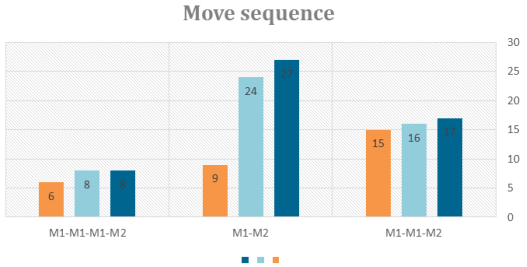
Figure 1. The most dominant move patterns across the three subfields.
Figure 1 summarizes the three most frequent move patterns in the abstracts of the three subdisciplines. These three move patterns account for 52% of biochemistry, 48% of biophysics and 30% of bioinformatics move patterns. The other move patterns across the three subdisciplines appeared once or twice in the corpus, each with many individual sequences that reflect writers’ preference in structuring their abstracts.
From the data presented above, biochemistry and biophysics writers used the move sequence M1-M2 more than the other patterns, while bioinformatics writers preferred using M1-M1-M2 more than the other move sequences. This result contradicts the findings of several previous abstract studies, which indicated that the Purpose (M2) Method (M3) Product (M4) sequence is the most dominant one
| [7] | Hyland, K. Disciplinary discourses: Social interactions in academic writing. University of Michigan Press: Ann Arbor, MI, USA, 2004.
https://doi.org/10.3998/mpub.6719 |
[7]
or occurred frequently
| [17] | Kanoksilapatham, B. Generic characterisation of civil engineering research. 3L: The Southeast Asian Journal of English Language Studies. 2013, 19(3), 1–10. |
[17]
.
4.2.2. Linear, Semi-linear, and Non-linear Sequences
Although most abstracts across the three subdisciplines contained all the moves, not all conformed to the original model M1-M2-M3-M4-M5. This result suggests that abstracts in the three fields did not follow a linear sequence of moves. Only one bioinformatics abstract followed the expected order (M1-M2-M3-M4-M5). Biochemistry and biophysics cannot follow the expected order since they cannot structurally include M3. This result shows that writers across the three subdisciplines do not typically follow the expected sequence of moves. That is due to discipline-specific conventions: when disciplines deviate from the conventional move structure, they develop their own unique structure.
Contrary to linearity, most of the abstracts from the three subfields followed a semi-linear pattern. There were approximately 95%, 83%, and 78% of biochemistry, biophysics, and bioinformatics abstracts that followed semi-linear patterns. Most of these semi-linear abstracts omitted M3, M4 and M5. As for the non-linear pattern, 5, 17, and 21 abstracts from the three subfields were identified as non-linear because they did not follow the expected order in the model. The following is an example demonstrating a non-linear order.
Example (2): / M2 This paper aims to provide an overview of the polyelectrolyte model and the current understanding of the creation and propagation of localized pulses of positive ions flowing along cellular microtubules/ / M1 that context, Ca2+ ions may move freely on the surface of microtubule along the protofilament axis, thus leading to signal transport/ / M2 Special emphasis in this paper is placed on the possible role of this mechanism in the function of microtubule based kinocilium, a component of vestibular hair cells of the inner ear. We discuss how localized pulses of Ca2+ ions play a crucial role in tuning the activity of dynein motors, which are involved in mechano–sensitivity of the kinocilium/ / M4 A prevailing notion holds that the concentration of Ca2+ ions around the microtubules within the kinocilium represents the control parameter for Hopf bifurcation. Therefore, a key feature of this mechanism is that the velocities of these Ca2+ pulses be sufficiently high to exert control at acoustic frequencies/. [Biophy-PBMB-8].
5. Discussion
5.1. Similarities and Differences in Move/Step Structure (RQ1)
The analysis of 300 review article abstracts across biochemistry, biophysics, and bioinformatics revealed distinct move patterns attempting to identify the similarities and differences across move and step levels. M1 (Situating the review) and M2 (Presenting the review) occurred as obligatory moves across all three subdisciplines (94-100%). M4 (Summarizing the results) and M5 (Discussing the review) were optional (5-38%). These similarities indicate that genre requirements create consistency across subdisciplines despite different research foci. This finding is consistent with Swales’ genre theory
| [10] | Swales, J. Genre analysis: English in academic and research settings. Cambridge University Press: Cambridge, UK, 1990. |
[10]
, which indicates that communicative functions shape the rhetorical structure more than content specialization. The obligatory status of M1 and M2 reflects the review genre’s fundamental purpose. In other words, contextualizing synthesis (M1) and defining scope (M2) are more important than describing methods (M3) or reporting results (M4). The obligatory status of M1 and M2 in the present study contrasts with Hyland's
| [7] | Hyland, K. Disciplinary discourses: Social interactions in academic writing. University of Michigan Press: Ann Arbor, MI, USA, 2004.
https://doi.org/10.3998/mpub.6719 |
[7]
finding that hard disciplines tend to omit Introduction moves. This difference may be attributed to the genre distinction: while research article abstracts in hard sciences prioritize Method moves, review article abstracts require contextualization regardless of discipline.
In addition, M3 (Describing methodology) distinguished bioinformatics from biochemistry and biophysics since it existed only in bioinformatics in around 13% of abstracts. Several factors may explain this finding. First, bioinformatics is a more applied field than biophysics and biochemistry; thus, it requires greater elaboration on how the review is conducted. A possible explanation for this is the journal guidelines that govern this subdiscipline. Moreover, since bioinformatics deals with computational models and large datasets, it is expected to refer to the analytical procedures. Bioinformatics is an interdisciplinary field that draws from multiple disciplines, including computer science, mathematics, biology, information technology, and statistics. As a result, writers use this rhetorical strategy to illustrate the need for computational transparency. Even though this move exists only in bioinformatics, it is considered not essential (optional) since it occurs in less than 35% of the abstracts. The near absence of M3 in biochemistry and biophysics (0%) and its low occurrence in bioinformatics (13%) sharply contrasts with findings from research article abstract studies. Cross and Oppenheim
and Kanoksilapatham
| [17] | Kanoksilapatham, B. Generic characterisation of civil engineering research. 3L: The Southeast Asian Journal of English Language Studies. 2013, 19(3), 1–10. |
[17]
reported that Method moves dominated civil engineering and protozoology abstracts. This striking difference reinforces the argument that review abstracts constitute a distinct genre.
Many studies on research article abstracts across various disciplines have highlighted the importance of M2
. Since this move contains the purpose of research or review, this move cannot be neglected since other moves depend on the aim or purpose of research or review, especially in the abstract genre
| [10] | Swales, J. Genre analysis: English in academic and research settings. Cambridge University Press: Cambridge, UK, 1990. |
[10]
. However, regarding M1, it appears that there are contradictory results across disciplines regarding the status of this move
| [7] | Hyland, K. Disciplinary discourses: Social interactions in academic writing. University of Michigan Press: Ann Arbor, MI, USA, 2004.
https://doi.org/10.3998/mpub.6719 |
| [20] | Alyousef, H. S. Move structure model for dentistry research article abstracts: A genre-based study of variations and similarities in eight dentistry subdisciplines. Discourse and Interaction. 2021, 14(1), 25–52.
https://doi.org/10.5817/DI2021-1-25 |
[7, 20]
. Alyousef
| [20] | Alyousef, H. S. Move structure model for dentistry research article abstracts: A genre-based study of variations and similarities in eight dentistry subdisciplines. Discourse and Interaction. 2021, 14(1), 25–52.
https://doi.org/10.5817/DI2021-1-25 |
[20]
reported that M1 was optional in five subdisciplines and conventional in three of the dentistry subdisciplines. In addition, Hyland
| [7] | Hyland, K. Disciplinary discourses: Social interactions in academic writing. University of Michigan Press: Ann Arbor, MI, USA, 2004.
https://doi.org/10.3998/mpub.6719 |
[7]
indicated that writers in hard knowledge fields prefer to exclude the Introduction move in favor of the Method move. However, in this study, M1 was obligatory, which can be attributed to the genre of review itself, as writers need to contextualize their reviews by introducing readers to the field or subfield before narrowing it to the reviewed topic. The occurrence of this move in each subdiscipline confirms Hyland’s assertion that it is being used more frequently in research abstracts. In terms of M1 steps, Step A is used more in abstract writing across the three subfields compared to the other two steps, Step B and Step C. This suggests that this step is a crucial strategy across the field, in contrast to previous studies that regarded it as optional
| [7] | Hyland, K. Disciplinary discourses: Social interactions in academic writing. University of Michigan Press: Ann Arbor, MI, USA, 2004.
https://doi.org/10.3998/mpub.6719 |
[7]
. M1 Step A serves as a core strategy because the interdisciplinary nature of these subdisciplines necessitates background knowledge for diverse readerships. M1 Steps B and C remain optional despite interdisciplinarity, possibly because reviews are typically commissioned
| [1] | Noguchi, J. The science review article: An opportune genre in the construction of science. Peter Lang: Bern, Switzerland, 2006. |
[1]
, reducing the need for gap identification or significance claims. However, this interpretation of the commission nature of review is speculative, which could not be applied consistently across all journals.
Similar to M1, M4 low occurrence contradicts previous findings across different disciplines
| [11] | Alyousef, H. Multidimensional analysis of linguistic realizations and rhetorical structure of geography RAA. Atlantis English Studies. 2023, 45(1), 190–212.
https://doi.org/10.28914/Atlantis-2023-45.1.11 |
| [14] | Pho, P. Research article abstracts in applied linguistics and educational technology: Linguistic realizations of rhetorical structure and authorial stance. Discourse Studies. 2008, 10(2), 231–250. https://doi.org/10.1177/1461445607087010 |
| [20] | Alyousef, H. S. Move structure model for dentistry research article abstracts: A genre-based study of variations and similarities in eight dentistry subdisciplines. Discourse and Interaction. 2021, 14(1), 25–52.
https://doi.org/10.5817/DI2021-1-25 |
[11, 14, 20]
. The optional status of M4 (5-10%) in the present study differs markedly from Alyousef's
| [20] | Alyousef, H. S. Move structure model for dentistry research article abstracts: A genre-based study of variations and similarities in eight dentistry subdisciplines. Discourse and Interaction. 2021, 14(1), 25–52.
https://doi.org/10.5817/DI2021-1-25 |
[20]
finding of obligatory Results moves in dentistry research abstracts and Pho's
| [14] | Pho, P. Research article abstracts in applied linguistics and educational technology: Linguistic realizations of rhetorical structure and authorial stance. Discourse Studies. 2008, 10(2), 231–250. https://doi.org/10.1177/1461445607087010 |
[14]
similar findings in applied linguistics. However, in this research, this move was rarely observed across all three subdisciplines, with most occurrences in the three subfields below 20%. This difference can be attributed to the fundamental communicative purpose: research abstracts report original findings, whereas review abstracts synthesize existing literature. This study found M4 to be rarely used, as reviews tend to synthesize others’ research rather than report findings and results. The minimal occurrence of M4 reflects the review genre’s focus on synthesis rather than reporting original findings.
Moreover, M5 has been optional in all three subfields, which confirms many studies on various disciplines regarding its status
| [11] | Alyousef, H. Multidimensional analysis of linguistic realizations and rhetorical structure of geography RAA. Atlantis English Studies. 2023, 45(1), 190–212.
https://doi.org/10.28914/Atlantis-2023-45.1.11 |
| [14] | Pho, P. Research article abstracts in applied linguistics and educational technology: Linguistic realizations of rhetorical structure and authorial stance. Discourse Studies. 2008, 10(2), 231–250. https://doi.org/10.1177/1461445607087010 |
| [28] | Tankó, G. Literary research article abstracts: Rhetorical moves and linguistic realizations. Journal of English for Academic Purposes. 2017, 27, 42–55.
https://doi.org/10.1016/j.jeap.2017.04.003 |
| [29] | Yoong Wei, H., Razali, A. B., and Abd Samad, A. Writing abstracts for research articles: Towards a framework for move structure of abstracts. World Journal of English Language. 2022, 12(6), 492. https://doi.org/10.5430/wjel.v12n6p492 |
[11, 14, 28, 29]
. Alyousef
| [20] | Alyousef, H. S. Move structure model for dentistry research article abstracts: A genre-based study of variations and similarities in eight dentistry subdisciplines. Discourse and Interaction. 2021, 14(1), 25–52.
https://doi.org/10.5817/DI2021-1-25 |
[20]
has reported a similar result, indicating that all eight dentistry subdisciplines in his study contained non-essential Implications/Suggestions steps. The absence of this move could be ascribed to its non-essential status. It appears that the optional status of M5 and M4 is due to the participation of community peers in using subdiscipline specific standards to include or exclude certain rhetorical functions.
5.2. Move Patterns Across Subdisciplines (RQ2)
The analysis of the data has shown that M1-M2 sequences are dominant across the three subfields. Samraj
found that wildlife behavior and conservation biology abstracts also began predominantly with background information (M1), though these fields showed greater M4 (Results) presence than the biology review abstracts in the present study. Can et al.
reported that applied linguistics research article abstracts followed an Introduction-Purpose-Method-Result-Discussion sequence. They reported that Method and Result are prominent moves—a pattern strikingly different from the M1-M2 dominance observed here. These comparisons reinforce the argument that review article abstracts constitute a distinct genre with different sequential conventions from research article abstracts. The consistent M1-M2 pattern across three biology subdisciplines as observed in
Figure 1 suggests this may be a defining characteristic of review article abstracts in the sciences, though further research across additional disciplines is needed to confirm this hypothesis. One feature observed that present review abstracts as a distinct genre is also reinforced by Introduction-like features that are not typically reported in research abstracts. The presence of research gap identification (M1 Step B) and structure outlining (M2 Step B)—features not typically found in research article abstracts—confirms Noguchi’s argument about genre fuzziness. Noguchi’s
| [1] | Noguchi, J. The science review article: An opportune genre in the construction of science. Peter Lang: Bern, Switzerland, 2006. |
[1]
concept of genre fuzziness supports Bhatia’s
| [6] | Bhatia, V. K. Analysing genre: Language use in professional settings. Longman: London, UK, 1993. |
[6]
(p. 16) observation that genres often overlap and mix features in professional contexts. The presence of M2 Step B (Outlining the structure)—a feature typically associated with research article introductions rather than abstracts—demonstrates this generic hybridization. Review article abstracts appear to borrow rhetorical strategies from the introduction genre, creating what Bhatia terms genre embedding. This hybridization is particularly pronounced in bioinformatics (51% occurrence of M2 Step B) compared to biochemistry (27%) and biophysics (31%), suggesting that interdisciplinary fields may exhibit greater genre fuzziness as they negotiate conventions from multiple parent disciplines. In other words, review abstracts blend characteristics of both abstracts and the introductions.
6. Conclusion
The current study examined the rhetorical structure and move sequence across three biology subdisciplines. Overall, this study provided empirical evidence that review article abstracts in biology subdisciplines constitute a distinct genre with consistent rhetorical patterns. Despite substantial differences in research methodologies and knowledge domains, the three subdisciplines shared fundamental structural conventions. These include obligatory M1-M2, optional M4-M5, semi-linear sequencing, and contextual emphasis. This consistency demonstrates how genre purpose—synthesis and orientation rather than empirical reporting—shapes rhetorical structure more powerfully than content specialization which aligns with Swales ’genre theory across subdisciplinary boundaries.
The modified five-move analytical framework combining Santos
and Swales
| [10] | Swales, J. Genre analysis: English in academic and research settings. Cambridge University Press: Cambridge, UK, 1990. |
[10]
models advances move analysis methodology. This framework demonstrated that research article abstract frameworks do not transfer to review articles. The obligatory status of M1-M2 and optional status of M4-M5, which differ from patterns typically observed in research abstracts, illustrate this distinction. The findings suggest that review abstracts are distinct genre as exemplified in the existence of research gaps and the structure outlining strategies.
This study has several implications. First, it demystifies review abstract writing for novice writers by identifying essential moves (M1-M2) and acceptable variation patterns (semi-linear patterns). Additionally, the corpus-based findings provide concrete guidance: prioritize contextualization and purpose statement; methods and results are typically unnecessary; conclusions optional. Bioinformatics emerges as a particularly instructive case, demonstrating how interdisciplinary fields develop diverse rhetorical practices. That was exemplified by the presence of M3 and M2 Step B at 51%. While M3’s presence is unique to bioinformatics, its low frequency (13%) indicates it is not a defining feature of the subdiscipline but suggests rhetorical variety. Simultaneously, bioinformatics preserved the generic core features, such as the obligatory status of M1-M2, M1-M2 sequence, and semi-linear patterns.
This study establishes baseline patterns against which future changes can be measured. These future changes include the use of technological advancements and AI-assisted writing tools for writing review abstracts, as well as the expansion in the use of graphical abstracts. These patterns contribute to ongoing conversations about effective scientific communication across disciplinary boundaries. The finding that genre conventions (M1-M2 dominance) override subdisciplinary variation suggests resilience in core rhetorical patterns, even as surface features may evolve with technological affordances.
This research confirms Swales’ fundamental principle: communicative purpose, not content domain, determines rhetorical structure. Review abstracts serve orientation and synthesis functions, and their structure reflects these purposes. By understanding these genre-specific conventions—obligatory M1-M2, optional M4-M5, semi-linear patterns, contextual dominance—writers can communicate more effectively, instructors can teach more strategically, and readers can navigate scientific literature more efficiently. The patterns identified here represent not arbitrary conventions but functional adaptations to the communicative needs of review article abstracts in the biological sciences. These patterns are shaped by the interplay of genre requirements, disciplinary practices, and discourse community expectations.
Based on these findings, several recommendations emerge for different stakeholders: For novice writers: Prioritize M1 (Situating the review) and M2 (Presenting the review) as these are obligatory across all three subdisciplines. M3 (Methodology) is generally unnecessary unless writing in computationally oriented fields like bioinformatics. M4 (Results) and M5 (Discussion) are optional and should be included only when the review produces synthesized findings or specific recommendations. For instructors: Teaching materials for review article writing should distinguish between research article abstracts and review article abstracts. The M1-M2 pattern should be emphasized as the core structure, with explicit instruction on how to contextualize the review topic and clearly state its purpose and scope. For journal editors: Consider providing genre-specific guidelines for review article abstracts that reflect the M1-M2 dominant pattern rather than adapting research article abstract templates.
Several future research studies emerge from this study. First, conducting cross-disciplinary comparisons within the same genre can reveal whether the results are discipline or genre-specific. Moreover, other researchers can investigate texts through longitudinal studies to examine whether genre practices evolve. This could be accomplished by examining different decades (e.g., 1990s, 2000s, 2010s, 2020s) using samples for each subdiscipline. Furthermore, this work can be extended to include an analysis of linguistic features to examine how moves are realized linguistically. Finally, writers can examine the influence of journal guidelines on the construction of abstracts to investigate whether journals shape genre conventions.
This study has several limitations that should be acknowledged. First, the timeframe constraint (2010-2023) prevents diachronic analysis of evolving conventions. Rhetorical patterns identified here may be period-specific, and future studies examining earlier decades could reveal how review abstract conventions have developed over time. Second, the study did not differentiate between native and non-native English writers. While high-ranking journals maintain rigorous editorial standards, writers' linguistic backgrounds may influence rhetorical choices, particularly in move sequencing and step realization. Future research could compare abstracts based on authors' institutional affiliations or stated first languages. Third, the commissioned nature of review articles, as suggested by Noguchi
| [1] | Noguchi, J. The science review article: An opportune genre in the construction of science. Peter Lang: Bern, Switzerland, 2006. |
[1]
, was not empirically verified. If certain journals commission reviews from established scholars while others accept unsolicited submissions, this could affect rhetorical conventions. Access to editorial correspondence would be needed to investigate this factor. Fourth, journal-specific guidelines were not systematically analyzed. Some journals provide detailed abstract formatting instructions while others offer minimal guidance. The extent to which journal guidelines shape move structure warrants separate investigation. Fifth, the study focused exclusively on English-language journals. Cross-linguistic comparisons could reveal whether the M1-M2 dominance observed here represents a genre-specific convention or reflects English academic writing norms.
Abbreviations
ESP | English for Specific Purposes |
M1 | Move 1 |
M2 | Move 2 |
M3 | Move 3 |
M4 | Move 4 |
M5 | Move 5 |
SDL | Saudi Digital Library |
JCR | Journal Citation Reports |
SCIE | Science Citation Index Expanded |
Acknowledgments
The authors express their appreciation to the anonymous reviewers for their insightful and helpful comments.
Author Contributions
Sumayyah Solaiman Alghezzi: Conceptualization, Data curation, Formal Analysis, Funding acquisition, Investigation, Methodology, Project administration, Resources, Visualization, Writing original draft
Sultan Hussein Alharbi: Supervision, Validation, Writing – review & editing
Data Availability Statement
The data is available from the corresponding author upon reasonable request.
Conflicts of Interest
The authors declare no conflicts of interest.
Appendix: Journals Used in the Corpus
Table 3. Listing of journals included in the corpus. Listing of journals included in the corpus. Listing of journals included in the corpus.
Biochemistry Journals: |
Cell |
Signal Transduction and Targeted Therapy |
Molecular Plant |
Nature Structural and Molecular Biology |
Annual Review of Biochemistry |
Molecular Cell |
Trends in Biochemical Sciences |
Progress in Lipid Research |
Cytokine & Growth Factor Reviews |
Experimental & Molecular Medicine |
Biophysics Journals: |
Biosensors & Bioelectronics |
Annual Review of Biophysics |
Physics of Life Reviews |
Molecular Basis of Disease |
Quarterly Review of Biophysics |
Colloids and Surfaces B-Biointerfaces |
Molecular and Cell Biology of Lipids |
Biochimica et Biophysica Acta |
Archives of Biochemistry and Biophysics |
Progress in Biophysics and Molecular Biology |
Bioinformatics Journals: |
WIREs Computational Molecular Science |
Briefings in Bioinformatics |
Computers in Biology and Medicine |
PLoS Computational Biology |
Mathematical Biosciences |
Current Bioinformatics |
Molecular Informatics |
Frontiers in Neuroinformatic |
Frontiers in Computational Neuroscience |
Medical & Biological Engineering & Computing |
References
| [1] |
Noguchi, J. The science review article: An opportune genre in the construction of science. Peter Lang: Bern, Switzerland, 2006.
|
| [2] |
Amobonye, A., Lalung, J., Mheta, G., and Pillai, S. Writing a scientific review article: Comprehensive insights for beginners. The Scientific World Journal. 2024, 2024, 1–13.
https://doi.org/10.1155/2024/7822269
|
| [3] |
Azar, A. A genre analysis of review articles in applied linguistics. PhD Dissertation, University of Malaya, Kuala Lumpur, Malaysia, 2017. Available from:
http://studentsrepo.um.edu.my/id/eprint/11647
|
| [4] |
Li, Y., Wang, K., Xiao, Y., and Froyd, J. E. Research and trends in STEM education: A systematic review of journal publications. International Journal of STEM Education. 2020, 7(1), 11.
https://doi.org/10.1186/s40594-020-00207-6
|
| [5] |
Santos, M. B. Textual organization of research paper abstracts in applied linguistics. Text - Interdisciplinary Journal for the Study of Discourse, 1996, 16(4), 481–499.
https://doi.org/10.1515/text.1.1996.16.4.481
|
| [6] |
Bhatia, V. K. Analysing genre: Language use in professional settings. Longman: London, UK, 1993.
|
| [7] |
Hyland, K. Disciplinary discourses: Social interactions in academic writing. University of Michigan Press: Ann Arbor, MI, USA, 2004.
https://doi.org/10.3998/mpub.6719
|
| [8] |
Youdeowei, A., Stapleton, P., and Obubo, R., Eds. Scientific writing for agricultural research scientists: A training resource manual. Technical Centre for Agricultural and Rural Cooperation (CTA): Wageningen, The Netherlands, 2012.
|
| [9] |
Doró, K. Rhetorical structure of research article abstracts in English studies journals. Prague Journal of English Studies. 2013, 2(1), 119–139.
https://doi.org/10.2478/pjes-2014-0013
|
| [10] |
Swales, J. Genre analysis: English in academic and research settings. Cambridge University Press: Cambridge, UK, 1990.
|
| [11] |
Alyousef, H. Multidimensional analysis of linguistic realizations and rhetorical structure of geography RAA. Atlantis English Studies. 2023, 45(1), 190–212.
https://doi.org/10.28914/Atlantis-2023-45.1.11
|
| [12] |
Chaisiri, P., Kumdee, S., and Pramoolsook, I. Analysis of moves, hedges, and boosters in applied linguistics research article abstracts of Thai international journals. Social Sciences & Humanities Open. 2025, 11, 101397.
https://doi.org/10.1016/j.ssaho.2025.101397
|
| [13] |
Cross, C., and Oppenheim, C. Genre analysis of scientific abstracts. Journal of Documentation. 2006, 62(4), 428–446.
https://doi.org/10.1108/00220410610700953
|
| [14] |
Pho, P. Research article abstracts in applied linguistics and educational technology: Linguistic realizations of rhetorical structure and authorial stance. Discourse Studies. 2008, 10(2), 231–250.
https://doi.org/10.1177/1461445607087010
|
| [15] |
Bonsu, E. M., and Afful, J. B. A. Genre analysis of abstracts of research articles published in biostatistics. International Journal of Literature, Language and Linguistics. 2022, 5(1), 17–38.
https://doi.org/10.52589/IJLLL-A94THVEW
|
| [16] |
Samraj, B. Exploration of a genre set: Research article abstracts and introductions in two disciplines. English for Specific Purposes. 2005, 24(2), 141–156.
https://doi.org/10.1016/j.esp.2002.10.001
|
| [17] |
Kanoksilapatham, B. Generic characterisation of civil engineering research. 3L: The Southeast Asian Journal of English Language Studies. 2013, 19(3), 1–10.
|
| [18] |
Can, S., Karabacak, E., and Qin, J. Structure of moves in research article abstracts in applied linguistics. Publications. 2016, 4(3), 23.
https://doi.org/10.3390/publications4030023
|
| [19] |
Li, Q., and Pramoolsook, I. Research article abstracts in two subdisciplines of business—Move structure and hedging between management and marketing. English Language Teaching. 2014, 8(1), 52.
https://doi.org/10.5539/elt.v8n1p52
|
| [20] |
Alyousef, H. S. Move structure model for dentistry research article abstracts: A genre-based study of variations and similarities in eight dentistry subdisciplines. Discourse and Interaction. 2021, 14(1), 25–52.
https://doi.org/10.5817/DI2021-1-25
|
| [21] |
Huang, J. C. Marine engineering and sub-disciplinary variations: A rhetorical analysis of research article abstracts. Text & Talk. 2018, 38(3), 341–363.
https://doi.org/10.1515/text-2018-0002
|
| [22] |
Kong, X., and Liu, C. Comparative genre analysis of AI-generated and scholar-written abstracts for English review articles in international journals. Journal of English for Academic Purposes. 2024, 71, 101432.
https://doi.org/10.1016/j.jeap.2024.101432
|
| [23] |
Hyland, K., and Jiang, F. Is academic writing becoming more informal? English for Specific Purposes. 2017, 45, 40–51.
https://doi.org/10.1016/j.esp.2016.09.001
|
| [24] |
Cotos, E., Huffman, S., and Link, S. Move/step model for methods sections: Demonstrating rigour and credibility. English for Specific Purposes. 2017, 46, 90–106.
https://doi.org/10.1016/j.esp.2017.01.001
|
| [25] |
Crookes, G. Towards a validated analysis of scientific text structure. Applied Linguistics. 1986, 7(1), 57–70.
https://doi.org/10.1093/applin/7.1.57
|
| [26] |
Kanoksilapatham, B. Rhetorical structure of biochemistry research articles. English for Specific Purposes. 2005, 24(3), 269–292.
https://doi.org/10.1016/j.esp.2004.08.003
|
| [27] |
Parkinson, J. Student laboratory report genre: A genre analysis. English for Specific Purposes. 2017, 45, 1–13.
https://doi.org/10.1016/j.esp.2016.08.001
|
| [28] |
Tankó, G. Literary research article abstracts: Rhetorical moves and linguistic realizations. Journal of English for Academic Purposes. 2017, 27, 42–55.
https://doi.org/10.1016/j.jeap.2017.04.003
|
| [29] |
Yoong Wei, H., Razali, A. B., and Abd Samad, A. Writing abstracts for research articles: Towards a framework for move structure of abstracts. World Journal of English Language. 2022, 12(6), 492.
https://doi.org/10.5430/wjel.v12n6p492
|
Cite This Article
-
APA Style
Alghezzi, S. S., Alharbi, S. H. (2026). Genre Analysis of Review Article Abstracts in Biology Subdisciplines. International Journal of Language and Linguistics, 14(1), 23-34. https://doi.org/10.11648/j.ijll.20261401.14
 Copy
|
Copy
|
 Download
ACS Style
Alghezzi, S. S.; Alharbi, S. H. Genre Analysis of Review Article Abstracts in Biology Subdisciplines. Int. J. Lang. Linguist. 2026, 14(1), 23-34. doi: 10.11648/j.ijll.20261401.14
Copy
|
Download
AMA Style
Alghezzi SS, Alharbi SH. Genre Analysis of Review Article Abstracts in Biology Subdisciplines. Int J Lang Linguist. 2026;14(1):23-34. doi: 10.11648/j.ijll.20261401.14
Copy
|
Download
-
@article{10.11648/j.ijll.20261401.14,
  author = {Sumayyah Solaiman Alghezzi and Sultan Hussein Alharbi},
  title = {Genre Analysis of Review Article Abstracts in Biology Subdisciplines},
  journal = {International Journal of Language and Linguistics},
  volume = {14},
  number = {1},
  pages = {23-34},
  doi = {10.11648/j.ijll.20261401.14},
  url = {https://doi.org/10.11648/j.ijll.20261401.14},
  eprint = {https://article.sciencepublishinggroup.com/pdf/10.11648.j.ijll.20261401.14},
  abstract = {This study implements a genre-based approach to analyze the rhetorical structure and move patterns of review article abstracts written by biochemistry, biophysics, and bioinformatics scholars. It aims to investigate the similarities and differences between biology subdisciplines in frequency, status, sequencing and step usage. The study examined 300 review abstracts selected from 30 esteemed journals. A modified model from Santos and Swales was employed to identify the move/step structure of all three datasets. The study’s findings revealed that M-M2 is obligatory, while M4 and M5 are optional. Moreover, it showed the dominance of M1-M2 sequences across the three subfields. The three subfields shared similarities and differences in their structural organization at the move and step levels. All three subfields shared the obligatory status of M1 and M2 and differed in M3 usage. Furthermore, the results of this study highlighted that review abstracts show distinct M1-M2 dominance, unlike research article abstracts. The findings of this study have implications for novice researchers and postgraduate students by raising awareness of the variation in generic structure across three biology subdisciplines. Furthermore, the research concludes with future research suggestions that include cross-disciplinary comparisons, longitudinal studies, and linguistic feature studies. Finally, potential limitations that arise from the study are provided.},
 year = {2026}
}
Copy
|
Download
-
TY  - JOUR
T1  - Genre Analysis of Review Article Abstracts in Biology Subdisciplines
AU  - Sumayyah Solaiman Alghezzi
AU  - Sultan Hussein Alharbi
Y1  - 2026/01/29
PY  - 2026
N1  - https://doi.org/10.11648/j.ijll.20261401.14
DO  - 10.11648/j.ijll.20261401.14
T2  - International Journal of Language and Linguistics
JF  - International Journal of Language and Linguistics
JO  - International Journal of Language and Linguistics
SP  - 23
EP  - 34
PB  - Science Publishing Group
SN  - 2330-0221
UR  - https://doi.org/10.11648/j.ijll.20261401.14
AB  - This study implements a genre-based approach to analyze the rhetorical structure and move patterns of review article abstracts written by biochemistry, biophysics, and bioinformatics scholars. It aims to investigate the similarities and differences between biology subdisciplines in frequency, status, sequencing and step usage. The study examined 300 review abstracts selected from 30 esteemed journals. A modified model from Santos and Swales was employed to identify the move/step structure of all three datasets. The study’s findings revealed that M-M2 is obligatory, while M4 and M5 are optional. Moreover, it showed the dominance of M1-M2 sequences across the three subfields. The three subfields shared similarities and differences in their structural organization at the move and step levels. All three subfields shared the obligatory status of M1 and M2 and differed in M3 usage. Furthermore, the results of this study highlighted that review abstracts show distinct M1-M2 dominance, unlike research article abstracts. The findings of this study have implications for novice researchers and postgraduate students by raising awareness of the variation in generic structure across three biology subdisciplines. Furthermore, the research concludes with future research suggestions that include cross-disciplinary comparisons, longitudinal studies, and linguistic feature studies. Finally, potential limitations that arise from the study are provided.
VL  - 14
IS  - 1
ER  -
Copy
|
Download





 Share This Article
 Twitter
 Linked In
 Facebook