Abstract
Early childhood represents a foundational phase of human development, marked by rapid physical growth, progressive maturation of the gastrointestinal system, immune system development, and establishment of metabolic processes. During this sensitive period, efficient digestion, optimal nutrient absorption, and maintenance of gastrointestinal comfort are essential for achieving healthy growth patterns and supporting long-term health outcomes. Increasing scientific evidence indicates that the gut microbiota serves as a central mediator linking dietary components with digestive function, immune regulation, metabolic activity, and overall developmental processes. Among nutritional strategies designed to promote intestinal health, synbiotics—the combination of prebiotics and probiotics—have gained considerable attention due to their potential synergistic effects. Galacto-oligosaccharides (GOS), a functional prebiotic carbohydrate structurally similar to certain components of human milk oligosaccharides, selectively promotes the proliferation and metabolic activity of beneficial microorganisms, particularly Bifidobacterium species. Through modulation of microbial composition, GOS contributes to improved intestinal ecosystem stability, enhanced epithelial barrier function, and increased generation of beneficial microbial-derived metabolites, including short-chain fatty acids (SCFAs), which participate in maintaining intestinal homeostasis. Lactobacillus reuteri, a well-characterized probiotic strain with established presence in the human gastrointestinal environment, contributes to microbial balance through multiple biological mechanisms. These include suppression of potentially harmful microorganisms through competitive exclusion, regulation of intestinal immune responses, enhancement of mucosal integrity, and support of a stable microbial environment. When combined with GOS, L. reuteri may provide complementary advantages by supplying beneficial bacteria while simultaneously creating a favorable nutritional environment that facilitates their activity and persistence. Research investigating GOS and L. reuteri-based synbiotic approaches has demonstrated potential benefits for improving digestive tolerance, reducing gastrointestinal discomfort, and alleviating common infant symptoms such as colic and regurgitation. However, the influence of gut-directed nutritional strategies extends beyond gastrointestinal outcomes. The gut microbiota has increasingly been recognized as an important contributor to systemic development through its effects on nutrient utilization, mineral metabolism, inflammatory pathways, and metabolic signaling networks. The interaction between intestinal microorganisms and host physiology may therefore influence processes associated with bone mineralization, muscle development, and overall physical growth during early life. By supporting digestive efficiency and improving the availability of essential nutrients, synbiotics may contribute indirectly to optimal skeletal and muscular development.
|
Published in
|
International Journal of Immunology (Volume 14, Issue 2)
|
|
DOI
|
10.11648/j.iji.20261402.12
|
|
Page(s)
|
57-64 |
|
Creative Commons
|

This is an Open Access article, distributed under the terms of the Creative Commons Attribution 4.0 International License (http://creativecommons.org/licenses/by/4.0/), which permits unrestricted use, distribution and reproduction in any medium or format, provided the original work is properly cited.
|
|
Copyright
|
Copyright © The Author(s), 2026. Published by Science Publishing Group
|
Keywords
Galacto-oligosaccharides, Lactobacillus Reuteri, Digestive Comfort, Bone Development, Muscle Development, Probiotics, Immunity
1. Introduction
Early childhood represents a period of rapid physiological development requiring coordinated maturation of multiple biological systems, including the gastrointestinal tract, immune system, skeletal system, and muscular tissues. Nutrition during this period provides not only essential energy and nutrients but also biological signals that influence microbiota composition, intestinal function, immune regulation, and growth processes
| [1] | Szajewska H, Berni Canani R, Domellöf M, et al. Probiotics and prebiotics in infant nutrition. Journal of Pediatric Gastroenterology and Nutrition. 2023. |
[1]
.
The gastrointestinal tract is increasingly recognized as a central regulator of child health. The developing gut microbiome interacts continuously with dietary components, influencing digestion, nutrient absorption, immune development, and metabolic function. A balanced intestinal microbiota contributes to digestive comfort and creates an environment supportive of healthy development.
Infants commonly experience gastrointestinal challenges during early life, including colic, regurgitation, irregular stool patterns, and digestive discomfort. These conditions may affect feeding tolerance, parental wellbeing, and overall quality of life. Therefore, nutritional strategies that support gastrointestinal maturation and microbial balance are of significant clinical interest
| [2] | Sanders ME. Probiotics: definition, sources, selection, and uses. Clinical Infectious Diseases. 2008. |
[2]
.
Prebiotics and probiotics have emerged as important components of nutritional approaches aimed at supporting gut health. Prebiotics are selectively utilized substrates that promote the growth of beneficial microorganisms, whereas probiotics are live microorganisms that provide health benefits when administered in adequate amounts. The combination of both components, known as synbiotics, may provide complementary advantages by enhancing beneficial bacterial growth while introducing specific functional strains.
Galacto-oligosaccharides (GOS) are among the most extensively studied prebiotics in infant nutrition. Their structure resembles certain oligosaccharides naturally present in human milk and allows them to selectively stimulate beneficial bacteria, particularly bifidobacteria.
Lactobacillus reuteri is one of the most studied probiotic strains in infancy due to its ability to colonize the gastrointestinal environment and influence microbial balance and immune responses
| [3] | EFSA Panel on Nutrition, Novel Foods and Food Allergens. Scientific opinions on probiotic and prebiotic ingredients. |
[3]
.
The potential benefits of GOS and L. reuteri extend beyond digestive comfort. Increasing evidence suggests that the gut microbiota communicates with distant organs through metabolic, immune, and endocrine pathways. This gut-systemic connection may influence nutrient absorption, inflammation, bone metabolism, and muscle development.
Therefore, understanding the science behind synbiotic nutrition provides an opportunity to support a more comprehensive approach to early-life nutrition, focusing not only on digestive comfort but also on healthy growth and development.
2. The Gut-Body Development Axis: Linking Microbiota, Digestion, and Growth
The gastrointestinal tract functions as a major interface between nutrition and child development. The gut microbiota contributes to:
1) Digestion and nutrient utilization
2) Production of beneficial microbial metabolites
3) Immune system maturation
4) Maintenance of intestinal barrier function
5) Regulation of metabolic pathways
A healthy gut environment supports efficient nutrient absorption, which is essential for bone mineralization, muscle formation, and overall growth
| [4] | Gibson GR, Hutkins R, Sanders ME, et al. Expert consensus document: The International Scientific Association for Probiotics and Prebiotics (ISAPP) consensus statement on the definition and scope of prebiotics. Nature Reviews Gastroenterology & Hepatology. 2017. |
[4]
.
Table 1.
Gut Microbiota Functions and Developmental Outcomes | [5] | Ouwehand AC, Salminen S, Isolauri E. Probiotics: an overview of beneficial effects. Antonie van Leeuwenhoek. 2002. |
Gut Function | Biological Role | Developmental Benefit |
Microbial balance | Maintains healthy intestinal ecosystem | Improved digestive comfort |
SCFA production | Supports intestinal cells and metabolism | Enhanced gut function |
Barrier integrity | Prevents excessive inflammation | Immune regulation |
Nutrient utilization | Improves absorption processes | Supports growth and development |
The interaction between diet and microbiota begins early in life. Nutritional components such as GOS influence microbial composition, while probiotic strains such as L. reuteri contribute specific functional activities within the gastrointestinal environment.
3. Biological Mechanisms of Synbiotic Benefits of GOS and Lactobacillus reuteri
The gastrointestinal tract represents a complex ecosystem where dietary components, intestinal microorganisms, and host physiology interact continuously. Synbiotic combinations containing
prebiotics such as galacto-oligosaccharides (GOS) and
probiotics such as Lactobacillus reuteri provide complementary mechanisms by supporting beneficial microbial growth while enhancing specific probiotic functions
| [6] | Indrio F, Di Mauro A, Riezzo G, et al. Prophylactic use of a probiotic in the prevention of infantile colic. JAMA Pediatrics. 2014. |
[6]
.
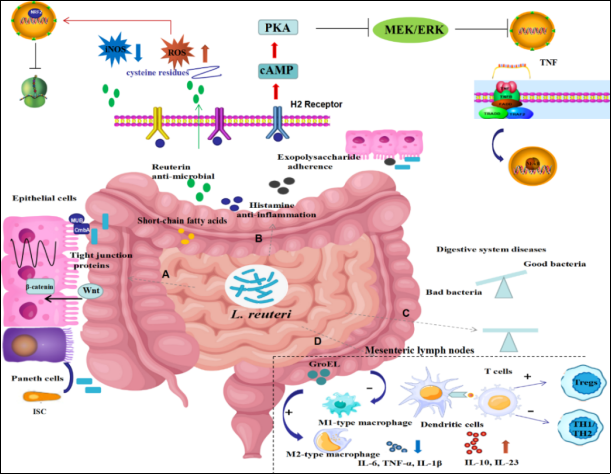
The beneficial effects of GOS and L. reuteri are mediated through multiple biological pathways, including modulation of gut microbiota composition, production of beneficial metabolites, improvement of intestinal barrier function, regulation of immune responses, and enhancement of digestive tolerance.
3.1. Galacto-Oligosaccharides (GOS): A Prebiotic Foundation for Gut Health
GOS are non-digestible carbohydrates that selectively stimulate beneficial bacteria in the gastrointestinal tract. Because they resist digestion in the upper gastrointestinal tract, GOS reach the colon where they serve as a substrate for beneficial microorganisms. SCFAs, including acetate, propionate, and butyrate, produced through microbial fermentation of GOS, contribute to intestinal health by providing energy for intestinal cells and regulating inflammatory pathways
| [8] | Savino F, Cordisco L, Tarasco V, et al. Lactobacillus reuteri DSM 17938 in infantile colic. Pediatrics. 2010. |
[8]
.
3.2. Lactobacillus Reuteri: Supporting Microbial Balance and Digestive Comfort
Lactobacillus reuteri is a well-characterized probiotic strain naturally found in the human gastrointestinal tract. It contributes to intestinal health through direct interactions with microorganisms and the host intestinal environment
| [9] | Thomas DW, Greer FR. Probiotics and prebiotics in pediatric health. Pediatrics. 2010. |
[9]
. By maintaining a favorable microbial environment,
L. reuteri may contribute to improved digestive comfort and gastrointestinal tolerance during infancy.
3.3. Synergistic Action of GOS and L. Reuteri
The combination of GOS and L. reuteri provides complementary benefits:
GOS → Provides nourishment for beneficial bacteria
L. reuteri → Provides targeted probiotic activity
Together → Supports a balanced intestinal ecosystem | [10] | Underwood MA. Intestinal dysbiosis: novel mechanisms by which gut microbes influence neonatal health. Pediatric Research. 2014. |
This synbiotic approach may enhance digestive comfort by improving microbial balance, supporting intestinal function, and promoting a favorable gut environment.
4. Advancing Gut Comfort Through the Synbiotic Benefits of GOS and L. reuteri
Digestive comfort is an important aspect of infant wellbeing because gastrointestinal symptoms may influence feeding behavior, sleep patterns, and family quality of life. The developing gastrointestinal system undergoes continuous maturation during early infancy, making microbial balance an important factor in digestive health.
4.1. Supporting Reduction of Infant Colic Symptoms
Infant colic is characterized by excessive crying and discomfort without an identifiable underlying disease. Alterations in intestinal microbiota composition have been suggested as one factor associated with gastrointestinal discomfort
| [11] | Plaza-Díaz J, Fontana L, Gil A. Human milk oligosaccharides and infant gut microbiota. Nutrients. 2018. |
[11]
. Clinical studies have investigated specific strains of
L. reuteri for their potential role in reducing crying duration and improving colic-related symptoms, particularly in breastfed infants.
4.2. Supporting Regurgitation and Gastrointestinal Tolerance
Regurgitation is common during infancy due to immature gastrointestinal function. Nutritional strategies that support digestive maturation may help improve feeding tolerance. A balanced gut microbiota may contribute to overall gastrointestinal comfort during this developmental stage
| [12] | Bode L. Human milk oligosaccharides: every baby needs a sugar mama. Glycobiology. 2012. |
[12]
.
4.3. Supporting Stool Consistency and Digestive Function
GOS can influence stool characteristics through microbial fermentation and increased production of beneficial metabolites. These effects are associated with the ability of prebiotics to modify microbial activity within the colon.
5. Supporting Healthy Bone and Muscle Development Through Synbiotic Nutrition
Although the primary role of GOS and
L. reuteri is related to gastrointestinal health, emerging evidence suggests that the gut microbiota may influence systemic development, including bone and muscle health
| [13] | Holscher HD. Dietary fiber and prebiotics and the gastrointestinal microbiota. Gut Microbes. 2017. |
[13]
.
5.1. Gut-Bone Connection
The gut microbiota contributes to bone development through regulation of: A healthy intestinal environment supports efficient nutrient utilization, which is important for skeletal growth during early childhood
| [14] | Sanders ME, Merenstein DJ, Reid G, et al. Probiotics and prebiotics in intestinal health. Gut Microbes. 2019. |
[14]
.
5.2. Gut-Muscle Connection
Muscle development requires adequate protein utilization, energy metabolism, and growth signaling. The gut microbiota may influence muscle development. A healthy gut environment supports the body's ability to utilize nutrients required for muscle formation and physical growth.
6. Gut Comfort Relation to Synbiotic Nutrition Action
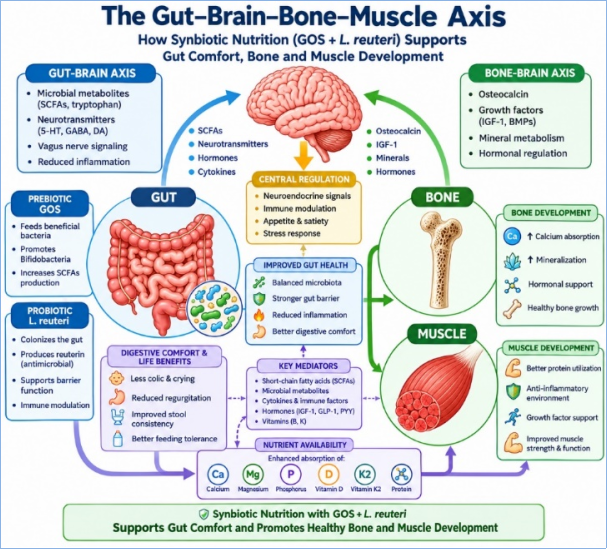
The developing gastrointestinal system plays a central role in early childhood health by influencing digestion, nutrient utilization, immune maturation, and systemic growth. Increasing evidence demonstrates that the gut microbiota functions as an important biological mediator connecting nutrition with developmental outcomes. The concept of the gut-body development axis highlights how modulation of intestinal microbial communities may influence not only digestive comfort but also broader physiological processes such as bone and muscle development.
Synbiotic approaches combining
galacto-oligosaccharides (GOS) and
Lactobacillus reuteri represent an important nutritional strategy because they provide complementary functions. GOS acts as a selective substrate that supports beneficial microorganisms, particularly bifidobacteria, while
L. reuteri provides targeted probiotic effects through microbial balance, immune modulation, and intestinal homeostasis. Systematic reviews of infant prebiotic, probiotic, and synbiotic interventions demonstrate that these approaches can modify gut microbiota composition, particularly increasing beneficial bacterial populations such as bifidobacteria, although clinical outcomes may vary depending on strain, dose, and population characteristics
| [16] | Lucas S, Omata Y, Hofmann J, et al. Short-chain fatty acids regulate systemic bone metabolism. Nature Communications. 2018. |
[16]
.
6.1. Advancing Gut Comfort Through GOS and L. Reuteri Nutrition
Digestive comfort is an essential component of infant wellbeing. Gastrointestinal symptoms such as colic, regurgitation, and stool irregularities are common during early life due to gastrointestinal immaturity and ongoing microbiome development.
The potential mechanisms through which GOS and L. reuteri may support digestive comfort where GOS contributes to a favorable intestinal environment by promoting fermentation and production of short-chain fatty acids (SCFAs). These metabolites provide energy to intestinal cells and contribute to maintaining intestinal homeostasis.
L. reuteri supports gut comfort through competitive exclusion of undesirable microorganisms, production of antimicrobial compounds such as reuterin, and modulation of host immune responses
| [17] | Yan J, Herzog JW, Tsang K, et al. Gut microbiota induce IGF-1 and promote bone formation. Journal of Bone and Mineral Research. 2016. |
[17]
.
Clinical studies investigating specific strains of L. reuteri have demonstrated potential benefits in reducing crying duration associated with infant colic, particularly in breastfed infants. However, effects are strain-specific, and outcomes may differ across populations.
6.2. Gut Microbiota and the Gut-Musculoskeletal Connection
Recent research has expanded the role of the gut microbiome beyond gastrointestinal health toward systemic development, including bone and muscle outcomes. The gut-musculoskeletal axis describes how intestinal microorganisms influence skeletal and muscular development through multiple mechanisms, including nutrient absorption, microbial metabolites, immune regulation, and metabolic signaling
| [19] | Suez J, Zmora N, Segal E, Elinav E. The pros, cons, and many unknowns of probiotics. Nature Medicine. 2019. |
[19]
.
A recent randomized controlled trial in toddlers investigated a young child formula containing L. reuteri DSM 17938 and GOS and demonstrated improvements in bone quality and muscle strength compared with minimally fortified milk. The intervention was associated with changes in microbiome composition, including increased L. reuteri abundance and greater presence of bifidobacteria.
These findings provide emerging evidence that nutritional modulation of the microbiome may influence musculoskeletal development during early childhood.
6.3. Supporting Healthy Bone Development
Bone development during childhood requires adequate availability of calcium, vitamin D, protein, and other growth-supporting nutrients. The intestinal microbiota may influence bone health. A healthy gut environment may improve nutrient utilization and support optimal skeletal development during periods of rapid growth
| [21] | Swanson KS, Gibson GR, Hutkins R, et al. The International Scientific Association for Probiotics and Prebiotics (ISAPP) consensus statement on the definition and scope of synbiotics. Nature Reviews Gastroenterology & Hepatology. 2020. |
[21]
. The emerging evidence suggests that gut-targeted nutritional strategies may complement traditional approaches focused on calcium, vitamin D, and protein intake.
6.4. Supporting Muscle Development
Muscle growth requires adequate protein utilization, energy availability, and coordinated metabolic signaling. The gut microbiota may influence muscle development. The recent toddler clinical trial evaluating GOS and
L. reuteri demonstrated improvements in muscle strength alongside microbiome changes, supporting the concept that gut microbial modulation may contribute to functional growth outcomes
| [22] | FAO/WHO. Guidelines for the Evaluation of Probiotics in Food. 2002. |
[22]
.
6.5. Clinical Implications for Healthcare Professionals
Healthcare professionals play an important role in guiding parents regarding early-life nutrition strategies that support digestive comfort and healthy growth
| [23] | Markowiak P, Śliżewska K. Effects of probiotics, prebiotics and synbiotics on human health. Nutrients. 2017. |
[23]
.
Key counselling messages include:
1) Supporting balanced nutrition during infancy and toddlerhood
2) Recognizing the importance of gut microbiota development
3) Considering evidence-based prebiotic and probiotic approaches when appropriate
4) Supporting nutrient intake required for bone and muscle development
| [20] | Marco ML, Sanders ME, Gänzle M, et al. The role of probiotics in health. Gut Microbes. 2021. |
| [24] | Aoun A, Darwish F, Hamod N. The influence of the gut microbiome on bone health. Journal of Translational Medicine. 2020. |
[20, 24]
A holistic approach should consider:
Gut Health → Improved Digestion → Better Nutrient Utilization → Healthy Growth and Development
7. Conclusion
The gastrointestinal tract represents a critical foundation for early childhood health, influencing digestion, immune development, nutrient utilization, and overall growth. The combination of GOS and Lactobacillus reuteri provides a scientifically supported synbiotic approach that promotes beneficial microbial balance and supports digestive comfort through complementary mechanisms. GOS functions as a prebiotic substrate that nourishes beneficial bacteria, while L. reuteri contributes targeted probiotic effects through microbial regulation, immune modulation, and intestinal homeostasis. Together, these components support a favorable gut environment that may improve gastrointestinal tolerance and contribute to healthy development. Emerging evidence also highlights the importance of the gut-musculoskeletal connection, suggesting that microbiota modulation may influence bone quality and muscle function through improved nutrient utilization, metabolic signaling, and immune regulation. Recent clinical evidence in toddlers demonstrates that supplementation with a GOS and L. reuteri synbiotic was associated with microbiome changes and improvements in bone quality and muscle strength, providing new insights into the role of gut-directed nutrition in early development. Overall, supporting gut comfort during early life may extend beyond digestive health by contributing to broader developmental outcomes. Synbiotic nutrition represents a promising strategy within a comprehensive approach to infant and toddler nutrition, helping support healthy digestion, optimal growth, and lifelong wellbeing.
Author Contributions
Md. Rafiqul Islam: Conceptualization, Data curation, Formal Analysis, Investigation, Methodology, Project administration, Supervision, Validation, Visualization, Writing – original draft
Md. Rafiqul Islam: Conceptualization, Data curation, Formal Analysis, Investigation, Methodology, Supervision, Visualization, Writing – original draft
Polash Chandra Sarkar: Conceptualization, Data curation, Formal Analysis, Investigation, Methodology, Project administration, Visualization
Mohammad Sajib Rayhan: Conceptualization, Data curation, Formal Analysis, Investigation, Validation, Visualization, Writing – original draft
Ismile Hossain: Conceptualization, Data curation, Formal Analysis, Investigation, Methodology, Project administration, Supervision, Validation, Visualization, Writing – original draft, Writing – review&editing
Mohammad Abdul Baki: Conceptualization, Data curation, Formal Analysis, Investigation, Methodology, Project administration
Zahirul Islam: Conceptualization, Data curation, Formal Analysis, Investigation, Methodology, Project administration, Supervision, Validation
Dhiraj Chandra Biswas: Conceptualization, Data curation, Formal Analysis, Investigation, Methodology, Project administration, Supervision, Validation, Visualization, Writing – original draft, Writing – review&editing
Conflicts of Interest
The authors declare no conflicts of interest.
References
| [1] |
Szajewska H, Berni Canani R, Domellöf M, et al. Probiotics and prebiotics in infant nutrition. Journal of Pediatric Gastroenterology and Nutrition. 2023.
|
| [2] |
Sanders ME. Probiotics: definition, sources, selection, and uses. Clinical Infectious Diseases. 2008.
|
| [3] |
EFSA Panel on Nutrition, Novel Foods and Food Allergens. Scientific opinions on probiotic and prebiotic ingredients.
|
| [4] |
Gibson GR, Hutkins R, Sanders ME, et al. Expert consensus document: The International Scientific Association for Probiotics and Prebiotics (ISAPP) consensus statement on the definition and scope of prebiotics. Nature Reviews Gastroenterology & Hepatology. 2017.
|
| [5] |
Ouwehand AC, Salminen S, Isolauri E. Probiotics: an overview of beneficial effects. Antonie van Leeuwenhoek. 2002.
|
| [6] |
Indrio F, Di Mauro A, Riezzo G, et al. Prophylactic use of a probiotic in the prevention of infantile colic. JAMA Pediatrics. 2014.
|
| [7] |
Sung V, D’Amico F, Cabana MD, et al. Lactobacillus reuteri to treat infant colic: a systematic review and meta-analysis. Pediatrics. 2018.
|
| [8] |
Savino F, Cordisco L, Tarasco V, et al. Lactobacillus reuteri DSM 17938 in infantile colic. Pediatrics. 2010.
|
| [9] |
Thomas DW, Greer FR. Probiotics and prebiotics in pediatric health. Pediatrics. 2010.
|
| [10] |
Underwood MA. Intestinal dysbiosis: novel mechanisms by which gut microbes influence neonatal health. Pediatric Research. 2014.
|
| [11] |
Plaza-Díaz J, Fontana L, Gil A. Human milk oligosaccharides and infant gut microbiota. Nutrients. 2018.
|
| [12] |
Bode L. Human milk oligosaccharides: every baby needs a sugar mama. Glycobiology. 2012.
|
| [13] |
Holscher HD. Dietary fiber and prebiotics and the gastrointestinal microbiota. Gut Microbes. 2017.
|
| [14] |
Sanders ME, Merenstein DJ, Reid G, et al. Probiotics and prebiotics in intestinal health. Gut Microbes. 2019.
|
| [15] |
Hill C, Guarner F, Reid G, et al. The ISAPP consensus statement on probiotics. Nature Reviews Gastroenterology & Hepatology. 2014.
|
| [16] |
Lucas S, Omata Y, Hofmann J, et al. Short-chain fatty acids regulate systemic bone metabolism. Nature Communications. 2018.
|
| [17] |
Yan J, Herzog JW, Tsang K, et al. Gut microbiota induce IGF-1 and promote bone formation. Journal of Bone and Mineral Research. 2016.
|
| [18] |
Ohlsson C, Sjögren K. Effects of the gut microbiota on bone mass. Trends in Endocrinology & Metabolism. 2015.
|
| [19] |
Suez J, Zmora N, Segal E, Elinav E. The pros, cons, and many unknowns of probiotics. Nature Medicine. 2019.
|
| [20] |
Marco ML, Sanders ME, Gänzle M, et al. The role of probiotics in health. Gut Microbes. 2021.
|
| [21] |
Swanson KS, Gibson GR, Hutkins R, et al. The International Scientific Association for Probiotics and Prebiotics (ISAPP) consensus statement on the definition and scope of synbiotics. Nature Reviews Gastroenterology & Hepatology. 2020.
|
| [22] |
FAO/WHO. Guidelines for the Evaluation of Probiotics in Food. 2002.
|
| [23] |
Markowiak P, Śliżewska K. Effects of probiotics, prebiotics and synbiotics on human health. Nutrients. 2017.
|
| [24] |
Aoun A, Darwish F, Hamod N. The influence of the gut microbiome on bone health. Journal of Translational Medicine. 2020.
|
Cite This Article
-
APA Style
Islam, M. R., Islam, M. R., Sarkar, P. C., Rayhan, M. S., Hossain, I., et al. (2026). The Science of Advancing Gut Comfort, Immune Function, and Healthy Bone and Muscle Development Through the Synergistic Benefits of GOS and Lactobacillus Reuteri. International Journal of Immunology, 14(2), 57-64. https://doi.org/10.11648/j.iji.20261402.12
 Copy
|
 Download
ACS Style
Islam, M. R.; Islam, M. R.; Sarkar, P. C.; Rayhan, M. S.; Hossain, I., et al. The Science of Advancing Gut Comfort, Immune Function, and Healthy Bone and Muscle Development Through the Synergistic Benefits of GOS and Lactobacillus Reuteri. Int. J. Immunol. 2026, 14(2), 57-64. doi: 10.11648/j.iji.20261402.12
Copy
|
Download
AMA Style
Islam MR, Islam MR, Sarkar PC, Rayhan MS, Hossain I, et al. The Science of Advancing Gut Comfort, Immune Function, and Healthy Bone and Muscle Development Through the Synergistic Benefits of GOS and Lactobacillus Reuteri. Int J Immunol. 2026;14(2):57-64. doi: 10.11648/j.iji.20261402.12
Copy
|
Download
-
@article{10.11648/j.iji.20261402.12,
  author = {Md Rafiqul Islam and Md Rafiqul Islam and Polash Chandra Sarkar and Mohammad Sajib Rayhan and Ismile Hossain and Mohammad Abdul Baki and Zahirul Islam and Dhiraj Chandra Biswas},
  title = {The Science of Advancing Gut Comfort, Immune Function, and Healthy Bone and Muscle Development Through the Synergistic Benefits of GOS and Lactobacillus Reuteri},
  journal = {International Journal of Immunology},
  volume = {14},
  number = {2},
  pages = {57-64},
  doi = {10.11648/j.iji.20261402.12},
  url = {https://doi.org/10.11648/j.iji.20261402.12},
  eprint = {https://article.sciencepublishinggroup.com/pdf/10.11648.j.iji.20261402.12},
  abstract = {Early childhood represents a foundational phase of human development, marked by rapid physical growth, progressive maturation of the gastrointestinal system, immune system development, and establishment of metabolic processes. During this sensitive period, efficient digestion, optimal nutrient absorption, and maintenance of gastrointestinal comfort are essential for achieving healthy growth patterns and supporting long-term health outcomes. Increasing scientific evidence indicates that the gut microbiota serves as a central mediator linking dietary components with digestive function, immune regulation, metabolic activity, and overall developmental processes. Among nutritional strategies designed to promote intestinal health, synbiotics—the combination of prebiotics and probiotics—have gained considerable attention due to their potential synergistic effects. Galacto-oligosaccharides (GOS), a functional prebiotic carbohydrate structurally similar to certain components of human milk oligosaccharides, selectively promotes the proliferation and metabolic activity of beneficial microorganisms, particularly Bifidobacterium species. Through modulation of microbial composition, GOS contributes to improved intestinal ecosystem stability, enhanced epithelial barrier function, and increased generation of beneficial microbial-derived metabolites, including short-chain fatty acids (SCFAs), which participate in maintaining intestinal homeostasis. Lactobacillus reuteri, a well-characterized probiotic strain with established presence in the human gastrointestinal environment, contributes to microbial balance through multiple biological mechanisms. These include suppression of potentially harmful microorganisms through competitive exclusion, regulation of intestinal immune responses, enhancement of mucosal integrity, and support of a stable microbial environment. When combined with GOS, L. reuteri may provide complementary advantages by supplying beneficial bacteria while simultaneously creating a favorable nutritional environment that facilitates their activity and persistence. Research investigating GOS and L. reuteri-based synbiotic approaches has demonstrated potential benefits for improving digestive tolerance, reducing gastrointestinal discomfort, and alleviating common infant symptoms such as colic and regurgitation. However, the influence of gut-directed nutritional strategies extends beyond gastrointestinal outcomes. The gut microbiota has increasingly been recognized as an important contributor to systemic development through its effects on nutrient utilization, mineral metabolism, inflammatory pathways, and metabolic signaling networks. The interaction between intestinal microorganisms and host physiology may therefore influence processes associated with bone mineralization, muscle development, and overall physical growth during early life. By supporting digestive efficiency and improving the availability of essential nutrients, synbiotics may contribute indirectly to optimal skeletal and muscular development.},
 year = {2026}
}
Copy
|
Download
-
TY  - JOUR
T1  - The Science of Advancing Gut Comfort, Immune Function, and Healthy Bone and Muscle Development Through the Synergistic Benefits of GOS and Lactobacillus Reuteri
AU  - Md Rafiqul Islam
AU  - Md Rafiqul Islam
AU  - Polash Chandra Sarkar
AU  - Mohammad Sajib Rayhan
AU  - Ismile Hossain
AU  - Mohammad Abdul Baki
AU  - Zahirul Islam
AU  - Dhiraj Chandra Biswas
Y1  - 2026/10/28
PY  - 2026
N1  - https://doi.org/10.11648/j.iji.20261402.12
DO  - 10.11648/j.iji.20261402.12
T2  - International Journal of Immunology
JF  - International Journal of Immunology
JO  - International Journal of Immunology
SP  - 57
EP  - 64
PB  - Science Publishing Group
SN  - 2329-1753
UR  - https://doi.org/10.11648/j.iji.20261402.12
AB  - Early childhood represents a foundational phase of human development, marked by rapid physical growth, progressive maturation of the gastrointestinal system, immune system development, and establishment of metabolic processes. During this sensitive period, efficient digestion, optimal nutrient absorption, and maintenance of gastrointestinal comfort are essential for achieving healthy growth patterns and supporting long-term health outcomes. Increasing scientific evidence indicates that the gut microbiota serves as a central mediator linking dietary components with digestive function, immune regulation, metabolic activity, and overall developmental processes. Among nutritional strategies designed to promote intestinal health, synbiotics—the combination of prebiotics and probiotics—have gained considerable attention due to their potential synergistic effects. Galacto-oligosaccharides (GOS), a functional prebiotic carbohydrate structurally similar to certain components of human milk oligosaccharides, selectively promotes the proliferation and metabolic activity of beneficial microorganisms, particularly Bifidobacterium species. Through modulation of microbial composition, GOS contributes to improved intestinal ecosystem stability, enhanced epithelial barrier function, and increased generation of beneficial microbial-derived metabolites, including short-chain fatty acids (SCFAs), which participate in maintaining intestinal homeostasis. Lactobacillus reuteri, a well-characterized probiotic strain with established presence in the human gastrointestinal environment, contributes to microbial balance through multiple biological mechanisms. These include suppression of potentially harmful microorganisms through competitive exclusion, regulation of intestinal immune responses, enhancement of mucosal integrity, and support of a stable microbial environment. When combined with GOS, L. reuteri may provide complementary advantages by supplying beneficial bacteria while simultaneously creating a favorable nutritional environment that facilitates their activity and persistence. Research investigating GOS and L. reuteri-based synbiotic approaches has demonstrated potential benefits for improving digestive tolerance, reducing gastrointestinal discomfort, and alleviating common infant symptoms such as colic and regurgitation. However, the influence of gut-directed nutritional strategies extends beyond gastrointestinal outcomes. The gut microbiota has increasingly been recognized as an important contributor to systemic development through its effects on nutrient utilization, mineral metabolism, inflammatory pathways, and metabolic signaling networks. The interaction between intestinal microorganisms and host physiology may therefore influence processes associated with bone mineralization, muscle development, and overall physical growth during early life. By supporting digestive efficiency and improving the availability of essential nutrients, synbiotics may contribute indirectly to optimal skeletal and muscular development.
VL  - 14
IS  - 2
ER  -
Copy
|
Download




 Share This Article
 Twitter
 Linked In
 Facebook