2. Method
2.1. Reporting Guideline and Registration
This systematic review and meta-analysis was conducted and reported in accordance with the Preferred Reporting Items for Systematic Reviews and Meta-Analyses (PRISMA) 2020 statement. The broader research project was registered with the Chinese Clinical Trial Registry (ChiCTR; registration number: ChiCTR2400085458). However, a separate protocol for this systematic review and meta-analysis was not prospectively registered in PROSPERO.
2.2. Search Strategy
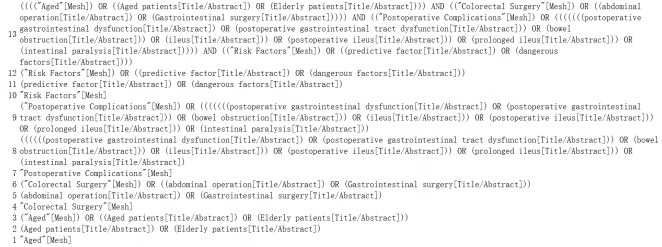
A computerized search was conducted in PubMed, Embase, the Cochrane Library, CNKI, Wanfang Data, and the China Biomedical Literature Database, covering the period from the establishment of each database through June 2026. A combination of subject headings and free-text terms was used. For Chinese-language literature, the search terms included “geriatrics*,” “advanced age,” “abdominal surgery,” “postoperative gastrointestinal dysfunction,” “postoperative gastrointestinal dysfunction,” “postoperative ileus,” “intestinal obstruction,” “postoperative delayed ileus,” “risk factors,” “influencing factors,” and “predictive factors.”
For an example of an English-language search using PubMed, see
Figure 1.
Figure 1. PubMed search strategy.
2.3. Inclusion and Exclusion Criteria for Studies
Inclusion Criteria: (1) The study design was a cohort study or a case-control study; (2) the study population comprised patients aged 60 years or older who underwent abdominal surgery; (3) the outcome of interest was postoperative gastrointestinal dysfunction or impaired postoperative gastrointestinal recovery. Because the included studies used different operational definitions, eligible outcomes included delayed recovery of gastrointestinal function, prolonged postoperative ileus, delayed passage of flatus or defecation, and postoperative intestinal obstruction. The specific outcome definition used in each study was recorded during data extraction and is presented in
Table 1. For consistency of presentation, POGD was used as an umbrella term in this review, while differences in outcome definitions were considered when interpreting the pooled results; and (4) the study reported potential risk factors for postoperative gastrointestinal dysfunction or provided sufficient data to calculate the corresponding effect estimates.
Exclusion criteria: (1) Conference abstracts, duplicate publications, or studies from which relevant data could not be extracted; and (2) studies in which participants had already developed gastrointestinal dysfunction or intestinal obstruction before surgery or at hospital admission.
2.4. Literature Screening and Data Extraction
Two researchers independently screened the literature, extracted data, and cross-checked their findings. Titles and abstracts were first reviewed to exclude clearly irrelevant studies, after which the full texts of potentially eligible studies were assessed according to the predefined inclusion and exclusion criteria. Disagreements were resolved through discussion or consultation with a third researcher.
Data were extracted using a standardized Excel spreadsheet. The extracted information included the first author, year of publication, study design, country or region, sample size, patient characteristics, type of abdominal surgery, definition of postoperative gastrointestinal dysfunction or impaired gastrointestinal recovery, number of patients with and without the outcome, potential risk factors, and corresponding effect estimates. For continuous and dichotomous variables, raw data were extracted when available. For studies reporting multivariable logistic regression analyses, adjusted odds ratios (ORs) and their 95% confidence intervals (CIs) were extracted separately.
2.5. Quality Assessment
Two researchers used the Newcastle-Ottawa Scale (NOS) to assess the quality of the literature in cohort studies and case-control studies, respectively
| [5] | Stang A. Critical evaluation of the Newcastle-Ottawa scale for the assessment of the quality of nonrandomized studies in meta-analyses. Eur J Epidemiol. 2010;25(9): 603-605.
https://doi.org/10.1007/s10654-010-9491-z |
[5]
; in cases of disagreement, a third researcher was consulted. The assessment covered three dimensions and eight items, with a maximum score of 9 points; a score of 6 or higher was considered to indicate high quality.
2.6. Statistical Methods
Meta-analysis was performed using RevMan 5.4 software. Unadjusted analyses and multivariable-adjusted analyses were conducted separately according to the types of data reported in the included studies. For unadjusted analyses, sample sizes, means, and standard deviations were extracted for continuous variables in patients with impaired and normal postoperative gastrointestinal recovery. When the units of measurement were consistent across studies, the mean difference (MD) and its 95% confidence interval (CI) were used as the effect measure; when the units or measurement scales differed across studies, the standardized mean difference (SMD) and its 95% CI were used. For dichotomous variables, odds ratios (ORs) and their 95% CIs were calculated based on the numbers of exposed and non-exposed participants in the outcome and non-outcome groups.
For studies reporting results from multivariable logistic regression analyses, adjusted ORs and their 95% CIs were extracted and pooled using the generic inverse-variance method. Unadjusted and adjusted estimates were analyzed separately and were not combined in the same pooled analysis. Meta-analysis was performed when at least two clinically comparable studies reported the same factor and sufficient data were available for pooling. Factors reported by only one study or those for which the available data were not sufficiently comparable were summarized descriptively.
Statistical heterogeneity was assessed using the χ2 test and the I2 statistic. When P ≥ 0.10 and I2 ≤ 50%, heterogeneity was considered low, and a fixed-effect model was used; when P < 0.10 or I2 > 50%, substantial heterogeneity was considered to exist, and a random-effects model was applied. When substantial heterogeneity was identified, potential clinical and methodological sources of heterogeneity, including differences in surgical procedures, patient characteristics, outcome definitions, and measurement or categorization of potential factors, were considered. Leave-one-out sensitivity analyses were performed by sequentially excluding individual studies. Where sufficient data were available, subgroup analyses were performed according to outcome definitions to explore potential clinical heterogeneity, and subgroup differences were assessed using the test for subgroup differences provided by RevMan.
For factors reported in at least 10 studies, funnel plots were used to visually assess potential publication bias. For pooled analyses involving fewer than 10 studies, publication bias was not formally assessed because of the limited reliability of funnel plot interpretation with small numbers of studies. A two-sided P value < 0.05 was considered statistically significant.
3. Results
3.1. Literature Search Results
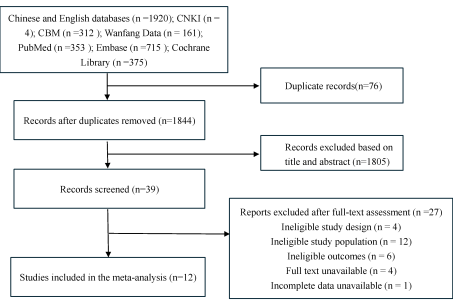
A total of 1,920 articles were retrieved (1,443 in English and 477 in Chinese). After excluding duplicates, 1,844 articles remained. Following an initial screening based on titles and abstracts, 39 articles were selected. After a secondary screening of the full texts based on inclusion and exclusion criteria, 12 articles were ultimately included (4 were excluded due to mismatched study types, 12 due to mismatched study populations, 6 due to mismatched outcome measures, 4 due to unavailability of full texts, and 1 due to unavailability of complete data). See
Figure 2 for the specific process.
Figure 2. Flow of study selection.
3.2. Key Characteristics of the Included Studies and Results of Quality Assessments
The 12 studies included in this review were published between 2014 and 2025; of these, 4
| [6] | Chen L. A Study on Factors Influencing Postoperative Gastrointestinal Function Recovery in 64 Elderly Patients with Gastrointestinal Tumors. Chongqing Medical Journal. 2014; 43(15): 1964-1965. |
| [7] | Xiong X, Zhang T, Chen H, et al. Comparison of three frailty scales for prediction of prolonged postoperative ileus following major abdominal surgery in elderly patients: a prospective cohort study. BMC Surg. 2024;24(1): 115.
https://doi.org/10.1186/s12893-024-02391-6 |
| [8] | Niu Y, Zhang Y, Han J. Postoperative gastrointestinal dysfunction in elderly patients with gastrointestinal tumor and its influencing factors. Chinese Journal of Multiple Organ Diseases in the Elderly. 2024; 23(5): 346-349. |
| [9] | Lu X, Zhou X. Development of a Risk Model for Delayed Postoperative Ileus in Elderly Patients After Colorectal Surgery Based on Logistic Regression. The Journal of Medical Theory and Practice. 2025; 38(13): 2276-2278. |
[6-9]
were cohort studies and 8
| [10] | Luo X. Risk Factors and Management of Adhesive Bowel Obstruction Following Abdominal Surgery in Elderly Patients. Chinese Journal of Gerontology. 2015; 35(13). Accessed March 25, 2026.
https://kns.cnki.net/KCMS/detail/detail.aspx?dbcode=CJFQ&dbname=CJFDLAST2015&filename=ZLXZ201513093 |
| [11] | Zhang Q. Factors Associated with Postoperative Gastrointestinal Function Recovery in Elderly Patients with Gastrointestinal Neoplasms. Journal of Clinical Research. 2016;33(10): 2011-2012. |
| [12] | Zeng B, Xue X. Clinical Risk Factors for Postoperative Bowel Obstruction in Elderly Patients with Rectal Cancer. Contemporary Medicine. 2017; 23(19): 122-123. |
| [13] | Li J, Jiang P. Risk Factors and Treatment of Adhesive Intestinal Obstruction Following Abdominal Surgery in Elderly Patients. Electronic Journal of Clinical Medical Literature. 2017; 4(98). https://doi.org/10.16281/j.cnki.jocml.2017.98.031 |
| [14] | Liu J, Chen Y, Chen J. Factors Associated with Postoperative Gastrointestinal Function Recovery in Elderly Patients with Gastrointestinal Neoplasms. Journal of Clinical Research. 2018;35(5): 981-982. |
| [15] | Zhang D. Factors Influencing Delayed Recovery of Gastrointestinal Function After Surgery in Elderly Patients with Colon Cancer. Henan Medical Research. 2020;29(35). Accessed March 25, 2026.
https://kns.cnki.net/KCMS/detail/detail.aspx?dbcode=CJFQ&dbname=CJFDLAST2021&filename=HNYX202035027 |
| [16] | Zhang D. Clinical Risk Factors for Postoperative Bowel Obstruction in Elderly Patients with Rectal Cancer. World Latest Medicine Information. 2020;20(33): 97.
https://doi.org/10.3969/j.issn.1671-3141.2020.33.058 |
| [17] | Ma L. Analysis of Factors Associated with Postoperative Gastrointestinal Function Recovery in Elderly Patients with Gastrointestinal Tumors. Modern Medicine and Health Research. 2021;5(19): 96-98. |
[10-17]
were case-control studies. The studies included a total of 1,616 participants. The included studies covered a heterogeneous range of abdominal surgical procedures, including gastrointestinal tumor surgery, colorectal surgery, rectal and colon cancer surgery, and other major abdominal procedures. Several studies included both open and laparoscopic approaches. Detailed surgical types are presented in
Table 1. A total of 24 potential risk factors were reported across the 12 studies. The included studies were scored according to the NOS criteria, with scores ranging from 6 to 8, indicating generally good overall quality. The basic characteristics of the included studies and the results of the quality assessment are presented in
Table 1.
Table 1. Basic characteristics and NOS quality assessment of included studies.
Included study (year) | Country/region | Study design | POGD/ Total | Age (years) | Type of surgery | POGD assessment | Multivariable risk factors | NOSscore |
Chen 2014 | China | Cohort study | 23/64 | 71.2±1.4 | Gastrointestinal tumor surgery (gastric, rectal, and colon cancers) | Whether the time to first flatus or defecation exceeded 7 d | (9) (10) (12) (15) | 7 |
Luo 2015 | China | Case-control study | 42/180 | 71.7±9.4 | Appendectomy; cholecystectomy; gastric cancer resection; common bile duct surgery; colorectal cancer radical surgery; intestinal anastomosis; pancreaticoduodenectomy | Whether postoperative adhesive intestinal obstruction occurred | (4) (7) (16) (17) (18) (21) | 6 |
Zhang Q 2016 | China | Case-control study | 24/86 | 69.5±5.3 | Open gastrointestinal tumor surgery (gastric, colon, and rectal cancers) | Whether the time to first flatus or defecation exceeded 7 d | (7) (8) (9) (10) (12) (13) (15) | 7 |
Zeng 2017 | China | Case-control study | 10/214 | 72.7±9.5 | Rectal cancer surgery (specific procedure not reported) | Whether postoperative intestinal obstruction occurred | (1) (2) (6) (9) (22) | 7 |
Li 2017 | China | Case-control study | 60/120 | 71.52±5.23 | Various abdominal surgeries, including appendectomy, colorectal cancer radical surgery, and intestinal anastomosis | Whether postoperative adhesive intestinal obstruction occurred | (4) (7) (16) (17) (18) (21) | 6 |
Liu 2018 | China | Case-control study | 43/86 | 75.19±5.21 | Gastrointestinal tumor surgery (gastric and colorectal cancers) | Whether the time to first flatus or defecation exceeded 8 d | (9) (10) (12) | 7 |
Zhang D 2020 | China | Case-control study | 40/158 | 71.11±2.35 | Colon cancer surgery (open or laparoscopic) | Whether the time to first flatus or defecation exceeded 7 d | (8) (9) (10) (12) | 7 |
Zhang D. C. 2020 | China | Case-control study | 12/71 | 73.1±4.6 | Rectal cancer surgery (specific procedure not reported) | Whether postoperative intestinal obstruction occurred | (1) (2) (3) (5) (9) (22) | 7 |
Ma 2021 | China | Case-control study | 37/95 | 71.1±2.11 | Gastrointestinal tumor surgery (specific procedure not reported) | Whether the time to first flatus or defecation exceeded 7 d | (7) (9) (10) (11) (12) (13) (14) | 7 |
Xiong et al. 2024 | China | Prospective cohort study | 95/203 | 72.6 | Laparoscopic major abdominal surgery (gastric, small bowel, colonic, and rectal surgery) | Whether prolonged postoperative ileus occurred | (19) | 8 |
Niu 2024 | China | Retrospective cohort study | 80/185 | 69.53±8.24 / 69.72±8.42 | Gastrointestinal tumor surgery (gastric, rectal, and colon cancers) | Whether delayed recovery of gastrointestinal function occurred | (8) (10) (12) (14) | 8 |
Lu 2025 | China | Retrospective cohort study | 46/154 | 71.64±6.80 | Colorectal surgery (resection, anastomosis, or stoma; open or laparoscopic) | Whether prolonged postoperative ileus occurred | (3) (9) (14) (21) (23) (24) | 8 |
Risk-factor codes: (1) sex; (2) smoking history; (3) history of abdominal surgery; (4) pathological stage; (5) pathological type; (6) stoma; (7) diabetes history; (8) body mass index; (9) operative time; (10) ascites; (11) history of gastrointestinal disease; (12) intraoperative blood loss; (13) intraoperative fluid infusion; (14) preoperative serum protein/albumin level; (15) preoperative fatigue score; (16) ASA grade; (17) drainage tube placement; (18) postoperative infection; (19) preoperative frailty; (20) time to first ambulation after surgery; (21) surgical type; (22) tumor location; (23) age; (24) preoperative hemoglobin/anemia. |
Abbreviations: POGD, postoperative gastrointestinal dysfunction; PPOI, prolonged postoperative ileus; POD, postoperative day; ASA, American Society of Anesthesiologists; NOS, Newcastle-Ottawa Scale. |
3.3. Results of the Unadjusted Meta-Analyses
Because the included studies used different definitions of postoperative gastrointestinal outcomes, including delayed gastrointestinal recovery, prolonged postoperative ileus, and postoperative intestinal obstruction, the pooled results presented below should be interpreted as associations with impaired postoperative gastrointestinal recovery rather than as estimates for a completely uniform clinical outcome.
3.3.1. Perioperative Factors
Seven studies
| [6] | Chen L. A Study on Factors Influencing Postoperative Gastrointestinal Function Recovery in 64 Elderly Patients with Gastrointestinal Tumors. Chongqing Medical Journal. 2014; 43(15): 1964-1965. |
| [7] | Xiong X, Zhang T, Chen H, et al. Comparison of three frailty scales for prediction of prolonged postoperative ileus following major abdominal surgery in elderly patients: a prospective cohort study. BMC Surg. 2024;24(1): 115.
https://doi.org/10.1186/s12893-024-02391-6 |
| [8] | Niu Y, Zhang Y, Han J. Postoperative gastrointestinal dysfunction in elderly patients with gastrointestinal tumor and its influencing factors. Chinese Journal of Multiple Organ Diseases in the Elderly. 2024; 23(5): 346-349. |
| [9] | Lu X, Zhou X. Development of a Risk Model for Delayed Postoperative Ileus in Elderly Patients After Colorectal Surgery Based on Logistic Regression. The Journal of Medical Theory and Practice. 2025; 38(13): 2276-2278. |
| [11] | Zhang Q. Factors Associated with Postoperative Gastrointestinal Function Recovery in Elderly Patients with Gastrointestinal Neoplasms. Journal of Clinical Research. 2016;33(10): 2011-2012. |
| [14] | Liu J, Chen Y, Chen J. Factors Associated with Postoperative Gastrointestinal Function Recovery in Elderly Patients with Gastrointestinal Neoplasms. Journal of Clinical Research. 2018;35(5): 981-982. |
| [17] | Ma L. Analysis of Factors Associated with Postoperative Gastrointestinal Function Recovery in Elderly Patients with Gastrointestinal Tumors. Modern Medicine and Health Research. 2021;5(19): 96-98. |
[6-9, 11, 14, 17]
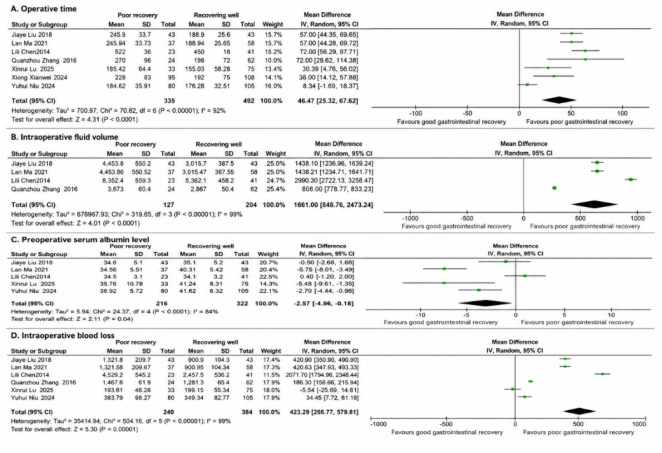
reported on the association between operative time and poor postoperative gastrointestinal recovery, involving a total of 827 patients. There was high heterogeneity among the studies (I
2 = 92%, P < 0.00001), so a random-effects model was used for analysis. The results showed that the duration of surgery was longer in the poor recovery group than in the good recovery group, with a statistically significant difference (MD = 46.47 min, 95% CI: 25.32-67.62, P < 0.0001), suggesting that prolonged surgical duration may be associated with poor postoperative gastrointestinal recovery.
Four studies
| [6] | Chen L. A Study on Factors Influencing Postoperative Gastrointestinal Function Recovery in 64 Elderly Patients with Gastrointestinal Tumors. Chongqing Medical Journal. 2014; 43(15): 1964-1965. |
| [11] | Zhang Q. Factors Associated with Postoperative Gastrointestinal Function Recovery in Elderly Patients with Gastrointestinal Neoplasms. Journal of Clinical Research. 2016;33(10): 2011-2012. |
| [14] | Liu J, Chen Y, Chen J. Factors Associated with Postoperative Gastrointestinal Function Recovery in Elderly Patients with Gastrointestinal Neoplasms. Journal of Clinical Research. 2018;35(5): 981-982. |
| [17] | Ma L. Analysis of Factors Associated with Postoperative Gastrointestinal Function Recovery in Elderly Patients with Gastrointestinal Tumors. Modern Medicine and Health Research. 2021;5(19): 96-98. |
[6, 11, 14, 17]
reported on the association between total intraoperative fluid administration and poor postoperative gastrointestinal recovery, involving a total of 331 patients. Given the high heterogeneity among the studies (I
2 = 99%, P < 0.00001), a random-effects model was used for meta-analysis. The results showed that the intraoperative fluid volume in the poor recovery group was 1,661.00 mL higher on average than in the good recovery group, a difference that was statistically significant (MD = 1,661.00, 95% CI: 848.76-2,473.24, P < 0.0001), suggesting that a higher intraoperative fluid volume may be associated with poor postoperative gastrointestinal recovery.
Six studies
| [6] | Chen L. A Study on Factors Influencing Postoperative Gastrointestinal Function Recovery in 64 Elderly Patients with Gastrointestinal Tumors. Chongqing Medical Journal. 2014; 43(15): 1964-1965. |
| [8] | Niu Y, Zhang Y, Han J. Postoperative gastrointestinal dysfunction in elderly patients with gastrointestinal tumor and its influencing factors. Chinese Journal of Multiple Organ Diseases in the Elderly. 2024; 23(5): 346-349. |
| [9] | Lu X, Zhou X. Development of a Risk Model for Delayed Postoperative Ileus in Elderly Patients After Colorectal Surgery Based on Logistic Regression. The Journal of Medical Theory and Practice. 2025; 38(13): 2276-2278. |
| [11] | Zhang Q. Factors Associated with Postoperative Gastrointestinal Function Recovery in Elderly Patients with Gastrointestinal Neoplasms. Journal of Clinical Research. 2016;33(10): 2011-2012. |
| [14] | Liu J, Chen Y, Chen J. Factors Associated with Postoperative Gastrointestinal Function Recovery in Elderly Patients with Gastrointestinal Neoplasms. Journal of Clinical Research. 2018;35(5): 981-982. |
| [17] | Ma L. Analysis of Factors Associated with Postoperative Gastrointestinal Function Recovery in Elderly Patients with Gastrointestinal Tumors. Modern Medicine and Health Research. 2021;5(19): 96-98. |
[6, 8, 9, 11, 14, 17]
reported on the association between intraoperative blood loss and poor postoperative gastrointestinal recovery, involving a total of 624 patients. Given the high heterogeneity among the studies (I
2 = 99%, P < 0.00001), a random-effects model was used for meta-analysis. The results showed that the group with poor recovery had an average increase of 423.29 mL in intraoperative blood loss compared with the group with good recovery, and the difference was statistically significant (MD = 423.29, 95% CI: 266.77-579.81, P < 0.00001), suggesting that higher intraoperative blood loss is associated with poor postoperative gastrointestinal function recovery.
3.3.2. Patient-Related Factors
Five studies
| [6] | Chen L. A Study on Factors Influencing Postoperative Gastrointestinal Function Recovery in 64 Elderly Patients with Gastrointestinal Tumors. Chongqing Medical Journal. 2014; 43(15): 1964-1965. |
| [8] | Niu Y, Zhang Y, Han J. Postoperative gastrointestinal dysfunction in elderly patients with gastrointestinal tumor and its influencing factors. Chinese Journal of Multiple Organ Diseases in the Elderly. 2024; 23(5): 346-349. |
| [9] | Lu X, Zhou X. Development of a Risk Model for Delayed Postoperative Ileus in Elderly Patients After Colorectal Surgery Based on Logistic Regression. The Journal of Medical Theory and Practice. 2025; 38(13): 2276-2278. |
| [14] | Liu J, Chen Y, Chen J. Factors Associated with Postoperative Gastrointestinal Function Recovery in Elderly Patients with Gastrointestinal Neoplasms. Journal of Clinical Research. 2018;35(5): 981-982. |
| [17] | Ma L. Analysis of Factors Associated with Postoperative Gastrointestinal Function Recovery in Elderly Patients with Gastrointestinal Tumors. Modern Medicine and Health Research. 2021;5(19): 96-98. |
[6, 8, 9, 14, 17]
involving 538 patients reported preoperative serum albumin levels. Substantial heterogeneity was observed (I
2 = 84%, P < 0.0001), and a random-effects model was used. Serum albumin levels were significantly lower in patients with impaired postoperative gastrointestinal recovery than in those with normal recovery (MD = −2.57 g/L, 95% CI: −4.96 to −0.18, P = 0.04).
Ten studies
| [6] | Chen L. A Study on Factors Influencing Postoperative Gastrointestinal Function Recovery in 64 Elderly Patients with Gastrointestinal Tumors. Chongqing Medical Journal. 2014; 43(15): 1964-1965. |
| [7] | Xiong X, Zhang T, Chen H, et al. Comparison of three frailty scales for prediction of prolonged postoperative ileus following major abdominal surgery in elderly patients: a prospective cohort study. BMC Surg. 2024;24(1): 115.
https://doi.org/10.1186/s12893-024-02391-6 |
| [8] | Niu Y, Zhang Y, Han J. Postoperative gastrointestinal dysfunction in elderly patients with gastrointestinal tumor and its influencing factors. Chinese Journal of Multiple Organ Diseases in the Elderly. 2024; 23(5): 346-349. |
| [9] | Lu X, Zhou X. Development of a Risk Model for Delayed Postoperative Ileus in Elderly Patients After Colorectal Surgery Based on Logistic Regression. The Journal of Medical Theory and Practice. 2025; 38(13): 2276-2278. |
| [10] | Luo X. Risk Factors and Management of Adhesive Bowel Obstruction Following Abdominal Surgery in Elderly Patients. Chinese Journal of Gerontology. 2015; 35(13). Accessed March 25, 2026.
https://kns.cnki.net/KCMS/detail/detail.aspx?dbcode=CJFQ&dbname=CJFDLAST2015&filename=ZLXZ201513093 |
| [11] | Zhang Q. Factors Associated with Postoperative Gastrointestinal Function Recovery in Elderly Patients with Gastrointestinal Neoplasms. Journal of Clinical Research. 2016;33(10): 2011-2012. |
| [12] | Zeng B, Xue X. Clinical Risk Factors for Postoperative Bowel Obstruction in Elderly Patients with Rectal Cancer. Contemporary Medicine. 2017; 23(19): 122-123. |
| [14] | Liu J, Chen Y, Chen J. Factors Associated with Postoperative Gastrointestinal Function Recovery in Elderly Patients with Gastrointestinal Neoplasms. Journal of Clinical Research. 2018;35(5): 981-982. |
| [15] | Zhang D. Factors Influencing Delayed Recovery of Gastrointestinal Function After Surgery in Elderly Patients with Colon Cancer. Henan Medical Research. 2020;29(35). Accessed March 25, 2026.
https://kns.cnki.net/KCMS/detail/detail.aspx?dbcode=CJFQ&dbname=CJFDLAST2021&filename=HNYX202035027 |
| [17] | Ma L. Analysis of Factors Associated with Postoperative Gastrointestinal Function Recovery in Elderly Patients with Gastrointestinal Tumors. Modern Medicine and Health Research. 2021;5(19): 96-98. |
[6-12, 14, 15, 17]
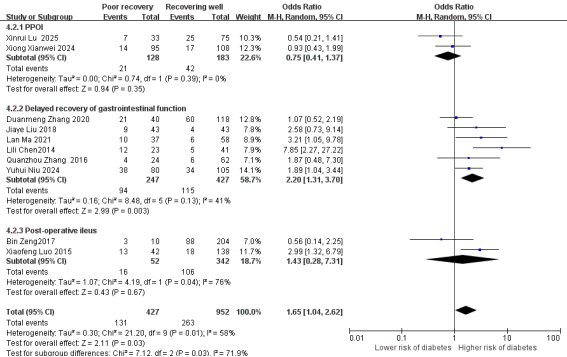
involving 1,379 patients evaluated diabetes. Moderate heterogeneity was observed (I
2 = 58%, P = 0.01), and a random-effects model was used. Diabetes was associated with higher odds of impaired postoperative gastrointestinal recovery (OR = 1.65, 95% CI: 1.04-2.62, P = 0.03).
To further explore potential clinical heterogeneity, a subgroup analysis was performed according to outcome definition. In studies using prolonged postoperative ileus (PPOI) as the outcome, diabetes was not significantly associated with impaired postoperative gastrointestinal recovery (OR = 0.75, 95% CI: 0.41-1.37, P = 0.35; I2 = 0%). In studies defining the outcome as delayed or impaired gastrointestinal recovery, diabetes was associated with higher odds of impaired postoperative gastrointestinal recovery (OR = 2.20, 95% CI: 1.31-3.70, P = 0.003; I2 = 41%). In studies using postoperative intestinal obstruction as the outcome, the pooled association was not statistically significant (OR = 1.43, 95% CI: 0.28-7.31, P = 0.67; I2 = 76%). The test for subgroup differences was statistically significant (Chi2 = 7.12, df = 2, P = 0.03), suggesting that differences in outcome definition may have contributed to the heterogeneity observed in the overall analysis.
Three studies
| [7] | Xiong X, Zhang T, Chen H, et al. Comparison of three frailty scales for prediction of prolonged postoperative ileus following major abdominal surgery in elderly patients: a prospective cohort study. BMC Surg. 2024;24(1): 115.
https://doi.org/10.1186/s12893-024-02391-6 |
| [12] | Zeng B, Xue X. Clinical Risk Factors for Postoperative Bowel Obstruction in Elderly Patients with Rectal Cancer. Contemporary Medicine. 2017; 23(19): 122-123. |
| [16] | Zhang D. Clinical Risk Factors for Postoperative Bowel Obstruction in Elderly Patients with Rectal Cancer. World Latest Medicine Information. 2020;20(33): 97.
https://doi.org/10.3969/j.issn.1671-3141.2020.33.058 |
[7, 12, 16]
involving 488 patients evaluated chronic obstructive pulmonary disease (COPD). No substantial heterogeneity was observed (I
2 = 0%, P = 0.38), and a fixed-effect model was used. COPD was associated with higher odds of impaired postoperative gastrointestinal recovery (OR = 1.82, 95% CI: 1.08-3.09, P = 0.03).
Four studies
| [7] | Xiong X, Zhang T, Chen H, et al. Comparison of three frailty scales for prediction of prolonged postoperative ileus following major abdominal surgery in elderly patients: a prospective cohort study. BMC Surg. 2024;24(1): 115.
https://doi.org/10.1186/s12893-024-02391-6 |
| [9] | Lu X, Zhou X. Development of a Risk Model for Delayed Postoperative Ileus in Elderly Patients After Colorectal Surgery Based on Logistic Regression. The Journal of Medical Theory and Practice. 2025; 38(13): 2276-2278. |
| [12] | Zeng B, Xue X. Clinical Risk Factors for Postoperative Bowel Obstruction in Elderly Patients with Rectal Cancer. Contemporary Medicine. 2017; 23(19): 122-123. |
| [16] | Zhang D. Clinical Risk Factors for Postoperative Bowel Obstruction in Elderly Patients with Rectal Cancer. World Latest Medicine Information. 2020;20(33): 97.
https://doi.org/10.3969/j.issn.1671-3141.2020.33.058 |
[7, 9, 12, 16]
involving 596 patients reported a history of previous abdominal surgery. No substantial heterogeneity was observed (I
2 = 0%, P = 0.75), and a fixed-effect model was used. A history of previous abdominal surgery was associated with higher odds of impaired postoperative gastrointestinal recovery (OR = 1.87, 95% CI: 1.13-3.08, P = 0.01).
Three studies
| [6] | Chen L. A Study on Factors Influencing Postoperative Gastrointestinal Function Recovery in 64 Elderly Patients with Gastrointestinal Tumors. Chongqing Medical Journal. 2014; 43(15): 1964-1965. |
| [14] | Liu J, Chen Y, Chen J. Factors Associated with Postoperative Gastrointestinal Function Recovery in Elderly Patients with Gastrointestinal Neoplasms. Journal of Clinical Research. 2018;35(5): 981-982. |
| [17] | Ma L. Analysis of Factors Associated with Postoperative Gastrointestinal Function Recovery in Elderly Patients with Gastrointestinal Tumors. Modern Medicine and Health Research. 2021;5(19): 96-98. |
[6, 14, 17]
involving 245 patients reported a history of gastrointestinal disease. No substantial heterogeneity was observed (I
2 = 0%, P = 0.93), and a fixed-effect model was used. A history of gastrointestinal disease was associated with higher odds of impaired postoperative gastrointestinal recovery (OR = 5.14, 95% CI: 2.17-12.17, P = 0.0002).
Figure 3. Subgroup analysis of the association between diabetes and impaired postoperative gastrointestinal recovery according to outcome definition.
3.3.3. Disease-Related Factors
Six studies
| [6] | Chen L. A Study on Factors Influencing Postoperative Gastrointestinal Function Recovery in 64 Elderly Patients with Gastrointestinal Tumors. Chongqing Medical Journal. 2014; 43(15): 1964-1965. |
| [8] | Niu Y, Zhang Y, Han J. Postoperative gastrointestinal dysfunction in elderly patients with gastrointestinal tumor and its influencing factors. Chinese Journal of Multiple Organ Diseases in the Elderly. 2024; 23(5): 346-349. |
| [11] | Zhang Q. Factors Associated with Postoperative Gastrointestinal Function Recovery in Elderly Patients with Gastrointestinal Neoplasms. Journal of Clinical Research. 2016;33(10): 2011-2012. |
| [14] | Liu J, Chen Y, Chen J. Factors Associated with Postoperative Gastrointestinal Function Recovery in Elderly Patients with Gastrointestinal Neoplasms. Journal of Clinical Research. 2018;35(5): 981-982. |
| [15] | Zhang D. Factors Influencing Delayed Recovery of Gastrointestinal Function After Surgery in Elderly Patients with Colon Cancer. Henan Medical Research. 2020;29(35). Accessed March 25, 2026.
https://kns.cnki.net/KCMS/detail/detail.aspx?dbcode=CJFQ&dbname=CJFDLAST2021&filename=HNYX202035027 |
| [17] | Ma L. Analysis of Factors Associated with Postoperative Gastrointestinal Function Recovery in Elderly Patients with Gastrointestinal Tumors. Modern Medicine and Health Research. 2021;5(19): 96-98. |
[6, 8, 11, 14, 15, 17]
involving 674 patients evaluated ascites. No substantial heterogeneity was observed (I
2 = 0%, P = 0.50), and a fixed-effect model was used. Ascites was associated with higher odds of impaired postoperative gastrointestinal recovery (OR = 4.02, 95% CI: 2.59-6.25, P < 0.00001).
Four studies reported the association between higher American Society of Anesthesiologists (ASA) classification and impaired postoperative gastrointestinal recovery. In one study, the distribution of patients with ASA class III was inconsistent with the findings reported in the univariate and multivariable analyses, and the direction of the extracted data could not be reliably determined; therefore, the relevant data from this study were excluded from the primary pooled analysis. Moderate heterogeneity was observed (I2 = 59%, P = 0.06), and a random-effects model was used. Higher ASA classification was associated with higher odds of impaired postoperative gastrointestinal recovery (OR = 2.24, 95% CI: 1.16-4.30, P = 0.02).
Three studies
| [8] | Niu Y, Zhang Y, Han J. Postoperative gastrointestinal dysfunction in elderly patients with gastrointestinal tumor and its influencing factors. Chinese Journal of Multiple Organ Diseases in the Elderly. 2024; 23(5): 346-349. |
| [10] | Luo X. Risk Factors and Management of Adhesive Bowel Obstruction Following Abdominal Surgery in Elderly Patients. Chinese Journal of Gerontology. 2015; 35(13). Accessed March 25, 2026.
https://kns.cnki.net/KCMS/detail/detail.aspx?dbcode=CJFQ&dbname=CJFDLAST2015&filename=ZLXZ201513093 |
| [12] | Zeng B, Xue X. Clinical Risk Factors for Postoperative Bowel Obstruction in Elderly Patients with Rectal Cancer. Contemporary Medicine. 2017; 23(19): 122-123. |
[8, 10, 12]
evaluated advanced TNM stage, involving 446 patients. In one study, the distribution of patients across TNM-stage groups was inconsistent with the reported univariate and multivariable findings, and the direction of the extracted data could not be reliably determined; therefore, the relevant data from this study were excluded from the primary pooled analysis. Substantial heterogeneity was observed (I
2 = 65%, P = 0.06), and a random-effects model was used. Advanced TNM stage was associated with higher odds of impaired postoperative gastrointestinal recovery (OR = 5.07, 95% CI: 1.48-17.32, P = 0.01).
3.3.4. Other Factors
Two studies
| [12] | Zeng B, Xue X. Clinical Risk Factors for Postoperative Bowel Obstruction in Elderly Patients with Rectal Cancer. Contemporary Medicine. 2017; 23(19): 122-123. |
| [16] | Zhang D. Clinical Risk Factors for Postoperative Bowel Obstruction in Elderly Patients with Rectal Cancer. World Latest Medicine Information. 2020;20(33): 97.
https://doi.org/10.3969/j.issn.1671-3141.2020.33.058 |
[12, 16]
evaluated operative time >2 h. No substantial heterogeneity was observed (I
2 = 0%, P = 0.55), and a fixed-effect model was used. The pooled association did not reach conventional statistical significance (OR = 2.79, 95% CI: 0.99-7.90, P = 0.05); therefore, the current evidence is insufficient to establish an association between operative time >2 h and impaired postoperative gastrointestinal recovery.
One study
| [8] | Niu Y, Zhang Y, Han J. Postoperative gastrointestinal dysfunction in elderly patients with gastrointestinal tumor and its influencing factors. Chinese Journal of Multiple Organ Diseases in the Elderly. 2024; 23(5): 346-349. |
[8]
reported the time to urinary catheter removal. The time to catheter removal was 0.78 days longer in patients with impaired postoperative gastrointestinal recovery than in those with normal recovery (MD = 0.78 days, 95% CI: 0.04-1.52, P = 0.04).
One study
categorized intraoperative blood loss using a threshold of 1,500 mL. In the impaired recovery group, 65.0% (26/40) of patients had intraoperative blood loss ≥1,500 mL compared with 36.4% (43/118) in the normal recovery group. The single-study estimate showed an association between intraoperative blood loss ≥1,500 mL and impaired postoperative gastrointestinal recovery (OR = 3.24, 95% CI: 1.53-6.86, P = 0.002).
One study
categorized BMI using a cutoff of 24 kg/m
2. BMI ≥24 kg/m
2 was associated with higher odds of impaired postoperative gastrointestinal recovery (OR = 3.79, 95% CI: 1.75-8.19, P = 0.0007). Because the latter findings were each derived from a single study, they were not quantitatively pooled and should be interpreted cautiously.
Figure 4. Forest plots of the associations between major continuous variables and postoperative gastrointestinal dysfunction.
Table 2. Meta-analysis results of factors associated with postoperative gastrointestinal dysfunction.
Associated factor | No. of studies | Effect measure | Pooled effect estimate | 95% CI | I2 | Model |
History of diabetes mellitus | 10 | OR | 1.65 | 1.04-2.62 | 58% | Random-effects |
Ascites | 6 | OR | 4.02 | 2.59-6.25 | 0% | Fixed-effect |
COPD | 3 | OR | 1.82 | 1.08-3.09 | 0% | Fixed-effect |
History of abdominal surgery | 4 | OR | 1.87 | 1.13-3.08 | 0% | Fixed-effect |
History of gastrointestinal disease | 3 | OR | 5.14 | 2.17-12.17 | 0% | Fixed-effect |
Higher ASA class | 4 | OR | 2.24 | 1.16-4.30 | 59% | Random-effects |
Advanced TNM stage | 3 | OR | 5.07 | 1.48-17.32 | 65% | Random-effects |
3.4. Sensitivity Analysis
Leave-one-out sensitivity analyses were performed by sequentially excluding individual studies. For operative time, intraoperative fluid volume, and intraoperative blood loss, the pooled MDs ranged from 41.79 to 54.47 min, 1,219.95 to 1,951.22 mL, and 206.92 to 545.29 mL, respectively. The direction of the pooled effects and their statistical significance remained unchanged, indicating that the overall associations were relatively stable. After exclusion of the study by Niu et al.
| [8] | Niu Y, Zhang Y, Han J. Postoperative gastrointestinal dysfunction in elderly patients with gastrointestinal tumor and its influencing factors. Chinese Journal of Multiple Organ Diseases in the Elderly. 2024; 23(5): 346-349. |
[8]
, heterogeneity for operative time decreased from I
2 = 92% to 57%. Exclusion of the study by Chen et al.
| [6] | Chen L. A Study on Factors Influencing Postoperative Gastrointestinal Function Recovery in 64 Elderly Patients with Gastrointestinal Tumors. Chongqing Medical Journal. 2014; 43(15): 1964-1965. |
[6]
substantially altered the pooled estimate for intraoperative blood loss. However, heterogeneity for intraoperative fluid volume and intraoperative blood loss remained substantial in most analyses, and the magnitude of these pooled estimates should therefore be interpreted cautiously.
Sensitivity analyses for preoperative serum albumin, diabetes, higher ASA classification, and advanced TNM stage showed less robust results. Although the overall direction of the associations generally remained unchanged, the pooled estimates lost statistical significance after exclusion of individual studies in some analyses. For diabetes, exclusion of Chen et al.
| [6] | Chen L. A Study on Factors Influencing Postoperative Gastrointestinal Function Recovery in 64 Elderly Patients with Gastrointestinal Tumors. Chongqing Medical Journal. 2014; 43(15): 1964-1965. |
[6]
reduced heterogeneity from I
2 = 58% to 45%. For higher ASA classification, exclusion of Niu et al.
| [8] | Niu Y, Zhang Y, Han J. Postoperative gastrointestinal dysfunction in elderly patients with gastrointestinal tumor and its influencing factors. Chinese Journal of Multiple Organ Diseases in the Elderly. 2024; 23(5): 346-349. |
[8]
reduced heterogeneity from I
2 = 59% to 41%. For advanced TNM stage, the pooled association was no longer statistically significant after exclusion of Zeng et al.
| [12] | Zeng B, Xue X. Clinical Risk Factors for Postoperative Bowel Obstruction in Elderly Patients with Rectal Cancer. Contemporary Medicine. 2017; 23(19): 122-123. |
[12]
. These findings indicate that the pooled estimates for several factors were sensitive to individual studies and should not be considered robust.
Overall, the sensitivity analyses suggest that the findings for operative time and several intraoperative variables were relatively stable in direction, although substantial heterogeneity remained, whereas the findings for serum albumin, diabetes, ASA classification, and TNM stage showed limited robustness.
3.5. Meta-Analysis of Multivariable-Adjusted Estimates
Multivariable-adjusted ORs were pooled separately from unadjusted estimates. Six studies
| [6] | Chen L. A Study on Factors Influencing Postoperative Gastrointestinal Function Recovery in 64 Elderly Patients with Gastrointestinal Tumors. Chongqing Medical Journal. 2014; 43(15): 1964-1965. |
| [8] | Niu Y, Zhang Y, Han J. Postoperative gastrointestinal dysfunction in elderly patients with gastrointestinal tumor and its influencing factors. Chinese Journal of Multiple Organ Diseases in the Elderly. 2024; 23(5): 346-349. |
| [11] | Zhang Q. Factors Associated with Postoperative Gastrointestinal Function Recovery in Elderly Patients with Gastrointestinal Neoplasms. Journal of Clinical Research. 2016;33(10): 2011-2012. |
| [14] | Liu J, Chen Y, Chen J. Factors Associated with Postoperative Gastrointestinal Function Recovery in Elderly Patients with Gastrointestinal Neoplasms. Journal of Clinical Research. 2018;35(5): 981-982. |
| [15] | Zhang D. Factors Influencing Delayed Recovery of Gastrointestinal Function After Surgery in Elderly Patients with Colon Cancer. Henan Medical Research. 2020;29(35). Accessed March 25, 2026.
https://kns.cnki.net/KCMS/detail/detail.aspx?dbcode=CJFQ&dbname=CJFDLAST2021&filename=HNYX202035027 |
| [17] | Ma L. Analysis of Factors Associated with Postoperative Gastrointestinal Function Recovery in Elderly Patients with Gastrointestinal Tumors. Modern Medicine and Health Research. 2021;5(19): 96-98. |
[6, 8, 11, 14, 15, 17]
reported adjusted estimates for ascites. Substantial heterogeneity was observed (I
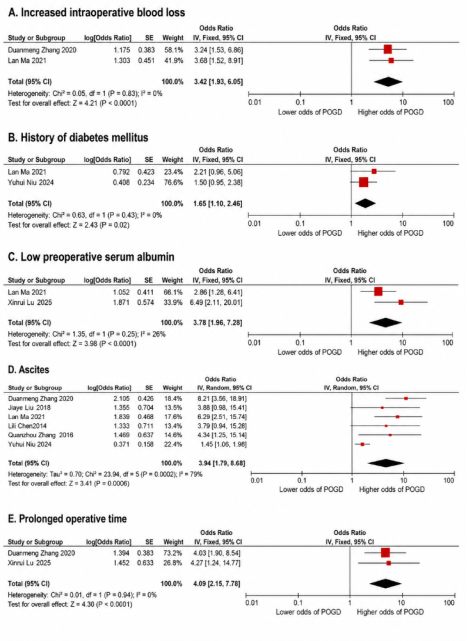
2 = 79%, P = 0.0002), and a random-effects model was used. Ascites was associated with higher adjusted odds of impaired postoperative gastrointestinal recovery (OR = 3.94, 95% CI: 1.79-8.68, P = 0.0006).
Leave-one-out sensitivity analyses were performed for ascites. After sequential exclusion of individual studies, the pooled adjusted ORs ranged from 3.26 to 5.77, and all corresponding 95% CIs remained above 1, indicating that the direction and statistical significance of the association were stable. Notably, after exclusion of the study by Niu et al.
| [8] | Niu Y, Zhang Y, Han J. Postoperative gastrointestinal dysfunction in elderly patients with gastrointestinal tumor and its influencing factors. Chinese Journal of Multiple Organ Diseases in the Elderly. 2024; 23(5): 346-349. |
[8]
, heterogeneity decreased from I
2 = 79% to 0%, while the pooled association remained statistically significant (OR = 5.77, 95% CI: 3.56-9.35, P < 0.00001). This suggests that the study by Niu et al. may have been an important source of heterogeneity, although its exclusion did not materially alter the overall association.
Adjusted estimates for diabetes, prolonged operative time, preoperative hypoalbuminemia, and increased intraoperative blood loss were each available from only two studies. Heterogeneity was I2 = 0%, 0%, 26%, and 0%, respectively, and fixed-effect models were used. The pooled adjusted ORs were 1.65 (95% CI: 1.10-2.46, P = 0.02) for diabetes, 4.09 (95% CI: 2.15-7.78, P < 0.0001) for prolonged operative time, 3.78 (95% CI: 1.96-7.28, P < 0.0001) for preoperative hypoalbuminemia, and 3.42 (95% CI: 1.93-6.05, P < 0.0001) for increased intraoperative blood loss.
Although these pooled adjusted estimates suggested associations with impaired postoperative gastrointestinal recovery, the estimates for diabetes, prolonged operative time, preoperative hypoalbuminemia, and intraoperative blood loss were each based on only two studies. Moreover, the definitions of prolonged operative time, hypoalbuminemia, and high intraoperative blood loss were not fully consistent across studies, and the original regression models may have adjusted for different sets of confounding variables. Therefore, these findings should be considered preliminary and interpreted cautiously rather than regarded as definitive evidence of independent risk factors.
Figure 5. Forest plots of the meta-analysis of multivariable logistic regression results.
3.6. Publication Bias
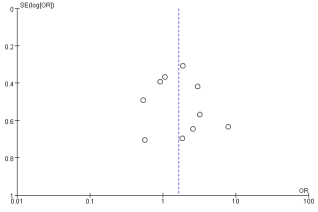
Publication bias was visually assessed for the unadjusted association between diabetes and impaired postoperative gastrointestinal recovery, for which 10 studies were available. Visual inspection of the funnel plot showed some asymmetry; however, given the limited number of studies, the presence of publication bias could not be conclusively determined. Publication bias was not formally assessed for the remaining pooled factors because fewer than 10 studies were available for each analysis.
Figure 6. Funnel plot for the unadjusted association between diabetes and impaired postoperative gastrointestinal recovery.
4. Discussion
4.1. Surgery-Related Factors
The findings of this meta-analysis suggest that prolonged operative time, greater intraoperative blood loss, increased intraoperative fluid administration, and ascites were associated with impaired postoperative gastrointestinal recovery in elderly patients undergoing abdominal surgery. These observed associations may reflect greater surgical complexity, inflammatory burden, hemodynamic disturbances, and impaired gastrointestinal microcirculation; however, causal relationships cannot be established from the observational evidence included in this review.
Specifically, although baseline operative times differed across abdominal surgical procedures, longer operative time may partly reflect greater surgical complexity and disease burden. Prolonged surgical exposure may also be accompanied by greater tissue injury and physiological stress, which could contribute to delayed gastrointestinal recovery. Therefore, prolonged operative time should be interpreted primarily as a marker associated with impaired postoperative recovery rather than as a confirmed direct cause.
Ascites may reflect underlying disease severity, inflammatory activity, or altered fluid balance, all of which may be associated with impaired gastrointestinal recovery. Greater intraoperative blood loss may be accompanied by reduced circulating volume, impaired tissue oxygenation, and disturbances in gastrointestinal microcirculatory perfusion
. Similarly, higher intraoperative fluid administration may be associated with interstitial fluid retention and intestinal wall edema, which could adversely affect gastrointestinal recovery
| [19] | Ashraf N, Zargar OUU, Albina A. Comparison of goal-directed fluid therapy and conventional fluid therapy in elective major abdominal surgery: a meta-analysis of randomized controlled trials. Cureus. 2026;18(6): e110243.
https://doi.org/10.7759/cureus.110243 |
[19]
. These findings support careful perioperative monitoring and individualized fluid and hemodynamic management, although whether modifying these factors directly reduces the occurrence of POGD requires further prospective investigation.
4.2. Low Serum Albumin, Diabetes
The pooled adjusted analyses suggested that preoperative hypoalbuminemia and diabetes may be associated with higher odds of POGD. However, because the adjusted estimates for each factor were derived from only two studies, these findings should be interpreted cautiously and should not be regarded as definitive evidence of independent causal effects. Compared with perioperative factors such as surgical trauma, a patient’s baseline condition reflects the body’s ability to tolerate surgical stress; due to reduced physiological reserves, elderly patients are more susceptible to the effects of malnutrition and metabolic abnormalities. Conducting a comprehensive preoperative risk assessment can help identify patients at high risk for POGD at an early stage. In addition, the leave-one-out sensitivity analyses indicated limited robustness of the pooled findings for both serum albumin and diabetes, further supporting cautious interpretation of these associations.
In terms of nutritional reserves, low serum albumin may reflect poorer nutritional status, impaired immune function, and greater inflammatory burden. These conditions may be associated with reduced tissue repair capacity and impaired intestinal mucosal barrier function, providing biologically plausible explanations for the observed association between hypoalbuminemia and impaired postoperative gastrointestinal recovery
| [20] | Gibbs J, Cull W, Henderson W, Daley J, Hur K, Khuri SF. Preoperative serum albumin level as a predictor of operative mortality and morbidity: results from the national VA surgical risk study. Arch Surg. 1999;134(1): 36-42.
https://doi.org/10.1001/archsurg.134.1.36 |
[20]
. The present findings therefore support consideration of preoperative nutritional assessment, although whether correction of hypoalbuminemia directly reduces POGD cannot be determined from the available evidence. For diabetes, several potential mechanisms may help explain the observed association with POGD, including autonomic and enteric neuropathy, microvascular dysfunction, oxidative stress, and chronic inflammation associated with long-term hyperglycemia
. Diabetes-related immune and microvascular abnormalities may also be associated with poorer postoperative recovery
. These findings support careful perioperative assessment and management of glycemic status; however, whether tighter glycemic control directly reduces the occurrence of POGD requires confirmation in prospective interventional studies.
Notably, the subgroup analysis according to outcome definition showed that the association between diabetes and postoperative gastrointestinal outcomes varied across outcome categories. A statistically significant association was observed in studies defining the outcome as delayed or impaired gastrointestinal recovery, whereas no significant association was observed in studies using PPOI or postoperative intestinal obstruction as the outcome. The test for subgroup differences was statistically significant (P = 0.03), suggesting that differences in outcome definition may partly explain the heterogeneity of the overall diabetes analysis. Given the small number of studies within individual subgroups, however, these subgroup findings should be considered exploratory.
4.3. Patients’ Underlying Medical Conditions
COPD, a history of previous abdominal surgery, and a history of gastrointestinal disease were associated with impaired postoperative gastrointestinal recovery in elderly patients undergoing abdominal surgery. These associations may reflect differences in physiological reserve, pre-existing gastrointestinal function, and the ability to tolerate surgical stress. COPD may be associated with poorer postoperative recovery through chronic hypoxia, systemic inflammation, and reduced functional reserve, while reduced exercise tolerance may also limit early mobilization
. A history of previous abdominal surgery or gastrointestinal disease may indicate intra-abdominal adhesions, structural alterations, or pre-existing gastrointestinal dysfunction, which could be associated with delayed recovery after subsequent surgery
| [24] | ten Broek RPG, Issa Y, van Santbrink EJP, et al. Burden of adhesions in abdominal and pelvic surgery: systematic review and meta-analysis. BMJ. 2013; 347: f5588.
https://doi.org/10.1136/bmj.f5588 |
[24]
. Thus, these preoperative characteristics may serve as markers of patients who are more likely to experience impaired postoperative gastrointestinal recovery. Their presence should not, however, be interpreted as evidence of a direct causal effect.
4.4. Factors Reflecting Disease Severity
Higher ASA classification and advanced TNM stage were associated with impaired postoperative gastrointestinal recovery. These indicators may reflect poorer overall health status, greater comorbidity burden, and more advanced disease rather than acting as direct causes of POGD. Higher ASA classification is generally associated with reduced physiological reserve and lower tolerance to surgical stress
| [25] | Hackett NJ, De Oliveira GS, Jain UK, Kim JYS. ASA class is a reliable independent predictor of medical complications and mortality following surgery. Int J Surg. 2015; 18: 184-190.
https://doi.org/10.1016/j.ijsu.2015.04.079 |
[25]
, whereas advanced TNM stage may reflect greater tumor burden, systemic inflammation, and nutritional impairment
. However, the sensitivity analyses showed limited robustness of the pooled associations for both ASA classification and TNM stage. Therefore, these findings should be interpreted cautiously and regarded as indicators associated with postoperative gastrointestinal recovery rather than definitive causal risk factors.
4.5. Limitations Arising from Heterogeneity in Sources and Outcomes
This study identified varying degrees of heterogeneity in the analysis of factors such as operative time, intraoperative fluid volume, intraoperative blood loss, preoperative serum albumin, diabetes, high ASA classification and advanced TNM stage. Sensitivity analyses indicated that heterogeneity decreased or the pooled effect size changed following the exclusion of certain studies; however, heterogeneity regarding factors such as intraoperative fluid volume, intraoperative blood loss and preoperative serum albumin levels remained inadequately explained. Heterogeneity between studies may be related to differences in surgical procedure, patient characteristics, perioperative management measures, methods of measuring or grouping influencing factors, and criteria for assessing gastrointestinal dysfunction. Therefore, the corresponding pooled effect estimates should be interpreted with caution. The subgroup analysis of diabetes further indicated that the pooled association differed according to the definition of the postoperative gastrointestinal outcome, supporting outcome-definition heterogeneity as a potential source of between-study variability. However, the limited number of studies within each subgroup precluded definitive conclusions.
Furthermore, the limitations of this study include: (1) the limited number of included studies, which focused solely on domestic research; there are few relevant international studies, and the strength of evidence for some risk factors is insufficient; (2) Some studies had small sample sizes, which may have led to unstable estimates of effect sizes; (3) The results of the meta-analysis are limited to observational studies and cannot establish a definitive causal relationship. Consequently, future validation requires large-sample, multicentre prospective studies with a standardised definition of outcomes.





 Share This Article
 Twitter
 Linked In
 Facebook

 Copy
 Download