Research Article | | Peer-Reviewed

Negative Appendicectomy – Relevance of Scoring Systems – Alvarado, Modified Alvarado, Ripasa, Air and Nigam’s Scoring System (NSS)

Received: 24 November 2025     Accepted: 12 December 2025     Published: 31 December 2025
Views:       Downloads:
Abstract

Background and Aims: Acute appendicitis is an important and common problem world over. Complications of acute appendicitis are sometimes serious and even lethal. These complications can be presented by diagnosing appendicitis quickly and accurately allowing appendicectomy at earliest along with prevention of negative appendicectomy. Various scoring systems are in use to diagnose acute appendicitis. Nigam’s scoring system is compared here with other common scoring systems in relation to negative appendicectomy. The comparison of Nigam’s scoring system (NSS) and other scoring systems was done with our work on NSS and the work of other workers on other scoring systems. Methods: It is designed as a study of original study of scoring systems of acute appendicitis. Setting of this study was done in a primary care hospital with various specialties. 82 participants of this study attend emergency room and surgical OPDs with acute abdomen and referred to us on suspicious of acute appendicitis. Intervention was carried out as appendicectomy after thorough history taking, physical examinations and basic laboratory tests. Results: Showed high percentage of accuracy with zero incidence of negative appendicectomy. Conclusions: The comparative study of NSS with various other scoring system for diagnosing acute appendicitis shows that the rate of negative appendicectomy by using NSS is zero and no other scoring system compared here have shown this level.

Published in International Journal of Gastroenterology (Volume 9, Issue 2)
DOI 10.11648/j.ijg.20250902.17
Page(s) 142-151
Creative Commons

This is an Open Access article, distributed under the terms of the Creative Commons Attribution 4.0 International License (http://creativecommons.org/licenses/by/4.0/), which permits unrestricted use, distribution and reproduction in any medium or format, provided the original work is properly cited.

Copyright

Copyright © The Author(s), 2025. Published by Science Publishing Group

Keywords

Appendicitis Appendicectomy, Negative Appendicectomy, Scoring Systems

1. Introduction
Appendicitis is one of the commonest surgical problems globally. It is an important surgical entity as its complications are serious and sometimes even life threatening. It is the most prevalent abdominal surgical emergency worldwide . Acute appendicitis is a common problem in India and its incidence is also increasing due to adoption of western life styles especially dietary habits. In India the consumption of processed food, non-vegetarian food and reduced fiber intake with fast food is fast increasing and probably with these factors the prevalence of acute appendicitis also. The increasing use of better and more accurate diagnostic technologies, such as Computed Tomography (CT) scan and Magnetic Resonance Imaging (MRI), is also responsible for increase in reported cases of acute appendicitis.
Acute appendicitis remains the most commonly occurring surgical emergency with a prevalence rate of approximately 8% among individuals aged 10 to 30 years. According to a study conducted by Sing A et al, the prevalence of acute appendicitis is also approximately 8% in the Indian population . The incidence of appendicitis is approximately 233 per 1,00,000 population per year, with a lifetime incidence risk ranging 6.7% to 8.6%. .
There are various scoring systems to diagnose acute appendicitis accurately. Most of the scoring systems are based on clinical and laboratory findings. These scoring systems are developed to help the surgeon to diagnose acute appendicitis quickly and correctly along with reduction of the negative appendicectomy rate. These scoring systems also help reducing the complications of acute appendicitis developed due to delay in the diagnosis, specially by doing specialized investigations such as ultrasound, CT scan and MRI.
Different scoring systems have different levels of accuracy and so different rates of negative appendicectomy. A low score in most of the scoring systems reduce the probability of acute appendicitis and thus goes in favor of a decision against surgery reducing the possibility of negative appendicectomy. The prediction by various scoring systems against possibility of acute appendicitis helps in lowering the negative appendicectomies leading to low incidence of postoperative complications. Christian F. etal stated that, we conclude that the use of a simple scoring system can significantly reduce the negative appendicectomy rate.
Unnecessary appendicectomies which are negative appendectomies should be avoided to avoid potential complications such as ileus (found in 102% of cases), incisional hernia (found in 0.68% of cases), and increased cost to the patient. Hence it is beyond doubt that a quick and easy method to diagnose appendicitis in the clinical setting can be of great use to clinicians, with this purpose in mind, various scoring systems have been developed to aid in the clinical diagnosis of acute appendicitis. .
The most important goal of the scoring systems for diagnosing acute appendicitis is quick and accurate diagnosis and thus avoiding the delay in appendicectomy as delay increases the incidence of its complications. Furthermore, severe cases have been associated with increased mortality. Hence, the diagnosis of acute appendicitis can pose challenges with various differential diagnosis especially in females, and any delay in treatment can result in elevated mortality and morbidity rates. .
The Alvarado score was described in 1986 by Dr. Alfredo Alvarado in USA and he again in 2016 modified it as he found certain irregularities. The modified Alvarado score (MAS) is a simplified scoring system. The Alvarado scoring system consists of three symptoms and three signs on clinical examination in addition to two laboratory tests, MANTRELS is the mnemonic for it. M – migratory pain, A – anorexia, N – nausea / vomiting, T – tenderness in right lower quadrant of the abdomen, R – rebound tenderness, E – elevated temperature, L – leukocytosis and S – shift to left (increase in neutrophil count). The possible total score is 10, 1 point for each and 2 points for tenderness and leukocytosis. A score of 4-5 is compatible with the diagnosis of acute appendicitis. A score of 7 or 8 indicates a probable appendicitis, and a score of 9 or 10 indicates a very probable appendicitis. .
Modified Alvarado scoring system (MASS) is a scoring system to diagnose acute appendicitis. It is a modified version of original Alvarado score, modified by Alvarado himself after finding few shortcomings in the original Alvarado score. The mass includes symptoms like migratory pain in right iliac fossa, nausea/vomiting and anorexia with 1 point each. Mass includes signs tenderness in Right iliac fossa (RIF) with 2 points and rebound tenderness in RIF and elevated temperature 1 point each. The laboratory findings include leucocytosis with 2 points. Maximum total points one can score is 9. Score of 4 and below indicates very unlikely acute appendicitis, score between 5-6 shows probably a case of acute appendicitis and a score between 7 and 9 indicates definite case of acute appendicitis.
The use of MASS in the diagnosis of acute appendicitis has been reported to improve the diagnostic accuracy and consequently reduces negative appendicectomy and complication rate. .
Recently, Raja Isteri Pengiran Anak Saleha Appendicitis (RIPASA) score has been developed for the diagnosis of acute appendicitis in Asian population in 2008 at the Department of Surgery, RIPAS Hospital, Darussalam, Brunei. It was mainly developed by Chee Fui Chong and his team. It has several parameters that are absent in the Alvarado score, such as age, gender, and deviation of symptoms prior to presentation, which were shown to effect the sensitivity and specificity of Alvarado scoring system in diagnosis of acute appendicitis. .
Appendicitis Inflammatory Response (AIR) score is a clinical scoring system to diagnose appendicitis. It is based on symptoms, signs and laboratory tests. It considers symptoms and signs like right iliac fossa (RIF) pain, vomiting, fever, rebound tenderness and laboratory tests like polymorphonuclear leucocyte count percentage, total white blood cell count, and serum-C-reactive protein (CRP). Total points one can score is 12. If someone scores 0-4 points there is low probability of acute appendicitis where as 5-8 points indicate mild probability of acute appendicitis and 9-12 points show high probability of acute appendicitis. AIR diagnoses the acute appendicitis in addition to the prediction of seriousness of acute appendicitis. AIR scoring system was developed by M. Anderson and RE Anderson in 2008.
Nigam’s Scoring System
It is invented to deal with drawbacks of Alvarado scoring system and improve accuracy. Nigam’s scoring system (NSS) has 17 scoring points. This scoring system can be divided into three parts, 6 and below 6, 7–10, and 11 and above. If NSS comes 6 or below, probably we are not dealing with acute appendicitis. If the score is between 7 and 10 probably diagnosis of appendicitis cannot be ruled out. If the score is 11 or more, we are dealing with a case of appendicitis. Higher the score after 11, severe is the inflammation, from acute appendicitis to impending perforation or gangrene. The scoring by NSS decides about the management of case also. Patients with score <6 are advised Outpatient department (OPD) treatment. Patients with score 7–10 are admitted to the hospital for observation and score 11 or above are operated. The diagnosis of acute appendicitis by NSS was compared with the ultrasonography findings, operation findings, and histopathological results. We have to confirm the diagnosis of acute appendicitis before doing appendectomy otherwise there is chance of negative appendectomy. NSS confirmed the diagnosis of acute appendicitis in all cases before appendectomy. The diagnosis was based on NSS which were compatible to the operative and histopathological finding in all cases. There was not a single case of negative appendectomy among 34 operated cases. The negative appendectomy rate was zero. Out of 34 patients diagnosed as appendicitis by NSS all patients underwent appendectomy and appendicitis was confirmed in all cases by operative and histopathological findings. Four patients were having perforation and these all patients had leukocytosis above 15,000 and tenderness in RIF was severe. Nigam’s scoring system has better accuracy than Alvarado scoring system in diagnosing acute appendicitis (Nigam VK, Nigam S. Nigam's scoring system for acute appendicitis with high accuracy surpassing Alvarado scoring system. Int Surg J. 2022; 9(4): 835-40). NSS is an easy, economical, simple, accurate, fast, and dependable scoring system. NSS is best suited for small hospitals which lack advance investigative techniques such as ultrasound, CT scan, and magnetic resonance imaging (MRI).
In this study we are doing a comparative study of import and scoring systems in relation to negative appendicectomy incidence. The important scoring systems Alvarado scoring system, modified Alvarado scoring system, RIPASA scoring system, Appendicitis Inflammatory Response score, and Nigam’s scoring system, have different incidence of negative appendicectomy and we found the scoring system with least incidence of negative appendicectomy.
Scoring systems are more relevant when the study is done in that geographical area where the scoring system is developed as Nigam’s scoring system is an Indian scoring system and is done in Indian population though it may not be the ultimate factor, but it has a minimal value.
2. Materials and Methods
This study, Nigam’s scoring system (NSS), was conducted at Max Hospital, Gurgaon, Haryana, India between Jan’2014 to Oct’2025. The study was done by same surgical team at only one center. Total 82 cases of suspected acute appendicitis were included in this series. Cases of acute abdomen other than acute appendicitis were excluded from this study. All cases of acute abdomen with right iliac fossa pain were examined by the doctor on duty in emergency department and when suspected of acute appendicitis, these cases were referred to our team. We examined the patients along with thorough history taking and did the preliminary laboratory tests. We scored each case according to NSS and managed as per guidelines of NSS.
This prospective study of patients with acute abdominal pain with suspicion of acute appendicitis who attended the hospital where categorized as per guidelines of Nigam’s scoring system. Likelihood of appendicitis in these patients was calculated as per NSS and patients where admitted for further treatment. The patients were managed according to the score earned.
The results of negative appendicectomy after treating the patient and doing appendicectomy on the guidelines of Nigam’s scoring system (NSS) were compared with the results of negative appendicectomy rates of various other scoring systems (Alvarado, modified Alvarado, RIPASA, AIR) studied by other workers.
Table 1. Nigam’s Scoring System (NSS) – distribution of points.

Variables

Score

Symptoms

Migratory right iliac fossa pain

1

Anorexia

1

Nausea/vomiting

1

Pain precedes vomiting

1

Vomiting precedes pain

-1

Signs

Tenderness RIF (mild)

2

Tenderness RIF (moderate)

3

Tenderness RIF (severe)

4

Rebound tenderness in RIF

2

Guarding in RIF

2

Elevated temperature

1

Laboratory findings

Leucocytosis 10000-12000 per microliter of blood

2

Leucocytosis 12000-15000 per microliter of blood

3

Leucocytosis more than 15000 per microliter of blood

4

Maximum score

17

All patients were studied and given points according to the interpretation of NSS.
Table 2. Interpretation of NSS.

NSS

Interpretation

6 and less than 6 score

Probably not acute appendicitis

7 to 10 score

Probably acute appendicitis

11 and more score

Confirmed diagnosis of acute appendicitis

We in our center, first made clinical diagnosis after thorough clinical examination and history taking then performed preliminary laboratory tests and scored the case according to NSS. After this workout we decided the management of the case according to the NSS interpretation. In cases where time permitted, we performed USG and or CT scan and studied the findings and compared the results of these findings with NSS scoring. In most of our cases in this study we did not wait for the Ultrasonography (USG) and CT scan to avoid delay. Our decision was depended more on NSS than special investigations, keeping negative appendicectomy rate in mind also.
2.1. Inclusion Criteria
All patients of pain in abdomen in right iliac fossa with suspicion of acute appendicitis were included in this study, but all cases of acute abdomen were also examined thoroughly.
2.2. Exclusion Criteria
Patients with acute abdomen without the suspicion of acute appendicitis were excluded from the study.
2.3. Ethical Approval
The study was approved by the Institutional Ethics Committee.
3. Results
In our study there were 66 (%) male and 16 (%) were female. Age of our patients varied from 16 to 72 years. Most of the patients were of normal Body mass index (BMI) i.e. 18.5 to 25. Five patients belonged to BMI 25 to 30. One patient was having BMI of 35. No patient was found morbidly obese. (Class III, obesity or BMI 40 or more).
Table 3. Demographic distribution of patients.

Age (Years) / Sex (Male or Female) / BMI

Number of patients

Percentage (%) of patients

Age

15 – 20

04

4.8%

21 – 30

23

28.0%

31 – 40

31

37.8%

41 – 50

16

19.5%

51 – 60

06

7.4%

61 and above

02

2.5%

Male

66

80.5%

Female

16

19.5%

BMI – 18.5 to 25

76

92.7%

BMI – 25 to 30

5

6.1%

BMI – 35 and above

1

1.2%

n=82
Table 4. Distribution of patients according to score earned as per NSS.

Score

Number of patients

Percentage (%) of patients

6 and less than 6 score

5

6.1%

7 – 10 score

11

13.4%

11 and above score

66

80.5%

n=82
In this study 5 patients scored 6 points or less so these patients were discharged with advice to report if pain does not subside or became worst. No patient informed us about recurrence of same pain. Eleven patients were kept for observation in the hospital under our care and all of these patients required surgery as they did not improve and few became worst. All these 11 cases were operated for appendicectomy.
Table 5. Distribution of cases as per histopathology results.

Number of patients

Percentage (%) of patients

Negative appendicectomy (Histopathologically -ve, no appendicitis)

0

0%

Appendicitis (histopathology +ve)

77

100%

n=77
All samples after appendicectomy were sent for histopathology to finally confirm the diagnosis. All of the 77 specimens of appendix were positive for appendicitis through with different stages of inflammation. There was not a single case of negative appendicectomy. All patients were advised by discharge slip to collect the histopathology study report from the hospital and attend the hospital with histopathology report for follow-up.
Reports n=77 which means that 77 patients out of 82 patients were diagnosed as confirmed cases of acute appendicitis directly or after observation and so 77 patients were operated for appendicectomy.
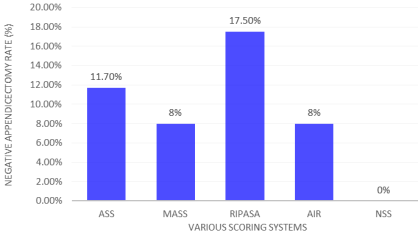
Table 6. Comparative study of different scoring systems in relation to negative appendicectomy incidences variables are different in number in different scoring systems.

Scoring system

Total number of patients

Negative appendix on HPE number

Percentage

Alvarado SS (Francisco et al

)

324

38

11.7%

Modified Alvarado SS (Sulo et al

)

200

16

8%

RIPASA SS (Singh A et al

4])

120

21

17.5%

AIR SS (Suvarchala A et al

0])

100

8

8%

NSS (Nigam VK and Nigam S

1])

82

0

0%

Figure 1. Comparison of various scoring systems.
Alvarado scoring system has 10 variable but modified Alvarado scoring system has 9 variables. RIPASA scoring system consists of 15 parameters where as AIR scoring system has 7 variables and NSS has 9 variables. Some observers feel that if a scoring system has high number of variables then it is difficult to remember all at the time of examination of the patient in OPD or emergency room and this may lead to miscalculation of points giving a wrong score, but this also has some positive effects. It is said that high number of variable in a scoring system can cause problems such as low practicability, low usability, increased probability of error, and can cause delay in the diagnosis and treatment whereas positive point is that high number of points in a scoring system given more detailed information and can improve diagnosis accuracy and reduce incidence of negative appendicectomy.
4. Discussion
Acute appendicitis is a common problem and fully treatable so we must minimize its complications due to delay in the treatment and here the scoring systems play role. Paul Georges Dieuafoy had said hoping that, “No one should die of appendicitis”, and now we should add to it, “No one should have serious complications of acute appendicitis after reaching hospital”.
There are several scoring systems in literature to diagnose acute appendicitis. Suspecting a case of acute abdomen as of acute appendicitis doesn’t require any scoring system or special investigation but confirming it definitely requires a good scoring system which can diagnose acute appendicitis with high probability without the requirement of special investigation techniques such as CT scan and MRI. Scoring system for diagnosing acute appendicitis are of great help to the surgeons working in rural hospitals or smalltown hospitals where specialized investigation techniques are not available. If the scoring system is significantly accurate then delay in the treatment of acute appendicitis that is appendicectomy is avoided and with it the complications also.
Alvarado scoring system is considered the standard scoring system for diagnosis of acute appendicitis, but now it is challenged by various scoring systems due to its lacunae. Alvarado scoring has largely been superseded as a clinical prediction tool by the Appendicitis Inflammatory Response Score. .
Though the Alvarado score is most commonly used scoring system to diagnose acute appendicitis but it has a lacuna that not all elderly patients attend hospital with all the findings of acute appendicitis. Martinez JP has indicated that only 20% of elderly patients present with classical findings. .
Alvarado scoring system is not proved as a universally accurate diagnostic score. In females it overestimates the suspicion of acute appendicitis due to other gynecological problems such as pelvic inflammatory disease and salpingitis specially, right sided. Additionally, the Alvarado score has been noted to overestimate the probability of appendicitis in females, and poorly identified complicated appendicitis in the elderly population. .
In infants and young children Alvarado score is less reliable as these candidates sometimes are unable to tell the symptoms clearly and accurately. In a recent meta-analysis of 26 studies involving 5985 children from 11 countries, the Alvarado score had a combined sensitivity of 76.0% and a combined specificity of 71.8% for diagnosing acute appendicitis in children, while the modified Alvarado score had a combined sensitivity of 87.0% and a combined specificity of 47.0%. .
In certain scores (less than 6) the diagnosis is unclear and requires specialized imaging investigations such as CT scan and MRI. Some researchers have started including ultrasound and for CT scan in addition to the Alvarado score to diagnose acute appendicitis correctly which is lowering the importance of Alvarado score. Some researchers recommend the use of CT scan in confirming the diagnosis of acute appendicitis in suspected cases in addition to Alvarado score as the CT scan has high sensitivity and specificity but it has some negative effects also. CT imaging may also delay the time of operation and, therefore, may increase the subsequent risk of perforation. The use of radiological imaging has resulted in a decrease in the rates of negative appendicectomies…. However, the imaging facilities are not accessible to all, especially in rural areas and, also during the night hours – when radiological facilities are not available in many hospitals. .
Certain new scoring systems have emerged due to the above-mentioned negative points in Alvarado score. However, several studies reported that the application of Alvarado score as a solo decision criterion for surgery (cut point of 7) produces negative appendicectomy rates of 13.3%, 15.6%, 16.2% and 14.3% respectively, without an increase in perforation. Some patients having initial stage of acute appendicitis scoring less than 6 or 6 may be discharged with acute appendicitis and may progress to develop complications at home, like perforation.
According to literature, the incidence of negative appendicectomy ranges between 11 and 40% Some studies have indicated that the Alvarado scoring system can significantly redeem the incidences of negative appendicectomy. The Modified Alvarado score (MAS) is a clinical system to diagnose acute appendicitis accurably and reduce the rate of negative appendicectomies. The Modified Alvarado score (MAS) demonstrated high diagnostic accuracy, with a sensitivity of 96% in cases with a score greater than 7. This high sensitivity contributed to a significant reduction in negative appendicectomies, with rates of 6.94% in MASS77 compared to 47.37% in those with scores of 5 to 6. .
RIPASA score system is developed to overcome the problems of Alvarado score but it is also not free from shortcomings. RIPASA score has usually correctly identifies the cases of acute appendicitis but it has lower specificity in certain populations of certain ethnic groups and which leads to false positive cases causing more negative appendicectomy. RIPASA score was developed mainly to the Asian nationals so when applying it for western populations results are not so accurate. Some studies have reported RIPASA score with higher sensitivity but lower specificity than the Alvarado score. It means that RIPASA score has a higher ability in predicting patients with acute appendicitis, but also giving a high proportion of false positive…. On the other hand, however, the high number of false positives could lead to an increase in inappropriate procedures and healthcare costs. The low specificity forms the need of a supplementary mean to provide the accurate diagnosis. .
Chong CF et al reported that with RIPASA score the negative appendicectomy rate decreased significantly from 16.3 percent to 6.9 percent, which was a 9.4 percent reduction.
Kumar A etal mentioned that the predicted negative appendectomy rates were better with RIPASA than with the modified Alvarado scoring system; however, the statistically significant was weak (p=0.048). The total negative appendectomy rate in our study was 18.4%, a rate comparable to those of Chong etal. .
Some studies favour the Alvarado system , while others found the RIPASA scoring system more reliable. We know that doing appendicectomy based on scoring system alone can lead to negative appendicectomy if the scoring system is not very accurate.
Appendicectomy has been associated with negative appendectomy rates (NARs) of 15-39% in large series. The NAR is well determined by the definition of the term applied in the published study, but unfortunately, there is currently no widely accepted standard definition of a negative appendicectomy. NSS diagnoses acute appendicitis with high accuracy rate without negative appendicectomy.
Toney Jose etal states that, the sound construction, gradation of parameters, the inclusion of CRP, and avoidance of subjective parameters make the AIR score an attractive clinical prediction rule which can decrease the rate of negative appendectomy. AIR score helps reduce the rate of unnecessary surgery. This system has shown to the Alvarado scoring system and has been validated by multiple randomized studies. .
Scoring systems are developed to diagnose acute appendicitis correctly and reduce the negative appendectomy rate or unnecessary appendectomies. Newer scoring systems have higher accuracy and lower negative appendectomy rates. RIPASA scoring system has more accuracy in prediction of diagnosis of acute appendicitis than Alvarado scoring system, which leads to the lower negative appendectomy rate. NSS (Nigam’s scoring system) has high accuracy, 100% and 0% negative appendicectomy rate. This system by making accurate diagnosis reduces negative appendicectomy rate as well as complications.
Negative appendicectomy is usually the consequences of diagnostic error which leads to the unnecessary surgery. It is commonly due to the difficulty in pre-operative diagnosis due to certain factors like use of imperfect scoring system, extra caution to avoid complication like rupture of inflamed appendix, and or defective calculation of score using an effective scoring system.
A negative appendectomy rate of 15-20% has been reported int eh literature and many surgeons advocate early surgical intervention for the treatment of acute appendicitis to avoid perforation, accepting negative appendectomy rate of about 15-20%. .
4.1. Statistics
In this study probability of appendicitis and its complications with management and probability distribution are mentioned with assessment of accuracy and sensitivity.
4.2. Accuracy
The accuracy of a test is its ability to differentiate the patient and healthy cases correctly. Mathematically, this can be stated as:
Accuracy= TP + TN/ TP + TN + FP + FN In our study=82+0/82 + 0 + 0 + 0=100%.
4.3. Sensitivity
The sensitivity of a test is ability to determine the patient cases correctly. Mathematically, this can be stated as: Sensitivity= TP/TP + FN In our study= 82/82 + 0=100%. (TP= true positive, TN= true negative, FP= false positive, FN= false negative). It was small study but we feel that NSS gives better diagnostic accuracy than Alvarado and other scoring systems.
Actual diagnostic values are used in this study to reach accuracy, sensitivity, specificity, positive predictive value (PPV) and negative predictive value (NPV).
Specificity is TN/TN+FP=82/82+0 = 100%
Positive predictive value (PPV) is calculated as the patients having acute appendicitis were diagnosed correctly and it is 100%. It shows the value of NSS in diagnosing acute appendicitis correctly in suspected cases of acute appendicitis.
Negative predictive value (NPV) that patient does not have the disease is done with NSS correctly avoiding surgery in any case not having acute appendicitis among suspected cases of acute appendicitis.
Abbreviations

AIR

Appendicitis Inflammatory Response

BMI

Body Mass Index

CRP

C-reactive Protein

CT

Computed Tomography

FN

False Negative

FP

False Positive

MAS

Modified Alvarado Score

MASS

Modified Alvarado Scoring System

MRI

Magnetic Resonance Imaging

NPV

Negative Predictive Value

NSS

Nigam’s Scoring System

OPD

Outpatient Department

PPV

Positive Predictive Value

RIF

Right Iliac Fossa

RIPASA

Raja Isteri Pengiran Anak Saleha Appendicitis

TN

True Negative

TP

True Positive

USG

Ultrasonography

Acknowledgments
The authors would like to thank Dr. Charvi Chawla for her efforts to arrange data and other information required for this research work. We are also thankful to Mr. Vipin Sharma for preparation of manuscript and computer related work.
Conflicts of Interest
The authors declare no conflicts of interest.
References
[1] Khan MS, Chaudhary MBH, Shahzad N, Tariq M, Memon WA, Alvi AR, Risk of appendicitis in patients with incidentally discovered appendicoliths. J Surg Res. 2018 Jan; 221: 84-87.
[2] Stringer MD. Acute appendicitis, J Paediatr Child Health. 2017 Nov; 53(11): 1071-10.
[3] Addis DG, Shaffer N, Fowler BS, Tauxe RV. The epidemiology of appendicitis and appendectomy in the United States. Am J Epidemiol. 1990; 132(5): 910-925.
[4] Singh A, Parihar US, Kumwat G, Samota R, Chaudhary R. To determine validation of RIPASA score in diagnosis of suspected acute appendicitis and histopathological correction with applicability of Indian population: A single institute study. Ind J Surg. 2018; 80(2): 113-117.
[5] Shobha S, Sushrutha G, Goudar BV. Diagnostic Accuracy of the RIPASA score is suspected Acute Appendicitis in Adults: A Cross-sectional Study Comparing it with Histopathological Findings from Bagalkot, India. Int J Anat Radiol Surg 2023; 12(5): 5035-5038.
[6] Jones MW, Lopez RA, Deppen JG. Appendicitis. StatPearls.ed.Treasure Island: StatPearls Publishing; 2020.
[7] Schwerk WB, Wichtrup B, Rothmund M, Ruschoff J. Ultrasonography in the diagnosis of acute appendicitis: a prospective study. Gastroenterology. 1989; 97: 630-9.
[8] Chishti MM, Surendran AK, Narayan JT. RIPASA and air scoring systems are superior to Alvarado scoring in acute appendicitis: diagnostic accuracy study. Ann Med Surg. 2020; 59: 138-42.
[9] Seetahal SA, Bolorunduro OB, Sookdeo TC, Oyetunji TA, Greene WR, Frederick W, et al. Negative appendectomy: a 10-year review of a nationally representative sample. Am J Surg. 2011; 201(4): 433-7.
[10] Shah AA, Al-Zoubi RM, Al-Qudimat AR, Almine Rijeb M, Kumar Ojha L, Abdulzem S, et al. Daytime versus night time laparoscopic appendectomy in term of complications and clinical outcomes. Heliyon. 2022; 8(12).
[11] Alvarado A. A practical score for the early diagnostic of acute appendicitis. Annals of Emergency Medicine. 1986; 15(5): 557-564.
[12] Kalan M, Talbot D, Cunliffe WJ, Rich AJ. Evaluations of the modified Alvarado score in the diagnosis of acute appendicitis. A perspective study. Annals of the Royal College of Surgeons of England 1994; 76: 418-419.
[13] Alvarado A. Diagnostic Scores in Acute Appendicitis Nov 5; 2018, Current Issues in the Diagnostics and Treatment of Acute Appendicitis. Dmitry Victorovich Grabuzenko June 2018.
[14] Fenyo G, Lindberg G, Blind P, Enochsson L, Oberga A. Diagnostic decision support in suspected acute appendicitis: validation of simplified scoring system. Eur J Surg Med. 1997; 11: 831-8.
[15] Chong CF, Adi MI, Thien A, Sieyoi A, Mackie AJ, Tin AS, et al. Development of RIPASA score a new appendicitis scoring system for the diagnosis of acute appendicitis. Singapore Med J. 2010; 51(3): 220-5.
[16] M Hassan, Sree GS, Vakka-lagadda NP etal. The RIPASA scoring system: A new era in appendicitis diagnosis. Ann Med Surg. 2022 Aug; 80: 104174.
[17] Wani MM, Yousaf MN, Khan MA. Usefulness of the Alvarado scoring system with respect to age, sex and time of presentation with regression analysis of individual parameters. Internet J Surg. 2007; 11(2).
[18] Francisco AR; Carlos ER, Julio CN et al. Assessment of negative appendectomy in acute appendicitis diagnosis 8% NAR with MASS.
[19] (Sulo etal) Sulo, Suzan Safar, Al-Atrakchi, Ahmad H. The modified Alvarado score versus Alvarado Score in the Diagnosis of Acute Appendicitis. Med J Babglon. 2019 Jul-Sep; 16(3): 203-206.
[20] Suvarchala A, Chandralekha J, Sudha YK, Praveena M, Samanth M. To Compare the Performance of AIR score in Reducing Negative Appendicectomies with Histopathological Correlation. Int. J Curr Phar Rev and Res 2025; 17(6): 745-752.
[21] Nigam VK, Nigam S. Nigam’s Scoring System for acute appendicitis with high accuracy surpassing Alvarado Scoring System. Int Surg J 2022; 9(4): 835-840.
[22] Andersson M, Andersson RE. The appendicitis inflammatory response score: a tool for the diagnosis of acute appendicitis that outperforms the Alvarado Score. World Journal of Surgery 2008 Aug; 32(8): 1843-1849.
[23] deCastro SMM, Unlu C, Steller EP, van Wagensveld BA, Vrouenraels BC. Evaluation of the Appendicitis. Inflammatory Response Score for Patients with Acute Appendicitis. World Journal of Surgery 2012 Jul; 36(7): 1540-1545.
[24] Kollar D, McCartan DP, Boorke M, Cross KS, Dowdall J. Predicting Acute Appendicitis? A comparison of the Alvarado Score, the Appendicitis Inflammatory Response Score and clinical assessment World Journal of Surgery. 2014 Sep; 39(1): 104-109.
[25] Martinez JP. Evaluation and Management of the Patients with Abdominal Pain. In Mattu A, Goyal D (eds) Emergency Medicine. Malden, Massachusetts: Blackwell (BMJ Books) 2007; p 28.
[26] Ohle R, O’Reilly F, O’Brien KK, Fahey T, Dimitrov BD. The Alvarado score for predicting acute appendicitis: a systematic review. BMC Med. 2011; 9(1): 139.
[27] Deiters A, Drozd A, Parikh P, Markest R, Shein JK. Use of Alvarado score in Elderly Patients with complicated and uncomplicated Appendicitis. Am Surg. 2019; 85(4): 397-402.
[28] Bai S, Hv S, Zhang Y, Guo S, Zhu R, Zeng J. The value of the Alvarado score for the diagnosis of acute appendicitis in children: A systematic review and meta-analysis. J Pediatr Surg. 2023; 58(10): 1886-1892.
[29] Karakas SP, Guelfguat M, Leonidas JC, Springer S, Singh SP. Acute appendicitis in children: comparison of clinical diagnosis with ultrasound and CT imaging. Pediatr Radiol 2000; 30: 94-98.
[30] Jose T, Rajesh PS. Appendicitis Inflammatory Response score in Comparison to Alvarado Score in Acute Appendicitis. Surg J (NY). 2001 Jul 19; 7(3): e127-e131.
[31] Owen TD, Williams, H, Stiff G, Jenkinson LR, Rees BI: Evolution of the Alvarado score in acute appendicitis. JRSOC Med 1992; 85: 87-88.
[32] Arain GM, Sohu KM, Ahmad E, Haidar W, Nagi SA: Role of Alvarado score in diagnosis of acute appendicitis. Pak J Surg 2001; 17: 41-46.
[33] Khan I, urRehman A: Application of Alvarado scoring system in diagnosis of acute appendicitis. J Ayb Med Coll, Abottabad 2005; 17: 41-44.
[34] Singh SK, Gupta S, Pargal P. Application of Alvarado scoring system in diagnosis of acute appendicitis JK Sci 2008; 10: 84-86.
[35] Yuksel Y, Dine B, Yuksel D, etal. How reliable is the Alvarado score in acute appendicitis? Ulus Jravma Acil Cerrahi Derg. 2014; 20: 12-18.
[36] Chong CF, Thien A, Mackie AJ et al. Comparison of RIPASA and Alvarado scores for the diagnosis of acute appendicitis Singapore Med J. 2011; 52: 340-345.
[37] Lintula H, Pesonen E, Kokki H, et al. A diagnostic score for children with suspected appendicitis. Langenbecks Arch Surg. 2005; 390: 164-170.
[38] Limpawattanasiri C. Alvarado score for the acute appendicitis in a provincial hospital. J Med Ass Thai. 2011; 94: 441-448.
[39] Takada T, Yasuda H, Uchiyama K, Hasegawa H, Shikata JL. Ultrasonographic diagnosis of acute appendicitis in surgical indication Int Surg. 1986; 71(1): 9-13.
[40] Mittal GS, Goel M, Singh J, Kshirsagar MB. Evaluation of modified Alvarado scoring system as a diagnostic tool for acute appendicitis and its correlation with Histo-pathological examination: A prospective study. IPJ Surg Allied Sci. 2025; 7(1): 35-39.
[41] Favara G, Maugeri A, Barchitta M, Ventara A, Basile G, Agodi A. Comparison of RIPASA and Alvarado scores for risk assessment of acute appendicitis. A systematic review and meta analysis. PLoS ONE 17(9): e0275427.
[42] Frountzas M, Sterigios K, Kopsini D, et al. Alvarado or RIPASA score for diagnosis of acute appendicitis? A meta-analysis of randomized trials. Int J Surg. 2018 Aug; 56: 307-314.
[43] Chong CF, Thien A, Mackie AJ, Tin AS, Tripathi S, Ahmad MA, Tan LT, Daud FM, Tan C, Telisinghe PV, Ang SH. Evolution of RIPASA score – a new scoring system for the diagnosis of acute appendicitis. Brueni Int Med J. 2010; 6(1): 17-26.
[44] Stephens PL, Mazzucco JJ. Comparison of ultrasound and the Alvarado score for the diagnosis of acute appendicitis. Conn Med J. 1999; 63: 137-140.
[45] Lim J, Pang Q, Alexander R. One year negative appendicectomy rates at a district general hospital: a retrospective cohort study. Int J Surg. 2016; 31: 1-4.
[46] Singh V, Jaiswal SS. Risk stratification using Appendicitis Inflammatory Response score, A useful tool to reduce negative appendicectomy rate: our experience. Int J Sci Res. 2019 May; 8(5): 2277-8179.
[47] Scott AJ, Mason SE, Arunakirinathan M, Reissis Y, Kinross JM, Smith JJ. Risk stratification by the Appendicitis Inflammatory Response score to guide decision-making in patients with suspected appendicitis. Br J Surg. 2015; 102(5): 563-572.
[48] Anderson M, Kolodziej B, Andersson RE. Randomized clinical trial of Appendicitis Inflammatory Response score-based management of patients with suspected appendicitis. Br. J Surg. 2017 Oct; 104(11): 1451-1461.
[49] Nigam VK, Nigam S. Guidelines for handling neglected and complicated cases of acute appendicitis: A case scores in relation to Nigam’s scoring system (NSS). Int J Surg Sci. 2024; 8(4): 101-104
[50] Laxmandas VM, Karthik N, Joshi SS. A comparison Between Modified Alvarado Scoring System and Tzanaki’s Scoring System in Pre-Operative Evaluation of Acute Appendicitis, Operated and Confirmed with Hpr – An Observational Study. European J. Cardiovas Med. 2024 Jul-Aug; 14(4): 903-909.
Cite This Article
  • APA Style

    Nigam, V. K., Nigam, S. (2025). Negative Appendicectomy – Relevance of Scoring Systems – Alvarado, Modified Alvarado, Ripasa, Air and Nigam’s Scoring System (NSS). International Journal of Gastroenterology, 9(2), 142-151. https://doi.org/10.11648/j.ijg.20250902.17

    Copy | Download

    ACS Style

    Nigam, V. K.; Nigam, S. Negative Appendicectomy – Relevance of Scoring Systems – Alvarado, Modified Alvarado, Ripasa, Air and Nigam’s Scoring System (NSS). Int. J. Gastroenterol. 2025, 9(2), 142-151. doi: 10.11648/j.ijg.20250902.17

    Copy | Download

    AMA Style

    Nigam VK, Nigam S. Negative Appendicectomy – Relevance of Scoring Systems – Alvarado, Modified Alvarado, Ripasa, Air and Nigam’s Scoring System (NSS). Int J Gastroenterol. 2025;9(2):142-151. doi: 10.11648/j.ijg.20250902.17

    Copy | Download

  • @article{10.11648/j.ijg.20250902.17,
      author = {Vinod Kumar Nigam and Siddharth Nigam},
      title = {Negative Appendicectomy – Relevance of Scoring Systems – Alvarado, Modified Alvarado, Ripasa, Air and Nigam’s Scoring System (NSS)},
      journal = {International Journal of Gastroenterology},
      volume = {9},
      number = {2},
      pages = {142-151},
      doi = {10.11648/j.ijg.20250902.17},
      url = {https://doi.org/10.11648/j.ijg.20250902.17},
      eprint = {https://article.sciencepublishinggroup.com/pdf/10.11648.j.ijg.20250902.17},
      abstract = {Background and Aims: Acute appendicitis is an important and common problem world over. Complications of acute appendicitis are sometimes serious and even lethal. These complications can be presented by diagnosing appendicitis quickly and accurately allowing appendicectomy at earliest along with prevention of negative appendicectomy. Various scoring systems are in use to diagnose acute appendicitis. Nigam’s scoring system is compared here with other common scoring systems in relation to negative appendicectomy. The comparison of Nigam’s scoring system (NSS) and other scoring systems was done with our work on NSS and the work of other workers on other scoring systems. Methods: It is designed as a study of original study of scoring systems of acute appendicitis. Setting of this study was done in a primary care hospital with various specialties. 82 participants of this study attend emergency room and surgical OPDs with acute abdomen and referred to us on suspicious of acute appendicitis. Intervention was carried out as appendicectomy after thorough history taking, physical examinations and basic laboratory tests. Results: Showed high percentage of accuracy with zero incidence of negative appendicectomy. Conclusions: The comparative study of NSS with various other scoring system for diagnosing acute appendicitis shows that the rate of negative appendicectomy by using NSS is zero and no other scoring system compared here have shown this level.},
     year = {2025}
    }
    

    Copy | Download

  • TY  - JOUR
    T1  - Negative Appendicectomy – Relevance of Scoring Systems – Alvarado, Modified Alvarado, Ripasa, Air and Nigam’s Scoring System (NSS)
    AU  - Vinod Kumar Nigam
    AU  - Siddharth Nigam
    Y1  - 2025/12/31
    PY  - 2025
    N1  - https://doi.org/10.11648/j.ijg.20250902.17
    DO  - 10.11648/j.ijg.20250902.17
    T2  - International Journal of Gastroenterology
    JF  - International Journal of Gastroenterology
    JO  - International Journal of Gastroenterology
    SP  - 142
    EP  - 151
    PB  - Science Publishing Group
    SN  - 2640-169X
    UR  - https://doi.org/10.11648/j.ijg.20250902.17
    AB  - Background and Aims: Acute appendicitis is an important and common problem world over. Complications of acute appendicitis are sometimes serious and even lethal. These complications can be presented by diagnosing appendicitis quickly and accurately allowing appendicectomy at earliest along with prevention of negative appendicectomy. Various scoring systems are in use to diagnose acute appendicitis. Nigam’s scoring system is compared here with other common scoring systems in relation to negative appendicectomy. The comparison of Nigam’s scoring system (NSS) and other scoring systems was done with our work on NSS and the work of other workers on other scoring systems. Methods: It is designed as a study of original study of scoring systems of acute appendicitis. Setting of this study was done in a primary care hospital with various specialties. 82 participants of this study attend emergency room and surgical OPDs with acute abdomen and referred to us on suspicious of acute appendicitis. Intervention was carried out as appendicectomy after thorough history taking, physical examinations and basic laboratory tests. Results: Showed high percentage of accuracy with zero incidence of negative appendicectomy. Conclusions: The comparative study of NSS with various other scoring system for diagnosing acute appendicitis shows that the rate of negative appendicectomy by using NSS is zero and no other scoring system compared here have shown this level.
    VL  - 9
    IS  - 2
    ER  - 

    Copy | Download

Author Information