Abstract
This study investigated how physical and functional quality attributes influence ginger prices in Nigeria using a hedonic pricing model. A total of 960 ginger retailers were selected from 480 Enumeration Areas across 15 states and the Federal Capital Territory through a multistage sampling procedure. The research covered major ginger-producing and consuming regions to capture geographical differences in market characteristics and price formation. Descriptive statistics were used to profile retailers, while hedonic regression analysis assessed the effect of quality attributes on market prices. The results revealed notable socioeconomic differences between market categories. Female retailers dominated in producing states, whereas male retailers were more prevalent in consuming states. The average age of retailers was 42 years in producing states and 40 years in consuming states, indicating that participants were largely within economically active age groups. Although quality characteristics were generally similar across regions, average retail prices were higher in producing states (₦1,586 kg-1) than in consuming states (₦1,504 kg-1). The hedonic model for producing states demonstrated very high explanatory power, accounting for approximately 99% of price variation (R2 = 0.9903). Emulsion capacity and texture significantly increased ginger prices, while larger bulb size and higher oil-holding capacity reduced market value. In consuming states, the model explained 70.16% of price variation (R2 = 0.7016). Hygroscopicity positively influenced prices, whereas texture deterioration and larger bulb size significantly lowered them. Overall, both physical and functional quality attributes significantly affected ginger prices, though their influence differed across market groups. Promoting quality-based grading and marketing could enhance value capture, improve market efficiency, and strengthen competitiveness within Nigeria’s ginger value chain.
Keywords
Ginger, Hedonic Pricing, Quality Attributes, Retailers, Nigeria
1. Introduction
Product differentiation is becoming more prevalent in agricultural commodity markets, as prices are impacted by both the amount offered and the unique characteristics of the items. Prices within the same covaries class vary because consumers, processors, exporters, and industrial users frequently place varying values on observable and unobservable product features. A strong framework for breaking down market prices into the implicit values of specific product traits is provided by hedonic pricing theory, which shows how much quality attributes affect market valuation
| [14] | Ghide, A. A., Bukar, J. M., & Danladi, H. (2024). Applications of hedonic pricing analysis in agriculture: A review. Journal of Arid Agriculture, 25(2), 117–124.
https://jaaunimaid.ng/index.php/home/article/view/33 |
| [27] | Núñez, J., Martín-Barroso, D., & Velázquez, F. J. (2024). The hedonic price model for the wine market: A systematic and comparative review of the literature. Agricultural Economics, 55(2), 247–264. https://doi.org/10.1111/agec.12818 |
[14, 27]
.
Hedonic price models have been widely used in agricultural markets to assess quality premiums related to physical, sensory, and functional characteristics of commodities. These models provide valuable insights for producers, marketers, and policymakers looking to increase market competitiveness and efficiency. Due to its widespread use in the food processing, pharmaceutical, nutraceutical, cosmetic, and beverage sectors, ginger (Zingiber officinale Roscoe) is one of the most significant spices and medicinal crops sold worldwide. Ginger's economic importance in global markets has grown due to the rising demand for natural ingredients and functional meals. Due to consumers' growing demands for characteristics like pungency, aroma, fiber content, moisture level, colour, rhizome size, and essential oil concentration, product quality has emerged as a crucial factor in determining competitiveness. These characteristics have an impact on shelf life, customer acceptability, industrial appropriateness, and processing efficiency, all of which have an impact on the prices that merchants and producers obtain.
The importance of comprehending the economic value of product features is highlighted by recent evidence that both local and international agricultural markets are progressively rewarding commodities with higher quality characteristics
| [11] | Ciardullo, V. F., & Gennari, A. J. (2025). Agricultural land valuation—Hedonic pricing and geostatistical advances: A state-of-the-art review. Revista de la Facultad de Ciencias Agrarias UNCuyo, 57(2), 224–236.
https://doi.org/10.48162/rev.39.185 |
| [32] | Sun, F., Meng, X., Zhang, Y., Wang, Y., Jiang, H., & Liu, P. (2023). Agricultural product price forecasting methods: A review. Agriculture, 13(9), 1671.
https://doi.org/10.3390/agriculture13091671 |
[11, 32]
. Nigeria is acknowledged as one of the top producers and exporters of premium ginger and holds a critical position in the global ginger industry. Nigerian ginger is especially prized for its pungency, rich scent, and high oleoresin content—qualities that increase its appeal in international trade. Quality standards pertaining to moisture content, oil concentration, appearance, and impurity levels are becoming more and more important in export market requirements, indicating that market prices are heavily influenced by quality differential. According to industry reports, premium grades of Nigerian ginger are more expensive because they meet export requirements and have better functional qualities (National Ginger Producers, Processors and Marketers Association of Nigeria [NGPPMAN
| [25] | National Ginger Producers, Processors and Marketers Association of Nigeria. (2026). Market insights and export quality standards for Nigerian ginger. NGPPMAN.
https://www.ngppma.org.ng/insights |
[25]
.
Nigeria has a competitive advantage in the production of ginger, but the industry has recently encountered many difficulties, such as disease outbreaks, varying output levels, and shifting export dynamics. Following the widespread occurrence of rhizome rot disease, reports indicate that ginger exports significantly decreased, underscoring the industry's susceptibility and the necessity of enhancing value through quality improvement measures rather than volume expansion alone
. The economic significance of quality attributes in market transactions is shown by research that suggests advances in product cleanliness, grading, and quality management have historically contributed to greater export earnings from Nigerian ginger
. Lancaster's consumer theory and Rosen's hedonic pricing framework, which contend that consumers get utility from the qualities embedded in items rather than from the objects themselves, provide the theoretical basis for analyzing quality-price correlations. As a result, researchers can determine the marginal implicit values of traits because market prices represent the total valuation of individual features. Recent developments in hedonic modelling continue to show how useful it is for studies on agricultural valuation and quality evaluation
| [7] | Bajari, P., Cen, Z., Chernozhukov, V., Manukonda, M., Vijaykumar, S., Wang, J., & Wan, S. (2023). Hedonic prices and quality-adjusted price indices (arXiv Preprint No. 2305.00044). https://arxiv.org/abs/2305.00044 |
| [14] | Ghide, A. A., Bukar, J. M., & Danladi, H. (2024). Applications of hedonic pricing analysis in agriculture: A review. Journal of Arid Agriculture, 25(2), 117–124.
https://jaaunimaid.ng/index.php/home/article/view/33 |
[7, 14]
.
In Nigeria, hedonic pricing has mostly been applied empirically to staple goods like rice and cassava products. According to recent research on rice markets, consumers place a high value on quality attributes including grain type, brand reputation, and physical appearance, which results in notable price differences between products
| [3] | Abubakar, B. B., Abdullah, A. N., & Jabo, M. S. M. (2024). Hedonic price analysis for consumer preference on rice quality attributes in some selected states of North Western Nigeria. International Journal of Sustainable Agricultural Research, 12(2), 1–15. https://doi.org/10.18488/ijsar.v12i2.4310 |
| [4] | Abubakar, B. B., Abdullah, A. N., & Jabo, M. S. M. (2025). Hedonic price analysis for consumer preference on rice quality attributes in some selected states of North Western Nigeria. Tropical Small Island Agriculture Management, 5(2), 135–148. https://doi.org/10.30598/tsiam.2025.5.2.135 |
[3, 4]
. Similarly, earlier evidence from Cassava product markets demonstrated that observable quality attributes significantly influence market prices
| [34] | Tshishonga, Z. O., Lubinga, M. H., & Du Preez, L. (2026). Drivers of market-related considerations among small-scale cassava farmers in South Africa. Frontiers in Sustainable Food Systems, 10, 1648924.
https://doi.org/10.3389/fsufs.2026.1648924 |
[34]
. However, despite the economic importance of ginger and its expanding role in domestic and export markets, limited empirical attention has been devoted to quantifying the implicit values of its physical and functional attributes within the Nigerian context. This represents a critical knowledge gap because producers and marketers require clear information on which quality characteristics generate the greatest economic returns.
Understanding how the consumers value particular ginger qualities is important for developing quality-based marketing strategies. It also helps in raising export competitiveness, establishing grading standards, and guiding breeding programmes. Throughout the value chain, information on the implicit costs of functional characteristics like pungency, oil content, scent, and moisture level as well as physical characteristics like size, colour, texture, and appearance can offer incentives for improving quality. Finding the qualities that fetch high market premiums can also help farmers, processors, and merchants allocate resources more effectively and make more money.
Against this backdrop, this study applies a hedonic pricing framework to examine the influence of physical and functional attributes on ginger prices in Nigeria. Specifically, the study estimates the implicit values associated with key quality characteristics of ginger. The findings are expected to provide empirical evidence that supports quality-oriented production, marketing, and policy interventions aimed at strengthening the competitiveness and sustainability of Nigeria's ginger industry.
2. Materials and Methods
2.1. Study Area
The study was conducted in Nigeria, a country located in West Africa along the Gulf of Guinea. Nigeria occupies a land area of approximately 923,770 km
2 and had an estimated population of 235,106,356 in 2024, based on an annual population growth rate of 2.42% (United Nations, 2022)
. Geographically, the country lies between latitudes 4°1′N and 13°9′N and longitudes 2°2′E and 14°30′E. It is bounded by the Atlantic Ocean to the south and by the Republics of Niger and Chad to the north.
Nigeria operates a federal system of government comprising 36 states, the Federal Capital Territory [FCT], Abuja, and 774 Local Government Areas (LGAs). Owing to its geographical location, the country experiences a tropical climate characterized by relatively high temperatures throughout the year and two distinct seasons. The rainy season extends from mid-March to November in the southern region and from May to October in the northern region, while the dry season occurs during the remaining months of the year.
Agriculture is a major economic activity in Nigeria, with a wide variety of crops cultivated across the country, including cereals, roots and tubers, legumes, oilseeds, fruits, and vegetables. Major cash crops include cocoa, oil palm, cotton, groundnut, ginger, sesame, rubber, soybean, and gum Arabic (NBS, 2010). Ginger production is concentrated mainly in Kaduna, Nasarawa, Bauchi, Gombe, and Benue States
.
2.2. Sampling Procedure and Sample Size
The sampling frame for this study consisted of the demarcated Enumeration Area (EA) maps developed by the National Population Commission (NPC) for the 2006 National Housing and Population Census. A multistage sampling procedure was employed in selecting respondents for the study.
In the first stage, Nigeria was divided into two groups based on ginger production and consumption patterns. The first stratum comprised major ginger-producing states, namely Kaduna, Niger, Nasarawa, Benue, Plateau, Bauchi, Gombe, Kogi, Abia, Imo, Enugu, and Ebonyi States. The second stratum comprised major ginger-consuming states, including Kano, Adamawa, Anambra, Cross River, Delta, Katsina, Taraba, Yobe, Borno, Zamfara, Sokoto, Kebbi, Jigawa, Kwara, Lagos, Ogun, Osun, Ekiti, Oyo, Ondo, Bayelsa, Rivers, Edo, and Akwa Ibom States, together with the Federal Capital Territory (FCT), Abuja.
In the second stage, five states were purposively selected from the ginger-producing states based on the volume of ginger production, while ten states and the FCT were randomly selected from the ginger-consuming states. This resulted in a total of sixteen sampling units (15 states and the FCT) for the study.
The third stage involved the random selection of 30 Enumeration Areas (EAs) from each selected state and the FCT, resulting in a total of 480 EAs. In the fourth stage, two ginger retailers were systematically selected from each sampled EA. Consequently, a total of 960 ginger retailers were selected and interviewed for the study.
2.3. Method of Data Analysis
Descriptive statistics such as frequency, percentages and means were used to describe the socio-economic characteristics, while Hedonic regression was used to determine the effect of physical and functional attributes of ginger on price of ginger. Following
| [26] | Ndindeng, S. A., Twine, E. E., Mujawamariya, G., Fiamohe, R., & Futakuchi, K. (2021). Hedonic pricing of rice attributes, market sorting, and gains from quality improvement in the Beninese market. Agricultural and Resource Economics Review, 50(1), 170–186. https://doi.org/10.1017/age.2020.24 |
[26]
, the Hedonic model was used in determining the effect of physical and functional attributes of ginger on price and is implicitly specified as:
Where Pg= price of ginger in N/kg
Xgj = Quality of ginger characteristics j (such as colour, texture, size, smell, antioxidant, and functional).
Βg j= implicit value of characteristics of ginger
e= error term
From the general function the hedonic model to be estimated is thus explicitly specified as:
Pg= β0+ β1X1+ β2X2+ β3X3+β4X4+ e(2)
For the effect of physical attributes of ginger on the price, its given as;
PG = price of ginger in Naira per kg
X1= colour of ginger (1 = yellow, 0 = Black),
X2= texture of ginger (1 = harder, 0 = smoother),
X3= Size of ginger (ml), and
X4= Bulk density (g/cm3).
While the effect of functional attributes of ginger on the price is given as;
PG = price of ginger in Naira per kg
X1= Emulsion capacity (%),
X2= Hygroscopicity (%),
X3= Oil holding capacity (ml), and
X4= Water holding capacity (ml).
Β1-4= coefficient of the variables
e = stochastic or error term
3. Results and Discussion
3.1. Socio-economic Characteristics of Retailers
As illustrated in
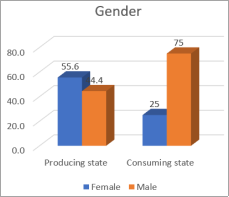
Figure 1, the socioeconomic profile of ginger retailers showed significant variances between producing and consuming states, indicating differences in market structure, value chain participation, and gendered roles within agricultural marketing systems. While male shopkeepers were more prevalent in states that consumed ginger, female retailers were more prevalent in states that produced it. This pattern implies that women may have easier access to retailing activities at the production stage because of lower entrance barriers and greater participation in local commerce and post-harvest handling. In contrast, marketing operations in major consuming centers frequently call for increased mobility, money access, and involvement in long-distance trade networks domains that are still disproportionately held by men in many agricultural markets in developing nations
.
Figure 1. Gender of retailers.
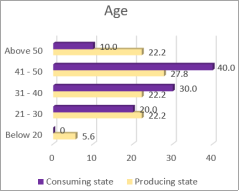
Considering mean ages of 42 and 40 years in producing and consuming states, respectively, the age distribution further shows that economically active people make up the majority of ginger retailers. As shown in
Figure 2, these age groups correspond to those who have enough social networks, experience, and entrepreneurial ability to successfully engage in agricultural commodities markets. Similar age distributions have been noted among Sub-Saharan African horticulture and spice sellers, where middle-aged people predominate in retail operations because of their risk-management skills and accumulated market experience
.
Figure 2. Age of retailers.
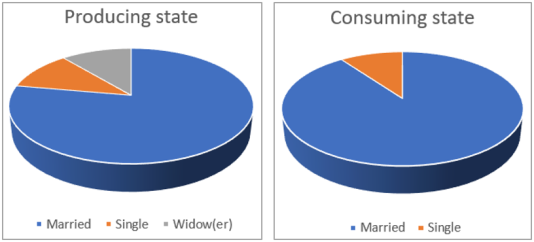
In both regions, married respondents made up the majority of retailers;
Table 3 shows that this percentage was larger in states where consumers were found. Stability in a marriage may provide access to social capital, home labour, and financial support, allowing for company growth and continuity. According to earlier research, married business owners frequently have higher investment capacity and business resilience than their single counterparts, especially in informal agricultural markets
| [1] | Abdul-Rahman, A., Issahaku, H., & Abdulai, A. (2021). Household characteristics and participation in agricultural commodity markets in Sub-Saharan Africa. African Journal of Agricultural and Resource Economics, 16(2), 95–108. |
| [15] | International Fund for Agricultural Development. (2024). Rural development report 2024: Inclusive rural transformation. IFAD. https://www.ifad.org/en/annual-report-2024 |
[1, 15]
. Ginger retailing at the local level may offer a significant livelihood opportunity for vulnerable groups with little access to alternative revenue sources, as evidenced by the existence of widowed retailers only in production states.
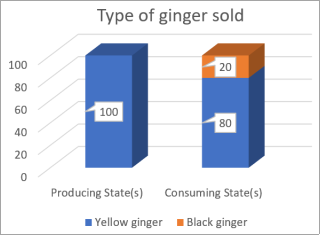
As shown in
Figure 4, variations were also noted in the varieties of ginger sold in different areas. While retailers in consuming states offered both yellow and black ginger kinds, those in producing states only carried the yellow variety. The larger market segmentation and diverse consumer tastes typical of urban markets are probably reflected in the wider varietal diversity seen in consumption centers. In rising food markets in Asia and Africa, there is a growing consumer desire for unique spice items, such as those thought to have better culinary, medicinal, or nutraceutical qualities
| [20] | Kumar, P., Kumar, V., & Sharma, H. K. (2021). Functional properties and industrial applications of ginger: A review. Food Reviews International, 37(6), 619–639.
https://doi.org/10.1080/87559129.2020.1746354 |
| [37] | Zhang, Y., Li, H., & Chen, X. (2024). Consumer demand for functional spices and medicinal plants in urban food markets. Sustainability, 16(3), 1184. |
[20, 37]
.
Figure 3. Marital status of retailers.
Figure 4. Type of Ginger sold.
3.2. Effects of Physical and Functional Attributes on Ginger Prices
The descriptive statistics in
Tables 1 and 2 show that the physical and functional properties of ginger marketed in producing and consuming states are generally similar, indicating a relatively integrated supply chain with little regional variation in quality. While producing states had significantly higher average pricing (₦1,586 kg
-1) than consuming states (₦1,504 kg
-1), quality attribute differences were generally negligible. While physical attributes like texture, colour, size, and bulk density also showed little difference, functional attributes including emulsion capacity, hygroscopicity, oil holding capacity, and water holding capacity showed similar values across both locations. These results imply that customer preferences and market perceptions may have a greater influence on quality disparities seen in retail markets than significant underlying variations in product composition.
Table 1. Physical and functional attributes of ginger in ginger producing states.
Variable | Price/kg | Emulsion capacity | Hygroscopicity | Oil holding capacity | Water holding capacity | texture | size | Colour | Bulk density |
Mean | 1,585.71 | 74.60 | 5.73 | 7.21 | 6.24 | 0.57 | 318.39 | 0.71 | 0.38 |
Standard Deviation | 467.01 | 2.54 | 0.38 | 0.64 | 0.44 | 0.53 | 108.33 | 0.49 | 0.02 |
Minimum | 1,000.00 | 71.62 | 5.39 | 6.00 | 5.80 | 0.00 | 209.65 | 0.00 | 0.36 |
Maximum | 2,400.00 | 78.70 | 6.46 | 8.00 | 7.00 | 1.00 | 536.18 | 1.00 | 0.42 |
Source: Study Result Output, 2025
Table 2. Physical and functional attributes of ginger in ginger consuming states.
Variable | Price/kg | Emulsion capacity | Hygroscopicity | Oil holding capacity | Water holding capacity | texture | size | Colour | Bulk density |
Mean | 1,504.44 | 75.38 | 5.67 | 7.67 | 6.47 | 0.44 | 303.16 | 0.67 | 0.38 |
Standard Deviation | 359.59 | 4.54 | 0.17 | 0.26 | 0.51 | 0.53 | 110.37 | 0.50 | 0.02 |
Minimum | 1,100.00 | 69.35 | 5.41 | 7.50 | 5.50 | 0.00 | 120.59 | 0.00 | 0.36 |
Maximum | 2,000.00 | 85.50 | 6.02 | 8.05 | 7.00 | 1.00 | 523.33 | 1.00 | 0.41 |
Source: Study Result Output, 2025
Additional information about how much particular quality features affect market valuation may be found in the hedonic pricing analysis. A major problem in hedonic assessments of agricultural commodities where many qualities are highly correlated is the absence of bulk density, colour, and water holding capacity due to multicollinearity, which shows significant overlap across some quality indicators
.
3.3. Effects of Ginger Quality Attributes on Market Prices in Ginger-Producing States
According to
Table 3, the hedonic model in the producing states had an extraordinarily high explanatory power (R
2 = 0.9903), meaning that the chosen quality criteria explained around 99% of the variation in ginger prices. This result emphasizes how important quality differential is in setting market prices at the production stage, when consumers are frequently more informed about the features and processing possibilities of the product. Similar findings have been documented for the markets for spices and medicinal crops, where producer-level prices are strongly influenced by functional and physical quality qualities
.
Price was positively and significantly impacted by emulsion capacity, suggesting that ginger with better emulsifying qualities demands a higher market price. Ginger's economic value is increased by functional qualities that make it more suitable for food processing, nutraceutical manufacturing, and pharmaceutical applications. These qualities also improve product performance and processing efficiency. This result is in line with recent research showing that consumers are rewarding quality attributes associated with industrial utilization and prospects for value-added processing
| [18] | Kaushal, P., Kumar, V., & Sharma, H. K. (2021). Functional properties and industrial applications of ginger: A review. Food Reviews International, 37(6), 619–639. |
| [21] | Kumar, V., Raj, R., Verma, P., Garza-Reyes, J. A., Shah, B., et al. (2024). Assessing risk and sustainability factors in spice supply chain management. Operations Management Research, 17, 233–252. https://doi.org/10.1007/s12063-023-00424-6 |
[18, 21]
.
In producing states, texture also showed a strong and positive correlation with price, indicating that ginger with more desirable texture characteristics command higher market value. Customers' impressions of freshness, handling convenience, and processing efficiency are influenced by texture, which is a crucial visual and tactile quality indication. Firmness and surface smoothness were found to be important factors in determining consumer acceptability and trader preference for ginger and similar root crops in recent post-harvest research, which support the premium associated with favourable texture features
| [10] | Chukwu, O., Eze, J., & Okeke, C. (2024). Postharvest quality indicators and marketability of root and tuber crops. Food Quality and Safety, 8(1), 1–10. |
| [30] | Shirsat, N., Patel, S., & Borkar, P. (2021). Quality attributes influencing market acceptance of fresh ginger rhizomes. Journal of Postharvest Technology, 9(2), 34–45.
https://www.researchgate.net/publication/327809576_Physical_Properties_of_Fresh_Ginger_Zingiber_officinale_Rhizomes |
[10, 30]
.
On the other hand, the price of ginger was significantly impacted negatively by oil holding capacity. This conclusion implies that overly high oil retention capacity may be linked to features that lower storage stability, drying efficiency, or market acceptability, despite the fact that functional traits are frequently anticipated to boost product value. Similar findings have been documented in spice markets, where high oil-related characteristics may make products more vulnerable to quality degradation during shipping and storage
| [13] | Famurewa, J. A. V., Aina, J. O., & Oloyede, O. (2020). Effects of drying and storage conditions on quality attributes of ginger rhizomes. Journal of Food Processing and Preservation, 44(8), e14567. https://doi.org /10.1111/jfpp.14567 |
| [31] | Singh, P., Kaur, G., Kumar, V., Rehal, J., & Basha, S. J. (2024). Effect of pre-treatments on quality and storage stability of turmeric rhizome candy. International Journal of Food Science & Technology, 59(3), 1653–1663.
https://doi.org/10.1111/ijfs.16919 |
[13, 31]
.
Table 3. Hedonic regression analysis result of the effect of quality attributes on the price of ginger in ginger producing states.
Variable | Coef. | Std. Error | t-value |
Constant | -678.825 | 1449.504 | -047 |
Emulsion capacity | 145.607 | 21.050 | 6.92*** |
Hygroscopicity | -235.054 | 160.687 | -1.46 |
Oil holding capacity | -1041.12 | 157.669 | -6.60*** |
Texture | 1066.697 | 168.293 | 6.34*** |
Size of ginger | -1.0998 | 0.549 | -2.00** |
R2 | 0.9903 |
Adjusted R2 | 0.9418 |
F- ratio | 20.42 |
Source: Study Result Output, 2025
t-ratios in parenthesis are statistically significant at *** 1%; ** 5% and * 10%
Among producing states, bulb size also had a major detrimental impact on pricing. Larger rhizomes were discounted in comparison to smaller or moderately sized bulbs, as indicated by the negative coefficient. Customers might associate moderate-sized ginger with better flavour concentration, more effective drying properties, and easier processing. Medium-sized rhizomes are preferred by consumers and processors due to their beneficial drying behaviour and retention of bioactive ingredients, according to recent studies
| [17] | Jayashree, E., & Visvanathan, R. (2021). Influence of physical and functional properties on processing quality of ginger rhizomes. Journal of Food Science and Technology, 58(9), 3402–3412.
https://link.springer.com/article/10.1007/s13197-020-04852-6 |
| [5] | Adewale, O. O., Ibrahim, K. A., & Yusuf, M. A. (2025). Physical quality attributes and consumer preferences for fresh ginger in Nigerian urban markets. Journal of Food Quality, 2025, 1–12. |
[17, 5]
.
3.4. Effects of Ginger Quality Attributes on Market Prices in Ginger-Consuming States
As seen in
Table 4, the hedonic model estimated for consuming states explained roughly 70.16% of observed price variation, suggesting that quality features continue to be significant determinants of retail pricing. Even yet, they are not as great as they are in states that produce. This reduced explanatory power implies that variables other than quantifiable quality attributes, such branding, retail location, customer preferences, and transaction costs, may have a significant impact on how prices are formed in consumer markets
| [2] | Abdulai, S., & Ibrahim, M. (2023). Market integration and retail price formation in agricultural value chains. Agribusiness, 39(4), 1121–1138. https://doi.org/10.1002/agr.21812 |
[2]
.
Hygroscopicity was one of the explanatory factors that significantly and favourably affected price. This result implies that ginger with superior moisture-retention qualities is valued more by customers and retailers, perhaps because these qualities help preserve freshness and scent. It has been demonstrated that moisture-related functional characteristics improve the stability of volatile chemicals that give ginger its unique sensory properties, raising consumer willingness to pay
| [17] | Jayashree, E., & Visvanathan, R. (2021). Influence of physical and functional properties on processing quality of ginger rhizomes. Journal of Food Science and Technology, 58(9), 3402–3412.
https://link.springer.com/article/10.1007/s13197-020-04852-6 |
| [38] | Zhao, Q., Wang, L., & Liu, Y. (2024). Moisture retention characteristics and aroma preservation in dried ginger products. Food Chemistry, 448, 139016. |
[17, 38]
.
Table 4. Hedonic regression analysis result of the effect of quality attributes on the price of ginger in ginger consuming states.
Variable | Coef. | Std. Error | t-value |
Constant | -4131.31 | 6849.079 | -0.600 |
Emulsion capacity | -44.904 | 49.213 | -0.91 |
Hygroscopicity | 1241.668 | 699.878 | 1.77* |
Oil holding capacity | 429.211 | 537.59 | 0.80 |
Texture | -603.505 | 355.761 | -1.70* |
Size of ginger | -3.446 | 1.804 | -1.91* |
R2 | 0.7016 |
Adjusted R2 | 0.2043 |
F- ratio | 1.41 |
Source: Study Result Output, 2025
t-ratios in parenthesis are statistically significant at *** 1%; ** 5% and * 10%
In contrast, texture showed a notable negative coefficient in consuming stages. This finding suggests that declining texture quality lowers market value, which reflects customers' preference for ginger exhibiting favourable texture characteristics, and more aesthetically pleasing. When making purchases, residential consumers frequently place a greater emphasis on observable quality indicators than do industrial buyers. Therefore, obvious flaws or rougher textures can drastically lower consumers' perceptions of a product's quality and readiness to pay
| [23] | Moyo, A., Amoah, F., & van Eyk, M. (2023). Consumer behavior research on traditional foods in Africa: A scoping review. Cogent Business & Management, 10(2), Article 2213532.
https://doi.org/10.1080/23311975.2023.2213532 |
| [30] | Shirsat, N., Patel, S., & Borkar, P. (2021). Quality attributes influencing market acceptance of fresh ginger rhizomes. Journal of Postharvest Technology, 9(2), 34–45.
https://www.researchgate.net/publication/327809576_Physical_Properties_of_Fresh_Ginger_Zingiber_officinale_Rhizomes |
[23, 30]
.
The evidence from producing countries that customers often prefer moderate-sized ginger rhizomes is further supported by the fact that bulb size maintained a negative and substantial association with price in consuming states. Larger bulbs might be priced lower since they are thought to be less practical for handling, storing, and home processing. Size is a crucial physical quality parameter that influences ginger valuation throughout the value chain, as evidenced by the constancy of this relationship across both market types
| [13] | Famurewa, J. A. V., Aina, J. O., & Oloyede, O. (2020). Effects of drying and storage conditions on quality attributes of ginger rhizomes. Journal of Food Processing and Preservation, 44(8), e14567. https://doi.org /10.1111/jfpp.14567 |
| [5] | Adewale, O. O., Ibrahim, K. A., & Yusuf, M. A. (2025). Physical quality attributes and consumer preferences for fresh ginger in Nigerian urban markets. Journal of Food Quality, 2025, 1–12. |
[13, 5]
.
In general, the results show that while the relative value of each feature varies between producing and consuming economies, both functional and physical quality criteria have a considerable impact on ginger pricing. Where processing potential is valued, functional properties like emulsion capacity and hygroscopicity seem to be especially significant, while consumer-oriented markets are more affected by observable traits like texture and size. These findings corroborate the increasing amount of data indicating that quality-based marketing tactics might improve value capture in agricultural value chains by matching production attributes to market segment preferences
| [19] | Kefale, B., Delele, M. A., Fanta, S. W., & Abate, S. M. (2023). Nutritional, physicochemical, functional, and textural properties of red pepper (Capsicum annuum L.), red onion (Allium cepa), ginger (Zingiber officinale), and garlic (Allium sativum): Main ingredients for the preparation of spicy foods in Ethiopia. Journal of Food Quality, 2023, Article 3916692.
https://doi.org/10.1155/2023/3916692 |
| [12] | Food and Agriculture Organization of the United Nations. (2024). The state of agricultural commodity markets 2024: Trade and nutrition—Policy coherence for healthy diets. FAO. https://www.fao.org/publications/fao-flagship-publictions/the-state-of-agricultural-commodity-markets/en |
| [22] | Mekonnen, B. (2024). Returns to quality in rural agricultural markets: Evidence from wheat markets in Ethiopia. Journal of Development Economics, 171, 103336.
https://doi.org/10.1016/j.jdeveco.2024.103336 |
[19, 12, 22]
.
4. Conclusion & Recommendations
According to the study, the majority of ginger retailers in Nigeria are economically active adults; female retailers predominate in areas that produce ginger, while male retailers are more common in states that consume it. The results also show that the physical and functional properties of ginger sold in both producing and consuming regions are rather similar, indicating a fairly integrated market with little regional variations in product quality. Despite these similarities, ginger prices were found to be significantly influenced by quality factors.
A significant amount of price variation was explained by quality attributes, especially in producing states, according to the hedonic pricing research. Higher oil holding capacity and greater bulb size decreased market value, but qualities like emulsion capacity and appealing texture raised ginger prices. Hygroscopicity had a favourable impact on pricing in consuming states, while larger bulb diameters and poor texture were associated with lower costs. These findings show that, although their proportional impact varies across production-oriented and consumer-oriented markets, both functional and physical quality features are significant predictors of market prices.
The study finds that one of the main factors influencing ginger prices in Nigeria is quality-based distinction. In order to improve the quality features that processors and consumers appreciate, efforts should be focused on enhancing the production, handling, grading, and marketing of ginger. Nigerian ginger would be more competitive in both domestic and industrial markets if quality standards were strengthened, value addition was encouraged, post-harvest management techniques were improved, and market participants especially women engaged in ginger retailing were given targeted support.
Based on the findings, associations such as National ginger grading standards should be established to ensure uniform quality assessment and improve market transparency. A quality-based pricing systems should also be introduced and implemented to reward producers and traders who supply superior-quality ginger. Extension services should be strengthened to provide farmers and marketers with training on improved post-harvest handling, storage, and quality management practices. In addition, government and private-sector stakeholders should support ginger processors through financial incentives, access to modern processing technologies, and capacity-building programmes. Market information systems should be improved to provide timely information on prices, quality requirements, and market opportunities. Furthermore, stronger coordination among producers, processors, traders, exporters, and relevant institutions should be promoted to enhance value-chain efficiency and competitiveness.
Future studies should also look at other market-related elements that could affect ginger prices, especially in states that consume it, like consumer preferences, market infrastructure, and transportation costs.
Abbreviations
FAO | Food and Agriculture Organization of the United Nations |
FCT | Federal Capital Territory |
NGPPMAN | National Ginger Producers, Processors and Marketers Association of Nigeria |
LGAs | Local Government Areas |
NPC | National Population Commission |
EAs | Enumeration Areas |
Acknowledgments
The authors acknowledge the financial support received from the Tertiary Education Trust Fund. (TETFund), Nigeria, through the National Research Fund (NRF) Grant No. TETF/ES/DR&CF/NRF2021/SETI/AFS/000262/VOL.1 intervention at Federal University of Technology Minna, Nigeria, which supported this study.
Author Contributions
Faith Debaniyu Ibrahim: Conceptualization, Writing – original draft, Supervision
Ezekiel Salawu Yisa: Project Administration, Funding Acquisition, Supervision
Olanike Alaba Ojo: Methodology, Investigation, Funding Acquisition
Fidelis Tanko: Data curation, Formal Analysis, Methodology
Ramatu Usman Bako: Data curation, Formal Analysis, Methodology
Ocheme Boniface Ocheme: Supervision
Ruth Fatima Kolo: Data curation, Formal Analysis, Methodology
Gbubemi Jeremiah Tuedogheye: Software, Formal Analysis
Abdulmumini Baba Alfa: Data curation, Formal Analysis, Methodology
Conflicts of Interest
The authors declare no conflicts of interest.
References
| [1] |
Abdul-Rahman, A., Issahaku, H., & Abdulai, A. (2021). Household characteristics and participation in agricultural commodity markets in Sub-Saharan Africa. African Journal of Agricultural and Resource Economics, 16(2), 95–108.
|
| [2] |
Abdulai, S., & Ibrahim, M. (2023). Market integration and retail price formation in agricultural value chains. Agribusiness, 39(4), 1121–1138.
https://doi.org/10.1002/agr.21812
|
| [3] |
Abubakar, B. B., Abdullah, A. N., & Jabo, M. S. M. (2024). Hedonic price analysis for consumer preference on rice quality attributes in some selected states of North Western Nigeria. International Journal of Sustainable Agricultural Research, 12(2), 1–15.
https://doi.org/10.18488/ijsar.v12i2.4310
|
| [4] |
Abubakar, B. B., Abdullah, A. N., & Jabo, M. S. M. (2025). Hedonic price analysis for consumer preference on rice quality attributes in some selected states of North Western Nigeria. Tropical Small Island Agriculture Management, 5(2), 135–148.
https://doi.org/10.30598/tsiam.2025.5.2.135
|
| [5] |
Adewale, O. O., Ibrahim, K. A., & Yusuf, M. A. (2025). Physical quality attributes and consumer preferences for fresh ginger in Nigerian urban markets. Journal of Food Quality, 2025, 1–12.
|
| [6] |
Akinbile, L. A., Olorunsanya, E. O., & Bello, A. M. (2023). Gender participation in agricultural commodity marketing in Nigeria. Heliyon, 9(7), e17843.
https://doi.org/10.1016/j.heliyon.2023.e17843
|
| [7] |
Bajari, P., Cen, Z., Chernozhukov, V., Manukonda, M., Vijaykumar, S., Wang, J., & Wan, S. (2023). Hedonic prices and quality-adjusted price indices (arXiv Preprint No. 2305.00044).
https://arxiv.org/abs/2305.00044
|
| [8] |
BusinessDay. (2023, September 12). Nigeria's ginger export hits N10bn in Q2. BusinessDay.
https://businessday.ng/.
|
| [9] |
BusinessDay. (2025, February 6). Nigeria's ginger export down 74% on low output. BusinessDay Nigeria.
https://businessday.ng/agriculture/article/nigerias-ginger-export-down-74-on-low-output/
|
| [10] |
Chukwu, O., Eze, J., & Okeke, C. (2024). Postharvest quality indicators and marketability of root and tuber crops. Food Quality and Safety, 8(1), 1–10.
|
| [11] |
Ciardullo, V. F., & Gennari, A. J. (2025). Agricultural land valuation—Hedonic pricing and geostatistical advances: A state-of-the-art review. Revista de la Facultad de Ciencias Agrarias UNCuyo, 57(2), 224–236.
https://doi.org/10.48162/rev.39.185
|
| [12] |
Food and Agriculture Organization of the United Nations. (2024). The state of agricultural commodity markets 2024: Trade and nutrition—Policy coherence for healthy diets. FAO.
https://www.fao.org/publications/fao-flagship-publictions/the-state-of-agricultural-commodity-markets/en
|
| [13] |
Famurewa, J. A. V., Aina, J. O., & Oloyede, O. (2020). Effects of drying and storage conditions on quality attributes of ginger rhizomes. Journal of Food Processing and Preservation, 44(8), e14567.
https://doi.org
/10.1111/jfpp.14567
|
| [14] |
Ghide, A. A., Bukar, J. M., & Danladi, H. (2024). Applications of hedonic pricing analysis in agriculture: A review. Journal of Arid Agriculture, 25(2), 117–124.
https://jaaunimaid.ng/index.php/home/article/view/33
|
| [15] |
International Fund for Agricultural Development. (2024). Rural development report 2024: Inclusive rural transformation. IFAD.
https://www.ifad.org/en/annual-report-2024
|
| [16] |
Jaiyesimi, F. (2025, February 6). Nigeria's ginger export down 74% on low output. BusinessDay.
https://businessday.ng/agriculture/article/nigerias-ginger-export-down-74-on-low-output/
|
| [17] |
Jayashree, E., & Visvanathan, R. (2021). Influence of physical and functional properties on processing quality of ginger rhizomes. Journal of Food Science and Technology, 58(9), 3402–3412.
https://link.springer.com/article/10.1007/s13197-020-04852-6
|
| [18] |
Kaushal, P., Kumar, V., & Sharma, H. K. (2021). Functional properties and industrial applications of ginger: A review. Food Reviews International, 37(6), 619–639.
|
| [19] |
Kefale, B., Delele, M. A., Fanta, S. W., & Abate, S. M. (2023). Nutritional, physicochemical, functional, and textural properties of red pepper (Capsicum annuum L.), red onion (Allium cepa), ginger (Zingiber officinale), and garlic (Allium sativum): Main ingredients for the preparation of spicy foods in Ethiopia. Journal of Food Quality, 2023, Article 3916692.
https://doi.org/10.1155/2023/3916692
|
| [20] |
Kumar, P., Kumar, V., & Sharma, H. K. (2021). Functional properties and industrial applications of ginger: A review. Food Reviews International, 37(6), 619–639.
https://doi.org/10.1080/87559129.2020.1746354
|
| [21] |
Kumar, V., Raj, R., Verma, P., Garza-Reyes, J. A., Shah, B., et al. (2024). Assessing risk and sustainability factors in spice supply chain management. Operations Management Research, 17, 233–252.
https://doi.org/10.1007/s12063-023-00424-6
|
| [22] |
Mekonnen, B. (2024). Returns to quality in rural agricultural markets: Evidence from wheat markets in Ethiopia. Journal of Development Economics, 171, 103336.
https://doi.org/10.1016/j.jdeveco.2024.103336
|
| [23] |
Moyo, A., Amoah, F., & van Eyk, M. (2023). Consumer behavior research on traditional foods in Africa: A scoping review. Cogent Business & Management, 10(2), Article 2213532.
https://doi.org/10.1080/23311975.2023.2213532
|
| [24] |
National Agricultural Extension and Research Liaison Services. (2025). Agricultural performance survey of the 2024 wet season in Nigeria. Ahmadu Bello University.
https://naerls.gov.ng/wp-content/uploads/2025/04/Agricultural-Performance-Survey-of-2024-Wet-Season-in-Nigeria.pdf
|
| [25] |
National Ginger Producers, Processors and Marketers Association of Nigeria. (2026). Market insights and export quality standards for Nigerian ginger. NGPPMAN.
https://www.ngppma.org.ng/insights
|
| [26] |
Ndindeng, S. A., Twine, E. E., Mujawamariya, G., Fiamohe, R., & Futakuchi, K. (2021). Hedonic pricing of rice attributes, market sorting, and gains from quality improvement in the Beninese market. Agricultural and Resource Economics Review, 50(1), 170–186.
https://doi.org/10.1017/age.2020.24
|
| [27] |
Núñez, J., Martín-Barroso, D., & Velázquez, F. J. (2024). The hedonic price model for the wine market: A systematic and comparative review of the literature. Agricultural Economics, 55(2), 247–264.
https://doi.org/10.1111/agec.12818
|
| [28] |
Olayemi, F. F., Adebayo, K., & Ojo, M. A. (2022). Demographic determinants of participation in agricultural marketing enterprises. African Journal of Agricultural Research, 18(3), 245–254.
|
| [29] |
Sajini, F. I. (2021). Human population growth and the socio-economic effects in Warri metropolitan city, Delta State, Nigeria. Linguistics and Culture Review, 5(S1), 878–889.
https://doi.org/10.37028/lingcure.v5nS1.1472
|
| [30] |
Shirsat, N., Patel, S., & Borkar, P. (2021). Quality attributes influencing market acceptance of fresh ginger rhizomes. Journal of Postharvest Technology, 9(2), 34–45.
https://www.researchgate.net/publication/327809576_Physical_Properties_of_Fresh_Ginger_Zingiber_officinale_Rhizomes
|
| [31] |
Singh, P., Kaur, G., Kumar, V., Rehal, J., & Basha, S. J. (2024). Effect of pre-treatments on quality and storage stability of turmeric rhizome candy. International Journal of Food Science & Technology, 59(3), 1653–1663.
https://doi.org/10.1111/ijfs.16919
|
| [32] |
Sun, F., Meng, X., Zhang, Y., Wang, Y., Jiang, H., & Liu, P. (2023). Agricultural product price forecasting methods: A review. Agriculture, 13(9), 1671.
https://doi.org/10.3390/agriculture13091671
|
| [33] |
Silver, M. (2022). Econometric issues in hedonic property price indices: Some practical help. Journal of Official Statistics, 38(1), 153–186.
https://doi.org/10.2478/jos-2022-0008
|
| [34] |
Tshishonga, Z. O., Lubinga, M. H., & Du Preez, L. (2026). Drivers of market-related considerations among small-scale cassava farmers in South Africa. Frontiers in Sustainable Food Systems, 10, 1648924.
https://doi.org/10.3389/fsufs.2026.1648924
|
| [35] |
United Nations Department of Economic and Social Affairs, Population Division. (2022). World population prospects 2022: Summary of results. United Nations.
https://www.un.org/development/desa/pd/content/World-Population-Prospects-2022
|
| [36] |
World Bank. (2024). Recipe for a Livable Planet: Achieving Net Zero Emissions in the Agrifood System. Washington, DC: World Bank.
https://www.worldbank.org/en/topic/agriculture/publication/recipe-for-livable-planet
|
| [37] |
Zhang, Y., Li, H., & Chen, X. (2024). Consumer demand for functional spices and medicinal plants in urban food markets. Sustainability, 16(3), 1184.
|
| [38] |
Zhao, Q., Wang, L., & Liu, Y. (2024). Moisture retention characteristics and aroma preservation in dried ginger products. Food Chemistry, 448, 139016.
|
Cite This Article
-
APA Style
Ibrahim, F. D., Yisa, E. S., Ojo, O. A., Tanko, F., Bako, R. U., et al. (2026). A Hedonic Price Analysis of Physical and Functional Attributes of Ginger in Nigeria. International Journal of Food Engineering and Technology, 10(2), 37-45. https://doi.org/10.11648/j.ijfet.20261002.11
 Copy
|
Copy
|
 Download
ACS Style
Ibrahim, F. D.; Yisa, E. S.; Ojo, O. A.; Tanko, F.; Bako, R. U., et al. A Hedonic Price Analysis of Physical and Functional Attributes of Ginger in Nigeria. Int. J. Food Eng. Technol. 2026, 10(2), 37-45. doi: 10.11648/j.ijfet.20261002.11
Copy
|
Download
AMA Style
Ibrahim FD, Yisa ES, Ojo OA, Tanko F, Bako RU, et al. A Hedonic Price Analysis of Physical and Functional Attributes of Ginger in Nigeria. Int J Food Eng Technol. 2026;10(2):37-45. doi: 10.11648/j.ijfet.20261002.11
Copy
|
Download
-
@article{10.11648/j.ijfet.20261002.11,
  author = {Faith Debaniyu Ibrahim and Ezekiel Salawu Yisa and Olanike Alaba Ojo and Fidelis Tanko and Ramatu Usman Bako and Ocheme Boniface Ocheme and Ruth Fatima Kolo and Gbubemi Jeremiah Tuedogheye and Abdulmumini Baba Alfa},
  title = {A Hedonic Price Analysis of Physical and Functional Attributes of Ginger in Nigeria},
  journal = {International Journal of Food Engineering and Technology},
  volume = {10},
  number = {2},
  pages = {37-45},
  doi = {10.11648/j.ijfet.20261002.11},
  url = {https://doi.org/10.11648/j.ijfet.20261002.11},
  eprint = {https://article.sciencepublishinggroup.com/pdf/10.11648.j.ijfet.20261002.11},
  abstract = {This study investigated how physical and functional quality attributes influence ginger prices in Nigeria using a hedonic pricing model. A total of 960 ginger retailers were selected from 480 Enumeration Areas across 15 states and the Federal Capital Territory through a multistage sampling procedure. The research covered major ginger-producing and consuming regions to capture geographical differences in market characteristics and price formation. Descriptive statistics were used to profile retailers, while hedonic regression analysis assessed the effect of quality attributes on market prices. The results revealed notable socioeconomic differences between market categories. Female retailers dominated in producing states, whereas male retailers were more prevalent in consuming states. The average age of retailers was 42 years in producing states and 40 years in consuming states, indicating that participants were largely within economically active age groups. Although quality characteristics were generally similar across regions, average retail prices were higher in producing states (₦1,586 kg-1) than in consuming states (₦1,504 kg-1). The hedonic model for producing states demonstrated very high explanatory power, accounting for approximately 99% of price variation (R2 = 0.9903). Emulsion capacity and texture significantly increased ginger prices, while larger bulb size and higher oil-holding capacity reduced market value. In consuming states, the model explained 70.16% of price variation (R2 = 0.7016). Hygroscopicity positively influenced prices, whereas texture deterioration and larger bulb size significantly lowered them. Overall, both physical and functional quality attributes significantly affected ginger prices, though their influence differed across market groups. Promoting quality-based grading and marketing could enhance value capture, improve market efficiency, and strengthen competitiveness within Nigeria’s ginger value chain.},
 year = {2026}
}
Copy
|
Download
-
TY  - JOUR
T1  - A Hedonic Price Analysis of Physical and Functional Attributes of Ginger in Nigeria
AU  - Faith Debaniyu Ibrahim
AU  - Ezekiel Salawu Yisa
AU  - Olanike Alaba Ojo
AU  - Fidelis Tanko
AU  - Ramatu Usman Bako
AU  - Ocheme Boniface Ocheme
AU  - Ruth Fatima Kolo
AU  - Gbubemi Jeremiah Tuedogheye
AU  - Abdulmumini Baba Alfa
Y1  - 2026/07/17
PY  - 2026
N1  - https://doi.org/10.11648/j.ijfet.20261002.11
DO  - 10.11648/j.ijfet.20261002.11
T2  - International Journal of Food Engineering and Technology
JF  - International Journal of Food Engineering and Technology
JO  - International Journal of Food Engineering and Technology
SP  - 37
EP  - 45
PB  - Science Publishing Group
SN  - 2640-1584
UR  - https://doi.org/10.11648/j.ijfet.20261002.11
AB  - This study investigated how physical and functional quality attributes influence ginger prices in Nigeria using a hedonic pricing model. A total of 960 ginger retailers were selected from 480 Enumeration Areas across 15 states and the Federal Capital Territory through a multistage sampling procedure. The research covered major ginger-producing and consuming regions to capture geographical differences in market characteristics and price formation. Descriptive statistics were used to profile retailers, while hedonic regression analysis assessed the effect of quality attributes on market prices. The results revealed notable socioeconomic differences between market categories. Female retailers dominated in producing states, whereas male retailers were more prevalent in consuming states. The average age of retailers was 42 years in producing states and 40 years in consuming states, indicating that participants were largely within economically active age groups. Although quality characteristics were generally similar across regions, average retail prices were higher in producing states (₦1,586 kg-1) than in consuming states (₦1,504 kg-1). The hedonic model for producing states demonstrated very high explanatory power, accounting for approximately 99% of price variation (R2 = 0.9903). Emulsion capacity and texture significantly increased ginger prices, while larger bulb size and higher oil-holding capacity reduced market value. In consuming states, the model explained 70.16% of price variation (R2 = 0.7016). Hygroscopicity positively influenced prices, whereas texture deterioration and larger bulb size significantly lowered them. Overall, both physical and functional quality attributes significantly affected ginger prices, though their influence differed across market groups. Promoting quality-based grading and marketing could enhance value capture, improve market efficiency, and strengthen competitiveness within Nigeria’s ginger value chain.
VL  - 10
IS  - 2
ER  -
Copy
|
Download

 ,
Ezekiel Salawu Yisa
,
Ezekiel Salawu Yisa


 Share This Article
 Twitter
 Linked In
 Facebook