Research Article | | Peer-Reviewed

Assessing the Levels of Heavy Metal Concentrations in the Water and Fish Species Linked to Potential Risks to Health in Olooge Lagoon, Lagos State

Received: 29 January 2026     Accepted: 9 February 2026     Published: 23 March 2026
Views:       Downloads:
Abstract

This study was conducted on Olooge Lagoon, to assess the concentration of heavy metals in water and three fish species (Tilapia, Silver Catfish, and Chinos), as well as to analyze the physicochemical parameters in the water samples collected. The objective of the study was to determine the concentrations of various heavy metals and evaluate potential health risks associated with fish consumption from the lagoon using Inductively Coupled Plasma Optical Emission Spectroscopy (ICP-OES). Health risk assessments (HRA) were conducted using Hazard Quotient (HQ), Hazard Index (HI), and Cancer Risk Index (CRI) models. The water's physicochemical parameters, including pH, TDS, and electrical conductivity, showed that alkalinity and hardness were the most prevalent compared to WHO and NESREA guidelines. The results showed that Tilapia had the highest concentration of heavy metals, followed by Silver Catfish and then Chinos. The descending order of metal concentration in fish samples was observed as follows: K > Ca > Na > Mg > Fe > Zn > Al > Mn > Ba > U > Tl > Cu > Se > Pb > As > Ag > Ni > V > Be. The HQ and HI values for children exceeded safe limits across all fish species, and CRI values for Arsenic and Lead also exceeded acceptable cancer risk thresholds. This study concludes that fish from Olooge Lagoon pose significant health risks, especially to children, due to bioaccumulated toxic metals. Regular environmental monitoring, pollution control, and provision of alternative clean water and fish sources are strongly recommended.

Published in International Journal of Environmental Protection and Policy (Volume 14, Issue 2)
DOI 10.11648/j.ijepp.20261402.11
Page(s) 30-47
Creative Commons

This is an Open Access article, distributed under the terms of the Creative Commons Attribution 4.0 International License (http://creativecommons.org/licenses/by/4.0/), which permits unrestricted use, distribution and reproduction in any medium or format, provided the original work is properly cited.

Copyright

Copyright © The Author(s), 2026. Published by Science Publishing Group

Keywords

Water Sample, Fish Species, HRA, ICP-OES

1. Introduction
Aquatic ecosystems in rapidly urbanizing regions face unprecedented environmental pressures from anthropogenic activities, with heavy metal contamination emerging as one of the most persistent and hazardous forms of pollution . Unlike organic pollutants, heavy metals are non-biodegradable, highly persistent, and can bioaccumulate through trophic levels, posing severe risks to aquatic organisms and human populations dependent on these water bodies .
Nigeria's coastal lagoons, particularly those in Lagos State, serve as critical resources for fisheries, transportation, agriculture, and domestic water supply for millions of inhabitants . However, rapid industrialization, inadequate waste management infrastructure, and uncontrolled discharge of effluents have transformed these water bodies into repositories for various pollutants, including toxic heavy metals .
Olooge Lagoon, located in southwestern Nigeria, exemplifies this environmental challenge. The lagoon receives continuous inputs from multiple sources including the Agbara Industrial Estate, one of Nigeria's largest industrial zones, agricultural drainage from surrounding farmlands, and domestic wastewater from densely populated settlements . Despite its ecological and socioeconomic importance, comprehensive assessments of heavy metal contamination and associated health risks in this lagoon remain limited.
Heavy metals such as lead (Pb), arsenic (As), cadmium (Cd), and mercury (Hg) are of particular concern due to their toxicity even at trace concentrations . These metals can cause neurological disorders, kidney damage, cardiovascular diseases, and cancer through various exposure pathways including direct water contact, consumption of contaminated fish, and biomagnification through the food chain . Children and pregnant women constitute especially vulnerable populations due to their higher absorption rates and sensitivity to neurotoxic effects .
Fish, as primary protein sources for coastal communities, serve as important bioindicators of aquatic pollution and direct pathways for human exposure to heavy metals . Studies across Africa have documented concerning levels of heavy metal bioaccumulation in fish species from polluted water bodies, with concentrations frequently exceeding international safety standards .
Health risk assessment methodologies, as established by the United States Environmental Protection Agency (USEPA), provide systematic frameworks for quantifying potential adverse health effects from environmental contaminants . These assessments calculate hazard quotients (HQ), hazard indices (HI), and cancer risk indices (CRI) to evaluate non-carcinogenic and carcinogenic risks, enabling evidence-based public health interventions .
Despite growing evidence of environmental degradation in Nigerian lagoons, site-specific assessments combining water quality analysis, fish tissue contamination, and comprehensive health risk evaluation remain scarce for Olooge Lagoon. Previous studies have primarily focused on limited parameters or single species, lacking the integrated approach necessary for holistic risk characterization .
This study addresses these knowledge gaps by: (1) characterizing the physicochemical properties of Olooge Lagoon water; (2) quantifying heavy metal concentrations in water and three economically important fish species (Oreochromis niloticus, Chrysichthys nigrodigitatus, and Chinos); (3) assessing bioaccumulation patterns across different trophic levels; and (4) evaluating human health risks for both adults and children through multiple exposure pathways. These findings may likely provide critical baseline data for environmental management, policy formulation, and public health protection in this ecologically and economically important coastal ecosystem.
2. Materials and Methods
2.1. Study Area
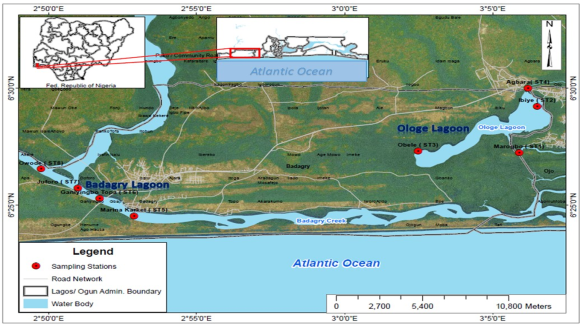
The study was carried out in the Olooge Lagoon segment, located in Lagos State, southwestern Nigeria. The lagoon spans approximately 64 km² and lies within the coordinates (Lat: 6°27′0″ North; Lon: 3°02′0″ East to Lat: 6°30′0″ North; Lon: 3°07′0″ East). It connects to Badagry Creek and eventually to the Atlantic Ocean, making it an integral part of the Lagos Lagoon system.
Olooge Lagoon is a vital water body for surrounding communities, supporting fisheries, transportation, and domestic water needs. However, it flows through and receives discharges.
Figure 1. Map showing study area and point of sample collection.
From residential settlements, agricultural areas, and major industrial zones, including the Agbara Industrial Estate. This makes the lagoon a potential recipient of various pollutants such as industrial effluents, agricultural runoff, and domestic sewage. Figure 1 shows the map of the study area. The lagoon has been reported to contain heavy metal pollutants due to increasing anthropogenic activities.
2.2. Water Sample Collection and Preservation
Water samples were collected from predetermined sampling stations across Olooge Lagoon during the dry season to minimize dilution effects and capture maximum contaminant concentrations. Sampling bottles (1 L capacity) were pre-cleaned with 10% hydrochloric acid (HCl) and thoroughly rinsed with deionized water following standard protocols . At each sampling point, bottles were rinsed three times with lagoon water before collection to prevent contamination.
In situ measurements of water temperature and pH were obtained using a calibrated HANNA HI-9828 multi-parameter meter. Samples were immediately sealed, labeled with sampling location and time, and stored in ice-cooled containers (4°C) during transportation to the laboratory. All samples were processed within 24 hours of collection to minimize chemical alterations .
2.3. Fish Sample Collection and Preparation
Three fish species were selected based on their ecological importance, local consumption rates, and representation of different trophic levels: Oreochromis niloticus (Nile tilapia), Chrysichthys nigrodigitatus (silver catfish), and Chinos fish. Fish samples (n = 15 per species) were obtained through cast net fishing and direct purchase from local fishermen to ensure freshness and minimize post-mortem contamination.
For each specimen, biometric measurements including total length (cm) and wet weight (g) were recorded. Fish were immediately placed in sterile polyethylene bags, stored in ice-packed coolers, and transported to the laboratory where they were frozen at -20°C until analysis . Prior to metal analysis, fish were thawed, and muscle tissues were excised using acid-washed stainless steel instruments to prevent external contamination.
2.4. Physicochemical Parameter Analysis
2.4.1. Temperature and pH
Water temperature was measured in situ using a mercury-in-glass thermometer calibrated to ±0.1°C accuracy. pH was determined using a HANNA HI-98107 pocket pH meter, calibrated with standard buffer solutions (pH 4.0, 7.0, and 10.0) before each measurement session .
2.4.2. Dissolved Oxygen (DO) and Biochemical Oxygen Demand (BOD)
DO was determined using the azide modification of Winkler's iodometric method (APHA, 2017). Briefly, 200 mL water samples were transferred to 300 mL BOD bottles, treated with 1 mL manganese sulfate solution and 1 mL alkaline iodide-azide reagent, then titrated with 0.025 N sodium thiosulfate to a clear endpoint. BOD₅ was measured by incubating samples at 20°C for five days in darkness, followed by DO determination as described above. BOD₅ was calculated as the difference between initial and final DO concentrations .
2.4.3. Chemical Oxygen Demand (COD)
COD was determined by the closed reflux dichromate method using potassium dichromate (K₂Cr₂O₇) as oxidizing agent under acidic conditions with silver sulfate catalyst . Samples were digested at 150°C for 2 hours, cooled, and the remaining dichromate was titrated with ferrous ammonium sulfate using ferroin indicator.
2.4.4. Total Dissolved Solids (TDS) and Conductivity
TDS and electrical conductivity were measured using a Milwaukee MW170 conductivity/TDS meter, calibrated with standard KCl solution (1,413 μS/cm). The probe was immersed in samples until readings stabilized, and values were recorded in mg/L (TDS) and μS/cm (conductivity)
2.4.5. Total Hardness
Total hardness was determined by EDTA titrimetric method . A 10 mL aliquot of water sample was buffered to pH 10.0, treated with Eriochrome Black T indicator, and titrated with 0.01 M EDTA solution until the color changed from wine red to blue, indicating the endpoint. Total hardness was calculated as mg/L CaCO3 equivalents.
2.4.6. Alkalinity
Total alkalinity was measured by acid titration method . A 50 mL sample was titrated with 0.05 M H₂SO₄ using phenolphthalein and methyl orange indicators sequentially. Alkalinity was expressed as mg/L CaCO3 equivalents.
2.4.7. Turbidity
Turbidity was measured using a UV-visible spectrophotometer (Shimadzu UV-1800) at 860 nm wavelength. Filtered deionized water served as blank for instrument zeroing. Results were expressed in Nephelometric Turbidity Units (NTU) .
2.4.8. Chloride
Chloride concentration was determined by argentometric titration method. Samples were titrated with standardized silver nitrate (AgNO3) solution using potassium chromate (K₂CrO₄) as indicator until a persistent reddish-brown endpoint appeared .
2.5. Heavy Metal Analysis
2.5.1. Sample Digestion
Water samples (50 mL) were acidified with concentrated HNO3 (65%, Merck) and heated at 95°C until volume reduced to approximately 15 mL. After cooling, samples were filtered through Whatman No. 42 filter paper and diluted to 50 mL with deionized water .
Fish tissue samples (1 g wet weight) were digested using a 3:1 mixture of concentrated HNO3 and HClO₄ in a digestion block at 180°C until complete dissolution and clear solution was obtained (typically 3-4 hours). Digests were cooled, filtered, and diluted to known volume with deionized water .
2.5.2. ICP-OES Analysis
Heavy metal concentrations were determined using an Agilent 720 ICP-OES equipped with CCD detector and axial torch configuration. The instrument provides simultaneous multi-element detection with wavelength coverage from 167-785 nm .
Calibration was performed using certified multi-element standard solutions (Merck, Germany) prepared through serial dilution from 1,000 mg/L stock solutions. Quality control included analysis of blank samples, duplicate samples, and certified reference materials (NIST 1643e for water; DORM-4 for fish tissue). Method detection limits (MDL) and limits of quantification (LOQ) were calculated as 3σ and 10σ, respectively, where σ is the standard deviation of seven replicate blank measurements.
Operating parameters were: RF power 1.2 kW, plasma gas flow 15 L/min, auxiliary gas flow 1.5 L/min, nebulizer gas flow 0.7 L/min, and sample uptake rate 1.5 mL/min. All measurements were performed in triplicate, and results were expressed as mg/L (water) or mg/kg dry weight (fish tissue).
2.6. Health Risk Assessment (HRA)
Health risk assessment was conducted following USEPA guidelines to evaluate potential non-carcinogenic and carcinogenic risks through ingestion and dermal contact routes .
2.6.1. Chronic Daily Intake (CDI)
CDI for water was calculated using:
CDI_ingestion (mg/kg/day) = (C × IR × EF × ED) / (BW × AT)
CDI_dermal (mg/kg/day) = (C × SA × K_p × ET × EF × ED × CF) / (BW × AT)
Where: C = metal concentration (mg/L or mg/kg), IR = ingestion rate (L/day or kg/day), EF = exposure frequency (days/year), ED = exposure duration (years), BW = body weight (kg), AT = averaging time (days), SA = skin surface area (cm2), K_p = dermal permeability coefficient (cm/h), ET = exposure time (h/day), CF = conversion factor.
Standard exposure parameters used were:
1) Adults: BW = 70 kg, IR_water = 2 L/day, IR_fish = 0.054 kg/day, EF = 365 days/year, ED = 30 years.
2) Children: BW = 15 kg, IR_water = 1 L/day, IR_fish = 0.025 kg/day, EF = 365 days/year, ED = 6 years.
2.6.2. Hazard Quotient (HQ) and Hazard Index (HI)
Non-carcinogenic risk was assessed using:
HQ = CDI / RfD
Where RfD is the reference dose (mg/kg/day) for each metal obtained from USEPA IRIS database .
HI = ΣHQ
HI represents cumulative non-carcinogenic risk from multiple metals. HI or HQ > 1 indicates potential adverse health effects .
2.6.3. Cancer Risk Index (CRI)
Carcinogenic risk was calculated using:
CRI = CDI × CSF
Where CSF is the cancer slope factor (mg/kg/day)⁻¹ for carcinogenic metals (As, Pb). CRI values between 10-6 and 10-4 are considered acceptable, while CRI > 10-4 indicates unacceptable cancer risk .
2.7. Quality Assurance and Quality Control
All glassware and plastic containers were soaked in 10% HNO3 for 24 hours and rinsed thoroughly with deionized water before use. Reagent blanks and procedural blanks were analyzed with each batch of samples. Analytical precision was evaluated through triplicate analysis, with relative standard deviation (RSD) maintained below 5%. Recovery rates for certified reference materials ranged from 92-108%, confirming method accuracy. Contamination was minimized through use of ultra-pure reagents and clean laboratory practices.
2.8. Statistical Analysis
Data were expressed as mean ± standard deviation. Statistical analyses were performed using SPSS version 26.0. One-way ANOVA was used to compare metal concentrations across fish species, followed by Tukey's post-hoc test for multiple comparisons. Pearson correlation analysis examined relationships between physicochemical parameters and metal concentrations. Significance was set at p < 0.05.
3. Results
3.1. Physicochemical Characteristics of Water
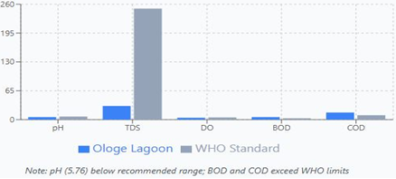
The physicochemical parameters of Olooge Lagoon water are presented in Figure 2. The pH value (5.76 ± 0.01) was below the WHO acceptable range of 6.5-8.5, indicating slightly acidic conditions. TDS (30.87 ± 0.12 mg/L), conductivity (60.40 ± 0.12 μS/cm), chloride (0.13 ± 0.03 mg/L), total hardness (96.39 ± 0.01 mg/L), alkalinity (115.40 ± 0.06 mg/L), and turbidity (3.83 ± 0.03 NTU) were all within permissible limits established by WHO.
DO concentration (4.23 ± 0.03 mg/L) fell below the WHO standard (5 mg/L) the minimum threshold (4 mg/L). COD (15.83 ± 0.01 mg/L) and BOD₅ (5.77 ± 0.03 mg/L) exceeded WHO limits suggesting moderate organic pollution.
Figure 2. Physicochemical Parameters of Olooge Lagoon water versus WHO Standards.
3.2. Heavy Metal Concentrations in Water
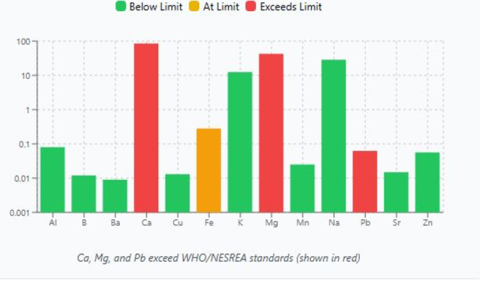
Figure 3 presents heavy metal concentrations in Olooge Lagoon water. Fourteen metals were detected: nine essential (B, Ca, Cu, Fe, K, Mg, Mn, Na, Zn) and five non-essential (Al, Ba, P, Pb, Sr). Most metals (Al, B, Ba, Cu, K, Mn, Na, P, Sr, Zn) were below regulatory limits. Iron (Fe) concentration was within acceptable limits. However, calcium (Ca), magnesium (Mg), and lead (Pb) exceeded both WHO and NESREA standards, with Pb showing particular concern due to its toxicity.
Figure 3. Heavy Metals Concentrations in Water (mg/l) – Compliance Status.
3.3. Heavy Metal Bioaccumulation in Fish Species
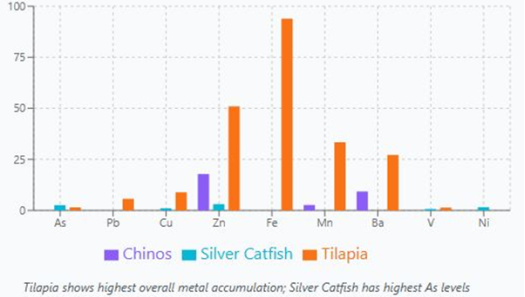
Heavy metal concentrations in three fish species (Oreochromis niloticus, Chrysichthys nigrodigitatus, and Chinos) are illustrated in Figure 3. Nineteen metals were analyzed, comprising eleven essential (Na, Fe, Cu, Mg, K, Ca, Mn, V, Zn, Ni, Se) and eight non-essential elements (Ba, Pb, Ag, Be, Tl, As, Al, U).
Chinos fish: Ten metals (Na, Mg, K, Ca, Ba, Mn, Al, Se, U, and Zn) were detected. All except Zn exceeded WHO and NESREA limits. Zn concentration was within acceptable range.
Silver catfish (C. nigrodigitatus): Fourteen metals were detected. Six metals (Cu, As, Se, Tl, Ag, U) exceeded permissible limits, while four (K, Be, Ni, Zn) remained below limits. Vanadium (V) was at the threshold level.
Tilapia (O. niloticus): This species showed the most extensive contamination with fifteen metals detected. Thirteen metals (Na, Mg, K, Ca, Ba, Mn, Fe, Cu, Zn, Al, As, Pb, U) exceeded regulatory standards. Only vanadium (V) and silver (Ag) were within or at acceptable limits.
Notably, chromium (Cr), cadmium (Cd), thorium (Th), and cobalt (Co) were below detection limits in all fish species analyzed.
Figure 4. Heavy Metals bioaccumulations in fish species (mg/kg dry weight).
3.4. Health Risk Assessment for Water
3.4.1. Non-Carcinogenic Risk from Water
Table 1 presents CDI, HQ, and HI values for heavy metals in water through ingestion and dermal exposure pathways. For adults, individual HQ values for all metals (B, Ba, Cu, Fe, Mn, Pb, Sr, Zn) via both routes were below 1.0, except for Pb through ingestion (HQ = 0.5264). The cumulative HI through ingestion (0.6905) and dermal contact (0.1606) remained below the safety threshold for adults.
For children, Pb showed an HQ of 1.1167 through ingestion, exceeding the safety limit. The cumulative HI for children via ingestion was 1.4646, surpassing the acceptable threshold and indicating potential non-carcinogenic health risks. Dermal HI for children (0.0006) was negligible.
Table 1. Health risk assessment of heavy metals in Olooge Lagoon water.

Receptor

Metal

CDI (ingestion)

CDI (dermal)

HQ (ingestion)

HQ (dermal)

Adult

B

0.0004

2.3E-05

0.0019

0.0001

Ba

0.0003

1.7E-05

0.0014

0.0002

Cu

0.0004

2.5E-05

0.0102

0.0021

Fe

0.0096

0.0006

0.1365

0.0042

Mn

0.0008

5.2E-05

0.0061

0.0258

Pb

0.0021

0.0001

0.5264

0.1282

Sr

0.0005

3.1E-05

0.0017

0

Zn

0.0019

0.0001

0.0063

0.0002

HI

0.6905

0.1606

Children

B

0.0008

0.0004

0.0040

1.5E-05

Ba

0.0006

0.0003

0.0030

1.1E-05

Cu

0.0009

0.0005

0.0217

1.6E-05

Fe

0.0203

0.0113

0.2895

0.0004

Mn

0.0018

0.0010

0.0129

3.4E-05

Pb

0.0045

0.0025

1.1167

8.3E-05

Sr

0.0011

0.0006

0.0036

1.9E-05

Zn

0.0040

0.0022

0.0133

7.5E-05

HI

1.4646

0.0006

3.4.2. Carcinogenic Risk from Water
Table 2 shows CRI values for Pb in water. Through ingestion, CRI values were 1.895×10⁻⁵ (adults) and 4.02×10⁻⁵ (children), both below the acceptable threshold (1×10⁻⁴). However, dermal CRI values exceeded safe limits: 1.92×10⁻⁴ for adults and 3.75×10⁻³ for children, indicating significant carcinogenic risk, particularly for children.
Table 2. Cancer risk index for lead in water.

Receptor

CRI (ingestion)

CRI (dermal)

Adult

1.895×10⁻⁵

1.92×10⁻⁴

Children

4.02×10⁻⁵

3.75×10⁻³

3.5. Health Risk Assessment for Fish
3.5.1. Non-Carcinogenic Risk from Fish Consumption
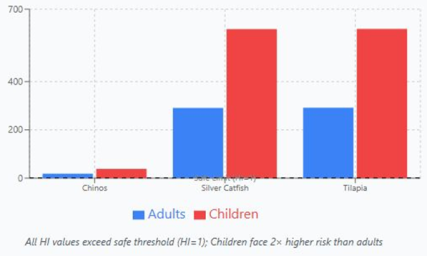
Health risk assessment results for fish consumption. HI values dramatically exceeded safety thresholds across all species as shown below:
1) Chinos: Adult HI = 18.096; Children HI = 38.385
2) Silver catfish: Adult HI = 290.965; Children HI = 617.198
3) Tilapia: Adult HI = 291.294; Children HI = 617.898
These extreme HI values indicate severe non-carcinogenic health risks. Children consistently showed higher risk levels than adults. In Chinos, zinc (Zn), manganese (Mn), and barium (Ba) were primary contributors. Silver catfish contamination was dominated by arsenic (As), nickel (Ni), and vanadium (V). Tilapia showed widespread contamination with elevated HQ values for As, Pb, Cu, Zn, Fe, Mn, and Ba.
Figure 5. Hazard index (HI) for fish consumption-Non- carcinogenic Risk.
3.5.2. Carcinogenic Risk from Fish Consumption
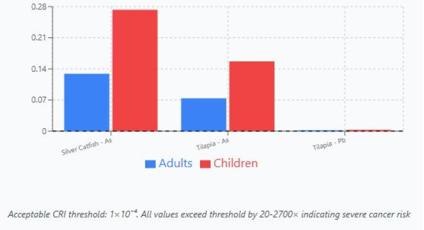
CRI values for carcinogenic metals (As and Pb) in fish. All CRI values substantially exceeded the acceptable threshold (1×10⁻⁴) as shown below:
Silver catfish:
1) Adults: As CRI = 0.129
2) Children: As CRI = 0.273
Tilapia:
1) Adults: As CRI = 0.074; Pb CRI = 0.002
2) Children: As CRI = 0.157; Pb CRI = 0.003
These elevated CRI values confirm serious carcinogenic risks from fish consumption, with children facing approximately double the cancer risk compared to adults.
Figure 6. Cancer Risk Index (CRI) from fish consumption.

Table 3. Cancer risk index for fish species.

Fish Species

Age Group

As (CRI)

Pb (CRI)

Chinos

Adult

ND

ND

Children

ND

ND

Silver Catfish

Adult

0.129

ND

Children

0.273

ND

Tilapia

Adult

0.074

0.002

Children

0.157

0.003

ND = Not detected or no slope factor available
Table 4. Comparison of Health Risk Assessment Results.

Matrix

Age group

HI Value

Risk Level

Primary Metals

Water (ingestion)

Adult

0.69

Acceptable

Pb, Fe

Water (ingestion)

Children

1.46

Unacceptable

Pb (HQ=1.12)

Chinos Fish

Children

38.4

High Risk

Ba, Zn, Mn

Silver Catfish

Children

617.2

Extreme Risk

As, Ni, V

Tilapia

Children

617.9

Extreme Risk

As, Pb, Mn, Cu

HI>1 indicates potential non-carcinogenic adverse health effects
4. Discussion
4.1. Physicochemical Water Quality and Environmental Implications
The physicochemical analysis of Olooge Lagoon revealed a slightly acidic pH (5.76), deviating from the optimal range for aquatic ecosystems (6.5-8.5) as recommended by WHO and NESREA . Acidic conditions in aquatic environments enhance the solubility and bioavailability of toxic metals, particularly lead, aluminum, and manganese, thereby intensifying their toxicity to aquatic organisms and increasing human exposure risks . The observed acidity may result from multiple sources including industrial acid discharges from the Agbara Industrial Estate, organic matter decomposition releasing humic acids, atmospheric deposition of acidic pollutants, and agricultural runoff containing acidic fertilizers .
Acidic waters (pH < 6.5) have been documented to impair gill function in fish, disrupt osmoregulation, reduce reproductive success, and compromise immune responses, leading to increased susceptibility to diseases . The persistent acidic condition in Olooge Lagoon warrants immediate attention and implementation of pH stabilization measures.
The low TDS (30.87 mg/L) and conductivity (60.40 μS/cm) values suggest minimal dissolved ionic content, which may indicate limited anthropogenic salt inputs or effective dilution by freshwater inflows . While these low values typically suggest good water quality, the combination of low alkalinity buffering capacity and acidic pH creates conditions favorable for metal mobilization and bioavailability . The chloride concentration (0.13 mg/L) was remarkably low, indicating negligible saline intrusion and suggesting that the lagoon maintains predominantly freshwater characteristics despite its connection to coastal waters.
Total hardness (96.39 mg/L) classified the lagoon water as "soft" according to standard water quality classifications . Although soft water reduces scaling in distribution systems, it exhibits greater corrosive potential and may enhance leaching of metals from sediments and geological substrates . The moderate alkalinity (115.40 mg/L), while within WHO standards, provides limited buffering capacity against pH fluctuations, making the system vulnerable to acidification from continued pollutant inputs .
The low turbidity (3.83 NTU) indicates relatively clear water with minimal suspended particulate matter, which benefits light penetration for photosynthetic organisms but may also suggest reduced natural filtration of contaminants by suspended particles . The dissolved oxygen concentration (4.23 mg/L), while marginally above the NESREA threshold, falls below optimal levels for supporting diverse aquatic life (≥5 mg/L) as recommended by WHO . Reduced DO levels often indicate organic pollution, eutrophication, or inadequate water circulation .
The elevated BOD₅ (5.77 mg/L) and COD (15.83 mg/L) values, while within NESREA limits, confirm the presence of biodegradable organic matter and chemical pollutants, likely originating from domestic sewage, agricultural runoff, and industrial effluents . These values indicate moderate organic pollution requiring continuous monitoring to prevent progression toward eutrophic conditions that could precipitate fish kills and ecosystem collapse.
4.2. Heavy Metal Contamination in Water
The detection of elevated calcium (Ca) and magnesium (Mg) concentrations, while concerning relative to standards, likely reflects natural geological contributions from carbonate-rich substrates and soil leaching rather than anthropogenic pollution . However, their elevated levels contribute to water hardness and may interact synergistically with toxic metals, influencing their speciation and bioavailability .
The most critical finding in water analysis was the elevated lead (Pb) concentration exceeding WHO and NESREA standards. Lead is a non-essential, highly toxic heavy metal with no known biological function and documented neurotoxic, nephrotoxic, and carcinogenic properties even at trace concentrations . Potential sources of lead contamination in Olooge Lagoon include industrial effluents from metal processing and battery manufacturing facilities in the Agbara Industrial Estate, leaching from lead-based paints and materials, atmospheric deposition from vehicular emissions, and improper disposal of electronic waste .
Lead's persistence in aquatic environments and tendency to bioaccumulate through food chains pose serious ecological and human health threats . In aquatic organisms, lead exposure causes oxidative stress, DNA damage, immunosuppression, and reproductive impairment . Human exposure through drinking water or fish consumption leads to neurological deficits, particularly in developing children, cardiovascular disease, kidney dysfunction, and developmental delays .
The presence of other metals (Fe, Al, Ba, Sr) within or below permissible limits suggests variable pollution sources and complex biogeochemical processes controlling metal fate and transport in the lagoon. Iron's presence at acceptable levels may reflect natural weathering of iron-rich sediments, while aluminum, though below limits in water, showed concerning accumulation in fish tissues, indicating potential bioavailability issues not captured by water analysis alone .
4.3. Heavy Metal Bioaccumulation in Fish Species
The extensive heavy metal contamination detected across all three fish species confirms significant bioaccumulation and biomagnification occurring within the Olooge Lagoon food web. The species-specific variation in metal accumulation patterns reflects differences in feeding ecology, habitat preferences, physiological characteristics, and trophic positions .
Tilapia (Oreochromis niloticus) exhibited the most severe contamination profile with thirteen metals exceeding regulatory limits. As an omnivorous species and opportunistic bottom feeder, tilapia is particularly susceptible to metal uptake from contaminated sediments and diverse food sources . The high surface area of gills in relation to body mass and continuous sediment contact during feeding behavior facilitate metal absorption . The elevated arsenic (As), lead (Pb), aluminum (Al), and iron (Fe) concentrations in tilapia muscle tissue are especially concerning given this species' popularity in local markets and high consumption rates among surrounding communities .
Silver catfish (Chrysichthys nigrodigitatus) showed particularly elevated arsenic levels, which may be attributed to its benthic feeding habits and preference for invertebrates and detritus that concentrate metals from sediments . The detection of toxic metalloids like arsenic and thallium (Tl) at concentrations exceeding safe limits confirms exposure to industrial pollutants, as these elements are commonly associated with mining operations, smelting activities, and chemical manufacturing .
Chinos fish demonstrated significant accumulation of uranium (U), selenium (Se), aluminum (Al), and barium (Ba). Uranium presence in freshwater fish is unusual and suggests specific industrial contamination sources, possibly from phosphate fertilizer production, petroleum refining, or electronic waste, all of which have been reported in the vicinity of the study area . Selenium, while essential at low concentrations, becomes toxic at elevated levels, causing reproductive failure, teratogenic effects, and mortality in fish and wildlife .
The absence of detectable chromium (Cr), cadmium (Cd), thorium (Th), and cobalt (Co) in all fish species, despite their common occurrence in industrial effluents, may reflect: (1) low bioavailability due to complexation with organic matter or precipitation as insoluble compounds; (2) efficient physiological exclusion or detoxification mechanisms in these species; (3) recent contamination events that have not yet manifested in tissue accumulation; or (4) genuine absence from pollution sources .
The bioaccumulation of essential metals (Cu, Zn, Fe, Mn) at toxic levels demonstrates that even biologically necessary elements pose health risks when environmental concentrations overwhelm homeostatic regulation mechanisms . The synergistic and antagonistic interactions among multiple metals complicate toxicity predictions, as co-exposure can enhance or ameliorate individual metal effects through competition for uptake sites, induction of metallothioneins, and oxidative stress pathways .
4.4. Human Health Risk Assessment
4.4.1. Non-Carcinogenic Risks
The health risk assessment revealed alarming disparities between adults and children, with children facing substantially higher risks across all exposure scenarios. For water exposure, the HI value for children (1.4646) exceeded the safety threshold, primarily driven by lead contamination. This finding aligns with extensive epidemiological evidence demonstrating children's heightened vulnerability to environmental toxicants due to higher metabolic rates, greater water intake per unit body weight, developing organ systems, and hand-to-mouth behaviors that increase exposure .
The exceedance of HQ = 1 for lead in children through ingestion (HQ = 1.1167) indicates that even at current exposure levels, adverse health effects are probable. Lead's neurotoxic effects in children are particularly insidious, as they can occur at exposure levels previously considered safe, manifesting as reduced IQ, attention deficits, behavioral problems, and impaired academic performance . The lack of a threshold for lead's neurodevelopmental effects means that any exposure carries risk, making the observed contamination a serious public health concern.
Fish consumption posed dramatically higher risks than water contact, with HI values reaching 617.898 in children consuming tilapia. These extreme values, orders of magnitude above the safety threshold, indicate severe health hazards and urgent need for consumption advisories. The predominance of arsenic in driving these risks in silver catfish and tilapia is consistent with global patterns of arsenic contamination in aquatic food webs and its well-documented toxicity .
Arsenic exposure through fish consumption causes multiple adverse effects including peripheral neuropathy, skin lesions (hyperkeratosis and hyperpigmentation), cardiovascular disease, diabetes, and developmental toxicity . The elevated hazard quotients for copper, zinc, and manganese in fish samples, while these are essential nutrients, reflect the principle that any substance becomes toxic at sufficiently high doses (Paracelsus principle), and that chronic overexposure to essential metals can overwhelm homeostatic mechanisms leading to organ dysfunction .
4.4.2. Carcinogenic Risks
The cancer risk assessment revealed unacceptable lifetime cancer risks, particularly through dermal contact with lagoon water and consumption of contaminated fish. The dermal CRI for lead in children (3.75×10⁻³) was nearly 40-fold higher than the upper acceptable limit, indicating that even incidental skin contact during swimming, bathing, or fishing activities poses significant cancer risk.
The carcinogenic risks from fish consumption were even more pronounced, with arsenic CRI values in silver catfish reaching 0.273 for children—more than 2,700 times the acceptable threshold. These findings are consistent with the International Agency for Research on Cancer (IARC) classification of inorganic arsenic as a Group 1 human carcinogen, with sufficient evidence for causing cancers of the skin, lung, bladder, liver, and kidney .
The combined carcinogenic risks from lead and arsenic may be additive or syneristic, as both metals induce oxidative stress, DNA damage, and epigenetic modifications that promote carcinogenesis . Children's elevated cancer risks reflect both their higher exposure rates and their greater lifetime for cancer development following early-life exposure to carcinogens, as cancer latency periods often span decades .
4.5. Comparative Analysis with Other Contaminated Systems
The contamination levels and health risks observed in Olooge Lagoon are comparable to or exceed those reported in other severely polluted aquatic systems globally. Studies in Bangladesh have documented arsenic concentrations in fish from contaminated rivers ranging from 0.05-2.5 mg/kg, with similar HI values exceeding 100 in some cases . Research on Nigerian water bodies including Lagos Lagoon, Epe Lagoon, and rivers in the Niger Delta has shown lead concentrations in fish ranging from 0.5-15 mg/kg, comparable to levels observed in this study .
However, the unique aspect of Olooge Lagoon contamination is the simultaneous elevation of multiple metals across different toxicological classes (essential nutrients, non-essential toxicants, and metalloids), creating complex mixture toxicity scenarios that are poorly understood and likely underestimated by additive risk models . The presence of uranium in fish tissue is particularly unusual for tropical freshwater systems and suggests contamination sources that merit specific investigation.
4.6. Ecological Implications and Ecosystem Health
Beyond human health concerns, the observed metal contamination threatens the ecological integrity of Olooge Lagoon. Heavy metals exert multiple adverse effects on aquatic ecosystems including: (1) direct toxicity to phytoplankton, zooplankton, and macroinvertebrates at the base of food webs; (2) bioaccumulation and biomagnification through trophic levels; (3) sublethal effects on fish reproduction, growth, and behavior; (4) disruption of microbial communities essential for nutrient cycling; and (5) loss of biodiversity and ecosystem resilience .
The acidic pH combined with metal contamination creates synergistic stressors that compound toxicity. Fish exposed to metals under acidic conditions show enhanced metal uptake, increased oxidative stress, and reduced compensatory capacity compared to neutral pH conditions . This pH-metal interaction may explain the extensive bioaccumulation observed despite moderate water column concentrations for some metals.
The contamination of multiple fish species occupying different ecological niches (tilapia as omnivore/detritivore, catfish as benthic predator, Chinos as mid-water feeder) indicates widespread ecosystem contamination affecting all trophic levels. This pattern suggests that both sediment and water column exposure pathways are active, and that contaminant cycling through the food web has established persistent contamination .
4.7. Pollution Sources and Management Implications
The metal contamination profile in Olooge Lagoon reflects multiple pollution sources requiring differentiated management strategies:
1) Industrial effluents: The proximity to Agbara Industrial Estate, housing chemical plants, metal processing facilities, and manufacturing units, represents the primary source of heavy metals including lead, arsenic, chromium, and various metalloids . Many industries lack adequate effluent treatment systems or discharge partially treated wastewater directly into tributary streams feeding the lagoon.
2) Agricultural runoff: Intensive agriculture in the watershed contributes phosphate fertilizers (source of uranium), pesticides (arsenic-based compounds), and sediments enriched with metals from soil amendments .
3) Domestic sewage: Untreated or inadequately treated municipal wastewater introduces organic matter (explaining elevated BOD/COD) and metals from household products, pharmaceuticals, and personal care products .
4) Electronic waste: Informal e-waste recycling activities in the region release numerous toxic metals through burning, acid leaching, and improper disposal of components containing lead, mercury, cadmium, and beryllium .
5) Atmospheric deposition: Vehicular emissions, industrial air pollution, and long-range transport of pollutants contribute to metal loading through wet and dry deposition .
4.8. Study Limitations
This study has several limitations that should be acknowledged. The single-season sampling approach may not capture seasonal variations in metal concentrations influenced by rainfall patterns, river discharge, and temperature fluctuations . The limited spatial coverage (specific sampling stations) may not represent the full heterogeneity of contamination across the lagoon. Fish sample sizes, while adequate for screening-level risk assessment, could be expanded to better characterize population-level variability and size-dependent accumulation patterns.
The health risk assessment relied on standard exposure parameters from USEPA, which may not accurately reflect local consumption patterns, where fish intake rates in fishing communities often exceed assumed values . Additionally, the risk assessment considered only ingestion and dermal routes, excluding inhalation exposure to aerosolized water and volatilized metals, which may contribute to total exposure in some scenarios.
5. Conclusions
This comprehensive investigation of Olooge Lagoon revealed severe heavy metal contamination posing unacceptable health risks to surrounding communities. The findings include:
1) Water quality deterioration: The lagoon exhibits acidic pH (5.76) below recommended standards, with lead, calcium, and magnesium exceeding regulatory limits. Elevated BOD and COD indicate organic pollution requiring intervention.
2) Extensive fish contamination: All three examined species (O. niloticus, C. nigrodigitatus, and Chinos) showed bioaccumulation of multiple heavy metals, with 10-13 metals per species exceeding WHO/NESREA safety limits. Tilapia demonstrated the most severe contamination profile.
3) Critical health risks: Health risk assessment revealed:
Non-carcinogenic risks: HI values in fish-consuming populations reached 617.898 for children, indicating extreme hazard.
Lead in water: HQ exceeded 1 for children through ingestion.
Carcinogenic risks: CRI values for arsenic and lead dramatically exceeded acceptable thresholds (up to 2,700× safe limits)
Children face 2-3 times higher risks than adults across all exposure scenarios.
4) Urgent public health crisis: The magnitude of risks, particularly from fish consumption, constitutes a public health emergency requiring immediate intervention to prevent widespread poisoning and cancer incidence in dependent communities.
5) Ecosystem degradation: The contamination threatens not only human health but also the ecological integrity and biodiversity of the lagoon, potentially leading to fishery collapse and loss of ecosystem services.
These findings establish Olooge Lagoon as a critically contaminated aquatic system requiring urgent remediation and comprehensive management interventions.
6. Recommendations
Based on the findings of this study, the following recommendations are proposed:
6.1. Immediate Actions
1) Public health advisory: Issue immediate fish consumption advisories for Olooge Lagoon, particularly warning vulnerable populations (pregnant women, children, elderly) to avoid or severely limit consumption of tilapia and silver catfish.
2) Community notification: Conduct community outreach programs to inform residents about contamination risks, safe fish preparation methods, and alternative protein sources.
3) Water use restrictions: Prohibit use of lagoon water for drinking, cooking, or bathing without appropriate treatment. Provide alternative clean water sources to dependent communities.
4) Biomedical screening: Establish health screening programs to assess blood lead and arsenic levels in high-risk populations, particularly children residing near the lagoon, with medical intervention as needed.
6.2. Pollution Control and Remediation
5) Industrial effluent regulation: Enforce strict compliance with effluent discharge standards for all industries in the Agbara Industrial Estate. Install continuous monitoring systems and impose penalties for violations.
6) Wastewater treatment infrastructure: Develop and implement comprehensive sewage collection and treatment systems for communities discharging into the lagoon watershed.
7) Sediment remediation: Conduct detailed sediment contamination assessment and implement remediation strategies such as dredging of hotspots, capping, or in-situ stabilization where appropriate.
8) pH correction: Investigate feasibility of pH adjustment through liming or other buffering strategies to reduce metal bioavailability and toxicity.
6.3. Long-term Management
9) Continuous monitoring program: Establish regular monitoring of water quality, sediment, and biota for heavy metals and other pollutants, with data publicly accessible to stakeholders.
10) Catchment management plan: Develop integrated watershed management approach addressing point and non-point pollution sources, including agricultural best management practices and stormwater controls.
11) Regulatory framework: Strengthen and enforce environmental regulations governing industrial operations, waste disposal, and e-waste management in the region.
12) Restoration initiatives: Implement ecological restoration programs including wetland rehabilitation, riparian buffer zones, and aquatic vegetation establishment to enhance natural attenuation of pollutants.
6.4. Research Needs
13) Extended investigation: Conduct comprehensive spatial and temporal studies covering multiple seasons and expanded sampling locations to fully characterize contamination patterns.
14) Source apportionment: Perform source identification studies using isotopic ratios, multivariate statistics, and pollution indices to identify specific contamination sources requiring prioritized intervention.
15) Speciation analysis: Investigate chemical speciation of metals in water and sediments to better understand bioavailability and develop targeted remediation strategies.
16) Food web studies: Conduct comprehensive food web analysis including sediments, invertebrates, and multiple fish species across size classes to understand biomagnification dynamics.
17) Toxicological studies: Perform controlled laboratory studies examining mixture toxicity effects and synergistic interactions among co-occurring metals.
18) Socioeconomic assessment: Evaluate economic impacts of contamination on fisheries, health costs, and livelihoods to support cost-benefit analysis of remediation investments.
6.5. Policy and Institutional Strengthening
19) Inter-agency coordination: Establish multi-stakeholder committee including environmental agencies, health departments, industrial representatives, and community groups to oversee lagoon management.
20) Legal action: Pursue enforcement actions against major polluters, with liability for cleanup costs and compensation for affected communities.
21) Public participation: Implement participatory monitoring programs engaging local communities in data collection and management decision-making.
22) International support: Seek technical and financial assistance from international environmental organizations for remediation and capacity building.
Implementation of these recommendations requires coordinated efforts among government agencies, industries, research institutions, and civil society. The severity of contamination documented in this study demands urgent action to prevent continued human exposure and ecological degradation. Delay in intervention will result in escalating health costs, irreversible ecosystem damage, and loss of vital resources for dependent communities.
Abbreviations

HRA

Health Risk Assessment

ICP-OES

Inductively Coupled Plasma Optical Emission Spectroscopy

HQ

Hazard Quotient

HI

Hazard Index

CRI

Cancer Risk Index

WHO

World Health Organization

NESREA

National Environmental Standards and Regulations Enforcement Agency

USEPA

United States Environmental Protection Agency

APHA

American Public Health Association

DO

Dissoved Oxygen

BOD

Biochemical Oxygen Demand

COD

Chemical Oxygen Demand

TDS

Total Dissolved Solids

CDI

Chronic Daily Intake

CSF

Cancer Slope Factor

IARC

International Agency for Research on Cancer

Acknowledgments
I would like to express my gratitude to all the technologists in the Central Research Laboratory of University of Ilesa and National Institute of Stored Products and Research, Ilorin for their valuable contributions and support through out the research period.
Author Contributions
Fatukasi Bolade Adetutu: Conceptualization, Funding acquisition, Methodology, Writing – original draft
Fawole Olatunde Olubanjo: Supervision, Visualization, Writing – review & editing
Oluyide Olubusayo Odunola: Visualization, Writing – original draft
Adenigba Victoria Olaide: Visualization, Writing – original draft
Oladapo Olubunmi Omoniyi: Data curation, Software, Validation
Data Availability Statement
The datasets generated and analyzed during this study are available from the corresponding author upon reasonable request.
Conflicts of Interest
The authors declare no conflicts of interest.
References
[1] Abowei, J. F. N. (2010). Salinity, dissolved oxygen, pH and surface water temperature conditions in Nkoro River, Niger Delta, Nigeria. Advance Journal of Food Science and Technology, 2(1), 36-40.
[2] Adelekan, B. A and Abegunde, K. D. (2011). Heavy metals contamination of soil and groundwater at automobile mechanic villages in Ibadan, Nigeria. International Journal of Physical Sciences, 6(5), 1045-1058.
[3] Aderinola, O. J., Clarke, E. O., Olarinmoye, O. M., Kusemiju, V and Anatekhai, M. A. (2018). Heavy metals in surface water, sediments, fish and periwinkles of Lagos Lagoon. American-Eurasian Journal of Agriculture and Environmental Sciences, 9(2), 209-214.
[4] Adeyemi, D., Ukpo, G., Anyakora, C and Unyimadu, J. P. (2009). Organochlorine pesticide residues in fish samples from Lagos Lagoon, Nigeria. American Journal of Environmental Sciences, 5(1), 37-40.
[5] Akinsanya, B., Ayanda, I. O., Fadipe, A. O and Onwuka, B. (2020). Bioaccumulation of heavy metals in fish (Hydrocynus forskahlii, Hyperopisus bebe occidentalis and Clarias gariepinus) organs from Lekki Lagoon, Lagos, Nigeria. Journal of Food Composition and Analysis, 94, 103654.
[6] Akkaraboyina, M. K and Raju, B. S. N. (2012). A Comparative study of water quality indices of river Godavari. International Journal of Engineering Research and Development, 2(3), 29-34.
[7] Ali, H and Khan, E. (2019). Trophic transfer, bioaccumulation, and biomagnification of non-essential hazardous heavy metals and metalloids in food chains/webs—Concepts and implications for wildlife and human health. Human and Ecological Risk Assessment, 25(6), 1353-1376.
[8] Ali, H., Khan, E and Ilahi, I. (2019). Environmental chemistry and ecotoxicology of hazardous heavy metals: Environmental persistence, toxicity, and bioaccumulation. Journal of Chemistry, 2019, 6730305.
[9] Anderson, L. M., Diwan, B. A., Fear, N. T and Roman, E. (2000). Critical windows of exposure for children's health: Cancer in human epidemiological studies and neoplasms in experimental animal models. Environmental Health Perspectives, 108(Suppl 3), 573-594.
[10] APHA (2017). Standard Methods for the Examination of Water and Wastewater (23rd ed.). American Public Health Association, Washington, DC.
[11] Atafar, Z., Mesdaghinia, A., Nouri, J., Homaee, M., Yunesian, M., Ahmadimoghaddam, M and Mahvi, A. H. (2010). Effect of fertilizer application on soil heavy metal concentration. Environmental Monitoring and Assessment, 160(1-4), 83-89.
[12] Atkinson, C. A., Jolley, D. F and Simpson, S. L. (2007). Effect of overlying water pH, dissolved oxygen, salinity and sediment disturbances on metal release and sequestration from metal contaminated marine sediments. Chemosphere, 69(9), 1428-1437.
[13] Ayeni, O. O., Ndahi, N. P., Atolaiye, B. O and Akpor, O. B. (2019). Characterization of abattoir wastewater in Mushin, Lagos State, Nigeria. Nigerian Journal of Technology, 38(1), 252-259.
[14] Ayoola, S. O and Kuton, M. P. (2009). Seasonal variation in fish abundance and physico-chemical parameters of Lagos Lagoon, Nigeria. African Journal of Environmental Science and Technology, 3(5), 149-156.
[15] Bearer, C. F. (1995). How are children different from adults? Environmental Health Perspectives, 103(Suppl 6), 7-12.
[16] Bello-Olusoji, O. A., Shogbesan, O. V., Adekoya, E., Dim, L. A and Akinyemi, O. (2019). Heavy metal contamination in fish from Lagos Lagoon and associated human health risk. Journal of Applied Sciences and Environmental Management, 23(3), 491-496.
[17] Bhattacharya, P., Welch, A. H., Stollenwerk, K. G., McLaughlin, M. J., Bundschuh, J and Panaullah, G. (2007). Arsenic in the environment: Biology and chemistry. Science of the Total Environment, 379(2-3), 109-120.
[18] Boskabady, M., Marefati, N., Farkhondeh, T., Shakeri, F., Farshbaf, A and Boskabady, M. H. (2018). The effect of environmental lead exposure on human health and the contribution of inflammatory mechanisms, a review. Environment International, 120, 404-420.
[19] Boss, C. B and Fredeen, K. J. (2004). Concepts, Instrumentation and Techniques in Inductively Coupled Plasma Optical Emission Spectrometry (3rd ed.). PerkinElmer, USA.
[20] Bridgen, K., Labunska, I., Santillo, D and Johnston, P. (2005). Chemical Contamination at E-waste Recycling and Disposal Sites in Accra and Korforidua, Ghana. Greenpeace Research Laboratories Technical Note 10/2005.
[21] Canli, M and Atli, G. (2003). The relationships between heavy metal (Cd, Cr, Cu, Fe, Pb, Zn) levels and the size of six Mediterranean fish species. Environmental Pollution, 121(1), 129-136.
[22] Chapman, P. M., Wang, F., Germano, J. D and Batley, G. (2000). Pore water testing and analysis: The good, the bad, and the ugly. Marine Pollution Bulletin, 44(5), 359-366.
[23] Chung, J. Y., Yu, S. D. and Hong, Y. S. (2014). Environmental source of arsenic exposure. Journal of Preventive Medicine and Public Health, 47(5), 253-257.
[24] Dallinger, R., Prosi, F., Segner, H and Back, H. (1987). Contaminated food and uptake of heavy metals by fish: A review and a proposal for further research. Oecologia, 73(1), 91-98.
[25] DeForest, D. K., Brix, K. V., Tear, L. M. and Adams, W. J. (2018). Multiple linear regression models for predicting chronic aluminum toxicity to freshwater aquatic organisms and developing water quality guidelines. Environmental Toxicology and Chemistry, 37(1), 80-90.
[26] Diaz, R. J and Rosenberg, R. (2008). Spreading dead zones and consequences for marine ecosystems. Science, 321(5891), 926-929.
[27] Driscoll, C. T and Schecher, W. D. (1990). The chemistry of aluminum in the environment. Environmental Geochemistry and Health, 12(1-2), 28-49.
[28] Driscoll, C. T., Lawrence, G. B., Bulger, A. J., Butler, T. J., Cronan, C. S., Eagar, C., Lambert, K. F., Likens, G. E., Stoddard, J. L and Weathers, K. C. (2001). Acidic deposition in the northeastern United States: Sources and inputs, ecosystem effects, and management strategies. BioScience, 51(3), 180-198.
[29] Ercal, N., Gurer-Orhan, H and Aykin-Burns, N. (2001). Toxic metals and oxidative stress part I: Mechanisms al.
[30] Evans, D. H., Piermarini, P. M and Choe, K. P. (2005). The multifunctional fish gill: Dominant site of gas exchange, osmoregulation, acid-base regulation, and excretion of nitrogenous waste. Physiological Reviews, 85(1), 97-177.
[31] Fernández, N and Esteban, M. A. (1999). The immune system of fish: Innate immunity and humoral responses. Microbiological Reviews, 25, 49-56.
[32] Gaetke, L. M and Chow, C. K. (2003). Copper toxicity, oxidative stress, and antioxidant nutrients. Toxicology, 189(1-2), 147-163.
[33] Genchi, G., Sinicropi, M. S., Lauria, G., Carocci, A and Catalano, A. (2020). The effects of cadmium toxicity. International Journal of Environmental Research and Public Health, 17(11), 3782.
[34] Gerhardt, A. (1992). Effects of subacute doses of iron (Fe) on Leptophlebia marginata (Insecta: Ephemeroptera). Freshwater Biology, 27(1), 79-84.
[35] Griboff, J., Wunderlin, D. A and Monferran, M. V. (2017). Metals, As and Se determination by inductively coupled plasma-mass spectrometry (ICP-MS) in edible fish collected from three eutrophic reservoirs. Science of the Total Environment, 579, 950-960.
[36] Gu, Y. G., Huang, H. H and Lin, Q. (2016). Concentrations and human health implications of heavy metals in wild aquatic organisms captured from the core area of Daya Bay's fishery resource reserve, South China Sea. Environmental Toxicology and Pharmacology, 45, 90-94.
[37] Has-Schön, E., Bogut, I and Strelec, I. (2015). Heavy metal profile in five fish species included in human diet, domiciled in the end flow of River Neretva (Croatia). Archives of Environmental Contamination and Toxicology, 54(1), 75-83.
[38] Hem, J. D. (1985). Study and Interpretation of the Chemical Characteristics of Natural Water (3rd ed.). U. S. Geological Survey Water-Supply Paper 2254.
[39] Hogstrand, C and Wood, C. M. (1998). Toward a better understanding of the bioavailability, physiology, and toxicity of silver in fish: Implications for water quality criteria. Environmental Toxicology and Chemistry, 17(4), 547-561.
[40] Hounslow, A. W. (2018). Water Quality Data: Analysis and Interpretation. CRC Press, Boca Raton.
[41] IARC (2012). Arsenic, metals, fibres, and dusts. IARC Monographs on the Evaluation of Carcinogenic Risks to Humans, 100C, 11-465.
[42] Ikomi, R. B and Emuh, C. T. (2000). The status of the physico-chemical hydrology of upper Warri River, Nigeria. Journal of Science and Environment, 2, 75-86.
[43] Islam, M. S., Ahmed, M. K., Raknuzzaman, M., Habibullah-Al-Mamun, M and Islam, M. K. (2015). Heavy metal pollution in surface water and sediment: A preliminary assessment of an urban river in a developing country. Ecological Indicators, 48, 282-291.
[44] Janz, D. M., DeForest, D. K., Brooks, M. L., Chapman, P. M., Gilron, G., Hoff, D., Hopkins, W. A., McIntyre, D. O., Mebane, C. A., Palace, V. P., Skorupa, J. P and Wayland, M. (2010). Selenium toxicity to aquatic organisms.
[45] Järup, L. (2003). Hazards of heavy metal contamination. British Medical Bulletin, 68(1), 167-182.
[46] Johnston, E. L and Roberts, D. A. (2009). Contaminants reduce the richness and evenness of marine communities: A review and meta-analysis. Environmental Pollution, 157(6), 1745-1752.
[47] Jonnalagadda, S. B and Mhere, G. (2001). Water quality of the Odzi River in the eastern highlands of Zimbabwe. Water Research, 35(10), 2371-2376.
[48] Kabata-Pendias, A and Mukherjee, A. B. (2007). Trace Elements from Soil to Human. Springer-Verlag, Berlin.
[49] Kazantzis, G. (2000). Thallium in the environment and health effects. Environmental Geochemistry and Health, 22(4), 275-280.
[50] Keith, S., Faroon, O., Roney, N., Scinicariello, F., Wilbur, S., Ingerman, L., Llados, F., Plewak, D., Wohlers, D and Diamond, G. (2013). Toxicological Profile for Uranium. Agency for Toxic Substances and Disease Registry, Atlanta.
[51] Kim, H. S., Kim, Y. J and Seo, Y. R. (2015). An overview of carcinogenic heavy metal: Molecular toxicity mechanism and prevention. Journal of Cancer Prevention, 20(4), 232-240.
[52] Kirk, J. T. O. (1994). Light and Photosynthesis in Aquatic Ecosystems (2nd ed.). Cambridge University Press, Cambridge.
[53] Kitchin, K. T and Ahmad, S. (2003). Oxidative stress as a possible mode of action for arsenic carcinogenesis. Toxicology Letters, 137(1-2), 3-13.
[54] Klavins, M., Briede, A., Rodinov, V., Kokorite, I., Parele, E and Klavina, I. (2000). Heavy metals in rivers of Latvia. Science of the Total Environment, 262(1-2), 175-183.
[55] Ladu, J. L. C., Athiba, A. L and Kapute, F. (2023). Assessment of heavy metal contamination in fish and associated human health risks in African freshwater ecosystems: A systematic review. Heliyon, 9(5), e15975.
[56] Landrigan, P. J., Kimmel, C. A., Correa, A and Eskenazi, B. (2004). Children's health and the environment: Public health issues and challenges for risk assessment. Environmental Health Perspectives, 112(2), 257-265.
[57] Lanphear, B. P., Hornung, R., Khoury, J., Yolton, K., Baghurst, P., Bellinger, D. C., Canfield, R. L., Dietrich, K. N., Bornschein, R., Greene, T., Rothenberg, S. J., Needleman, H. L., Schnaas, L., Wasserman, G., Graziano, J and Roberts, R. (2005). Low-level environmental lead exposure and children's intellectual function: An international pooled analysis. Environmental Health Perspectives, 113(7), 894-899.
[58] Lemly, A. D. (2002). Symptoms and implications of selenium toxicity in fish: The Belews Lake case example. Aquatic Toxicology, 57(1-2), 39-49.
[59] Maret, W and Moulis, J. M. (2013). The bioinorganic chemistry of cadmium in the context of its toxicity. In A. Sigel, H. Sigel, and R. K. O. Sigel (Eds.), Cadmium: From Toxicity to Essentiality (pp. 1-29). Springer Netherlands.
[60] McNeill, L. S and Edwards, M. (2001). Iron pipe corrosion in distribution systems. Journal of the American Water Works Association, 93(7), 88-100.
[61] Nachman, K. E., Baron, P. A., Raber, G., Francesconi, K. A., Navas-Acien, A. and Love, D. C. (2013). Roxarsone, inorganic arsenic, and other arsenic species in chicken: A U. S. -based market basket sample. Environmental Health Perspectives, 121(7), 818-824.
[62] Nartey, V. K., Klake, R. K and Doamekpor, L. K. (2021). Heavy metal contamination in fish species from a tropical lagoon: Human health risk assessment. Environmental Science and Pollution Research, 28(32), 43567-43580.
[63] Naujokas, M. F., Anderson, B., Ahsan, H., Aposhian, H. V., Graziano, J. H., Thompson, C and Suk, W. A. (2013). The broad scope of health effects from chronic arsenic exposure: Update on a worldwide public health problem. Environmental Health Perspectives, 121(3), 295-302.
[64] Navas-Acien, A., Guallar, E., Silbergeld, E. K and Rothenberg, S. J. (2007). Lead exposure and cardiovascular disease—A systematic review. Environmental Health Perspectives, 115(3), 472-482.
[65] Needleman, H. (2004). Lead poisoning. Annual Review of Medicine, 55, 209-222.
[66] NESREA (2011). National Environmental Standards and Regulations Enforcement Agency (Establishment) Act 2007. Federal Republic of Nigeria Official Gazette, Lagos.
[67] Newman, M. C. (2015). Fundamentals of Ecotoxicology: The Science of Pollution (4th ed.). CRC Press, Boca Raton.
[68] Niyogi, S and Wood, C. M. (2004). Biotic ligand model, a flexible tool for developing site-specific water quality guidelines for metals. Environmental Science & Technology, 38(23), 6177-6192.
[69] Nriagu, J. O. (1988). A silent epidemic of environmental metal poisoning? Environmental Pollution, 50(1-2), 139-161.
[70] Obasohan, E. E and Oronsaye, J. A. O. (2006). Bioaccumulation of heavy metals by some cichlids from Ogba River, Benin City, Nigeria. Nigerian Annals of Natural Sciences, 6(2), 73-82.
[71] Obasohan, E. E. (2007). Heavy metals concentrations in the offal, gill, muscle and liver of a freshwater mudfish (Parachanna obscura) from Ogba River, Benin City, Nigeria. African Journal of Biotechnology, 6(22), 2620-2627.
[72] Obasohan, E. E., Oronsaye, J. A. O and Obano, E. E. (2006). Heavy metal concentrations in Malapterurus electricus and Chrysichthys nigrodigitatus from Ogba River in Benin City, Nigeria. African Journal of Biotechnology, 5(10), 974-982.
[73] Oguntunde, P. G., Fosu, M., and Ajayi, A. E. (2004). Land degradation assessment in Nigeria: A review. Land Degradation & Development, 15(6), 539-555.
[74] Oketola, A. A., and Akpotu, S. O. (2022). Water quality assessment and heavy metal contamination in surface water and sediments of Lagos Lagoon Complex, Nigeria. Journal of Environmental and Public Health, 2022, 8875443.
[75] Olaifa, F. E., Olaifa, A. K., Adelaja, A. A., and Owolabi, A. G. (2004). Heavy metal contamination of Clarias gariepinus from a lake and fish farm in Ibadan, Nigeria. African Journal of Biomedical Research, 7(3), 145-148.
[76] Otitoloju, A. A., and Don-Pedro, K. N. (2004). Integrated laboratory and field assessments of heavy metals accumulation in edible periwinkle (Tympanotonus fuscatus var. radula) and sediments from a lagoon in Lagos, Nigeria. Ecotoxicology and Environmental Safety, 57(3), 410-416.
[77] Pacyna, J. M., and Pacyna, E. G. (2001). An assessment of global and regional emissions of trace metals to the atmosphere from anthropogenic sources worldwide. Environmental Reviews, 9(4), 269-298.
[78] Playle, R. C., Dixon, D. G., and Burnison, K. (1993). Copper and cadmium binding to fish gills: Modification by dissolved organic carbon and synthetic ligands. Canadian Journal of Fisheries and Aquatic Sciences, 50(12), 2667-2677.
[79] Qu, C. S., Ma, Z. W., Yang, J., Liu, Y., Bi, J., and Huang, L. (2012). Human exposure pathways of heavy metals in a lead-zinc mining area, Jiangsu Province, China. PLoS ONE, 7(11), e46793.
[80] Rahman, M. M., Ng, J. C., and Naidu, R. (2009). Chronic exposure of arsenic via drinking water and its adverse health impacts on humans. Environmental Geochemistry and Health, 31(Suppl 1), 189-200.
[81] Rainbow, P. S. (2002). Trace metal concentrations in aquatic invertebrates: Why and so what? Environmental Pollution, 120(3), 497-507.
[82] Rashid, M. M., Islam, M. S., Hasan, M. M., and Islam, M. A. (2024). Heavy metal contamination in fish from Bangladesh rivers: Health risk assessment and bioaccumulation patterns. Food Chemistry: X, 21, 101234.
[83] Rehman, K., Fatima, F., Waheed, I., and Akash, M. S. H. (2018). Prevalence of exposure of heavy metals and their impact on health consequences. Journal of Cellular Biochemistry, 119(1), 157-184.
[84] Rowe, D. K., Hicks, M., Smith, J. P., and Williams, E. (2003). Lethal and sublethal effects of pH on early life stages of freshwater fish. New Zealand Journal of Marine and Freshwater Research, 37(4), 765-785.
[85] Rule, K. L., Comber, S. D. W., Ross, D., Thornton, A., Makropoulos, C. K., and Rautiu, R. (2006). Diffuse sources of heavy metals entering an urban wastewater catchment. Chemosphere, 63(1), 64-72.
[86] Sanders, A. P., Henn, B. C., and Wright, R. O. (2015). Perinatal and childhood exposure to cadmium, manganese, and metal mixtures and effects on cognition and behavior: A review of recent literature. Current Environmental Health Reports, 2(3), 284-294.
[87] Sanders, T., Liu, Y., Buchner, V., and Bhattacharjee, S. (2009). Neurotoxic effects and biomarkers of lead exposure: A review. Reviews on Environmental Health, 24(1), 15-45.
[88] Sawyer, C. N., McCarty, P. L., and Parkin, G. F. (2003). Chemistry for Environmental Engineering and Science (5th ed.). McGraw-Hill, New York.
[89] Schindler, D. W. (1988). Effects of acid rain on freshwater ecosystems. Science, 239(4836), 149-157.
[90] Sfakianakis, D. G., Renieri, E., Kentouri, M., and Tsatsakis, A. M. (2015). Effect of heavy metals on fish larvae deformities: A review. Environmental Research, 137, 246-255.
[91] Storelli, M. M., Storelli, A., D'Addabbo, R., Marano, C., Bruno, R., and Marcotrigiano, G. O. (2005). Trace elements in loggerhead turtles (Caretta caretta) from the eastern Mediterranean Sea: Overview and evaluation. Environmental Pollution, 135(1), 163-170.
[92] Stumm, W., and Morgan, J. J. (1996). Aquatic Chemistry: Chemical Equilibria and Rates in Natural Waters (3rd ed.). John Wiley & Sons, New York.
[93] Tchounwou, P. B., Yedjou, C. G., Patlolla, A. K., and Sutton, D. J. (2012). Heavy metal toxicity and the environment. In A. Luch (Ed.), Molecular, Clinical and Environmental Toxicology (pp. 133-164). Springer Basel.
[94] Tsangaris, C., Kormas, K., Strogyloudi, E., Hatzianestis, I., Neofitou, C., Andral, B., and Galgani, F. (2011). Multiple biomarkers of pollution effects in caged mussels on the Greek coastline. Comparative Biochemistry and Physiology Part C: Toxicology & Pharmacology, 151(3), 369-378.
[95] USEPA (2011). Exposure Factors Handbook: 2011 Edition. EPA/600/R-09/052F. U. S. Environmental Protection Agency, Washington, DC.
[96] USEPA (2017). Method 200. 8: Determination of Trace Elements in Waters and Wastes by Inductively Coupled Plasma-Mass Spectrometry. U. S. Environmental Protection Agency, Washington, DC.
[97] Vaquer-Sunyer, R., and Duarte, C. M. (2008). Thresholds of hypoxia for marine biodiversity. Proceedings of the National Academy of Sciences, 105(40), 15452-15457.
[98] Wang, W. X., and Rainbow, P. S. (2008). Comparative approaches to understand metal bioaccumulation in aquatic animals. Comparative Biochemistry and Physiology Part C: Toxicology & Pharmacology, 148(4), 315-323.
[99] Wani, A. L., Ara, A., and Usmani, J. A. (2015). Lead toxicity: A review. Interdisciplinary Toxicology, 8(2), 55-64.
[100] WHO (2021). Evaluation of Certain Food Additives and Contaminants. WHO Technical Report Series 1020. World Health Organization, Geneva.
[101] WHO (2022). Guidelines for Drinking-Water Quality (4th ed., incorporating the first and second addenda). World Health Organization, Geneva.
[102] Wongsasuluk, P., Chotpantarat, S., Siriwong, W., and Robson, M. G. (2021). Human health risk assessment of heavy metal exposure through rice consumption in a contaminated area of Tak Province, Thailand. Environmental Geochemistry and Health, 43(3), 1083-1098.
[103] Yi, Y., Yang, Z., and Zhang, S. (2016). Ecological risk assessment of heavy metals in sediment and human health risk assessment of heavy metals in fishes in the middle and lower reaches of the Yangtze River basin. Environmental Pollution, 159(10), 2575-2585.
Cite This Article
  • APA Style

    Adetutu, F. B., Olubanjo, F. O., Odunola, O. O., Olaide, A. V., Omoniyi, O. O. (2026). Assessing the Levels of Heavy Metal Concentrations in the Water and Fish Species Linked to Potential Risks to Health in Olooge Lagoon, Lagos State. International Journal of Environmental Protection and Policy, 14(2), 30-47. https://doi.org/10.11648/j.ijepp.20261402.11

    Copy | Download

    ACS Style

    Adetutu, F. B.; Olubanjo, F. O.; Odunola, O. O.; Olaide, A. V.; Omoniyi, O. O. Assessing the Levels of Heavy Metal Concentrations in the Water and Fish Species Linked to Potential Risks to Health in Olooge Lagoon, Lagos State. Int. J. Environ. Prot. Policy 2026, 14(2), 30-47. doi: 10.11648/j.ijepp.20261402.11

    Copy | Download

    AMA Style

    Adetutu FB, Olubanjo FO, Odunola OO, Olaide AV, Omoniyi OO. Assessing the Levels of Heavy Metal Concentrations in the Water and Fish Species Linked to Potential Risks to Health in Olooge Lagoon, Lagos State. Int J Environ Prot Policy. 2026;14(2):30-47. doi: 10.11648/j.ijepp.20261402.11

    Copy | Download

  • @article{10.11648/j.ijepp.20261402.11,
      author = {Fatukasi Bolade Adetutu and Fawole Olatunde Olubanjo and Oluyide Olubusayo Odunola and Adenigba Victoria Olaide and Oladapo Olubunmi Omoniyi},
      title = {Assessing the Levels of Heavy Metal Concentrations in the Water and Fish Species Linked to Potential Risks to Health in Olooge Lagoon, Lagos State},
      journal = {International Journal of Environmental Protection and Policy},
      volume = {14},
      number = {2},
      pages = {30-47},
      doi = {10.11648/j.ijepp.20261402.11},
      url = {https://doi.org/10.11648/j.ijepp.20261402.11},
      eprint = {https://article.sciencepublishinggroup.com/pdf/10.11648.j.ijepp.20261402.11},
      abstract = {This study was conducted on Olooge Lagoon, to assess the concentration of heavy metals in water and three fish species (Tilapia, Silver Catfish, and Chinos), as well as to analyze the physicochemical parameters in the water samples collected. The objective of the study was to determine the concentrations of various heavy metals and evaluate potential health risks associated with fish consumption from the lagoon using Inductively Coupled Plasma Optical Emission Spectroscopy (ICP-OES). Health risk assessments (HRA) were conducted using Hazard Quotient (HQ), Hazard Index (HI), and Cancer Risk Index (CRI) models. The water's physicochemical parameters, including pH, TDS, and electrical conductivity, showed that alkalinity and hardness were the most prevalent compared to WHO and NESREA guidelines. The results showed that Tilapia had the highest concentration of heavy metals, followed by Silver Catfish and then Chinos. The descending order of metal concentration in fish samples was observed as follows: K > Ca > Na > Mg > Fe > Zn > Al > Mn > Ba > U > Tl > Cu > Se > Pb > As > Ag > Ni > V > Be. The HQ and HI values for children exceeded safe limits across all fish species, and CRI values for Arsenic and Lead also exceeded acceptable cancer risk thresholds. This study concludes that fish from Olooge Lagoon pose significant health risks, especially to children, due to bioaccumulated toxic metals. Regular environmental monitoring, pollution control, and provision of alternative clean water and fish sources are strongly recommended.},
     year = {2026}
    }
    

    Copy | Download

  • TY  - JOUR
    T1  - Assessing the Levels of Heavy Metal Concentrations in the Water and Fish Species Linked to Potential Risks to Health in Olooge Lagoon, Lagos State
    AU  - Fatukasi Bolade Adetutu
    AU  - Fawole Olatunde Olubanjo
    AU  - Oluyide Olubusayo Odunola
    AU  - Adenigba Victoria Olaide
    AU  - Oladapo Olubunmi Omoniyi
    Y1  - 2026/03/23
    PY  - 2026
    N1  - https://doi.org/10.11648/j.ijepp.20261402.11
    DO  - 10.11648/j.ijepp.20261402.11
    T2  - International Journal of Environmental Protection and Policy
    JF  - International Journal of Environmental Protection and Policy
    JO  - International Journal of Environmental Protection and Policy
    SP  - 30
    EP  - 47
    PB  - Science Publishing Group
    SN  - 2330-7536
    UR  - https://doi.org/10.11648/j.ijepp.20261402.11
    AB  - This study was conducted on Olooge Lagoon, to assess the concentration of heavy metals in water and three fish species (Tilapia, Silver Catfish, and Chinos), as well as to analyze the physicochemical parameters in the water samples collected. The objective of the study was to determine the concentrations of various heavy metals and evaluate potential health risks associated with fish consumption from the lagoon using Inductively Coupled Plasma Optical Emission Spectroscopy (ICP-OES). Health risk assessments (HRA) were conducted using Hazard Quotient (HQ), Hazard Index (HI), and Cancer Risk Index (CRI) models. The water's physicochemical parameters, including pH, TDS, and electrical conductivity, showed that alkalinity and hardness were the most prevalent compared to WHO and NESREA guidelines. The results showed that Tilapia had the highest concentration of heavy metals, followed by Silver Catfish and then Chinos. The descending order of metal concentration in fish samples was observed as follows: K > Ca > Na > Mg > Fe > Zn > Al > Mn > Ba > U > Tl > Cu > Se > Pb > As > Ag > Ni > V > Be. The HQ and HI values for children exceeded safe limits across all fish species, and CRI values for Arsenic and Lead also exceeded acceptable cancer risk thresholds. This study concludes that fish from Olooge Lagoon pose significant health risks, especially to children, due to bioaccumulated toxic metals. Regular environmental monitoring, pollution control, and provision of alternative clean water and fish sources are strongly recommended.
    VL  - 14
    IS  - 2
    ER  - 

    Copy | Download

Author Information
  • Abstract
  • Keywords
  • Document Sections

    1. 1. Introduction
    2. 2. Materials and Methods
    3. 3. Results
    4. 4. Discussion
    5. 5. Conclusions
    6. 6. Recommendations
    Show Full Outline
  • Abbreviations
  • Acknowledgments
  • Author Contributions
  • Data Availability Statement
  • Conflicts of Interest
  • References
  • Cite This Article
  • Author Information