
Intercultural literature often treats ethnocentrism and ethnorelativism as opposite ends of a single continuum. This paper challenges that assumption by adapting Herzberg’s two-factor theory to propose a dual-spectrum model: (1) a “hygiene” axis (ethnocentrism ↔ absence of ethnocentrism) that prevents harm, and (2) a “motivator” axis (absence of ethnorelativism ↔ ethnorelativism) that enables growth. This paper argues that reducing ethnocentrism does not automatically produce ethnorelativism, and that gains in ethnorelativism can coexist with stress-activated in-group bias which is the key concept of ethnocentrism. This dual-spectrum model can explain why bias reduction does not automatically yield adaptive collaboration and why sophisticated perspective-taking can still buckle under stress. This paper translates the model into testable propositions, a two-dimensional (2×2) typology, a portfolio of instruments for measurements, and intervention strategies. It also specifies implications for research, education, and organisational practice, especially under boundary conditions in cultural and organisational contexts, to clarify further when the axes move together, lag, or diverge. This paper also provides examples of educational program design that deliberately pair “anti-deficit” (hygiene) interventions with “growth-positive” (motivator) interventions. Hygiene secures the floor, and motivators raise the ceiling.
| Published in | International Journal of Education, Culture and Society (Volume 11, Issue 2) |
| DOI | 10.11648/j.ijecs.20261102.11 |
| Page(s) | 24-33 |
| Creative Commons |
This is an Open Access article, distributed under the terms of the Creative Commons Attribution 4.0 International License (http://creativecommons.org/licenses/by/4.0/), which permits unrestricted use, distribution and reproduction in any medium or format, provided the original work is properly cited. |
| Copyright |
Copyright © The Author(s), 2026. Published by Science Publishing Group |
Intercultural Sensitivity, Cultural Intelligence, DMIS, Dual-process, Hygiene-motivator, Nonlinearity
CDST | Complex Dynamic Systems Theory |
GENE | Generalised Ethnocentrism Scale |
DMIS | Developmental Model of Intercultural Sensitivity |
ISS | Intercultural Sensitivity Scale |
IDI | Intercultural Development Inventory |
CQ | Cultural Intelligence |
| [1] | Acheson, K., & Schneider-Bean, S. (2019). Representing the intercultural development continuum as a pendulum: Addressing the lived experiences of intercultural competence development and maintenance. European Journal of Cross-Cultural Competence and Management, 5(1), 42-61. |
| [2] | Liou, R.-S., Nisar, S., Lee, K., Dixon, D., & Pennington, J. (2021). Unpacking cultural intelligence: Cultivating ethnorelativism in international business education. Journal of Teaching in International Business, 32(2), 154-175. |
| [3] | Strugielska, A., & Piątkowska, K. (2017). Turning constructionist intercultural communicative competence and complex systems theory into praxis. Journal of Intercultural Communication, 17(1), 1-13. |
| [4] | Herzberg, F. (2003). One more time: How do you motivate employees? Harvard Business Review, 81. 87-96. |
| [5] | Sachau, D. A. (2007). Resurrecting the motivation–hygiene theory: Herzberg and the positive psychology movement. Human Resource Development Review, 6(4), 377-393. |
| [6] | Liu, H. J., Den Hartigh, R., & Van der Poel, M. H. (2026). Understanding the Developmental Model of Intercultural Sensitivity Through a Complex Dynamic Systems Lens. Culture & Psychology. |
| [7] | Matei, M. C., & Abrudan, M. M. (2016). Adapting Herzberg’s two-factor theory to the cultural context of Romania. Procedia-Social and Behavioral Sciences, 221, 95-104. |
| [8] | Alshmemri, M., Shahwan-Akl, L., & Maude, P. (2017). Herzberg’s two-factor theory. Life Science Journal, 14(5), 12-16. |
| [9] | Larsen-Freeman, D. (1994). On the parallels between chaos theory and second language acquisition [Paper presentation]. In Second Language Research Forum, McGill University, Montreal. |
| [10] | Larsen-Freeman, D. (2020). Complex dynamic systems theory. In Theories in Second Language Acquisition (pp. 248-270). Routledge. |
| [11] | Sutherland, L. L. (2002). Ethnocentrism in a pluralistic society: A concept analysis. Journal of Transcultural Nursing, 13(4), 274-281. |
| [12] | Neuliep, J. W., & McCroskey, J. C. (1997). The development of a U.S. and generalized ethnocentrism scale. Communication Research Reports, 14(4), 385-398. |
| [13] | Neto, J. & Neto, F. (2022). Ethnocentrism: A Short Form Measure (SFGENE-7). SAGE Open. 12. 215824402210945. |
| [14] | Bizumic, B., & Duckitt, J. (2012). What is and is not ethnocentrism? A conceptual analysis and political implications. Political Psychology, 33(6), 887-909. |
| [15] | Betancourt, J. R., Green, A. R., Carrillo, J. E., & Park, E. R. (2005). Cultural competence and health care disparities: key perspectives and trends. Health Affairs, 24(2), 499-505. |
| [16] | Lauwers, E. D. L., Vandecasteele, R., McMahon, M., De Maesschalck, S., & Willems, S. (2024). The patient perspective on diversity-sensitive care: a systematic review. International Journal for Equity in Health, 23(1), 117. |
| [17] | Banks, J. A. (2015). Cultural diversity and education: Foundations, curriculum, and teaching. Routledge. |
| [18] | Gay, G. (2018). Culturally responsive teaching: Theory, research, and practice. Teachers College Press. |
| [19] | Bolger, P. C., & Walters, G. D. (2019). The relationship between police procedural justice, police legitimacy, and people’s willingness to cooperate with law enforcement: A meta-analysis. Journal of Criminal Justice, 60, 93-99. |
| [20] | Yesberg, J. A., Sargeant, E., Fenn, L., Murphy, K., & Madon, N. (2024). Fairness in policing: how does internal procedural justice translate to external procedural justice? Policing: A Journal of Policy & Practice, 18, 1-9. |
| [21] | Tyler, T. R. (2004). Enhancing police legitimacy. The Annals of the American Academy of Political and Social Science, 593(1), 84-99. |
| [22] | Khan, M. H., & Jin, J. (2024). The Relationship between Ethnocentric Behaviour and Workforce Localisation Success: The Mediating Role of Knowledge Sharing Tendency. European Research on Management & Business Economics, 30(2). |
| [23] | Stahl, G. K., & Maznevski, M. L. (2021). Unraveling the Effects of Cultural Diversity in Teams: A Retrospective of Research on Multicultural Work Groups and an Agenda for Future Research. Journal of International Business Studies, 52(1), 4–22. |
| [24] | Andrews, S., Leblang, D., & Pandya, S. S. (2018). Ethnocentrism reduces foreign direct investment. The Journal of Politics, 80(2), 697-700. |
| [25] | Greenholtz, J., & Kim, J. (2009). The cultural hybridity of Lena: A multi-method case study of a third culture kid. International Journal of Intercultural Relations, 33(5), 391-398. |
| [26] | Bennett, M. J. (1986). A developmental approach to training for intercultural sensitivity. International Journal of Intercultural Relations, 10(2), 179-196. |
| [27] | Bennett, M. J. (2013). Basic concepts of intercultural communication: Paradigms, principles, and practices. Hachette UK. |
| [28] | Bennett, M. J. (2017). Constructivist approach to intercultural communication. The International Encyclopedia of Intercultural Communication, 10, 9781118783665. |
| [29] | Liu, H. J., Den Hartigh, R., Van der Poel, M. H., & Bosma, S. (2026). A Novel Perspective on Intercultural Communication Education: Insights from Ecological Psychology and Complex Systems Theory. |
| [30] | Hammer, M. R., Bennett, M. J., & Wiseman, R. (2003). Measuring intercultural sensitivity: The Intercultural Development Inventory. International Journal of Intercultural Relations, 27(4), 421-443. |
| [31] | Chen, G. M., & Starosta, W. J. (2000). The development and validation of the Intercultural Sensitivity Scale. Human Communication, 3(1), 3-14. |
| [32] | Ang, S., Van Dyne, L., Koh, C., Ng, K. Y., Templer, K. J., Tay, C., & Chandrasekar, N. A. (2007). Cultural Intelligence: Its Measurement and Effects on Cultural Judgment and Decision Making, Cultural Adaptation and Task Performance. Management and Organization Review, 3(3), 335-371. |
| [33] | Piątkowska, K., & Strugielska, A. (2017). Unifying constructionist intercultural competence through a complex systems perspective. Theory and Practice in Language Studies, 7(12), 1171-1177. |
| [34] | Gelfand, M. (2019). Rule makers, rule breakers: Tight and loose cultures and the secret signals that direct our lives. Scribner. |
| [35] | Abacıoğlu, C. S., Epskamp, S., Fischer, A. H., & Volman, M. (2023). Effects of multicultural education on student engagement in low-and high-concentration classrooms: the mediating role of student relationships. Learning Environments Research, 26(3), 951-975. |
| [36] | Franco, M. P., Bottiani, J. H., & Bradshaw, C. P. (2024). Assessing teachers’ culturally responsive classroom practice in PK-12 schools: A systematic review of teacher-, student-, and observer-report measures. Review of Educational Research, 94(5), 743-798. |
| [37] | Chae, D., Kim, J., Kim, S., Lee, J., & Park, S. (2020). Effectiveness of cultural competence educational interventions on health professionals and patient outcomes: A systematic review. Japan Journal of Nursing Science, 17(3), e12326. |
| [38] | Chu, W., Wippold, G., & Becker, K. D. (2022). A systematic review of cultural competence trainings for mental health providers. Professional Psychology: Research and Practice, 53(4), 362. |
| [39] | Vandecasteele, R., Schelfhout, S., D’hondt, F., De Maesschalck, S., Derous, E., & Willems, S. (2024). Intercultural effectiveness in GPs' communication and clinical assessment: An experimental study. Patient Education and Counseling, 122, 108138. |
| [40] | Frazier, M. L., Fainshmidt, S., Klinger, R. L., Pezeshkan, A., & Vracheva, V. (2017). Psychological Safety: A Meta-Analytic Review and Extension. Personnel Psychology, 70(1), 113-165. |
| [41] | Shore, L. M., Cleveland, J. N., & Sanchez, D. (2018). Inclusive workplaces: A review and model. Human Resource Management Review, 28(2), 176-189. |
| [42] | Dong, Q., Day, K. D., & Collaço, C. M. (2008). Overcoming ethnocentrism through developing intercultural communication sensitivity and multiculturalism. Human Communication, 11(1), 27-38. |
| [43] | Rahimi, Ali & Soltani, Ali. (2011). Teachability of Intercultural Sensitivity from the Perspective of Ethnocentrism vs. Ethnorelativism: An Iranian Experience. Journal of Applied Linguistics, 14(1): 109-134. |
| [44] | Gelfand, M. J., Raver, J. L., Nishii, L., Leslie, L. M., Lun, J., Lim, B. C.,... & Yamaguchi, S. (2011). Differences between tight and loose cultures: A 33-nation study. Science, 332(6033), 1100-1104. |
| [45] | Hofstede, G., Hofstede, G. J., & Minkov, M. (2010). Cultures and organisations: Software of the mind (3rd ed.). New York, NY: McGraw-Hill. |
| [46] | Bergs, J., Lambrechts, F., Simons, P., Vlayen, A., Marneffe, W., Hellings, J., Cleemput, I., & Vandijck, D. (2015). Barriers and facilitators related to the implementation of surgical safety checklists: a systematic review of the qualitative evidence. BMJ Quality & Safety, 24(12), 776-786. |
| [47] | Gross, B., Rusin, L., Kiesewetter, J., Zottmann, J. M., Fischer, M. R., Prückner, S., & Zech, A. (2019). Crew resource management training in healthcare: a systematic review of intervention design, training conditions and evaluation. BMJ Open, 9(2), e025247. |
| [48] | Edmondson, A. C., & Lei, Z. (2014). Psychological safety: The history, renaissance, and future of an interpersonal construct. Annual Review of Organizational Psychology and Organizational Behavior, 1(1), 23-43. |
APA Style
Liu, H. J. (2026). Viewing Ethnocentrism and Ethnorelativism Through a Two-factor Lens: A Dual-spectrum Model for Intercultural Development. International Journal of Education, Culture and Society, 11(2), 24-33. https://doi.org/10.11648/j.ijecs.20261102.11
ACS Style
Liu, H. J. Viewing Ethnocentrism and Ethnorelativism Through a Two-factor Lens: A Dual-spectrum Model for Intercultural Development. Int. J. Educ. Cult. Soc. 2026, 11(2), 24-33. doi: 10.11648/j.ijecs.20261102.11
AMA Style
Liu HJ. Viewing Ethnocentrism and Ethnorelativism Through a Two-factor Lens: A Dual-spectrum Model for Intercultural Development. Int J Educ Cult Soc. 2026;11(2):24-33. doi: 10.11648/j.ijecs.20261102.11
@article{10.11648/j.ijecs.20261102.11,
  author = {Hugh Jiliang Liu},
  title = {Viewing Ethnocentrism and Ethnorelativism Through a Two-factor Lens: A Dual-spectrum Model for Intercultural Development},
  journal = {International Journal of Education, Culture and Society},
  volume = {11},
  number = {2},
  pages = {24-33},
  doi = {10.11648/j.ijecs.20261102.11},
  url = {https://doi.org/10.11648/j.ijecs.20261102.11},
  eprint = {https://article.sciencepublishinggroup.com/pdf/10.11648.j.ijecs.20261102.11},
  abstract = {Intercultural literature often treats ethnocentrism and ethnorelativism as opposite ends of a single continuum. This paper challenges that assumption by adapting Herzberg’s two-factor theory to propose a dual-spectrum model: (1) a “hygiene” axis (ethnocentrism ↔ absence of ethnocentrism) that prevents harm, and (2) a “motivator” axis (absence of ethnorelativism ↔ ethnorelativism) that enables growth. This paper argues that reducing ethnocentrism does not automatically produce ethnorelativism, and that gains in ethnorelativism can coexist with stress-activated in-group bias which is the key concept of ethnocentrism. This dual-spectrum model can explain why bias reduction does not automatically yield adaptive collaboration and why sophisticated perspective-taking can still buckle under stress. This paper translates the model into testable propositions, a two-dimensional (2×2) typology, a portfolio of instruments for measurements, and intervention strategies. It also specifies implications for research, education, and organisational practice, especially under boundary conditions in cultural and organisational contexts, to clarify further when the axes move together, lag, or diverge. This paper also provides examples of educational program design that deliberately pair “anti-deficit” (hygiene) interventions with “growth-positive” (motivator) interventions. Hygiene secures the floor, and motivators raise the ceiling.},
 year = {2026}
}
TY  - JOUR
T1  - Viewing Ethnocentrism and Ethnorelativism Through a Two-factor Lens: A Dual-spectrum Model for Intercultural Development
AU  - Hugh Jiliang Liu
Y1  - 2026/03/05
PY  - 2026
N1  - https://doi.org/10.11648/j.ijecs.20261102.11
DO  - 10.11648/j.ijecs.20261102.11
T2  - International Journal of Education, Culture and Society
JF  - International Journal of Education, Culture and Society
JO  - International Journal of Education, Culture and Society
SP  - 24
EP  - 33
PB  - Science Publishing Group
SN  - 2575-3363
UR  - https://doi.org/10.11648/j.ijecs.20261102.11
AB  - Intercultural literature often treats ethnocentrism and ethnorelativism as opposite ends of a single continuum. This paper challenges that assumption by adapting Herzberg’s two-factor theory to propose a dual-spectrum model: (1) a “hygiene” axis (ethnocentrism ↔ absence of ethnocentrism) that prevents harm, and (2) a “motivator” axis (absence of ethnorelativism ↔ ethnorelativism) that enables growth. This paper argues that reducing ethnocentrism does not automatically produce ethnorelativism, and that gains in ethnorelativism can coexist with stress-activated in-group bias which is the key concept of ethnocentrism. This dual-spectrum model can explain why bias reduction does not automatically yield adaptive collaboration and why sophisticated perspective-taking can still buckle under stress. This paper translates the model into testable propositions, a two-dimensional (2×2) typology, a portfolio of instruments for measurements, and intervention strategies. It also specifies implications for research, education, and organisational practice, especially under boundary conditions in cultural and organisational contexts, to clarify further when the axes move together, lag, or diverge. This paper also provides examples of educational program design that deliberately pair “anti-deficit” (hygiene) interventions with “growth-positive” (motivator) interventions. Hygiene secures the floor, and motivators raise the ceiling.
VL  - 11
IS  - 2
ER  -
International Business School, Hanze University of Applied Sciences, Groningen, The Netherlands;Department of Psychology, University of Groningen, Groningen, The Netherlands
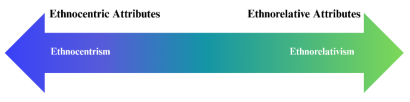
Figure 1. Classic One-Spectrum View of Ethnocentrism Versus Ethnorelativism.
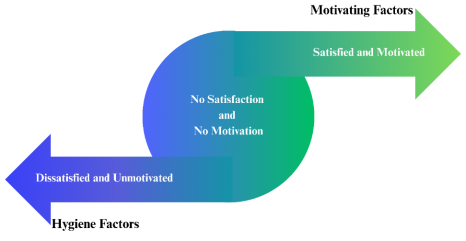
Figure 2. Herzberg’s Two-Factor Theory of Motivation: Motivating and Hygiene Factors.
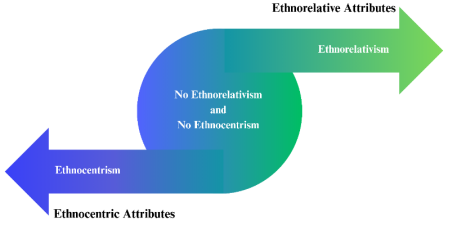
Figure 3. A Dual-Spectrum View of Ethnocentrism Versus Ethnorelativism.
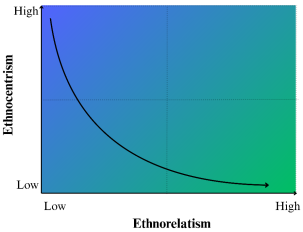
Figure 4. Non-Linear Developmental Tendency in a Two-Dimensional Space of Ethnocentrism and Ethnorelativism.

Information



 Share This Article
 Twitter
 Linked In
 Facebook
 Copy
Copy Download