Abstract
Congenital heart disease (CHDs) are a significant health challenge in Senegal due to limited resources and socioeconomic constraints. While surgery aims to restore normal heart function through palliative or corrective procedures, some complex cases rely on humanitarian aid. This study evaluates the outcomes of CHD treatments provided by the NGO "Terre des Hommes" at the CUOMO FANN center. This is a longitudinal, retrospective, descriptive, and analytical study. From January 1, 2017, to December 31, 2021, covering a period of five years. During the study period, 34 children underwent surgery for congenital heart disease at the CUOMO FANN center with support from the NGO Terre des Hommes. The mean age at surgery was 4.66 years, with a male predominance (62%). Most patients presented with systolic murmur and cyanosis, and cyanotic heart diseases—mainly tetralogy of Fallot (TOF)—were the most frequent diagnoses. All patients underwent surgery via median sternotomy under cardiopulmonary bypass. Complete repair was achieved in 94% of cases, while two patients required initial palliative surgery before definitive correction. TOF was the most common condition treated and had a 100% surgical success rate. Other defects, including ventricular and atrial septal defects, atrioventricular septal defects, and subaortic membrane, were also successfully corrected. No deaths were recorded. Postoperative morbidity was 20%, mainly involving arrhythmias and infectious endocarditis. Most complications occurred two years or more after surgery. Follow-up was regular in nearly all patients, with overall favorable outcomes. Congenital heart defects are a major pediatric health issue, with two main challenges: diagnosis and treatment. Priority should be given to establishing specialized teams and adequate infrastructure to ensure accessible local diagnosis and comprehensive care, including prenatal diagnosis. The humanitarian organization Terre des Hommes has enabled many children to receive treatment. Finally, the article emphasizes the importance of evaluating humanitarian efforts, a step often overlooked but essential for guiding and validating operational decisions.
Keywords
Congenital Heart Defects, Terre Des Hommes, Senegal
1. Introduction
Congenital heart defects are considered to be among the most common malformations.
| [1] | E Robert-Gnansia, C Francannet, A Bozio and al epidemiologie, etiologie et genetique des cardiopathies congenitales, EMC – Cardiologie Angeiologie 2004; 1, 2: 140-160.
http://doi.org/10.1007/978-3-031-43075-6_6 |
[1]
They represent a real problem in our region. Indeed, treating these congenital heart conditions is often difficult due to the low socioeconomic status of the population and the lack of suitable technical facilities.
The main goal of surgery for kids with congenital heart disease is to get their hearts working as close to normal as possible. This can be done with a palliative procedure that fixes a functional problem so the kid can grow and get treated later, or with a complete fix of the heart problem that fixes both the dysfunction and the malformation.
With the help of non-governmental organizations (NGOs) providing humanitarian medical aid, many congenital heart conditions, even the most complex ones, have been treated in Senegal.
These organizations are involved in surgical care.
The aim of this study is to evaluate the results of congenital heart disease treatment provided by the NGO Terre des Hommes (TDH) at the CUOMO FANN center.
2. Materials and Methods
This is a longitudinal, retrospective, descriptive, and analytical study. From January 1, 2017, to December 31, 2021, covering a period of five years. We included in our study all patients suffering from congenital heart disease and treated by the NGO Terre des Hommes Senegal. Data were collected from patient records archived at the CUOMO FANN.
A questionnaire was completed for each patient to record epidemiological, clinical, and paraclinical data, as well as the type of surgery performed.
Data entry and analysis were performed using Sphinx Plus 2 version 4.5 software. These data were exported to Excel 2016 software for processing and analysis.
3. Results
During the study period, we collected 34 files of patients treated for congenital heart disease by the NGO TDH at the CUOMO FANN center.
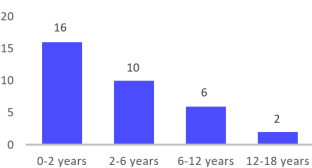
The average age of patients at the time of surgery was 4.66 years [2 months-18 years]. The distribution of patients by age is summarized in
Figure 1.
Figure 1. Distribution of patients by age at the time of surgery.
A male predominance was noted in our series: 62%, representing a sex ratio of 1.61.
The diagnosis of congenital heart disease was made in the postnatal period in all patients. The majority of patients were referred from hospitals in Dakar: 23 patients (67.6%).
Consanguinity was found in 11 patients (32.3%).
Clinical data
Systolic heart murmur was the predominant clinical sign in 31 patients (91.1%), followed by cyanosis in 15 patients (44.1%). The mean oxygen saturation at room temperature was 89% [65-100%]. The distribution of preoperative data is summarized in
Table 1.
Table 1. Distribution of types of congenital heart disease in our patients.
Clinical signs | Number | Percentage |
Systolic murmur | 31 | 91,1% |
Cyanosis | 19 | 55,8% |
Digital Hippocratism | 16 | 47,1% |
Diastolic murmur | 2 | 5,8% |
Respiratory distress | 5 | 14,7% |
Chest deformity | 1 | 2,9% |
Polypnea | 2 | 5,8% |
Heart failure | 1 | 2,9% |
Paraclinical data
On electrocardiogram (ECG), all patients had sinus rhythm preoperatively.
Right ventricular hypertrophy was the most common abnormality, found in 28 patients, or 82.4% of cases.
Trans-thoracic cardiac ultrasound:
1) Cyanotic congenital heart disease was the most common in our series, with 21 patients (61.76%), including 20 cases of tetralogy of Fallot (58.82%) and 1 case of double outlet right ventricle (2.94%).
2) Non-cyanotic congenital heart disease was found in 13 patients, or 38.3% of cases. The distribution of non-cyanotic congenital heart disease is summarized in
Table 2.
Table 2. Distribution of types of non-cyanotic congenital heart disease among our patients.
Non-cyanotic congenital heart disease | Number | Percentage |
Ventricular septal defect | 6 | 17,6% |
Atrial septal defect | Isolated form: 2 associated form with other cardiac malformations: 1 | Isolated form: 5,8% associated form with other cardiac malformations: 2,9% |
Patent ductus arteriosus | Isolated form: 2 | Isolated form: 5,8% |
Atrioventricular septal defect | Partial: 2 | Partial: 5,8% |
Subaortic membrane | 1 | 2,9% |
Types of procedure
Surgical treatment was performed on 34 patients (100%). Among these patients who underwent surgery, 32 (94.1%) underwent complete cure from the outset and 2 (5.88%) underwent palliative surgery followed by complete cure.
The approach was median vertical sternotomy in all our patients.
All patients underwent surgery under cardiopulmonary by-pass (CPB). The average duration of CPB was min, with extremes of 32 min and 162 min.
The average aortic clamping time was 51 min with St Thomas-type cardioplegia via the aortic root.
Treatment of tetralogy of Fallot (TOF)
A patch was used to close the VSD, with a heterologous pericardial patch used in 88% of patients and an autologous patch in 12%. Commissurotomy, infundibulotomy, and enlargement of the TAP were performed in 62%, 67%, and 37% of patients, respectively. One patient underwent palliative Blalock-Taussig-Thomas surgery followed by curative surgery. All patients had a successful surgical correction (100%). The evolution of these patients was marked by the occurrence of complications, including 1 case of junctional rhythm and 1 case of third-degree AV block in intensive care, 1 case of infectious endocarditis at A1 post-op, 1 case of pulmonary stenosis 2 years after the surgery, and 1 case of right hemiplegia 4 years after the surgery. There were no deaths.
Double Outlet Right Ventricle (DORV) Repair
Surgical treatment consisted of enlarging the VSD and then placing a tunneled heterologous pericardial patch on the aorta, performing a hockey stick aortotomy, followed by an infundibulotomy and pulmonary commissurotomy. Follow-up was regular and the outcome favorable three years after surgery.
Closure of a VSD
The defect was closed using a heterologous pericardial patch in 91% of patients and an autologous patch in 9% of patients. Six patients underwent surgery and achieved successful correction. The outcome for these patients was characterised by the occurrence of a single complication, infectious endocarditis, two years after surgery. The follow-up period for these patients ranged from eight months to five years, with no deaths recorded during this period.
ASD repair
Complete closure of the ASD using an heterologous pericardial patch was performed in all patients. All patients underwent surgery and had a good clinical outcome at long-term follow-up.
Atrioventicular septal defect (AVSD) repair
Complete repair by closure of the VSD and ostium primum ASD using a heterologous pericardial patch in all patients, with closure of the mitral cleft, the left atrio ventricular valve and the right atrio ventricular valve repair. Two patients underwent surgery and had a good correction. The course of these patients was marked by the occurrence of a single complication, junctional tachycardia during resuscitation, which was successfully corrected with treatment. Follow-up of these patients ranged from 1 to 5 years, with no deaths recorded during this period.
Subaortic membrane
The patient's progress was favorable four years after surgery to remove the subaortic membrane.
Postoperative follow-up
Only one patient was lost to follow-up, representing 2.9% of cases in our study, and 33 patients were followed up regularly, representing 97.1% of cases in our study.
The average follow-up time was 18 months, with extremes of 1 month and 4 years.
Mortality
In our series, no deaths were recorded either preoperatively or postoperatively.
Overall morbidity
The main postoperative morbidities were found in 8 patients, representing 20% of all patients who underwent surgery.
Tetralogy of Fallot was the heart condition with the most postoperative complications (60% of complications), followed by VSD (30%) and AVSD (10%).
Most complications occurred two years or more after surgery.
In intensive care unit, three patients had a postoperative complication, representing 37% of all complications, including junctional rhythm in two patients (25%) and third-degree AV block in one patient (12.5% of all complications).
After surgery, we found five postoperative complications, representing 63% of all complications.
One year after surgery, one patient developed infectious endocarditis.
Two years after surgery, there was one case of severe pulmonary stenosis, one case of infectious endocarditis, and one case of severe aortic insufficiency.
After four years, one case of right hemiplegia was found.
4. Discussion
Among the heart diseases treated by the NGO TDH Senegal, congenital heart disease was the most common, accounting for 82.9% of cases. This higher prevalence of heart disease requiring surgery in children is consistent with that found in the general infant population in our region. This is particularly evident in the study by Ba Ngouala et al in Louga (Senegal) and in the study by Tougouma S.J. at the Bobo-Dioulasso University Hospital (Burkina Faso), with rates of 69.5% and 71% respectively.
| [2] | Ngouala GA, Affangla DA, Leye M, Kane A. The prevalence of symptomatic infantile heart disease at Louga Regional Hospital, Senegal. Cardiovascular journal of Africa. 2015; 26(4): e1-5. http://doi.org/10.5830/CVJA-2015-031 |
| [3] | Tougouma SJ-B, Kissou S-LA, Yameogo AA, Yameogo NV, Bama A, Barro M, et al. Les cardiopathies de l’enfant au CHU Souro Sanou de Bobo-Dioulasso: aspects echocardiographies et therapeutiques. Pan Afr Med J. 3 octobre 2016; 25: 62.
http://doi.org/10.11604/pamj.2016.25.62.9508 |
[2, 3]
The age at which heart disease becomes apparent varies. It depends on the degree of circulatory adaptation to extrauterine life, but also on the type of heart disease. Malformations responsible for a left-to-right shunt may be silent in the neonatal period and therefore only manifest themselves after a symptom-free interval. Indeed, delayed pulmonary maturation, a classic phenomenon at birth, delays the appearance of the first signs, which generally occur after one month of life. Children become symptomatic, leading their parents to seek medical advice and diagnosis of their heart disease.
| [3] | Tougouma SJ-B, Kissou S-LA, Yameogo AA, Yameogo NV, Bama A, Barro M, et al. Les cardiopathies de l’enfant au CHU Souro Sanou de Bobo-Dioulasso: aspects echocardiographies et therapeutiques. Pan Afr Med J. 3 octobre 2016; 25: 62.
http://doi.org/10.11604/pamj.2016.25.62.9508 |
[3]
The average age at the time of surgery is 4.66 years (1 month to 17 years).
Nationally, the average age obtained in the study by Brousse et al. evaluating children transferred for cardiac surgery is 2 years [0 to 13 years]. And in the study by Hounkpevi, this average age is estimated at 5 years (4 months to 15 years).
| [4] | Brousse V, Imbert P, Mbaye P, Kieffer F, Thiam M, Ka AS, et al. Evaluation au Senegal du devenir des enfants transferes pour chirurgie cardiaque. Medecine tropicale. 2003; 63: 506-12. |
| [5] | Hounkpevi. Bilan de l'activite de chirurgie cardiaque pediatrique au centre CUOMO du CHNU de FANN: Etude retrospective de 84 cas sur 9 mois (janvier 2017 a septembre 2017). Cheikh Anta Diop University in Dakar, 2018. |
[4, 5]
On an African scale, the average age obtained in Senegal is similar to that of certain African countries. Thus, in the studies by Damarou. F. et al. and Cardorelle et al. on congenital heart disease treated by the NGO Terre des hommes in Togo and Congo Brazzaville, the average age is 3.8 years in Togo and 3.6 years [2 months to 15 years] in Congo.
| [6] | Damarou F, Matey K, Douti N, Djato A, Soussou B, Kessie K. Les cardiopathies congenitales (CC) au Togo. Aspects epidemiologiques, cliniques, diagnostiques et therapeutiques: propos de 141 cas colliges a « Terre des hommes » (TDH). Journal de la Recherche Scientifique de l’Universite de Lome. 2010; 12(1). http://doi.org/10.4314/jrsul.v12i1.57102 |
| [7] | Cardorelle AM, Okoko AR, Perez AC, Moyen G. Medical transportation of Congolese children by the Foundation « Terre des hommes » Netherlands (1989--1998)]. Bull Soc Pathol Exot. 2004; 97(5): 338‑9. |
[6, 7]
This late age at the time of surgery is explained by delays in diagnosis and treatment in our region.
In addition, prenatal diagnosis of congenital heart disease is uncommon. In fact, in our region, obstetric ultrasounds are mostly performed by midwives or doctors with little training in screening for congenital heart disease.
A male predominance is noted in our series, with 21 boys and 13 girls, giving a sex ratio of 1.61. This predominance is reported in other studies, including those by Damarou. F et al and Brousse et al, Hounkpevi and Tougouma, with sex ratios of 1.15 and 1.05, and 1.4, respectively.
For most of these authors, there was no link between sex and the occurrence of congenital heart disease.
| [3] | Tougouma SJ-B, Kissou S-LA, Yameogo AA, Yameogo NV, Bama A, Barro M, et al. Les cardiopathies de l’enfant au CHU Souro Sanou de Bobo-Dioulasso: aspects echocardiographies et therapeutiques. Pan Afr Med J. 3 octobre 2016; 25: 62.
http://doi.org/10.11604/pamj.2016.25.62.9508 |
| [4] | Brousse V, Imbert P, Mbaye P, Kieffer F, Thiam M, Ka AS, et al. Evaluation au Senegal du devenir des enfants transferes pour chirurgie cardiaque. Medecine tropicale. 2003; 63: 506-12. |
| [5] | Hounkpevi. Bilan de l'activite de chirurgie cardiaque pediatrique au centre CUOMO du CHNU de FANN: Etude retrospective de 84 cas sur 9 mois (janvier 2017 a septembre 2017). Cheikh Anta Diop University in Dakar, 2018. |
[3-5]
Our study noted that 11 patients (32.3%) were born to first-degree consanguineous parents. In this consanguineous population, the specific types of malformations encountered were cyanogenic congenital heart defects (Tetralogy of Fallot and double outlet right ventricle) and non-cyanogenic congenital heart defects (ASD, VSD, AVSD and PDA).
Consanguineous marriage can be a major risk factor for various types of pathologies, particularly cardiac malformations.
In Senegal, where marriage between first cousins is widespread, several studies have found parental consanguinity in patients with congenital heart disease. Studies by Belem, Ndiaye, and Diagne reported consanguinity rates of 16.6%, 19%, and 27.4%, respectively.
| [8] | Farid Pingwinde Belem, El Hadji Boubacar Ba, Papa Alassane Leye and al. Prise en charge anesthesique des cardiopathies congenitales operees sous circulation extra - corporelle au Centre de Chirurgie Cardiaque Pediatrique Cuomo (Senegal). Pan African Medical Journal 2021; 38: 177
http://doi.org/10.11604/pamj.2020.37.362.17659 |
| [9] | M. Ndiaye, O. Diarra, P. A. Dieng, O. Kane, A. Ndiaye, M. Ba et al. Surgery of congenital heart diseases in Dakar, from a series of 102 Cases. African annals of thoracic and cardiovascular surgery 2006; 1(2): 9-12.
http://doi.org/10.5897/AATCVS.9000024 |
| [10] | Diagne Papa Amath, Diop Momar Sokhna, Ba Papa Salmane and al Morbidity and Mortality of Pediatric Cardiac Surgery: About 84 Cases Operated at the Cardio-Pediatric Center Cuomo: Retrospective Study over 9 Months. International Journal of Cardiovascular and Thoracic Surgery 2020; 6(1): 7-16. http://doi.org/10.11648/j.ijcts.20200601.12 |
[8-10]
Tetralogy of Fallot (TOF) is the most common cyanotic congenital heart defect in almost all surgical series encountered.
| [6] | Damarou F, Matey K, Douti N, Djato A, Soussou B, Kessie K. Les cardiopathies congenitales (CC) au Togo. Aspects epidemiologiques, cliniques, diagnostiques et therapeutiques: propos de 141 cas colliges a « Terre des hommes » (TDH). Journal de la Recherche Scientifique de l’Universite de Lome. 2010; 12(1). http://doi.org/10.4314/jrsul.v12i1.57102 |
| [7] | Cardorelle AM, Okoko AR, Perez AC, Moyen G. Medical transportation of Congolese children by the Foundation « Terre des hommes » Netherlands (1989--1998)]. Bull Soc Pathol Exot. 2004; 97(5): 338‑9. |
| [11] | Noural-Houda MA. Chirurgie des cardiopathies congenitales au Senegal: experience du centre cardiopediatrique CUOMO-CHU FANN Dakar. Saint Christopher University, 2019. |
| [12] | Nika E R, Babela J R M, Moyen E, Kambourou J, Oko APG, Loufoua A B P, et al. Epidemiologie et devenir des enfants congolais operes pour 147 cardiopathies congenitales. Medecine et Sante Tropicales. 1 avr 2015; 25(2): 215‑9.
http://doi.org/10.1684/mst.2015.0474 |
[6, 7, 11, 12]
The regular form was the most common in our series (95%), followed by the irregular form (5%), which is consistent with the literature.
| [13] | Bagnan Tossa L, Layla F, Soton M, Alihonou F and al Congenital heart diseases in the pediatric unit of National Teaching Hospital of Cotonou J Afr Pediatr Genet Med 2019; 7: 23-27 |
[13]
Ventricular septal defect is the second most common heart condition in our series (17.6%) and the most common among non-cyanotic congenital heart (NCCH) defects (46.1%).
Across Africa, in surgical series, the prevalence of VSD was 27% in Togo, 27.2% in Burkina Faso, and 23% in the Congo.
| [3] | Tougouma SJ-B, Kissou S-LA, Yameogo AA, Yameogo NV, Bama A, Barro M, et al. Les cardiopathies de l’enfant au CHU Souro Sanou de Bobo-Dioulasso: aspects echocardiographies et therapeutiques. Pan Afr Med J. 3 octobre 2016; 25: 62.
http://doi.org/10.11604/pamj.2016.25.62.9508 |
| [6] | Damarou F, Matey K, Douti N, Djato A, Soussou B, Kessie K. Les cardiopathies congenitales (CC) au Togo. Aspects epidemiologiques, cliniques, diagnostiques et therapeutiques: propos de 141 cas colliges a « Terre des hommes » (TDH). Journal de la Recherche Scientifique de l’Universite de Lome. 2010; 12(1). http://doi.org/10.4314/jrsul.v12i1.57102 |
| [7] | Cardorelle AM, Okoko AR, Perez AC, Moyen G. Medical transportation of Congolese children by the Foundation « Terre des hommes » Netherlands (1989--1998)]. Bull Soc Pathol Exot. 2004; 97(5): 338‑9. |
[3, 6, 7]
With regard to other anatomical types, 91% of the VSDs were of the perimembranous type and 9% were subaortic. This is consistent with the literature.
Thus, in Calabro’s series, perimembranous VSDs are the most common, accounting for 70% to 80% of all cases. They are followed by muscular VSDs, which account for 20% of ventricular septal defects.
In Manuel’s study, 91% of isolated VSDs were perimembranous and 9% were muscular.
| [15] | Manuel V, Morais H, Manuel A, David B, Gamboa S. Ventricular septal defect in children and adolescents in Angola: Experience of a tertiary center. Revista Portuguesa de Cardiologia. 2014; 33(10): 637‑40.
http://doi.org/10.1016/j.repc.2014.03.012 |
[15]
Patent ductus arteriosus accounted for 5.8% of cases in our study and 15% of non-cyanotic congenital heart defects. In Senegal, studies by Brousse et al., Ba Ngouala et al., and Noural reported prevalences of 7%, 7.3%, and 10.5%, respectively.
| [2] | Ngouala GA, Affangla DA, Leye M, Kane A. The prevalence of symptomatic infantile heart disease at Louga Regional Hospital, Senegal. Cardiovascular journal of Africa. 2015; 26(4): e1-5. http://doi.org/10.5830/CVJA-2015-031 |
| [4] | Brousse V, Imbert P, Mbaye P, Kieffer F, Thiam M, Ka AS, et al. Evaluation au Senegal du devenir des enfants transferes pour chirurgie cardiaque. Medecine tropicale. 2003; 63: 506-12. |
| [11] | Noural-Houda MA. Chirurgie des cardiopathies congenitales au Senegal: experience du centre cardiopediatrique CUOMO-CHU FANN Dakar. Saint Christopher University, 2019. |
[2, 4, 11]
ASD accounting for 8.8% of congenital heart diseases, was the third most common heart condition in our series and the second most common among NCCH defects (23%), which is consistent with data in the literature.
| [3] | Tougouma SJ-B, Kissou S-LA, Yameogo AA, Yameogo NV, Bama A, Barro M, et al. Les cardiopathies de l’enfant au CHU Souro Sanou de Bobo-Dioulasso: aspects echocardiographies et therapeutiques. Pan Afr Med J. 3 octobre 2016; 25: 62.
http://doi.org/10.11604/pamj.2016.25.62.9508 |
| [16] | Kamdem F, Kedy Koum D, Hamadou B, Yemdji M, Luma H, Doualla MS, et al. Clinical, echocardiographic, and therapeutic aspects of congenital heart diseases of children at D ouala General Hospital: A cross-sectional study in sub-Saharan Africa. Congenital heart disease. 2018; 13(1): 113‑7.
http://doi.org/10.1111/chd.12529 |
| [17] | Basse I, Fall AL, Sow A, Leye MC, Affangla A, Diakhate N, et al. Congenital Heart Disease-A Retrospective Study of 156 Cases in Senegal. Journal of Pediatrics, Perinatology and Child Health. 2020; 4(4): 111‑6.
http://doi.org/10.26502/jppch.74050050 |
[3, 16, 17]
The ostium secundum (OS) type of atrial septal defect was the most common anatomical type (80.2%) in our study. In fact, the ostium secundum type is the most common type of atrial septal defect.
| [18] | Frank J E, Jacobe K M. Evaluation and management of heart murmurs in children. American family physician. 2011; 84(7): 793‑800. |
| [19] | Deri A, English K. Educational series in congenital heart disease: Echocardiographic assessment of left to right shunts: atrial septal defect, ventricular septal defect, atrioventricular septal defect, patent arterial duct. Echo research and practice. 2018; 5(1): R1‑16. http://doi.org/10.1530/ERP-17-0062 |
| [20] | Zuechner A, Mhada T, Majani NG, Sharau GG, Mahalu W, Freund MW. Spectrum of heart diseases in children presenting to a paediatric cardiac echocardiography clinic in the Lake Zone of Tanzania: a 7 years overview. BMC cardiovascular disorders. 2019; 19(1): 1‑6.
http://doi.org/10.1186/s12872-019-01292-4 |
[18-20]
Atrioventricular canal accounted for 5.8% of the cases in our study and 15.3% of NCCH defects. In Senegal, the prevalence reported by Brousse et al. (2.3%) and Noural-Houda (6.3%) was similar to that found in our study.
| [4] | Brousse V, Imbert P, Mbaye P, Kieffer F, Thiam M, Ka AS, et al. Evaluation au Senegal du devenir des enfants transferes pour chirurgie cardiaque. Medecine tropicale. 2003; 63: 506-12. |
| [11] | Noural-Houda MA. Chirurgie des cardiopathies congenitales au Senegal: experience du centre cardiopediatrique CUOMO-CHU FANN Dakar. Saint Christopher University, 2019. |
[4, 11]
Aortic subvalvular diaphragma is the only cardiac condition represented in the group of left ventricular outflow tract obstructions, with an estimated prevalence of 2.9% of cases in our study. This number is lower than the data reported in the literature. Aortic subvalvular stenoses account for 15% to 20% of obstructive lesions of the left ventricular outflow tract.
| [21] | Rey C. Cardiologie interventionnelle pediatrique. Rev Prat 1990, 40(26): 2440-447 |
[21]
In our research, 5.8% of the patients who underwent surgery received palliative care, and 94.2% received curative treatment.
In Brousse’s series, 7.7% of the patients received palliative care, and 93.6% received curative treatment.
| [4] | Brousse V, Imbert P, Mbaye P, Kieffer F, Thiam M, Ka AS, et al. Evaluation au Senegal du devenir des enfants transferes pour chirurgie cardiaque. Medecine tropicale. 2003; 63: 506-12. |
[4]
This distribution is explained by the presence of complex heart conditions that required emergency treatment to prolong the children’s survival prior to their transfer.
In this series, 97.1% of the children were followed up regularly, with a median follow-up duration of 6 years [6 month-20 years].
The rate of patients lost to follow-up (2.9%) is lower than might have been feared, given the need for continuous monitoring. This low rate of patients lost to follow-up can be attributed to the rigorous patient follow-up conducted by CUOMO FANN, which has established a system for ongoing communication with patients over the long term. The fact that paraclinical tests are free (covered by TDH) motivates patients to undergo regular monitoring over time. Brousse reported a loss-to-follow-up rate of 13%.
| [4] | Brousse V, Imbert P, Mbaye P, Kieffer F, Thiam M, Ka AS, et al. Evaluation au Senegal du devenir des enfants transferes pour chirurgie cardiaque. Medecine tropicale. 2003; 63: 506-12. |
[4]
In the mid-term, all the children are alive, and the majority of patients have returned to a normal life—both functionally and nutritionally, as well as academically and, for the older ones, professionally. Nika’s study shows an overall patient survival rate of 90% at five years and 83.3% at twenty years following surgery.
| [12] | Nika E R, Babela J R M, Moyen E, Kambourou J, Oko APG, Loufoua A B P, et al. Epidemiologie et devenir des enfants congolais operes pour 147 cardiopathies congenitales. Medecine et Sante Tropicales. 1 avr 2015; 25(2): 215‑9.
http://doi.org/10.1684/mst.2015.0474 |
[12]
In the Shayan study, the operative mortality rate was 6,1% in Mozambique et 3,1% au Cambodia.
| [22] | Shayan RG, Dizaji M F, Sajjadian F Surgical and postoperative management of congenital heart disease: a systematic review of observational studies. Langenbecks Arch Surg 2025 Mar 31; 410(1): 113.
http://doi.org/10.1007/s00423-025-03673-0 |
[22]
5. Conclusion
Congenital heart defects represent a major health issue in pediatric care. In our country, they present two primary challenges: diagnosis and treatment. However, priority must be given to establishing specialized teams and infrastructure so that diagnosis and comprehensive patient care become widely available at the local level. Prenatal diagnosis must be performed to enable better care.
Many children have been able to receive care thanks to the non-governmental medical humanitarian organization Terre des Hommes.
Our work highlights the importance of evaluating humanitarian efforts a process that is too often overlooked. Such evaluation is essential for guiding discussions on the validity of operational decisions.
Abbreviations
ASD | Atrial Septal Defect |
AVSD | Atrio-Ventricular Septal Defect |
CHD | Congenital Heart Disease |
DORV | Double Outlet Right Ventricle |
NCCH | Non-Cyanotic Congenital Heart |
NGO | Non-Governmental Organization |
OS | Ostium Secundum |
PDA | Patent Ductus Arteriosus |
TDH | Terre Des Hommes |
TOF | Tetralogy Of Fallot |
VSD | Ventricular Septal Defect |
Author Contributions
Papa Ousmane Ba: Conceptualization, Formal Analysis, Funding acquisition, Resources, Writing – original draft
Ndeye Fatou Sow: Methodology, Supervision
Carine Ngouan: Data curation, Writing – original draft
Mohamed Amine Afifi: Data curation, Writing –original draft
Papa Salmane Ba: Formal Analysis, Project administration, Validation, Writing – review & editing
Amadou Gabriel Ciss: Validation, Visualization
Conflicts of Interest
The authors declare no conflicts of interest.
References
| [1] |
E Robert-Gnansia, C Francannet, A Bozio and al epidemiologie, etiologie et genetique des cardiopathies congenitales, EMC – Cardiologie Angeiologie 2004; 1, 2: 140-160.
http://doi.org/10.1007/978-3-031-43075-6_6
|
| [2] |
Ngouala GA, Affangla DA, Leye M, Kane A. The prevalence of symptomatic infantile heart disease at Louga Regional Hospital, Senegal. Cardiovascular journal of Africa. 2015; 26(4): e1-5.
http://doi.org/10.5830/CVJA-2015-031
|
| [3] |
Tougouma SJ-B, Kissou S-LA, Yameogo AA, Yameogo NV, Bama A, Barro M, et al. Les cardiopathies de l’enfant au CHU Souro Sanou de Bobo-Dioulasso: aspects echocardiographies et therapeutiques. Pan Afr Med J. 3 octobre 2016; 25: 62.
http://doi.org/10.11604/pamj.2016.25.62.9508
|
| [4] |
Brousse V, Imbert P, Mbaye P, Kieffer F, Thiam M, Ka AS, et al. Evaluation au Senegal du devenir des enfants transferes pour chirurgie cardiaque. Medecine tropicale. 2003; 63: 506-12.
|
| [5] |
Hounkpevi. Bilan de l'activite de chirurgie cardiaque pediatrique au centre CUOMO du CHNU de FANN: Etude retrospective de 84 cas sur 9 mois (janvier 2017 a septembre 2017). Cheikh Anta Diop University in Dakar, 2018.
|
| [6] |
Damarou F, Matey K, Douti N, Djato A, Soussou B, Kessie K. Les cardiopathies congenitales (CC) au Togo. Aspects epidemiologiques, cliniques, diagnostiques et therapeutiques: propos de 141 cas colliges a « Terre des hommes » (TDH). Journal de la Recherche Scientifique de l’Universite de Lome. 2010; 12(1).
http://doi.org/10.4314/jrsul.v12i1.57102
|
| [7] |
Cardorelle AM, Okoko AR, Perez AC, Moyen G. Medical transportation of Congolese children by the Foundation « Terre des hommes » Netherlands (1989--1998)]. Bull Soc Pathol Exot. 2004; 97(5): 338‑9.
|
| [8] |
Farid Pingwinde Belem, El Hadji Boubacar Ba, Papa Alassane Leye and al. Prise en charge anesthesique des cardiopathies congenitales operees sous circulation extra - corporelle au Centre de Chirurgie Cardiaque Pediatrique Cuomo (Senegal). Pan African Medical Journal 2021; 38: 177
http://doi.org/10.11604/pamj.2020.37.362.17659
|
| [9] |
M. Ndiaye, O. Diarra, P. A. Dieng, O. Kane, A. Ndiaye, M. Ba et al. Surgery of congenital heart diseases in Dakar, from a series of 102 Cases. African annals of thoracic and cardiovascular surgery 2006; 1(2): 9-12.
http://doi.org/10.5897/AATCVS.9000024
|
| [10] |
Diagne Papa Amath, Diop Momar Sokhna, Ba Papa Salmane and al Morbidity and Mortality of Pediatric Cardiac Surgery: About 84 Cases Operated at the Cardio-Pediatric Center Cuomo: Retrospective Study over 9 Months. International Journal of Cardiovascular and Thoracic Surgery 2020; 6(1): 7-16.
http://doi.org/10.11648/j.ijcts.20200601.12
|
| [11] |
Noural-Houda MA. Chirurgie des cardiopathies congenitales au Senegal: experience du centre cardiopediatrique CUOMO-CHU FANN Dakar. Saint Christopher University, 2019.
|
| [12] |
Nika E R, Babela J R M, Moyen E, Kambourou J, Oko APG, Loufoua A B P, et al. Epidemiologie et devenir des enfants congolais operes pour 147 cardiopathies congenitales. Medecine et Sante Tropicales. 1 avr 2015; 25(2): 215‑9.
http://doi.org/10.1684/mst.2015.0474
|
| [13] |
Bagnan Tossa L, Layla F, Soton M, Alihonou F and al Congenital heart diseases in the pediatric unit of National Teaching Hospital of Cotonou J Afr Pediatr Genet Med 2019; 7: 23-27
|
| [14] |
Calabrò R, Limongelli G. Complete atrioventricular canal. Orphanet Journal of Rare Diseases. 2006; 1(1): 1‑5.
http://doi.org/10.1186/1750-1172-1-8
|
| [15] |
Manuel V, Morais H, Manuel A, David B, Gamboa S. Ventricular septal defect in children and adolescents in Angola: Experience of a tertiary center. Revista Portuguesa de Cardiologia. 2014; 33(10): 637‑40.
http://doi.org/10.1016/j.repc.2014.03.012
|
| [16] |
Kamdem F, Kedy Koum D, Hamadou B, Yemdji M, Luma H, Doualla MS, et al. Clinical, echocardiographic, and therapeutic aspects of congenital heart diseases of children at D ouala General Hospital: A cross-sectional study in sub-Saharan Africa. Congenital heart disease. 2018; 13(1): 113‑7.
http://doi.org/10.1111/chd.12529
|
| [17] |
Basse I, Fall AL, Sow A, Leye MC, Affangla A, Diakhate N, et al. Congenital Heart Disease-A Retrospective Study of 156 Cases in Senegal. Journal of Pediatrics, Perinatology and Child Health. 2020; 4(4): 111‑6.
http://doi.org/10.26502/jppch.74050050
|
| [18] |
Frank J E, Jacobe K M. Evaluation and management of heart murmurs in children. American family physician. 2011; 84(7): 793‑800.
|
| [19] |
Deri A, English K. Educational series in congenital heart disease: Echocardiographic assessment of left to right shunts: atrial septal defect, ventricular septal defect, atrioventricular septal defect, patent arterial duct. Echo research and practice. 2018; 5(1): R1‑16.
http://doi.org/10.1530/ERP-17-0062
|
| [20] |
Zuechner A, Mhada T, Majani NG, Sharau GG, Mahalu W, Freund MW. Spectrum of heart diseases in children presenting to a paediatric cardiac echocardiography clinic in the Lake Zone of Tanzania: a 7 years overview. BMC cardiovascular disorders. 2019; 19(1): 1‑6.
http://doi.org/10.1186/s12872-019-01292-4
|
| [21] |
Rey C. Cardiologie interventionnelle pediatrique. Rev Prat 1990, 40(26): 2440-447
|
| [22] |
Shayan RG, Dizaji M F, Sajjadian F Surgical and postoperative management of congenital heart disease: a systematic review of observational studies. Langenbecks Arch Surg 2025 Mar 31; 410(1): 113.
http://doi.org/10.1007/s00423-025-03673-0
|
Cite This Article
-
APA Style
Ba, P. O., Sow, N. F., Ngouan, C., Afifi, M. A., Thiaw, A. A., et al. (2026). Results of the Treatment of Congenital Heart Disease by the Non-governmental Organization Terre Des Hommes in Senegal. International Journal of Cardiovascular and Thoracic Surgery, 12(6), 141-146. https://doi.org/10.11648/j.ijcts.20261206.11
 Copy
|
 Download
ACS Style
Ba, P. O.; Sow, N. F.; Ngouan, C.; Afifi, M. A.; Thiaw, A. A., et al. Results of the Treatment of Congenital Heart Disease by the Non-governmental Organization Terre Des Hommes in Senegal. Int. J. Cardiovasc. Thorac. Surg. 2026, 12(6), 141-146. doi: 10.11648/j.ijcts.20261206.11
Copy
|
Download
AMA Style
Ba PO, Sow NF, Ngouan C, Afifi MA, Thiaw AA, et al. Results of the Treatment of Congenital Heart Disease by the Non-governmental Organization Terre Des Hommes in Senegal. Int J Cardiovasc Thorac Surg. 2026;12(6):141-146. doi: 10.11648/j.ijcts.20261206.11
Copy
|
Download
-
@article{10.11648/j.ijcts.20261206.11,
  author = {Papa Ousmane Ba and Ndeye Fatou Sow and Carine Ngouan and Mohamed Amine Afifi and Abdoul Aziz Thiaw and Papa Amath Diagne and Momar Sokhna Diop and Papa Salmane Ba and Amadou Gabriel Ciss},
  title = {Results of the Treatment of Congenital Heart Disease by the Non-governmental Organization Terre Des Hommes in Senegal},
  journal = {International Journal of Cardiovascular and Thoracic Surgery},
  volume = {12},
  number = {6},
  pages = {141-146},
  doi = {10.11648/j.ijcts.20261206.11},
  url = {https://doi.org/10.11648/j.ijcts.20261206.11},
  eprint = {https://article.sciencepublishinggroup.com/pdf/10.11648.j.ijcts.20261206.11},
  abstract = {Congenital heart disease (CHDs) are a significant health challenge in Senegal due to limited resources and socioeconomic constraints. While surgery aims to restore normal heart function through palliative or corrective procedures, some complex cases rely on humanitarian aid. This study evaluates the outcomes of CHD treatments provided by the NGO "Terre des Hommes" at the CUOMO FANN center. This is a longitudinal, retrospective, descriptive, and analytical study. From January 1, 2017, to December 31, 2021, covering a period of five years. During the study period, 34 children underwent surgery for congenital heart disease at the CUOMO FANN center with support from the NGO Terre des Hommes. The mean age at surgery was 4.66 years, with a male predominance (62%). Most patients presented with systolic murmur and cyanosis, and cyanotic heart diseases—mainly tetralogy of Fallot (TOF)—were the most frequent diagnoses. All patients underwent surgery via median sternotomy under cardiopulmonary bypass. Complete repair was achieved in 94% of cases, while two patients required initial palliative surgery before definitive correction. TOF was the most common condition treated and had a 100% surgical success rate. Other defects, including ventricular and atrial septal defects, atrioventricular septal defects, and subaortic membrane, were also successfully corrected. No deaths were recorded. Postoperative morbidity was 20%, mainly involving arrhythmias and infectious endocarditis. Most complications occurred two years or more after surgery. Follow-up was regular in nearly all patients, with overall favorable outcomes. Congenital heart defects are a major pediatric health issue, with two main challenges: diagnosis and treatment. Priority should be given to establishing specialized teams and adequate infrastructure to ensure accessible local diagnosis and comprehensive care, including prenatal diagnosis. The humanitarian organization Terre des Hommes has enabled many children to receive treatment. Finally, the article emphasizes the importance of evaluating humanitarian efforts, a step often overlooked but essential for guiding and validating operational decisions.},
 year = {2026}
}
Copy
|
Download
-
TY  - JOUR
T1  - Results of the Treatment of Congenital Heart Disease by the Non-governmental Organization Terre Des Hommes in Senegal
AU  - Papa Ousmane Ba
AU  - Ndeye Fatou Sow
AU  - Carine Ngouan
AU  - Mohamed Amine Afifi
AU  - Abdoul Aziz Thiaw
AU  - Papa Amath Diagne
AU  - Momar Sokhna Diop
AU  - Papa Salmane Ba
AU  - Amadou Gabriel Ciss
Y1  - 2026/11/19
PY  - 2026
N1  - https://doi.org/10.11648/j.ijcts.20261206.11
DO  - 10.11648/j.ijcts.20261206.11
T2  - International Journal of Cardiovascular and Thoracic Surgery
JF  - International Journal of Cardiovascular and Thoracic Surgery
JO  - International Journal of Cardiovascular and Thoracic Surgery
SP  - 141
EP  - 146
PB  - Science Publishing Group
SN  - 2575-4882
UR  - https://doi.org/10.11648/j.ijcts.20261206.11
AB  - Congenital heart disease (CHDs) are a significant health challenge in Senegal due to limited resources and socioeconomic constraints. While surgery aims to restore normal heart function through palliative or corrective procedures, some complex cases rely on humanitarian aid. This study evaluates the outcomes of CHD treatments provided by the NGO "Terre des Hommes" at the CUOMO FANN center. This is a longitudinal, retrospective, descriptive, and analytical study. From January 1, 2017, to December 31, 2021, covering a period of five years. During the study period, 34 children underwent surgery for congenital heart disease at the CUOMO FANN center with support from the NGO Terre des Hommes. The mean age at surgery was 4.66 years, with a male predominance (62%). Most patients presented with systolic murmur and cyanosis, and cyanotic heart diseases—mainly tetralogy of Fallot (TOF)—were the most frequent diagnoses. All patients underwent surgery via median sternotomy under cardiopulmonary bypass. Complete repair was achieved in 94% of cases, while two patients required initial palliative surgery before definitive correction. TOF was the most common condition treated and had a 100% surgical success rate. Other defects, including ventricular and atrial septal defects, atrioventricular septal defects, and subaortic membrane, were also successfully corrected. No deaths were recorded. Postoperative morbidity was 20%, mainly involving arrhythmias and infectious endocarditis. Most complications occurred two years or more after surgery. Follow-up was regular in nearly all patients, with overall favorable outcomes. Congenital heart defects are a major pediatric health issue, with two main challenges: diagnosis and treatment. Priority should be given to establishing specialized teams and adequate infrastructure to ensure accessible local diagnosis and comprehensive care, including prenatal diagnosis. The humanitarian organization Terre des Hommes has enabled many children to receive treatment. Finally, the article emphasizes the importance of evaluating humanitarian efforts, a step often overlooked but essential for guiding and validating operational decisions.
VL  - 12
IS  - 6
ER  -
Copy
|
Download





 Share This Article
 Twitter
 Linked In
 Facebook