Abstract
Eiderdown, as a high-quality natural insulating material, is widely used in everyday life to make down products, and there is a huge market demand for them. However, the wastewater generated during the processing of eiderdown is characterized by a high concentration of fine down fibers and elevated phosphorus levels. Given the characteristics of the wastewater, this project employs a “bar screen + air flotation” pretreatment process to remove residual fibers and ensure the proper operation of subsequent treatment processes, followed by “Anaerobic-Anoxic-Oxic (A2/O) + chemical phosphorus removal” to achieve nitrogen and phosphorus removal. Operational results show that the influent water quality is chemical oxygen demand (CODCr) ≤ 150 mg/L, suspended solids (SS) ≤ 500 mg/L, total nitrogen (TN) ≤ 30 mg/L, and total phosphorus (TP) ≤ 120 mg/L, while the final effluent water quality is CODCr ≤ 55 mg/L, SS ≤ 60 mg/L, TN ≤ 15 mg/L, and TP ≤ 0.5 mg/L, consistently meeting the Class I standards of “Integrated Wastewater Discharge Standard” (GB 8978-1996). The actual operating cost is 0.67 yuan per cubic meter. More than 95% of the treated water can be reused in the plant’s primary washing section and other processes, enabling the recycling of water resources and demonstrating significant economic viability. This process provides valuable insights for wastewater treatment in related industries.
Keywords
Air Flotation, A2/O, Eiderdown, Reuse
1. Introduction
Eiderdown is widely used in the manufacture of down jackets, down comforters, and other products due to its excellent thermal insulation properties and light weight. As of 2024, China has become the world’s largest producer, consumer, and exporter of down products
| [1] | Xie J, Gao W, Wei X. Design of waste water treatment engineering for crystal down processing [J]. Journal of Asian Institute of Low Carbon Design, 2018, 2018(1): 389.
https://doi.org/10.69368/aiue.20180081 |
[1]
. However, as demand and production continue to rise, issues in the eiderdown processing industry are becoming increasingly prominent. Raw eiderdown must undergo processes such as washing and high-temperature sterilization before it can be used. This process not only consumes a significant amount of water but also generates large volumes of polluted wastewater. This wastewater primarily contains down impurities, feces and soil adhering to the raw down, as well as small amounts of detergents, resulting in elevated concentrations of suspended solids (SS) and total phosphorus (TP). Direct discharge would have a serious impact on the surrounding water bodies. Therefore, identifying effective treatment technologies for wastewater generated from eiderdown washing is of great practical importance
.
Currently, wastewater generated from eiderdown washing is primarily treated using a combined process of “physical pretreatment and biological treatment.” However, there are two major challenges in treating this wastewater. First, animal excreta and secretions adhering to the raw wool result in elevated levels of phosphorus pollutants in the water. In traditional activated sludge systems, due to insufficient carbon sources in the influent, a portion of the nitrate is carried into the anaerobic zone during the sludge recirculation process. This causes denitrifying bacteria to compete preferentially for the carbon sources in the influent, leading to a decrease in the phosphorus-releasing efficiency of polyphosphate bacteria, which in turn affects the system’s phosphorus removal efficiency
| [4] | Wang Q B, Li H, Dong X, et al. Process optimization regulation scheme of a full-scale modified A2/O wastewater treatment plant and its improvement of simultaneous nitrogen and phosphorus removal efficiency [J]. Chinese Journal of Environmental Engineering, 2022, 16(2): 659-665.
https://doi.org/10.12030/j.cjee.202101059 |
| [5] | Zhang Y, Qiu X Q, Luo J H, et al. A review of the phosphorus removal of polyphosphate-accumulating organisms in natural and engineered systems [J]. Science of the Total Environment, 2024, 912169103-.
https://doi.org/10.1016/J.SCITOTENV.2023.169103 |
[4, 5]
; Second, the wastewater has a high suspended solids (SS) content and contains a large amount of fine, short lint, which is difficult to remove effectively using conventional sedimentation and filtration methods
. Therefore, addressing the dual challenges of suboptimal phosphorus removal and solid matter removal is key to improving the efficiency of wastewater treatment in duck down washing processes.
This project involves the process design for treating washwater generated by a certain duck down manufacturing company. Given the characteristics of this type of wastewater, a “bar screen + air flotation” system is employed as the pretreatment process to remove suspended solids such as fluff, thereby ensuring the stable operation of subsequent treatment facilities. Subsequently, the “Anaerobic-Anoxic-Oxic (A2/O) + chemical phosphorus removal” process is employed as the core treatment method to achieve nitrogen and phosphorus removal, enabling the enterprise to reuse the treated water. At the same time, water quality parameters meet the Comprehensive Wastewater Discharge Standards. An analysis of operational economic and technical indicators is also conducted to provide a reference for the treatment of similar types of industrial wastewater.
2. Design Capacity and Water Quality Standards
The design capacity of this project is 2,000 m
3/day. Of this, 100 m
3/day of overflow water will be discharged into nearby water bodies after meeting the Class I standards of the “Comprehensive Effluent Discharge Standard” (GB 8978-1996); the remaining treated wastewater will be reused after meeting the enterprise’s reuse standards. For detailed parameters of the raw water quality, see
Table 1.
Table 1. Raw Water Quality Parameters.
Indicators | CODcr (mg/L) | pH | SS (mg/L) | TN (mg/L) | TP (mg/L) |
Raw water quality | ≤150 | 6.0~9.0 | ≤500 | ≤30 | ≤120 |
The pollutant levels in the discharged wastewater must meet the Class I standards of the “Comprehensive Effluent Discharge Standards” (GB 8978-1996); specific parameters are shown in
Table 2. In accordance with the company’s water quality requirements for the initial washing of eiderdown, water that meets discharge standards may be used for the preliminary washing process in this stage.
Table 2. Comprehensive Standards for Wastewater Discharge.
Indicators | CODCr (mg/L) | pH | SS (mg/L) | TN (mg/L) | TP (mg/L) |
Raw water quality | ≤100 | 6~9 | ≤70 | ≤15 | ≤0.5 |
3. Process Design Approach
The wastewater from eiderdown washing contains a large amount of suspended down; using two screens alone for solid-liquid separation does not achieve satisfactory results in removing the down. The air flotation process involves continuously introducing air into wastewater to generate numerous tiny air bubbles. As these bubbles rise to the surface, they carry attached microscopic suspended particles with them, forming a scum layer on the water’s surface. By collecting this scum and foam, the process separates impurities and removes pollutants
| [7] | Wang Y, Jin X, Sheng J, et al. Interactions between flocs and bubbles in the separation zone of dissolved air flotation system [J]. The Science of the total environment, 2020, 761 (prepublish): 143222-143222.
https://doi.org/10.1016/j.scitotenv.2020.143222 |
| [8] | Nalaka R, Masoumeh Z, Tushar S, et al. Effects of influent physicochemical characteristics on air dissolution, bubble size and rise velocity in dissolved air flotation: A review [J]. Separation and Purification Technology, 2022, 289: 120772.
https://doi.org/10.1016/J.SEPPUR.2022.120772 |
[7, 8]
.
Biological treatment technologies are widely used in wastewater treatment. Among these, the A
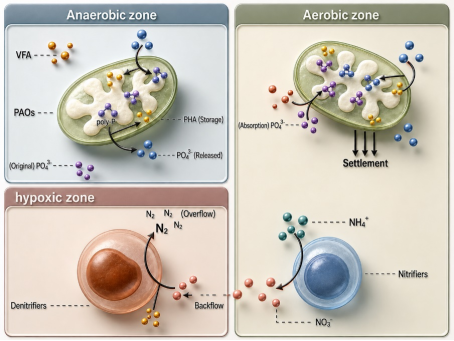
2/O process is a classic biological treatment technology for denitrification and phosphorus removal. In the anaerobic zone, facultative anaerobic bacteria hydrolyze and acidify large organic molecules into small organic acids, while polyphosphate accumulating organisms break down intracellular polyphosphate to obtain energy and release phosphate into the water; In the anoxic zone, denitrifying bacteria use organic matter in the wastewater as a carbon source to reduce nitrate and nitrite from the aerobic return nitrification effluent into nitrogen gas
| [9] | Wang Y, Jin X, Zhou G. Challenges and optimization strategies in the traditional A2/O wastewater treatment process: A Review [J]. Applied Sciences, 2026, 16(5): 2609.9.
https://doi.org/10.3390/app16052609 |
[9]
, which is released from the water, thereby achieving denitrification; In the aerobic zone, nitrifying bacteria oxidize ammonia nitrogen into nitrate, while phosphorus-accumulating bacteria excessively absorb phosphate from the wastewater, forming high phosphorus sludge that is discharged from the water body, thereby achieving phosphorus removal
. See
Figure 1 for details.
Figure 1. Schematic Diagram of the A2/0 Denitrification and Phosphorus Removal Process.
However, in the A
2/O process, insufficient carbon sources in the influent
| [11] | Song W, Shang H, Yang H, et al. Response of extracellular polymeric substances and its effect on phosphorus removal capacity in an enhanced biological phosphorus removal system under carbon source limitation [J]. Biochemical Engineering Journal, 2026, 234110289-110289.
https://dx.doi.org/10.1016/J.BEJ.2026.110289 |
[11]
, combined with nitrate backflow in the anaerobic zone, cause denitrifying bacteria and phosphorus-accumulating bacteria to compete for carbon sources, thereby inhibiting phosphorus release by polyphosphate bacteria. This results in effluent phosphorus levels that fail to meet comprehensive wastewater discharge standards. Therefore, chemical phosphorus removal technology is added to the biological treatment process to further reduce the phosphorus content in the effluent
| [12] | Abdoli S, Asgari Lajayer B, Dehghanian Z, et al. A review of the efficiency of phosphorus removal and recovery from wastewater by physicochemical and biological processes: challenges and opportunities [J]. Water, 2024, 16(17): 2507.
https://doi.org/10.3390/w16172507 |
| [13] | Li S P, Zhou X L, Cao X D, et al. Biochemically induced phosphate precipitation in enhanced biological phosphorus removal system: Mechanism, application and future directions [J]. Water research, 2025, 289(PA): 124902.
https://doi.org/10.1016/J.WATRES.2025.124902 |
[12, 13]
When calcium salts are added to wastewater, calcium ions react with orthophosphates in the water to form phosphate precipitates. These precipitates possess a certain degree of adsorption capacity; through adsorption bridging and surface electrostatic interactions, they adsorb other phosphorus-containing compounds in the water, ultimately achieving phosphorus removal through the separation of solids and liquids
| [14] | Bentancur S, Dutra I, Pereyra P, et al. Evaluation of a chemical phosphorus removal process at a pulp mill WWTP in uruguay [J]. Journal of Environmental Management, 2025, 390: 126391.
https://doi.org/10.1016/J.JENVMAN.2025.126391 |
| [15] | Zhang T, Zhao Y. Evolution of p discharge regulations in China: necessity analysis and advances in chemical p removal technologies for wastewater treatment [J]. Separations, 2026, 13(6): 171-171.
https://dx.doi.org/10.3390/SEPARATIONS13060171 |
[14, 15]
.
4. Processing Workflow
See
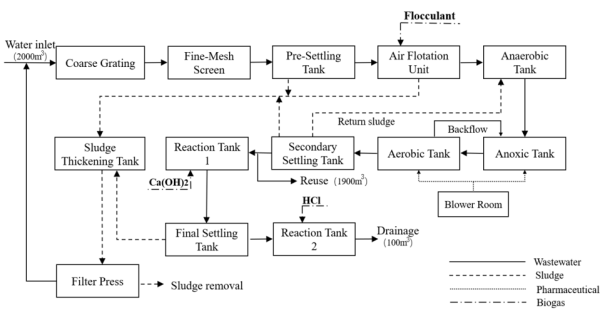
Figure 2 for the specific design process flow.
Figure 2. Wastewater treatment process flow.
As shown in
Figure 2, because the production wastewater contains a large amount of suspended solids, including down impurities and fine feathers, it first passes through two sets of screens to intercept and remove some of the larger particles from the raw water, thereby facilitating the proper operation of subsequent treatment equipment. After passing through two sets of screens, the wastewater flows by gravity into the primary settling tank. In the primary sedimentation section, solids are separated from the water, and the resulting sludge is discharged into the sludge thickening tank. Following this separation, the water quality and flow rate are regulated within the equalization tank, effectively buffering against sudden fluctuations in influent load.
After leaving the primary settling tank, the effluent is pumped to the air flotation unit, where suspended solids in the wastewater are carried to the surface by tiny air bubbles, forming scum, thereby effectively reducing the concentration of pollutants in the water. The effluent from the air flotation unit flows by gravity into the A2/O biological reactor, which consists of an anaerobic zone, an anoxic zone, and an aerobic zone. In the anaerobic tank, under oxygen-free conditions, the wastewater undergoes hydrolysis and acidification of organic matter, along with phosphorus release by polyphosphate-accumulating organisms. This process provides a high-quality carbon source for subsequent reactions and lays the foundation for biological phosphorus removal. In the anoxic tank, denitrifying bacteria use carbon sources as electron donors to reduce nitrate in the nitrified effluent recirculated from the aerobic section into nitrogen gas, thereby achieving denitrification. The sludge-water mixture from the anoxic tank enters the aerobic tank, where polyphosphate-accumulating bacteria absorb excess phosphorus to form high-phosphorus sludge. The effluent from the biological reactor flows into the secondary settling tank for solids-liquid separation. A portion of the settled sludge is recirculated to the anaerobic section of the A2/O biological reactor, while the remaining sludge is sent to the sludge thickening tank to achieve phosphorus removal.
Most of the effluent from the secondary settling tank is directly reused, while the remaining wastewater undergoes further phosphorus removal. The effluent flows into Reaction Tank 1, where the addition of the chemical Ca(OH)₂ produces a stable calcium salt precipitate, while maintaining the pH at around 10. The effluent from Reaction Tank 1 flows into the final settling tank for solid-liquid separation. The effluent is then returned to Reaction Tank 2, where HCl is added to adjust the pH to 6–7, and finally discharged into the sewer system after meeting regulatory standards.
The sludge thickening tank receives sludge and scum generated during the treatment process. After thickening, the sludge is pumped into a filter press for dewatering. The resulting filtrate is recirculated to the influent inlet, and the dewatered sludge cake is transported off-site for disposal.
5. Main Structures and Design Parameters
1) Coarse Grating.
A device for intercepting larger suspended solids and floating debris in wastewater;1 unit, reinforced concrete structure, Dimensions: 4.2 m × 0.5 m × 1 m; inlet channel width: 0.121 m; widening length: 0.52 m; opening angle: 20°; narrowing length: 0.26 m. The channel width is 0.37 m, the bar spacing is 0.05 m, and the flow velocity through the bars is v = 0.10 m/s.
2) Fine-Mesh Screen.
A device for intercepting small suspended solids and floating debris in wastewater; 1 unit, reinforced concrete structure, dimensions 4.2 m × 0.5 m × 1 m, inlet channel width 0.121 m, widening length 0.52 m, opening angle 20°, narrowing length 0.26 m. The channel width is 0.41 m, the bar spacing is 0.01 m, and the flow velocity through the screen is v = 0.09 m/s.
3) Pre-Settling Tank.
A device used to regulate water quality and flow and to pre-settle sediment.1 unit, reinforced concrete structure, dimensions 12 m × 15 m × 5.5 m, effective volume 500 m³, hydraulic retention time (HRT) 6 hours.
Auxiliary Equipment: 2 lift pumps, 1 in service, 1 on standby.
4) Air Flotation Unit.
A device that uses bubbles to separate suspended solids from water. One set, above-ground integrated system. Treatment capacity: 100 m³/h; effective volume: 150 m³; HRT: 1.5 hours. Primarily used to remove lint and some suspended solids from laundry wastewater.
5) A2/O Biological Treatment Tank.
A biological treatment unit for the simultaneous removal of organic matter, total nitrogen, and total phosphorus from wastewater. One unit, reinforced concrete structure, dimensions 16.0 m × 15.0 m × 5.0 m, effective volume 1,125 m3, of which the anaerobic zone has an effective volume of 187.5 m3 and a hydraulic retention time of 2.3 hours; the anoxic zone has an effective volume of 187.5 m3 and a hydraulic retention time of 2.3 hours; the effective volume of the aerobic zone is 750 m3, with a hydraulic retention time of 9 h.
Auxiliary Equipment: Two Roots blowers, rated power 18.5 kW.
6) Secondary Settling Tank.
A sedimentation unit used for separating solids from water, enabling the recirculation or discharge of activated sludge. One unit, reinforced concrete structure, dimensions (D) 11 m × 5.0 m, flow area 95.0 m², surface load 0.88 m3/(m2·h).
7) Reaction Tanks.
A tank used for adding chemicals and facilitating chemical reactions. Two units, reinforced concrete construction, dimensions 3.0 m × 1.0 m × 5.0 m, effective volume 13.5 m3, retention time 10 min.
Auxiliary Equipment: Two reaction mixers, 2.5 kW each.
8) Final Settling Tank.
A tank used for final sludge-water separation and sedimentation. 1 unit, reinforced concrete structure, dimensions (D) 11 m × 5.0 m, flow area 95.0 m2, surface load 0.88 m3/(m2·h).
9) Reclaimed Water Tank.
A tank used to store treated water that meets quality standards for reuse. 1 unit, reinforced concrete structure, dimensions 3.0 m × 4.0 m × 5.0 m, effective volume 54 m3.
10) Sludge Thickening Tank.
A tank designed to reduce sludge moisture content and sludge volume. 1 unit, reinforced concrete structure, dimensions (D) 7 m × 5 m.
Auxiliary Equipment: 1 filter press; 1 sludge pump, power 5.5 kW, flow rate 5 m3/h, head 45 m.
6. Operation Effect
This project has been in operation for more than nine months. Over the past half year, the water quality has stabilized, and the “bar screen + air flotation” pretreatment system has proven effective in removing fine fibers. Removal rates for COD
Cr, SS, and TP in the final effluent at the discharge point have improved. Currently, the actual influent flow rate is 2,000 m
3/d. The effluent from the biological treatment unit meets the facility’s requirements for reclaimed water. Furthermore, the addition of advanced chemical phosphorus removal to the A
2/O process has resolved the suboptimal phosphorus removal performance caused by insufficient carbon sources in the A
2/O process. All effluent parameters consistently meet the Class I standards of GB 8978–1996.
Table 3 shows the effluent water quality of the main pollutants from each treatment unit. As shown in the table, after undergoing a series of treatment processes, the suspended solids content in the wastewater was significantly reduced to 60 mg/L, representing a decrease of 88%, while total TP remained stable at around 0.3 mg/L. This clearly demonstrates that the combined pretreatment process can effectively mitigate the impact of suspended solids in the wastewater and enhance the phosphorus removal efficiency of the biological treatment process, with all key process units achieving the expected treatment efficiency. The final effluent from this project consistently met discharge standards, demonstrating that the combination of bar screen and air flotation for pretreatment, followed by an A
2/O process with chemical phosphorus removal, is a viable method for treating wastewater generated from down washing. This approach can serve as a reference for other companies in the same industry.
Table 3. Pollutant Removal Efficiency of Each Unit.
Water Quality Parameters Treatment Units | CODCr (mg/L) | SS (mg/L) | TN (mg/L) | TP (mg/L) |
Primary Settling Tank | Inlet | 150 | 450 | 30 | 120 |
Outlet | 125 | 400 | 30 | 120 |
Removal Efficiency (%) | 16.7 | 11.1 | 0 | 0 |
Air flotation tank | Inlet | 125 | 400 | 30 | 120 |
Outlet | 115 | 280 | 25 | 108 |
Removal Efficiency (%) | 8 | 30 | 16.7 | 10 |
A2/O -secondary clarifier | Inlet | 115 | 320 | 25 | 108 |
Outlet | 60 | 150 | 12 | 18 |
Removal Efficiency (%) | 47.8 | 53.1 | 52.0 | 83.3 |
Reaction-Settling Tank | Inlet | 60 | 150 | 12 | 18 |
Outlet | 55 | 60 | 12 | 0.3 |
Removal Efficiency (%) | 8.3 | 46.7 | 0 | 98.3 |
Water Quality Standards | 100 | 70 | 15 | 0.5 |
7 Economic Analysis
The total cost of this project is 1,909,600 yuan, comprising 1,544,000 yuan for civil engineering and 365,600 yuan for equipment and materials. The daily operating cost of the wastewater treatment facility is 1,331.84 yuan, comprising 764.00 yuan for electricity (as shown in
Table 4), 327.84 yuan for chemicals, and 240.00 yuan for labor. The daily volume of treated water discharged in compliance with standards is estimated at 2,000 m
3, resulting in a water treatment cost of 0.67 yuan per m
3.
Table 4. Electricity Costs for Equipment.
Serial Number | Designation | Rated power (kW) | Quantity (units) | Operating time (h) | Electricity consumption (kW·h) |
1 | Lifting Pump | 15.0 | 2 | 10 | 150.0 |
2 | Air Flotation Unit | 5.2 | 1 | 20 | 104.0 |
3 | Roots Blower | 37.0 | 2 | 12 | 444.0 |
4 | Recirculation Pump | 15.0 | 2 | 10 | 150.0 |
5 | Sludge Pump | 5.5 | 1 | 1 | 5.5 |
6 | Reactor Agitator | 2.5 | 2 | 20 | 100.0 |
7 | Filter Press | 1.5 | 1 | 1 | 1.5 |
8 | Total | / | / | / | 955.0 |
The shaft power of the machinery is calculated as 80% of the motor power. At a rate of 1 yuan per kilowatt-hour, daily electricity costs amount to 764.00 yuan.
8 Conclusion
Given the high levels of impurities and total phosphorus in the wastewater from down washing, this project employs a “bar screen + air flotation” system for pretreatment, combined with an “A2/O + chemical phosphorus removal” treatment process, ensuring that the effluent consistently meets both the company’s reuse standards for the down pre-washing stage and the discharge standards set forth in the “Comprehensive Wastewater Discharge Standard” (GB18978-1996). The treatment process has demonstrated excellent performance.
The combination of a bar screen and the air flotation process utilizes the release of microbubbles to carry suspended particles in the wastewater to thesurface, effectively removing suspended solids while reducing chemical costs. This ensures that the subsequent A2/O biological treatment process can effectively handle pollution load shocks and improves biological treatment efficiency. Because the wastewater from down washing contains high levels of phosphorus, chemical precipitation is used to assist in phosphorus removal. By utilizing the reaction between calcium salts and orthophosphates, phosphorus is further removed from the water, ensuring that the wastewater consistently meets regulatory standards. This combined process has demonstrated excellent applicability for treating wastewater generated from Down Feather Washing production. It recycles more than 95% of the water, thereby achieving water resource recycling, and holds significant potential for promotion within the relevant industry.
Abbreviations
A2/O | Anaerobic-Anoxic-Oxic |
CODCr | Chemical Oxygen Demand |
SS | Suspended Solids |
TN | Total Nitrogen |
TP | Total Phosphorus |
Acknowledgments
This research was supported by Key Scientific and Technological Project of Jinhua, China (2026-3-106).
Author Contributions
Xiaoling Fan: Conceptualization, Data curation, Investigation, Writing – original draft
Chaoyang Xing: Project administration, Supervision, Validation, Writing – review & editing
Yuxin Chen: Data curation, Formal Analysis, Visualization
Dengjun Ma: Project administration, Resources, Validation
Ying Zhu: Data curation, Resources, Software
Zhiyong Zheng: Funding acquisition, Methodology
Conflicts of Interest
The authors declare no conflicts of interest.
References
| [1] |
Xie J, Gao W, Wei X. Design of waste water treatment engineering for crystal down processing [J]. Journal of Asian Institute of Low Carbon Design, 2018, 2018(1): 389.
https://doi.org/10.69368/aiue.20180081
|
| [2] |
Shen Y. Optimization research on pretreatment and dyeing process of down material [J]. Textile Dyeing and Finishing Journal, 2025, 47(07): 42-44.
http://doi.org/10.3969/j.issn.1005-9350.2025.07.009
|
| [3] |
Wei H Y, Zhou S J, Xu Z T, et al. Analysis of the effect of fine-washing conditions on the properties of down materials [J]. Advanced Textile Technology, 2023, 31(01): 213-220.
https://doi.org/10.19398/j.att.202206014
|
| [4] |
Wang Q B, Li H, Dong X, et al. Process optimization regulation scheme of a full-scale modified A2/O wastewater treatment plant and its improvement of simultaneous nitrogen and phosphorus removal efficiency [J]. Chinese Journal of Environmental Engineering, 2022, 16(2): 659-665.
https://doi.org/10.12030/j.cjee.202101059
|
| [5] |
Zhang Y, Qiu X Q, Luo J H, et al. A review of the phosphorus removal of polyphosphate-accumulating organisms in natural and engineered systems [J]. Science of the Total Environment, 2024, 912169103-.
https://doi.org/10.1016/J.SCITOTENV.2023.169103
|
| [6] |
Zhou K Y. Wastewater treatment and reuse technologies for down processing [J]. Resources Economization & Environmental, 2015, (02): 46.
https://doi.org/10.16317/j.cnki.12-1377/x.2015.02.055
|
| [7] |
Wang Y, Jin X, Sheng J, et al. Interactions between flocs and bubbles in the separation zone of dissolved air flotation system [J]. The Science of the total environment, 2020, 761 (prepublish): 143222-143222.
https://doi.org/10.1016/j.scitotenv.2020.143222
|
| [8] |
Nalaka R, Masoumeh Z, Tushar S, et al. Effects of influent physicochemical characteristics on air dissolution, bubble size and rise velocity in dissolved air flotation: A review [J]. Separation and Purification Technology, 2022, 289: 120772.
https://doi.org/10.1016/J.SEPPUR.2022.120772
|
| [9] |
Wang Y, Jin X, Zhou G. Challenges and optimization strategies in the traditional A2/O wastewater treatment process: A Review [J]. Applied Sciences, 2026, 16(5): 2609.9.
https://doi.org/10.3390/app16052609
|
| [10] |
Wu M, Zhang D C, Xu S, et al. Research progress of dephosphorization technology on wastewater [J]. Nonferrous Metals Science and Engineering, 2019, 10(2): 97-103.
https://dx.doi.org/10.13264/j.cnki.ysjskx.2019.02.014
|
| [11] |
Song W, Shang H, Yang H, et al. Response of extracellular polymeric substances and its effect on phosphorus removal capacity in an enhanced biological phosphorus removal system under carbon source limitation [J]. Biochemical Engineering Journal, 2026, 234110289-110289.
https://dx.doi.org/10.1016/J.BEJ.2026.110289
|
| [12] |
Abdoli S, Asgari Lajayer B, Dehghanian Z, et al. A review of the efficiency of phosphorus removal and recovery from wastewater by physicochemical and biological processes: challenges and opportunities [J]. Water, 2024, 16(17): 2507.
https://doi.org/10.3390/w16172507
|
| [13] |
Li S P, Zhou X L, Cao X D, et al. Biochemically induced phosphate precipitation in enhanced biological phosphorus removal system: Mechanism, application and future directions [J]. Water research, 2025, 289(PA): 124902.
https://doi.org/10.1016/J.WATRES.2025.124902
|
| [14] |
Bentancur S, Dutra I, Pereyra P, et al. Evaluation of a chemical phosphorus removal process at a pulp mill WWTP in uruguay [J]. Journal of Environmental Management, 2025, 390: 126391.
https://doi.org/10.1016/J.JENVMAN.2025.126391
|
| [15] |
Zhang T, Zhao Y. Evolution of p discharge regulations in China: necessity analysis and advances in chemical p removal technologies for wastewater treatment [J]. Separations, 2026, 13(6): 171-171.
https://dx.doi.org/10.3390/SEPARATIONS13060171
|
Cite This Article
-
APA Style
Fan, X., Xing, C., Chen, Y., Ma, D., Zhu, Y., et al. (2026). Case Study on the Treatment and Reuse of Eiderdown Processing Wastewater Using a Combined Air
Floatation-Biological-Chemical Process. American Journal of Water Science and Engineering, 12(3), 84-91. https://doi.org/10.11648/j.ajwse.20261203.11
 Copy
|
Copy
|
 Download
ACS Style
Fan, X.; Xing, C.; Chen, Y.; Ma, D.; Zhu, Y., et al. Case Study on the Treatment and Reuse of Eiderdown Processing Wastewater Using a Combined Air
Floatation-Biological-Chemical Process. Am. J. Water Sci. Eng. 2026, 12(3), 84-91. doi: 10.11648/j.ajwse.20261203.11
Copy
|
Download
AMA Style
Fan X, Xing C, Chen Y, Ma D, Zhu Y, et al. Case Study on the Treatment and Reuse of Eiderdown Processing Wastewater Using a Combined Air
Floatation-Biological-Chemical Process. Am J Water Sci Eng. 2026;12(3):84-91. doi: 10.11648/j.ajwse.20261203.11
Copy
|
Download
-
@article{10.11648/j.ajwse.20261203.11,
  author = {Xiaoling Fan and Chaoyang Xing and Yuxin Chen and Dengjun Ma and Ying Zhu and Zhiyong Zheng},
  title = {Case Study on the Treatment and Reuse of Eiderdown Processing Wastewater Using a Combined Air
Floatation-Biological-Chemical Process},
  journal = {American Journal of Water Science and Engineering},
  volume = {12},
  number = {3},
  pages = {84-91},
  doi = {10.11648/j.ajwse.20261203.11},
  url = {https://doi.org/10.11648/j.ajwse.20261203.11},
  eprint = {https://article.sciencepublishinggroup.com/pdf/10.11648.j.ajwse.20261203.11},
  abstract = {Eiderdown, as a high-quality natural insulating material, is widely used in everyday life to make down products, and there is a huge market demand for them. However, the wastewater generated during the processing of eiderdown is characterized by a high concentration of fine down fibers and elevated phosphorus levels. Given the characteristics of the wastewater, this project employs a “bar screen + air flotation” pretreatment process to remove residual fibers and ensure the proper operation of subsequent treatment processes, followed by “Anaerobic-Anoxic-Oxic (A2/O) + chemical phosphorus removal” to achieve nitrogen and phosphorus removal. Operational results show that the influent water quality is chemical oxygen demand (CODCr) ≤ 150 mg/L, suspended solids (SS) ≤ 500 mg/L, total nitrogen (TN) ≤ 30 mg/L, and total phosphorus (TP) ≤ 120 mg/L, while the final effluent water quality is CODCr ≤ 55 mg/L, SS ≤ 60 mg/L, TN ≤ 15 mg/L, and TP ≤ 0.5 mg/L, consistently meeting the Class I standards of “Integrated Wastewater Discharge Standard” (GB 8978-1996). The actual operating cost is 0.67 yuan per cubic meter. More than 95% of the treated water can be reused in the plant’s primary washing section and other processes, enabling the recycling of water resources and demonstrating significant economic viability. This process provides valuable insights for wastewater treatment in related industries.},
 year = {2026}
}
Copy
|
Download
-
TY  - JOUR
T1  - Case Study on the Treatment and Reuse of Eiderdown Processing Wastewater Using a Combined Air
Floatation-Biological-Chemical Process
AU  - Xiaoling Fan
AU  - Chaoyang Xing
AU  - Yuxin Chen
AU  - Dengjun Ma
AU  - Ying Zhu
AU  - Zhiyong Zheng
Y1  - 2026/07/28
PY  - 2026
N1  - https://doi.org/10.11648/j.ajwse.20261203.11
DO  - 10.11648/j.ajwse.20261203.11
T2  - American Journal of Water Science and Engineering
JF  - American Journal of Water Science and Engineering
JO  - American Journal of Water Science and Engineering
SP  - 84
EP  - 91
PB  - Science Publishing Group
SN  - 2575-1875
UR  - https://doi.org/10.11648/j.ajwse.20261203.11
AB  - Eiderdown, as a high-quality natural insulating material, is widely used in everyday life to make down products, and there is a huge market demand for them. However, the wastewater generated during the processing of eiderdown is characterized by a high concentration of fine down fibers and elevated phosphorus levels. Given the characteristics of the wastewater, this project employs a “bar screen + air flotation” pretreatment process to remove residual fibers and ensure the proper operation of subsequent treatment processes, followed by “Anaerobic-Anoxic-Oxic (A2/O) + chemical phosphorus removal” to achieve nitrogen and phosphorus removal. Operational results show that the influent water quality is chemical oxygen demand (CODCr) ≤ 150 mg/L, suspended solids (SS) ≤ 500 mg/L, total nitrogen (TN) ≤ 30 mg/L, and total phosphorus (TP) ≤ 120 mg/L, while the final effluent water quality is CODCr ≤ 55 mg/L, SS ≤ 60 mg/L, TN ≤ 15 mg/L, and TP ≤ 0.5 mg/L, consistently meeting the Class I standards of “Integrated Wastewater Discharge Standard” (GB 8978-1996). The actual operating cost is 0.67 yuan per cubic meter. More than 95% of the treated water can be reused in the plant’s primary washing section and other processes, enabling the recycling of water resources and demonstrating significant economic viability. This process provides valuable insights for wastewater treatment in related industries.
VL  - 12
IS  - 3
ER  -
Copy
|
Download





 Share This Article
 Twitter
 Linked In
 Facebook