Abstract
The progressive ecological and public health decline of the Salton Sea demands a transition from cost-prohibitive restoration models toward a pragmatically engineered, private-sector-driven framework. This paper presents a comprehensive action plan that abandons "total refill" concepts—such as importing ocean water from the Sea of Cortez—due to severe geological and hydrological risks like regional aquifer salt intrusion, catastrophic sinkholes, and structural subsidence. Instead, the framework proposes a strategic pivot to a mathematically optimized, controlled drawdown. By intentionally reducing the Sea’s surface area, the severe structural water deficit driven by agricultural water transfers under the 2003 Quantification Settlement Agreement is eliminated as daily evaporation naturally balances real-world inflows. To manage environmental impacts, the plan outlines source-level contaminant interception. A dedicated pumping and pipeline network at the United States-Mexico border will capture and divert transboundary municipal sewage from the New River. This effluent, alongside upgraded domestic wastewater, will be processed using modular filtration, cavitation, and PFAS-destruction technologies to provide a low-salinity reclaimed water source. Crucially, this framework introduces a circular economy by integrating a green industrial hub on the sovereign, trust-protected basin lands of the Torres Martinez Desert Cahuilla Indians. This geopolitical advantage bypasses regulatory gridlock, allowing the tribe to lease land for a master-planned, grid-independent data center campus. The facility will utilize the treated reclaimed water for cooling infrastructure before cycling it back into the regional ecosystem for secondary applications, including targeted dust suppression on exposed playa, local landscaping, and agricultural buffer zones. Ultimately, this integrated framework establishes a self-sustaining model for climate resilience, transforming a compounding environmental liability into a stable socioeconomic asset.
Keywords
Salton Sea Restoration, Controlled Drawdown, Wastewater Reclamation, PFAS Remediation, Circular Economy, Data Centers, Tribal Sovereignty
1. Executive Summary
The framework targets four core outcomes:
1) Controlled Drawdown Stabilization: Managing the Sea's descent to a smaller, sTable footprint to dramatically cut the structural water deficit
| [4] | Janik, K. P. (n.d.). Inflows and the restoration of the Salton Sea (Unpublished master's thesis). University of Montana. |
| [6] | Lee, M. C., & Stenstrom, M. K. (2023). Water quality mitigation strategy analysis of the Salton Sea, California, using the Delft-3D modeling suite. Frontiers in Sustainable Resource Management, 2. https://doi.org/10.3389/fsrma.2023.1178038 |
[4, 6]
.
2) Mitigating Public Health Hazards: Suppressing toxic dust on newly exposed playa, neutralizing harmful gases, and treating localized waste streams via source-level interception of transboundary sewage
| [2] | Cohen, M. J. (2009). Haven or Hazard: The Ecology and Future of the Salton Sea. Pacific Institute. |
| [5] | Johnston, J. E., Razafy, M., Lugo, H., Olmedo, L., & Farzan, S. F. (2019). The disappearing Salton Sea: A critical reflection on the emerging environmental threat of disappearing saline lakes and potential impacts on children's health. Science of The Total Environment, 663, 804-817.
https://doi.org/10.1016/j.scitotenv.2019.01.365 |
[2, 5]
.
3) Establishing a Resilient Circular Economy: Upgrading regional infrastructure to eliminate partially treated sewage, utilizing treated wastewater for green industrial data center cooling, local landscaping, and regional aquifer preservation.
4) Tribal Water Rights Realization: Leveraging the Torres Cahuilla Desert Cahuilla Indians' unique land ownership beneath and around the Sea to host localized remediation facilities and lease land for grid-independent data centers.
2. The Current Crisis: A Metric Comparison
To understand the urgency of the situation, a comparison of the Sea's historical stability against its current status reveals a rapid, compounding trajectory
| [1] | Bradley, T. J., Ajami, H., & Porter, W. C. (2022). Ecological transitions at the Salton Sea: Past, present and future. California Agriculture, 76(1), 8-15.
https://doi.org/10.3733/ca.2022a0004 |
| [7] | Salton Sea Authority. (2016). Salton Sea Funding and Feasibility Action Plan - Benchmark 2: Review and Update Existing Condition Data. Salton Sea Authority. |
[1, 7]
.
Table 1. Salton Sea Vital Metrics (1960 vs. 2026).
Metric | 1960 Status | 2026 Status | Trend & Impact |
Elevation | -232 ft | -244 ft | 12-foot drop; accelerating shoreline retreat due to targeted agricultural transfers | [1] | Bradley, T. J., Ajami, H., & Porter, W. C. (2022). Ecological transitions at the Salton Sea: Past, present and future. California Agriculture, 76(1), 8-15.
https://doi.org/10.3733/ca.2022a0004 | | [4] | Janik, K. P. (n.d.). Inflows and the restoration of the Salton Sea (Unpublished master's thesis). University of Montana. |
[1, 4] |
Surface Area | ~340 sq. mi | ~315 sq. mi | Loss of 25 sq. mi of water coverage; exposed, pesticide-laden playa | [1] | Bradley, T. J., Ajami, H., & Porter, W. C. (2022). Ecological transitions at the Salton Sea: Past, present and future. California Agriculture, 76(1), 8-15.
https://doi.org/10.3733/ca.2022a0004 | | [5] | Johnston, J. E., Razafy, M., Lugo, H., Olmedo, L., & Farzan, S. F. (2019). The disappearing Salton Sea: A critical reflection on the emerging environmental threat of disappearing saline lakes and potential impacts on children's health. Science of The Total Environment, 663, 804-817.
https://doi.org/10.1016/j.scitotenv.2019.01.365 |
[1, 5] |
Shore Circumference | ~115 mi | ~110 mi | Constricted lake bed increasing airborne dust exposure to local communities 5]. |
Max. Depth | ~45-51 ft | ~40-43 ft | Shallower water leading to higher evaporation rates and severe temperature spikes 7]. |
Salinity (TDS) | ~35,000 ppm | ~60,000 ppm | Nearly double the salinity of the ocean highly toxic to native biota | [1] | Bradley, T. J., Ajami, H., & Porter, W. C. (2022). Ecological transitions at the Salton Sea: Past, present and future. California Agriculture, 76(1), 8-15.
https://doi.org/10.3733/ca.2022a0004 | | [3] | Hung, C., Diamond, C., Sinclair, R., Lee, M. C., Stenstrom, M., Freilich, M. A., Montgomery, Q., Marquez, C., & Lyons, T. W. (2024). Nutrient loading as a key cause of short- and long-term anthropogenic ecological degradation of the Salton Sea. Scientific Reports, 14. https://doi.org/10.1038/s41598-024-82633-y |
[1, 3] |
Evaporation Rate | High | ~1 Billion Gal/Day | Critical tipping point; structural deficit outpaces natural inflows | [4] | Janik, K. P. (n.d.). Inflows and the restoration of the Salton Sea (Unpublished master's thesis). University of Montana. | | [7] | Salton Sea Authority. (2016). Salton Sea Funding and Feasibility Action Plan - Benchmark 2: Review and Update Existing Condition Data. Salton Sea Authority. |
[4, 7] |
Ecosystem Status | Teeming with birds & fish | Near-complete collapse | Loss of critical avian flyway stopovers and marine life | [1] | Bradley, T. J., Ajami, H., & Porter, W. C. (2022). Ecological transitions at the Salton Sea: Past, present and future. California Agriculture, 76(1), 8-15.
https://doi.org/10.3733/ca.2022a0004 | | [2] | Cohen, M. J. (2009). Haven or Hazard: The Ecology and Future of the Salton Sea. Pacific Institute. |
[1, 2] |
Imminent Risks of Alternative Scenarios
The future of the Coachella and Imperial Valleys depends entirely on how this changing hydrology is managed. If state-funded entities allow the sea to experience an uncontrolled degradation, or if flawed policies attempt to empty or improperly refill it, the region faces starkly different outcomes:
Scenario A: Completely Emptying the Sea (Catastrophic Failure)
1) Public Health Epidemic: Wind erosion of the entire exposed, pesticide-laden sand bowl will worsen air quality across the Coachella basin, driving up rates of asthma, allergies, and severe respiratory diseases
| [5] | Johnston, J. E., Razafy, M., Lugo, H., Olmedo, L., & Farzan, S. F. (2019). The disappearing Salton Sea: A critical reflection on the emerging environmental threat of disappearing saline lakes and potential impacts on children's health. Science of The Total Environment, 663, 804-817.
https://doi.org/10.1016/j.scitotenv.2019.01.365 |
[5]
.
2) Microclimate Alteration: The total loss of this massive water body will eliminate its thermal buffering effect, exacerbate regional heat spikes and make the valley climate increasingly inhospiTable
| [1] | Bradley, T. J., Ajami, H., & Porter, W. C. (2022). Ecological transitions at the Salton Sea: Past, present and future. California Agriculture, 76(1), 8-15.
https://doi.org/10.3733/ca.2022a0004 |
[1]
.
3) Total Economic Collapse: Agricultural runoff will form unchecked toxic algae and massive plumes of hydrogen sulfide (H2S) gas, destroying property values and regional tourism for decades
| [3] | Hung, C., Diamond, C., Sinclair, R., Lee, M. C., Stenstrom, M., Freilich, M. A., Montgomery, Q., Marquez, C., & Lyons, T. W. (2024). Nutrient loading as a key cause of short- and long-term anthropogenic ecological degradation of the Salton Sea. Scientific Reports, 14. https://doi.org/10.1038/s41598-024-82633-y |
[3]
.
Scenario B: The Sea of Cortez Ocean Connection (Geological and Hydrological Failure)
1) Aquifer Destruction: Due to historical groundwater extraction dropping water Tables to depths exceeding 100 feet, filling the Sea with heavy brine water would cause massive saltwater intrusion into vulnerable local aquifers, permanently ruining agricultural and municipal wells.
2) Structural Subsidence: Severe changes in subsurface pressure profiles would result in catastrophic sinkholes and the destructive buckling of regional highways and surface roads.
Scenario C: Controlled Drawdown to STable Equilibrium (The Proposed Solution)
1) Evaporation Mitigation: Intentionally shrinking the surface area mathematically aligns evaporation demands with real-world inflows
| [4] | Janik, K. P. (n.d.). Inflows and the restoration of the Salton Sea (Unpublished master's thesis). University of Montana. |
[4]
.
2) Targeted Dust Suppression: Exposed playa can be systematically managed using treated wastewater, native vegetation, and engineered seawalls
| [6] | Lee, M. C., & Stenstrom, M. K. (2023). Water quality mitigation strategy analysis of the Salton Sea, California, using the Delft-3D modeling suite. Frontiers in Sustainable Resource Management, 2. https://doi.org/10.3389/fsrma.2023.1178038 |
[6]
.
3) Economic Realignment: Reclaimed water networks step in to preserve the regional economy, transforming a shrinking environmental liability into a localized industrial asset.
3. Hydrological Context: Inflows & the True Driver of the Deficit
Historical Connection
The Salton Sea and the Sea of Cortez were once naturally connected as part of the vast Colorado River delta system. Over millennia, massive deposits of silt from the natural flow of the Colorado River created a structural delta barrier, cutting off the sunken Salton Basin from the Gulf of California. Rather than trying to artificially reconnect these bodies—which would trigger severe subterranean infrastructure failure—this project utilizes modern engineering to safely manage the basin internally.
The Real Driver: The San Diego Water Deal
The modern hydrological crisis began in earnest over 20 years ago with the signing of the 2003 Quantification Settlement Agreement (QSA).
| [1] | Bradley, T. J., Ajami, H., & Porter, W. C. (2022). Ecological transitions at the Salton Sea: Past, present and future. California Agriculture, 76(1), 8-15.
https://doi.org/10.3733/ca.2022a0004 |
| [2] | Cohen, M. J. (2009). Haven or Hazard: The Ecology and Future of the Salton Sea. Pacific Institute. |
[1, 2]
This historic water deal mandated the transfer of massive volumes of Colorado River water from Imperial Valley farmers to the San Diego County Water Authority and the Coachella Valley Water District.
As Imperial Valley farms implemented aggressive water conservation measures to fulfill the San Diego deal, agricultural runoff—the Salton Sea's primary lifeblood—precipitously dropped.
| [4] | Janik, K. P. (n.d.). Inflows and the restoration of the Salton Sea (Unpublished master's thesis). University of Montana. |
[4]
Following the expiration of environmental mitigation water releases mandated under the QSA in late 2017, annual inflows dropped by an estimated 38.4%
| [1] | Bradley, T. J., Ajami, H., & Porter, W. C. (2022). Ecological transitions at the Salton Sea: Past, present and future. California Agriculture, 76(1), 8-15.
https://doi.org/10.3733/ca.2022a0004 |
[1]
.
Points of Inflow and Volumetric Balance
The Sea currently relies on three point-source tributaries, all severely constrained by the QSA and the subsequent Imperial Irrigation District (IID) System Conservation Implementation Agreement, which removes an additional 300,000 acre-feet annually
| [4] | Janik, K. P. (n.d.). Inflows and the restoration of the Salton Sea (Unpublished master's thesis). University of Montana. |
| [7] | Salton Sea Authority. (2016). Salton Sea Funding and Feasibility Action Plan - Benchmark 2: Review and Update Existing Condition Data. Salton Sea Authority. |
[4, 7]
. These long-term volumetric reductions match broader state-level projections tracking critical habitat loss and baseline stabilization challenges across the basin
| [8] | California Department of Water Resources & California Natural Resources Agency. (2013). |
| [9] | Biological opinion for the Salton Sea Species Conservation Habitat Project (Report No. y19). |
[8, 9]
.
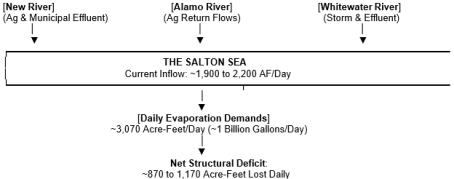
Figure 1. Net Water Inflow vs Evaporation Deficit.
1) The Alamo River: Delivers agricultural return flows from the Imperial Valley, averaging a discharge rate of ~670 to 920 cubic feet per second (cfs)
| [4] | Janik, K. P. (n.d.). Inflows and the restoration of the Salton Sea (Unpublished master's thesis). University of Montana. |
| [7] | Salton Sea Authority. (2016). Salton Sea Funding and Feasibility Action Plan - Benchmark 2: Review and Update Existing Condition Data. Salton Sea Authority. |
[4, 7]
.
2) The New River: Originates in Mexico and delivers a mix of agricultural runoff and heavy municipal wastewater, averaging a discharge rate of ~565 to 700 cfs
| [4] | Janik, K. P. (n.d.). Inflows and the restoration of the Salton Sea (Unpublished master's thesis). University of Montana. |
| [7] | Salton Sea Authority. (2016). Salton Sea Funding and Feasibility Action Plan - Benchmark 2: Review and Update Existing Condition Data. Salton Sea Authority. |
[4, 7]
.
3) The Whitewater River / Local Drains: Feeds into the north end of the basin with stormwater and treated municipal effluent, providing a minor contribution of roughly 55 cfs
| [4] | Janik, K. P. (n.d.). Inflows and the restoration of the Salton Sea (Unpublished master's thesis). University of Montana. |
| [7] | Salton Sea Authority. (2016). Salton Sea Funding and Feasibility Action Plan - Benchmark 2: Review and Update Existing Condition Data. Salton Sea Authority. |
[4, 7]
. State-funded water management programs have historically sought to maximize these minor northern inflows to preserve local shoreline wetlands, though they remain structurally insufficient on their own
.
The Math of Controlled Drawdown
The sum of these natural inflows equates to a modern average of ~1,900 to 2,200 acre-feet per day.
| [4] | Janik, K. P. (n.d.). Inflows and the restoration of the Salton Sea (Unpublished master's thesis). University of Montana. |
[4]
Because the Sea loses approximately 1 billion gallons of water per day to evaporation (equivalent to ~3,070 acre-feet per day), the basin experiences a severe structural deficit of ~870 to 1,170 acre-feet daily
| [4] | Janik, K. P. (n.d.). Inflows and the restoration of the Salton Sea (Unpublished master's thesis). University of Montana. |
| [7] | Salton Sea Authority. (2016). Salton Sea Funding and Feasibility Action Plan - Benchmark 2: Review and Update Existing Condition Data. Salton Sea Authority. |
[4, 7]
.
By executing a controlled drawdown, the project allows the Sea's surface area to decrease until the volume of daily evaporation matches the ~2,000 acre-feet of incoming flow.
| [4] | Janik, K. P. (n.d.). Inflows and the restoration of the Salton Sea (Unpublished master's thesis). University of Montana. |
[4]
At that precise elevation, the structural deficit is eliminated without requiring hazardous external ocean-fill infrastructure.
4. Engineering Evaluation & Source-level Interception
Decoupling from the C2C Ocean Pipeline Framework
Previous iterations of this framework evaluated an open-air conveyance canal or closed pipeline spanning 125 to 140 miles from the Sea of Cortez to the Salton Basin.
| [7] | Salton Sea Authority. (2016). Salton Sea Funding and Feasibility Action Plan - Benchmark 2: Review and Update Existing Condition Data. Salton Sea Authority. |
[7]
While mechanically capable of generating dynamic head for hydroelectric power, the severe risk of aquifer salt intrusion, sinkhole formation, and road buckling due to changed regional water Tables has rendered this option unfeasible. State-funded water management programs have historically sought to maximize these minor northern inflows to preserve local shoreline wetlands, though they remain structurally insufficient on their own
.
Interception at the Border: The New River Pipeline
To resolve the ecological crisis responsibly, the engineering focus shifts to source-level contamination removal.
| [3] | Hung, C., Diamond, C., Sinclair, R., Lee, M. C., Stenstrom, M., Freilich, M. A., Montgomery, Q., Marquez, C., & Lyons, T. W. (2024). Nutrient loading as a key cause of short- and long-term anthropogenic ecological degradation of the Salton Sea. Scientific Reports, 14. https://doi.org/10.1038/s41598-024-82633-y |
| [6] | Lee, M. C., & Stenstrom, M. K. (2023). Water quality mitigation strategy analysis of the Salton Sea, California, using the Delft-3D modeling suite. Frontiers in Sustainable Resource Management, 2. https://doi.org/10.3389/fsrma.2023.1178038 |
[3, 6]
Instead of allowing raw and partially treated transboundary municipal sewage to flow freely into the Salton Basin, a specialized interception network will be deployed directly at the United States-Mexico border.
1) Wastewater Treatment Plant: Border Wastewater treated at a border located treatment plant prior to moving upstream.
2) Pumping Infrastructure: High-efficiency, large-diameter axial pumps will be installed at the border boundary.
3) Conveyance Network: Intercepted wastewater will be transferred immediately via a 24-inch to 48-inch High-Density Polyethylene (HDPE) pipeline network directly to dedicated treatment facilities before it can propagate north into open valley streams.
4) Regional Wastewater Upgrades: To address localized challenges, the plan mandates a systematic infrastructure upgrade across all domestic wastewater plants throughout the Imperial and Coachella Valleys. Ending the discharge of under-treated sewage into the basin removes the primary nutrient load fueling toxic algae blooms and severe hydrogen sulfide (H2S) gas emissions
| [3] | Hung, C., Diamond, C., Sinclair, R., Lee, M. C., Stenstrom, M., Freilich, M. A., Montgomery, Q., Marquez, C., & Lyons, T. W. (2024). Nutrient loading as a key cause of short- and long-term anthropogenic ecological degradation of the Salton Sea. Scientific Reports, 14. https://doi.org/10.1038/s41598-024-82633-y |
| [13] | Freund, H., Maltz, M. R., Swenson, M. P., Topacio, M. M., Montellano, V. A., Porter, W., & Aronson, E. L. (2022). Microbiome interactions and their ecological implications at the Salton Sea. California Agriculture, 76(1), 16-26
https://escholarship.org/uc/item/8br2r9k9 |
[3, 13]
. Managing these inflows at the source is critical because the regional groundwater table already suffers from severe agricultural and geochemical leaching, making post-facto basin remediation deeply problematic
| [12] | Hibbs, B. J. (2026). Hydrogeologic and agricultural drivers of groundwater salinity, boron, selenium, and nitrate in Wister Unit, Eastern Salton Sea, California. Water, 13(2), 58.
https://www.mdpi.com/2306-5338/13/2/58 |
[12]
.
5. Economic & Industrial Engines: The Reclaimed Water Model
The Shift from Desalination to Source Wastewater Reclamation
The original plan relied on a large-scale northern desalination plant to generate clean water.
| [7] | Salton Sea Authority. (2016). Salton Sea Funding and Feasibility Action Plan - Benchmark 2: Review and Update Existing Condition Data. Salton Sea Authority. |
[7]
However, subsequent economic and environmental analysis has revealed severe liabilities:
1) The Brine Problem: Desalination produces massive quantities of highly concentrated rejected salts, which would worsen the existing hyper-salinity crisis if returned to the basin
| [3] | Hung, C., Diamond, C., Sinclair, R., Lee, M. C., Stenstrom, M., Freilich, M. A., Montgomery, Q., Marquez, C., & Lyons, T. W. (2024). Nutrient loading as a key cause of short- and long-term anthropogenic ecological degradation of the Salton Sea. Scientific Reports, 14. https://doi.org/10.1038/s41598-024-82633-y |
| [6] | Lee, M. C., & Stenstrom, M. K. (2023). Water quality mitigation strategy analysis of the Salton Sea, California, using the Delft-3D modeling suite. Frontiers in Sustainable Resource Management, 2. https://doi.org/10.3389/fsrma.2023.1178038 |
[3, 6]
.
2) Prohibitive Cost: Desalinating oceanic water is highly energy-intensive and cost-prohibitive compared to alternative local water streams
| [7] | Salton Sea Authority. (2016). Salton Sea Funding and Feasibility Action Plan - Benchmark 2: Review and Update Existing Condition Data. Salton Sea Authority. |
[7]
.
The New Solution: The revised framework redirects focus entirely toward treating the transboundary municipal sewage coming in from Mexico on the American side of the border, then sending it north via the New River while upgrading local domestic treatment plants of the Coachella and Imperial Valleys. Treating this effluent provides a highly reliable reclaimed water source with a low Total Dissolved Solids (TDS) profile.
Utilizing low-TDS reclaimed water is significantly cheaper than desalination, reduces equipment maintenance caused by salt scaling, and serves as an optimal dilution source to freshen the Sea.
| [6] | Lee, M. C., & Stenstrom, M. K. (2023). Water quality mitigation strategy analysis of the Salton Sea, California, using the Delft-3D modeling suite. Frontiers in Sustainable Resource Management, 2. https://doi.org/10.3389/fsrma.2023.1178038 |
[6]
.
Tribal Data Center Hub Integration
Leveraging the unique sovereignty and land holdings of the Torres Martinez Desert Cahuilla Indians, the framework transitions into a highly profitable green industrial model. It is completely feasible to lease designated tribal lands for a master-planned data center campus, supplying the specialized water and supporting power required internally.
1) Cooling Requirements: The tribal data center hub requires 750,000 gallons of water per day for cooling infrastructure.
2) Water Sourcing: Rather than using corrosive saltwater, the data center will utilize the low-TDS reclaimed water generated from the border-level interception and upgraded regional treatment facilities.
3) Secondary Reclaimed Uses: Crucially, the water used for data center cooling will not be consumed; it will be safely cycled back into the regional system. This treated, secondary effluent will be systematically redirected to power regional landscaping, dust suppression arrays on the exposed playa, and agricultural buffer zones, completely eliminating water stagnation.
Regional Aquifer Preservation & Agricultural Re-allocation
By integrating this framework into a broader regional water management plan, the high-quality freshwater currently utilized by local farmers can be redirected to support expanding municipal populations. In turn, restored, stabilized, and reclaimed water flows from our treatment systems will meet environmental and industrial needs. This systemic reallocation provides an all-inclusive solution capable of saving the Coachella basin's aquifers from further depletion.
| [12] | Hibbs, B. J. (2026). Hydrogeologic and agricultural drivers of groundwater salinity, boron, selenium, and nitrate in Wister Unit, Eastern Salton Sea, California. Water, 13(2), 58.
https://www.mdpi.com/2306-5338/13/2/58 |
[12]
Transitioning to this reclaimed model directly limits the accumulation of organic pathogens in surface soils, suppressing the hazardous micro-ecological shifts common to drying desert lakes
| [13] | Freund, H., Maltz, M. R., Swenson, M. P., Topacio, M. M., Montellano, V. A., Porter, W., & Aronson, E. L. (2022). Microbiome interactions and their ecological implications at the Salton Sea. California Agriculture, 76(1), 16-26
https://escholarship.org/uc/item/8br2r9k9 |
[13]
.
6. Immediate Action: Targeted Water Remediation & Tribal Collaboration
The Tribal Geopolitical Advantage: Waterfront Property at Any Elevation
A critical asset to this framework is the sovereign land status of the region's indigenous nations. The Torres Martinez Desert Cahuilla Indians hold trust ownership of the land extending deep into the sea bottom. Because their legal boundaries encompass the basin floor, the tribe possesses valuable waterfront property at any elevation.
Whether a controlled drawdown brings the water level to -244 feet, -250 feet, or lower, the tribe maintains direct, unencumbered access to the changing shoreline. This eliminates the legal and bureaucratic gridlock faced by private developers and state agencies, providing a permanent, legally secure anchor point for immediate execution, land leasing, and industrial facility placement.
Table 2. Torres Martinez Sovereign Land Boundaries (Basin Floor).
Current Shoreline (-244 ft) | Drawdown Level 1 (-250 ft) | Drawdown Level 2 (-260 ft) |
[Immediate Pilot Site] | [Permanent Dock/Access] | [Continuous Infrastructure] |
Torres Martinez Pilot Facility
We propose establishing an industrial water remediation and research facility at Avenue 76 on the Torres Martinez shoreline property. This facility will serve as a commercial-scale demonstration site to clean local water, incoming agricultural effluents, and New River wastewater at an accessible price point
| [6] | Lee, M. C., & Stenstrom, M. K. (2023). Water quality mitigation strategy analysis of the Salton Sea, California, using the Delft-3D modeling suite. Frontiers in Sustainable Resource Management, 2. https://doi.org/10.3389/fsrma.2023.1178038 |
[6]
.
The Treatment Train Technology
Uncontrolled playground exposure to unmanaged, drying shorelines has already demonstrated measurable, negative impacts on lung function development among children living in rural border cohorts
. The research facility will combine advanced technologies to handle complex waste streams that municipal systems cannot adequately treat:
1) Modular Filtration and Solids Management: An energy-positive, modular water treatment system efficiently isolates suspended solids from wastewater. Rather than creating waste, it operates within a circular economy framework—converting captured biosolids into valuable energy and organic fertilizer.
2) Cavitation Technology: Cavitation units will be integrated with the filtration infrastructure to target highly complex industrial streams, specifically landfill leachate and agricultural runoff. This combined process neutralizes volatile organic compounds and prevents the formation of toxic algae and hydrogen sulfide (H2S) before they enter the basin.
PFAS Destruction: Utilizing Hydrodynamic Cavitation and EPA/Stanford-tested pilot equipment (including specialized cone-bottom tanks and carbon-adsorption arrays), the facility will extract and destroy "forever chemicals" (PFAS) from local well water and effluents, producing clean discharge with zero detectable PFAS. This intensive targeted treatment mitigates the long-term risk of dangerous heavy metal and toxin aerosolization from exposed lacustrine playas
| [5] | Johnston, J. E., Razafy, M., Lugo, H., Olmedo, L., & Farzan, S. F. (2019). The disappearing Salton Sea: A critical reflection on the emerging environmental threat of disappearing saline lakes and potential impacts on children's health. Science of The Total Environment, 663, 804-817.
https://doi.org/10.1016/j.scitotenv.2019.01.365 |
[5]
.
7. Regulatory Strategy & Strategic Next Steps
Executing this plan requires bypassing traditional, slow-moving bureaucratic avenues in favor of direct, high-level engagement and tangible proof-of-concept demonstrations. By leveraging the unique sovereignty of Tribal Leadership—and their guaranteed waterfront rights and leasing capabilities regardless of sea level—we can initiate the Torres Martinez pilot facility and data center partnerships immediately. Concurrently, efforts will focus on finalizing border easements for the New River axial pumping array and establishing regional water reallocation frameworks to protect valley water Tables.
8. Conclusion: A New Baseline for Restoration
The updated framework presents a technologically optimized, fiscally responsible, and geologically sound evolution of the Salton Sea restoration strategy.
| [6] | Lee, M. C., & Stenstrom, M. K. (2023). Water quality mitigation strategy analysis of the Salton Sea, California, using the Delft-3D modeling suite. Frontiers in Sustainable Resource Management, 2. https://doi.org/10.3389/fsrma.2023.1178038 |
[6]
By pivoting away from hazardous, brine-producing ocean pipelines from the Sea of Cortez,
| [7] | Salton Sea Authority. (2016). Salton Sea Funding and Feasibility Action Plan - Benchmark 2: Review and Update Existing Condition Data. Salton Sea Authority. |
[7]
and embracing an intentional, managed controlled drawdown combined with border-level wastewater treatment and updating existing wastewater treatment plants throughout the Coachella and Imperial Valleys, we resolve the critical engineering and structural flaws of previous proposals.
The data confirms that the Salton Sea cannot be maintained at its historic 20th-century dimensions due to permanent structural shifts.
| [1] | Bradley, T. J., Ajami, H., & Porter, W. C. (2022). Ecological transitions at the Salton Sea: Past, present and future. California Agriculture, 76(1), 8-15.
https://doi.org/10.3733/ca.2022a0004 |
| [4] | Janik, K. P. (n.d.). Inflows and the restoration of the Salton Sea (Unpublished master's thesis). University of Montana. |
| [8] | California Department of Water Resources & California Natural Resources Agency. (2013). |
[1, 4, 8]
Accepting a controlled drawdown allows us to stabilize the Sea at a smaller, sustainable footprint without risking aquifer destruction, sinkholes, or catastrophic road buckling highlighted by modern hydrogeologic surveys
| [4] | Janik, K. P. (n.d.). Inflows and the restoration of the Salton Sea (Unpublished master's thesis). University of Montana. |
| [11] | Hibbs, B. J. (2025). Driving processes of the Niland Moving Mud Spring: A conceptual model of a unique geohazard in California's Eastern Salton Sea region. Geohazards, 6(4), 59.
https://doi.org/10.3390/geohazards6040059 |
[4, 11]
. Furthermore, implementing source-level reclamation directly addresses the critical, documented realities of localized pediatric respiratory decline and toxin aerosolization along the exposed playa
| [14] | Guo, F., et al. (2024). Distance to a drying saline lake and lung function development in a rural border cohort of children. American Journal of Respiratory and Critical Care Medicine, 209(11), 1340-1348.
https://jamanetwork.com/journals/jamanetworkopen/fullarticle/2847290 |
| [5] | Johnston, J. E., Razafy, M., Lugo, H., Olmedo, L., & Farzan, S. F. (2019). The disappearing Salton Sea: A critical reflection on the emerging environmental threat of disappearing saline lakes and potential impacts on children's health. Science of The Total Environment, 663, 804-817.
https://doi.org/10.1016/j.scitotenv.2019.01.365 |
[14, 5]
.
Anchored by the Torres Martinez Tribe's permanent waterfront land rights, powered by transboundary wastewater reclamation from the New River via border-level axial pipelines
| [6] | Lee, M. C., & Stenstrom, M. K. (2023). Water quality mitigation strategy analysis of the Salton Sea, California, using the Delft-3D modeling suite. Frontiers in Sustainable Resource Management, 2. https://doi.org/10.3389/fsrma.2023.1178038 |
[6]
, and funded by a grid-independent tribal data center and circular reclaimed water economy, this framework transforms a shrinking environmental liability into a global model of climate resilience.
Abbreviations
AF | Acre Feet |
AG | Agriculture |
CFS | Cubic Feet per Second |
TDA | Total Dissolved Solids |
Author Contributions
K. Stedman: Resources, Methodology
M. Malmquist: Resources, Methodology
R. Hill: Conceptualization, Data curation
Conflicts of Interest
The authors have received no compensation or other incentives. There are no conflicts of interest.
References
| [1] |
Bradley, T. J., Ajami, H., & Porter, W. C. (2022). Ecological transitions at the Salton Sea: Past, present and future. California Agriculture, 76(1), 8-15.
https://doi.org/10.3733/ca.2022a0004
|
| [2] |
Cohen, M. J. (2009). Haven or Hazard: The Ecology and Future of the Salton Sea. Pacific Institute.
|
| [3] |
Hung, C., Diamond, C., Sinclair, R., Lee, M. C., Stenstrom, M., Freilich, M. A., Montgomery, Q., Marquez, C., & Lyons, T. W. (2024). Nutrient loading as a key cause of short- and long-term anthropogenic ecological degradation of the Salton Sea. Scientific Reports, 14.
https://doi.org/10.1038/s41598-024-82633-y
|
| [4] |
Janik, K. P. (n.d.). Inflows and the restoration of the Salton Sea (Unpublished master's thesis). University of Montana.
|
| [5] |
Johnston, J. E., Razafy, M., Lugo, H., Olmedo, L., & Farzan, S. F. (2019). The disappearing Salton Sea: A critical reflection on the emerging environmental threat of disappearing saline lakes and potential impacts on children's health. Science of The Total Environment, 663, 804-817.
https://doi.org/10.1016/j.scitotenv.2019.01.365
|
| [6] |
Lee, M. C., & Stenstrom, M. K. (2023). Water quality mitigation strategy analysis of the Salton Sea, California, using the Delft-3D modeling suite. Frontiers in Sustainable Resource Management, 2.
https://doi.org/10.3389/fsrma.2023.1178038
|
| [7] |
Salton Sea Authority. (2016). Salton Sea Funding and Feasibility Action Plan - Benchmark 2: Review and Update Existing Condition Data. Salton Sea Authority.
|
| [8] |
California Department of Water Resources & California Natural Resources Agency. (2013).
|
| [9] |
Biological opinion for the Salton Sea Species Conservation Habitat Project (Report No. y19).
|
| [10] |
U.S. Fish and Wildlife Service.
https://water.ca.gov/-/media/DWR-Website/Web-Pages/Programs/Engineering-And-Construction/Files/Design-Build/Salton-Sea-Reports/04_USFWS_BO_Salton_Sea_a_y19.pdf
|
| [11] |
Hibbs, B. J. (2025). Driving processes of the Niland Moving Mud Spring: A conceptual model of a unique geohazard in California's Eastern Salton Sea region. Geohazards, 6(4), 59.
https://doi.org/10.3390/geohazards6040059
|
| [12] |
Hibbs, B. J. (2026). Hydrogeologic and agricultural drivers of groundwater salinity, boron, selenium, and nitrate in Wister Unit, Eastern Salton Sea, California. Water, 13(2), 58.
https://www.mdpi.com/2306-5338/13/2/58
|
| [13] |
Freund, H., Maltz, M. R., Swenson, M. P., Topacio, M. M., Montellano, V. A., Porter, W., & Aronson, E. L. (2022). Microbiome interactions and their ecological implications at the Salton Sea. California Agriculture, 76(1), 16-26
https://escholarship.org/uc/item/8br2r9k9
|
| [14] |
Guo, F., et al. (2024). Distance to a drying saline lake and lung function development in a rural border cohort of children. American Journal of Respiratory and Critical Care Medicine, 209(11), 1340-1348.
https://jamanetwork.com/journals/jamanetworkopen/fullarticle/2847290
|
Cite This Article
-
APA Style
Stedman, K., Malmquist, M., Hill, R. (2026). Comprehensive Action Plan & Hydrological Assessment for the Salton Sea Crisis. American Journal of Water Science and Engineering, 12(2), 78-83. https://doi.org/10.11648/j.ajwse.20261202.14
 Copy
|
Copy
|
 Download
ACS Style
Stedman, K.; Malmquist, M.; Hill, R. Comprehensive Action Plan & Hydrological Assessment for the Salton Sea Crisis. Am. J. Water Sci. Eng. 2026, 12(2), 78-83. doi: 10.11648/j.ajwse.20261202.14
Copy
|
Download
AMA Style
Stedman K, Malmquist M, Hill R. Comprehensive Action Plan & Hydrological Assessment for the Salton Sea Crisis. Am J Water Sci Eng. 2026;12(2):78-83. doi: 10.11648/j.ajwse.20261202.14
Copy
|
Download
-
@article{10.11648/j.ajwse.20261202.14,
  author = {K. Stedman and M. Malmquist and R. Hill},
  title = {Comprehensive Action Plan & Hydrological Assessment for the Salton Sea Crisis},
  journal = {American Journal of Water Science and Engineering},
  volume = {12},
  number = {2},
  pages = {78-83},
  doi = {10.11648/j.ajwse.20261202.14},
  url = {https://doi.org/10.11648/j.ajwse.20261202.14},
  eprint = {https://article.sciencepublishinggroup.com/pdf/10.11648.j.ajwse.20261202.14},
  abstract = {The progressive ecological and public health decline of the Salton Sea demands a transition from cost-prohibitive restoration models toward a pragmatically engineered, private-sector-driven framework. This paper presents a comprehensive action plan that abandons "total refill" concepts—such as importing ocean water from the Sea of Cortez—due to severe geological and hydrological risks like regional aquifer salt intrusion, catastrophic sinkholes, and structural subsidence. Instead, the framework proposes a strategic pivot to a mathematically optimized, controlled drawdown. By intentionally reducing the Sea’s surface area, the severe structural water deficit driven by agricultural water transfers under the 2003 Quantification Settlement Agreement is eliminated as daily evaporation naturally balances real-world inflows. To manage environmental impacts, the plan outlines source-level contaminant interception. A dedicated pumping and pipeline network at the United States-Mexico border will capture and divert transboundary municipal sewage from the New River. This effluent, alongside upgraded domestic wastewater, will be processed using modular filtration, cavitation, and PFAS-destruction technologies to provide a low-salinity reclaimed water source. Crucially, this framework introduces a circular economy by integrating a green industrial hub on the sovereign, trust-protected basin lands of the Torres Martinez Desert Cahuilla Indians. This geopolitical advantage bypasses regulatory gridlock, allowing the tribe to lease land for a master-planned, grid-independent data center campus. The facility will utilize the treated reclaimed water for cooling infrastructure before cycling it back into the regional ecosystem for secondary applications, including targeted dust suppression on exposed playa, local landscaping, and agricultural buffer zones. Ultimately, this integrated framework establishes a self-sustaining model for climate resilience, transforming a compounding environmental liability into a stable socioeconomic asset.},
 year = {2026}
}
Copy
|
Download
-
TY  - JOUR
T1  - Comprehensive Action Plan & Hydrological Assessment for the Salton Sea Crisis
AU  - K. Stedman
AU  - M. Malmquist
AU  - R. Hill
Y1  - 2026/06/30
PY  - 2026
N1  - https://doi.org/10.11648/j.ajwse.20261202.14
DO  - 10.11648/j.ajwse.20261202.14
T2  - American Journal of Water Science and Engineering
JF  - American Journal of Water Science and Engineering
JO  - American Journal of Water Science and Engineering
SP  - 78
EP  - 83
PB  - Science Publishing Group
SN  - 2575-1875
UR  - https://doi.org/10.11648/j.ajwse.20261202.14
AB  - The progressive ecological and public health decline of the Salton Sea demands a transition from cost-prohibitive restoration models toward a pragmatically engineered, private-sector-driven framework. This paper presents a comprehensive action plan that abandons "total refill" concepts—such as importing ocean water from the Sea of Cortez—due to severe geological and hydrological risks like regional aquifer salt intrusion, catastrophic sinkholes, and structural subsidence. Instead, the framework proposes a strategic pivot to a mathematically optimized, controlled drawdown. By intentionally reducing the Sea’s surface area, the severe structural water deficit driven by agricultural water transfers under the 2003 Quantification Settlement Agreement is eliminated as daily evaporation naturally balances real-world inflows. To manage environmental impacts, the plan outlines source-level contaminant interception. A dedicated pumping and pipeline network at the United States-Mexico border will capture and divert transboundary municipal sewage from the New River. This effluent, alongside upgraded domestic wastewater, will be processed using modular filtration, cavitation, and PFAS-destruction technologies to provide a low-salinity reclaimed water source. Crucially, this framework introduces a circular economy by integrating a green industrial hub on the sovereign, trust-protected basin lands of the Torres Martinez Desert Cahuilla Indians. This geopolitical advantage bypasses regulatory gridlock, allowing the tribe to lease land for a master-planned, grid-independent data center campus. The facility will utilize the treated reclaimed water for cooling infrastructure before cycling it back into the regional ecosystem for secondary applications, including targeted dust suppression on exposed playa, local landscaping, and agricultural buffer zones. Ultimately, this integrated framework establishes a self-sustaining model for climate resilience, transforming a compounding environmental liability into a stable socioeconomic asset.
VL  - 12
IS  - 2
ER  -
Copy
|
Download





 Share This Article
 Twitter
 Linked In
 Facebook