1. Introduction
Rapid industrialization and urbanization has posed significant threats of Heavy metals and Total Petroleum Hydrocarbons to human health and the environment. The conventional approaches for removing toxic substances from the environment have failed to achieve the desired result leading to more innovative means of treatment.
Contamination by hydrocarbons results from the use of toxic organic substances, petroleum, and pesticides. It is a serious concern for the environment. According to Srivastava, Srivastava, Yadav and Rawat, (2019) contamination caused by petroleum hydrocarbon is a matter of worry because it is harmful for various life forms. Crude oil contamination is common due to its extensive use and its related dumping process and accidental spills
.
Petroleum comprises of a complex mixture of high and low molecular weight hydrocarbons. The complex mixture of petroleum consists of saturated and branched alkanes, alkenes, and homo- and hetero-cyclic naphthenes; aromatics made up of hetero-atoms such as heavy metal complexes and N, S, and O; hydrocarbons consisting of different functional groups which include ethers, carboxylic acids, and others.
1.1. Study Gaps
Concentration of contaminants in the environment is not constant, but varies in time and space. Natural processes such as bioremediation and chemical transformation can degrade contaminants over time rendering the hitherto toxic environment safe for human life.
In view of this, related studies done in the past on the lake revealed various contamination levels, but as time passed, they are inadequate in proposing real-time effective measures in addressing the lingering problem. This insufficient knowledge of the present concentration level of the contaminants in the lake is what the study addressed. It also revealed the variations of these contaminants in water and bed sediments which provided a valuable insight towards effective environmental management.
1.2. Aim and Objectives
The overall study aim was to determine the pollution loads of the Oguta lake with respect to the concentration of heavy metals and TPH. In so doing, the following objectives are outlined which are to:
1) Determine the concentration of TPH and heavy metals in bed sediments and water of Oguta lake,
2) Compare the concentrations of these contaminants with the regulatory limits, and
3) Recommend appropriate measures for improving the environmental sustainability of the lake.
2. Literature Survey
Water pollution is becoming a globally challenging phenomenon in recent time. Contamination by heavy metals and hydrocarbons is attracting significant attention among scholars and victims of water pollution
| [2] | Sanja M. S., Gordana. J. D, Dubravka, J. R., Ivan B. A., Nenad M. S., Dragana S. D. (2014) ‘Environmental Assessment of Heavy Metal Pollution in Freshwater Sediment, Serbia’ Clean- Soil, Air, Water 2015, 42 (9999), 1-8. |
[2]
. Heavy metals are natural constituents of sediments and could be introduced anthropogenically through industrial or urban discharges
| [3] | Angon, P. B. a, Shafiul, I., Shreejana, K. C, Arpan, Das, N. (2023) Sources, effects and present perspectives of heavy metals contamination: soil, plants and human food chain. Heliyon 10 (2024) e28357 page 1-15. |
[3]
.
Scholars have studied the water quality of Oguta lake, Imo state and various analyses of numerous parameters carried out to determine the fitness of the water for both human use and ecological function. Okorondu
| [4] | Okorondu S. I. and Anyadoh-Nwadike S. O. ‘Bacteriological and Physiochemical Analysis of Oguta Lake Water, Imo State, Nigeria’ Science Journal of Public Health 3(5): 14-19. |
[4]
investigated the bacteriological and physiochemical analysis of water from the lake at three gauging stations, upstream, midstream and downstream. Results show that Iron (0.47mg/l), lead (0.18mg/l) and cadmium (0.08mg/l) exceeded the standard set by the World Health Organization.
Oguta lake is the main lake in Imo state, serving several economic functions such as artisanal fishing, transportation, tourism, domestic, industrial and agricultural
| [5] | Obinwanne, C. O. (2016). Socio-Economic Benefits of Oguta Lake Tourist Destination on the Host Community of Oguta, IMO State, Nigeria. International Journal of Trend in Research and Development, Volume 3(3). |
[5]
. Adebayo, Oluwatosin and Nneji
| [6] | Adebayo, E. T., Oluwatosin, T. J. C. and Nneji, P. C. (2017) ’Limnological Assessment of Heavy Metals Concentration in Water and Sediment of Oguta Lake, South-East Nigeria, Nigeria’ International Journal of Innovative Studies in Aquatic Biology and Fisheries Vol. 3, Issue 3, 2017, PP 18-22. |
[6]
carried out another study of Oguta Lake limnological assessment of heavy metals concentration in sediment and water. Five sampling stations according to the anthropogenic activities surrounding the lake were collected at the interval of two weeks between the hours of 8: 00am and 11: 00 am from the months of July - September, 2016. Results show that iron concentration in the sediment was higher than the acceptable level recommended by NESREA for aquatic life survival.
Nwabata, David and Akpu
| [7] | Nwabata, A. U., David, S. F. and Akpu, I. J. (2021) ‘Physico-Chemical Parameters of Oguta Lake, Imo State, Nigeria’. International Journal of Scientific Engineering and Applied Science (IJSEAS) - Volume-7, Issue-6, Page 208-2022. |
[7]
investigated the physiochemical parameters of Oguta Lake, on a monthly basis between the period of May 2016 - October, 2018. Parameters studied included biochemical oxygen demand, dissolved oxygen, nitrate, phosphate, phosphorus as well as pH. Results show that some substances were within the permissible limit except phosphorus, nitrate and turbidity which exceeded.
Ogueri Adebayo and Nwaiisu
| [8] | Ogueri C., Adebayo, E. T. and Nwaiwu, V. N. C. (2018) ‘Assessment of heavy metals in fish species and some physico-chemical parameters of Oguta Lake, Oguta, Imo state, Nigeria’ International Journal of Hydrology Vol. 2 Issue 2 page 116-119. |
[8]
carried out evaluation of heavy metals in various species of fish and physicochemical characteristics of the Lake. Nickel, lead, manganese and copper were analyzed from water and fish samples collected from three stations and fishermen landing sites for the period of three months. The parameters were carried out according to APHA standard. Data analysis was carried out through one-way Analysis of Variance (ANOVA) using the Standard Package for Social Sciences (SPSS) version 22.6. Findings revealed that heavy metal concentrations in the fishes were within acceptable limits for aquatic life and drinking water.
Ekeanyanwu, Nwokedi and Noah
| [9] | Ekeanyanwu, R. C., Nwokedi, C. L. and Noah, U. T. (2015) Monitoring of metals in Tilapia nilotica tissues, bottom sediments and water from Nworie River and Oguta Lake in Imo State, Nigeria. African Journal of Environmental Science and Technology (Vol 9, Issue 8, pp. 682-690). |
[9]
monitored heavy metal levels in fish, water and sediments of Oguta Lake and Nworie River both in Imo state. Cr, As, Zn, Mn, Co Cd, Pb, Se, Cu, Al, Ni and Fe were analyzed with Atomic Absorption Spectrophotometer. Fe was found the highest in the samples from both water bodies while Mn was lowest. None of the metals in bottom sediments exceeded allowable limits for the protection of the biota in the water environment.
Shittu, Duru and Nwachukwu
| [10] | Shittu, U. A., Duru, C. M. and Nwachukwu, M. O. (2023) ‘Determination of Physicochemical Properties and Heavy Metal Concentration in Water and Sediment Samples from Oguta Lake, Imo State Nigeria.’ International Journal of Research Publication and Reviews, Vol 4, no 6, pp 699-705 June 2023. |
[10]
also investigated the concentration of heavy metals and physicochemical properties of water and sediment samples from Oguta Lake. The concentrations of Ni, Zn, Pb Fe, Cd, Cu and Hg in water and sediments samples were analyzed with Atomic Absorption Spectrophotometer. Pearson’s multivariate analysis of variance (MANOVA) was used to evaluate the inter-relationship of heavy metals in sediments and water. Findings revealed an alteration in the physicochemical parameters in Oguta Lake and gradual accumulation of heavy metals arising from atmospheric activities in the lake’s vicinity.
Isiuku and Enyoh
| [11] | Isiuku, B. O. and Enyoh, C. E. (2020). ‘Pollution and health risks assessment of nitrate and phosphate concentrations in water bodies in South Eastern, Nigeria’. Environmental Advances (2)(2) Page 1-8. |
[11]
investigated the concentration of nitrate and phosphate in Oguta Lake and other four lakes in eastern Nigeria. Results show that nitrate and phosphorus levels vary between the seasons. The authors added that efficient monitoring of the nutrient level of the water bodies is vital in controlling eutrophication and rapid decay of the aquatic resources.
2.1. Description of Study Area
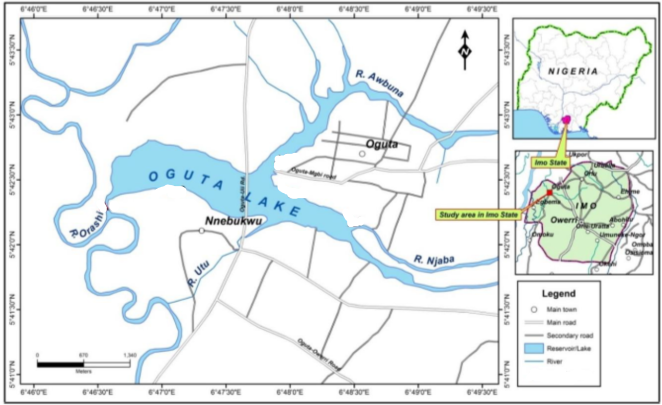
Oguta Lake is located in Oguta Local Government Area of Imo State and constitutes the largest natural Lake in Imo State, South-eastern Nigeria (
Figure 1). It lies within Latitudes 05°41' to 05°44'N and Longitudes 06°41' to 06°50'E, with an elevation of 50m above sea level. It occupies a surface area that fluctuates between 1.8km
2 and 2.5km
2 | [12] | Nfor, B. N. and Akaegbobi, I. M. (2012). Inventory of the quaternary geology and the evolution of the Oguta lake in South Western Nigeria’ Sciences, (2) (1) pg1-12. |
[12]
a shoreline length of 10km, and maximum and minimum depths of 8.0m and 5.5m respectively.
Through Orashi River, the lake empties into River Niger in Anambra State. The climate is tropical rain forest with two distinct seasons, dry season lasts from October to March, and rainy season lasts from April to September
| [13] | Nnaji, A. O., Igbojiekwe, P. A. and Nnaji, C. C. (2011) ‘An Assessment of Developmental potential of Oguta Lake as a Tourist destination’ E-Review of Tourism Res., Vol. (9) (6) page 265-272. |
[13]
. Temperature is generally high with an average of 27°C, February and March were the hottest months when the temperature rises to between 33°C and 35°C. The Lake served as Biafran Army marine base during the Nigerian Civil war
| [12] | Nfor, B. N. and Akaegbobi, I. M. (2012). Inventory of the quaternary geology and the evolution of the Oguta lake in South Western Nigeria’ Sciences, (2) (1) pg1-12. |
[12]
.
Oguta was one of the first territories the British followed to advance into the Igbo hinterland. As of 2012, Oguta's population was estimated at 20,096. Because of its location of the lake, Oguta town becomes an important center of maritime trade through Awo-Omamma, Orashi, Ndoni, Awbuna, and Niger rivers to the Atlantic coast.
2.1.1. Problem Definition
In recent years, industrialization and hydrocarbon exploitation in the Niger Delta region of Nigeria have exposed the environment to loads of heavy metal and hydrocarbon pollution. Water that hitherto served as habitat for aquatic resources such as fishes, crabs and various aquatic lives has lost value and become unusable for drinking purposes also.
The presence of multinational oil companies such as Nigeria Agip Oil Company Limited and SPDC within the drainage basin of Oguta lake contributed to heavy metal and hydrocarbon pollution in the lake. Oguta Lake is one of the largest lakes in Imo state and serves as ecological reservoir for effluents and contaminants arising from the activities of man on the land surface
| [14] | Ahiarakwem, C. A., Nwankwor, G. I., Onyekuru, S. O. (2012) ‘An Assessment of the Physical and Environmental Aspects of a Tropical Lake: A Case Study of the Oguta Lake Watershed, Niger Delta Basin, Nigeria’ American International Journal of Contemporary Research Vol. 2 No. 7 page 53-60. |
[14]
. Umeuduji,
| [15] | Umeuduji, J. E. (2000) Principles of Fluvial Geomorphology. Jodigs and Associates, Minna. |
[15]
noted that the waterbody characteristics is usually a reflection of human activities going on, on the land surface.
This is because geomorphological processes transport contaminants from the land to the lake where they are finally deposited. Most heavy metals such as chromium and cadmium that are carcinogenic are also transported. Similarly, some components of hydrocarbons such as poly aromatic hydrocarbons are carcinogenic. Introducing these substances into the water body renders it unsuitable for its intended use, exposes the residents (users) to various health challenges hence increasing the morbidity or mortality rate of the residents.
Considering the sanctity of human life and man's reliance on water for various activities, there is urgent need for regular monitoring of the lake to provide up-to-date data relevant for carrying out a holistic environmental management programme in the area to achieve a desirable sustainable development.
2.1.2. Sources and Compositions of Heavy Metals and TPH
Industrial and agricultural revolution expanded the use of chemicals to boost productivity in different sectors of the economy. Similarly. Population expulsion has accelerated the demand for resources to meet the growing desire for more goods and services for the teeming population. Eventually, massive effluents are generated and released into the environment which enormously impairs the quality of the environment
| [16] | Wimkor, V. A., Iheanychukwu, O. A, Enyoh, C. B. Ngozi, V. E., Ohazuruike, N. C, Okoro, U. K, Ibe, F. C., Ahuocha, P. A. (2021) ‘Petroleum Hydrocarbons and Heavy Metals Risk of Consuming Fish Species from Oguta Lake, Imo State, Nigeria’ Journal of Chemical Health Risks 11(1), 1-15. |
[16]
. Environmental contamination by heavy metals has perpetually led to the degradation of the environment hence impairing its ability to foster life and render its intrinsic values.
Petroluem consists of complex mixture of high and low molecular weight hydrocarbons. The complex mixture of petroleum include saturated and branched alkanes, alkenes, and homo- and heterocyclic naphthenes; aromatics consisting of heteroatoms such as heavy metal complexes and N, S, and O; hydrocarbons consisting of different functional groups such as ethers, carboxylic acids, etc.; and large aromatic molecules such as asphaltenes, resins, and naptheno-aromatics. Heavy metals are found in crude oil, and the metallic content is associated with porphyrin which is the pyrrolic structure. Lube oil waxes, light oil, asphaltenes, naphtha, diesel, kerosene, etc. are the several fractions in which the petroleum is refined.
There are in situ and ex-situ methods of remediating the Oguta Lake but an objective evaluation of the various methods in terms of cost and effectiveness will guide the choice of an appropriate technology for the remediation. Heavy metals are element s which occur in nature with density between 5-20g/cm3. They include Zinc, Iron, Mercury, Chromium, Cupper and others. They have toxic characteristics and endangers living organisms that are exposed to them. Various regulatory institutions such as USEPA classify them as priority pollutants.
| [17] | Rai, P. K., Lee, S. S., Zhang, M., Tsang, Y. F. and Kim, K. (2019 ‘Heavy metals in food crops: Health risks, fate, mechanisms and management’ Environment International Vol. (1)(25) page 365-385. |
| [18] | Custodio, A., Espinoza, C Orellana, E., Chanamé, Fow, A., and Peñaloza, R. (2022)‘Assessment of toxic metal contamination, distribution and risk in the sediments from lagoons used for fish farming in the central region of Peru’ Toxicology Reports, Volume 9, 2022, Pages 1603-1613,
https://doi.org/10.1016/j.toxrep.2022.07.016 |
[17, 18]
.
Heavy metals are commonly found as suphides, hydroxides, sulphates and carbonates usually found in soil and rock matrix. They are found naturally and anthropogenically
| [19] | Kumar, V. M., Prasad, R. H. (2025) Heavy metals in the environment: Sources, fate and health implications. In: Sunitha, V., Muralidhara, R. B., Sudharshan, R. Y., Prasad, M., Pradeep, K. B., Balaji, E. (eds): Groundwater Resource Management Planning Strategies. Springer Water, Springer. |
[19]
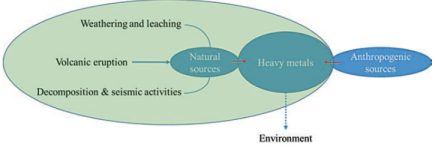
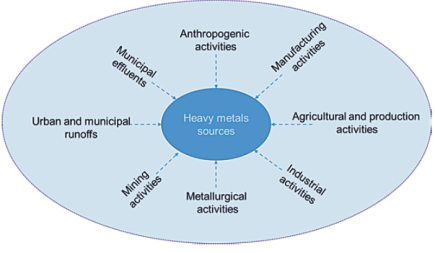
, however the unnaturall source is very significant and deserv urgent attention. Heavy metals bioaccumulate in the environment and are transported via the soil, water and atmosphere. This is illustrated in
Figures 2 and 3.
Figure 2. Sources and transport of heavy metals in the environment.
Figure 3. Man-made sources of heavy metals in the environment.
2.1.3. Avaliability of Heavy Metals in the Aquatic Environment
The role of sediments as sinks for contaminants was studied by Chen, Selvam, Ting and Gibbins
| [20] | Chen, H. L, Selvam, S. B., Ting, K. N. and Gibbins, C. N. (2023) ‘Microplastic concentrations in river water ad bed sediments in a tropical river: Implications for water quality monitoring’ Environmental Monitoring and Assessment, (195) (2) page 307. |
[20]
. They investigated various chemical components and physical parameters of substances from the EU priority and watch list. Findings revealed diverse pollution pressures involving organic hydrocarbons, PAHs and metals in different sediments. The authors concluded that the availability of these components in the sediments is not unconnected with the various chemical components of the sediments which made them to act as sinks for absorbing contaminates from urban, agricultural and industrial sources for decades.
Kumar and Parasad
| [19] | Kumar, V. M., Prasad, R. H. (2025) Heavy metals in the environment: Sources, fate and health implications. In: Sunitha, V., Muralidhara, R. B., Sudharshan, R. Y., Prasad, M., Pradeep, K. B., Balaji, E. (eds): Groundwater Resource Management Planning Strategies. Springer Water, Springer. |
[19]
investigated the characteristics, spatial dispersal, contamination level and possible sources of six heavy metals in Oder and Vistula Rivers in Poland. Result from Cluster and Principal Components Analysis (PCA) showed that the spatial distribution of heavy metals in sediments is mainly linked to pollution from point sources, but this is altered by the fluvial processes taking place in the river. In the two rivers, the direction of pollution distribution in sediments is opposite. In Oder River, higher concentrations are found from downstream to upstream as a result of the presence of point and non-point sources of pollution. While in the Vistula River, pollution declines from downstream to upstream which is not unconnected with sediment deposition in reservoirs located along the river, sewage treatment plants and the self-purification processes of a river.
Chen, Selvam, Ting and Gibbins
| [20] | Chen, H. L, Selvam, S. B., Ting, K. N. and Gibbins, C. N. (2023) ‘Microplastic concentrations in river water ad bed sediments in a tropical river: Implications for water quality monitoring’ Environmental Monitoring and Assessment, (195) (2) page 307. |
[20]
posit that sampling protocols to assess the contamination levels of micro plastics in freshwater systems have not been established. As such, they proffer answer to whether sampling and assessment of micro plastic concentration should focus on water or on bed sediments. Results show that 160 samples collected had mean concentration of micro plastics in water 3.12 ± 2.49 and 6027.39 ± 16.585.87 particles/m
2 dumped on the surface of river bed sediments. Within site variability in micro plastics, abundance was high for both water and bed sediments and greater than between site variability. Sites that recorded highest mean concentrations in samples of water were different from those with the highest concentrations on the bed. This implies that pollution monitoring based only on water samples provides insufficient data and not a good reflection of either relative or absolute bed pollution levels or the risks which the benthic organisms were exposed.
SaiChaithanya, Das and Vidya
| [21] | SaiChaithanya, M., Das, B. and Vidya, R. (2023) ‘Assessment of metals pollution and subsequent ecological risks I water sediments and vegetation from a shallow lake: A case study from Ranipet Industrial Town, Tamil Nadu, India.’ International Journal of Environment and Analytical Chemistry. Vol. (103) (8) page 1786-1803. |
[21]
assessed the distribution of nine heavy metals in sediment, water, and vegetation samples taken from shallow lakes of Ranipet, India. Findings revealed that the concentration of the contaminants from the root zone sediment samples of different plant species exhibited varied bioavailable fractions than lake bed sediments. This occurs in the order of Root > Stem > Leaves. This implies that the root of those plant species is a good indicator of heavy metal concentration in the lake environment and also vital in phytoremediation. Furthermore, the sources of the contaminants identified through Pearson’s Correlation Matrix (PCM) and Principal Component Analysis (PCA) were lithological in origin for Al and Fe, anthropogenic for Cr, Co, Mn and Cu. Al, Fe and Mn correlated strongly with Total Organic Carbon (TOC) implying that high TOC favours distribution of those contaminants. Across the media, the levels of heavy metals exceeded the regulatory limit in India.
Ho-Sik, Dieudonné-Guy and Nikolaos
, stressed that the assessment of the quality of a sediment is very relevant in understanding the level of pollution of water bodies. Sediments are important aspect of ecosystems that function as trap and storage medium for contaminants. The authors noted that the concentration of sediments on upper and lower Wadi El-Rayan Lake varies. Results show that the area exposed to Wadi El-Wadi is the most polluted due to its closeness to water drainage entering but generally the concentration of heavy metals on the sediments is higher in LWRL than UWRL because the water volume and lake area in LWRL is lesser than UWRL.
2.1.4. Effects of Heavy Metal Pollution on the Environment
Heavy metals found through natural and anthropogenic sources tends to bioaccumulate in the environment and transport through the food chain exposing plnats and animals. Through ingestion, inhalation and skin contact, man is regualarly exposed to heavy metals with its attendant health consequences.
Hydrocarbons on the other hand, are made up of aromatic hydrocarbons (ArHs) such as benzene and toluene, the aliphatic hydrocarbons (Ahs) and Polycyclic Aromatic Hydrocarbons (PAHs), including benzo[a]anthracene, benzo[ghi]pyrilene, and benzo[a]pyrene; these are persistent organic pollutants (POPs) in the ecosystem
| [23] | Kanungo, J., Sahoo, T., Swain, L. P., Behera, I. D. (2023). Toxicity of Persistent Hydrocarbon Pollutants, Sources and Sustainable Remediation Process. In: Behera, I. D., Das, A. P. (eds) Impact of Petroleum Waste on Environmental Pollution and its Sustainable Management Through Circular Economy. Environmental Science and Engineering. Springer, Cham.
https://doi.org/10.1007/978-3-031-48220-5_2 |
[23]
. These hazardous pollutants are harmful because they are carcinogenic, mutagenic, immuno-toxic, and teratogenic. They are threats to all living organism ranging from micro-organisms to humans when they are released into the environment.
The main sources of hydrocarbon are through the combustion of petroleum and its products; however, their emission sources can be classified as phytogenic (natural), petrogenic, and pyrogenic. In the identification of type of pollutant and its transport, circumstances play a vital role for their origin. Hydrocarbons can enter to the environment via evaporation, dissolution, dispersion, adsorption, and other processes including oil spillage and crude oil combustion
| [23] | Kanungo, J., Sahoo, T., Swain, L. P., Behera, I. D. (2023). Toxicity of Persistent Hydrocarbon Pollutants, Sources and Sustainable Remediation Process. In: Behera, I. D., Das, A. P. (eds) Impact of Petroleum Waste on Environmental Pollution and its Sustainable Management Through Circular Economy. Environmental Science and Engineering. Springer, Cham.
https://doi.org/10.1007/978-3-031-48220-5_2 |
[23]
. Generally, petrogenic sources generally pollute groundwater and poses threat to the environment because petrogenic source products such as lubricants and fuels leak from tanks and released into the environment.
Srivastava, Srivastava, Yadav and Rawat
stated that the toxic substances found in hydrocarbons make it very toxic and attracts significant attention. Contamination is a serious concern due to its harmful nature to the sustenance of life in the environment.
2.2. Conceptual Framework
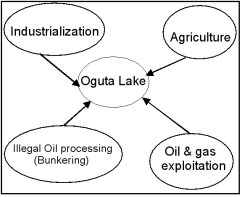
Industrialization, urbanization and oil and gas exploitation activities going on in the drainage basin of Oguta Lake generate pollutants that are transported by water into the lake. This scenario is better conceptualized using the source sink theory. According to Sharifpur
, everything in nature has a pair, positive end and the negative end. Also, if there is a source (origin), there will be a sink which is connected by a flow pattern. Source and sink are major concepts used in pollution studies whereby the movement or direction and pattern of different pollutants can be clearly identified. The source-sink principle can be applied to non-point source pollution control, biological diversity protection, urban heat island mitigation and others. The source - sink theory indicates that if there is a source at the same time, there will be a sink with a flow pattern from the source to the sink and the process must be conserved
.
The Source- Sink theory was aimed at solving the problems that the ecological processes ignored during landscape ecology research. It connotes each landscape by linking it to a particular ecological process. The author added that it is therefore vital to understand the concerned ecological process before distinguishing a landscape as either a sink or as a source. A landscape such as Oguta Lake can be a source or a sink depending on the function (positive/negative) it is playing during a specific ecological process. For instance, a farm is usually a source landscape for non- point source pollution because of a large volume of fertilizer and pesticide applied, whereas it is a sink landscape during the carbon cycle due to the fact that crops absorbs vital portion of Carbon dioxide from the atmosphere. This is represented in
Figure 4.
Figure 4. Source-Sink theory conceptualized for Oguta Lake.
From
Figure 4, human activities in the drainage basin which include industrialization, illegal oil processing, agriculture as well as oil and gas exploitation activities are sources of heavy metals and hydrocarbon contamination in the basin. These contaminants are then transported from the highland areas through runoff towards the Oguta Lake which is a depositional environment. In other words, the lake serves as a sink to these contaminants that originated from the upland regions of the drainage basin.
3. Method of Data Collection and Analysis
This research involved data collection and information from scientific articles on the concentration of toxic chemicals such as heavy metals and organic pollutants. The scientific articles were sought from Google Scholar and back searches through references. To be included, it should have been published not earlier than the year 2000 to guarantee that its information is up-to-date.
Composite sampling technique was conducted carefully at three different locations. Sampling bottles was used to collect water samples at 0.3m depth from the water surface. While improvised sediment core sampler were used to collect sediment samples from the bed of the lake. Water samples collected were transported in 500ml high glass bottles and sediment stored and transported in aluminum foils to prevent the degradation of TPH.
Table 1 shows the various samples collected and their coordinates.
Table 1. Coordinates of the sampling locations.
S/N | Samples (Sediment & water) | Latitude | Longitude |
1 | Sample A | 5o42’24” N | 6o47’33” E. |
2 | Sample B | 5o42’25” N | 6o47’38” E. |
3 | Sample C | 5o42’28” N | 6o47’43” E. |
The materials used for the sampling were rinsed and soaked in 10% HNO
3 overnight. The bottles were capped tightly and stored at 4
oC to prevent evaporation
| [16] | Wimkor, V. A., Iheanychukwu, O. A, Enyoh, C. B. Ngozi, V. E., Ohazuruike, N. C, Okoro, U. K, Ibe, F. C., Ahuocha, P. A. (2021) ‘Petroleum Hydrocarbons and Heavy Metals Risk of Consuming Fish Species from Oguta Lake, Imo State, Nigeria’ Journal of Chemical Health Risks 11(1), 1-15. |
[16]
and sent to a NOSDRA approved laboratory where analysis took place. In the laboratory, sediment samples were air-dried, ground to pass a 200µ mesh-sieve and kept for further analysis. All sampling and preservation methods strictly followed the standard described by American Public Health Association (APHA), American Water Works Association (AWWA), and Water Environment Federation (WEF) in 1999.
Analysis and Result Presentation
Table 2 shows the comparison of the parameter concentration in water samples with the regulatory limits.
Table 2. Mean concentration of pollutants in the water samples.
Parameters | FMEnv Standard | Mean | SD |
pH | 6.50-8.50 | 7.45 | 0.32 |
TPH | NA | 0.00 | 0.00 |
Pb | 0.05 | 0.00 | 0.00 |
Cr | 0.05 | 0.00 | 0.00 |
Cd | 0.01 | 0.00 | 0.00 |
Ni | 0.05 | 0.00 | 0.00 |
Fe | 1.00 | 3.81 | 1.59 |
Source: Author’s field work, 2023
FMEnv = Federal Ministry of Environment
Table 3 shows the mean level of the parameters in sediment samples compared with regulatory limits in Nigeria.
Table 3. Concentration of contaminants in the sediment samples.
Parameters | FMEnv Standard | Mean | SD |
pH | 6.50-8.50 | 7.10 | 0.54 |
TPH | NA | 14.56 | 19.75 |
Pb | 0.05 | 0.01 | 0.02 |
Cr | 0.05 | 0.02 | 0.03 |
Cd | 0.01 | 0.00 | 0.01 |
Ni | 0.05 | 0.00 | 0.01 |
Fe | 1.00 | 47.88 | 60.5 |
Source: Author’s field work, 2023
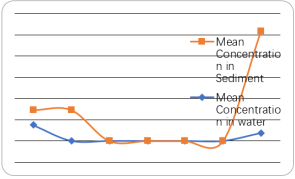
Tables 2 and 3 show the laboratory results of the concentration of heavy metals and TPH in the water and sediment samples collected from Oguta lake respectively. These results are further shown in the
Figure 5.
Figure 5. Mean concentrations of the contaminants in water and sediment samples.
In analyzing the result further, Student t-Test was applied to the formulated hypothesis:
Research Hypothesis (H1): The concentrations of TPH and heavy metals significantly vary in bed sediment and water of Oguta Lake.
To be testable, the research hypothesis is hereby converted to null equivalent as:
Null Hypothesis (H0): There is no variation in the concentration of TPH and heavy metals in bed sediment and water of Oguta Lake.
To test this hypothesis, the parametric statistics, the Independent t-test was used to give statistical credence to the result and gain confidence in establishing statistical significance. Independent t-test was used when the research focus was to establish a difference or variance between two independent groups or variables. The findings of the statistical examination are presented in
Table 4.
As presented in
Table 4, the concentrations of heavy metals and Total Petroleum hydrocarbons (TPH) on the water and bed sediments of Oguta Lake vary significantly. In the water sample, the concentration of heavy metals: pH was 7.45±0.32, t=94.98, p <0.05 which is statistically significant, TPH was not statistically significant while Fe was 3.80 t=9.86, p <0.05 which is statistically significant. Also for sediment sample: the concentration of heavy metals was significant. pH was 6.71±0.34, t=81.41, p<0.05 which is statistically significant; TPH=42.63±12.72, p <0.05 and Fe=117.50±34.57, p<0.05 which is statistically significant. Therefore, we can conclude that, the concentrations of heavy metals and Total Petroleum hydrocarbons in the water and bed sediments of Oguta Lake vary significantly in different proportions.
Thus, the null hypothesis which states that, there is no significant variation in the concentrations of TPH and heavy metals in Oguta lake bed sediments and water was rejected while the alternate hypothesis was retained which implies that, in this study, there was a significant difference in the level of Total Petroleum Hydrocarbons and heavy metals assessed in Oguta Lake bed sediments and water.
Table 4. Difference in concentration of heavy metals on water and bed sediments.
Sample type | Variables | Mean | SD | t-test | Sig. |
Water | pH | 7.45 | 0.32 | 94.98 | .000* |
| TPH | <0.01 | 0.00 | a | a |
| Fe | 3.80 | 1.59 | 9.86 | .000 |
Sediment | pH | 6.71 | 0.34 | 81.41 | .000 |
| TPH | 42.63 | 12.72 | 13.81 | .000 |
| Fe | 117.50 | 34.57 | 14.01 | .000 |
4. Discussion
Findings reveal that the concentrations of contaminants in bed sediments and water vary significantly. Specifically, Fe and TPH levels exceeded the permissible limit set by the regulatory agency. Since the environment is similar, it implies that some processes influenced the concentration in various media. Umeuduji,
| [15] | Umeuduji, J. E. (2000) Principles of Fluvial Geomorphology. Jodigs and Associates, Minna. |
[15]
noted that the river sediment is a true reflection of activities of man in the land areas.
More so, bed sediments undergo minimal transformation, diffusion and transportation in the aquatic environment causing a prolonged retention of the material and contaminants in a surface
. Controlling the concentration levels of Fe and TPH in the sediment column is of paramount importance to this study.
In data analysis above, the null hypothesis that was rejected aligns with other related studies that affirm a variation in the concentration of heavy metals in bed sediments and water of a lake or river. As literature sources revealed above, Samantha
et al | [25] | Samantha, R, Mayes, W. M, Faetsch, S., Hetjens, H., Teuchies, J., Walker, P., Heitmann, K., Welham, K., Moore, D., Bervoets, L., Kay, P., Duffus, W., Smith, N., De Cooman, W., Elst, R., Ryken, E., Rotchell, J. M., Heise, S., (2023) “Mixtures of Sediment Chemical Contaminants at Freshwater Sampling Sites Across Europe with Different Contaminant Burdens”. Science of The Total Environment, Volume 891, 2023, 164280, https://doi.org/10.1016/j.scitotenv.2023.164280 |
[25]
observed a variation even within sediments and attributed it to a complex chemical composition of various sediments.
Also, SaiChaithanya
et al | [21] | SaiChaithanya, M., Das, B. and Vidya, R. (2023) ‘Assessment of metals pollution and subsequent ecological risks I water sediments and vegetation from a shallow lake: A case study from Ranipet Industrial Town, Tamil Nadu, India.’ International Journal of Environment and Analytical Chemistry. Vol. (103) (8) page 1786-1803. |
[21]
disclosed a higher heavy metal concentration in vegetation samples than in water and sediment samples in Ranipet Lake, India in the order of Root>Stem>Leaves. The authors concluded that the variation was due to the positive roles played by the plants in phytoremediation and therefore act as attraction points to heavy metals.
Finally, Khedr,
et al | [26] | Khedr, A. I., Goher, M. E., Salem, S. G. and Seliem, M. E. (2023) ‘Assessment of pollution and metal toxicity in the bed sediment of EL-Rayan lakes, Fayoum, Egypt’. SN Appl. Sci (5) (190). |
[26]
in their study in El-Rayan Wadi lake uncovered another variation in heavy metal concentration in sediments based on the location of sample collected. According to the authors, the source of drainage entrance into the lake, water volume and area changes which are related to seasonal changes are behind contaminant variations in the upper and lower Wadi El-Rayan Lake.
From the foregoing the Oguta lake is contaminated with Fe and TPH as their detected values in the samples were above regulatory limits. It has also revealed that the concentrations of these contaminants vary in bed sediment and water samples.
In this context, this study has substantiated findings of other works that established a variation of heavy metal concentrations in sediment and water samples thereby increasing content in learning. In the words of Khedr
et al | [26] | Khedr, A. I., Goher, M. E., Salem, S. G. and Seliem, M. E. (2023) ‘Assessment of pollution and metal toxicity in the bed sediment of EL-Rayan lakes, Fayoum, Egypt’. SN Appl. Sci (5) (190). |
[26]
sediment acts as a sink to contaminants and offers a more reliable estimate of the level of contaminants in an aquatic ecosystem than on water alone.
Similarly, the work has highlighted the need for a comprehensive assessment of both water and sediments in Oguta lake for a proper treatment and safe water supply. From the heavy metals studied, the concentration of Iron was highest. Another contaminant which exceeded the regulatory limit was total petroleum hydrocarbons. These contaminants recorded higher in the sediment samples than in water. This affirms the assertion that the bed sediment reveals the true picture of contaminant concentration in an aquatic environment and highly relevant for treatment to ensure a long-time sustainable protection of the environment.
Literature also revealed that the Lake was a zone for military operations during the Nigeria/Biafra Civil War. During that period various forms of metallic objects used were deposited in the area. This could be a significant source of high concentration of iron in the bed sediment.
Most components of TPH are carcinogenic. Excessive Iron in domestic use also causes high levels (>0.3 mg/l) can cause aesthetic issues such as metallic taste and staining. Rahman, Wahab, Akter, & Mahanta
| [27] | Rahman, I., Wahab, M. A., Akter, M., & Mahanta, T. R. (2024). Iron in Drinking Water and its Impact on Human Health -A Study in Selected Units of Jalalabad Cantonment. Bangladesh Armed Forces Medical Journal, 56(2), 58-64.
https://doi.org/10.3329/bafmj.v56i2.73013 |
[27]
noted that extreme, long-term exposure (>2mg/l) may cause gastrointestinal distress, iron overload (hemosiderosis), and potentially liver or brain dysfunction. As such there is urgent need for the treatment of Oguta Lake to be safely used for domestic water supply. These treatment methods according to Chaturvedi,
involve Electro-coagulation, oxidation/filtration, bioremediation, ion exchange and use of aerated granular filter.





 Share This Article
 Twitter
 Linked In
 Facebook
 Copy
Copy Download