Abstract
Job satisfaction plays a vital role in enhancing staff morale, motivation, and institutional performance, particularly in academic settings where effective teaching and mentorship depend on staff commitment. This study identified the following objectives: level of job satisfaction, factors that influence job satisfaction and strategies to improve job satisfaction among academic staff in Shehu Sule College of nursing science Damaturu. A descriptive cross-sectional research design was adopted, and data were collected from 67 respondents using a structured questionnaire. The findings revealed that a moderate level of overall job satisfaction, regular salary payment, good collegial relationships autonomy in teaching and a sense of personal accomplishments were among the factors influencing job satisfaction among staff of Shehu Sule College of nursing science. The provision of adequate staff, fair compensation, recognition and motivation, and sponsorship for further studies are suggested strategies found in the study. We recommend the recruitment of more staff to reduce workload and ensure equitable distribution of responsibilities. Compensation packages should be reviewed to ensure fairness, adequacy, and commensurability with qualifications and responsibilities and Clear, transparent, and fair promotion policies should be implemented to motivate staff.
|
Published in
|
American Journal of Nursing Science (Volume 15, Issue 3)
|
|
DOI
|
10.11648/j.ajns.20261503.11
|
|
Page(s)
|
44-51 |
|
Creative Commons
|

This is an Open Access article, distributed under the terms of the Creative Commons Attribution 4.0 International License (http://creativecommons.org/licenses/by/4.0/), which permits unrestricted use, distribution and reproduction in any medium or format, provided the original work is properly cited.
|
|
Copyright
|
Copyright © The Author(s), 2026. Published by Science Publishing Group
|
Keywords
Job Satisfaction, Factors, Academic Staff, Collegial Relationship, Promotion Procedure, Nigeria
1. Introduction
Job satisfaction is a critical determinant of employee performance, organizational commitment, and overall institutional growth
| [1] | Abdirahman. (2021). the role of employee engagement in enhancing job satisfaction: A managerial perspective. International Journal of Human Resource Management. |
[1]
. Increasing satisfaction is one of the main interests of every organization. The more customers are satisfied with the service or product, the more benefits the organization will get. However, it is said that internal customers (employees) are more important than external customers for the success of the company
| [3] | Adegoke. (2021). Leadership styles and employee productivity in higher education. Journal of Management and Administrative Studies. |
[3]
. In higher education, lecturer’s job satisfaction is the most significant and important aspect for the improvement and effectiveness of the higher education system. Since lecturers are the largest human resource in a tertiary institutions, understanding the factors that contribute to the job satisfaction (or dissatisfaction) of lecturers is critical to increasing the information base needed to support a successful education system
| [16] | Yusuf. (2020). The impact of institutional support on academic staff job satisfaction in colleges of nursing. Nigerian Journal of Nursing and Midwifery Research. |
[16]
. However, in academic institutions, especially colleges of nursing, the level of job satisfaction among academic staff directly influences teaching effectiveness, research productivity, mentorship quality, and student outcomes. Satisfied academic staff are more likely to demonstrate dedication, creativity, and resilience, while dissatisfaction often results in reduced motivation, absenteeism, high turnover, and diminished institutional performance
| [3] | Adegoke. (2021). Leadership styles and employee productivity in higher education. Journal of Management and Administrative Studies. |
[3]
.
Globally, studies have shown that factors such as remuneration, working conditions, recognition, and opportunities for career advancement, workload, leadership style, and availability of resources significantly affect job satisfaction among academic staff. In many developing countries, particularly within the health and education sectors, challenges such as inadequate funding, poor infrastructure, limited staff development opportunities, and politicization of appointments continue to threaten staff morale and retention
| [3] | Adegoke. (2021). Leadership styles and employee productivity in higher education. Journal of Management and Administrative Studies. |
[3]
.
In Africa, higher education systems continue to grapple with inadequate funding, limited research opportunities, poor infrastructure, and heavy teaching loads, all of which negatively affect staff satisfaction and retention
| [15] | Tettey. (2006). Staff retention in African universities: Elements of a sustainable strategy. World Bank/Partnership for Higher Education in Africa. |
[15]
. In Nigeria, issues such as irregular promotion, inadequate remuneration, resource constraints, politicization of academic appointments, and limited staff development opportunities have been widely reported as contributors to job dissatisfaction among academic staff
| [5] | Adeniran. (2020). Job satisfaction and performance among academic staff in public colleges of education in Nigeria. Nigerian Journal of Educational Management. |
[5]
.
In Yobe State, academic staff in colleges play a vital role in training competent health personnel to meet the health needs of the population. However, this responsibility is often carried out in the face of multiple institutional challenges, including inadequate facilities, high student–teacher ratios, poor remuneration, limited access to training and research opportunities, and insufficient recognition of staff contributions. At Shehu Sule College of Nursing Sciences Damaturu, these factors may significantly impact staff job satisfaction and, consequently, the quality of nursing education and health service delivery in the state
| [16] | Yusuf. (2020). The impact of institutional support on academic staff job satisfaction in colleges of nursing. Nigerian Journal of Nursing and Midwifery Research. |
[16]
.
In Yobe State, anecdotal evidence suggests that academic staff face a combination of challenges that may influence their job dissatisfaction. These include promotion delays, poor motivation, limited training opportunities, and inadequate recognition of academic contributions. Such factors, if not addressed, may reduce staff commitment and undermine the college’s mission of producing competent nursing professionals. Despite the importance of job satisfaction to institutional stability and academic excellence, little is known about the specific factors that shape the satisfaction levels of academic staff at Shehu Sule College of Nursing Sciences. This study, therefore, seeks to assess the level of job satisfaction among academic staff, identify the major influencing factors, and propose strategies to enhance satisfaction and overall institutional effectiveness.
Given the importance of academic staff satisfaction to institutional success, it becomes necessary to assess their level of job satisfaction, identify the factors that influence it, and suggest practical strategies for improvement. This will provide valuable evidence for policymakers and administrators to enhance the work environment, promote staff welfare, and strengthen the quality of nursing education.
Objectives of the Study Are
1. To assess the level of job satisfaction among academic staff at Shehu Sule college of nursing.
2. To identify factors that influence job satisfaction among academic staff in Shehu Sule College of nursing.
3. To proffer strategies to improve job satisfaction among academic staff.
2. Methodology
2.1. Research Design
This study adopted a descriptive cross-sectional research design. The design was considered appropriate because it enables the researcher to obtain an accurate snapshot of the existing conditions, opinions, and attitudes of academic staff regarding factors that influence job satisfaction and promotion at a particular point in time.
2.2. Area of Study
The study was conducted at Shehu Sule College of nursing sciences, Damaturu, located in Yobe State, Nigeria. The College is a tertiary health training institution that trains students in nursing, midwifery and public health nursing and has both academic and non-academic staff. The college was established in October 1993 and is situated along Gujba Road, opposite Yobe State Specialist Hospital. It is a state college of nursing that was strategically established to play the role of provision of the tertiary education in nursing sciences and producing a skilled full product in to health care system for professional development and services delivery. SCN&M Damaturu, is one of the accredited nursing college institutions among the state colleges in Nigeria. SCN&M Damaturu was formerly known as school of nursing of the North Eastern Nigeria and the West African sub region.
2.3. Population of the Study
The target population for this study includes all full-time and part-time academic staff (lecturers) currently employed at Shehu Sule College of Nursing Science, Damaturu. This includes senior lecturers, lecturers, assistant lecturers, and clinical instructors. As the study focuses on job satisfaction and their influence on academic roles (teaching, mentorship, research, and clinical supervision) were considered. The college has a total of approximately 80 academic staff distributed across the various departments and units (College's Academic Registry, 2025). This figure was obtained from the institution’s 2025 Staff Nominal Roll and Employment Record available in the college registry. The registry serves as the official record of academic personnel employed by the institution at the time of the study.
2.4. Scope and Delimitation of the Study
The study cover all the staff of Shehu Sule College of nursing sciences and is delimited to only academic staff of the college.
2.5. Sample Size
To determine the appropriate sample size for the study, Taro Yamane's formula (1967) was adopted. The formula is suitable for finite population sampling and is stated as follows:
Where: n = Sample size
N = Total population (in this case, 80 lecturers)
e = Margin of error (usually 0.05)
Therefore
2.6. Instrument for Data Collection
The instrument used for data collection was a structured questionnaire designed by the researcher. The questionnaire consisted of closed-ended and Likert scale items that sought information on level of job satisfaction, factors that influence job satisfaction, and suggestions for improvement.
2.7. Method of Data Collection
The researcher personally administered the questionnaires to all the academic staff in the college after obtaining the necessary permission from the school authority. The questionnaires were distributed during office hours and retrieved after completion. This direct approach ensured a 100% response rate.
2.8. Method of Data Analysis
Data collected from the questionnaires were analyzed using descriptive statistics of frequency and percentage which are presented in table.
2.9. Validity of the Instrument
To ensure the validity of the instrument, the draft questionnaires was reviewed by the research supervisors. Their suggestions were used to revise ambiguous or misleading items to improve clarity and ensure that each question accurately reflected the study objectives.
2.10. Reliability of the Instrument
To establish reliability in this study, the test–retest method was employed, after presenting ten questionnaires as a pilot study at a spot.
2.11. Ethical Considerations
Ethical approval was obtained from the research ethics committee of Shehu Sule College of Nursing Sciences, Damaturu. Informed consent was obtained from all respondents. Participation was voluntary, and respondents were assured of confidentiality and anonymity. The data collected were used strictly for academic purposes, and no personal information was disclosed or published.
3. Results and Data Presentation
Table 1. Socio Demographic characteristics of the respondent.
Variables | Frequency | Percentage (%) |
Gender |
Male | 40 | 59.7 |
Female | 27 | 40.3 |
Total | 67 | 100 |
Age |
25-34 | 16 | 23.9 |
35-44 | 32 | 47.8 |
45-54 | 19 | 28.3 |
55 and above | 0 | 0 |
TOTAL | 67 | 100 |
HIGHEST ACADEMIC QUALIFICATION |
Diploma | 0 | 0 |
Bachelor degree | 25 | 37.3 |
Master degree | 19 | 28.3 |
Doctorate | 9 | 13.4 |
Others | 14 | 21 |
TOTAL | 67 | 100 |
CURRENT ACADEMIC RANK |
Tutor | 25 | 37.3 |
Senior tutor | 20 | 29.8 |
Principal tutor | 15 | 22.4 |
Chief tutor | 3 | 4.5 |
Assistant lecturer | 4 | 6 |
TOTAL | 67 | 100 |
YEARS OF TEACHING EXPERIENCE |
<2 years | 13 | 19.4 |
2-5 years | 18 | 26.9 |
6-10 years | 27 | 40.3 |
11 and above | 9 | 13.4 |
Table 1 above shows that majority of the respondent were males (59.7%) compared to females (40.3%). This shows that, male-dominated academic workforce. Most respondents were between 35–44 years (47.8%), followed by 45–54 years (28.3%). Only 23.9% were 25–34 years, and none were 55+. This means that staff are largely in mid-career stage. The highest group held a Bachelor’s degree (37.3%), followed by Master’s (28.3%). About 21% had other qualifications, while 13.4% had PhDs. No one held only a diploma. This indicates relatively high academic attainment. Tutors (37.3%) and Senior Tutors (29.8%) made up the majority. Principal Tutors (22.4%), Assistant Lecturers (6%), and Chief Tutors (4.5%) were fewer. This reflects concentration in lower/middle ranks. Furthermore, most of the respondent had 6–10 years (40.3%), followed by 2–5 years (26.9%). Only 19.4% had less than 2 years, and 13.4% had 11 years above. This suggests staff were generally experienced.
Table 2. Distribution of the respondents based on level of job satisfaction.
Response | FREQUENCY | PERCENTAGE% |
Very satisfied | 13 | 19.4% |
Satisfied | 17 | 25.4% |
Neutral | 25 | 37.3% |
Dissatisfied | 12 | 17.9% |
Very dissatisfied | 0 | 0% |
Total | 67 | 100% |
Table 2 above reveal that 19.4% of the respondents were very satisfied with their jobs, while 25.4% were satisfied, giving a combined satisfaction rate of 44.8%. However, the largest proportion of respondents (37.3%) reported being neutral, suggesting uncertainty or mixed feelings about their job satisfaction. In contrast, 17.9% were dissatisfied, while none reported being very dissatisfied. This indicates that although a fair number of staff were satisfied, a considerable proportion remained undecided, and nearly one-fifth were dissatisfied, pointing to only a moderate level of overall job satisfaction among the academic staff.
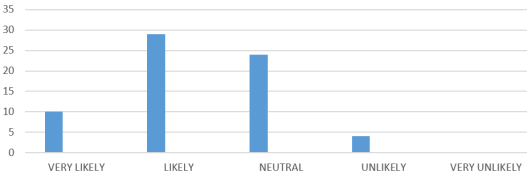
Figure 1. Distribution of the respondents base on Recommendation on job satisfaction.
The
Figure 1 above demonstrates a generally positive attitude toward job satisfaction, with the majority (Likely + Very likely) showing willingness to recommend their job. This reflects a moderate to high level of satisfaction among academic staff, though the presence of neutral response indicates room for improvement in areas that could further enhance job fulfillment.
Table 3. Distribution of the respondents according to factors influencing job satisfaction.
Variables | Strongly Disagree | Disagree | Neutral | Agree | Mean | remark |
My salary is commensurate with my qualifications and experience. | 9 | 10 | 26 | 22 | 2.1 | Neutral |
The salary is paid regularly and on time. | 0 | 6 | 23 | 38 | 1.4 | Agree |
The benefits (e.g., housing, transport, health) are adequate. | 0 | 18 | 26 | 23 | 1.9 | Neutral |
The opportunities for promotion are clear and fair. | 10 | 15 | 28 | 14 | 2.3 | Neutral |
The college provides adequate teaching facilities (classrooms, labs, and library). | 8 | 12 | 24 | 23 | 2.1 | Neutral |
The administrative support for academic staff is effective. | 12 | 16 | 26 | 13 | 2.4 | Neutral |
The physical working conditions (offices, staff rooms) are comfortable. | 6 | 11 | 25 | 25 | 1.9 | Agree |
There is adequate access to internet and research materials. | 18 | 11 | 21 | 17 | 2.4 | Neutral |
My teaching workload is manageable. | 23 | 18 | 14 | 12 | 2.8 | S disagree |
The distribution of courses and responsibilities among staff is fair. | 23 | 15 | 24 | 5 | 2.8 | Neutral |
I have a good balance between my work and personal life. | 9 | 14 | 19 | 25 | 2.1 | Agree |
I have sufficient autonomy in planning my courses and teaching methods. | 6 | 9 | 25 | 27 | 1.9 | Agree |
The college management is supportive of academic staff. | 8 | 12 | 24 | 23 | 2.0 | Neutral |
Communication from management is clear and transparent. | 10 | 15 | 25 | 17 | 2.2 | Neutral |
Management involves academic staff in decision-making processes. | 6 | 10 | 21 | 30 | 1.8 | Agree |
There is a fair and effective system for handling grievances. | 5 | 18 | 17 | 27 | 2.0 | Agree |
The college provides opportunities for professional development (e.g., conferences, workshops). | 8 | 15 | 18 | 26 | 2.0 | Agree |
I receive adequate recognition for my contributions and achievements. | 6 | 14 | 20 | 27 | 1.9 | Agree |
There are opportunities to engage in research and scholarly activities. | 12 | 13 | 18 | 19 | 2.1 | Agree |
My job provides me with a sense of personal accomplishment. | 0 | 12 | 26 | 29 | 1.7 | Agree |
I have a good relationship with my colleagues. | 0 | 0 | 24 | 43 | 1.3 | Agree |
There is a spirit of cooperation and teamwork among academic staff. | 0 | 2 | 32 | 33 | 1.5 | Agree |
I have a good relationship with my students. | 0 | 0 | 29 | 38 | 1.4 | Agree |
The
Table 3 above shows the level of job satisfaction among academic staff can be described as moderate, reflecting a balance between strong intrinsic motivators and significant institutional barriers. On the positive side, collegiality, interpersonal relationships, autonomy in teaching, and the inherent fulfillment derived from the academic role emerged as the most powerful drivers of satisfaction. Staff reported very positive relationships with colleagues (Mean: 1.3), students (Mean: 1.4), and highlighted a cooperative work environment (Mean: 1.5). They also expressed satisfaction with the autonomy to plan courses (Mean: 1.9), the sense of accomplishment from their work (Mean: 1.7), timely salary payment (Mean: 1.4), recognition of contributions (Mean: 1.9), and opportunities for professional growth (Mean: 2.0). In contrast, institutional challenges were found to be major sources of dissatisfaction. Heavy teaching workloads (Mean: 2.8) stood out as the most critical concern, followed by issues with remuneration, where staff were neutral about the adequacy of salaries relative to qualifications (Mean: 2.1) and benefits such as housing and healthcare (Mean: 1.9). Promotion opportunities were also perceived as unclear and possibly unfair (Mean: 2.3). Neutral responses regarding resource availability (teaching facilities: Mean 2.1; internet and research access: Mean 2.4), management support (Means 2.0–2.4), and administrative efficiency further reflected institutional weaknesses. Some factors showed mixed or neutral influence, particularly the distribution of courses and responsibilities (Mean: 2.8), and management practices, where staff acknowledged involvement in decision-making (Mean: 1.8) and the existence of grievance-handling mechanisms (Mean: 2.0), but still rated overall supportiveness and communication poorly.
Overall, the findings suggest that while the intrinsic and relational aspects of academic work provide meaningful satisfaction, systemic issues relating to workload, remuneration, promotion pathways, and institutional support significantly hinder staff morale. Addressing these institutional gaps is essential for transforming moderate satisfaction into a higher, more sustainable level of job fulfillment.
Table 4. Distribution of the respondents based on Strategies for improvement of job satisfaction.
Response | FREQUENCY | PERCENTAGE% |
Provision of adequate staff | 21 | 31.3% |
Fair compensation | 16 | 23.9% |
Sponsor staff for further studies | 9 | 13.4% |
Recognition, appreciation and motivation | 10 | 14.9% |
Provision of adequate learning and E-learning material for academic staff | 5 | 7.5% |
Organizing workshop/seminar to improve their skills and method of teaching | 6 | 9% |
Table 4, shows that provision of adequate staff (31.3%) and fair compensation (23.9%) were the most emphasized strategies, followed by recognition and motivation (14.9%) and sponsorship for further studies (13.4%). Workshops/seminars (9%) and provision of learning or E-learning resources (7.5%) were less frequently mentioned, but still seen as beneficial. Overall, the results suggest that while collegial relationships and autonomy contribute positively to job satisfaction, institutional challenges such as inadequate staffing, poor remuneration, heavy workload, insufficient resources, and weak management support remain the major hindrances to achieving higher levels of satisfaction among academic staff.
4. Discussion
4.1. Key Findings
The study found that 19.4% of the respondents were very satisfied, 25.4% were satisfied, 37.3% were neutral, and 17.9% were dissatisfied. This indicates a moderate level of overall job satisfaction among the academic staff.
The study revealed that regular salary payment (56.7% agree) and good collegial relationships (100% agree) were identified as the most significant factors contributing to job satisfaction. Other positive factors included autonomy in teaching (80.6% agreement) and a sense of personal accomplishment (86.6% agreement).
The study also stated that dissatisfaction was mainly associated with heavy workload (41.8% disagreement), unclear promotion opportunities (37.3% neutrality and 37.3% disagreement), inadequate teaching facilities (29.8% disagreement), and weak management communication (37.3% disagreement or neutrality).
The most frequently suggested strategies were the provision of adequate staff (31.3%), fair compensation (23.9%), recognition and motivation (14.9%), and sponsorship for further studies (13.4%). Other suggestions included organizing workshops/seminars (9%) and providing adequate e-learning materials (7.5%).
4.2. Discussion of Findings
This study revealed that job satisfaction among academic staff was moderate, as 44.8% expressed satisfaction, 37.3% were neutral, and 17.9% were dissatisfied. This is in consonant with the findings of Ololube (2021)
| [12] | Ololube, N. P. (2021). Education and work performance: The leadership–efficiency and job satisfaction connection among university employees. International Journal of Educational Foundations and Management, 9(1), 34–49. |
[12]
who reported that Nigerian academic staff often experience moderate to low satisfaction due to institutional challenges, particularly in remuneration and career development. Similarly, Adebayo (2022)
| [2] | Adebayo, T. (2022). Understanding neutrality in employee job satisfaction: Implications for organizational management. Journal of Human Resource Studies, 10(2), 55–67. |
[2]
noted that neutrality in job satisfaction responses often reflects unaddressed concerns that staff may be unwilling to voice directly. Remuneration emerged as a critical issue. Although salaries were paid regularly, many respondents felt that their earnings were not commensurate with their qualifications or workload. This finding is consistent with Ofoegbu & Nwadiani (2022)
| [11] | Ofoegbu, F. I., & Nwadiani, M. (2022). Level of perceived stress among lecturers in Nigerian universities. Educational Research Quarterly, 46(4), 45–59. |
[11]
who emphasized that poor remuneration and irregular benefits remain major sources of dissatisfaction in Nigerian tertiary institutions. Likewise, Masum et al. (2021)
| [10] | Masum, A. K. M., Azad, M. A. K., & Beh, L. S. (2021). Determinants of academics’ job satisfaction: Empirical evidence from private universities in Bangladesh. PLOS ONE, 16(6), e0253045. https://doi.org/10.1371/journal.pone.0253045 |
[10]
found in a Bangladeshi study that inadequate salary and unclear promotion structures negatively affect motivation among academic staff. Promotion opportunities were perceived as unclear and unfair, which resonates with Adeniji (2021)
| [4] | Adeniji, A. (2021). Promotion procedures and job satisfaction among academic staff in Nigerian colleges. African Journal of Education and Management, 8(1), 40–52. |
[4]
who found that opaque promotion procedures in Nigerian colleges hinder academic staff morale and career growth. Work environment challenges such as inadequate teaching resources and poor internet access were highlighted in this study. This agrees with Akintoye (2022)
| [7] | Akintoye, I. R. (2022). Infrastructure and job satisfaction in Nigerian tertiary institutions. Journal of Educational Research and Policy Studies, 7(1), 14–26. |
[7]
, who reported that lack of modern facilities in many Nigerian colleges reduces teaching effectiveness and job satisfaction. Heavy workload was also seen as a barrier, which mirrors findings by Akinwale & George (2020)
| [6] | Akinwale, O., & George, O. (2020). Workload and job satisfaction among academic staff in Nigeria. Higher Education Studies, 10(3), 23–35. |
[6]
that workload pressure contributes significantly to dissatisfaction among academic staff. Leadership and management practices were considered weak, especially in communication and grievance handling. This finding is consistent with Gberevbie (2021)
| [9] | Gberevbie, D. E. (2021). Leadership style, motivation, and staff performance in tertiary institutions. Nigerian Journal of Public Administration and Management, 16(3), 101–118. |
[9]
, who argued that participatory leadership and transparent communication are critical for staff motivation and institutional stability. However, in this study, management involvement of staff in decision-making received relatively better responses, which partially aligns with Owoyemi & Ekwoaba (2021)
| [14] | Owoyemi, O., & Ekwoaba, J. (2021). The impact of participative management on employee commitment in Nigerian tertiary institutions. African Journal of Business and Economic Research, 16(2), 89–102. |
[14]
, who found that involving staff in decision-making improves commitment and performance.
On the other hand, collegiality and relationships were a strong positive factor, as most staff reported good teamwork and student interactions. This finding echoes Bowen & Ostroff (2019)
| [8] | Bowen, D. E., & Ostroff, C. (2019). Understanding HRM–firm performance linkages: The role of the “strength” of the HRM system. Academy of Management Review, 29(2), 203–221. |
[8]
who highlighted that positive interpersonal relationships serve as intrinsic motivators in academic settings, even when institutional support is weak.
Finally, the strategies suggested that provision of adequate staff, fair compensation, recognition, and professional development are in consistent with recommendations from Olorunsola (2020)
| [13] | Olorunsola, E. O. (2020). Improving job satisfaction through institutional support and staff development in Nigerian universities. Journal of Education and Practice, 11(4), 12–21. |
[13]
, who stressed the importance of adequate staffing, fair remuneration, and continuous development opportunities in improving staff satisfaction in Nigerian tertiary institutions.
4.3. Implications of Study to Nursing Practice
Job satisfaction among nurse educators directly influences their teaching quality, mentorship, and commitment, which in turn affects the training of future nurses.
Addressing workload, recognition, and professional development opportunities can enhance motivation, leading to better academic outcomes and improved healthcare delivery through well-trained nurses.
Improving institutional support and resources (internet, learning materials) can strengthen nursing education and research capacity.
4.4. Limitations of the Study
The study was conducted in a single institution, which may limit the generalizability of findings to other nursing colleges.
Statistics was not employed in the study such as reliability coefficients (e.g. Pearson r, ICC, Cronbach’s alpha) for the total scale and, if possible, subscales.
The study design was descriptive and cross-sectional, which does not allow for establishing causal relationships.
5. Conclusion
The study concludes that while academic staff in the college demonstrated moderate satisfaction, key institutional challenges hinder higher levels of job satisfaction. Remuneration, workload, unclear promotion opportunities, and insufficient management support emerged as the major hindrances, whereas strong collegial relationships provided the main positive influence. Addressing these issues is essential for enhancing academic staff performance, retention, and overall institutional growth.
6. Recommendations
Based on the findings, the following recommendations are made:
The college should recruit more staff to reduce workload and ensure equitable distribution of responsibilities.
Compensation packages should be reviewed to ensure fairness, adequacy, and commensurability with qualifications and responsibilities.
Clear, transparent, and fair promotion policies should be implemented to motivate staff.
Management should strengthen communication systems, involve staff in decision-making, and establish effective grievance-handling mechanisms.
Opportunities for professional development, research engagement, and sponsorship for further studies should be expanded.
Recognition and motivation of staff achievements should be institutionalized.
Adequate learning and E-learning resources should be provided to support teaching and research.
Author Contributions
Salisu Lawan: Conceptualization, Resources
Muhammad Sadiq Ali: Data curation, Methodology
Amina Babayo Hamma: Formal Analysis
Ya’u Saleh: Investigation
Aida Mohammed Kajiama: Methodology
Fatima Baba Saleh: Resources
Yakawu Bukar Sheriff: Writing- original draft
Sulaiman Isah Fika: Writing – original draft
Maimuna Yusuf Sule: Validation
Yagana Abba Sidi: Visualization
Zainab Balaraba Yakubu: Project Administration
Amina Garba Muhammad: Funding Acquisition
Conflicts of Interest
The authors declare no conflicts of interest.
References
| [1] |
Abdirahman. (2021). the role of employee engagement in enhancing job satisfaction: A managerial perspective. International Journal of Human Resource Management.
|
| [2] |
Adebayo, T. (2022). Understanding neutrality in employee job satisfaction: Implications for organizational management. Journal of Human Resource Studies, 10(2), 55–67.
|
| [3] |
Adegoke. (2021). Leadership styles and employee productivity in higher education. Journal of Management and Administrative Studies.
|
| [4] |
Adeniji, A. (2021). Promotion procedures and job satisfaction among academic staff in Nigerian colleges. African Journal of Education and Management, 8(1), 40–52.
|
| [5] |
Adeniran. (2020). Job satisfaction and performance among academic staff in public colleges of education in Nigeria. Nigerian Journal of Educational Management.
|
| [6] |
Akinwale, O., & George, O. (2020). Workload and job satisfaction among academic staff in Nigeria. Higher Education Studies, 10(3), 23–35.
|
| [7] |
Akintoye, I. R. (2022). Infrastructure and job satisfaction in Nigerian tertiary institutions. Journal of Educational Research and Policy Studies, 7(1), 14–26.
|
| [8] |
Bowen, D. E., & Ostroff, C. (2019). Understanding HRM–firm performance linkages: The role of the “strength” of the HRM system. Academy of Management Review, 29(2), 203–221.
|
| [9] |
Gberevbie, D. E. (2021). Leadership style, motivation, and staff performance in tertiary institutions. Nigerian Journal of Public Administration and Management, 16(3), 101–118.
|
| [10] |
Masum, A. K. M., Azad, M. A. K., & Beh, L. S. (2021). Determinants of academics’ job satisfaction: Empirical evidence from private universities in Bangladesh. PLOS ONE, 16(6), e0253045.
https://doi.org/10.1371/journal.pone.0253045
|
| [11] |
Ofoegbu, F. I., & Nwadiani, M. (2022). Level of perceived stress among lecturers in Nigerian universities. Educational Research Quarterly, 46(4), 45–59.
|
| [12] |
Ololube, N. P. (2021). Education and work performance: The leadership–efficiency and job satisfaction connection among university employees. International Journal of Educational Foundations and Management, 9(1), 34–49.
|
| [13] |
Olorunsola, E. O. (2020). Improving job satisfaction through institutional support and staff development in Nigerian universities. Journal of Education and Practice, 11(4), 12–21.
|
| [14] |
Owoyemi, O., & Ekwoaba, J. (2021). The impact of participative management on employee commitment in Nigerian tertiary institutions. African Journal of Business and Economic Research, 16(2), 89–102.
|
| [15] |
Tettey. (2006). Staff retention in African universities: Elements of a sustainable strategy. World Bank/Partnership for Higher Education in Africa.
|
| [16] |
Yusuf. (2020). The impact of institutional support on academic staff job satisfaction in colleges of nursing. Nigerian Journal of Nursing and Midwifery Research.
|
Cite This Article
-
APA Style
Lawan, S., Ali, M. S., Hamma, A. B., Saleh, Y., Kajiama, A. M., et al. (2026). Assessment of Factors Influencing Job Satisfaction Among Academic Staff of Shehu Sule College of Nursing Sciences Damaturu, Yobe State. American Journal of Nursing Science, 15(3), 44-51. https://doi.org/10.11648/j.ajns.20261503.11
 Copy
|
Copy
|
 Download
ACS Style
Lawan, S.; Ali, M. S.; Hamma, A. B.; Saleh, Y.; Kajiama, A. M., et al. Assessment of Factors Influencing Job Satisfaction Among Academic Staff of Shehu Sule College of Nursing Sciences Damaturu, Yobe State. Am. J. Nurs. Sci. 2026, 15(3), 44-51. doi: 10.11648/j.ajns.20261503.11
Copy
|
Download
AMA Style
Lawan S, Ali MS, Hamma AB, Saleh Y, Kajiama AM, et al. Assessment of Factors Influencing Job Satisfaction Among Academic Staff of Shehu Sule College of Nursing Sciences Damaturu, Yobe State. Am J Nurs Sci. 2026;15(3):44-51. doi: 10.11648/j.ajns.20261503.11
Copy
|
Download
-
@article{10.11648/j.ajns.20261503.11,
  author = {Salisu Lawan and Muhammad Sadiq Ali and Amina Babayo Hamma and Ya’u Saleh and Aida Mohammed Kajiama and Fatima Baba Saleh and Yakawu Bukar Sheriff and Sulaiman Isah Fika and Maimuna Yusuf Sule and Yagana Abba Sidi and Zainab Balaraba Yakubu and Amina Garba Muhammad},
  title = {Assessment of Factors Influencing Job Satisfaction Among Academic Staff of Shehu Sule College of Nursing Sciences Damaturu, Yobe State},
  journal = {American Journal of Nursing Science},
  volume = {15},
  number = {3},
  pages = {44-51},
  doi = {10.11648/j.ajns.20261503.11},
  url = {https://doi.org/10.11648/j.ajns.20261503.11},
  eprint = {https://article.sciencepublishinggroup.com/pdf/10.11648.j.ajns.20261503.11},
  abstract = {Job satisfaction plays a vital role in enhancing staff morale, motivation, and institutional performance, particularly in academic settings where effective teaching and mentorship depend on staff commitment. This study identified the following objectives: level of job satisfaction, factors that influence job satisfaction and strategies to improve job satisfaction among academic staff in Shehu Sule College of nursing science Damaturu. A descriptive cross-sectional research design was adopted, and data were collected from 67 respondents using a structured questionnaire. The findings revealed that a moderate level of overall job satisfaction, regular salary payment, good collegial relationships autonomy in teaching and a sense of personal accomplishments were among the factors influencing job satisfaction among staff of Shehu Sule College of nursing science. The provision of adequate staff, fair compensation, recognition and motivation, and sponsorship for further studies are suggested strategies found in the study. We recommend the recruitment of more staff to reduce workload and ensure equitable distribution of responsibilities. Compensation packages should be reviewed to ensure fairness, adequacy, and commensurability with qualifications and responsibilities and Clear, transparent, and fair promotion policies should be implemented to motivate staff.},
 year = {2026}
}
Copy
|
Download
-
TY  - JOUR
T1  - Assessment of Factors Influencing Job Satisfaction Among Academic Staff of Shehu Sule College of Nursing Sciences Damaturu, Yobe State
AU  - Salisu Lawan
AU  - Muhammad Sadiq Ali
AU  - Amina Babayo Hamma
AU  - Ya’u Saleh
AU  - Aida Mohammed Kajiama
AU  - Fatima Baba Saleh
AU  - Yakawu Bukar Sheriff
AU  - Sulaiman Isah Fika
AU  - Maimuna Yusuf Sule
AU  - Yagana Abba Sidi
AU  - Zainab Balaraba Yakubu
AU  - Amina Garba Muhammad
Y1  - 2026/05/12
PY  - 2026
N1  - https://doi.org/10.11648/j.ajns.20261503.11
DO  - 10.11648/j.ajns.20261503.11
T2  - American Journal of Nursing Science
JF  - American Journal of Nursing Science
JO  - American Journal of Nursing Science
SP  - 44
EP  - 51
PB  - Science Publishing Group
SN  - 2328-5753
UR  - https://doi.org/10.11648/j.ajns.20261503.11
AB  - Job satisfaction plays a vital role in enhancing staff morale, motivation, and institutional performance, particularly in academic settings where effective teaching and mentorship depend on staff commitment. This study identified the following objectives: level of job satisfaction, factors that influence job satisfaction and strategies to improve job satisfaction among academic staff in Shehu Sule College of nursing science Damaturu. A descriptive cross-sectional research design was adopted, and data were collected from 67 respondents using a structured questionnaire. The findings revealed that a moderate level of overall job satisfaction, regular salary payment, good collegial relationships autonomy in teaching and a sense of personal accomplishments were among the factors influencing job satisfaction among staff of Shehu Sule College of nursing science. The provision of adequate staff, fair compensation, recognition and motivation, and sponsorship for further studies are suggested strategies found in the study. We recommend the recruitment of more staff to reduce workload and ensure equitable distribution of responsibilities. Compensation packages should be reviewed to ensure fairness, adequacy, and commensurability with qualifications and responsibilities and Clear, transparent, and fair promotion policies should be implemented to motivate staff.
VL  - 15
IS  - 3
ER  -
Copy
|
Download




 Share This Article
 Twitter
 Linked In
 Facebook