
Quinazolin-4(3H)-ones derivatives represent an important class of nitrogen-containing heterocycles with diverse biological and pharmacological activities, and their significance makes their efficient synthesis highly desirable. In this context, we report here a simple, efficient and green one-pot synthetic protocol for the preparation of 2-substituted quinazolin-4(3H)-ones via cyclocondensation of 2-aminobenzamide with variety aldehydes, employing scandium triflate [Sc(OTf)3] as a water-tolerant and recyclable Lewis acid catalyst. The reactions were carried out at room temperature in dichloromethane, proceeding smoothly without the need for any external oxidant. The transformation involves in situ imine formation followed by intramolecular cyclization and aerobic oxidation. A broad range of aldehydes, including aromatic and heteroaromatic substrates bearing both electron-donating and electron-withdrawing groups, were well tolerated affording the desired products in good to excellent yields (70–90%) within short reaction times (3–5 hours). This green methodology offers several significant advantages, such as mild reaction condition, operational simplicity, high selectivity and reduced environmental impact. A key feature of this methodology lies in the facile recovery of Sc(OTf)3 catalyst through simple aqueous extraction and its recyclability over multiple cycles without significant defeat of efficiency, underscoring its potential in sustainable organic synthesis.
| Published in | American Journal of Heterocyclic Chemistry (Volume 11, Issue 1) |
| DOI | 10.11648/j.ajhc.20261101.12 |
| Page(s) | 11-21 |
| Creative Commons |
This is an Open Access article, distributed under the terms of the Creative Commons Attribution 4.0 International License (http://creativecommons.org/licenses/by/4.0/), which permits unrestricted use, distribution and reproduction in any medium or format, provided the original work is properly cited. |
| Copyright |
Copyright © The Author(s), 2026. Published by Science Publishing Group |
One-pot Synthesis, Scandium Triflate, Water-tolerant Lewis Acid, 2- Substituted Quinazolin-4(3H)-One Scaffolds, Green Approach
Entry | Catalyst | Solvents | Timeb (h) | Yieldc(%) |
|---|---|---|---|---|
a | No catalyst | EtOH | 10 | 20 |
b | Sm(OTf)3 (5 mol%) | EtOH | 5 | 75 |
c | Sc(OTf)3 (5 mol%) | EtOH/H2O | 3 | 82 |
d | Sc(OTf)3 (5 mol%) | Toluene | 4 | 60 |
e | Sc(OTf)3 (5 mol%) | DCM | 3 | 88 |
f | Sc(OTf)3 (10 mol%) | DCM | 3 | 85 |
g | Sc(OTf)3 (5 mol%) | Dioxane | 3 | 75 |
h | Sc(OTf)3 (5 mol%) | CH3CN | 4 | 60 |
Entry | Products | Yieldb(%) | Timec(h) |
|---|---|---|---|
a | 2-Phenyl quinazolin-4(3H)-one | 88 | 3 |
b | 2-(4-Nitrophenyl) quinazolin-4(3H)-one | 90 | 3 |
c | 2-(4-Methylphenyl) quinazolin-4(3H)-one | 85 | 5 |
d | 2-(4-Chlorophenyl) quinazolin-4(3H)-one | 86 | 4 |
e | 2-(4-Methoxyphenyl)quinazolin-4(3H)-one | 78 | 5 |
f | 2-Methyl quinazolin-4(3H)-one | 72 | 5 |
g | 2-Isopropyl quinazolin-4(3H)-one | 74 | 4 |
h | 2-(Thiophen-2-yl)quinazolin-4(3H)-one | 82 | 5 |
i | 2-(4-Fluorophenyl) quinazolin-4(3H)-one | 85 | 4 |
j | 2-(4-Hydroxyphenyl) quinazolin-4(3H)-one | 70 | 5 |
k | 2-(2-Chlorophenyl) quinazolin-4(3H)-one | 80 | 4 |
Entry | Yieldb (%) | Catalyst recovery (%) |
|---|---|---|
a | 88 | 95 |
b | 86 | 92 |
c | 83 | 90 |
d | 80 | 88 |
| [1] | M. M. Heravi, V. Zadsirjan, RSC Advances, 10(72), 44247(2020). |
| [2] | N. Kerru, P. Singh, N. Koorbanally, R. Raj, V. Kumar, European journal of medicinal chemistry, 142, 179(2017). |
| [3] | M. A. El-Hashash, M. S. Salem, S. A. Research on Chemical Intermediates,44, 2545(2018) |
| [4] | S. W. Pelletier, John Wiley & Sons Ltd.: New York, NY, USA, (1983) |
| [5] | V. Ramesh, B. A. Rao, Sharma, P.; Swarna, B.; Thummuri, D.; Srinivas, K.; Naidu, V. G.; Rao, V. J. European Journal of Medicinal Chemistry, 83, 569(2014) |
| [6] | M. N. Noolvi, H. M. Patel, V. Bhardwaj, A. Chauhan European journal of medicinal chemistry, 46(6), 2327(2011). |
| [7] | M. M. Ghorab, Z. H. Ismail, A. A. Radwan, M. Abdalla ActaPharmaceutica, 63(1), 1-18(2013). |
| [8] | K. Vijayakumar, A. J. Ahamed, G. Thiruneelakandan, J. Appl. Chem., (2013). |
| [9] | A. A. Al-Amiery, A. A. Kadhum, M. Shamel, M. Satar, Y. Khalid, A. B. Mohamad Medicinal Chemistry Research, 23, 236(2014). |
| [10] | S. Jiang, Q. Zeng, M. Gettayacamin, A. Tungtaeng, S. Wannaying, A. Lim, P. Hansukjariya, C. O. Okunji, S. Zhu, D. Fang, Antimicrobial agents and chemotherapy, 49(3), 1169(2005). |
| [11] | M. J. Deetz, J. P. Malerich, A. M.; Beatty, B. D. Smith, Tetrahedron Letters, 42(10), 1851(2001). |
| [12] | L. He, H. Li, J. Chen, X. F. Wu, RSC advances,4(24), 12065(2014). |
| [13] | B. Yousefi, A. Azimi, M. Majidinia, V. Shafiei-Irannejad, R. Badalzadeh, B. Baradaran, N. Zarghami, N. Samadi, Tumor Biology, 39(10), 1010428317716501(2017). |
| [14] | Z. Z. Ma, Y. Hano, T. Nomura, Y. J. Chen, Heterocycles, 46, 541(1997). |
| [15] | N. Patel P. Kumdale S. Kulkarni P. Patel S. Savant American Journal of Heterocyclic Chemistry, 10(2), 41(2025). |
| [16] | P. G. Kumdale, N. V. Shitole, International journal of Scientific research in chemistry, 9(7), (2024) |
| [17] | D. Yonghong, X. Rensheng, Y. YangJournalofChinese Pharma. Sci.,2000, 9(3), 116118 |
| [18] | H. Hikawa, H.; Ino, Y.; Suzuki, H.; Yokoyama, Y. The Journal of Organic Chemistry, 2012, 77(16), 7046-7051 |
| [19] | Z. Zhang, M. Wang, C. Zhang, Z. Zhang, J. Lu, F. Wang,51(44), 9205(2015). |
| [20] | A. J. Watson, A. C. Maxwell, J. M. Williams, Organic & Biomolecular Chemistry, 10(2), 240(2012). |
| [21] | S. Parua, S. Das, R. Sikari, S. Sinha, N. D. Paul, The Journalof Organic Chemistry, 82(14), 7165(2017) |
| [22] | S. Das, S. Sinha, D. Samanta, R. Mondal, G. Chakraborty, P. Brandao, N. D. Paul, The Journal of Organic Chemistry, 84(16), 10160(2019). |
| [23] | R. J. Abdel-Jalil, W. Voelter, M. Saeed, Tetrahedron Letters, 45(17), 3475(2004). |
| [24] | A. Davoodnia, S. Allameh, A. R. Fakhari, N. Tavakoli-Hoseini, Chinese Chemical Letters, 21(5), 550(2010). |
| [25] | K. Wang, H. Chen, X. Dai, X. Huang, Z. Feng, RSC advances, 11(22), 13119(2021) |
| [26] | X. Chen, T. Chen, Y. Zhou, D. Han, L. B. Han, S. F. Yin, Organic & Biomolecular Chemistry, 12(23), 3802(2014). |
| [27] | J. Zhou, J. Fang, The Journal of organic chemistry, 2011, 76(19), 7730-7736. |
| [28] | P. G. Kumdale, N. V. Shitole, Asian Journal of Organic & Medicinal Chemistry, 7(2) (2022). |
| [29] | P. G. Kumdale, N. V. Shitole, International Journal of Green and Herbal Chemistry, 11(3) (2022) |
| [30] | J. K. Laha, K. V. Patel, K. S. Tummalapalli, N. Dayal, Chemical Communications, 52(67), 10245(2016). |
| [31] | P. G. Kumdale, N. V. Shitole, Orient. J. C., 2022, 38(1), 198-203. |
| [32] | J. Li, W. Wang, X. Su, X. Zhang, Y. Zhang, X. Zhang, M. Cai, Y. Cao, Y. Xu,96(12),2107(2018). |
| [33] |
P. B. Gorepatil, Y. D. Mane, A. B. Gorepatil, M. V. Gaikwad, V. S. Ingle, Res. Chem. Intermed. 41(11),8355(2015).
https://doi.org/ 10.1007/s11164-014-1897-x |
| [34] | M. Zaidlewicz, J. Melier, J. Main Group Metal Chemistry, 23(12), 765(2000) |
| [35] | J. Chen, Z. Lu, Organic Chemistry Frontiers, 5(2), 260(2018) |
| [36] | C. N. Garon, D. I. McIsaac, C. M. Vogels, A. Decken, I. D. Williams, C. Kleeberg, T. B. Marder, S. A. Westcott, Dalton Transactions, 9,1624(2009). |
| [37] | S. Mandal, P. K. Verma, K. Geetharani, Chemical communications, 54(97), 13690(2018). |
| [38] | A. B. Gorepatil, P. B.; Gorepatil, M. V. Gaikwad, D. S.; Mhamane, A. K. Phadkule, V. S. Ingle, Synlett, 29(02), 235(2018). |
| [39] | P. B. Gorepatil, Y. D. Mane, V. S. Ingle, Synlett, 24, 2241 (2013). |
| [40] | X. Yu, L. Gao, L.; Jia, Y. Yamamoto, M. Bao, The Journal of Organic Chemistry, 83(17), 10352(2018). |
| [41] | P. G. Kumdale, N. V. Shitole, Indian journal of Advances in Chemical Science, 11(1), 58(2022). |
APA Style
Gorepatil, A. B., Kumdale, P. G., Ghumare, A. B., Kele, K. V., Gaikwad, M. V., et al. (2026). Green and Efficient One-pot Synthesis of 2-Substituted Quinazolin-4(3h)-Ones by Using Scandium Triflate Catalyst. American Journal of Heterocyclic Chemistry, 11(1), 11-21. https://doi.org/10.11648/j.ajhc.20261101.12
ACS Style
Gorepatil, A. B.; Kumdale, P. G.; Ghumare, A. B.; Kele, K. V.; Gaikwad, M. V., et al. Green and Efficient One-pot Synthesis of 2-Substituted Quinazolin-4(3h)-Ones by Using Scandium Triflate Catalyst. Am. J. Heterocycl. Chem. 2026, 11(1), 11-21. doi: 10.11648/j.ajhc.20261101.12
@article{10.11648/j.ajhc.20261101.12,
  author = {Amarsinha Babasaheb Gorepatil and Prashant Ganpatrao Kumdale and Akshay Balasaheb Ghumare and Krishna Vitthal Kele and Mahadev Vilas Gaikwad and Pratapsinha Babasaheb Gorepatil},
  title = {Green and Efficient One-pot Synthesis of 2-Substituted Quinazolin-4(3h)-Ones by Using Scandium Triflate Catalyst},
  journal = {American Journal of Heterocyclic Chemistry},
  volume = {11},
  number = {1},
  pages = {11-21},
  doi = {10.11648/j.ajhc.20261101.12},
  url = {https://doi.org/10.11648/j.ajhc.20261101.12},
  eprint = {https://article.sciencepublishinggroup.com/pdf/10.11648.j.ajhc.20261101.12},
  abstract = {Quinazolin-4(3H)-ones derivatives represent an important class of nitrogen-containing heterocycles with diverse biological and pharmacological activities, and their significance makes their efficient synthesis highly desirable. In this context, we report here a simple, efficient and green one-pot synthetic protocol for the preparation of 2-substituted quinazolin-4(3H)-ones via cyclocondensation of 2-aminobenzamide with variety aldehydes, employing scandium triflate [Sc(OTf)3] as a water-tolerant and recyclable Lewis acid catalyst. The reactions were carried out at room temperature in dichloromethane, proceeding smoothly without the need for any external oxidant. The transformation involves in situ imine formation followed by intramolecular cyclization and aerobic oxidation. A broad range of aldehydes, including aromatic and heteroaromatic substrates bearing both electron-donating and electron-withdrawing groups, were well tolerated affording the desired products in good to excellent yields (70–90%) within short reaction times (3–5 hours). This green methodology offers several significant advantages, such as mild reaction condition, operational simplicity, high selectivity and reduced environmental impact. A key feature of this methodology lies in the facile recovery of Sc(OTf)3 catalyst through simple aqueous extraction and its recyclability over multiple cycles without significant defeat of efficiency, underscoring its potential in sustainable organic synthesis.},
 year = {2026}
}
TY  - JOUR
T1  - Green and Efficient One-pot Synthesis of 2-Substituted Quinazolin-4(3h)-Ones by Using Scandium Triflate Catalyst
AU  - Amarsinha Babasaheb Gorepatil
AU  - Prashant Ganpatrao Kumdale
AU  - Akshay Balasaheb Ghumare
AU  - Krishna Vitthal Kele
AU  - Mahadev Vilas Gaikwad
AU  - Pratapsinha Babasaheb Gorepatil
Y1  - 2026/06/04
PY  - 2026
N1  - https://doi.org/10.11648/j.ajhc.20261101.12
DO  - 10.11648/j.ajhc.20261101.12
T2  - American Journal of Heterocyclic Chemistry
JF  - American Journal of Heterocyclic Chemistry
JO  - American Journal of Heterocyclic Chemistry
SP  - 11
EP  - 21
PB  - Science Publishing Group
SN  - 2575-5722
UR  - https://doi.org/10.11648/j.ajhc.20261101.12
AB  - Quinazolin-4(3H)-ones derivatives represent an important class of nitrogen-containing heterocycles with diverse biological and pharmacological activities, and their significance makes their efficient synthesis highly desirable. In this context, we report here a simple, efficient and green one-pot synthetic protocol for the preparation of 2-substituted quinazolin-4(3H)-ones via cyclocondensation of 2-aminobenzamide with variety aldehydes, employing scandium triflate [Sc(OTf)3] as a water-tolerant and recyclable Lewis acid catalyst. The reactions were carried out at room temperature in dichloromethane, proceeding smoothly without the need for any external oxidant. The transformation involves in situ imine formation followed by intramolecular cyclization and aerobic oxidation. A broad range of aldehydes, including aromatic and heteroaromatic substrates bearing both electron-donating and electron-withdrawing groups, were well tolerated affording the desired products in good to excellent yields (70–90%) within short reaction times (3–5 hours). This green methodology offers several significant advantages, such as mild reaction condition, operational simplicity, high selectivity and reduced environmental impact. A key feature of this methodology lies in the facile recovery of Sc(OTf)3 catalyst through simple aqueous extraction and its recyclability over multiple cycles without significant defeat of efficiency, underscoring its potential in sustainable organic synthesis.
VL  - 11
IS  - 1
ER  -
Department of Chemistry, Shikshan Maharshi Guruvarya Ramchandra Genuji Shinde College, Paranda, India
Department of Chemistry, Shivneri College Shirur Anantpal, Shirur Anantpal, India
Department of Chemistry, Sangameshwar College, Solapur, India
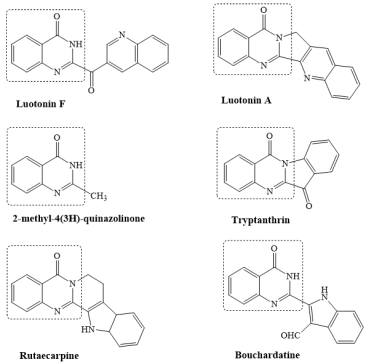
Figure 1. Bioactive natural products bearing quinazolinone moiety.
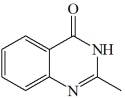
Figure 2. 2-Methylquinazolin-4(3H)-one.
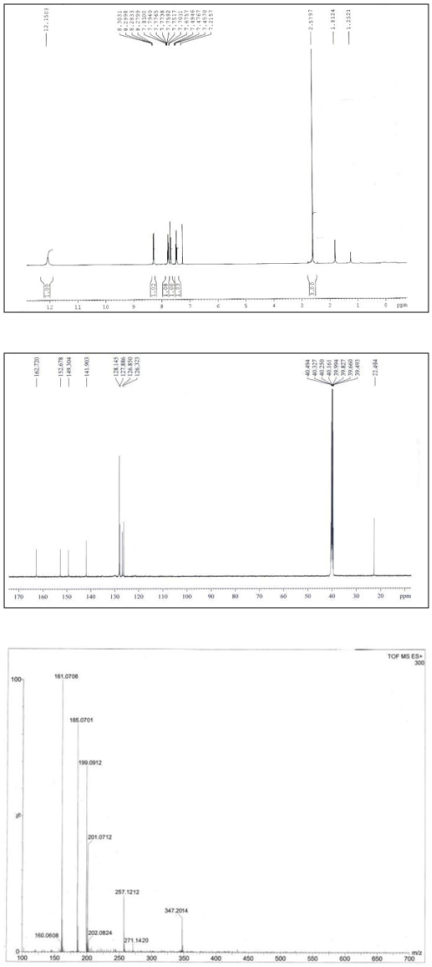
Figure 3. 1H NMR, 13C NMR, and HRMS spectra of 2-Methylquinazolin-4(3H)-one.
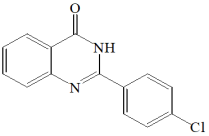
Figure 4. 2-(4-Chlorophenyl)quinazolin-4(3H)-one
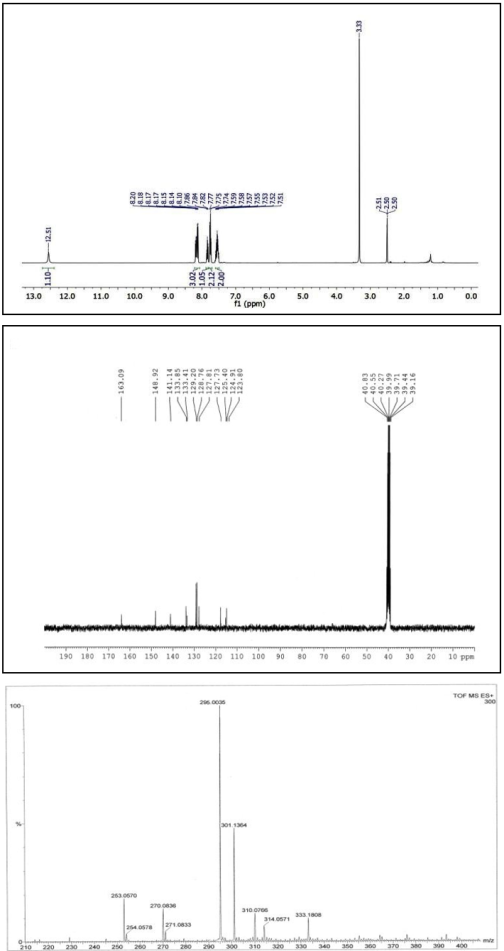
Figure 5. 1H NMR, 13C NMR, and HRMS spectra of 2-(4-Chlorophenyl)quinazolin-4(3H)-one
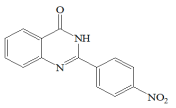
Figure 6. 2-(4-Nitrophenyl) quinazolin-4(3H)-one.
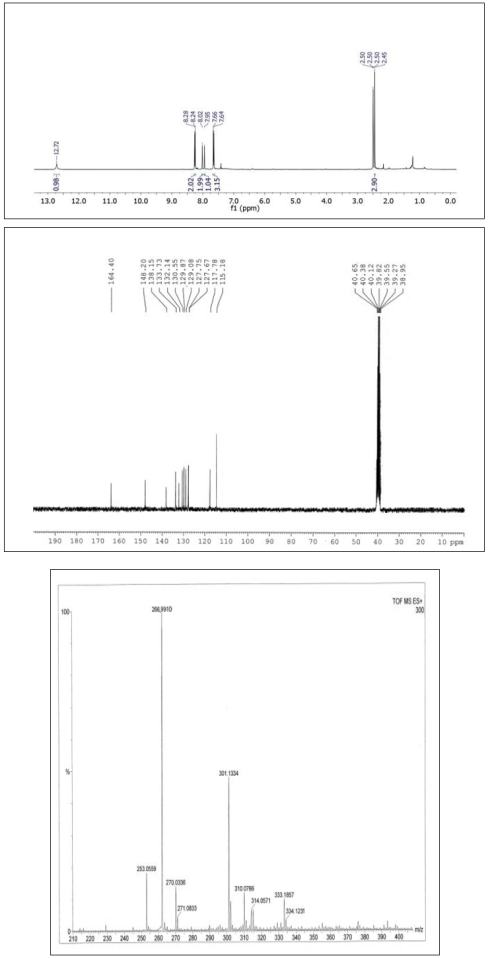
Figure 7. 1H NMR, 13C NMR, and HRMS spectra of 2-(4-Nitrophenyl) quinazolin-4(3H)-one.
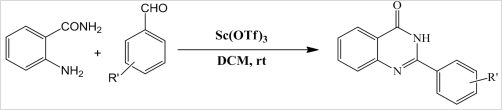
Figure 8. Synthesis of quinazolin-4(3H)-one derivatives (2a-k) using Sc(OTf)3 catalyst.
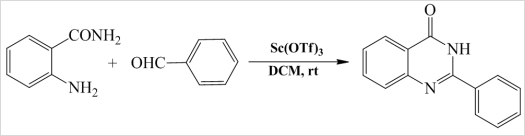
Figure 9. Synthesis of 2-phenyl quinazolin-4(3H)-one using 2-aminobenzamide and benzaldehyde in presence of Sc(OTf)3.

Information



 Share This Article
 Twitter
 Linked In
 Facebook
 Copy
Copy Download