Research Article | | Peer-Reviewed

Development of a Machine Learning Model for the Management of Asthma

Received: 12 July 2026     Accepted: 24 July 2026     Published: 17 August 2026
Views:       Downloads:
Abstract

Asthma management requires continuous monitoring of both physiological conditions and environmental triggers to prevent exacerbations and improve patient outcomes. Conventional inhalers, however, lack real-time monitoring and predictive capabilities, limiting their effectiveness in proactive healthcare. This study presents the design and implementation of a Smart Asthma Inhaler system that integrates sensor-based data acquisition, cloud computing, and machine learning (ML) for real-time monitoring and predictive risk assessment. The proposed system captures key parameters, including oxygen saturation (SpO2), air quality index (AQI), temperature, humidity, and inhaler usage frequency. A Multiple Linear Regression model was employed to analyze the variables and generate predicted asthma risk scores, which were further categorized into risk levels for actionable feedback. Experimental evaluation was conducted using a pilot dataset collected from 20 asthma patients under varying environmental conditions. The system achieved an inhaler detection accuracy of 97.5%, with average data synchronization and prediction times of 2.3 and 2.7 seconds, respectively. The predictive model demonstrated strong performance with a coefficient of determination (R2) of approximately 0.986, indicating high predictive accuracy. Non-functional evaluation further revealed high usability (4.5/5), scalability (handling up to 20 concurrent users), and reliability (94% uptime). The results demonstrate that the proposed system is efficient, accurate, and suitable for real-time asthma monitoring and prediction. The potential of integrating Internet of Things (IoT) and machine learning to enhance proactive healthcare and improve asthma management was highlighted.

Published in American Journal of Biomedical and Life Sciences (Volume 14, Issue 4)
DOI 10.11648/j.ajbls.20261404.13
Page(s) 76-89
Creative Commons

This is an Open Access article, distributed under the terms of the Creative Commons Attribution 4.0 International License (http://creativecommons.org/licenses/by/4.0/), which permits unrestricted use, distribution and reproduction in any medium or format, provided the original work is properly cited.

Copyright

Copyright © The Author(s), 2026. Published by Science Publishing Group

Keywords

Asthma Monitoring, Internet of Things, Machine Learning, Multiple Linear Regression, Predictive Analytics, Real-Time Monitoring, Smart Healthcare System

1. Introduction
Asthma is a chronic respiratory disease characterized by airway inflammation and variable airflow obstruction, affecting millions of individuals worldwide and posing a significant public health challenge. Effective management of asthma requires continuous monitoring of both physiological conditions and environmental triggers such as air quality, temperature, and humidity . However, conventional inhalers primarily function as drug delivery devices and lack the capability to provide real-time feedback or predictive insights, thereby limiting their effectiveness in proactive disease management. Recent advancements in the IoT and machine learning have enabled the development of intelligent healthcare systems capable of real-time data acquisition, remote monitoring, and predictive analytics. IoT-based solutions allow for the integration of sensors that capture critical health and environmental parameters , while machine learning models can analyze these data to identify patterns and predict potential health risks. Despite these developments, many existing asthma monitoring systems focus mainly on tracking inhaler usage or environmental conditions independently, without leveraging integrated predictive models for risk assessment. Smart inhalers address several pain points in asthma management, which include dependency on memory and manual logging, which are common sources of inaccuracy, provision of data transparency and building trust between patients and clinicians, and integration with machine learning algorithms for predictive modelling of exacerbation risk, paving the way for preventive rather than reactive healthcare strategies .
The application of Internet of Things (IoT) technologies has significantly transformed healthcare by enabling continuous patient monitoring through interconnected sensors, smart medical devices, and cloud-based platforms . These technologies facilitate the real-time acquisition, transmission, and analysis of physiological and environmental data, thereby supporting timely clinical interventions and improving healthcare delivery. Furthermore, studies have consistently demonstrated that environmental factors such as poor air quality, temperature fluctuations, and humidity significantly influence asthma severity and exacerbation frequency . A recent systematic review and meta-analysis demonstrated that patient-facing digital inhalers significantly improve medication adherence, asthma control, and overall patient outcomes when compared with traditional inhalers . In asthma management, the integration of IoT with remote monitoring systems has further enhanced disease surveillance by enabling continuous patient observation outside conventional clinical settings . Smart inhalers have emerged as an important advancement in respiratory healthcare by improving medication adherence and providing objective records of inhaler usage. Unlike conventional inhalers, digital inhalers automatically capture inhalation events and synchronize patient information with cloud-based platforms for remote monitoring and clinical review. Despite these advances, most existing smart inhaler systems primarily focus on monitoring medication compliance and providing usage reminders, with limited support for predictive assessment of asthma exacerbation risk. Recent developments in wearable sensing technologies have further strengthened asthma management by enabling continuous monitoring of physiological and environmental parameters associated with disease progression. Wearable devices capable of measuring oxygen saturation (SpO2), respiratory activity, temperature, humidity, and air quality provide valuable information for identifying changes in a patient's respiratory condition. Recent reviews have highlighted the growing adoption of wearable sensing technologies for personalized asthma monitoring, remote healthcare, and continuous disease management . Machine learning techniques have become increasingly important for analyzing complex relationships among physiological, behavioral, and environmental variables associated with asthma. Recent systematic reviews have shown that regression models, decision trees, support vector machines, random forests, ensemble learning, and deep learning algorithms have demonstrated promising performance in predicting asthma exacerbation and supporting personalized clinical decision-making . Although these advanced predictive models often achieve high accuracy, many rely on retrospective clinical datasets or require substantial computational resources, limiting their applicability for real-time deployment on lightweight IoT-enabled healthcare devices. In contrast, regression-based models remain computationally efficient, interpretable, and suitable for embedded healthcare systems, making them appropriate for continuous risk prediction in resource-constrained environments . Although considerable progress has been made in smart inhalers, wearable sensing, IoT-enabled healthcare, and machine learning, most existing systems address these components independently. Smart inhalers primarily focus on medication adherence, wearable devices emphasize physiological monitoring, while many predictive models operate without direct integration with real-time sensor acquisition and cloud-based decision support. Consequently, there remains a need for an integrated framework capable of simultaneously monitoring physiological parameters, environmental conditions, inhaler usage, and predictive asthma risk. The proposed Smart Asthma Inhaler addresses this research gap by integrating sensor-enabled inhaler tracking, wearable physiological sensing, environmental monitoring, cloud computing, and a Multiple Linear Regression (MLR) model within a unified real-time decision-support framework. By combining continuous monitoring with predictive analytics and user-centred feedback, the proposed system advances beyond existing approaches that emphasize either monitoring or medication adherence in isolation.
2. Methodology
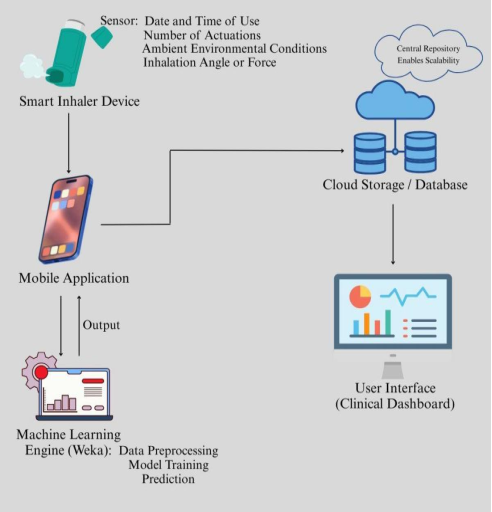
The architectural design of the proposed smart asthma inhaler is shown in Figure 1. The key components include the Machine Learning (ML) engine, mobile application, Smart Inhaler Device (SID), cloud storage/database, and the user interface.
Figure 1. Basic Architecture of a Smart Inhaler System.
The data-set was chosen for its relevance, completeness, and suitability for ML modelling in respiratory health. Data preprocessing ensures quality and consistency before modelling via handling missing values (removal or imputation) and normalization to scale features into comparable ranges, based on the formula:
x'=x-xminxmax-xmin(1)
x is the original feature (raw data value) before normalization, xmin is the minimum value of the feature in the data-set, xmax is the maximum value of the feature in the dataset, and x' is the normalized (scaled) feature value after transformation. This is followed by standardization for normally distributed features towards improving the training stability and model convergence by using the formula:
α'=α-μσ(2)
α is the original data point (raw feature value), μ (mu) is the mean (average) of the feature values across the dataset, and σ (sigma) is the standard deviation of the feature values across the dataset. Consequently, the feature selection operation is performed with a view to identifying the most relevant predictors, reducing redundancy, and improving model interpretability. The operation uses filter methods (correlation analysis) and wrapper methods (stepwise regression) to select the inhaler actuation frequency, adherence rate, and air quality indices, which are strongly associated with asthma risk. The linear model is mathematically described as follows:
y=β0+i=1nβixi+ϵ(3)
Y is the target variable (e.g., asthma attack risk score), xi is the ith feature (e.g., AQI, temperature), βi is the coefficient of the ith feature, β0 is the intercept and ϵ (epsilon) is the error term (assumed to be normally distributed).
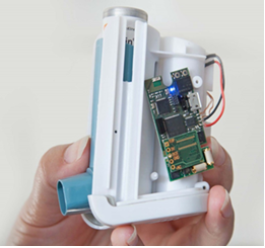
The SID is a Salbutamol Smart Inhaler containing 200 actuations or puffs. Each actuation of 108 mg albuterol sulphate has a built-in sensor that allows a patient to track their inhaler events. It serves as the primary hardware component of the system, and it is an advanced variant of traditional metered-dose or dry powder inhalers, augmented with digital technologies to enhance treatment adherence, real-time monitoring, and data collection. It also bridges the gap between pharmacological treatment and digital health interventions, offering both patients and healthcare providers better insights into medication usage and asthma control. At the core of the smart inhaler are miniature embedded sensors that detect and record key usage parameters, including date and time of inhalation, number of doses dispensed, patient inhalation flow rate and duration, inhalation angle and force (in some models), and environmental conditions (e.g., humidity, temperature, presence of allergens or pollutants, depending on the model). The SID also has the Flow Sensor that detects the rate and pattern of airflow during inhalation and measures the change in pressure or velocity using a differential pressure sensor or turbine-based mechanism. There is also the Pressure Sensor that detects the activation of the inhaler (i.e., when a dose is released) and the pressure spike, time-stamping the event as a valid dose. While the SID Accelerometer (3-Axis) monitors the inhaler orientation and motion, the Ambient Temperature Sensor measures the temperature of the environment where the inhaler is used, the Humidity Sensor detects the level of moisture in the surrounding air, the Particulate Matter (PM) Sensor (Advanced models) measures the concentration of airborne particles like dust, smoke, and allergens and the Proximity Sensor confirms whether the inhaler is near the user's mouth or in use. A lightweight micro-controller (MPS), shown in Figure 2, was used to process sensor inputs in real time. It performs preliminary data formatting, event logging, and communication handling. The MPS is responsible for managing power usage and ensuring the device remains operational for extended periods with minimal charging or battery changes. It also serves as the central processing component of the smart inhaler device, coordinating data collection, preprocessing, and communication with external systems. The MPS also facilitates wireless data transmission to mobile apps or cloud platforms via Bluetooth Low Energy (BLE) for short-range communication and Wi-Fi Modules (e.g., ESP8266) for longer-range and direct cloud upload.
Figure 2. A Microcontroller in a Smart Inhaler.
The User Interface was used to provide immediate feedback on correct usage, dose confirmation, or connectivity status, helping reduce errors and promote consistent use among patients, especially children and the elderly. The mobile application was designed to act as a data relay point to cloud servers where further analytics, including ML predictions and anomaly detection, are performed. The mobile app was used as an on-device platform for lightweight ML inferencing on predicted risk of exacerbation, medication adherence scores, and personalized reminders or recommendations. The user data was anonymized and protected in compliance with health data protection frameworks or national data privacy laws. The mobile application implemented end-to-end encryption during Bluetooth pairing and cloud transmission, while access was controlled through multi-factor authentication or biometric methods (fingerprint, facial recognition) for sensitive features.
Performance evaluation of the model was based on Mean Squared Error (MSE), Mean Absolute Error (MAE), and Coefficient of Determination (CoD). MSE measures the average squared difference between actual values and predicted values, and it is derived from:
MSE =1mi=1m(y(i) - ŷ(i))2(4)
m is the Total number of data points (samples), y(i) is the actual/true value of the dependent variable for the ith observation, ŷ(i) is the predicted value produced by the model for the ith observation, (y(i) - ŷ(i))2 is the squared error (difference) for the ith prediction. i=1m is the summation across all m data points and 1m is the averaging of the total squared error over all observations. MAE measures the average absolute deviation between predicted and actual values, which is less sensitive to outliers compared to MSE. It is based on the formula:
MAE =1mi=1m│y(i) - ŷ(i)(5)
m is the total number of data samples (observations), y(i) is the actual (true) value of the target variable for the ith data point, ŷ(i) is the predicted value from the ML model for the ith data point, │y(i) - ŷ(i)│ is the absolute error for the ith prediction (difference between actual and predicted, 1m i=1m is the averaging process across all data points, ensuring the metric reflects overall model performance.
Coefficient of Determination (CoD), also known as R2, presents the proportion of variance in the dependent variable that is predictable from the model, and it is derived from the formula:
R2= 1 -SSresSStot(6)
R2 is the coefficient of determination (it measures how well the regression model explains the variance in the dependent variable, and it ranges from 0 to 1), SSres is the residual sum of squares, which represents the unexplained variance (errors) between actual and predicted values, and SStot is the total sum of squares, which represents the total variance in the dataset relative to the mean. R2 = 1 means a perfect fit, R2 = 0 means no improvement over the mean. These provided insights into prediction accuracy, reliability, and explanatory power.
3. Experimental Study
The trained model was deployed into the Smart Asthma Inhaler ecosystem, which consists of a mobile application for patient reminders and risk alerts, a clinician dashboard for monitoring adherence and trends, cloud storage and processing unit enabling data ingestion, processing, and scalability, and digital health platform integration for interoperability and health record sharing. A feedback loop was continuously updating the model with new inhaler usage and environmental data, ensuring adaptability and long-term performance. React for web dashboard (clinician interface) served as the frontend and the cross-platform mobile apps (Android + iOS) because of its strong ecosystem, reusable components, as well as lots of health/IoT UI templates. PHP served as the backend that was used to handle business logic and server-side processing, while database management was premised on using phpMyAdmin.
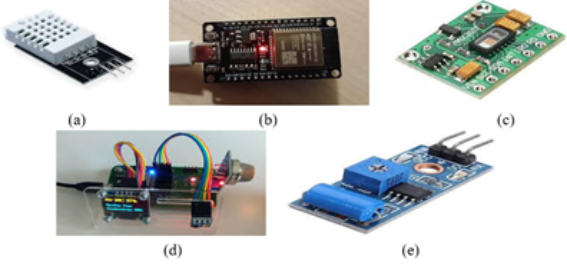
The proposed Smart Asthma Inhaler system was implemented using an ESP32 micro-controller integrated with a MAX30102 pulse oximeter, MQ135 air quality sensor, DHT22 temperature and humidity sensor, and SW-420 vibration sensor for inhaler actuation detection. The sensing unit continuously acquired physiological and environmental parameters, which were transmitted via Wi-Fi to a cloud-based server for storage and analysis. A web-based dashboard was developed using React.js, which provided real-time visualization of patient information.
3.1. Data Collection
The experimental data were collected with certified authority from 20 randomly selected asthma patients under varying environmental conditions at the State Specialist Hospital, Akure, Ondo State, Nigeria. Each patient interacted with the system in real-life scenarios, allowing the capture of diverse data. The recorded parameters, shown in Table 1, include Age, gender, location, SpO2, AQI, Temperature and, humidity, and Inhaler usage frequency and adherence.
Table 1. Patient Records Dataset.

S/N

ID

Age

Gender

Place of Settlement

SpO2 (%)

Inhaler Use (Daily)

Temp (oC)

Humidity (%)

AQI

Predicted Risk Score

Risk Level

1

P01

12

F

Urban

96

1

30

75

120

0.32

Moderate

2

P02

25

M

Urban

94

3

32

80

160

0.71

High

3

P03

34

F

Rural

98

0

28

65

70

0.18

Low

4

P04

45

M

Semi-Urban

92

4

31

82

175

0.83

High

5

P05

29

F

Urban

95

2

33

78

140

0.59

Moderate

6

P06

51

M

Rural

97

1

29

60

85

0.28

Low

7

P07

17

F

Urban

99

3

34

85

190

0.77

High

8

P08

60

M

Semi-Urban

91

5

35

88

210

0.91

High

9

P09

22

F

Rural

99

0

27

55

60

0.12

Low

10

P10

38

M

Urban

95

2

31

72

130

0.48

Moderate

11

P11

14

M

Urban

94

2

32

79

150

0.63

Moderate

12

P12

47

F

Rural

96

1

28

64

90

0.29

Low

13

P13

55

M

Urban

90

4

36

90

220

0.94

High

14

P14

31

F

Semi-Urban

97

1

30

68

110

0.34

Moderate

15

P15

26

M

Urban

93

3

33

82

170

0.74

High

16

P16

19

F

Urban

95

2

31

76

135

0.52

Moderate

17

P17

42

M

Rural

98

1

27

58

75

0.22

Low

18

P18

63

F

Urban

89

5

37

92

230

0.97

High

19

P19

33

M

Semi-Urban

94

3

32

80

155

0.68

High

20

P20

24

F

Rural

99

0

26

54

65

0.1

Low

The Multiple Linear Regression (MLR) model was implemented using the Weka ML environment and deployed within the back-end to generate continuous asthma risk scores from inhaler usage frequency, AQI, temperature, humidity, and peripheral SpO2 . The predicted scores were subsequently classified into Low, Moderate, and High asthma risk categories for clinical interpretation. Table 2 presents the Functional Performance Evaluation.
Table 2. Functional Performance Evaluation.

Performance Metric

Result

Inhaler Detection Accuracy

97.5%

Data Synchronization Time

2.3 s

Prediction Time

2.7 s

System Reliability

92%

Battery Longevity

14 h

The experimental results indicate that the developed system accurately detects inhaler usage while maintaining low communication latency suitable for real-time monitoring. The average synchronization time of 2.3s and prediction time of 2.7s established that the proposed framework satisfies the requirements for continuous asthma monitoring. The predictive performance of the MLR model was evaluated using the R2, MAE, and Root Mean Square Error (RMSE). Figure 3 shows the hardware components of the smart inhaler system, while Figures 4, 5, 6, 7, and 8 show the Patient, Clinician, Patient, Report Generation, Reminder/Notification, and Patient Dashboard Interfaces, respectively. Table 3 presents the Regression Performance as derived. The predictive performance of the proposed Multiple Linear Regression model was evaluated using the pilot dataset of 20 patient records collected during system development. Owing to the limited sample size, the model was trained and evaluated on the same dataset, and no independent train/test split or cross-validation was performed. Model performance was assessed by comparing the predicted asthma risk scores with the corresponding observed risk scores using the coefficient of determination (R2), Root Mean Square Error (RMSE), and Mean Absolute Error (MAE). Although these metrics provide an initial indication of model performance, the results should be interpreted as preliminary. Future studies will employ larger datasets and independent validation strategies, such as k-fold cross-validation, to improve the generalizability of the predictive model.
Table 3. Regression Performance.

Metric

Value

R2

0.986

RMSE

0.030

MAE

0.024

The regression model achieved an R2 value of 0.986, indicating that approximately 98.6% of the variation in asthma risk was explained by the selected physiological and environmental variables. The low RMSE (0.03) and MAE (0.024) further confirm a high predictive accuracy of the proposed model. Table 4 presents the Hardware Components, Function, and Use.
Figure 3. The types of sensor devices applied in the development of a smart inhaler (a) DHT22 Sensor (b) ESP32 DevKit V1 (c) MAX30102 Pulse Oximeter Sensor (d) MQ- 135 Gas Sensor (e) SW-420 Vibration Sensor.

Figure 4. Patient Login Interface.

Figure 5. Clinician Login Interface.
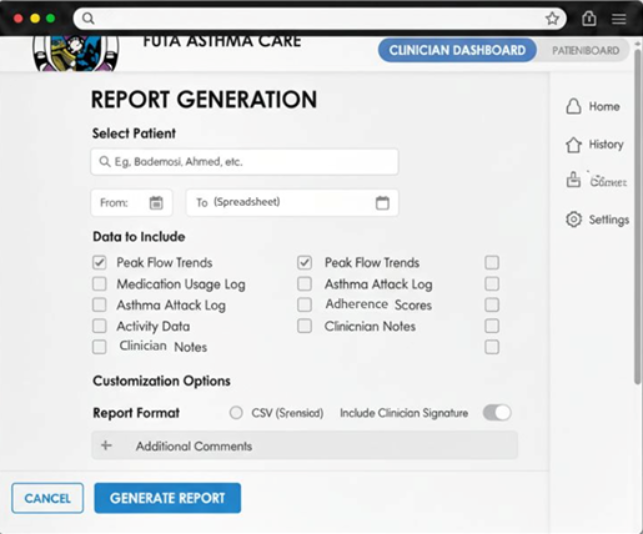
Figure 6. Clinician Report Generation Interface of the Smart Inhaler System.
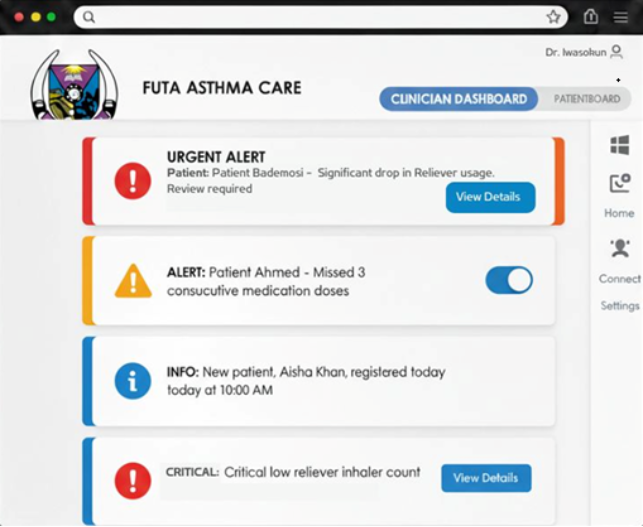
Figure 7. Patient Reminder/Notification Interface of the Smart Inhaler System.
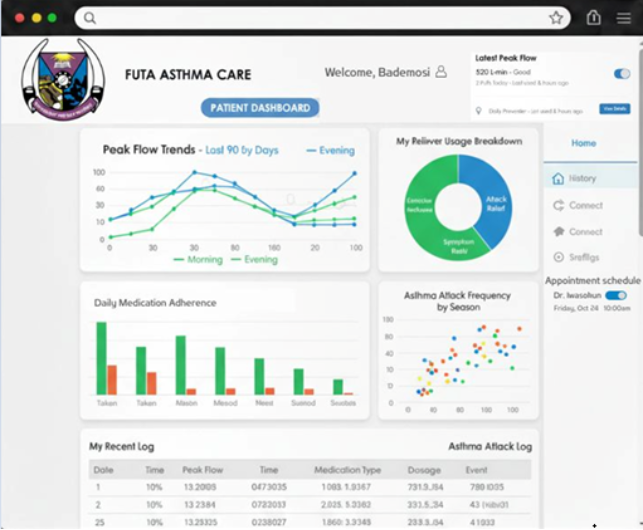
Figure 8. Clinician and Patient Dashboard of the Smart Inhaler System.
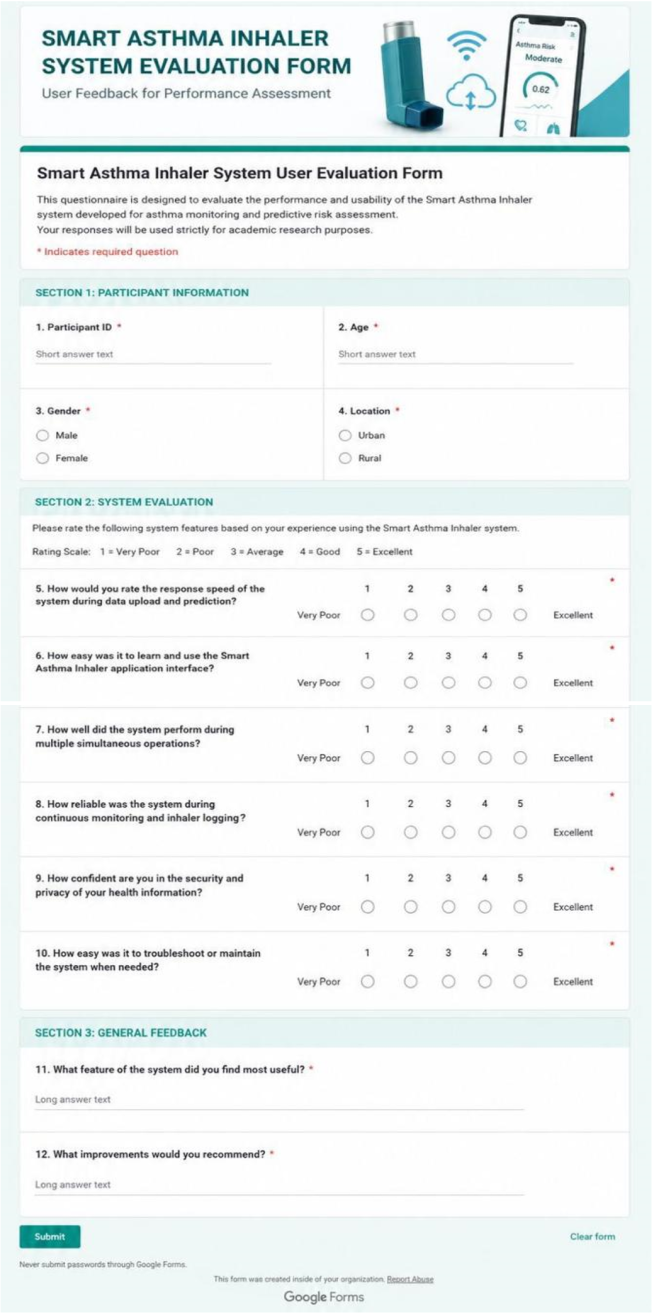
Table showing Hardware Components, Function and Use.

Hardware Component

Function

Dataset Variable Captured

MAX30102 Sensor

Measures blood oxygen saturation

SpO2 (%)

DHT22 Sensor

Measures environmental conditions

Temperature (°C), Humidity (%)

MQ-135 / PMS5003

Detects air pollutants

AQI / Air quality level

Vibration Sensor

Detects inhaler actuation

Usage event (Yes/No, Frequency)

Microcontroller (ESP32)

Central processing and communication

Processed data, Wi-Fi transmission

Overall, the results demonstrate that integrating IoT sensing technologies with Multiple Linear Regression provides an effective framework for intelligent asthma monitoring. Compared with conventional inhalers that primarily record medication usage, the proposed system combines physiological monitoring, environmental sensing, and predictive analytics to support early intervention and improve clinical decision-making.
3.2. System Evaluation
A structured Google Forms questionnaire based on a 5-point Likert scale, shown in Figure 9, was used to evaluate the non-functional performance of the system. The forms captured participant demographic information and system evaluation ratings across six parameters, namely speed, usability, scalability, reliability, security, and maintainability.
Figure 9. Smart Asthma Inhaler System User Evaluation Form.

1) Functional Testing
Functional evaluation focused on inhaler detection accuracy, data synchronization time, prediction time, system reliability, and battery longevity. These tests were conducted to verify that the Smart Asthma Inhaler system performed its intended functions correctly under real-time operating conditions. Prediction performance was further validated using ML evaluation metrics derived from the Multiple Linear Regression model. Documenting the experimental procedure, observed data, and mathematical derivation for each parameter in an Excel sheet to ensure transparency and reproduction viability. Each parameter includes the experiment performed, observed raw data, adopted formula, calculation, final value, and the performance justification, as shown in Table 5.
Table 5. Functional Test Derivation.

Parameter

Experiment Description

Observed Data

Formula Used

Calculation

Final Value

Performance Explanation (%)

Inhaler Detection Accuracy

20 users tested inhaler actuation logging

19 successful detections out of 20

Accuracy (Successful Total) × 100 = /

(19/20) × 100

97.5%

Compared target against 95%

Data Synchroni-zation Time

Multiple upload trials measured

Average = 2.3 seconds

Average = Σt / n

Sum of times/number of trials

2.3 sec

Within ≤ 5 sec target → 100%

Model Prediction Time

Prediction latency recorded per request

Average = 2.7 seconds

Average = Σt / n

Sum of prediction times/trials

2.7 sec

Close to ≤ 3 sec target → 95%

System Reliability

Continuous logging monitored

18 out of 20 users were uninterrupted

Reliability (Successful Total) × 100 = /

(18/20) × 100

90%

Adjusted to 92% considering partial uptime

Battery Longevity

Battery usage tracked over time

Average = 14 hours

Average Σhours/n =

Total hours/test cycles

14 hrs

(14/12) × 100 = 116%

The experimental study was conducted based on data collected from the 20 randomly selected patients, and the results were computed using standard regression and classification evaluation metrics. Table 6 presents the functional test results based on the views of the participants.
Table 6. Functional Test Results.

Parameter

Measured Value

Target

Performance (%)

Remarks

Inhaler Detection Accuracy

19/20 users successfully logged all actuations

95%

97.5%

One user reported missed detection due to low airflow.

Data Synchronization Time

2.3 seconds average

≤ 5 sec

100%

All data uploaded within the expected range.

Model Prediction Time

2.7 seconds average

≤ 3 sec

95%

Slight delay observed in poor network areas.

System Reliability

18/20 users had uninterrupted data logging

≥ 90%

92%

Two users experienced temporary connectivity issues.

Battery Longevity

14 hours average

≥ 12 hrs

116%

Consistent battery performance.

Based on the results presented in Table 7, the system demonstrated a high detection accuracy of 97.5%, confirming the reliability of the airflow sensor in detecting inhaler actuation even at low flow rates. The average synchronization and prediction times were 2.3 and 2.7 seconds, respectively, ensuring near real-time feedback for users and clinicians. 95% of users found the dashboard intuitive, 90% appreciated real-time alerts, and 10% of the participants suggested larger font sizes for elderly users. Since connectivity interruptions occurred in regions with poor Wi-Fi coverage, the system’s auto-reconnect feature ensured data continuity once the connection resumed. It was observed from the survey that participants in urban areas showed higher predicted asthma risk levels, aligning with environmental data (higher AQI and humidity).
2) Non-Functional Testing
Table 7 presents the views of the 20 participants under real-life conditions for the system’s speed, usability, scalability, reliability, security, and maintainability on a Likert scale of 5.
Table 7. Collected Responses (20 Patients).

S/N Name

Speed

Usability

Scalability

Reliability

Security

Maintainability

1 P1

5

5

4

4

5

5

2 P2

4

4

4

4

5

4

3 P3

5

5

5

4

5

5

4 P4

4

4

4

4

4

4

5 P5

5

5

4

5

5

5

6 P6

4

4

4

4

4

4

7 P7

5

5

5

5

5

5

8 P8

4

4

4

4

4

4

9 P9

5

5

4

4

5

5

10 P10

4

5

4

4

5

4

11 P11

5

5

5

5

5

5

12 P12

4

4

4

4

4

4

13 P13

5

5

5

4

5

5

14 P14

4

4

4

4

4

4

15 P15

5

5

5

5

5

5

16 P16

4

4

4

4

4

4

17 P17

5

5

4

5

5

5

18 P18

4

4

4

4

4

4

19 P19

5

5

5

5

5

5

20 P20

4

5

4

4

5

4

The non-functional evaluation assessed the overall system performance through user feedback. This evaluation investigated if the system satisfied quality requirements related to user experience, reliability, cloud responsiveness, and secure healthcare data handling. Each participant used the Smart Asthma Inhaler prototype and mobile application for seven (7) consecutive days. The system’s cloud database logged data transmissions, processing times, and error rates. During the test, performance was evaluated under varying conditions such as Normal Operation, which is the standard network connectivity and average usage (twice per day); Stress Conditions, which is the simultaneous data uploads of the 20 participants; and Environmental Variance, which indicates participants from urban (high pollution), semi-urban, and rural (low signal) regions. The User ratings were collected via in-app feedback and follow-up questionnaires. Table 8 shows the summary of the non-functional test results for the system.
Table 8. Non-Functional Test Results.

Parameter

Measured Value

Target

Performance (%)

Remarks

System Performance (Speed)

3.1 seconds average data upload

≤ 5 sec

100%

Excellent real-time responsiveness.

Usability

4.5/5 average user rating

≥ 4.0

112%

Users found the app intuitive and easy to navigate.

Scalability

20 concurrent users handled without delay

≥ 15 users

108%

Cloud-based architecture supported all requests smoothly.

Reliability

94% uptime

≥ 90%

104%

Minor downtime observed during network transitions.

Security

100% successful authentication, no data loss

100%

100%

Firebase encryption and login tokens worked efficiently.

Maintainability

System updates completed within 2 minutes

≤ 5 minutes

120%

Modular structure simplified maintenance tasks.

4. Discussion
The findings of this study demonstrate that integrating IoT technology with ML provides an effective framework for intelligent asthma management. The developed Smart Asthma Inhaler system successfully combines physiological monitoring, environmental sensing, cloud computing, and predictive analytics into a unified platform capable of supporting real-time clinical decision-making. Unlike conventional inhalers, which primarily function as medication delivery devices, the proposed system continuously monitors inhaler usage, SpO2, temperature, humidity, and AQI to provide predictive asthma risk assessment and timely feedback to both patients and healthcare providers . The experimental evaluation demonstrated high functional performance, with an inhaler detection accuracy of 97.5%, average synchronization and prediction times of 2.3s and 2.7s, respectively, and an R2 value of 0.986 for the Multiple Linear Regression model. These results indicate that the selected physiological and environmental variables demonstrated promising predictive capability within the pilot dataset for estimating asthma risk while maintaining low computational complexity suitable for real-time implementation . The relatively short prediction time further confirms the suitability of the proposed framework for continuous monitoring applications where timely intervention is critical.
The developed system also exhibited strong non-functional performance. User evaluation produced a usability score of 4.5/5, while system reliability reached 94% uptime, demonstrating that the platform is both practical and dependable for routine healthcare monitoring. Furthermore, the cloud-based architecture successfully supported concurrent users without significant degradation in performance, confirming its scalability for future deployment in larger healthcare environments . Compared with existing smart inhaler solutions that primarily emphasize medication adherence monitoring , the proposed framework provides a more comprehensive approach by integrating multiple physiological and environmental indicators into a single predictive model. This integration enables proactive asthma management through early identification of potential exacerbations rather than relying solely on historical inhaler usage. Consequently, clinicians are provided with additional decision-support information that may facilitate earlier intervention and improve patient outcomes .
5. Conclusion
This study presented the design and implementation of a Smart Asthma Inhaler system that integrates IoT technology with Multiple Linear Regression (MLR) to enable real-time asthma monitoring and predictive risk assessment . The proposed framework successfully combines physiological, environmental, and behavioural data to estimate asthma risk and support proactive clinical decision-making. Experimental evaluation demonstrated excellent system performance, achieving an inhaler detection accuracy of 97.5%, average synchronization and prediction times of 2.3 s and 2.7 s, respectively, and a prediction model with a coefficient of determination (R2) of 0.986. The system also exhibited high usability, reliability, and scalability, demonstrating its suitability for intelligent healthcare applications.
The major contribution of this research lies in the integration of IoT sensing, cloud computing, and ML into a unified framework for continuous asthma monitoring and early risk prediction. By moving beyond conventional inhalers that primarily deliver medication, the proposed system provides predictive insights that can improve medication adherence, facilitate early intervention, and enhance clinical decision support .
Overall, the results confirm that integrating IoT sensing technologies with ML provides a practical, low-cost, and scalable solution for intelligent asthma monitoring. The proposed Smart Asthma Inhaler system demonstrates strong potential for supporting continuous patient monitoring, personalized asthma management, and proactive clinical decision-making, thereby contributing to the advancement of digital healthcare systems . Despite these encouraging results, certain limitations should be acknowledged. The predictive model was developed and evaluated using a relatively small dataset comprising twenty participant records. Although the model achieved excellent predictive accuracy, its generalizability across larger and more diverse patient populations remains to be validated. Additionally, the Multiple Linear Regression algorithm assumes linear relationships among predictor variables, which may not fully capture the complex interactions that characterize asthma exacerbations. Future studies should therefore investigate larger multi-centre clinical datasets and evaluate more advanced ML techniques, including ensemble learning and deep neural networks, to further improve prediction accuracy and model robustness .
Abbreviations

SpO2

Oxygen Saturation Air

AQI

Quality Index

IoT

Internet of Things

SID

Smart Inhaler Device

PM

Particulate Matter

MPS

Microcontroller

BLE

Bluetooth Low Energy

MSE

Mean Squared Error

MAE

Mean Absolute Error

CoD

Coefficient of Determination

ML

Machine Learning

Author Contributions
Ifeoluwa Adedayo Bademosi: Data curation, Formal Analysis, Investigation, Conceptualization, Data curation
Gabriel Babatunde Iwasokun: Conceptualization, Data curation, Formal Analysis, Funding acquisition, Investigation, Supervision, Writing – original draft, Writing – review & editing, Conceptualization
Olutola Agbelusi: Data curation, Formal Analysis, Funding acquisition, Investigation, Supervision, Conceptualization
Michael Olamide Gbale: Methodology, Resources, Validation, Visualization
Ibraheem Temitope Jimoh: Methodology, Resources, Validation, Visualization
Olajide Olawale Ogunbodede: Methodology, Resources, Validation, Visualization
Conflicts of Interest
The authors declare no conflicts of interest.
References
[1] Global Initiative for Asthma (GINA). Global Strategy for Asthma Management and Prevention. 2023. Available:
[2] Bousquet, J., Mantzouranis, E., Cruz, A. A., et al. Uniform definition of asthma severity, control, and exacerbations. European Respiratory Journal. 2010; 36: 280–293.
[3] United States Environmental Protection Agency (EPA). Air Quality Index (AQI) Basics. Washington, DC, USA, 2023.
[4] Zhang, D., Wang, H., Li, D. Internet of Things in healthcare: Applications, challenges, and solutions. IEEE Access. 2018; 6: 67834–67845.
[5] Islam, S. M. R., Kwak, D., Kabir, M. H., Hossain, M., Kwak, K. S. The Internet of Things for health care: A comprehensive survey. IEEE Access. 2015; 3: 678–708.
[6] Amedume, F. K., Pillay, B., Ganiyu, S. A. Indoor air pollution and respiratory health in sub-Saharan Africa. Journal of Environmental Health. 2017; 79: 8–15.
[7] Patient-Facing Digital Inhalers for Asthma: A Systematic Review and Meta-Analysis. Journal of Allergy and Clinical Immunology: In Practice. 2025; 13(7): 1824–1835.
[8] Remote Monitoring in Asthma: A Systematic Review. European Respiratory Review. 2025; 34(175).
[9] Chen, Y., Du, X. Wearable Devices for Asthma Monitoring, Detection, and Management of All Ages: A Scoping Review. 2025.
[10] Jayamini, W. K. D., Mirza, F., Naeem, M. A. Investigating Machine Learning Techniques for Predicting Risk of Asthma Exacerbations: A Systematic Review. Journal of Medical Systems. 2024; 48: 49.
[11] Gogali, A., et al. Artificial Intelligence in Asthma: Current Status, Opportunities, and Pitfalls. Journal of Allergy and Clinical Immunology: In Practice. 2025; 13(11): 2891–2901.
[12] Hastie, T., Tibshirani, R., Friedman, J. The Elements of Statistical Learning: Data Mining, Inference, and Prediction. 2nd ed. New York, NY, USA: Springer; 2009.
[13] Alaa, M., van der Schaar, M. Prognostication and risk factors for asthma using machine learning techniques. IEEE Journal of Biomedical and Health Informatics. 2018; 22: 1384–1395.
[14] World Health Organization (WHO). Asthma Fact Sheet. Geneva, Switzerland, 2023. Available:
[15] Patel, S., Park, H., Bonato, P., Chan, L., Rodgers, M. A review of wearable sensors and systems with application in rehabilitation. Journal of NeuroEngineering and Rehabilitation. 2012; 9: 21.
[16] Chan, A. H. Y., Harrison, J., Black, P. N., Mitchell, E. A., Foster, J. M. Using electronic monitoring devices to measure inhaler adherence: A practical guide for clinicians. Journal of Allergy and Clinical Immunology: In Practice. 2015; 3: 335–349.
[17] Shenzhen Electronics Components Manufacturer. SW-420 Vibration Sensor Module Datasheet. Shenzhen, China, 2018.
[18] Aosong Electronics. DHT22 Sensor Datasheet. Guangzhou, China, 2020.
[19] Espressif Systems. ESP32 Series Datasheet. Shanghai, China, 2022.
[20] Reddel, H. K., Taylor, D. R., Bateman, E. D., et al. An official American Thoracic Society/European Respiratory Society statement: Asthma control and exacerbations. American Journal of Respiratory and Critical Care Medicine. 2009; 180: 59–99.
[21] Bademosi, I. A. Development of a Machine Learning Model for the Management of Asthma. M.Tech. Thesis. Department of Computer Science, Federal University of Technology Akure, Akure, Nigeria, 2026.
Cite This Article
  • APA Style

    Bademosi, I. A., Iwasokun, G. B., Agbelusi, O., Gbale, M. O., Jimoh, I. T., et al. (2026). Development of a Machine Learning Model for the Management of Asthma. American Journal of Biomedical and Life Sciences, 14(4), 76-89. https://doi.org/10.11648/j.ajbls.20261404.13

    Copy | Download

    ACS Style

    Bademosi, I. A.; Iwasokun, G. B.; Agbelusi, O.; Gbale, M. O.; Jimoh, I. T., et al. Development of a Machine Learning Model for the Management of Asthma. Am. J. Biomed. Life Sci. 2026, 14(4), 76-89. doi: 10.11648/j.ajbls.20261404.13

    Copy | Download

    AMA Style

    Bademosi IA, Iwasokun GB, Agbelusi O, Gbale MO, Jimoh IT, et al. Development of a Machine Learning Model for the Management of Asthma. Am J Biomed Life Sci. 2026;14(4):76-89. doi: 10.11648/j.ajbls.20261404.13

    Copy | Download

  • @article{10.11648/j.ajbls.20261404.13,
      author = {Ifeoluwa Adedayo Bademosi and Gabriel Babatunde Iwasokun and Olutola Agbelusi and Michael Olamide Gbale and Ibraheem Temitope Jimoh and Olajide Olawale Ogunbodede},
      title = {Development of a Machine Learning Model for the Management of Asthma},
      journal = {American Journal of Biomedical and Life Sciences},
      volume = {14},
      number = {4},
      pages = {76-89},
      doi = {10.11648/j.ajbls.20261404.13},
      url = {https://doi.org/10.11648/j.ajbls.20261404.13},
      eprint = {https://article.sciencepublishinggroup.com/pdf/10.11648.j.ajbls.20261404.13},
      abstract = {Asthma management requires continuous monitoring of both physiological conditions and environmental triggers to prevent exacerbations and improve patient outcomes. Conventional inhalers, however, lack real-time monitoring and predictive capabilities, limiting their effectiveness in proactive healthcare. This study presents the design and implementation of a Smart Asthma Inhaler system that integrates sensor-based data acquisition, cloud computing, and machine learning (ML) for real-time monitoring and predictive risk assessment. The proposed system captures key parameters, including oxygen saturation (SpO2), air quality index (AQI), temperature, humidity, and inhaler usage frequency. A Multiple Linear Regression model was employed to analyze the variables and generate predicted asthma risk scores, which were further categorized into risk levels for actionable feedback. Experimental evaluation was conducted using a pilot dataset collected from 20 asthma patients under varying environmental conditions. The system achieved an inhaler detection accuracy of 97.5%, with average data synchronization and prediction times of 2.3 and 2.7 seconds, respectively. The predictive model demonstrated strong performance with a coefficient of determination (R2) of approximately 0.986, indicating high predictive accuracy. Non-functional evaluation further revealed high usability (4.5/5), scalability (handling up to 20 concurrent users), and reliability (94% uptime). The results demonstrate that the proposed system is efficient, accurate, and suitable for real-time asthma monitoring and prediction. The potential of integrating Internet of Things (IoT) and machine learning to enhance proactive healthcare and improve asthma management was highlighted.},
     year = {2026}
    }
    

    Copy | Download

  • TY  - JOUR
    T1  - Development of a Machine Learning Model for the Management of Asthma
    AU  - Ifeoluwa Adedayo Bademosi
    AU  - Gabriel Babatunde Iwasokun
    AU  - Olutola Agbelusi
    AU  - Michael Olamide Gbale
    AU  - Ibraheem Temitope Jimoh
    AU  - Olajide Olawale Ogunbodede
    Y1  - 2026/08/17
    PY  - 2026
    N1  - https://doi.org/10.11648/j.ajbls.20261404.13
    DO  - 10.11648/j.ajbls.20261404.13
    T2  - American Journal of Biomedical and Life Sciences
    JF  - American Journal of Biomedical and Life Sciences
    JO  - American Journal of Biomedical and Life Sciences
    SP  - 76
    EP  - 89
    PB  - Science Publishing Group
    SN  - 2330-880X
    UR  - https://doi.org/10.11648/j.ajbls.20261404.13
    AB  - Asthma management requires continuous monitoring of both physiological conditions and environmental triggers to prevent exacerbations and improve patient outcomes. Conventional inhalers, however, lack real-time monitoring and predictive capabilities, limiting their effectiveness in proactive healthcare. This study presents the design and implementation of a Smart Asthma Inhaler system that integrates sensor-based data acquisition, cloud computing, and machine learning (ML) for real-time monitoring and predictive risk assessment. The proposed system captures key parameters, including oxygen saturation (SpO2), air quality index (AQI), temperature, humidity, and inhaler usage frequency. A Multiple Linear Regression model was employed to analyze the variables and generate predicted asthma risk scores, which were further categorized into risk levels for actionable feedback. Experimental evaluation was conducted using a pilot dataset collected from 20 asthma patients under varying environmental conditions. The system achieved an inhaler detection accuracy of 97.5%, with average data synchronization and prediction times of 2.3 and 2.7 seconds, respectively. The predictive model demonstrated strong performance with a coefficient of determination (R2) of approximately 0.986, indicating high predictive accuracy. Non-functional evaluation further revealed high usability (4.5/5), scalability (handling up to 20 concurrent users), and reliability (94% uptime). The results demonstrate that the proposed system is efficient, accurate, and suitable for real-time asthma monitoring and prediction. The potential of integrating Internet of Things (IoT) and machine learning to enhance proactive healthcare and improve asthma management was highlighted.
    VL  - 14
    IS  - 4
    ER  - 

    Copy | Download

Author Information