Research Article | | Peer-Reviewed

Physiochemical Characterization of the Asedo Feldspar Deposit, Mozambique Belt, Southern Ethiopia: Implications for Ceramic and Glass Industries

Received: 12 October 2026     Accepted: 21 October 2026     Published: 31 October 2026
Views:       Downloads:
Abstract

This study evaluates the industrial viability of the newly identified Asedo feldspar deposit, hosted within Neoproterozoic pegmatites of the Mozambique Belt in southern Ethiopia. Geochemical analysis of ten feldspar samples reveals a major oxide composition averaging 69.02 wt.% SiO2, 21.19 wt.% Al2O3, 4.04 wt.% Na2O, 3.10 wt.% K2O, 2.96 wt.% CaO, 0.31 wt.% Fe2O3, and 0.11 wt.% MgO, with a low Loss on Ignition (LOI) of 0.43 wt.%, reflecting high mineralogical purity. However, significant compositional variability exists among samples, with Na2O/K2O ratios ranging from 0.29 to 6.15, indicating both potassic and sodic domains within the pegmatite. Physical property measurements demonstrate an average bulk density of 2.63 g/cm3, apparent porosity of 0.80%, and water absorption of 0.31%, indicating a dense, impermeable material suitable for ceramic and glass production. Minor impurities, including Fe2O3 (0.31 wt.%), are amenable to reduction through conventional beneficiation. resource estimation suggests an in-situ exploration target of approximately 46.9 million tonnes over an area of 1.5 km2 with an average thickness of 12 m. These results confirm the deposit’s potential as a reliable source of raw materials for local industries. The Asedo deposit represents a promising domestic industrial mineral resource capable of supporting Ethiopia’s expanding ceramic and glass sectors, thereby reducing import dependency and contributing to sustainable industrial development.

Published in American Journal of Applied Chemistry (Volume 14, Issue 5)
DOI 10.11648/j.ajac.20261405.12
Page(s) 95-108
Creative Commons

This is an Open Access article, distributed under the terms of the Creative Commons Attribution 4.0 International License (http://creativecommons.org/licenses/by/4.0/), which permits unrestricted use, distribution and reproduction in any medium or format, provided the original work is properly cited.

Copyright

Copyright © The Author(s), 2026. Published by Science Publishing Group

Keywords

Asedo Feldspar Deposit, Mozambique Belt, Geochemical Characterization, Mineral Beneficiation, Ceramic and Glass Industries

1. Introduction
Feldspar minerals, constituting approximately 60% of the Earth's crust , are indispensable industrial raw materials whose global market were valued at USD 2.37 billion in 2025 and are projected to reach USD 3.01 billion by 2030 , driven by escalating demand from the ceramics and glass sectors. The industrial value of feldspar is governed by its chemical composition—particularly SiO2, Al2O3, alkali oxides (K2O and Na2O), and iron-bearing impurities—along with its physical characteristics . High-grade feldspar for ceramic and glass applications typically requires SiO2 < 70 wt.%, Al2O3 > 17 wt.%, Fe2O3 < 0.1 wt.%, and total alkalis (K2O + Na2O) > 5 wt.%. The alkali ratio (Na2O/K2O) exerts a critical influence on fluxing behavior: sodic feldspar (albite-rich) is preferred for container glass and fast-firing ceramic bodies due to its lower liquidus temperature and superior refining behavior, whereas potassic feldspar (microcline-rich) is favored for high-viscosity porcelain and high-temperature ceramics requiring superior thermal shock resistance .
Recent technological breakthroughs in feldspar beneficiation have fundamentally enhanced the industrial utilization of feldspathic raw materials. Yassin et al. demonstrated that dry and wet magnetic separation followed by oxalic acid leaching can reduce Fe2O3 content in Egyptian feldspar from 2.25% to as low as 0.12%, with whiteness improving to 90%. Tinesha et al. developed a two-step process combining magnetic separation and chemical treatment that reduced iron oxide in Malaysian sodium feldspar from 2.25% to 0.38%, producing a concentrate fulfilling glass and ceramic industry specifications. These advances have profound implications for the economic viability of feldspar deposits previously considered marginal due to elevated iron content.
Ethiopia's ceramic and glass manufacturing sectors are experiencing unprecedented growth, driven by rapid urbanization, infrastructure development, and population expansion. The Ethiopian government has prioritized ceramics in the Debre Birhan Industrial Park, and Chinese investment has catalyzed this growth: a major ceramic factory has been completed, and a float glass production line with a daily capacity of 300 tonnes is under construction and expected to commence production by the end of 2026, creating a "ceramic + glass" dual-engine industrial framework. This rapid industrialization has significantly increased national demand for high-quality feldspar resources, making the exploration and characterization of domestic deposits essential to reduce reliance on imported industrial minerals .
Despite Ethiopia’s geological favorability, the Precambrian basement complex of the Mozambique Belt hosts numerous pegmatite bodies with significant feldspar potential. However, systematic geochemical and physical characterization of these deposits remains inadequate. The Asedo pegmatite-hosted feldspar deposit, situated in Uba Debretsay Woreda, Gofa Zone, southern Ethiopia, represents a newly recognized industrial mineral occurrence with potentially transformative implications for the national industrial mineral sector. However, comprehensive technical evaluations regarding its commercial viability are virtually absent. This study therefore aims to: (1) systematically characterize the physicochemical properties of the Asedo feldspar deposit; (2) evaluate its suitability for ceramic and glass manufacturing applications; and (3) establish its strategic significance through comparison with other Ethiopian and international feldspar deposits.
2. Materials and Methods
2.1. Study Area Location
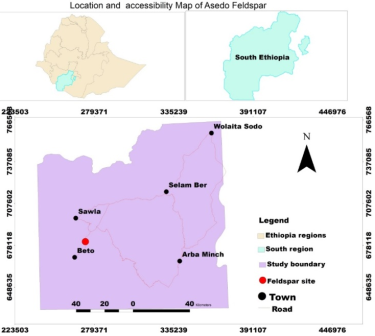
The Asedo feldspar deposit is located in the Uba Debretsay Woreda, Gofa Zone, South Region, Ethiopia. The study area is situated approximately 505 km southwest of Addis Ababa and approximately 135 km southwest of Arba Minch, the nearest major town and administrative centre of the Gofa Zone. The study area is geographically bounded by latitudes 6°15′N to 6°25′N and longitudes 36°45′E to 37°00′E, covering an area of approximately 1.5 km2 (Figure 1). The Asedo deposit is accessible via the Addis Ababa–Arba Minch–Uba Debretsay road.
Figure 1. Location map of the study area.
2.2. Physiography, Climate, and Vegetation
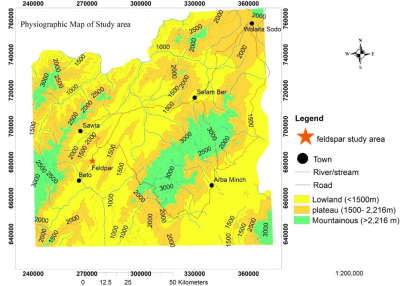
The study area is characterized by rugged, mountainous topography typical of the southern Ethiopian highlands, with elevations ranging from approximately 1,200 to 2,100 metres above sea level (m.a.s.l.). The landscape is dominated by steep slopes, dissected plateaus, and narrow river valleys. The region experiences a tropical highland climate (Köppen classification: Cwb) , with distinct wet and dry seasons. The mean annual rainfall ranges from 1,200 to 1,600 mm, with the majority of precipitation occurring between June and September. Mean annual temperatures vary from 15°C to 25°C, with cooler temperatures at higher elevations. The natural vegetation consists of scattered shrubs, grasses, and remnant patches of montane forest, while the lower slopes and valleys are cultivated with enset (false banana), maize, sorghum, and coffee. The drainage pattern is dendritic, with seasonal streams and rivers flowing southward and eventually draining into the Omo River system. The Asedo feldspar-bearing pegmatites are exposed as prominent, light grey to pink, massive outcrops along hill slopes and ridge crests, making them amenable to surface mapping and sampling.
Figure 2. Physiographic map of the Asedo study area.
2.3. Geological Setting
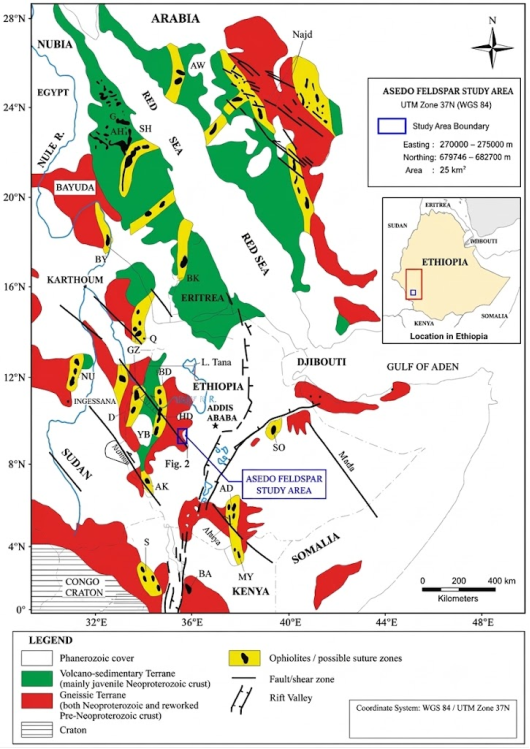
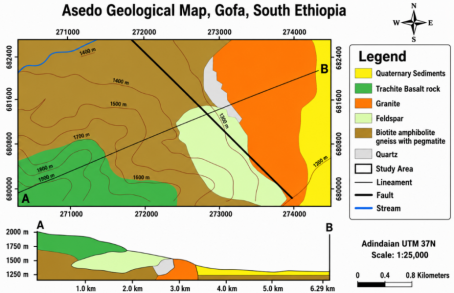
The Asedo feldspar deposit is located within the southern Ethiopian Precambrian basement complex, which forms part of the northern extension of the Mozambique Belt of the East African Orogen. The geological evolution of the region records a prolonged history of crustal growth, high-grade metamorphism, granitoid magmatism, and subsequent Cenozoic rifting associated with the East African Rift System . The oldest rocks exposed in the study area comprise high-grade Precambrian metamorphic rocks, including biotite-amphibolite gneiss, quartz-feldspathic gneiss, schist, migmatite, and amphibolite. These lithologies formed during the Pan-African Orogeny (ca. 900–550 Ma) through continental collision, regional metamorphism, and crustal thickening associated with the assembly of Gondwana . During the late stages of the Pan-African Orogeny (ca. 650–550 Ma), granitoid intrusions emplaced granite and pegmatite bodies into the metamorphic basement. These pegmatites, representing the final volatile-rich differentiates of granitic magmas, are composed predominantly of feldspar, quartz, and mica and constitute the principal host of feldspar mineralization in the Asedo area . Field mapping has identified extensive, coarse-grained, feldspar-rich pegmatite bodies that intrude the surrounding granitic gneiss with sharp, discordant contacts. The pegmatites are composed predominantly of potassium feldspar (microcline), plagioclase (albite), quartz, and minor biotite, with accessory opaque minerals. The mineralized bodies occur as discontinuous veins and lens-shaped intrusions that exhibit good lateral continuity, with individual bodies traceable for several hundred metres along strike. The regional geology and tectonic setting of Ethiopia are illustrated in Figure 3, and the geological map and cross-section of the Asedo feldspar deposit are present.
Figure 3. Regional geology and tectonic setting of Ethiopia. Source: Modified after Beyth et al. and Geological Survey of Ethiopia (GSE).
2.4. Feldspar Distribution in Ethiopia
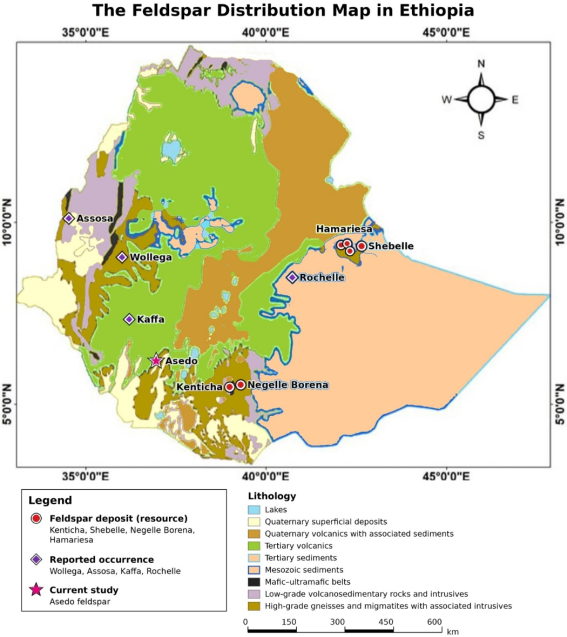
Feldspar in Ethiopia is hosted mainly by granitic pegmatites, granitic intrusions and the high-grade gneisses and migmatites of the Neoproterozoic basement . The most important deposits are Kenticha, a zoned pegmatite in the Adola Belt; Shebelle, where pegmatites cut biotite schist and gneiss about 80 km from Harar; Negelle-Borena, a single wide pegmatite dyke; and Hamariesa, a coarse-grained granite near Harar. Further occurrences have been reported in Wollega, Assosa and Kaffa . Most of these localities are still at reconnaissance or preliminary stage. Estimated resources are about 500,000 t at Kenticha, 25,000 t at Shebelle and 14,500 t at Negelle-Borena, while Hamariesa has not yet been assessed . Kenticha’s pure feldspar is the richest in alkalis (11.9% K2O, 7.0% Na2O) with low iron (0.17–0.50% Fe2O3), Shebelle is a high-purity potassic feldspar (9.45% K2O, 0.24% Fe2O3), and Negelle-Borena carries the most iron (average 0.58% Fe2O3) because of its biotite and magnetite content .
All three evaluated deposits satisfy the ASTM C1466 alkali (K2O + Na2O > 10%) and alumina (16–19%) requirements for ceramics, but raw Fe2O3 above 0.2% means iron removal is needed. This is minor for Shebelle and more substantial for Kenticha and Negelle-Borena . For glass, the pure Kenticha feldspar meets first-grade sheet-glass requirements, Shebelle comes close, and Negelle-Borena and the mixed quartz-feldspar material fall short in their raw state . Shebelle is also well suited to fillers and extenders. Upgrading should focus on removing iron-bearing minerals (Biotite, magnetite, garnet and tourmaline), mica and quartz, through crushing and grinding with hydrocyclone desliming, low- and high-intensity magnetic separation, and cationic amine flotation. Acid leaching can serve as a final purification step for low-grade ores or ultra-pure products .
Figure 4. Feldspar distribution map in Ethiopia.
2.5. Asedo Feldspar Deposit Occurrence Map
Figure 5. Geological map and cross-section of the Asedo feldspar deposit. Source: Authors’ field mapping and geological interpretation.
2.6. Field Geology and Sampling
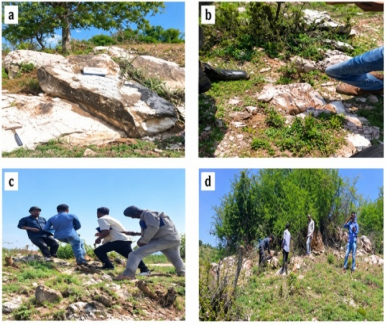
Detailed geological mapping was carried out at scales of 1:25,000 using systematic traverses across lithological contacts and well-exposed outcrops. Rock units were described based on lithology, mineral composition, grain size, texture, structures, weathering characteristics, and field relationships. Representative feldspar sample collection locations are shown in Figure 5. A total of twelve geological samples were collected for analysis, comprising ten feldspar samples and two host-rock samples.
Figure 6. Representative feldspar sample collection locations. (a) Huge massive feldspar exposure; (b) Feldspar exposure in granite-pegmatite weathered; (c) Feldspar exposure in granitic–pegmatite weathered; (d) Feldspar exposure at hill side.
2.7. Laboratory Analysis
Laboratory testing was conducted at the Geological Institute of Ethiopia (GIE) Central Laboratory. To evaluate geochemical characteristics, ten feldspar samples were analyzed for major oxide composition using X-ray fluorescence (XRF) spectrometry. For mineralogical and textural evaluation, thin sections were prepared from the two host-rock samples for petrographic analysis.
The physical properties of the feldspar samples, including bulk density (BD), apparent porosity (P), and water absorption (WA), were determined for representative specimens using the Archimedes fluid displacement method in accordance with ASTM C373-18 . Measurements of the oven-dry weight (Wd), saturated weight (W_sat), and suspended weight in water (W_sub) were recorded, and the physical parameters were subsequently calculated using the following equations:
Water absorption (WA%) =Wsat-WdWd*100
Apparent porosity (P%): =Wsat-WdWsat -Wsus*100
Bulk density (BD (g/cm3) =WdWsat-Wsus
Mineral resource estimation was done based on the derived surface mapping and rough average thickness of deposit, a delineated only fedspar surface area coverage and bulk density as and of 12 m, 1.5 km2, and a bulk density of 2.61 g/cm3 respectively. To ensure data reliability, analytical precision was monitored through replicate analyses performed on the same prepared samples, while sampling reproducibility was assessed using duplicate samples collected independently from the same material.
3. Results
3.1. Feldspar Resource Deposit
The Asedo feldspar deposit is hosted by Precambrian granitic-pegmatitic rocks. Field mapping shows that feldspar mineralization occurs mainly within coarse-grained pegmatite bodies intruding the surrounding granitic gneiss. The pegmatites are light grey to pink, massive, and composed predominantly of potassium feldspar with subordinate quartz and minor mica. The mineralized bodies occur as discontinuous veins and lens-shaped intrusions with sharp contacts against the host rocks. Most outcrops are moderately weathered, although fresh exposures suitable for sampling were identified. Field observations indicate that the pegmatite bodies exhibit good lateral continuity and represent the principal host of feldspar mineralization in the study area.
3.2. Petrography
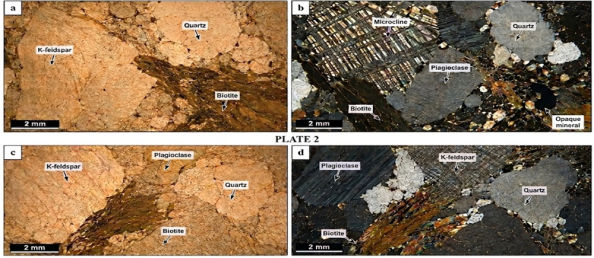
Representative thin sections show that the Asedo feldspar-bearing pegmatite is coarse-grained with a hypidiomorphic granular texture, consisting predominantly of potassium feldspar, quartz, plagioclase, and minor biotite. Potassium feldspar occurs as subhedral to euhedral crystals with low relief under PPL and locally displays tartan twinning under XPL, indicating microcline. Plagioclase is identified by well-developed polysynthetic (albite) twinning. Quartz occurs as anhedral interstitial grains with low first-order grey interference colors and weak undulose extinction, suggesting minor post-crystallization deformation. Biotite forms brown pleochroic flakes with bright second-order interference colors under XPL.
Figure 7. The photomicrographs of the pegmatite-hosted granite source of feldspar minerals.
In photomicrographs of pegmatite-hosted granite source of feldspar minerals. (a) PPL image showing K-feldspar intergrown with quartz and biotite. (b) XPL image showing microcline with tartan twinning, plagioclase with albite twinning, quartz with low first-order grey interference colors, biotite with bright second-order colors, and minor opaque minerals. (c) PPL image showing interlocking feldspar, quartz, plagioclase, and biotite. (d) XPL image showing interlocking K-feldspar and plagioclase with twinning, quartz with low first-order colors, and biotite with bright second-order colors.
The modal mineral composition consists predominantly of K-feldspar (microcline), which makes up 45–55 vol.% of the sample. Quartz is the second most abundant mineral at 20–30 vol.%, followed by plagioclase accounting for 10–20 vol.%. Minor constituents include biotite at approximately 5–10 vol.% and trace opaque minerals comprising less than 2 vol.%. Feldspar grains exhibit minor sericitization along fractures and cleavage planes, indicating limited hydrothermal alteration.
3.3. XRF Geochemistry
Table 1 presents the major oxide composition and summary statistics of ten representative feldspar samples from the Asedo deposit. The average composition is 69.02 wt.% SiO2, 21.19 wt.% Al2O3, 0.31 wt.% Fe2O3, 2.96 wt.% CaO, 0.11 wt.% MgO, 4.04 wt.% Na2O, 3.10 wt.% K2O, with a low LOI of 0.43 wt.%. The total alkali content (Na2O + K2O) is 7.14 wt.%, and the Na2O/K2O ratio is 1.30.
Table 1. Major oxide composition and summary statistics of representative feldspar samples from the Asedo deposit.

Collector's Code

SiO2

Al2O3

Fe2O3

CaO

MgO

Na2O

K2O

MnO

P2O₅

TiO2

H2O

LOI

ED-02-54-2

68.50

20.64

0.30

1.44

0.005

2.31

7.98

0.020

0.005

0.60

0.005

0.26

ED-02-55

67.30

26.24

0.22

5.00

0.005

6.15

1.00

0.005

0.005

0.12

0.23

0.51

ED-02-59-1

69.20

22.20

0.46

4.06

0.46

3.28

1.32

0.005

0.42

0.20

0.19

0.46

ED-02-54

65.78

25.48

0.16

4.32

0.005

5.82

1.06

0.005

0.40

0.10

0.16

0.22

ED-02-56

76.90

14.86

0.40

1.06

0.005

3.22

4.56

0.005

0.005

0.18

0.22

0.73

ED-02-57

70.20

19.20

0.28

2.80

0.08

5.20

1.50

0.006

0.08

0.16

0.14

0.40

ED-02-58

66.50

21.80

0.24

1.80

0.02

2.80

6.00

0.010

0.15

0.30

0.10

0.35

ED-02-59

66.80

22.50

0.32

3.20

0.15

3.60

2.60

0.008

0.20

0.22

0.16

0.40

ED-02-60

74.00

16.20

0.35

1.50

0.01

3.80

3.20

0.005

0.12

0.20

0.12

0.50

ED-02-61

65.00

22.80

0.38

4.40

0.35

4.20

1.80

0.012

0.25

0.28

0.20

0.45

Minimum

65.00

14.86

0.16

1.06

0.005

2.31

1.00

0.005

0.005

0.10

0.005

0.22

Maximum

76.90

26.24

0.46

5.00

0.46

6.15

7.98

0.020

0.42

0.60

0.23

0.73

Mean

69.02

21.19

0.31

2.96

0.11

4.04

3.10

0.008

0.164

0.24

0.154

0.43

Standard Deviation

3.79

3.63

0.09

1.44

0.17

1.29

2.37

0.005

0.155

0.14

0.067

0.14

Source: Authors’ original field and laboratory data.
3.4. Physical Properties
The physical properties of representative feldspar specimens are presented in Table 2. The measured average water absorption is 0.31%, apparent porosity is 0.80%, and bulk density is 2.63 g/cm3.
Table 2. Physical properties of representative feldspar samples determined using the Archimedes method.

Sample No.

Lab No.

Dry weight (g)

Wet weight (g)

Suspended weight (g)

Water absorption (%)

Porosity (%)

Bulk density (g/cm3)

ED-02-51-2

3162/25

79.08

79.50

49.24

0.53

1.39

2.61

ED-02-51-2

3162/25

119.81

120.42

74.43

0.51

1.33

2.61

ED-02-55-1

3163/25

84.99

85.08

52.92

0.11

0.28

2.64

ED-02-55-1

3163/25

143.25

143.37

89.22

0.08

0.22

2.65

Average

0.31

0.80

2.63

Source: Authors’ original field and laboratory data.
4. Discussion
4.1. Geochemical Characterization and Variability
The integrated geochemical and physical characterization confirms that the Asedo feldspar deposit possesses highly favorable properties for industrial utilization. Table 3 presents the individual sample compositions along with calculated total alkali contents and Na2O/K2.
O ratios.
Table 3. Individual major oxide compositions, total alkalis, and Na2O/K2O ratios of the ten feldspar samples from the Asedo deposit.

Sample

SiO2

Al2O3

Fe2O3

CaO

MgO

Na2O

K2O

Total Alkalis

Na2O/K2O

Feldspar Type

``ED-02-54-2

68.50

20.64

0.30

1.44

0.005

2.31

7.98

10.29

0.29

Potassic

ED-02-55

67.30

26.24

0.22

5.00

0.005

6.15

1.00

7.15

6.15

Sodic

ED-02-59-1

69.20

22.20

0.46

4.06

0.46

3.28

1.32

4.60

2.48

Sodic

ED-02-54

65.78

25.48

0.16

4.32

0.005

5.82

1.06

6.88

5.49

Sodic

ED-02-56

76.90

14.86

0.40

1.06

0.005

3.22

4.56

7.78

0.71

Potassic-sodic

ED-02-57

70.20

19.20

0.28

2.80

0.08

5.20

1.50

6.70

3.47

Sodic

ED-02-58

66.50

21.80

0.24

1.80

0.02

2.80

6.00

8.80

0.47

Potassic

ED-02-59

66.80

22.50

0.32

3.20

0.15

3.60

2.60

6.20

1.38

Sodic

ED-02-60

74.00

16.20

0.35

1.50

0.01

3.80

3.20

7.00

1.19

Sodic

ED-02-61

65.00

22.80

0.38

4.40

0.35

4.20

1.80

6.00

2.33

Sodic

Average

69.02

21.19

0.31

2.96

0.11

4.04

3.10

7.14

1.30

Sodic (avg.)

Source: Authors’ original field and laboratory data.
The average SiO2 concentration (69.02 wt.%) comfortably falls within the standard commercial specification of 65–75 wt.% required for ceramic and glass raw materials . Silica serves as the principal glass-forming network provider, facilitating vitreous phase development during thermal treatment. Meanwhile, the high Al2O3 content (21.19 wt.%) underlines excellent refractory performance, substantially enhancing thermal shock resistance, chemical durability, surface hardness, and deformation resistance during firing .
However, the individual sample data reveal significant compositional variability. Sample ED-02-56 exhibits the highest SiO2 (76.90 wt.%) and lowest Al2O3 (14.86 wt.%), consistent with a quartz-rich pegmatite domain. In contrast, sample ED-02-55 has the highest Al2O3 (26.24 wt.%) and Na2O (6.15 wt.%), indicating a plagioclase-rich (albite) composition. Sample ED-02-54-2 is notable for its high K2O (7.98 wt.%) and low Na2O (2.31 wt.%), classifying it as a potassic feldspar (microcline-rich). Sample ED-02-58 also shows potassic affinity (K2O = 6.00 wt.%; Na2O/K2O = 0.47). These variations suggest that the Asedo pegmatite is internally zoned, with discrete domains of sodic, potassic, and intermediate compositions.
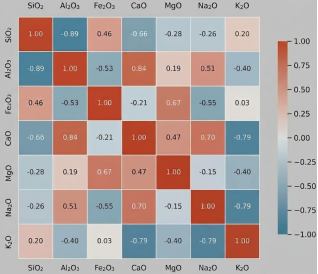
Figure 8. Pearson correlation matrix of major oxides for Asedo feldspar samples.

The total alkali content varies from 4.60 wt.% (ED-02-59-1) to 10.29 wt.% (ED-02-54-2), with an average of 7.14 wt.%. The Na2O/K2O ratio ranges from 0.29 (strongly potassic) to 6.15 (strongly sodic), with an average of 1.30, classifying the bulk deposit as a medium-grade, sodium-dominant alkali feldspar. This sodium-rich nature is especially advantageous for container glass manufacturing. Potassium oxide complements this behavior, working synergistically to reduce thermal energy requirements while promoting body densification .
The matrix illustrates the strength and direction of linear geochemical relationships among SiO2, Al2O3, Fe2O3, CaO, MgO, Na2O, and K2O . Strong negative correlations occur between SiO2and Al2O3 (r = -0.89) and between Na2O, and K2O (r = -0.79), whereas strong positive correlations occur between Al2O and CaO (r = 0.84). These relationships reflect compositional variation among sodic, potassic, and intermediate feldspar domains within the Asedo deposit .
4.2. Physical Properties and Their Consistency
The samples demonstrate minimal water absorption (0.31%), low apparent porosity (0.80%), and a uniform bulk density (2.63 g/cm3). These physical attributes reflect a tightly packed, impermeable microstructure necessary for long-term structural durability and tight dimensional tolerances . The narrow density range aligns closely with typical well-crystallized alkali feldspars (2.55–2.63 g/cm3), indicating homogeneous mineralogy and consistent texture across the sampled ore body .
4.3. Comparison with International Feldspar Deposits
Table 4. Comparison of average major oxide compositions (wt.%) between the Asedo deposit and selected commercial feldspar deposits.

Oxide

Asedo Deposit (Ethiopia)

Wadi Al-Jayshiah (Jordan)

Wadi Zerabi (Egypt)

Spruce Pine Minspar (USA)

Çine-Milas Raw (Turkey)

Norfloat K (Norway)

SiO2

69.02

67.96

68.29

68.60

66.03

65.90

Al2O3

21.19

17.74

18.69

18.50

15.56

18.60

Fe2O3

0.31

2.33

0.07

0.06

0.40

0.07

Na2O

4.04

4.13

6.33

6.50

5.68

2.90

K2O

3.10

4.33

5.83

4.10

13.40

11.80

LOI

0.43

0.09

—

0.30

—

0.20

Sources: .
The elevated Al2O3 content (21.19 wt.%) is notably higher than many commercial deposits (typically 15–19 wt.%), suggesting superior refractory properties and enhanced mechanical strength. This comparison is visually summarized in Table 4.
4.4. Comparison with Other Ethiopian Feldspar Deposits
Table 5 compares the major oxide composition of the Asedo feldspar with that of other Ethiopian feldspar deposits, including Shebelle, Negelle Borena and the Kenticha occurrences.
Table 5. Detailed chemical composition of Ethiopian feldspar deposit.

m. oxide (wt.%)

Asedo (This Study)

Shebelle

Negelle Borena

Kenticha Pure Feldspar

Kenticha Feldspar-Quartz

Kenticha (Adola Belt)

Kenticha Serpentinite Massif

SiO2

69.02

70.96

66.0

65.7

70.5

67.3

67.3

Al2O3

21.19

18.04

18.5

18.6

16.3

17.2

17.2

Fe2O3

0.31

0.24

0.58

0.5

0.7

<0.1–0.3

<0.3

K2O

3.10

9.45

10.0

4.9

4.8

11.1

11.1

Na2O

4.04

1.41

2.75

7.0

5.4

2.4

2.4

Total alkalis

7.14

10.86

12.75

11.9

10.2

13.5

13.5

Na2O/K2O

1.30

0.15

0.28

1.43

1.13

0.22

0.22

Feldspar type

Sodic

Potassic

Potassic

Sodic

Sodic

Potassic

Potassic

Resource (Mt)

46.9

0.025

0.0145

0.5

0.5

2.7

2.7

Sources: .
The most striking advantage of the Asedo deposit is its Al2O3 content of 21.19 wt.%, which is significantly higher than all other Ethiopian feldspar deposits. The Asedo deposit exhibits a Na2O/K2O ratio of 1.30, classifying it as sodium-rich alkali feldspar, in contrast to Shebelle (0.15), Negelle Borena (0.28), and Kenticha (0.22), which are strongly potassic. The Fe2O3 content of Asedo feldspar (0.31 wt.%) is competitive and meets the permissible limit of <0.50 wt.% for colored container glass and ceramic tiles without beneficiation. The low LOI of 0.43 wt.% confirms high mineral purity. With a preliminary exploration target of 46.9 Mt, the Asedo deposit dwarfs the resource estimates for Kenticha (2.7 Mt) and Kenticha Serpentinite Massif (2.7 Mt).
4.5. Beneficiation Requirements
The main industrial constraint is the Fe2O3 content, which averages 0.31 wt.% and slightly exceeds the strict threshold of <0.15 wt.% set for premium whiteware and clear optical glass . However, recent advances in beneficiation technology demonstrate that this constraint is readily surmountable. Yassin et al. achieved Fe2O3 reduction to as low as 0.12% using dry and wet magnetic separation followed by oxalic acid leaching, while Tinesha et al. successfully reduced iron oxide from 2.25% to 0.38% using a two-step magnetic separation and chemical treatment process. Applying such established methods to Asedo feldspar—which contains significantly lower initial iron (0.31 wt.%)—would readily achieve the <0.10 wt.% Fe2O3 threshold required for premium applications. The low LOI and absence of deleterious minerals such as sulfides or carbonates simplify the beneficiation process, as no roasting or acid leaching is likely required for most applications.
4.6. Comparison with Industrial Specifications
Table 6 compares the Asedo feldspar with the industrial specifications for ceramic and glass manufacturing.
Table 6. Comparison of the Asedo feldspar deposit with industrial specifications for ceramic and glass manufacturing.

Parameter

Asedo Feldspar

Ceramic Tiles

Sanitary Ware

Porcelain Stoneware

Structural Ceramics

Container Glass (Coloured)

Premium White Ceramics

SiO2 (wt.%)

69.02

65–75

65–75

67–75

65–75

68–75

68–75

Al2O3 (wt.%)

21.19

17–22

18–23

18–23

16–22

17–20

18–22

Na2O (wt.%)

4.04

2–6

2–6

3–7

2–6

3–8

2–5

K2O (wt.%)

3.10

2–8

2–8

2–8

2–8

1–5

2–6

Total Alkalis

7.14

>7

>7

>7

>6

>7

>7

Fe2O3 (wt.%)

0.31

<0.50

<0.50

<0.40

<0.80

<0.40

<0.10

LOI (wt.%)

0.43

<1.0

<1.0

<1.0

<1.0

<0.8

<0.5

Bulk Density (g/cm3)

2.63

2.55–2.65

2.55–2.65

2.55–2.65

Typical

Typical

Typical

Water Absorption (%)

0.31

Low

Low

Low

Low

—

—

Apparent Porosity (%)

0.80

Low

Low

Low

Low

—

—

Overall

✓

✓

✓

✓

✓

✗ (Fe2O3)

✓ = Meets industrial specification; ✗ = Does not meet specification without beneficiation.
Sources: ; ; ; .
5. Conclusions
The Asedo feldspar deposit, hosted within pegmatites emplaced in the Precambrian basement of the southern Mozambique Belt, represents a newly identified industrial mineral resource in Ethiopia. Geochemical analysis of ten feldspar samples reveals favorable major oxide composition, with average concentrations of 69.02 wt.% SiO2, 21.19 wt.% Al2O3, 4.04 wt.% Na2O, 3.10 wt.% K2O, 0.31 wt.% Fe2O3, and 0.43 wt.% LOI. Significant compositional variability exists among the ten analyzed samples, with Na2O/K2O ratios ranging from 0.29 to 6.15, indicating both potassic and sodic domains. The total alkali content (Na2O + K2O = 7.14 wt.%) and average Na2O/K2O ratio of 1.30 classify the bulk deposit as a sodium-rich alkali feldspar. Physical testing confirms excellent material integrity, with an average bulk density of 2.63 g/cm3, apparent porosity of 0.80%, and water absorption of 0.31%. These physicochemical characteristics demonstrate that the deposit is suitable for manufacturing ceramic tiles, sanitary ware, structural ceramics, porcelain stoneware, and colored container glass. Based on surface geological mapping, structural sections, and an assumed thickness of 12 m over an area of 1.5 km2, a resource of approximately 46.9 Mt has been estimated. While the Fe2O3 content slightly exceeds the stringent specifications for premium white ceramics and clear optical glass, recent advances in magnetic separation and acid leaching technologies demonstrate that conventional beneficiation can readily reduce iron-bearing impurities to commercially acceptable levels. Overall, the Asedo feldspar deposit shows strong potential to supply Ethiopia's expanding ceramic and glass industries, reducing dependence on imported raw materials. Future research should focus on subsurface core drilling to define three-dimensional ore continuity, detailed mineralogical characterization using XRD, pilot-scale beneficiation studies, and systematic resource estimation to support sustainable commercial development.
Abbreviations

ASTM

American Society for Testing and Materials

BD

Bulk Density

Wd

Oven-dry Weight

W_sat

Saturated Weight

W_sub

Suspended Weight

Cwb

Temperate Highland Climate with Dry Winter and Warm Summer (Köppen Climate Code)

EIGS

Ethiopian Institute of Geological Surveys

GIE

Geological Institute of Ethiopia

LOI

Loss on Ignition

Ma

Million Years Ago

m.a.s.l.

Metres Above Sea Level

Mt

Million Tonnes

ORCID

Open Researcher and Contributor ID

P

Apparent Porosity

PPL

Plane-polarized Light

USD

United States Dollar (s)

WA

Water Absorption

wt.%

Weight Percent

XPL

Cross-polarized Light

XRF

X-ray Fluorescence

Acknowledgments
The authors gratefully acknowledge the Geological Institute of Ethiopia (GIE) including the General Director, the Chief Executive Officer of the Mineral Exploration Research Executive and the finance staff for organizing and financially supporting the fieldwork. Sincere thanks are extended to the administrators of the Gofa Zone Mineral, Water, and Energy Bureau, as well as the Woreda and Kebele administrative bodies, for facilitating community awareness and ensuring a peaceful and secure environment during field operations. Special appreciation goes to the local community for their guidance, hospitality, and assistance in navigating the study area. The authors also thank the laboratory technical staff at the Geological Institute of Ethiopia for their diligence in sample processing and analytical testing. Finally, the authors sincerely thank the Handling Editor and anonymous reviewers for their constructive comments and valuable suggestions, which have been carefully considered and incorporated into the revised manuscript.
Author Contributions
Yonas Hordofa Ferada: Conceptualization, Data curation, Formal Analysis, Investigation, Methodology, Software, Visualization, Writing – original draft, Writing – review & editing
Kisa Workineh Yadate: Conceptualization, Investigation, Methodology, Supervision, Validation, Writing – review & editing
Funding
This research was financially supported by the Geological Institute of Ethiopia (GIE) through institutional field funding. No specific external grant was received for this study.
Data Availability Statement
All relevant data supporting the findings of this study are presented in the manuscript.
Conflicts of Interest
The authors declare no conflicts of interest.
References
[1] Water Resources Division, U. S. Geological Survey. (2011). Mineral resource of the month: Feldspar. Earth, 56(4), 29. American Geosciences Institute.
[2] Knowledge Sourcing Intelligence. (2025). Global feldspar market – Forecasts from 2025 to 2030 (Report KSI1878320).
[3] Carty, W. M., & Senapati, U. (1998). Porcelain—Raw materials, processing, phase evolution, and mechanical behavior. Journal of the American Ceramic Society, 81(1), 3–20.
[4] Kogel, J. E., Trivedi, N. C., Barker, J. M., & Krukowski, S. T. (Eds.). (2006). Industrial minerals and rocks: Commodities, markets, and uses (7th ed.). Society for Mining, Metallurgy, and Exploration.
[5] Shelby, J. E. (2020). Introduction to glass science and technology (3rd ed.). Royal Society of Chemistry.
[6] Virta, R. L. (2002). Feldspar. In U. S. Geological Survey Minerals Yearbook 2002 (pp. 25.1–25.6). U. S. Geological Survey.
[7] Yassin, K. E., Hassan, E. R. E., & Elbendari, A. M. (2025). Impact of dry and wet magnetic separator process parameters on iron oxide removal from Egyptian feldspar ore. Journal of Mining Institute, 274, 154–166.
[8] Tinesha, S., Ismail, I., Roshaida, A., Anuar, O., & Voon, C. H. (2025). Beneficiation method and iron removal from feldspar ore. Journal of Engineering and Technology, 16(1), 228–237.
[9] Ministry of Mines. (2023). Annual report on mineral resources development and management in Ethiopia. Ministry of Mines, FDRE.
[10] Peel, M. C., Finlayson, B. L., & McMahon, T. A. (2007). Updated world map of the Köppen–Geiger climate classification. Hydrology and Earth System Sciences, 11, 1633–1644.
[11] Kazmin, V. (1972). Geology of Ethiopia. Ethiopian Institute of Geological Surveys.
[12] Davidson, A. (1983). The Omo River Project: Regional geology and evolution of the northern part of the Mozambique Belt, Ethiopia (Bulletin No. 2). Ethiopian Institute of Geological Surveys.
[13] Stern, R. J. (1994). Arc assembly and continental collision in the Neoproterozoic East African Orogen: Implications for the consolidation of Gondwanaland. Annual Review of Earth and Planetary Sciences, 22, 319–351.
[14] Fritz, H., Abdelsalam, M., Ali, K. A., Bingen, B., Collins, A. S., Fowler, A. R., Ghebreab, W., Hauzenberger, C., Johnson, P. R., Kusky, T. M., Macey, P., Muhongo, S., & Stern, R. J. (2013). Orogen styles in the East African Orogen: A review of the Neoproterozoic to Cambrian tectonic evolution. Journal of African Earth Sciences, 86, 65–106.
[15] Yibas, B., Reimold, W. U., Armstrong, R. A., Köberl, C., Anhaeusser, C. R., & Phillips, D. (2002). The tectonostratigraphy, granitoid geochronology and geological evolution of the Precambrian of southern Ethiopia. Journal of African Earth Sciences, 34(1–2), 57–84.
[16] Černý, P. (1991). Rare-element granitic pegmatites. Part I: Anatomy and internal evolution of pegmatite deposits. Geoscience Canada, 18(2), 49–67.
[17] London, D. (2008). Pegmatites. Mineralogical Association of Canada.
[18] Beyth, M., Stern, R. J., Altherr, R., & Kröner, A. (1994). The Late Precambrian Timna Igneous Complex, Southern Israel: Evidence for Comagmatic-Type Sanukitoid Monzodiorite and Alkali Granite Magma. Lithos, 31(3–4), 103–124.
[19] Assefa, A., Tadele, H., Knoth, W. Geological Research and Evaluations for Sheet Glass Raw Materials (Silica Sand, Vein Quartz, Dolomite, Limestone and Feldspar), Shoa, Hararghe, Wollega, and Sidamo Administrative Regions (EIGS Note No. 238). Addis Ababa: Ethiopian Institute of Geological Surveys; 1985.
[20] Bekele, W. Preliminary Geological Report of Delga Chebsi and Hakim Gara Limestone (Marble) and Hamaresia Granite Deposits. Addis Ababa: Ethio-Libyan Joint Mining Company (ELMICO); 1983.
[21] Sheferaw, Y., & Belachew, G. (2026). Silica sand and feldspar resources in Ethiopia: A review of their occurrence, characteristics, industrial applications, and beneficiation. American Journal of Applied and Industrial Chemistry, 10(2), 30–49.
[22] ASTM International. (2018). ASTM C373-18, Standard Test Methods for Water Absorption, Bulk Density, Apparent Porosity, and Apparent Specific Gravity of Fired Whiteware Products, Ceramic Tiles, and Glass Tiles. ASTM International.
[23] Singer, F., & Singer, S. S. (1979). Industrial ceramics. Chapman and Hall.
[24] Carter, C. B., & Norton, M. G. (2013). Ceramic materials: Science and engineering (2nd ed.). Springer.
[25] Reimann, C., Filzmoser, P., Garrett, R. G., & Dutter, R. (2008). Statistical data analysis explained: Applied environmental statistics with R. John Wiley & Sons.
[26] Dondi, M. (2018). Feldspathic fluxes for ceramics: Sources, production trends and technological value. Resources, Conservation and Recycling, 133, 191–205.
[27] Deer, W. A., Howie, R. A., & Zussman, J. (2013). An introduction to the rock-forming minerals (3rd ed.). Mineralogical Society of Great Britain and Ireland.
[28] Nesse, W. D. (2012). Introduction to mineralogy (2nd ed.). Oxford University Press.
[29] Al-Rawabdeh, A. M., Al-Ansari, N. A., Al-Taani, A. A., Al-Khateeb, F. L., & Knutsson, S. (2014). Assessment and characterization of industrial mineral deposits and raw materials in Jordan. Journal of Earth Sciences and Geotechnical Engineering, 4(2), 45–60.
[30] Ibrahim, S. S., Mohamed, H. A., & Boulos, T. R. (2015). Beneficiation and characterization of Egyptian feldspar deposits for ceramic and glass manufacturing. International Journal of Mineral Processing, 138, 12–20.
[31] Karagüzel, C., Çırak, M., & Çelik, M. S. (2006). Beneficiation of feldspar deposits from the Çine-Milas region of Turkey by selective flotation. Minerals Engineering, 19(11), 1201–1208.
[32] Tamene, M. (2026). Geological and geochemical characteristics of quartz-feldspar pegmatites in southern Ethiopia [Doctoral dissertation, Addis Ababa University]. Addis Ababa University Institutional Repository.
[33] Tamene, M., & Tesfaye, W. (2026). Geology, geochemistry, and economic evaluation of feldspar quartz pegmatites in the Kenticha Serpentinite Massif, Southern Ethiopia. Science Discovery Environment.
[34] Merga, A., Murthy, H. C. A., Amare, E., Ahmed, K., & Bekele, E. (2019). Fabrication of electrical porcelain insulator from ceramic raw materials of Oromia region, Ethiopia. Heliyon, 5(8), Article e02327.
Cite This Article
  • APA Style

    Ferada, Y. H., Yadate, K. W. (2026). Physiochemical Characterization of the Asedo Feldspar Deposit, Mozambique Belt, Southern Ethiopia: Implications for Ceramic and Glass Industries. American Journal of Applied Chemistry, 14(5), 95-108. https://doi.org/10.11648/j.ajac.20261405.12

    Copy | Download

    ACS Style

    Ferada, Y. H.; Yadate, K. W. Physiochemical Characterization of the Asedo Feldspar Deposit, Mozambique Belt, Southern Ethiopia: Implications for Ceramic and Glass Industries. Am. J. Appl. Chem. 2026, 14(5), 95-108. doi: 10.11648/j.ajac.20261405.12

    Copy | Download

    AMA Style

    Ferada YH, Yadate KW. Physiochemical Characterization of the Asedo Feldspar Deposit, Mozambique Belt, Southern Ethiopia: Implications for Ceramic and Glass Industries. Am J Appl Chem. 2026;14(5):95-108. doi: 10.11648/j.ajac.20261405.12

    Copy | Download

  • @article{10.11648/j.ajac.20261405.12,
      author = {Yonas Hordofa Ferada and Kisa Workineh Yadate},
      title = {Physiochemical Characterization of the Asedo Feldspar Deposit, Mozambique Belt, Southern Ethiopia: Implications for Ceramic and Glass Industries},
      journal = {American Journal of Applied Chemistry},
      volume = {14},
      number = {5},
      pages = {95-108},
      doi = {10.11648/j.ajac.20261405.12},
      url = {https://doi.org/10.11648/j.ajac.20261405.12},
      eprint = {https://article.sciencepublishinggroup.com/pdf/10.11648.j.ajac.20261405.12},
      abstract = {This study evaluates the industrial viability of the newly identified Asedo feldspar deposit, hosted within Neoproterozoic pegmatites of the Mozambique Belt in southern Ethiopia. Geochemical analysis of ten feldspar samples reveals a major oxide composition averaging 69.02 wt.% SiO2, 21.19 wt.% Al2O3, 4.04 wt.% Na2O, 3.10 wt.% K2O, 2.96 wt.% CaO, 0.31 wt.% Fe2O3, and 0.11 wt.% MgO, with a low Loss on Ignition (LOI) of 0.43 wt.%, reflecting high mineralogical purity. However, significant compositional variability exists among samples, with Na2O/K2O ratios ranging from 0.29 to 6.15, indicating both potassic and sodic domains within the pegmatite. Physical property measurements demonstrate an average bulk density of 2.63 g/cm3, apparent porosity of 0.80%, and water absorption of 0.31%, indicating a dense, impermeable material suitable for ceramic and glass production. Minor impurities, including Fe2O3 (0.31 wt.%), are amenable to reduction through conventional beneficiation. resource estimation suggests an in-situ exploration target of approximately 46.9 million tonnes over an area of 1.5 km2 with an average thickness of 12 m. These results confirm the deposit’s potential as a reliable source of raw materials for local industries. The Asedo deposit represents a promising domestic industrial mineral resource capable of supporting Ethiopia’s expanding ceramic and glass sectors, thereby reducing import dependency and contributing to sustainable industrial development.},
     year = {2026}
    }
    

    Copy | Download

  • TY  - JOUR
    T1  - Physiochemical Characterization of the Asedo Feldspar Deposit, Mozambique Belt, Southern Ethiopia: Implications for Ceramic and Glass Industries
    AU  - Yonas Hordofa Ferada
    AU  - Kisa Workineh Yadate
    Y1  - 2026/10/31
    PY  - 2026
    N1  - https://doi.org/10.11648/j.ajac.20261405.12
    DO  - 10.11648/j.ajac.20261405.12
    T2  - American Journal of Applied Chemistry
    JF  - American Journal of Applied Chemistry
    JO  - American Journal of Applied Chemistry
    SP  - 95
    EP  - 108
    PB  - Science Publishing Group
    SN  - 2330-8745
    UR  - https://doi.org/10.11648/j.ajac.20261405.12
    AB  - This study evaluates the industrial viability of the newly identified Asedo feldspar deposit, hosted within Neoproterozoic pegmatites of the Mozambique Belt in southern Ethiopia. Geochemical analysis of ten feldspar samples reveals a major oxide composition averaging 69.02 wt.% SiO2, 21.19 wt.% Al2O3, 4.04 wt.% Na2O, 3.10 wt.% K2O, 2.96 wt.% CaO, 0.31 wt.% Fe2O3, and 0.11 wt.% MgO, with a low Loss on Ignition (LOI) of 0.43 wt.%, reflecting high mineralogical purity. However, significant compositional variability exists among samples, with Na2O/K2O ratios ranging from 0.29 to 6.15, indicating both potassic and sodic domains within the pegmatite. Physical property measurements demonstrate an average bulk density of 2.63 g/cm3, apparent porosity of 0.80%, and water absorption of 0.31%, indicating a dense, impermeable material suitable for ceramic and glass production. Minor impurities, including Fe2O3 (0.31 wt.%), are amenable to reduction through conventional beneficiation. resource estimation suggests an in-situ exploration target of approximately 46.9 million tonnes over an area of 1.5 km2 with an average thickness of 12 m. These results confirm the deposit’s potential as a reliable source of raw materials for local industries. The Asedo deposit represents a promising domestic industrial mineral resource capable of supporting Ethiopia’s expanding ceramic and glass sectors, thereby reducing import dependency and contributing to sustainable industrial development.
    VL  - 14
    IS  - 5
    ER  - 

    Copy | Download

Author Information
  • Abstract
  • Keywords
  • Document Sections

    1. 1. Introduction
    2. 2. Materials and Methods
    3. 3. Results
    4. 4. Discussion
    5. 5. Conclusions
    Show Full Outline
  • Abbreviations
  • Acknowledgments
  • Author Contributions
  • Funding
  • Data Availability Statement
  • Conflicts of Interest
  • References
  • Cite This Article
  • Author Information