Research Article | | Peer-Reviewed

Predictors of AIDS-defining and Non-AIDS-defining Cancers Among PLHIV Accessing Services in Selected Hospitals in Nairobi City County, Kenya

Received: 8 August 2025     Accepted: 16 September 2025     Published: 29 December 2025
Views:       Downloads:
Abstract

Human infection with HIV compromises the immune system and reduces the body’s ability to fight viral infections that may promote the development of certain types of cancers. The diagnosis of AIDS-defining cancers in PLHIV indicates the progression of an HIV infection to the AIDS stage. Non-AIDS-defining cancers occur in HIV-positive individuals without necessarily being caused or exacerbated by HIV infection. WHO estimates that 39.9 million are PLHIV, whereas 42.3 million lives have been lost to HIV. Kenya’s HIV prevalence was 3.3% and in Nairobi, 4.3%. NCD mortalities in Kenya were 39%, including cancers, up from 27% and HIV remains a major risk factor. This study’s main purpose was to identify the predictors of AIDS-defining and non-AIDS-defining cancers among PLHIV accessing services in selected hospitals in Nairobi City County, Kenya. An analytical cross-sectional design was used. Study sites were purposively selected, whereas a simple random method was used to select 406 adults, aged 18 years and above, HIV positive and on ART. The study was conducted in seven selected facilities in Nairobi County. Quantitative data were collected using semi-structured questionnaires, whereas qualitative data were obtained from seven key informant interviews and three focus group discussions. Descriptive statistics (percentages, graphs, and charts) and inferential statistics (chi-square and logistic regression models) were performed using SPSS v. 27. Qualitative data were transcribed, coded, and grouped into themes. AIDS-defining cancers were the most prevalent (74.6%) among PLHIV accessing services in the selected hospitals. A Pearson’s Chi-square (X2) test revealed that socio-demographic characteristics such as sex (p = 0.00), age in years (45-54 for AIDS-defining cancer and 65 and above for Non-AIDS-defining cancers) (p = 0.00), marital status (married and widowers for ADC and NADC, p = 0.02) and level of education (secondary and ‘other’ for ADC and NADC respectively; p = 0.005) were associated with the type of cancer development among people living with HIV. A binary logistic regression model found that age (χ2(5) = 14.96, p = 0.011), income level (X2 (5) = 9.96; p = 0.076), history of cigarette smoking (B = 1.53; p = 0.001; OR = 4.638; 95% CI: 2.28 – 9.42), alcohol consumption (B = 0.295; p = 0.356), family history of cancers (B = 1.04; p = 0.001; OR = 2.827; 95% CI: 1.61 – 4.97), were statistically associated with AIDS and non-AIDS-defining cancers. These findings will help formulate programmatic and policy interventions for ADC and NADC among PLHIV.

Published in Science Journal of Public Health (Volume 13, Issue 6)
DOI 10.11648/j.sjph.20251306.15
Page(s) 354-368
Creative Commons

This is an Open Access article, distributed under the terms of the Creative Commons Attribution 4.0 International License (http://creativecommons.org/licenses/by/4.0/), which permits unrestricted use, distribution and reproduction in any medium or format, provided the original work is properly cited.

Copyright

Copyright © The Author(s), 2025. Published by Science Publishing Group

Keywords

AIDS-defining Cancers, Non-AIDS-defining Cancers, HIV, Predictors, Prevalence

1. Introduction
AIDS-defining cancers are a specific type of cancer (such as Kaposi Sarcoma, aggressive B-cell non-Hodgkin’s lymphoma, and invasive cervical cancer) that, if diagnosed in an HIV patient, indicate that they have progressed to the AIDS stage or advanced HIV disease (AHD). However, non-AIDS-defining cancers are malignancies (such as breast, colorectal, lung, liver, esophageal, or skin cancer, among others) that occur in HIV-positive individuals but are not primarily caused by the weakened immune system associated with HIV infection. They may, however, be exacerbated in PLHIV .
Globally, the WHO estimates that 39.9 million people were PLHIV as of 2023, while more than 42.3 million people have so far died from HIV-related complications. In 2023 alone, an estimated 630,000 people died from HIV-related complications, whereas 1.3 million people developed HIV infections . Currently, a cure for HIV infection has not been established; however, increased availability of HIV prevention, diagnosis, treatment, and care for opportunistic infections has led to HIV infection becoming a manageable chronic illness.
The number of HIV-positive people living in Sub-Saharan Africa accounted for two-thirds (25.9 million) of those living with HIV as of the end of 2023, according to the World Health Organization, 2023.
According to the Kenya HIV Estimates (2023) , HIV/ART Guidelines (2022) , and National Syndemic Disease Control Council (2024) , Kenya’s overall HIV prevalence was 3.3%, with an estimated 1.4 million PLHIV (71,433 children aged between 0 – 14 years and 1,378,457 adults PLHIV). The prevalence among women and men was 4.5% and 2.2%, respectively. The counties of the former Nyanza Province (Homa Bay, Kisumu, Siaya, and Migori) had a prevalence rate of 10.6%, 11.7%, 9.8%, and 10.4%, respectively, while Nairobi had a prevalence of 4.3%. The overall number of new HIV infections was 16,752, with adults 15 years and above recording 13,009, while children between 0-14 years recorded 3,743 new infections. An interesting finding was that 39% of new HIV cases were reported among adolescents and young persons between 15-24 years.
According to the WHO, cancers are among the leading causes of death, accounting for more than ten million mortalities in 2020. The most common types of malignancies are breast, colon, lung, rectum, and prostate cancer. Approximately one-third of cancers are attributable to cigarette use, alcohol consumption, sedentary lifestyles, poor diet, and air pollution. HIV causes the immune system to weaken over time, thereby putting PLHIV at risk of getting HIV .
In Sub-Saharan Africa, cancer-causing agents, such as HPV and hepatitis, account for more than 30% of the deaths in low- and middle-income countries . Physical carcinogens such as ultraviolet and ionizing radiation, chemical carcinogens such as asbestos, cigarette smoking, alcohol, genetics, aflatoxin, and arsenic, have been attributed to cancer development in SSA.
Kenya recorded more than 47,000 new cancer cases yearly and more than 32,000 deaths (8% of all NCD-related deaths nationally were attributed to cancers) . The prevalence (5-year) was estimated at 102,152. The most common cancers included breast, cervical, prostate, esophageal, and colorectal. Women were, however, disproportionately affected. Approximately 39% of mortalities in Kenya were attributed to non-communicable (NCD) diseases, up from 27% in 2014 . PLHIV were also found to suffer from cancers classified as AIDS-defining and non-AIDS-defining .
The National Cancer Registry, 2021/2022, showed that Nairobi recorded the highest number of cancers compared to its neighboring counties of Kiambu, Machakos, and Kajiado.
Some of the factors attributed to the rise in cancer incidence were genetics, cigarette smoking, alcohol use, infectious agents such as HPV and hepatitis, sedentary lifestyles, old age, and poor diet .
The human immunodeficiency virus poses a serious risk factor for developing concurrent diseases. HIV confers a considerable risk for cancer development. By its chronicity, the interplay between viral replication, the use of ARVs, the overall increase in inflammatory markers, and immune dysregulation poses significant risks for cancer development . People living with HIV will likely live longer with the correct use of antiretroviral drugs; however, aging also puts them at a considerable risk for cancer. KS, cervical cancer, and NHL have all been identified as AIDS-defining cancers, whereas breast, lung, liver, skin, stomach, throat, colorectal, and gastric cancers are not associated with AIDS.
Unfortunately, these malignancies, if not controlled, may aggressively metastasize to other body parts, thereby leading to a high cost of treatment or even being fatal in some cases.
In Kenya, HIV has been known to be a predictor for the development of AIDS-related cancers as described above. HIV is a leading predictor of cervical cancer development in the presence of human papillomavirus. Breast cancer also develops early among PLHIV, while Kaposi sarcoma manifests as a late presentation of advanced HIV infection or in AIDS patients .
Other known risk factors that have been cited to contribute to non-AIDS malignancies include cigarette smoking, hepatitis C virus, and alcohol consumption .
Generally, HIV doesn’t seem to cause cancers directly, but over time, HIV causes the immune system to get weaker, thereby increasing the risk of cancer acquisition. Several factors are critical to cancer development. These include increased inflammation and damage to the immune system. People living with HIV tend to have other infectious agents, such as the HPV responsible for cervical cancer, hepatitis C virus, known to cause liver cancer, and the herpes virus type 8, known to cause Kaposi sarcoma, among others .
2. Materials and Methods
2.1. Study Design
This research employed an analytical cross-sectional design with a combination of quantitative and qualitative methods and was conducted between June and December 2024. Responses from 406 study participants in the comprehensive care clinics were used to obtain quantitative data, while 7 key informant interviews and 3 focus groups (11, 9, and 8) were used to obtain qualitative information.
2.2. Setting
This research was conducted at selected health facilities within Nairobi City County. This included Mbagathi Hospital, Mama Lucy Kibaki Hospital, Kangemi Health Centre, Langata Sub-County Hospital, The DREAM Medical Clinic, St Mary’s Mission Hospital, and Texas Cancer Centre.
2.3. The Study Population
The study targeted adults 18 years and above who were HIV positive, on ART, and were active in the comprehensive care clinic at the selected facilities above.
2.4. Selection Criteria
2.4.1. Inclusion Criteria
These were adults 18 years and above, on HAART, with a known case of malignancy, and were ready to consent and volunteer information, able to understand and communicate in English, Kiswahili, or vernacular language to provide voluntary information, and must have lived in Nairobi for at least 3 months.
2.4.2. Exclusion Criteria
These were those below 18 years, unwilling to consent and volunteer information, HIV Negative or HIV positive but did not have any cancer diagnosis, and those with mental disorders or were too sick to volunteer any information.
2.5. Sampling
2.5.1. Sampling Method
The Nairobi City County and the selected facilities/hospitals were purposively picked owing to their capacity as either referral facilities or infectious disease hospitals with a considerable population of HIV-infected patients currently on HAART or those that were offering comprehensive care services to people living with HIV. The facilities above had over ten thousand patients currently on ART (MOH KHIS, 2023).
A simple random method was used to select participants for this research.
2.5.2. Sample Size Determination
For large samples, the Cochran formula (Cochran, 1977) was used.
The formula was as follows:
n = N / (1 + N(e2)
Where:
n = sample size
N = population size
e = desired level of precision (margin of error)
^2 = squared
Nairobi’s HIV prevalence was 4.3%, and the total population with HIV was 82,820. The desired level of precision was 5%, with a 95% confidence level.
n = 82,820 / (1 + 82,820*0.052) = 399
This study required a sample size of at least 399 participants. However, this number was adjusted based on potential non-response rates of at least 10% to 439.
Table 1. Sample frame.

acility

Type of Facility

PLHIV on ART

PLHIV on ART with a type of cancer

Proportion of sampled study participants (60%)

DREAM Centre Medical Clinic

Private

3346

25

15

Kangemi Health Centre

Public

2316

12

7

Langata Sub-County Hospital

Public

1275

28

17

Mama Lucy Kibaki Hospital

Public

3152

61

37

Mbagathi County Referral Hospital

Public

4659

61

37

St Mary’s Mission Hospital, Langata

Faith Based

3120

16

10

Texas Cancer Centre

Private

2340

471

283

Nairobi County (Total)

20,208

674

406

2.5.3. Pretesting
The research tools were pretested at Riruta, Westlands, and STC Casino Health Centers. Some 10% (43) of the study participants, 3 key informants, and 1 FGD were carried out. This was necessary to identify any gaps with the instruments.
2.5.4. Validity
The university supervisors reviewed and approved the research instruments based on the existing body of literature. They agreed with the study concept and what it was measuring, and agreed that the tools used would accurately provide the data that was necessary. Purposive sampling for the study location and random sampling for the study participants were used to enhance the homogeneity and representativeness of the selected population.
2.5.5. Reliability
The consistency of the data collection tools was ensured through standardization, pretesting, and training of research assistants. Unclear questions were addressed by rephrasing them. Further, randomisation of the study participants was conducted to eliminate any bias during data collection and to enhance representativeness.
2.6. Data Management
2.6.1. Data Collection
Quantitative data were collected from 406 study participants using semi-structured questionnaires, whereas qualitative data were obtained from 7 key informants and 3 focus group discussions. The KII participants included 6 clinical officers and 1 nurse. Each of the FGDs had 11, 9, and 8 participants comprising PLHIV, adolescents, and young people living with HIV, mentors, peers, OVC champions, a clinician, a data officer, and a religious leader.
2.6.2. Data Analysis
Quantitative data collection, cleaning, and validation were done using Microsoft Excel.
Quantitative data were transferred into an electronic format and analyzed using SPSS V. 27. Qualitative data were transcribed, coded, and grouped into themes and analyzed thematically. Data was stored in password-protected systems after the removal of participants’ identifiers.
2.7. Ethical Considerations
Kenyatta University Ethical Review Committee (KUERC) approved the research proposal issued under reference PKU/2942/I12965. The National Commission for Science, Technology, and Innovation (NACOSTI) issued the permit to undertake the research within Nairobi County.
Authorization was also obtained from the Nairobi City County Health Department. This was cascaded downward through the various Sub-County Administrators up to the facility levels. Informed consent was obtained from the study participants before recruitment. Research assistants also signed a confidential agreement and nondisclosure form to protect the respondents from any disclosure and unauthorized data sharing. To enhance privacy and confidentiality, data was collected in private settings, and all patient identifiers were removed to seal their identity. Data was computer-password protected and only available to the research team.
3. Results
3.1. The Socio-demographic and Socioeconomic Characteristics of the Study Participants
This study found that 98.5% (400) of the respondents were clients/patients, whereas 1.5% (6) were treatment supporters/caregivers. Women represented 81.6% (333) of the total respondents. A higher frequency (134) of the study participants, or 32.8%, were aged between 45 – 54 years, 60% (245) were married, 88.7% (362) were Christians, and 11.3% (46) were Muslims. 44.8% (183) had attained secondary education. 42.2% (172), 12% (49), and 1% (4) had attained tertiary, primary, and other forms of education, respectively. Concerning economic status, 47.8% (195) reported self-employment, 32.8% (134) were in formal employment, 14.5% (59) had no employment, and 4.9% (20) were retirees.
Table 2. Respondents' socio-demographic and socio-economic characteristics.

Variable

Category

Frequency (n=406)

Proportion (%)

Sex

Male

74

18.2

Female

332

81.8

Age in Years

18 - 24

11

2.7

25 - 34

46

11.3

35 - 44

101

24.8

45 - 54

132

32.5

55 - 64

64

15.7

≥ 65

52

12.8

Marital Status

Married

243

59.8

Single

62

15.2

Widows

44

10.8

Divorced

39

9.6

Never Married

13

3.2

Widower

5

1.2

Religion

Christians

360

88.6

Muslims

46

11.4

Education

Primary

49

12.0

Secondary

183

45.0

Tertiary

170

41.8

None

2

0.49

Others

2

0.49

Employment Status

Employed

133

32.7

Self-employed

194

47.7

Retired

20

4.9

None

54

13.3

Others

5

1.4

Average monthly income (Kshs.)

Below 10,000

114

28.1

10,000-49,999

186

45.8

50,000-100,000

84

20.7

Above 100,000

22

5.4

3.2. Prevalence of AIDS-defining and Non-AIDS-defining Cancers Among PLHIV
Overall, all the cancer typologies were summarized in the table below based on their frequency of occurrence among PLHIV in selected facilities in Nairobi City County.
Table 3. Frequency of all cancer typologies.

Type of Cancer

Frequency

Percentage (%)

Cancer Typology

266

65.5

ADC

Cervical Cancer

43

10.6

NADC

Breast Cancer

24

5.9

ADC

Lymphoma

13

3.2

ADC

Kaposi Sarcoma

8

2.0

NADC

Ovarian Cancer

7

1.7

NADC

Oesophageal Cancer

5

1.2

NADC

Prostate Cancer

3

0.7

NADC

Liver Cancer

3

0.7

NADC

Colorectal Cancer

3

0.7

NADC

Gastric Cancer

3

0.7

NADC

Nasopharyngeal Carcinoma

2

0.5

NADC

Brain Cancer

2

0.5

NADC

Abdominal Cancer

2

0.5

NADC

Kidney Cancer

2

0.5

NADC

Lung Cancer

2

0.5

NADC

Oral Cavity Cancer

2

0.5

NADC

Pancreatic Cancer

1

0.2

NADC

Cancer of the Oesophagus

1

0.2

NADC

Gall Bladder Cancer

1

0.2

NADC

Gastrointestinal Stromal Tumour (GIST)

1

0.2

NADC

Leukemia

1

0.2

NADC

Bladder Cancer

1

0.2

NADC

Multiple Myeloma

1

0.2

NADC

Retinoblastoma

1

0.2

NADC

Skin Cancer

1

0.2

NADC

Stomach Cancer

1

0.2

NADC

Bone Cancer

1

0.2

NADC

Throat Cancer

1

0.2

NADC

Cancer of the Nose

1

0.2

NADC

Colon Cancer

1

0.2

NADC

Total

406

100

ADC: AIDS-defining cancer; NADC: Non-AIDS-defining cancers
3.3. Sex-specific Cancer
The table below shows the sex specific cancers among the study participants.
Table 4. Sex-specific cancers.

Type of Cancer

Sex

Frequency

Percentage (%)

Typology

Cervical Cancer

F

266

98

ADC

Prostate Cancer

M

5

2

NADC

3.4. Frequency Distribution of the Typology of Cancers
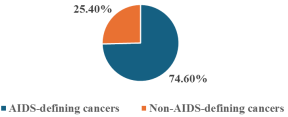
The figure below shows that AIDS-defining cancers were the most prevalent (74.6%) among people accessing services in selected hospitals within Nairobi City County.
Figure 1. Frequency distribution of the typology of cancers.
3.5. Bivariate Analysis
3.5.1. Bivariate Analysis of Sociodemographic Factors
A Pearson’s Chi-square (X2) test revealed that socio-demographic characteristics such as sex (p = 0.00), age in years (45-54 for AIDS-defining cancer and 65 and above for Non-AIDS-defining cancers) (p = 0.00), marital status (married and widowers for ADC and NADC, p = 0.02) and level of education (secondary and ‘other’ for ADC and NADC respectively; p = 0.005) were associated with the type of cancer development among PLHIV. However, there was no statistically significant association between any cancer type and the type of respondents (p = 0.17) or religious affiliation (p = 0.25).
Table 5. Bivariate analysis of socio-demographic characteristics and cancer type.

Variable

ADC

NADC

Sub-total (n1+n2)

Proportion of the total (N=406) (%)

d.f.

Chi-square

p Value

n1 (303)

n2 (103)

Sex

Male

55

19

74

18.2

1

74.55

0.00

Female

248

84

332

81.8

Age in Years

18 - 24

8

3

11

2.7

5

29.64

0.00

25 - 34

34

12

46

11.3

35 - 44

75

26

101

24.8

45 - 54

98

34

132

32.8

55 - 64

48

16

64

15.7

65 and above

39

13

54

12.7

Marital Status

Divorced

29

10

39

9.6

5

13.19

0.02

Married

181

62

243

60

Never Married

10

3

13

3.2

Single

46

16

62

15.2

Widow

33

11

44

10.8

Widower

4

1

5

1.2

Religious Affiliation

Christians

269

91

360

88.7

1

0.70

0.25

Muslims

34

12

46

11.3

Level of Education

Primary

37

12

49

12

4

14.69

0.04

Secondary

137

46

183

44.8

Tertiary

127

43

170

42.2

Others

2

0

2

0.5

None

2

0

2

0.5

ADC: AIDS-defining-cancers; NADC: Non-AIDS-defining cancers; d.f: degree of freedom
3.5.2. Bivariate Analysis of Socio-economic Factors
Table 6 shows the association between economic factors and various cancer typologies. A Chi-square test indicated that employment status (p=0.00) and the type of work industry (p=0.021) were statistically significant. However, the level of income and workplace exposure to hazards did not show any statistical significance.
Table 6. Bivariate analysis of socio-economic factors.

Variable

ADC

NADC

Sub-total (n1+n2)

Proportion of the total (N=406) (%)

d.f.

Chi-square

p Value

n1 (303)

n2 (103)

Employment Status

Employed

99

34

133

32.8

4

30.37

0.00

Self-employed

145

49

194

47.8

Retired

15

5

20

4.9

Others

44

15

59

14.5

Level of income

Below 10,000

85

29

114

28.0

4

9.12

0.1

10,000-49,999

139

47

186

45.8

50,000-100,000

63

21

84

20.6

Above 100,000

16

6

22

5.4

Type of Industry

All (Manufacturing, Service, Agriculture, Military, Casuals)

303

103

406

100

102

132.93

0.021

Workplace Exposure to Hazards

Yes

24

8

32

7.8

1

0.00

0.57

No

279

95

374

92.2

ADC: AIDS-defining-cancers; NADC: Non-AIDS-defining cancers; d.f: degree of freedom
3.5.3. Bivariate Analysis of Lifestyle and Biological Factors
A Chi-square test of significance showed that lifestyle and biological factors such as length of time to diagnosis of cancer (p = 0.00), smoking (p = 0.00), alcohol intake (p = 0.00), family history of cancers (0.00), frequency of exercise (p=0.03), and history of other viral infections (p = 0.01) were statistically significant. However, there was no significant relationship between multiple sexual partners, sexual and gender-based violence, non-viral infections, and cancer development.
Table 7. Bivariate analysis of lifestyle and biological factors.

Variable

ADC

NADC

Sub-total (n1+n2)

Proportion of total (N=406) (%)

d.f.

Chi-square

p Value

n1 (303)

n2 (103)

Cancer diagnosis before or after knowing HIV status

Yes, after knowing my HIV status

290

37

327

80.5

1

175.32

0.00

No, before knowing HIV status

13

66

79

19.5

Ever smoked a cigarette before diagnosis?

Yes

26

39

65

16

1

49.02

0.00

No

277

64

341

84

Duration of smoking before cancer development

< 1 year

1

0

1

0.2

4

64.66

0.00

1 - 5 years

11

7

18

4.4

5 - 10 years

4

1

5

1.2

More than 10 years

10

31

41

10.0

None

277

64

341

84.0

Duration without smoking before cancer development

5 -10 years

1

0

1

0.2

1

0.34

0.74

None

302

103

405

99.8

Alcohol intake before cancer development

Yes

122

69

191

47

1

22.04

0.00

No

181

34

215

53

Duration of alcohol consumption before cancer development

< 1 year

4

2

6

1.4

4

43.46

0.00

1 - 5

24

9

33

8.1

5 - 10

48

12

60

14.8

More than 10 years

44

46

90

22.3

None

183

34

217

53.4

Duration without alcohol before cancer development

1 - 5 years

1

0

1

0.2

1

0.34

0.74

None

302

103

405

99.8

Family History of Cancer

Yes

125

178

303

74.6

1

23.5

0.00

No

71

32

103

25.4

Multiple Sexual Partners

Yes

204

99

303

74.6

1

1.99

0.09

No

77

26

103

25.4

Frequency of Exercise

Regularly

69

33

102

25.1

2

6.95

0.031

Rarely

141

51

192

47.2

Never

93

19

112

27.5

Sexual Violence Experience

Yes

28

11

39

9.6

1

0.18

0.39

No

275

92

367

90.4

Prior Other Viral Infections

Yes

131

31

162

40

1

5.53

0.01

No

172

72

244

60

Prior Non-Viral Infections

Yes

211

76

287

70.6

1

0.63

0.25

No

92

27

119

29.4

ADC: AIDS-defining-cancers; NADC: Non-AIDS-defining cancers; d.f: degree of freedom
3.5.4. Bivariate Analysis of Health System-related Factors That Affect Cancer Development
A Pearson’s Chi test showed that the frequency of hospital visits P = (0.00), access to early screening (p = 0.00), screening in the same comprehensive care hospital (p = 0.00), and reasons for missing screening (p = 0.00) were statistically significant.
Table 8. Bivariate analysis of health system factors.

Variable

ADC

NADC

Sub-total (n1+n2)

Proportion of total (N=406) (%)

d.f

Chi-square

p Value

n1 (303)

n2 (103)

Facility utilization and access: Frequency of facility visits before diagnosis:

Annually

80

50

130

32

3

20.86

0.00

Quarterly

199

42

241

59.4

Bi-annually

23

10

33

8.1

Never

1

1

2

0.5

Accessibility of health facilities

Yes accessible

284

95

379

93.3

1

0.27

0.37

Not accessible

19

8

27

6.7

Prior screening before diagnosis

Yes

182

21

203

50

1

48.40

0.00

No

121

82

203

50

Screening offered in the same hospital

Yes

156

15

171

42.1

2

44.0

0.00

No

27

12

39

9.6

NA

120

76

196

48.3

Reasons for not being screened

Screening services not available

79

68

14

36.2

5

67.59

0.00

User fee needed

15

11

26

6.4

Declined

14

2

16

3.9

No trained HCW

26

4

30

7.4

Unaware

9

3

12

3.0

NA

160

15

175

43.1

Access to treatment within the facility

Yes

45

5

50

12

2

9.12

0.01

No

257

99

356

88

Immediate treatment initiation

Yes

28

4

32

7.5

3

10.59

0.01

No

60

11

71

17.5

NA

214

89

303

75

Accessing treatment challenges

Lack of commodities and trained personnel

62

47

109

26.9

5

37.97

0.00

Lack of treatment commodities

156

49

205

50.5

Lack of trained HCW’s

53

4

57

14.0

Declined

4

0

4

1.0

NA

28

3

31

7.6

Referral for treatment

Yes, to a higher facility

60

8

68

16.7

5

17.48

0.04

Yes, to an Oncology specialist

217

94

311

76.6

Not referred

16

1

17

4.2

Declined

2

0

2

0.5

NA

8

0

8

2

ADC: AIDS-defining-cancers; NADC: Non-AIDS-defining cancers; NA: not applicable; d.f: degree of freedom
3.6. Multivariate Analysis (Logistic Regression Model)
A binary logistic regression model was conducted to predict the factors associated with AIDS-defining and non-AIDS-defining cancers among people living with HIV attending selected hospitals in Nairobi County. The following null hypotheses were tested:
1) H01 There was no significant relationship between socio-demographic factors and AIDS-defining and non-AIDS-defining cancers among people living with HIV.
2) H02 There was no significant relationship between socioeconomic factors and AIDS-defining and non-AIDS-defining cancers among people living with HIV in the selected health facilities.
3) H03 There was no significant relationship between lifestyle and biological factors associated with AIDS-defining and non-AIDS-defining cancers among people living with HIV in the selected facilities.
4) H05 The relationship between health system-related factors and the development of AIDS-defining and non-AIDS-defining cancers among people living with HIV at the selected sites was not significant.
Results from Pearson’s Chi-square tests showed that sex, age, marital status, level of education, employment status, type of industry, time of diagnosis (before or after HIV infection), cigarette smoking, alcohol consumption, family history, lack of exercise, prior infection with others viruses, frequency of hospital visits, screening, access to treatment and referral pathways were statistically significant and associated with AIDS and Non-AIDS defining cancers among PLHIV.
However, when subjected to a binary logistic regression model, only age, income level, history of cigarette smoking, alcohol consumption, family history of cancers, and multiple sexual partners were independently associated with AIDS and non-AIDS-defining cancers.
The model was statistically significant (X2 = 86.72, d.f. = 14, p = 0.001), reliably distinguishing the predictors of AIDS-defining and non-AIDS-defining cancers.
The table below indicates that age was a significant overall predictor (χ2(5) = 14.96, p = 0.011). Relative to the reference category (those aged 65 years and above), those in the 25 to 34 age group had significantly lower odds of having AIDS-defining cancers (B = - 1.54; p = 0.012; OR = 0.214; 95% CI: 0.07 – 0.69). Similarly, those aged between 35 – 44 years had reduced odd of AIDS-defining cancers (B = - 1.84; p = 0.001; OR = 0.0160; 95% CI: 0.06 – 0.43) and those aged between 45- 54 years also exhibited significantly lower odds (B = - 1.23; p = 0.008; OR = 0.291; 95% CI: 0.11 – 0.73). The age group 55 – 64 years showed a marginal association (B = -0.82; p = 0.087). These results suggest that those in the middle age brackets were less likely to be diagnosed with AIDS-defining cancers compared to those in the oldest group.
Income level was a borderline significant predictor (X2 (5) = 9.96; p = 0.076). Those earning between 50,000 – 100,000 per month had significantly greater odds of AIDS-defining cancers (B = 1.15; p = 0.005; OR = 4.543; 95% CI: 1.59 – 13.00) when compared to other reference groups. Other income levels were not statistically significant but showed elevated odds ratios.
Cigarette smoking strongly predicted cancer typologies. Those who had a prior history of smoking before the diagnosis of cancer were over four times likely to have AIDS and non-AIDS-defining cancers compared to non-smokers (B = 1.53; p = 0.001; OR = 4.638; 95% CI: 2.28 – 9.42). Family history of cancer also significantly increased the odds of AIDS and non-AIDS-defining cancers (B = 1.04; p = 0.001; OR = 2.827; 95% CI: 1.61 – 4.97).
In contrast, alcohol consumption was not a statistically significant predictor in this model (B = 0.295; p = 0.356), suggesting that in this population, alcohol use alone did not distinguish between AIDS-defining and non-AIDS-defining cancer typologies (B = -0.437; p = 0.190), although the direction of the association suggested lower odds of AIDS-defining cancers among those with multiple partners.
In summary, the logistic regression model revealed that age, smoking history, family history of cancer, and, to a lesser extent, monthly income were the most significant factors among PLHIV. Middle-aged adults had lower odds of AIDS and non-AIDS-defining cancers compared to the elderly. Those who smoked or had a genetic predisposition to cancer were more likely to develop AIDS and non-AIDS-defining cancers.
Table 9. Multivariate binary logistic regression of socio-demographic, socio-economic, lifestyle, and biological factors relating to AIDS-defining and non-AIDS-defining cancers among PLHIV.

Variable

χ²

B

SE

Wald

P value

OR

95% CI Lower

95% CI Upper

Overall

86.72

0.001

Age (Overall)

14.96

0.011

Age 18-24 (ref)

0.297

0.790

0.141

0.707

1.345

0.29

6.21

Age 25-34

-1.542

0.617

6.244

0.012

0.214

0.07

0.69

Age 35-44

-1.836

0.520

12.446

0.000

0.160

0.06

0.43

Age 45-54

-1.234

0.466

7.020

0.008

0.291

0.11

0.73

Age 55-64

-0.822

0.480

2.925

0.087

0.440

0.17

1.12

Income (Overall)

9.96

0.076

Income (Ref: Lowest Bracket)

0.839

0.601

1.953

0.162

2.315

0.74

7.19

Income (Ksh. 50,000-100,000)

0.579

0.491

1.393

0.238

1.785

0.69

4.59

Income (Ksh. 100,000-200,000)

0.900

0.547

2.705

0.100

2.460

0.83

7.34

Income (Ksh. 200,000-500,000)

1.514

0.539

7.888

0.005

4.543

1.59

13.00

Income (Above Ksh. 500,000)

0.603

0.692

0.761

0.383

1.828

0.46

7.22

Smoking History (Ever Smoked)

18.17

1.534

0.360

18.17

0.000

4.638

2.28

9.42

Alcohol Use (Ever Taken Alcohol)

0.295

0.320

0.852

0.356

1.343

0.72

2.52

Family History of Cancer

12.84

1.039

0.290

12.842

0.000

2.827

1.61

4.97

Multiple Sexual Partners (Ever Engaged)

-0.437

0.326

1.798

0.180

0.646

0.34

1.22

χ²-chi-square; B-unstandardized OR; SE-standard error; Wald-hypothesis testing; OR-odds ratio; CI-confidence interval
Therefore, from the hypothesis testing, H01, H02, H03, and H04 were all rejected.
4. Discussions
According to the findings of this study, women comprised 81.6% (333) of the total respondents. 32.8% (134) were aged between 45 – 54 years, 60% (245) were married, 88.7% (362) were Christians, and 11.3% (46) were Muslims. 44.8% (183) had attained secondary education. 42.2% (172), 12% (49), and 1% (4) had attained tertiary, primary, and other forms of education, respectively. Concerning economic status, 47.8% (195) reported self-employment, 32.8% (134) were in formal employment, 14.5% (59) had no employment, and 4.9% (20) were retirees.
AIDS-defining cancers (KS, NHL, and invasive cervical cancer) were the most prevalent (74.6%) among people accessing services in selected hospitals within Nairobi City County. NADC (25.4%), such as breast, liver, prostate, and colorectal cancer, were the most common.
A Pearson’s Chi-square (X2) test revealed that socio-demographic characteristics such as sex (p = 0.00), age in years (45-54 for AIDS-defining cancer and 65 and above for Non-AIDS-defining cancers) (p = 0.00), marital status (married and widowers for ADC and NADC, p = 0.02) and level of education (secondary and ‘other’ for ADC and NADC respectively; p = 0.005) were associated with the type of cancer development among people living with HIV.
Socio-economically, employment status (p=0.00) and the type of work industry (p=0.021) were statistically significant.
Lifestyle and biological factors such as length of time to diagnosis of cancer (p = 0.00), smoking (p = 0.00), alcohol consumption (p = 0.00), family history of cancers (0.00), frequency of exercise (p=0.03), and history of other viral infections (p = 0.01) were statistically significant.
Health system factors such as frequency of hospital visits {P = (0.00)}, access to early screening (p = 0.00), screening in the same comprehensive care hospital (p = 0.00), and reasons for missing screening (p = 0.00) were statistically significant.
A binary logistic regression model found that age (χ2(5) = 14.96, p = 0.011), income level (X2 (5) = 9.96; p = 0.076), history of cigarette smoking (B = 1.53; p = 0.001; OR = 4.638; 95% CI: 2.28 – 9.42), alcohol consumption (B = 0.295; p = 0.356), family history of cancers (B = 1.04; p = 0.001; OR = 2.827; 95% CI: 1.61 – 4.97), were statistically associated with AIDS and non-AIDS-defining cancers.
5. Conclusions
Being the first study on the prevalence of ADC and NADC among PLHIV, ADC was found to be the most prevalent. NADC was, however, still significant, suggesting that it should not be overlooked during screening.
The most prevalent ADC was cervical cancer, whereas the common NADC was breast cancer. These findings therefore offer an opportunity for enhanced screening for both cervical cancer and breast cancer among other common cancers in PLHIV.
6. Recommendations
To ensure consistency, adherence, and strict observance, the Ministry of Health and the County Departments of Health should develop policy guidelines to ensure that all HIV positive clients are offered routine screening for cancers. They should also ensure continuous capacity building of healthcare workers, equipping health facilities with diagnostic equipment that are accessible and affordable, and health education to the PLHIV on the importance of early screening for cancers.
Abbreviations

HIV

Human Immunodeficiency Virus

PLHIV

People Living With HIV

AIDS

Acquired Immunodeficiency Syndrome

NCD

Non-Communicable Disease

ART

Antiretroviral Therapy

ADC

AIDS-Defining Cancers

NADC

Non-AIDS-Defining Cancers

AHD

Advanced HIV Disease

WHO

World Health Organization

SSA

Sub-Saharan Africa

GLOBOCAN

Global Cancer Observatory

ARV

Antiretrovirals

KS

Kaposi Sarcoma

HAART

Highly Active Antiretroviral Therapy

MOH

Ministry of Health

KHIS

Kenya Health Information System

STC

Special Treatment Clinic

FGD

Focus Group Discussion

KII

Key Informant Interview

KUERC

Kenyatta University Ethical Review Committee

NHL

Non-Hodgkin’s Lymphoma

Acknowledgments
I sincerely thank our Almighty God for His sufficient grace during my study. My heartfelt gratitude also goes to my supervisors, Professor Alloys S. S. Orago and Professor Isaac Mwanzo, for guiding me during my studies. I’m also grateful to the entire Kenyatta University fraternity, particularly the Department of Family Medicine, Community Health and Epidemiology. My gratitude to the Nairobi City County Government, the various Sub-County Heads, the administration, and the comprehensive care clinic staff of Mbagathi Hospital, Mama Lucy Kibaki Hospital, Langata Sub-County Hospital, Kangemi Health Centre, St Mary’s Mission Hospital Langata, The DREAMS Medical Clinic, Karen, and Texas Cancer Centre Nairobi for enabling me to obtain data from their facilities. I must mention my research assistants (Cecilia Mahugu – Mama Lucy hospital; Maurice Magudha and Catherine Malala – Mbagathi hospital; Joan Kamau- St Mary’s hospital; Hemstone Otieno – Kangemi health center; Steve Wamalwa and Saulo Kogeluk - DREAM Medical Clinic; Jane Gitau – Langata Sub-County hospital, and Beatrice Mithika – Texas Cancer Centre) for the enduring work they did during my data collection in these facilities. My friends and colleagues feel much appreciated for your support. I sincerely thank my family for their cheering support throughout my studies. Lastly, I would like to thank the Royal Society of Tropical Medicine and Hygiene (RSTMH), which supported my thesis through their small grants program.
Author Contributions
Peter Onyango Omollo: Conceptualization, Methodology, Data collection, Formal analysis, Investigation, Writing – review & editing
Alloys Orago: Supervision, Methodology, Data curation, Funding acquisition, Validation, Writing – original draft
Isaac Mwanzo: Supervision, Methodology, Data curation, Funding acquisition, Validation, writing – original draft
Funding
This research was funded by the UK’s Royal Society of Tropical Medicine and Hygiene (RSTMH) small grants program.
Data Availability Statement
Data available upon writing to the corresponding author.
Conflicts of Interest
The authors declare no conflicts of interest.
References
[1] Johns Hopkins Medicine, 2023
[2] WHO 2023:
[3] Kenya HIV Estimates, 2023
[4] HIV/ART Guidelines, 2022
[5] National Syndemic Disease Control Council, 2024
[6] American Cancer Society, 2024.
[7] WHO, 2024
[8] GLOBOCAN, 2022
[9] Kenya NCD Strategic Plan, 2021:
[10] National Cancer Institute, 2022
[11] NCD Strategic Plan, 2021-2025:
[12] Rogena, E. A., Simbiri, K. O., De Falco, G. et al. A review of the pattern of AIDS-defining, HIV-associated neoplasms and premalignant lesions diagnosed from 2000–2011 at Kenyatta National Hospital, Kenya. Infect Agents Cancer 10, 28 (2015).
[13] National Cancer Control Strategy, 2023-2027
[14] Jessica L. Castilho, Aihua Bian, MPH, Cathy A. Jenkins, MS, Bryan E. Shepherd, PhD, Keith Sigel, MD, M. John Gill, MD, Mari M. Kitahata, MD, MPH: CD4/CD8 Ratio and Cancer Risk Among Adults With HIV;
[15] Yuan T, Hu Y, Zhou X, Yang L, Wang H, Li L, Wang J, Qian HZ, Clifford GM, Zou H. Incidence and mortality of non-AIDS-defining cancers among people living with HIV: A systematic review and meta-analysis. EClinicalMedicine. 2022 Aug 11; 52: 101613. PMID: 35990580; PMCID: PMC9386399.
[16] Mathoma, Anikie; Sartorius, Benn; Mahomed, Saajida: The Trends and Risk Factors of AIDS-Defining Cancers and Non-AIDS-Defining Cancers in Adults Living with and without HIV: A Narrative Review; JO - Journal of Cancer Epidemiology. VL - 2024,
[17] MOH KHIS, 2023
Cite This Article
  • APA Style

    Omollo, P. O., Orago, A., Mwanzo, I. (2025). Predictors of AIDS-defining and Non-AIDS-defining Cancers Among PLHIV Accessing Services in Selected Hospitals in Nairobi City County, Kenya. Science Journal of Public Health, 13(6), 354-368. https://doi.org/10.11648/j.sjph.20251306.15

    Copy | Download

    ACS Style

    Omollo, P. O.; Orago, A.; Mwanzo, I. Predictors of AIDS-defining and Non-AIDS-defining Cancers Among PLHIV Accessing Services in Selected Hospitals in Nairobi City County, Kenya. Sci. J. Public Health 2025, 13(6), 354-368. doi: 10.11648/j.sjph.20251306.15

    Copy | Download

    AMA Style

    Omollo PO, Orago A, Mwanzo I. Predictors of AIDS-defining and Non-AIDS-defining Cancers Among PLHIV Accessing Services in Selected Hospitals in Nairobi City County, Kenya. Sci J Public Health. 2025;13(6):354-368. doi: 10.11648/j.sjph.20251306.15

    Copy | Download

  • @article{10.11648/j.sjph.20251306.15,
      author = {Peter Onyango Omollo and Alloys Orago and Isaac Mwanzo},
      title = {Predictors of AIDS-defining and Non-AIDS-defining Cancers Among PLHIV Accessing Services in Selected Hospitals in Nairobi City County, Kenya},
      journal = {Science Journal of Public Health},
      volume = {13},
      number = {6},
      pages = {354-368},
      doi = {10.11648/j.sjph.20251306.15},
      url = {https://doi.org/10.11648/j.sjph.20251306.15},
      eprint = {https://article.sciencepublishinggroup.com/pdf/10.11648.j.sjph.20251306.15},
      abstract = {Human infection with HIV compromises the immune system and reduces the body’s ability to fight viral infections that may promote the development of certain types of cancers. The diagnosis of AIDS-defining cancers in PLHIV indicates the progression of an HIV infection to the AIDS stage. Non-AIDS-defining cancers occur in HIV-positive individuals without necessarily being caused or exacerbated by HIV infection. WHO estimates that 39.9 million are PLHIV, whereas 42.3 million lives have been lost to HIV. Kenya’s HIV prevalence was 3.3% and in Nairobi, 4.3%. NCD mortalities in Kenya were 39%, including cancers, up from 27% and HIV remains a major risk factor. This study’s main purpose was to identify the predictors of AIDS-defining and non-AIDS-defining cancers among PLHIV accessing services in selected hospitals in Nairobi City County, Kenya. An analytical cross-sectional design was used. Study sites were purposively selected, whereas a simple random method was used to select 406 adults, aged 18 years and above, HIV positive and on ART. The study was conducted in seven selected facilities in Nairobi County. Quantitative data were collected using semi-structured questionnaires, whereas qualitative data were obtained from seven key informant interviews and three focus group discussions. Descriptive statistics (percentages, graphs, and charts) and inferential statistics (chi-square and logistic regression models) were performed using SPSS v. 27. Qualitative data were transcribed, coded, and grouped into themes. AIDS-defining cancers were the most prevalent (74.6%) among PLHIV accessing services in the selected hospitals. A Pearson’s Chi-square (X2) test revealed that socio-demographic characteristics such as sex (p = 0.00), age in years (45-54 for AIDS-defining cancer and 65 and above for Non-AIDS-defining cancers) (p = 0.00), marital status (married and widowers for ADC and NADC, p = 0.02) and level of education (secondary and ‘other’ for ADC and NADC respectively; p = 0.005) were associated with the type of cancer development among people living with HIV. A binary logistic regression model found that age (χ2(5) = 14.96, p = 0.011), income level (X2 (5) = 9.96; p = 0.076), history of cigarette smoking (B = 1.53; p = 0.001; OR = 4.638; 95% CI: 2.28 – 9.42), alcohol consumption (B = 0.295; p = 0.356), family history of cancers (B = 1.04; p = 0.001; OR = 2.827; 95% CI: 1.61 – 4.97), were statistically associated with AIDS and non-AIDS-defining cancers. These findings will help formulate programmatic and policy interventions for ADC and NADC among PLHIV.},
     year = {2025}
    }
    

    Copy | Download

  • TY  - JOUR
    T1  - Predictors of AIDS-defining and Non-AIDS-defining Cancers Among PLHIV Accessing Services in Selected Hospitals in Nairobi City County, Kenya
    AU  - Peter Onyango Omollo
    AU  - Alloys Orago
    AU  - Isaac Mwanzo
    Y1  - 2025/12/29
    PY  - 2025
    N1  - https://doi.org/10.11648/j.sjph.20251306.15
    DO  - 10.11648/j.sjph.20251306.15
    T2  - Science Journal of Public Health
    JF  - Science Journal of Public Health
    JO  - Science Journal of Public Health
    SP  - 354
    EP  - 368
    PB  - Science Publishing Group
    SN  - 2328-7950
    UR  - https://doi.org/10.11648/j.sjph.20251306.15
    AB  - Human infection with HIV compromises the immune system and reduces the body’s ability to fight viral infections that may promote the development of certain types of cancers. The diagnosis of AIDS-defining cancers in PLHIV indicates the progression of an HIV infection to the AIDS stage. Non-AIDS-defining cancers occur in HIV-positive individuals without necessarily being caused or exacerbated by HIV infection. WHO estimates that 39.9 million are PLHIV, whereas 42.3 million lives have been lost to HIV. Kenya’s HIV prevalence was 3.3% and in Nairobi, 4.3%. NCD mortalities in Kenya were 39%, including cancers, up from 27% and HIV remains a major risk factor. This study’s main purpose was to identify the predictors of AIDS-defining and non-AIDS-defining cancers among PLHIV accessing services in selected hospitals in Nairobi City County, Kenya. An analytical cross-sectional design was used. Study sites were purposively selected, whereas a simple random method was used to select 406 adults, aged 18 years and above, HIV positive and on ART. The study was conducted in seven selected facilities in Nairobi County. Quantitative data were collected using semi-structured questionnaires, whereas qualitative data were obtained from seven key informant interviews and three focus group discussions. Descriptive statistics (percentages, graphs, and charts) and inferential statistics (chi-square and logistic regression models) were performed using SPSS v. 27. Qualitative data were transcribed, coded, and grouped into themes. AIDS-defining cancers were the most prevalent (74.6%) among PLHIV accessing services in the selected hospitals. A Pearson’s Chi-square (X2) test revealed that socio-demographic characteristics such as sex (p = 0.00), age in years (45-54 for AIDS-defining cancer and 65 and above for Non-AIDS-defining cancers) (p = 0.00), marital status (married and widowers for ADC and NADC, p = 0.02) and level of education (secondary and ‘other’ for ADC and NADC respectively; p = 0.005) were associated with the type of cancer development among people living with HIV. A binary logistic regression model found that age (χ2(5) = 14.96, p = 0.011), income level (X2 (5) = 9.96; p = 0.076), history of cigarette smoking (B = 1.53; p = 0.001; OR = 4.638; 95% CI: 2.28 – 9.42), alcohol consumption (B = 0.295; p = 0.356), family history of cancers (B = 1.04; p = 0.001; OR = 2.827; 95% CI: 1.61 – 4.97), were statistically associated with AIDS and non-AIDS-defining cancers. These findings will help formulate programmatic and policy interventions for ADC and NADC among PLHIV.
    VL  - 13
    IS  - 6
    ER  - 

    Copy | Download

Author Information
  • Abstract
  • Keywords
  • Document Sections

    1. 1. Introduction
    2. 2. Materials and Methods
    3. 3. Results
    4. 4. Discussions
    5. 5. Conclusions
    6. 6. Recommendations
    Show Full Outline
  • Abbreviations
  • Acknowledgments
  • Author Contributions
  • Funding
  • Data Availability Statement
  • Conflicts of Interest
  • References
  • Cite This Article
  • Author Information