Abstract
The availability of abundant perennial bee forage species that provide pollen and nectar is a critical factor for the survival, abundance, and distribution of honeybees. This study was conducted in the highland and midland agro-ecologies of Bale zone, located in the south-eastern part of the Oromia Region, with the objective of evaluating the growth performance of selected perennial bee forage species over three consecutive years. The species were selected based on their importance as sources of nectar and pollen for honeybees, their adaptability to a wide range of agro-ecological conditions, and their similar growth habits. The evaluated species were Leucas abyssinica, Becium grandiflorum, and Medicago sativa. The growth performance of these perennial species was assessed using several parameters, including days to germination, days to flowering, duration of blooming, time to shading, flowering period, number of branches per plant, number of flowers per plant, plant height, canopy cover, and honeybee foraging intensity. The collected data were analyzed using descriptive statistics to summarize and interpret the results. The findings indicated that Leucas abyssinica, Becium grandiflorum, and Medicago sativa performed well in both the highland and midland sites. Among the species, Leucas abyssinica exhibited the longest blooming period, followed by Becium grandiflorum and Medicago sativa at both locations. The highest mean number of branches per plant was recorded in Becium grandiflorum, while the highest mean number of flowers per plant was observed in both Becium grandiflorum and Leucas abyssinica. Similarly, the highest honeybee foraging intensity (number of bees per 10 minutes per 1 m2) was recorded on Leucas abyssinica and Becium grandiflorum. Honeybees were most actively foraging on Leucas abyssinica and Becium grandiflorum from 9:30 a.m. to 4:30 p.m., while on Medicago sativa the peak foraging period extended from 11:30 a.m. to 4:30 p.m. In conclusion, the results revealed that all evaluated perennial bee forage species performed well under the highland and midland agro-ecological conditions of Bale. These species provide dual benefits by supporting local beekeeping practices and contributing to the ecological restoration of degraded landscapes. Therefore, it is recommended to integrate Leucas abyssinica and Becium grandiflorum into watershed development programs.
Keywords
Blooming, Flowering Periods, Foraging Intensity, Honeybee Forage, Perennials
1. Introduction
Beekeeping is a significant agricultural activity in Ethiopia
| [1] | Abebe, W. (2011). Identification and documentation of indigenous knowledge of beekeeping practices in selected districts of Ethiopia. Journal of Agricultural Extension and Rural Development, 3(5), 82-87. https://doi.org/10.5897/JAERD.9000047 |
[1]
. It contributes to the national economy through export earnings from commodities such as honey and beeswax, which are important agricultural products. Furthermore, beekeeping provides income diversification for beekeepers in both rural and urban areas. The government of Ethiopia has also recognized and emphasized the importance of sustainable development and the conservation of natural resources. Beekeeping is a floral-based industry in which honeybees depend entirely on plants for their food
| [2] | Abrol, D. P., Shankar, U., Nitin, K. S., Gowda, G. B. (2016). Honeybees and Beekeeping: The Global Scenario. In: Chakravarthy, A., Sridhara, S. (eds) Arthropod Diversity and Conservation in the Tropics and Sub-tropics. Springer, Singapore. https://doi.org/10.1007/978-981-10-1518-2_22 |
[2]
. The performance of bee colonies, as well as the production of hive products such as honey, beeswax, propolis, and pollen, largely depends on the availability of bee forage plants. These plants provide nectar and pollen, which are the primary food sources for honeybees
| [3] | Gernt, P.; Dittes, J.; Vervuert, I.; Emmerich, I. U. Review: Nutritional Needs of Honeybees and Legislation on Apiculture By-Products in Animal Nutrition. Animals 2024, 14, 2208.
https://doi.org/10.3390/ ani14152208 |
[3]
. These resources supply the essential nutrients required for the growth, development, and productivity of bee colonies.
Bee forage plant species are sources of nectar and pollen, providing heat and energy as well as essential nutrients such as proteins, vitamins, fatty substances, and other compounds required for honeybees
| [3] | Gernt, P.; Dittes, J.; Vervuert, I.; Emmerich, I. U. Review: Nutritional Needs of Honeybees and Legislation on Apiculture By-Products in Animal Nutrition. Animals 2024, 14, 2208.
https://doi.org/10.3390/ ani14152208 |
[3]
. Plant species that supply nectar, pollen, or both in abundant quantities are commonly referred to as honeybee plants or honeybee forages
. The success of beekeeping largely depends on the availability of promising bee forage resources, which are influenced by factors such as plant population density, nectar and pollen production potential, and extended flowering periods
.
Bee forage plant species are sources of nectar and pollen, providing energy as well as essential nutrients such as proteins, vitamins, fatty substances, and other compounds required for honeybees. Plant species that supply nectar, pollen, or both in abundant quantities are commonly referred to as honeybee plants or bee forages. The success of beekeeping largely depends on the availability of promising bee forage resources, which are influenced by factors such as plant population density, nectar and pollen production potential, and extended flowering periods
| [3] | Gernt, P.; Dittes, J.; Vervuert, I.; Emmerich, I. U. Review: Nutritional Needs of Honeybees and Legislation on Apiculture By-Products in Animal Nutrition. Animals 2024, 14, 2208.
https://doi.org/10.3390/ ani14152208 |
| [4] | Donkersley, P., Rhodes, G., Pickup, R. W. et al. Nutritional composition of honey bee food stores vary with floral composition. Oecologia 185, 749–761 (2017).
https://doi.org/10.1007/s00442-017-3968-3 |
| [5] | Gratzer, K., Wakjira, K., Fiedler, S. et al. Challenges and perspectives for beekeeping in Ethiopia. A review. Agron. Sustain. Dev. 41, 46 (2021).
https://doi.org/10.1007/s13593-021-00702-2 |
[3-5]
.
Leucas abyssinica, commonly known as African wild sage or Ethiopian Leucas, is a perennial herb native to East Africa. It grows wild in the savannas and grasslands of Ethiopia, Eritrea, Kenya, Somalia, Sudan, Tanzania, and Uganda. The plant can reach a height of 60–90 cm and has a branching stem covered with fine white hairs. Its leaves are opposite, simple, and roughly toothed, with a characteristic strong scent. The flowers are typically white or purple and grow in spikes at the top of the stems
| [6] | Williams, S. D., J. L. Vivero, S. Spawls, Anteneh S. & Ensermu K. (2004). Ethiopian Highlands. In: Mittermeier, R. A., P. Robles-Gil, M. Hoffmann, J. D. Pilgrim, T. M. Brooks, C. G. Mittermeier & G. Fonseca (eds.), Hotspots Revisited: Earth ́s Biologically Richest andMost Endangered Ecoregions, pp. 262-273. |
[6]
.
Leucas abyssinica is a hardy plant that grows best at temperatures between 20 and 25 °C. It prefers well-drained sandy or loamy soils but can grow in a range of soil types. In Ethiopia, it is an important bee forage species due to its long blooming period and high number of flowers. The plant commonly grows in montane bush lands, along roadsides, and on degraded mountain slopes.
Becium grandiflorum is widely distributed in the highlands of Ethiopia and Eritrea, particularly in the northern parts of Ethiopia. It thrives on rocky slopes, montane bush lands, and eroded pastures, often forming pure stands or growing in association with species of Rumex
| [6] | Williams, S. D., J. L. Vivero, S. Spawls, Anteneh S. & Ensermu K. (2004). Ethiopian Highlands. In: Mittermeier, R. A., P. Robles-Gil, M. Hoffmann, J. D. Pilgrim, T. M. Brooks, C. G. Mittermeier & G. Fonseca (eds.), Hotspots Revisited: Earth ́s Biologically Richest andMost Endangered Ecoregions, pp. 262-273. |
[6]
. This shrub is an important source of honeybee forage, as honeybees frequently visit the plant to collect nectar and pollen. In addition to its value for honey production, the plant also contributes to fuel supply and supports soil and water conservation
.
Medicago sativa, commonly known as alfalfa, is widely distributed in many regions, particularly in warm environments. It is cultivated in temperate, Mediterranean, subtropical, and upland tropical regions around the world. The crop is relatively drought-tolerant and can grow in both sandy and clay soils, provided that adequate drainage is available. Honeybee pollination plays an important role in improving the productivity and quality of Medicago sativa
. Managed honeybees, particularly Apis mellifera (the European honeybee), are preferred because of their ability to forage for long periods and their ease of management. These bees play a crucial role in the pollination process, which is essential for seed development in Medicago sativa
| [9] | Abou-Shaara, H. F. (2014). The foraging behaviour of honey bees, Apis mellifera: a review. Veterinarni medicina, 59(1).
https://doi.org/10.17221/7240 |
[9]
.
Today, the shortage of bee forage has become one of the major constraints to beekeeping development, particularly in Bale Zone. This problem is driven by factors such as population growth, expansion of agricultural land, deforestation, and the intensive use of agrochemicals. A major challenge is the limited availability of perennial bee forage species that flower throughout the year, which hinders sustainable beekeeping practices. As a result, many honeybee colonies have migrated or absconded in recent years.
Furthermore, there is an increasing demand for improved bee forage species from various stakeholders, including beekeepers, governmental organizations, and non-governmental organizations. To enhance honey production and other hive products, it is essential to provide bee forage species that can sustain honeybee colonies during dearth periods. Improved bee forage species can serve as a bridge during flowering gaps between different bee plants. Therefore, to address this gap, it is important to evaluate the performance of perennial honeybee forage species in the highland and midland agro-ecologies of Bale Zone.
2. Materials and Methods
2.1. Description of Study Area
This study was conducted at the Sinana Agricultural Research Center in the highland area and at the Goro sub-site in the midland area of Bale Zone. The Sinana Agricultural Research Center is located in Sinana District, Bale Zone, Southeastern Oromia region, Ethiopia. It is situated approximately 460 km southeast of Addis Ababa at an altitude of 2,400 meters above sea level. The geographical coordinates of the center range from 07°06′12″ to 07°07′29″ N latitude and from 40°12′40″ to 40°13′52″ E longitude. The Goro sub-site is located about 60 km east of Robe town, the capital of Bale Zone, and approximately 490 km southeast of Addis Ababa. Its geographical coordinates range from 6°58′59.99″ N to 40°29′59.99″ E. The study site is situated at an altitude of 2,267 meters above sea level.
2.2. Experimental Setup
For this study, three honeybee forage species were evaluated for their performance in the midland and highland agro-ecologies of Bale Zone. These species included Leucas abyssinica, Becium grandiflorum, and Medicago sativa. Seeds of Becium grandiflorum were obtained from the Mekelle Agricultural Research Center, while seeds of Leucas abyssinica were sourced from the Andassa Agricultural Research Center, and seeds of Medicago sativa were obtained from the Sinana Agricultural Research Center.
These perennial bee forage species were selected based on their importance as sources of nectar and pollen for honeybees, their wide agro-ecological adaptability, and their similar growth habits. Additionally, they were chosen due to their ease of propagation from seed. Recommended seed rates and row spacing were applied according to the agronomic requirements of each honeybee forage species. The treatments consisted of a single observation for each perennial bee forage species. The plot size was 3 m × 4 m. A spacing of 0.5 m between plants and 1 m between rows was used for Becium grandiflorum and Leucas abyssinica. For Medicago sativa, a row spacing of 20 cm and a seeding rate of 20 kg/ha were applied. All necessary agronomic practices, such as hoeing, were carried out during the experiment, except for fertilizer application, which was excluded to maintain natural growth conditions. The experiment was conducted during the main cropping season in both the highland and midland study areas.
2.3. Data Collection and Measurements
Days to germination: The average number of days from planting to emergence was recorded.
Plant height: All surviving plants in each plot were measured. Plant height was taken from the ground level to the tip of the longest branch using a measuring meter. The mean plant height was calculated by dividing the total height of all sampled plants by the number of plants in each plot.
Days to flowering: Data on days to flowering were recorded from five randomly selected plants in the internal rows of each plot, and the mean value was calculated.
Number of branches per plant: The number of main branches was counted from five randomly selected plants within each plot. The mean number of branches per plant was then computed.
Honeybee foraging intensity: Honeybee foraging intensity was recorded at two-hour intervals from 03:30 to 21:30 h. During each observation period, the number of honeybees visiting flowers within a 1 m2 area was counted over 10 minutes, and the mean number of bees per visit was determined.
Number of flowers per plant: The number of flowers per plant was determined by counting the number of flower heads per plant and the number of flowers per head. The total number of flowers per plant was then calculated by multiplying these values, and the mean was obtained by dividing the total number of flowers by the number of sampled plants in each plot.
Total number of flowers per plant
The total number of flowers per plant was calculated using the following formula:
T.F=H.F×N.F.HT.F=H.F\timesN.F.HT.F=H.F×N.F.H
Where:
1) T.F = Total number of flowers per plant
2) H.F = Number of flower heads per plant
3) N.F.H = Number of flowers per head
Canopy cover of honeybee forage species
Canopy cover was calculated using the following formula:
C.C=(D1+D2)2C.C=\{(D1+D2)}{2}C.C=2(D1+D2)
Where:
1) D1 = Diameter of the plant in the direction of the widest canopy spread
2) D2 = Diameter of the plant in the direction of the narrowest canopy spread
3) C.C = Canopy cover of the plant (cm)
Canopy cover was expressed as the average plant diameter in centimeters. The measurement approach follows standard agronomic and morphological plant characterization procedures
| [10] | International Board for Plant Genetic Resources (IBPGR). (1996). Descriptors for Agro-Morphological Characterization of Forage and Pasture Species. Biodiversity International, Rome, Italy. |
[10]
.
2.4. Data Analysis
The collected data were analyzed using descriptive statistical methods with Genstat (15th edition). Descriptive statistics, including frequency, mean, and standard error, were used to summarize the results.
3. Results
3.1. Days to Emergence
The germination period for Medicago sativa was the shortest, taking only 7.46 days. In contrast,
Becium grandiflorum and
Leucas abyssinica had the longest germination periods, taking 11.38 days and 10.18 days, respectively, in the highlands. Specifically
, Becium grandiflorum and Leucas abyssinica exhibited the slowest germination rates among the bee forage species (see
Tables 1 and 2). This is likely because
Medicago sativa is the fastest-germinating bee forage species. However, the same plant species were studied in the midland area during this experiment. In the midland area, the mean germination times were as follows:
Medicago sativa took 7.13 days,
Leucas abyssinica took 9.06 days, and
Becium grandiflorum took 10.44 days (see
Table 2).
3.2. Days to Flower, Days to Blooming, and Shading of Flower
The mean number of days required to reach the flowering stage from planting was observed in both highland and midland areas. In the highland areas, the mean time taken to set flowers for Medicago sativum was 110.48 days, while Leucas abyssinica took 131.85 days, and
Becium grandiflorum took 178.28 days, as shown in
Table 1. In the midland areas, the average number of days for these bee forage species was as follows:
Medicago sativa took 83.18 days to set flowers,
Leucas abyssinica took 123.60 days, and
Becium grandiflorum took 169.78 days, as shown in
Table 2. This period varies by species and can be influenced by environmental factors such as light, temperature, and soil conditions.
The mean time taken from the start of blooming to shedding differed among
Leucas abyssinica,
Becium grandiflorum, and
Medicago sativa, ranging from 26.52 to 90.64 days at the highland and midland site (
Tables 1 and 2). Leucas abyssinica had the longest blooming period at 90.64 days, followed by
Becium grandiflorum at 51.44 days (
Table 1).
Table 1. The combined mean and standard deviation agronomic performance of perennial bee forage at highland.
Bee forage species | DG | DF | DB | SD | FP |
Leucas abyssinica L | 10.18±0.46 | 131.85±5.35 | 142.60±3.66 | 233.34±5.86 | 90.64±2.7 |
Becium grandiflorum L | 11.38 ±0.85 | 178.28 ±2.11 | 186.02±0.73 | 237.47±12.9 | 51.44±13.29 |
Medicago sativa L | 7.46±0.75 | 110.48 ±4.14 | 117.76 ±5.01 | 147.27±2.73 | 29.52±6.01 |
M= Mean, SD= Standard Deviation DG= days to germinate, DF= days to flower, DB= Days to blooming, SD= shedding time, FP= Flowering periods
Table 2. The combined mean and standard deviation of agronomic performance of perennial bee forages at midland.
Bee forage species | DG | DF | DB | SD | FP |
Leucas abyssinica L | 9.06±0.72 | 123.6±4.23 | 135.35±3.7 | 215.49±10.69 | 80.14±11.58 |
Becium grandiflorum L | 10.44±0.72 | 169.78±4.62 | 180.27±1.12 | 226.97±7.89 | 46.69±6.97 |
Medicago sativa L | 7.13±0.25 | 83.18±3.71 | 113.76±4.62 | 140.27±2.73 | 26.52±4.58 |
M= Mean, SD= Standard Deviation DG= days to germinate, DF= days to flower, DB= Days to blooming, SD= shedding time, FP= Flowering periods
3.3. Number of Branches Per Plant and Number of Flowers Per Plant
The mean number of branches per plant of perennial bee forage species was studied in order 84.32, 89.22, and 138.13 Leucas abyssinica,
Medicago sativa and
Becium grandiflorum respectively in the highland (see
Table 3). The highest mean number of branches per plant was found in
Becium grandiflorum (132.63 days) (see
Tables 3 and 4) in the midland areas. The highest mean number of branches per plant was observed in
Becium grandiflorum in the midland and highland.
The highest mean total number of flowers per plant was recorded for
Becium grandiflorum and
Leucas abyssinica 27591.01 and 26218.37, respectively at highland (
Table 3). In the midland site, the highest mean total number of flowers per plant for these species was 27,309.26 for
Becium grandiflorum and 261040.68 for
Leucas abyssinica (
Table 4). The plants with the highest branching produced the most flowers, indicating that increased vegetative growth supports greater flower production.
3.4. Plant Height
The results revealed significant variation in plant height among the different species studied in the highland and midland areas.
Leucas abyssinica reached the mean height of 144.80 cm and 140.90 cm, making it the tallest among studied in both highland and midland sites respectively (see
Tables 3 and 4). In comparison,
Becium grandiflorum averaged 106.63 cm in height, while Medicago sativum reached an average of 81.95 cm. Both
Leucas abyssinica and
Becium grandiflorum exhibited superior growth performance in the highland environment, as detailed in
Table 3. In contrast, plant heights observed in the midland area differed from those in the highland. Specifically, in the midland,
Medicago sativa averaged 80.5 cm, and
Becium grandiflorum measured 103.92 cm, as shown in
Table 4. This variation indicates that plant height can be significantly influenced by the growing environment. It’s an important indicator of a plant’s growth and overall health. Height can vary significantly between species and can be influenced by factors such as genetics, environmental conditions, and care practices.
3.5. Canopy Coverage
The mean canopy cover among the test perennials bee forage species was obtained from the Leucas abyssinica, and Becium grandiflorum. The mean result of canopy cover for
Leucas abyssinica was taking 134.26 cm and 125 cm at highland and midland areas (
Tables 3 and 4) whereas 153.44 cm and 138.52 cm mean canopy cover of
Becium grandiflorum at both site respectively (see
Tables 3 & 4).
3.6. Honeybee Foraging Intensity
The mean number of honeybees foraging intensity per 10 minutes per m
2 was highest in Leucas abyssinica (78.34 bees), followed by Becium grandiflorum (30.92 bees), and
Medicago sativa (10.65 bees) in the highland area see
Table 3. In the midland agro-ecology, the mean number of bees foraging per 10 minutes per m
2 was highest in
Leucas abyssinica (45.96 bees), followed by
Becium grandiflorum (27.67 bees), and
Medicago sativa (9.90 bees) see
Table 4. The foraging intensity of bees per 10 minutes per m
2 varied among the different agro-ecologies for each bee forage species. Leucas abyssinica was the most visited by honeybees, followed by
Becium grandiflorum and
Medicago sativa, in both highland and midland areas.
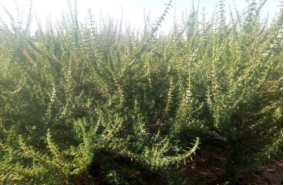
Figure 1. Performance of Leucas abyssinica L.
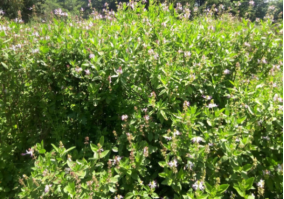
Figure 2. Performance of Becium grandiflorum L.
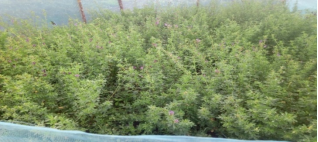
Figure 3. Performance of Medicago sativa L.
Table 3. The mean and standard deviation of agronomic performance of perennials bee forage species at highland.
Bee forage species | NBPP | TNFPP | PH (cm) | CC (cm) | NBFI |
Leucas abyssinica L | 84.32±10.83 | 26218.37±1465.2 | 144.8±2.84 | 134.26±11.16 | 78.34±25.59 |
Becium grandiflorum L | 138.13±5.65 | 27591.01±713.02 | 106.63±2.16 | 153.44±9.41 | 30.92±7.23 |
Medicago sativa L | 89.22±4.31 | 2382.24±187.07 | 81.95±2.46 | ----- | 10.65±2.1 |
M= Mean, SD= Standard Deviation, NBPP= Number of branches per plant, NBFI= Number of bee foraging intensity per 10 min/m2, PH= plant height, TNFPP= total number of flower per plant, CC= canopy cover
Table 4. The combined mean and standard deviation of agronomic performance Perennial bee forages at midland.
Bee forage species | NBPP | TNFPP | PH (cm) | CC (cm) | NBFI |
Leucas abyssinica L. | 78.07±8.66 | 26140.68±1475.2 | 140.90±1.62 | 125.36±10.58 | 45.96±8.23 |
Becium grandiflorum L | 132.63±4.64 | 27309.26±658.70 | 101.96±2.08 | 138.52±6.85 | 27.67±4.95 |
Medicago sativa | 82.72±3.84 | 2362.67±181.74 | 80.02±1.28 | ----- | 9.90±2.05 |
M= Mean, SD= Standard Deviation, NBPP= Number of branches per plant, NBFI= Number of bee foraging intensity per 10 min/m2, PH= plant height, TNFPP= total number of flower per plant, CC= canopy cover
3.7. Time of Honeybee Visited Flower
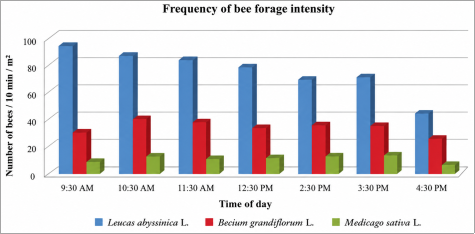
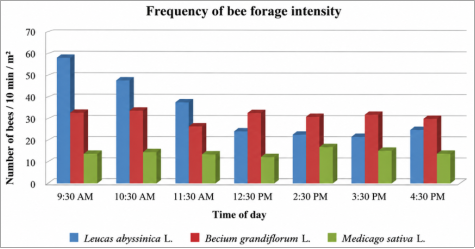
The foraging intensity of bees visiting various forage plant species varied, with peak foraging times ranging from 9:30 a.m. to 4:30 p.m. in highland and midland areas (
Figures 4 and 5). Honeybees typically collect pollen in the morning and nectar in the afternoon. The highest number of bees visited
Leucas abyssinica early in the morning
. Leucas abyssinica and
Becium grandiflorum were highly foraged by honeybees starting from 9:30 a m- 4:30 pm while
Medicago sativum 11:30 am-4:30 pm.
Figure 4. Frequency of bee forage intensity of Leucas abyssinica L., Becium grandiflorum L., and Medicago sativa L at different time of the day in the highland of Bale.
Figure 5. Frequency of bee forage intensity of Leucas abyssinica L., Becium grandiflorum L., and Medicago sativa L at different time of the day in the midland of Bale.
4. Discussions
4.1. Days to Emergence / Germination
The variation in germination rate observed among the evaluated perennial bee forage species may be attributed to differences in genetic makeup, seed morphology, and environmental conditions such as soil moisture, temperature, and soil texture. The rapid germination of
Medicago sativum indicates its strong adaptability and ability to establish quickly under the prevailing environmental conditions of the study areas
. In contrast, the relatively slower germination observed in
Leucas abyssinica and
Becium grandiflorum may reflect species specific dormancy mechanisms or seed structural characteristics that delay germination. Similar variability in germination behavior among forage species has been reported in previous studies, where germination performance was closely linked to genetic diversity and environmental factors affecting seed physiology
.
4.2. Days to Flower, Blooming, and Shading of Flower
The mean number of days required for bee forage species to reach the flowering stage after planting was evaluated under both highland and midland agro-ecological conditions. The results showed considerable variation among species and between locations. In the highland areas, the time to onset of flowering for
Medicago sativa,
Leucas abyssinica, and
Becium grandiflorum is presented in
Table 1. In contrast, shorter flowering periods were recorded in the midland areas, where
Medicago sativum flowered earlier, followed by
Leucas abyssinica and
Becium grandiflorum (
Table 2).
The variation between the two agro-ecological zones may be attributed to differences in environmental factors such as temperature, altitude, soil fertility, and moisture availability. Generally, plants in warmer environments tend to develop more rapidly, leading to earlier flowering than those in cooler highland conditions. Temperature plays a key role in regulating plant growth and phenological development by influencing physiological processes such as photosynthesis, respiration, and metabolic activity. Likewise, photoperiod and light intensity are important in regulating flowering initiation in many plant species. Therefore, the earlier flowering observed in the midland areas is likely associated with relatively higher temperatures and more favorable growing conditions
| [13] | Moore, (2001). Honey bee circadian clocks: behavioral control from individual workers to whole-colony rhythms. J. Insect Physiol. 47, 843-857.
https://doi.org/10.1016/S0022-1910(01)00057-9 |
| [14] | Taiz, L., Zeiger, E., Møller, I. M., & Murphy, A. (2015). Plant Physiology and Development. (6th ed.) Sinauer Associates. |
[13, 14]
.
Furthermore, the duration from the onset of flowering to the end of blooming (flower shedding) varied among the studied bee forage species across the two locations. The flowering duration ranged from 26.52 to 90.64 days in both highland and midland environments (
Tables 1 and 2). Among the evaluated species,
Leucas abyssinica exhibited the longest blooming period (90.64 days), followed by
Becium grandiflorum (51.44 days) (
Table 1). The variation in flowering duration among species is likely due to genetic differences as well as environmental factors such as temperature, soil moisture, and nutrient availability. Previous studies have shown that flowering duration is strongly influenced by climatic conditions and species-specific physiological traits
| [15] | Hopkins, W. G., & Hüner, N. P. A. (2009). Introduction to Plant Physiology (4th ed.). John Wiley & Sons. |
[15]
. In addition, adequate soil moisture can extend the flowering period by sustaining plant metabolic activity and continuous flower production.
From a beekeeping perspective, species with longer blooming periods are particularly valuable as they ensure a sustained supply of nectar and pollen for honeybee colonies. Continuous floral resources are essential for maintaining colony strength, brood development, and honey yield
| [16] | Fitter, A. H., & Fitter, R. S. R. (2002). Rapid changes in flowering time in British plants. Science, 296, 1689–1691. |
[16]
. In contrast, species with shorter flowering durations may mainly support colony buildup during periods of limited forage availability. Therefore, understanding the flowering phenology and duration of bee forage plants is essential for developing effective forage management strategies that support continuous nectar and pollen availability and improve honey production across different agro-ecological zones.
4.3. Number of Branches Per Plant and Number of Flowers Per Plant
The present study revealed variation in the mean number of branches per plant among the evaluated perennial bee forage species across agro-ecological zones. In the highland areas, the mean number of branches per plant was 84.32 for Leucas abyssinica, 89.22 for Medicago sativa, and 138.13 for Becium grandiflorum. A similar pattern was observed in the midland areas, where Becium grandiflorum also recorded the highest branching value. This indicates that Becium grandiflorum exhibits superior vegetative growth performance under both agro-ecological conditions.
The higher branching ability of
Becium grandiflorum likely contributes to increased flower production, as plants with more branches generally produce more inflorescences. Such traits enhance nectar and pollen availability, making them more attractive to honeybees. Previous studies have shown that bee forage species with higher branching and canopy development tend to support greater honeybee foraging activity and improved colony productivity
| [17] | Eva Crane. (1990). Bees and Beekeeping: Science, Practice and World Resources. Cornell University Press.
https://doi.org/10.5860/choice.28-2129 |
| [18] | Free, J. B. (1993). Insect Pollination of Crops. Academic Press, London. |
[17, 18]
. Conversely,
Leucas abyssinica and
Medicago sativum showed relatively lower branching, although both remain important melliferous species.
Medicago sativum is particularly valued for its abundant flowering and nutritional quality for pollinators
| [19] | Friedrich Ruttner. (1988). Biogeography and Taxonomy of Honeybees. Springer-Verlag. |
[19]
.
The study also showed considerable variation in total flower number per plant across species and locations. In the highlands, Becium grandiflorum recorded the highest mean flower number (27,591.01), followed closely by Leucas abyssinica (26,218.37). A similar trend was observed in the midlands, with Becium grandiflorum (27,309.26) and Leucas abyssinica (26,104.68) producing the highest flower counts. These results suggest strong reproductive potential and good adaptability of these species across agro-ecological zones.
The higher flower production in
Becium grandiflorum and
Leucas abyssinica may be associated with their vigorous vegetative growth and greater branching capacity. Increased branching enhances inflorescence formation, resulting in higher floral density
. From a beekeeping perspective, abundant flowering directly increases nectar and pollen availability, thereby supporting honeybee foraging activity, colony development, and honey yield
| [17] | Eva Crane. (1990). Bees and Beekeeping: Science, Practice and World Resources. Cornell University Press.
https://doi.org/10.5860/choice.28-2129 |
| [20] | Food and Agriculture Organization. (2018). Pollinators and Sustainable Agriculture. FAO. |
[17, 20]
. Therefore,
Becium grandiflorum and
Leucas abyssinica can be considered promising perennial bee forage species for both highland and midland agro-ecologies due to their high flower production and potential to enhance honey production.
4.4. Plant Height and Canopy Coverage
The results showed significant variation in plant height among the perennial bee forage species in both highland and midland agro-ecologies.
Leucas abyssinica recorded the highest mean plant height, reaching 144.80 cm in the highland and 140.90 cm in the midland, making it the tallest species among those evaluated (
Tables 3 and 4). In comparison,
Becium grandiflorum reached 106.63 cm in the highland and 103.92 cm in the midland, while
Medicago sativum showed the lowest mean height, with 81.95 cm and 80.5 cm, respectively. These differences indicate that plant height is influenced by both genetic factors and environmental conditions such as altitude, soil fertility, and climate. Plant height is an important indicator of vegetative growth and overall plant vigor, which can influence flower production and resource availability for pollinators
.
Similarly, variation was observed in canopy cover among the evaluated species. Leucas abyssinica recorded mean canopy cover values of 134.26 cm in the highland and 125 cm in the midland. In contrast, Becium grandiflorum showed greater canopy development, with values of 153.44 cm and 138.52 cm in the highland and midland areas, respectively. The larger canopy of Becium grandiflorum may support higher flower production and provide a wider surface area for pollinator attraction, thereby increasing nectar and pollen availability for honeybees.
4.5. Honeybee Foraging Intensity and Time of Honeybee Visited Flower
The mean number of honeybees visiting plants within 10 minutes per m
2 varied among species. In the highland area,
Leucas abyssinica recorded the highest foraging intensity (78.34 bees), followed by
Becium grandiflorum (30.92 bees) and
Medicago sativum (10.65 bees) (
Table 3). A similar pattern was observed in the midland agro-ecology, where
Leucas abyssinica also showed the highest mean bee visitation (45.96 bees), followed by
Becium grandiflorum (27.67 bees) and
Medicago sativum (9.90 bees) (
Table 4). This indicates that
Leucas abyssinica is highly attractive to honeybees in both environments. The variation in visitation rates among species may be linked to differences in floral traits such as flower abundance, nectar and pollen production, floral scent, and environmental conditions
| [17] | Eva Crane. (1990). Bees and Beekeeping: Science, Practice and World Resources. Cornell University Press.
https://doi.org/10.5860/choice.28-2129 |
| [20] | Food and Agriculture Organization. (2018). Pollinators and Sustainable Agriculture. FAO. |
[17, 20]
.
In addition, honeybee foraging activity varied throughout the day. Peak visitation was recorded between 9:30 a.m. and 4:30 p.m. in both agro-ecologies (
Figures 2 and 3).
Leucas abyssinica and
Becium grandiflorum were frequently visited throughout this period, while
Medicago sativa was mainly visited from 11:30 a.m. to 4:30 p.m. The highest visitation to
Leucas abyssinica occurred during the morning hours. Generally, honeybees collect more pollen in the morning and shift to nectar foraging later in the day, as nectar secretion increases with temperature and decreases with humidity. Honeybee foraging behavior is closely synchronized with floral resource availability, enabling efficient energy use by foraging when nectar and pollen are most abundant
| [19] | Friedrich Ruttner. (1988). Biogeography and Taxonomy of Honeybees. Springer-Verlag. |
[19]
.
5. Conclusion
In conclusion, the present study revealed that all evaluated perennial bee forage species exhibited good growth performance under the highland and midland agro-ecological conditions of the Bale Zone. Among the tested perennials bee forage plant species, Leucas abyssinica, Becium grandiflorum, and Medicago sativum showed promising adaptability and growth potential in both agro-ecologies. The results indicate that Leucas abyssinica and Becium grandiflorum perform well under both highland and midland conditions and attract higher honeybee foraging activity compared with Medicago sativum. Their superior plant growth, canopy development, and higher bee visitation rates highlight their potential as important perennial bee forage species for sustaining honeybee colonies and improving honey production in the study areas. The foraging behavior of honeybees was strongly associated with the availability of nectar and pollen resources and all flowering bee forage plants attracted considerable honeybee activity during their blooming periods. However, Leucas abyssinica and Becium grandiflorum were particularly attractive to honeybees due to their abundant nectar and pollen production, which resulted in longer and more frequent foraging visits. Moreover, the extended blooming periods of these species make them especially valuable for beekeeping, as they ensure a continuous supply of floral resources. This prolonged availability of nectar and pollen contributes to increased honey production and helps maintain strong and stable honeybee colonies. These species not only enhance local beekeeping activities by providing reliable forage for honeybees but also contribute to the ecological restoration of degraded landscapes. Their plantation can serve as a sustainable strategy that simultaneously supports honey production, biodiversity conservation, and environmental rehabilitation. Therefore, the integration of Leucas abyssinica and Becium grandiflorum into watershed development and land rehabilitation programs is highly recommended.
Abbreviations
IBPGR | International Board for Plant Genetic Resources |
STD | Standard Deviation |
FAO | Food and Agriculture Organization |
CC | Canopy Cover |
Acknowledgments
The authors express their gratitude to the Oromia Agricultural Research Institute for its financial support. We also thank the Sinana Agricultural Research Center, Andassa Agricultural Research Center, and Mekelle Agricultural Research Center for providing the seed sources. Special appreciation goes to the entire Apiculture research team for their dedication, patience, and positive spirit during the data collection process; without their efforts, this study would not have been possible.
Author Contributions
Temaro Gelgelu: Conceptualization, Data curation, Formal analysis, Investigation, Project administration, Validation, Writing – original draft
Wendimu Lelisa: Data curation, Funding acquisition, Methodology, Resources, Software, Visualization, Writing – review & editing
Habtemu Dereje: Data curation, Supervision, Validation, Writing – original draft
Conflicts of Interest
The authors declare no conflicts of interest.
References
| [1] |
Abebe, W. (2011). Identification and documentation of indigenous knowledge of beekeeping practices in selected districts of Ethiopia. Journal of Agricultural Extension and Rural Development, 3(5), 82-87.
https://doi.org/10.5897/JAERD.9000047
|
| [2] |
Abrol, D. P., Shankar, U., Nitin, K. S., Gowda, G. B. (2016). Honeybees and Beekeeping: The Global Scenario. In: Chakravarthy, A., Sridhara, S. (eds) Arthropod Diversity and Conservation in the Tropics and Sub-tropics. Springer, Singapore.
https://doi.org/10.1007/978-981-10-1518-2_22
|
| [3] |
Gernt, P.; Dittes, J.; Vervuert, I.; Emmerich, I. U. Review: Nutritional Needs of Honeybees and Legislation on Apiculture By-Products in Animal Nutrition. Animals 2024, 14, 2208.
https://doi.org/10.3390/
ani14152208
|
| [4] |
Donkersley, P., Rhodes, G., Pickup, R. W. et al. Nutritional composition of honey bee food stores vary with floral composition. Oecologia 185, 749–761 (2017).
https://doi.org/10.1007/s00442-017-3968-3
|
| [5] |
Gratzer, K., Wakjira, K., Fiedler, S. et al. Challenges and perspectives for beekeeping in Ethiopia. A review. Agron. Sustain. Dev. 41, 46 (2021).
https://doi.org/10.1007/s13593-021-00702-2
|
| [6] |
Williams, S. D., J. L. Vivero, S. Spawls, Anteneh S. & Ensermu K. (2004). Ethiopian Highlands. In: Mittermeier, R. A., P. Robles-Gil, M. Hoffmann, J. D. Pilgrim, T. M. Brooks, C. G. Mittermeier & G. Fonseca (eds.), Hotspots Revisited: Earth ́s Biologically Richest andMost Endangered Ecoregions, pp. 262-273.
|
| [7] |
Field, T. R. O., Pearson, C. J., & Hunt, L. A. (1976). Effects of temperature on the growth and development of alfalfa-(Medicago sativa L.).
https://doi.org/10.1037/0022-3514.34.2.191
|
| [8] |
EDWARDS, S. (1991). Crops with wild relatives found in. Plant genetic resources of Ethiopia, 42.
https://doi.org/10.2307/2404528
|
| [9] |
Abou-Shaara, H. F. (2014). The foraging behaviour of honey bees, Apis mellifera: a review. Veterinarni medicina, 59(1).
https://doi.org/10.17221/7240
|
| [10] |
International Board for Plant Genetic Resources (IBPGR). (1996). Descriptors for Agro-Morphological Characterization of Forage and Pasture Species. Biodiversity International, Rome, Italy.
|
| [11] |
Gezahegn, T. 2007. Adaptation trial of honey plants: adaptability trials of temperate honey plants in Ethiopia. Ethiopian Beekeepers Association newsletter. 5(1): 16-17.
https://doi.org/10.11648/j.ijaas.20220802.13
|
| [12] |
Bareke, T., Haile, G., & Addi, A. (2024). Ecological Suitability analysis for beekeeping in Oromia Region. In Regional Review Workshop on Completed Research Activities (p. 575).
https://doi.org/10.56557/JOBARI/2024/v30i18589
|
| [13] |
Moore, (2001). Honey bee circadian clocks: behavioral control from individual workers to whole-colony rhythms. J. Insect Physiol. 47, 843-857.
https://doi.org/10.1016/S0022-1910(01)00057-9
|
| [14] |
Taiz, L., Zeiger, E., Møller, I. M., & Murphy, A. (2015). Plant Physiology and Development. (6th ed.) Sinauer Associates.
|
| [15] |
Hopkins, W. G., & Hüner, N. P. A. (2009). Introduction to Plant Physiology (4th ed.). John Wiley & Sons.
|
| [16] |
Fitter, A. H., & Fitter, R. S. R. (2002). Rapid changes in flowering time in British plants. Science, 296, 1689–1691.
|
| [17] |
Eva Crane. (1990). Bees and Beekeeping: Science, Practice and World Resources. Cornell University Press.
https://doi.org/10.5860/choice.28-2129
|
| [18] |
Free, J. B. (1993). Insect Pollination of Crops. Academic Press, London.
|
| [19] |
Friedrich Ruttner. (1988). Biogeography and Taxonomy of Honeybees. Springer-Verlag.
|
| [20] |
Food and Agriculture Organization. (2018). Pollinators and Sustainable Agriculture. FAO.
|
Cite This Article
-
APA Style
Gelgelu, T., Lelisa, W., Dereje, H. (2026). Performance Evaluation of Perennial Bee Forage Species in Highland and Midland of Agro-ecologies of Bale,
South-eastern Oromia, Ethiopia. Science Discovery Agriculture, 1(3), 129-137. https://doi.org/10.11648/j.sda.20260103.11
 Copy
|
Copy
|
 Download
ACS Style
Gelgelu, T.; Lelisa, W.; Dereje, H. Performance Evaluation of Perennial Bee Forage Species in Highland and Midland of Agro-ecologies of Bale,
South-eastern Oromia, Ethiopia. Sci. Discov. Agric. 2026, 1(3), 129-137. doi: 10.11648/j.sda.20260103.11
Copy
|
Download
AMA Style
Gelgelu T, Lelisa W, Dereje H. Performance Evaluation of Perennial Bee Forage Species in Highland and Midland of Agro-ecologies of Bale,
South-eastern Oromia, Ethiopia. Sci Discov Agric. 2026;1(3):129-137. doi: 10.11648/j.sda.20260103.11
Copy
|
Download
-
@article{10.11648/j.sda.20260103.11,
  author = {Temaro Gelgelu and Wendimu Lelisa and Habtemu Dereje},
  title = {Performance Evaluation of Perennial Bee Forage Species in Highland and Midland of Agro-ecologies of Bale,
South-eastern Oromia, Ethiopia},
  journal = {Science Discovery Agriculture},
  volume = {1},
  number = {3},
  pages = {129-137},
  doi = {10.11648/j.sda.20260103.11},
  url = {https://doi.org/10.11648/j.sda.20260103.11},
  eprint = {https://article.sciencepublishinggroup.com/pdf/10.11648.j.sda.20260103.11},
  abstract = {The availability of abundant perennial bee forage species that provide pollen and nectar is a critical factor for the survival, abundance, and distribution of honeybees. This study was conducted in the highland and midland agro-ecologies of Bale zone, located in the south-eastern part of the Oromia Region, with the objective of evaluating the growth performance of selected perennial bee forage species over three consecutive years. The species were selected based on their importance as sources of nectar and pollen for honeybees, their adaptability to a wide range of agro-ecological conditions, and their similar growth habits. The evaluated species were Leucas abyssinica, Becium grandiflorum, and Medicago sativa. The growth performance of these perennial species was assessed using several parameters, including days to germination, days to flowering, duration of blooming, time to shading, flowering period, number of branches per plant, number of flowers per plant, plant height, canopy cover, and honeybee foraging intensity. The collected data were analyzed using descriptive statistics to summarize and interpret the results. The findings indicated that Leucas abyssinica, Becium grandiflorum, and Medicago sativa performed well in both the highland and midland sites. Among the species, Leucas abyssinica exhibited the longest blooming period, followed by Becium grandiflorum and Medicago sativa at both locations. The highest mean number of branches per plant was recorded in Becium grandiflorum, while the highest mean number of flowers per plant was observed in both Becium grandiflorum and Leucas abyssinica. Similarly, the highest honeybee foraging intensity (number of bees per 10 minutes per 1 m2) was recorded on Leucas abyssinica and Becium grandiflorum. Honeybees were most actively foraging on Leucas abyssinica and Becium grandiflorum from 9:30 a.m. to 4:30 p.m., while on Medicago sativa the peak foraging period extended from 11:30 a.m. to 4:30 p.m. In conclusion, the results revealed that all evaluated perennial bee forage species performed well under the highland and midland agro-ecological conditions of Bale. These species provide dual benefits by supporting local beekeeping practices and contributing to the ecological restoration of degraded landscapes. Therefore, it is recommended to integrate Leucas abyssinica and Becium grandiflorum into watershed development programs.},
 year = {2026}
}
Copy
|
Download
-
TY  - JOUR
T1  - Performance Evaluation of Perennial Bee Forage Species in Highland and Midland of Agro-ecologies of Bale,
South-eastern Oromia, Ethiopia
AU  - Temaro Gelgelu
AU  - Wendimu Lelisa
AU  - Habtemu Dereje
Y1  - 2026/08/24
PY  - 2026
N1  - https://doi.org/10.11648/j.sda.20260103.11
DO  - 10.11648/j.sda.20260103.11
T2  - Science Discovery Agriculture
JF  - Science Discovery Agriculture
JO  - Science Discovery Agriculture
SP  - 129
EP  - 137
PB  - Science Publishing Group
SN  - 3142-8495
UR  - https://doi.org/10.11648/j.sda.20260103.11
AB  - The availability of abundant perennial bee forage species that provide pollen and nectar is a critical factor for the survival, abundance, and distribution of honeybees. This study was conducted in the highland and midland agro-ecologies of Bale zone, located in the south-eastern part of the Oromia Region, with the objective of evaluating the growth performance of selected perennial bee forage species over three consecutive years. The species were selected based on their importance as sources of nectar and pollen for honeybees, their adaptability to a wide range of agro-ecological conditions, and their similar growth habits. The evaluated species were Leucas abyssinica, Becium grandiflorum, and Medicago sativa. The growth performance of these perennial species was assessed using several parameters, including days to germination, days to flowering, duration of blooming, time to shading, flowering period, number of branches per plant, number of flowers per plant, plant height, canopy cover, and honeybee foraging intensity. The collected data were analyzed using descriptive statistics to summarize and interpret the results. The findings indicated that Leucas abyssinica, Becium grandiflorum, and Medicago sativa performed well in both the highland and midland sites. Among the species, Leucas abyssinica exhibited the longest blooming period, followed by Becium grandiflorum and Medicago sativa at both locations. The highest mean number of branches per plant was recorded in Becium grandiflorum, while the highest mean number of flowers per plant was observed in both Becium grandiflorum and Leucas abyssinica. Similarly, the highest honeybee foraging intensity (number of bees per 10 minutes per 1 m2) was recorded on Leucas abyssinica and Becium grandiflorum. Honeybees were most actively foraging on Leucas abyssinica and Becium grandiflorum from 9:30 a.m. to 4:30 p.m., while on Medicago sativa the peak foraging period extended from 11:30 a.m. to 4:30 p.m. In conclusion, the results revealed that all evaluated perennial bee forage species performed well under the highland and midland agro-ecological conditions of Bale. These species provide dual benefits by supporting local beekeeping practices and contributing to the ecological restoration of degraded landscapes. Therefore, it is recommended to integrate Leucas abyssinica and Becium grandiflorum into watershed development programs.
VL  - 1
IS  - 3
ER  -
Copy
|
Download





 Share This Article
 Twitter
 Linked In
 Facebook