Research Article | | Peer-Reviewed

An Empirical Study on the Impact of AI Use on Undergraduate Students' Critical Thinking

Received: 11 July 2026     Accepted: 25 August 2026     Published: 4 September 2026
Views:       Downloads:
Abstract

With the widespread adoption of Generative Artificial Intelligence (GAI) across higher education, how AI tools shape students’ Critical Thinking has emerged as a prominent research focus in academia. Adopting random sampling at University S, this study distributed questionnaires to survey generative AI use among 101 undergraduates, exploring group discrepancies in AI Use Behaviors, Attitudes and Perceived Evaluation across gender, grade, and broad disciplinary categories. Critical Thinking Disposition and Skill levels were measured via standardized CT Thinking Tests. Statistical analyses including descriptive statistics, difference tests with post-hoc multiple comparisons, correlation analysis and regression analysis were conducted in SPSS 25.0 to quantify the predictive effects of AI Use on Critical Thinking. Empirical results demonstrate that AIA exert the strongest significant predictive effect on undergraduates’ CT Disposition, whereas tangible improvements in CT Skills demand structured, systematic training regimes. This research concludes that student AI use yields notable impacts on Critical Thinking-related mindsets and cognitive patterns, with effects concentrated predominantly on dispositional facets. Whether generative AI empowers or undermines undergraduates’ Critical Thinking is not an inherent property of the technology itself. Instead, outcomes are primarily contingent on user attitudes, and partially governed by interactive dynamics stemming from individual student heterogeneity and other contextual factors.

Published in Psychology and Behavioral Sciences (Volume 15, Issue 5)
DOI 10.11648/j.pbs.20261505.11
Page(s) 107-119
Creative Commons

This is an Open Access article, distributed under the terms of the Creative Commons Attribution 4.0 International License (http://creativecommons.org/licenses/by/4.0/), which permits unrestricted use, distribution and reproduction in any medium or format, provided the original work is properly cited.

Copyright

Copyright © The Author(s), 2026. Published by Science Publishing Group

Keywords

Generative Artificial Intelligence (GAI), Critical Thinking (CT), Undergraduate Students, AI Use

1. Introduction
1.1. Problem Statement
1.1.1. Research Background
Since the release of ChatGPT in 2022, Generative Artificial Intelligence (GAI) tools—exemplified by domestic counterparts such as Wenxin Yiyan(文心一言), Doubao(豆包), and DeepSeek—have permeated diverse learning scenarios of college students, including coursework, thesis writing, research projects, and critical discourse, by virtue of their functionalities in efficient content generation, intelligent Q&A, text optimization, and logical assistance. This technological diffusion has fundamentally transformed traditional patterns of knowledge acquisition and cognitive training among university students.
As a core educational objective of higher education, Critical Thinking denotes higher-order cognitive capacity encompassing rational analysis of information, logical reasoning, value judgment, and reflective skepticism. Its core dimensions comprise evidence evaluation, logical deliberation, viewpoint interrogation, and iterative reflection, constituting the foundational competence for independent thinking, innovation, and complex problem-solving among college students, as well as a cardinal goal of talent cultivation in the new era. This capacity assumes particular salience in the AI epoch: when information access becomes unprecedentedly convenient, the ability to discern information veracity, assess argument quality, and form independent judgments becomes paradoxically more scarce.
1.1.2. Research Questions
Generative AI tools, leveraging powerful algorithms, can provide students with instantaneous feedback, personalized learning support, and diversified knowledge access pathways, and may even function as metacognitive tools to stimulate logical deliberation under ideal human-machine collaboration frameworks. However, this technological convenience raises a critical question: when students become accustomed to seeking instantaneous answers from AI, will their capacities for independent thinking, analytical evaluation, and critical judgment be eroded? Critical Thinking, as a higher-order cognitive competence, is contingent upon individuals' deep processing engagement when confronted with complex or conflicting information. Current GAI tools frequently output conclusions directly while eliding the reasoning process, rendering students prone to habitual reliance on AI for thinking, thereby attenuating their agency and intellectual engagement. Consequently, the impact of AI on student users is ambivalent—potentially empowering or disempowering—depending on usage modalities. At present, systematic empirical research on how students can circumvent intellectual inertia, analytical superficiality, and cognitive degradation in the process of AI utilization remains deficient. Besides, research on how school training can facilitate the development of thinking abilities is even more scarce.
1.2. Literature Review
Internationally, authoritative organizations worldwide have begun to prioritize the safeguarding of learner agency in the context of AI utilization. UNESCO, in its officially published Guidance for Generative AI in Education and Research, explicitly delineates red lines, emphasizing that the paramount policy objective is to protect "Human Agency" and ethical scrutiny, rigorously guarding against technological assimilation of independent expression. The OECD, in its Education Policy Outlook 2025, underscores that intelligent advancement must not be pursued at the expense of human autonomy, necessitating attention to the cultivation of learners' volitional autonomy and higher-order cognitive skills. At the legislative and regulatory level, the European Union, through the Artificial Intelligence Act, has formally classified AI systems involved in academic assessment within educational scenarios as "High Risk", mandating the incorporation of human final-review oversight mechanisms.
China's digitalization strategy is advancing at full throttle. The Ministry of Education launched the "AI-Empowered Education Initiative" in 2024, upgraded it to the "National Education Digitalization Strategy Action 2.0" in 2025, and in April 2026, five ministries and commissions jointly issued the "AI + Education" Action Plan, explicitly requiring universities to promote AI general education on a categorized basis, rendering it a public foundational course. Top-level design adheres to the principles of "education-centered" and "AI for good," emphasizing the integration of technology and humanities, with the core objective of enhancing college students' critical thinking and complex problem-solving capabilities.
Existing research has confirmed that the impact of AI on college students' critical thinking exhibits significant group heterogeneity, manifested primarily across three dimensions: disciplinary affiliation, competence level, and self-efficacy. First, disciplinary differences: research indicates that science and engineering students are more adept at leveraging AI for logical deduction, data analysis, and argument optimization, demonstrating significantly higher recognition of and benefits from AI-empowered critical thinking compared to humanities and social sciences students, who are more susceptible to superficial dependency. Second, academic competence differences: study reveals that high-performing students can proactively utilize AI to optimize deliberative logic and expand cognitive perspectives, thereby achieving competence enhancement, whereas low-performing students are more prone to excessive AI reliance, exacerbating intellectual inertia. Third, self-efficacy differences: students with higher self-efficacy demonstrate greater capacity for rational regulation of AI use behaviors, proactively leveraging AI for deep deliberation, with more pronounced effects on critical thinking enhancement.
Some studies have also found that within structured, guided instructional designs, AI can facilitate the development of students' Critical Thinking through processes of metacognitive regulation, argumentative reasoning, and viewpoint generation; however, in unconstrained usage contexts, students are prone to cognitive offloading and excessive dependency, leading to attenuation of critical thinking. Generative artificial intelligence demonstrates significant effects on the enhancement of college students' higher-order thinking abilities, encompassing critical thinking, problem-solving competence, and creative thinking. Students utilizing GenAI tools exhibit significantly higher levels of critical thinking and self-directed learning capacity compared to their non-user counterparts. Cognitive offloading theory, self-regulated learning theory, and AI literacy theory furnish core explanatory frameworks for comprehending this paradox. These studies corroborating the bidirectional impact of AI on college student thinking also alert educators to the imperative of rationally designing AI-embedded instructional scenarios. Concurrently, they caution that AI deployment in auxiliary teaching and learning must be approached prudently within an ethical framework.
In summary, extant research indicates that AI Use among college students is already a pervasive phenomenon, with some studies identifying moderating effects of group characteristics on the impact of AI on Critical Thinking. The impact of AI on Critical Thinking presents contradictory findings in current research: on the one hand, some studies demonstrate that AI can enhance Critical Thinking by providing diversified perspectives, supporting argument construction, and promoting metacognitive reflection; on the other hand, abundant research cautions that AI dependency may engender intellectual inertia, diminished analytical depth, and cognitive degradation. This "double-edged sword" effect renders the comprehension of the complexity inherent in the relationship between AI and Critical Thinking a core research agenda.
1.3. Research Methodology
This study, taking University S as a case, investigates the current status of GAI Use among college students through questionnaire surveys, exploring whether differences exist in GAI use behaviors, expectations, and attitudes across students of different genders, grade levels, and disciplinary categories; and collects data on college students' Critical Thinking disposition and skills through CT Thinking Assessments. Employing SPSS 25.0 software, descriptive statistics, difference tests, post-hoc multiple comparisons, correlation analysis, and regression analysis are conducted to examine the impact of AI use on college students' Critical Thinking, with the aim of providing recommendations for college students' AI use modalities and educational reforms in cultivating Critical Thinking in the AI era.
1.3.1. Research Questions
This study aims to address:
Q1:What is the basic profile of GAI use among undergraduate students?
Q2:What group differences exist in GAI use across different genders, grade levels, disciplinary categories, and students who have or have not taken dedicated thinking courses?
Q3:What is the basic profile of undergraduate students' Critical Thinking?
Q4:What impact does AI use exert on undergraduate students' Critical Thinking?
Research hypotheses:
H1: Group differences exist in AI use among undergraduate students.
H2: Group differences exist in influences Critical Thinking competence.
H3: AI use Attitudes, Behavioral and Expectations influences Critical Thinking competence.
H4: Group characteristics exert moderating effects on this relationship.
1.3.2. Research Participants
This study used random sampling methods to survey undergraduates at S University, based on the principle of voluntary informed consent. University S represents a general undergraduate institution in China, thereby ensuring sample representativeness. A total of 101 undergraduate students participated in the survey. The sample covers four grade levels from freshman to senior year, though grade distribution is highly uneven, with freshmen constituting the vast majority (75.25%). The study conclusions therefore primarily reflect characteristics of first-year students. Among the participants, 15.85% had taken thinking courses.
1.3.3. Research Instruments
a) Undergraduate Students' Generative Artificial Intelligence (GAI) Use Questionnaire
Referencing the "Undergraduate Students' Generative Artificial Intelligence Use Questionnaire" , and applying the Technology Acceptance Model (TAM), Theory of Planned Behavior (TPB), and Technology Impact Assessment Framework, this study developed a simplified version of the "Undergraduate Students' AI Use Questionnaire," comprising: basic information and AI use (including frequency and duration time [Q41], willingness [Q42–Q43], AI use expectations [Q44–Q45], AI use behavior [Q46–Q47], AI use perceived evaluations [Q48–Q50]), totaling 10 items. All items except basic information are scored on a 5-point Likert scale.
The standardized Cronbach's alpha coefficient for items Q41–Q50 is 0.884; after deleting Q41, the reliability coefficient is 0.908, exceeding 0.9, indicating high reliability quality of the research data.
b) Self-Developed Online Version of "Undergraduate Students' Critical Thinking Disposition and Skills Test"
Applying Critical Thinking theories, this study employed the self-developed and certified by the Psychological Association online version of the "Undergraduate Students' Critical Thinking Disposition and Skills Test" . The reliability of the CT Disposition scale is 0.921, indicating good reliability.
The CT Skills Test was validated using KMO and Bartlett's tests, with a KMO value of 0.847, exceeding 0.8, indicating that the research data are highly suitable for information extraction (reflecting excellent validity from a collateral perspective).
1.3.4. Research Design
a) Data Sources
This study's data derive from a random survey of University S college students conducted between May and June 2026. Both the questionnaire and assessment test were administered online, with informed consent obtained prior to recruitment. A cumulative total of 101 valid questionnaires were recovered. The demographic distribution of the sample is presented in the following table.
b) Variable Definitions
To test the research hypotheses, this study operationalizes "AI use," "group characteristics," and "Critical Thinking" as variables.
The dependent variable CT refers to college students' Critical Thinking Disposition (CTP, comprising three secondary dimensions: open-mindedness, reflection and thinking monitoring, and maintaining holistic well-being, totaling 20 items) and CT Skills (CTS, comprising five secondary dimensions: problem definition, information discrimination, construction and synthesis, reasoning, and logical analysis, totaling 20 items). The core independent variable AI use encompasses GAI use frequency and duration time(AIT), AI attitudes (AIA), and AI perceived evaluations (AIPE). Control variables include undergraduate student group information: gender (m/f), grade level (1/2/3/4), and whether thinking training has been received (y/n). The objective is to explore the conditions under which AI impacts CT across different undergraduate student groups.
2. Empirical Study on Undergraduate Students' AI Use and Critical Thinking
Comparative analysis of differences in cognition, judgment, reflection, and questioning abilities among college students with different AI use behavior, exploring the moderating effects of gender, grade level, and AI literacy.
2.1. Basic Profile of Undergraduate Students' GAI Use
2.1.1. AI Use Duration, Attitudes, and Evaluations
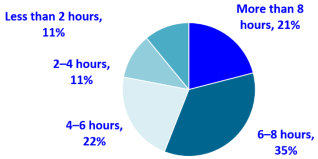
The survey found that all undergraduate students reported having used generative AI, with over half (56%) using it for more than six hours daily, such as Figure 1.
Figure 1. AI Usage Duration (Hours per Day).
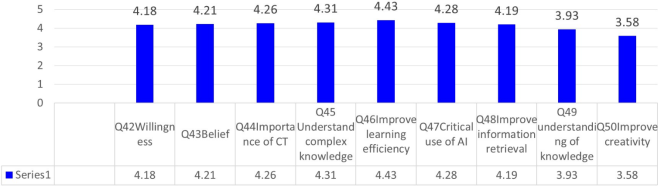
Undergraduate students demonstrate relatively positive expectations toward AI use expectation (AIE,Q44, Q45), with high willingness for AI use (Q42, Q43), yet display heightened caution, exhibiting reflective and autonomous use behaviors (AIB,Q46, Q47), with moderate evaluations of use (AIPE,Q48, Q49, Q50).
Figure 2. AI Usage Attitudes, Habits, and Evaluations.
2.1.2. Gender Differences in AI Use Duration, Attitudes, and Evaluations
Undergraduate students demonstrate relatively positive attitudes toward AI use, with a mean total AI use score of 37.3564 (maximum possible score: 45), a mean attitude score of 21.3762 (maximum possible score: 25), and relatively optimistic AI perceived evaluations, with a mean AI perceived evaluation score of 15.9802 (maximum possible score: 20).
Out of 101 samples, 2 people didn't want to reveal their gender, so the gender difference analysis only includes 99 people. Independent samples t-test results indicate no significant differences between male and female students in AI use duration time, AI use attitudes, or AI perceived evaluations, such as Table 1.
Table 1. AI Use Gender Difference t-test Analysis Results.

Gender (Mean ± Standard Deviation)

t

p

Male (n=38)

Female (n=63)

AI Use Total Score (Questions 42-50)

37.53±5.10

37.25±4.77

0.271

0.787

AI Use Expectation (AIE)Average Score for 42-43

4.22±0.67

4.17±0.62

0.374

0.709

AI Use Attitude (AIA)Average Score for 44-45

4.32±0.60

4.26±0.60

0.437

0.663

AI Use Behavior (AIB)Average Score for 46-47

4.30±0.63

4.38±0.61

-0.614

0.540

AI Use Perception Evaluation (AIPE)Average Score for 48-50

3.95±0.64

3.87±0.66

0.556

0.579

* p<0.05 ** p<0.01
2.1.3. Differences in AI Use Attitudes and Evaluations Between Freshmen and Other Grades
Independent samples t-test results indicate no significant differences in AI use attitudes and evaluations between freshmen and students of other grade levels, such as Table 2.
Table 2. AI Use Grade Difference t-test Analysis Results.

Grade (Mean ± Standard Deviation)

t

p

Grade 1 (n=76)

OtherGrades (n=25)

AI Use Total Score (Questions 42-50)

37.46±4.77

37.04±5.27

0.373

0.710

AI Use Expectation (AIE)Average Score for 42-43

4.23±0.64

4.08±0.62

1.025

0.308

AI Use Attitude (AIA)Average Score for 44-45

4.30±0.59

4.22±0.61

0.598

0.551

AI Use Behavior (AIB)Average Score for 46-47

4.41±0.60

4.18±0.64

1.610

0.110

AI Use Perception Evaluation(AIPE) Average Score for 48-50

3.86±0.65

4.03±0.65

-1.106

0.271

* p<0.05 ** p<0.01
2.2. Basic Profile of Undergraduate Students' Critical Thinking
2.2.1. Critical Thinking Total Scores, Disposition, and Skills Across Dimensions
Critical thinking total scores are computed by summing disposition total scores and skills total scores. Descriptive statistics conducted via SPSS 25.0 reveal that the mean critical thinking total score for all students is 83.89 (maximum possible score: 120), with a standard deviation of 12.177. This indicates that students' overall critical thinking is at a moderately high level, though individual differences may exist.
As showed in Table 3, the mean disposition total score for all students is 72.87 (maximum possible score: 100), and the mean skills total score is 11.02 (maximum possible score: 20), with a standard deviation of 4.199. This suggests that students' Critical Thinking Disposition scores are at a moderately high level, whereas their Critical Thinking Skills scores are at a the lower side of average. The coefficient of variation for skills scores (4.20/11.02 ≈ 38%) is substantially greater than that for disposition scores (10.37/72.87 ≈ 14%), indicating greater inter-student variability in CT skill levels.
Table 3. Descriptive statistics of scores for Critical Thinking Score.

N

Minimum

Maximum

Mean

Std. Deviation

Median

Total Critical Thinking Score

101

33.000

113.000

83.891

12.177

86.000

Critical Thinking Disposition Score

101

30.000

100.000

72.871

10.368

75.000

Critical Thinking Skill Score

101

2.000

20.000

11.020

4.200

12.000

Average score for Open Mindedness

101

1.778

5.000

3.661

0.524

3.667

Reflection and Thinking Monitoring average score

101

1.429

5.000

3.672

0.584

3.857

Maintaining a Good Overall State average score

101

1.000

5.000

3.554

0.627

3.500

Defining Problems

101

0.000

4.000

1.614

1.265

2.000

Information Discernment

101

0.000

4.000

2.554

1.144

3.000

Construction and Synthesis

101

0.000

4.000

2.069

1.042

2.000

Reasoning

101

0.000

4.000

2.515

1.246

3.000

Logical Analysis

101

0.000

4.000

2.267

1.048

2.000

2.2.2. Differences in Critical Thinking Performance Between Students Who Have and Have Not Taken Critical Thinking Courses
The survey sample reveals that students who have taken integrative thinking courses score higher on critical thinking disposition than those who have not, yet score lower on critical thinking skills and critical thinking total scores, with certain significant differences observed in CT Skills scores (p = 0.012, p < 0.05), such as Table 4.
Table 4. Whether took CT course CT Performance Difference t-test Analysis Results.

Y/N took the course (mean ± standard deviation)

t

p

Y (n=16)

N (n=85)

Total Critical Thinking Score

82.44±19.16

84.16±10.51

-0.351

0.730

Critical Thinking Disposition Score

73.81±16.75

72.69±8.81

0.260

0.798

Critical Thinking Skill Score

8.63±4.77

11.47±3.95

-2.554

0.012*

Average score for Open Mindedness

33.50±7.50

32.85±4.05

0.339

0.739

Reflection and Thinking Monitoring average score

3.72±0.83

3.65±0.45

0.339

0.739

Maintaining a Good Overall State average score

25.75±5.74

25.69±3.74

0.050

0.960

Defining Problems

3.68±0.82

3.67±0.53

0.050

0.960

Information Discernment

14.56±3.97

14.15±2.16

0.402

0.693

Construction and Synthesis

3.64±0.99

3.54±0.54

0.402

0.693

Reasoning

0.94±1.00

1.74±1.27

-2.386

0.019*

Logical Analysis

1.81±1.33

2.69±1.06

-2.933

0.004**

* p<0.05 ** p<0.01
2.2.3. Gender Differences in Critical Thinking Performance
Regarding critical thinking test performance, females score higher than males across all measures. Independent samples t-tests reveal certain differences between female and male students in Critical Thinking Skills scores ( p = 0.009, p < 0.01), such as Table 5.
Table 5. Gender Difference in CT Performace t-test Analysis Results.

Gender (Mean ± Standard Deviation)

t

p

Male (n=38)

Female (n=63)

Total Critical Thinking Score

80.76±16.36

85.78±8.35

-1.756

0.085

Critical Thinking Disposition Score

71.26±13.80

73.84±7.56

-1.060

0.294

Critical Thinking Skill Score

9.50±4.92

11.94±3.43

-2.685

0.009**

Average score for Open Mindedness

32.71±6.18

33.10±3.61

-0.349

0.728

Reflection and Thinking Monitoring average score

3.63±0.69

3.68±0.40

-0.349

0.728

Maintaining a Good Overall State average score

24.76±5.26

26.27±3.10

-1.605

0.114

Defining Problems

3.54±0.75

3.75±0.44

-1.605

0.114

Information Discernment

13.79±2.96

14.48±2.18

-1.338

0.184

Construction and Synthesis

3.45±0.74

3.62±0.54

-1.338

0.184

Reasoning

1.32±1.25

1.79±1.25

-1.862

0.066

Logical Analysis

2.18±1.23

2.78±1.04

-2.597

0.011*

* p<0.05 ** p<0.01
2.2.4. Grade Differences in Critical Thinking Performance
The sample includes 76 freshmen 14 grade 2 ,10 grade 3 and only 1 senior student. Across grade, grade 3 students achieve the highest critical thinking total scores and disposition scores, whereas freshmen achieve the highest critical thinking skills scores. However, no significant differences exist in scores across grade. Furthermore, critical thinking scores between freshmen and students of other grades are compared.
Independent samples t-tests reveal that freshmen and students of other grades exhibit significant differences in Critical Thinking Skills scores (p = 0.027, p < 0.05), such as Table 6.
Table 6. Grade Difference in CT Performance t-test Analysis Results.

Grade (Mean ± Standard Deviation)

F

p

Grade 1 (n=76)

Grade 2 (n=14)

Grade 3 (n=10)

Grade 4 (n=1)

Total Critical Thinking Score

84.37±10.78

79.93±15.37

87.80±15.81

64.00±null

1.809

0.151

Critical Thinking Disposition Score

72.71±9.28

70.21±12.23

79.10±13.71

60.00±null

2.096

0.106

Critical Thinking Skill Score

11.66±3.77

9.71±5.31

8.70±4.37

4.00±null

3.179

0.027*

Average score for Open Mindedness

32.93±4.20

31.57±5.35

35.60±6.64

27.00±null

2.044

0.113

Reflection and Thinking Monitoring average score

3.66±0.47

3.51±0.59

3.96±0.74

3.00±null

2.044

0.113

Maintaining a Good Overall State average score

25.71±3.94

24.71±4.48

27.50±4.50

21.00±null

1.372

0.256

Defining Problems

3.67±0.56

3.53±0.64

3.93±0.64

3.00±null

1.372

0.256

Information Discernment

14.07±2.33

13.93±2.64

16.00±3.20

12.00±null

2.172

0.096

Construction and Synthesis

3.52±0.58

3.48±0.66

4.00±0.80

3.00±null

2.172

0.096

Reasoning

1.74±1.23

1.64±1.45

0.70±1.06

1.00±null

2.131

0.101

Logical Analysis

2.71±1.11

2.29±1.14

2.00±1.05

0.00±null

3.401

0.021*

* p<0.05 ** p<0.01
3. Analysis of the Impact of AI Use on Undergraduate Students' Critical Thinking
3.1. Relationship Between AI Use Duration and Critical Thinking Disposition and Skills Performance
Students are categorized into three groups by AI use duration: low (≤4 hours), medium (4–6 hours), and high (≥6 hours). According to the sample profile, 56 students (55.45%) use AI for more than six hours daily; 22 students (21.78%) use AI rarely (4 hours or less); and 23 students (22.77%) fall into the medium use category. This indicates that students generally hold positive attitudes toward AI use. One-way ANOVA and multiple comparisons reveal no significant differences in critical thinking scores across any dimension by AI use duration time, such as Table 7.
Table 7. AI Use in CT Performance One-way ANOVA.

AI use duration (Mean ± Standard Deviation)

F

p

≤2 hours (n=11)

≤4 hours (n=11)

4-6 hours (n=23)

6-8 hours (n=35)

≥8 hours (n=21)

Total Critical Thinking Score

90.00±7.81

83.82±11.86

83.87±15.84

83.66±9.96

81.14±12.94

0.961

0.432

Critical Thinking Disposition Score

78.36±8.16

72.09±9.90

72.30±13.79

72.46±8.00

71.71±10.87

0.880

0.479

Critical Thinking Skill Score

11.64±4.32

11.73±4.36

11.57±3.72

11.20±4.18

9.43±4.58

1.004

0.409

Average score for OpenMindedness

35.73±3.72

32.18±4.40

32.74±5.63

32.74±4.15

32.48±5.06

1.113

0.355

Reflection and Thinking Monitoring average score

3.97±0.41

3.58±0.49

3.64±0.63

3.64±0.46

3.61±0.56

1.113

0.355

Maintaining a Good Overall State average score

28.09±2.74

25.91±4.04

25.43±5.77

25.43±3.16

25.10±3.79

1.130

0.347

Defining Problems

4.01±0.39

3.70±0.58

3.63±0.82

3.63±0.45

3.59±0.54

1.130

0.347

Information Discernment

14.55±2.54

14.00±2.65

14.13±3.14

14.29±2.07

14.14±2.56

0.083

0.988

Construction and Synthesis

3.64±0.64

3.50±0.66

3.53±0.78

3.57±0.52

3.54±0.64

0.083

0.988

Reasoning

1.64±1.75

2.00±1.73

1.61±1.08

1.71±1.07

1.24±1.22

0.769

0.548

Logical Analysis

2.91±0.94

2.64±1.29

2.65±1.19

2.54±1.12

2.24±1.18

0.714

0.584

* p<0.05 ** p<0.01
3.2. Relationship Between AI Use Attitudes and Critical Thinking Disposition and Skills Dimensions
To analyze the correlation between AI use Attitude scores (AIA,questions 42-45) and the total Critical Thinking scores, including CT Disposition scores, Skill scores, and scores of each dimension, using Pearson correlation coefficients to show the strength of these relationships. The results show that AI use Attitude scores are significantly positively correlated with both total Critical Thinking scores and Critical Thinking Disposition scores. However, AI use Attitude scores are not related to CT Skill scores, such as Table 8.
Table 8. Pearson Correlation Between AI Use Attitude and CT Performance - Standard Format.

AIA

Total Critical Thinking Score

0.420**

Critical Thinking Disposition Score

0.448**

Critical Thinking Skill Score

0.112

Average score for Open Mindedness

0.393**

Reflection and Thinking Monitoring average score

0.413**

Maintaining a Good Overall State average score

0.437**

Defining Problems

-0.032

Information Discernment

0.140

Construction and Synthesis

0.077

Reasoning

0.187

Logical Analysis

0.037

* p<0.05 ** <0.01
3.3. Impact of AI Use Behavior on Critical Thinking Total Scores, Disposition, and Skills Dimensions
To analyze the correlation between AI use behavior (AIB, questions 46-47) and the total critical thinking scores, disposition scores, skill scores, and scores of each dimension, using Pearson correlation coefficients to show the strength of these relationships. The results show that AI use attitude scores are significantly positively correlated with both total critical thinking scores and critical thinking disposition scores, such as Table 9.
Table 9. Pearson Correlation Between AI Use Behavior and CT Performance.

AI use Behavior (AIB,Q46, Q47)

CT Total Score

0.485**

CT Disposition Score

0.492**

CT Skill Score

0.192

* p<0.05 ** p<0.01
The results indicate that AI use and related cognitive factors primarily influence college students' subjective disposition and thinking orientation levels, with weak direct effects on thinking skills. Correlation analysis between AI use and critical thinking disposition and skills dimensions reveals that disposition scores and skills scores correlate at r = 0.266, such as Table 10, indicating that students with more positive attitudes demonstrate slightly better skills, though the two dimensions remain relatively independent.
Table 10. Correlation Between AI Use Behavior and CT Performance.

AI use Behavior (Q46, Q47)

CTDisposition

CTSkill

AI use Behavior (Q46, Q47)

PearsonCorrelation

1

.492**

.192

Sig.(two-tailed)

.000

.055

Number of cases

101

101

101

CT Disposition

PearsonCorrelation

.492**

1

.266**

Sig.(two-tailed)

.000

.007

Number of cases

101

101

101

CT Skill

PearsonCorrelation

.192

.266**

1

Sig.(two-tailed)

.055

.007

Number of cases

101

101

101

**. p<0.01
Regression analysis of single AI use behavior (AIB, questions 46 and 47) and critical thinking scores, when adding willingness of AI use, expectation of AI use, and evaluation scores, shows that the impact on Critical Thinking only increases from 24.2% to 27.1% when all four AI use variables are considered together—just about a 3 percentage point increase. This suggests that the additional three variables, 'AIA, AIE, AIPE' , don’t add much on top of the 'AI use score.' So, it's fine to just use 'AIB' as the core variable.
A simple linear regression analysis was conducted using AIB (average of Q46 and Q47) as the independent variable and total Critical Thinking scores as the dependent variable. The regression equation is Y = 42.3496 + 9.5465X, and the regression model is statistically significant (F(1,99) = 30.451, p < 0.001). AIB have a significant positive predictive effect on total Critical Thinking scores (β = 9.547). For every 1-point increase in AIB, the total Critical Thinking score increases by about 9.55 points on average. The results also show that AI use and related cognitive factors mainly affect college students' thinking disposition, with highly significant, while with a weaker direct impact on thinking skills, such as Table 11.
Table 11. Regression Analysis on AI usage Behavior and CT.

Dependent variable

Regression Equation

R2

Adjusted R2

F

β

SE

t

p

CT Total Score

Y=42.350+9.547X

0.235

0.228

30.451

9.547

1.730

5.518

<.001***

CT Disposition Score

Y=36.992+8.245X

0.242

0.234

31.617

8.245

1.466

5.623

<0.001***

CT Skill Score

Y=5.358+1.301X

0.037

0.027

3.775

1.301

0.670

1.943

0.055

N=101 *** p<0.001, * p<0.05
3.4. Whether the Impact of AI Usage on Critical Thinking Is Moderated by Group Differences
To further validate the impact of AI use on Critical Thinking from a "classification prediction" perspective, Critical Thinking total scores are dichotomized by median (Mdn = 86.00) into high Critical Thinking(N = 51) and low Critical Thinking (N = 50) groups. Whether belonging to the high Critical Thinking group serves as the dependent variable (0 = low group, 1 = high group), with AIB as the core independent variable and gender, grade level, and whether thinking courses have been taken as control variables, constructing a binary logistic regression model.
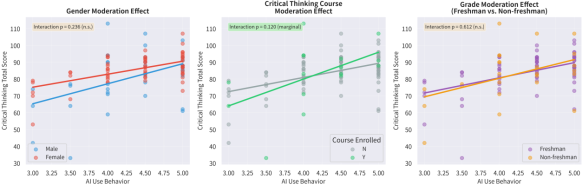
Figure 3. Gender, Course, Grade’s moderation on AI Use to CT.
Figure 3 shows the simple slopes for three categorical moderator variables. From left to right: gender moderation effect (interaction p = 0.236, not significant), whether or not taking a thinking course moderation effect (interaction p = 0.120, marginally significant), and grade level moderation effect (interaction p = 0.612, not significant). The two regression lines for taking a thinking course show the most noticeable difference in slope, directly reflecting the marginally significant moderation trend. This analysis suggests that gender and grade level don’t have significant moderation effects, but whether taken a thinking course shows a marginally significant moderation effect, indicating that thinking training might be a potential condition that enhances the impact of AI use attitudes on promoting critical thinking.
Model Fit Comparison
As showed in Table 12, Model 2 demonstrates significantly improved fit compared to Model 1 (χ2 = 18.198, df = 1, p < 0.001). Model 3, adding AI perceived evaluations, fails to yield additional improvement (χ2 = 1.026, p = 0.311); hence Model 2 is selected as the final model.
Table 12. Model Fit Comparison.

Model

IndependentVariables

Log-likelihood

AIC

Pseudo R2

Likelihood Ratio Test (χ2)

p

Model 1

Gender Grade Whether Taking the Course

-68.299

146.598

0.024

Model 2

Model 1 AI Use(AIU)

-59.200

130.400

0.154

18.198

<0.001***

Model 3

Model 2 AI Perceived Evaluation(AIPE)

-58.687

131.374

0.162

1.026

0.311

Final Model (Model 2) Coefficient Table, such as Table 13.
Table 13. Model 2 Coefficient Table.

Variables

B

S.E.

Wald χ2

p

OR (Exp(B))

95% CI (OR)

Constant term

-7.104

1.975

<0.001

Gender (Female)

0.069

0.489

0.020

0.888

1.071

[0.411,2.794]

Grade 2

-0.876

0.714

1.505

0.220

0.416

[0.103,1.683]

Grade 3

0.187

1.298

0.021

0.885

1.206

[0.095,15.304]

Whether take CT course (Y)

0.196

1.115

0.031

0.860

1.216

[0.137,10.808]

AI use

1.631

0.432

14.241

<0.001

5.107

[2.190,11.909]

The model reveals:
a) AI use behavior exhibit significant independent predictive effects: after controlling for gender, grade level, and whether thinking CT courses have been taken, AI use behavior maintain significant positive prediction of high critical thinking (B = 1.631, Wald χ2 = 14.241, p < 0.001). OR = 5.107, indicating that for every 1-point increase in AI use behavior, the odds of belonging to the high critical thinking group expand to 5.107 times the original (95% CI: [2.190, 11.909]).
b) Control variables exert no significant effects: gender, grade, and whether thinking courses have been taken demonstrate no significant predictive effects on critical thinking grouping (p > 0.05), excluding confounding by demographic factors on the core effect.
c) Predicted probabilities increase with rising AIB:
AIB = 4.00: predicted probability ≈ 35.9%
AIB = 4.50: predicted probability ≈ 55.8%
AIB = 5.00: predicted probability ≈ 74.1%
d) Model fit is satisfactory: Hosmer-Lemeshow test χ2 = 5.346, p = 0.721; overall classification accuracy 68.3% (high group 64.7%, low group 72.0%).
e) Binary logistic regression and simple linear regression form mutual verification: Linear regression: for every 1-point increase in AIB, Critical Thinking total scores increase by approximately 9.55 points on average (β = 9.547, p < 0.001). Logistic regression: for every 1-point increase in AIB, the odds of achieving high Critical Thinking levels expand to 5.107 times (OR = 5.107, p < 0.001). Both methods consistently reveal the positive predictive effect of AIB on Critical Thinking, enhancing the robustness of the research conclusions.
4. Empirical Research Conclusions and Reflections
4.1. Research Results and Conclusions
4.1.1. Research Hypothesis H1: Group Differences Exist in AI Use Among Undergraduate Students—Not Supported
Undergraduate students universally use AI for learning, with over half (56%) using it for more than six hours daily. Undergraduate students demonstrate relatively positive attitudes toward AI use, yet maintain heightened caution, exhibiting reflective and autonomous use behavior, with moderate evaluations of AI use. Moreover, undergraduate students' AI use willingness, attitudes, and evaluations do not demonstrate statistically significant group differences by gender, grade level, or discipline.
4.1.2. Research Hypothesis H2: Group Differences Exist in Critical Thinking Competence—Supported
Undergraduate students' overall Critical Thinking performance is at a moderately high level, with Critical Thinking Disposition scores at a moderately high level, but Critical Thinking Skills scores at a moderate low level.
Undergraduate students' Critical Thinking demonstrates gender differences: females score higher than males on critical thinking.
Undergraduate students' Critical Thinking demonstrates grade differences: freshmen score slightly lower on Critical Thinking Disposition than students of other grade, yet higher on Critical Thinking Skills.
Concurrently, students who have taken integrative thinking courses score higher on Critical Thinking Disposition than those who have not, yet score lower on Critical Thinking Skills and Critical Thinking total scores.
4.1.3. Research Hypothesis H3: AI Attitudes and Behavior Influences Critical Thinking Competence—Supported
Students generally hold positive attitudes toward AI use. One-way ANOVA and multiple comparisons reveal no significant differences in Critical Thinking scores across any dimension by AI use time.
AI use exerts significant effects on the CT Disposition scores and CT total scores is approximately 24%, both reaching highly significant levels, indicating that AI use can effectively influence users' attitudes and thinking abilities. AI use exerts weak effects on "thinking skills": explanatory power for skills scores is merely 3.7% and non-significant, indicating that AI use per se does not directly translate into skill enhancement.
4.1.4. Research Hypothesis H4: Group Characteristics Exert Moderating Effects—Partially Supported
After incorporating student group characteristics including gender, grade, and whether thinking courses have been taken, no significant changes are observed in the impact of AI use on CT. While whether or not taking a thinking course moderation effect the impact of AI use on Critical Thinking.
Conclusion: The use of AI has already become a daily part of undergraduate students' lives. Students generally have a positive attitude towards AI use, are cautious in how they use it, and their evaluations of AI use are average. AI tools exert noticeable effects on students' subjective attitudes and thinking patterns, primarily manifested in the thinking disposition dimension; however, transformation into actual skill enhancement requires more systematic training mechanisms. The impact of AI on Critical Thinking is not an inherent attribute of the technology itself, with AI use attitudes demonstrating the most robust positive predictive effect on Critical Thinking. This study also finds that students who have taken thinking courses score higher on Critical Thinking Disposition than those who have not, suggesting that the cultivation of Critical Thinking and problem-solving capacities still relies on human instruction, with enhanced training in thinking skills being imperative. These results are consistent with prior research findings . That is, whether AI use empowers CT depends on the user's attitude and using behavior.
4.2. Research Limitations and Prospects
This study is limited by small sample size, conducting a random survey of students at only one university, beside this, the sample is mostly freshmen and not balanced across other grades. The second limitation is the study lacks longitudinal tracking, with no intervention measures designed, precluding determination of the sustainability of effect. The third limitation is that teacher factors are neglected, with no investigation of how teachers ask or allow students to use AI, or how instruction is implemented with AI. The forth limitation is cognitive mechanisms, metacognition, and other psychological factors in student AI use are not further explored.
Subsequent research is recommended to focus on: how instructional design can translate AI use into genuine competence growth. Future studies should expand samples, conduct longitudinal tracking research, and incorporate psychological factors of student and teacher AI use, thereby providing data support and educational solutions for differentiated, precision-oriented undergraduate student thinking literacy education in universities.
Abbreviations

AI

Artificial Intelligence

AIA

AI Use Attitudes

AIB

AI Use Behavior

AIE

AI Use Expectation

AIPE

AI Perceived Evaluations

AIU

AI Use

AIT

AI Use Frequency and Duration Time

CT

Critical Thinking

CTP

Critical Thinking Disposition

CTS

Critical Thinking Skills

GAI

Generative Artificial Intelligence

TAM

Technology Acceptance Model

TPB

Theory of Planned Behavior

Funding
This work is supported by Guangdong Provincial Philosophy & Social Sciences Planning Project (Co-construction Program) (Grant No. GD23XJY80).
Conflicts of Interest
The authors declare no conflicts of interest.
References
[1] Facione, Peter A., 1990a, Critical Thinking: A Statement of Expert Consensus for Purposes of Educational Assessment and Instruction, Research Findings and Recommendations Prepared for the Committee on Pre-College Philosophy of the American Philosophical Association, ERIC Document ED315423.
[2] Melisa, R., Ashadi, A., Triastuti, A., Hidayati, S., Salido, A., Ero, P. E. L., Marlini, C., Zefrin., & Fuad, Z. A. (2025). Critical thinking in the age of AI: A systematic review of AI's effects on higher education. Educational Process: International Journal, 14, e2025031.
[3] Chen, J., Xie, W., Xie, Q., Hu, A., Oiao, Y., Wan, R., & Liu, Y(2025). A Systematic Review of User Attitudes Toward GenAI: Influencing Factors and Industry Perspectives. Journal of Intelligence, 13(7), 78.
[4] Lorenz, P., K. Perset and J. Berryhill (2023), Initial policy considerations for generative artificial intelligence OECD Artificial Intelligence Papers, No. 1. OECD Publishing, Paris,
[5] Achmad Salido, Irman Syarif, Melyani Sari Sitepu, et al. (2025). Integrating critical thinking and artificial intelligence in higher education: A bibliometric and systematic review. Social Sciences & Humanities Open, 12, 101924.
[6] Chukwuere, J. E., & Chukwuere, G. C. J. (2025). The impact of generative artificial intelligence on higher education students in developing cognitive skills: A mini literature review. Journal of Community Psychosocial Research, 2(1).
[7] Ninghardjanti P., Umam M. C., Subarno A., et al. Evaluating the impact of AI on the critical thinking skills among the higher education students by combining the TAM model and critical thinking theory. Frontiers in Education, 2025.
[8] Qi, J., Xu, Y. R., Liu, J. A., Xue, K., (2025). The impact of generative AI tool use on college students’ critical thinking and self-regulated learning ability. Front. Educ. China, 20 (4): 398-412.
[9] Xingchang Liu, Qianwen Tang, Wanting Wu, et al. (2026). GenAI-agents in education: A systematic review of macro-level trends, educational roles, theoretical foundations and future agendas. Published online: 26 May 2026.
[10] Changyue Li, Hang Cui, Linda Serra Hagedorn. (2026). The cognitive impact of ChatGPT in higher education: A systematic review of critical and creative thinking outcomes. Computers and Education: Artificial Intelligence, 10, June 2026, 100571.
[11] L. M. García-López, C. S. G. González, M. S. Ramírez-Montoya, J. M. Molina-Espinosa.(2025). Challenges of implementing ChatGPT on education: Systematic literature review. International Journal of Educational Research Open, 8, Article 100401.
[12] Li, Y., Xu, J., Jia, C. Y., et al. (2024). Current status and reflections on college students’ application of generative artificial intelligence: A survey based on Zhejiang University. Open Education Research, 30(1), 89–98.
[13] Davis, F.D., Granic, A. (2024). Actionable Principles: The Se-ven Pillars Framework. In: The Technology Acceptance Mode1. Human-Computer Interaction Series. Springer, Cham.
[14] GKan, M. P. H., Fabrigar, L. R. (2017). Theory of Planned Behavior. In: Zeigler-Hill, V., Shackelford, T. (eds)Encyclopedia of Personality and Individual Differences. Springer, Cham.
[15] Chen, X. H., Yu, Y., Zhao, W., et al. (2016). A brief analysis of the revision and application of critical thinking scale for college students. Industry and Information Technology Education, (6), 80–86.
[16] Yeo, G. H., & Lansford, J. E. (2025). Effects of artificial intelligence on educational functioning: A review and meta-analysis. Educational Psychology Review, 37(4), 110.
Cite This Article
  • APA Style

    Chen, X., Li, Y., Li, X. (2026). An Empirical Study on the Impact of AI Use on Undergraduate Students' Critical Thinking. Psychology and Behavioral Sciences, 15(5), 107-119. https://doi.org/10.11648/j.pbs.20261505.11

    Copy | Download

    ACS Style

    Chen, X.; Li, Y.; Li, X. An Empirical Study on the Impact of AI Use on Undergraduate Students' Critical Thinking. Psychol. Behav. Sci. 2026, 15(5), 107-119. doi: 10.11648/j.pbs.20261505.11

    Copy | Download

    AMA Style

    Chen X, Li Y, Li X. An Empirical Study on the Impact of AI Use on Undergraduate Students' Critical Thinking. Psychol Behav Sci. 2026;15(5):107-119. doi: 10.11648/j.pbs.20261505.11

    Copy | Download

  • @article{10.11648/j.pbs.20261505.11,
      author = {Xiaohong Chen and Yanling Li and Xuanyu Li},
      title = {An Empirical Study on the Impact of AI Use on Undergraduate Students' Critical Thinking},
      journal = {Psychology and Behavioral Sciences},
      volume = {15},
      number = {5},
      pages = {107-119},
      doi = {10.11648/j.pbs.20261505.11},
      url = {https://doi.org/10.11648/j.pbs.20261505.11},
      eprint = {https://article.sciencepublishinggroup.com/pdf/10.11648.j.pbs.20261505.11},
      abstract = {With the widespread adoption of Generative Artificial Intelligence (GAI) across higher education, how AI tools shape students’ Critical Thinking has emerged as a prominent research focus in academia. Adopting random sampling at University S, this study distributed questionnaires to survey generative AI use among 101 undergraduates, exploring group discrepancies in AI Use Behaviors, Attitudes and Perceived Evaluation across gender, grade, and broad disciplinary categories. Critical Thinking Disposition and Skill levels were measured via standardized CT Thinking Tests. Statistical analyses including descriptive statistics, difference tests with post-hoc multiple comparisons, correlation analysis and regression analysis were conducted in SPSS 25.0 to quantify the predictive effects of AI Use on Critical Thinking. Empirical results demonstrate that AIA exert the strongest significant predictive effect on undergraduates’ CT Disposition, whereas tangible improvements in CT Skills demand structured, systematic training regimes. This research concludes that student AI use yields notable impacts on Critical Thinking-related mindsets and cognitive patterns, with effects concentrated predominantly on dispositional facets. Whether generative AI empowers or undermines undergraduates’ Critical Thinking is not an inherent property of the technology itself. Instead, outcomes are primarily contingent on user attitudes, and partially governed by interactive dynamics stemming from individual student heterogeneity and other contextual factors.},
     year = {2026}
    }
    

    Copy | Download

  • TY  - JOUR
    T1  - An Empirical Study on the Impact of AI Use on Undergraduate Students' Critical Thinking
    AU  - Xiaohong Chen
    AU  - Yanling Li
    AU  - Xuanyu Li
    Y1  - 2026/09/04
    PY  - 2026
    N1  - https://doi.org/10.11648/j.pbs.20261505.11
    DO  - 10.11648/j.pbs.20261505.11
    T2  - Psychology and Behavioral Sciences
    JF  - Psychology and Behavioral Sciences
    JO  - Psychology and Behavioral Sciences
    SP  - 107
    EP  - 119
    PB  - Science Publishing Group
    SN  - 2328-7845
    UR  - https://doi.org/10.11648/j.pbs.20261505.11
    AB  - With the widespread adoption of Generative Artificial Intelligence (GAI) across higher education, how AI tools shape students’ Critical Thinking has emerged as a prominent research focus in academia. Adopting random sampling at University S, this study distributed questionnaires to survey generative AI use among 101 undergraduates, exploring group discrepancies in AI Use Behaviors, Attitudes and Perceived Evaluation across gender, grade, and broad disciplinary categories. Critical Thinking Disposition and Skill levels were measured via standardized CT Thinking Tests. Statistical analyses including descriptive statistics, difference tests with post-hoc multiple comparisons, correlation analysis and regression analysis were conducted in SPSS 25.0 to quantify the predictive effects of AI Use on Critical Thinking. Empirical results demonstrate that AIA exert the strongest significant predictive effect on undergraduates’ CT Disposition, whereas tangible improvements in CT Skills demand structured, systematic training regimes. This research concludes that student AI use yields notable impacts on Critical Thinking-related mindsets and cognitive patterns, with effects concentrated predominantly on dispositional facets. Whether generative AI empowers or undermines undergraduates’ Critical Thinking is not an inherent property of the technology itself. Instead, outcomes are primarily contingent on user attitudes, and partially governed by interactive dynamics stemming from individual student heterogeneity and other contextual factors.
    VL  - 15
    IS  - 5
    ER  - 

    Copy | Download

Author Information
  • Abstract
  • Keywords
  • Document Sections

    1. 1. Introduction
    2. 2. Empirical Study on Undergraduate Students' AI Use and Critical Thinking
    3. 3. Analysis of the Impact of AI Use on Undergraduate Students' Critical Thinking
    4. 4. Empirical Research Conclusions and Reflections
    Show Full Outline
  • Abbreviations
  • Funding
  • Conflicts of Interest
  • References
  • Cite This Article
  • Author Information