Research Article | | Peer-Reviewed

Agape and Algorithms: Reframing Artificial Intelligence Ethics in Africa Through Fletcherian Situational Ethics

Received: 3 April 2026     Accepted: 16 April 2026     Published: 28 July 2026
Views:       Downloads:
Abstract

Concerns regarding ethical issues, such as algorithmic fairness, accountability, transparency, and the preservation of human dignity, have increased due to the fast integration of artificial intelligence (AI) into a variety of global sectors. Principles like safety, explainability, and regulatory compliance are given top priority in many of the current global AI governance frameworks. The sociocultural, historical, and communal dynamics that are common in African communities may not be sufficiently accommodated by these methods, which are frequently drawn from Western intellectual traditions. The potential of situational ethics, specifically, Joseph Fletcher's agape-focused framework, as a further lens for evaluating AI systems in African contexts is examined in this research. Employing the hermeneutic method of inquiry, the topic illustrates how situational ethics’ fundamental components: pragmatism, relativism, positivism, and personalism, can promote context-sensitive assessments of AI through conceptual analysis. This viewpoint emphasizes human and communal well-being over rigid regulations, placing agape (selfless, other-oriented love) as the paramount norm. It provides a way to align AI deployment with African relational and communitarian values, such as those embodied in the Ubuntu philosophy of relationality. This paper suggests that Fletcher’s agapeic framework may solve epistemic inequities in global AI discourse and fosters inclusive technology growth by fusing situational ethics with traditional African philosophies.

Published in Mathematics and Computer Science (Volume 11, Issue 3)
DOI 10.11648/j.mcs.20261103.12
Page(s) 57-63
Creative Commons

This is an Open Access article, distributed under the terms of the Creative Commons Attribution 4.0 International License (http://creativecommons.org/licenses/by/4.0/), which permits unrestricted use, distribution and reproduction in any medium or format, provided the original work is properly cited.

Copyright

Copyright © The Author(s), 2026. Published by Science Publishing Group

Keywords

Artificial Intelligence, Situational Ethics, AI Governance, Agape, African Ethics, Technology Ethics, Ubuntu

1. Introduction
It is a known fact that AI technologies now influence critical domains such as healthcare, finance, education, agriculture, public administration, etc., bringing both transformative potential and ethical risks. These systems can perpetuate or exacerbate inequalities if not thoughtfully governed . Global responses to these risks include ethical guidelines from bodies emphasizing transparency, fairness, and human-centric design. Yet such frameworks frequently reflect individualistic or procedural emphasis rooted in Western thought, which may overlook communal priorities, historical inequities, and relational worldviews common in Africa . For instance, the African Union’s Continental AI Strategy highlights the need for context-specific approaches that align with sustainable development goals and address digital divides .
In African contexts, AI adoption occurs amid uneven digital access, limited regulatory capacity, and datasets that often underrepresent local realities, heightening risks of bias and exclusion , hence, the purpose of this study. This article posits that Joseph Fletcher’s situational ethics, with its emphasis on contextual reasoning guided by agape, provides an adaptable framework for AI ethics in Africa . Through focusing on outcomes that advance human welfare in specific circumstances, situational ethics can bridge gaps in dominant models and better support communal flourishing, resonating with African values like Ubuntu, which stresses interconnectedness and collective responsibility .
Furthermore, integrating situational ethics in African AI context addresses calls for decolonizing AI governance by incorporating African narratives and mitigating risks of algorithmic colonization . This approach challenges technocratic models that prioritize efficiency over equity, aligning with Africa’s developmental aspirations .
2. Methodological Approach
The researchers embraces hermeneutic conceptual analysis alongside critical integrative synthesis. This method uses deep interpretative analysis concerning Joseph Fletcher’s situational ethics, more so the concept of agape and its four working principals and African communitarian thought and the sustained engagement of the two constructs. The analysis is structured in three clear and distinct steps; the initial step was a detailed exegesis of Fletcher’s original construct ; followed by a critical analysis of contemporary global AI ethics and the absence of African context and concluded with a synthetic reconstruction of integrating agape with Ubuntu-inspired relational ethics to establish a norm model of itself .
The study aims to merge Western Philosophy and African ethics and traditions to respond to the real problems of AI governance, and this is the reason for this approach. The synthesis of the analysis reflects commitment to African socio-cultural and economic challenges and priorities .
3. Core Tenets of Situational Ethics
Joseph F. Fletcher, an American theologian, introduced the concept of situation ethics as a moral framework that pushes back against rigid ethical extremes. In his work – Situation Ethics: The New Morality (1966), Fletcher turns away from both moral absolutism (the idea that there are universal moral rules that apply in every situation) and moral relativism, which suggests that no stable moral norms exist at all . Instead, he proposes a balanced ethical stance that assesses moral actions based on specific circumstances, guided by a central moral principle rather than strict rules. Fletcher developed situational ethics in the 1960s as an alternative to both rigid deontological systems and unbounded relativism . Rejecting absolute rules while avoiding moral anarchy, Fletcher positioned agape (unconditional, selfless love) as the sole intrinsic good and ultimate guide for moral action .
Agape functions as a deliberate commitment to others’ well-being rather than mere emotion. For him, ethical choices are judged by their capacity to produce the most loving outcome in a given context .
Fletcher outlined four working principles to support this approach:
1) Pragmatism: Decisions must be practical and effective in real-world conditions.
2) Relativism: Moral judgments depend on situational factors rather than universal prescriptions.
3) Positivism: Agape is affirmatively posited as the central norm (often rooted in faith or conviction).
4) Personalism: People take precedence over abstract rules or systems.
These elements create a flexible, human-centred ethic that evaluates actions based on their promotion of relational good . Fletcher’s framework critiques absolutist systems by emphasizing context and dignity, asserting that love and justice are intertwined, with justice as “love distributed” .
4. Prevailing Paradigms in AI Ethics
The conversation around AI ethics have become pressing in recent years, zeroing in on persistent troubles such as the way algorithms quietly magnify existing biases, the black-box nature of decisions that affect lives without explanation, the steady erosion of privacy through pervasive data collection, and the real prospect of widespread labour displacement as automation accelerates . In response, a host of international guidelines, whether from expert panels, intergovernmental bodies, or industry coalitions, have coalesced around a familiar cluster of principles: transparency so people can see and question what’s happening inside the system, accountability that pins responsibility somewhere tangible, fairness to guard against discriminatory outcomes, and meaningful human oversight to keep machines from drifting into unchecked authority .
These commitments carry real weight and have helped shape policies and practices in many places. Yet they often rest on a particular kind of foundation; procedural mechanisms designed to protect individuals, enforce compliance, and preserve rights within environments assumed to have strong institutions, reliable data ecosystems, and ample regulatory muscle . That assumption fits unevenly, or not at all, in many African settings, where infrastructural gaps, lingering effects of colonial extraction, and deep-seated communal ways of understanding personhood and justice create different stakes and different vulnerabilities . What looks like universal prudence from one vantage point can feel like a mismatched transplant from another, imposing norms that side-line local moral vocabularies or fail to grapple with realities like uneven electricity, scarce high-quality local datasets, or histories of systemic exclusion. Scholars have therefore begun pressing for ethics that listen more closely to context, frameworks flexible enough to bend toward the priorities and lived experiences of the places where AI actually lands . One especially compelling thread in this shift draws on African relational traditions, particularly Ubuntu, which reframes ethics not as a set of individual protections but as a web of mutual care, shared humanity, and collective accountability. Bringing Ubuntu into the governance conversation helps surface and challenge epistemic injustices built into dominant paradigms, gently pushing back against an over-reliance on individualistic lenses and opening room for approaches that treat people as inherently interconnected rather than isolated rights-bearers .
The result is less a rejection of global standards than an invitation to thicken them, making space for moral reasoning that grows out of the ground it stands on, rather than hovering above it.
5. Distinct Ethical Concerns for AI in African Contexts
AI deployment in Africa intersects with unique challenges stemming from developmental, institutional, and representational factors. Uneven infrastructure limits equitable access, potentially widening divides . Training data scarcity or bias from non-African sources can lead to inaccurate or discriminatory outcomes, especially in applications like facial recognition or resource allocation .
Weak regulatory structures further complicate accountability for developers and deployers . Issues of data privacy, algorithmic bias, and digital divides pose risks to fair deployment, potentially eroding trust and exacerbating inequalities . These realities underscore the limitations of rule-bound ethics and the value of frameworks responsive to context, community impact, and historical justice. Indigenous perspectives, such as Ubuntu, emphasize relationality and communal well-being, offering a counterpoint to Western individualism .
6. Applying Situational Ethics to AI Governance
Situational ethics quietly redirects attention away from checklists and blanket rules toward something more alive; moral discernment shaped by the actual situation at hand, with agape serving as the steady, orienting light. Instead of asking whether a system ticks every procedural box, pragmatism invites us to look squarely at what the AI actually does, how it touches real lives, lift burdens or how it quietly adds to them in the particular African places where it is deployed, far beyond glossy metrics of accuracy or speed .
Relativism, far from inviting chaos, simply acknowledges that ethical weight depends on where one stands. Local histories of exclusion, cultural ways of knowing, patterns of trust or suspicion, and everyday struggles all become part of the moral landscape, making imported universal formulas feel thin or even misplaced . Personalism sharpens the point further. Human beings and the relationships that sustain them must never be subordinated to the smooth running of a machine. When the pursuit of efficiency starts to erode dignity or fracture community ties, the framework insists that human cost comes first . Positivism, meanwhile, anchors everything in a conscious, affirmative choice: agape is not an optional extra but the deliberate ‘north star’, pushing decision-makers to ask how this technology can genuinely advance eudemonia (human flourishing) in this moment, in this place .
Taken together, these elements open space for governance that feels more responsive than rigid, less about enforcing protocols from afar and more about nurturing relational outcomes that matter on the ground. This way of thinking resonates deeply with the growing insistence on African-centred AI ethics, where moral reasoning must grow out of local realities rather than hover above them . It offers a quiet but persistent challenge to one-size-fits-all approaches, suggesting that true accountability emerges when ethical judgment stays close to people, their stories, and their shared life together.
While Fletcher’s framework offers flexibility and human-centred focus, it has faced substantial critique. Key limitations include the subjectivity and vagueness of “agape”; such confusion or doubt as to what constitutes the “most loving” outcome can vary widely between individuals, risking moral relativism, inconsistency, or even justification of harmful actions under subjective interpretations of love (e.g., Fletcher’s controversial examples involving euthanasia or infanticide have been criticized for potentially devaluing certain lives) . Critics also argue that the theory is self-contradictory as it rejects absolutes except the absolute command to love, yet provides no clear, objective standard for defining or applying love, potentially sliding toward antinomianism or arbitrary decision-making .
In AI contexts, these weaknesses could manifest as developers or deployers rationalizing biased systems as “loving” in narrow, self-serving ways, or struggling to scale situational reasoning across large institutional decisions. However, integrating agape with Ubuntu, a relational ethic emphasizing “I am because we are,” communal harmony, mutual respect, and collective accountability, offers a powerful mitigation . Ubuntu’s emphasis on interconnectedness and community consensus provides external checks on individual subjectivity, grounding agape in shared values rather than isolated judgment. This hybrid approach transforms potential relativism into relational contextualism, where moral decisions are evaluated not just by personal ‘agape calculus’ but through communal dialogue, ensuring broader flourishing (eudemonia) and reducing risks of exclusion or harm. Such synthesis aligns with emerging African AI ethics scholarship advocating for Ubuntu-informed frameworks that prioritize equity, inclusivity, and environmental stewardship in technological development .
7. Proposing an Agape-Guided Model for African AI Ethics
At its core, an agape-centred approach to AI across African contexts weaves together several interlocking dimensions that keep ethical reflection close to lived realities rather than abstract ideals.
First is contextual assessment: any meaningful evaluation of AI systems demands interdisciplinary voices such as technologists, ethicists, anthropologists, local leaders, working side by side to understand how a tool lands within particular socio-cultural settings, histories, and power dynamics . Without that grounded scrutiny, even well-intentioned designs risk becoming another layer of disconnection.
Second, human dignity has to sit at the very centre of both design and rollout. This means deliberately cultivating critical and creative thinking among developers so that technologies lift people up rather than quietly erode their agency or well-being . Agape here translates into an active refusal to treat efficiency or profit as ends in themselves when they come at the cost of human worth.
Third, communal responsibility emerges naturally from African relational traditions. It shifts the focus away from narrow individualistic gains toward collective benefit, interdependence, and the shared flourishing of entire communities . In practice, this dimension insists that AI should strengthen social bonds instead of fraying them through exclusion or unequal distribution of advantages.
Fourth, accountability stretches beyond technical compliance to embrace broader social consequences. Stakeholders (from coders and companies to policymakers and end-users) must answer for the ripple effects their choices create, ensuring that harms are anticipated, mitigated, and, when they occur, addressed restoratively .
A concrete illustration helps bring these dimensions into sharper focus. Consider AI-driven diagnostic tools deployed in rural clinics, where access to specialists is scarce and misdiagnosis can carry life-altering weight. The agape-guided model would mandate participatory audits that actively involve local community members, not as token consultees, but as co-evaluators. These audits would probe whether the system truly maximizes selfless care: Does it reduce diagnostic errors for historically marginalized groups? Does it honour indigenous health practices and local explanatory models of illness? Are benefits shared equitably across gender, age, ethnicity, and geography? At the same time, Ubuntu-inspired consensus mechanisms, drawing on group dialogue, mutual respect, and collective deliberation, would serve as a practical guardrail against overly subjective interpretations of what counts as “loving” implementation, helping to distribute moral judgment across the community rather than leaving it in the hands of distant designers .
In this way the model does not seek to displace global standards; instead, it enriches them by rooting ethical practice in local values, opening space for innovation that feels inclusive and sustainable rather than imposed. The potential here lies in how Ubuntu integration can deepen the holistic character of AI development, turning tools into relational mediators that support rather than supplant human connection .
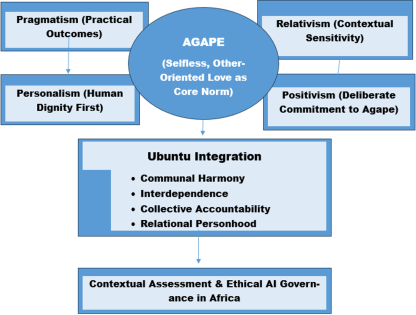
Figure 1. The Agape-Ubuntu Hybrid Model for Ethical AI Governance in Africa.
To enhance the clarity and analytical depth of the proposed framework, Figure 1 offers a schematic representation of the Agape-Ubuntu Hybrid Model. This diagram illustrates agape as the normative core, supported by Fletcher’s four working principles, with Ubuntu serving as a relational layer that grounds the model in communal accountability and interdependence. Together, these elements converge to guide contextual assessment and ethical AI governance in African settings.
8. Contributions to AI Ethics Discourse
This analysis demonstrates how situational ethics can invigorate ongoing conversations in AI governance by injecting a measure of normative adaptability rooted firmly in the pursuit of human and communal well-being. Where many established procedural models lean heavily on checklists and compliance-oriented safeguards, often at the expense of lived realities, this approach uplifts agape (along with its insistence on contextual nuance) as a counterbalance that keeps ethical reflection tethered to actual people and their interconnected lives . The real interpretive leap comes in drawing situational ethics into dialogue with African communitarian traditions, particularly through the lens of relational personhood. This move does more than add cultural flavour; it generates frameworks that feel genuinely responsive to contexts where individual agency unfolds within webs of mutual obligation and shared destiny . The resulting agape-Ubuntu synthesis brings fresh analytical traction to persistent challenges; it illuminates pathways for softening the sharper edges of AI-induced risks, bias amplification, exclusionary data practices, and opaque accountability, while also actively advancing equity, dignity, and restorative justice in African settings.
In doing so, the work participates meaningfully in broader decolonizing currents within global AI ethics. It challenges the subtle epistemic dominance that has long side-lined non-Western moral vocabularies, instead foregrounding voices and concepts capable of exposing and dismantling forms of knowledge exclusion embedded in dominant discourses . By directly confronting the criticisms levelled at Fletcher, such as the interpretive openness of agape that might invite inconsistency, and then harnessing Ubuntu’s built-in communal anchors to steady that openness, the discussion shifts away from mere recapitulation of familiar positions. What emerges is a deliberately reflexive, hybrid normative architecture attuned precisely to the developmental tensions, historical asymmetries, and relational priorities that define Africa’s encounter with emerging technologies.
9. Evaluation and Conclusion
The expansion of AI across African societies demands ethical governance frameworks that are not only technically robust but deeply attuned to the continent’s diverse cultural, historical, and socio-economic contexts. Prevailing global AI ethics paradigms, while providing essential foundational guidance on principles such as transparency, fairness, accountability, and human oversight, often fall short when applied to African realities. These frameworks often reflect individualistic, procedural, and Western-centric assumptions that overlook communal priorities, relational worldviews, historical legacies of marginalization, and resource constraints prevalent across the continent . For instance, emphasis on individual autonomy and universal rules may clash with African emphasis on interdependence, collective flourishing, and context-specific moral reasoning, potentially perpetuating epistemic injustices and forms of “algorithmic colonization” .
In response, this study has proposed situational ethics, particularly Joseph Fletcher’s agape-centred approach, as a promising complementary lens for reframing AI ethics in Africa. By foregrounding agape (selfless, other-oriented love) as the ultimate normative principle, alongside its working tenets of pragmatism, relativism, positivism, and personalism, situational ethics introduces moral flexibility that prioritizes human welfare and relational outcomes over rigid, decontextualized prescriptions. This adaptability makes it well-suited to navigating the uneven digital infrastructures, data biases, regulatory gaps, and cultural diversity that characterize AI deployment in African settings . Importantly, the integration of agape with indigenous African philosophies (most notably Ubuntu) enhances the framework’s relevance and mitigates some of situational ethics’ inherent limitations. Ubuntu’s core emphasis on “I am because we are,” communal harmony, mutual respect, interdependence, and collective accountability provides relational safeguards against the subjectivity and potential arbitrariness often critiqued in Fletcher’s model (e.g., vague definitions of “the most loving” outcome or risks of individualized moral relativism) . This hybrid ‘agape-Ubuntu’ synthesis transforms situational flexibility into a communally grounded contextualism; ethical evaluations of AI systems are informed not merely by personal ‘agape calculus’ but through participatory dialogue, consensus-building, and shared responsibility. Such an approach aligns closely with emerging African AI governance efforts, including the African Union’s Continental AI Strategy, which calls for inclusive, equitable, and culturally resonant innovation .
This contribution advances the discourse by offering a normative bridge between global procedural ethics and African relational traditions, thereby supporting decolonized approaches that actively counter epistemic exclusion, promote communal flourishing, and temper individual subjectivity with collective checks . Rather than supplanting existing frameworks, the agape-Ubuntu model complements them, providing a context-sensitive evaluative tool capable of guiding AI design, deployment, and auditing in ways that honour dignity, justice, and solidarity.
Future research should prioritize operationalizing this framework through empirical and participatory studies. Key avenues include developing agape-informed algorithmic auditing protocols (e.g., community-led bias assessments in healthcare AI), integrating Ubuntu principles into national AI strategies, designing inclusive policy mechanisms for data governance, and evaluating real-world implementations in sectors like agriculture, education, and public health. Such efforts will be essential to translating conceptual promise into practical, humane AI advancement that truly serves Africa’s developmental goals and safeguards vulnerable populations .
In conclusion, as Africa navigates the transformative yet tense capacities of AI, ethical governance cannot afford to remain imported or abstracted. By centring agape as a deliberate commitment to selfless love and weaving it with Ubuntu’s relational ethos, this proposed framework offers a philosophically grounded, culturally resonant path toward inclusive technological futures, one that prioritizes human and communal well-being, confronts colonial legacies in digital innovation, and fosters equitable progress. Embracing such an approach positions AI not as a tool of marginalization but as a catalyst for compassionate, just, and sustainable development across the continent.
Abbreviations

AI

Artificial Intelligence

Author Contributions
Oviemuno Wilfred Egara: Conceptualization, Methodology, Supervision, Writing – original draft
Bridget Gwa Oviemuno: Software, Writing – review & editing
Charles Elijah: Formal Analysis, Writing – review & editing
Conflicts of Interest
This is to confirm that the authors of this manuscript (Dr Egara Wilfred Oviemuno; Oviemuno Bridget Gwa; and Elijah Charles) declare that they have no conflicting interest in the publication of this article and that they actively participated in the drafting and editing of this work.
References
[1] African Union. (2024). Continental AI strategy.
[2] Amugongo, L. M., Bidwell, N. J., & Corrigan, C. C. (2023). Invigorating Ubuntu ethics in AI for healthcare: Enabling equitable care. In Proceedings of the 4th African Human Computer Interaction Conference (pp. 1–10). Association for Computing Machinery.
[3] Anthony, A., Munga, J., & Appaya, S. (2024). From the margins to the centre: Africa’s role in shaping AI governance. World Bank Group.
[4] Asiegbu, C., & Okolo, C. T. (2024). How AI is impacting policy processes and outcomes in Africa. Brookings Institution.
[5] Barrett, T. (2025). African data ethics: A discursive framework for Black decolonial AI. Proceedings of the 2025 ACM Conference on Fairness, Accountability, and Transparency, 373–382.
[6] Birhane, A. (2021). Algorithmic injustice: A relational ethics approach. Patterns, 2(2), Article 100205.
[7] Dimock, M., & Fisher, A. (2017). Fletcher’s situation ethics. In M. Dimock & A. Fisher (Eds.), Ethics for A-level (pp. 79–89). Open Book Publishers.
[8] Egara, O. W., Etaware, P. M., & Oboli, B. (2026a). Ethical implications of AI in precision drug design: A philosophical inquiry. In K. Raza (Ed.), Artificial intelligence in precision drug design (Vol. 1, pp. 57–69). Elsevier.
[9] Egara, O. W., & Etaware, P. M. (2025). Thinking outside the box and inside the details: The role of creative and critical thinking in contemporary problem-solving. British Journal of Multidisciplinary and Advanced Studies, 6(2), 68–76.
[10] Egara, O. W., Etaware, P. M., & Oboli, B. (2026b). Can machines truly know? Epistemological challenges in AI-driven drug discovery. In K. Raza (Ed.), Artificial intelligence in precision drug design (Vol. 1, pp. 39–55). Elsevier.
[11] Fletcher, J. (1966). Situation ethics: The new morality. Westminster Press.
[12] Floridi, L., Cowls, J., Beltrametti, M., Chatila, R., Chazerand, P., Dignum, V., Luetge, C., Madelin, R., Pagallo, U., Rossi, F., Schafer, B., Valcke, P., & Vayena, E. (2018). AI4People-An ethical framework for a good AI society: Opportunities, risks, principles, and recommendations. Minds and Machines, 28(4), 689–707.
[13] Gustafson, J. (1979). On continuing Fletcher’s dialogue. Journal of Religious Ethics, 7(2), 193–210.
[14] Gwagwa, A., Kazim, E., & Hilliard, A. (2022). The role of the African value of Ubuntu in global AI inclusion discourse: A normative ethics perspective. Patterns, 3(4), Article 100462.
[15] King, J. C. (1970). The inadequacy of situation ethics. The Thomist, 34(4), 423–437.
[16] Kolawole, O. (2020). A critical assessment of Joseph Fletcher’s situation ethics [Unpublished manuscript or preprint]. Research Gate.
[17] Mhlanga, D. (2021). Artificial intelligence in the Fourth Industrial Revolution: Prospects and challenges for Africa. African Journal of Science, Technology, Innovation and Development, 13(5), 567–578.
[18] Mittelstadt, B. (2019). Principles alone cannot guarantee ethical AI. Nature Machine Intelligence, 1(11), 501–507.
[19] Mokoena, K. K. (2024). A holistic ubuntu artificial intelligence ethics approach in South Africa. Verbum et Ecclesia, 45(1), Article 3100.
[20] Ndiaye, A., & Diop, B. (2023). Co-designing technology for sustainable development: Lessons from Senegal. Journal of African Technology Studies, 4(1), 45–60.
[21] Ochasi, A. (2025). Reframing justice in healthcare AI: An Ubuntu-based approach for Africa. Developing World Bioethics. Advance online publication.
[22] Odero, B., Nderitu, D., & Samuel, G. (2024). The Ubuntu way: Ensuring ethical AI integration in health research. Welcome Open Research, 9, Article 625.
[23] Rosenthal, B. S. (n.d.). Situation ethics. In Encyclopædia Britannica.
[24] University of Pretoria, Access Partnership, & Microsoft. (2018). Artificial intelligence for Africa: An opportunity for growth, development, and democratization (White paper). University of Pretoria.
[25] Untangle Philosophy. (2023, November 12). Criticisms of situation ethics | What does “love” & “situation” actually mean? [Video]. YouTube.
[26] Wiredu, K. (1996). Cultural universals and particulars: An African perspective. Indiana University Press.
[27] Yilma, K. (2025). Ethics of AI in Africa: Interrogating the role of Ubuntu and AI governance initiatives. Ethics and Information Technology, 27(1), Article 18.
Cite This Article
  • APA Style

    Egara, O. W., Oviemuno, B. G., Elijah, C. (2026). Agape and Algorithms: Reframing Artificial Intelligence Ethics in Africa Through Fletcherian Situational Ethics. Mathematics and Computer Science, 11(3), 57-63. https://doi.org/10.11648/j.mcs.20261103.12

    Copy | Download

    ACS Style

    Egara, O. W.; Oviemuno, B. G.; Elijah, C. Agape and Algorithms: Reframing Artificial Intelligence Ethics in Africa Through Fletcherian Situational Ethics. Math. Comput. Sci. 2026, 11(3), 57-63. doi: 10.11648/j.mcs.20261103.12

    Copy | Download

    AMA Style

    Egara OW, Oviemuno BG, Elijah C. Agape and Algorithms: Reframing Artificial Intelligence Ethics in Africa Through Fletcherian Situational Ethics. Math Comput Sci. 2026;11(3):57-63. doi: 10.11648/j.mcs.20261103.12

    Copy | Download

  • @article{10.11648/j.mcs.20261103.12,
      author = {Oviemuno Wilfred Egara and Bridget Gwa Oviemuno and Charles Elijah},
      title = {Agape and Algorithms: Reframing Artificial Intelligence Ethics in Africa Through Fletcherian Situational Ethics},
      journal = {Mathematics and Computer Science},
      volume = {11},
      number = {3},
      pages = {57-63},
      doi = {10.11648/j.mcs.20261103.12},
      url = {https://doi.org/10.11648/j.mcs.20261103.12},
      eprint = {https://article.sciencepublishinggroup.com/pdf/10.11648.j.mcs.20261103.12},
      abstract = {Concerns regarding ethical issues, such as algorithmic fairness, accountability, transparency, and the preservation of human dignity, have increased due to the fast integration of artificial intelligence (AI) into a variety of global sectors. Principles like safety, explainability, and regulatory compliance are given top priority in many of the current global AI governance frameworks. The sociocultural, historical, and communal dynamics that are common in African communities may not be sufficiently accommodated by these methods, which are frequently drawn from Western intellectual traditions. The potential of situational ethics, specifically, Joseph Fletcher's agape-focused framework, as a further lens for evaluating AI systems in African contexts is examined in this research. Employing the hermeneutic method of inquiry, the topic illustrates how situational ethics’ fundamental components: pragmatism, relativism, positivism, and personalism, can promote context-sensitive assessments of AI through conceptual analysis. This viewpoint emphasizes human and communal well-being over rigid regulations, placing agape (selfless, other-oriented love) as the paramount norm. It provides a way to align AI deployment with African relational and communitarian values, such as those embodied in the Ubuntu philosophy of relationality. This paper suggests that Fletcher’s agapeic framework may solve epistemic inequities in global AI discourse and fosters inclusive technology growth by fusing situational ethics with traditional African philosophies.},
     year = {2026}
    }
    

    Copy | Download

  • TY  - JOUR
    T1  - Agape and Algorithms: Reframing Artificial Intelligence Ethics in Africa Through Fletcherian Situational Ethics
    AU  - Oviemuno Wilfred Egara
    AU  - Bridget Gwa Oviemuno
    AU  - Charles Elijah
    Y1  - 2026/07/28
    PY  - 2026
    N1  - https://doi.org/10.11648/j.mcs.20261103.12
    DO  - 10.11648/j.mcs.20261103.12
    T2  - Mathematics and Computer Science
    JF  - Mathematics and Computer Science
    JO  - Mathematics and Computer Science
    SP  - 57
    EP  - 63
    PB  - Science Publishing Group
    SN  - 2575-6028
    UR  - https://doi.org/10.11648/j.mcs.20261103.12
    AB  - Concerns regarding ethical issues, such as algorithmic fairness, accountability, transparency, and the preservation of human dignity, have increased due to the fast integration of artificial intelligence (AI) into a variety of global sectors. Principles like safety, explainability, and regulatory compliance are given top priority in many of the current global AI governance frameworks. The sociocultural, historical, and communal dynamics that are common in African communities may not be sufficiently accommodated by these methods, which are frequently drawn from Western intellectual traditions. The potential of situational ethics, specifically, Joseph Fletcher's agape-focused framework, as a further lens for evaluating AI systems in African contexts is examined in this research. Employing the hermeneutic method of inquiry, the topic illustrates how situational ethics’ fundamental components: pragmatism, relativism, positivism, and personalism, can promote context-sensitive assessments of AI through conceptual analysis. This viewpoint emphasizes human and communal well-being over rigid regulations, placing agape (selfless, other-oriented love) as the paramount norm. It provides a way to align AI deployment with African relational and communitarian values, such as those embodied in the Ubuntu philosophy of relationality. This paper suggests that Fletcher’s agapeic framework may solve epistemic inequities in global AI discourse and fosters inclusive technology growth by fusing situational ethics with traditional African philosophies.
    VL  - 11
    IS  - 3
    ER  - 

    Copy | Download

Author Information