Abstract
Groundwater is the primary source of drinking and domestic water for many households in semi-urban communities in northern Nigeria. However, the siting of abattoirs within residential areas, combined with poor waste management practices, poses a serious threat to groundwater quality and public health. This study evaluated the impact of abattoir effluent discharge on groundwater quality in Potiskum Local Government Area, Yobe State, Nigeria. Three groundwater samples (A, B and C) were collected from wells and boreholes located 24.6 m, 47.8 m and 61.5 m, respectively, from the abattoir effluent discharge point. Physicochemical and microbiological parameters were analyzed using standard methods recommended by the American Public Health Association and the World Health Organization. Results showed that most physicochemical parameters, including turbidity (0.1–1.7 NTU), total dissolved solids (<1.31mg/L) and chemical oxygen demand (34.0–34.7mg/L), were within WHO permissible limits. However, pH values in samples B and C were slightly acidic, while biochemical oxygen demand (10.8–23.7mg/L) indicated significant organic pollution. Microbiological analysis revealed severe contamination, with coliform counts of >1600, 34 and 1100 MPN/100mL for samples A, B and C, respectively. Pathogenic bacteria including Klebsiella pneumoniae, Shigella spp. and Staphylococcus aureus were detected in all samples. The findings demonstrate that abattoir effluent has significantly compromised groundwater quality in the study area, rendering it unsafe for domestic use without treatment. Improved effluent management, routine groundwater monitoring and enforcement of sanitation regulations are therefore essential to protect public health and ensure sustainable water resources.
Keywords
Abattoir Effluents, Groundwater Quality, Potiskum, Microbial Contamination, Public Health
1. Introduction
The abattoir industry is an essential component of Nigeria's livestock sector, providing meat to millions of people and generating employment and revenue for national, state and local governments
| [1] | Abubakar, A. S. & Bello, N. I. (2023). Effect of locating abattoir on neighbouring communities in Kano State, Nigeria. International Journal of Geography & Geography Education, 48, 187-201. https://doi.org/10.32003/igge.1161854 |
[1]
. Despite its socioeconomic importance, abattoir operations across the country are frequently characterized by inadequate infrastructure and poor waste management practices. Many slaughterhouses lack basic amenities such as functional effluent treatment systems, proper flooring, drainage, and hygienic facilities, resulting in the indiscriminate discharge of wastewater and solid wastes into the surrounding environment
| [2] | Shabir, M., Khan, A., & Ahmed, S. (2022). Urban water management and the challenges of water distribution. Journal of Water Resources and Environmental Engineering, 29(4), 112-125. https://doi.org/10.1016/j.wree.2022.04.003 |
| [3] | Adesakin, T. A., Oyewale, A. T., Bayero, U., Mohammed, A. N., Aduwo, I. A., Ahmed, P. Z., Abubakar, N. D. & Barje, I. B. (2020). Assessment of bacteriological quality and physico-chemical parameters of domestic water sources in Samaru community, Zaria, Northwest Nigeria. Helyion, 1(20), 1-13.
https://doi.org/10.1016/j.heliyon.2020.e04773 |
[2, 3]
.
Effluents generated from slaughtering processes typically contain high loads of organic matter, nutrients, suspended solids, and pathogenic microorganisms
| [4] | Adamu, M. T., & Dahiru, M. (2020). A review on abattoir wastewater treatment for environmental health improvement. Journal of Environmental Bioremediation and Toxicology, 3(2), 26-31. https://doi.org/10.54987/jebat.v3i2.548 |
[4]
. When released untreated, these waste streams can degrade soil and water bodies, increasing concentrations of nitrogen, phosphorus, total solids, and microbial contaminants in receiving environments
| [5] | Amoo, A. O., Adeleye, A. O., Madu, I. E., Asaju, C. I., Amoo, N. B., Abdulahi, A. A., & Alabi, I. A. (2023). Impact of slaughterhouse effluents on groundwater quality in Kaduna residential suburbs. Journal of Environmental Assessment, 1(2), 41-50. https://doi.org/10.59110/jeicc.v2i1.93 |
[5]
. In many Nigerian towns, abattoirs are sited near residential areas and close to shallow wells or boreholes, enabling effluents to infiltrate the soil and leach into groundwater aquifers. This situation is particularly dangerous because groundwater is the primary source of drinking and domestic water for most households.
Groundwater contamination by abattoir effluents presents a critical public health threat. Polluted water sources may harbour pathogens such as Escherichia
coli, Klebsiella, and Salmonella, which are linked to diarrheal and other enteric diseases
| [6] | Nafarnda, W. D., Ajayi, I. E., Shawulu, J. C., Kawe, M. S., Omeiza, G. K., & Tagwai, A. Y. (2012). Bacteriological quality of abattoir effluents discharged into water bodies in Abuja, Nigeria. ISRN Veterinary Science, 2012, 515689.
https://doi.org/10.5402/2012/515689 |
[6]
. Reports of offensive odour, discoloration, and visible pollution in water sources near abattoirs are common indicators of such contamination and suggest the infiltration of organic pollutants, nutrients, and toxic chemicals
| [7] | Singh, B., & Sharma, S. (2014). Environmental and health impacts from slaughterhouses located on city outskirts: A case study. Open Journal of Air Pollution, 3(2), 55-62.
http://dx.doi.org/10.4236/jep.2014.56058 |
[7]
.
In Potiskum, Yobe State, several abattoirs operate within densely populated residential areas. Communities in these locations rely heavily on boreholes and shallow wells for their daily water needs, making them highly vulnerable to contamination arising from poorly managed abattoir wastes. Preliminary observations and complaints from residents have pointed to water quality deterioration in wells situated close to slaughterhouses, including changes in colour, odour, and overall aesthetic quality. These concerns are compounded by the absence of proper effluent treatment facilities and inadequate waste handling practices, which facilitate the direct discharge of untreated wastewater into the surrounding environment.
Given these challenges, a systematic assessment of groundwater quality around abattoirs in Potiskum is essential. Such an evaluation will determine the extent of physicochemical and microbiological contamination, provide evidence for potential health risks, and support the development of policies aimed at improving abattoir waste management. The findings will also contribute to safeguarding groundwater resources, promoting public health, and advancing environmental sustainability within Potiskum Local Government Area.
This study therefore investigates the physicochemical and microbiological characteristics of groundwater around the Central Abattoir in Potiskum. The goal is to quantify the level of pollution, identify associated public health implications, and provide data-driven recommendations for improving abattoir operations and ensuring access to safe and clean water for residents.
2. Materials and Methods
2.1. Study Area
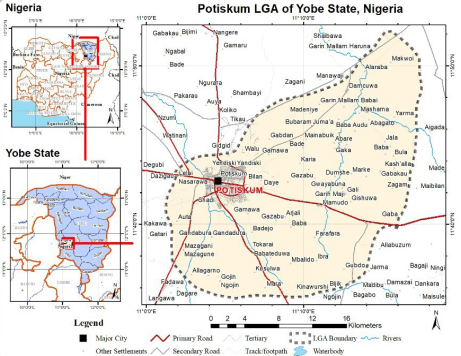
The study was conducted at the Potiskum abattoir (popularly known as
Kwata), located in Potiskum LGA, Yobe State, Nigeria, along Latitude: 11°42'50.08" N Longitude: 11° 04' 51.89" E (
Figure 1). Potiskum has an estimated population of 205,876
and serves as a major commercial hub. The abattoir comprises three operational sections: slaughtering, processing, and waste discharge.
Figure 1. Map of Yobe State Showing Study Area (Potiskum).
2.2. Sample Collection
At each sampling location (A, B, and C), a composite groundwater sample was obtained to represent the site. All physicochemical and microbiological determinations were conducted in duplicate, and mean values were reported to enhance analytical reliability. Sampling, preservation, and transportation were carried out using sterile containers and aseptic techniques to prevent external contamination.
Groundwater samples were collected from wells and boreholes located 24.6 m, 47.8 m, and 61.5 m from the effluent discharge point. Sampling was performed at approximately 06:30 h using sterile 250mL bottles, after which the samples were preserved in ice and transported to the laboratory at 0–4°C for subsequent analysis.
Table 1. Sampling Points and Collection Details.
Sample | Distance from discharge (m) | Time of Collection (a.m.) |
A | 24.6 | 06:30 |
B | 47.8 | 06:33 |
C | 61.5 | 06:35 |
2.3. Physicochemical Analysis
Parameters analyzed included temperature, turbidity, pH, total dissolved solids (TDS), total suspended solids (TSS), dissolved oxygen (DO), biochemical oxygen demand (BOD), and chemical oxygen demand (COD). Standard methods by American Public Health Association [APHA]
| [9] | APHA (American Public Health Association). (2005). Standard methods for the examination of water and wastewater. 21st edition, In A. D Eaton, L. S. Clesceri, E. W. Rice, A. E Greenberg, M. A. H. Franson, (Eds). APHA, Washington D. C., U.S.A. https://www.sciepub.com/reference/391084 |
[9]
and WHO
were followed for measurements using calibrated probes and spectrophotometric readings.
2.4. Microbiological Analysis
The Most Probable Number (MPN) method was used to estimate total coliforms
. Water samples were serially diluted (10
-1–10
-5) and inoculated in lactose broth for presumptive tests, followed by confirmatory and completed tests using EMB, MSA, and SSA agar. Isolates were identified based on morphological characteristics and biochemical reactions (Gram stain, catalase, oxidase, indole, citrate, urease, coagulase, methyl red, and Voges-Proskauer).
2.5. Data Analysis
All physicochemical and microbiological parameters were analyzed in duplicate (n = 2), and results were expressed as mean ± standard deviation. Spatial variations in groundwater quality were evaluated descriptively by comparing parameter values across sampling points at increasing distances from the effluent discharge source. Microbiological data were analyzed using the Most Probable Number (MPN) method and reported as MPN per 100mL with 95% confidence limits. Results were compared with World Health Organization (WHO) guideline values for drinking water quality. Due to the limited number of sampling locations, no inferential statistical tests were applied, and interpretations were based on descriptive statistics and observed trends.
3. Results
3.1. Physicochemical Properties
Table 2. Physicochemical Parameters of Groundwater Samples (Mean ± SD, n = 2).
Parameter | Sample A | Sample B | Sample C | WHO Standard |
Appearance | Colorless | Colorless | Colorless | - |
Temperature (°C) | 28.3 ± 0.0 | 28.0 ± 0.0 | 28.0 ± 0.0 | Ambient |
Turbidity (NTU) | 1.7 ± 0.1 | <0.1 ± ND | <0.3 ± ND | 5 |
pH | 6.7 ± 0.1 | 5.1 ± 0.1 | 5.4 ± 0.1 | 6.5–8.5 |
DO (mg/L) | 30.4 ± 0.2 | 42.1 ± 0.3 | 42.6 ± 0.3 | 8 |
BOD (mg/L) | 23.7 ± 0.4 | 14.1 ± 0.3 | 10.8 ± 0.2 | 0 |
TDS (mg/L) | 1.31 ± 0.02 | <1.26 ± ND | <0.91 ± ND | 500 |
TSS (mg/L) | 0.4 ± 0.1 | 0.6 ± 0.1 | <0.7 ± ND | 60 |
COD (mg/L) | 34.0 ± 0.5 | 34.2 ± 0.4 | 34.7 ± 0.6 | 150 |
All samples were visually clear, with low turbidity, TDS, and TSS values indicating minimal suspended solids. However, the pH of samples B and C (5.1–5.4) was slightly below the WHO limit, suggesting mild acidity that may corrode metal pipes and affect water palatability. The elevated BOD values in all samples (10.8–23.7mg/L) imply significant organic pollution, most likely from decomposing animal residues and blood entering the groundwater. The unusually high dissolved oxygen (DO) values recorded in all samples may partly reflect aeration during sampling and handling rather than true in-situ oxygen conditions. However, the absence of field and laboratory blanks limits confirmation of this effect. Future studies should incorporate simple QA/QC procedures, such as analysing deionized water exposed to ambient conditions at the sampling site (field blanks) and deionized water retained in the laboratory (laboratory blanks), to better distinguish sampling artefacts from actual groundwater characteristics.
3.2. Most Probable Number (MPN) of Coliforms
Table 3. MPN per 100mL and Confidence Limits.
Sample | Distance from Effluent (m) | MPN/100mL | 95% Confidence Limit |
A | 0–10 | 1600 ± 120 | 700–>1600 |
B | 50 | 34 ± 6 | 16–80 |
C | 100 | 1100 ± 95 | 180–4100 |
Although coliform contamination generally declined with increasing distance from the effluent discharge point, Sample C exhibited an anomalously high MPN value (1100 MPN/100mL) compared to Sample B (34 MPN/100mL). This non-linear pattern suggests that microbial contamination in groundwater does not strictly follow distance-dependent attenuation. Possible contributing factors include localized human activities such as indiscriminate waste disposal, leaking septic systems, surface runoff infiltration, or variations in subsurface permeability that facilitate preferential microbial transport. In addition, the inherent statistical variability of the MPN method may contribute to fluctuations in estimated bacterial counts. While the inclusion of 95% confidence limits satisfies methodological requirements, replicate field sampling would further strengthen interpretation of spatial trends, particularly where deviations occur.
Note: All physicochemical and microbiological analyses were conducted in duplicate, and results are presented as mean ± standard deviation (n = 2). Where duplicate readings were identical or below detection limits, the standard deviation was negligible or not determinable. The inclusion of duplicate analyses improves analytical reliability, while 95% confidence limits were applied to MPN results in accordance with standard statistical requirements.
3.3. Bacterial Load
Table 4. Bacterial Load (cfu/mL) at Various Dilutions.
Sample | 10-1 | 10-3 | 10-5 |
A | 13.4 | 0.08 | No growth |
B | 11.6 | 0.08 | 1.6 |
C | 7.4 | 0.04 | No growth |
Sample A exhibited the highest bacterial density, consistent with its proximity to the abattoir. Sample B showed moderate persistence of bacteria even at high dilutions (10-5), suggesting the presence of resistant strains or denser microbial colonies. The gradual decline in bacterial load with distance reflects the natural filtration capacity of soil and aquifer media but confirms significant microbial penetration.
3.4. Morphological Identification of Isolates
Table 5. Morphological Appearance of Bacterial Isolates.
Sample | Observation on Selective Media | Identified Organism |
A | Pink mucoid colonies on MAC; golden yellow on MSA; colorless on SSA | Klebsiella spp., Staphylococcus spp., Shigella spp. |
B | Same as A | Same as A |
C | Same as A | Same as A |
The uniform occurrence of Klebsiella, Shigella, and Staphylococcus species in all samples indicates consistent microbial infiltration from the abattoir effluent. These bacteria are associated with gastrointestinal, urinary, and skin infections, highlighting the public health implications of consuming or using contaminated groundwater.
3.5. Biochemical Confirmation
Table 6. Biochemical Test Results for Isolates.
Organism | GR | MR | VP | IN | CAT | COU | OXI | URE | CIT |
Klebsiella pneumoniae | – | + | + | – | – | – | – | + | + |
Shigella spp. | – | + | – | + | – | – | – | – | – |
Staphylococcus aureus | + | – | – | – | + | + | – | – | – |
Biochemical reactions confirmed Klebsiella pneumoniae, Shigella spp., and Staphylococcus aureus as the dominant contaminants. Klebsiella and Shigella indicate faecal contamination, while S. aureus suggests contamination from human handling or animal skin contact during slaughtering.
4. Discussions
4.1. Physicochemical Parameters
The physicochemical results indicate that all water samples were clear and colorless, suggesting an absence of visible pollutants. Turbidity values (0.1-1.7 NTU) were within the WHO limit of 5 NTU, implying minimal suspended solids and limited particulate intrusion. Low turbidity is typical of groundwater due to natural filtration by soil layers; however, turbidity alone does not reflect the absence of microbial contamination
| [12] | Rahman, T., Islam, M., & Ahmed, S. (2016). Suspended solids and water quality in agricultural watersheds. Journal of Water and Soil, 12(7), 297-310.
https://doi.org/10.1002/jeq2.20390 |
[12]
.
The temperature of all samples (28.0–28.3°C) was consistent with ambient conditions, typical of shallow aquifers in tropical regions
. Water temperature influences dissolved oxygen levels and microbial activity; thus, stable readings suggest minimal external thermal input.
The pH values (5.1–6.7) revealed slightly acidic conditions in samples B and C, which fall below the WHO recommended range (6.5–-8.5). The acidity could be attributed to decomposition of protein-rich organic waste, producing weak acids such as carbonic and amino acids
. Acidic groundwater can increase metal solubility and alter taste, making it unsuitable for long-term consumption
| [3] | Adesakin, T. A., Oyewale, A. T., Bayero, U., Mohammed, A. N., Aduwo, I. A., Ahmed, P. Z., Abubakar, N. D. & Barje, I. B. (2020). Assessment of bacteriological quality and physico-chemical parameters of domestic water sources in Samaru community, Zaria, Northwest Nigeria. Helyion, 1(20), 1-13.
https://doi.org/10.1016/j.heliyon.2020.e04773 |
[3]
.
Biochemical Oxygen Demand (BOD) levels ranged between 10.8 and 23.7mg/L, exceeding the WHO ideal of 0mg/L. This indicates a significant load of biodegradable organic matter originating from animal blood, fat, faeces, and other abattoir waste. Similar high BOD levels have been reported by Hassan
et al. | [15] | Hassan, A., Sharma, V., & Sethi, P. (2017). Analysis of biochemical oxygen demand in sewage-impacted water systems. Journal of Wastewater Treatment and Management, 23(7), 344-351. https://doi.org/10.5004/dwt.2019.24158 |
[15]
and Mohammed & Musa
| [16] | Mohammed, S. & Musa, J. J. (2012). "Impact of abattoir effluent on river Landzu, Bida, Nigeria". Journal of Chemical, Biological and Physical Sciences. 2(1), 132-136. |
[16]
in abattoir-impacted water bodies. Elevated BOD values deplete dissolved oxygen (DO), affecting aquatic life and promoting anaerobic bacterial growth.
The Chemical Oxygen Demand (COD) values (34–34.7mg/L) were well below the WHO limit (150mg/L), suggesting moderate oxidizable organic matter. However, COD alone may underestimate pollution if the contaminants are largely biological rather than chemical in nature. Total Dissolved Solids (TDS) and Total Suspended Solids (TSS) were very low, reflecting low mineralization and good natural filtration. This observation is consistent with findings by Akpan
et al. | [17] | Akpan, O., Johnson, E., & Udo, F. (2016). Impact of surface runoff on total suspended solids in tropical streams. Journal of Water Research and Development, 12(4), 320-329.
https://doi.org/10.3390/w8070278 |
[17]
, who reported similar low TDS in rural aquifers.
Collectively, the physicochemical results suggest that while water clarity and mineral content appear acceptable, organic loading from abattoir waste has significantly compromised water quality, reflected in high BOD and low pH values.
4.2. Most Probable Number (MPN) of Coliforms
The MPN results revealed that groundwater near the abattoir was heavily contaminated with coliform bacteria. Sample A, located 24.6 m from the effluent discharge point, recorded >1600 MPN/100mL, far exceeding the WHO permissible limit of 0 MPN/100mL for drinking water. Samples B and C also recorded 34 and 1100 MPN/100mL, respectively, confirming persistent contamination even beyond 60 m.
These results align with findings by Bello and Oyedemi
| [18] | Bello, I., & T. Oyedemi. (2017). Impact of Slaughterhouse Activities on the Health of Nearby Residents and Water Quality in Nigeria. Journal of Environmental Research, 12(4), 67-75.
https://10.31901/24566756.2009/19.02.05 |
[18]
, who reported MPN values exceeding 1200/100mL in wells located within 50 m of abattoirs. Similarly, Olugbenga
et al. | [19] | Olugbenga O., Davids, O. R., David O. O., Elizabeth, O., Elijah O. A., & Nyore A. O. (2019). Assessment of the impact of abattoir effluent on the quality of groundwater in a residential area of Omu-Aran, Nigeria. Journal of Environmental Sciences Europe, 31, (16), 32-36.
https://doi.org/10.1186/s12302-019-0201-5 |
[19]
documented coliform counts above 1000 MPN/100mL in residential areas near slaughterhouses in Kwara State. The high MPN values in Potiskum indicate continuous infiltration of faecal matter from abattoir effluent into shallow aquifers.
The decreasing trend of contamination with distance (A > C > B) suggests partial attenuation through soil filtration; however, this effect is insufficient due to the shallow water table and possibly permeable sandy substrata characteristic of the region. Such groundwater vulnerability underscores the need for buffer zones between abattoirs and residential wells.
4.3. Bacterial Load and Distribution
The bacterial load data further substantiated the MPN results. Sample A recorded the highest colony count (13.4 cfu/mL at 10-1 dilution), indicating intense microbial activity near the discharge point. The bacterial count decreased with dilution and distance, consistent with reduced effluent influence.
The persistence of bacterial growth in Sample B at high dilution (1.6 cfu/mL at 10
-5) suggests the presence of resilient or sporulating species capable of surviving environmental stress. Such persistence indicates that the aquifer may serve as a long-term reservoir of microbial contaminants
| [6] | Nafarnda, W. D., Ajayi, I. E., Shawulu, J. C., Kawe, M. S., Omeiza, G. K., & Tagwai, A. Y. (2012). Bacteriological quality of abattoir effluents discharged into water bodies in Abuja, Nigeria. ISRN Veterinary Science, 2012, 515689.
https://doi.org/10.5402/2012/515689 |
[6]
.
Similar bacterial load ranges were reported by Dauda
et al.
| [20] | Dauda, A. M., Oyewole, O. E., & Olatinwo, L. B. (2016). Microbial contamination of indoor air in selected buildings in Ile-Ife, Nigeria. Journal of Environmental Science, Health, Part B, 51(1), 33-41. https://doi.org/10.11648/j.jher.20180403.15 |
[20]
in abattoir-contaminated waters (2.16×10⁷ to 5.82×10⁵ cfu/mL). Elevated microbial populations in this study point to continuous organic enrichment and lack of effective waste containment.
The observed decline in BOD with increasing distance from the abattoir reflects progressive reduction of biodegradable organic matter through dilution and natural attenuation. However, the persistence of high microbial counts at Sample C indicates that microbial contamination does not necessarily mirror organic load. Groundwater microorganisms may originate from multiple sources, including nearby sanitation facilities, surface runoff, or human activities independent of the abattoir. Furthermore, the MPN technique is inherently probabilistic and subject to variability, particularly at high contamination levels. Consequently, conclusions regarding distance-dependent microbial reduction should be interpreted cautiously, and corroborated through replicate sampling and complementary microbiological indicators in future studies.
4.4. Bacterial Identification and Public Health Implications
The morphological and biochemical analyses identified Klebsiella pneumoniae, Shigella spp., and Staphylococcus aureus as the dominant isolates across all samples. The uniform presence of these pathogens in samples A, B, and C indicates extensive microbial dispersion in the groundwater system.
Klebsiella pneumoniae and
Shigella spp. are enteric bacteria typically associated with faecal pollution. Their presence implies contamination by animal excreta and blood-laden effluents seeping from the abattoir. These bacteria are known to cause gastrointestinal disorders, dysentery, and urinary tract infections
| [21] | Doori, H. L. & Hmoshi, R. M. (2023). Diagnostic study of some bacterial pollutants isolated from different food and environmental samples in the city of Mosul, Iraq. Microbial Science Archives, Vol. 3(3), 125-133.
https://doi.org/10.47587/MSA.2023.3308 |
[21]
.
Staphylococcus aureus, on the other hand, often originates from human skin or nasal flora and may have entered through abattoir workers' contact during slaughtering and washing operations.
The detection of multiple pathogenic species mirrors findings by Amoo
et al.
| [5] | Amoo, A. O., Adeleye, A. O., Madu, I. E., Asaju, C. I., Amoo, N. B., Abdulahi, A. A., & Alabi, I. A. (2023). Impact of slaughterhouse effluents on groundwater quality in Kaduna residential suburbs. Journal of Environmental Assessment, 1(2), 41-50. https://doi.org/10.59110/jeicc.v2i1.93 |
[5]
and Nafarnda
et al.
| [6] | Nafarnda, W. D., Ajayi, I. E., Shawulu, J. C., Kawe, M. S., Omeiza, G. K., & Tagwai, A. Y. (2012). Bacteriological quality of abattoir effluents discharged into water bodies in Abuja, Nigeria. ISRN Veterinary Science, 2012, 515689.
https://doi.org/10.5402/2012/515689 |
[6]
, who reported similar bacterial assemblages in groundwater near abattoirs in Kaduna and Abuja. Such microbial diversity reflects poor sanitary conditions, lack of wastewater treatment, and inadequate drainage design.
The coexistence of high BOD and high bacterial density further indicates a direct relationship between organic loading and microbial growth. The biological activity of decomposing matter supports pathogenic survival and proliferation. Consequently, residents consuming such water are at risk of infections including gastroenteritis, diarrhea, and typhoid fever.
4.5. Comparative Analysis and Environmental Implications
When compared with related studies in Nigeria and other developing countries, the results from Potiskum show similar patterns of effluent-induced groundwater contamination. For instance, Mohammed and Musa
| [16] | Mohammed, S. & Musa, J. J. (2012). "Impact of abattoir effluent on river Landzu, Bida, Nigeria". Journal of Chemical, Biological and Physical Sciences. 2(1), 132-136. |
[16]
reported comparable BOD and coliform values in the Landzu River, Bida, while Singh and Sharma
| [7] | Singh, B., & Sharma, S. (2014). Environmental and health impacts from slaughterhouses located on city outskirts: A case study. Open Journal of Air Pollution, 3(2), 55-62.
http://dx.doi.org/10.4236/jep.2014.56058 |
[7]
observed identical contamination profiles around Indian slaughterhouses lacking effluent treatment.
The slightly better results in Sample C confirm natural attenuation at distances greater than 50 m but highlight that contamination remains substantial even beyond WHO-specified safety perimeters. This suggests that soil permeability and the absence of concrete drainage channels allow direct percolation of effluents into groundwater.
The long-term environmental implication is the progressive deterioration of groundwater quality, which may render wells unsafe for domestic use. Such deterioration can also affect soil microbiota, nutrient balance, and nearby vegetation due to accumulation of organic residues and nitrogen compounds
| [22] | Matheyarasu, R., Seshadri, B., Bolan, N. S., & Naidu, R. (2015). Impacts of Abattoir Waste-Water Irrigation on Soil Fertility and Productivity. In Irrigation and Drainage - Sustainable Strategies and Systems. InTech. https://doi.org/10.5772/59312 |
[22]
.
4.6. Implications for Water Safety and Management
The results underscore the urgent need for wastewater management reforms at the Potiskum abattoir. Although the physicochemical indicators might suggest acceptable quality, the microbial parameters demonstrate serious health hazards. The consistent detection of coliforms and pathogenic bacteria invalidates the potability of the water, emphasizing the necessity for water treatment before human consumption.
Regulatory agencies should enforce environmental sanitation standards, establish effluent treatment systems, and ensure minimum buffer distances between abattoirs and residential areas. Public education on household-level water disinfection (e.g., boiling or chlorination) is also essential to mitigate health risks.
5. Conclusion
The study established that groundwater around the Potiskum abattoir is significantly affected by effluent discharge. Although most physicochemical parameters such as turbidity, COD, and TDS were within World Health Organization (WHO) limits, the elevated biochemical oxygen demand (BOD) and slightly acidic pH indicate organic pollution and chemical alteration of the aquifer.
Microbiological analysis revealed severe contamination, with Most Probable Number (MPN) values far exceeding WHO standards for potable water. The presence of pathogenic bacteria, including Klebsiella pneumoniae, Shigella spp., and Staphylococcus aureus, confirms faecal and organic waste infiltration from the abattoir, posing serious environmental and public health risks.
Contamination levels declined with distance from the abattoir, reflecting the spatial influence of effluent seepage. However, the persistence of microbial indicators beyond 60 meters demonstrates continued infiltration into subsurface water and highlights the vulnerability of shallow aquifers in poorly regulated semi-urban areas.
The groundwater in the study area is microbiologically unsafe for domestic use without proper treatment. Immediate interventions are required to mitigate effluent discharge, safeguard public health, and prevent further environmental degradation.
6. Recommendations
1) Recommendations Effluent Treatment and Waste Management:
Abattoir operators should install functional wastewater treatment systems such as sedimentation tanks, anaerobic digesters, or constructed wetlands to treat effluents before discharge. Proper containment structures and lined drainage channels should be incorporated to prevent seepage into groundwater.
2) Regulatory Enforcement:
The Yobe State Environmental Protection Agency (YOSEPA) and local authorities should enforce existing environmental regulations governing abattoir operations. Regular inspections, licensing, and environmental audits are essential to ensure compliance and reduce uncontrolled waste disposal.
3) Groundwater Quality Monitoring:
Routine monitoring of borehole and well water within the abattoir vicinity should be conducted to assess changes in physicochemical and microbial quality. Periodic assessments will help detect contamination early and guide appropriate remediation.
4) Safe Water Supply and Community Awareness:
Residents relying on nearby groundwater sources should be educated on the risks of consuming untreated water. Public health campaigns should promote safe household treatment methods, such as boiling, chlorination, or filtration, while government and NGOs provide access to safer alternative water sources.
5) Sustainable Abattoir Design and Siting:
New abattoirs should be located at least 100 meters away from residential and groundwater recharge zones. Existing facilities should be redesigned to include impermeable floors, soak-away pits, and controlled drainage systems to limit environmental contamination.
6) Policy Integration and Further Research:
Abattoir waste management should be integrated into urban water safety and sanitation policies. Further research is recommended on heavy metal accumulation, antibiotic resistance, and seasonal variations in groundwater contamination to provide a more comprehensive risk assessment.
Abbreviations
APHA | American Public Health Association |
WHO | World Health Organization |
MPN | Most Probable Number |
BOD | Biochemical Oxygen Demand |
COD | Chemical Oxygen Demand |
DO | Dissolved Oxygen |
TDS | Total Dissolved Solids |
TSS | Total Suspended Solids |
NTU | Nephelometric Turbidity Unit |
CFU | Colony Forming Unit |
MAC | MacConkey Agar |
EMB | Eosin Methylene Blue Agar |
MSA | Mannitol Salt Agar |
SSA | Salmonella-Shigella Agar |
GR | Gram Reaction |
MR | Methyl Red Test |
VP | Voges-Proskauer Test |
IN | Indole Test |
CAT | Catalase Test |
OXI | Oxidase Test |
URE | Urease Test |
CIT | Citrate Utilization Test |
LGA | Local Government Area |
YOSEPA | Yobe State Environmental Protection Agency |
Author Contributions
Abdullahi Hassan Gana: Conceptualization, Data curation, Formal Analysis, Funding acquisition, Investigation
Yusuf Abdullahi: Methodology, Project administration, Resources, Supervision
Abba Idris Sa’id: Validation, Visualization, Writing – original draft, Writing – review & editing
Conflicts of Interest
The authors declare no conflicts of interest.
References
| [1] |
Abubakar, A. S. & Bello, N. I. (2023). Effect of locating abattoir on neighbouring communities in Kano State, Nigeria. International Journal of Geography & Geography Education, 48, 187-201.
https://doi.org/10.32003/igge.1161854
|
| [2] |
Shabir, M., Khan, A., & Ahmed, S. (2022). Urban water management and the challenges of water distribution. Journal of Water Resources and Environmental Engineering, 29(4), 112-125.
https://doi.org/10.1016/j.wree.2022.04.003
|
| [3] |
Adesakin, T. A., Oyewale, A. T., Bayero, U., Mohammed, A. N., Aduwo, I. A., Ahmed, P. Z., Abubakar, N. D. & Barje, I. B. (2020). Assessment of bacteriological quality and physico-chemical parameters of domestic water sources in Samaru community, Zaria, Northwest Nigeria. Helyion, 1(20), 1-13.
https://doi.org/10.1016/j.heliyon.2020.e04773
|
| [4] |
Adamu, M. T., & Dahiru, M. (2020). A review on abattoir wastewater treatment for environmental health improvement. Journal of Environmental Bioremediation and Toxicology, 3(2), 26-31.
https://doi.org/10.54987/jebat.v3i2.548
|
| [5] |
Amoo, A. O., Adeleye, A. O., Madu, I. E., Asaju, C. I., Amoo, N. B., Abdulahi, A. A., & Alabi, I. A. (2023). Impact of slaughterhouse effluents on groundwater quality in Kaduna residential suburbs. Journal of Environmental Assessment, 1(2), 41-50.
https://doi.org/10.59110/jeicc.v2i1.93
|
| [6] |
Nafarnda, W. D., Ajayi, I. E., Shawulu, J. C., Kawe, M. S., Omeiza, G. K., & Tagwai, A. Y. (2012). Bacteriological quality of abattoir effluents discharged into water bodies in Abuja, Nigeria. ISRN Veterinary Science, 2012, 515689.
https://doi.org/10.5402/2012/515689
|
| [7] |
Singh, B., & Sharma, S. (2014). Environmental and health impacts from slaughterhouses located on city outskirts: A case study. Open Journal of Air Pollution, 3(2), 55-62.
http://dx.doi.org/10.4236/jep.2014.56058
|
| [8] |
National Population Commission [NPC] (2006). Official Result for 2006 House and Population Census Figures. Bureau for National Statistics, Abuja, Nigeria.
https://unmaskingbokoharam.com/wp-content/uploads/2019/12/nbspopulationcensus2006.pdf
|
| [9] |
APHA (American Public Health Association). (2005). Standard methods for the examination of water and wastewater. 21st edition, In A. D Eaton, L. S. Clesceri, E. W. Rice, A. E Greenberg, M. A. H. Franson, (Eds). APHA, Washington D. C., U.S.A.
https://www.sciepub.com/reference/391084
|
| [10] |
World Health Organization (WHO). (2011). Guidelines for drinking-water quality (4th ed.). Geneva: WHO Press.
https://www.who.int/publications/i/item/9789241548151
|
| [11] |
Oyeleke, S. B., & Manga, S. B. (2008). Essentials of laboratory practicals in microbiology. Tobest Publishers Minna, Nigeria, pp. 36-75.
https://www.sciepub.com/reference/371097
|
| [12] |
Rahman, T., Islam, M., & Ahmed, S. (2016). Suspended solids and water quality in agricultural watersheds. Journal of Water and Soil, 12(7), 297-310.
https://doi.org/10.1002/jeq2.20390
|
| [13] |
Jones, A., Peters, H., & Hamilton, G. (2016). Influence of solar radiation on water temperature in tropical lakes. Journal of Aquatic Sciences, 56(8), 432-440.
https://doi.org/10.1002/lom3.10093?urlappend=%3Futm_source%3Dresearchgate.net%26utm_medium%3Darticle
|
| [14] |
Chukwu, U. J., & Anuchi, S. O. (2016). Impact of abattoir wastes on physicochemical properties of soils within Port Harcourt metropolis. International Journal of Engineering and Science, 5(6), 17-21.
https://www.semanticscholar.org/paper/Impact-of-Abattoir-Wastes-on-the-Physicochemical-of-U.J/6453f19310ce6d0be7eea06596b19d306ffa5583
|
| [15] |
Hassan, A., Sharma, V., & Sethi, P. (2017). Analysis of biochemical oxygen demand in sewage-impacted water systems. Journal of Wastewater Treatment and Management, 23(7), 344-351.
https://doi.org/10.5004/dwt.2019.24158
|
| [16] |
Mohammed, S. & Musa, J. J. (2012). "Impact of abattoir effluent on river Landzu, Bida, Nigeria". Journal of Chemical, Biological and Physical Sciences. 2(1), 132-136.
|
| [17] |
Akpan, O., Johnson, E., & Udo, F. (2016). Impact of surface runoff on total suspended solids in tropical streams. Journal of Water Research and Development, 12(4), 320-329.
https://doi.org/10.3390/w8070278
|
| [18] |
Bello, I., & T. Oyedemi. (2017). Impact of Slaughterhouse Activities on the Health of Nearby Residents and Water Quality in Nigeria. Journal of Environmental Research, 12(4), 67-75.
https://10.31901/24566756.2009/19.02.05
|
| [19] |
Olugbenga O., Davids, O. R., David O. O., Elizabeth, O., Elijah O. A., & Nyore A. O. (2019). Assessment of the impact of abattoir effluent on the quality of groundwater in a residential area of Omu-Aran, Nigeria. Journal of Environmental Sciences Europe, 31, (16), 32-36.
https://doi.org/10.1186/s12302-019-0201-5
|
| [20] |
Dauda, A. M., Oyewole, O. E., & Olatinwo, L. B. (2016). Microbial contamination of indoor air in selected buildings in Ile-Ife, Nigeria. Journal of Environmental Science, Health, Part B, 51(1), 33-41.
https://doi.org/10.11648/j.jher.20180403.15
|
| [21] |
Doori, H. L. & Hmoshi, R. M. (2023). Diagnostic study of some bacterial pollutants isolated from different food and environmental samples in the city of Mosul, Iraq. Microbial Science Archives, Vol. 3(3), 125-133.
https://doi.org/10.47587/MSA.2023.3308
|
| [22] |
Matheyarasu, R., Seshadri, B., Bolan, N. S., & Naidu, R. (2015). Impacts of Abattoir Waste-Water Irrigation on Soil Fertility and Productivity. In Irrigation and Drainage - Sustainable Strategies and Systems. InTech.
https://doi.org/10.5772/59312
|
Cite This Article
-
APA Style
Gana, A. H., Abdullahi, Y., Sa’id, A. I. (2026). The Impact of Abattoir Effluent Discharge on Groundwater Quality in Potiskum Residential Area, Yobe State Nigeria. Journal of Health and Environmental Research, 12(1), 1-9. https://doi.org/10.11648/j.jher.20261201.11
 Copy
|
Copy
|
 Download
ACS Style
Gana, A. H.; Abdullahi, Y.; Sa’id, A. I. The Impact of Abattoir Effluent Discharge on Groundwater Quality in Potiskum Residential Area, Yobe State Nigeria. J. Health Environ. Res. 2026, 12(1), 1-9. doi: 10.11648/j.jher.20261201.11
Copy
|
Download
AMA Style
Gana AH, Abdullahi Y, Sa’id AI. The Impact of Abattoir Effluent Discharge on Groundwater Quality in Potiskum Residential Area, Yobe State Nigeria. J Health Environ Res. 2026;12(1):1-9. doi: 10.11648/j.jher.20261201.11
Copy
|
Download
-
@article{10.11648/j.jher.20261201.11,
  author = {Abdullahi Hassan Gana and Yusuf Abdullahi and Abba Idris Sa’id},
  title = {The Impact of Abattoir Effluent Discharge on Groundwater Quality in Potiskum Residential Area, Yobe State Nigeria},
  journal = {Journal of Health and Environmental Research},
  volume = {12},
  number = {1},
  pages = {1-9},
  doi = {10.11648/j.jher.20261201.11},
  url = {https://doi.org/10.11648/j.jher.20261201.11},
  eprint = {https://article.sciencepublishinggroup.com/pdf/10.11648.j.jher.20261201.11},
  abstract = {Groundwater is the primary source of drinking and domestic water for many households in semi-urban communities in northern Nigeria. However, the siting of abattoirs within residential areas, combined with poor waste management practices, poses a serious threat to groundwater quality and public health. This study evaluated the impact of abattoir effluent discharge on groundwater quality in Potiskum Local Government Area, Yobe State, Nigeria. Three groundwater samples (A, B and C) were collected from wells and boreholes located 24.6 m, 47.8 m and 61.5 m, respectively, from the abattoir effluent discharge point. Physicochemical and microbiological parameters were analyzed using standard methods recommended by the American Public Health Association and the World Health Organization. Results showed that most physicochemical parameters, including turbidity (0.1–1.7 NTU), total dissolved solids (1600, 34 and 1100 MPN/100mL for samples A, B and C, respectively. Pathogenic bacteria including Klebsiella pneumoniae, Shigella spp. and Staphylococcus aureus were detected in all samples. The findings demonstrate that abattoir effluent has significantly compromised groundwater quality in the study area, rendering it unsafe for domestic use without treatment. Improved effluent management, routine groundwater monitoring and enforcement of sanitation regulations are therefore essential to protect public health and ensure sustainable water resources.},
 year = {2026}
}
Copy
|
Download
-
TY  - JOUR
T1  - The Impact of Abattoir Effluent Discharge on Groundwater Quality in Potiskum Residential Area, Yobe State Nigeria
AU  - Abdullahi Hassan Gana
AU  - Yusuf Abdullahi
AU  - Abba Idris Sa’id
Y1  - 2026/01/30
PY  - 2026
N1  - https://doi.org/10.11648/j.jher.20261201.11
DO  - 10.11648/j.jher.20261201.11
T2  - Journal of Health and Environmental Research
JF  - Journal of Health and Environmental Research
JO  - Journal of Health and Environmental Research
SP  - 1
EP  - 9
PB  - Science Publishing Group
SN  - 2472-3592
UR  - https://doi.org/10.11648/j.jher.20261201.11
AB  - Groundwater is the primary source of drinking and domestic water for many households in semi-urban communities in northern Nigeria. However, the siting of abattoirs within residential areas, combined with poor waste management practices, poses a serious threat to groundwater quality and public health. This study evaluated the impact of abattoir effluent discharge on groundwater quality in Potiskum Local Government Area, Yobe State, Nigeria. Three groundwater samples (A, B and C) were collected from wells and boreholes located 24.6 m, 47.8 m and 61.5 m, respectively, from the abattoir effluent discharge point. Physicochemical and microbiological parameters were analyzed using standard methods recommended by the American Public Health Association and the World Health Organization. Results showed that most physicochemical parameters, including turbidity (0.1–1.7 NTU), total dissolved solids (1600, 34 and 1100 MPN/100mL for samples A, B and C, respectively. Pathogenic bacteria including Klebsiella pneumoniae, Shigella spp. and Staphylococcus aureus were detected in all samples. The findings demonstrate that abattoir effluent has significantly compromised groundwater quality in the study area, rendering it unsafe for domestic use without treatment. Improved effluent management, routine groundwater monitoring and enforcement of sanitation regulations are therefore essential to protect public health and ensure sustainable water resources.
VL  - 12
IS  - 1
ER  -
Copy
|
Download





 Share This Article
 Twitter
 Linked In
 Facebook