1. Introduction
Physical education and sport have long been considered as the subject that is far more important to the vast majority of students worldwide
. It is an educational operation conducted from childhood to adulthood considered as a means of education with sports techniques and is an essential and compulsory part of lifelong learning in the overall education system
. However, considered a public health issue
| [7] | Bertrand, R. (2020). Vers une perspective occupationnelle de ephysique et sportive en ergotherapie: une recension des ecrits. 17-29. |
[7]
, it improves students' performance by promoting their academic success
| [6] | Bekhechi, A. K. (2019). L’effet de physique et sportive regulière sur le developpement cognitif des enfants. public & nonprofit management review, 4(1). |
[6]
. It is also a teaching discipline that symbolizes school counseling practice, although the integration of this discipline into the educational field remains debatable in many countries
| [9] | Bini, K. R. (2016). Marginalisation de l’education physique et sportive dans l’enseignement secondaire en Côte d’Ivoire: cas de lycees et collèges de la commune d’Abobo (Doctoral dissertation, Universite felix houphouet-boigny d'abidjan (RCI). |
[9]
. Based on knowledge and oriented by norms, today's scholars in physical education and sport produce knowledge but not related practices
. Consequently, students do little learning of a purely academic and educational nature. This sometimes raises contradictions about the need for such subject in the curriculum
. Most states have adopted a policy that schools will teach physical education. Unfortunately, few schools offer daily physical education and teachers do not usually receive training on a variety of topics related to PEH (Physical Education and Heath) in schools
| [29] | Lee, S. M., Burgeson, C. R., Fulton, J. E., & Spain, C. G. (2007). Physical education and physical activity: results from the School Health Policies and Programs Study 2006. Journal of school health, 77(8), 435-463.
https://doi.org/10.1111/j.1746-1561.2007.00229.x |
[29]
. It contributes to the physical development and good health of students, but also helps young people to perform
| [40] | Trudeau, F., & Shephard, R. J. (2008). Physical education, school physical activity, school sports and academic performance. International journal of behavioral nutrition and physical activity, 5(1), 1-12.
https://doi.org/10.1186/1479-5868-5-10 |
[40]
. In all continents of the world, physical education and sport have grown considerably and schools have taken a considerable part.
In Africa, physical education and sport is a widely chosen subject in many high schools. Although it is considered a minor subject, the latter has a high level of interest among a majority of students
| [12] | Cosnefroy, L. (2007). Le sentiment de competence, un determinant essentiel de l’interêt pour les disciplines scolaires. L'orientation scolaire et professionnelle, (36/3), 357-378.
https://doi.org/10.4000/osp.1459 |
[12]
. And is thought to facilitate human interaction and health
| [17] | Edwards, M. B., & Casper, J. M. (2012). Sport and health. GB Cunningham, JD Singer Sociology of sport and physical activity (2nd ed., pp. 69-98) College Station, TX: Center for Sport Management Research and Education. |
[17]
. Nevertheless, these positive attitudes do not characterize all students
. However, PEH is built on a variety of practices that can lead to the psychological recovery of children, and the development of their capacities but also contribute to peace and social cohesion. In the Democratic Republic of Congo (DRC), the Congolese education system is in an incomprehensible situation due to repeated wars and a large demographic growth that affects its intake capacity and quality. At the secondary level, the access rate to the first year has remained stable since 2006, at around 48%, and the percentage of students enrolled in private schools had more than doubled during the 2010 decade, from 11.2% to 24.2% in 2012
| [18] | Enguta J. M, (2020) «Le système educatif de la Republique democratique du Congo et ses principaux defis», Revue internationale d’education de Sèvres [En ligne], 85 |, consulted l31st december 2022. URL: https://doi.org/10.4000/ries.9985 |
[18]
. Thus, in the DRC, for a long time, physical and sports activities have been observed as mere entertainment for the population in general and in particular as a youth activity, rather than as a vector for socio-economic development, whereas Article 2 of Law No. 11/023 of 24 December 2011 on the fundamental principles relating to the organization and promotion of physical and sports activities in the DRC stipulates that: 'The practice of physical and sports is a fundamental right for all
.
The education system in the DRC, through the national program, has set up a physical education and sports program in high schools. However, there is a need to question the organization of physical education and sport in these schools and the need to reorganize this program to enable each child to acquire attitudes, skills, and knowledge for his or her well-being and social adaptation. It is a teaching discipline like any other given in schools. Nevertheless, it is the general and specific objectives assigned to this course in the curriculum that differentiate it from other subjects. Unfortunately, this course is sometimes neglected in high schools. In South Kivu, Bukavu, there are a good number of high schools that try to do their best to guarantee training in PEH through practices known as "gymnastics", but unfortunately there is a problem in the structuring of these practices and the objective is sometimes unknown to the students, even though it is recognized as an important element of social cohesion and education. Thus, in the face of this insufficiency, the involvement of Social Work in the secondary school environment would make it possible to review the practice of physical education and sport for useful purposes for the psychological and social development of students.
The purpose of this study is to examine (i) practices related to physical and sports education in high schools, (ii) challenges for physical education in high schools in South Kivu, (iii) the importance of physical education and sport in high schools, (iv) implication of social work.
3. Methodology
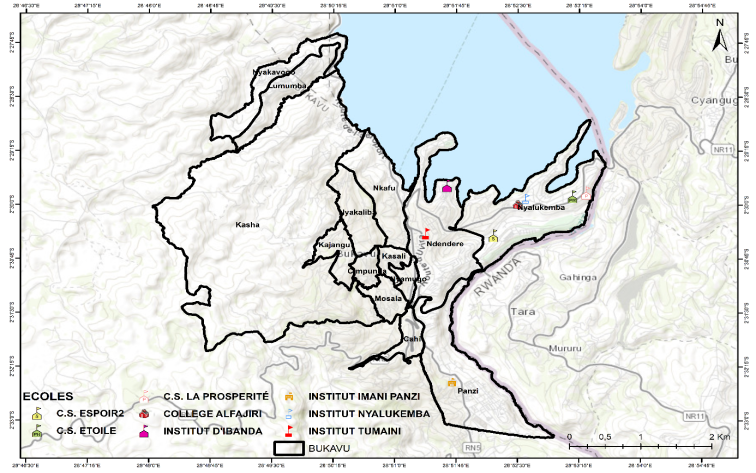
This study was conducted in the province of South Kivu in eastern DR Congo. South Kivu has a land of 64,851 km2 and is bounded to the north by North Kivu, to the west by Maniema, to the south by Tanganyika, and to the east by Rwanda, Burundi, and Tanzania. Bukavu is the capital city of the province. The schools in the city are somewhat viable, although there are also schools known as "mur à boit" compared to the villages. Some students in the city of Bukavu can access certain tools of the new information technology and communication (NTIC) contrary to those of the villages and the accessibility to the documentation although confronted with multiple challenges, in the city they can get it about the economic level of the parents.
This is a cross-sectional study, the latter is characterized by the collection of relevant information over time. Therefore, there is no temporal dimension in cross-sectional studies, as all data are collected and refer mainly to the time of data collection
| [26] | Kesmodel, U. S. (2018). Cross-sectional studies - what are they good for? Acta Obstetricia et Gynecologica Scandinavica, 97(4), 388–393. https://doi.org/10.1111/aogs.13331 |
[26]
. That takes into consideration the qualitative approach because we describe “what exists” and “what is going on”. Similarly, qualitative methods can provide interesting details of phenomena that are difficult to offer with quantitative methods
| [3] | Adugna G. (2006), livelihoods and survival strategies among migrant children in Addis abeba, Norwegian university of science and technology, NTNU, Faculty of Social Sciences and Technology Management Department of Geography Trondheim Norway. |
| [4] | Avramidis, E., Bayliss, P., & Burden, R. (2000). Student teachers’ attitudes towards the inclusion of children with special educational needs in the ordinary school. Teaching and teacher education, 16(3), 277-293.
https://doi.org/10.1016/S0742-051X(99)00062-1 |
| [5] | Bangsbo, J., Krustrup, P., Duda, J., Hillman, C., Andersen, L. B., Weiss, M.,... & Elbe, A. M. (2016). The Copenhagen Consensus Conference 2016: children, youth, and physical activity in schools and during leisure time. British journal of sports medicine, 50(19), 1177-1178. https://doi.org/10.1136/bjsports-2016-096325 |
| [6] | Bekhechi, A. K. (2019). L’effet de physique et sportive regulière sur le developpement cognitif des enfants. public & nonprofit management review, 4(1). |
| [7] | Bertrand, R. (2020). Vers une perspective occupationnelle de ephysique et sportive en ergotherapie: une recension des ecrits. 17-29. |
| [8] | Beya, G, S. (2011), Loi portant princiPEH fondamentaux relatifs a l’organisation et a la promotion des activites physiques et sportives en republique democratique du congo, accessible à https://www.radiookapi.net/sites/default/files/LOI-SUR-LE-SPORT-RDC.pdf |
| [9] | Bini, K. R. (2016). Marginalisation de l’education physique et sportive dans l’enseignement secondaire en Côte d’Ivoire: cas de lycees et collèges de la commune d’Abobo (Doctoral dissertation, Universite felix houphouet-boigny d'abidjan (RCI). |
| [10] | Brown, K. T. (2001). The Effectiveness of Early Childhood Inclusion (Parents' Perspectives). Research paper, spring session 2001, Loyola College, Baltimore, USA. |
| [11] | Bruckner, B., Hubacek, K., Shan, Y., Zhong, H., & Feng, K. (2022). Impacts of poverty alleviation on national and global carbon emissions. Nature Sustainability, 5(4), 311-320.
https://doi.org/10.1038/s41893-021-00842 |
| [12] | Cosnefroy, L. (2007). Le sentiment de competence, un determinant essentiel de l’interêt pour les disciplines scolaires. L'orientation scolaire et professionnelle, (36/3), 357-378.
https://doi.org/10.4000/osp.1459 |
| [13] | Coutarel, F., Mardon, C., Volkoff, S., Fiard, J., Recope, M., Beaujouan, J., & Rix, G. (2015). Enquête sur les conditions de travail auprès de professeurs d’education physique et sportive et perspectives d’action. Perspectives interdisciplinaires sur le travail et la sante, (17-1). https://doi.org/10.4000/pistes.4391 |
| [14] | David, B. (2005). Croyances de professeurs stagiaires d’education physique et sportive à propos de trois approches de l'evaluation. Les Dossiers des Sciences de l’Education, 13(1), 43-54. https://doi.org/10.3406/dsedu.2005.1056 |
| [15] | De Herdt, T., & Kasongo, M. E. (2013). La gratuite de l’enseignement primaire en RDC: attentes et revers de la medaille. Cahiers Africains. Numero special “Conjunctures Congolaises, 82, 217-40. |
| [16] | During, B. (2005). L'education physique, une discipline en progrès?. Carrefours de l'education, 20, 61-87.
https://doi.org/10.3917/cdle.020.0061 |
| [17] | Edwards, M. B., & Casper, J. M. (2012). Sport and health. GB Cunningham, JD Singer Sociology of sport and physical activity (2nd ed., pp. 69-98) College Station, TX: Center for Sport Management Research and Education. |
| [18] | Enguta J. M, (2020) «Le système educatif de la Republique democratique du Congo et ses principaux defis», Revue internationale d’education de Sèvres [En ligne], 85 |, consulted l31st december 2022. URL: https://doi.org/10.4000/ries.9985 |
| [19] | Ziulu, E. N., Ziulu, E. N., Ziulu, E. N., Mokonzi, G. B., Vitamara, P. M., & Issoy, A. A. (2022). Disparités dans la Scolarisation Primaire et Secondaire en République Démocratique du Congo de 2006 à 2018. ESI Preprints (European Scientific Journal, ESJ), 12, 522. https://doi.org/10.19044/esj.2023.v19n1p163 |
| [20] | Frech, P., & Top, B. (2016). Le defi de la mixite dans les classes d’EPS du Secondaire 1: Points de vue de huit enseignants vaudois (Doctoral dissertation, Haute ecole pedagogique du canton de Vaud). |
| [21] | Getnet H and ArindamL (2016); Livelihood of street children and the role of social intervention: Insights from literature Using Meta-Analysis, Child Development Research, Annual available at: https://doi.org/10.1155/2016/3582101 |
| [22] | Graham, A. (2014). One hundred years of suffering?“Humanitarian crisis photography” and self-representation in the Democratic Republic of the Congo. Social Dynamics, 40(1), 140-163. https://doi.org/10.1080/02533952.2014.895545 |
| [23] | Guillet-Descas, E., Ottogalli-Mazzacavallo, C., Epron, A., Roger, A., Lentillon-Kaestner, V., & Szerdahelyi, L. (2020). Prestige social des enseignants. es d'EPS. Education & formations, (101), pp-281. https://doi.org/10.48464/ef-101-11 |
| [24] | Jarraya, A. (1995). Le travail social au sein de l’institution scolaire en Tunisie: rôle de. L’experience psychopedagogique de SFAX. Sante mentale au Quebec, 20(2), 248–252.
https://doi.org/10.7202/032363ar |
| [25] | Kasherwa, A. C., & Twikirize, J. M. (2018). Ritualistic child sexual abuse in post-conflict Eastern DRC: Factors associated with the phenomenon and implications for social work. Child Abuse & Neglect, 81, 74-81.
https://doi.org/10.1016/j.chiabu.2018.04.012 |
| [26] | Kesmodel, U. S. (2018). Cross-sectional studies - what are they good for? Acta Obstetricia et Gynecologica Scandinavica, 97(4), 388–393. https://doi.org/10.1111/aogs.13331 |
| [27] | Kirk, D. (2005). Physical education, youth sport and lifelong participation: the importance of early learning experiences. European Physical Education Review, 11(3), 239–255.
https://doi.org/10.1177/1356336X05056649 |
| [28] | Kirk, D. (2013). Educational value and models-based practice in physical education. Educational Philosophy and Theory, 45(9), 973-986.
https://doi.org/10.1080/00131857.2013.785352 |
| [29] | Lee, S. M., Burgeson, C. R., Fulton, J. E., & Spain, C. G. (2007). Physical education and physical activity: results from the School Health Policies and Programs Study 2006. Journal of school health, 77(8), 435-463.
https://doi.org/10.1111/j.1746-1561.2007.00229.x |
| [30] | Ministère de l’Enseignement Primaire Secondaire et Initiation à la Nouvelle Citoyennete Ministère de l’Enseignement Technique et Professionnel Ministère de l’Enseignement Superieur et Universitaire Ministère des Affaires Sociales, Action Humanitaire et Solidarite Nationale (2015), Strategie sectorielle de l’education et de la formation 2016-2025, available at:
https://www.eduquepsp.education/sgc/wp-content/uploads/2018/06/Strategie-sectorielle.pdf |
| [31] | Mohajan, H. K. (2018). Qualitative research methodology in social sciences and related subjects. Journal of economic development, environment and people, 7(1), 23-48.
https://doi.org/10.26458/jedep.v7i1.571 |
[3-31]
.
The study conducted individual interviews with students and teachers. It is oriented towards the positivism paradigm. This study is also exploratory given its character has oriented us in an unexploited theme on the scientific level in the context of a study that presents many uncertainties in the organization of physical education and sport in school and its importance on mental health. A description of the reality in Physical Education and Sports is made from the different interviews to analyze the situation. A review of the literature on physical education and sport was conducted. These methods were appropriate for our study as qualitative research seeks to understand from the interviews the meanings and significances, of the experiences of the participants about their personal experiences in a given situation.
The documentary method provided theoretical elements to specify the problem and build the necessary discussion framework concerning previous work as well as for the interpretation of the results. The interviews were conducted with secondary school teachers and students in selected schools in the city of Bukavu based on their reputation in the city and their availability/willingness to provide information concerning the study. However, Data collection was carried out in two phases: For the first phase of data collection, our sample size was 24 students from 6 high schools, of which 4 students per school were selected in a sometimes reasoned manner from the year 2021 and 5 teachers were considered. In total 29 respondents were for the first phase. In the sampling, both male and female gender was considered. The schools that were taken into consideration in this first phase of data collection were Imani Panzi, Espoir II, Alfajiri, Etoile, Tumaini, and Athene d'Ibanda, including respectively the Protestant school, the public school, the Catholic school, the public school, the Protestant school and finally the public school. These schools were selected based on their reputation in the province of South Kivu as well as the accessibility of finding the students. The students in the final year of secondary school (O-level A-level) were privileged according to their experience in the practice of "Gymnastics" and express themselves easily without complexes. The second phase started in January and lasted until November 2022 and involved 15 students and 5 secondary school teachers. This gave a sample size of 20 respondents. The following schools were included in this second phase: Prosperite, Etoile, and Nyalukemba School Complex. It should be noted that the principle of saturation was important as our research was purely qualitative. A total of 49 respondents were included in the study. The age of the students aged 16 to 19 and for the teachers 25 to 60.
Because it was difficult to find interview participants at the same time, we adopted snowball sampling. Data were collected using an interview guide around a series of fluid questions addressed to students and teachers. In general, the respondents were asked about their profiles, the organization of physical education and sport in secondary schools, the importance and challenges related to the practice of physical education and sport, the possibilities of innovative projects in physical education and sport in schools, as well as possible recommendations for the effectiveness of physical education and sport towards mental health. The interviews were conducted in French and Swahili, both languages of the teachers and students. The duration of the interview was 40 to 50 minutes depending on the availability of the participants. Some of the interviews were held in schools and others outside the school either at the student's or the teacher's home and for some of them accidental encounters. Concerning validity and reliability, the study was based on the triangulation of data from the literature review, and individual interviews with students and teachers. An analytical approach was used in the data analysis phase to link the participants' statements to the research objectives with the existing literature. No element of the participants' exact identity, such as their name or age, was mentioned, we just used pseudonyms to designate our participants to guarantee confidentiality and their protection in strict respect of human rights and dignity of the human person by soliciting informed and verbal consent from the participants. In addition to data analyses, we conducted a content analysis. This analysis allowed us to analyze the field data from the interviews and categorize the themes. These themes allowed for capturing the meaning of the discourse from the interviews with the different parties in the study.
5. Findings
This section presents the results in the form of themes to give an idea of the PEH in high schools in the Eastern Democratic Republic of Congo and more particularly in Bukavu.
5.1. Reductionism of Physical Education and Sports Practices in High Schools
The practice of physical education and sport, commonly called "gymnastics" is important for the students, some of them seem to appreciate the practice and others testify to the lightness of the practice of PEH which is more the not clear and attractive. Thus, physical and sports education in high schools is reduced to what is called "gymnastics" as we have already mentioned. We found that the diversity of practices in these classes depends on the teacher's will and can be different in schools with or without space. One student illustrates this point: "We have the gymnastics class once a week and we have a qualified teacher with a good room and different practices each time" [Byamungu-Pseudo-student]. On the other hand, other students show that physical education and sports are not taken seriously in their institutions. As one fifth-form student explained: "Gymnastics classes are never taken seriously in our school because sometimes the teachers are not there and we don't have a gym place, that makes it difficult for us to do this class" [Alain-Pseudo Student].
In most situations, it is important to determine beforehand whether the teacher is suitable to provide students with PEH skills. Unfortunately, the profiles of teachers in charge of physical education and sport in different schools are not determined with rigor. They are selected at the will of the school's head teacher and, in certain circumstances, according to their willingness to invest in PEH. However, the practice of PEH in Bukavu is still too reductionist as the objectives are not well determined. However, as the teachers testify, physical education and sports practice are far from an inclusive and integrated program that takes into account the specificities of each student. It should be noted that the learning activities in physical education and sport seem to be the same for all students and are repeated year after year. These activities include gymnastics, football, ball games, skipping rope, pumping, running, or marathon. This leads us to deduce that high schools are lacking in learning activities in physical education and sport for the mental and physical well-being of their students.
5.2. The Importance of Physical Education and Sport in High Schools
The perceptions of secondary school students about the importance of physical education and sport (PEH) in high schools are in different ways. On the other hand, some secondary school students feel that physical education and sport are less important and they are just forced to do them for fear of being expelled from school or failing, and other students feel that physical education and sport are very important. One student explains:
"According to me, physical and sports education is less important since I don't enjoy gymnastics like other subjects, but for fear of our teacher and school body to expel me permanently from school, I only agree to participate to get marks" [Amani-Pseudo Student].
Both girls and boys consider physical education to be less important than mathematics and French. In this respect, one student's comments on the importance of physical education in high schools reinforce this lesser importance. [Nelly-Pseudo-Student] explains: "You just have to show up to classes to get marks". Several students also mentioned that passing the 'gymnastics' course was not a requirement for graduation from high school. More specifically, some students stated that the sessions organized as part of the physical and educational activities cannot lead students to adopt healthy lifestyle habits with only one session of fewer than 20 minutes. On the other hand, other students interviewed on this subject mentioned the relevance of the physical and sports education framework in high schools. One of the students gives his opinion:
"Physical and sports education through different practices is very important as it contributes to the prevention of obesity problem, it contributes to the prevention of stress and make us very flexible or active, I feel proud and still very proud of gymnastics class" [Noëlla -Pseudo Student].
The results also show that teachers recognize the benefits of physical education and sport through different practices. For many teachers, physical and sports activities can help improve the physical condition of students and this is part of the overall health benefits of students. Indeed, some teachers go on to demonstrate that physical education and sport is often the only opportunity for students to be physically active during the week and to maintain a level of fitness that is acceptable to them. Teachers enable students to be more active and prevent diseases such as Type 2 Obesity and stress. One teacher explains: "Physical education and sports among students are very important since this subject allows students to be more active and prevent type 2 obesity" [Son -Pseudo-Teacher]. And unfortunately, some students neglect gymnastics, especially when one of their classmates suffers an injury, but also when teachers challenge them to competitive practice.
"This subject is very important for the students, but the big problem is that some students do not consider it as a very important subject throughout their daily life, they accept to participate under pressure from the teacher" [Eric-Pseudo-Teacher].
In addition, it was pointed out that physical education and sport contribute to the good development of bones or skeletons in children. Thus, the duality of the importance of physical education and sports explains, on the one hand, the lack of sufficient information on the importance of physical education and sport in schools and, on the other hand, an important framework for Social Work in schools, which in this context should be concerned with the mental health of students and at the same time teachers.
5.3. From Student Success in Physical Education and Sports Activities
An individual's sense of motor competence is an important factor in their desire to engage in physical activity. This feeling develops during childhood and adolescence when young people are exposed to a variety of physical activities. Physical education and sport are presented as a set of activities that are important for students. The success of students during the various sessions is disproportionate and in some circumstances, girls seem to enjoy the "gymnastics" sessions in secondary school. Gender becomes an important factor in the appreciation of PEH activities. In our interviews, one of the students explained: "I force myself in gymnastics, and I get better marks in this physical education subject" [Aristotle-Pseudo-student].
The students felt that they were making a worthwhile effort in physical education and sports. However, this perception is more prevalent among boys than among girls. One girl interviewed on this subject stated that it was mainly the boys who made too much effort during the gymnastics test sessions even if we seems to like it. It seems that for girls, effort does not automatically translate into success. There are two reasons for this. On the one hand, there is reason to question the relevance for girls of the means of action proposed in physical education and sport, as the activities mostly practiced in PEH forwards typically on male characteristics such as strength and aggressiveness. On the other hand, girls tend to prefer more individual activities. In this context, it is difficult without social inclusion strategies to properly integrate girls. This presents another reason why Social Workers should be sufficiently involved in the implementation of Social Work in schools where these issues could be discussed continuously. However, it is also to be noted that there are girls who are doing very well. One teacher explains: "It is true that there are also girls who manage to show good results in the subject of physical education and sports than the boys and especially when it comes to scoring or competition" [Ronsard-Pseudo-Teacher].
Previously, we reported that students' perception of the importance of physical education varies among students, but also about their interest in physical education and sport since some students attribute their lack of interest mainly to the nature of the activities they are offered in PEH. This would significantly affect their performance. However, their desire to participate was inhibited when the focus was excessively on competition, and the fear of injury, especially for girls, would affect their performance in PEH. As one student explained: "I don't quite like sports as a girl because I'm afraid of injury once we do it together with the boys" [Alphonsine-Pseudo Student].
Previous data have shown that the effects of physical activities on secondary school students are mainly related to the liberating effects of the subject, as it helps them to expend energy and the socialization context it offers brings students with different cultures and behaviors closer together. Encouraging teamwork in physical education and sport would give other students more confidence, especially those who acknowledge that they are not fit. As one student illustrates: "I never got half a mark in the sport, really this subject seems difficult to me and I don't know what to do to get out of it" [Mulume-Pseudo Student]. It is therefore important that intervention strategies be intensified specifically for this category of students who cannot cope with physical education and sport but have the will to do so.
5.4. Challenges in Learning to Practice Physical Education and Sport in High Schools
Physical education and sport are important for students, but they face many challenges in enabling students to practice them well. From the experience of students and teachers, it appears that the organization of physical education and sport for students still presents enough challenges. Some of these challenges are organizational, financial, space-related, and, to some extent, related to the profile of the teachers in charge of physical education and sport for students. In the practice of physical education and sport in high schools, everything happens as if reality were imposed on the students. It is therefore understandable that it is hard for them to try to change things without being aware of these challenges. Almost ashamed of their incompetence in the practical sessions, some students find it difficult to face the gaze of others and therefore do everything to avoid being seen, which is a problem of isolation and adaptation for some students. One student said: "I often stand on the edges of the field so that I am not seen because I am not very good" [Fiston-Pseudo-student]. This gives rise to a feeling of exclusion that is probably very painful, especially as it is accompanied by the feeling of not being liked, of not being accepted. The students repeatedly and forcefully expressed the difficulty they had in bearing the gaze of others, their criticism, their mockery, particularly that of the boys and the pretense of which they said they were the object. Hiding, trying to disappear, leads them to isolation.
Depending on the availability of students and facilities, a variety of extracurricular activities can be offered to students in the morning or after school. Offering extracurricular activities before school starts can sometimes be a solution to the lack of availability of space. In addition, it is important to point out that physical education and sport are beneficial for children for many reasons. It has a preventive role for certain illnesses and would help children to adapt to their environment. Results show that teachers do not feel sufficiently capable of ensuring a priori, autonomously, an intervention adapted to the difficulties of children in physical education and sport because it requires the involvement of other fields. It is therefore at this level that Social Work in the school environment would organize the effectiveness of the physical education and sports program, which would aim to reduce the types of problems faced by students and teachers, as teachers only have skills in the field of pedagogy. The following declaration illustrates the challenges related to the competence of teachers in the practice of physical education and sport: "We don't have training sessions or capacity building concerning physical education and sport ". [Mulume-Pseudo-Teacher].
Thus, we note that the teachers in charge of physical education and sport in high schools do not receive the appropriate training to adapt their practice to the expectations of the students but also the context. This explains why the teachers' profiles are problematic enough in the exercise of their function. Schools are free to increase the time devoted to physical education and sport. This is a course of action encouraged by several students, as for many years schools have tended to reduce the amount of time devoted to physical education and sport. Increasing the amount of time devoted to physical education and sport can have several positive effects, such as cognitive skills (e.g. improved concentration and creativity) and attitude (self-esteem and motivation).
In addition, our respondents also raised the challenges related to space for learning in physical education and sport (football or basketball field, and other favorable spaces for other physical activities and sports. But also the lack of people specialized in physical education and sport or any other related field as well as the lack of a budget allocated to PEH. The following evidence illustrates this well: 'There are too many difficulties we face in the process of learning physical activities, including the lack of space or a well-ventilated or well-designed environment within our school' [Faithful-Pseudo Student]. A teacher added:
"I don't know if our school ranks among the schools that teach high school students physical activities because first of all our school has no budget for these activities, no funding or advocacy by our school body" [Atosha-Pseudo-Teacher].
Apart from these difficulties, there are also others, such as the lack of sports materials and the non-involvement of students in physical education and sports activities to identify the specific needs of each student for an inclusive program. One teacher interviewed explains:
"The difficulties are many [...] we have difficulty with lack of material or financial support, the school and parents complain about financial means, the school does not have budgets to allocate qualified people in physical education and sports for the students so that students and teachers learn other activities" [Hope-Pseudo-Teacher].
The challenges linked to physical and sports education in secondary school are enormous, and it is important that the specificities be taken into account and that the steps aimed at setting up sustainable strategies be put in place in a logic of collaboration between teachers and students by determining in a precise way the objectives as well as the practical modalities because the mental health of the students depends on it.
5.5. Lack of Innovative Projects, Knowledge, and Familiarity with Physical Education and Sport Documentation
These results show that there is a real willingness to take charge of the students, but there is a lack of innovative projects in physical education and sport. Furthermore, some students with disabilities may be excluded from certain measures in physical education and sport because schools do not have innovative projects for the inclusion of this specific category of students. This is because there is no integrated and inclusive program in high schools. The proportion of students with reduced mobility is left out due to the lack of specific projects linked to the specificities of each student. There is a need for adapted programs to allow for even greater integration of these students. On this subject, one of the students explains:
"I am ill and I suffer from respiratory disease and when we do gymnastics it is just to run because there is no other exercise to do due to the lack of a gym, so I always find myself in difficulty" [Esther-Pseudo-student].
Similarly, teachers showed these same problems. One of the teachers interviewed on this subject explained: "We have problems due to the lack of sports halls because we have students who have difficulty adapting to the exercises we do because they are ill" [Espoir-Pseudo-Teacher]. From these declarations, we can see that innovation in the implementation of the inclusive and integrated program is not necessarily present and the infrastructure for PEH is not appropriate. There is reason to wonder about the types of innovation in the construction of physical education and sports places that take into account these different categories. The data from this study also show that teachers did not use any documentary resources in the context of PEH, and sometimes in many schools, there is no documentation related to PEH, which would be an essential determinant of the lack of innovation in this area because there is no documentation in the school environment. The following declaration explains this situation: "We have never seen any documentation in our school on the gymnastics course" [Nathalie-Pseudo-student]. Thus, a teacher adds as follows: "It's true that some schools don't have documentation on this course, so we are always obliged to look elsewhere" [Aristotle-Pseudo-Teacher].
From these two opinions reported, the respondents confirm to a large number that there is not enough documentation concerning the physical and sports education of students in high schools. The teachers manage to give the students exercises according to their wishes. This can be described as the lack of an appropriate teaching methodology on PEH in the context of physical and sports education, which is considered to be a very important course in the intellectual as well as physical development of students. In this post-conflict context, this course should also play a de-dramatizing role.
6. Discussion
Physical and sports education has been around for a long time although the evolutionary steps in school environments seem slow in some countries.
Found that students' attitudes towards physical education and sport seemed to be a factor in their fatigue and lack of interest in the discipline and easily escaped the physical education and sport course as well as complaints about the environmental conditions of the professional exercise. This is not far from the results found, as the students in our research context show these same behaviors. Although physical education has undergone profound institutional changes and teachers of this discipline have invested themselves
| [36] | Roux-Perez, T. (2003). Identite professionnelle et modes d'implication privilegies chez les enseignants d'education physique et sportive. Les Sciences de l'education pour l'ère nouvelle: revue internationale, 36(4), 37-68.
https://doi.org/10.3406/refor.2003.1856 |
[36]
, challenges persist in the post-conflict context, as is the case in the city of Bukavu, where this concept is reduced and has not evolved sufficiently. In the school environment, physical and sports education is not simply based on activities to introduce students to sports but to give students access, critically, to a physical and sports culture to rebuild self-knowledge, self-esteem, or self-image
| [28] | Kirk, D. (2013). Educational value and models-based practice in physical education. Educational Philosophy and Theory, 45(9), 973-986.
https://doi.org/10.1080/00131857.2013.785352 |
| [40] | Trudeau, F., & Shephard, R. J. (2008). Physical education, school physical activity, school sports and academic performance. International journal of behavioral nutrition and physical activity, 5(1), 1-12.
https://doi.org/10.1186/1479-5868-5-10 |
[28, 40]
. In the specific case of children living with disabilities, in research conducted by
| [10] | Brown, K. T. (2001). The Effectiveness of Early Childhood Inclusion (Parents' Perspectives). Research paper, spring session 2001, Loyola College, Baltimore, USA. |
[10]
, some parents viewed inclusion from the perspective of social interaction, and children who did not have cognitive delays viewed inclusion as contributing to the child's cognitive development. Parents expressed some concerns about inclusion, including lack of teacher attention and peer rejection. This would further aggravate the psychological state of children with mobility impairments or similar problems to be high achieving. As useful for teachers as it is for students, PEH is not necessarily innovative for students whereas it is recognized that the high levels of physical inactivity are related to an increase in the rate of chronic diseases. The same constant was raised in the context of the city of Bukavu where innovations around physical and sports education for students are almost non-existent, while physical and sports, education can act upstream on the well-being of students by reducing their stress and anxiety. Physical and sports education strengthens the bonds between teachers and students and fosters the development of a sense of appreciation for the school.
| [5] | Bangsbo, J., Krustrup, P., Duda, J., Hillman, C., Andersen, L. B., Weiss, M.,... & Elbe, A. M. (2016). The Copenhagen Consensus Conference 2016: children, youth, and physical activity in schools and during leisure time. British journal of sports medicine, 50(19), 1177-1178. https://doi.org/10.1136/bjsports-2016-096325 |
[5]
, determine that physical activities have positive psychological and social outcomes for children and strengthen their bond with their peers. Thus, adaptability to the specificities of each child for schools remains paramount.
Therefore, as
| [14] | David, B. (2005). Croyances de professeurs stagiaires d’education physique et sportive à propos de trois approches de l'evaluation. Les Dossiers des Sciences de l’Education, 13(1), 43-54. https://doi.org/10.3406/dsedu.2005.1056 |
[14]
explains, three conceptions of learning deserve to be examined in the context of physical education and sport with students: firstly, a psycho-educational approach that takes into account individual differences between students; secondly, an approach based on the objectives of student behavior, which emphasizes the skills of each student in practice; and thirdly, an ecological approach which takes into account the actors in an educational environment. These approaches, as demonstrated by our results, are not yet relevant to physical and educational education in high schools, as they are still a great challenge to operationalize. To improve physical education and physical activity in schools,
| [29] | Lee, S. M., Burgeson, C. R., Fulton, J. E., & Spain, C. G. (2007). Physical education and physical activity: results from the School Health Policies and Programs Study 2006. Journal of school health, 77(8), 435-463.
https://doi.org/10.1111/j.1746-1561.2007.00229.x |
[29]
suggest a comprehensive approach at the state, school, and classroom levels, where comprehensive staff development and practices at the state level could enable schools to improve the opportunities for students to become physically active adults. This is where school-based social work would play a very important role in providing a solid foundation for physical education and sport for students through inclusive and integrated planning approaches in the school environment. In fact, each child is specific, that’s why the design of practice should be different. However, with competent providers, physical activity can be added to the curriculum by taking time away from other subjects without the risk of affecting students' academic performance
| [40] | Trudeau, F., & Shephard, R. J. (2008). Physical education, school physical activity, school sports and academic performance. International journal of behavioral nutrition and physical activity, 5(1), 1-12.
https://doi.org/10.1186/1479-5868-5-10 |
[40]
. It should be borne in mind that the successful implementation of any inclusion policy must depend largely on the positive attitude of educators towards it
| [4] | Avramidis, E., Bayliss, P., & Burden, R. (2000). Student teachers’ attitudes towards the inclusion of children with special educational needs in the ordinary school. Teaching and teacher education, 16(3), 277-293.
https://doi.org/10.1016/S0742-051X(99)00062-1 |
[4]
.
Unfortunately, physical education programs in high schools, in their traditional form, have not been effective in promoting physical activities in the school sphere
| [27] | Kirk, D. (2005). Physical education, youth sport and lifelong participation: the importance of early learning experiences. European Physical Education Review, 11(3), 239–255.
https://doi.org/10.1177/1356336X05056649 |
[27]
. Overall,
find through their research result that all students had a moderately positive attitude towards physical education and a decrease in attitude scores as students progress. This can also be seen from our results which show that some students are very reluctant when it comes to physical education and sport. In some circumstances, they are forced to do it just for reasons of points. In Côte d'Ivoire, as
| [34] | Pontais, C. (2015). Point de vue - Les enjeux de l’education physique et sportive en tant que discipline scolaire. Informations sociales, 187, 67-71.
https://doi.org/10.3917/inso.187.0067 |
[34]
explains, activities related to the discipline are increasingly neglected and resources are limited. Neglected and reduced to marks, practiced in increasingly deplorable conditions. This is exactly one of the challenges identified in the city of Bukavu where points remain the only motivation for students and are neglected for a lack of innovative activities related to physical education and sports.
| [23] | Guillet-Descas, E., Ottogalli-Mazzacavallo, C., Epron, A., Roger, A., Lentillon-Kaestner, V., & Szerdahelyi, L. (2020). Prestige social des enseignants. es d'EPS. Education & formations, (101), pp-281. https://doi.org/10.48464/ef-101-11 |
[23]
points to a lack of consideration for their discipline, on the part of students, parents, and also members of the teaching staff. Nevertheless, as
| [20] | Frech, P., & Top, B. (2016). Le defi de la mixite dans les classes d’EPS du Secondaire 1: Points de vue de huit enseignants vaudois (Doctoral dissertation, Haute ecole pedagogique du canton de Vaud). |
[20]
state, getting students to experience mixing physical education and sports is important, and if not managed properly, can lead to prejudice and gender stereotyping. Therefore, it is necessary that teacher training in physical education and sport can take into account the theme of mixing students during physical activities and sports as well as notions of gender. As
| [12] | Cosnefroy, L. (2007). Le sentiment de competence, un determinant essentiel de l’interêt pour les disciplines scolaires. L'orientation scolaire et professionnelle, (36/3), 357-378.
https://doi.org/10.4000/osp.1459 |
[12]
demonstrates, the variables of gender and school level are effects of students' self-efficacy. The results presented in his research confirm that, in a French context, perceived competence is an essential determinant of interest. Returning to the Bukavu context, interest in physical education and sport is very low. This requires a strong involvement of social workers who can mobilize sufficient means to arouse this interest, which would be part of the mental health of the students taken in a systemic approach of intervention.
| [6] | Bekhechi, A. K. (2019). L’effet de physique et sportive regulière sur le developpement cognitif des enfants. public & nonprofit management review, 4(1). |
| [41] | Van der Niet, A. G., Hartman, E., Smith, J., & Visscher, C. (2014). Modeling relationships between physical fitness, executive functioning, and academic achievement in primary school children. Psychology of Sport and Exercise, 15(4), 319-325. https://doi.org/10.1016/j.psychsport.2014.02.010 |
[6, 41]
in their research show that physical and sports activities seem to have a very positive impact on cognitive functioning by improving memory. At the secondary level, there is a need to reform pedagogy and strengthen synergy with the Ministry of Education in the context of teacher training and to train secondary school teachers taking into account real needs. Teaching materials should be made available, experimental rooms should be rehabilitated and built, and curricula should be optimized and updated
| [18] | Enguta J. M, (2020) «Le système educatif de la Republique democratique du Congo et ses principaux defis», Revue internationale d’education de Sèvres [En ligne], 85 |, consulted l31st december 2022. URL: https://doi.org/10.4000/ries.9985 |
[18]
.
Author Contributions
Murhula Kapalata Gloire: Conceptualization, Data curation, Formal Analysis, Funding acquisition, Investigation, Methodology, Project administration, Software, Validation, Visualization, Writing – original draft, Writing – review & editing
Cecilia Agino Foussiakda: Conceptualization, Data curation, Formal Analysis, Methodology, Visualization, Writing – review & editing
Gilbert M. Mugisho: Conceptualization, Data curation, Formal Analysis, Investigation, Methodology, Validation, Visualization, Writing – review & editing
Mutama Kabesha Ntinu: Conceptualization, Data curation, Formal Analysis, Investigation, Methodology, Validation, Visualization, Writing – original draft, Writing – review & editing
Juvenal Bazilashe Mukungu Balegamire: Conceptualization, Data curation, Formal Analysis, Investigation, Methodology, Project administration, Supervision, Validation, Visualization, Writing – review & editing

 ,
Cecilia Agino Foussiakda
,
Cecilia Agino Foussiakda


 Share This Article
 Twitter
 Linked In
 Facebook
 Copy
Copy Download