Review Article | | Peer-Reviewed

Expert Consensus on Perioperative Pain Management for Lung Cancer (2026 Edition)

Received: 23 May 2026     Accepted: 9 August 2026     Published: 10 August 2026
Views:       Downloads:
Abstract

Perioperative pain is highly prevalent after lung cancer surgery and may impair pulmonary recovery, delay mobilization, increase complications, and contribute to chronic postsurgical pain (CPSP). This 2026 expert consensus was developed to standardize perioperative pain management for patients undergoing lung cancer surgery and to support enhanced recovery and long-term quality of life. A multidisciplinary panel of thoracic surgeons, pain physicians, anesthesiologists, oncologists, pharmacists, psychologists/psychiatrists, and nurses formulated the recommendations through systematic evidence retrieval, evidence appraisal using the Grading of Recommendations Assessment, Development and Evaluation (GRADE) framework, two rounds of modified Delphi consultation, and expert meetings. The final document contains 14 recommendations covering risk-factor identification, dynamic pain assessment, multimodal and individualized analgesia, preemptive analgesia, surgical and anesthetic prevention strategies, postoperative rehabilitation, pharmacological therapy, regional nerve blocks, epidural or patient-controlled analgesia, neuromodulation, cognitive behavioral therapy, physical therapy, traditional Chinese medicine, chest-tube/tubeless strategies, perioperative nursing, and CPSP diagnosis and treatment. The consensus emphasizes opioid-sparing regimens, selection of minimally invasive surgical approaches where appropriate, early removal or avoidance of chest tubes in selected patients, and timely management of neuropathic pain components. By integrating evidence-based medicine with Chinese clinical practice, this consensus provides practical guidance for multidisciplinary teams to relieve pain, reduce adverse events, promote functional recovery, and improve postoperative quality of life in patients with lung cancer.

Published in International Journal of Pain Research (Volume 2, Issue 3)
DOI 10.11648/j.ijpr.20260203.14
Page(s) 102-121
Creative Commons

This is an Open Access article, distributed under the terms of the Creative Commons Attribution 4.0 International License (http://creativecommons.org/licenses/by/4.0/), which permits unrestricted use, distribution and reproduction in any medium or format, provided the original work is properly cited.

Copyright

Copyright © The Author(s), 2026. Published by Science Publishing Group

Keywords

Lung Neoplasms, Perioperative Pain Management, Pain, Postoperative, Chronic Pain, Expert Consensus

1. Guideline Development Process and Methodology
1.1. Initiating Organization and Expert Panel Members
This consensus was led by the Expert Group on Perioperative Pain Management for Lung Cancer, jointly developed by multidisciplinary experts from thoracic surgery, anesthesiology, painology, oncology, psychiatry and psychology, clinical pharmacy, and nursing (hereinafter referred to as the "Expert Panel"). The project was initiated on October 12, 2024, followed by two interim review meetings (September 4 and 21, 2025). After repeated online and offline discussions and revisions, the final version was completed on November 16, 2025. This consensus has been registered on the International Practice Guidelines Registry Platform (http://www.guidelines-registry.org; registration number: PREPARE-2025CN1471). The development process adhered to the 2014 WHO Handbook for Guideline Development and the 2022 Guiding Principles for Developing/Revising Clinical Practice Guidelines in China (2022 Edition).
1.2. Target Users and Population
This consensus is primarily intended for thoracic surgeons, anesthesiologists, pain physicians, oncologists, and related nursing professionals engaged in perioperative care for lung cancer. The target population includes perioperative patients who are scheduled for or have undergone lung cancer surgery.
1.3. Evidence Retrieval and Quality Assessment
Using search terms including "perioperative pain in lung cancer," "lung cancer," "perioperative pain management," and their Chinese equivalents, systematic searches were conducted across PubMed, Scopus, Embase, Web of Science, Cochrane Library, China National Knowledge Infrastructure (CNKI), Wanfang Data Knowledge Service Platform, and VIP Chinese Journal Service Platform, covering the period from database inception to January 2025. Priority was given to systematic reviews and randomized controlled trials (RCTs) based on the hierarchy of evidence, supplemented by relevant cohort studies, case-control studies, expert consensus statements, guidelines, and reviews. A total of 75 RCTs and 41 other relevant publications were ultimately included.
1.4. Formulation and Finalization of Clinical Questions
This consensus was developed through literature review, clinical question formulation, modified Delphi expert consultation, expert meeting discussions, and consensus revision. The working group extracted clinical questions based on search results and the PICO (Population, Intervention, Comparison, Outcome) framework, and designed expert consultation questionnaires. After two rounds of modified Delphi surveys and three expert meeting discussions, items with an expert agreement rate of ≥60% were included in the consensus. Consensus levels were classified as follows: basic consensus (agreement rate 60% to <80%) and high-level consensus (agreement rate ≥80%). All 14 final recommendation statements received unanimous expert endorsement. A total of 86 experts participated in the two rounds of Delphi consultation, with a 100% questionnaire return rate in both rounds.
1.5. Evidence Appraisal and Grading
The GRADE (Grading of Recommendations Assessment, Development and Evaluation) system was adopted to evaluate evidence quality and recommendation strength. The expert voting panel formulated recommendations (strong or weak) based on the balance of benefits and harms of interventions, quality of evidence, patient values and preferences, and cost-effectiveness. Consensus was reached through a maximum of three rounds of anonymous voting (consensus threshold set at ≥70% agreement rate, with a minimum response rate of 70%). The specific grading criteria are presented in Table 1.
Table 1. Evidence levels and recommendation grades.

Level

Description

High (A)

Future research is very unlikely to change the confidence in the estimated effect

Moderate (B)

Future research is likely to have an important impact on the confidence in the estimated effect and may change the estimate

Low (C)

Future research is very likely to have an important impact on the confidence in the estimated effect, and the estimate is likely to change

Very Low (D)

Any estimate of effect is very uncertain

Strong recommendation (1)

High level of expert agreement (supporting opinion ≥80%)

Weak recommendation (2)

General expert agreement with minor disagreement (supporting opinion 60% to <80%)

No consensus (3)

Expert opinions did not reach consensus with major disagreement (supporting opinion <60%)

1.6. Dissemination and Updating
This consensus will be promoted through academic conferences, professional journals, guideline interpretation sessions, thematic lectures, and new media platforms to facilitate its application in clinical practice. The content is planned to be reviewed every three years and updated as necessary based on the latest evidence-based medicine and clinical practice needs.
2. Influencing Factors and Pathogenesis of Perioperative Pain
2.1. Definition of Perioperative Pain
Perioperative pain refers to pain that patients may experience throughout the entire course from the preoperative period to postoperative recovery. Its etiology is complex and related to the primary disease, surgical trauma, and postoperative complications, while also being influenced by patients' prior pain history, psychological status, and social factors. Inadequate perioperative pain control may lead to respiratory complications, cardiovascular complications (hypertension, arrhythmias, etc.), immunosuppression, hyperglycemia, delayed wound healing, and psychological disorders such as anxiety and depression, thereby affecting the overall recovery process and long-term prognosis . Perioperative pain encompasses both acute and chronic pain and may manifest as nociceptive pain, neuropathic pain (NP), and other types . In clinical practice, multiple pain types frequently coexist. Therefore, perioperative pain management requires individualized, multimodal, and multidisciplinary collaborative strategies that comprehensively consider pain type, intensity, patient history, and surgical characteristics to effectively relieve patient suffering, reduce complication risks, and promote enhanced recovery .
2.2. Epidemiology of Perioperative Pain in Lung Cancer
The incidence of perioperative pain in lung cancer reaches 80%–95%, with moderate-to-severe pain accounting for over 40% . Pain not only delays postoperative pulmonary function recovery but also increases the risk of complications, seriously affecting the recovery process and quality of life. Acute pain typically appears immediately after surgery, often peaks at 6–12 hours postoperatively, and usually resolves gradually within 3–7 days; however, pain intensity exhibits significant individual variation. The incidence of moderate-to-severe pain is approximately 25.0% in patients undergoing video-assisted thoracoscopic surgery (VATS), compared to as high as 70.0% in open thoracotomy patients. Additionally, younger patients have relatively lower pain thresholds, with postoperative Numerical Rating Scale (NRS) scores typically averaging 1.5–2.0 points higher than those of elderly patients . Regarding chronic postsurgical pain (CPSP), a 10-year single-center retrospective study demonstrated that the CPSP incidence at 36 months postoperatively in lung cancer patients was 17.4% . Notably, this rate may underestimate the actual clinical incidence due to factors such as mortality and loss to follow-up. Even with less invasive uniportal VATS, approximately 63.4% of patients develop CPSP at 3 months postoperatively .
2.3. Influencing Factors of Perioperative Pain in Lung Cancer
Perioperative pain in lung cancer is influenced by the interaction of multiple factors. Surgical factors: The incidence of moderate-to-severe pain in open thoracotomy patients is significantly higher than in VATS patients. Operative time exceeding 3 hours is an independent risk factor for CPSP. Patient factors: The incidence in female patients is 18.0% higher than in males. With advances in imaging technology, certain preoperative chest computed tomography (CT) imaging features have also become important predictors of pain risk. High-risk factors include: pleural thickening or adhesions, and pre-existing inflammation or fibrosis in the surgical area, with these patients showing significantly increased rates of postoperative moderate-to-severe pain; low-risk factors include isolated intrapulmonary lesions without pleural invasion and normal thoracic structure . Psychological factors: Preoperative anxiety scores are significantly positively correlated with the incidence of moderate-to-severe pain within 7 days postoperatively, with gender differences in this association—anxiety exerts a significantly stronger effect on pain in female patients compared to males, and females with moderate-to-severe preoperative anxiety have a significantly elevated risk of developing CPSP . Age factors: Younger patients tend to have higher postoperative acute pain scores due to lower pain thresholds. Comorbidities: In patients with underlying conditions such as diabetes mellitus, hyperglycemia may impair nerve function and tissue repair, increasing the risk of CPSP. Postoperative factors should not be overlooked either—approximately 25.0% of patients may develop pneumothorax or pleural effusion, and when effusion volume exceeds 300 mL, breathing and coughing movements exacerbate pleural irritation, thereby intensifying pain perception .
2.4. Pathogenesis of Perioperative Pain in Lung Cancer
The pathogenesis of perioperative pain in lung cancer is driven by multiple mechanisms that interact synergistically. Surgical trauma is the direct trigger: surgical manipulation involves dissection of chest wall muscles and potential injury to intercostal nerves. Open thoracotomy, requiring greater operative exposure, typically causes 3–5 times more tissue damage than VATS, resulting in acute pain incidence exceeding 95.0% in the early postoperative period, compared to approximately 70.0% with VATS . Nerve injury can lead to aberrant pain signal transmission, triggering persistent stabbing, burning, and other forms of NP that are poorly responsive to conventional analgesics. Inflammatory response represents another important mechanism of perioperative pain. At 6–12 hours postoperatively, levels of inflammatory mediators such as tumor necrosis factor-alpha (TNF-α) and interleukin-6 (IL-6) can reach peak concentrations, rising 8–10 fold above preoperative levels. Inflammatory mediator levels in open thoracotomy patients are approximately 50.0% higher than in VATS patients, indirectly contributing to more pronounced pain .
3. Pain Assessment
3.1. Assessment Timing and Content
Assessment should be conducted at but not limited to the following time points, each with different emphases, to comprehensively capture the dynamic changes in pain . Specific assessment timing and content are presented in Table 2.
Table 2. Assessment timing and content.

Timing

Assessment Content

Initial assessment (within 8 hours of admission)

Perform routine pain scoring and comprehensively evaluate the patient's physiological and psychological status, chronic pain history, previous pain treatments and outcomes, medication history, allergy history, etc. If the patient has persistent pain, continuous assessment should be performed until the day of surgery

Postoperative assessment

Routine pain scoring should be performed during the first 3 postoperative days, with close monitoring of vital signs and focused evaluation of the effectiveness of pain interventions

Pre-discharge assessment

Perform routine pain scoring and develop a post-discharge pain management plan and follow-up schedule for the patient

On-demand assessment

When specific pain events occur (e.g., sudden severe pain, adjustment of analgesic regimen), additional pain assessments are required to supplement routine evaluations and provide a basis for dynamic adjustment of intervention plans

Efficacy assessment

Analgesic efficacy is typically assessed 5–15 minutes after intravenous analgesic administration and 1–2 hours after oral administration (at peak drug effect)

3.2. Pain Intensity Assessment Methods
Pain assessment is crucial for determining the adequacy of analgesia, guiding medication type or dosage adjustments, and deciding whether additional interventions are needed. The use of the NRS (Figure 1), Visual Analogue Scale (VAS), or Faces Pain Scale (FPS; Figure 2) is recommended for assessing pain intensity . Additionally, the Brief Pain Inventory (BPI) and McGill Pain Questionnaire (MPQ) may be used in conjunction to assess the nature, frequency, and impact of pain on daily functional activities . These scales have demonstrated good reliability, validity, and applicability in adult pain assessment in China. For children or patients with communication difficulties, the FPS is recommended due to its ease of understanding and use.
Figure 1. Numerical Rating Scale (NRS): Uses 11 sequential numbers from 0–10 to represent pain intensity from least to most severe. 0 = no pain; 10 = most severe pain; below 4 = mild pain; 4–7 = moderate pain; above 7 = severe pain.
Figure 2. Faces Pain Scale (FPS): 0 = no pain; 2 = slight pain; 4 = mild pain; 6 = obvious pain; 8 = severe pain; 10 = excruciating pain.
Recommendation 1: When assessing patient pain, factors such as age, sex, individual differences, cognitive function, and cultural background should be considered, and multiple pain assessment tools should be comprehensively selected to monitor pain changes and accurately evaluate treatment efficacy. (Level C evidence, strong recommendation)
4. Principles of Pain Management
4.1. Multimodal Analgesia
Multimodal analgesia refers to the combined use of different analgesic methods and drugs with different mechanisms of action, administered through multiple routes, targeting different sites, phases, and targets of pain generation, to achieve superior analgesic effects while reducing the dosage and associated adverse effects of any single drug. This approach may also incorporate non-pharmacological interventions to achieve sustained and effective analgesia while ensuring safety, and represents the standard protocol for perioperative analgesic management.
4.2. Individualized Pain Therapy
Patients exhibit significant individual differences in pain perception and response to analgesic medications. Postoperative pain management should comprehensively consider surgical type, surgical site, patient characteristics (such as age, sex, and psychological status), pain severity, and prior pain history, integrating oral, intravenous, regional block, and other techniques to develop individualized pain management plans. Postoperative pain should be accurately predicted and dynamically assessed to enable timely adjustment of treatment strategies, achieving optimal analgesia and meeting each patient's individual needs.
4.3. Preemptive Analgesia
Preemptive analgesia refers to the initiation of analgesic interventions before surgical incision, aiming to inhibit or attenuate the transmission of nociceptive stimuli to the central nervous system, thereby preventing the development of peripheral and central sensitization and achieving early prevention and effective control of postoperative pain. Furthermore, preemptive analgesia may help reduce postoperative agitation, improve immune function, and decrease opioid consumption along with associated adverse effects such as nausea and vomiting. However, current research on postoperative analgesia for lung cancer predominantly recommends regional nerve block techniques and opioid-sparing strategies. High-quality RCTs on pharmacological preemptive analgesia remain relatively limited and insufficient to form definitive recommendations. Future research is still needed to elucidate the mechanisms of preemptive analgesia and the optimal timing for different drugs to further refine this strategy.
Recommendation 2: An individualized combination of multiple analgesic methods with different mechanisms of action is recommended to achieve synergistic enhancement, reduce the risk of adverse effects associated with single-agent therapy, effectively relieve patient pain, and achieve optimal therapeutic outcomes. (Level C evidence, strong recommendation)
5. Prevention of Perioperative Pain
5.1. Preoperative Prevention
Preoperative prevention represents the first line of defense in managing CPSP following lung cancer surgery, and comprehensive, meticulous assessment and intervention are essential.
5.1.1. Psychological Intervention
Surgical stress readily triggers negative emotions such as anxiety and depression in patients, lowering the pain threshold and intensifying pain perception. Studies have shown that preoperative anxiety is a risk factor for CPSP, while higher educational attainment may reduce its incidence . For patients with psychological issues, timely supportive interventions such as psychological counseling should be provided, with psychiatric consultation for pharmacological adjunctive therapy when necessary, to alleviate psychological burden and enhance patient confidence in coping with surgery.
5.1.2. Management of Underlying Conditions
For patients with comorbidities such as diabetes mellitus, hyperglycemia may impair nerve function and tissue repair, increasing the risk of CPSP; therefore, individualized glycemic management plans should be formulated .
5.2. Intraoperative Prevention
Intraoperative procedures and anesthetic management directly influence the occurrence of CPSP.
5.2.1. Surgical Technique
Minimally invasive techniques such as VATS or robot-assisted surgery are preferentially recommended. For conventional thoracoscopic surgery, the use of as few incisions as possible is recommended, including three-port, single-utility-port, uniportal, or para-areolar incision approaches, to minimize tissue and nerve damage and thereby reduce the intensity and duration of postoperative pain . Intraoperative manipulation should be precise, with careful protection of nerves, blood vessels, and other critical structures .
5.2.2. Anesthetic Management
Anesthetic protocols should be optimized by integrating regional block techniques and reducing intraoperative opioid use.
Recommendation 3: Optimization of surgical incision, selection of appropriate surgical approach and incision site are recommended to reduce the risk of nerve injury or compression. (Level C evidence, strong recommendation)
5.3. Postoperative Prevention
Multimodal analgesia is the cornerstone of postoperative pain management. It should combine pharmacological therapies, physical therapies, cognitive behavioral therapy (CBT), and traditional Chinese medicine (TCM) with drugs and methods of different mechanisms of action to achieve optimal analgesic outcomes. Furthermore, rehabilitation measures play an important role in postoperative pain prevention. Early postoperative mobilization is encouraged, which helps promote blood circulation, prevent thrombosis, and facilitate lung re-expansion. Early activity can significantly reduce postoperative pain intensity, shorten hospital stay, and accelerate the recovery process.
6. Perioperative Pain Intervention Strategies for Lung Cancer
6.1. Pharmacological Therapy
Commonly used analgesic drugs primarily include nonsteroidal anti-inflammatory drugs (NSAIDs), acetaminophen, and opioids. In addition, sedatives, anticonvulsants, and antidepressants are frequently used as adjuvant analgesics for treating NP or alleviating pain-associated emotional disorders. Corticosteroids, through suppression of inflammatory responses, also have value in the management of specific pain types.
6.1.1. NSAIDs
Widely used in postoperative multimodal analgesia. Studies have shown that their use is associated with improved overall survival (OS) and progression-free survival (PFS) in patients with non-small cell lung cancer (NSCLC). The potential antitumor effect may be related to selective cyclooxygenase-2 (COX-2) inhibition, but the specific mechanism requires verification through prospective studies .
6.1.2. Acetaminophen
Commonly combined with opioids or other drugs to enhance analgesic efficacy. It has less gastrointestinal irritation than NSAIDs and does not increase cardiovascular risk.
6.1.3. Weak Opioids
The weak opioid tramadol can be combined with thoracic paravertebral block (TPVB) or intercostal nerve block (ICNB) to reduce anesthetic drug consumption, prolong analgesic duration, and decrease the incidence of postoperative complications and delirium. However, due to the ceiling effect of weak opioids—whereby increasing the dose beyond a certain threshold does not significantly enhance analgesic efficacy while adverse effects continue to escalate with dose—dosage control is essential during administration.
6.1.4. Corticosteroids
Perioperative administration can reduce opioid consumption, lower the risk of myocardial injury and pulmonary complications, and promote early mobilization. However, attention should be paid to potential adverse effects of prolonged use, including hyperglycemia, osteoporosis, and peptic ulcer disease .
6.1.5. Anticonvulsants
These drugs [such as gabapentin, pregabalin, and mirogabalin] primarily act on voltage-gated calcium channels of dorsal horn neurons in the spinal cord, reducing calcium influx, inhibiting neurotransmitter release, and thereby decreasing neuronal excitability. They are core drugs for treating NP . Perioperative use can effectively reduce postoperative pain, anxiety and depressive symptoms, improve sleep quality, and promote early recovery; therefore, they are recommended as first-line treatment for CPSP .
6.1.6. Anxiolytic and Antidepressant Drugs
These agents alleviate pain through two pathways: direct analgesia or indirect mood improvement. Serotonin and norepinephrine reuptake inhibitors (SNRIs) and tricyclic antidepressants (TCAs) can directly inhibit ascending pain signal transmission . Selective serotonin reuptake inhibitors (SSRIs) primarily work by improving mood and breaking the "pain–emotion" vicious cycle. N-methyl-D-aspartate receptor (NMDAR) antagonists, such as esketamine, possess both rapid antidepressant and analgesic properties. Clinical drug selection should be based on each patient's specific symptoms, following the principle of individualized dosing.
6.1.7. Opioid Analgesics
These drugs [such as oxycodone, hydrocodone, fentanyl, methadone, and butorphanol] are the cornerstone of treating moderate-to-severe cancer pain. Common adverse effects include constipation, somnolence, nausea, and dizziness; long-term use may lead to tolerance and dependence . Oncological research suggests that opioids may potentially promote tumor progression through co-activation of epidermal growth factor receptor and upregulation of extracellular signal-regulated kinase phosphorylation, among other pathways . Retrospective studies have shown that opioid-naive lung cancer patients who continue opioid use within 6 months postoperatively may have an increased 2-year all-cause mortality risk . Opioid-free anesthesia [using alternatives such as esketamine] has been proven safe and effective, capable of reducing postoperative nausea and vomiting and the long-term incidence of CPSP . However, Oh et al. found no significant association between opioid consumption and lung cancer recurrence or mortality risk, and conclusions remain heterogeneous. Novel G-protein-biased μ-opioid receptor agonists [such as tegileridine and oliceridine] achieve analgesia through selective G-protein pathway activation while exhibiting weak β-arrestin-2 pathway activation, significantly reducing the risk of respiratory depression, nausea, vomiting, and other adverse effects compared to traditional opioids. However, their efficacy and safety in the perioperative setting for lung cancer require further validation in domestic population studies .
Dosages and administration of commonly used analgesic drugs are summarized in Table 3.
Table 3. Commonly used analgesic drugs in the perioperative period of lung cancer.

Drug Category

Drug Name, Formulation, Dosage, and Administration

NSAIDs

Indomethacin suppository, 75 mg, per rectum, once daily; Indomethacin tablet, 25 mg, oral, three times daily; Diclofenac sodium tablet, 25 mg, oral, twice daily; Diclofenac sodium injection, 75 mg, intramuscular, once daily; Ibuprofen tablet, 200 mg, oral, three times daily; Celecoxib tablet, 200 mg, oral, twice daily; Imrecoxib tablet, 100 mg, oral, twice daily; Parecoxib injection, 40 mg, intravenous, once daily; Flurbiprofen axetil injection, 50 mg, slow intravenous drip, once daily; Ketorolac tromethamine, 30 mg, intravenous/intramuscular, once every 6 hours

Acetaminophen

Oral, 0.5 g, once daily; Intramuscular, 0.25 g, once daily

Anticonvulsants

Gabapentin, 300 mg, oral, once daily; Pregabalin, 75 mg, oral, twice daily; Mirogabalin, 5–15 mg, oral, twice daily

Anxiolytics/Antidepressants

Duloxetine, 30 mg, oral, once daily; Amitriptyline, 25 mg, oral, once daily; Citalopram, 20 mg, oral, once daily

Weak opioids

Tramadol sustained-release tablet, 100 mg, oral, once daily, maximum ≤400 mg/day; Tramadol injection, 50/100 mg, intravenous/intramuscular, once daily; Codeine, 15/60 mg, intravenous, once every 4 hours, maximum ≤180 mg/day; Oxycodone sustained-release tablet, 10–20 mg, oral, once every 12 hours, maximum ≤30 mg/day

Corticosteroids

Dexamethasone, 8 mg, intravenous, once daily

Strong opioids

Morphine, 5/30 mg, oral, once every 4 hours; Morphine, 2.5/10.0 mg, intravenous/intramuscular, once every 4 hours; Fentanyl, 12–25 μg/h, transdermal patch, once every 3 days; Fentanyl, 50/100 μg, intravenous, once daily; Butorphanol, 1 mg, intravenous, once every 4 hours; Butorphanol, 2 mg, intramuscular, once every 4 hours; Butorphanol, 1 mg, nasal spray, three times daily; Tegileridine, loading dose 0.75–1.00 mg, PCA pump single effective bolus dose 0.05–0.10 mg, lockout interval 10 min

6.2. Non-Pharmacological Therapy
6.2.1. Nerve Block Techniques
Nerve block techniques are a core component of multimodal analgesia in thoracic surgery, significantly reducing postoperative pain scores and opioid consumption, promoting respiratory function recovery, lowering the incidence of pulmonary complications and delirium, with a favorable safety profile . The main techniques include regional blocks, thoracic epidural analgesia (TEA), and patient-controlled analgesia (PCA).
Regional block techniques currently include ICNB, surgical wound infiltration anesthesia, serratus anterior plane block (SAPB), TPVB, erector spinae plane block (ESPB), and various other methods, and have become the most recommended core analgesic modalities in thoracic surgery. In ICNB, bupivacaine and a mixture of ropivacaine and bupivacaine are widely used, with analgesic efficacy comparable to ropivacaine alone, showing no significant differences in pain scores, anesthetic drug use, complication rates, or length of hospital stay. Additionally, studies have shown that liposomal bupivacaine for ICNB provides superior analgesia compared to conventional local anesthetics, offering better analgesia at rest and during movement while significantly reducing PCA requirements. The combination with stellate ganglion block (SGB) has demonstrated superior analgesic effects compared to ICNB alone . Surgical wound infiltration with liposomal bupivacaine around the thoracic wall incision can effectively relieve postoperative pain, promote early mobilization, and accelerate postoperative recovery . Zhao et al. first proposed SAPB and its clinical application in 2013, which can effectively reduce perioperative pain in lobectomy patients and shows significant advantages in preventing the occurrence of CPSP. Compared to traditional ICNB, SAPB significantly reduces opioid consumption while lowering complication rates . Studies have confirmed that for SAPB in thoracoscopic lobectomy, liposomal bupivacaine provides superior postoperative analgesia compared to ropivacaine, accelerating patient recovery . TPVB is a core component of perioperative multimodal analgesia for lung cancer patients, significantly prolonging analgesic duration, suppressing inflammatory and stress responses, improving respiratory mechanics and cough clearance ability, and accelerating time to first ambulation and discharge . Multiple RCTs have demonstrated that liposomal bupivacaine for TPVB in thoracoscopic pulmonary surgery significantly extends the duration of postoperative analgesia and improves patient recovery quality . Thoracoscopy-guided TPVB is superior to ultrasound-guided TPVB in terms of procedural convenience, first-attempt success rate, block coverage, and analgesic quality . ESPB is a novel regional anesthetic technique first described in 2016, offering advantages of procedural simplicity and low complication risk, with broad applicability for postoperative analgesia across various surgical procedures . Multiple studies suggest that ESPB is superior to TPVB and SAPB in terms of safety and analgesic efficacy. For ESPB prior to thoracoscopic pulmonary resection, liposomal bupivacaine provides clinically meaningful postoperative analgesia compared to conventional bupivacaine hydrochloride and significantly reduces opioid use .
Recommendation 4: Intraoperatively, appropriate regional nerve block techniques should be selected based on the type of surgery as the core measure of multimodal analgesia. Specific protocols may include: 1) Thoracoscopy-guided intercostal nerve block or paravertebral nerve block at each intercostal level from T₂ to T₁₀ using ropivacaine or liposomal bupivacaine. If direct-vision block is not feasible, ultrasound combined with CT real-time guidance is recommended, particularly for patients with complex anatomy, a body mass index (BMI) ≥30 kg/m2, or spinal deformities, to enhance puncture precision and safety. (Level B evidence, strong recommendation) 2) Pre-closure surgical wound infiltration with liposomal bupivacaine. (Level C evidence, strong recommendation) 3) Serratus anterior plane block using ropivacaine or liposomal bupivacaine as the preferred fascial plane block technique. (Level B evidence, strong recommendation) 4) Ipsilateral single-injection or continuous ropivacaine, or single-injection liposomal bupivacaine thoracic paravertebral nerve block as the preferred nerve block regimen; if paravertebral nerve block is contraindicated, erector spinae plane block using ropivacaine or liposomal bupivacaine may be performed. (Level B evidence, strong recommendation)
TEA and PCA are important components of postoperative pain management in thoracic surgery. TEA can provide sustained and effective postoperative analgesia for surgeries within the thoracic to lumbar spinal nerve distribution. Studies have shown that compared to systemic intravenous opioid analgesia, TEA offers advantages in promoting gastrointestinal function recovery, reducing pain scores, and decreasing postoperative complications . Although TEA is regarded as the "gold standard" for postoperative analgesia, its common adverse effects such as hypotension and urinary retention may conflict with the goals of the enhanced recovery after surgery (ERAS) pathway. Recent large-sample retrospective studies have further shown that compared to regional nerve blocks, epidural anesthesia does not demonstrate significant advantages in long-term analgesic prescription rates at 3–6 months postoperatively. Therefore, clinical decision-making should place greater emphasis on its impact on hemodynamic stability and its compatibility with the ERAS pathway . PCA, as a patient-centered analgesic modality, fundamentally transfers partial analgesic drug control to the patient to accommodate individual metabolic differences and pain perception variations, enabling more flexible pain control. Since its introduction to China in the 1990s, PCA has been widely applied in postoperative pain management and has shown important potential in cancer pain, labor analgesia, and chronic pain treatment . Commonly used PCA routes include patient-controlled intravenous analgesia (PCIA) and patient-controlled epidural analgesia (PCEA). PCIA uses opioids as the foundation to achieve rapid analgesic titration; PCEA delivers local anesthetics or combined opioids through an epidural catheter, providing definitive segmental analgesia, but attention should be paid to the risks of epidural hematoma and infection associated with indwelling catheters. In summary, for patients in whom regional nerve blocks are unsuitable or who are undergoing open thoracotomy, TEA or PCA may be considered for postoperative analgesia. However, when applied in thoracoscopic surgery, potential conflicts with the ERAS pathway should be carefully evaluated .
Recommendation 5: For patients in whom regional block is not feasible, patients undergoing open thoracotomy, and patients with anticipated operative time >3 hours, epidural block or patient-controlled analgesia is recommended, with careful consideration of potential conflicts between adverse effects and the enhanced recovery pathway. (Level B evidence, strong recommendation)
6.2.2. Neuromodulation Therapy
Neuromodulation therapy is a treatment technique that modulates nervous system functional activity through electrical, magnetic, chemical, or other physical or biological means to improve or restore abnormal neural function. Commonly used methods include transcutaneous electrical nerve stimulation (TENS), magnetic stimulation (MS), radiofrequency therapy (RFT), and spinal cord stimulation (SCS). In MS therapy, transcranial magnetic stimulation (TMS) may produce long-term analgesic effects by promoting synaptic plasticity . Studies have shown that high-frequency TMS at 10 Hz applied to the motor cortex has analgesic effects in patients with chronic neuropathic pain . Results regarding peripheral magnetic stimulation (PMS) remain heterogeneous. A retrospective study showed that some patients experienced significant pain reduction at 3 months, with reduced opioid consumption . However, a meta-analysis indicated that while PMS may be effective for acute postoperative pain (within 2 months), there were no significant between-group differences in its effects on persistent pain at 6 and 12 months, opioid consumption, or adverse events . Furthermore, although case reports have shown that SCS for post-thoracotomy pain in NSCLC patients can achieve favorable multidimensional outcomes, RCT evidence supporting its widespread application remains lacking .
6.2.3. Cognitive Behavioral Therapy
In perioperative pain management for lung cancer, psychological factors have an important influence on pain perception, expression, and coping. Negative emotions such as anxiety, depression, and fear can significantly intensify postoperative pain perception; therefore, systematic psychological intervention is an essential component of pain management. CBT, as a structured non-pharmacological intervention, can effectively modulate patients' pain perception, coping strategies, and emotional responses. Studies have demonstrated that CBT effectively reduces postoperative pain intensity and prevents chronic pain development by correcting patients' maladaptive pain cognitions, alleviating preoperative anxiety and depression, and reducing opioid use, thereby improving quality of life and promoting postoperative recovery .
6.2.4. Physical Therapy
Physical therapy is an important component of the postoperative enhanced recovery pathway. Common methods include cryotherapy, thermotherapy, ultrasound therapy, and corrective therapy. In perioperative pain management for lung cancer, physical therapy serves not only as an effective complement to pharmacological analgesia but also as a key element in achieving individualized and precision-based pain management, with roles in alleviating postoperative pain, improving postoperative pulmonary function, enhancing patient mobility, preventing related complications, and promoting overall patient recovery .
6.2.5. Traditional Chinese Medicine Therapy
Traditional Chinese medicine (TCM), as an important component of complementary and alternative medicine, holds unique value in perioperative pain management for lung cancer. Through mechanisms such as holistic regulation, promoting blood circulation and resolving stasis, regulating qi flow and relieving pain, and supporting the body's vital qi while eliminating pathogenic factors, TCM can effectively alleviate postoperative pain, improve clinical symptoms, reduce analgesic drug dependence, and promote patient recovery .
Recommendation 6: Neuromodulation therapy, cognitive behavioral therapy, physical therapy, and traditional Chinese medicine therapy are recommended for inclusion in the perioperative multimodal analgesia regimen to synergistically enhance analgesic efficacy, improve patient anxiety, and promote recovery. (Level C evidence, strong recommendation)
6.3. Perioperative Nursing Management Strategies
With the widespread adoption of the ERAS concept and the promotion of the "pain-free comfort" medical model , the role of nursing staff in perioperative pain management for lung cancer has evolved from traditional pain assessment and order execution to a core role integrating assessment, decision-making, intervention, education, and follow-up. The new model emphasizes a patient-centered approach, incorporating preemptive analgesia and multimodal analgesia concepts throughout the entire perioperative period, aiming to achieve precise and individualized pain management and enhance patient comfort and satisfaction.
Nursing staff should ensure that pain assessment is accurate, continuous, and systematic, standardize the implementation of multimodal analgesia protocols, and provide evidence-based individualized pain education for patients and their families. Preoperative pain education is a critical element for improving patient cognition and adherence and establishing the foundation for effective pain management. Nurses must complete comprehensive physiological and psychological assessment of patients preoperatively and conduct individualized interviews . Given the amplifying effect of negative emotions such as anxiety, depression, and fear on postoperative pain perception, systematic psychological screening should be performed. Through effective communication with a patient and gentle demeanor, nurses should dispel misconceptions about pain held by patients and families, alleviate preoperative anxiety, and strengthen the physician-patient trust relationship. Educational content should be individually designed based on patients' age, cultural background, occupation, and language habits, and delivered through multiple modalities including brochures, video materials, and mobile applications to ensure efficient and comprehensible information delivery . Specific educational items and key content are presented in Table 4.
Table 4. Preoperative pain education content.

Educational Item

Content

Respiratory function training

Instruction on effective coughing, diaphragmatic breathing, pursed-lip breathing, and other techniques to improve pulmonary function reserve

Positioning and activity techniques

Demonstration of postoperative position changes that protect the incision and reduce tension

Use of pain assessment tools

Instruction on using the NRS or VAS, and collaborative setting of individualized analgesic goals

Explanation of pain management strategies

Explanation of multimodal analgesia regimens and analgesic modalities that may be employed

Correction of cognitive misconceptions

Clarification of misconceptions about analgesic medications; encouragement of proactive pain reporting

Recommendation 7: Comprehensive preoperative psychological assessment should be performed, along with systematic, individualized pain management education covering respiratory function training, use of pain assessment tools, analgesic goal setting, and interpretation of the analgesia plan. Postoperatively, guidance on analgesic measure implementation and adverse effect monitoring should be strengthened. (Level C evidence, strong recommendation)
6.4. Chest Tube Management Strategies
Chest drainage tubes are the standard device for managing postoperative pleural effusion, pneumothorax, and other complications after lung cancer surgery. Before the 20th century, clinical practice predominantly employed a "dual-tube strategy" (anterior-superior tube for air drainage, posterior-inferior tube for fluid drainage, with tube diameters of 28–32 F). Although this strategy addressed both air and fluid drainage, it was associated with significant postoperative pain. Since the late 20th century, RCTs have confirmed that single-tube drainage using 16 F or finer calibers (e.g., 8–10 F) after lobectomy achieves comparable drainage efficacy with significantly reduced pain, making "single tube, small caliber, early removal" the new standard in thoracic surgical drainage . With the development of non-intubated anesthesia and spontaneous ventilation anesthesia techniques, tubeless technology has emerged. This technique simplifies the surgical workflow, reduces postoperative discomfort, and accelerates recovery by avoiding endotracheal intubation, mechanical ventilation, chest drainage tube placement, and urinary catheter insertion . Since the first reported case of non-intubated thoracoscopic lobectomy in 2011, the applicability of tubeless techniques has expanded to virtually all pulmonary procedures, including complex operations such as bronchoplasty and lung transplantation, and is particularly suitable for specific patients such as those with myasthenia gravis, bilateral pulmonary surgery, difficult airways, or marginal pulmonary function. Multiple studies have confirmed that tubeless techniques reduce muscle relaxant use, accelerate postoperative recovery of respiratory function and mobility, decrease systemic complications and inflammatory cytokine levels, thereby reducing chest drainage-related and intercostal nerve compression injuries, significantly alleviating postoperative pain, improving the surgical experience, accelerating postoperative recovery, and shortening hospital stay . Currently, this technique is commonly combined with multimodal analgesia strategies including ICNB, thoracic paravertebral block, thoracic epidural anesthesia, or laryngeal mask general anesthesia, and has become an important component of perioperative pain management.
Recommendation 8: Postoperatively, smaller-caliber drainage tubes may be selected based on patient conditions, inserted to an appropriate depth, and removed as early as possible in the absence of air leak evidence, to reduce drainage tube-related pain. (Level A evidence, strong recommendation)
Recommendation 9: For patients with BMI <30 kg/m2 undergoing pulmonary wedge or sublobar resection without extensive intrathoracic adhesions, tubeless thoracoscopic surgery may be performed by experienced surgical and anesthesiology teams, reducing postoperative pain by avoiding chest drainage tube placement. (Level B evidence, strong recommendation)
7. Chronic Postsurgical Pain
CPSP is a significant factor affecting postoperative quality of life in lung cancer patients, and its standardized management is one of the core elements of perioperative pain management.
7.1. Definition and Clinical Manifestations
7.1.1. Definition
The diagnosis of CPSP must satisfy the core definition of the International Association for the Study of Pain (IASP): pain arising in the surgical area after surgery, persisting for more than 3 months, and not attributable to other causes (such as advanced malignancy, generalized pain syndromes, or systemic infection) . This consensus, incorporating the characteristics of minimally invasive pulmonary surgery, further clarifies the CPSP definition, which must encompass the following elements: (1) exclusion of other diseases that may cause chronic pain; (2) the pain may be newly onset, an exacerbation of pre-existing pain, manifest after an asymptomatic interval, or evolve from protracted acute postoperative pain; (3) the pain area encompasses the surgical site and its corresponding nerve innervation territory; (4) the pain duration is at least 1 month.
Systematic reviews have demonstrated that CPSP following thoracic surgery most commonly manifests as NP . China's Expert Consensus on Neuropathic Pain Diagnosis and Treatment and Chinese Expert Consensus on Peripheral Neuropathic Pain Diagnosis and Treatment both clearly state that CPSP belongs to peripheral neuropathic pain (PNP) caused by peripheral nerve damage . The 2021 Expert Consensus on Chronic Postsurgical Pain further emphasized the key role of nerve injury in the development of CPSP . This consensus adopts the above viewpoints, designating PNP as the core pathological mechanism of CPSP following minimally invasive pulmonary surgery, providing a clear basis for clinical diagnosis and treatment.
7.1.2. Clinical Manifestations
CPSP following minimally invasive pulmonary surgery is often mixed pain, but predominantly presents as NP. Patients may experience spontaneous pain, hyperalgesia (enhanced response to normal stimuli), allodynia (pain evoked by non-noxious stimuli), and dysesthesia (such as numbness, tingling, and burning sensations) . Clinical manifestations exhibit significant individual variability. Pain is most commonly located in the chest, particularly in the area adjacent to the surgical incision, but may also radiate to the corresponding nerve innervation territory. In addition to pain, patients commonly experience dyspnea, chest tightness, and localized skin numbness. Pain is typically persistent and may lead to significant decline in quality of life, frequently triggering emotional disorders such as anxiety and depression, as well as sleep disturbances including difficulty falling asleep, early awakening, and poor sleep quality. Severe cases may develop activity limitation, potentially affecting work capacity .
7.2. Assessment and Diagnosis
The diagnosis of CPSP requires integration of patient complaints, clinical observation, and objective assessment tools to achieve quantitative evaluation and precise diagnosis. Auxiliary examination methods mainly include: (1) Neuroelectrophysiological examination: helps to identify the location and severity of nerve injury and provides reference for prognosis assessment; (2) Infrared thermography: can assist in evaluating pain severity and treatment response by detecting local temperature changes; (3) High-resolution CT: significant thickening and enhancement of the ipsilateral pleura suggest pleural adhesion and increased chronic pain risk . See Table 5.
Table 5. Diagnostic methods for neuropathic pain.

Diagnostic Method

Diagnostic Indicators/Assessment Approach

Wound observation

Wound healing status: observe surgical incision healing, presence of redness, exudate, or signs of infection Skin color changes: assess whether the surgical area skin shows abnormal redness, cyanosis, or pallor Swelling and edema: whether swelling or edema is present at and around the surgical site Muscle tone: assess muscle tone in the surgical area; observe for muscle rigidity, spasm, or atrophy Scar formation: document surgical wound scar formation including size, shape, color, and whether accompanied by pain or discomfort Sensory abnormalities: assess whether the surgical area and surrounding regions exhibit reduced tactile, temperature, or pain sensation, hyperalgesia, or hypersensitivity

Auxiliary examinations

Neuroelectrophysiological examination

Identify the localization and severity of nerve injury through electrophysiological methods to improve diagnostic accuracy for NP etiology; if at least one sign related to nerve damage is present in the pain distribution area, the diagnosis of NP is supported

Infrared thermography

Detect temperature changes in the surgical area and its nerve innervation territory to assist in identifying inflammatory response or neural dysfunction; assess treatment efficacy by observing changes in thermal symmetry, providing objective evidence for pain severity

High-resolution CT

Significant thickening and enhancement of the ipsilateral pleura suggests high risk of pleural adhesion-related chronic pain

Recommendation 10: Wound healing status is a necessary condition for diagnosing CPSP, while local skin color changes, swelling and edema, muscle tension, scar formation, and sensory abnormalities may serve as supplementary reference indicators for diagnosis. (Level C evidence, strong recommendation)
Recommendation 11: Auxiliary examinations including neuroelectrophysiology and infrared thermography may serve as important tools for evaluating CPSP, enhancing the comprehensiveness and reliability of diagnosis. (Level C evidence, strong recommendation)
7.3. Treatment Principles and Regimens
CPSP following thoracic surgery should follow the escalating treatment principle of "from non-invasive to invasive, from low-risk to high-risk" to achieve precise analgesia and minimize treatment-related risks.
7.3.1. Non-invasive Treatment
Pharmacological therapy: NSAIDs [such as ibuprofen, imrecoxib, and celecoxib] serve as the core agents. If an NP component is present (e.g., stabbing pain, numbness), anticonvulsant drugs and anxiolytic/antidepressant drugs should be added.
Non-pharmacological therapy: For patients with comorbid anxiety, CBT may be applied to reduce pain perception by adjusting patients' cognition and behavioral responses to pain.
7.3.2. Magnetic Stimulation and Nerve Block Techniques
If first-line treatment is insufficient and pain severely impacts quality of life, MS therapy or minimally invasive interventional treatment—primarily ultrasound-guided local nerve blocks including ICNB and chest wall local infiltration block—may be employed to directly interrupt pain signal transmission through injection of local anesthetics.
7.3.3. Neuromodulation Therapy and Intrathecal Drug Delivery Systems
These are indicated for refractory cases in which pain remains poorly controlled after first- and second-line treatments and severely affects sleep and mood. The therapeutic window for neuromodulation may be advanced appropriately to improve patients' quality of life as early as possible. Common modalities include: (1) Pulsed radiofrequency: particularly suitable for patients in whom imaging, including high-frequency ultrasound or magnetic resonance (MR) neurography, demonstrates definitive nerve morphological abnormalities, such as nerve thickening, neuroma formation, or scar encasement. CT-guided procedures are recommended to precisely modulate neural excitability and relieve pain without causing thermal nerve injury; (2) SCS: relieves pain by implanting electrodes to stimulate spinal nerves and block ascending pain signal transmission; (3) Intrathecal drug delivery systems: intrathecal analgesia requires lower drug doses with superior efficacy, and is suitable for patients in whom other methods have failed or those with advanced cancer pain.
Recommendation 12: Anticonvulsant drugs such as gabapentin and mirogabalin are recommended as first-line therapy for CPSP. Attention should be paid to stepwise dose adjustment and tapering procedures to reduce adverse effects and withdrawal symptoms. (Level A evidence, strong recommendation)
Recommendation 13: For CPSP patients, particularly those with an NP component, regional nerve block techniques are recommended as an important treatment modality. (Level B evidence, strong recommendation)
Recommendation 14: For patients with refractory pulmonary CPSP, neuromodulation therapy such as magnetic stimulation, pulsed radiofrequency, or spinal cord stimulation implantation may be considered. (Level B evidence, strong recommendation)
8. Comprehensive Perioperative Pain Management Pathway for Lung Cancer
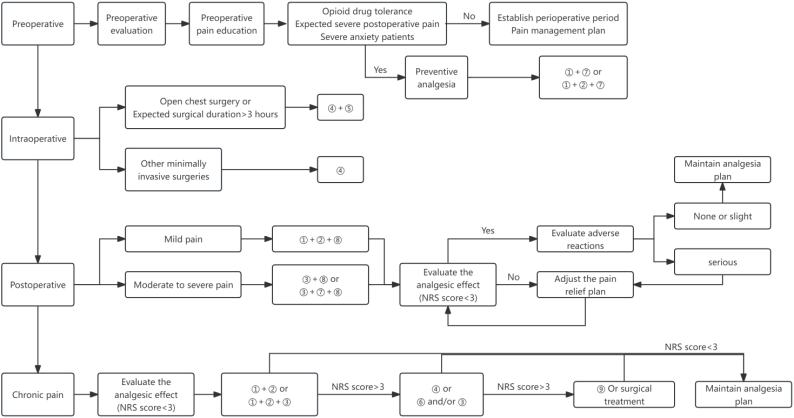
Perioperative pain management for lung cancer should span the entire preoperative, intraoperative, and postoperative phases, forming a systematic, individualized diagnostic and therapeutic pathway.
8.1. Preoperative Phase
A comprehensive assessment should be conducted, covering patient age, sex, psychological status, prior pain history, medication history, allergy history, cognitive function, and treatment expectations, along with thorough pain education. For patients with high-risk factors such as preoperative pain, opioid tolerance, or chronic pain history, preemptive analgesia should be initiated preoperatively.
8.2. Intraoperative Phase
Appropriate analgesic techniques should be selected based on factors including surgical site, degree of trauma, number of incisions, and operative time (e.g., whether >3 hours). Specific protocols are referenced in Figure 3.
8.3. Postoperative Phase
Pain severity should be closely assessed, with analgesic therapy administered on schedule and in a stepwise fashion, along with active prevention and management of CPSP.
Figure 3. Reference guide for perioperative pain management strategy selection in lung cancerLegend: NRS = Numerical Rating Scale,1) = Acetaminophen or NSAIDs,2) = Anticonvulsants and anxiolytic/antidepressant drugs,3) = Opioid analgesics,4) = Regional nerve block techniques,5 = Epidural block or patient-controlled analgesia,6) = Neuromodulation therapy,7) = Cognitive behavioral therapy,8) = Physical therapy and traditional Chinese medicine therapy,9) = Intrathecal drug delivery system.
9. Summary and Future Perspectives
As the first Chinese expert consensus dedicated to perioperative pain management for lung cancer, this document standardizes clinical pathways to improve postoperative quality of life and long-term prognosis. It summarizes pain mechanisms, risk factors, assessment, prevention, and treatment, with particular emphasis on chronic postsurgical pain (CPSP) diagnosis and management. It also advocates multimodal analgesia, individualized therapy, comprehensive management, rational drug use, and non-pharmacological therapies in Chinese clinical practice.
Key evidence gaps remain, including the optimal timing and mechanisms of preemptive analgesia, the prognostic impact of long-term opioid use, the target populations and effectiveness of non-pharmacological therapies, and standardized perioperative protocols. Future high-quality clinical studies and implementation research are needed to refine lung cancer perioperative pain management and provide safer, more effective, and more comfortable care.
Abbreviations

BMI

Body Mass Index

BPI

Brief Pain Inventory

CBT

Cognitive Behavioral Therapy

CNKI

China National Knowledge Infrastructure

COX-2

cyclooxygenase-2

CPSP

Chronic Postsurgical Pain

CT

Computed Tomography

ERAS

Enhanced Recovery After Surgery

ESPB

Erector Spinae Plane Block

F

French

FPS

Faces Pain Scale

GRADE

Grading of Recommendations Assessment, Development and Evaluation

IASP

International Association for the Study of Pain

ICNB

Intercostal Nerve Block

IL-6

interleukin-6

MPQ

McGill Pain Questionnaire

MR

Magnetic Resonance

MS

Magnetic Stimulation

NMDAR

N-methyl-D-aspartate receptor

NP

Neuropathic Pain

NRS

Numerical Rating Scale

NSAIDs

Nonsteroidal Anti-inflammatory Drugs

NSCLC

Non-small Cell Lung Cancer

ORCID

Open Researcher and Contributor ID

OS

Overall Survival

PCA

Patient-controlled Analgesia

PCEA

Patient-controlled Epidural Analgesia

PCIA

Patient-controlled Intravenous Analgesia

PFS

Progression-free Survival

PICO

Population, Intervention, Comparison, Outcome

PMS

Peripheral Magnetic Stimulation

PNP

Peripheral Neuropathic Pain

RCT

Randomized Controlled Trial

RFT

Radiofrequency Therapy

SAPB

Serratus Anterior Plane Block

SCS

Spinal Cord Stimulation

SGB

Stellate Ganglion Block

SNRIs

Serotonin and Norepinephrine Reuptake Inhibitors

SSRIs

Selective Serotonin Reuptake Inhibitors

TCAs

Tricyclic Antidepressants

TCM

Traditional Chinese Medicine

TEA

Thoracic Epidural Analgesia

TENS

Transcutaneous Electrical Nerve Stimulation

TMS

Transcranial Magnetic Stimulation

TNF-α

Tumor Necrosis Factor-alpha

TPVB

Thoracic Paravertebral Block

VAS

Visual Analogue Scale

VATS

Video-assisted Thoracoscopic Surgery

VIP

VIP Chinese Journal Service Platform

WHO

World Health Organization

Author Contributions
Zhi Xiuyi: Conceptualization, Project administration, Resources, Supervision, Writing – review & editing
Chen Chun: Conceptualization, Data curation, Methodology, Writing – original draft, Writing – review & editing
Fan Bifa: Conceptualization, Methodology, Validation, Supervision, Writing – review & editing
He Jianxing: Conceptualization, Funding acquisition, Project administration, Resources, Supervision, Writing – review & editing
Funding
Guangzhou National Laboratory Research and Development Project (SRPG22-017); Key Special Project of the National Key R&D Program "Active Health and Technological Responses to Population Aging" in 2022 (2022YFC3602200).
Conflicts of Interest
All authors declare no conflicts of interest.
Appendix
Appendix I: Expert Panel for Consensus Development
Lead experts (in alphabetical order by surname)
Chen Chun (Department of Thoracic Surgery, Union Hospital Affiliated to Fujian Medical University); Fan Bifa (Department of Painology, China-Japan Friendship Hospital); He Jianxing (Department of Thoracic Surgery, The First Affiliated Hospital of Guangzhou Medical University); Zhi Xiuyi (Department of Thoracic Surgery, Xuanwu Hospital, Capital Medical University)
Appendix II: Drafting Experts
Cui Fei (Department of Thoracic Surgery, The First Affiliated Hospital of Guangzhou Medical University); Zhang Honghao (Department of Thoracic Surgery, The First Affiliated Hospital of Guangzhou Medical University); Jia Yifan (Department of Painology, Renmin Hospital of Wuhan University); Zheng Bin (Department of Thoracic Surgery, Union Hospital Affiliated to Fujian Medical University); Yang Hanyu (Department of Anesthesiology, The First Affiliated Hospital of Guangzhou Medical University)
Cui Fei, Zhang Honghao, Jia Yifan, and Zheng Bin contributed equally to this article.
References
[1] Hyland SJ, Brockhaus KK, Vincent WR, et al. Perioperative Pain Management and Opioid Stewardship: A Practical Guide [J]. Healthcare (Basel), 2021. 9(3).
[2] Chen Y, Wang E, Sites BD, et al. Integrating mechanistic-based and classification-based concepts into perioperative pain management: an educational guide for acute pain physicians [J]. Reg Anesth Pain Med. 2024; 49(8): 581-601.
[3] Mariano ER, Dickerson DM, Szokol JW, et al. A multisociety organizational consensus process to define guiding principles for acute perioperative pain management [J]. Reg Anesth Pain Med. 2022; 47(2): 118-127.
[4] Liu Y, Xiao S, Yang H, et al. Postoperative pain-related outcomes and perioperative pain management in China: a population-based study [J]. Lancet Reg Health West Pac. 2023; 39: 100822.
[5] Liu S, Li S, Tang Y, Chen R, et al. Minimally invasive surgery vs. open thoracotomy for non-small-cell lung cancer with N2 disease: a systematic review and meta-analysis [J]. Front Med (Lausanne). 2023; 10: 1152421.
[6] Yoon S, Hong WP, Joo H, et al. Long-term incidence of chronic postsurgical pain after thoracic surgery for lung cancer: a 10-year single-center retrospective study [J]. Reg Anesth Pain Med. 2020; 45(5): 331-336.
[7] Gu Y, Li X, Zhou Q, et al. Uniportal video-assisted thoracic surgery versus open thoracotomy for chronic pain after surgery: a prospective cohort study [J]. J Anesth. 2024; 38(4): 525-536.
[8] Keller DM, Żarczyński D, Rybacka A, Kuźnar-Kamińska B. Fatal early-onset checkpoint inhibitor pneumonitis in a patient with advanced squamous-cell lung cancer with underlying pulmonary fibrosis: a case report and review of the literature [J]. Front Oncol. 2025; 15: 1672093.
[9] Franqueiro AR, Wilson JM, He J, et al. Prospective Study of Preoperative Negative Affect and Postoperative Pain in Patients Undergoing Thoracic Surgery: The Moderating Role of Sex [J]. J Clin Med. 2024; 13(19): 5722.
[10] Brunelli A, Beretta E, Cassivi SD, et al. Consensus definitions to promote an evidence-based approach to management of the pleural space. A collaborative proposal by ESTS, AATS, STS, and GTSC [J]. Eur J Cardiothorac Surg. 2011; 40(2): 291-297.
[11] Craig SR, Leaver HA, Yap PL, Pugh GC, Walker WS. Acute phase responses following minimal access and conventional thoracic surgery [J]. Eur J Cardiothorac Surg. 2001; 20(3): 455-463.
[12] Thoracoscopic Surgery Group of Chinese Society of Thoracic and Cardiovascular Surgery, Minimally Invasive Surgery Expert Committee of Chinese Association of Thoracic Surgeons. Chinese expert consensus on perioperative pain management in thoracic surgery (2018 edition) [J]. Chinese Journal of Clinical Thoracic and Cardiovascular Surgery, 2018, 25(11): 921-928.
[13] Qiu CL, Li XY, Ouyang QC, et al. Expert consensus on management standards of pain-free ward in oncology department [J]. Anti-Tumor Pharmacy, 2025, 15(2): 145-151.
[14] Huskisson EC. Measurement of pain [J]. Lancet. 1974; 2(7889): 1127-1131.
[15] Wong DL, Baker CM. Smiling faces as anchor for pain intensity scales [J]. Pain. 2001; 89(2-3): 295-300.
[16] Farrar JT, Young JP Jr, LaMoreaux L, et al. Clinical importance of changes in chronic pain intensity measured on an 11-point numerical pain rating scale [J]. Pain. 2001; 94(2): 149-158.
[17] Cleeland CS, Ryan KM. Pain assessment: global use of the Brief Pain Inventory [J]. Ann Acad Med Singap. 1994; 23(2): 129-138.
[18] Melzack R, Torgerson WS. On the language of pain [J]. Anesthesiology. 1971; 34(1): 50-59.
[19] Lindberg MF, Miaskowski C, Rustøen T, et al. Preoperative risk factors associated with chronic pain profiles following total knee arthroplasty [J]. Eur J Pain. 2021; 25(3): 680-692.
[20] Louiselle AE, Niemiec SM, Zgheib C, et al. Macrophage polarization and diabetic wound healing. Transl Res [J]. 2021; 236: 109-116.
[21] Zhang Z, Yu X, Peng X, et al. Single-Port Thoracoscopic Surgery via Areola Approach for Lung Cancer: Feasibility, Safety, and Initial Experience With a Novel Technique [J]. ANZ J Surg. 2025; 95(11): 2367-2372.
[22] Catelli C, Corzani R, Zanfrini E, et al. RoboticAssisted (RATS) versus Video-Assisted (VATS) lobectomy: A monocentric prospective randomized trial [J]. Eur J Surg Oncol. 2023; 49(12): 107256.
[23] Bendixen M, Jørgensen OD, Kronborg C, et al. Postoperative pain and quality of life after lobectomy via video-assisted thoracoscopic surgery or anterolateral thoracotomy for early stage lung cancer: a randomised controlled trial [J]. Lancet Oncol. 2016; 17(6): 836-844.
[24] Roszik J, Lee JJ, Wu YH, et al. Real-World Studies Link Nonsteroidal Anti-inflammatory Drug Use to Improved Overall Lung Cancer Survival [J]. Cancer Res Commun. 2022; 2(7): 590-601.
[25] Jiang W, Wang L, Zhang J, et al. Effects of postoperative non-steroidal anti-inflammatory drugs on long-term survival and recurrence of patients with non-small cell lung cancer [J]. Medicine (Baltimore). 2018; 97(39): e12442.
[26] Løbel J, Danielsen AV, Sperling PK, et al. Intravenous dexamethasone in pain treatment after video-assisted thoracoscopic surgery [J]. Dan Med J. 2024; 71(3): A05230317. Published 2024 Feb 12.
[27] Lin S, Zhang Y, Huang X, et al. Effects of Combined Use of Salbutamol/Budesonide in Thoracic Surgery on Postoperative Myocardial Injury (MINS) - A Prospective Randomized Clinical Trial [J]. Drug Des Devel Ther. 2023; 17: 1025-1036. Published 2023 Apr 1.
[28] Sugimoto M, Takagi T, Suzuki R, et al. Mirogabalin vs pregabalin for chemotherapy-induced peripheral neuropathy in pancreatic cancer patients [J]. BMC Cancer. 2021; 21(1): 1319.
[29] Misawa S, Denda T, Kodama S, et al. Efficacy and safety of mirogabalin for chemotherapy-induced peripheral neuropathy: a prospective single-arm trial (MiroCIP study) [J]. BMC Cancer. 2023; 23(1): 1098.
[30] Baba M, Kuroha M, Ohwada S, et al. Results of Mirogabalin Treatment for Diabetic Peripheral Neuropathic Pain in Asian Subjects: A Phase 2, Double-Blind, Randomized, Placebo-Controlled, Study [J]. Pain Ther. 2020; 9(1): 261-278.
[31] Zhao Y, Li Y, Sun L, et al. Perioperative pregabalin reduced fatigue scores after thoracoscopic pneumonectomy in a RCT of NSCLC patients [J]. Am J Cancer Res. 2023; 13(5): 2201-2212. Published 2023 May 15.
[32] Miyazaki T, Matsumoto K, Sato T, et al. Efficacy and safety of add-on mirogabalin to conventional therapy for the treatment of peripheral neuropathic pain after thoracic surgery: the multicenter, randomized, open-label ADMIT-NeP study [J]. BMC Cancer. 2024; 24(1): 80.
[33] Tomaszek L, Fenikowski D, Maciejewski P, et al. Perioperative Gabapentin in Pediatric Thoracic Surgery Patients-Randomized, Placebo-Controlled, Phase 4 Trial [J]. Pain Med. 2020; 21(8): 1562-1571.
[34] Doleman B, Mathiesen O, Sutton AJ, et al. Williams JP. Non-opioid analgesics for the prevention of chronic postsurgical pain: a systematic review and network meta-analysis [J]. Br J Anaesth. 2023; 130(6): 719-728.
[35] Finnerup NB, Attal N, Haroutounian S, et al. Pharmacotherapy for neuropathic pain in adults: a systematic review and meta-analysis [J]. Lancet Neurol. 2015; 14(2): 162-173.
[36] Ferreira GE, Abdel-Shaheed C, Underwood M, et al. Efficacy, safety, and tolerability of antidepressants for pain in adults: overview of systematic reviews [J]. BMJ. 2023; 380: e072415.
[37] Nikitas J, Yanagawa J, Sacks S, et al. Pathophysiology and Management of Chest Wall Pain after Surgical and Non-Surgical Local Therapies for Lung Cancer [J]. JTO Clin Res Rep. 2024; 5(7): 100690.
[38] Brown TJ, Keshvani N, Gupta A, et al. Rates of appropriate laxative prophylaxis for opioid-induced constipation in veterans with lung cancer: a retrospective cohort study [J]. Support Care Cancer. 2020; 28(11): 5315-5321.
[39] Nakada T, Ohtsuka T. Impact of opioids on postoperative prognosis in lung cancer [J]. J Thorac Dis. 2023; 15(10): 5272-5274.
[40] Nelson DB, Cata JP, Niu J, et al. Persistent opioid use is associated with worse survival after lobectomy for stage I non-small cell lung cancer [J]. Pain. 2019; 160(10): 2365-2373.
[41] Nguyen J, Luk K, Vang D, et al. Morphine stimulates cancer progression and mast cell activation and impairs survival in transgenic mice with breast cancer [J]. Br J Anaesth. 2014; 113 Suppl 1(Suppl 1): i4-i13.
[42] Schwenk ES, Gupta RK. Mortality associated with long-term opioid use after lung cancer surgery: an infographic [J]. Reg Anesth Pain Med. Published online September 12, 2022.
[43] Yan H, Chen W, Chen Y, et al. Opioid-Free Versus Opioid-Based Anesthesia on Postoperative Pain After Thoracoscopic Surgery: The Use of Intravenous and Epidural Esketamine [J]. Anesth Analg. 2023; 137(2): 399-408.
[44] Feng CD, Xu Y, Chen S, et al. Opioid-free anaesthesia reduces postoperative nausea and vomiting after thoracoscopic lung resection: a randomised controlled trial [J]. Br J Anaesth. 2024; 132(2): 267-276.
[45] Oh TK, Jeon JH, Lee JM, et al. Investigation of opioid use and long-term oncologic outcomes for non-small cell lung cancer patients treated with surgery [J]. PLoS One. 2017; 12(7): e0181672.
[46] Dhillon S. Correction: Tegileridine: First Approval [J]. Drugs. 2024; 84(8): 1011.
[47] Wang Q, Zhao C, Hu J, et al. Efficacy of a Modified Cocktail for Periarticular Local Infiltration Analgesia in Total Knee Arthroplasty: A Prospective, Double-Blinded, Randomized Controlled Trial [J]. J Bone Joint Surg Am. 2023; 105(5): 354-362.
[48] Spaans LN, Dijkgraaf MGW, Susa D, et al. Intercostal or Paravertebral Block vs Thoracic Epidural in Lung Surgery: A Randomized Noninferiority Trial [J]. JAMA Surg. 2025; 160(8): 855-864.
[49] Chen JQ, Yang XL, Gu H, et al. The Role of Serratus Anterior Plane Block During in Video-Assisted Thoracoscopic Surgery [J]. Pain Ther. 2021; 10(2): 1051-1066.
[50] Chaudhary O, Baribeau Y, Urits I, et al. Use of Erector Spinae Plane Block in Thoracic Surgery Leads to Rapid Recovery From Anesthesia [J]. Ann Thorac Surg. 2020; 110(4): 1153-1159.
[51] Xiang XB, Wu YY, Fang Z, et al. Stellate ganglion block for visceral pain in elderly patients undergoing video-assisted thoracoscopic lung cancer surgery: a randomized, controlled trial [J]. Int J Surg. 2024; 110(11): 6996-7002.
[52] Qin J, Lei Z, Li R, et al. Intrapleural injection of bupivacaine liposome for pain management after thoracoscopic surgery [J]. Sci Rep. 2025; 15(1): 24433.
[53] Chi Y, Su X, Liu S, et al. Liposomal bupivacaine intercostal nerve block for pain control in thoracoscopic surgery: a randomized controlled trial [J]. Front Med (Lausanne). 2025; 12: 1647324.
[54] Dong L, Wang X, Fu L, et al. Efficacy and Safety of Bupivacaine Liposomal in Intercostal Nerve Block for Postoperative Pain Management Following Uniportal Thoracoscopy: A Randomized Trial [J]. Pain Res Manag. 2025; 2025: 8816879.
[55] Coppens S, Hoogma DF, Dewinter G, et al. Erector Spinae Plane Block versus Intercostal Nerve Blocks in Uniportal Videoscopic-assisted Thoracic Surgery: A Multicenter, Double-blind, Prospective Randomized Placebo-controlled Trial [J]. Anesthesiology. 2025; 143(4): 1015-1025.
[56] Ventham NT, Hughes M, O'Neill S, et al. Wigmore SJ. Systematic review and meta-analysis of continuous local anaesthetic wound infiltration versus epidural analgesia for postoperative pain following abdominal surgery [J]. Br J Surg. 2013; 100(10): 1280-1289.
[57] Fortier S, Hanna HA, Bernard A, et al. Comparison between systemic analgesia, continuous wound catheter analgesia and continuous thoracic paravertebral block: a randomised, controlled trial of postthoracotomy pain management [J]. Eur J Anaesthesiol. 2012; 29(11): 524-530.
[58] Sztain JF, Gabriel RA, Said ET. Thoracic Epidurals are Associated With Decreased Opioid Consumption Compared to Surgical Infiltration of Liposomal Bupivacaine Following Video-Assisted Thoracoscopic Surgery for Lobectomy: A Retrospective Cohort Analysis [J]. J Cardiothorac Vasc Anesth. 2019; 33(3): 694-698.
[59] Zhao H, Wu Y, Zhang X, et al. The Effect of Preoperative Serratus Anterior Muscle Plane Block on Persistent Postsurgical Pain After Video-assisted Thoracic Surgery: A Retrospective Cohort Study [J]. Clin J Pain. 2021; 37(10): 759-765.
[60] Shang LH, Xiao ZN, Zhao YL, et al. Analgesic Effect of Serratus Anterior Plane Block After Thoracoscopic Surgery: A Randomized Controlled Double-Blinded Study [J]. Ther Clin Risk Manag. 2020; 16: 1257-1265.
[61] Zhang Y, Li W, Wei A, Chen S, Wang X. Comparing Liposomal Bupivacaine and Ropivacaine in Serratus Anterior Plane Block for Thoracoscopic Lobectomy: A Randomized Controlled Trial. Drug Des Devel Ther. 2025; 19: 4717-4726. Published 2025 Jun 4.
[62] Leviel F, Fourdrain A, Delatre F, et al. S erratus anterior plane block alone, paravertebral block alone and their combination in video-assisted thoracoscopic surgery: the THORACOSOPIC double-blind, randomized trial [J]. Eur J Cardiothorac Surg. 2024; 65(4): ezae082.
[63] Chen Z, Gao C, Zhang Y, et al. Effects of Ultrasound-Guided Thoracic Paravertebral Nerve Block Combined with Perineural or IV Dexmedetomidine on Acute and Chronic Pain After Thoracoscopic Resection of Lung Lesions: A Double-Blind Randomized Trial [J]. Drug Des Devel Ther. 2024; 18: 2089-2101.
[64] Yang Z, Liu M, Wang C, et al. Thoracic Paravertebral Block with Liposomal Bupivacaine Versus Plain Bupivacaine in Patients Undergoing Thoracoscopic Lung Resection: A Randomized Controlled Study [J]. Drug Des Devel Ther. 2025; 19: 6955-6964.
[65] Wang LL, Zhu Y, Hui LY, et al. Liposomal Bupivacaine in Ultrasound-Guided Paravertebral Block Reduces Opioid Consumption and Accelerates Recovery After Thoracic Surgery: A Randomized Controlled Trial [J]. Drug Des Devel Ther. 2025; 19: 9137-9149.
[66] Xu X, Xie YX, Zhang M, et al. Comparison of Thoracoscopy-Guided Thoracic Paravertebral Block and Ultrasound-Guided Thoracic Paravertebral Block in Postoperative Analgesia of Thoracoscopic Lung Cancer Radical Surgery: A Randomized Controlled Trial [J]. Pain Ther. 2024; 13(3): 577-588.
[67] Hu J, Zhou W, Zheng X, et al. Analgesic efficacy of continuous erector spinae plane block vs. opioid-based regimen for postoperative pain management following video-assisted thoracoscopic lung resection: a prospective, randomised, open-label, non-inferiority trial [J]. Anaesthesia. 2025; 80(10): 1226-1236.
[68] Zhao H, Xin L, Feng Y. The effect of preoperative erector spinae plane vs. paravertebral blocks on patient-controlled oxycodone consumption after video-assisted thoracic surgery: A prospective randomized, blinded, non-inferiority study [J]. J Clin Anesth. 2020; 62: 109737.
[69] Wei Y, Wei X, He F, et al. Effect of Liposomal Bupivacaine for Preoperative Thoracic Paravertebral Blockade on Postoperative Pain Following Video-Assisted Thoracoscopic Lung Surgery: A Prospective, Double-Blind, Randomized Controlled Trial [J]. J Cardiothorac Vasc Anesth. 2026; 40(1): 281-289.
[70] Sung CS, Wei TJ, Hung JJ, et al. Comparisons in analgesic effects between ultrasound-guided erector spinae plane block and surgical intercostal nerve block after video-assisted thoracoscopic surgery: A randomized controlled trial [J]. J Clin Anesth. 2024; 95: 111448.
[71] Li J, Pourrahmat MM, Vasilyeva E, et al. Wiseman SM. Efficacy and Safety of Patient-controlled Analgesia Compared With Epidural Analgesia After Open Hepatic Resection: A Systematic Review and Meta-analysis [J]. Ann Surg. 2019; 270(2): 200-208.
[72] Huepenbecker SP, Cusworth SE, Kuroki LM, et al. Continuous epidural infusion in gynecologic oncology patients undergoing exploratory laparotomy: The new standard for decreased postoperative pain and opioid use [J]. Gynecol Oncol. 2019; 153(2): 356-361.
[73] Fu C, Hu B, Zhou Y, et al. Effects of continuous epidural analgesia versus single epidural block combined with patient-controlled intravenous analgesia on acute and chronic pain after thoracic surgery [J]. Chinese Journal of Pain Medicine, 2021, 17(6): 638-644.
[74] Yabuki S, Kaiho Y, Tarasawa K, et al. Exploring the impact of perioperative analgesia on postoperative chronic analgesic prescriptions in patients with lung cancer undergoing minimally invasive thoracic surgery: A retrospective observational study [J]. Eur J Pain. 2025; 29(2): e4774.
[75] McNicol ED, Ferguson MC, Hudcova J. Patient controlled opioid analgesia versus non-patient controlled opioid analgesia for postoperative pain [J]. Cochrane Database Syst Rev. 2015; 2015(6): CD003348.
[76] von Hösslin T, Imboden P, Lüthi A, et al. Filipovic M. Adverse events of postoperative thoracic epidural analgesia: A retrospective analysis of 7273 cases in a tertiary care teaching hospital [J]. Eur J Anaesthesiol. 2016; 33(10): 708-714.
[77] Liu H, Jia YB, Wei J, et al. Application and research progress of repetitive peripheral magnetic stimulation in rehabilitation therapy [J]. Chinese Journal of Rehabilitation Medicine, 2021, 36(5): 631-637.
[78] Lefaucheur JP, André-Obadia N, Antal A, et al. Evidence-based guidelines on the therapeutic use of repetitive transcranial magnetic stimulation (rTMS) [J]. Clin Neurophysiol. 2014; 125(11): 2150-2206.
[79] Bedder M, Parker L. Magnetic Peripheral Nerve Stimulation (mPNS) for Chronic Pain [J]. J Pain Res. 2023; 16: 2365-2373.
[80] Park S, Park R, Westwood D, et al. Effect of Peripheral Magnetic Stimulation on Acute and Chronic Pain After Surgery: A Systematic Review and Meta-Analysis [J]. J Pain. 2023; 24(7): 1151-1162.
[81] Wininger KL, Bester ML, Deshpande KK. Spinal cord stimulation to treat postthoracotomy neuralgia: non-small-cell lung cancer: a case report [J]. Pain Manag Nurs. 2012; 13(1): 52-59.
[82] Sutanto YS, Ibrahim D, Septiawan D, et al. Effect of Cognitive Behavioral Therapy on Improving Anxiety, Depression, and Quality of Life in Pre-Diagnosed Lung Cancer Patients [J]. Asian Pac J Cancer Prev. 2021; 22(11): 3455-3460.
[83] Tsimopoulou I, Pasquali S, Howard R, et al. Psychological Prehabilitation Before Cancer Surgery: A Systematic Review [J]. Ann Surg Oncol. 2015; 22(13): 4117-4123.
[84] Cheng JOS, Cheng ST. Effectiveness of physical and cognitive-behavioural intervention programmes for chronic musculoskeletal pain in adults: A systematic review and meta-analysis of randomised controlled trials [J]. PLoS One. 2019; 14(10): e0223367. Published 2019 Oct 10.
[85] Lai Y, Huang J, Yang M, et al. Seven-day intensive preoperative rehabilitation for elderly patients with lung cancer: a randomized controlled trial [J]. J Surg Res. 2017; 209: 30-36.
[86] Milkias M, Mekonnen S, Ahmed S, et al. Evidence-based guideline on chronic postsurgical pain management in adult patients in resource-restricted setting, 2023: systematic review and guideline [J]. Ann Med Surg (Lond). 2023; 85(11): 5593-5603.
[87] Chen G, Lu J, Li B, et al. Efficacy and safety of Shenqi Fuzheng injection combined with chemotherapy for cancer: An overview of systematic reviews [J]. Phytomedicine. 2024; 125: 155293.
[88] Park S, Lyu YR, Park SJ, et al. Electroacupuncture for post-thoracotomy pain: A systematic review and meta-analysis [J]. PLoS One. 2021; 16(7): e0254093.
[89] Xu Y, Yang R, Xiao S, et al. Expert consensus on perioperative management of patients with lung cancer treated with co-ablation system therapy [J]. Asia Pac J Oncol Nurs. 2025; 12: 100747.
[90] Wu D, Dai J, Sheng Y, et al. Evidence summary on pain management in thoracoscopic lung cancer surgery [J]. Asia Pac J Oncol Nurs. 2025; 12: 100693.
[91] Zhao X, Cui L, Wang W, et al. Influence of psychological intervention on pain and immune functions of patients receiving lung cancer surgery [J]. Pak J Med Sci. 2016; 32(1): 155-159.
[92] Tian L, Wen Y, Li J, et al. Effects of Remote Web-Based Interventions on the Physiological and Psychological States of Patients With Cancer: Systematic Review With Meta-Analysis [J]. JMIR Mhealth Uhealth. 2025; 13: e71196.
[93] Anderson D, Chen SA, Godoy LA, et al. Comprehensive Review of Chest Tube Management: A Review [J]. JAMA Surg. 2022; 157(3): 269-274.
[94] Bertoglio P, Guerrera F, Viti A, et al. Chest drain and thoracotomy for chest trauma [J]. J Thorac Dis. 2019; 11(Suppl 2): S186-S191.
[95] Bassi M, Mottola E, Mantovani S, et al. Coaxial Drainage versus Standard Chest Tube after Pulmonary Lobectomy: A Randomized Controlled Study [J]. Curr Oncol. 2022; 29(7): 4455-4463.
[96] Rahman NM, Pepperell J, Rehal S, et al. Effect of Opioids vs NSAIDs and Larger vs Smaller Chest Tube Size on Pain Control and Pleurodesis Efficacy Among Patients With Malignant Pleural Effusion: The TIME1 Randomized Clinical Trial [J]. JAMA. 2015; 314(24): 2641-2653.
[97] Rahman NM, Maskell NA, Davies CW, et al. The relationship between chest tube size and clinical outcome in pleural infection. Chest [J]. 2010; 137(3): 536-543.
[98] Song L, Chen X, Zhu L, et al. Perioperative outcomes of bi-pigtail catheter drainage strategy versus conventional chest tube after uniportal video-assisted thoracic lung surgery [J]. Eur J Cardiothorac Surg. 2023; 64(6): ezad411.
[99] Hart JM, Hussien AM, Tesfaye S, et al. Effectiveness of Single Chest Tube vs Double Chest Tube Application Postdecortication: Prospective Randomized Controlled Study [J]. J Am Coll Surg. 2023; 236(6): 1217-1231.
[100] He J, Liang H, Wang W, et al. Tubeless video-assisted thoracic surgery for pulmonary ground-glass nodules: expert consensus and protocol (Guangzhou) [J]. Transl Lung Cancer Res. 2021; 10(8): 3503-3519.
[101] Liu Z, Yang R, Sun Y. Tubeless uniportal thoracoscopic wedge resection with modified air leak test and chest tube drainage [J]. BMC Surg. 2020; 20(1): 301.
[102] Li S, Jiang L, Ang KL, et al. New tubeless video-assisted thoracoscopic surgery for small pulmonary nodules [J]. Eur J Cardiothorac Surg. 2017; 51(4): 689-693.
[103] Liao HC, Yang SM, Hung MH, et al. Chen JS. Thoracoscopic Surgery Without Drainage Tube Placement for Peripheral Lung Nodules [J]. Ann Thorac Surg. 2020; 109(3): 887-893.
[104] Zhao Y, Shan L, Zhang W, et al. Minimally invasive lung surgery with an intraoperative completely or partially tubeless protocol: randomized clinical trial [J]. BJS Open. 2024; 9(1): zrae132.
[105] Zhang JT, Dong S, Chu XP, et al. Randomized Trial of an Improved Drainage Strategy Versus Routine Chest Tube After Lung Wedge Resection [J]. Ann Thorac Surg. 2020; 109(4): 1040-1046.
[106] Zhang D, Wu J, Yang Y, et al. Comparison of non-intubated and intubated video-assisted thoracoscopic surgery for perioperative complications-a systematic review and meta-analysis [J]. BMC Anesthesiol. 2025; 25(1): 272.
[107] Wang L, Wang D, Zhang Y. Comparison of postoperative pulmonary complications and intraoperative safety in thoracoscopic surgery under non-intubated versus intubated anesthesia: a randomized, controlled, double-blind non-inferiority trial [J]. Updates Surg. 2024; 76(8): 2863-2873.
[108] Huang C, Huang Q, Shen Y, et al. General anaesthesia with double-lumen intubation compared to opioid-sparing strategies with laryngeal mask for thoracoscopic surgery: A randomised trial [J]. Anaesth Crit Care Pain Med. 2022; 41(3): 101083.
[109] Treede RD, Rief W, Barke A, et al. Chronic pain as a symptom or a disease: the IASP Classification of Chronic Pain for the International Classification of Diseases (ICD-11) [J]. Pain. 2019; 160(1): 19-27.
[110] Haroutiunian S, Nikolajsen L, Finnerup NB, et al. The neuropathic component in persistent postsurgical pain: a systematic literature review [J]. Pain. 2013; 154(1): 95-102.
[111] Expert Group for Diagnosis and Treatment of Neuropathic Pain. Expert consensus on diagnosis and treatment of neuropathic pain [J]. Chinese Journal of Pain Medicine, 2013, 19(12): 705-710.
[112] Chinese Expert Consensus on Diagnosis and Treatment of Peripheral Neuropathic Pain [J]. Chinese Journal of Pain Medicine, 2020, 26(5): 321-328.
[113] Liu YM, Feng Y, Liu YQ, et al. Chinese Association for the Study of Pain: Expert consensus on chronic postsurgical pain [J]. World J Clin Cases. 2021; 9(9): 2090-2099.
[114] Finnerup NB, Kuner R, Jensen TS. Neuropathic Pain: From Mechanisms to Treatment [J]. Physiol Rev. 2021; 101(1): 259-301.
[115] Varallo G, Giusti EM, Manna C, et al. Sleep disturbances and sleep disorders as risk factors for chronic postsurgical pain: A systematic review and meta-analysis [J]. Sleep Med Rev. 2022; 63: 101630.
[116] Lu ZH, Lv Y, Wu SM, et al. Chinese expert consensus on clinical application of medical infrared thermography (2022 version) [J]. Chinese Journal of Pain Medicine, 2022, 18(4): 449-455.
Cite This Article
  • APA Style

    Xiuyi, Z., Chun, C., Bifa, F., Jianxing, H. (2026). Expert Consensus on Perioperative Pain Management for Lung Cancer (2026 Edition). International Journal of Pain Research, 2(3), 102-121. https://doi.org/10.11648/j.ijpr.20260203.14

    Copy | Download

    ACS Style

    Xiuyi, Z.; Chun, C.; Bifa, F.; Jianxing, H. Expert Consensus on Perioperative Pain Management for Lung Cancer (2026 Edition). . 2026, 2(3), 102-121. doi: 10.11648/j.ijpr.20260203.14

    Copy | Download

    AMA Style

    Xiuyi Z, Chun C, Bifa F, Jianxing H. Expert Consensus on Perioperative Pain Management for Lung Cancer (2026 Edition). . 2026;2(3):102-121. doi: 10.11648/j.ijpr.20260203.14

    Copy | Download

  • @article{10.11648/j.ijpr.20260203.14,
      author = {Zhi Xiuyi and Chen Chun and Fan Bifa and He Jianxing},
      title = {Expert Consensus on Perioperative Pain Management for Lung Cancer (2026 Edition)},
      journal = {International Journal of Pain Research},
      volume = {2},
      number = {3},
      pages = {102-121},
      doi = {10.11648/j.ijpr.20260203.14},
      url = {https://doi.org/10.11648/j.ijpr.20260203.14},
      eprint = {https://article.sciencepublishinggroup.com/pdf/10.11648.j.ijpr.20260203.14},
      abstract = {Perioperative pain is highly prevalent after lung cancer surgery and may impair pulmonary recovery, delay mobilization, increase complications, and contribute to chronic postsurgical pain (CPSP). This 2026 expert consensus was developed to standardize perioperative pain management for patients undergoing lung cancer surgery and to support enhanced recovery and long-term quality of life. A multidisciplinary panel of thoracic surgeons, pain physicians, anesthesiologists, oncologists, pharmacists, psychologists/psychiatrists, and nurses formulated the recommendations through systematic evidence retrieval, evidence appraisal using the Grading of Recommendations Assessment, Development and Evaluation (GRADE) framework, two rounds of modified Delphi consultation, and expert meetings. The final document contains 14 recommendations covering risk-factor identification, dynamic pain assessment, multimodal and individualized analgesia, preemptive analgesia, surgical and anesthetic prevention strategies, postoperative rehabilitation, pharmacological therapy, regional nerve blocks, epidural or patient-controlled analgesia, neuromodulation, cognitive behavioral therapy, physical therapy, traditional Chinese medicine, chest-tube/tubeless strategies, perioperative nursing, and CPSP diagnosis and treatment. The consensus emphasizes opioid-sparing regimens, selection of minimally invasive surgical approaches where appropriate, early removal or avoidance of chest tubes in selected patients, and timely management of neuropathic pain components. By integrating evidence-based medicine with Chinese clinical practice, this consensus provides practical guidance for multidisciplinary teams to relieve pain, reduce adverse events, promote functional recovery, and improve postoperative quality of life in patients with lung cancer.},
     year = {2026}
    }
    

    Copy | Download

  • TY  - JOUR
    T1  - Expert Consensus on Perioperative Pain Management for Lung Cancer (2026 Edition)
    AU  - Zhi Xiuyi
    AU  - Chen Chun
    AU  - Fan Bifa
    AU  - He Jianxing
    Y1  - 2026/08/10
    PY  - 2026
    N1  - https://doi.org/10.11648/j.ijpr.20260203.14
    DO  - 10.11648/j.ijpr.20260203.14
    T2  - International Journal of Pain Research
    JF  - International Journal of Pain Research
    JO  - International Journal of Pain Research
    SP  - 102
    EP  - 121
    PB  - Science Publishing Group
    SN  - 3070-1562
    UR  - https://doi.org/10.11648/j.ijpr.20260203.14
    AB  - Perioperative pain is highly prevalent after lung cancer surgery and may impair pulmonary recovery, delay mobilization, increase complications, and contribute to chronic postsurgical pain (CPSP). This 2026 expert consensus was developed to standardize perioperative pain management for patients undergoing lung cancer surgery and to support enhanced recovery and long-term quality of life. A multidisciplinary panel of thoracic surgeons, pain physicians, anesthesiologists, oncologists, pharmacists, psychologists/psychiatrists, and nurses formulated the recommendations through systematic evidence retrieval, evidence appraisal using the Grading of Recommendations Assessment, Development and Evaluation (GRADE) framework, two rounds of modified Delphi consultation, and expert meetings. The final document contains 14 recommendations covering risk-factor identification, dynamic pain assessment, multimodal and individualized analgesia, preemptive analgesia, surgical and anesthetic prevention strategies, postoperative rehabilitation, pharmacological therapy, regional nerve blocks, epidural or patient-controlled analgesia, neuromodulation, cognitive behavioral therapy, physical therapy, traditional Chinese medicine, chest-tube/tubeless strategies, perioperative nursing, and CPSP diagnosis and treatment. The consensus emphasizes opioid-sparing regimens, selection of minimally invasive surgical approaches where appropriate, early removal or avoidance of chest tubes in selected patients, and timely management of neuropathic pain components. By integrating evidence-based medicine with Chinese clinical practice, this consensus provides practical guidance for multidisciplinary teams to relieve pain, reduce adverse events, promote functional recovery, and improve postoperative quality of life in patients with lung cancer.
    VL  - 2
    IS  - 3
    ER  - 

    Copy | Download

Author Information
  • Department of Thoracic Surgery, Xuanwu Hospital Capital Medical University, Beijing, China

  • Department of Thoracic Surgery, Fujian Medical University Union Hospital, Fuzhou, China

  • Department of Painology, China-Japan Friendship Hospital, Beijing, China

  • Department of Thoracic Surgery, The First Affiliated Hospital of Guangzhou Medical University, Guangzhou, China

  • Abstract
  • Keywords
  • Document Sections

    1. 1. Guideline Development Process and Methodology
    2. 2. Influencing Factors and Pathogenesis of Perioperative Pain
    3. 3. Pain Assessment
    4. 4. Principles of Pain Management
    5. 5. Prevention of Perioperative Pain
    6. 6. Perioperative Pain Intervention Strategies for Lung Cancer
    7. 7. Chronic Postsurgical Pain
    8. 8. Comprehensive Perioperative Pain Management Pathway for Lung Cancer
    9. 9. Summary and Future Perspectives
    Show Full Outline
  • Abbreviations
  • Author Contributions
  • Funding
  • Conflicts of Interest
  • Appendix
  • References
  • Cite This Article
  • Author Information